❌

Reading view

Qualcomm lands custom AI chip deal with Amazon

Qualcomm struck a deal with Amazon to develop customised silicon for large-scale AI data centre infrastructure, while issuing a warrant to the technology giant to acquire a stake worth up to $4 billion in the chipmaker.

The move marks Qualcomm’s latest strategic expansion into the data centre sector, building on its recent moves to establish an AI-native foundation, acquire AI software specialist Modular, and advance its agentic AI ambitions beyond edge devices.

Under regulatory filings tied to the deal, the agreement is linked to up to $60 billion in potential commercial transactions.

As part of the arrangement, Qualcomm issued Amazon a warrant to acquire up to 25 million shares at $161.26 apiece, representing a potential $4 billion stake which vests across tranches tied to purchase milestones.

The operational partnership centres on creating tailored processors optimised for AI inference workloads across Amazon Web Service (AWS) data centres.

By combining Qualcomm’s experience in power-efficient compute design with AWS’ global cloud footprint, the companies aim to tackle the skyrocketing energy and compute demands driven by generative AI applications.

Alongside customised processing chips, the agreement encompasses high-performance optical connectivity technologies.

Qualcomm plans to supply optical digital signal processor and serialiser/deserialiser products capable of supporting speeds up to 1.6 Tb/s.

The high-bandwidth interconnects are designed to clear data bottlenecks within data centre networks, allowing large clusters of AI chips to communicate with minimal latency.

Both ways
The collaboration works both ways, as Qualcomm also plans to deepen its internal adoption of AWS infrastructure.

The chipmaker will use cloud-based AI tools, including Amazon Bedrock, to run electronic design automation workloads aimed at accelerating its own chip development cycles.

Qualcomm CEO Cristiano Amon highlighted the rapidly accelerating demand for AI requires foundational advances across both processing and network interconnects to maximise operational efficiency.

AWS VP Prasad Kalyanaraman added the co-development effort will deliver more performant and cost-effective infrastructure for cloud customers globally.

The deal marks a significant expansion for Qualcomm, which has spent recent years diversifying its revenue beyond smartphones into personal computers, automotive systems and now cloud-scale hardware.

For AWS, working directly with Qualcomm on specialised silicon offers another avenue to manage the high-power consumption and soaring costs associated with operating global AI services.

The post Qualcomm lands custom AI chip deal with Amazon appeared first on Mobile World Live.

  •  

Snapdragon X and Snapdragon X2 driver updates target major games, giving Windows 11 on Arm another boost

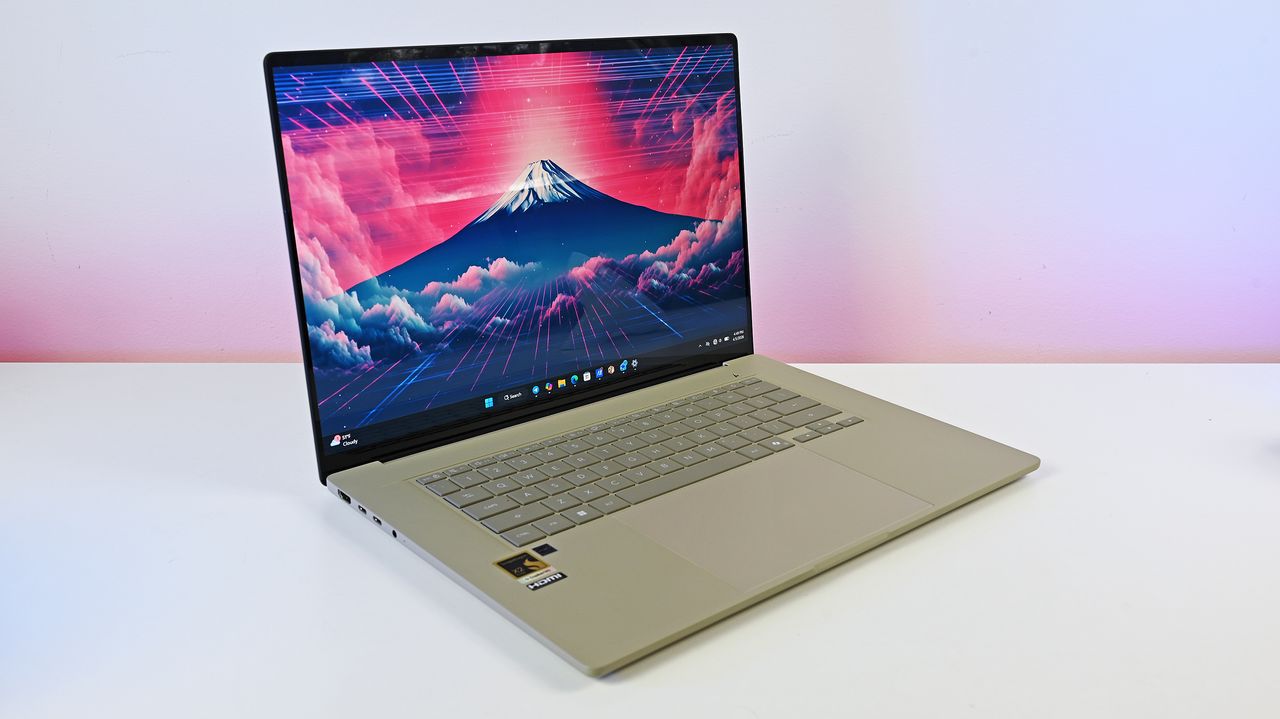
Gaming continues to improve on Windows 11 PCs powered by Snapdragon X chips. A recent Adreno GPU driver improves stability and quality for several titles, though the exact changes you'll see depend on if your system has a Snapdragon X chip or a Snapdragon X2 chip.

Well-known titles including Halo Infinite and Black Myth: Wukong are among the games that will benefit from the driver update for those with Snapdragon X2 processors. Avowed, Borderlands 4, and Dishonored 2 are among the library of games that will improve when running a Snapdragon X chip.

Windows 11 PCs powered by Snapdragon processors have come a long way. A massive library of apps now run natively on Windows 11 on Arm and emulation has improved to fill remaining gaps.

While there are pieces of enterprise and legacy software that do not work with Windows 11 on Arm, the biggest remaining gap is gaming.

Blank Pixel

In both our own testing of Snapdragon X gaming support and game compatibility testing by Ghobso Gaming show that games can perform well on Snapdragon X systems. But there are still titles that are not supported or that are poorly optimized. For example, Halo: Campaign Evolved has a major texture bug that basically makes the game unplayable on Windows 11 on Arm.

Easy Anti-Cheat is now supported, as is Logitech G HUB. Many games now perform better on Snapdragon X systems, but I think it's safe to call it a work in progress.

There are two change logs to go through, one for Snapdragon X and one for Snapdragon X2, both of which were shared on Reddit by user "lexcyn":

Snapdragon X Series Platforms: Game Stability/Quality Improvements

  • Avowed
  • Borderlands 4
  • Dishonored 2
  • Dishonored: Death of the Outsider
  • DREDGE
  • Nobody Wants to Die
  • RoboCop: Rogue City - Unfinished Business
  • Seven Deadly Sins: Origin
  • Split Fiction
  • Squad

Snapdragon X2 Series Platforms: Game Stability/Quality Improvements

  • 007 First Light
  • Black Myth: Wukong
  • Borderlands 3
  • Dishonored 2
  • Dishonored: Death of the Outsider
  • F1 2022
  • Granblue Fantasy: Relink
  • Hades 1
  • Halo Infinite
  • Hollow Knight
  • It Takes Two
  • Lies of P
  • Seven Deadly Sins: Origin
  • Split Fiction
  • Star Wars Outlaws
  • Yakuza Kiwami 3

Qualcomm and Microsoft continue to work on the gaming experience on Snapdragon X systems. A recent update to Snapdragon Control Panel redesigned game library navigation and improved the software experience.

The Snapdragon X2 Elite Extreme and other Snapdragon X2 chips are more powerful, allowing them to better handle modern games.

When announcing those chips, Qualcomm did not mention gaming in its press release, but it's clear that the company has plans to power gaming PCs with its Snapdragon X processors. ASUS took a different approach and listed the Zenbook A16, highlighting its gaming capabilities.

As more games are optimized and supported, gaming on Windows 11 on Arm will trend upward.

Click to join us on r/WindowsCentral

Join us on Reddit at r/WindowsCentral to share your insights and discuss our latest news, reviews, and more.

  •  

Qualcomm's Adreno 'Neural Fusion' GPU will lean on AI to upgrade phone gaming

What you need to know

  • Qualcomm continues to tease its next Snapdragon debut with the Adreno Neural Fusion GPU.
  • The company says this chip utilizes AI-drive rendering tech, placing stronger resolution and frame generation directly into the graphics pipeline.
  • What's more, the GPU adds the Adreno HPM, which helps move larger chunks of data for rendering at a time, effectively saving more battery power.
  • Snapdragon Summit 2026 takes place from September 22-24

Qualcomm's Snapdragon Summit is coming up later this month, and the company is teasing its graphical improvements.

Qualcomm sent a press release this morning (Sept 2) detailing the Adreno Neural Fusion GPU. If you thought this wouldn't involve AI, think again. Qualcomm says Neural Fusion is an "AI-driven rendering technology that combines neural processing, AI super resolution, and frame generation into a unified graphics pipeline." For context, Qualcomm says it's looking to deliver what consumers want from mobile gaming: console-like graphics, strong frame rates, and better battery life.

This is important because Qualcomm states its Adreno Neural Fusion GPU nails all three of these desires, and consistently, too. The post credits this GPU power to the chip's new Adreno Matrix Cores. This reportedly brings its AI rendering engine into the graphics pipeline, giving developers the exact tools they need to bump up the graphics for your phone. Lower latency is another positive in this change.

Helping that lower latency is the Adreno HPM (High Performance Memory), which feeds more data to the GPU for rendering, thanks to a "dedicated optimized cache of 18MB."

Many of these changes help Qualcomm hit that last point: better gaming battery life. With the Neural Fusion GPU capable of moving more data at a time, it's effectively moving a lot less, which doesn't eat up your battery. Then, you have its AI models playing more closely to the graphical unit.

Qualcomm will undoubtedly show off the Snapdragon 8 Elite Gen 6 chips in greater detail during its Summit from September 22-24.

What we've been waiting on?

Hands holding a transparent device with the Snapdragon 8 Elite Gen 5 showing

(Image credit: Qualcomm)

Qualcomm's teasers will likely continue until its Summit in a few weeks. The latest major teaser we got spurred excitement. Qualcomm highlighted "Dual 8 Elites" on approach for 2026. Our eyes are looking at that long-rumored Snapdragon 8 Elite Gen 6 "Pro." Qualcomm hasn't said anything yet, so do with that information what you will (it is rumored, after all). What the company has said is that its Dual 8 Elites will bring "better connectivity, camera functionality, and graphics for games."

What's interesting about those "Pro" rumors is that not everyone's phone could see it. While yes, these Snapdragon chips are reserved for flagships, the Pro could only seek out Ultra devices—the Galaxy S27 Ultra would fit that bill. We still have a while until Snapdragon Summit 2026 in Maui, Hawaii.

Android Central's Take

I believe it was Android Authority's coverage that likens what Qualcomm's doing with the Neural Fusion to Nvidia's DLSS 5. If you're a gamer or you've kept up with gaming in general, this hasn't sat well with people. DLSS 5 "enhances" your graphics through AI, but from the examples out there, people aren't convinced the original artists' intent remains. I hope Qualcomm's AI doesn't do that. And if it does, can I turn it off? I'm all for incredible gaming performance on phones, but not if the game doesn't look as intended.

  •  

Qualcomm vai subir os preços a partir de setembro. Será esta a oportunidade da MediaTek?

A Qualcomm já confirmou que todos os seus produtos, incluindo o futuro Snapdragon 8 Elite Gen 6 Pro, vão ficar mais caros a partir do próximo mês. A subida abre uma janela de oportunidade à MediaTek, que, segundo rumores da cadeia de fornecimento, poderá vender o Dimensity 9600 Pro por bem menos dinheiro aos fabricantes de smartphones.

The post Qualcomm vai subir os preços a partir de setembro. Será esta a oportunidade da MediaTek? appeared first on Tek Notícias.

  •  

Memory crunch bites Qualcomm handset chip sales

Qualcomm reported fiscal Q3 results which beat Wall Street’s revenue expectations but missed on profit, as the chipmaker continued to grapple with the impact of a memory supply crunch weighing on the smartphone sector.

The company posted revenue of $9.9 billion for the quarter ended 28 June, down 4 per cent from $10.4 billion a year earlier but ahead of the roughly $9.7 billion analysts had expected. Net income during the period was $2 billion, down 25% year-on-year.

Handset chip sales fell 20% to $5.1 billion, which Qualcomm CEO Cristiano Amon (pictured) stated reflected a bottoming out in the China market after OEMs pulled back on orders amid memory supply uncertainty.

“We actually don’t expect fundamental changes in the premium tier and the higher tier volume,” Amon said on the company’s investor call.

Going forward, the executive expects Apple-related revenue to decline sharply and faster than previously anticipated, after Qualcomm’s share of components in the upcoming iPhone range came in well below an earlier estimate of around 20%.

Amon said the company is offsetting the loss with growth elsewhere, including its emerging data centre business, which it expects to generate $5 billion in revenue by fiscal 2027.

“We expect Android to grow and significantly offset the reduction in Apple, and then data centre revenue that starts to ramp in the fourth quarter,” CFO Akash Palkhiwala said.

Amon said its Q3 results reflected “solid execution of our growth strategy” despite the challenging environment.

He noted Qualcomm is taking steps to protect margins going forward, including raising prices across its chip portfolio from 1 September, as component costs continue to climb.

Automotive remained a bright spot, with revenue reaching $1.59 billion which marked a 61% increase and the 23rd consecutive quarter of double-digit year-on-year growth for the segment. Qualcomm reiterated a target of $10 billion in annual automotive revenue by fiscal 2029.

IoT revenue was $1.83 billion, representing a 9% increase. Combined automotive and IoT revenue climbed 28%, underscoring the company’s push to diversify beyond its traditional handset business as it also builds out a data centre and custom silicon strategy with a leading hyperscaler.

The post Memory crunch bites Qualcomm handset chip sales appeared first on Mobile World Live.
  •  

Qualcomm forecasts weak quarterly profit, sees faster drop in Apple revenue

Qualcomm

Qualcomm forecast fourth-quarter profit below Wall Street estimates on Wednesday and said revenue from Apple products would decline faster than expected as supply constraints and rising costs weighed on its business.

In an interview with Reuters, CEO Cristiano Amon said costs had risen not just for memory chips, but across the supply chain. Qualcomm plans to raise prices starting September 1 in an effort to return its margins to historical levels, he said.“We’re just passing through big cost increases that we have,” Amon said, noting that Qualcomm will have to negotiate with each customer. “The temporary disconnect between cost and pricing causes a slight decline temporarily in gross margin.”

Qualcomm also said it expects revenue from Apple products to decline more quickly starting in the fourth quarter as supply constraints reduce its share of components used in the next iPhone launch to well below its earlier estimate of 20%.

“It’s availability of supply,” Amon told Reuters of the Apple share change.For fiscal 2027, the company expects the majority of its chip sales will come from categories other than smartphones.

“We kind of replaced Apple with the data center,” Amon said.Qualcomm expects adjusted profit to be between $2.05 and $2.25 per share in the fourth quarter, below analysts’ average estimate of $2.36, according to data compiled by LSEG. It forecast revenue of between $9.7 billion and $10.5 billion during the period, compared with estimates of $10.02 billion.

Revenue in its chip segment is expected to be between $8.4 billion and $9 billion, while analysts were expecting $8.49 billion.

Qualcomm reiterated that revenue from Chinese phone makers bottomed out in the third quarter as customers worked through excess inventory. Xiaomi, Oppo, and Vivo posted the steepest shipment declines among the top five global smartphone vendors in the June quarter, according to Counterpoint Research.

While unit sales of Android phones began to recover, Amon said handset makers were forced to raise prices, which in turn prompted buyers to look toward the bottom end of the premium phone segment, or even at older models, both of which hurt Qualcomm margins.“There was a mix change versus what we expected,” Amon said.

Qualcomm’s broad exposure to devices such as smartphones makes its results a closely watched indicator of demand trends across consumer electronics.

MacDailyNews Note: Its third-quarter revenue fell 4% to $9.95 billion, beating estimates of $9.67 billion. Adjusted profit came in at $2.21 per share, compared with estimates of $2.23.


‎
Please help support MacDailyNews — and enjoy subscriber-only articles, comments, chat, and more — by subscribing to our Substack: macdailynews.substack.com. Thank you!

Support MacDailyNews at no extra cost

The post Qualcomm forecasts weak quarterly profit, sees faster drop in Apple revenue appeared first on MacDailyNews.

  •  

Qualcomm buckles-up for long haul with BMW

BMW Group handed Qualcomm Technologies a long-term deal to be the lead supplier of chips for its digital cockpit and next generation automated and assisted driving systems.

The chip company revealed it had been appointed the automotive giant’s lead compute silicon provider for the business areas over the next decade, with products being used from its Snapdragon Digital Chassis portfolio.

It noted the latest deal follows years of technical collaboration between the pair, pointing to a commercial launch of an automated driving system in the BMW iX3 vehicle in November 2025.

Qualcomm EVP and group GM, Automotive, Industrial and Embedded IoT and Robotics Nakul Duggal said “as agentic and physical AI drive a new generation of intelligent vehicles, this collaboration enables both companies to define the future of mobility”.

The company added the deal “establishes the hardware basis for BMW Group to deliver the next generation AI-powered experience”.

Qualcomm has been actively pursuing the automotive sector in recent years as part of a diversification strategy to spread its revenue away from being handset-heavy.

Accelerating ambitions
Last month, the company upped financial targets for revenue from automotive and general non-smartphone earnings.

At its investor day in June, it set out an ambition to make $10 billion in revenue from the automotive segment in its fiscal 2029 (ending late September 2029), forming part of a wider target of $40 billion in non-handset revenue that year.

It expects revenues from handsets to make up a third of its top line figure in fiscal 2029.

The previous target for fiscal 2029 was $8 billion from automotive out of a non-handset figure of $22 billion.

In its fiscal 2025, automotive revenue generated almost $4 billion of its total $38.4 billion. Handsets contributed $27.8 billion of its top line.

The post Qualcomm buckles-up for long haul with BMW appeared first on Mobile World Live.

  •  

Qualcomm Acquiring Modular

Chris Lattner:

I’m excited to share that Qualcomm is acquiring Modular: this will accelerate our path to unifying accelerated compute with an open platform. This will also mark a new era in open software development for Qualcomm.

[…]

This will accelerate our progress and path, and their vision is expansive: [spanning] edge to cloud, CPU, GPU, NPU, and custom ASICs and perhaps more.

Modular (Hacker News):

As AI scales, efficiency, not capability, becomes a constraint. Performance-per-watt drives the cost of inference, and cost determines what scales. Meeting this demand requires more than hardware. Developers need software that connects system-level optimization with heterogeneous, disaggregated compute, turning silicon performance into reliable and efficient AI services across accelerators, environments, and use cases.

Previously:

  •  

Micron strikes top-tier vehicle supply chain deals

Micron Technology secured strategic supply agreements with major automotive partners including Qualcomm and Harman to guarantee long-term chip access for software-defined vehicles.

The deals come during an aggressive industry-wide race to expand manufacturing capacity to meet a massive surge in memory chip demand driven by rapid AI adoption.

As the only US-based manufacturer of high-bandwidth memory chips used in Nvidia’s AI processors, Micron occupies a unique market position alongside South Korean rivals Samsung and SK Hynix, allowing it to command premium prices while solidifying long-term commitments during ongoing hardware shortages.

Micron also struck deals with Visteon, Joynext, Denso, Astemo, and Hyundai Mobis. It stated the agreements would improve visibility and help optimise production planning. It expects greater stability in pricing and supply chains for increasingly sophisticated AI-enabled vehicle platforms.

Demand for high-performance DRAM and NAND flash memory has grown as the automotive sector transitions toward highly connected, autonomous and intelligent designs.

Modern vehicle architectures require robust computing hardware to support advanced driver assistance systems, infotainment services and high-speed connectivity.

Sanjay Mehrotra, chair, president and CEO of Micron, emphasised the next phase of automotive innovation hinges on the strength of the ecosystem behind it. He noted “memory and storage serve are critical enablers” for the sophisticated digital experiences consumers expect.

Qualcomm CEO Cristiano Amon highlighted the collaborative effort required to deliver advanced digital cockpit and driver assistance technologies. He stated working with Micron provides a strong hardware foundation as vehicles become more intelligent and connected.

The automotive sector is a key area for increasing Qualcomm’s revenue beyond mobile chips. In its April Q2 earnings, it reported Automotive sales rose 38 per cent to $1.3 billion.

The post Micron strikes top-tier vehicle supply chain deals appeared first on Mobile World Live.

  •  

Qualcomm inks $4B deal for software specialist Modular

Qualcomm struck a deal to acquire AI software company Modular for about $3.9 billion, in all stock-deal aimed at strengthening its software foundation for generative and agentic AI across data centre and edge environments.

The deal will pair Qualcomm’s silicon expertise with Modular’s AI-native software platform, which is designed to run AI models efficiently across CPUs, GPUs, NPUs and custom ASICs without requiring separate rewrites for each type of accelerator.

The chipmaker stated developers and enterprises will only need to build once ahead of deploying across multiple environments at a lower total cost of ownership.

Qualcomm framed the acquisition as a response to a shift in what is constraining AI deployment at scale. As AI use grows, the company argued, efficiency rather than raw capability becomes the limiting factor, since performance-per-watt drives inference costs and those costs determine what can scale.

Closing this gap, according to Qualcomm, requires software that connects system-level optimisation with heterogeneous, disaggregated compute, turning silicon performance into AI services which work reliably across different accelerators and use cases.

The deal is intended to expand Qualcomm’s data centre ambitions, supporting more efficient inference, orchestration and deployment in distributed AI systems while deepening relationships with model creators, developers, hyperscalers, and enterprise customers.

It is also expected to help the company achieve strong day-zero performance on new Qualcomm AI hardware as it rolls out.

Qualcomm President and CEO Cristiano Amon called the acquisition a pivotal moment for the AI industry. He stated agentic AI’s growth across data centres and edge environments is pushing the sector toward disaggregated, multi-vendor architectures which need a more open, modern software foundation.

He said Qualcomm believes the future belongs to developer-friendly platforms which can run across diverse compute environments, giving customers real choice in how and where they deploy AI.

“With Modular, we’re accelerating that shift, combining our scale and energy-efficient data center technologies with an open ecosystem approach to help drive the next chapter of AI,” Amon stated.

Modular co-founder and CEO Chris Lattner stated the company was built on the belief AI needs a more open and efficient software foundation spanning diverse hardware and deployment environments.

The transaction is expected to close in the second half of 2026, subject to customary closing conditions and regulatory approvals. Qualcomm plans to issue 19.2 million shares to Modular equity holders.

The post Qualcomm inks $4B deal for software specialist Modular appeared first on Mobile World Live.

  •  

Snapdragon Reality Elite são a nova aposta para óculos XR, com até 48 TOPS de IA e visão de 4,4K por olho

A nova plataforma da Qualcomm para realidade estendida promete desempenho de IA significativamente superior, mais 20% de autonomia e até 12°C menos calor, face à geração anterior. O XREAL Project Aura será o primeiro dispositivo a usá-lo ainda este ano.

The post Snapdragon Reality Elite são a nova aposta para óculos XR, com até 48 TOPS de IA e visão de 4,4K por olho appeared first on Tek Notícias.

  •  

Qualcomm wants to be the chip inside whatever replaces your smartphone, and it just announced two products toward that end

Qualcomm CEO Cristiano Amon said Tuesday that the company is working on over 40 different AI wearable devices — including jewelry, earbuds with cameras, pins, and watches — a sign of how aggressively the chipmaker is betting that the next major computing platform won't be a phone.
  •  

Snapdragon C é a nova aposta da Qualcomm para dinamizar os portáteis Windows na gama de entrada

Cristiano Amon, CEO da Qualcomm, subiu ao palco da Computex para apresentar a visão da marca para um mundo onde o agente de IA não está preso a um dispositivo. Trouxe consigo chips para todos os bolsos, desde portáteis de baixo custo à robótica.

The post Snapdragon C é a nova aposta da Qualcomm para dinamizar os portáteis Windows na gama de entrada appeared first on Tek Notícias.

  •  
❌