❌

Reading view

Apple Unveils A20 Pro as First 2nm Smartphone Chip

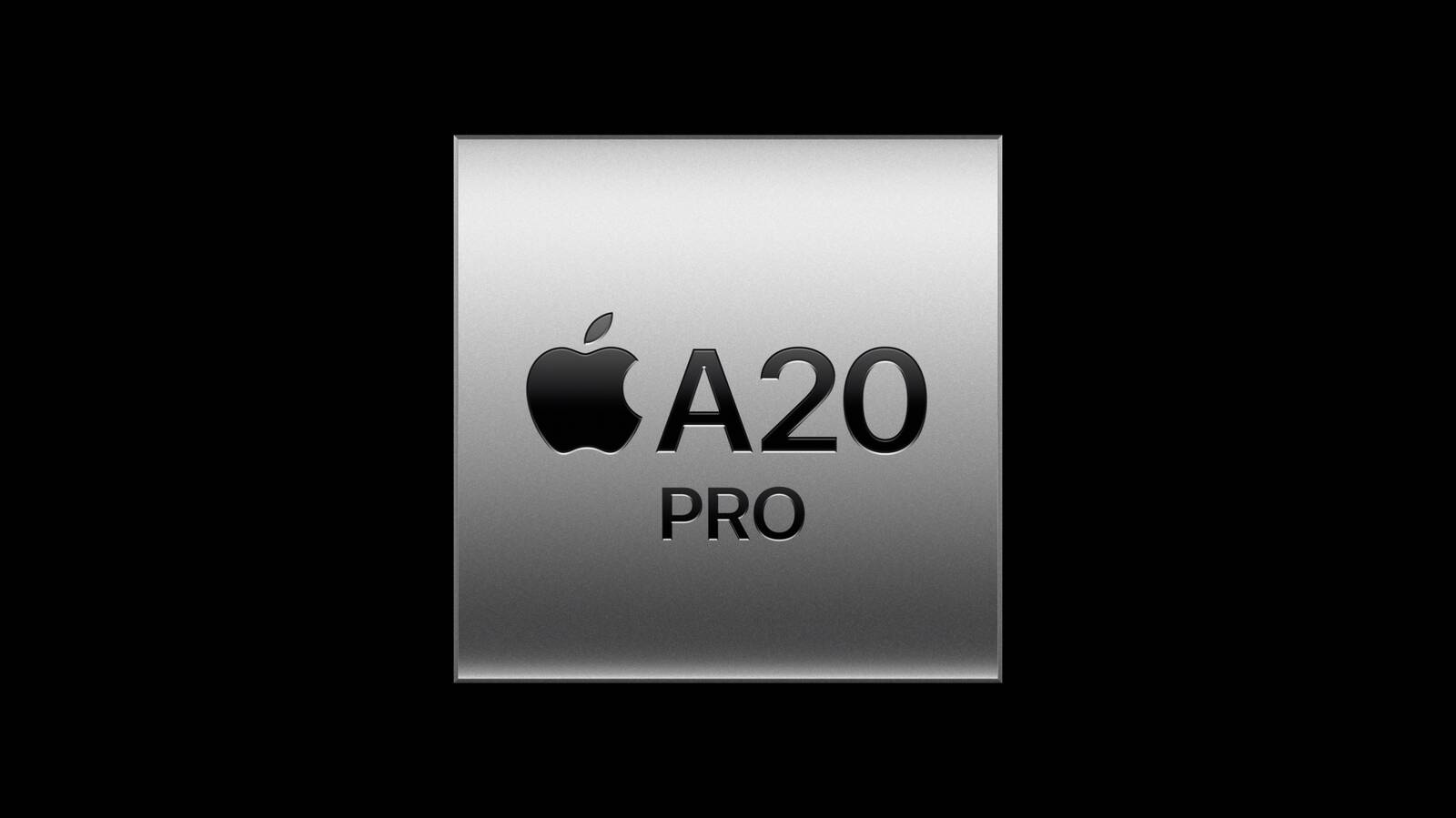
Apple today revealed the A20 Pro chip in the iPhone 18 Pro and ‌iPhone 18 Pro‌ Max, built on a brand new architecture using 2nm process technology.


Apple described the A20 Pro as "an exceptional chip that sets a new bar for mobile computing." The chip has a 6-core CPU design with two new super cores that Apple says are up to 20% faster, calling them "desktop class" and "the fastest in any smartphone," alongside four new efficiency cores.

The GPU has also been redesigned with a 7-core layout that Apple says delivers up to 40% faster graphics performance and increased memory bandwidth. New neural accelerators built into the GPU offer twice the FP8 performance of the previous generation, which Apple said helps the chip run large language models locally on the device.

The A20 Pro features an additional Neural Engine, bringing the total core count to 32. The company says the redesigned Neural Engine delivers 2x the compute of its predecessor, is more efficient, and now supports 8-bit floating point math. Apple called the A20 Pro "the ultimate chip for running advanced on-device models," adding that it ships with "the widest memory interface we've ever shipped in an iPhone."

The company said effective thermal management in the ‌iPhone 18 Pro‌ is critical to unlocking the chip's maximum performance, since efficient heat dissipation determines how much of that performance can be sustained. To support this, Apple redesigned the chip's silicon packaging, describing it as "custom packaging inspired by our M-series chips" that connects the silicon and memory directly to the vapor chamber for improved thermal performance.

Apple compared sustained performance directly against previous generations, citing 40% more sustained performance in ‌iPhone 18 Pro‌'s A20 Pro compared with the A19 Pro in the iPhone 17 Pro, and twice the sustained performance compared with the A18 Pro in the iPhone 16 Pro.
Related Roundup: iPhone 18 Pro

This article, "Apple Unveils A20 Pro as First 2nm Smartphone Chip" first appeared on MacRumors.com

Discuss this article in our forums

  •  

Apple Announces iPhone 18 Pro and iPhone 18 Pro Max

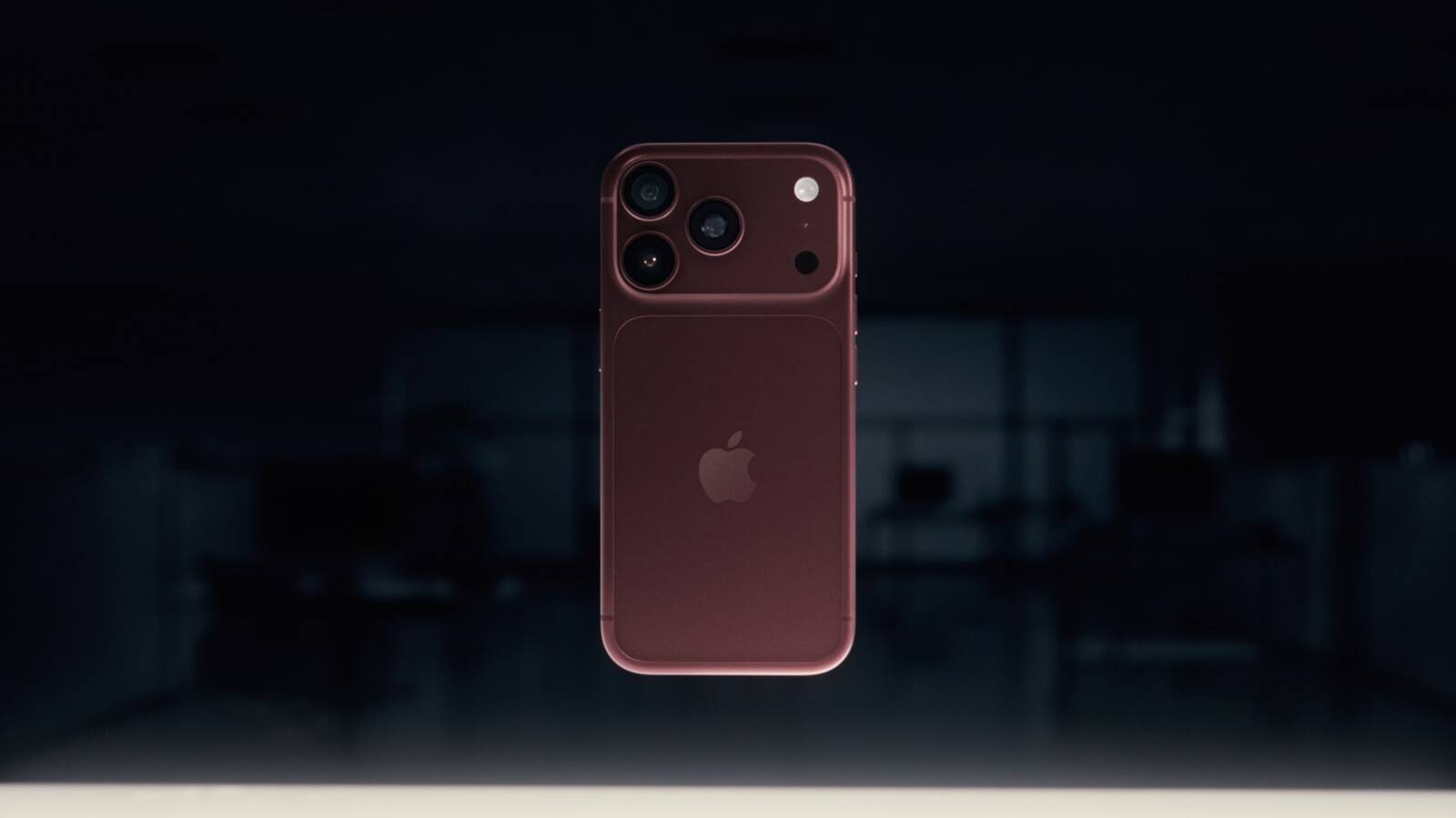
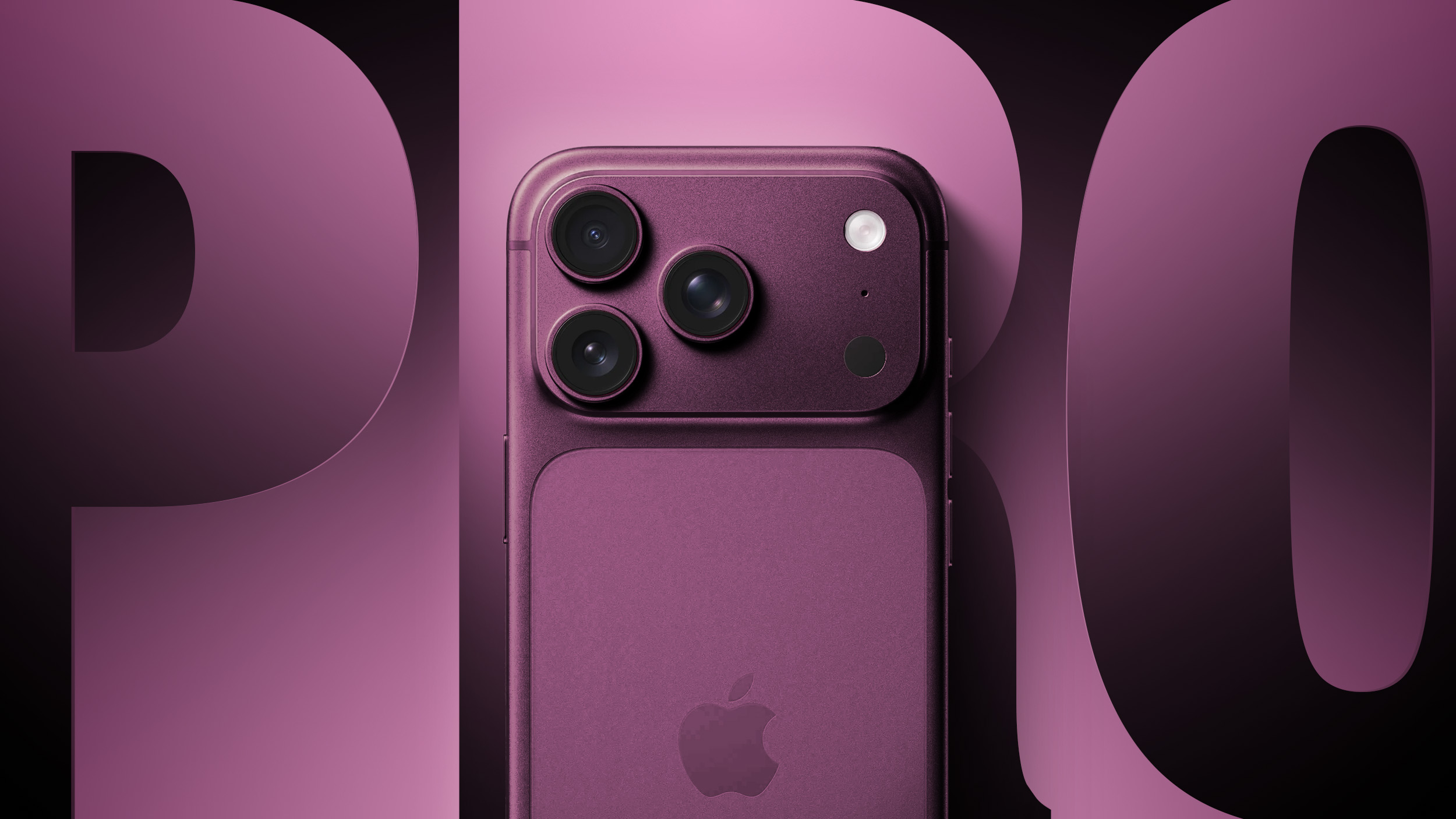
Apple today unveiled the iPhone 18 Pro and iPhone 18 Pro Max, which look very similar to the iPhone 17 Pro models but have several upgrades.


The devices are equipped with the A20 Pro chip and feature longer battery life compared to the previous-generation models. Apple says the iPhone 18 Pro matches the battery life of the iPhone 17 Pro Max, while the iPhone 18 Pro Max has the biggest generational leap in battery life ever with up to 30 hours of usage per full charge.

A20 Pro has a 6-core GPU, a 7-core GPU, and a 32-core Neural Engine. Apple says sustained performance is up to 40% faster compared to the A19 Pro chip.

The vapor chamber cooling system is three times as large in the iPhone 18 Pro models as it is in the iPhone 17 Pro models for improved thermal management.

The main 48-megapixel Fusion camera on both the iPhone 18 Pro and iPhone 18 Pro Max has variable aperture, allowing for greater control of depth of field. In a darker environment, for example, the lens opens wider to let in more light.

Color options include Black, Silver, Glacier, and Burgundy, and the rear aluminum and Ceramic Shield glass area are now more color matched.
Related Roundup: iPhone 18 Pro

This article, "Apple Announces iPhone 18 Pro and iPhone 18 Pro Max" first appeared on MacRumors.com

Discuss this article in our forums

  •  

Apple Event Live Blog: iPhone Duo, iPhone 18 Pro, Apple Watch Series 12 and Everything Announced

Apple’s “Surprise and shine” event kicks off today, September 9, at 10 a.m. PT (1 p.m. ET, 6 p.m. BST, 10:30 p.m. IST) from Apple Park. It is the first September keynote led by new CEO John Ternus, and it is expected to bring the iPhone 18 Pro and iPhone 18 Pro Max, Apple’s first […]

The post Apple Event Live Blog: iPhone Duo, iPhone 18 Pro, Apple Watch Series 12 and Everything Announced appeared first on The Mac Observer.

  •  

Apple iPhone Event Time Today: US, UK, India, Australia and More

Apple’s next major iPhone event is happening today, September 9, under the “Surprise and shine” tagline. Apple has confirmed that the event starts at 10 a.m. Pacific Time at Apple Park in Cupertino, California, which means viewers in several parts of Asia and Australia will watch it during the early hours of September 10. For […]

The post Apple iPhone Event Time Today: US, UK, India, Australia and More appeared first on The Mac Observer.

  •  

iPhone 18 Pro Could Become Apple’s Default New iPhone

Apple’s iPhone 18 Pro is set to take an unusual position in the 2026 lineup, becoming the closest thing to Apple’s default new iPhone as the company reportedly delays the standard iPhone 18 until early 2027. Apple traditionally introduces its standard and Pro iPhones together in September, giving buyers several new models across different price […]

The post iPhone 18 Pro Could Become Apple’s Default New iPhone appeared first on The Mac Observer.

  •  

Apple Event Live Blog: iPhone Duo, iPhone 18 Pro, and More Expected

Apple's "Surprise and Shine" event kicks off today at 10:00 a.m. Pacific Time, where we're expecting to see the foldable iPhone Duo, the iPhone 18 Pro and Pro Max, Apple Watch Series 12 and Ultra 4 models, new AirPods 5 earphones, and perhaps some other announcements.


Apple is providing a live video stream on its website, on YouTube, and in the company's TV app across various platforms. We will also be updating this article with live blog coverage and issuing Twitter updates through our @MacRumorsLive account as the event unfolds. Highlights from the event and separate news stories regarding today's announcements will go out through our @MacRumors account.

As usual, Apple's online store is down for updates ahead of the event.

Sign up for our newsletter to keep up with Apple news and rumors.

Live Updates - No need to refresh
Loading live updates...


Related Roundups: iPhone 18 Pro, iPhone Fold

This article, "Apple Event Live Blog: iPhone Duo, iPhone 18 Pro, and More Expected" first appeared on MacRumors.com

Discuss this article in our forums

  •  

Mac Mini vs. Mac Studio Buyer's Guide: 20 Differences Compared

Apple announced new Mac mini and Mac Studio models last month, with both available to pre-order now. It is the first time in years that Apple has revised its two desktop Macs simultaneously, so which should you choose?
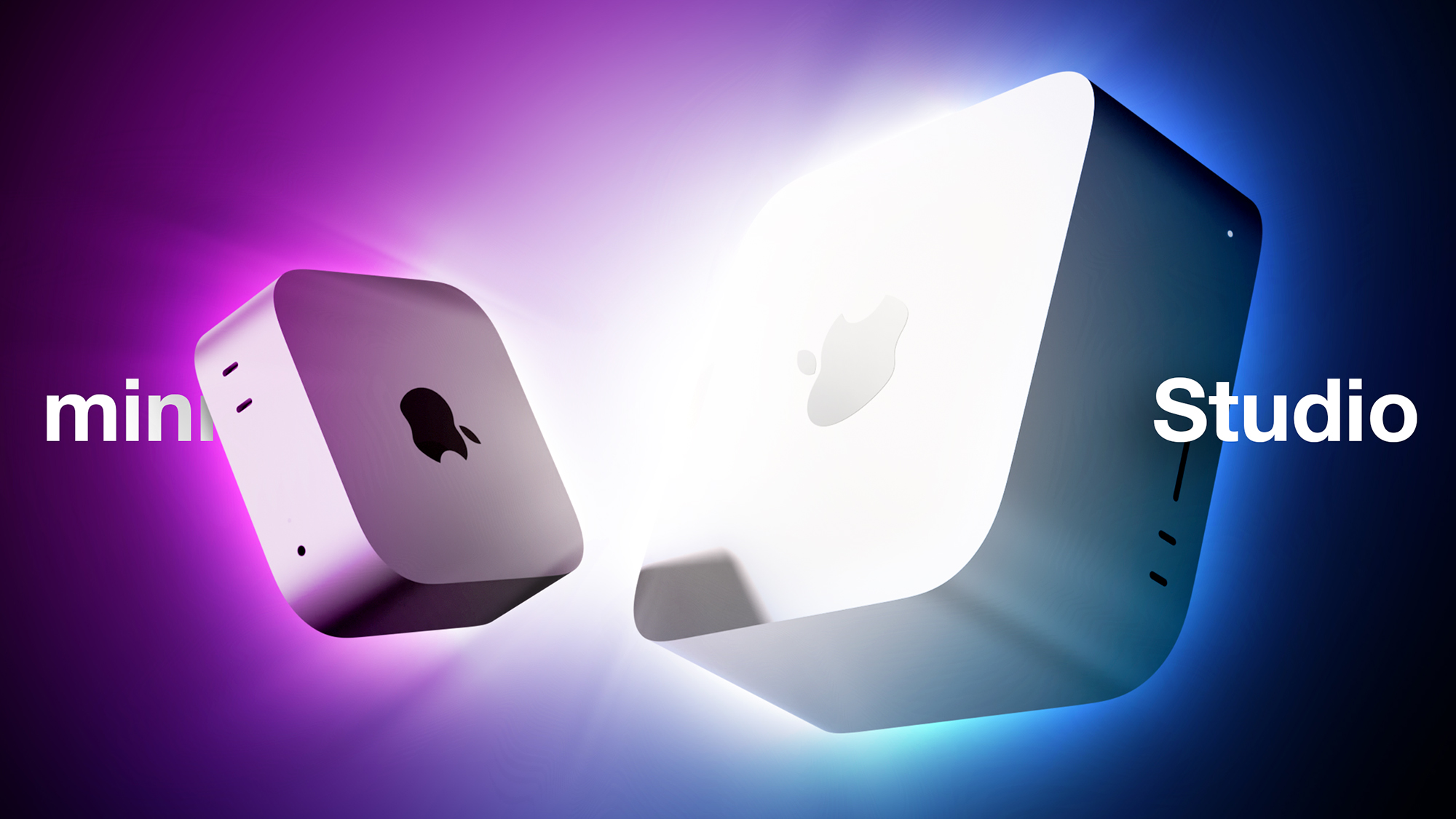

There are now two desktop Macs to choose from following the discontinuation of the Mac Pro, but the prices have moved sharply. The ‌Mac Studio‌ starts at $2,499 and rises to $5,499 for the M5 Ultra model, while the ‌Mac mini‌ starts at $899 with the M6 chip and $1,699 with the M5 Pro.

Those prices come on top of the across-the-board Mac and iPad increases Apple made in June, which took the ‌Mac mini‌ from $599 to $799, the M4 Pro configuration from $1,399 to $1,599, and the ‌Mac Studio‌ from $1,999 to $2,499. The M5 Ultra adds a further $200 to the post-June M3 Ultra price, putting it $1,500 above what the M3 Ultra cost at launch.

Our guide helps to answer the question of how to decide which of these two desktop Macs is best for you. The two machines now share a large number of key features, including:


  • A boxy silver aluminum enclosure with no color options

  • Apple's N1 chip, bringing Wi-Fi 7 and Bluetooth 6 to both machines for the first time

  • Neural Accelerators built into every GPU core

  • Hardware-accelerated ray tracing

  • A Media Engine with hardware-accelerated H.264, HEVC, ProRes, and ProRes RAW, plus AV1 decode

  • A next-generation SSD architecture that Apple says is up to twice as fast as before

  • Genlock support over USB-C for synchronizing a display with a camera, including the iPhone 17 Pro

  • An HDMI port with multichannel audio output

  • A 3.5mm headphone jack with support for high-impedance headphones


Beyond that, the two lines diverge on chip generation, memory capacity, ports, and external display support.


‌Mac mini‌ (M6) ‌Mac mini‌ (M5 Pro) ‌Mac Studio‌ (M5 Max) ‌Mac Studio‌ (M5 Ultra)
M6 chip M5 Pro chip M5 Max chip M5 Ultra chip (two dual-die M5 Max chips joined by UltraFusion)
Made with TSMC's 2nm process Made with TSMC's 3nm process Made with TSMC's ‌3nm‌ process Made with TSMC's ‌3nm‌ process
12-core CPU (2 super cores + 4 performance cores + 6 efficiency cores) 15- or 18-core CPU (up to 6 super cores + 12 performance cores) 18-core CPU (6 super cores + 12 performance cores) 30- or 36-core CPU (up to 12 super cores + 24 performance cores)
12-core GPU 16- or 20-core GPU 32- or 40-core GPU 64- or 80-core GPU
Dual 16-core Neural Engine 16-core Neural Engine 16-core Neural Engine 32-core Neural Engine
Up to 170GB/s memory bandwidth 307GB/s memory bandwidth Up to 614GB/s memory bandwidth 1.2TB/s memory bandwidth
16GB, 24GB, or 32GB unified memory 24GB, 48GB, or 64GB unified memory 32-core GPU: 36GB unified memory
40-core GPU: 48GB, 64GB, or 128GB unified memory
64-core GPU: 96GB or 256GB unified memory
80-core GPU: 96GB, 256GB, or 512GB unified memory
256GB, 512GB, 1TB, or 2TB storage 512GB, 1TB, 2TB, 4TB, or 8TB storage 512GB, 1TB, 2TB, 4TB, or 8TB storage 1TB, 2TB, 4TB, 8TB, or 16TB storage
Video decode engine Video decode engine Video decode engine Two video decode engines
Video encode engine Video encode engine Two video encode engines Four video encode engines
ProRes encode and decode engine ProRes encode and decode engine Two ProRes encode and decode engines Four ProRes encode and decode engines
Support for up to three displays: two at 6K 60Hz or 4K 165Hz, plus a third at 5K 60Hz over Thunderbolt or 4K 60Hz over HDMI Support for up to three displays, all at 6K 60Hz or 4K 165Hz Support for up to five 4K displays, four 6K displays, or two 8K displays Support for up to eight 4K displays, eight 6K displays, or four 8K displays
Two displays per Thunderbolt port All three displays through a single Thunderbolt port
Three rear Thunderbolt 4 ports Three rear Thunderbolt 5 ports Four rear Thunderbolt 5 ports Four rear Thunderbolt 5 ports
Two front USB-C ports Two front USB-C ports Two front USB-C ports Two front Thunderbolt 5 ports
Two rear USB-A ports Two rear USB-A ports
2.5Gb Ethernet or 10Gb Ethernet port 2.5Gb Ethernet or 10Gb Ethernet port 10Gb Ethernet port 10Gb Ethernet port
SDXC card slot (UHS-II) SDXC card slot (UHS-II)
Bottom power button Bottom power button Rear power button Rear power button
Starts at $899 Starts at $1,699 Starts at $2,499 Starts at $5,499


Both enclosures carry over unchanged, so the dimensions of the two devices remain radically different, with the ‌Mac Studio‌ dwarfing the ‌Mac mini‌ in every way.


‌Mac mini‌ ‌Mac Studio‌
Height 2.0 inches (5.0 cm) 3.7 inches (9.5 cm)
Width 5.0 inches (12.7 cm) 7.7 inches (19.7 cm)
Depth 5.0 inches (12.7 cm) 7.7 inches (19.7 cm)
Weight M6: 1.5 pounds (0.67 kg)
M5 Pro: 1.6 pounds (0.73 kg)
M5 Max: 6.0 pounds (2.7 kg)
M5 Ultra: 8.0 pounds (3.6 kg)


Most customers should choose the M5 Pro ‌Mac mini‌ over the M5 Max ‌Mac Studio‌, saving $800 on the base models. The gap widens across custom configurations, since the ‌Mac Studio‌'s memory and storage tiers start higher and climb further.

There is an unusual situation at the bottom of the lineup this year. The $899 ‌Mac mini‌ is the only machine of the four with a latest-generation chip, and the M6 is Apple's first 2nm chip. Its Dual 16-core Neural Engine, which Apple says system frameworks can drive simultaneously, is also more Neural Engine hardware than either the M5 Pro or the M5 Max provides. If your workload leans on on-device machine learning rather than sustained CPU or GPU throughput, the cheapest Mac in this comparison is not obviously the weakest one for the task. The trade-offs are Thunderbolt 4 rather than Thunderbolt 5, a 32GB memory and 2TB storage ceiling, and a single video encode engine.

You should only consider the ‌Mac Studio‌ if you have a professional workflow that can genuinely leverage the M5 Max or the M5 Ultra, along with the additional ports, display outputs, and memory capacity. If you need the ‌Mac Studio‌, you will likely already know that you are looking for a highly powerful machine capable of supporting a specific intense workload. The M5 Ultra is Apple's first quad-die M-series chip, and its four ProRes engines, four video encode engines, and 1.2TB/s of memory bandwidth are aimed squarely at multi-stream video work and large local AI models. The 512GB memory ceiling has no equivalent anywhere else in the Mac lineup, and it is what allows models with hundreds of billions of parameters to run entirely on device.

The ‌Mac Studio‌ still has a superior selection of ports, with four rear Thunderbolt 5 ports on the M5 Max and six in total on the M5 Ultra, plus an SDXC card slot, USB-A, and 10Gb Ethernet as standard. This makes a practical difference for anyone working off fast external storage or camera media. The ‌Mac mini‌ has closed part of the distance by moving to 2.5Gb Ethernet as standard, up from Gigabit.

Clustering over Thunderbolt 5 and RDMA is not a point of difference between the two machines, since it arrived in macOS 26.2 last December and works on any Mac with Thunderbolt 5, including the M5 Pro ‌Mac mini‌ and the previous-generation ‌Mac Studio‌. The exception is the M6 ‌Mac mini‌, which has Thunderbolt 4 and cannot take part.

Both ‌Mac mini‌ models still cap out at three external displays, but they now reach 165Hz at 4K, up from 144Hz on the M4 generation, and the M5 Pro model drives all three through a single Thunderbolt port. For a three-display desk setup at high refresh rates, the M5 Pro ‌Mac mini‌ is sufficient. It is only above three displays, or at 6K and 8K, that the ‌Mac Studio‌ becomes necessary.

A notable exception arises at the top of the ‌Mac mini‌ lineup. An M5 Pro ‌Mac mini‌ configured with additional memory and storage moves close enough to the $2,499 ‌Mac Studio‌ that the comparison changes somewhat. For an increment of a few hundred dollars, the ‌Mac Studio‌ substitutes a chip with roughly twice the memory bandwidth, a second video encode engine, far greater display support, and headroom to 128GB of unified memory. If you are already spending heavily on a ‌Mac mini‌, price the ‌Mac Studio‌ before committing.

If you plan to keep the machine for many years, the ‌Mac Studio‌'s ceiling matters more than its starting price, because it is the only one of the two that can be configured beyond 64GB of unified memory. Buyers weighing the M6 ‌Mac mini‌ against the M5 Pro ‌Mac mini‌ should note that the newer chip generation and the newer process node both sit in the cheaper machine, and that the M5 Pro's advantages are concentrated in multi-core and graphics performance rather than in longevity.

To some extent, purchasing decisions should be driven by budget, but any savings on the computer itself can be put toward a good external display such as Apple's Studio Display, which starts from $1,599 and was one of the few products spared June's price rises. An M6 ‌Mac mini‌ paired with a ‌Studio Display‌ comes to $2,498, a dollar less than a bare M5 Max ‌Mac Studio‌ with nothing to plug into. An M5 Pro ‌Mac mini‌ and a ‌Studio Display‌ together come to $3,298, which is $799 more than the base ‌Mac Studio‌ and $2,201 less than the M5 Ultra ‌Mac Studio‌ with no display at all.

Both machines are available to pre-order now and arrive on Tuesday, September 22, with education pricing of $799 and $1,599 on the two ‌Mac mini‌ models and $2,299 and $5,099 on the two ‌Mac Studio‌ models. ‌Mac Studio‌ configurations with 512GB of unified memory are not due until late October.
Related Roundups: Mac Studio, Mac mini
Tag: M5
Related Forums: Mac Studio, Mac mini

This article, "Mac Mini vs. Mac Studio Buyer's Guide: 20 Differences Compared" first appeared on MacRumors.com

Discuss this article in our forums

  •  

Apple Event Today: 20 Last-Minute 'iPhone Duo' and iPhone 18 Pro Rumors

Apple will be holding an event today starting at 10 a.m. Pacific Time, with the company expected to unveil its first-ever foldable iPhone, the iPhone 18 Pro and iPhone 18 Pro Max, the Apple Watch Series 12 and Apple Watch Ultra 4, AirPods 5, and potentially more. Below, we have recapped 20 last-minute rumors about these devices.


All of the details below were reported by Bloomberg's Mark Gurman today.

  • Apple's foldable iPhone will be named iPhone Duo.

  • iPhone Duo will have Apple Pencil support.

  • iPhone Duo shipments to customers will begin as early as October. It is unclear if pre-orders will begin earlier.

  • iPhone Duo color options: white and dark blue.

  • iPhone Duo starts with 256GB of storage. U.S. pricing will start at around $1,999.

  • iPhone Duo will have Apple's A20 Pro chip and C2 modem for 5G.

  • iPhone Duo will have dual rear 48-megapixel cameras. No Telephoto camera.

  • iPhone 18 Pro and iPhone 18 Pro Max special color: dark red.

  • iPhone 18 Pro models will have longer battery life — the Pro Max especially.

  • iPhone 18 Pro models will have an improved vapor chamber system to reduce overheating.

  • At least one iPhone 18 Pro model's camera will have variable aperture for greater control over depth of field.

  • In the U.S., iPhone 18 Pro and iPhone 18 Pro Max starting prices will be $100 higher compared to iPhone 17 Pro models. This means the iPhone 18 Pro would start at $1,199, and the iPhone 18 Pro Max would start at $1,299.

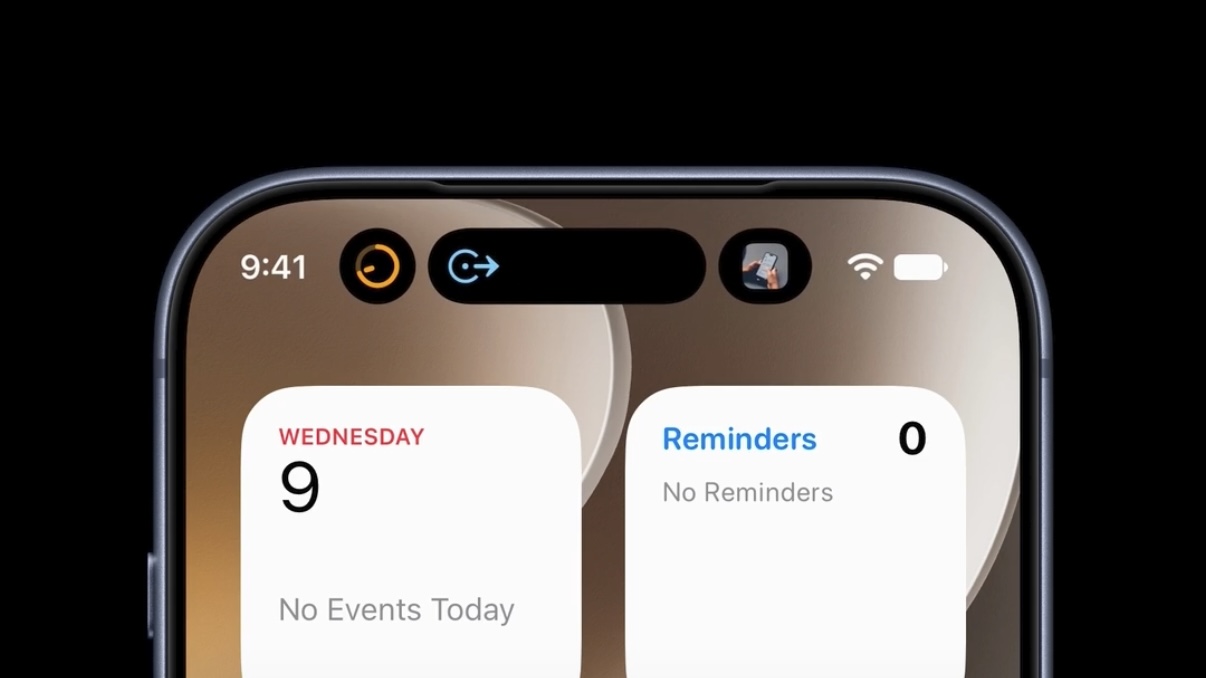
  • iPhone 18 Pro's smaller Dynamic Island can show three Live Activities, up from two.

  • Do not expect a regular iPhone 18 model to be announced today, as Apple reportedly plans to launch that device in the first quarter of 2027.

  • Apple Watch Series 12 and Apple Watch Ultra 4 models will have new case color options.

  • Apple Watch Series 12 will have a ceramic case option.

  • Apple Watch Ultra 4 will have longer battery life compared to the Ultra 3.

  • An all-new Readiness app for the Apple Watch will be announced today.

  • The new Apple Watch models will offer a new daily summary feature.

  • AirPods 5 will be unveiled today — with and without active noise cancellation.
Related: Apple Shares Mysterious Teaser Video Before 'iPhone Duo' Event Today
Related Roundup: iPhone 18 Pro

This article, "Apple Event Today: 20 Last-Minute 'iPhone Duo' and iPhone 18 Pro Rumors" first appeared on MacRumors.com

Discuss this article in our forums

  •  

Apple Shares Mysterious Teaser Video Before 'iPhone Duo' Event Today

Apple will be holding an event today starting at 10 a.m. Pacific Time, with the company expected to unveil new iPhones and much more.


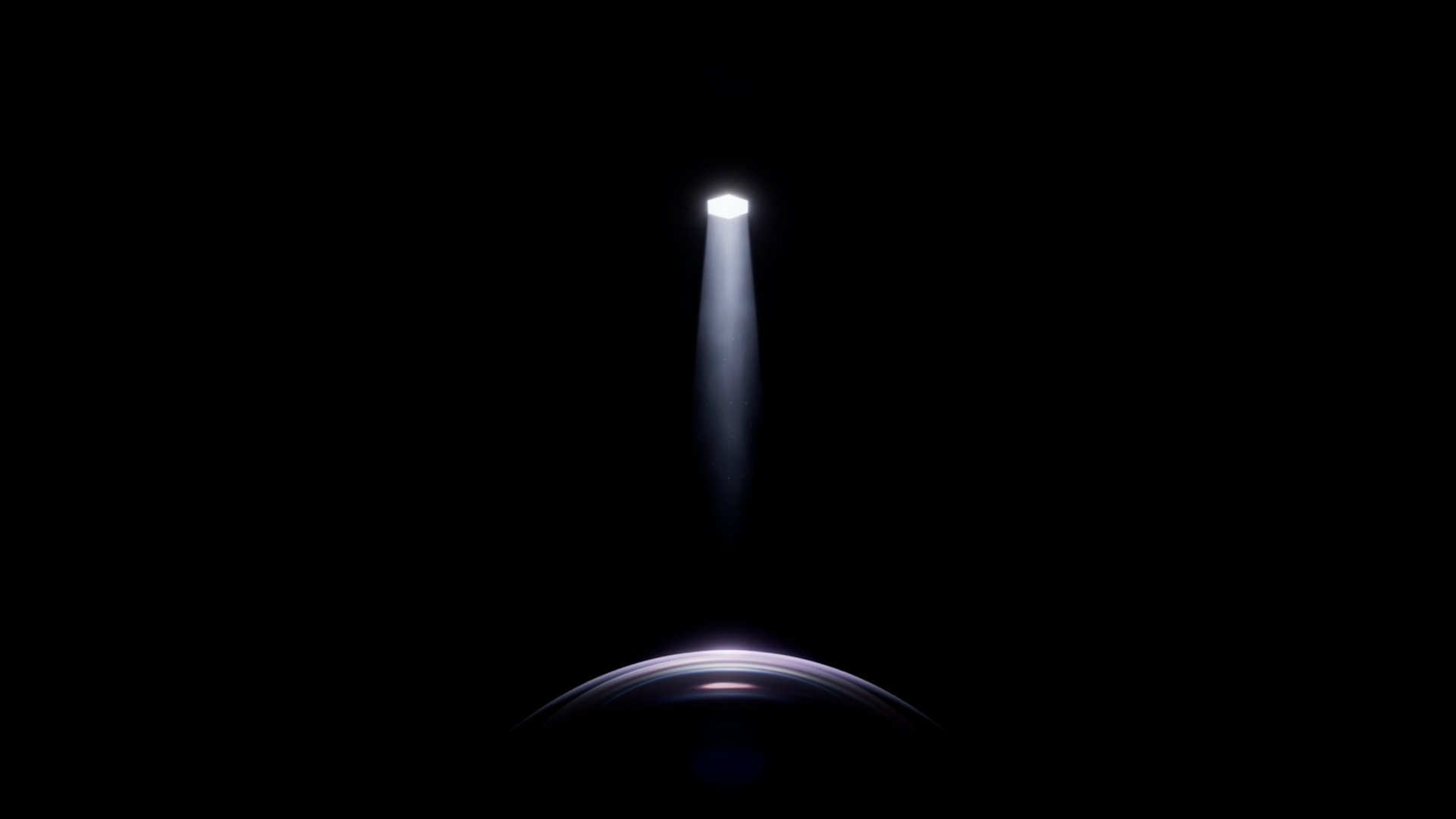
Ahead of the event, Apple's new CEO John Ternus just shared a mysterious teaser video. The short clip appears to show a beam of light that is shining onto the edge of an iPhone. The light is coming from a hexagonal shape that changes size, which could hint at the iPhone 18 Pro's rumored mechanical aperture upgrade.

The main 48-megapixel Fusion camera on the iPhone 18 Pro and/or iPhone 18 Pro Max is rumored to have a variable aperture, which would allow users to control the amount of light that passes through the camera's lens and reaches the sensor. This would provide greater control over depth of field. However, given that iPhones have smaller image sensors due to smartphone size constraints, it is unclear exactly how meaningful this improvement would be.

pic.twitter.com/CLu9eRDP5b

— John Ternus (@johnternus) September 9, 2026

In addition to the iPhone 18 Pro models, Apple is expected to unveil its first-ever foldable iPhone today. The device is reportedly named iPhone Duo.

Ternus became Apple's CEO on September 1, succeeding Tim Cook, who is now the company's executive chairman. Ternus joined Apple in 2001, became a VP of hardware engineering in 2013, and became SVP of hardware engineering in 2021.

MacRumors is in attendance at Steve Jobs Theater and will be providing live coverage of Apple's event today, so stay tuned. It will be a very busy day.
Related Roundup: iPhone 18 Pro

This article, "Apple Shares Mysterious Teaser Video Before 'iPhone Duo' Event Today" first appeared on MacRumors.com

Discuss this article in our forums

  •  

2026 MacBook Pro Gets Significant Discounts, Up to $600 Off Select Models

Amazon and Best Buy today have big discounts on the M5 Pro and M5 Max MacBook Pro, with up to $600 off select models. A handful of models have better discounts when compared to the last time we tracked these deals, coming in as much as $100 off previous price points.

Note: MacRumors is an affiliate partner with Amazon. When you click a link and make a purchase, we may receive a small payment, which helps us keep the site running.

We're focusing on Amazon in the links below, but you can find many deals matched at Best Buy this week.

14-Inch MacBook Pro


New massive discounts have hit the 14-inch models, with $500 off the 18-Core/24GB/2TB M5 Pro MacBook Pro, now priced at $2,699.00, and a giant $600 off the 36GB/2TB M5 Max model, now priced at $3,499.00. These are both the best prices we've tracked on the MacBook Pro in the wake of the summertime price hikes.


16-Inch MacBook Pro


In terms of the larger display models, we're tracking discounts on all four models on Amazon. These start at $2,759.00 for the 24GB/1TB M5 Pro configuration ($240 off), and reach up to $4,499.00 for the 48GB/2TB M5 Max device ($500 off).


If you're on the hunt for more discounts, be sure to visit our Apple Deals roundup where we recap the best Apple-related bargains of the past week.


Deals Newsletter


Interested in hearing more about the best deals you can find in 2026? Sign up for our Deals Newsletter and we'll keep you updated so you don't miss the biggest deals of the season!


Related Roundup: Apple Deals

This article, "2026 MacBook Pro Gets Significant Discounts, Up to $600 Off Select Models" first appeared on MacRumors.com

Discuss this article in our forums

  •  

Hurricane Lowell Floods Western Hawaii, New Forest Wildfire Threatens Woodland — Today’s Environmental Briefing for Wed, Sep 9 2026

Flooded roadway with uprooted trees in western Hawaii after Hurricane Lowell

Across the stories today, a common thread emerges: the gap between what protects us on paper and what protects us in practice. Again and again, communities are discovering that designations, promises, and permits only matter when someone is willing to enforce them — and that when systems fail, it’s ordinary people, and often the most vulnerable, who absorb the shock.

Nowhere is that clearer than in Jackson, Mississippi, where a federal appeals court ruled this week that the Constitution guarantees no right to clean water. For residents who have lived through years of contaminated taps and boil-water notices, the decision lands as a gut-punch reminder that legal frameworks haven’t caught up to environmental reality. A similar tension runs through the Guardian’s reporting on datacenter wastewater in Wyoming, where testing turned up a rare, potentially hazardous bacterium, and on English golf clubs, where one in twelve have quietly broken water extraction rules amid growing drought stress. Behind the numbers are real communities adapting in real time — often without knowing what’s actually flowing through their pipes or being pulled from their aquifers.

That same gap between promise and delivery surfaces in the UK’s datacentre boom, which new analysis suggests will produce only a quarter of the jobs once advertised, even as it strains the national grid. It echoes in Georgia, where a once-booming EV manufacturing corridor is hitting turbulence under shifting federal policy — a reminder that industrial transitions built on incentives can be as fragile as the politics that fund them.

Yet the day’s coverage also points to growing momentum around care, restoration, and reckoning. Hurricane Lowell’s damage across Hawaii’s western islands — toppled trees, flooded roads, thousands without power — sits alongside quieter stories of renewal: Gloucestershire’s proposal to reintroduce beavers as a defense against drought and flooding, Douglas Head’s new conservation status on the Isle of Man, and Coventry’s investment in Longford Nature Park. These are small, deliberate acts of stewardship, the kind Wendell Berry spent his life advocating for. His death last week, at 92, feels newly resonant this week — a farmer-poet who insisted that loving a place well was itself a form of environmental action, long before it became policy language.

Farther afield, the human cost of extraction runs deep. In Peru and Brazil, mercury from illegal gold mining is showing up in children’s blood and in fish that families have eaten for generations, forcing painful dietary changes in communities that did little to cause the contamination. In Indonesia, El Niño-fueled fires are pushing orangutans out of burning forests, while in Uttarakhand, India, women — who gather firewood and fodder — are bearing the brunt of increasingly long fire seasons. In Colombia, the Wiwa community’s decision to relocate their village down the mountain is less retreat than adaptation, a recognition that sacred land is changing faster than tradition can hold still.

It’s a reminder that progress and pressure often arrive together — a new spaceport investment in Shetland, a badger vaccination program under scientific scrutiny, a push for a Natural History GCSE to reconnect children with the outdoors. Each represents a small bet on the future, even as larger systems strain under climate and economic pressure.

As the week unfolds, watch whether the Jackson ruling prompts congressional attention, whether Britain’s Green Party succeeds in forcing transparency around ecosystem collapse risks, and whether Gloucestershire’s beavers get their chance to prove that sometimes the oldest solutions are still the best ones.

The post Hurricane Lowell Floods Western Hawaii, New Forest Wildfire Threatens Woodland — Today’s Environmental Briefing for Wed, Sep 9 2026 first appeared on EnviroLink Network.

  •  

Leaked Video Shows iPhone 18 Pro's 3-in-1 Dynamic Island in Action

A leaker has activated Apple's upcoming three-item Dynamic Island mode inside the iOS 27 simulator, offering the first video demonstration of the new iPhone 18 Pro feature.


The leaker, known as pdfu, posted a video showing the ‌Dynamic Island‌ toggling between three simultaneous Live Activities, matching what Bloomberg's Mark Gurman described in his report earlier today. "The new ‌Dynamic Island‌ with 3 items is already supported in ‌iOS 27‌," pdfu wrote.

Great reporting from @markgurman. The new Dynamic Island with 3 items is already supported in iOS 27. Here's what it looks like.

The code requires a sensor region less than 100 layout points wide, or below 16.57 mm for this new mode. iPhone 17 Pro was 20.76 mm. https://t.co/jZshu4rFXx pic.twitter.com/mL46rcEirh

— pdfu (@itspdfu) September 9, 2026


According to pdfu, the underlying code requires a sensor region less than 100 layout points wide to enable the new mode, or below 16.57mm. Layout points are Apple's device-independent unit for describing on-screen dimensions, and they scale differently depending on a display's resolution. By comparison, pdfu notes that the sensor region on the current iPhone 17 Pro measures 20.76mm, meaning Apple would need to shrink the hardware by roughly 20% to unlock the new software behavior.

The ‌iPhone 18 Pro‌ and ‌iPhone 18 Pro‌ Max have been rumored to feature a smaller ‌Dynamic Island‌ for months, but reports about support for a third, additional ‌Dynamic Island‌ Live Activity is new. Since the iPhone 14 Pro launched in 2022, the ‌Dynamic Island‌ has only supported two Live Activities, so adding a third seems like a worthwhile way to demonstrate the utility of shrinking the region.
Related Roundup: iPhone 18 Pro

This article, "Leaked Video Shows iPhone 18 Pro's 3-in-1 Dynamic Island in Action" first appeared on MacRumors.com

Discuss this article in our forums

  •  

Apple Store Down Ahead of 'Surprise and Shine' iPhone 18 Pro Event

Apple's online storefront has gone down ahead of the "Surprise and Shine" Apple event taking place later today, where several new products are expected to be announced.


Apple is expected to announce new iPhone 18 Pro models and its all-new foldable iPhone Duo, as well as Apple Watch Series 12, Apple Watch Ultra 4, and AirPods 5. The company could also announce the release dates of its next major software updates including iOS 27 and macOS Golden Gate, and it may even preview other upcoming new products.

MacRumors will have in-depth coverage of today's Apple event, which kicks off at 10:00 a.m. Pacific Time, including a live blog on our website and posts via @MacRumorsLive on X. For a full rundown of everything we expect to see, be sure to check out our guide.
Related Roundup: iPhone 18 Pro

This article, "Apple Store Down Ahead of 'Surprise and Shine' iPhone 18 Pro Event" first appeared on MacRumors.com

Discuss this article in our forums

  •  

New Owl Species Discovered in Peru

The Jalca horned owl (Bubo jalca). Image credit: López-Lanús et al.

A horned owl living in a narrow strip of high-Andean grassland in northern Peru is a species new to science, according to a paper published in July 2026 in the journal Audiornis.

The post New Owl Species Discovered in Peru appeared first on Sci.News: Breaking Science News.

  •  

Foldable iPhone Ultra May Cost $2,000 but Still Miss These Features

Apple is expected to introduce its first foldable iPhone on September 9, with the device widely rumored to carry the iPhone Ultra name and a starting price of around $2,000. However, its premium price does not mean it will include every feature available on the iPhone 18 Pro lineup. The foldable design reportedly measures around […]

The post Foldable iPhone Ultra May Cost $2,000 but Still Miss These Features appeared first on The Mac Observer.

  •  

Apple Rumor Says iPhone Air 2 May Become the New Entry-Level iPhone

Apple may make another major change to its iPhone lineup next spring, with a new rumor claiming the iPhone Air 2 could take the place of the standard iPhone 18 and become Apple’s mainstream model. According to the latest claim, Apple would position the iPhone Air 2 as the entry point to its flagship lineup […]

The post Apple Rumor Says iPhone Air 2 May Become the New Entry-Level iPhone appeared first on The Mac Observer.

  •  
❌