❌

Reading view

115-Million-Year-Old Dinosaur Fossil Recovered from Deep Drill Core in China

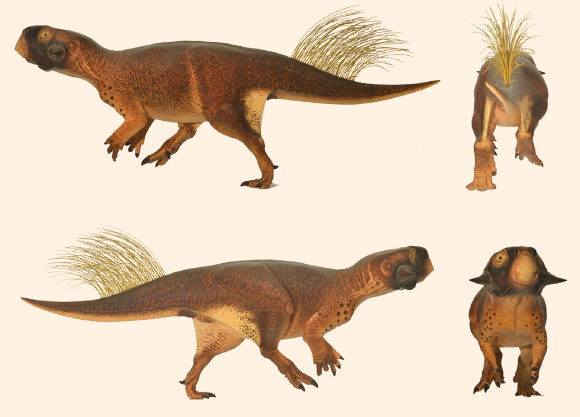
Model of Psittacosaurus sp. based on skin and pigmentation patterns on the specimen from the Senckenberg Museum, Germany. Image credit: Jakob Vinther et al.

Scientists have identified the first dinosaur fossil from a remote western section of the Bayan Gobi Formation in China’s Inner Mongolia, extending the known geographic range of dinosaur fossils in this important Early Cretaceous rock unit.

The post 115-Million-Year-Old Dinosaur Fossil Recovered from Deep Drill Core in China appeared first on Sci.News: Breaking Science News.

  •  
  •  

Dinosaur-Killing Asteroid Didn’t Just Strike Earth, Its Dust Cloud Cooked It

Ankylosaurus magniventris, a large armored dinosaur species, witnesses the impact of an asteroid, falling on the Yucatan peninsula 66 million years ago. Image credit: Fabio Manucci.

The Chicxulub impact not only plunged Earth into an impact winter but also produced a dust blanket that later overheated the planet, according to new research from Purdue University and the University of Colorado, Boulder.

The post Dinosaur-Killing Asteroid Didn’t Just Strike Earth, Its Dust Cloud Cooked It appeared first on Sci.News: Breaking Science News.

  •  

Did Early Snakes Burrow, Swim or Crawl? 80‑Million‑Year‑Old Fossil Suggests: All Three

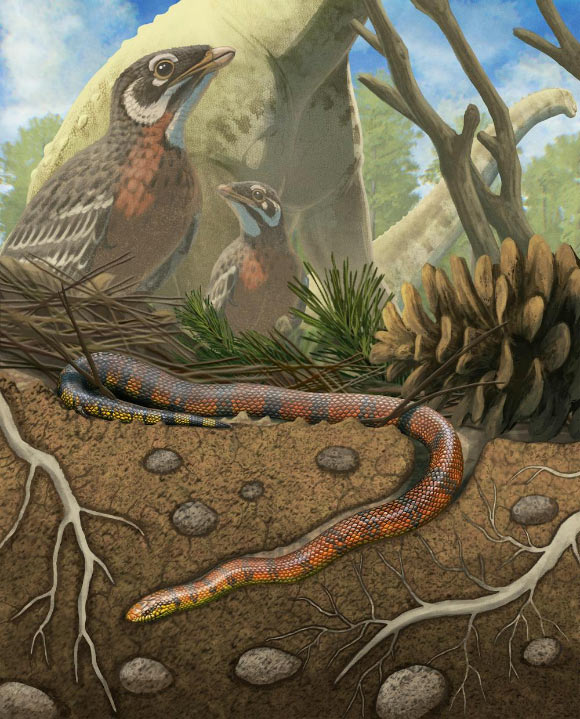
Life reconstruction of Tametara mirim. Image credit: Gabriel Ugueto.

Paleontologists have unearthed a remarkably preserved fossil snake in Brazil that is reshaping ideas about how the earliest snakes lived and complicating the long-running debate over whether their ancestors burrowed underground, swam in the sea or crawled the surface.

The post Did Early Snakes Burrow, Swim or Crawl? 80‑Million‑Year‑Old Fossil Suggests: All Three appeared first on Sci.News: Breaking Science News.

  •  

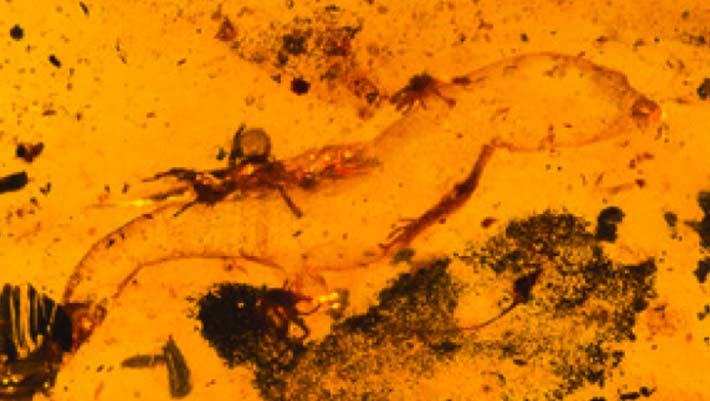
Oldest Known Male Gecko Found Preserved in Kachin Amber

Carinasquama rusmithii. Image credit: Daza et al., doi: 10.3897/sjp.145.188227.

Paleontologists have described a new genus and species of ancient gecko found in two pieces of amber from the 99-million-year-old (mid-Cretaceous) amber deposits in Kachin province, Myanmar.

The post Oldest Known Male Gecko Found Preserved in Kachin Amber appeared first on Sci.News: Breaking Science News.

  •  

Dinosaurs May Have Been Wiped Out by ‘Oddball’ Space Rock

This painting depicts an asteroid slamming into tropical, shallow seas of the sulfur-rich Yucatan Peninsula in what is today southeast Mexico. The aftermath of this immense asteroid collision, which occurred approximately 65 million years ago, is believed to have caused the extinction of the dinosaurs and many other species on Earth. Shown in this painting are pterodactyls, flying reptiles with wingspans of up to 50 feet, gliding above low tropical clouds. Image credit: Donald E. Davis / NASA.

By analyzing nickel isotopes preserved in the 66-million-year-old debris left by the Chicxulub impact, researchers conclude that the asteroid responsible for Earth’s last mass extinction most likely belonged to an exceptionally rare class of primitive meteorites called carbonaceous chondrites of the Ornans type (CO chondrites).

The post Dinosaurs May Have Been Wiped Out by ‘Oddball’ Space Rock appeared first on Sci.News: Breaking Science News.

  •  

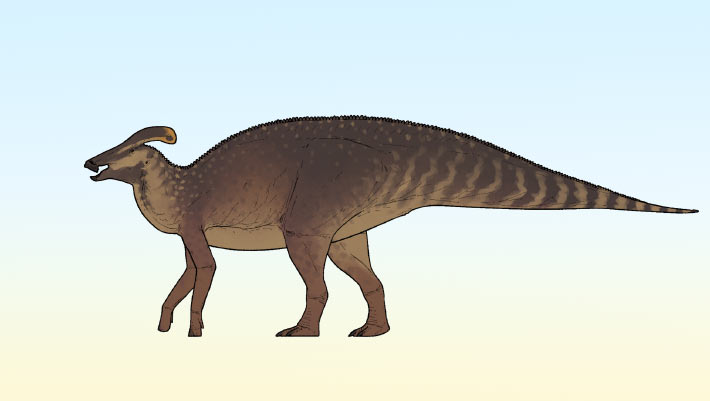
New Crested Dinosaur Species Identified in Canada

Life reconstruction of Plesiolophus warnerensis. Image credit: Connor Ashbridge / CC BY 4.0.

A new genus and species of lambeosaurine hadrosaurid dinosaur has been identified in southern Alberta, Canada, dating back 77 million years to the Campanian age of the Cretaceous period.

The post New Crested Dinosaur Species Identified in Canada appeared first on Sci.News: Breaking Science News.

  •  

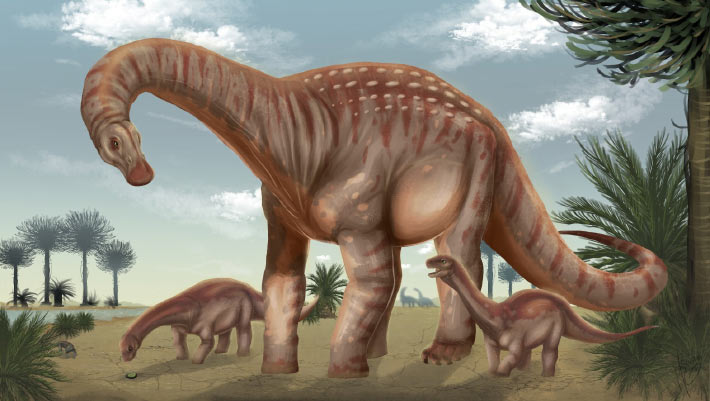
Paleontologists Discover New Species of Titanosaur in Uruguay

Mesetasaurus protector. Image credit: Merlina Ramírez.

Paleontologists in Uruguay have identified a new species of aeolosaurine titanosaur from a pair of remarkably well-preserved tailbones unearthed in the 1980s near the Uruguay River.

The post Paleontologists Discover New Species of Titanosaur in Uruguay appeared first on Sci.News: Breaking Science News.

  •  

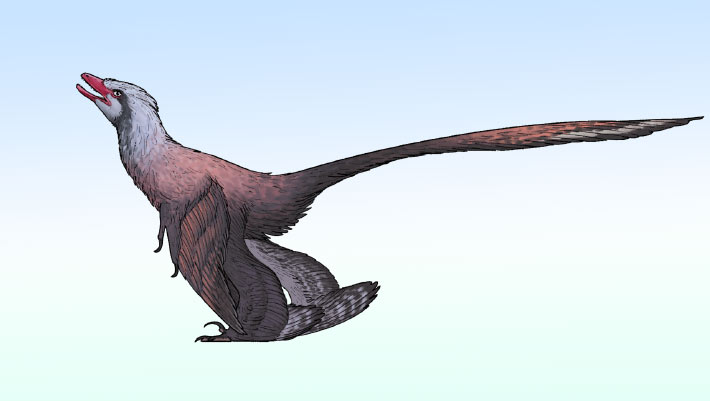
New Feathered Dinosaur from China Had Peacock-Like Tail

Changzhousaurus sinensis. Image credit: Connor Ashbridge / CC BY 4.0.

A new genus and species of four-winged pennaraptoran dinosaur from the Early Cretaceous of northern China is adding another twist to the story of how birds evolved from their dinosaur ancestors.

The post New Feathered Dinosaur from China Had Peacock-Like Tail appeared first on Sci.News: Breaking Science News.

  •  

113-Million-Year-Old Pterosaur Fossil Reveals What Flying Reptiles Ate

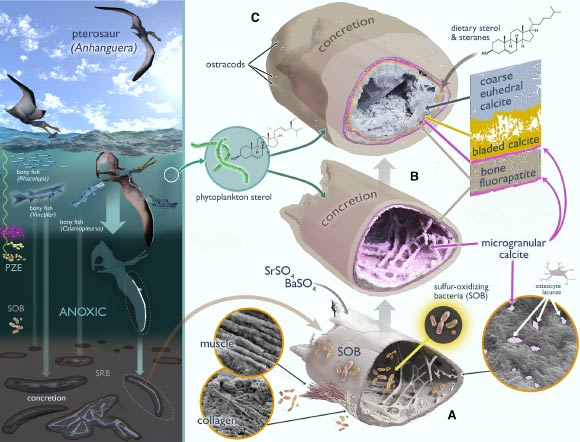
Grice et al. integrate organic geochemical analyses with high-resolution micro-mineral imaging of a three-dimensionally preserved Cretaceous pterosaur wing phalanx from Brazil to reveal steroid biomarkers and multi-stage mineralization pathways underlying its preservation. Image credit: Grice et al., doi: 10.1016/j.isci.2026.116199.

A 113-million-year-old pterosaur fossil from northeastern Brazil has yielded rare evidence of soft tissues, organic molecules and chemical traces of a diet heavy in fish and cephalopods such as squid or nautilus relatives.

The post 113-Million-Year-Old Pterosaur Fossil Reveals What Flying Reptiles Ate appeared first on Sci.News: Breaking Science News.

  •  

125-Million-Year-Old Crocodile Relative Reveals Its True Colors

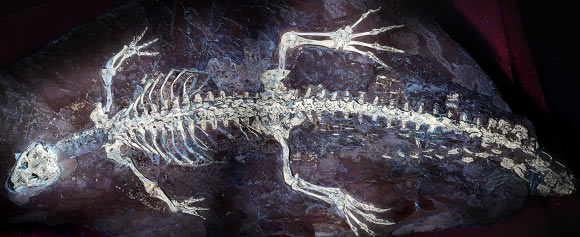
The holotype specimen of Montsecosuchus depereti. Image credit: Castillo-Visa et al., doi: 10.1093/zoolinnean/zlag076.

Exceptionally preserved skin of Montsecosuchus depereti, an extinct crocodylomorph no larger than a house cat that prowled the tropical wetlands of Early Cretaceous Spain, has allowed paleontologists to reconstruct details of its scales, sensory organs and even possible banded markings along its tail.

The post 125-Million-Year-Old Crocodile Relative Reveals Its True Colors appeared first on Sci.News: Breaking Science News.

  •  

Were dinosaurs doomed before the asteroid hit?

Around 66 million years ago, an asteroid wiped out 75% of the species on Earth. This event caused the extinction of all dinosaurs except birds, referred to as non-avian dinosaurs. However, an open question in paleontology is whether the dinosaurs were already declining before the asteroid hit. Many scientists think that around 5 to 10 million years before the extinction event, dinosaurs became less biologically diverse across America, making them more prone to extinction. 

To investigate this hypothesis, scientists recently revisited fossils in a rock layer from the end of the dinosaur era that previous researchers had incorrectly dated. The bulk of the fossils from this period had previously been collected from a different section of rocks called the Hell Creek Formation in Montana. These researchers studied a rock layer in New Mexico that is exposed to the surface, known as the Naashoibito Member. It’s approximately 30 meters (about 100 feet) thick and formed from ancient river sediments. 

To determine when the Naashoibito Member formed, the scientists measured the decay of radioactive elements within its mineral grains over time, a technique called radiometric dating. The scientist reasoned that these mineral grains must have crystallized before being transported and incorporated into the Naashoibito Member, so their youngest ages should provide a maximum depositional age. 

They determined the ages of 1,046 crystals of the mineral feldspar from 2 dinosaur-bearing rock layers in the Naashoibito Member. Based on these ages, the researchers found that a sandstone within 5 meters (about 16 feet) of the lowest boundary of the Naashoibito Member must be younger than 66.9 million years old. They found that the other layer, which is around 3.5 meters (11 feet) from the base of the lowest boundary, must be younger than 66.4 million years old. These age ranges indicated that the sandstone contains dinosaur fossils formed 400,000 years before their extinction.

Next, the researchers measured the direction of magnetic minerals inside the rocks, using a practice called magnetostratigraphy. The direction of these minerals indicates where Earth’s magnetic field was pointing at that time. Scientists have shown that the Earth’s magnetic field has flipped multiple times over Earth’s history, so they can use these magnetic signals to create a timescale for when the sediments formed. 

The researchers wanted to determine whether the magnetic minerals were lined up in a direction like today, called normal polarity, or the opposite, called reverse polarity. The researchers found one rock layer with normal polarity at the base of the Naashoibito Member, and one with reverse polarity in the upper part of the Naashoibito Member. These magnetic field directions lined up with 2 known polarity intervals over a timeline that matched the feldspar dates. Together, these data demonstrated that the Naashoibito Member formed at the end of the dinosaur era, around the same time as the Hell Creek Formation.

Next, the researchers wanted to test whether non-avian dinosaurs maintained their diversity across different regions of Western North America during this time period. They compared fossil patterns from locations across North America using statistical grouping methods that determine how similar or different their environments were. They found that temperature, rather than geographical location alone, was the best predictor of diversity at the extinction event. 

The team concluded that a diverse population of Naashoibito dinosaurs lived at around the same time as the Hell Creek dinosaurs. Earlier scientists surmised that dinosaurs were already on the decline because they studied the colder northern regions, where diversity was lower. However, these results suggest that warmer conditions in the south still supported diverse dinosaur populations. Together, this evidence suggests that dinosaurs were still diverse and thriving 66 million years ago, and that their extinction was indeed a result of the asteroid impact.


The post Were dinosaurs doomed before the asteroid hit? appeared first on Sciworthy.

  •  

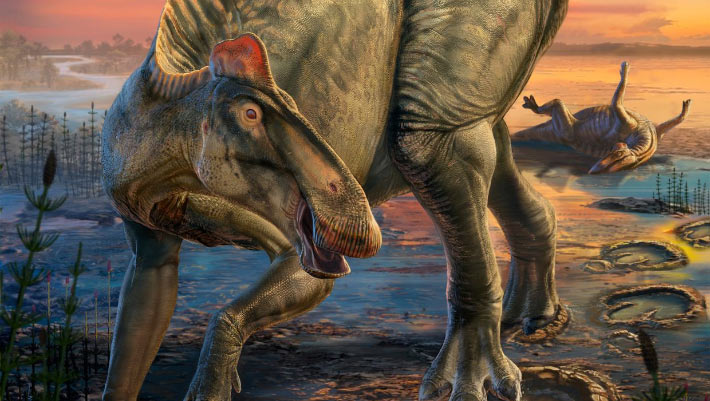
New Duck-Billed Dinosaur Unearthed in Romania

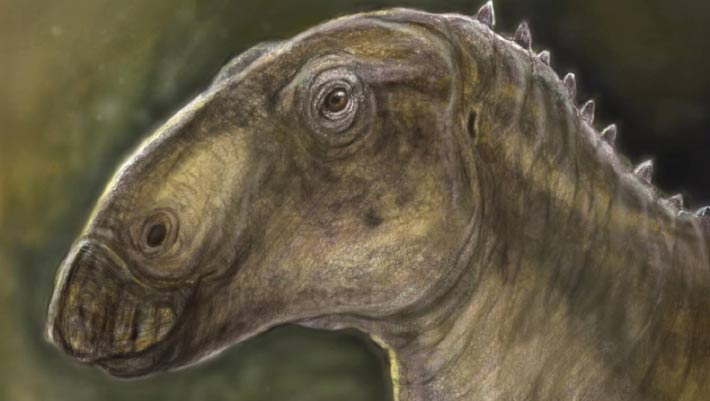
Kryptohadros kallaiae. Image credit: Tibor Pecsics.

An international team of paleontologists from Romania, Hungary and Italy has identified a new genus and species of herbivorous, duck-billed dinosaur from an incomplete skeleton unearthed in the Hațeg Basin, a bowl-shaped depression in the Carpathians of present-day Romania.

The post New Duck-Billed Dinosaur Unearthed in Romania appeared first on Sci.News: Breaking Science News.

  •  

Fossil Discovery in Patagonia Reveals New Species of Horned Turtle

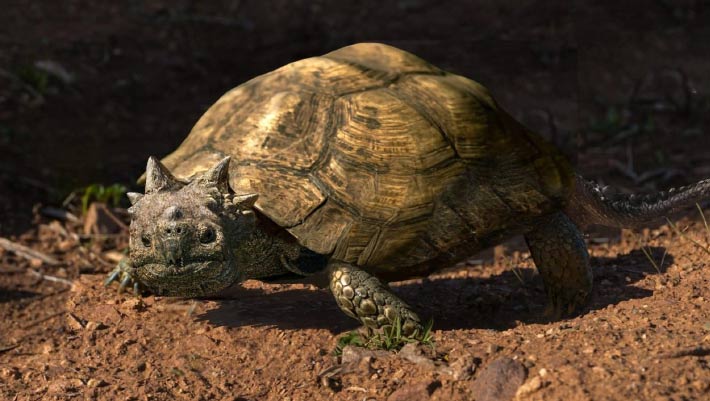
An artist’s impression of Patagoniaemys aeschyli. Image credit: Nawel Vazquez / Museo Argentino de Ciencias Naturales ‘Bernardino Rivadavia’ / CONICET.

Paleontologists have identified a new species of meiolaniform turtle from northern Patagonia, Argentina, that lived during the Maastrichtian age, just before the asteroid-triggered mass extinction that wiped out all non-avian dinosaurs.

The post Fossil Discovery in Patagonia Reveals New Species of Horned Turtle appeared first on Sci.News: Breaking Science News.

  •  

Fish Fossils from Early Paleocene Fill 10-Million-Year Gap after Dinosaur Extinction

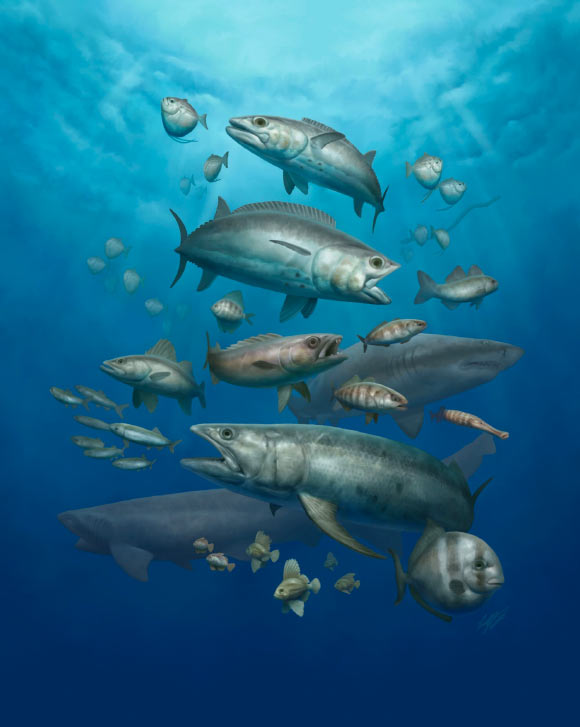
Marine fishes from the Early Paleocene site of Qreiya 3 in the Eastern Desert of Egypt. Image credit: Ian Baylatry.

Paleontologists have described an assemblage of marine fish fossils from the 62.2-million-year-old site of Qreiya 3 in the Eastern Desert of Egypt, providing a window into this transition.

The post Fish Fossils from Early Paleocene Fill 10-Million-Year Gap after Dinosaur Extinction appeared first on Sci.News: Breaking Science News.

  •  

New Microraptorine Dinosaur Discovered in China

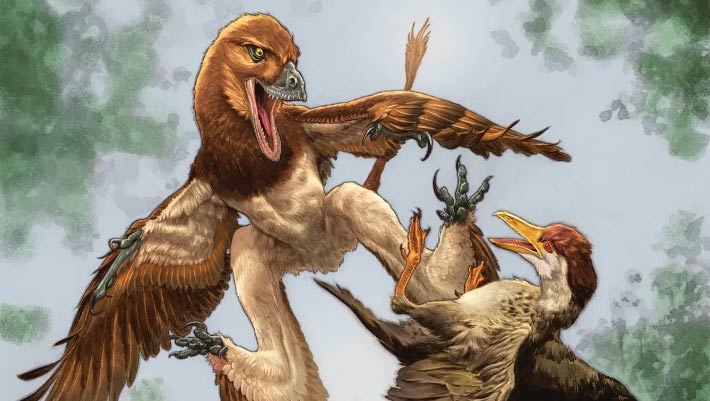
Jian changmaensis (left) attacks the early bird Gansus yumenensis (right) in what is now the Changma Basin of northwestern China approximately 120 million years ago. Image credit: Lewis LaRosa / Jão Canola.

Jian changmaensis is the first non-avian dinosaur found at a paleontological site that has yielded more than 100 specimens of Early Cretaceous birds.

The post New Microraptorine Dinosaur Discovered in China appeared first on Sci.News: Breaking Science News.

  •  

New Dinosaur Species from Argentina May Have Specialized in Catching Fish

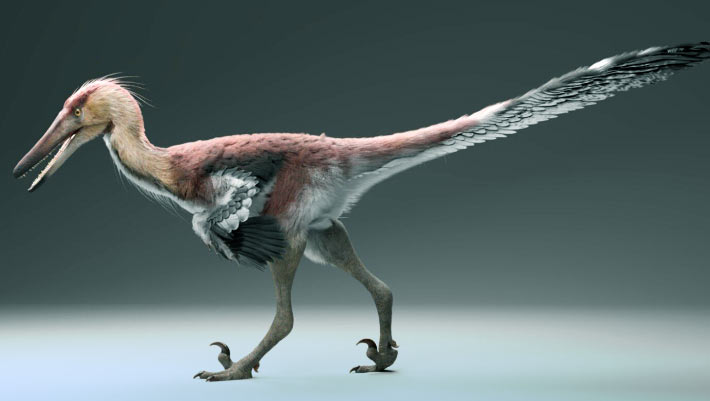
Life reconstruction of Kank australis. Image credit: Gabriel Díaz Yantén.

Paleontologists in Argentina have identified a previously unknown species of unenlagiid dinosaur that stalked freshwater wetlands during the Late Cretaceous epoch, adding to evidence that some dinosaurs specialized in catching fish.

The post New Dinosaur Species from Argentina May Have Specialized in Catching Fish appeared first on Sci.News: Breaking Science News.

  •  

Fungi Bloomed Twice around End-Cretaceous Mass Extinction

The end-Cretaceous mass extinction was marked by both the Chicxulub asteroid impact and the ongoing eruptions of the Deccan Traps volcanoes.

By studying fungal microfossils in 66-million-year-old rock samples from the Denver Basin in Colorado, Johns Hopkins University microbiologists have confirmed that the dinosaur-killing asteroid impact triggered a worldwide fungal takeover, and uncovered a second, previously unknown ecological crisis just before it.

The post Fungi Bloomed Twice around End-Cretaceous Mass Extinction appeared first on Sci.News: Breaking Science News.

  •  
❌