Login

What Turned an Ordinary Primate Into a Species Capable of Civilization, Consciousness and Mass Violence? Evolution Still Has No Single Answer
 What turned an ordinary primate into a species capable of civilization, consciousness and mass violence?
 What turned an ordinary primate into a species capable of civilization, consciousness and mass violence?
Tens of thousands of years ago, Neanderthals mated with modern humans and passed along a gene variant that enables us to pack on more muscle, a new study finds.
Researchers found that this specific Neanderthal gene, a variant of the growth hormone receptor gene, causes cells to respond strongly to growth hormone. The Neanderthal version of the gene creates a growth hormone receptor with two amino acid changes and one deletion, compared with the typical receptor in most modern humans. The researchers think it entered the modern human gene pool through interbreeding, probably about 47,000 years ago.
"The most noticeable characteristic would likely be greater muscle mass, around 270 grams [9.5 ounces] per copy of the variant," study co-author Hugo Zeberg, a geneticist at the Karolinska Institute in Sweden, told Live Science in an email. "A person who inherited two copies, one from each parent, could therefore have more than half a kilogram [1.2 pounds] of additional muscle mass."
The study, published Aug. 5 in the journal Cell, found that almost all Neanderthals had this gene variant, but only about 10% of modern humans do. Certain modern human groups were more likely to have it, with the variant showing up in about 1% of modern people with European ancestry, and up to 25% of those with Southern Asian or Southeast Asian ancestry. It does not seem to appear in people of African ancestry, possibly because the interbreeding happened in Eurasia.
Human growth hormone is produced naturally by most people in the brain's pituitary gland, and it stimulates growth in children and adolescents. Some people have too much or too little human growth hormone, but most of these cases can be medically treated for it. The pituitary gland is also essential in adults for producing hormones that have several roles, including regulating metabolism, stimulating ovulation in ovaries, and stimulating testosterone production in testicles.
In the study, the researchers studied 10 samples of Neanderthal DNA and two samples of Denisovan DNA from archaeological sites in Europe, the Balkans, Siberia and Asia. (The Denisovans were closely related to the Neanderthals.)
They compared their results to modern biobanks that store more than 1.1 million human genomes and related physical data, to understand the effects of the gene variant.
The researchers next tweaked cells in the laboratory to express the regular and Neanderthal variants of the gene, and found that the Neanderthal cells multiplied about 40% more often than regular cells when flushed with growth hormone. Despite this, the Neanderthal gene variant doesn't always make people look bulkier, the researchers found. Instead, the differences are more subtle: for example, people who have this gene variant would have higher levels of a key signaling protein in response to growth hormone, the researchers wrote.
The team also found that people with the gene variant might have slightly shorter tooth roots and small differences in their jaw shape — features that are seen in Neanderthals, who went extinct around 40,000 years ago.
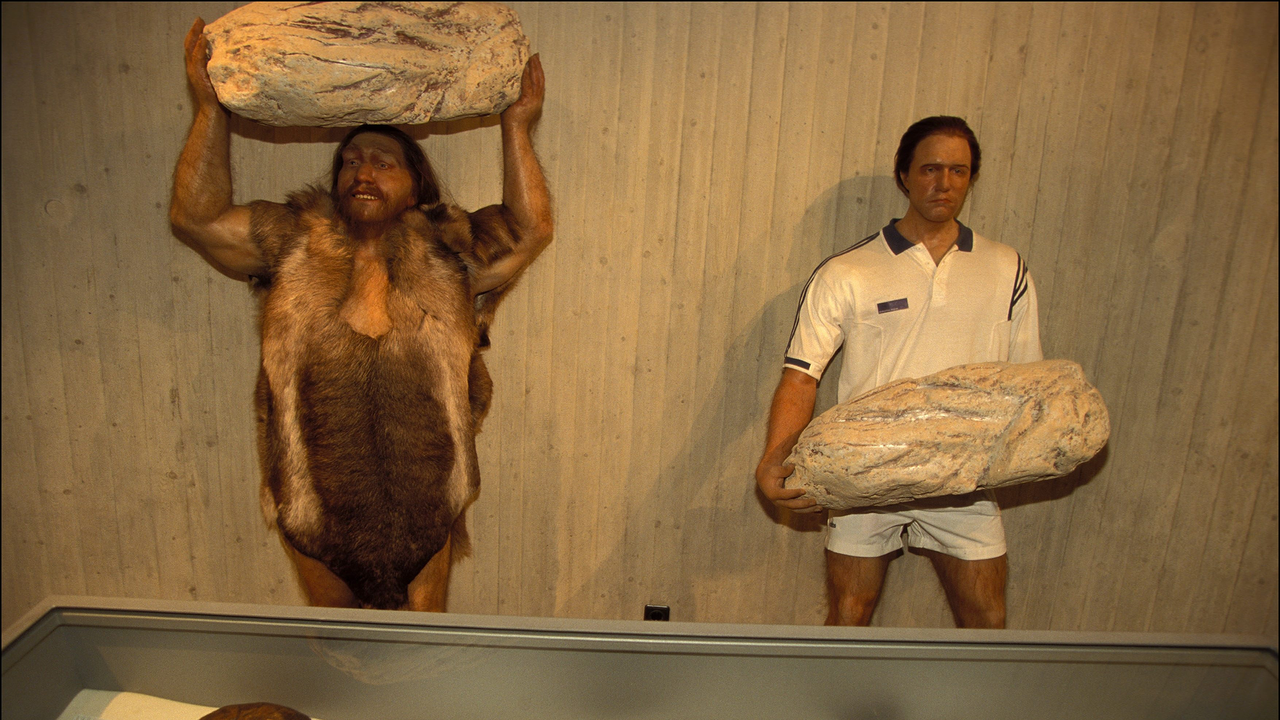
Neanderthals were, in general, stockier than modern humans. But Zeberg thinks their enhanced response to growth hormone does not fully explain why Neanderthals were generally more robust and "thick-set" than modern humans.
"It cannot explain the Neanderthal body type on its own," he said. "Neanderthal robustness was almost certainly shaped by many genes, as well as by development, lifestyle, and environmental factors. Our results provide one possible piece of a much larger puzzle."
The placenta produces a particular form of growth hormone for a fetus, which differs from the form of growth hormone produced by the pituitary gland. However, it seems the Neanderthal variant doesn't respond to growth hormone from the placenta. As a result, Neanderthal babies were the same size at birth as modern human babies but grew faster after that, Zeberg said.
In the study's sample of modern humans, the team noticed that children aged 11 or younger with the gene variant didn't show the effect; rather, only older individuals did. This suggests that the gene variant's differences might not emerge until puberty, strengthening the idea that it responds only to growth hormone produced by the pituitary gland and not by the placenta, the researchers said.
"Growth hormone is also particularly important during puberty, when its levels rise substantially," Zeberg said. "The effect of the variant is therefore likely to be especially important during puberty and later development, rather than before birth."
Kornelius Kupczik, a paleoanthropologist at the University of Chile in Santiago who was not involved in the study, told Live Science that it was notable to see such a high prevalence of the Neanderthal gene variant in people of South Asian and Southeast Asian ancestry, when it was relatively rare among Europeans.
This suggests that early human migrations may have been more complicated than had been assumed — a "curious" challenge that required further investigation. "I guess that's something we still have to find out," he said.
How much do you know about our closest relatives? Find out with our Neanderthal quiz!
Scientists have theorized for decades about how the human brain evolved and grew dramatically in size. Now, new research points to one common ingredient that may have played a crucial role in the brain’s evolution over time: sugar.
A research team at the University of Sydney and the University of Glasgow created a model comparing modern nutrition with that of our ancestors over a span of four million years. The findings suggest that our ancestors relied on naturally occurring carbohydrate-rich foods, which could have played an important role in not only their overall dietary nutrition but also the evolution of the human brain.
These new findings challenge an older scientific model that emphasizes meat as a primary driving force behind human evolution.
“Raw starch does not release glucose, meaning early humans likely relied on naturally sweet foods long before grains became a regular part of the diet,” said lead author Professor Jennie Brand-Miller, Professor of Human Nutrition at the University of Sydney Charles Perkins Center and School of Life and Environmental Sciences, in a statement.
While meat played a role in our ancestors’ diets, the new research suggests that the amount of energy required by a growing brain also needs to be considered. Throughout human evolution, brain size increased from roughly 300 grams in early hominins to approximately 1,500 grams in modern humans. Glucose is the brain’s primary energy source, creating increasing nutritional demands as brain size grew over time.
“While animal foods were important, the brain’s need for glucose has largely received little attention from anthropologists,” Professor Brand-Miller said.
To better understand this hypothesis, the team created a model encompassing six evolutionary stages. Researchers estimated the “obligatory glucose demand” of the brain and other glucose-dependent tissues, including red blood cells, kidneys, and reproductive tissues. They then compared these glucose requirements with the carbohydrate sources that would have been readily available to humans during different stages of evolution.
“The human brain is unusually large for our body size and requires substantial amounts of energy,” Professor Brand-Miller said. “Glucose is the brain’s primary energy source, and for much of human evolution, would have come from carbohydrates found in foods such as fruit and honey.”
The model incorporated evidence from numerous fields, including metabolism, food composition, fossil isotope studies, dental morphology, archaeology, primate diets, and genetics.
Overall, the research suggests that early hominins, including Australopithecus, Homo habilis, and Homo erectus, were highly dependent on carbohydrate-rich foods, with fruit representing an important source. Later, as humans began using fire to cook food, starch-rich plants could also provide significant amounts of glucose. Grains, meanwhile, appear to have entered the human diet much later. The researchers point to archaeological evidence of seed grinding dating to around 65,000 years ago.
“People often think of carbohydrates as breads and cereals, but for most of human evolution carbohydrates came from fruits, honey and underground plant foods,” said Professor Brand-Miller. “The earliest evidence of seed grinding is 65,000 years ago, when we see the first evidence of grinding stones to make flour.”
The study also examined the role of glucose in reproduction and pregnancy. Pregnancy and lactation significantly increase glucose demands, since energy is required not only by the mother but also by the developing fetus and placenta, as well as for milk production.
The new findings may also help explain humans’ longstanding attraction to sweet foods. For much of human evolution, naturally sweet foods such as fruit and honey provided concentrated sources of energy while also supplying fiber, vitamins, minerals, and other nutrients.
That doesn’t mean people should start making a run for the candy aisle. The findings do not suggest that modern humans should consume more refined sugar. Instead, the researchers distinguish between naturally occurring sugars found in whole foods and highly processed foods containing large quantities of added sugar.
Sugar was also not the human brain’s only source of fuel, nor were carbohydrates the sole dietary factor influencing human evolution. Rather, the researchers argue that glucose requirements have often received less attention than other dietary factors, including meat, fat, and protein. Our ancient appetite for naturally sweet, carbohydrate-rich foods, however, may have helped fuel the extraordinary expansion of the human brain.
Chrissy Newton is a PR professional and the founder of VOCAB Communications. She currently appears on The Discovery Channel and Max and hosts the Rebelliously Curious podcast, which can be found on YouTube and on all audio podcast streaming platforms. Follow her on X: @ChrissyNewton, Instagram: @BeingChrissyNewton, and chrissynewton.com. To contact Chrissy with a story, please email chrissy @ thedebrief.org.

 Ancient DNA may give some slightly more muscles today.
 Around 70% of the animals were female,
Name: Rock crystal scraper
What it is: A stone tool made from microcrystalline quartz
Where it is from: Dordogne, southwestern France
When it was made: Between 45,000 and 80,000 years ago
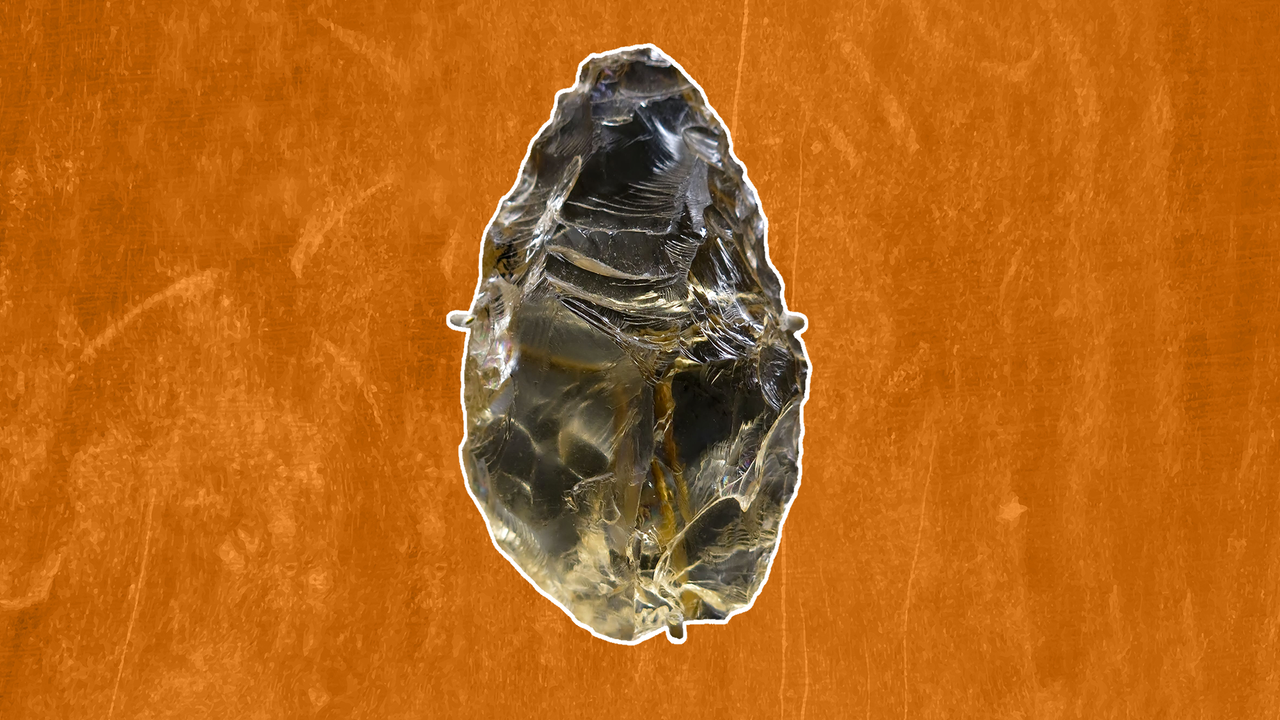
A century ago, American archaeologists excavating at a cave site in France unearthed a cache of seven rock crystal tools made by Neanderthals. The discovery was one of the first to prove that Neanderthals were not the unintelligent brutes that many scientists of the time believed they were.
This rare quartz scraper was found at the archaeological site of Abri Des Merveilles in the Dordogne region of France in 1924 by a team from the American School of Prehistoric Research (now a department at Harvard University) led by George MacCurdy. The unique tool is now in the collection of France's National Archaeological Museum.
Neanderthals typically crafted their stone tools from flint or chert because these rocks would predictably fracture into sharp edges. But a small handful of Neanderthal sites in Europe have yielded tools made from microcrystalline quartz, also known as rock crystal, resulting in stunningly clear scrapers and points.
According to MacCurdy's April 1931 excavation report, this was the first rock crystal tool the team discovered. It is transparent but yellow-tinged, and it may have been used as a combination scraper and point. In addition to six other rock crystal tools, MacCurdy found tiny rock crystal chips that meant the tools were likely fashioned on-site in the cave. The rocks may have tumbled downstream from the headwaters of the Vézère, a tributary of the Dordogne River that runs near the site. Abri des Merveilles has never been precisely dated. However, based on stratigraphy, tool types and the presence of a Neanderthal molar, the rock crystal tools were likely made between 45,000 and 80,000 years ago.
MacCurdy's discovery proved that Neanderthals, not modern humans (Homo sapiens), were the first to create innovative tools from rock crystal — a conclusion that surprised many scientists of the time.
A century ago, most experts believed that Neanderthals were ape-like and unintelligent, thanks in large part to paleoanthropologist Marcellin Boule's 1909 analysis of a Neanderthal skeleton from the site of La Chapelle-aux-Saints in France. The skeleton of an older male Neanderthal with osteoarthritis influenced Boule's incorrect characterization of Neanderthals as knuckle-dragging cavemen. This perception of Neanderthals lasted well into the 21st century, when paleogeneticists finally proved that Neanderthals and modern humans mated.
MacCurdy, however, saw the rock crystal tools as an indication that Neanderthals had a sense of aesthetics. "We are accustomed to think of Neandertal man as devoid of the artistic sense," he wrote, because, a century ago, archaeologists had not yet found evidence of Neanderthal rock art, carved artifacts, engravings or use of pigments.
The Neanderthal "was not an artist in the strict sense; that he had an eye for beauty of form and color is evident from even the limited use he made of rock crystal," MacCurdy wrote in the journal PNAS in November 1931. "Neandertal man must also be given credit for discernment of beauty and quality of the material employed in his industry."
According to France's National Archaeological Museum, which profiled this tool as their Object of the Month in September 2025, MacCurdy drew highly innovative conclusions about Neanderthals from the rock crystal tools, which helped pave the way for our modern understanding of our enigmatic extinct cousins.
For more stunning archaeological discoveries, check out our Astonishing Artifacts archives.
Can you put together last week's Astonishing Artifact?
When the history of our ancestry is written, the fact that we've interbred with some of our closest relatives, the Neanderthals and Denisovans, will have a central role. And it will be tempting to write it as a very tidy story: Once we got genomes from these other groups, it was possible to identify the sequences in our genomes that we shared with them.
But in reality, as scientists started poking large enough collections of data, there were regular hints of some strange ancestry in our genomes. It was hard to pin down, though, at least in part because the 2 percent on average of Neanderthal DNA found in many populations does not guarantee that any two individuals will have the same 2 percent. So having the genomes of those two groups made sense of some things researchers had already been seeing.
But knowing what we do about Neanderthal and Denisovan DNA is now allowing researchers to answer a somewhat different question: Is there anything else? Using recently developed analytical techniques, they find evidence of a third lineage that we apparently interbred with before any modern humans left Africa. Again, there were hints of this earlier, but so far, there's been no genome from a modern human relative to help us understand the details—the source of this DNA remains a "ghost lineage."
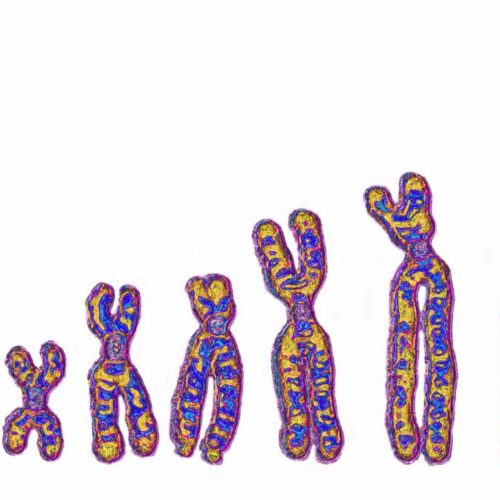
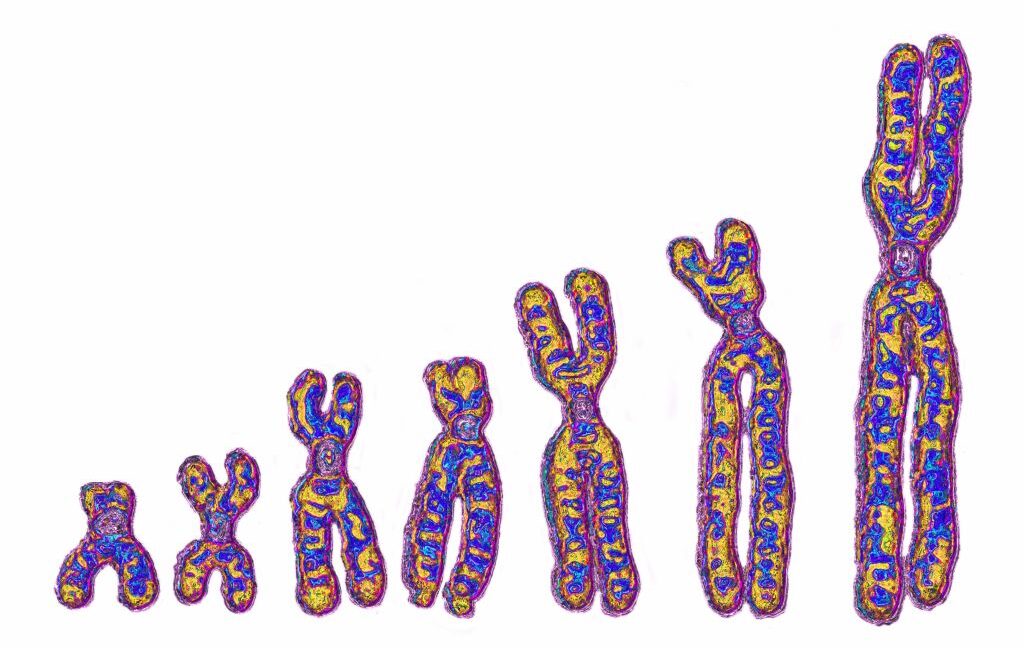
© BSIP
When the history of our ancestry is written, the fact that we've interbred with some of our closest relatives, the Neanderthals and Denisovans, will have a central role. And it will be tempting to write it as a very tidy story: Once we got genomes from these other groups, it was possible to identify the sequences in our genomes that we shared with them.
But in reality, as scientists started poking large enough collections of data, there were regular hints of some strange ancestry in our genomes. It was hard to pin down, though, at least in part because the 2 percent on average of Neanderthal DNA found in many populations does not guarantee that any two individuals will have the same 2 percent. So having the genomes of those two groups made sense of some things researchers had already been seeing.
But knowing what we do about Neanderthal and Denisovan DNA is now allowing researchers to answer a somewhat different question: Is there anything else? Using recently developed analytical techniques, they find evidence of a third lineage that we apparently interbred with before any modern humans left Africa. Again, there were hints of this earlier, but so far, there has been no genome from a modern human relative to help us understand the details—the source of this DNA remains a "ghost lineage."
© BSIP
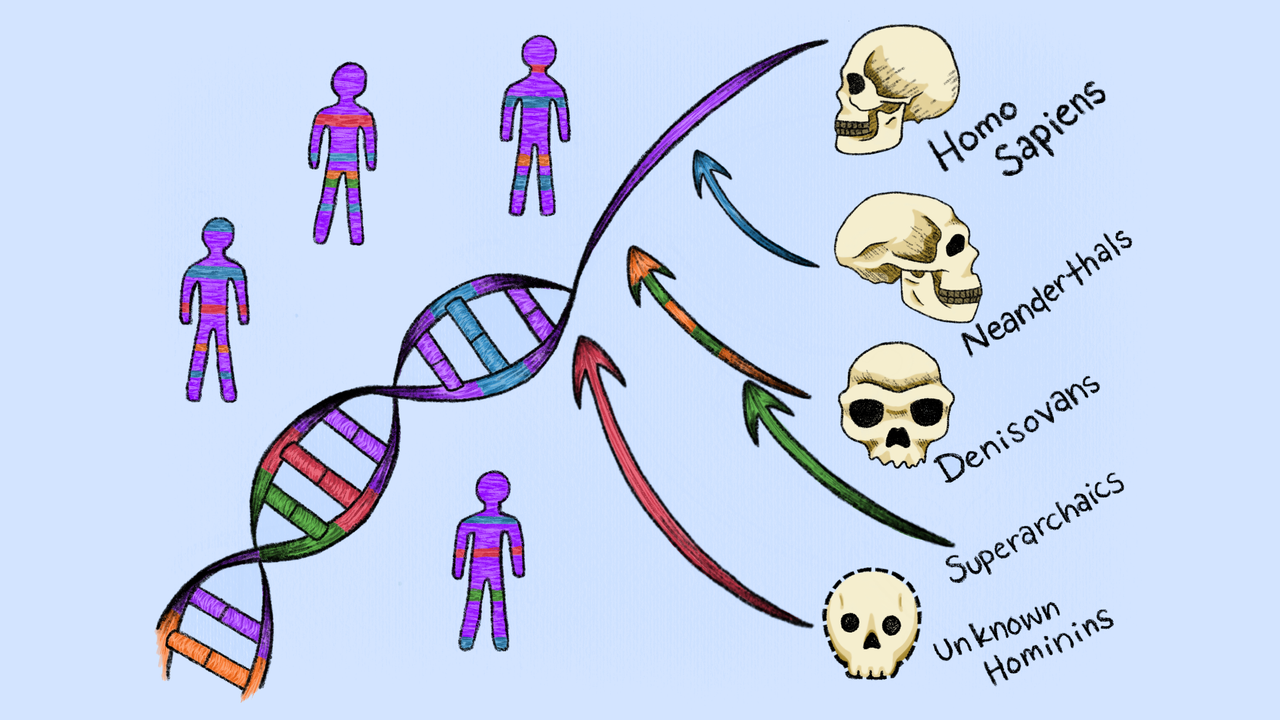
In recent years, advances in ancient DNA sequencing have redefined our understanding of human evolution, revealing that our species did not emerge in isolation but repeatedly interbred with close evolutionary relatives like Neanderthals and Denisovans.
Yet one of the field’s greatest mysteries has remained unanswered: What if some of our ancestors also encountered extinct human groups whose DNA has never been recovered from fossils? Now, a recent study published in Science suggests researchers may finally have found a way to detect those long-lost relatives.
Instead of relying on ancient bones or preserved genomes, researchers developed a powerful computational approach capable of identifying genetic traces of previously unknown archaic humans using only the genomes of living people.
Applying the technique to modern populations around the world, the researchers uncovered evidence that an unidentified “ghost” hominin contributed DNA to the ancestors of all living humans before the great migration out of Africa.
Researchers also found new evidence providing evidence for the existence of an even older “super-archaic” human lineage whose genetic legacy may survive today through Denisovan ancestry in Oceania.
“Admixture between modern humans and extinct hominins has shaped the genomes of present-day individuals, but reconstructing this history has been constrained by the scarcity of archaic samples and unadmixed outgroup populations,” researchers write. “We introduce TRACE, a reference- and outgroup-free approach that uses features of ancestral recombination graphs to identify archaic ancestry.”
Past research has sequenced only a handful of high-quality archaic human genomes, all from Eurasia. While those genomes have revealed that most people outside Africa carry roughly 1 to 2 percent Neanderthal DNA and that many Asian and Oceanian populations also inherited Denisovan ancestry, scientists have long suspected those known groups represented only part of humanity’s evolutionary history.
Previous genetic studies had hinted that modern humans, especially African populations, contained fragments of DNA from unidentified archaic relatives. However, because no fossil genomes exist for those populations, proving their existence has been extraordinarily difficult.
The new method, called TRACE, short for “TRacking Archaic Contributions via ARG Estimation,” takes a fundamentally different approach. Rather than comparing modern DNA against known Neanderthal or Denisovan genomes, it reconstructs ancestral recombination graphs. These enormous evolutionary family trees trace how pieces of DNA have been inherited over hundreds of thousands of years.
These ancestral graphs preserve signatures left behind when deeply divergent human lineages interbred. Such events create unusually long branches and distinctive genetic patterns that can persist in descendants for hundreds of thousands of years. By searching for those signatures, TRACE can identify archaic ancestry even when no reference genome exists.
To test the system, the researchers first ran extensive computer simulations modeling ancient human populations and known episodes of Neanderthal interbreeding. The method consistently revealed high accuracy while producing very low false-positive rates.
The team then applied TRACE to genomes from the 1000 Genomes Project, encompassing hundreds of individuals representing populations across Africa, Europe, Asia, and elsewhere.
The program successfully recovered well-established Neanderthal ancestry in Europeans and Asians, along with Denisovan ancestry concentrated primarily in Asian populations. More intriguing, however, was the discovery of an additional category of DNA that matched neither Neanderthals nor Denisovans.
TRACE identified between roughly 0.5 and 1.1 percent “ghost” ancestry across all modern populations examined. The genetic evidence suggests these segments originated from an unknown archaic human lineage that diverged from our ancestors roughly 830,000 years ago, before later contributing DNA to the ancestors of modern humans.
Perhaps most surprising was where that ancestry appeared.
Rather than being confined to African populations, as several earlier hypotheses proposed, the researchers found remarkably similar ghost ancestry in both Africans and non-Africans.
Most of the segments detected outside Africa were shared with African populations, suggesting the interbreeding event occurred before modern humans started dispersing across the globe roughly 50,000 to 70,000 years ago.
The findings point toward a previously unrecognized chapter of human evolution in which an unidentified human population mixed with the common ancestors of everyone alive today.
The researchers also explored where these ancient genetic fragments survive in the modern genome.
They found ghost ancestry spread across more than 70 percent of the accessible human genome, although it was far from evenly distributed. Some regions contained unusually high concentrations of ghost DNA, including genes involved in immune function and metabolism.
Even more unexpectedly, ghost ancestry persisted inside genomic regions previously believed to be largely devoid of archaic DNA.
These regions, known as “Neanderthal and Denisovan ancestry deserts,” have often been interpreted as places where natural selection eliminated archaic genetic variants because uniquely modern human versions proved advantageous.
The presence of ghost ancestry inside many of those same regions suggests the story may be more complicated. Rather than rejecting all archaic DNA equally, natural selection may have acted differently depending on which ancient human lineage contributed the genes.
The study also ventured even farther back in evolutionary time.
Focusing on genomes from Papua New Guinea, Vanuatu, and the Santa Cruz Islands, the researchers searched for evidence of “super-archaic” ancestry—genetic contributions from a lineage that diverged long before Neanderthals, Denisovans, and modern humans separated.
Previous studies had suggested Denisovans themselves may have inherited DNA from such an ancient population. TRACE now provides additional support for that hypothesis.
The team identified deeply divergent genetic segments embedded explicitly within Denisovan-derived DNA in Oceanian populations. Based on their analyses, those ancient lineages may have split from the ancestors of modern humans approximately 1.77 million years ago.
While the researchers stress this represents a conservative estimate of surviving super-archaic ancestry, the findings strengthen the idea that modern humans indirectly inherited DNA from a much older human lineage through Denisovan interbreeding.
The identity of both the ghost lineage and the super-archaic population remains unknown.
The ghost population may represent Middle Pleistocene human groups or African populations of Homo heidelbergensis that encountered the ancestors of modern humans before the Out-of-Africa migration. For the older super-archaic lineage, the researchers note that Homo erectus remains one plausible candidate given its estimated divergence time and broad geographic distribution.
Although the new method cannot yet identify specific fossil species, it provides researchers with an entirely new tool for investigating chapters of human evolution that may never yield recoverable ancient DNA.
Because DNA older than roughly one million years is extraordinarily unlikely to survive outside permanently frozen environments, computational approaches like TRACE are becoming increasingly important for reconstructing humanity’s deepest evolutionary history.
“We find evidence for at least one ghost introgression predating the OOA expansion that contributed ancestry to all present-day populations,” researchers write. “These results point to multiple layers of introgression—both direct and mediated through other archaic groups—shaping modern human genomes.”
The study, “Recovering signatures of archaic hominin introgression using ancestral recombination graphs,” was published in the journal Science.
Tim McMillan is a retired law enforcement executive, investigative reporter and co-founder of The Debrief. His writing typically focuses on defense, national security, the Intelligence Community and topics related to psychology. You can follow Tim on Twitter: @LtTimMcMillan. Tim can be reached by email: tim@thedebrief.org or through encrypted email: LtTimMcMillan@protonmail.com
Traces of two "ghost lineages" of extinct human populations lie hidden within our genome, a new study reveals.
One of these ghost lineages left its DNA scattered in all present-day people. The other, a "super-archaic" lineage, dates back nearly 2 million years, researchers reported Thursday (July 30) in the journal Science.
"These extinct populations may have lived hundreds of thousands — or even more than a million — years ago, yet traces of their genetic legacy remain preserved in our genomes today," study co-author Priya Moorjani, a human evolutionary geneticist at the University of California, Berkeley, told Live Science.
For decades, experts have found DNA evidence that our species, Homo sapiens, once mated with now-extinct relatives such as Neanderthals and Denisovans. Most people not of sub-Saharan ancestry living today possess about 1% to 2.4% Neanderthal ancestry, and Asians and Oceanians (people from the island nations of the Pacific Ocean) harbor about 0.1% to 6% Denisovan ancestry.
But scientists have suspected that modern humans may have interbred with other now-extinct human groups that have not been identified yet. However, the scarcity of ancient DNA samples makes it challenging to identify what these unidentified groups, often called ghost lineages, might have contributed to our species.
"Ancient DNA has transformed our understanding of human evolution, but it can only tell us about populations for which DNA has been preserved," Moorjani said. "DNA survives only under very specific conditions — typically in cold, dry environments — which means that much of our evolutionary history, particularly in Africa, other tropical regions, and at very deep timescales, remains inaccessible."
In the new study, Moorjani and her colleagues reasoned that everyone's genome contains a record of their ancestry. They investigated whether it was possible to uncover signs of "long-extinct ancestors preserved within the genomes of present-day people," Moorjani said.
The researchers developed a new technique to scan and compare more than 500 complete genomes of present-day humans from around the world. Using this data, they reconstructed the complete genealogies of each spot in each person's genome, developing family trees of the people's ancestors that mapped out every time genetic lineages diverged and merged. They focused on ancestors who had profound genetic differences from modern humans — a sign they evolutionarily split from the modern human lineage a long time ago.
"Most regions of our genome share a common ancestor relatively recently in our evolutionary history," Moorjani said. "Occasionally, however, we find stretches of DNA whose common ancestor lies much farther back in time, indicating they originated from a long-separated human lineage."
Unlike previous approaches, this new method does not require DNA samples from fossils in order to spot ancient genetic sequences in the modern-human genome. "We no longer have to wait for extraordinary fossil preservation to learn about extinct human populations," Moorjani said. "Instead, the genomes of living people contain traces of these ancient ancestors, and genealogical methods allow us to recover some of that hidden history."
The researchers experimentally tested the new method, which correctly identified Neanderthal and Denisovan ancestors in modern-human genomes. However, it also uncovered previously unknown instances of interbreeding with now-extinct groups.
The researchers said one ghost lineage's DNA was found in all modern humans. This finding suggested that the lineage interbred with modern humans in Africa more than 50,000 years ago, before the most recent migration of H. sapiens out of Africa and into the rest of the world.
"Previous publications suggested that there might be ghost ancestry — ancestry from unknown archaic lineages in modern humans — but they hadn't concluded whether this unknown ancestry is present only in Africans or not, and when this introgression event happened," study co-author Yulin Zhang, a computational biologist at UC Berkeley, said in a statement. "We were actually able to find and map genomic locations in modern humans that are from this ghost lineage and show that this ghost ancestry is in all modern humans, not only in Africans."
This newfound lineage's DNA constitutes about 0.5% to 1% of the genomes of modern humans, comparable to the amount of Neanderthal DNA in many people living today. The scientists estimated that this ghost lineage diverged from the ancestors of modern humans about the same time Neanderthals and Denisovans did, about 800,000 years ago.
One possible candidate for the ghost lineage is Homo heidelbergensis, the researchers wrote in the study. This human species lived from about 700,000 to 200,000 years ago in Africa and Europe.
"I agree with their speculation that this ghost could have been the species Homo heidelbergensis, which was present in Africa as recently as 300,000 years ago," Chris Stringer, a paleoanthropologist at the Natural History Museum in London who was not involved in the study, told Live Science.
The scientists also found evidence that people from Oceania inherited traces of a "super-archaic" human lineage that diverged from the ancestors of modern humans about 1.8 million years ago, before the emergence of the common ancestor of modern humans, Neanderthals and Denisovans. This super-archaic DNA, on average, made up about 0.002% of the Oceanian genomes investigated and appeared within regions of Denisovan DNA, suggesting that the super-archaic DNA got into modern humans through interbreeding with Denisovans.
The age of this super-archaic DNA suggests it may have come into Denisovans, and then modern humans, from Homo erectus, the longest surviving human species to date, Fernando Villanea, a population geneticist at the University of Colorado Boulder who was not involved in the study, told Live Science. That could make sense, because H. erectus skulls found in Yunxian, China, share some features with Denisovan fossils, Villanea added. But to date, only a limited amount of H. erectus genetic material has been analyzed.
The study's findings highlight that modern humans are the product of multiple species and that "hybridization is the norm and not the exception," Villanea said. "We see hybridization being a common trait in the evolution of many other species, and these findings help us reframe our scientific thinking away from a mentality of human exceptionalism."
The DNA segments from these newfound lineages are spread throughout the human genome, but they are most numerous in parts of the genome associated with the immune system and metabolic function. Moorjani said this makes sense, as the need to adapt to new germs and sources of food has been one of the strongest drives in human evolution. Interbreeding with other now-extinct human groups allowed modern humans to acquire potentially beneficial DNA.
"This work reinforces a fundamental shift in how we think about human evolution," Moorjani said. "Rather than a simple branching tree, human history is increasingly emerging as a complex web of populations connected by repeated episodes of divergence, migration and mixing."
Stringer agreed, adding that this new technique provides "indirect ways of reconstructing parts of the genomes of more primitive species like H. erectus and H. heidelbergensis."
In the future, the scientists hope to use their new method to detect signs of more ghost lineages, "particularly those from regions such as Africa and South Asia that remain underrepresented in ancient-DNA studies," Moorjani said. The new technique can also help researchers "study evolutionary history in other species where fossil DNA is scarce or absent," she added.
See how much you know about early humans with our human evolution quiz!
 The tracks suggest Paranthropus boisei grew surprisingly large and traveled in male groups.
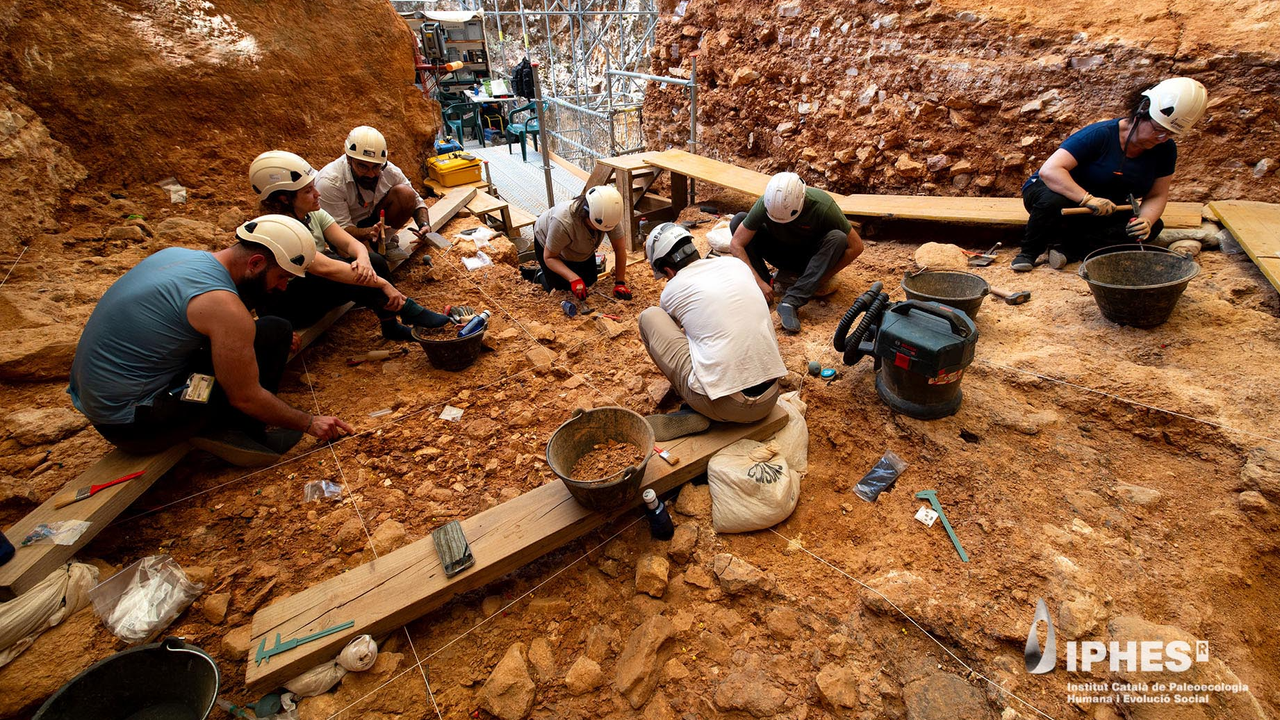
Cut marks suggestive of cannibalism have been discovered on the fossils of an ancient human relative in a cave in Spain, new research finds. But many of the bones from the species, known as Homo antecessor, were from adults — not just children, as previous discoveries had found — adding a new dimension to the cannibalism that was practiced in this area 850,000 years ago.
The two dozen bones and teeth were recently found in Gran Dolina cave, part of the Sierra de Atapuerca archaeological complex in northern Spain, according to a July 24 translated statement from the Catalan Institute of Human Paleoecology and Social Evolution (IPHES). Among the remains were fragments of a skull, spine, arm and leg bones, as well as three teeth from several members of the now-extinct H. antecessor, a relative of modern humans that lived in Europe between about 1.2 million and 770,000 years ago. Several of the bone fragments had cut marks from stone tools.
Over the past few decades, researchers have identified numerous cases of cannibalism at Gran Dolina, meaning H. antecessor is the oldest known human relative to eat its own group members for nutritional reasons. In a 2010 study, researchers noted that most of the evidence of cannibalism at Gran Dolina came from the bones of infants and juveniles, who would have been easier to capture and kill as the young, defenseless members of a rival group. But the newly excavated fossils have upended that assumption.
"The discovery of more adult individuals, some of whom also bear cut marks, demonstrates that cannibalism was not restricted to younger individuals," Palmira Saladié, a biological anthropologist at the IPHES who coordinated the work, said in the statement.
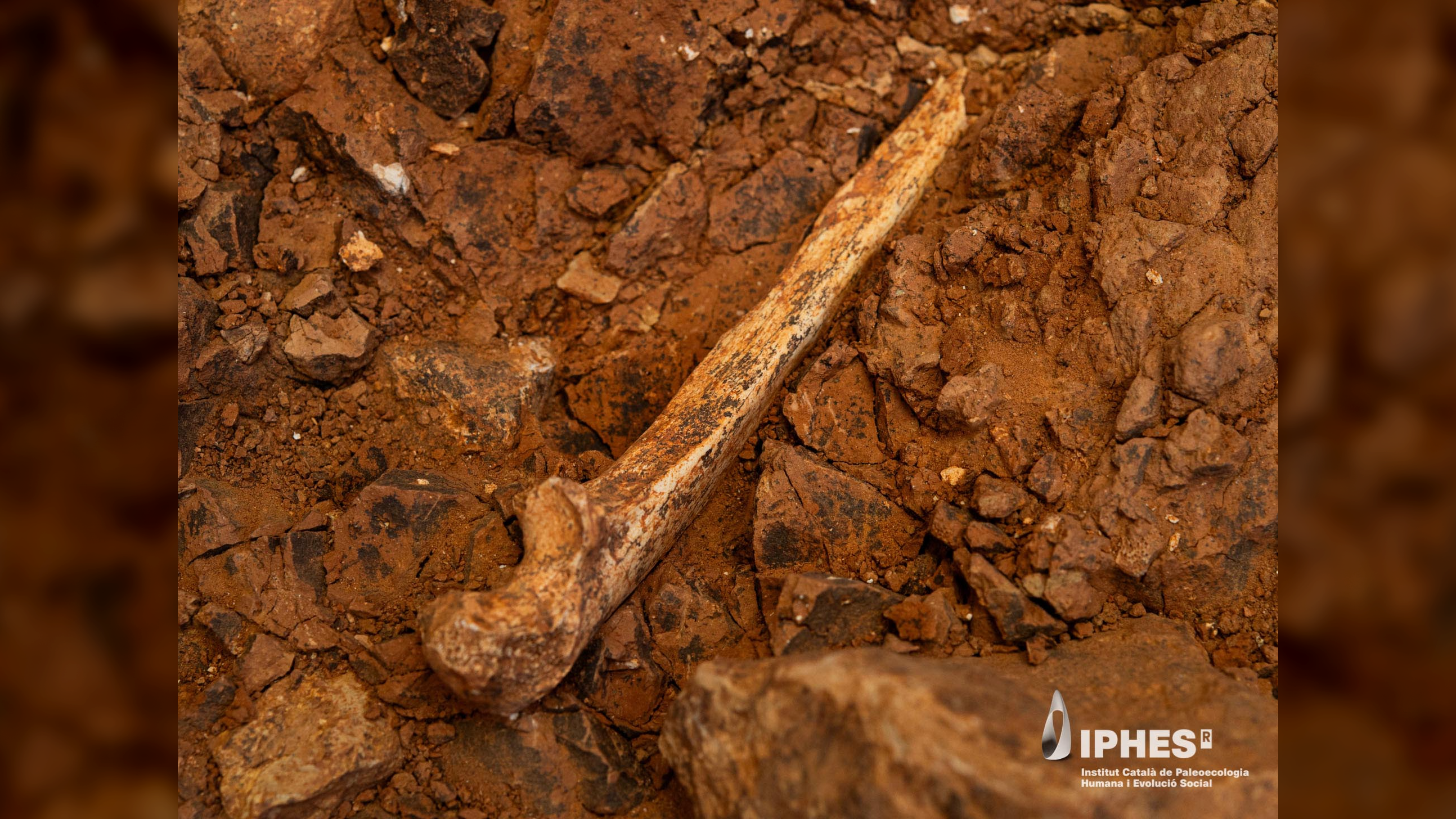
The number of individuals found at Gran Dolina has now risen to at least 13, and about half of them are adults. "The increase in the number of individuals, and especially the addition of more adults, allows us to begin understanding this population from a much more complete perspective than ever before," Andreu Ollé, an archaeologist at the IPHES, said in the statement.
Excavation at Gran Dolina has also brought to light an assemblage of stone tools made from flint, quartzite and sandstone, along with animal bones from hyenas, beavers, deer, horses and rhinoceroses, according to the statement.
Evidence of cannibalism at the site is extensive. Stone tools found in the cave are consistent with the cut marks on the human bones, and the animal bones have revealed butchering techniques that were also used on humans. Some of the human bones also had human bite marks, Saladié told Live Science in 2025, which is the "most reliable evidence that the bodies found at the site were indeed consumed."
But while the practice of cannibalism at Gran Dolina has been confirmed, the reason for it is still unclear. Researchers hope the newly discovered adult bones may help them better understand the practice among H. antecessor groups.
"We have only just begun excavating this new area" at Gran Dolina, Marina Mosquera, an archaeologist at the IPHES, said in the statement, "and the first results already demonstrate its enormous scientific potential."
Further analyses on the bones are now underway to explore questions about age-related differences in cannibalism, the number and length of cannibalistic episodes, and the social organization of H. antecessor, according to the statement.
What do you know about early humans? Test your knowledge with our human origins quiz!

For decades, paleoanthropologists have largely agreed that somewhere along the evolutionary course from apelike ancestors to modern humans, our bodies got dramatically larger. However, one lingering mystery has been when this intense growth began.
Did our ancestors gradually grow bigger over millions of years? Did the shift coincide with the emergence of the genus Homo? Or did it occur later, after some of the earliest human species had already appeared?
A new study published in the Proceedings of the National Academy of Sciences (PNAS) argues that the answer is more complex than any single theory has suggested.
Rather than supporting a single long-standing hypothesis, researchers used a sophisticated statistical method to show that human body size likely followed two evolutionary courses simultaneously: a slow, steady increase spanning millions of years, punctuated by a much larger leap in later members of the genus Homo.
The findings help reconcile decades of conflicting research while offering one of the clearest pictures yet of how, and perhaps why, our ancestors evolved into larger-bodied humans.
“Despite its central role in hominin evolution, there is little consensus on how body size increased through time,” researchers write. “We provide strong evidence for a marked size increase in later-occurring Homo, alongside a moderate general increase over time among all hominins.”
Body size is one of the defining characteristics of an organism. In humans and our extinct relatives, it has been linked to everything from brain expansion and walking efficiency to metabolism, hunting behavior, and the ability to travel across increasingly large landscapes. Understanding when body size changed, therefore, helps researchers reconstruct not only what our ancestors looked like, but how they lived.
Yet despite decades of fossil findings, scientists have struggled to agree on the evolutionary pattern behind those changes.
Some previous studies suggested that hominins simply became larger over time. Some contended that body size remained relatively stable until the emergence of Homo. Still others have proposed that the real transformation arose only after early species such as Homo habilis, often regarded as one of the first members of our genus.
According to researchers, one reason for the disagreement is that earlier analyses typically examined these competing ideas independently. They also often failed to account for uncertainties inherent in the fossil record, including disagreements over species classification, differences in body mass estimation methods, and uncertainties in evolutionary relationships among fossil species.
To address those limitations, researchers compiled one of the largest hominin body-size datasets assembled to date, incorporating body mass assessments from 386 fossil specimens representing 21 different taxa.
They then analyzed the data using Bayesian phylogenetic generalized linear mixed models—a statistical approach that accounts for evolutionary relationships while encompassing multiple layers of uncertainty.
The team repeated its analyses across 1,000 different phylogenetic trees and 1,000 separate datasets, allowing them to test whether the overall pattern remained consistent despite uncertainties.
The results pointed to two simultaneous trends.
The first was a modest but persistent increase in body size across the hominin family as a whole. On average, body mass increased by roughly 2 pounds (0.9 kilograms) every million years, suggesting that larger bodies gradually became more common throughout human evolution.
However, the second trend proved far more dramatic.
Instead of all members of Homo becoming substantially larger, the researchers found the strongest evidence for a distinct jump in body size among later members of the genus, particularly species that appeared after Homo habilis. That pattern regularly emerged regardless of how the fossil data were analyzed.
In other words, early members of Homo may not have represented the major biological turning point scientists once assumed.
This finding disputes a common assumption that simply belonging to the genus Homo meant possessing a significantly larger body. Instead, the study suggests that some hallmark features traditionally associated with humans, including larger body size, may have evolved after the genus’s origin.
That interpretation also corresponds to broader changes that occurred later in human evolution.
Researchers note that this period coincides with evidence for more efficient upright walking, greater reliance on meat consumption, and expanding home ranges. Larger bodies may have been both a consequence of and a contributor to those behavioral and ecological shifts.
The study likewise reinforces another growing theme that evolution rarely follows a straight line.
Species such as Homo floresiensis, often nicknamed the “Hobbit” because of its diminutive stature, and Homo Naledi frequently appeared as outliers with unusually small body sizes despite belonging to relatively recent branches of the human family tree. Their existence demonstrates that body size did not simply increase in a uniform march toward modern humans.
Instead, evolution repeatedly experimented with different solutions depending on local environments and ecological constraints.
The researchers also argue that part of the longstanding disagreement over body-size evolution stems from the fossil record itself. Different studies have estimated fossil body masses using different skeletal elements, comparison populations, and statistical techniques, sometimes producing substantially different results for the same individual.
By expressly incorporating those uncertainties into their analysis, rather than treating them as fixed values, the new framework seeks to capture the range of plausible evolutionary scenarios rather than relying on a single interpretation.
Even so, researchers caution that important questions remain unresolved.
Improved fossil discoveries, more accurate body-mass estimation methods, and a better understanding of species relationships could all further refine the picture. The study also does not explicitly account for sexual size differences between males and females, which may have been greater in some early hominin species than in modern humans.
Nevertheless, the wider conclusion is intriguing.
Rather than choosing between competing theories, the evidence suggests both contain elements of the truth.
Body size did increase gradually across the hominin lineage. But the most considerable leap appears to have occurred later, after the earliest representatives of Homo had already evolved.
That conclusion may help settle one of paleoanthropology’s longest-running debates while showing how advances in statistical methods are transforming scientists’ ability to extract new insights from fossils that have often been studied for decades.
“Overall, these findings bring clarity to a fundamental question in human evolution and show how the application of rigorous phylogenetic comparative tools can unlock patterns previously hidden in the fossil record while accounting for multiple sources of uncertainty,” researchers write. “By reconciling conflicting findings within a single framework, our results clarify key evolutionary transitions and highlight the complex nature of body size change in human evolution.”
Tim McMillan is a retired law enforcement executive, investigative reporter and co-founder of The Debrief. His writing typically focuses on defense, national security, the Intelligence Community and topics related to psychology. You can follow Tim on Twitter: @LtTimMcMillan. Tim can be reached by email: tim@thedebrief.org or through encrypted email: LtTimMcMillan@protonmail.com
Researchers have extracted DNA from a 50,000-year-old tooth belonging to an African antelope, setting a record for the oldest DNA ever retrieved from sub-Saharan Africa, a new study reports.
The finding suggests that DNA preservation in sub-Saharan Africa is possible for tens of thousands of years. In most cases, the region's hot climate breaks down the molecule and prevents researchers from understanding the evolution of numerous species, including ancient human ancestors and relatives.
While some temperate regions are known for preserving ancient human DNA — for instance, the Sima de los Huesos ("Pit of Bones") in Spain preserved DNA from a mysterious relative of modern humans that lived around 400,000 years ago — the sub-Saharan African climate is less forgiving. The oldest human DNA from sub-Saharan Africa is about 18,000 years old and was discovered in bones found in a rock shelter in Tanzania. And the oldest sub-Saharan animal DNA is just 9,300 years old, from an extinct antelope in South Africa.
In the new study, researchers tested whether DNA could be successfully extracted from ancient skeletons even older than that. By analyzing more than 300 teeth from animals that lived in the past 110,000 years, they discovered that small amounts of DNA could be identified even in remains from the Late Pleistocene, the latter part of the last ice age.
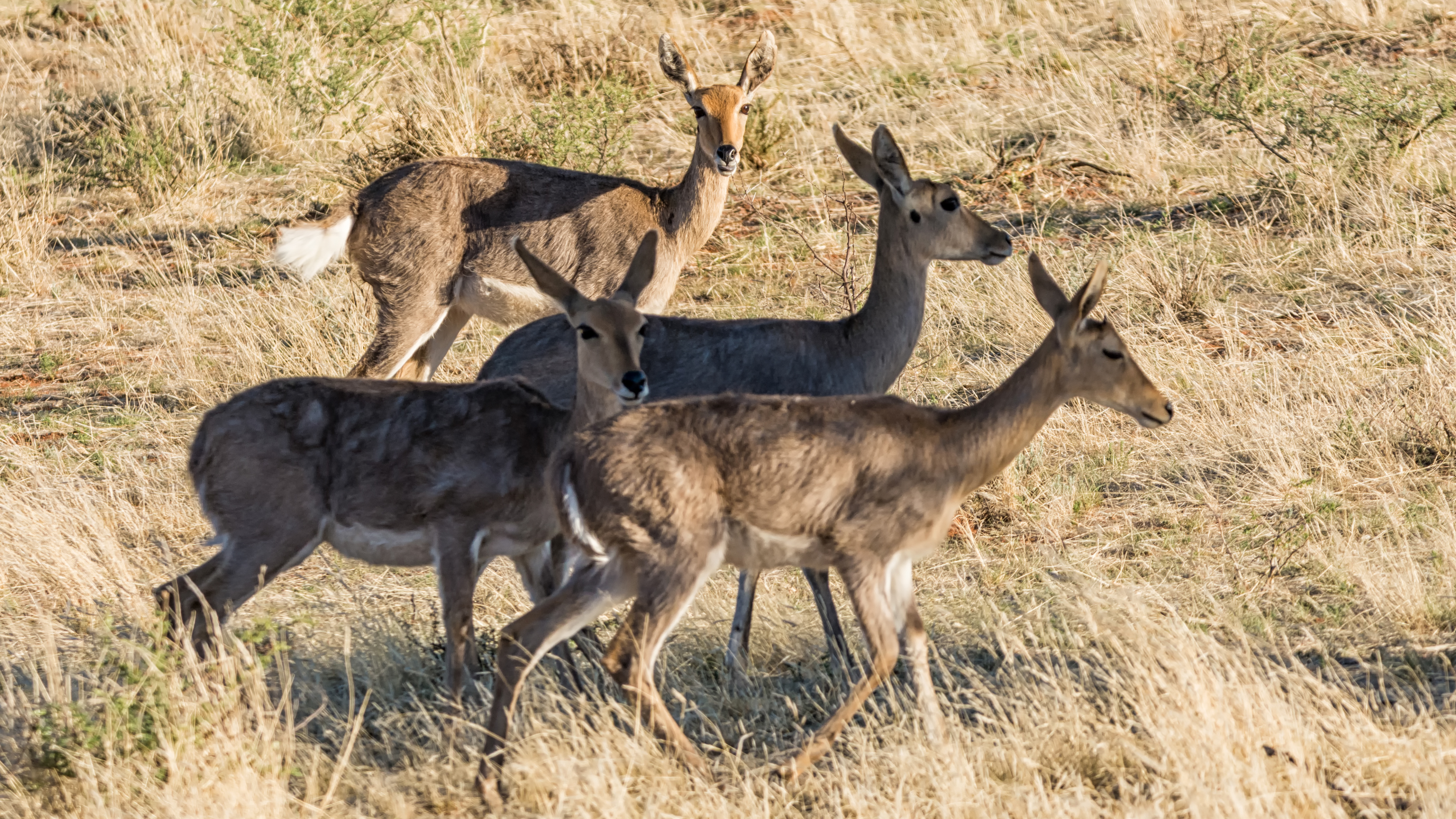
In a study published online May 27 in the journal Quaternary Science Reviews, researchers extracted DNA from dozens of Holocene bovid specimens younger than 11,700 years old and from four Late Pleistocene bovid specimens between 12,000 and 50,000 years old. Although many of the teeth didn't yield DNA, a handful did. The oldest DNA the researchers found came from a partial molar from an African antelope called a mountain reedbuck (Redunca fulvorufula) discovered in Boomplaas Cave in southern South Africa. The other old DNA samples came from three extinct long-horned buffalos (Syncerus antiquus) — two that died 21,000 years ago and one that died 12,000 years ago.
"The 50,000-year-old DNA is exciting," study first author Deon de Jager, a paleogenomics expert at the University of Copenhagen, told Live Science in an email. "But I am myself skeptical of it, for two reasons."
The reedbuck DNA is significantly older than the next-oldest DNA the researchers retrieved, from the long-horned buffalo, de Jager explained, and the reedbuck specimen was contaminated with some human DNA, which they were able to remove. These two issues mean the 50,000-year-old antelope DNA result is not ironclad. However, since the publication of the study, the researchers have also sequenced the genome of a 42,000-year-old wildebeest from Ethiopia, suggesting DNA lasts a lot longer in Africa's climate than experts once thought.
"There is of course a limit to DNA preservation in Africa, but what it is, is not clear," de Jager said. "There are certainly parts of Africa where DNA will be preserved even better than from the sites we have surveyed. Deep caves with stable, low temperatures will certainly be good candidates, but also high-elevation sites where temperatures have been very low for a long time."
The Late Pleistocene teeth that de Jager and colleagues analyzed produced very low amounts of DNA, which is thought to have a half-life of about 521 years, meaning half of the DNA in a specimen disappears every 521 years until none is left. But the amount the researchers found is still useful, de Jager said.
The DNA is sufficient for identifying evolutionary lineages, de Jager added. If they can gather enough data, researchers might be able to compare gene flow and interbreeding among species and populations.
Although these results suggest that DNA analysis is possible for understanding the past 40,000 to 50,000 years of animal and human evolution in South Africa, we may never be able to extract DNA from ancient human relatives like Homo naledi, which went extinct around 240,000 years ago, or Paranthropus robustus, which died out around 1 million years ago.
"I think the chances of obtaining DNA from Homo naledi are very, very low, unfortunately," de Jager said. "One would have to get very lucky with an incredibly well-preserved skull with the petrous bone still present, which is the best bone for obtaining ancient DNA. To get DNA from something in Africa nearly 1 million years old would probably be impossible, as the conditions in Africa are just too harsh."
How much do you know about Earth's frosty past? Find out with our last ice age quiz!
 The discovery offers one of the oldest known examples of interpersonal violence.
Around 100,000 years ago, an early Homo sapiens man was probably stabbed in the face with a sharp stone tool and later buried in a cave in what is now Israel, archaeologists have determined. The Stone Age cold case appears to be the earliest evidence of this kind of interpersonal violence, according to the research team.
In a study published June 30 in the journal Scientific Reports, the international team of researchers closely examined the skull and lower jaw of a person who was deliberately buried in Qafzeh cave in Israel during the Middle Paleolithic period.
At least 27 people were buried in Qafzeh cave between about 145,000 and 92,000 years ago, making them some of the earliest members of our species to be found outside Africa. Previous analysis of the skeletons, which were excavated between the 1930s and 1970s, revealed that two people had head injuries resulting from blunt trauma.
But the new analysis, which employed microscopic and micro-CT scanning techniques, revealed that Qafzeh 25, an adult male, had a cut mark across his lower left jaw that affected one of his bicuspids and part of his upper jaw. The jawbone showed signs of healing, suggesting that the man lived for a significant amount of time after being injured, the researchers wrote in the study.
Archaeologists had previously identified only a few cases of trauma caused by sharp weapons or projectiles in Middle Paleolithic skeletons. Although these injuries could have resulted from hunting accidents, the researchers wrote, they have generally been interpreted as evidence of interpersonal violence.
The cut mark on the jaw of Qafzeh 25 was found on the left side of his face, lending further support to the idea that the injury was not an accident.
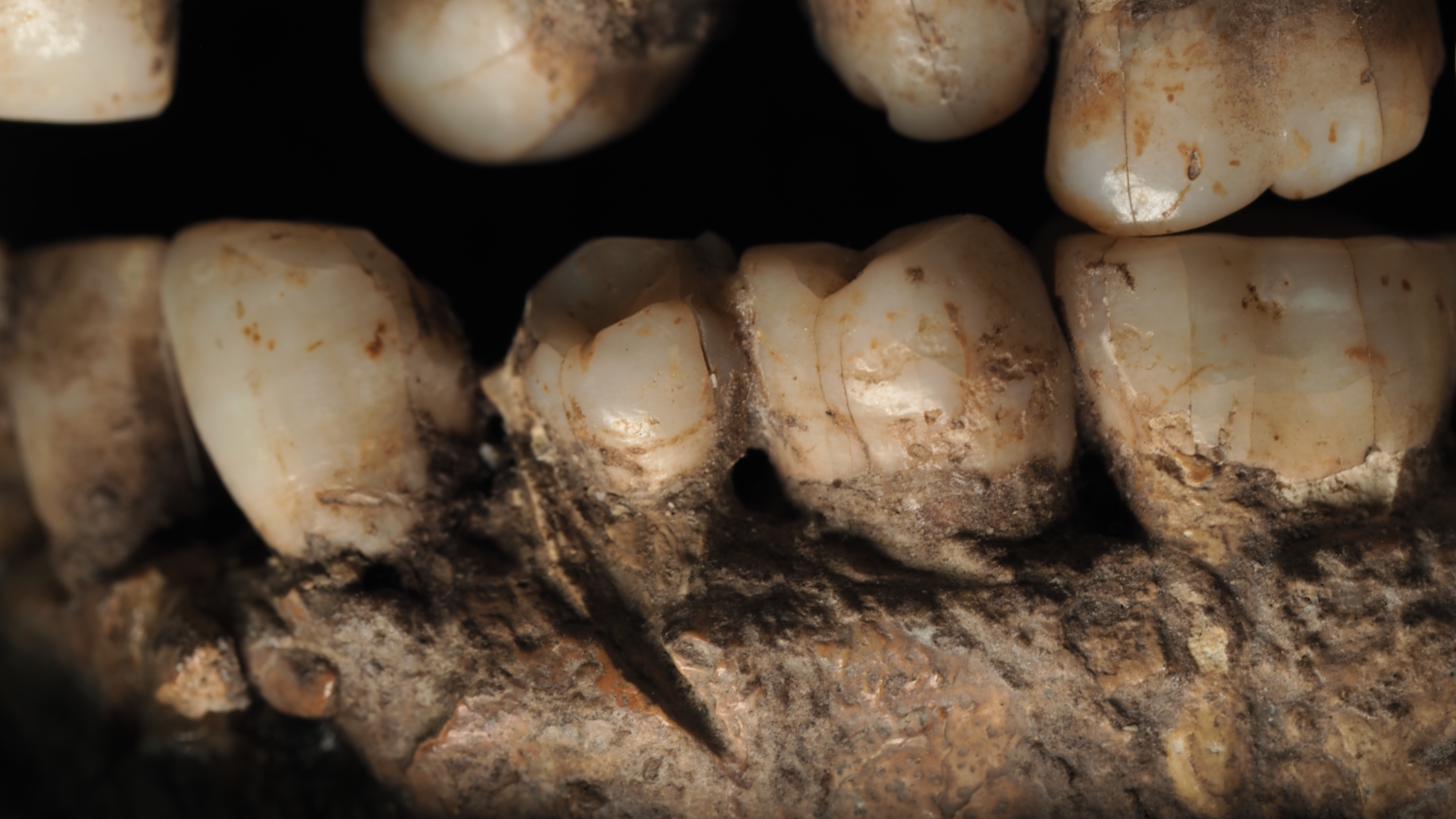
It's not clear what kind of tool made the cut mark, but stone tools found at Qafzeh included flint scrapers and sharp points that could have been fashioned into spear tips.
"Forensic studies of modern human populations have reported that craniofacial injuries resulting from blows are more frequently observed on the left side of the skull, a distribution commonly attributed to the predominance of right-handed assailants in face-to-face confrontations," the researchers wrote.
If the researchers' interpretation of the cut mark is correct, it "would represent the earliest documented case of sharp force trauma in the archaeological record," they wrote.
Qafzeh cave is already well known within archaeology for its clear evidence that early humans buried their dead. The new discovery confirms that the earliest human groups left Africa with a complex culture.
"These results provide new data to the debate on the origin of complex behaviors such as interpersonal violence, the care of injured or sick individuals and funeral practices," study first author Ana Pantoja Pérez, a paleoanthropologist at Spain's National Research Center for Human Evolution, said in a statement.
See how much you know about early humans with our human evolution quiz!
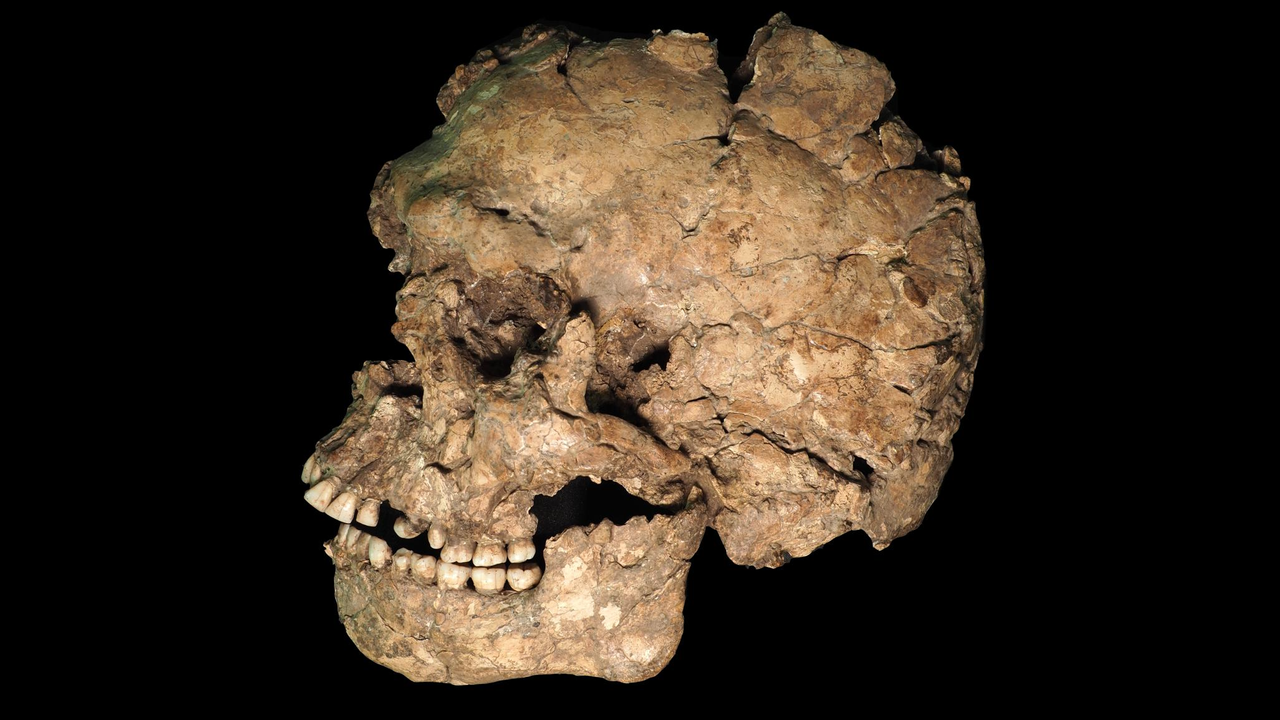
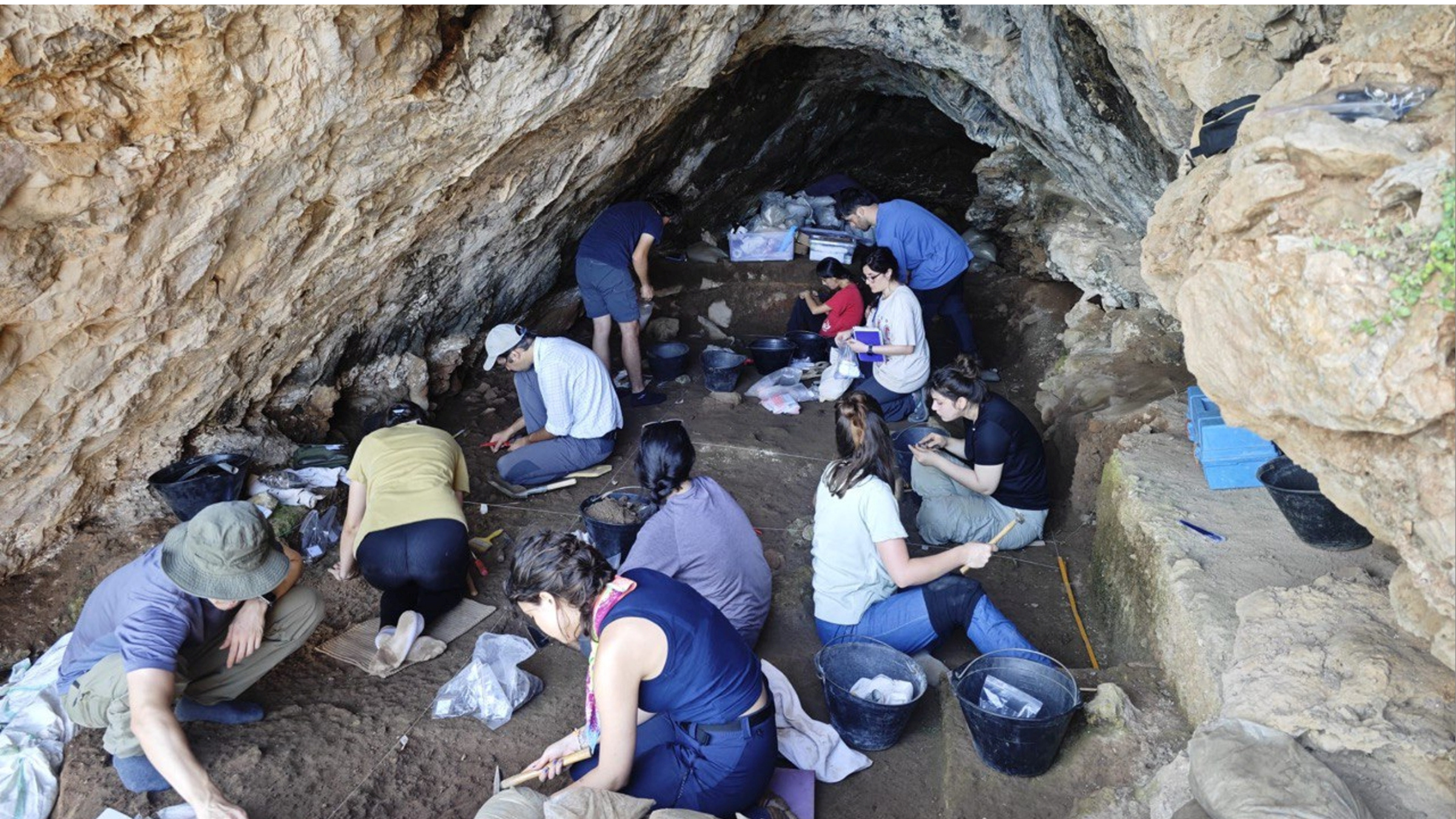
Deep in a limestone cave on Turkey's Mediterranean coast, archaeologists have uncovered evidence that Neanderthals and the modern humans who moved in later left behind surprisingly similar traces of their daily lives — evidence that they hunted the same animals, crafted the same stone tools and collected the same type of seashells.
The findings, published Monday (July 6) in the journal PNAS, feed into some of the biggest questions in human evolution: How similar were the cultures of Neanderthals and Homo sapiens, given that we're so closely related? And did we share information with one another?
A series of archaeological finds over the past few decades, including the new paper's finding that the two had similar cultural practices, suggests that Neanderthals and H. sapiens behaved far more similarly in the Middle East than once assumed.
The new evidence comes from Üçağızlı II Cave (pronounced Ooch-ah-UHZ'-luh), on a stretch of coastline just north of Syria that served as a prehistoric corridor between the Levant (an area of land east of the Mediterranean) and Eurasia. Although the team found only teeth and a partial jawbone within the cave, they were able to distinguish between the remains of Neanderthals and H. sapiens by analyzing the internal structure of the fossilized teeth. Meanwhile, they dated the sediment at the site using optically stimulated luminescence, a technique that reveals how long ago buried mineral grains last saw sunlight.
The team found that the Neanderthals had lived within the cave between approximately 77,000 and 59,000 years ago, while H. sapiens stayed there between about 59,000 and 47,000 years ago. Despite the different time periods, the layers from both of these periods show "substantially uniform hunting-gathering strategies and lithic technology," showing how similar the Neanderthals and H. sapiens were in their hunting-gathering strategies and stone-tool use, the team wrote in the study.
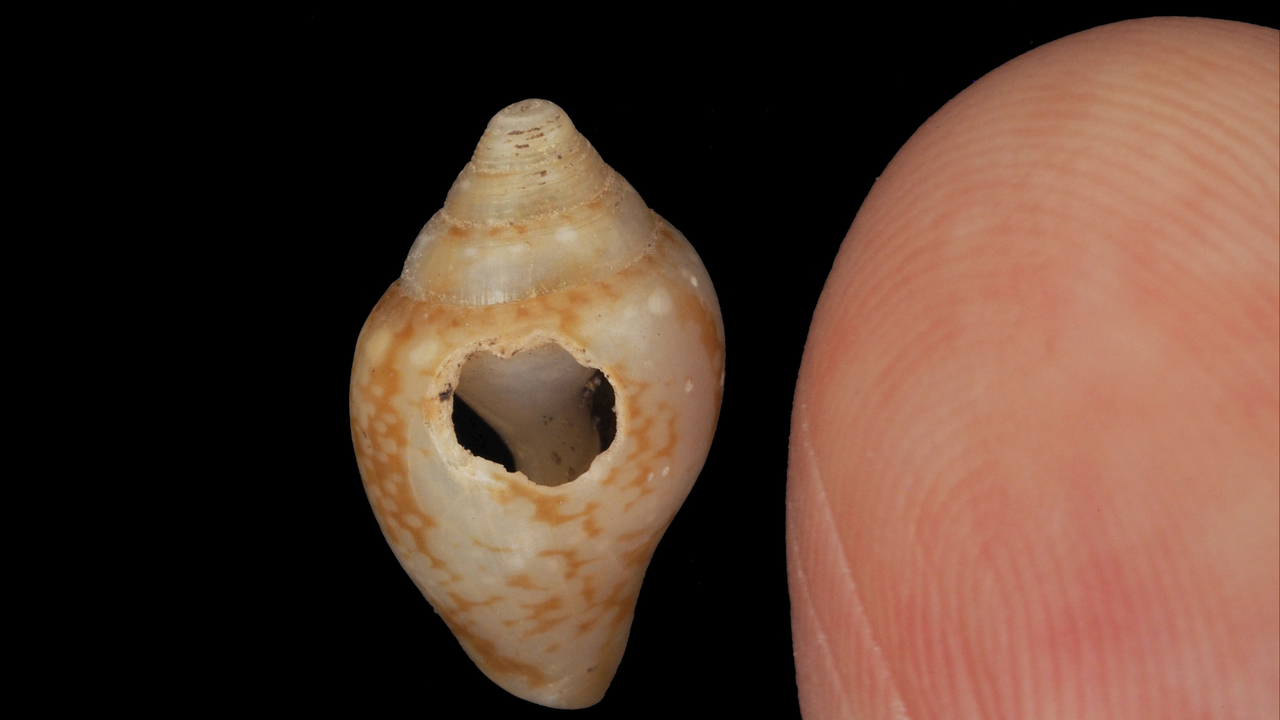
What's more, Neanderthals and H. sapiens got raw materials, such as flint, from the same local sources and hunted the same prey: wild goats (Capra aegagrus), fallow deer (Dama mesopotamica), roe deer (Capreolus capreolus) and wild boar (Sus scrofa). Layer after layer also turned up 29 shells of a small marine snail, Columbella rustica, carried into the cave not for food but seemingly as ornaments. Some were pierced as if meant to be strung, and one shell dating to the Neanderthal occupation showed signs of deliberate heating that altered its color.
"Our findings indicate a deep level of cultural interaction," study co-author Naoki Morimoto, paleoanthropologist at Kyoto University, said in a statement. "These two distinct but closely related human groups were not just adapting to the same environment: they were probably sharing symbolic preferences."
That pattern breaks from findings at Mandrin Cave in France, where Neanderthals and modern humans are thought to have alternated occupation in distinct pulses from about 56,800 and 41,500 years ago, but did not leave evidence of a continuous culture. Instead, it echoes evidence from Tinshemet Cave in Israel, where researchers recently reported similar signs of shared behavior between the two groups tens of thousands of years earlier, from about 130,000 to 80,000 years ago.
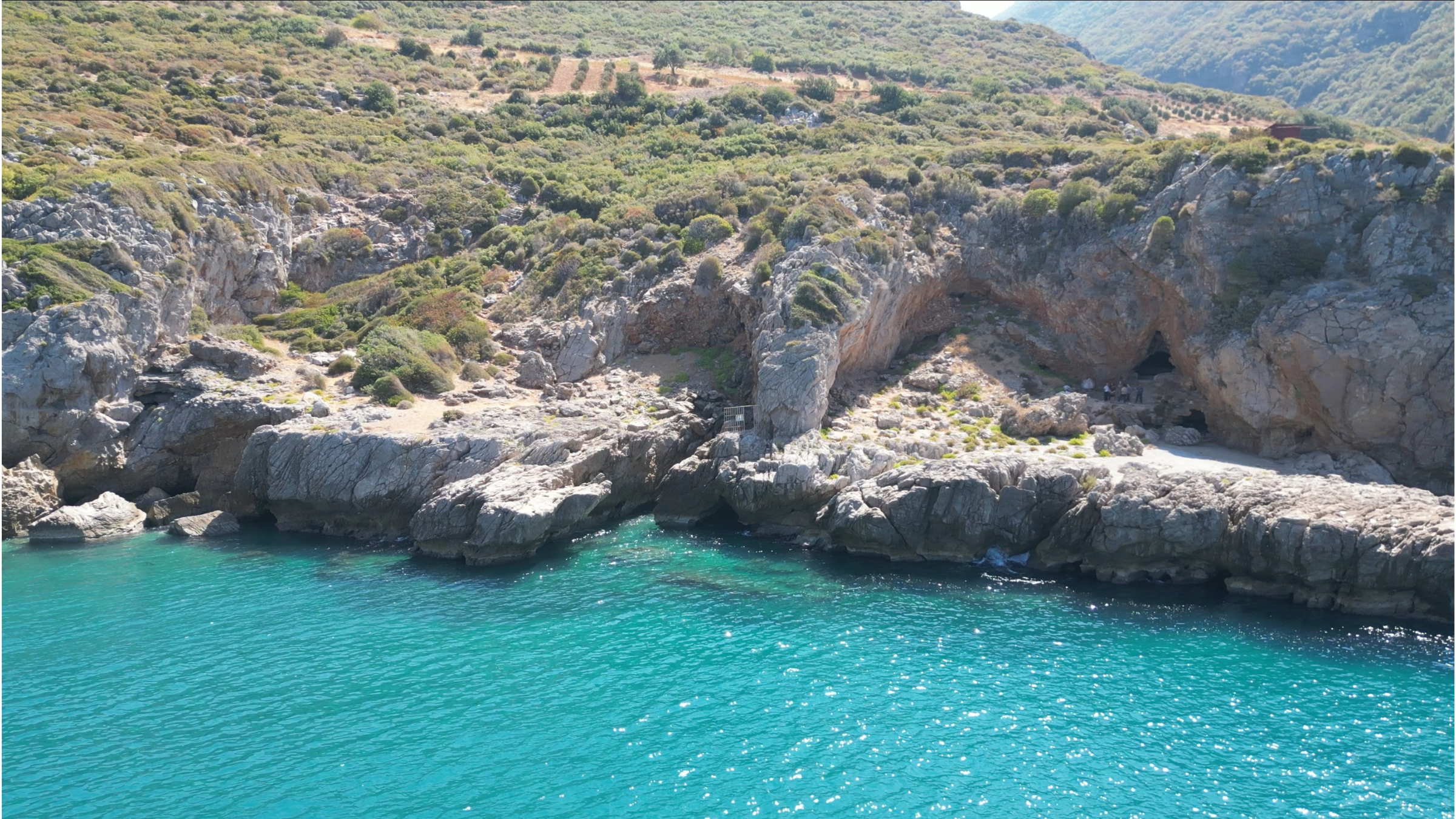
Üçağızlı II Cave in Turkey and Tinshemet Cave in Israel suggest that even though there was a "biological" turnover as the caves went from being occupied by Neanderthal groups to modern humans, there weren't major cultural turnovers, too.
"Rather, we hypothesize that the two human species that coexisted in the region were in contact and shared cultural aspects," the researchers wrote in the study.
Sites like these are forcing a rethink of how these two types of human were culturally related to each other, April Nowell, a Paleolithic archaeologist at the University of Victoria in Canada who was not involved in the new study, told Live Science in an email. "By demonstrating cultural continuity and elevated levels of interaction, sites such as Tinshemet and Üçağızlı II are changing what we thought we knew about Neandertals, Homo sapiens and other contemporary Homo groups … a fascinating region just got even more so!" she said.
But that cultural continuity only heightens the mystery of how modern humans and Neanderthals interacted, with Neanderthals eventually going extinct around 40,000 years ago. Two types of human can't occupy the same ecological niche indefinitely, Nowell noted, and some research into Neanderthal cognition suggests Neanderthals were less-flexible thinkers than modern humans, with more limited capacity for language and less of the kind of self-awareness and creativity that may have given H. sapiens an edge. (However, there is pushback against the idea that Neanderthals weren't as cognitively complex as H. sapiens.)
If the archaeological record at sites like Üçağızlı II shows this much overlap in behavior, Nowell said, the real differences between the two may be ones the fossil record simply hasn't revealed yet.
The authors noted that many big questions remain, including when and where these shared cultural practices took place and whether these cultural similarities happened because modern humans mated with Neanderthals.
Ongoing and future excavations at sites like Üçağızlı II Cave may help to answer these questions and build a "more comprehensive picture of human evolution and cultural development during the Late Pleistocene," the team wrote in the study.
How much do you know about our closest relatives? Find out with our Neanderthal quiz!
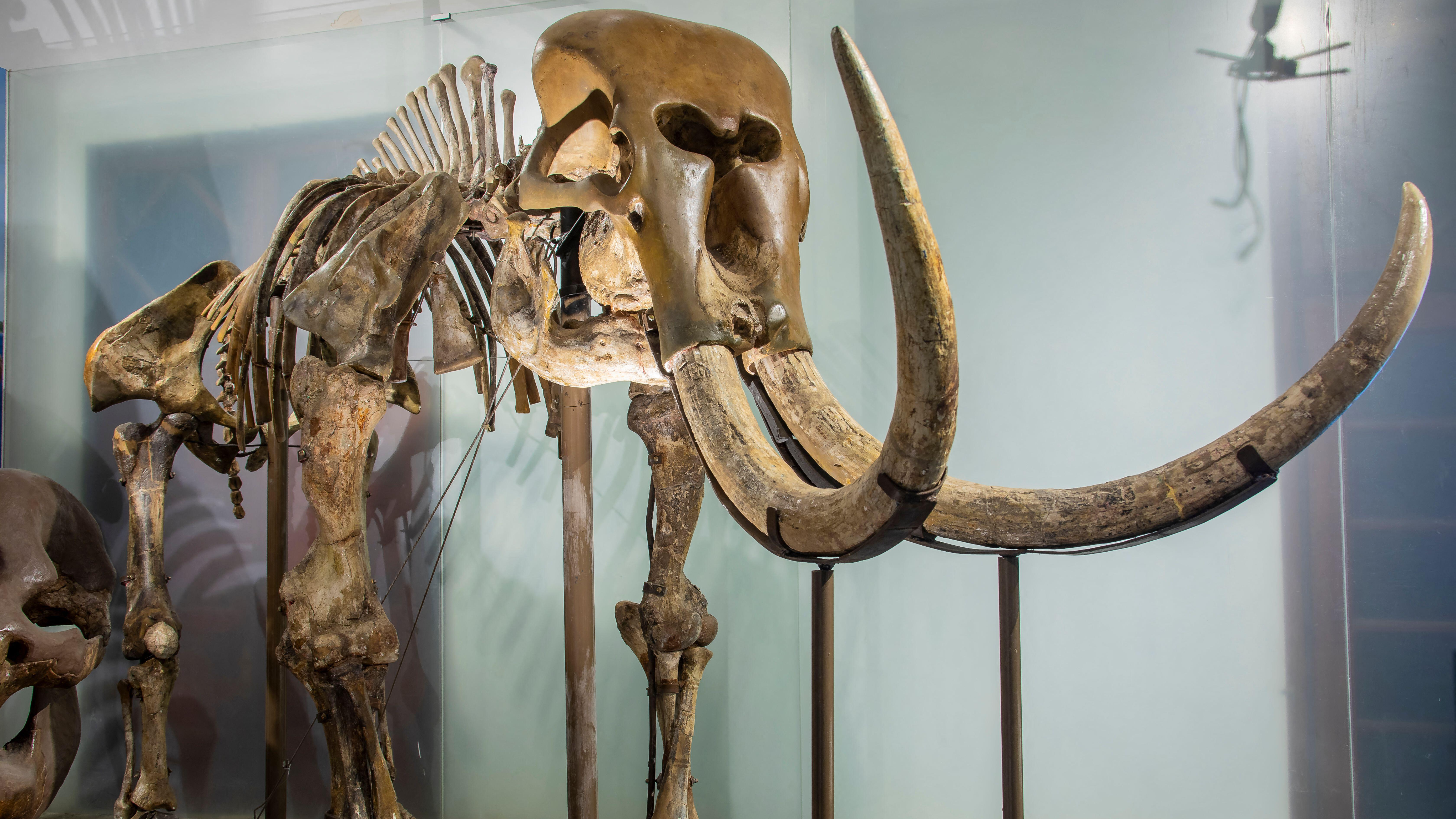
The diminutive, now-extinct humans known as the "hobbits" were scavengers who dined on dwarf elephants after Komodo dragons took the best cuts, archaeologists have discovered. The finding upends the assumption that Homo floresiensis, a human species that arrived on the Indonesian island of Flores at least 700,000 years ago, hunted big game.
First discovered in 2003, H. floresiensis has been nicknamed the hobbit because of its small size, averaging around 3 feet, 6 inches (106 centimeters) tall, along with its small brain, large teeth and big feet. But archaeologists also found stone tools, animal bones with cut marks, and charred bones that seemed to add up to sophisticated behavior common within our genus, Homo. The hobbits disappeared around 50,000 years ago as Homo sapiens began spreading around Southeast Asia.
But in a study published Friday (July 3) in the journal Science Advances, an international team of researchers questions whether the behavior of H. floresiensis was really as advanced as previously assumed.
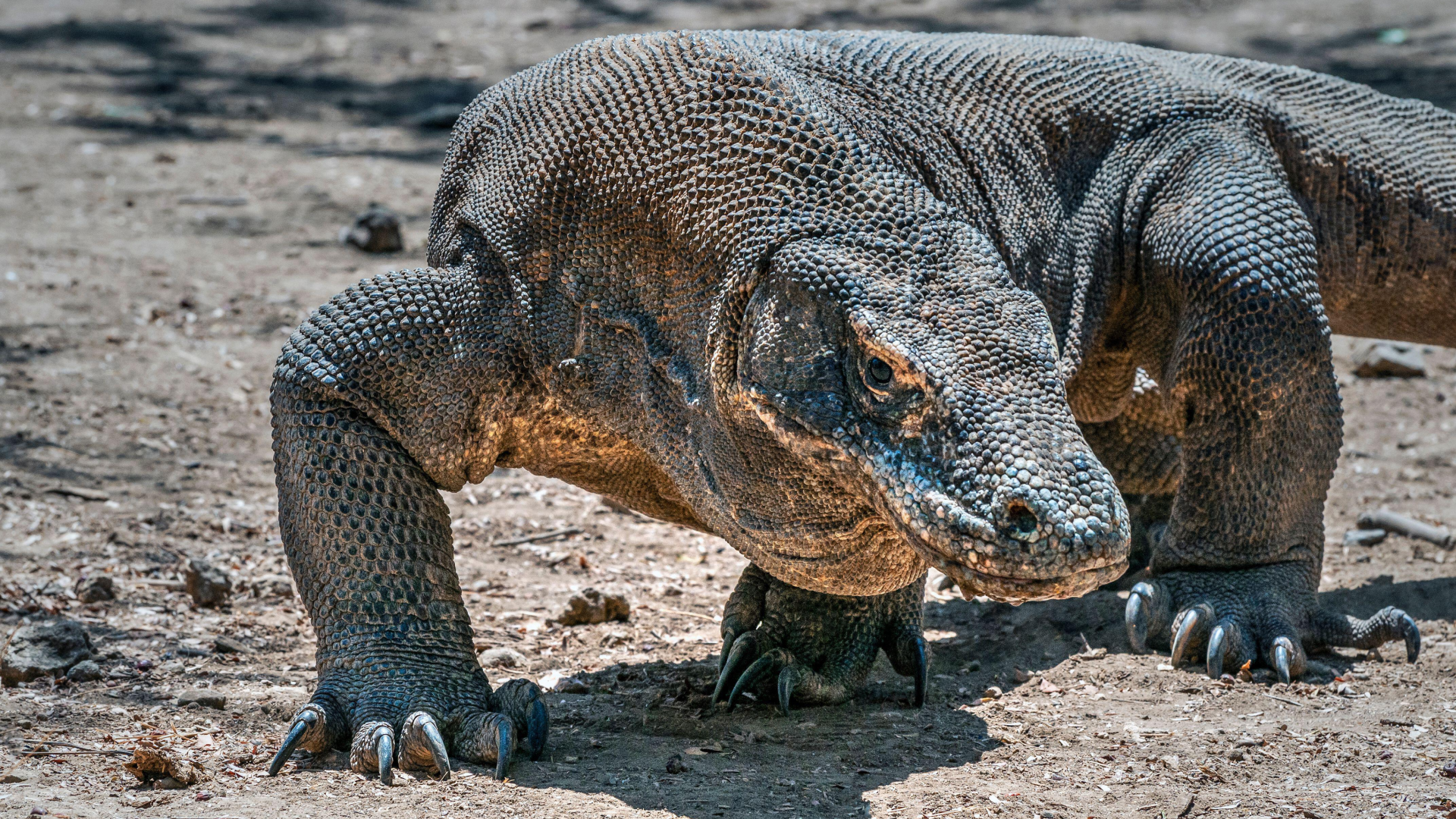
The researchers looked at fossil bones of Stegodon florensis insularis, an extinct dwarf species of elephant relative discovered at Liang Bua cave, where bones from H. floresiensis and stone tools have also been found, to determine whether the cut marks were from hunting Stegodon meat or from scavenging the remains of the feasts of the only other carnivore on the island: the Komodo dragons (Varanus komodensis).
To distinguish the hobbit cut marks from Komodo dragon tooth marks, the researchers first conducted an experiment, feeding a goat carcass to a captive Komodo dragon at Zoo Atlanta. Then, they recovered the goat skeleton and painstakingly documented all of the marks, pits, notches and furrows the Komodo dragon's teeth made in the bones. The tooth marks were concentrated in areas with substantial amounts of goat flesh, the researchers wrote in the study, suggesting the Komodo dragon had a preference for meaty areas.
The researchers then investigated the ancient Stegodon bones for evidence of cut marks made by H. floresiensis' stone tools and tooth marks from Komodo dragons. They found 54 cut marks on the Stegodon bones and nearly twice as many Komodo dragon tooth marks. More importantly, they discovered that the Komodo dragon marks were focused on meaty areas, while the human cut marks were made primarily in areas without a lot of meat, suggesting H. floresiensis did not hunt and kill the Stegodon.
The overall patterns of cut marks and tooth marks suggest "a combination of mostly primary access by Komodo dragons and secondary access by H. floresiensis where both predators consumed Stegodon," the researchers wrote. And the hobbits likely ate this meat raw, according to the researchers, as they found no evidence on the Stegodon bones that they had been cooked. Nor did they find any evidence of burning on over 4,000 mouse bones from the site, suggesting the previous evidence of charring was actually natural manganese staining.
A lack of hunting and fire-making technology suggests that the hobbits were not as behaviorally sophisticated as previously thought and raises questions about their ancestry, the researchers said.
It's possible that the ancestor of H. floresiensis branched from the Homo genus before humans accomplished the control of fire and hunting, study first author E. Grace Veatch, a paleoanthropologist at the University of Tübingen in Germany, told Live Science in an email.
One hypothesis for the origin of the hobbits is island dwarfism, which occurs when a large species' average body size evolves to be smaller over generations due to the limited availability of natural resources. Another theory is that hobbits descended from an earlier Homo species that was already small-bodied.
"I think our study highlights the importance of considering behavior in these debates," Veatch said. "Our study suggests that H. floresiensis evolved from a hominin population that did not require these dietary strategies [of hunting and cooking], such as a form of early Homo."
But the new study has not entirely settled the debate about the hobbits' ancestry, because very little is known about the behavior of early hominins in Southeast Asia, such as Homo erectus on Java and other areas of Sunda or Sundaland, a landmass between the South China Sea and the Indian Ocean that has been exposed off and on over the past 2.6 million years.
If H. floresiensis really did branch off from H. erectus, that would suggest many evolutionary changes occurred.
"Taking place on an island that was cut off from contact with the Sunda mainland, this evolution from Homo erectus to Homo floresiensis may have involved not just profound anatomical transformations, such as reduced body size and brain volume, but also behavioural adaptations," Adam Brumm, an archaeologist at Griffith University in Australia who was not involved in the study, told Live Science in an email.
"Flores was clearly a wild card in the story of early human evolution, the sort of place where almost anything could have happened — including, potentially, the loss of deeply-rooted hominin behaviours, such as hunting and fire use," Brumm added.
Where H. floresiensis fits in with the rest of the Homo genus is still an open question, Veatch said. "Importantly, this study highlights the contribution of taphonomy [the study of what happens to organic remains after death] to speak to these larger questions about ancestry."
What do you know about early humans? Test your knowledge with our human origins quiz!