Facilities likely to employ 10,400 workers, compared with 40,000 in industry estimates, thinktank says
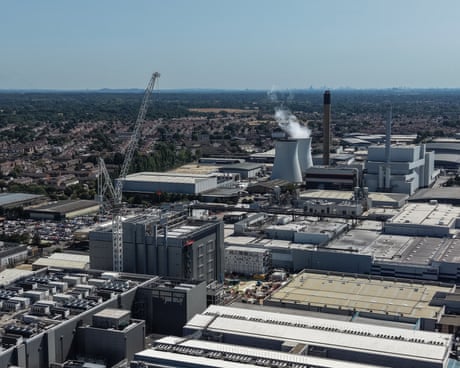
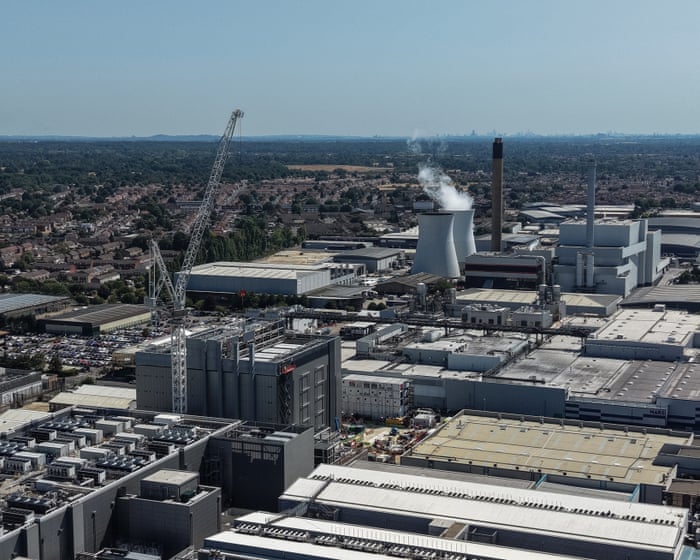
Datacentres in the UK will create just a quarter of the jobs predicted by the tech sector, while consuming vast amounts of energy, according to new research.
Environmental thinktank Verdant predicts that all the datacentres currently planned are likely to directly employ 10,400 workers – compared with the more than 40,000 cited in projections by the industry lobby group TechUK.
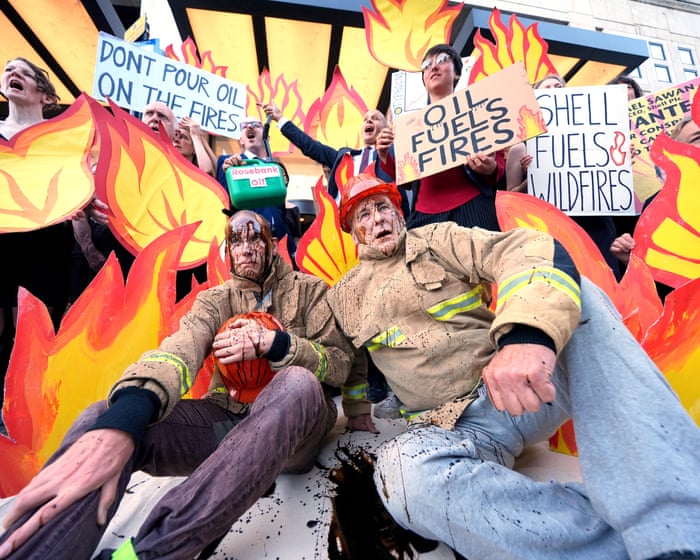
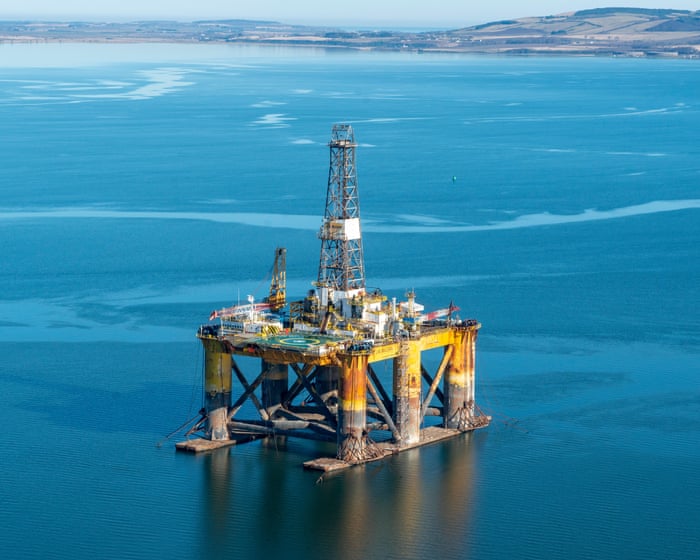
Energy secretary could recommend new North Sea drilling next week, as ministers also consider approval for Rosebank oilfield
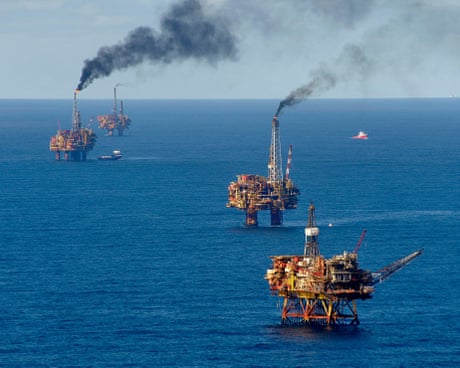
Ministers are poised to approve a controversial new gasfield in the North Sea this month, according to government sources, and are considering approving a major oilfield later this year.
Miatta Fahnbulleh, the energy secretary, will give her recommendation to approve the Jackdaw field off the coast of Aberdeen as soon as next week, according to people close to the decision, and the formal approval could follow a week after.
Arthur Downing, author of Power and the People: A History of British Energy, says all-encompassing rapid transition will need a mutualised system
Have you ever wondered why it is that most houses in the UK are reliant on gas boilers? Not what’s stopping more people from replacing them with heat pumps, but instead why and how the gas boiler became so ubiquitous in the first place?
Arthur Downing, the author of the new book Power and the People: A History of British Energy, can tell you exactly why. “We only have boilers in our houses because of a state-owned enterprise that went into everybody’s home and installed natural gas-suitable appliances at no direct cost,” he says. The nationalised gas industry of the 1940s to the 1980s, which oversaw this huge project, was for three decades one of the “most dynamic, innovative, efficient industries in Britain”, Downing says. Yet few of us would use these terms to describe it as such now.
Campaigners say ‘seismic shift’ follows years of pressure to sever ties with oil and gas firm
The London Science Museum has ended its decades-long partnership with the oil and gas company BP in what has been described as a “seismic shift” for the museum.
The Science Museum Group academy, which was established in 2018 to provide training and resources, announced on Friday that it would be ending its partnership with BP. In a statement, the director and chief executive of the Science Museum Group, Sir Ian Blatchford, said the partnership had “drawn to a close at the end of the current contract term”.
Soaring prices are plunging struggling families into debt. The government must support them in the short term as it invests in a clean energy future
Fuelled by the consequences of Donald Trump’s disastrous war on Iran, household energy debt in Britain is continuing to soar, rising to a record £6bn by the end of June. That figure is set to hit £7bn by the end of the year, as the government’s cap on gas and electricity prices goes up to a three-year high in October. The human cost among the less well off will be more people regularly choosing whether to skip meals, ignore other bills or stay cold this winter.
Such is life at the sharp end of the cost of living crisis, which Andy Burnham has made it his priority to address since arriving in Downing Street. The day after he became prime minister, Mr Burnham announced that VAT would be removed from electricity bills from the beginning of October. But the Middle East-related rise in the price cap, announced on Wednesday, more than wipes out the effect of his cut. In an era of geopolitical volatility, high energy costs have become the new normal.
Do you have an opinion on the issues raised in this article? If you would like to submit a response of up to 300 words by email to be considered for publication in our letters section, please click here.
In today’s newsletter: As we enter our fifth summer heatwave, Andy Burnham’s government is looking at what the UK should do with its remaining North Sea oil and gas
Good morning. What a difference a new job can make. “To have a shot at staying within 1.5C global warming, we can’t have any new oil or gasfields … It’s irresponsible and shortsighted to be funding new #fossilfuels when we need to be getting to #NetZero.”
This was the 2022 message from Miatta Fahnbulleh, now the secretary of state for energy security and net zero. It’s a testament to her remarkable rise that Fahnbulleh wasn’t even an MP when she posted it four years ago. Today, she is in the cabinet, facing (or is the face of, at least) one of the most challenging, and potentially controversial questions looming for the new government: to drill or not to drill, baby?
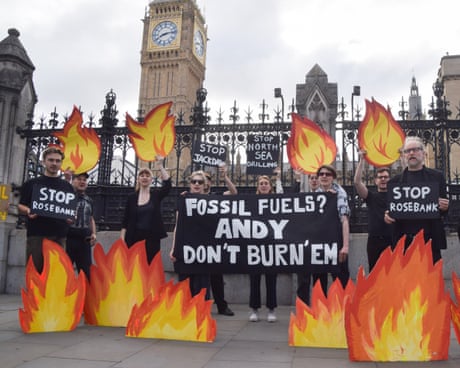
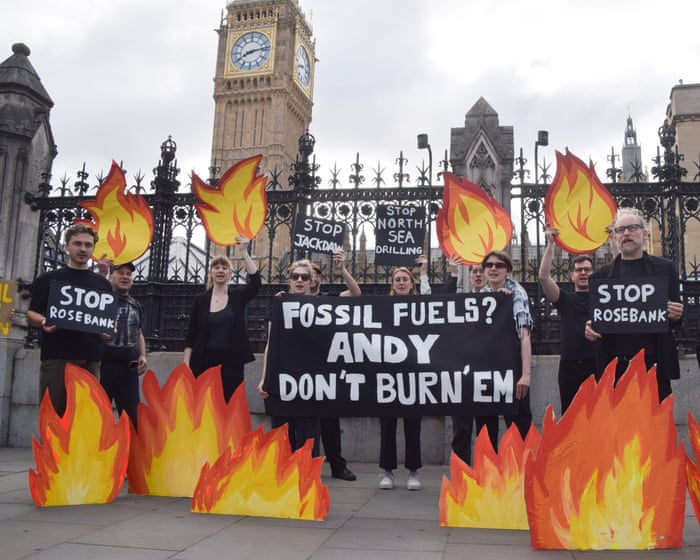
Two sites are the focus of fierce debate. Yesterday, a public consultation on whether to greenlight extraction at one of them – Jackdaw – closed. Next Monday, it’ll be the same for the other, Rosebank. Andy Burnham has been silent about the climate crisis since taking office. As we enter yetanother heatwave, what his government does next will be a defining signal of intent on the issue.
Colombia | More than 100 people have died after a powerful earthquake struck western Colombia, collapsing and severely damaging scores of buildings in major cities including Cali and Pereira.
UK weather | Almost three-quarters of England is now in drought, with four more regions officially declared, and as much of Europe braces for its fifth climate crisis-driven heatwave this summer.
Crime | Police are investigating whether Joshua Kerry, the man charged with the murder of the former Reform UK and Conservative politician Ann Widdecombe, had any role in an attempted burglary last year at the then London home of Nigel Farage.
China | More than a million people were moved to safety across eastern China by Sunday evening as powerful Typhoon Dolphin made landfall amid fears torrential rain would cause flooding and landslides.
Ukraine | Russia has banned voting against the war in September’s elections, after the supreme court upheld a suit brought by a small pro-Kremlin nationalist party, and stripped voters of their last option on the ballot: Yabloko, the country’s only remaining anti-war party.
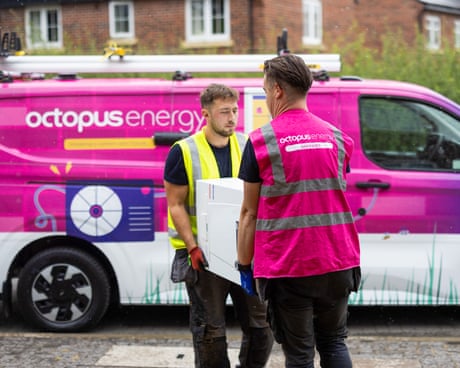
Great Britain’s biggest household energy supplier is calling on its customers to use less electricity this week during the deepest solar eclipse in almost 30 years.
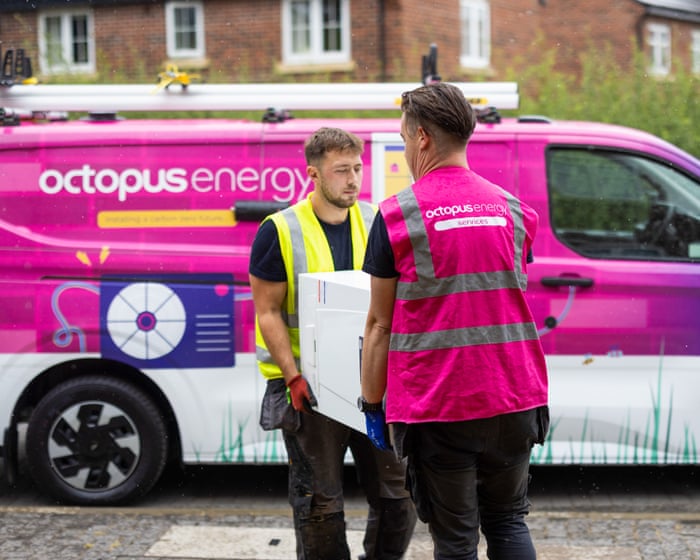
Octopus Energy has urged customers to avoid running washing machines and dishwashers between 6pm and 8pm this Wednesday as the moon is expected to block up to 95% of the sun over parts of Britain.
Union says that as a top-rated ethical company, UK’s largest energy firm should welcome its involvement
GMB is pushing for union recognition at the UK’s largest energy company, Octopus Energy, known as a progressive organisation with a focus on renewable energy.
The union is planning to submit a formal proposal for voluntary recognition at the London-based company and says Octopus, as a top rated ethical business, should welcome the involvement of trade unions.
Iran conflict windfall over three months reignites calls for companies ‘cashing in on human misery’ to pay for environmental damage
Eight of the biggest oil companies amassed profits of more than $90bn (£67bn) in just three months as the Iran conflict sent energy prices soaring and the emissions-fuelled climate crisis caused deadly heatwaves.
The windfall war profits have reignited calls for oil and gas supermajors such as Saudi Aramco and BP to pay for the environmental damage caused by “cashing in on human misery” and fund a rapid transition to renewable energy.
Live, rolling coverage as London’s biggest companies defy Middle East disruption and UK petrol prices rise to around £1.60 per litre, the highest since Donald Trump ordered renewed strikes
The story piquing the interest of the financial press this morning is that of Leopold Aschenbrenner, the AI Wunderkind (he’s German-born) who has been forced to sell off his fund in a fire sale after the AI boom ran out of steam.
The 24-year-old had persuaded a lot of people to give him a lot of money for a hedge fund, after previously working for OpenAI and the FTX Future Fund, a charitable arm of the fraudulent crypto empire of Sam Bankman-Fried, who is now in prison. Aschenbrenner ploughed that money into debt-fuelled bets on artificial intelligence companies, earning huge returns until he found out that stocks can also fall.
The trader dubbed the “Nostradamus of AI” would have been hard-pressed to foresee how quickly his high-flying hedge fund would run into trouble.
The firm’s rapid downward spiral is a familiar tale, as Silicon Valley and Wall Street once again threw their weight behind a bright-eyed but untested investor who promised this time would be different. “Everybody always wants to find the next golden child,” said one longtime hedge fund executive. “It just keeps happening.”
In less than 24 hours — which included a conversation between Griffin and Aschenbrenner — Griffin’s Citadel hedge fund reached out to Situational Awareness and snapped up the investments at a discount, according to a person familiar with the matter who asked not to be identified citing private information.
It was a startling reversal for Aschenbrenner, a former researcher at OpenAI who – before starting his hedge fund roughly two years ago — had no previous investment experience. His fledging firm has watched its assets plunge from $45bn at the start of July to about $10bn.
Boom in solar farms and home installations in first half of 2026 began shortly after start of US-Israel war against Iran
Great Britain has recorded more new solar power installations in the first half of this year than in any six-month period since 2011, as households turn to rooftop panels to help cut their energy bills.
An analysis of the government’s official figures shows that Great Britain added 142,536 solar installations in the first six months of the year, putting it on track to top last year’s record solar additions.
PM tells reporters the government cannot ignore the energy resource ‘when people are struggling’
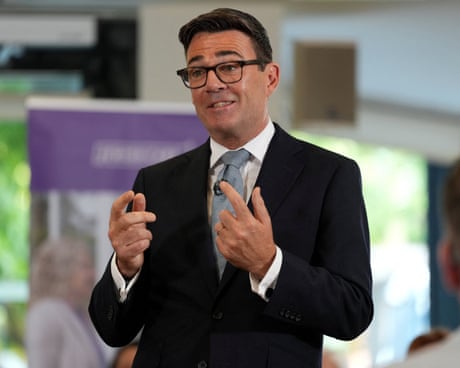
Andy Burnham has said he will take a “pragmatic” approach to oil and gas drilling in the North Sea, saying the government could not ignore the potential energy resources it holds.
The prime minister’s comments came in response to a question about his conversation with Donald Trump on his first day in No 10. Trump had said Burnham told him he would “open up” North Sea oil, something the UK summary of the call made no mention of.
Environmentalists renew calls for windfall tax to support households after Q2 earnings rise to almost $10bn
Shell has posted its second highest quarterly earnings on record as the energy market surge caused by the Middle East crisis helped to double its net profit to almost $10bn in the three months to June.
Europe’s biggest oil and gas company reported a quarterly profit of $9.8bn (£7.4bn), more than double the figure for the second quarter last year and the highest since its record-high earnings in the months after Russia’s invasion of Ukraine.
One task awaiting new energy secretary Miatta Fahnbulleh is devising a plan to avoid a crisis by the end of the decade
Welcome to the energy secretary job, Miatta Fahnbulleh. You have a politically tricky decision to make on whether to approve production at the Jackdaw gasfield and the Rosebank oilfield. But here’s another one that can’t wait much longer: what is the broader plan to ensure Britain avoids a gas supply crisis in 2030?
By way of reminder, one of the more alarming reports published by the energy department under Ed Miliband was the one that warned of “an emerging risk” to gas supplies at the turn of the decade if an important piece of kit – an import terminal, say, or the critical 725-mile Langeled pipeline from Norway – were to be out of the action during a severe cold snap.
Law change means renters and flat owners may be able to cut bills as energy costs soar amid Iran war
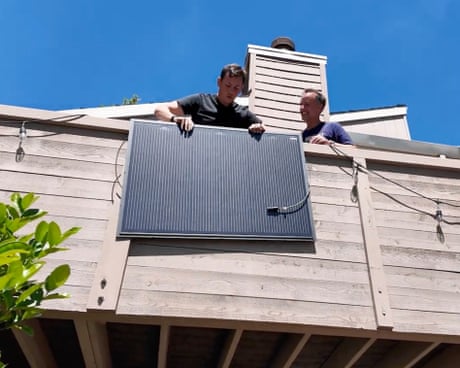
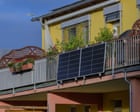
British households will be able to buy plug-in solar panels later this summer after the government changed the law so the UK’s biggest retailers could bring them to market for the first time.
People across the country will be able to join the millions across Europe generating their own electricity using “balcony solar panels” from 27 August, according to legislation passed last week.
Neso denies allegations aired by Tory MP that staff took part in cover-up over decision-making in heatwave
In a control room in Wokingham, Berkshire, staff work around the clock, minute by minute, to align Great Britain’s fluctuating power supplies with its ever-changing demand.
However, as households struggle to adapt to soaring summer temperatures, staff at the government-owned National Energy System Operator (Neso), tasked with keeping the lights on, have faced the kind of challenge usually reserved for the country’s coldest winter nights in recent weeks.
Campaigners hope move will force commercial banks to rethink holding assets linked to the fossil fuel
Climate campaigners have declared a victory after the Bank of England said it would no longer accept bonds linked to one of the most polluting industries on the planet for key loan arrangements.
The ban, which comes into force in October, marks a fresh crackdown on thermal coal, which is burned in power plants to create electricity, and has long been a target of green policy activists.
Campaigners say field will bring minimal benefit for UK economy, as industry lobbies Burnham for go-ahead
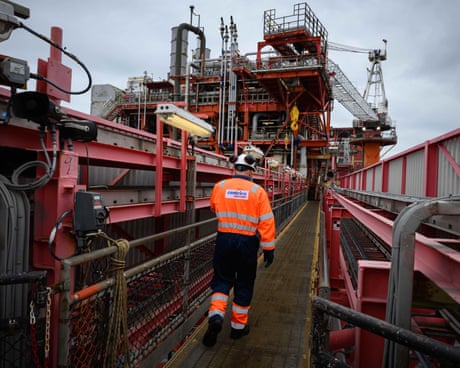
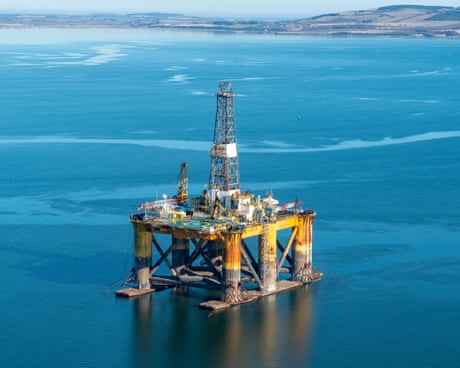
More people can fit on to the top deck of a standard London bus than will be directly employed on the new Jackdaw gasfield in the North Sea, industry documents show.
Lobby appeals to prospective PM’s reindustrialisation agenda as it pushes for Rosebank and Jackdaw approval
The UK’s North Sea oil industry has made a last-ditch attempt to curry favour with the Labour government by appealing to Andy Burnham’s reindustrialisation agenda just days before he is expected to become Britain’s next prime minister.
Industry lobbyists have written to more than 400 Labour MPs to call on the government’s new leaders to allow more oil and gas drilling in UK waters to support homegrown energy and show “a commitment to UK manufacturing, industrial capability and the skilled workforce that has powered the nation for generations”.

 Login