Ancient painting of a bison from Altamira cave in Spain.luisrphoto
Perhaps the most evocative windows into the minds of our ancient ancestors are the images they painted on the walls of caves – renderings known simply as rock art or cave paintings.
Rock art, which is found across the world, offers snapshots of human history, preserving representations of cultural traditions, symbolic communication and social identity. Common subjects include animals, hunting scenes and hand stencils – thought to have been made by blowing pigment over the artist’s hand.
Scientists have wrestled with basic questions about the origins of rock art such as: what was used to produce it, when was it made, and who made it?
Now, a recent study of cave art from Spain and Portugal has shown that ancient human DNA can be recovered directly from the cave walls. We may therefore be edging closer to answering “who made it?”
Using this technique to link a specific painting to an ancient artist may be a step too far. But there are still important things it can tell us about the past.
Previously, researchers had made considerable progress in answering the “what” and “when” questions. Scientists can analyse what pigments are preserved in rock art using techniques such as X-ray fluorescence spectroscopy, which allows them to identify materials such as red ochre and charcoal.
Scientists can also estimate the age of the art using techniques such as carbon-14 dating, carried out on minute quantities of organic material, to determine when rock art was created.
For example, in 2026, researchers reported that a stencil of a human hand had been found in Southeast Sulawesi, Indonesia. The researchers used a laser to bore a microscopic hole and collect samples from a fine layer of calcium carbonate that had formed over the painting.
The research team then measured the degradation of radioactive uranium contained in these mineral deposits to assign a minimum age to the painting of 67,800 years – making it the world’s oldest known minimum date for cave art.
The age of this art fits within a period when modern humans (Homo sapiens) are thought to have migrated through the area. But the wider Indonesian archipelago was previously home to other human species, such as Homo erectus and Homo floresiensis (nicknamed “the Hobbits”), which complicates matters significantly.
While the stylistic and technical complexity of the art suggests authorship by Homo sapiens, we have no way to be certain who made it.
Identifying a human linked to a prehistoric item has an established methodology. For example, in 2023, researchers recovered ancient DNA from a deer-tooth pendant found in Denisova cave, southern Siberia.
Analysis of the genetic sequence showed that the pendant was probably worn by a 25,000-year-old woman belonging to an ancient population known as Ancient North Eurasians, who lived across Siberia in Palaeolithic times.
Such discoveries transform otherwise anonymous objects into evidence of real people, giving us an intriguing glimpse into the lives of our prehistoric ancestors.
In the latest cave art study, scientists systematically sampled both painted and unpainted surfaces of cave walls at 11 sites across Spain and Portugal. Remarkably, they recovered ancient human DNA directly from the walls, demonstrating for the first time that these surfaces can act as reservoirs for genetic information.
Some of these cave wall samples were shown, through both genetic analysis and the archaeological context, to be at least 4,000 years old.
In two of the samples from Covarón cave in northern Spain, human DNA was sufficiently preserved to be identified as belonging to ancient western hunter-gatherers. These were populations that lived across much of Europe during Late Palaeolithic and Mesolithic times.
One of the samples from a pigmented part of a cave wall, in Escoural cave, Portugal, also yielded traces of ancient DNA, but it was not as well preserved as other samples.
Nevertheless, the research establishes a powerful new methodological framework and proof of concept. It raises the tantalising prospect of studying not only the images left behind, but also the communities of people who made them.
However, applying this technique successfully to identify the artist of specific ancient rock art is incredibly unlikely.
Only one of the pigmented samples from the Spanish and Portuguese cave sites yielded ancient DNA. It was retrieved from Escoural cave in Portugal.Bossoms Mesa, et al. (2026), CC BY-NC-SA
This research could, though, potentially resolve one of the most contentious debates in archaeology. This concerns a 66,700-year-old hand stencil discovered within Maltravieso cave in Extremadura, western Spain.
This controversial stencil appears to predate the arrival of modern humans in Europe. Some researchers have therefore argued that Neanderthals, not Homo sapiens, made the art.
Finding DNA from either species in this location, at similar times to the creation of the rock art, could offer a potential route for resolving the debate. But this too is much more difficult than it might seem.
Easy transfer
The presence of human DNA does not prove who created the rock art. DNA is easily transferred – actions as simple as breathing can transfer someone’s genetic material to a location or object. This is why DNA recovered from a knife cannot definitively conclude who committed a stabbing in a forensic case.
DNA establishes the association of someone with an item or location, not the actions they carried out during the deposition of their genetic material. Environmental activities such as rain can also transfer human DNA to these spaces, making it extremely difficult to identify a single person at a location.
Additional DNA can be deposited at very different times to when the painting was produced – by both modern and ancient humans. The potential for contamination is incredibly high, making it difficult to establish who may have been at a given location at a specific time.
Nonetheless, scientists can use this new research to explore important prehistoric questions such as the hominin species, population groups and sexes of those who entered specific cave systems, and their migration routes across landscapes.
In the general sense, we can also begin to connect prehistoric art with the people who created and lived with it.
Behind each rock-art hand stencil or hunting scene is evidence of a real person who, while separated from us by tens of thousands of years, felt the need to communicate their creativity – as we do today. Techniques such as this offer a vital opportunity to understand more thoroughly the human experience via our similarities with ancient people.
The authors do not work for, consult, own shares in or receive funding from any company or organisation that would benefit from this article, and have disclosed no relevant affiliations beyond their academic appointment.
The UK is building a next generation fighter jet in collaboration with Italy and Japan. The Global Combat Air Programme (GCAP) has taken on even greater significance since the collapse of a rival project called the Future Combat Air System (FCAS), a collaboration between France, Germany and Spain.
The GCAP aircraft, which will be known in Britain as Tempest, should enter service by 2035. For Britain and Italy, the project fulfils a need to replace their Eurofighter Typhoon fleets with a cutting edge combat jet capable of protecting national borders.
The plane could also participate in Nato-led missions, including protecting European skies against capable and determined adversaries. Japan too needs a fighter jet up to the task of protecting a large maritime region against incursions of its airspace.
So can these three partner nations succeed where FCAS failed and build a truly state-of-the-art combat aircraft?
The most advanced fighter jets in the world are known as “fifth generation”. Tempest will be classed as a sixth generation fighter jet. China and Russia have fifth generation aircraft and are working on their own sixth generation combat jets.
Many European nations have been replacing their ageing fleets with America’s fifth generation F-35 aircraft. But the Trump administration’s wavering levels of support for Nato have made some governments rethink their reliance on American hardware.
This underlines the importance of sovereign capability for the nations behind GCAP, which was established in 2022. On July 3 2026, the UK, Italy and Japan signed a £4.6 billion deal to move the project into its next design phase.
The contract was awarded to Edgewing, a joint venture between three aerospace companies: the UK’s BAE Systems, Italy’s Leonardo and the Japan Aircraft Industrial Enhancement Company (which is jointly funded by Mitsubishi Heavy Industries and the Society of Japanese Aerospace Companies).
The award followed nine months of delay as the UK worked to finalise its defence spending plans.
What will distinguish sixth generation fighter jets from their predecessors is their ability to act as a “system of systems”. They will be packed with sensors to gather information about the battlespace. This will be combined in real time, along with data from satellites, naval assets and ground stations, to aid pilots in their missions.
Advanced jets like Tempest will be able to control drone aircraft, including a type called “loyal wingmen”. These drones assist missions by, for example, protecting the crewed fighter jet.
Meanwhile, stealth technology – which helps fighter jets reduce their chances of being detected by infrared and radar sensors – will be just as vital as it has been for fifth generation aircraft like the F-35.
The ‘loyal wingman’ drones being developed for the US Air Force (60 Minutes).
So do GCAP partner nations have the technological capability to build such an aircraft? Yes, with a couple of caveats. In 2016, Japan became only the fourth country to test-fly a homegrown stealth demonstrator aircraft.
The Mitsubishi-built X-2 prototype demonstrated the success of Japan’s domestic stealth design and engineering techniques, its radar-absorbent materials and thrust vectoring (an aircraft’s ability to steer by changing the direction of its engine exhaust).
The UK flew its own stealth demonstrator, BAE Systems’ Taranis drone, in 2013. It showed the success of British-developed stealth technology and autonomous systems technology. Both stealth programmes have fed directly into GCAP; BAE Systems and Mitsubishi Heavy Industries are the same companies designing Tempest.
The first flight of Britain’s Taranis drone, a stealth demonstrator (Euronews).
Italy and Japan also host F-35 final assembly lines, the only such facilities outside the US. This has created a workforce already experienced in the assembly of a fifth generation stealth jet, along with the production of full wings for the F-35. These skills transfer directly to building Tempest.
What remains unproven by the GCAP partners is the ability to integrate stealth, combined data from multiple aircraft sensors, and artificial intelligence into a single aircraft. Another uncertainty is the ability to sustain a production line of aircraft destined for national fleets. This is a harder engineering problem than it might seem and deserves closer scrutiny than it currently receives.
Equal terms
The FCAS project succumbed to disputes between the industrial partners, France’s Dassault and Airbus, representing Germany and Spain. Sticking points included which company led the design, the distribution of work and intellectual property issues.
Do the GCAP partners have the industrial and organisational discipline to avoid the same fate? GCAP’s Edgewing industrial venture reflects in its structure key principles that could prove vital for the project’s success.
The Edgewing partners each hold an equal 33.3% stake, with no single nation designated as lead. They have freedom to act on and modify the technology. This is a far cry from the F-35, where partner nations fly the aircraft with no control over changes to modernise the jet’s hardware or software, which is overseen by the US.
GCAP is not immune to future problems, but it settled its industrial leadership question before cutting metal, a distinction that may matter more than any single technological choice.
Inaccurate budgeting could yet prove a stumbling block for GCAP. Historically, multinational fighter jet programmes have underestimated the true costs.
Even after the Defence Investment Plan’s £8.6 billion commitment, the total cost of GCAP remains unquantified, since neither the unit price of each aircraft nor the size of the UK’s order has been fixed.
History tells us that pilot training is another thing combat air programmes get wrong. As a pilot myself, I know that moving experienced crews onto a new aircraft, even a mature one, takes months of study in ground school, extensive simulator time and supervised flying before it is trusted for operational use.
GCAP crews must be trained not just to fly the jet, but to direct other uncrewed aircraft such as loyal wingmen.
Nevertheless, the evidence suggests that Britain, Italy and Japan possess the technology to build a genuinely cutting-edge sixth generation fighter. Do they possess the industrial and organisational discipline to deliver it? Probably, but it remains conditional on funding and training keeping pace with ambition over the next nine years.
Marco Chan does not work for, consult, own shares in or receive funding from any company or organisation that would benefit from this article, and has disclosed no relevant affiliations beyond their academic appointment.
Larry, the Downing Street cat, has had to adapt to seven different prime ministers moving into No 10 over the past decade. Yet while the nation’s attention is fixed on the departing and incoming political leaders, who is thinking about the effect these upheavals might have on one of the property’s most enduring residents?
Cats thrive on predictability and the consistency of their environment is important for their welfare. On the whole cats prefer an unchanging environment. Some cats cope with change better than others. Many cats are distressed by disturbances such as moving house, changes in familiar routines, people moving into or leaving the household, or even changes to the scent of their home environment.
Unlike dogs, cats aren’t obligate social species, therefore may not have such a strong proclivity to form social attachments. However, in certain situations domestic cats can be found living in social groups, particularly in environments with a plentiful food supply.
Some cats enjoy the company of people, while others prefer a more solitary life. This is determined partly by their early experiences. A young kitten that learns in the early weeks of their life that contact with people is associated with nice experiences is more likely to seek social interactions with people as an adult. Kittens raised by mothers who show friendly behaviour towards people can learn to value human company through the process of social learning.
Genetics also influence a cats friendliness towards people. Researchers in a 1995 study found that the kittens of friendlier fathers were more likely to show friendly behaviour towards unfamiliar people even if they weren’t socialised as a new kitten.
Some cats appear to suffer when separated from their caregivers, although some researchers question whether this can be described as a secure attachment (one that is necessary to maintain feelings of safety and security in threatening situations).
Researchers have identified five different forms of cat-owner relationship, based on the level of emotional investment of the owner, the way the cat relates to others, their aloofness and their need to be in close proximity to their owner. These types range from open relationships (characterised by a lightly emotionally invested owner and an avoidant cat) to casual relationships, co-dependence and friendship.
Although the Starmer family has moved out and the Burnhams have taken up residence, Larry’s main caretakers are civil servants, so his day-to-day care won’t change. Larry’s behaviour in recent days (strutting along Downing Street, nonplussed by the comings and goings and embarking on a successful hunting expedition) suggests that he takes such changes in cohabitants in his stride.
Other animals
The new prime minister has a dog called Axel, and although cats and dogs can live together harmoniously and even form close bonds, integrating Axel into Larry’s home might cause tensions if not handled well. However, not even the prime minster would dare to disturb Larry’s position as chief mouser. Andy Burnham has told the BBC he’s not bringing Axel to London with him because he doesn’t think the two animals will get on.
If he changes his mind there are a few things he could do to help Axel and Larry get along. Introducing a dog into a household with a cat should be done gradually, with the aim to prevent any chasing or aggression between the pets.
Before the dog arrives, settle the cat into a safe space, which the dog won’t have access to. This might be a bedroom, bathroom or any part of the house that the cat likes to relax in, ensuring the cat has access to everything they need such as places to hide, litter trays, food and water.
Scent is incredibly important to both cats and dogs, so getting them accustomed to each other’s aroma in the home helps to smooth the introduction. This can be done by introducing bedding or toys used by the other pet, or gently wiping a damp cloth across the body of the pet to pick up their scent.
It’s vital that the first meeting goes well and there are a few things that will help to ensure they get off on the right foot. Make sure the dog isn’t full of energy by exercising them before the meeting. Start with a barrier such as a baby gate between them.
When they first meet give both pets plenty of their favourite food treats, to reward calm behaviour and so that they associate the presence of other with something nice happening.
Signs of stress
Cats can be difficult to read but there are known warning signs of stress in cats. More obvious stress behaviour includes hissing, growling, swiping or puffed up fur. But indicators also include the cat running away or hiding and refusing treats they normally avoid. Flattened ears, dilated pupils, tense body posture and a flicking tail are all signals a cat is feeling tense.
Larry seems like quite an independent confident cat if reports “he has the run of the house” are anything to go by, so it’s likely that he will soon teach the new inhabitants of No 10 how he likes things done.
Emily Blackwell does not work for, consult, own shares in or receive funding from any company or organisation that would benefit from this article, and has disclosed no relevant affiliations beyond their academic appointment.
The European Commission’s decision to fine Google €890 million (US$1 billion) for failing to comply with the EU Digital Markets Act sounds like a significant financial and political intervention against one of the world’s largest technology companies.
The ruling is certainly further evidence of Europe’s desire to regulate US big tech platforms more strictly.
But can such fines really change the behaviour of companies like Google, whose global resources and technical capabilities substantially exceed those of the institutions responsible for regulating them?
Alphabet, Google’s parent company, reported revenues of approximately US$402.8 billion (£302bn) for 2025, and a net income of US$132.2 billion. The EU fine represents less than 0.3% of one year’s revenue.
This makes it, simultaneously, one of the largest penalties imposed under the Digital Markets Act (DMA) and a financially manageable cost for the company receiving it. But that does not mean the penalty is irrelevant. Fines can also carry reputational costs, establish legal boundaries, and create a basis for more serious sanctions.
Europe has been here before
The European Commission has been here before. In 2004, after a five-year investigation, it fined Microsoft more than €497 million for using its position in PC operating systems to restrict competition in adjacent software markets.
Just under a decade later, the same company was fined a further €561 million, after it failed to provide the browser-choice screen it had committed to making available to European Windows users. This judgment was significant, as it showed the initial legal decision was only one stage of the commission’s enforcement process.
Google has since become the principal focus of EU technology concerns. The commission opened proceedings over the company’s comparison-shopping practices in November 2010, finally imposing a €2.42 billion fine in June 2017. A separate three-year investigation into restrictions associated with Google’s mobile operating system, Android, resulted in a €4.34 billion fine in July 2018.
Video: Associated Press.
Brussels has used the DMA against other big tech gatekeepers too. In April 2025, it fined Apple €500 million for breaching its anti-steering obligation – which forbids online platforms from blocking out cheaper rival deals – and Meta €200 million in connection with the choices it offered users about their personal data.
While these decisions demonstrated the commission’s willingness to intervene, they also established a recurring pattern: an investigation is opened and a substantial fine is imposed. Then, the company in question introduces a series of technical or contractual changes, only for a further dispute to emerge over whether those changes amount to effective compliance.
In short, the central difficulty is not the absence of legal authority. It is the translation of that authority into timely, measurable changes in market behaviour.
Do fines change big tech behaviour?
There are three main ways in which the effectiveness of a fine such as this can be assessed:
1. Formal compliance: has the company amended its contracts, interfaces or internal policies in response to the decision?
2. Market effectiveness: have the changes given competitors a meaningful opportunity to reach customers, enabled app developers to offer lower prices, or increased consumer choice?
3. Deterrence: has the penalty made Google – and other gatekeepers – less likely to engage in equivalent conduct through future services, product designs or contractual arrangements?
A 2025 study examined the implementation and effectiveness of company responses in 12 major EU antitrust cases. Although most of the imposed remedies had been implemented, fewer than half were found to have been fully effective.
So, it’s not enough to ask whether Google will change the appearance of a search page or amend the wording of its developer terms in response to this latest fine. The commission must assess whether, after Google’s 60-day compliance period, competing services receive meaningful visibility, rival companies can communicate with customers without excessive friction or fees, and consumers are genuinely able to exercise greater choice.
A criticism levelled at regulators in many jurisdictions is that investigations are too slow to curb anti-competitive behaviour. Article 29 of the DMA states that the European Commission should adopt a non-compliance decision within 12 months of opening proceedings.
This is an aspirational timetable, rather than an absolute legal deadline. Nevertheless, the present Google investigations were opened on March 25, 2024 and concluded on July 23, 2026 – approximately 28 months later.
A January 2026 consultation highlighted complaints about the DMA’s slow processes and limited transparency, as well as circumvention and delaying tactics on the part of big tech companies. Suggested changes included binding procedural timelines, independent audits, and public testing of the remedies imposed by the European Commission.
The speed of technological change
When the EU’s latest proceedings against Google began in March 2024, much of the digital competition debate concerned the ordering and presentation of conventional search results. During the investigation, however, Google continued to develop AI Overviews and AI Mode, which offer users AI-generated answers, summaries and recommendations rather than a traditional page of ranked links.
This creates a significant enforcement problem. Self-preferencing can occur not only through the vertical ranking of links, but through the selection of sources, the framing of an answer, the services through which a transaction is completed and the options presented to the user by an AI agent.
Accordingly, the issue should not be whether a rival service has been given a particular box on a search page. It should be whether competing services have a fair and effective opportunity to be discovered, selected and used, irrespective of whether the interaction takes place through a conventional search result, an AI-generated answer, or an automated purchasing agent.
The commission’s ruling announcement recognised this rapid technological development. It also noted that Google had submitted proposals concerning how the principles of the decision should apply to AI Overviews and AI Mode, and that discussions on these services would continue.
Ultimately, the fine represents an early test of whether the DMA can remain relevant as the technology changes. It is this, not the size of the initial fine, that will decide whether Europe really can keep big tech in check.
Iain Nash does not work for, consult, own shares in or receive funding from any company or organisation that would benefit from this article, and has disclosed no relevant affiliations beyond their academic appointment.
Elon Musk has promised that before the year is out, his AI tool Grok Imagine will produce a full-length film of Homer’s Odyssey that is, in his words, “historically accurate and true to the art of Homer”.
The claim, posted on X in July alongside a three-minute AI-generated scene, arrived days after Christopher Nolan’s blockbuster version reached cinemas worldwide – a film Musk has spent months attacking for being “woke”.
Set aside, for a moment, that The Odyssey is a 2,800-year-old poem that includes a witch who turns men into pigs and a one-eyed giant shepherd, to ask a simpler question: accurate to what?
There are no photographs of ancient Ithaca. There is no footage of the Trojan shore. What we have is stories, poems, pottery and paint, and, more recently, a century of films that imagined the ancient world for us. That is the only material a generative model has ever seen.
So when Grok Imagine – the AI image generator developed by Musk’s xAI company – renders antiquity, it is not reaching back into history. It is reaching for the centre of every image already made about it – the most probable ancient warrior, assembled from Gladiator, Troy and 300 and a hundred years of sword-and-sandal cinema. The result will not look like the past. It will look like other films about the past, averaged out by AI.
And here is the part that should give anyone bandying about the word “accurate” pause. A machine that reaches for the most probable image does not correct our clichés about antiquity. It concentrates them. Ask it for a classical statue and it will hand you gleaming white marble, because that is how we picture the ancient world.
Except the ancient world did not look like that. Greek and Roman sculpture was painted in strong colours – the pristine white marble in our heads is a later idealisation, not the thing itself. An AI model trained on our pictures of the past will reproduce our mistakes about the past – confidently – and give them back to us labelled as truth. That is the opposite of accuracy. It is our own error, upscaled.
Christopher Nolan’s film has grossed over $640 million (£460m) worldwide so far.
The real problem
This is why “historically accurate” is not really a script problem. It is an image problem. Accuracy on screen is delivered through light, lens, skin, texture, cloth and grain – the hundred deliberate decisions a director of photography agonises over in every frame.
A machine makes those decisions too, but it makes them by consensus, by defaulting to the most probable choice. Research on generative AI has already found that it makes individual work feel more creative while making the whole field more similar, everything drifting toward the same middle. The same regression to the mean that flattens prose will flatten the picture. You do not get the accurate past, and you do not get the thrilling lie. You get the average, and the average is where nothing memorable lives.
Which brings me to escapism, and to a tension in my own work I am happy to admit. I research and teach sustainable, naturalistic image-making – stripping away artifice, working with available light. But I have also argued, including in a TED talk, that escapism matters, and that realism is often its enemy.
Take everything excessive and dangerous out of James Bond and you remove the reason anyone watches. Nolan’s Odyssey is not trying to be accurate. It is trying to be exciting – and excitement is a decision. It is a point of view, a piece of the filmmaker put deliberately on the screen.
Heightening is a choice about what to exaggerate, and a choice is exactly what an average cannot make. A machine that lives at the mean can smooth, but it cannot heighten. So the “exciting” AI blockbuster arrives with the one quality excitement depends on already removed.
There is a reason the AI clips flooding our feeds feel flavourless even when they are technically clean. It is not that the tools are young and will improve. It is that averaging is what they do. Watch a real performer and you are watching a human being decide – take a risk, make a choice you might not have made – in front of you.
That is the thing we actually go to films for, and it is precisely the thing an average has no way to contain. Whether audiences keep noticing is the open question. The appetite to make this work is real, because it is cheap. The appetite to watch it is the thing nobody has tested yet. And the unease many people already feel watching AI slop and struggling to say why it repels them, is not naivety. It is a correct response to work that no one made decisions about.
So what is the endgame? Not, I think, simply proving it can be done. If you only wanted to prove a technical point you would not reach for the word accurate – least of all for a poem, where accuracy means nothing. Reaching for accurate is reaching for authority: the right to say what is true.
Musk is a man who publicly objected to the casting of a black actor as Helen of Troy and a trans actor as a Greek warrior. A man who operates within a wider political project about who gets to tell the national story, now claiming that a tool he owns can portray the past as it truly was. Follow that to its end. If his machine decides what is historically accurate, then he decides what the past looked like. And whoever is trusted to author the past is well placed to author the future.
So watch this one with scepticism – not because AI cannot make images, it plainly can, but because “historically accurate” is a claim about truth. And truth is exactly what a machine trained on the average of everything cannot give you. It is also exactly, in this case, what its owner would most like to define.
Jack Shelbourn has received funding from the British Film Institute; the National Lottery; HEIF/University of Lincoln; CoASSH Scholarship, Professional Practice & Research Resources Allocation Fund; and College of Arts Teaching and Learning Fund.
On Good Friday, April 11 1952, a Pan American Douglas DC-4 named Clipper Endeavor took off from San Juan in Puerto Rico, bound for New York. On board were 64 passengers including six infants, plus five crew.
The flight lasted less than nine minutes before two engines lost power. Unable to make it back to the airport, the captain ditched the plane in the Atlantic Ocean, roughly 11 miles northwest of San Juan’s Isla Grande Airport.
Remarkably, all 69 people on board survived the impact. What killed 52 of them was what happened afterwards.
The airframe broke apart and began to sink, and in the ensuing chaos, many passengers refused the captain’s order to get out, remaining buckled into their seats. Investigators recorded drowning as the cause for almost all of the deaths.
The pilot told air crash investigators that he had forced some of the passengers into the water. However, the language barrier between the crew and the mostly Puerto Rican passengers had made communication harder – as did their reported fear of sharks in the water.
For 74 years, the wreckage remained hidden under 2,000 feet of water off Puerto Rico’s coast – until an uncrewed underwater vehicle owned by marine survey company Deep Sea Vision located it in June 2026.
Video: WBD US Nets Press.
As a former commercial airline pilot, the story of this tragedy holds particular interest for me – in particular, the enormous impact it had on how airline safety procedures are still done today. According to Josh Gates, a Discovery Channel presenter who was part of the search team: “It is an accident that fundamentally reshaped aviation as we know it.”
The critical 90 seconds
The US Civil Aeronautics Board’s investigation found that Clipper Endeavor should probably never have taken off. One engine that later failed had shown abnormal fuel readings and metal fragments in its oil the day before.
But the report placed greater weight on what happened after the ditching. There had been no requirement for passengers to be briefed on the plane’s emergency exits, nor to be shown how to use a life vest before a flight over water.
In short, nothing had prepared 64 people for the critical 90 seconds they had to escape the plane before it sank.
As a result of these findings, regulators soon required airlines to keep life vests and rafts accessible to passengers rather than locked away, and to give passengers on extended overwater flights a verbal briefing on life vests, emergency exits and rafts – including demonstrating how to put on a life vest.
The aim was to make sure passengers had already walked through the actions in their minds before panic could override them. A 2018 review of aviation safety research highlighted that many historical air accidents would have resulted in significantly higher survival rates, had every passenger involved read the safety card or watched the crew’s demonstration beforehand.
One apparent example of the importance of passenger safety briefings occurred in January 2009, when Captain Chesley “Sully” Sullenberger ditched US Airways flight 1549 into New York’s Hudson River after a bird strike disabled both engines. All 155 people aboard survived.
However, the official investigation into the incident told a more complicated story than the “Miracle on the Hudson” headlines suggested. About 70% of passengers had not watched any part of the pre-flight briefing, and only around ten had retrieved a life vest themselves.
The evacuation was nonetheless orderly, which investigators credited to the flight crew’s professionalism, the flotation equipment the aircraft was carrying, and ferries reaching survivors within about seven minutes. Clipper Endeavor’s passengers faced almost the same situation decades earlier, with none of that preparation and no one reaching them in time.
Video: Smithsonian Channel.
Not every incident since the 1952 Pan Am tragedy has ended so fortuitously. Knowing the safety drill is one thing – following it under real pressure is another.
When a hijacked Ethiopian Airlines jet ditched in the Indian Ocean in 1996, killing 125 of the 175 people aboard, the official investigation found that passengers in the economy cabin had inflated their life vests before the aircraft went down.
Crew members had to quickly deflate them and re-brief passengers on the brace position under extraordinary stress. Their instructions were found to have only been given in English, so investigators concluded that some passengers probably hadn’t understood them.
Passenger compliance in an emergency
During my ten years flying Airbus A320s and A330s as a commercial pilot, giving the safety briefing was never my job. That role falls to cabin crew whose professionalism rarely gets the credit it deserves.
The seatbelt sign was mine, though. My voice was the one on the PA reminding passengers to stay buckled in whenever seated – another critical piece of safety advice for as long as the plane is in the air, which Clipper Endeavor’s passengers never received. (If you are not convinced of the seatbelt sign’s importance, read this interview with the passenger who was nearly sucked out of a Ryanair flight recently.)
After each flight, pilots and crew have a debrief that may include discussion of passenger behaviour, particularly if something went wrong during boarding or an emergency. The recurring complaint among cabin crew was about what passengers do the moment an emergency actually starts: reaching for hand luggage instead of leaving it behind.
A 2014 study by aviation safety scientist Brett Molesworth showed that passengers’ recall of safety messages was better if they watched more entertaining demonstrations that used humour or celebrities.
As a result, some airlines now make safety videos both entertaining and informative – such as British Airways dressing more than 40 staff in period costumes for a Regency-style safety film, and Qatar Airways using the American comedian and actor Kevin Hart.
But recall and compliance during a terrifying emergency, when passengers are prone to panic, are two different problems. This is the gap the air travel industry is still striving to solve.
Marco Chan does not work for, consult, own shares in or receive funding from any company or organisation that would benefit from this article, and has disclosed no relevant affiliations beyond their academic appointment.
The Nancy Grace Roman telescope could help answer some of the biggest cosmic questions.Nasa
Nasa is about to launch a space observatory that could help settle some of the biggest mysteries in modern astronomy. The Nancy Grace Roman space telescope will study how the universe began, what it is made of and how it has evolved over time.
The observatory is named after Nasa’s first chief of astronomy and its first female executive. Nancy Grace Roman, who died in 2018 aged 93, made important contributions to our understanding of stars and played a crucial role in shaping Nasa’s space-based astronomy programme.
The telescope is undergoing final preparations ahead of a launch set to take place from Florida’s Kennedy Space Center in late August. It is eight months ahead of its original schedule, and under budget – a rare feat for a Nasa flagship mission.
Unlike the James Webb space telescope, which is designed to look at individual objects in extraordinary detail, Roman is built to survey the sky at scale. It will take in vast areas of the cosmos, allowing astronomers to build up a much broader picture of the universe and how it changes.
Roman has an unusual history. It began life as a “spare” spy satellite, donated to Nasa by the US government agency responsible for gathering intelligence from space.
Roman carries two main instruments, added by Nasa. These are the wide field instrument and the coronagraph. The wide field instrument will detect infrared light coming from the universe. Infrared light has wavelengths that are slightly longer than those of visible light. This allows the instrument to see through cosmic dust and look deeper into the cosmos.
Nancy Grace Roman, Nasa’s first chief of astronomy, pictured at the agency’s Goddard Space Flight Center in Greenbelt, Maryland, around 1972.Nasa/Esa, CC BY
Its field of view – how much sky it sees when pointed in a given direction – is about 100 times that of the Hubble space telescope’s infrared camera, but with similar sharpness. The wide field instrument’s capabilities also mean it can survey the cosmos about 1,000 times faster than Hubble. Observations that would take Hubble centuries could be completed by Roman in a fraction of the time.
The coronagraph is designed to block the overwhelming glare of nearby stars. The idea is a bit like placing a hand in front of the Sun to make it easier to see something faint beside it.
By suppressing starlight, the coronagraph will allow astronomers to test methods for directly imaging faint planets and discs of dust and gas around other stars.
The Roman telescope is ready for launch (Nasa Goddard Space Flight Center)
Over the course of its mission, Roman is expected to detect billions of galaxies and tens of billions of stars. Roman’s combination of scale and precision gives the telescope its power. It will see enough of the sky to reveal broad cosmic patterns, while measuring galaxies and stars accurately enough to detect small but important effects.
Cosmic evolution
Modern cosmology – the study of how the universe originated and evolved – rests on a remarkably successful model. According to this model of the universe, ordinary matter – the stuff that makes up stars, planets and people — accounts for just a small fraction of everything out there. The rest of the cosmos is made up of two unseen, mysterious components.
The first is dark matter, which makes up about 25% of the universe. This form of matter neither reflects nor absorbs light, yet its gravitational pull helps hold galaxies together. The mission could help shed light on the nature of dark matter by tracking how it has shaped the formation of galaxies across different epochs of cosmic history.
The main model for how the universe evolved has been highly successful, but there are hints of problems.Nasa
The second unseen component is dark energy, which makes up around 70% of the universe. Its exact nature remains elusive, but dark energy is causing the expansion of the universe to accelerate. For decades, astronomers assumed that it is constant, or uniform. However, recent results hint that dark energy could be changing over time. Roman will put these competing ideas to the test.
If dark energy is constant, it points to a universe that keeps expanding forever. If dark energy changes, it could point to new physics beyond our current theories.
Roman may help address a longstanding puzzle: why we observe the universe at a moment when the densities of matter and dark energy are roughly comparable. In the early universe, matter dominated.
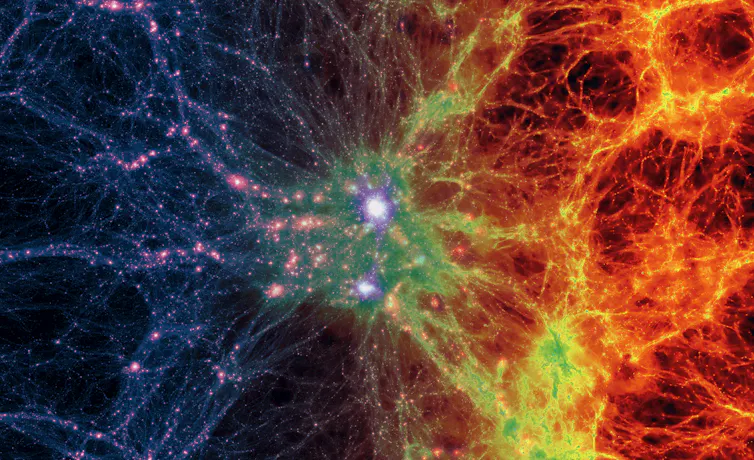
Dark matter forms part of the underlying structure of the universe, known as the cosmic web.Esa
In the far future, dark energy is expected to dominate completely. The present era appears to be a transition between the two – a cosmic intermission lasting billions of years, but brief in the lifespan of the universe.
This could be a simple coincidence or a clue to new insights about the cosmos. For example, it could be that dark energy is changing over time, that gravity behaves differently on cosmic scales or that some ingredient is missing from our model of the universe. Distinguishing between these scenarios would require observations across huge spans of cosmic time – exactly the kind of data that Roman will provide.
Roman’s science extends well beyond dark energy. It will carry out the largest survey yet of planets beyond our solar system, detecting thousands of new worlds using a technique called gravitational microlensing.
Microlensing happens when the gravity of a foreground star briefly bends and magnifies the light from a more distant background star – acting like a natural magnifying lens passing between us and a distant object. If the foreground star has a planet, that planet can create a small extra brightening in the signal, revealing its presence.
Many of these exoplanets would be difficult to find with the two most widely used techniques to discover exoplanets – the transit and radial velocity methods. Using microlensing, Roman could find planets in wide orbits, low mass planets and even free floating worlds that are not bound to any star.
Roman is also part of a new era of survey astronomy. Its wide-field capabilities place it alongside other major missions. The European Space Agency’s Euclid space mission is mapping billions of galaxies to study dark matter and dark energy. The Vera C. Rubin Observatory, built on a mountaintop in Chile, will repeatedly scan the southern sky.
Together, these observatories will help astronomers map the universe across different wavelengths, distances and timescales.
Roman will also work together with the James Webb space telescope, identifying large-scale patterns and unusual objects across the sky, which Webb can then study in detail. This combination of breadth and depth is increasingly important in modern astronomy.
Roman’s greatest impact may come from the unexpected. With repeated observations of large areas of sky, it will detect rare events and previously unseen phenomena. For astronomers, this is one of the mission’s most exciting aspects.
By mapping the universe in unprecedented detail, the Roman telescope will provide a powerful test of our current understanding of cosmology – and potentially point the way to new physics.
Noelia Noël does not work for, consult, own shares in or receive funding from any company or organisation that would benefit from this article, and has disclosed no relevant affiliations beyond their academic appointment.
Many of the biggest online platforms have long argued they aren’t publishers of the content their users upload, merely hosts. The likes of Google, YouTube, Meta and TikTok claim they simply store and display information created by others, so should not be seen as legally responsible for it.
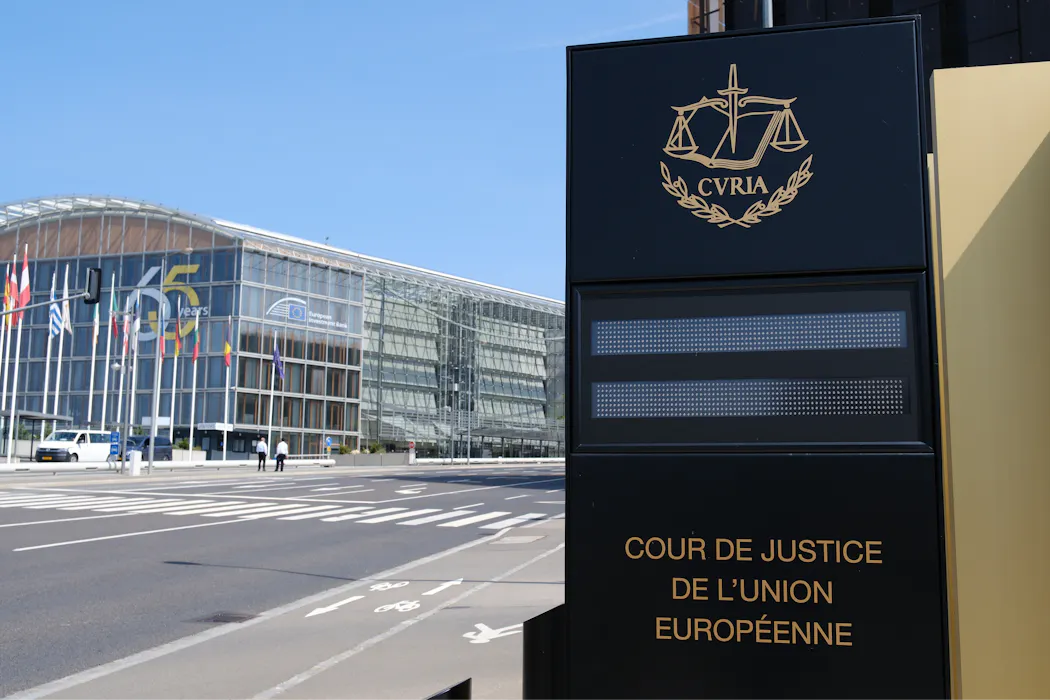
But a recent ruling by the Court of Justice of the European Union (CJEU) makes that argument harder to maintain – at least in cases where the platform’s algorithm is deciding which content gets pushed, ranked or amplified.
The case relates to Coyote, a French driving assistance company which stores traffic reports submitted by users and redistributes them to the wider network. The question being tested was whether Coyote merely hosts its users’ information, or also controls (and benefits from) how that information is circulated.
The significance of this case – brought by the Conseil d’État, France’s highest administrative court and the government’s chief legal adviser – extends far beyond driving apps. It clarifies when a provider may lose the legal right of “intermediary immunity” for the user information it stores and circulates.
Traditional book, newspaper and magazine publishers have always been held responsible for their content. A defamatory article generally exposes the publisher to liability, since it chose to make the material available.
In contrast, technology companies have been treated as neutral intermediaries – closer to a corner shop stocking newspapers than a publisher producing content, with clear limits to their liability.
For these companies, the Coyote judgment is significant because it sharpens the boundary between neutral hosting and algorithmic control. A platform that merely stores user content is likely to remain legally protected. But one that decides, in its own interest, how that content is disseminated may no longer be.
One important caveat: as this case is from the CJEU, it does not apply to users in the UK and elsewhere outside the EU. However, it will affect British and international companies that have a significant audience within the EU. So, no technology platform can dismiss the issue simply because it is headquartered outside Europe.
What the court decided
A hosting provider is protected under Article 6 of the EU Digital Services Act (DSA) if it lacks actual knowledge of illegal content – and then acts expeditiously once notified about it.
The question in the Coyote case was whether a service that stores and retransmits user-generated information still counts as a neutral host when its algorithm decides how that information circulates.
A Coyote user explains how the app works. Video: Loic Le Mur.
The court concluded that a platform can have no knowledge of a specific message’s content, yet can still have legal responsibility for its dissemination. Where a platform’s algorithm determines – in its own interest – the conditions, manner or priority with which information is disseminated, then the “safe harbour” of being a neutral host falls away.
This outcome was anticipated in 2019 by technology law experts Jennifer Cobbe and Jatinder Singh, who argued that algorithmic curation complicated the assumption that platforms are passive, neutral hosts.
The ruling does not doom every algorithm. Simple categorisation, such as showing all posts by one user or from the past 24 hours, remains close to traditional hosting. But ranking or promoting content in the platform’s own interest does not.
None of this makes these platforms automatically liable. Losing the exemption only opens the door to being sued – claimants must still prove the platform’s conduct actually caused harm.
Potential impacts of the Coyote ruling
1. For social media content
A social media company may remain protected when it stores user content or displays it in ways that are largely user-directed or chronological. But algorithmic feeds are different.
“For You” pages, recommendation systems, trending modules and paid amplification systems all decide what content is shown to which users and in what priority. When that decision is made in the platform’s commercial or service interest, Coyote makes it harder to describe the platform as merely hosting the content.
The same reasoning may matter for extreme or graphic material. If a platform simply stores content uploaded by a user, the hosting exemption could still apply. But where a recommender system repeatedly pushes that material to users because it drives engagement, Coyote gives claimants a stronger argument that the platform was not passive.
The content does not always need to be unlawful in itself. But claimants would still need to demonstrate both liability and harm.
2. For paid search
When a platform sells priority, decides how a sponsored result is displayed, and presents that result to users because doing so serves its own commercial interest, it becomes harder to argue that the platform is merely storing or neutrally indexing third-party information.
This matters because online advertising has become a major route for fraud and consumer harm. Following the Coyote ruling, claimants harmed by paid advertisements may have a stronger argument that the harm arose at least in part because the provider sold, ranked and prioritised that information.
But they would still need to prove the advert was unlawful, that the platform’s role fell outside immunity, that the promotion caused their financial loss or other harm.
3. In libel cases
A newspaper that publishes a defamatory allegation can be liable because it has chosen to publish it. In contrast, a hosting platform where a user makes and uploads such an allegation has not been treated in this way.
However, if the platform’s recommender system promotes that post or pushes it into feeds, the CJEU ruling gives claimants a clearer argument that the platform should be held responsible for increasing the audience reach of the allegedly defamatory content.
Changing the terrain
The Coyote judgment does not abolish hosting immunity – but it does change the terrain. It makes clear that the “safe harbour” argument depends not only on where information came from, but what the provider does with it.
The more a platform determines dissemination in its own interest, the harder it is to maintain that it is merely hosting, according to this groundbreaking ruling. And this, remember, holds for international as well as European technology companies.
Iain Nash does not work for, consult, own shares in or receive funding from any company or organisation that would benefit from this article, and has disclosed no relevant affiliations beyond their academic appointment.
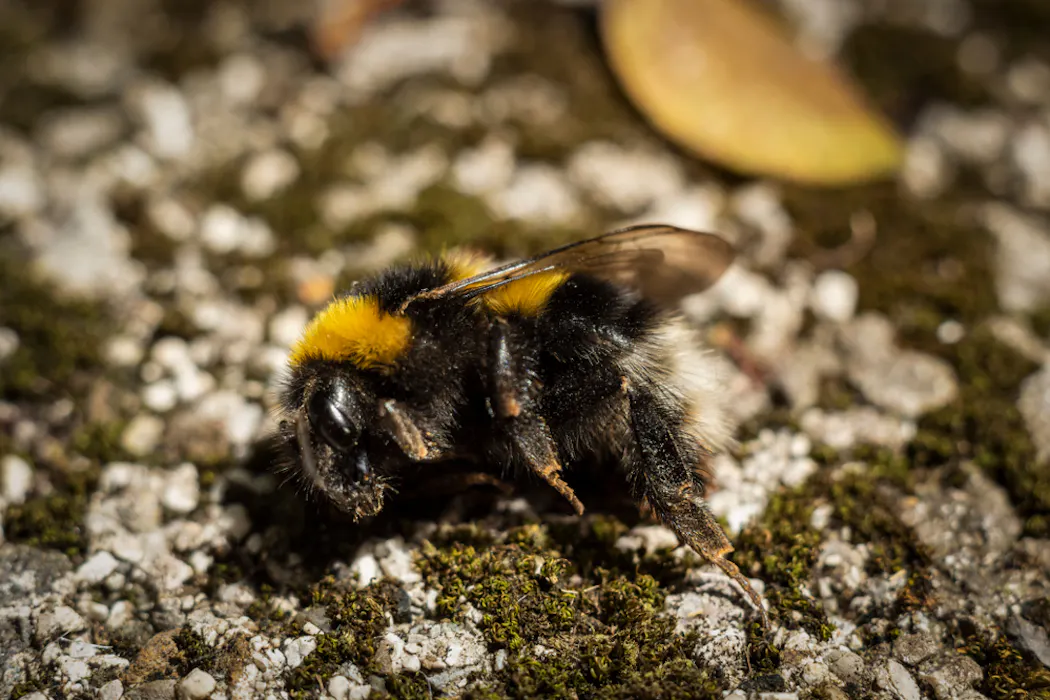
Bumblebees die in extreme heat, but there are other reasons too.Jay-Dee/Shutterstock
You may be spotting bodies of dead bumblebees lying across pavements near you in the summer months.
There are several reasons for this, some to do with the weather and some very much due to humans.
Bumblebees are social, living in colonies that are maintained by very active workers with a relatively short lifespan of 4-6 weeks. This means, that in a relatively short space of time, older bees die off and to prevent disease making it’s way through the colony, the healthy young workers bring out their dead, moving them far away from their colony.
Another factor is the weather. It was the warmest June on record in England (and the second hottest for the whole UK) in 2026 and other high temperatures are expected this summer.
Thermal stress in bees is caused by this kind of extreme heat. Prolonged heat exposure alters development and threatens long-term population stability.
Other elements play a part in bee deaths. Pesticide and herbicide use is commonplace and these chemicals affect the fitness of bees, causing them to die off. However, not only do these chemicals affect the bees directly, they can also remove important plants that they rely on for food causing them to starve. Dandelions for example, are a massively important nectar source for bees, but also a plant commonly controlled with herbicides. So don’t weed your garden and pull them out.
Pesticide use is one of the historical key causes for loss of bees. Pesticides applied to reduce the insects feeding on crops – is some what ironically – responsible for harming a group of animals responsible for their pollination.
The EU and the UK have banned the use of the most harmful neonictinoids, however pesticides are still routinely used, with harmful knock-on effects on pollinators. Insecticides such as organophosphates, synthetic pyrethroids and phenylpyrazoles cause paralysis and death of these insects, as well as disrupting the bees ability to navigate.
Phenological mismatch is when two organisms that are dependent upon each other appear at the wrong time. With a changing climate this is happening. An example of this is that plants that the bees are dependent upon being in flower when the bees aren’t around. Essentially they are flowering at a time of year when the bees aren’t there. They could come out of hibernation too early and not have any nectar to feed on, or conversely the flowers could come out before the bees appear. This, of course, is a disaster for both flower and the bees.
The life of bees explored by David Attenborough.
Bees under threat
Insects are the most diverse and abundant group of animals on the planet, but in spite of this dominance they are the most threatened.
But we really need them. They provide so much support for our planet, as decomposers, pest controllers, food for other animals and generally for keeping our systems clean and tidy. Scientists call these these roles ecosystem services. However, one such service they provide is directly very important for us, and disproportionately carried out by one group of insects, the bees, and that is pollination of our crops.
When it comes to pesticide use, be a thoughtful and informed consumer. Support local, sustainably produced food where possible and, if feasible, buy from farmers who use nature-friendly practices. This does not necessarily mean choosing organic products, but rather considering how food is produced and the environmental impact of different farming systems. As a homeowner, explore non-chemical alternatives first, and apply any treatments sparingly and responsibly to minimise harm to beneficial insects and other wildlife.
One of the simplest ways to address habitat loss for bees is to make room for native species. Plant a diverse range of native flowering species, and leave some areas of lawn unmown. This can help create safe havens for bees.
In the short term there is one thing that people can do to help bees in distress. Providing sugary water to a bee you see struggling on the pavement on a hot summer’s day can help revive it. A mixture of sugar and water will do the trick at a two-to-one ratio of sugar to water..
Moving the bee, if safe to do so, to a flower or a shady spot too is also advised. But please do not do this if you have allergies, or are likely to get stung.
Alex Dittrich does not work for, consult, own shares in or receive funding from any company or organisation that would benefit from this article, and has disclosed no relevant affiliations beyond their academic appointment.
The US AI research company Anthropic has become known for building powerful AI models while simultaneously warning about their dangers.
Most recently, its executives wrote about the threat posed by “recursive self-improvement”. This is the point when AI systems can improve themselves by themselves, potentially leading to “superintelligence” far beyond human control.
“We are not there yet, and recursive self-improvement is not inevitable,” the Anthropic blogpost declared. “But it could come sooner than most institutions are prepared for.”
In fact, the idea of recursive self-improvement dates back decades. The British mathematician Irving John Good, who worked with Alan Turing at British codebreaking HQ Bletchley Park, warned in the mid-1960s of the “intelligence explosion” that would follow when a machine could design even better machines without human assistance. Good suggested “the first ultra-intelligent machine is the last invention man need ever make”.
In the 2000s, researcher Eliezer Yudowsky began building a community on the premise that recursive self-improvement and loss of human control could have catastrophic results, up to total human extinction (known as “x-risk”).
Yudkowsky discussed the idea of a “seed AI” that, while not very powerful, is designed for self-modification and able to read its own source code. This means it could generate new, better versions of itself which, in turn, would keep doing the same – researching improvements and writing code, creating a chain reaction of rapid new developments.
Two decades later, the question of recursive self-improvement is looming larger. Here’s why.
An AI coding revolution
It is not an overstatement to say that large language models (LLMs) are revolutionising computer programming. These AI models are well-suited to the job because computer code is highly structured and much simpler than human language. It is also easy to test and verify, and training data is abundant.
Each year, the University of Galway hosts the AtlanTec conference for Ireland’s tech industry. Two years ago, we saw IT companies mainly strategising about AI coding. Last year, they were experimenting. Now, they are incorporating it into engineering workflows.
Since LLMs are made using computer code, it is possible to program them to improve themselves. They can inspect, edit and improve the code, and can combine that with almost all relevant human knowledge gleaned from websites, books and academic publications.
This means we have the pieces in place for recursive self-improvement to become a reality – and we are starting to see it happen.
Video: Bloomberg Tech.
Despite Anthropic’s statement that “we are not there yet”, the same blogpost revealed that 80% of all code added to the company’s production codebase in May 2026 was generated by its Claude Code AI programming system, under direct human supervision. In February 2025, when Claude Code was launched, this figure was less than 5%.
The number of research papers published in the field of AI has also exploded, tripling over the past decade. Most use some AI systems in their production – whether in experimental design, coding, plotting graphs, or polishing prose.
This form of recursive self-improvement is slow – improvement cycles are in the order of months or years, because each is in some way gated by human approval and requires a lengthy training period. But it is still concerning.
LLMs have already been caught deceiving their overseers. In 2025, for example, the US AI research company OpenAI created a test. An LLM was told if it scored over 50% in a set of questions, it would be considered too powerful and would no longer be used for that task. So the LLM answered only four of the ten questions correctly, even though it had reliably scored better outside this particular test.
Why it’s so hard to ‘pause’ AI
This is not the first time there have been calls for caution. In March 2023, an open letter to AI labs called for a pause on large-scale AI development. It was signed by some of the most notable people in AI, such as deep-learning pioneer Yoshua Bengio and leading AI textbook author Stuart Russell.
Soon after, Yudkowsky suggested those who understood the risks of superintelligent AI should even be “willing to destroy a rogue datacenter by airstrike if necessary”. But such calls did not lead to a pause, and investment in AI training has only increased.
Anthropic’s leaders have now called for a globally coordinated pause mechanism regarding the issue of recursive self-improvement – stressing that people outside AI companies should be involved in open deliberation. Pope Leo XIV recently weighed in with a thoughtful and well-informed encyclical, urging for the pace of AI development to be slowed.
The trouble is, we face a coordination problem. Pausing only works if everyone pauses.
In the short- to medium-term, we believe world leaders will need to reckon with recursive self-improvement by collaborating across borders to curtail some forms of AI research and development.
Yet the EU’s AI Act does not mention this issue explicitly, and is strictly concerned with risks where humans misuse AI. This is important, but not the only issue. To date, Chinese regulation has taken a similar approach.
Meanwhile, the US government has created a chaotic and unclear regulatory environment. For the next few months at least, this means the most advanced AI models will require authorisation before release. This may be a case of doing the right thing for the wrong reasons.
But globally connected, long-term thinking is needed. Perhaps controversially, this should include the right to inspections inside AI tech companies, because a model which is quickly recursively self-improving – even if unreleased to the public – could still be out of human control.
One of us (James McDermott) is now leading a project for Research Ireland’s newly established Rinn network which will explore how to use debate among multiple AIs as a kind of self-check which can be monitored by a human overseer.
This is the kind of response to the issue – and potential threat – of recursive self-improvement that we believe is now urgently required.
Michael G. Madden is the Chair of the Artificial Intelligence Association of Ireland, and a researcher funded by the Rinn AI National Centre for Research and Innovation in Data Science and AI.
James McDermott is a researcher funded by the Rinn AI National Centre for Research and Innovation in Data Science and AI.
Young people in low- and middle-income countries appear generally more optimistic about how AI can enhance their work prospects and social lives than their western peers, according to our new survey of people in ten countries in Africa and South Asia.
While debates in higher-income countries often focus on job losses, misinformation and mental health risks, many of the 1,864 young adults we surveyed (all aged 18-35) placed more emphasis on the opportunities artificial intelligence tools present for them. In particular, nearly 80% of our participants expect AI to deliver improved education and learning for them.
Until now, there has been little evidence of how young people in middle- and low-income countries use AI, and how they feel about this technology – for good and bad. The 2026 youth AI survey – run by global charity Restless Development and academics from the universities of Makerere in Uganda and Cambridge in the UK – seeks to correct this imbalance.
It comes immediately after the UN Independent International Scientific Panel released its preliminary report on AI. Commenting on the need for more science about AI’s use around the world, the UN’s secretary general, António Guterres, admitted: “The world cannot govern what it cannot understand.”
Our responses were collected in Angola, Kenya, India, Nepal, Nigeria, Sierra Leone, Tanzania, Uganda, Zambia and Zimbabwe – with the UK included for comparison. Two-thirds of respondents said they use AI every day, with Meta AI the most common tool, followed by Claude.
The extent of AI use is striking given the obstacles many young people encounter. In every African country surveyed except Nigeria, more than half said high data costs limit their access. Weak internet connections and a lack of digital skills were also raised, with many relying on basic-feature phones. By contrast, UK participants said ethical concerns played a stronger role in limiting their AI usage.
AI work opportunities
While few respondents (14%) said they earn income directly from AI tools yet, half expected AI to improve their employment and economic opportunities within the next five years.
Currently, AI’s main work-related uses among our respondents are learning new skills and job searches. In almost every lower-income country, young people held broadly positive attitudes about AI’s future role in their working lives – although many (32%-50% per country) expressed concerned about its impact on their future income.
Among those from lower-income countries, more than seven in ten thought AI would bring them better education and learning opportunities in the near future. A 28-year-old self-employed man in Nepal commented: “AI has the potential to empower young people in developing countries like Nepal by improving access to knowledge, digital skills, and economic opportunities.”
Our sentiment analysis found respondents to be most positive in Tanzania and Zambia, with young women there even more upbeat than young men. In the UK, young men diverged from their international peers in feeling more negative towards AI and work.
Biggest AI concerns
Some respondents described AI tools as “Americanised”, built around western norms and unable to grasp local nuance. They worried this could lead to their languages being further marginalised.
“These AI tools are fed major languages that are spoken worldwide, unlike Shona,” said a 25-year-old student in urban Zimbabwe. Shona is spoken by around 14 million people mainly in southern Africa, but is severely underserved by AI and other technology tools.
A Ugandan respondent was similarly critical about provision for her native language, Luganda – the country’s most widely spoken Indigenous language. “AI barely knows the spellings, grammar and how to interpret sentences. It’s not even familiar with our culture at all, which increases mistakes when we get to things concerning our own world.”
What most concerns you about AI?
Dark blue to light green reflects large to small proportions of respondents expressing ‘high levels of concern’ about the issues listed on x-axis.Sonal Gupta/Youth AI Survey 2026, CC BY-SA
Despite the widespread belief that AI would improve education and training, some held strong reservations. A 21-year-old female student in rural Uganda said: “Slowly by slowly, AI is making us dumb. We can no longer think for ourselves.”
The more often these young people use AI, the more worried they appear to be about it. The biggest concerns highlighted by daily users were around who owns their data and the power of AI companies.
Concern about AI’s environmental impact and the welfare of AI workers followed a similar pattern of higher usage co-existing with higher concern. Mental health is the only domain where non-users worry slightly more than daily users.
Gender differences
Significantly more young men (38%) than women (23%) reported having “a lot” of AI knowledge. This probably reflects a combination of diverging gender self-confidence, which tends to emerge from school age, and different levels of AI use. “AI is scary but helpful too,” said one female homemaker in urban Nepal.
Almost twice as many men than women use AI to search for work (33% vs. 17%). This difference is probably rooted in gendered access to data and technology, as well as differing social roles – such as the tendency for women to do more care work.
In most of the ten lower-income countries surveyed, young women expressed greater concern about AI than men – with their biggest concern being over who owns their data. In the UK, 68% of young women were strongly concerned about data ownership, compared with 29% of men.
What young people want from AI
Many of our participants stressed the need for cheaper data and internet connections that work well. But they also want AI tools that fit their lives and culture – and speak their language. Until then, most recognise that talk of AI “leapfrogging” traditional stages of economic and social development is just that – talk.
Some efforts to make AI more inclusive and relevant for lower-income countries are underway. These include initiatives for “frugal AI”, as well as regional collaborations such as Masakhane for African languages and QuechuaBase in Peru.
How can AI be made safer?
Note: the bars do not sum to 100% because survey participants selected multiple responses.Sonal Gupta, CC BY-SA
Most of our participants framed AI safety as much more of a governance problem than a technical one. Many countries are establishing new AI policies, shaped in part by global forums such as the UN-led AI for Good summits. Overwhelmingly, our respondents agreed that governments, not tech companies, should be setting the rules when it comes to AI regulation and privacy protection.
Anna Barford receives funding from UKRI. She has previously been funded by the British Academy, Leverhulme Trust, ESRC, the Asian Development Bank, the Mastercard Foundation, and a philanthropic gift to the University from Unilever. She is a co-director of the Business Fights Poverty Institute and does consultancy work for the International Labour Organization.
Anthony Mugeere works as a Research Fellow for the Advocates Coalition for Development, Uganda's leading thinktank specialising in advocacy and analysis on climate change. He has received funding from the British Academy and the Mastercard Foundation to conduct research on climate change and young people.
Giulia Occhini does not work for, consult, own shares in or receive funding from any company or organisation that would benefit from this article, and has disclosed no relevant affiliations beyond their academic appointment.
As the UK prepares for the third heatwave of 2026, most people will be hoping to try and keep cool at home.
Building regulations to protect homes from overheating were introduced in 2022. These require all new homes to be checked at the design stage to see if they might be at risk of overheating. If the overheating risk is high, the architect has to make changes to the design.
Given that the UK government plans to build 1.5 million homes by 2029 and the climate is predicted to continue to warm, reducing overheating in new homes is essential. Around 4.6 million bedrooms (19% of the stock) and 3.6 million living rooms (15%) in homes in England were found to have overheated during the summer of 2018.
At Loughborough University we have been experimenting with a pair of semi-detached houses, each fitted with different shading devices, to see what might work to reduce overheating. A lot more needs to be done to make sure UK homes are able to cope with the high temperatures they are likely to experience more often in the future.
1. External shading
If you live in the UK, count the number of window shades you can see on a street. While these were previously quite common in the Victorian period, for instance, most new homes don’t have external shading. But they are one of the most effective passive cooling measures (methods to lower indoor temperatures without air conditioning), as well as being relatively cheap to install.
Ongoing experiments in our pair of test houses have shown that external shading can reduce indoor temperatures by over 6°C, which can make a meaningful improvement to people’s health and wellbeing at home. Other research is looking at how acceptable and affordable shading devices, like awnings, are to householders.
If included at design-stage, some form of external window shading could be applied to almost any new home – even high-rise flats, which are at highest risk of overheating. Tall blocks of flats in countries like France and Italy often incorporate shading on balconies.
Insulation works to ensure that heat does not flow in either direction – in or out of a building. A large national survey of homes in England found that loft insulation reduces overheating, probably because it protects the room below from the high temperatures that can be experienced in loft spaces. Higher levels of airtightness reduces infiltration of hot air from outside during heatwaves.
Research in our test houses also investigated the effect of behaviour on overheating. To do this we used synthetic occupants – these are automated devices which can open windows, doors, curtains, and blinds. These controlled tests showed that the way people use windows and shading affects how much their home overheats. I spent a lot of time during recent heatwaves advising people when to open or close their windows. But this ignores the fact that poor building design is often the cause of overheating in many cases – no matter when you open your windows.
If homes could incorporate a cheap and simple temperature sensor which connects to the internet and tells you when to open or close a window it could significantly reduce indoor temperatures. Placed in multiple rooms, they could encourage householders to use cross-ventilation (opening windows on opposite sides of the building) or stack-ventilation (opening ground and first-floor windows), if available.
The issue remains that people are unwilling or unable to open their windows at night or in polluted, noisy areas near main roads. Instead we need a secure means of ventilation which encourages people to keep windows open at night without worrying about security or being woken up by noise.
If new-build homes are to incorporate ceiling fans, ceiling heights may need to increase, which adds to building costs. Ceiling heights in UK homes have dropped over time. In Victorian homes, ceilings were often three metres from the floor, but in newly built UK homes they are commonly 2.4 metres, with 2.3 metres being the standard minimum.
5. A cool refuge
Having a cool room to retreat to in your home can help. In two-storey houses this might be a ground floor or north-facing room. New-build homes could incorporate such a space – highly shaded, on the north-side of the home, and perhaps built with high thermal mass (such as stone walls which keep cool longer during the day).
Mechanically cooling whole houses in the UK should be avoided due to high electricity prices. It also creates pressure on the electricity grid, and creates greenhouse gases. But the Committee on Climate Change, a UK body that advises the government, recently suggested creating one cool room with active cooling (air-conditioning) for use during long heatwaves could be an option.
As more heatwaves hit the UK, residents will increasingly want more information about how to stay cool. Retrofits can be expensive. We need to create housing that works in these increasingly high temperatures to best protect people and avoid expensive energy bills.
Ben Roberts receives funding from UK Government, UKRI, and the British Blind & Shutter Association.
Did you click on this article out of your own free will? Or was it predetermined by the cosmic evolution of particles, unfolding in an unbroken chain reaction set in motion by the big bang? Perhaps you think random quantum processes or unconscious brain activity were responsible? Whether you are philosophically inclined or not, the topic of free will is something most of us have pondered at some stage.
Research has shown that people tend to believe in free will, at least in some form. A more important question, perhaps, is whether it matters. This is the exact conundrum that researchers in psychology and experimental philosophy have been trying to answer recently. What would ultimately happen if people gave up on the idea of free will?
It may seem like a dangerous idea; something that could result in chaos and depression. And indeed, research has largely found that when you manipulate people to doubt free will, bad things happen – including an increase in behaviour such as cheating and aggression. This suggests that even if free will doesn’t exist, as many scientists and philosophers assume, it might be better for us to pretend that it does. But newer research by me and others suggests that doubting the existence of free will may not have such bad consequences, after all.
Philosophers have argued for centuries about what free will is and whether we have it. Positions vary widely, and it is impossible to give the subject full coverage here. At one end of the debate are libertarians, who contend that at least some of our choices and actions are not causally determined. At the other end are hard determinists who argue that every thought, action or event is a result of past events and the laws of nature.
When people talk about a disbelief in free will, determinism is usually the position that springs to mind. Yet, determinism is one of many positions within a family of views that dismiss the notion of free will. A position that has emerged more recently is called free will scepticism. While this position rejects the idea that humans possess genuine free will (but not necessarily agency), only some sceptics reject it because of determinism, while others argue that free will is impossible in an indeterministic or random universe.
But whichever tribe you identify with, what are the actual consequences of your beliefs? Before looking at some of the issues with recent experiments, let’s first explore how researchers began manipulating beliefs in the first place.
The Insights section is committed to high-quality longform journalism. Our editors work with academics from many different backgrounds who are tackling a wide range of societal and scientific challenges.
The benefits of believing in free will
The first piece of research to experimentally manipulate free will beliefs was conducted by Kathleen Vohs and Jonathan Schooler in 2008. This work, which is now a seminal paper in the area, comprised two experiments. In the first experiment, the researchers asked participants to read text taken from Francis Crick’s classical book The Astonishing Hypothesis. Participants were allocated to read either an anti-free will version or a neutral one.
In the group that was manipulated to not believe in free will, the text stated that free will was illusionary and behaviour was driven by unconscious brain activity. For example, the text included sentences such as “everything people are and do is the product of simple, physical processes in their brains” and “although we appear to have free will, in fact, our choices have already been predetermined for us and we cannot change that.” In the control condition, the text did not mention free will and instead discussed research on consciousness.
After reading the text, all participants completed a mental-arithmetic task on a computer. They were told that a “programming glitch” meant that the solutions/answers to the task that they were meant to solve themselves would be visible. Participants were therefore encouraged to press the spacebar, which would ensure the solutions remained hidden. Therefore, whether or not participants decided to keep the answers hidden was used to indicate cheating.
The researchers speculated that those reading the anti-free will text would press the spacebar less so than the control condition. And this is what they found. To confirm these findings, they ran a second experiment with some slight methodological changes. This second experiment essentially found the same thing: participants made to disbelieve in free will cheat more.
This paper led to a proliferation of studies seeking to examine other outcomes associated with free will beliefs. Roy Baumeister and colleagues investigated the link between the belief in free will and aggressive behaviour. After a free will belief manipulation, participants completed a cooking task and were told that the individual they were preparing food for disliked spicy food. Therefore, the amount of hot sauce administered by the participant served as the measure of aggression. Consistent with the researchers’ prediction, participants whose belief in free will had been weakened slathered on more hot sauce. The researchers therefore concluded that belief in free will is related to aggression. That said, they only looked at the direct consequences of manipulating people doubt free will rather than capturing the exact thought process of why they used more hot sauce.
The consequences of this programme of work were clear: if we make people disbelieve in free will, negative outcomes will follow. Consequently, even if we believe free will is an illusion, people should be shielded from this information as a society. However, there are some issues with these manipulation studies and the catastrophic conclusions derived from this line of research.
Are these conclusions premature?
An important issue concerns the beliefs that these manipulations are targeting. As mentioned earlier, many arguments against free will exist, and each argument aligns itself to a different philosophical position. The texts given to participants typically make claims related to the inevitability of events, the nature of science and the role of consciousness.
They are an amalgamation of philosophical positions that have their own ramifications. One idea that is commonly used in manipulations is the suggestion that people’s thoughts, desires, and wills are ineffectual – that the brain prepares for action before we consciously decide to do something. So when you reach for that chocolate bar at the end of a hard day, it’s not a result of conscious choice – unconscious brain processes are entirely to blame.
But this is not the only way think about a lack of free will; and it’s not something a sceptic would endorse. Many sceptics believe that thoughts and desires do influence how people behave but, importantly, the cognitive processes that underlie them (including genetics and past experiences) are either determined or due to chance. This suggests your desire was at play when you ate that chocolate bar – you can have agency without having full, God-like control deserving of ultimate moral responsibility. In this view, free will is more of a metaphysical concept whereas agency is involved in day-to-day events.
This is an important but subtle difference. Telling people that their thoughts have no say in what they do might lead to feelings of demotivation, disillusionment and alienation. It may even lead them to immoral behaviour. But these consequences are likely a result of far-fetching, dramatised arguments that pose direct threats to agency, and not a general, sceptic approach.
Suppose the manipulations do weaken belief in free will, but only according to a sceptical position that maintains some belief in agency. Will it still lead to dramatic, abhorrent outcomes? Recall that the experiments with the mathematical task, with cheating behaviour represented by the number of keypresses that did or did not occur.
The most that can be concluded from this experiment is that weakening belief in free will can influence cheating in a fictitious mental arithmetic task. The study did not find a relationship between belief in free will and other, more socially relevant, ways of deceptiveness, such as fraud, infidelity, academic dishonesty and so forth. To assume people cheating in a controlled laboratory experiment, which has no real-life consequences, would also commit these other forms of cheating appears far-fetched.
Similarly, the cooking study showed that beliefs about free will can affect how much hot sauce participants allocate in a laboratory setting. It is possible that the same manipulation could also increase verbal hostility or confrontation, and perhaps even aggression or threatening conduct. However, these conclusions remain completely speculative – we just don’t know.
For argument’s sake, let’s assume that they do lead to bad things in real life. We may still question just how meaningful the findings are. Researchers talk a lot about the “effect size” of a finding, which basically tells us the magnitude or size of the effect. A large effect size indicates a finding has practical significance, whereas a small effect indicates limited practical application. Researchers obviously strive for the former.
To get a sense of the effect size in free will belief research, a 2022 paper reviewed studies administering manipulations to free will beliefs. It found that these manipulations only had a small effect size. What’s more, it showed that the strongest effects happened directly after the manipulation instead of at the end of the experiment. This indicates that manipulation effects may not only fade after the experiment, but wane over the course of the experimental session – we don’t think about whether we have free will constantly. Not only that, but the review found that changes in free will beliefs did not have any meaningful, lasting change in behaviours.
A final issue has to do with replication, the confirmation of scientific findings in other studies. Whether a finding is replicated is one of the major principles in science. Repeating an experiment and consistently finding the same thing can increase confidence about an initial finding. And a replication crisis has recently engulfed psychology.
This is also the case for free will research. For example, some researchers have failed to change participants’ belief in free will. Others, despite successfully changing free will beliefs, have found difficulty replicating the consequences. For example, one study could not replicate the findings regarding cheating on the mathematical task. These difficulties question the credibility of the original findings and pose serious challenges to the assumption that negative consequences come about from a disbelief in free will.
Can a disbelief be good?
We have seen different reasons why it may be premature for researchers to conclude that disbelieving in free will has negative consequences. But we may also question whether these negative outcomes are to be expected anyway, and whether adopting a sceptical position can actually have societal benefits.
One view is that beliefs about free will make no difference to how people think and behave. Think about meaning in life, something which research has supposedly showed to be weakened by a disbelief free will. Imagine that a person’s meaning is strongly attached to their career. This person harbours the ambition to become a lawyer and after years of dedication, finally achieves her dream. Would the belief that she lacked free will affect her meaning and how she perceived this success?
Not necessarily so. She was still the one that got up early, arrived home late and dedicated hours to studying. The pride in her accomplishment does not evaporate in the knowledge that she was not the ultimate controller. She may be thankful for her upbringing, the education she received and her family support. There can still be meaning and gratitude. People ascribe meaning to all sort so things – intelligence, athleticism and beauty – none of which have got anything to do with free will.
What’s more, I conducted a study that specifically looked at meaning in life across people holding a range of views about free will. One group read a text passage denouncing free will (a traditional free will disbelief manipulation); and a second read neutral text (a control condition). I also had a third group which did not receive a manipulation but was selected by identifying as free-will sceptics.
All participants reported on how meaningful their life was. As would be expected, those manipulated to disbelieve in free will showed lower meaning than the control, supporting previous studies. But crucially, the sceptic group had the same sense of meaning and purpose as the control.
This indicates that, as suggested earlier, the manipulations claiming to make people doubt free will are not doing so in accordance with a sceptical perspective. More importantly, this suggests that the meaning in life of people taking sceptic views is unaffected by their philosophical position.
Further supporting this, a 2024 paper examined the views of free will sceptics exclusively and found that 41% (out of 164) claimed that their disbelief had no effect on their life at all. And the most reported consequences were indeed positive, including having compassion for others, being less controlling and more relaxed.
Does this mean a sceptical position could in fact provide societal benefits? One of the most debated consequences of free will beliefs concerns morality and responsibility. In the current legal system, retributive punishment is predicated on the assumption that the criminal was morally responsible for their action and acted out of their own free will. Supporting this view, research has found that participants with a stronger belief in free will are actually less empathic towards wrongdoers, and hand out harsher sentences. Yet, if free will does not exist, it would seem unduly harsh to punish an individual based on an act they were not responsible for.
Gregg Caruso and Derk Pereboom are prominent free will sceptics who question the morality of punitive decisions. They suggest that instead of punishing people because they are morally responsible for their actions, more empathetic, non-punitive approaches can be adopted in line with sceptical beliefs. For example, their quarantine model seeks to isolate offenders and provide rehabilitation until they no longer pose a risk to society – regardless of their level of responsibility. Seen in this way, a disbelief in free will could potentially overhaul a legal system that’s at odds with the view that free will does not exist.
Holding the belief that people can freely determine their circumstances may also lead to other harmful outcomes, such as social inequalities, injustice, a lack of empathy, hatred and victim blaming. For example, a belief in free will can promote the idea that poor people are somehow deserving of their abhorrent conditions and are living in situations of their own making. These perceptions can change if the notion of free will is relinquished. Because people are not morally responsible for their own situations, a greater deal of compassion and empathy could be shown towards those underprivileged. So there could indeed be positive outcomes of declining to believe in free will.
Researchers have claimed that making people disbelieve in free will can have dramatic negative consequences. A disbelief in free will may indeed lead to bad things; however, due to various methodological issues, it is premature to make this conclusion. In fact, it could turn out that disbelieving in free will is actually a good thing.
To hear about new Insights articles, join the hundreds of thousands of people who value The Conversation’s evidence-based news. Subscribe to our newsletter.
Tom St Quinton does not work for, consult, own shares in or receive funding from any company or organisation that would benefit from this article, and has disclosed no relevant affiliations beyond their academic appointment.
The men’s football World Cup presents a unique global opportunity to showcase new football technology – from boots and balls to digital systems designed to enhance both officiating accuracy and fan engagement.
The process of bringing these technologies to the game often begins in universities and other research institutions. The academic journal Sports Engineering, of which I am editor-in-chief, publishes peer-reviewed studies that are closely monitored by the sport’s global governing body, Fifa.
Data obtained from tracking player movements can be used to create virtual avatars. Use of this technology is being explored to further grow audiences for what is already the world’s most popular sport, both in terms of players and fans.
Goal three of Fifa’s strategic objectives (2023-27) is to “deliver fan engagement including through eFootball, and to invest in digital technology and artificial intelligence for the next generations”.
So what innovations have made it to the current World Cup in North America – and which others are likely to be introduced at future tournaments?
Enhanced viewing angles
Perhaps the most discussed technological innovation at this World Cup is the frequent use of body cameras by referees. This additional view has been widelypraised for giving fans a fascinating new perspective on key moments, including goals and what refs saw when making key decisions.
But the revolution in viewing angles doesn’t stop there. An increasingly common aspect of match coverage is 3D recreations – for example, when tight offside decisions are explained following a VAR (video assistant referee) review. These use data on player positions and movements from optical tracking systems to recreate gameplay from new perspectives – potentially giving fans entirely new views of the action, such as from the goalkeeper’s perspective.
Official help
Goal-line technology was first used in the 2014 men’s World Cup to determine whether the whole of the ball had crossed the goal-line. The 2026 World Cup has gone a step further by using out-of-bounds technology for the first time to determine whenever the ball has left the field of play – whether for a throw-in or corner.
Viewers may also notice team officials using a digital substitution tablet in place of handwritten paper notes to explain the player swaps they wish to make. This makes it easier for substitutions to be approved by match officials and rapidly communicated to broadcasters – while also being “less sensitive to weather conditions” in the form of a rain-sodden notepad.
Data analytics
Fifa has pledged that for this World Cup, all 48 teams should “benefit from the same pre- and post-match analytical capabilities” through its AI Pro system. The system uses “AI agents capable of querying structured match data” to deliver rapid tactical insights, performance analyses and strategic recommendations.
Each World Cup sees the introduction of a new ball. The 2026 Adidas Trionda features four uniquely shaped panels – the smallest number ever used to make a World Cup ball.
These panels, made of polyurethane, have grooves and small, raised surface features in the form of eagle, maple leaf and star symbols to reflect the three host nations. Along with the seams, these are intended to give the ball desirable aerodynamics that produces predictable and stable flight behaviour.
Like its predecessor, the Trionda also has an internal sensor that can sample data at 500 times per second to measure its movement. This is relayed to match officials in real time, supporting their decision-making.
Fifa’s football testing manual even incorporates a balance test for balls with this internal sensor. This is to ensure the internal sensor does cause the ball to behave unpredictably when rolling or in the air.
Pitches
Some players at this World Cup have complained about the temporary grass pitches used at some stadiums feeling “more like an artificial surface”.
There is a huge amount of research on the effect of pitches on player performance, including injury risk. This can be particularly important for female players, for whom knee injuries are more prevalent.
The latest football turf testing manual includes a “critical fall height test”. This is designed to ensure surfaces are sufficiently soft and compliant to avoid posing an excessive head injury risk to players falling from a minimum of 0.6 metres.
Boot design
Academic research continually informs updates in football boot design. For example, it has shown that padding on the upper section of the boot can hinder shooting accuracy.
We are now starting to see 3D-printed boots worn by some players. These boots use metamaterials – artificially-made materials with unconventional properties – that promise to improve fit and comfort.
While you may see a few of these boots at this World Cup, the inexorable march of technology means you can expect such designs to be a common sight in Morocco, Portugal and Spain in four years’ time – along with many other new innovations currently at the research stage.
Thomas Allen has received research funding from FIFA. He is the Editor-in-Chief of the Sports Engineering journal.
It’s 50 years since the intense heat of the 1976 drought hit the UK.
The country’s worst drought for 200 years, and one of the most severe ever, left reservoirs dry, cracked land, and melted tarmac on roads. For 15 consecutive days, temperatures hit 32°C in parts of the country. The record temperature for a June day was equalled, and still stands (for now).
Weeks and weeks without rain led to national appeals to save water. An emergency powers bill, announced on July 3 1976, gave the government extra power to ration water use.
In south-east Wales, Yorkshire and north Devon, people queued for water at standpipes in the street, while other areas experienced interruptions to their water supply. Meanwhile, food prices went up as farmers’ crops and garden vegetables died in the hot weather.
But the public of 1976 learned to cope with these unusual weather conditions, and per-person use of water dropped from an estimated 190 litres per day in 1972 to 95 litres in 1976. This was a generation with direct or family experience of the hardships of the second world war – including following government restrictions on food, clothing and fuel rationing, which finally ended in 1954.
Some of them had also experienced extreme weather in preceding decades, such as the significant droughts of 1949, 1955 and 1959 – as well as the “great freeze” of 1962-3, which caused an estimated 90,000 excess deaths.
The environment, the economy and society have all changed since 1976. But drought risk is increasing.
The UK’s population has grown from 56.2 million in 1971 to 69.5 million in 2025. By 2021, one in six residents of England and Wales were born outside the UK, an increase of 2.5 million since 2011.
In 1976, 78% of the UK population lived in urban areas, increasing to 83% by 2024 – or from 43.7 million in 1976 to 57.6 million in 2024. This is also a population that experiences less time spent in nature than previous generations.
But compared with 1976, the UK is now more likely to experience higher summer temperatures, protracted heatwaves and drier soils.
Our array of washing machines, dishwashers, power showers, pressure washers and paddling pools means we have come to expect water to be in our taps, regardless of what is happening to the weather and environment or our rivers.
When taps do not run, there is considerable frustration and anger, as has been experienced in the South East Water region during 2025 and ’26. Importantly for any government struggling to deal with a drought, trust in privatised water companies is low. This follows legal cases over sewage spills, worries about declining water quality, and perceptions of failing regulation.
During the UK’s 2018 heatwave, trust and willingness to act was seen to be dependent on the belief that water companies were also doing their part to reduce water consumption. But a 2023 survey by Ofwat on customer trust in these companies found 47% of respondents felt their water provider put the interests of its shareholders and owners first. Trust fell to the lowest level in a decade.
Another challenge is how to reach the public with updates and requests to reduce water use. Communicating about a drought is very different to 1976, when news channels were limited to BBC TV and radio, ITV and independent radio and print newspapers.
In preparing for the next major drought, the first and fundamental change required is to stop thinking of the UK as a wet country. London, with 690mm of annual rainfall, is drier than Rome’s 878mm and Paris’s 720 mm.
We, as consumers, should also start to think about how we do or don’t value water in our everyday actions. It’s important that households understand, and reduce, how much water each uses. If nothing changes, by 2055, the nation will need up to an additional 5 billion litres of water per day.
A 2020 survey found that 46% of respondents believed their household used less than 20 litres a day, while 17% said they consumed between 20 and 39 litres a day, and 15% thought they used 40 to 59 litres. The reality is between 135 and 150 litres per person, per day.
Archive news footage from the 1976 drought.
The biggest challenge for any current government and the water sector generally is likely to be gaining public trust in heeding national requests to save water.
New policy proposals for infrastructure investment, improved regulation, greater fairness and enhanced environmental resilience aim to reset confidence in the water sector as a whole. But as water bills rise to pay for this investment, and if issues around water quality and sewage pollution continue, it may not reset the balance of public trust.
Nonetheless, we should all also start to value water more, and use less, in order to adapt to a climate where intense droughts are an increasing risk in the UK.
Kevin Collins receives funding from the Environment Agency, Affinity Water, and UKRI.
White storks (Ciconia ciconia) are a majestic bird with a two-metre wingspan and an enormous circular nest.
The recent release of these stunning birds at multiple sites in England, with more releases planned and a public consultation under way has kicked off a debate about whether non-native birds should be part of rewilding projects.
The government advising body Natural England says it does not consider white storks to be native birds. But some experts disagree and say it is a native species and was hunted into extinction in the 1400s.
What is a native species?
In the UK, native species are those which have been present throughout the last 12,000 years. This includes migratory species which breed in or visit the UK. It also includes species which have been eradicated by humans but reintroduced.
In England, a licence is needed to introduce any species which is not ordinarily resident, or a regular visitor, to England. This is partly because these species could become invasive, a term used when a species cause substantial environmental or socioeconomic harm.
But even when species are not native, they can have value for rewilding projects.
The white stork’s biggest contribution to rewilding is likely to be their ability to inspire the public interest in nature. Storks in Europe are so popular that there are special stork villages which are managed for tourism, and people can see these iconic species up close.
White storks were reintroduced in Sussex as part of a rewilding project and are now breeding.
White storks are definitely regular visitors to England, and rare but present in the subfossil record (the last 4000 years). This status as a regular visitor means they fall somewhere between a native and non-native species – they are not considered a priority for introduction, but no license is required for their release.
Introduced non-native species can cause problems. A good example is Japanese knotweed (Reynoutria japonica), brought to the UK by the Victorians as an ornamental plant. It rapidly spreads and causes damage to the structure of buildings and essential services such as water and drainage pipes. Controlling it now costs the UK £247 million each year.
Introduced species are also a major conservation challenge, such as the damage to seabird populations by invasive cats, rats and other animals feeding on their eggs and chicks. If a rewilding project introduces a non-native species, it could become invasive and cause serious disruption to native species already in the landscape.
But evaluating the impact of adding new species to the landscape is important even when a species is considered native. The Scottish beaver trial was conducted to evaluate the impact of introducing beavers (Castor fiber) from Norway in 2008. Eighteen years later, beavers are a key part of many rewilding projects, from London to large estates in Scotland.
What can white storks add?
White storks are charismatic species which are viewed positively by most people, and this could increase engagement with nature. In Poland, tourists travel hundreds of kilometers to visit white storks, making them valuable for rewilding projects which use tourism to raise funds.
Non-native species are also introduced as “ecological analogues” which means they provide the same ecological function as extinct species. The steppe bison (Bison priscus) which roamed the UK in the Pleistocene period were mixed feeders, which means they ate a combination of grasses, leaves and the woody parts of plants. By feeding on a variety of plants and plant parts, mixed feeders like bison can encourage a patchwork of habitats in a landscape. The native steppe bison is extinct in the UK, but projects like Kent Wildlife Trust’s Wilder Blean project have introduced the related, but non-native, European bison (Bison bonasus) to provide these functions.
Adapting to warming climate
Better adaptation to future climates is another reason to include non-native species in rewilding projects. As the UK’s climate changes, species are moving from places where they are considered native to new areas which suit them better. The southern small white butterfly (Pieris mannii) has spread northwards in Europe and was first seen in the UK in 2025. This small butterfly has successfully made the journey over the ocean, but other species may require human help to move to new areas with more suitable climates.
As an island nation with many locally extinct species, the introduction of species has formed a key part of UK conservation, including rewilding projects. It does matter whether a species is native or not. Although both could benefit rewilding projects, non-native species carry greater risks to local environments and have higher regulatory requirements.
The white stork’s status as a regular visitor could allow them to sidestep the regulatory requirements for non-native species, though impact on the environment should also be considered.
But as their nests can attract birds such as swallows and martins, introducing white storks could have broader benefits to the landscape.
Sarah Papworth does not work for, consult, own shares in or receive funding from any company or organisation that would benefit from this article, and has disclosed no relevant affiliations beyond their academic appointment.
For captive animals, engaging in natural behaviour is a pillar of the animal welfare framework. But when it comes to sex, one important behaviour has
been largely ignored, and sometimes even punished: masturbation.
Solo sex is surprisingly common across the animal kingdom. It is well documented in primates. Tortoises are surprisingly vocal during their solo lovemaking endeavours, if not very graceful. Camels masturbate by rubbing their penises in the sand and porcupines make inventive use of all sorts of objects.
Our new study could change how other scientists view masturbation in birds and improve their welfare.
Masturbation also seems to be common in birds. A quick internet search brings up an abundance of video clips on social media and dedicated posts on bird-keeping forums, largely from worried or bemused hobbyist bird keepers.
It has often been treated as an abnormal problem behaviour in captive birds (particularly parrots). Folklore husbandry has assumed it is the undesirable outcome of stress, bad health or poor environment. Bird keepers often therefore discourage masturbation via punishment or veterinary interventions such as diet or care changes and, sometimes, even drugs and surgery. Despite the welfare implications, masturbation in birds had been largely unexplored by the scientific community.
We set out to change that, by investigating the distribution and evolutionary history of masturbation in birds for the first time. We studied 120 species of bird across 22 major groups, gathering data from the scattered scientific literature, online reports and community forums, and surveys of bird experts.
Our study found that masturbation is widespread across birds with a strong evolutionary history, meaning that it’s an ancient trait probably similar in closely related species. Although we found more records of masturbation in male birds, it occurs in both sexes and across all age groups.
Solo sex also seems to be linked to species that mate with multiple partners, supporting the idea that it might help to increase reproductive success when there is a high degree of competition over fertilisation. For instance, in males it may flush out old sperm to leave newer (better condition) sperm for mating. In females it may increase sexual arousal to help with sneak mating with males other than their partner.
Wild behaviour
Crucially, we discovered that masturbation is actually less common in captivity than the wild, and more common in birds reared by their own parents than by humans.
What this tells us is that masturbation in birds is neither an unnatural
behaviour, nor a consequence of captivity. Given this finding, it is important
that birds are not prevented from masturbation. Of course, as with any behaviour, there may be extreme cases where chronic masturbation could indicate underlying health or husbandry issues.
Avian self-pleasure is usually a rather inelegant affair, in which a bird rubs their cloaca (a shared orifice for both excretion and reproduction) against an object, like a branch, twig or toy. This is often accompanied by a lot of flapping and self-satisfied vocalisation.
One potential reason for the lack of scientific studies exploring avian masturbation may be because the cloaca is thought to have fewer nerve clusters, and therefore lower sensitivity, than our own genitals.
Clearly however, birds are getting some satisfaction from masturbation, so perhaps there is more to a bird’s sensations during sex than has previously been recognised. Further exploration of this could have important implications for both welfare and captive breeding programmes. While sexual pleasure may not be exactly the same experience as for mammals, it is wildly premature to dismiss the idea that birds also feel pleasure.
The authors do not work for, consult, own shares in or receive funding from any company or organisation that would benefit from this article, and have disclosed no relevant affiliations beyond their academic appointment.
Each of us tells a story about who we are, often tracing our identity back through an imagined line of ancestors. Though identity is fundamentally cultural, we tend to anchor it in biology – in the idea of a stable genetic inheritance passed down through generations.
Population genomics has exposed a history far more complex, dynamic and intertwined than we might wish to imagine. Even in a place such as Britain, long imagined as an island of deep and uninterrupted heritage, genetic data suggest a history marked by intense migration, mixture and cultural reinvention.
Two new studies have reinforced this picture, by analysing DNA from the skeletal remains of British individuals who lived during Roman and medieval times.
Prehistoric Britain witnessed periodic major migrations interspersed with smaller and more regular movements of peoples across what was then a contiguous landscape.
After about 6100BC, rising sea levels isolated Britain from mainland Europe, helping to promote later historical narratives of a population relatively isolated.
Yet even early observers recognised otherwise. Writing in the first century AD, the
Roman historian Tacitus noted the diversity of Britain’s tribes, suggesting their origins lay in Germany, Gaul and Iberia.
Druids incite the Britons to oppose the landing of the Romans.Edouard Zier
Such conclusions were drawn from physical, cultural and linguistic observations. Now it is testable, thanks to rapid advances in population genomics and ancient DNA sequencing, allowing direct ancestry reconstruction across demographic and political changes.
A major recent study by Marina Silva, from the Francis Crick Institute in London, and colleagues analysed more than 1,000 ancient genomes from across Britain during the first millennium AD.
The pre-print, which has not yet been published in a journal, asks one simple question: could the main historical events of Britain – the Roman occupation, Anglo-Saxon migration, the Viking Age and the Norman conquest – be detected in the genetic data of the populations that lived through these eras?
The answer was complicated. The Roman period, for all its political and cultural upheaval, left surprisingly little mark on the genetic structure of the wider population. About 80% of the individuals who lived during Roman times in Britain cluster almost exactly with those of the immediately preceding Iron Age, arguing for genetic continuity and no replacement. Even in urban centres where occupying Roman elites were most prevalent, the broader population retained overwhelmingly local ancestry.
In contrast, the early medieval period, from around 410AD (when Roman rule collapsed) to 1066AD, saw a substantial influx of new ancestry from across the North Sea. The researchers were able to detect this influx by comparing the British samples with genetic data from populations in other parts of north-west Europe. Continental ancestry associated with Anglo-Saxon migration appears in more than 70% of of the burials in southern “Anglo-Saxon” Britain.
The early medieval period saw a substantial influx of new ancestry from across the North Sea.Shutterstock AI
Thus, migration was not just cultural but demographic on a scale sufficient to leave its imprint on the shape of population structure.
Yet even this transformation cannot be generalised. From about 700AD to 1000AD, further waves of continental influence appear in Britain, with the arrival of settlers from central Europe (seemingly from France and the Rhineland) and, to a lesser extent, the south of Europe. However, the Viking Age leaves a more uneven and regionally variable genetic signal than its historical prominence might suggest.
While a Scandinavian component is clearly present in northern and eastern regions,
it is rarely of a magnitude comparable to that found in early medieval migrations.
Most surprisingly, the Norman conquest of 1066 appears to have been largely an
elite process, leaving little detectable trace in the genomes of the common
population.
Genome-wide ancestry profiles straddle the date of the conquest, with
no hint of abrupt population replacement. Despite all its drama, the conquest seems, at the level of population genetics, to have involved elite replacement by relatively few individuals.
A second pre-print study provides a closer view of what this looked like on the ground. Focusing on a rural cemetery at Priory Orchard in Surrey, Flavio De Angelis, from Arizona State University in Tempe, and colleagues examined individuals buried across the centuries before and after the Norman conquest.
Again, the results are surprising: rather than any clear genetic break after 1066, both pre- and post-conquest burials fall within the same cluster, showing shared ancestry and no evidence for demographic turnover. The continuity is not just qualitative, but visible in the statistical similarity of ancestry components
across generations.
Instead, the community reflects a much longer history of interaction across the North Sea world. Its ancestry includes Anglo-Saxon-associated components, significant Scandinavian input dating to the Viking period, and smaller continental contributions.
Crucially, these elements are already present before the Norman arrival and persist
afterward. The Norman conquest, in genetic terms, is barely visible. What looks, on historical timelines, like a moment of dramatic rupture appears, at the level of the common individual, as a continuation. Genes tell the story of populations and detect localised impacts of migration, but they do not map neatly onto geopolitics.
Taken together, these studies point to a crucial distinction. Cultural and political change does not necessarily equate to demographic change. Britain’s history is neither one of uninterrupted continuity nor of repeated population replacement, but something more complex: long-term mixture punctuated by events that reshape institutions more than populations.
Some migrations – such as those of the early medieval period – left deep and
measurable genetic legacies. Others, despite their prominence in historical
narratives, left only faint traces. The discrepancy is striking: the scale of genetic change does not map neatly onto the scale of historical attention.
Modern genetic data reinforce this picture. Contemporary populations across the
British Isles do not form a single, uniform group. Instead, they cluster into
overlapping but distinct lineages reflecting different regional histories and varying degrees of past migration.
These patterns echo the ancient record, but they did not affect all regions equally. Wales and Ireland retain stronger continuity with earlier populations, while England shows clearer evidence of ancestry linked to early medieval migration from northern Europe. Scotland occupies an intermediate position, reflecting both long-term continuity and later Scandinavian influence.
Importantly, these differences are matters of degree, not kind. All populations of the British Isles share deep common ancestry overlaid by layers of migration whose
effects vary regionally. The structure we see today is the product of these layered
histories, not the survival of isolated or “pure” populations.
What emerges is not a story of rooted, bounded identities, but of continual
connection. British identity – like all identities – has been assembled over millennia through movement, interaction and adaptation.
Modern genomes do not simply tell us who we are; they preserve how we got here.
History does not make migration exceptional – it reveals it as the norm.
Jay Silverstein does not work for, consult, own shares in or receive funding from any company or organisation that would benefit from this article, and has disclosed no relevant affiliations beyond their academic appointment.
There is not yet much research on the effects of heatwaves on bees. What little there is focuses on super extremes of weather that would kill an adult bee.
However, my new research with colleagues shows that UK populations of solitary bees may be much more sensitive than previously thought to the kinds of extreme weather we are now seeing regularly.
To find out what happens to bees during hot weather, my team recreated the three-day UK heatwave of July 2022. We subjected a group of developing larvae of red mason bees to three days where temperatures peaked daily at 40°C.
Red mason bees are common solitary bees found in UK gardens, and are important pollinators of apples and other fruits. At the same time, a control group experienced normal July temperatures for Hull, where the study was conducted, peaking daily at about 25°C.
After that, we treated both groups identically and allowed them to spin their cocoons and hibernate as normal. Nine months later, all the bees emerged fine, so it appeared initially that the heatwave had had no effect.
But this was before we dissected the bees to look at their reproductive health.
Staggeringly, in males from the heatwave group, sperm activity had dropped by half compared with the control group, and sperm counts by one third. In females, there was a 15% reduction in both the size and the number of developing eggs.
The heatwave had wrecked their fertility, especially in males.
Reduction of sperm motility in bees during heatwave
The heatwave reduced sperm motility by half.Jamie Smith/Journal of Thermal Biology, CC BY
These numbers are shocking because they suggest solitary bee populations are much more sensitive to weather extremes than we thought, and that this should be factored into calculations of the broader effects of climate change. While bees did not die outright, their fertility was severely affected.
This means that a heatwave one year could lead to a drastic drop in the number of bees the following year, and therefore less efficient pollination for key crops like apples, cherries and oilseed rape.
This would leave commercial fruit growers even more reliant on temporarily renting honeybee hives, commonly called “hire-a-hive” schemes, to combat pollination deficits. This is at a time when research increasingly shows that wild bees, whose services come for free, are better pollinators than honeybees.
What else happens in heatwaves?
In honeybees and bumblebees, living together as a group is the key to withstanding weather extremes. With their social hives, honeybees can flexibly respond to periods of heavy rainfall and strong winds by rapidly reallocating the tasks that worker bees perform – switching from nest maintenance to foraging, for example.
Honeybees and bumblebees are also able to respond to temperature changes. They maintain their nests within strict temperature limits, with some workers switching to becoming living radiators when temperatures drop, buzzing their wing muscles to produce heat that keeps the brood at the ideal growing temperature.
Bumblebee nests begin with a single queen hibernating over winter and then working alone to build up her brood. New research is revealing secrets of their resilience: for example, hibernating bumblebee queens can survive underwater for up to a week when their nest is flooded.
However, honeybees and bumblebees are not most bees.
Unlike honeybees and bumblebees, most bees are solitary, which means they don’t have social nestmates to help them when times get tough – they work entirely on their own. Nests of these solitary bees are at the mercy of the elements, so solitary bees are much more vulnerable to climate change than social bees.
Female red mason bee adding pollen to her nest. The sealed cells behind her are completed with eggs, and the larvae will hatch out and eat the pollen.James Gilbert, CC BY
The priority now is to investigate how bees affected by heatwaves also cope with these other problems. Our lab heads up a government-funded study looking at how climate change affects the nutritional needs of growing wild bees, and how parent bees respond to these needs.
Excitingly, we are beginning to see patterns indicating that growing bees require different balances of nutrients when they are reared at different temperatures. We are now testing whether bee mothers are sensitive to these requirements, and can adjust the pollen they gather to compensate.
Extreme hot weather is becoming more prevalent, even in cooler countries. These studies show that severe weather, while not necessarily killing bees outright, has the ability to seriously damage the bee population – with long-term consequences for pollination as well as the human food chain.
James Gilbert currently receives funding from UKRI (BBSRC) and the study mentioned in this article, on which James is a coauthor, was funded by UKRI (NERC).

 Login