 Login

Inside the Not-So-Dumb Head of the Dodo Bird
Cranial scans reveal a brain with clever sensory adaptations
The post Inside the Not-So-Dumb Head of the Dodo Bird appeared first on Nautilus.
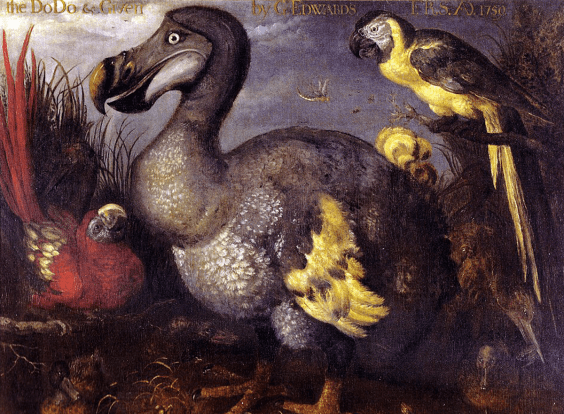

Cranial scans reveal a brain with clever sensory adaptations
The post Inside the Not-So-Dumb Head of the Dodo Bird appeared first on Nautilus.
The features of fish that have passed through the Suez Canal provide clues
The post Which Fish Species Will Invade the Mediterranean Next? appeared first on Nautilus.

The spots on a leopard, the stripes on a zebra, and the mask on a raccoon are all types of coloration in mammal fur, referred to as pelage. Scientists have struggled for a long time to understand how these colorations evolved. A team of researchers recently discovered how to reconstruct the colors of ancient mammal fur using cell structures that contain the chemical pigment melanin, known as melanosomes. They hope to use this understanding of ancient mammal pelage to determine how they lived and what their environments were like.
To decipher the color of ancient mammal fur, the researchers constructed a statistical computer model to predict their fur colors based on the shape of their melanosomes. First, they needed to understand how the shapes of melanosomes control fur color in modern mammals. To measure the length and width of the modern melanosomes, the scientists used a beam of electrons like a flashlight to map them in great detail, a technique called scanning electron microscopy.
They measured the length and width of 2,615 melanosomes from the fur of 116 different living mammal species, including a Red Panda, a German Shepard, and one or more species of most types in the mammalian classification. Then they recorded the wavelengths of light reflected off each melanosome using a microspectrophotometer. These wavelengths represented the exact color of hair from each melanosome they measured. This means they now had a quantitative measurement of the color of each hair to compare with its corresponding melanosome length and width.
When they examined their data, the researchers found that spherical melanosomes produced brighter fur colors, like reds and oranges, while elongated melanosomes produced darker fur colors, like browns and grays. The researchers plotted the microspectrophotometric measurements for each melanosome as a graph showing how much light it absorbed across each possible wavelength, creating reflectance curves. Based on these data, the researchers used computer software to create a statistical model that could predict reflectance curves, and therefore color, from melanosome shape alone.
Once the researchers created a model, they needed to find fossilized mammal melanosomes to predict their fur color. Mammal fossils are rare, and pieces of cells are only preserved in the most immaculate fossil deposits. In fact, these researchers only found 6 fossils of this caliber, from Mesozoic rocks deposited around 250 million years ago, soon after mammals evolved.
The fossils came from 2 world-renowned deposits in Northeastern China, the Yanliao and Jehol biotas. They selected 5 previously studied fossils from these locations, including 1 specimen of Megaconus mammaliaformis, 1 specimen of Vilevolodon diplomylos, 2 specimens from the group Docodonta, and 1 specimen from the group Eutheria. All of these animals were small, rodent-like mammals. The researchers also discovered a new species of tree-dwelling mammal, Arboroharamiya fuscus.
The scientists used scanning electron microscopy to measure a total of 2,159 fossilized melanosomes to refine their color predictions. The fossilized melanosomes were all slightly elongated spheres and had far fewer differences in shape than in modern mammals. The researchers used their model to predict reflectance curves based on the shapes of the fossil melanosomes to determine the ancient mammals’ colors. They found that all the extinct mammals they examined likely had dark brown fur without any color patterns.
Based on these findings, the researchers suggested that most, if not all, early mammals were nocturnal, like many dark-colored mammals today. They suggested that this nocturnal lifestyle probably helped them survive the meteorite impact that wiped out the dinosaurs 100 million years later. While dinosaurs were unable to survive in the post-impact wasteland, these smaller, dark-colored mammals were more resilient and thrived in the aftermath. As mammals filled the ecological roles left by the dinosaurs, they evolved new color patterns, some based solely on camouflage, and others on new factors, like sexual selection and visual communication.
The researchers concluded that their model can predict fossilized mammal colors and help determine how these ancient animals lived. Notably, their data suggest that mammals likely stayed small and nocturnal throughout the Mesozoic until the dinosaurs were gone. Future researchers could use similar methods to uncover exactly how mammals evolved the colors we see today. For example, studying mammals closer to the impact event could reveal if it took a long time to develop diverse fur patterns, or if they began before the dinosaurs’ demise. Ultimately, similar studies could help determine whether the extinction of dinosaurs was necessary for the rise of mammals.
The post What colors were prehistoric mammals? appeared first on Sciworthy.
The ocean giants deploy tiny solutions to counteract their own buoyancy
The post How Do Sperm Whales Keep Their Massive, Wax-Filled Heads Beneath the Waves as They Sleep? appeared first on Nautilus.

The volatile compound they emit induces temporary infertility in other females
The post Mole Rat Queens Stink Their Way to Power appeared first on Nautilus.

3-D avatars of macaques fool their flesh-and-blood counterparts—up to point
The post When Monkeys Enter the Uncanny Valley appeared first on Nautilus.

It’s one of only a handful of new monkey species identified on the continent in the last 75 years
The post New, Orange-Lipped Monkey Discovered in Africa appeared first on Nautilus.

In March 2021, the carcasses of at least 260 marine organisms from 81 species, including large animals called megafauna, washed ashore in South Africa. Scientists questioned whether this event was the result of an extreme temperature drop that can happen when deep, cold water rises to the surface along coastlines. Scientists refer to these rapid cooling events as coastal upwelling.
Climate change is making oceans warmer, but it’s also making coastal upwelling stronger, with unknown consequences for marine megafauna. Scientists recently studied 2 boundary currents that are rapidly warming and creating strong upwelling near the edges of sharks’ geographic ranges: the Agulhas Current in southern Africa and the East Australian Current in eastern Australia. They wanted to determine whether climate-driven changes in upwelling zones are making cold-shock events more frequent and intense, and how these events are pushing sharks beyond their temperature limits.
First, the researchers analyzed sea surface temperature data from satellites to see if rapid cooling from upwelling caused the mass marine die-off in 2021. They also obtained hourly temperature recordings from temperature loggers to measure subsurface temperature changes during the event. They found that during the March 2021 event, sea surface temperatures along the coast dropped by up to 7°C (12°F) in less than 48 hours, from 24°C (75°F) to below 17°C (63°F). Subsurface temperatures dropped faster, by more than 9°C (16°F) in 24 hours, from 21°C (70°F) to 12°C (54°F).
Bullsharks experience physiological stress at temperatures below 19°C (66°F), which is near their lower thermal limit, when migrating through rapid cooling zones. Therefore, the researchers deduced that during the 2021 cold-shock event, the sharks were exposed to temperatures several degrees below their thermal limit, possibly more than 5°C (or 10°F) colder.
The researchers also tagged 66 bull sharks with acoustic and satellite transmitters – including 41 at the Agulhas Current in South Africa and 25 at the East Australian Current in eastern Australia – to determine how they responded near their lower thermal limits in these zones. The acoustic tags record when sharks pass underwater receivers, providing information on their movements, locations, and water depths at those specific locations. In contrast, satellite tags continuously record the water temperatures and depths the sharks experience over time.
The researchers used these data to compare sharks living in warm subtropical waters with those living in cooler waters at the edge of their temperature range. The researchers found that low temperatures that persisted for long periods prevented the sharks and other megafauna from physiologically recovering. They saw that some sharks try to swim to shallower depths and look for warmer water, but cooling sometimes happened faster than they could respond.
The researchers also obtained wind records from the South African Weather Service to determine if upwelling-favorable winds happened before the 2021 event. They reported strong easterly winds pushing cold water on the surface along the coastline immediately before the event occurred. Because the cooling, strong winds, and animal deaths happened at the same time and place, the researchers inferred that upwelling was the main reason for the die-off.
Finally, the researchers examined 41 years of sea surface temperature data and used mathematical models to compute changes in the frequency and intensity of these events. Their analysis showed that rapid cooling events linked to upwelling can last a lot longer than the usual 1 to 3 days. For example, the March 2021 event lasted for 7 days.
They found that these events have increased in both frequency and intensity in the past decades, and produce more extreme temperature drops than typically happen within 24 hours. Their results suggested that the 2021 die-off was part of an increasing trend, where warming oceans allow species to move into different areas, but intense upwelling can suddenly expose them to fatal cold events. This pattern is what scientists call a climate bait-and-switch.
The researchers concluded that climate change is making coastal upwelling stronger, which can push marine megafauna beyond their thermal limits, even when initial warming appears to be beneficial. Their findings highlight an understudied aspect of climate change in the context of how temperature and upwelling cause shifts in species survival. They concluded their findings could help predict how marine ecosystems respond to future changing ocean conditions.
The post Cold shocks in a warming ocean affect large marine animals appeared first on Sciworthy.
The elusive creatures were thought to have vanished
The post Qatari Sand Cats Caught on Camera for the First Time appeared first on Nautilus.

A new look at puma-human encounters in the mountains of California
The post How to Dodge a Mountain Lion appeared first on Nautilus.

Only a handful of vaquitas exist in the wild, but now one is preserved in unprecedented digital detail
The post Saving a Tiny Endangered Porpoise One Pixel at a Time appeared first on Nautilus.

Two of these mysterious sharks were recorded by deep-sea submersibles
The post Goblin Sharks Caught on Camera in Their Natural Habitat for the First Time appeared first on Nautilus.

The two-toed sloth genome provides some definitive answers
The post What Makes Sloths So Slow? appeared first on Nautilus.

Whale remains have accumulated in this Indian Ocean site for 5 million years
The post Inside the Largest Whale Graveyard on Earth appeared first on Nautilus.

Nutritional stress depresses an already threatened population
The post Hawaii’s False Killer Whales Are Wasting Away appeared first on Nautilus.

It takes a large stomach and a slow metabolism
The post How These Supergiant Sea Creatures Survive More Than 5 Years Without Eating appeared first on Nautilus.

The elusive canids deliberately avoid humans
The post Mysterious Web-Footed “Ghost Dog” Caught on Camera appeared first on Nautilus.

Many believed the tiny fox had gone extinct
The post See the First-Ever Photos of Cozumel’s Mysterious Dwarf Fox appeared first on Nautilus.


