
❌

Reading view

Homo antecessor Had Surprisingly Modern Skull, New Fossils Suggest
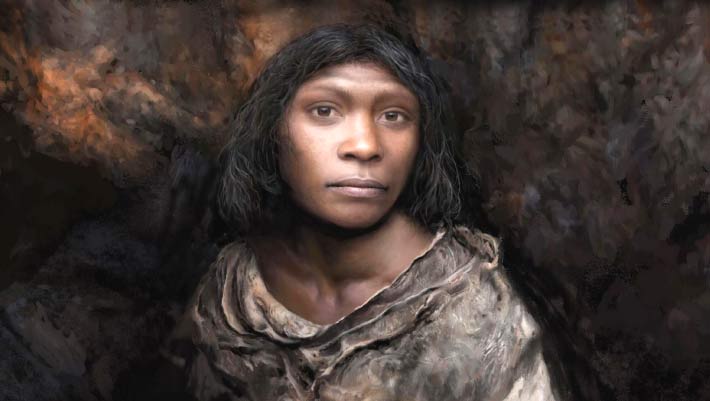
An artist’s rendering of a Homo antecessor individual known as the Girl of Gran Dolina. Image credit: Tom Björklund.

A new analysis of three skull fragments unearthed at the Gran Dolina cave site in Spain indicates that Homo antecessor had bone thickness closer to that of Neanderthals and modern people than to more archaic hominins.

The post Homo antecessor Had Surprisingly Modern Skull, New Fossils Suggest appeared first on Sci.News: Breaking Science News.
  •  

La Brea Tar Pits Yield New Species of Ice Age Toad

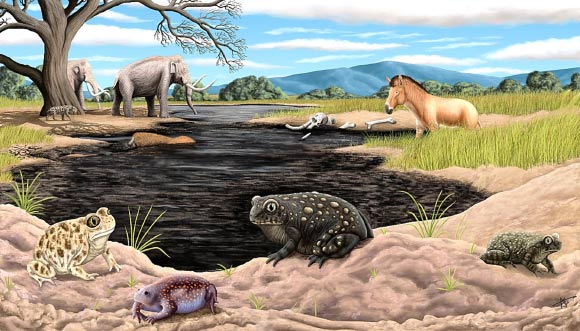
Reconstruction of Spea labreae (center and right) in La Brea Tar Pits compared with Spea hammondii (left), the species currently present in the area, and the presence of the Mexican burrowing toad (bottom). Image credit: Arturo Dávalos.

Paleontologists studying the La Brea Tar Pits, one of the world’s richest Ice Age fossil sites, have identified a previously unknown species of spadefoot toad that lived in what is now California during the latest Ice Age.

The post La Brea Tar Pits Yield New Species of Ice Age Toad appeared first on Sci.News: Breaking Science News.

  •  

Scientists Find Traces of Two Unknown Archaic Hominins in Human DNA

An archaic hominin. Image credit: Ninara / CC BY 2.0.

New research led by the University of California, Berkeley reveals that beyond Neanderthals and Denisovans, humans interbred with two mysterious ‘ghost’ lineages: one in Africa more than 50,000 years ago, another in Eurasia over 1.7 million years ago.

The post Scientists Find Traces of Two Unknown Archaic Hominins in Human DNA appeared first on Sci.News: Breaking Science News.

  •  

224,000-Year-Old Homo Skull Fragment Adds New Mystery to Human Origins

A Homo heidelbergensis, a Neanderthal and a Cro-Magnon. Image credit: SINC / José Antonio Peñas.

A fossilized skull fragment of Homo sp. unearthed in central Spain offers paleoanthropologists a fresh window into the story of ancient humans who lived in Europe hundreds of thousands of years ago.

The post 224,000-Year-Old Homo Skull Fragment Adds New Mystery to Human Origins appeared first on Sci.News: Breaking Science News.
  •  

Ancient Footprints in Kenya Hint at Bigger Bodies and Group Behavior among Early Human Relatives

One of 1.43-million-year-old footprints found at the GaJi10 site in the Koobi Fora Formation in northern Kenya; a 15-cm (6-inch) ruler is shown for scale. Image credit: Kay Behrensmeyer.

A set of 1.43-million-year-old fossil footprints preserved along the margin of an ancient lake in northern Kenya is offering paleoanthropologists new evidence about the size, gait and social lives of the beings who made them and reopening questions about which species they belonged to.

The post Ancient Footprints in Kenya Hint at Bigger Bodies and Group Behavior among Early Human Relatives appeared first on Sci.News: Breaking Science News.

  •  

Japanese Fossil Bee Fills Two-Million-Year Gap in Honeybee History

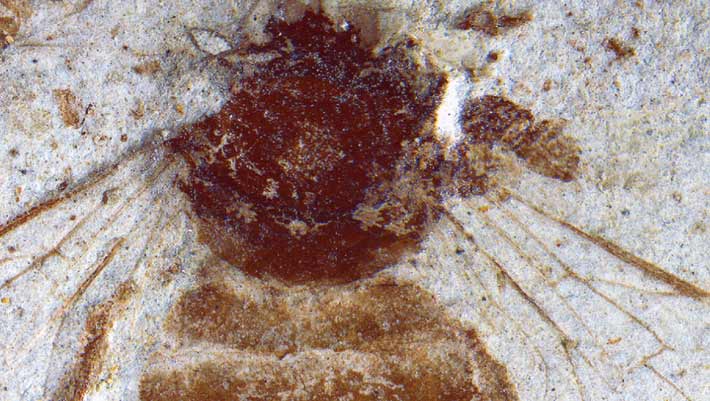
Apis aibai. Image credit: Y. Takahashi & J-ichi Takahashi, doi: 10.3897/zookeys.1255.162389.

Paleontologists have announced the discovery of a new fossil honeybee species that fills a long-standing gap in the evolutionary record of the genus Apis.

The post Japanese Fossil Bee Fills Two-Million-Year Gap in Honeybee History appeared first on Sci.News: Breaking Science News.

  •  

The discovery of footprints from a hominid that lived 1.4 million years ago by a Kenyan lake reveals it could reach 180 centimeters in height

An international team of researchers has documented a set of fossilized footprints that offer an exceptional snapshot of the behavior of a group of ancient human relatives who inhabited the shores of a lake in northern Kenya. The recently published study analyzes the imprints belonging to eight individuals of the species Paranthropus boisei, an extinct […]

  •  

Des terriers d’écureuils vieux de 700 000 ans livrent une découverte que personne n’avait vue venir

Des terriers restés prisonniers du pergélisol pendant des centaines de milliers d’années ont livré un témoignage exceptionnel sur les écosystèmes de l’ère glaciaire. Grâce à l’ADN préservé dans des excréments fossilisés d’écureuils terrestres, des chercheurs ont reconstitué une partie de leur...

  •  

Evidence of Fire Use by Early Humans May Date Back Nearly 1.8 Million Years

Shaar et al. unveil the oldest evidence of human activity in Wonderwerk Cave, South Africa. Image credit: Michael Chazan.

Scientists have uncovered compelling new evidence that early human ancestors, likely Homo erectus, were deliberately bringing fire into Wonderwerk Cave in South Africa as far back as 1.79 million years ago.

The post Evidence of Fire Use by Early Humans May Date Back Nearly 1.8 Million Years appeared first on Sci.News: Breaking Science News.

  •  

Fossils from Chinese Cave Fill Crucial Gap in History of Gigantopithecus blacki

An artist’s impression of a group of Gigantopithecus blacki within a forest in southern China. Image credit: Garcia / Joannes-Boyau, Southern Cross University.

Deep inside a limestone cave in southern China, paleontologists have uncovered an assemblage of thirteen fossilized teeth belonging to Gigantopithecus blacki, the largest primate species ever known to have lived.

The post Fossils from Chinese Cave Fill Crucial Gap in History of Gigantopithecus blacki appeared first on Sci.News: Breaking Science News.

  •  

Study: Cave Lions were Distinct Species that Occasionally Bred with Ancestors of Today’s Lions

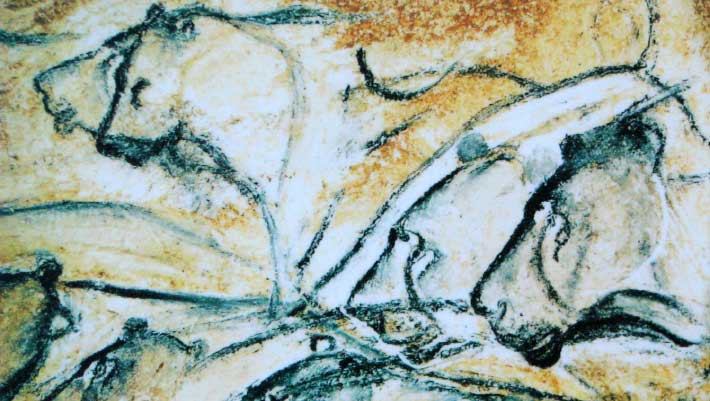
Cave lions painted in the Chauvet Cave, France.

The extinct Eurasian cave lion (Panthera spelaea) and today’s African and Asian lions (Panthera leo) belong to separate evolutionary lineages that diverged roughly 1.7 million years ago -- far earlier than previously thought, according to an analysis of 12 cave lion genomes spanning more than 100,000 years.

The post Study: Cave Lions were Distinct Species that Occasionally Bred with Ancestors of Today’s Lions appeared first on Sci.News: Breaking Science News.
  •  
❌