Nearly 80 years ago, a British expedition discovered the battered remains of a giant fossil on the peak of an Arctic island. Unable to take it with them, they snapped some pictures, took some bones and left the fossil to be ravaged by the icy winds and rain. Little did they know it would be found again decades later and turn out to be the first of its kind and a giant among its peers.
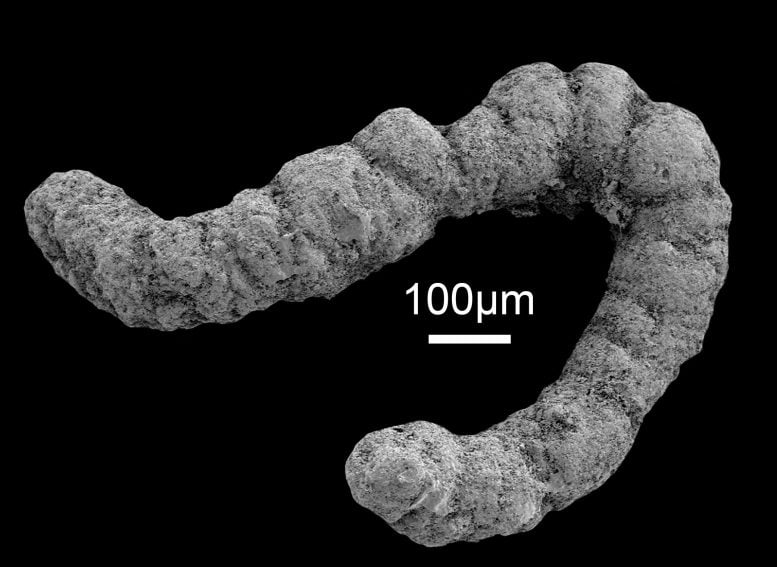
Ancient animal waste may have helped fuel the development and diversification of early marine ecosystems. Tiny pellets of fossilized waste may preserve evidence of a major transformation in early animal life. An international study led by Flinders University proposes that excrement helped reshape ancient oceans during one of evolution’s most important turning points. The researchers [...]
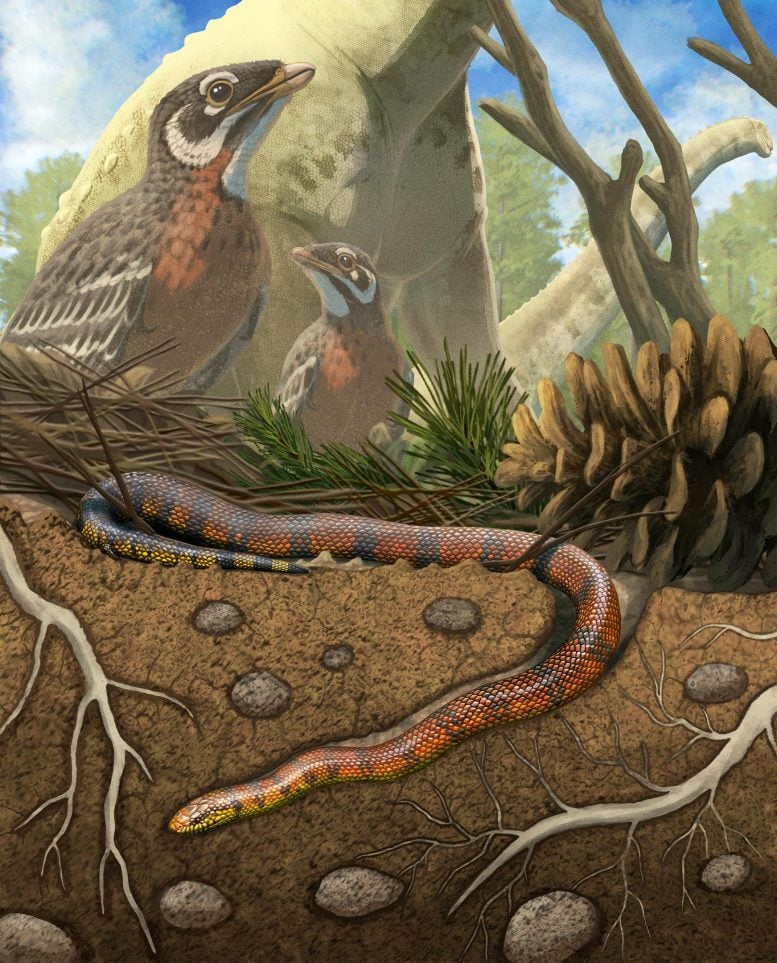
Exceptionally preserved Brazilian fossil reveals early snakes explored several habitats. More than 4,000 snake species live today, yet the evolutionary path that produced their elongated, limbless bodies remains difficult to reconstruct. Snakes are highly modified lizards, but their limited fossil record has left one of evolutionary biology’s central questions unresolved. Scientists have long debated whether [...]
For decades, paleontologists have used the presence of stones inside the skeletons of dinosaurs as an indicator that the animal was herbivorous. These stones, known as gastroliths, have been found in numerous species and were assumed to serve to grind plant material in the stomach, just like many birds do today. However, this relationship has […]
The dodo has been extinct for more than 300 years, wiped out within decades of humans arriving on its home island of Mauritius, but it lives on in the public imagination.
The iPhone X is a testament to device longevity, and durability. I gave mine to a family member when upgrading to an Xs Max in Late 2018, who held onto it all these years through a few different protective cases. Today I got it back where it’ll remain in my collection, after they upgraded to […]
Researchers used quartz from fossilized wood to trace how Europe developed. A polished piece of fossilized wood may look like little more than a decorative stone, yet the quartz inside it can preserve the history of an entire region for hundreds of millions of years. Geologist Dr. Steffen Trümper of the University of Münster and [...]
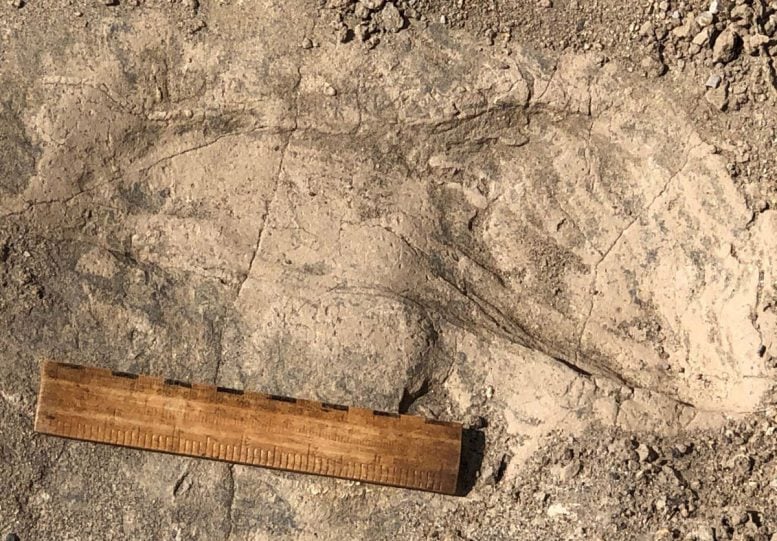
A 1.4-million-year-old trail of footprints reveals that a powerful human relative grew nearly as large as us and may have traveled in all-male groups. Eight individuals walked across the wet ground beside an ancient Kenyan lake. Within a short time, sediment buried their footprints and preserved a scene that would remain hidden for roughly 1.4 [...]
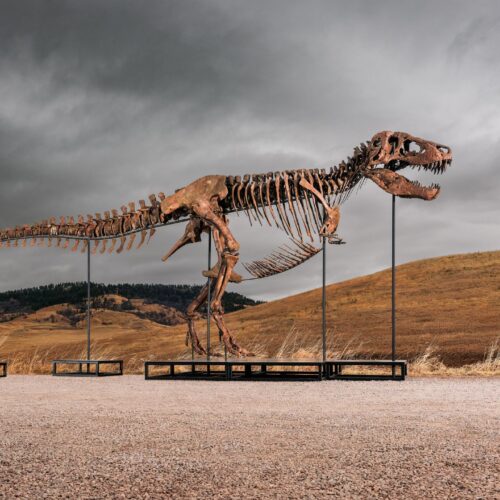
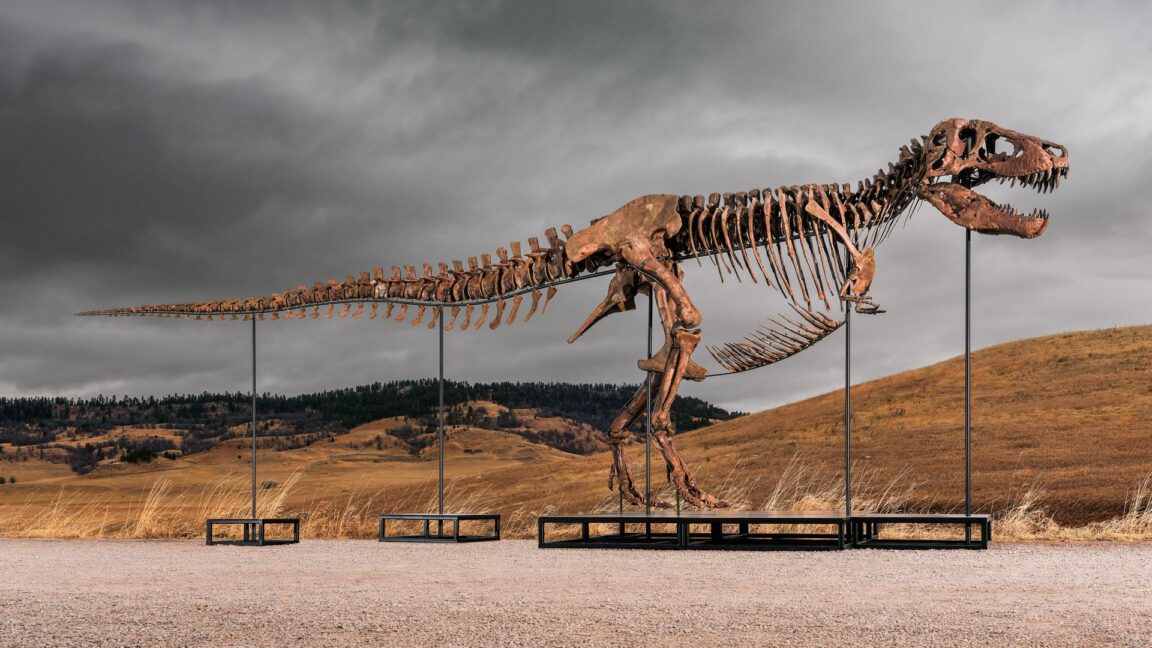
Forget the sale of the century. The auction house Sotheby’s has geared up for the sale of the epoch. On July 14 it opened live bidding on assorted fossils, but the pièce de résistance is lot 20, a rare 67-million-year-old Tyrannosaurus rex skeleton.
The specimen—dubbed Gus—is billed as one of the largest, most complete T. rexes ever found. Gus is expected to fetch up to $30 million and will go to the highest bidder, whether public museum or private collector. The latter have played an increasingly prominent role in buying fossils, with auction houses, according to paleontologists, contributing to the trend by building hype. But when private collectors swoop in and buy fossils at auction as luxury assets, those pieces of history are effectively lost to science.
By nearly all accounts, Gus is a big deal. In its description, Sotheby’s boasts that the specimen, which was discovered on a ranch in South Dakota, comprises “an incredible 183 fossil bone elements” making it “approximately 61% complete by bone count.” The fossil remains have been mounted in a custom steel armature along with replicas of the missing bones. The result is a reconstructed skeleton posed as if in hot pursuit, its mouth full of dagger teeth ready to tear into prey.
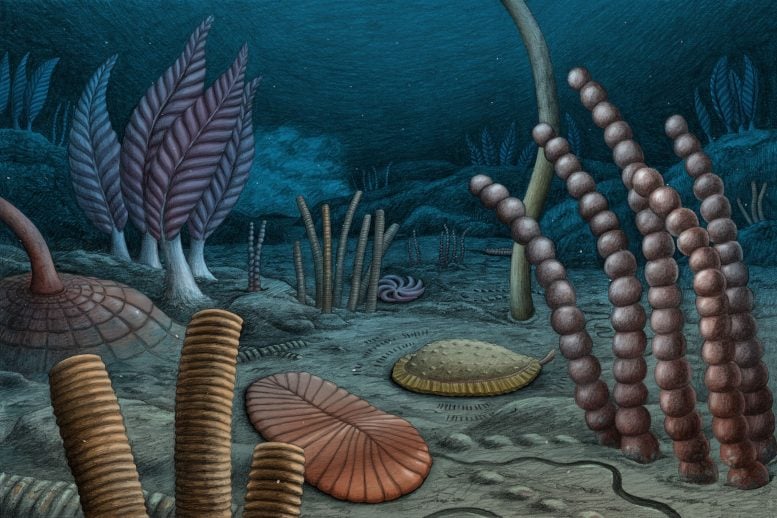
The story of Earth’s first animals may need rewriting after ancient fossils revealed an earlier start to complex life. From butterflies to blue whales, corals, and worms, Earth is home to an incredible diversity of animals. How all of these animals evolved from earlier, simpler ancestors is one of the most exciting stories in the [...]
The remains of a 12-and-a-half-foot-tall Tyrannosaurus rex, known as Gus, were sold on Tuesday by Sotheby’s in New York. The sale makes Gus the most valuable prehistoric specimen ever sold on the commercial market.
A new study suggests evolution stayed stuck for millions of years until sexual reproduction helped unleash a burst of biodiversity. New research suggests that the earliest animals on Earth may have unintentionally slowed the pace of evolution for millions of years. Scientists have found that their reliance on asexual reproduction limited competition and reduced the [...]
A newly discovered feathered dinosaur from China may help solve a long-standing mystery surrounding a fossil bed filled with ancient bird remains. For years, one fossil site in northwestern China has posed a mystery. The area contains hundreds of fossilized birds, many remarkably well preserved. Mixed among them are strange clusters of shattered bones compressed [...]
In a new study, fossilized droppings suggested that ancient ground squirrels ate the meat of much larger animals, including mammoths, bison and saber-toothed cats.
A newly discovered crocodile relative from the Triassic had a beak, tiny arms, and walked on two legs, making it look more like an ostrich-like dinosaur than a crocodile. During the Triassic Period, the ancestors of many modern animal groups were branching into an astonishing variety of shapes and lifestyles. Evolution was experimenting with body [...]
The biblical account of Noah’s Ark and the global Flood as a divine judgment on humanity's wickedness is discussed. That includes the processes of water covering the Earth, and tectonics theories to explain geological changes during the Flood and implications for Earth's environment post-Flood.

 Login