L’essor des drones sous-marins pourrait modifier en profondeur l’équilibre stratégique des océans. Des chercheurs chinois estiment que ces engins autonomes sont désormais capables de menacer une infrastructure essentielle.
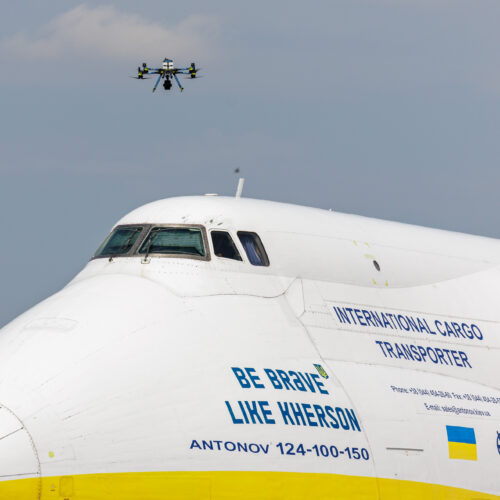
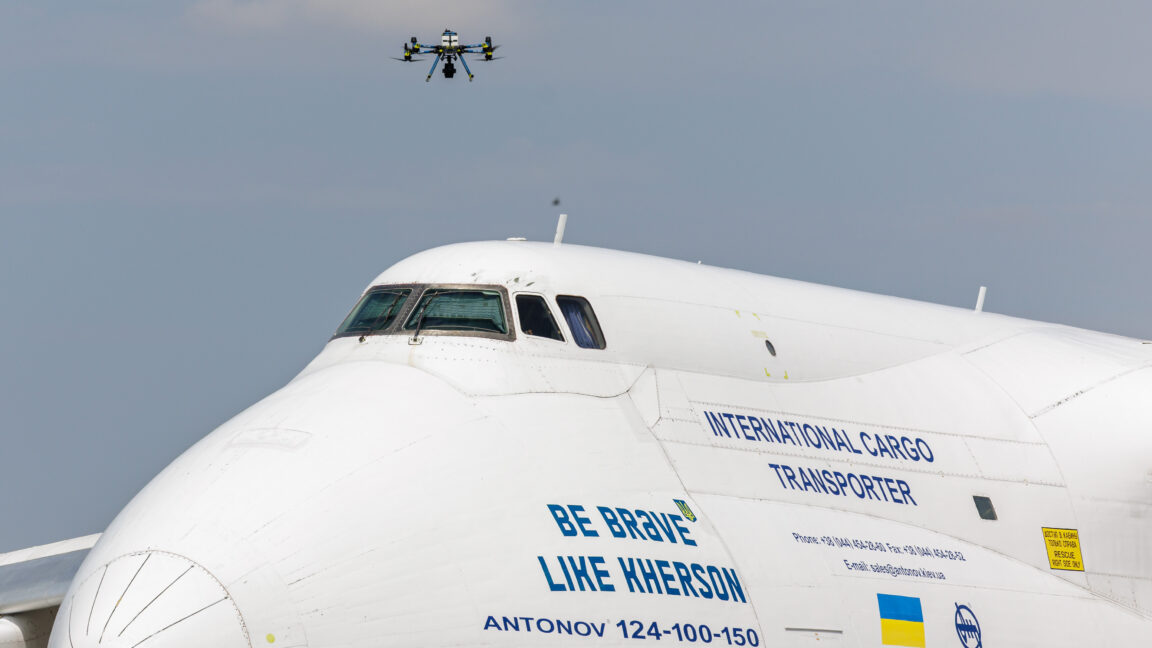
German police disarmed a drone carrying explosives after it was discovered near Ukrainian cargo aircraft parked at Leipzig airport—and authorities are looking into the possibility of a second drone after an approaching aircraft collided with something midair.
The drone, first spotted by an airport employee, was hovering close to the ground between two parked An-124 cargo aircraft owned by Ukraine’s Antonov Airlines shortly before midnight on August 4, according to The Guardian. It had apparently been modified to help avoid detection by the airport’s drone defense sensors, said Alexander Dobrindt, federal minister of the interior for Germany, during a press conference.
Dobrindt described the drone as carrying a fist-sized package of a substance believed to be the plastic explosive Semtex. Only a failed detonator prevented the drone from exploding near the Ukrainian cargo aircraft, he said.
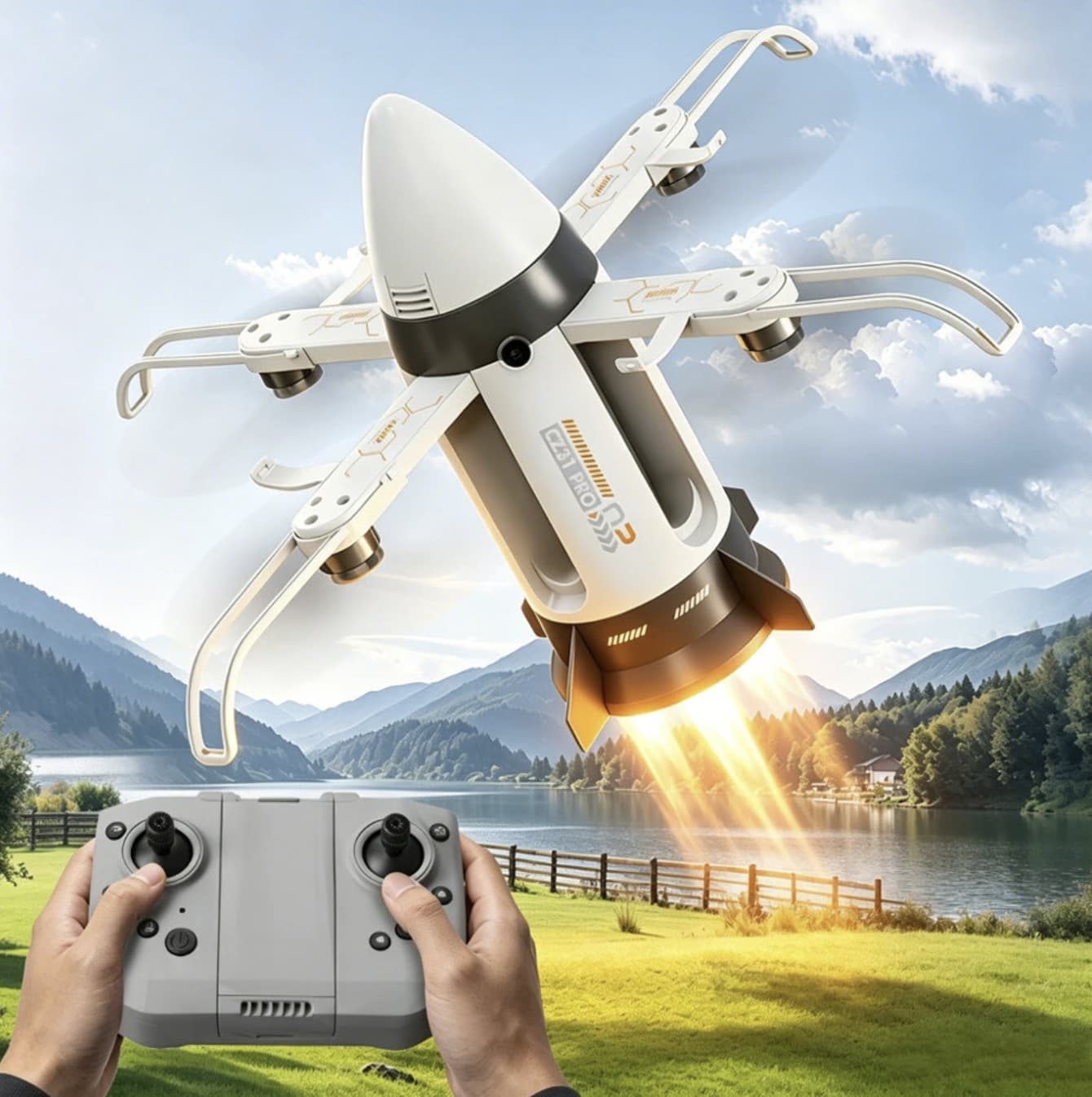
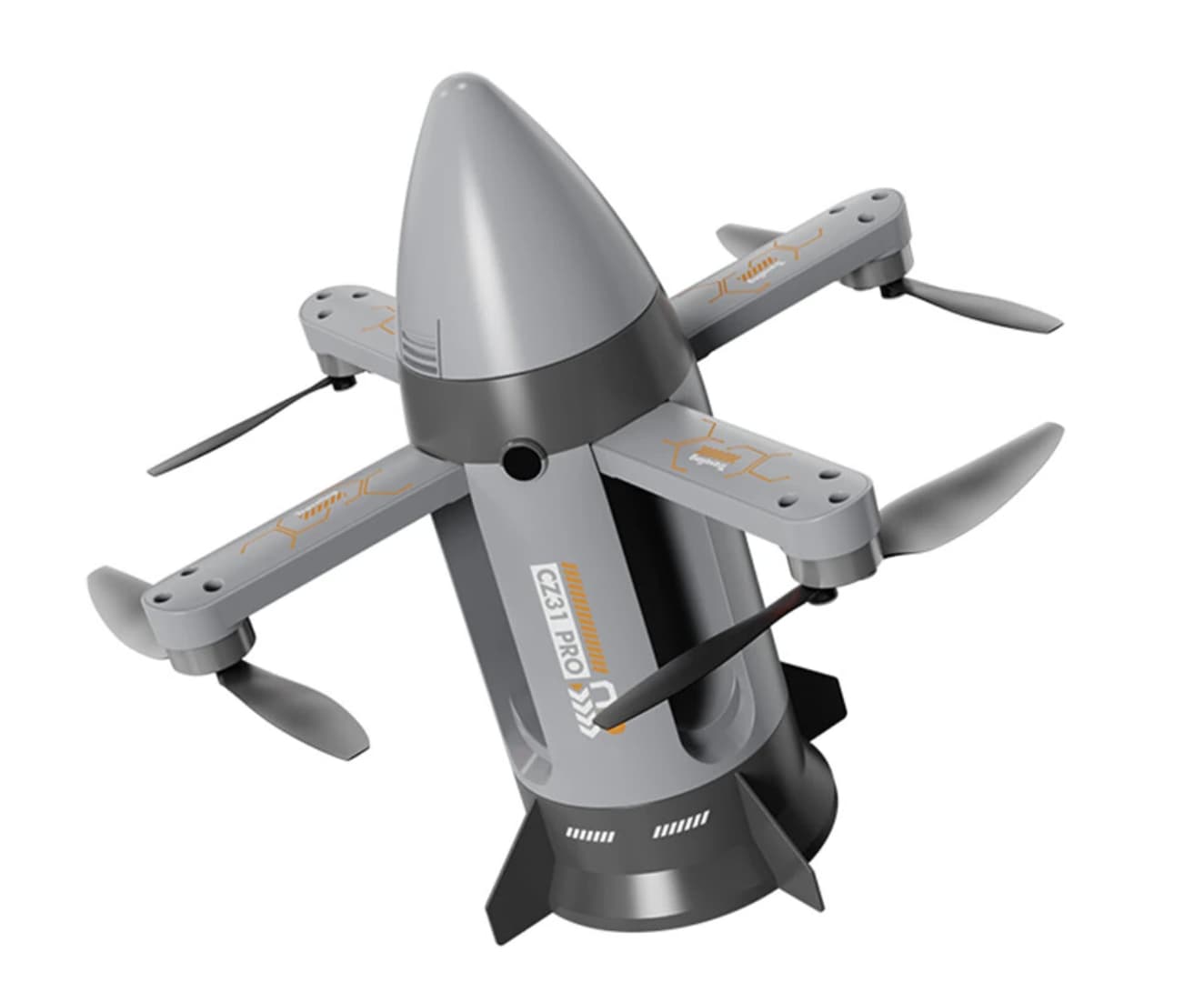
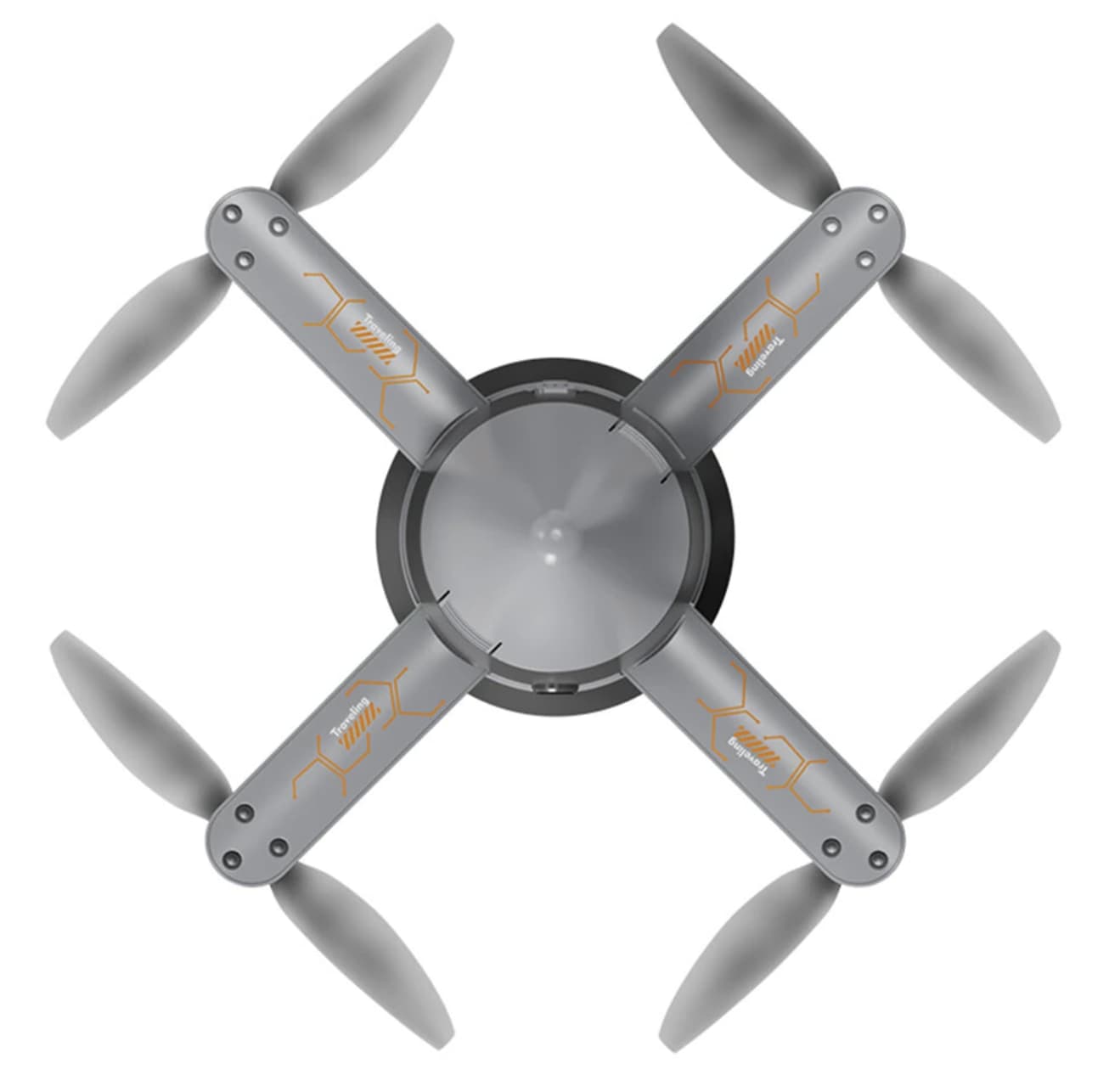
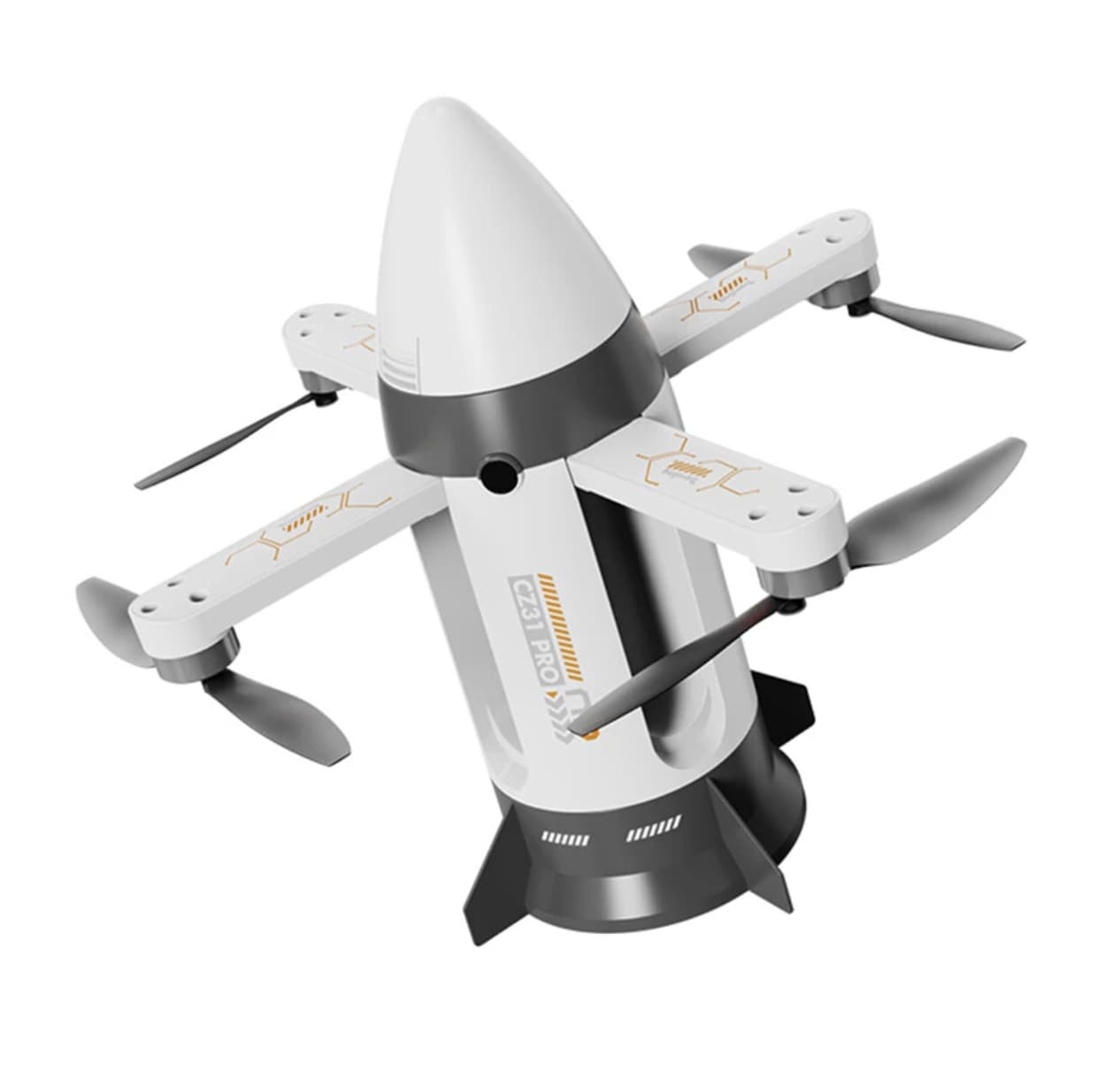
Looking for an RC drone that stands out from the crowd? CZ31 Rocket-Style RC Drone combines an eye-catching rocket-inspired design with beginner-friendly flight controls, brushless motors, Wi-Fi FPV, and unique visual effects that make every takeoff feel like a space launch. Designed primarily for recreational flying, this Ready-to-Fly (RTF) quadcopter offers an entertaining experience for kids, beginners, and drone enthusiasts alike.
A Rocket-Inspired Design That Turns Heads
Unlike traditional quadcopters, the CZ31 adopts a rocket-inspired appearance complete with folding arms that resemble a futuristic launch vehicle. During takeoff, the drone enhances the illusion with LED lighting and a mist spray effect beneath the aircraft, creating a realistic rocket exhaust visual.
It’s important to note that the “rocket missile-launch” branding refers purely to the drone’s appearance and visual effects—it is designed solely as a recreational RC aircraft.
Brushless Motors for Stable Flight
Powering the CZ31 are efficient brushless motors, which provide smoother flight performance and greater durability compared to conventional brushed motors.
Advantages include:
Improved flight stability
Longer motor lifespan
Lower operating noise
Better efficiency
Enhanced reliability for regular outdoor flying
Combined with its 6-axis gyroscope, the drone delivers stable hovering and responsive controls, making it suitable for both beginners and casual pilots.
Beginner-Friendly Flight Features
The CZ31 includes several intelligent functions that simplify flying:
One-key takeoff and landing
Altitude hold
Headless mode
Multiple speed settings
Stable hover control
These features help new pilots gain confidence while allowing more experienced users to enjoy quick and hassle-free flights.
Wi-Fi FPV with Built-In Camera
The drone comes equipped with a 480P HD camera that supports 2.4GHz Wi-Fi FPV (First-Person View) transmission.
Pilots can connect the drone to a compatible smartphone to:
View live video
Capture aerial photos
Record videos
Experience FPV flying
The FPV transmission range is approximately 30 meters, while the remote-control range extends to around 50 meters under ideal conditions.
Mist Spray and LED Lighting
One of the most entertaining features of the CZ31 is its one-touch mist spray system.
Using the included water dropper, users can fill the small reservoir to produce a visible mist beneath the drone. Combined with colorful LED lighting, the effect resembles rocket exhaust during takeoff, making evening flights especially enjoyable.
The spray system is intended purely as a visual effect and can operate for approximately 8 minutes after a brief activation.
Compact and Portable
The CZ31 measures approximately:
200 × 200 × 190 mm
Takeoff weight: 175g
Its foldable arms make transportation and storage convenient, allowing users to easily pack the drone into a backpack for outdoor adventures.
Battery Performance
The drone is powered by a 3.7V 1200mAh Li-Po battery, offering:
6–9 minutes of flight time
Around 60 minutes charging time
The modular battery design also allows for quick battery swaps if additional batteries are purchased separately.
Package Contents
The Ready-to-Fly package includes:
CZ31 Rocket-Style RC Drone
2.4GHz remote controller
3.7V 1200mAh battery
USB charging cable
Spare propellers
Propeller guards
Water dropper for the mist effect
Screwdriver and mounting screws
User manual
Key Specifications
Rocket-inspired foldable design
Brushless motor system
480P HD camera
2.4GHz Wi-Fi FPV
One-key takeoff and landing
Headless mode
Altitude hold
LED lighting effects
Mist spray “rocket exhaust” effect
3.7V 1200mAh Li-Po battery
Flight time: 6–9 minutes
Control range: approximately 50 meters
FPV range: approximately 30 meters
Who Should Buy the CZ31?
The CZ31 is a great choice for:
First-time drone pilots
Kids and families
Hobbyists looking for a fun recreational drone
Users who enjoy unique drone designs
Anyone seeking an affordable FPV quadcopter with visual effects
Final Verdict
CZ31 Rocket-Style RC Drone focuses on fun rather than professional aerial photography. Its rocket-inspired styling, LED lighting, mist spray effect, brushless motors, and beginner-friendly flight controls create an engaging flying experience that stands out from conventional toy drones.
While its 480P camera and modest flight time reflect its entry-level positioning, the CZ31 offers plenty of entertainment value for recreational users. If you’re looking for a unique RC quadcopter that combines imaginative design with easy-to-fly features, the CZ31 is a compelling option for weekend flying and family fun.
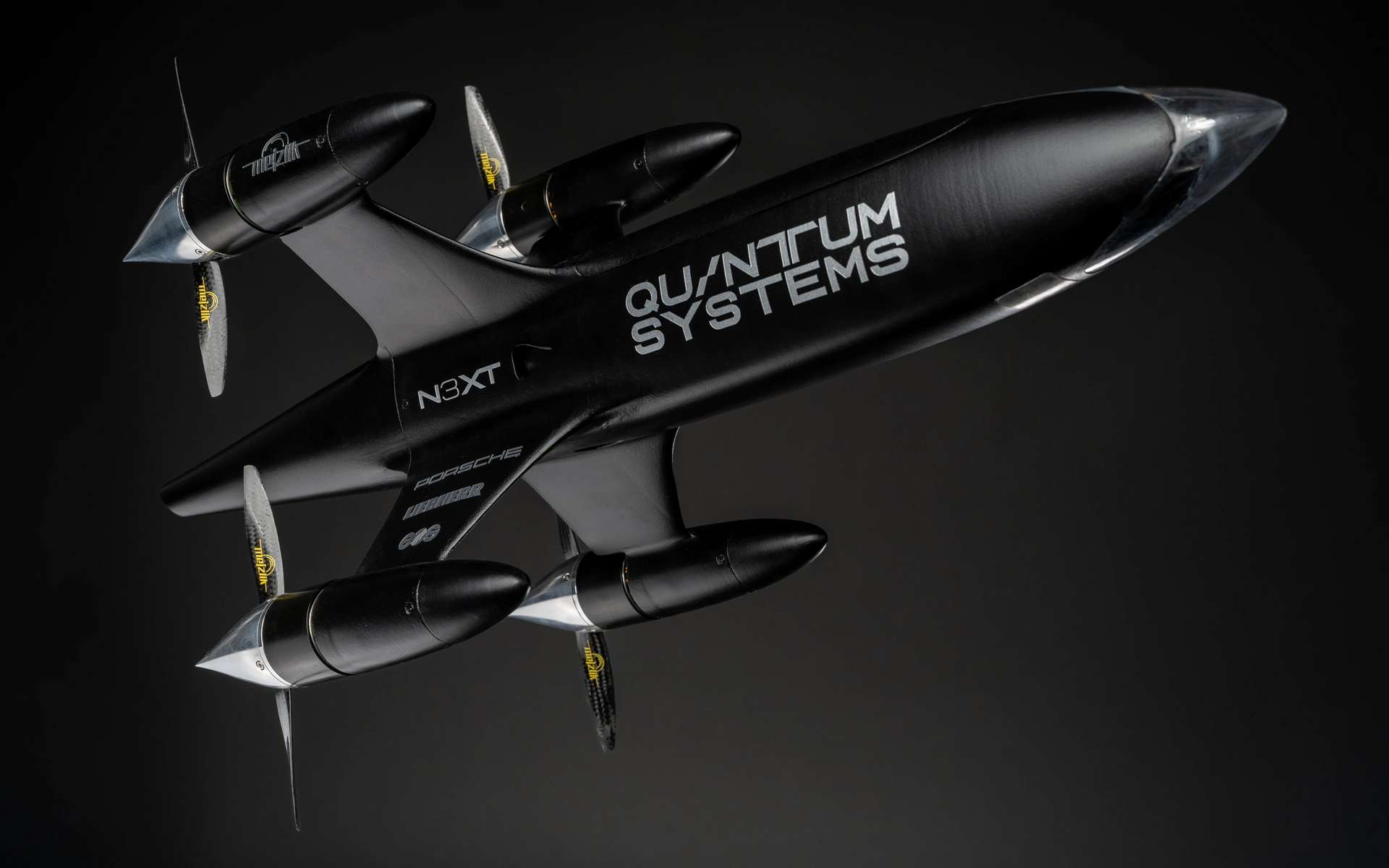
Après plusieurs années de compétition entre passionnés, le record de vitesse des drones électriques change de dimension. Une entreprise allemande affirme avoir franchi un nouveau cap avec un prototype dont la technologie pourrait bientôt trouver des applications bien plus concrètes.
Chinese researchers are using laser technology to vastly extend the flight time of drones, marking a significant shift in UAV capabilities.
The achievement was reported by researchers from China’s Civil Aviation University, who reported their findings in laser-based drone charging technology in a recent article published in Matter & Light.
The new drone concept utilizes a lightweight receiver, repurposing solar cell technology to absorb laser light and convert it into electricity to power a device.
Endless Drones
“Imagine a future where drones inspecting forests, monitoring disasters, or delivering packages no longer need to land frequently to replace batteries,” said senior author Jianhua Han of Civil Aviation University of China. “As drones take on longer missions, battery life has become one of the biggest barriers.”
At the core of the breakthrough is perovskite, a class of synthetic compounds with a crystalline structure highly conducive to solar power applications. The team developed a perovskite laser cell-thermoelectric (PLC-TE) tandem device that optimizes a solar cell to accept laser energy.
In laboratory tests, the perovskite laser receiver effectively powered the propeller on a stationary drone model (Image Credit: Y. Han and X. Han et al., Matter & Light)
The cell’s perovskite converts laser energy into electricity, which can be a messy process, as some of the power is lost as heat. The thermoelectric layer addresses this problem by capturing heat and converting it into electricity via the temperature differential between its warmer, laser-facing side and its cooler side. However, that contrast requirement can be an issue when the laser uniformly heats the entire drone, reducing the efficiency of that heat-to-energy conversion.
Managing Overheating
“When we tested the device under a high-power laser, the thermal camera showed temperatures of 80 to 90 degrees Celsius,” Han said. “That was much higher than we expected and made us realize that heat buildup was a far more serious problem than we had imagined.”
To mitigate overheating concerns, the receiver was mounted on the drone’s wings, kept separate from other components, and paired with heat-blocking technology to enable laser-to-electric energy conversion without overheating sensitive electronics.
This heat-blocking technology included nanocrystals embedded in the PLC-TE tandem device, which acted as a thermal barrier due to their poor thermal conductivity. With the nanocrystals in place, the researchers tested the conversion device on its own and observed a significant slowdown in heat flow during prolonged laser exposure, which would cool the drone overall.
This PLC-TE device was bombarded with a green laser in a laboratory experiment and converted 38.49% of the beam’s energy into electricity, a high percentage compared to other wireless charging systems in similar scenarios.
Drone Tests
Next, the team integrated the energy conversion system onto a stationary lab drone and also added airflow channels to the wings. In subsequent laboratory tests, laser bombardment supplied sufficient energy to power the drone’s propeller, while the airflow channels effectively cooled the thermoelectric layer’s cold side, maximizing heat-to-electricity conversion.
“Previous studies largely focused on the materials or the device itself,” Han explained. “We wanted to think beyond the laboratory, to how the system could actually be integrated into an aircraft, cooled during operation, and made compatible with flight. It isn’t just a materials science problem; it’s an engineering one.”
Work continues on this wireless drone charging system, with outdoor flight tests on a lightweight frame scheduled. These will be paying particular attention to the system’s reliability under real-world outdoor conditions. However, the team notes that energy conversion efficiency will not be their sole research area, as the accuracy of laser tracking will be essential to the system’s safe operation.
“Our work demonstrates the possibility of ‘refueling aircraft with light,’” Han concluded. “Going from 1 to 100 will require solving many engineering challenges, but we hope this provides a starting point for future development.”
Ryan Whalen covers science and technology for The Debrief. He holds an MA in History and a Master of Library and Information Science with a certificate in Data Science. He can be contacted at ryan@thedebrief.org.
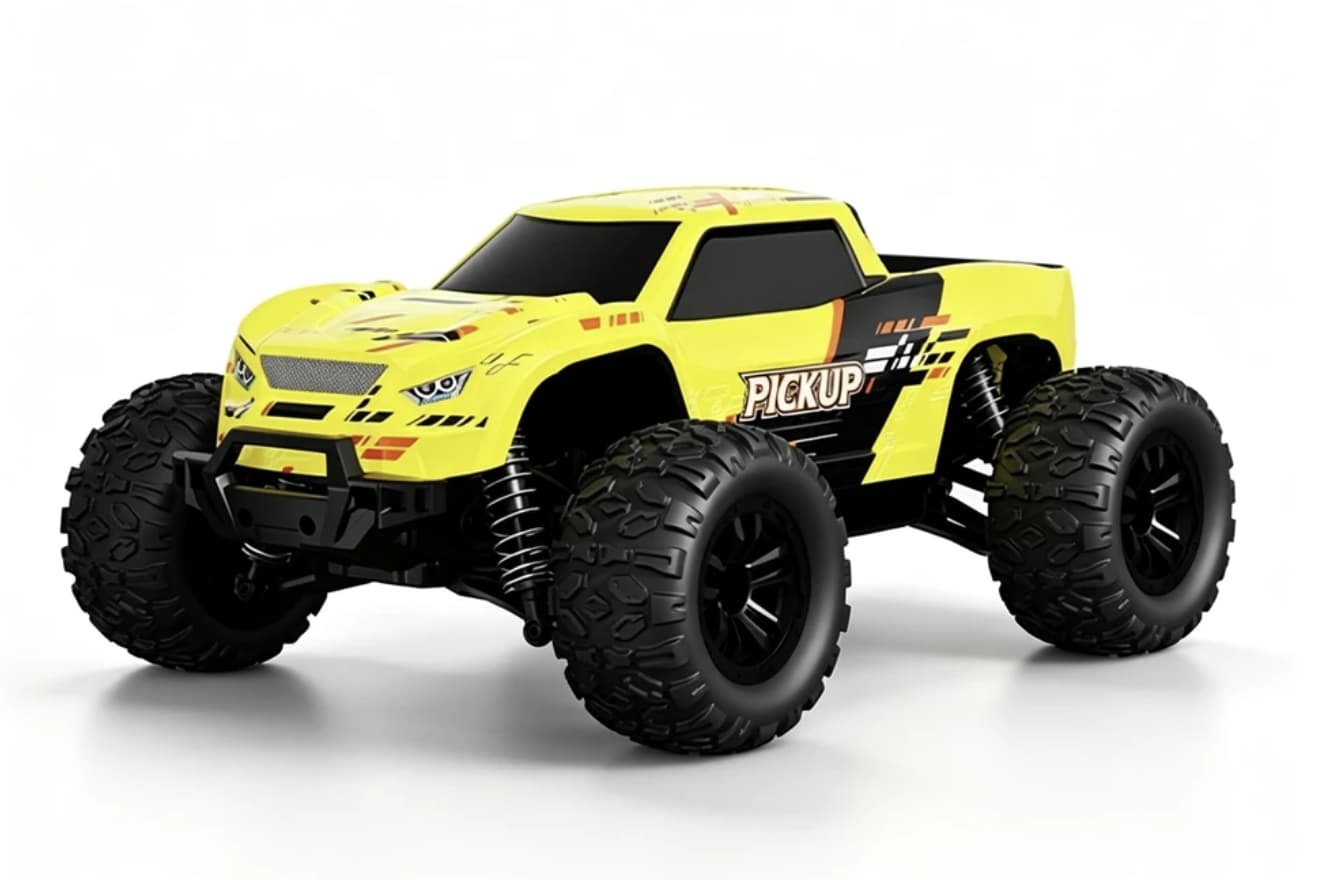
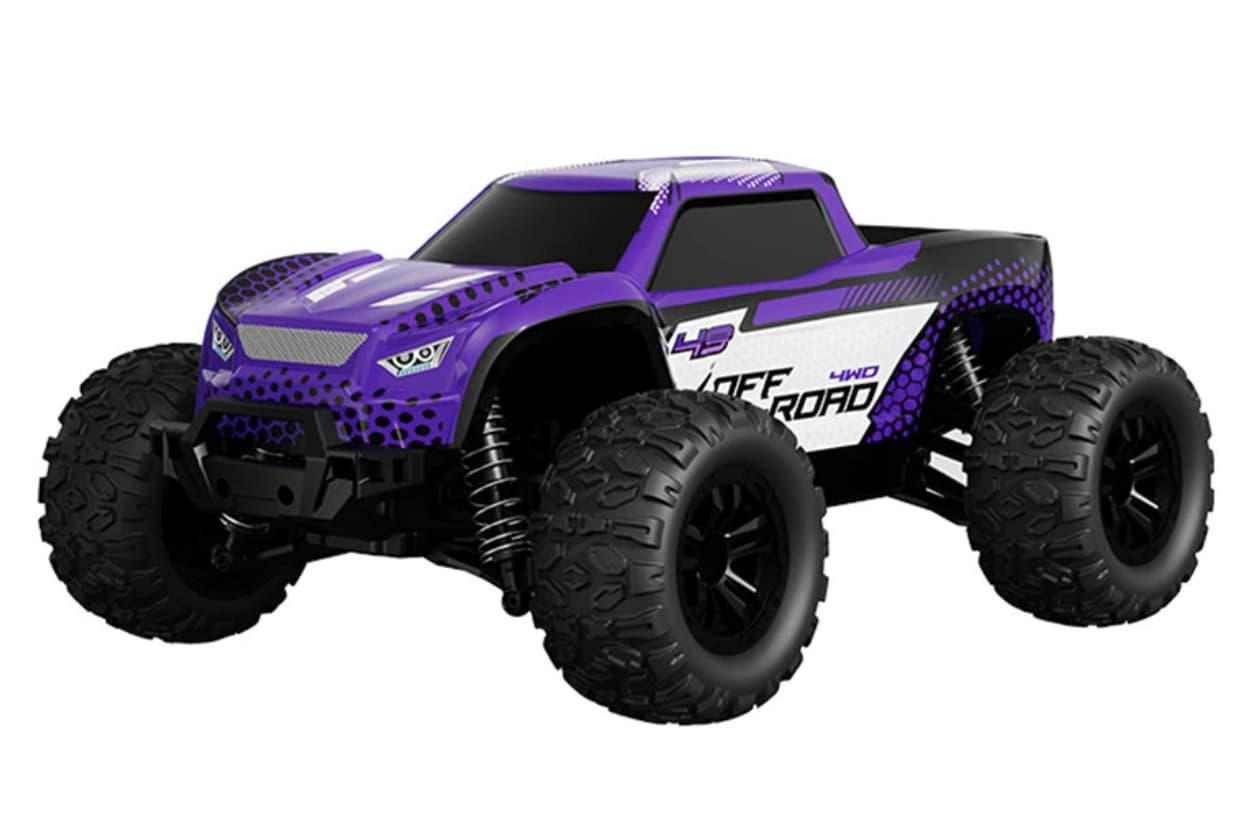
YH Toys YH18001 PRO is a compact yet powerful 1/18-scale brushless RC monster truck designed for enthusiasts who want high-speed performance without stepping up to a larger and more expensive platform. Featuring a 4300KV brushless motor, 4WD drivetrain, metal drivetrain components, and a claimed top speed of 70km/h, the YH18001 PRO promises an exciting driving experience on a wide variety of terrains.
Whether you’re new to the RC hobby or looking for a portable off-road basher, the YH18001 PRO packs impressive specifications into a rugged pickup-style body.
Compact Size, Serious Performance
Despite its 1/18 scale, the YH18001 PRO is engineered for performance rather than being a simple toy.
The truck measures 277 × 202 × 120mm and weighs approximately 758g, making it easy to transport while remaining stable at higher speeds. Its aggressive pickup truck body is complemented by LED headlights, realistic wheel arches, and a durable PVC shell that gives it an authentic off-road appearance.
4300KV Brushless Power System
The biggest highlight is its 2435 4300KV brushless motor, paired with a 35A integrated brushless ESC and receiver.
This setup enables the truck to reach speeds of up to 70km/h under ideal conditions, providing rapid acceleration and smooth throttle response. Compared to brushed RC vehicles, the brushless system delivers:
Higher efficiency
Greater reliability
Lower maintenance
Stronger acceleration
Longer motor lifespan
The truck supports proportional throttle and steering control, allowing drivers to precisely manage speed instead of operating at only full throttle or full brake.
Full-Time 4WD for All Terrains
The YH18001 PRO uses a shaft-driven four-wheel-drive system designed to maintain traction across challenging surfaces.
It performs well on:
Dirt trails
Gravel roads
Sand
Grass
Hard-packed surfaces
The drivetrain also includes numerous upgraded metal components such as:
Metal differentials
Metal center driveshaft
Metal CVD front driveshafts
Metal steering knuckles
Metal suspension mounts
Metal wheel cups
These upgrades improve durability during aggressive driving and repeated jumps.
Independent Suspension
Handling is enhanced by a double wishbone independent suspension system with front and rear spring shock absorbers.
This setup helps the truck absorb bumps while maintaining tire contact over uneven terrain, improving both stability and cornering performance.
Large off-road tires with deep tread patterns provide strong grip on loose surfaces, making the truck suitable for recreational bashing as well as casual racing.
Ready-to-Run Convenience
The YH18001 PRO arrives in RTR (Ready-to-Run) configuration.
Inside the box you’ll find:
YH18001 PRO RC truck
2.4GHz transmitter
7.4V Li-ion battery
USB charging cable
Wheelie bar
Screwdriver
Metal body clips
User manual
Only three AA batteries for the transmitter need to be purchased separately.
Battery Life
Power comes from a 7.4V 1600mAh 20C Li-ion battery.
Expected performance includes:
Approximately 18 minutes of driving time
Charging time of around 3–3.5 hours
While runtime is typical for a high-speed brushless RC vehicle, enthusiasts planning extended sessions may wish to purchase an additional battery pack.
2.4GHz Radio System
The included 4-channel 2.4GHz transmitter provides:
Full proportional steering
Proportional throttle
Stable signal
Approximately 80 meters of operating range
The 2.4GHz system also minimizes interference when multiple RC vehicles are operated nearby.
YH Toys YH18001 PRO delivers an impressive balance of speed, durability, and value in the increasingly competitive 1/18-scale RC market. Its 70km/h brushless powertrain, metal drivetrain upgrades, independent suspension, and full-time 4WD make it a capable off-road performer that is equally enjoyable for beginners looking to step into the hobby and experienced drivers wanting a compact high-speed basher.
For RC enthusiasts seeking a portable monster truck with genuine hobby-grade performance, the YH18001 PRO stands out as an exciting option that offers far more capability than its compact dimensions might suggest.
À Tulliby Lake, au Canada, une équipe de chasseurs de tornades a capturé des images spectaculaires d’une tornade grâce à un drone conçu pour affronter les vents les plus violents. Derrière cette vidéo impressionnante se cache un projet scientifique qui pourrait améliorer notre compréhension de...
An innovative new drone dubbed the “Phantom Twist” can seemingly disappear from view, in a major new robotics advancement offering a close-to-invisible aerial platform.
Its name describes the drone’s rapid spinning motion, which rotates 25 times per second—too fast for the human eye to resolve—thereby acting as a sort of cloak shielding it from visible detection.
The Northwestern University engineering team behind the Phantom Twist revealed their drone during a recent talk at the Sydney, Australia, Robotics: Science and Systems 2026 conference on July 16.
Stealth Drones
“Most efforts to hide drones focus on making them look like their surroundings,” said Northwestern’s Michael Rubenstein, who led the work. “Instead, we asked whether we could design the drone itself around the way humans perceive motion. This idea of low visibility through persistent motion is something few people have explored.”
The Phantom Twist drone’s unique rotation renders it almost invisible when in flight (Image Credit: Northwestern University)
Hiding drones is not a new idea. Other engineers have attempted a variety of techniques, including camouflage, transparent materials, and light-bending to obscure the presence of drones and robots. However, all of those focused on the material the drone’s exterior was constructed from, allowing it to blend into the background. The Northwestern team’s innovation was in how the object moves.
To our eyes, fan blades disappear because they are moving so fast that our eyes cannot track them. The “motion blur” created at these speeds allows the Phantom Twist to almost disappear, leaving only a faint apparition perceptible to the eye.
Nature Drones
While several military applications are immediately obvious, the team instead says their work could be useful in developing noninvasive wildlife and environmental monitoring. Loud drones can scare wildlife, disrupting them as they scatter, but by blending in, the Phantom Twist could capture a much more accurate picture of natural behaviors.
Their perception-based design eschews the traditional quadcopter design for a single propeller, with a body that spins in the opposite direction, creating the optical illusion that the drone essentially disappears.
As it spins, the Phantom Twist’s movements become virtually invisible to the human eye (Image Credit: Northwestern University)
“For a typical quadrotor drone, the propellers are spinning, but the robot is stationary,” Rubenstein said. “So, you still see its body. For our drone, the whole thing is rotating, so there are no stationary parts.”
Creating the Phantom Twist
Using AI and optimization algorithms, the Northwestern team began by generating 20,000 different arrangements of a drone’s propeller, motor, circuit board, and other necessary components. Eventually, the algorithm landed on the most promising configurations, after which the researchers simulated and superimposed them onto real-world backgrounds.
Another computer model mimicked human perception, allowing the engineers to assign a perception score for how visible each design would be to human eyes. An algorithm then optimized those designs by moving components to minimize the visibility score even further.
“The design process was fully automated,” Rubenstein said. “Then, when we were confident that a drone met all our criteria, we built it.”
A Revised Drone
The key feature of this design is that the individual components are at such varying heights and angles that they do not overlap as it spins, maximizing the motion-blur effect and creating the appearance of a faint cloud rather than a solid object.
“The human eye takes time to accumulate signals, roughly analogous to the exposure time of a camera,” said Alexander, an expert in computer vision. “When an object spins quickly, we perceive it as blurring out and losing distinct features. Because this new drone is almost entirely transparent, its few opaque components are visually averaged with the background for an overall appearance of a slight haze.”
Currently impeding the drone from being even more imperceptible to the eye are the wires and support rods that remain visible, as well as the engine noise it produces, which is readily discernible. Going forward, the team plans to continue improving Phantom Twist in future iterations to incorporate more transparent materials and reduce the noise it produces.
Ryan Whalen covers science and technology for The Debrief. He holds an MA in History and a Master of Library and Information Science with a certificate in Data Science. He can be contacted at ryan@thedebrief.org, and follow him on Twitter @mdntwvlf.
Au salon Eurosatory 2026, Renault et Thales dévoilent un prototype de véhicule tactique 4x4 hybride, capable de coordonner drones et robots en temps réel. Le véhicule en question est un SUV Rafale et il répond aux nouvelles exigences imposées par la guerre moderne.
La start-up française HyLight a fait voler son drone dirigeable HyLighter au-dessus des Champs-Élysées le 14 juin 2026, à l'occasion des 10 ans du salon VivaTech. Un coup d'éclat médiatique pour une technologie « Made in France », qui entend remplacer les hélicoptères et drones thermiques dans...
Falling overboard from a ship is one of the most dangerous emergencies at sea. Every minute matters, and the chances of survival can quickly decrease as people become exhausted, suffer from cold water exposure, or drift far away from the vessel. Researchers at the Technical University of Denmark (DTU) are developing a new autonomous rescue […]
Pour la première fois dans l'histoire, deux membres d'équipage américains d'un hélicoptère AH-64 Apache tombé en mer près des côtes d'Oman ont été secourus par un drone naval de la marine américaine. Une manœuvre qui pourrait bien changer la donne lors d’une opération de combat.
Dévoilé au salon ILA Berlin 2026, le U760 Ravenstorm représente le pari d'Airbus sur un drone de combat européen. Une réponse directe à l'effondrement du programme Scaf et à la montée des tensions géopolitiques.
President Donald Trump’s latest pitch for using taxpayer dollars to secure his White House ballroom featured a militarized building—including a rooftop hardened against drone strikes and a “drone port” that could potentially house military drones.
The remarks came on May 19 as Trump gave reporters a personal tour of the ballroom project that has already involved the demolition of the White House mansion’s East Wing. The president spoke of installing a rooftop drone base “for unlimited numbers of drones” operated by the US military as a “drone port that would protect all of Washington,” according to Reuters. He also highlighted a ballroom roof made from “impenetrable steel” that would supposedly be “drone-proof” against potential drone strikes.
To pay for such measures, Trump has been urging Republican lawmakers in the US Congress to approve $1 billion in taxpayer funding to provide a wide variety of “security adjustments and upgrades” for his ballroom project. The taxpayer-backed security enhancements would be separate from the $400 million construction cost for the ballroom project that has been funded by private donors, including companies such as Amazon, Apple, Coinbase, Comcast, Google, HP Inc., Lockheed Martin, Meta, Micron Technology, Microsoft, Palantir, Ripple, and T-Mobile.

 Login