❌

Reading view

MacVoices #26234: Macstock – Mike Schmitz Turns The Tables

At Macstock, Mike Schmitz turns the tables and interviews Chuck Joiner about favorite memories from the event. They review the gathering’s beginnings after Macworld, the friendships formed and renewed each year, memorable moments and how some of the strongest connections come unexpectedly. A big part of Macstock is the the inspiration attendees take home; Mike […]

💾

  •  

Quinta beta do iOS 27 faz referência a seis iPhones ainda não lançados

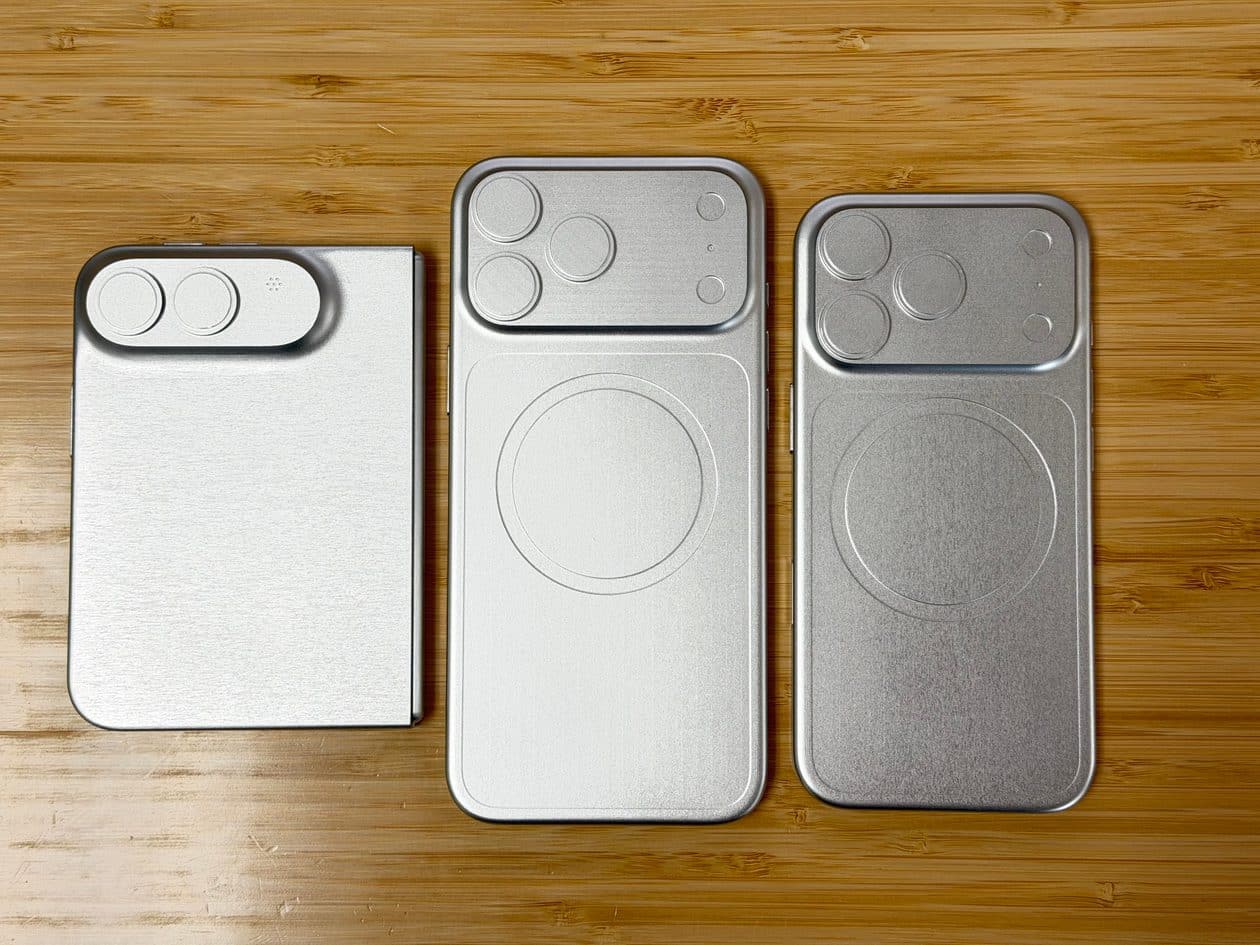
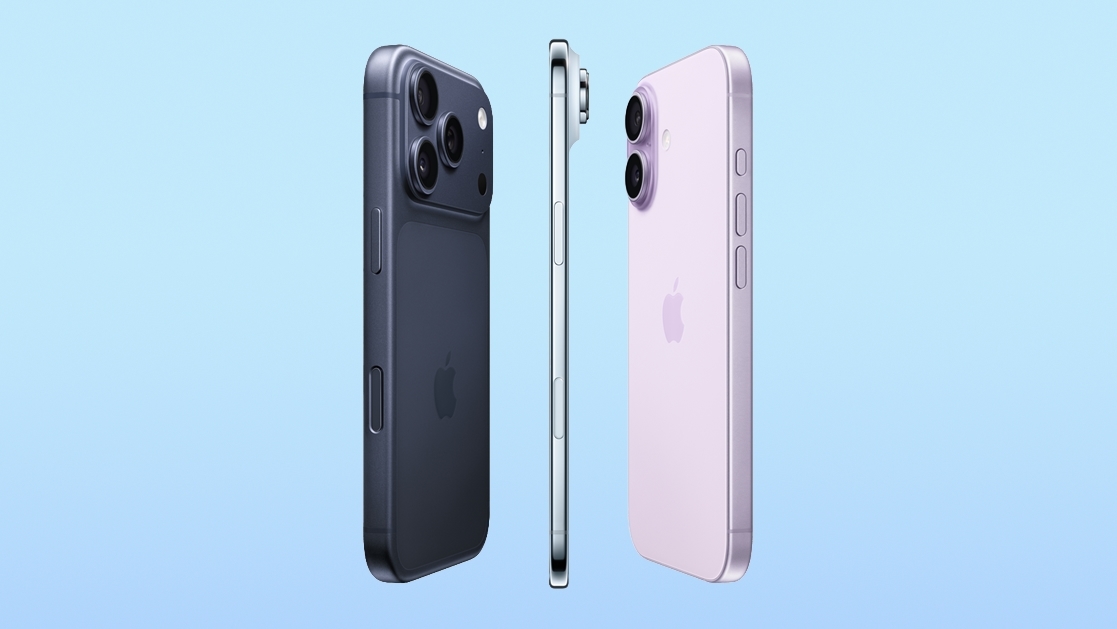
A Apple disponibilizou ontem a quinta versão beta dos sistemas 27 e, no caso do iOS, além de trazer novidades como novos ícones para apps nativos e mais opções de personalização de voz para a Siri, a última atualização fez menção à linha de iPhones que deverá ser lançada entre o final deste ano e o início do ano que vem, composta pelos modelos “18 Pro”, “18 Pro Max”, “Ultra”, “18”, “18e” e “Air 2”.

As referências foram encontradas pela Macworld em arquivos do sistema relacionados aos drivers de bateria do iPhone, limitando-se à exibição dos codinomes desses aparelhos. Nenhuma outra informação sobre esses dispositivos foi localizada.

A lista dos seis codinomes internos inclui:

  • V62: “iPhone Air 2”
  • V63: “iPhone 18 Pro”
  • V64: “iPhone 18 Pro Max”
  • V67: “iPhone 18”
  • V68: “iPhone Ultra”
  • V69: “iPhone 18e”

Algo semelhante ocorreu com o “iPhone Ultra” na quarta versão beta do novo iOS, cujo código incluía referências a um aparelho com múltiplas baterias — algo inexistente hoje e fortemente especulado no caso do primeiro dobrável da Apple.

Em um feito inédito, o tradicional evento de setembro destinado ao anúncio de novos iPhones — cujos preparativos já começaram — poderá dividir os lançamentos da linha “iPhone 18”, restringindo-se inicialmente aos modelos premium, como o “Ultra”, o “18 Pro” e o “18 Pro Max”, enquanto os demais aparelhos ficarão para o início do ano que vem.

iPhone 17 Pro Max

Cores: prateado, laranja-cósmico ou azul-intenso
Armazenamento: 256GB, 512GB, 1TB ou 2TB
R$ 9.899,10
R$ 12.499,00

iPhone 17 Pro

Cores: prateado, laranja-cósmico ou azul-intenso
Armazenamento: 256GB, 512GB ou 1TB
R$ 9.599,00
R$ 11.499,00

NOTA DE TRANSPARÊNCIA: O MacMagazine recebe uma pequena comissão sobre vendas concluídas por meio de links deste post, mas você, como consumidor, não paga nada mais pelos produtos/serviços usando os nossos links de afiliado.

  •  

Latest iOS 27 Beta References Six Unreleased iPhone Models

Macworld reports that iOS 27 beta 5, released to developers on Monday, contains hidden code revealing six unreleased iPhone models – although you've probably heard of them before.


The following references are said to have been found alongside references to existing iPhone models, in system files associated with the iPhone's battery drivers and Battery Intelligence features:

  • V62 — iPhone Air 2

  • V63 — iPhone 18 Pro

  • V64 — iPhone 18 Pro Max

  • V67 — iPhone 18

  • V68 — iPhone Ultra

  • V69 — iPhone 18e

It's the first time the full iPhone 18 lineup has been mentioned in code found in an iOS 27 beta. To be clear, the discovered references are the codes in bold, excluding the names (which are inferred) but these internal Apple identifiers have appeared in previous leaks or have been used by Bloomberg's Mark Gurman in his reporting, allowing them to be matched to the expected iPhone models.

Apple has not publicly confirmed the existence of any upcoming iPhone 18 models, but regular readers will know that they have been heavily rumored for several months now.

Apple is taking a different launch approach to the iPhone 18 series this time around, with a split-launch strategy that will see the iPhone 18 Pro, iPhone 18 Pro Max, and foldable iPhone Ultra unveiled in September. For the first time, the regular iPhone 18 will be launched in the spring of 2027 alongside the iPhone 18e and iPhone Air 2.
Related Roundups: iOS 27, iPadOS 27, iPhone 18
Related Forum: iPhone

This article, "Latest iOS 27 Beta References Six Unreleased iPhone Models" first appeared on MacRumors.com

Discuss this article in our forums

  •  

Scientists Warn That New Satellites Could Cause Eye Damage for People on the Ground

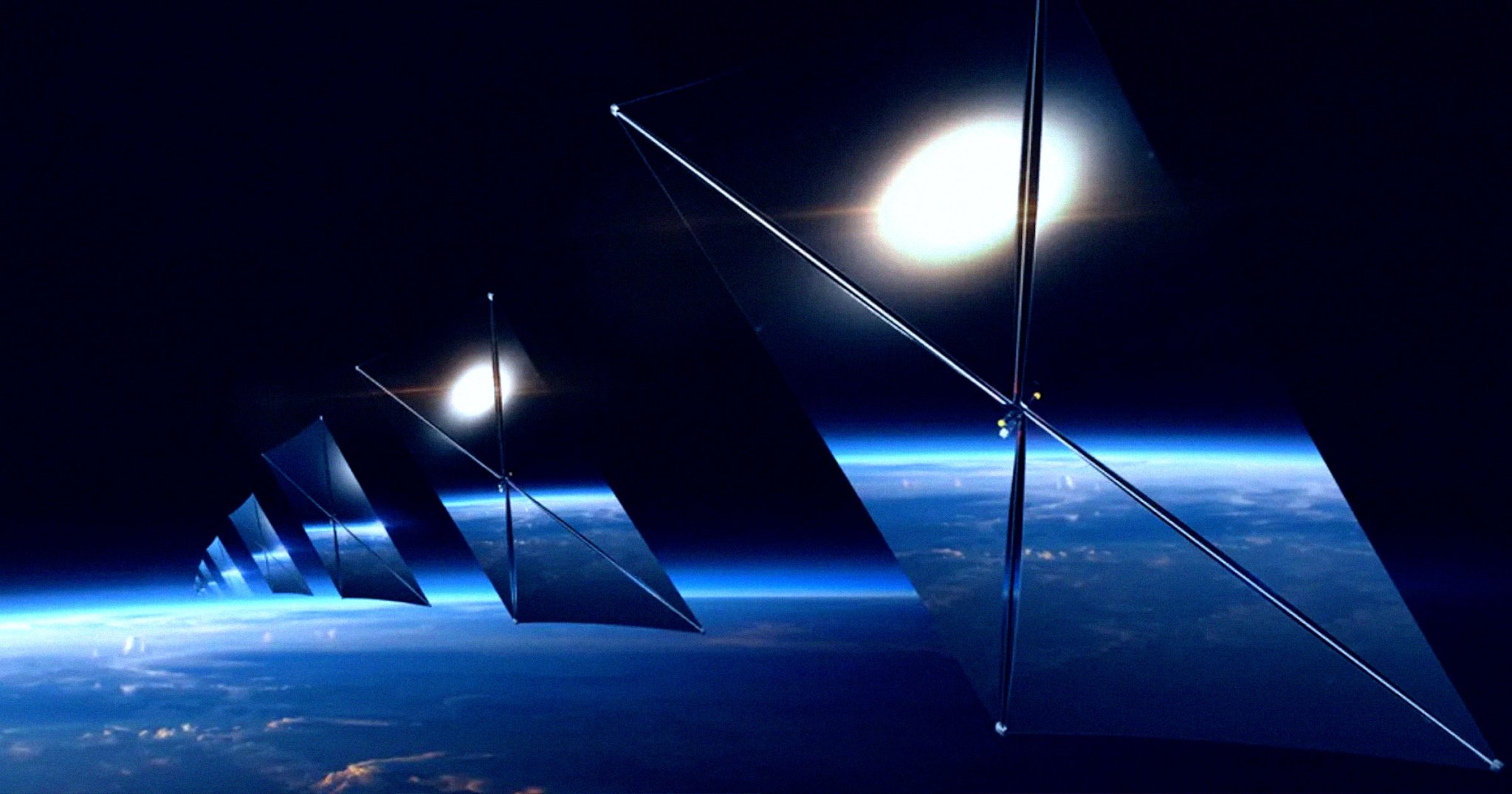
Last month, the Federal Communications Commission approved an experimental and controversial new satellite being developed by venture Reflect Orbital to reflect sunlight down onto the Earth to illuminate patches of it at night for paying customers.

The purported goal is to allow solar farms to continue generating electricity even after nightfall and provide illumination during emergencies. Those may sound like noble ideas on the surface, but the concept comes with major downsides as well.

One is that such bright satellites could easily wreck deep space observations. Astronomers were appalled at the news, with the FCC receiving nearly nearly 2,000 public comments criticizing the proposal, as Wired reported at the time.

And it’s not just professional astronomers that could be affected, as experts told The Verge. Amateur astronomers gazing up at the prototype mirror satellite, dubbed Eärendil-1 — continuing Silicon Valley’s obsession with borrowing names from JRR Tolkien’s “Lord of the Rings” — could easily be blinded. Even looking through a 12-inch telescope, a common type used by enthusiasts, could result in permanent eye damage.

It’s a considerable risk to human health that makes the FCC’s approval “extraordinary,” as Royal Astronomical Society deputy executive director Robert Massey told The Verge.

It’s a risk experts have known for decades now. Case in point, observing a similar proposed Russian prototype, dubbed Znamya, could cause damage equivalent to staring at the Sun around a total eclipse, according to a 2000 research article by the Royal Astronomical Society of Canada. (Russia launched two experimental Znamya space mirror satellites in the 1990s, but later abandoned the program.)

Critics of the FCC’s approval of Reflect Orbital’s plans pointed out the risk of eye damage to the regulator, which wound up being deemed irrelevant and too “small” of a factor compared to the “benefits of permitting American companies to test innovative technology in space.”

As The Verge points out, astronomers won’t even be warned of when and where the mirror satellite will be in the night sky, which could result in them gazing at it inadvertently.

Reflect Orbital spokesperson Christopher Buscombe told the publication that the company is in active talks with “scientists, astronomers, environmental researchers and other stakeholders” and that it will use its initial demonstration satellite to test out built-in safeguards.

The Air Line Pilots Association has also raised concerns over Reflect Orbital’s inadequate approach to air safety. The satellites could also disrupt sleep and the circadian rhythms migratory species.

“The proposed scale of orbital deployment would represent a significant alteration of the natural night-time light environment at a planetary scale,” the presidents of several international chronobiology assocaitions said in a joint statement quoted by The Guardian.

Buscombe told The Verge that the company would limit the amount of light being reflected and calibrate brightness to “levels humans and animals already tolerate.” But experts warn there are far too many variables that the company won’t be able to control for, from light scattering in the atmosphere to interactions with clouds.

Satellites in general are an increasingly controversial topic. The number of spacecraft in low Earth has exploded over the past decade, and many are being delivered at lower altitudes that make them appear even brighter.

“The stars above us are a valued part of human heritage – deploying more than one million exceptionally bright satellites would utterly destroy this and permanently scar the natural landscape,” Massey told The Verge.

More on the satellites: Astronomers Horrified by Enormous Mirror Satellite That Reflects Sunlight Back Down to Earth at Night

The post Scientists Warn That New Satellites Could Cause Eye Damage for People on the Ground appeared first on Futurism.

  •  

Scientist Reveals Plan to Save Earth From Destruction by the Sun

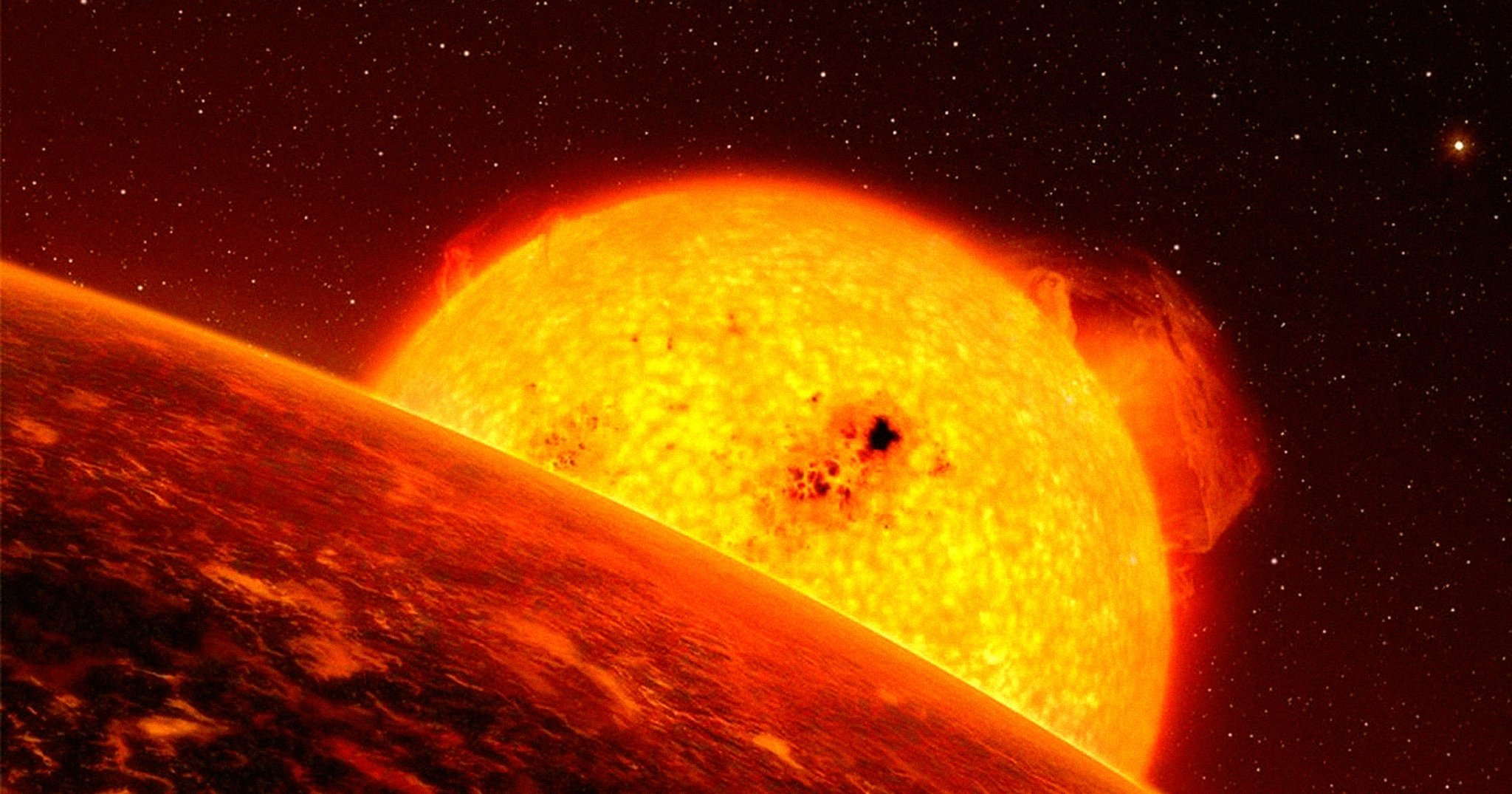
In something like five billion years from now, our Sun is expected to run out of hydrogen fuel, expanding into a red giant that will eventually either engulf the Earth or send it spiraling outwards, an all but guaranteed end of all life on our pale blue dot.

But there may be a way for humanity to survive past the Sun’s demise even without having to leave our planet, as independent researcher Gabriel Harry outlines in a paper accepted for publication in the Journal of the British Interplanetary Society.

It’s admittedly extremely far-fetched, but it’s a fun thought experiment that he argues could result in Earth staying habitable for another “9.1 million billion years.” Who could possibly argue against that?

In an accompanying piece for Phys.org, Harry lays out his daring plan. First, he proposes blocking out the Sun to keep the Earth from burning to a crisp by placing a “large sunshade at the Lagrange point 1, which is a “gravitational balancing spot between the Sun and Earth.”

“We’d need to cover a huge 70-degree area of the sky to ensure the red giant would be eclipsed,” he wrote. It would indeed be immense: it’d need to be roughly 434,000 miles in radius, tied to a carbon tether 1.2 million miles in length.

To provide the warming radiation that was now being blocked, Harry suggests sending fusion reactors some 4,000 miles deep into Jupiter’s atmosphere to produce energy, which would then have to be transmitted via laser back to the Earth.

And to move the Earth away from the self-destructing Sun, Harry thinks we could “redirect an asteroid to fly close to Earth’s surface a million times, with the gravitational slingshot effect gradually transferring energy to increase Earth’s orbital distance.”

Moving it that far away would stop the Earth’s tectonics and nutrient cycles, something Henry images could be solved by “sinking [4 pounds] of antimatter” into the Earth’s core per day.

Fast forwarding some four to five billion years, and any surviving humans would need to move the entire solar system out of the way of an incoming Andromeda galaxy, which is currently on a collision course with the Milky Way, Harry argues. To do so, he suggested firing a “beam of hydrogen just above or below the Sun’s north or south pole” to generate a “gravitational slingshot effect.”

In all, Harry’s galaxy-brain proposal would allow humans to stay alive without having to cover interstellar distances — something that would require a “million times” more energy — or terraforming a new planet. Because, after all, what’s better than staying right here, a comfortable place organic life has called home for around four billion years already?

“By building and maintaining the safeguards, for 9.1 million billion years, life on Earth would enjoy comfortable geology, security, seasons, days and starry nights — until, in a hundred trillion years, the last star fades out and the night sky turns dark,” Harry on Phys.org.

More on the Sun’s death: Earth Will One Day Die, But We Could Survive By Moving Here

The post Scientist Reveals Plan to Save Earth From Destruction by the Sun appeared first on Futurism.

  •  
  •  

NASA Rescue Mission Spirals Into Crisis

Last month, NASA announced that it was launching an unprecedented and risky mission to rescue its aging Swift observatory.

The telescope, which has spent over two decades in orbit studying the most powerful explosions in the universe, has seen its orbit decay over time. With the help of a specialized space tug developed by contractor Katalyst Space Technologies, the space agency was hoping to give Swift a much-needed push to a more stable orbit, prolonging its life.

But as it turns out, it’s not the observatory that ended up needing help. After launching its robotic spacecraft, dubbed LINK, on July 3, Katalyst Space watched in horror as it started tumbling out of control following a series of unfortunate events.

According to a new update, NASA admitted that the “spacecraft experienced issues with attitude control, causing the spacecraft to spin and resulting in sporadic communications.”

“Preliminary investigation shows that two of LINK’s three reaction wheels currently are not operable, and there is some loss of functionality in its cold gas thruster system,” the agency noted. Reaction wheels are motor-driven flywheels used by spacecraft for attitude control.

At least there’s a silver lining. LINK’s other subsystems are still functional, allowing the ground team to communicate with the spacecraft.

And not all is lost just yet. The Katalyst team is hoping to stop LINK from spinning before reevaluating how to go forward with the rescue mission, if at all.

But considering that a rapidly spinning spacecraft is the very last thing the Swift observatory needs in its vicinity, it’s clearly not the result the agency was hoping for.

And time is rapidly running out. Without a boost, the telescope is destined to burn up in the Earth’s atmosphere in the upcoming months.

While it has long outlived its originally intended lifetime at almost 22 years old, it’s currently the only orbital telescope that can detect gamma ray bursts, the most powerful explosions in the universe.

Fortunately, the space agency didn’t have to dig too deep into its own pockets. Its Katalyst contract was $30 million, which in the grand scheme of things is a drop in the bucket when considering the untold billions NASA is spending to return astronauts to the Moon.

Even before LINK launched and started spinning out of control, agency officials were content with NASA’s willingness to give it a shot.

“From a programmatics standpoint, I consider this a success already, just from the fact that we’re even going to try this,” NASA astrophysics director Shawn Domagal-Goldman told Ars Technica last month.

More on the mission: NASA Prepping to Launch Extremely Risky Rescue Mission

The post NASA Rescue Mission Spirals Into Crisis appeared first on Futurism.

  •  

Why is ChatGPT drinking bottles of fresh water to answer your questions, and who is actually paying for it?

Here’s the thing about the water going into ChatGPT. It’s real water. It’s fresh. It’s drinkable. And most of the time, it’s not coming from anywhere near the person typing the question.

You are not paying for that water. Neither is OpenAI. Neither is Google, Microsoft, Meta, or Amazon, at least not in any way that resembles what the water is actually worth to the communities losing it. Someone else is paying, and if you have never heard their names, that’s because they aren’t the sort of people the AI industry finds it useful to talk about.

The families in Montevideo

In the first half of 2023, Uruguay was living through its worst drought in more than seventy years. Reservoirs supplying the capital ran dry. According to a Project Syndicate analysis by researchers Friederike Rohde and Paz Peña, republished by the Heinrich Böll Stiftung in November 2025, the Uruguayan government’s response was to relax its drinking water standards and pump brackish water from the Río de la Plata estuary into the public supply.

For weeks, working-class families in Montevideo were boiling salty tap water and trying to make it drinkable for their children.

During those same weeks, the government granted Google permits to draw from the remaining fresh water reserves for a proposed data centre.

That is not a hypothetical. It is not a projection. It is what happened, in one specific city, in one specific year, to one specific set of families whose taps ran salt while a foreign tech company was licensed to take the fresh water they could not have.

The residents in Fayette County

Nothing about this pattern is limited to countries you might be tempted to describe as vulnerable. According to a Fortune investigation published in May 2026 by news editor Catherina Gioino, residents of an affluent subdivision in Fayette County, Georgia, spent most of 2024 noticing that their water pressure was tanking. Something was drawing enormous quantities of water from the same system that fed their homes.

The county utility eventually traced the problem to a 615-acre data centre campus called Project Excalibur, owned by a company that is itself owned by Blackstone. One of its water hookups had been installed without the utility even knowing it existed. Another was flowing unmetered and uncharged. By the time officials caught up, the developer had consumed 29 million gallons of local water without authorisation. The retroactive charge was roughly 147,000 dollars. No fine was imposed.

In Tucson, Arizona, where the city council had already voted unanimously to reject a proposed data centre because the region gets seven to ten inches of rain a year, a construction contractor obtained a permit for water inside the city’s service area, transported it outside city limits, and used approximately 650,000 gallons of it on the rejected project without authorisation. The city shut off the meter. Construction continued.

The women in Cerrillos

The most sustained resistance to any of this has come from a group of women in the working-class Cerrillos district of Santiago, Chile, who in 2019 formed a neighbourhood organisation called MOSACAT after learning that Google was planning to build a data centre in their community. The proposed facility was projected to consume 7.6 million litres of fresh water a day. That is roughly what their entire neighbourhood uses in a year.

MOSACAT read the environmental report themselves. They organised. They took the case to a Chilean court. And in September 2024, that court forced Google to redesign the cooling system and undergo a fresh environmental review.

They are still fighting.

Why is this happening?

The pieces that connect these stories, the reason the same arrangement keeps repeating from Montevideo to Fayette County to Santiago, the specific mechanism by which drought-stressed regions become attractive rather than off-limits to the world’s largest technology companies, and the actual scale of what is being taken, are the substance of the video attached to this piece.

It walks through where the water goes, how much of it never comes back, and the far larger number that almost nobody in the industry reports.

Click here to watch the short video.

The post Why is ChatGPT drinking bottles of fresh water to answer your questions, and who is actually paying for it? appeared first on Space Daily.

  •  

Incredible Video Shows Chinese Rocket Get Hit by Lightning Mid-Launch

A Chinese rocket was smitten by a bolt from the heavens right after it lifted off. And if this was a blessing or a curse from a higher power, we don’t know.

The spacecraft, a Long March-3B rocket, launched from the Xichang Satellite Launch Center in southwestern China on Thursday, according to Space.com. Its mission was to deliver a communications relay satellite to geostationary orbit, something the dependable workhorse routinely does.

It turned out to be more than just a regular launch. Awe-inspiring footage of the occasion (another angle here) shows cheers erupting from the crowd as the rocket heaves itself into the air. But they’re soon stunned by an even greater spectacle: thirty seconds into the flight, lightning crackles across the sky and strikes the rocket, eliciting cries of disbelief. All one man can say is “lightning, lightning!” repeatedly. An incredibly-timed photo even shows the bolt right at the moment that it struck the tip of the spacecraft.

If this was some sort of divine augury, it appeared to be benevolent. The China Aerospace Science and Technology Corporation announced that the rocket safely survived the trip into space and deployed the satellite, though it’s unclear if it sustained any minor damage that didn’t drastically affect the mission.

NASA’s Apollo 12 mission in 1969 was struck by lightning twice, damaging the Saturn V rocket that was carrying a crew of three astronauts, affecting some of the onboard instruments. It continued mostly without a hitch after that.

Not all were so lucky. In 1987, Space.com notes, an unmanned Atlas-Centaur 67 rocket was zapped by lightning just 48 seconds into its flight, causing one of its computers to go haywire. This drastically changed the rocket’s course, and it broke up midflight. Since then, NASA has adopted Lightning Launch Commit Criteria that places stricter rules on the weather conditions rockets are launched in.

Take heed, Chinese rocketeers. Maybe this is a sign.

More on spaceflight: China Is Catching Up With SpaceX Fast, Landing First Reusable Rocket Booster on Offshore Platform

The post Incredible Video Shows Chinese Rocket Get Hit by Lightning Mid-Launch appeared first on Futurism.

  •  

Código do iOS 27 faz referência a iPhone com mais de uma bateria

De acordo com a Macworld, a recém-liberada quarta versão beta do iOS 27 traz em seu código referências a um possível iPhone com múltiplas baterias — muito provavelmente o “iPhone Ultra”, cotado para ser o primeiro dobrável da Apple.

Essas menções tratam-se de mensagens relacionadas à saúde do componente e chamam a atenção justamente por estarem no plural, já que os smartphones da Maçã contam com apenas uma célula de bateria em suas entranhas.

Foram identificadas, ao todo, três mensagens, as quais muito provavelmente serão exibidas em momentos distintos da vida útil dessas baterias. A primeira (em tradução livre), por exemplo, deverá ser exibida quando as células ainda são relativamente novas:

As baterias deste iPhone estão apresentando o desempenho esperado.

Já a segunda provavelmente entrará em cena assim que o desgaste da bateria começar a afetar a performance do “iPhone Ultra”:

A saúde das baterias deste iPhone se degradou significativamente. Um Centro de Serviço Autorizado Apple pode substituir as baterias para restaurar o desempenho e a capacidade totais.

A terceira, por fim, alertará usuários sobre componentes fabricados por terceiros:

A saúde das baterias deste iPhone sofreu uma degradação significativa, e não foi possível verificar se uma delas é uma bateria original da Apple. Um Centro de Serviço Autorizado Apple pode substituir as baterias para restaurar o desempenho e a capacidade totais.

O iOS, é claro, já exibe mensagens parecidas no seção “Saúde da Bateria e Carregamento” do menu “Bateria”, presente no app Ajustes (Settings), de modo que a novidade aqui é mesmo a linguagem adaptada para um dispositivo com mais de uma bateria. Como o “iPhone Ultra” provavelmente será dividido em duas partes, é bem possível estejamos falando de um par de células.

No último dia 10/7, vale lembrar, o leaker conhecido como Digital Chat Station disse em uma rede social que o primeiro dobrável da Apple contará com uma bateria de 1.921mAh e outra de 2.962mAh, levando o total para 4.883mAh. Embora esteja alinhado com o vazamento de hoje, essa aposta vai ao encontro de outro rumor do início do ano, o qual diz que a bateria do “iPhone Ultra” contará com uma capacidade de pelo menos 5.500mAh.

  •  

SpaceX Stock Plunges to All-Time Low After Competitor Makes Major Leap

Shares of Elon Musk’s SpaceX took another beating when trading resumed on Monday, sliding to an all-time low of just under $139, well below its IPO opening price of $150.

It’s now over 38 percent down from its all-time high of $225 three weeks ago, illustrating how rapidly the hype has inverted into widespread skepticism over Musk’s vision.

Following a blockbuster Wall Street debut, the space company has struggled to maintain any degree of momentum as investors continue to ask some very hard questions, including over its major pivot to orbital data centers and its near-term profitability. Despite being valued at almost two trillion dollars, the company lost nearly $5 billion last year.

Shares have hovered below the company’s opening price for weeks now, despite plenty of bullishness among analysts.

The news comes just days after Chinese state-run media showed a Long March 10B rocket booster being caught by an offshore recovery platform, indicating the country was making major strides in catching up with SpaceX’s reusable rocket tech. Over the weekend, an experimental Japanese reusable rocket safely took off and landed, suggesting the nation may be right behind China as well.

Beyond some steepening international space launch competition, experts believe SpaceX’s transformation into an “AI play” may be closely related to its Wall Street woes, as the BBC reports.

“Everyone saw SpaceX as an AI story,” CFRA investment research analyst Keith Snyder told the broadcaster.

“With Elon Musk, any company he touches gets people excited,” he added. “But this was also the first time people felt like they were able to invest in something that was being marketed as an AI play.”

How SpaceX will cover its enormous losses and start actually making some money — not to mention, prove that orbital data centers don’t just make sense but are even feasible to begin with — remains a major point of contention.

In short, the initial enthusiasm surrounding SpaceX’s IPO is firmly behind us.

“If you bought around the first tick you’re definitely underwater,” Snyder told the BBC. “It started to look a lot like a meme stock.”

“If you’re an IPO investor, you’re ok,” Mergermarket analyst Samuel Kerr added. “If you bought in the first few days, you’re not very happy right now.”

Investors remain sharply divided on where SpaceX shares are headed next. Many analysts from major investment banks remain bullish, expecting the stock to make massive gains. Case in point, Morgan Stanley believes the company will reach a price tag of $300 — far more than double its current stock price.

Snyder has a far more muted outlook, expecting SpaceX to fall down to just $115 a share.

Meanwhile, Musk has said he thinks “SpaceX will be worth more than the rest of Earth if we accomplish our goals,” a characteristically ambitious and perhaps delusional argument that assumes a lot of things will go right for the company.

Whether investors will buy into this lofty vision remains to be seen. Given its recent stock performance, it’s far from a guarantee.

“If SpaceX can do all the things it says it will do, yes, investors are sitting on the most valuable company ever,” Kerr told the BBC. “But it’s got a lot of work to do to get there.”

More on SpaceX: Elon Musk Says His Goal Is for SpaceX to Be Worth More than the Entire Earth

The post SpaceX Stock Plunges to All-Time Low After Competitor Makes Major Leap appeared first on Futurism.

  •  

Wisdom of the Wise is Foolishness with God

The mystery of life's origin on Earth remains unsolved. With modern biochemistry tools scientists are no closer to synthesizing life from non-living chemicals despite advanced knowledge and technology, let alone understanding how it could have arisen abiogenetically. The rejection of the Creator has led to foolishness in the wise.

  •  

China Is Catching Up With SpaceX Fast, Landing First Reusable Rocket Booster on Offshore Platform

SpaceX has radically reduced the cost of reaching space thanks to its reusable rockets, a revolutionary capability that has greatly set it apart from its competitors.

But its dominance in the domain is seriously being challenged by China. Footage shared by the Chinese state-run CCTV shows a Long March 10B rocket booster being caught by an offshore recovery platform. Engineers can be heard cheering on the slowly descending rocket as it confidently sets down.

As Engadget reports, that makes China only the second country to have pulled off such a feat, following the United States — a “historic breakthrough” that could have major implications not just for SpaceX, but for the space industry as a whole.

The rocket was developed by the China Academy of Launch Vehicle Technology (CALT), a subsidiary of the state-owned Chinese space program contractor China Aerospace Science and Technology Corporation (CASC).

The rocket has a payload capacity of 16 tons to low-Earth orbit, not far off from SpaceX’s workhorse Falcon 9, which can carry 22 tons. However, unlike the Falcon 9, which lands autonomously with the help of four deployable landing legs, CALT’s recovery platform picks the descending rocket out of the air with “landing hooks.”

Previous attempts have resulted in descending rockets missing the launch pad. Chinese competitor LandSpace is trying an even more SpaceX-like approach using a leg system. In December, the company successfully sent its Zhuque-3 rocket into orbit, but it ended up blowing up in a fireball while trying to land.

CALT is envisioning it as a new platform to launch Starlink-like internet broadband satellites and other larger commercial satellites.

By reusing the first stage, the company is hoping to dramatically reduce launch costs, much like SpaceX.

The Elon Musk-led company first successfully landed a Falcon 9 rocket following orbital flight in December 2015. Jeff Bezos’ Blue Origin became the second company to have pulled off such a feat in November, with its New Glenn booster gently touching back down in November, just under a decade later.

While CALT’s latest feat is undoubtedly a major sign of progress, China has its work cut out to reach SpaceX’s unparalleled launch cadence. The rocket company came close to launching a rocket every other day in 2025, completing an astonishing 165 orbital flights — almost twice as many as China’s entire space program.

More on China’s space program: New Report Finds That China’s Space Program Is Rapidly Outstripping NASA

The post China Is Catching Up With SpaceX Fast, Landing First Reusable Rocket Booster on Offshore Platform appeared first on Futurism.

  •  

Scientists Test New Spacecraft Thruster That Uses No Fuel, Just Earth’s Magnetic Field, in Orbit

Satellites perform a delicate dance to maintain their orbit, by locking themselves to a speed just fast enough to counteract the downward pull of gravity.

To stop their orbit from decaying too much, satellites use small in-space thrusters, which broadly speaking, fall into two categories: chemical or electric. The former uses a combustible fuel source that gets accelerated through a nozzle, while the latter uses electrical energy to convert propellant into kinetic energy.

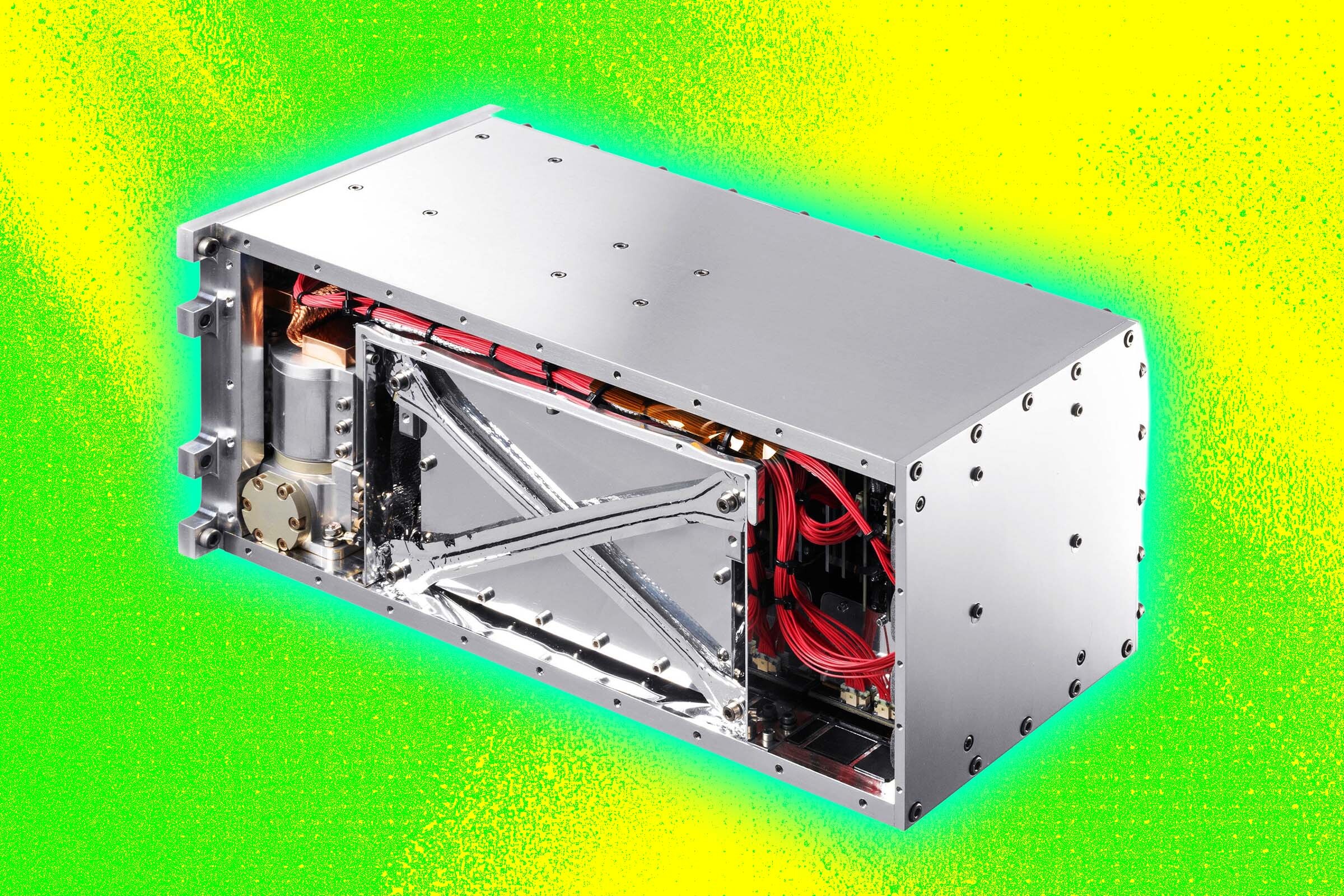
Now, New Zealand space startup Zenno Astronautics says it’s tested an entirely new type of thruster that, unlike either of those conventional technologies, uses superconducting magnets to maintain a satellite’s orbit and orientation. As Space.com reports, the magnets convert solar energy directly into momentum, effectively harnessing the Earth’s magnetic field itself.

“Energy is the one thing that is abundant in space, and you can use it to energize the magnet to create a magnetic acceleration device,” Zenno Astronautics CEO and founder Max Arshavsky told the site. “It gives you acceleration without fuel.”

The company’s “Supertorquer” system, attached to a Mira satellite developed by Impulse Space, was launched into space as part of a SpaceX rideshare mission in November.

“It’s a technology that allows a spacecraft to not tumble violently in space and point in the right direction,” Arshavsky told Space.com.

When the spacecraft needs to move, superconducting coils draw energy from a solar powered battery.

“The unit has multiple superconducting magnets that are positioned in different axes,” Arshavsky added. “When we power up the magnets, they generate a magnetic field, which interacts with Earth’s magnetic field, and because we can control the magnetic field on the satellite, we can control the way in which it turns with respect to Earth.”

During its test last fall, the Supertorquer successfully altered the Mira satellite’s orientation on command, just as designed.

For superconducting magnets to work, they have to be cooled to extremely low temperatures. On Earth, that requires cryogenic liquids, which are ill-suited for a satellite. Even in space, the satellite is warmed up to around 68 degrees Fahrenheit by the Sun’s rays, which meant that Zenno had to get creative.

Using a heat pump, the extensively insulated magnet system expels heat to allow the coils to power up at temperatures as low as 77 kelvin, or -321 degrees Fahrenheit. Zenno claims its cooling system is highly efficient, drawing only up to 48 watts at peak.

The startup has some ambitious plans and is hoping to scale up the system to enable future spacecraft to perform docking maneuvers or even help propel them to the Moon or Mars by exclusively relying on solar power. How feasible those lofty plans will turn out to be remains to be seen, but the startup is optimistic.

Arshavsky even suggested that superconducting magnets could create “umbrellas of magnetic fields” that could “shield people in space” from harmful levels of radiation.

More on satellite thrusters: NASA Fires Up Futuristic Plasma Thruster Designed to Take Us to Mars

The post Scientists Test New Spacecraft Thruster That Uses No Fuel, Just Earth’s Magnetic Field, in Orbit appeared first on Futurism.

  •  
❌