❌

Reading view

US boosts drone surveillance as flesh-eating screwworms spread in Texas

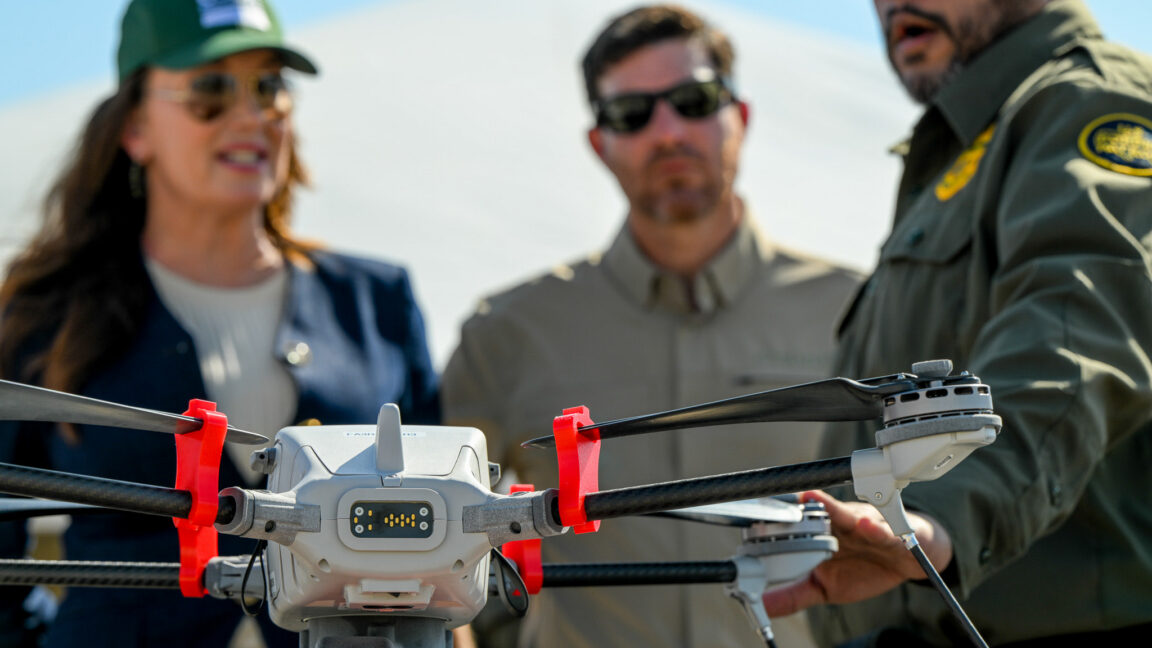
Hundreds of US government drones have switched from border surveillance to a different surveillance mission this summer—looking for signs of screwworm infestations in wild animals and livestock herds.

The flesh-eating New World Screwworm is the parasitic larva that emerges from eggs laid by flies in the open wounds or body openings of warm-blooded animals and humans, with untreated cases potentially leading to severe injury or death. Since the first screwworm cases were detected in South Texas in June, the US Department of Agriculture and US Customs and Border Protection have been conducting “one of the most extensive animal-health surveillance operations in the country,” the USDA said on August 10 in social media posts on platforms like X and Facebook.

The effort involves at least 200 drones owned by the Department of Homeland Security, which includes the Customs and Border Protection (CBP) agency. But the actual number in use "varies depending on availability and need," a USDA spokesperson told Ars.

Read full article

Comments

© US Department of Agriculture

  •  

The ornithological artist drawing 1,000 birds by hand – all for an app that wants you off your phone

The mission of the Flock app is quietly subversive: to encourage users to ditch their screens and explore the wonderful world of birding

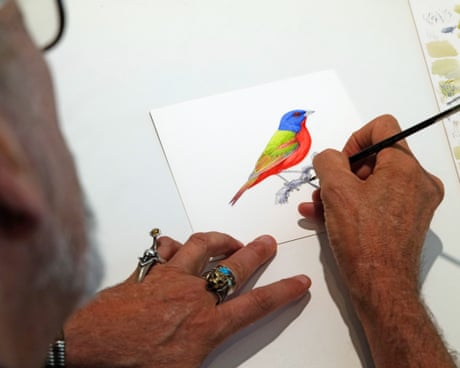
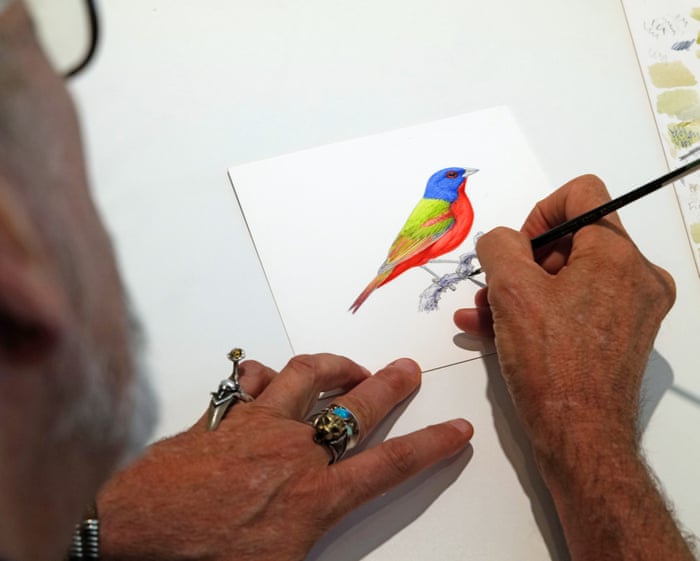
On a brilliantly bright afternoon in his gallery and studio in Bolinas, a small town on the northern California coast, Keith Hansen was putting the finishing touches on a watercolor of an almost improbably flamboyant painted bunting.

With an ultra-fine sable brush, he made a few intricate additions to the cobalt blue plumage on the bunting’s head, and, satisfied with his work, slipped the watercolor into a stout binder that every few days welcomes a new addition.

Continue reading...

© Photograph: Nick Czap

© Photograph: Nick Czap

© Photograph: Nick Czap

  •  

Wildfire near Sizewell nuclear plant causes ‘total devastation’ to Suffolk landscape

Emergency crews say situation remains ‘dynamic’ as more than 100 firefighters battle Dunwich Heath blaze

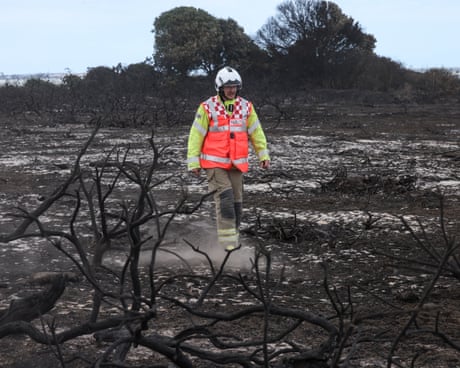
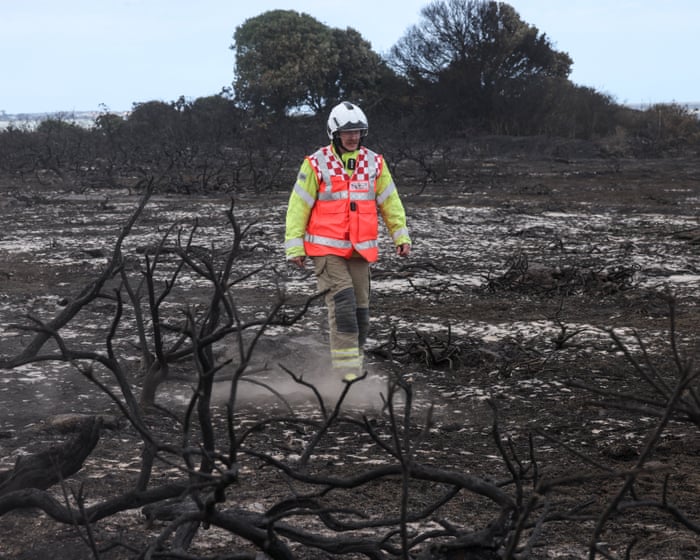
A wildfire near Britain’s biggest nuclear power station has caused “total devastation” to one of the UK’s most important landscapes, as fire crews said the situation remained “dynamic”.

More than 100 firefighters have been battling the blaze on Dunwich Heath, near Leiston, on the Suffolk coast since Wednesday evening. The fire service said on Friday afternoon the situation was stabilising but remained a “major incident” that was “dynamic and potentially changeable”.

Continue reading...

© Photograph: Humphrey Nemar/PA

© Photograph: Humphrey Nemar/PA

© Photograph: Humphrey Nemar/PA

  •  

The Amazon’s Mysterious “Ghost Dog” Has Been Hiding a Big Secret

Camera Trap Captures Rare Short Eared DogCamera traps are revealing that the Amazon’s “ghost dog” is less rare than feared but still depends on protected forests. For decades, the short-eared dog (Atelocynus microtis) has ranked among the least understood carnivores in Latin America, and perhaps among the least understood canids anywhere. Its secretive behavior, sharp hearing, and powerful sense of smell [...]
  •  

Inbreeding Hits Small Males in Threatened Songbird

Inbreeding depression, a genetic phenomenon where offspring result from the mating of related individuals, has long been understood to compromise individual fitness and elevate the risks of population decline or extinction. However, the depth and nuances of these effects remain largely unexplored in many non-model species, especially those facing dire conservation challenges. A groundbreaking new study investigates this complex relationship in a threatened songbird species, the aquatic warbler (Acrocephalus paludicola), unveiling how inbreeding depression manifests in a phenotype-dependent manner, particularly emphasizing body size as a critical factor in male fitness outcomes.

The aquatic warbler, a habitat specialist bird known for its recent precipitous population decline, poses a unique opportunity to study the genetic intricacies and their ecological consequences. Unlike widely studied model species, this bird’s depleted genetic diversity coupled with habitat specificity creates an ideal system to understand how inbreeding depression impacts survival and reproduction under real-world environmental pressures. Employing cutting-edge genomic tools such as single nucleotide polymorphisms (SNPs), researchers could quantify inbreeding at an unprecedented resolution, offering new insights into the genetic health and viability of this endangered population.

One of the pivotal breakthroughs of this research lies in demonstrating that inbreeding depression is not a uniform or straightforward process but is intricately moderated by the physical and ecological context of the individual. For male aquatic warblers, the genomic markers revealed a pronounced negative effect of inbreeding on breeding success—but only among males characterized by smaller body size, denoted by tarsus length, an established morphological proxy. This finding highlights how phenotypic traits can mediate the severity of inbreeding effects, suggesting that smaller-bodied males experience disproportionately harsh fitness reductions as a consequence of their genetic relatedness.

Equally compelling is the study’s exploration of wing length as another morphological trait potentially influencing inbreeding depression. While the results here were more subtle, a notable weak interaction was found between the degree of inbreeding and shorter wing length in males, correlating with decreased survival probabilities. This interaction suggests that even relatively minor morphological differences may buffer or exacerbate the impacts of genetic relatedness on survival outcomes, adding another layer of complexity to how we understand inbreeding depression in natural populations.

Importantly, the research also reveals a stark contrast between sexes. Female aquatic warblers showed scant evidence of inbreeding depression affecting key fitness components such as clutch size, hatching success, nestling survival, or the number of fledged fledglings. Moreover, no interactions emerged between female fitness measures and phenotypic or environmental variables examined. This asymmetry in inbreeding effects underscores sex-specific pathways in evolutionary and ecological responses to genetic challenges, warranting further inquiry into the mechanistic underpinnings driving such differences.

Prior studies investigating inbreeding depression often relied on relatively simplistic models that did not incorporate potential interactions with individual phenotype or environmental heterogeneity. This omission might explain why many previous estimates of inbreeding load—reflecting the cumulative fitness consequences of deleterious recessive alleles—have been inconsistent or highly uncertain. By integrating detailed phenotypic data with high-resolution genomic analyses, this study advances the field by showing that accounting for individual variation unveils clearer, biologically meaningful patterns of inbreeding depression.

The implications for conservation biology are profound. Small-bodied males, disproportionately burdened by inbreeding loads, might represent a critical demographic subgroup whose reproductive success most strongly influences population trajectories. This insight challenges conventional approaches that treat all individuals as homogenous units within populations, advocating instead for conservation strategies that are finely tuned to the nuanced genetic and phenotypic architectures of endangered species.

The environmental factors considered—timing of breeding and brood size—proved less influential in mediating inbreeding depression compared to phenotypic variables, at least in this particular system. While breeding timing and brood size have been previously hypothesized to influence fitness by affecting resource allocation or offspring survival probabilities, their interaction with genomic inbreeding proved minimal. This result refines our understanding of the complex ecological determinants of fitness and suggests that underlying genetic and phenotypic factors can overshadow the modifying effects of certain environmental variables.

Methodologically, the use of SNP-based genomic inbreeding coefficients represents a significant step forward from traditional pedigree-based measures. Genetic markers enable more precise estimates of genome-wide relatedness and inbreeding, which is especially crucial for populations like the aquatic warbler, where pedigree data are incomplete or unavailable due to logistical challenges in tracking individuals across generations. This technological advance paves the way for more accurate assessments of inbreeding consequences in conservation genetics.

Another noteworthy contribution is the nuanced interpretation of inbreeding load estimates. The study found that models omitting phenotypic interactions yielded highly uncertain inbreeding load figures for both survival and breeding success in males, whereas incorporating body size interactions produced more robust and meaningful estimates. This methodological insight calls for revisiting traditional models that treat inbreeding load as a fixed entity, promoting dynamic frameworks that integrate individual heterogeneity.

The study also contributes to evolutionary theory by demonstrating how inbreeding depression may exert selective pressure that maintains or increases body size in male aquatic warblers. Since smaller males suffer more pronounced fitness detriments due to inbreeding, natural selection may favor larger males, which effectively buffer against the genetic disadvantages. This dynamic adds a rich dimension to sexual selection and life-history evolution, where morphology and genetic fitness interplay to shape population structure.

In broader ecological contexts, understanding conditional inbreeding depression helps elucidate population resilience amid environmental change. As habitats degrade or fragment, and populations become increasingly isolated, the compounding effects of genetic bottlenecks and reduced phenotypic diversity could spell catastrophic declines if certain phenotypic groups disproportionately suffer. This research underscores the urgent need to consider phenotype-genotype-environment interactions in any assessment of vulnerable species.

Moreover, the findings raise compelling questions about the management of breeding programs aiming to mitigate inbreeding effects. Conservation initiatives often emphasize genetic diversity restoration in general terms, yet this study advocates for precision strategies that recognize differential vulnerabilities among phenotypic classes. For the aquatic warbler and similar threatened species, such targeted approaches could optimize reproductive success and survival rates, substantially enhancing recovery prospects.

Overall, this study reshapes scientific paradigms surrounding inbreeding depression by foregrounding the conditionality of its effects. It insists that blanket statements about the genetic risks of inbreeding are oversimplifications. Instead, fitness consequences emerge as a complex tapestry woven from genomic architecture, individual morphology, and ecological context, challenging researchers and conservationists alike to embrace multidimensional models.

Future research inspired by these findings will likely delve deeper into the mechanistic bases for the observed interactions, exploring, for instance, how developmental pathways link body size and genetic load expressions. Additionally, cross-species comparisons incorporating habitat specialists versus generalists may reveal whether this pattern of phenotype-dependent inbreeding depression is widely applicable or highly species-specific.

In conclusion, this landmark study presents a compelling case that it is indeed “hard to be small” for male aquatic warblers facing the genetic drawbacks of inbreeding. Such a phenotype-dependent dimension to inbreeding depression not only enhances scientific understanding but also provides invaluable practical guidance for conserving one of Europe’s most threatened songbirds. As the world grapples with biodiversity loss and climate challenges, integrating genomic, phenotypic, and ecological data remains paramount in crafting effective conservation blueprints.


Subject of Research: Inbreeding depression and its phenotypic and environmental conditionality in a threatened songbird species, the aquatic warbler (Acrocephalus paludicola).

Article Title: It is hard to be small: Inbreeding depression on male breeding success depends on body size in a threatened songbird.

Article References:
Kubacka, J., Arantes, L.S., Herdegen-Radwan, M. et al. It is hard to be small: Inbreeding depression on male breeding success depends on body size in a threatened songbird. Heredity (2026). https://doi.org/10.1038/s41437-026-00859-0

Image Credits: AI Generated

DOI: 21 June 2026

  •  

A Fatal Deer Disease May Be Spreading in Ways No One Expected

White Tailed Deer (Odocoileus virginianus) Buck AntlersScientists found that chronic wasting disease may spread silently between species, revealing a hidden challenge in the fight against the fatal wildlife disease. Chronic wasting disease (CWD) is best known as a disease affecting deer, elk, and other cervid (hooved, plant-eating) animals. Now, researchers at the University of Calgary and their international collaborators have taken [...]
  •  

‘Mega-consumers’ of food and energy cost environment $5.7tn a year, study finds

Top 10% generate climate and biodiversity damage bill that exceeds economies of most countries, say researchers

The environmental damage bill racked up by the highest-consuming 10% of the world’s population has reached up to $5.7tn a year – larger than the economy of every country except the US and China, a study has found.

Mega-consumers in this group are concentrated in the global north, accounting for more than half the population of the US and 40-45% of people in the EU.

Continue reading...

© Photograph: Francis R Malasig/EPA

© Photograph: Francis R Malasig/EPA

© Photograph: Francis R Malasig/EPA

  •  

New Bumblebee Goby Species Discovered on Hengqin Island Named in Honor of Jennie Ruby Jane

A groundbreaking discovery has emerged from the subtropical mangrove wetlands of Hengqin Island, Guangdong Province, where a team of researchers from Sun Yat-sen University, in collaboration with other institutions, has identified a new species of bumblebee goby, Brachygobius jennie. This finding not only extends the known geographical distribution of the genus Brachygobius northeastward but also documents the first recorded presence of this group of small, estuarine fishes in China. The discovery was published in the prestigious journal Zoosystematics and Evolution, shedding light on a species that challenges conventional understanding of biodiversity in well-studied regions.

During routine fieldwork in the Zhujiang River Estuary wetlands, Jiangyan Tian, a postgraduate student at SYSU, was captivated by the presence of diminutive fishes inhabiting shallow waters near the substrate. Initially mistaken for juveniles of known species, these tiny organisms intrigued Tian due to their distinctive body markings, which deviated from any documented regional fish species. This unexpected observation prompted a deep dive into integrative taxonomic methods that combined morphological examination with genetic analyses, facilitated by her supervisor Jianrong Huang and colleagues Chunliu Lan and Jianyong Wu.

The integration of genetic sequencing and morphological diagnostics was pivotal in delineating Brachygobius jennie as a novel species. The comprehensive study leveraged molecular phylogenetics to affirm the genetic distinctiveness of the new goby relative to its congeners. Morphologically, B. jennie displays a unique pattern of four narrow body bars located behind the head, a trait not observed in related species. Notably, the presence of a chevron-shaped second bar that extends fully to the midventral line provides a striking visual marker distinguishing this species, alongside two additional bars positioned posterior to the anal fin base.

This species’ extraordinary small stature sets it apart within its genus and the broader ichthyofauna of China. Reaching a maximum standard length of under nine millimeters, Brachygobius jennie may be the smallest fish species known in China, and among the tiniest vertebrates worldwide. Such extreme miniaturization necessitates profound anatomical and physiological adaptations, which remain fertile ground for future biological investigation. These evolutionary modifications induced by size constraints offer critical insight into developmental biology and ecological specialization within aquatic vertebrates.

Co-author Sébastien Lavoué from Universiti Sains Malaysia expressed enthusiasm for the collaboration, highlighting the novelty and distinctiveness of Brachygobius jennie. His involvement underscores the international scientific interest in this diminutive and unique goby, bridging expertise across countries and disciplines. The interdisciplinary approach adopted by the research team exemplifies modern taxonomy’s reliance on cross-border cooperation and advanced methodologies, crucial for uncovering concealed biodiversity even in well-explored ecosystems.

The nomenclature of this newly described species holds particular cultural significance. The fish is named in honor of Jennie Ruby Jane, a prominent South Korean singer, whose music served as a beacon of inspiration for Jiangyan Tian during the demanding phases of the research. This homage illustrates the interplay between science and personal experience, enriching the narrative of scientific discovery by acknowledging influences beyond the laboratory or field site.

Brachygobius jennie inhabits estuarine environments characterized by subtropical mangrove wetlands, a habitat typified by dynamic salinity gradients, rich organic substrates, and ecological complexity. These environments are increasingly under anthropogenic threat from urbanization, pollution, and climate change, putting endemic and specialized species at risk. The identification of B. jennie brings attention to the biodiversity value of estuarine ecosystems in Asia, which remain insufficiently described and often overlooked in conservation planning, despite their ecological significance.

The discovery also contributes fundamentally to ichthyology by exemplifying how miniaturized vertebrates negotiate constraints imposed by limited body size. These fishes exhibit adaptations in skeletal morphology, sensory systems, and reproductive strategies that infer evolutionary trade-offs and developmental constraints relevant to vertebrate biology at large. As such, Brachygobius jennie represents a valuable model organism for future studies aiming to unravel these complex biological phenomena.

This finding challenges the assumption that the fish fauna of the Zhujiang River Estuary is exhaustively cataloged. Instead, it reveals that even in relatively well-studied geographic regions, cryptic biodiversity continues to exist, underscoring the infinite complexity and richness of aquatic life. It advocates for continuous exploration and integrative taxonomic research employing advanced tools like molecular genetics to unmask hidden species diversity.

Moreover, the use of integrated genetic and morphological approaches exemplifies modern taxonomic standards, enhancing the accuracy and robustness of species identification. This comprehensive methodology is essential for avoiding taxonomic ambiguities and misidentifications, which can have far-reaching implications for biodiversity assessment, ecological research, and conservation strategies focused on protecting vulnerable taxa and their habitats.

Brachygobius jennie’s diminutiveness invites biologists to probe evolutionary scenarios of size reduction among fishes, including mechanisms such as heterochrony, paedomorphosis, and resource-driven selective pressures. Examining how these tiny organisms maintain viability and reproductive success could uncover key insights into vertebrate life history evolution, with potential applications extending beyond ichthyology into broader evolutionary and developmental biology fields.

In conclusion, the discovery of Brachygobius jennie advances the scientific community’s understanding of fish diversity, biogeography, and evolutionary biology. It also emphasizes the enduring value of meticulous fieldwork, integrative taxonomy, and interdisciplinary collaboration for uncovering the hidden facets of biodiversity. As environmental threats loom over estuarine ecosystems globally, such findings highlight the urgency of documenting and conserving even the smallest and least conspicuous of species, which may hold profound biological and ecological importance.


Subject of Research: Animals

Article Title: Brachygobius jennie, a new bumblebee goby (Teleostei, Oxudercidae) from Hengqin Island, Guangdong Province, China

News Publication Date: 17-Jun-2026

Web References:
http://dx.doi.org/10.3897/zse.102.184142

Image Credits: Jiangyan Tian et al. (2026)

Keywords: Brachygobius jennie, Bumblebee goby, New species, Extreme miniaturization, Estuarine fish, Molecular phylogenetics, Morphology, Guangdong Province, Hengqin Island, Ichthyology, Biodiversity, Mangrove wetlands

  •  

Scientists Discover a Hidden Disease Crisis Spreading Through Wild Snakes

Rattlesnake With ParasiteA hidden wave of fungal disease and lung parasites is putting wild rattlesnakes and other native snakes at risk. Snake populations around the world are under increasing pressure from habitat loss, disease, and other environmental challenges. Among the diseases drawing the most concern is ophidiomycosis, commonly known as snake fungal disease, which is caused by [...]
  •  

The World Praised This Wolverine Program. Then Everything Changed

Wild Wolverine Close UpSweden’s celebrated wolverine recovery program is losing momentum, raising concerns about the future of one of the world’s most famous conservation success stories. A conservation program once praised as a global model for helping people and wildlife coexist may be losing its effectiveness because of decades of inadequate government support, according to new research. In [...]
  •  

Offshore wind power cables can affect sensory system of sharks and rays: studies

As offshore wind farms expand rapidly in the global renewable energy transition, scientists are studying how these large marine infrastructure projects affect ecosystems beneath the waves. Research from Wageningen University & Research in the Netherlands suggests that offshore wind may bring both risks and benefits for sharks and rays, known collectively as Elasmobranchii, which are highly sensitive to electromagnetic fields (EMFs). A six-year project called “Elasmopower” examined how EMFs from subsea power cables in offshore wind farms affect bottom-dwelling sharks and rays. These species depend on natural electric and magnetic fields for key behaviors such as navigation, prey detection, habitat use and long-distance movement, particularly in low-visibility environments. The studies conducted as part of the Elasmopower project have been published in four papers, with three additional papers currently undergoing peer review. Sharks and rays have specialized electroreceptors called ampullae of Lorenzini. The jelly-filled sensory canals around the head and snout can detect even extremely weak EMFs from prey and predators, water movement, and the Earth’s geomagnetic field, Erwin Winter, a scientist at Wageningen, told Mongabay. This system is central to hunting and orientation, making Elasmobranchii especially relevant for studying EMF exposure from offshore energy infrastructure, Winter added. Erwin Winter, a researcher with the Elasmopower project, presented findings on offshore wind, electromagnetic fields and bottom-dwelling sharks and rays at the Sharks International 2026 conference in Colombo, Sri Lanka, in May. Image by Malaka Rodrigo for Mongabay. During a presentation on a summary of the Elasmopower research at the Sharks International 2026…This article was originally published on Mongabay

  •  
❌