On-device AI takes center stage as the panel explores MacPaw’s work with Liquid AI, personal assistants, and workplace restrictions. The conversation also discusses the panel's experiences with AI note-taking recording consent and privacy in both business and health care.
Joby Aviation announced it was acquiring Dayton, Ohio-based defense firm Resonant Sciences in a $500 million deal, in a bid by the electric aircraft company to expand further into the military industrial complex.
Joby says it expects to finance the deal with $450 million in cash and $50 million in equity. After the deal closes, which is expected in early 2027, Resonant will continue its existing work as Joby's dedicated defense division, the company said. The commercial division will remain focused on air taxis, the first of which are expected to launch later this year.
The deal is the latest example of the fledgling electric aviation in …
An anonymous reader shares a report from The Conversation, written by Hatim Sharif, a civil and environmental engineer who has "spent more than two decades staring at maps" and spatial data. Sharif finds one connection especially fascinating: the link between spatial reasoning and why taxi drivers seem to have lower rates of Alzheimer's. From the report: Taxi and ambulance drivers are less likely than workers in almost any other job to die of Alzheimer's disease. That was the surprising result of a 2024 study examining the death certificates of nearly 9 million people in the U.S. [...] Of the 9 million death certificates from January 2020 to December 2022 that researchers examined, taxi and ambulance drivers had the lowest risk of dying from Alzheimer's disease out of 443 occupations. After adjusting for age, sex, race, ethnicity and education, roughly 1 in 100 taxi and ambulance drivers died of Alzheimer's, compared with 1 in 60 people overall. This pattern did not extend to other driving jobs.
The researchers concluded that the key to reducing the risk of Alzheimer's was not driving itself but continuous real-time navigation: the constant work of locating yourself in space, tracking a destination and updating a mental map as conditions change. Drivers whose jobs relied on fixed or predetermined routes, like bus drivers and aircraft pilots, didn't seem to experience a similar advantage. Researchers believe the association between navigation-heavy work and lower Alzheimer's risk centers on the hippocampus, a part of the brain that governs memory and spatial navigation. It's one of the first brain regions that Alzheimer's damages: Problems with spatial navigation and orientation are among the earliest signs of the disease, sometimes surfacing before obvious memory loss.
In one landmark 2000 study, neuroscientists compared the brains of licensed London taxi drivers with those of people who did not drive cabs. Their findings provided the first evidence via structural imaging that regions of the adult brain can measurably change under sustained navigational demand. To earn a license, London cabbies must memorize more than 25,000 streets within a 6-mile radius of Charing Cross, a challenge known as "The Knowledge" that takes three to four years.
The researchers found that London taxi drivers had measurably more gray matter in the posterior hippocampus, a brain area tied to storing large-scale spatial maps. That volume tracked with experience: The longer someone had driven, the larger that part of the brain. The change was built through practice, not inherited. While people who are good at navigation might gravitate to this kind of job, the job itself does have an impact on the brain. Together, these two studies make a coherent case: Work that intensively exercises the hippocampus may reshape it, and that reshaping may protect against one of the most feared diseases of aging.
Head Coach Kyle Shanahan of the San Francisco 49ers | Image: Michael Zagaris / San Francisco 49ers / Getty Images
Four weeks ago, San Francisco 49ers coach Kyle Shanahan was involved in an accident near downtown Palo Alto. At the time Shanahan said only that the accident was his fault. But during a recent press conference he shared more details about the incident, including the fact that he had his Tesla's Autopilot engaged at the time. Shanahan was not passing the buck, however, saying it was his fault regardless of whether or not Autopilot was engaged.
"I've had Autopilot for nine years, so I'm pretty comfortable with it and, you know, who knows what happened when I turned around? Whether it malfunctioned or whether I knocked it off? That's somethi …
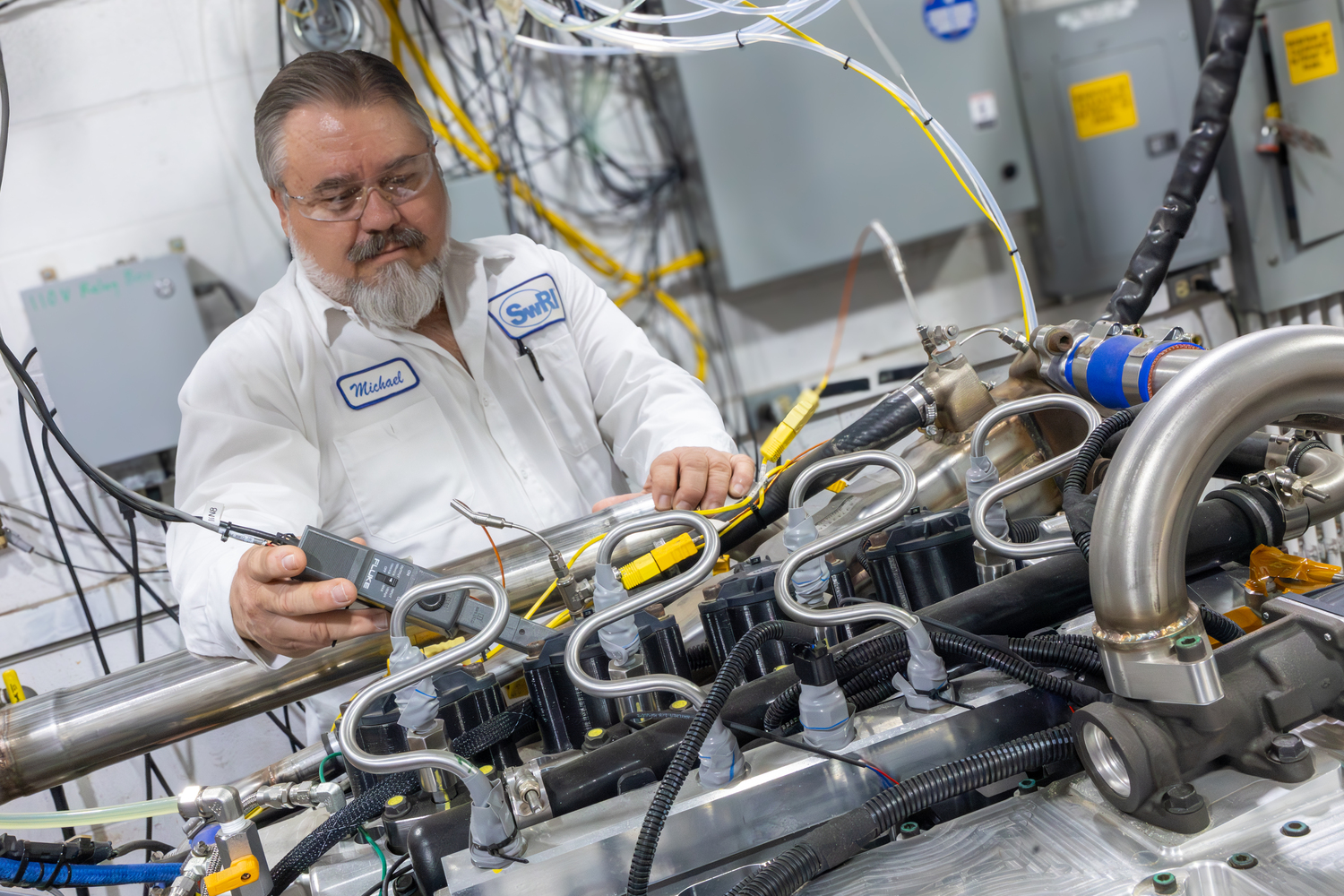
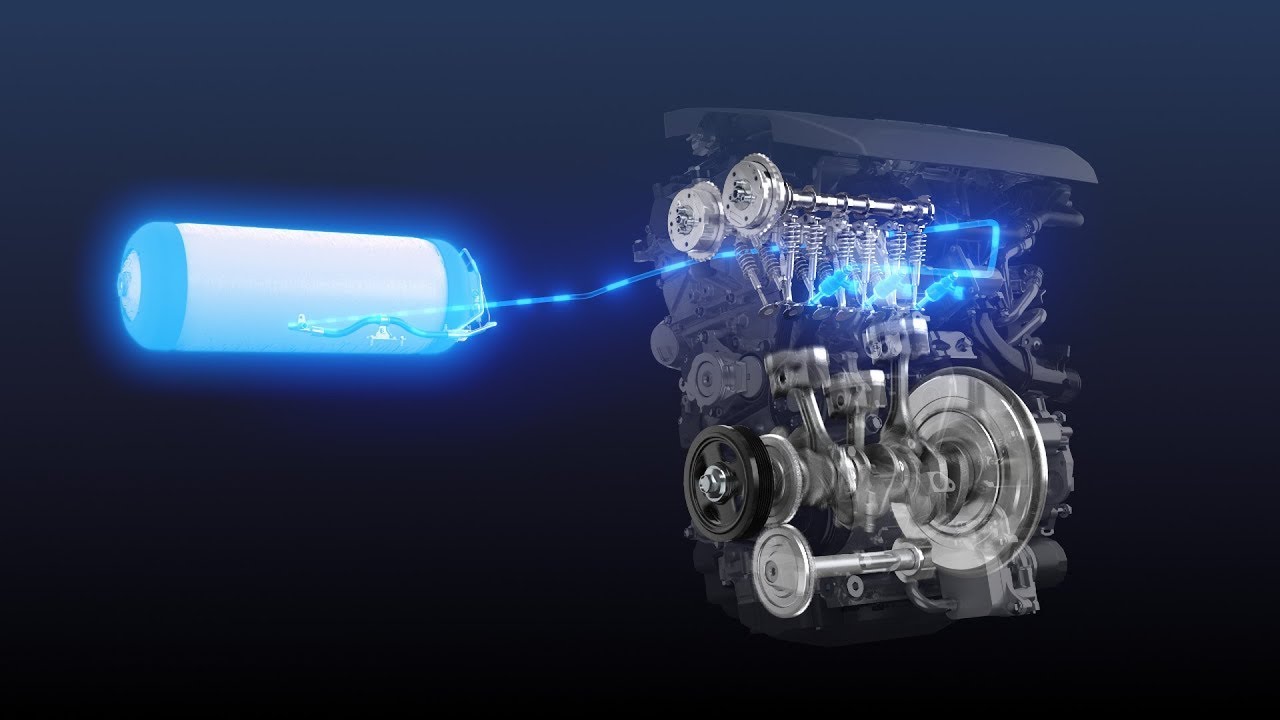
Researchers from the Southwest Research Institute (SwRI) have successfully developed an optimized spark-ignited hydrogen engine suitable for medium-duty commercial vehicles. As a form of internal combustion engine (ICE), the new engine behaves much more like a diesel engine than earlier hydrogen engines.
In other words, it is not a new kind of fuel-cell engine, but rather burns hydrogen inside cylinders using spark ignition. Just like a petrol engine, the new ICE produces mechanical propulsion using pistons.
“In addition to decades of developing medium- and heavy-duty engines, SwRI has some of the most extensive experience in the world developing and testing H2-ICEs for internal research, clients and industry demonstrations,” said Dr. Qilong Lu, a program manager in SwRI’s Powertrain Systems Engineering Department and one of the leads on this project.
“The engine was designed, constructed and rigorously tested at SwRI to ensure efficiency and performance,” Dr. Lu added.
Diesel-like torque hydrogen engine
“We began at the single-cylinder level, focusing on optimizing combustion and injection strategies,” Lu said. “From there, our team ramped up efforts to develop the full multi-cylinder engine, addressing key challenges such as pre-ignition, combustion stability and overall systems integration,” Lu added.
The attraction is that hydrogen contains no carbon, so burning it produces water rather than carbon dioxide. It also allows manufacturers to retain much of the familiar internal-combustion ecosystem: engines, transmissions, manufacturing equipment, servicing knowledge and supply chains.
The team also managed to deliver the new hydrogen ICE’s diesel-like torque using a turbocharger that forces more air into the engine. This allows it to burn more hydrogen and produce the strong low-speed torque needed to move loaded trucks.
The new engine also has improved airflow thanks to an innovative intake-port geometry allowing hydrogen to burn much faster than petrol and requiring different air movement inside the cylinder.
The engine also features larger intake valves and hydrogen-specific injectors to enable optimum fuel-to-air mixing within the cylinders. It also uses special software and calibrations to precisely manage injection, ignition, boost pressure and the air–fuel mixture.
Another wrinkle they had to overcome is safety. Hot engine surfaces or residual gases can ignite hydrogen before the spark fires, producing knocking, power loss or potentially engine damage.
Low-emissions but not zero
In terms of emissions, the engine produces what the team describes as “near-zero tailpipe CO₂.” While this is true in terms of the engine itself, the way in which the fuel hydrogen is produced matters here.
If produced from natural gas, rather than renewable electricity, CO₂ could remain high, all things considered. Also, hydrogen combustion can still produce nitrogen oxides, or NOx, because combustion heats nitrogen and oxygen from the air to very high temperatures.
It therefore isn’t literally a zero-emission engine and may require careful combustion control and exhaust after-treatment.
“The project brought together many areas and experts at the Institute to complete,” said Chris Bitsis, assistant director of SwRI’s Powertrain Systems Engineering Department, who oversees combustion research programs. “SwRI’s hydrogen combustion engine program is working every day to advance this technology and showcase its potential as a near-zero carbon emissions industry solution,” he added.
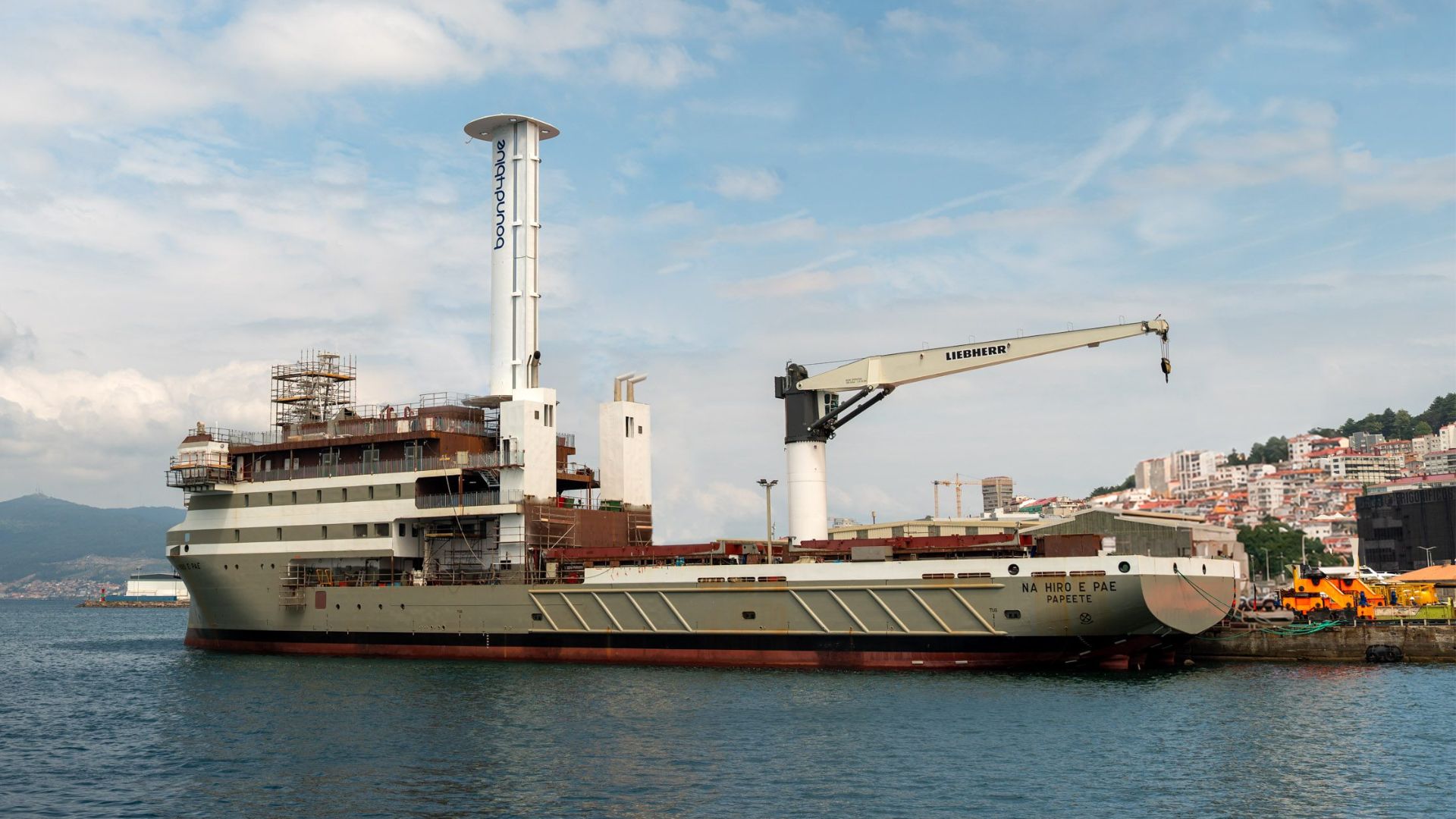
Wind propulsion company bound4blue has completed the installation of a 22-metre (72-foot) tall suction sail on the 292-foot (89-metre) cargo ship Na Hiro E Pae. This makes it the “first multipurpose vessel” worldwide to adopt a wind propulsion system. The unit was fitted at the Astilleros Armon Vigo yard in Spain for Greek shipping firm Société de Navigation des Australes SNA Tuha’a Pae.
“We hope Na Hiro E Pae leads the way for other ambitious shipping companies keen to unlock sustainable advantages,” said José Miguel Bermúdez.
Capable of carrying 200 passengers and 1,500 tonnes of supplies between Tahiti and the Austral Islands, the ship is expected to cut its energy consumption by 10 percent using the autonomous system alongside existing service from the Tuhaa Pae IV, which has operated on the route since 2012.
Delivering significant fuel savings
The installed technology, known as the eSail, yields sevenfold the thrust generated by an equally sized conventional rigid sail. This high efficiency allows a relatively small unit to deliver significant fuel savings without interfering with the fast loading and unloading operations required on multipurpose ships.
“bound4blue’s mechanically simple suction sail, producing up to seven times the propulsive force of a standard rigid sail of the same size, slots into a ‘green technology mix’ that includes engines capable of running on biofuel or e-fuel, electric POD propulsion, efficient waste management, and autonomy in fresh water supply,” highlighted the company in a press release.
The system functions by pulling airflow across a wide aerodynamic contour to assist the main engines. An autonomous vertical sail uses suction technology to draw air over this shape, creating propulsive thrust that decreases the mechanical burden on the vessel’s primary engines.
By pulling the air over its surface, the system prevents airflow separation that normally limits conventional sails. This aerodynamic effect allows the unit to generate far higher propulsive force relative to its physical surface area, directly lowering fuel usage and engine emissions.
“Multipurpose vessels have traditionally been seen as a challenging segment for wind power, due to the required flexibility of operations and related integration demands,” added Bermúdez.
Utilizing other green technologies
The compact nature of the eSail provides high force efficiency, allowing the vessel to maintain open deck space for cargo handling while utilizing wind energy.
The Na Hiro E Pae combines the suction sail with several other onboard green technologies. The ship features engines configured to burn biofuel or e-fuel as soon as local regional markets can supply them.
It also incorporates electric POD propulsion, efficient waste management systems, and autonomous fresh water supply capabilities to support its passenger and freight services.
“Sustainability was a key objective throughout the design process, and the eSAIL forms an important part of a wider package of technologies that will help us reduce energy consumption and environmental impact, while maintaining the reliable transport services our communities depend upon,” concluded Boris PIEL technical Director, SNA Tuha’a Pae Shipping Company.
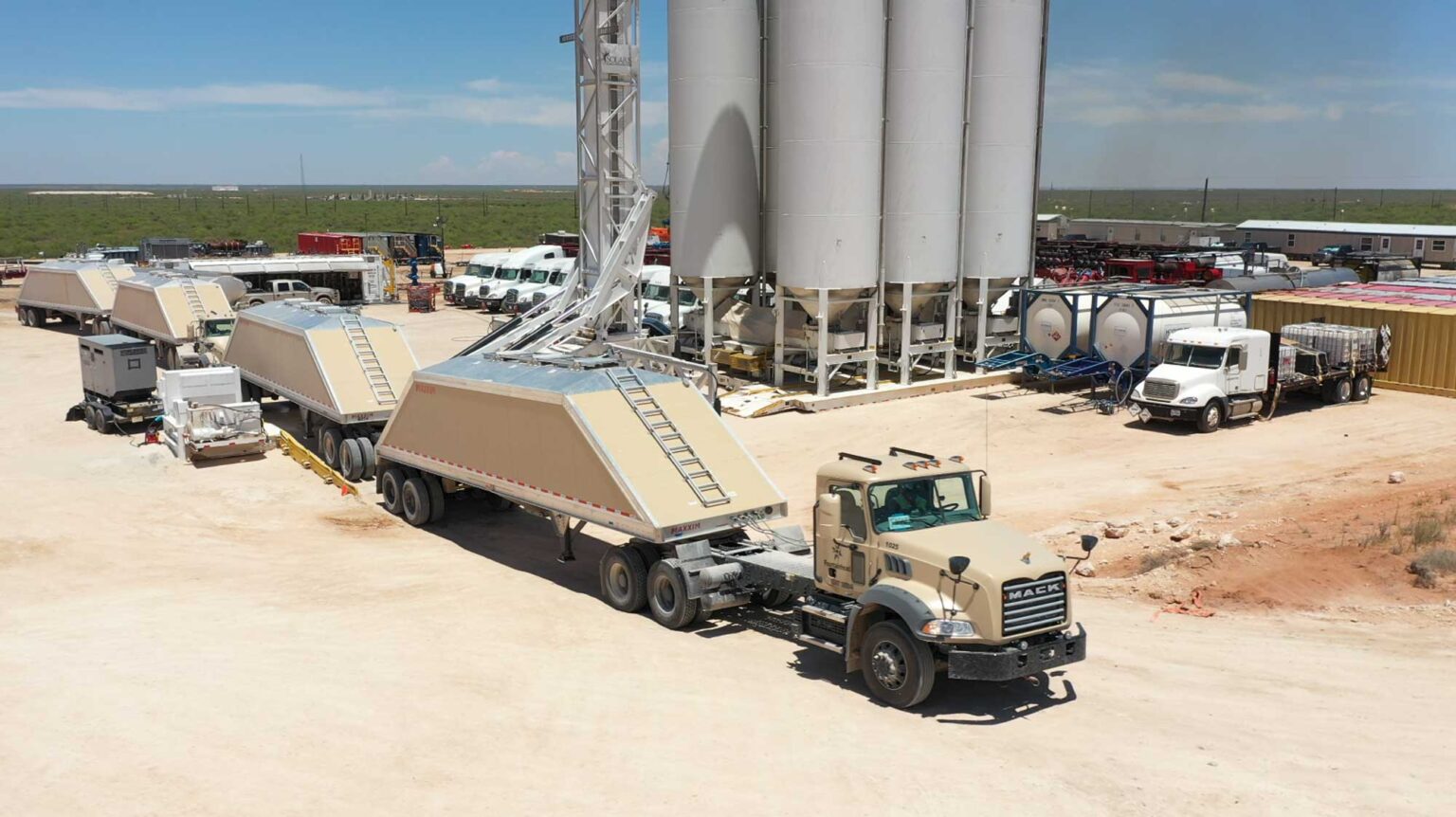
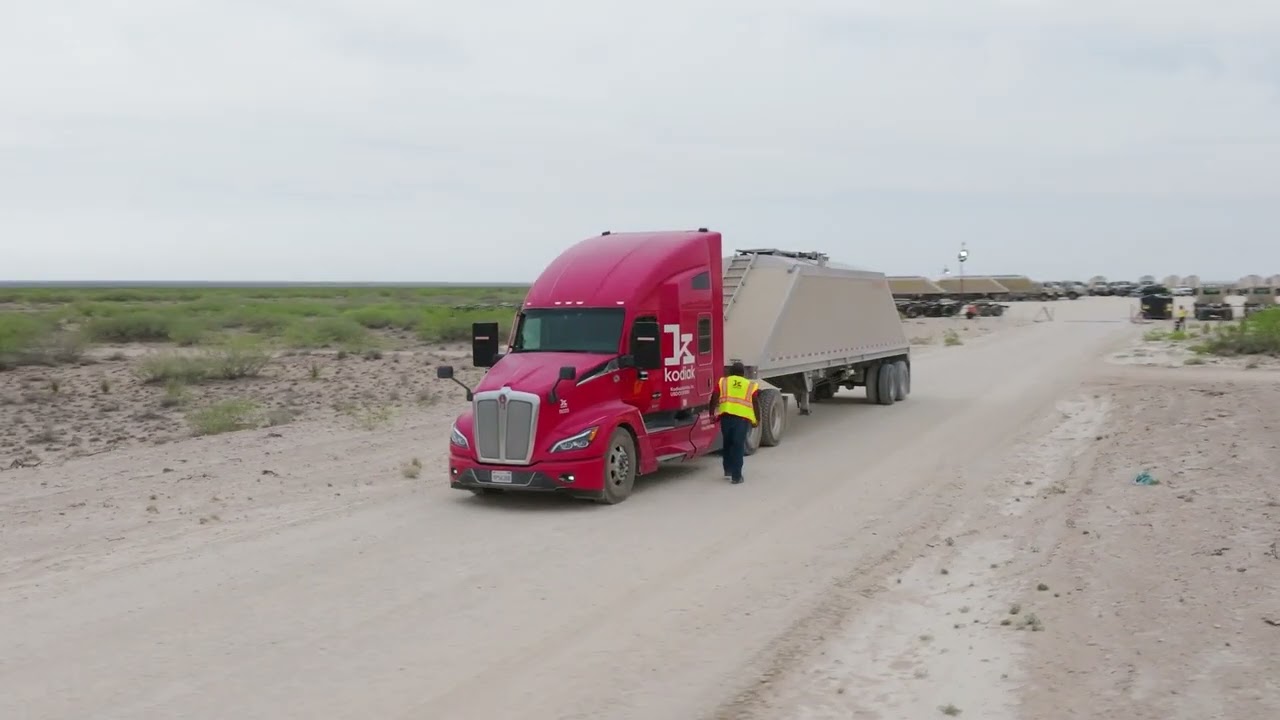
Atlas Energy Solutions Inc. (Atlas) has announced that it intends to expand its autonomous truck operations in the US Permian Basin from 28 to 100 by mid-2027. The company will work with Kodiak AI, Inc. (Kodiak) to make this ambition a reality using its physical artificial intelligence (AI)-powered autonomous driving technology.
What that means in practice is retrofitting or upfitting trucks with a package of sensors, controls, cameras, and other hardware to enable them to be operated autonomously using an AI “driver.”
According to Atlas, the new trucks will be used to expand operations at its second load-out point along its 42-mile (68 km) “Dune Express” sand conveyor system. This system will help Atlas become more responsive to customer needs for the transport and supply of proppant in the region.
Proppant, in case you are unaware, is a special grade of sand used by oil and gas companies during hydraulic fracturing. The sand is pumped underground to keep the cavities created by fracturing open, allowing oil and gas to flow freely.
Delivering sand without drivers
As you can appreciate, that requires enormous quantities of the stuff. What’s more, transporting it from mines or storage sites to drilling locations involves thousands of repetitive truck journeys, often on remote, dusty and relatively predictable routes.
The load-out points refer to strategic locations along the so-called “Dune Express” where this sand is loaded onto trucks. At present, Atlas explains, autonomous trucks have been used from one load-out point at a time.
The addition of another (one in Texas and one in New Mexico) will enable them to cover a wider area and improve customer order fulfillment. According to Atlas, since incorporating driverless trucks into its operations, they have carried approximately 7,000 loads totaling around 450,000 tons of sand over 23,500 “driverless hours.”
As for the trucks in question, they are entirely driverless but with an important distinction. To date, these trucks have tended to operate on controlled oilfield logistics networks, or private roads, not public highways or lanes.
That is considerably easier from an AI-training perspective than allowing autonomous trucks to travel freely through ordinary cities or mixed public traffic. The next major step is therefore operating on public roads, which Atlas and Kodiak say they expect to begin by early 2027, subject to regulatory and operational approval.
Fleet to increase to 100 by mid-2027
That would greatly expand where the trucks can deliver. “This partnership with Kodiak is a critical part of the Atlas strategy to transform oilfield sand logistics through innovation,” said John Turner, CEO and President of Atlas Energy Solutions, in a press release.
“Our mission is to seek critical energy infrastructure with inefficiencies, then engineer solutions that improve efficiency, reduce risk and enhance our customers’ operational success,” he added.
“Together, Atlas and Kodiak have deployed the world’s largest fleet of driverless big-rig trucks,” said Don Burnette, Founder and CEO, Kodiak.
“We’ve demonstrated that autonomous trucking is delivering meaningful results today. Our expanding partnership, which now covers two unique locations, is creating a blueprint for how autonomy can transform logistics by improving efficiency, increasing productivity, and delivering lasting value for customers at commercial scale,” he added.
Electric vehicles have historically been "notorious" for losing their resale value, reports CNBC. But this year prices for used EVs in the U.S. "are up 5.1% from January to June 2026, according to a Recurrent analysis published this month."
The trend continued into the second half of the year: Prices are up 7% year to date through mid-July, it said. Recurrent compared EVs according to the same make and model year across 108 combinations and weighted price growth according to inventory volume. "Used EVs are appreciating, which almost never happens," according to an e-mailed Recurrent statement about the analysis. Other auto analysts found a similar trend...
Price growth for used EVs has been broad-based, said Stephanie Valdez Streaty, the director of industry insights at Cox Automotive, a market research firm. Twenty-one of the 25 used EV models with the highest sales volume increased in price between January and June this year, she said... [T]he price growth for used EVs this year has been all the more surprising because it has happened despite a high supply of used EVs hitting the market — which, all else being equal, would generally cause prices to fall, experts said...
There are several factors juicing consumer demand for used EVs, experts said. Among them are high gasoline prices due to the Iran war, which have pushed more consumers to consider fuel-efficient options, experts said... Overall affordability is another big factor, against a backdrop of inflation that has remained above policymakers' target of 2% for five or so years, auto experts said. The dynamic has pushed more consumers toward the used car market more broadly.
Two interesting statistics from the article:
"Used EV sales were up 20% in June versus a year earlier, while sales of new EVs were down about 28%, according to Cox Automotive data."
New EVs accounted for 5.4% of total new-vehicle sales in June, while the market share for used EVs was just 2.4%, according to Cox Automotive data.
Uber has partnered with — and in some cases made direct investments in — about 30 autonomous vehicle companies over the past two years. Here's the list and the latest on the partnerships.
Also has big plans beyond the TM-B. The startup mostly refers to itself as a "vehicle" company and has plans to make four-wheel pedal-assist cargo vehicles for Amazon.
The Department of Transportation is proposing to exempt commercial space launch licensing from many environmental regulations, a move praised by industry but criticized by environmental groups.
The company ticked off a few more boxes on the second Starship V3 flight, but appears to have had another issue relighting the booster's rocket engines.

 Login