❌

Reading view

The AI takeover of mathematics has begun

Graphing calculator with the OpenAI logo on the screen

Mathematician James Maynard has spent a lot of time this past year "soul searching." A professor at the University of Oxford and winner of the prestigious Fields Medal, Maynard told The Verge he's been grappling with the future of his field as the traditionally slow-moving discipline hurries to adapt to AI.

Days before we spoke, OpenAI revealed it had produced the solutions to 10 long-standing mathematics problems, some of which had confounded academics for decades. Like generative AI used to produce text and images or propose ideas in science and medicine, the technology learns patterns and connections from the vast amount of material it' …

Read the full story at The Verge.

  •  

Mark Zuckerberg doesn’t understand how to live

Mark Zuckerberg wearing sunglasses

Recently, a man I was rock climbing with told me about how he'd used AI to make a motivational poster for himself, which he'd hung on his bedroom wall: a bear, walking a slackline over a canyon, holding a sign that said, "Do cool shit." I made what I hoped was a polite noise. What reaction was this man looking for? He probably hoped someone, maybe me, would say it was cool or inspiring. It seemed I was not the first person he'd told about this poster. "You know, it's funny," he said to me. "No one ever says anything about it."

I have been thinking about this now for several days. There's a sort of turducken of things that I find off-puttin …

Read the full story at The Verge.

  •  

Musician and entrepreneur Tom Vek is building a digital music player, but don’t call it retro

Musician Tom Vek taking a selfie with his Sleevenote music player.
Tom, we can’t see your face. | Image: Tom Vek

Tom Vek burst onto the scene in 2005 with his album We Have Sound, which garnered a solid 7.6 from the tastemakers of the day over at Pitchfork. His undeniably catchy brand of dancy indietronica landed him an appearance on The OC and placement on the Grand Theft Auto IV soundtrack. His follow-up, Leisure Seizure, had a lengthy gestation period, but arrived in 2011 to similar success, reaching No. 79 on the UK charts.

Vek has continued to release music at regular intervals over the last 15 years, dropping Newer Symbols in 2022. But in 2020 he started toying with this idea he had for a music player called Sleevenote. Inspired by viny …

Read the full story at The Verge.

  •  

App report: Listen, read… checkmate

Your voice may be your passport, as a certain Robert Redford picture once asserted, but two macOS apps in our spotlight this week view your voice as a way to get more things done on your Mac. We’re talking transcription apps with two apps that take very different approaches to what you can do with vocal recognition and AI.

But that’s not all for this week. We also look at a tool to help you better enjoy email newsletters, an iPhone app for making your photos sound as good as ever and a multiplatform game that helps you fine-tune your puzzle-solving skills.

Got an app of your own that you’d like to see highlighted? Let us know at apps@sixcolors.com with a brief description of what it does, and we’ll take it from there.

Vox Dictum

Screenshot of a transcription app showing a summary titled ‘## Summary’ about Geoff Belinfante’s 1977 baseball video project. Left sidebar lists recordings; right shows transcript with speaker labels. A purple ‘Done’ button appears.

I record a lot of interviews, which means I need to transcribe a lot of interviews, and so far, I’ve found the Apple Intelligence tools built into Apple’s various software platforms to be fairly wanting in this area. So when an app like Vox Dictum promises a better transcription experience, I’m all ears.

Vox Dictum is a macOS app that makes privacy its calling card — all the transcription happens directly on your Mac, as do the AI-powered summary features that you can access with the cost of a subscription. A Pro subscription costs $7.99/month and gets you features like large AI models to download to your Mac plus AI summaries while the $12.99/month Pro+ package adds a speaker recognition feature.

I do think it’s easier to label speakers in VoxDictum than with any of Apple’s built-in features, though transcripts — while fairly accurate — feature line breaks that aren’t necessarily suited to my purposes.

As for the summary feature, I found it to be hit-and-miss: Vox Dictum did a great job highlighting the main points of an interview I conducted for a freelance article, making the summary a good reference tool, but a recorded discussion between me and my wife produced a summary with conflicting dates on some action items. That said, I do like that Vox Dictum’s summary feature lets you designate if the recording is an interview, a meeting, a news bulletin or a podcast, which seems to help focus the summary.

Processing time can take a bit, but if you find yourself needing to transcribe a lot of interviews, Vox Dictum is definitely worth a download so you can see if its base features improve on your current approach.

Bonfiyah

Dark playback interface with controls, speakers, transcript buttons; light panel shows AI Summary with podcast revival text.

Like Vox Dictum, Bonfiyah promises to turn recordings into transcripts, while also recognizing who’s saying what. But transcription is really just a sideshow in this case — the app’s real strength lies in its ability to track your conversations.

Available for the iPhone, iPad and Mac — I tried out the macOS version — Bonfiyah records conversations, meetings and brainstorming sessions. (You can also import audio files into the app.) Besides transcription and speaker identification features, the app also taps into AI to summarize action items that come up in your conversation and who’s responsible for taking care of them. A feature I particularly like is an analysis tool that analyzes how to communicate more effectively with the people you talk to on a regular basis.

Transcription does take place off-device via AssemblyAI, though Bonfiyah deletes that info from its servers after seven days. The app includes privacy features such as marking conversations as privileged.

Bonfiyah comes across as a pretty sophisticated tool that might be overkill for anyone who needs transcripts with more basic summary features. But you can try out all the features to start with for 14 days before you need to commit to either a $24.99/month Pro or $34.99/month Pro AI account for more advanced features.

Letterboxx

Screenshot of a News app: sidebar with headlines; main article mentions Raúl Asencio facing trial for sharing intimate footage with a minor; photo of a man; headline “Alonso explains why Chelsea are targeting senior players.”

Letterboxx exists under the premise that an email inbox is no place to enjoy a newsletter and a traditional mail client is not a reader app. Inboxes are places for taking action like responding to timely messages, but newsletters are something that you want to spend time diving into — hence the Letterboxx interface, which is designed to use the ample space provided on your Mac.

With Letterboxx, you can redirect newsletters sent to supported email accounts to a dedicated reading space, complete with folders for organizing incoming missives by type. You also get ad-filtering tools, ways to highlight relevant text and even shortcuts for managing your many subscriptions.

You’ll know right away if this app is just right for your newsletter-heavy reading habits or if it’s more management features than you need, but you can confirm with a two-week free trial to Letterboxx before the regular $4.99/monthly subscription rate kicks in.

Echo Photo Album

Two phone screens: left shows a cat video with playback controls and menu; right shows a coastal video with options including Bookmark Video, Edit Photo, tags, and Recorded 0:13.

I don’t really find much use for Live Photos, the built-in iPhone camera feature that adds a little bit of movement and audio to your images. But Echo Photo Album might cause me to reconsider augmenting my photos with its focus entirely on audio.

You can record up to 60 seconds of audio in Echo Photo Album, adding it to a shot you either take through the app or find in your photo library. In testing Echo Photo Album on my iPhone — it’s also compatible with iPads and Apple Watches — I found it worked best adding the sound of my cat purring to seem feline portraits or ocean waves crashing to a coastal landscape shot. I imagine it could also come in handy adding sounds to accompany road trips, baby photos and group get-togethers.

You can download Echo Photo Album for free, with a $4.99 purchases removing a 10-image limit.

Chess Peace

Chess Peace app screenshot: Classic 4×4 board with colored circles and pieces (queen, king, knight, bishop, pawn) connected by lines. Sidebar shows piece icons; bottom buttons: Undo, Hint (2), Retreat, Reset. Timer 3:85.

All work and no play makes for a dull app profiler, so here’s a game I’ve been playing lately that runs on the Mac as well as on iPhones and iPads. (I’ve been testing the macOS version.) Chess Peace is one of those games that you play to keep your mind active. Best of all, you don’t really need to be a grand master to get something out of the game.

The only thing you need to know about chess to thrive at Chess Peace is how each of the different pieces move around the board. That knowledge lets you position each piece on the board of a Chess Peace puzzle in such a way as to prevent any other piece from capturing them — keeping your rook out of the diagonal attacks of your bishop, for example.

The game serves up a new puzzle every day, with a library of older puzzles for you to play as well. An $8.99 in-app purchases unlocks 26,500 puzzles across five game modes plus custom themes to let you change the look of Chess Peace.

  •  

Apple inicia preparativos para o evento de lançamento dos próximos iPhones

De acordo com uma reportagem da Bloomberg, a Apple dará o pontapé inicial nos preparativos para o evento especial de lançamento dos próximos iPhones com um sorteio interno entre funcionários de suas Apple Stores, com o objetivo de selecionar quais deles trabalharão presencialmente lá no Apple Park durante o grande dia.

Como trata-se de um número limitado de vagas (que certamente são bem disputadas), a empresa abriu inscrições para funcionários interessados até o dia 8 de agosto, e notificará os selecionados até o dia 17 do mesmo mês, segundo um memorando ao qual o veículo teve acesso.

Para se inscrever, os candidatos também não podem ter participado da WWDC26 e nem do evento especial de lançamento dos iPhones em setembro do ano passado — o que garante uma maior rotatividade nos funcionários selecionados para esses eventos.

Os funcionários que forem agraciados com o sorteio, segundo o memorando, atuarão em tarefas como organização de filas, check-in dos convidados e recepção aos participantes, bem como fornecerão informações e oferecerão suporte às equipes de segurança envolvidas.

O memorando também diz que o evento ocorrerá na primeira quinzena de setembro. Tradicionalmente, ele ocorre na 2ª terça ou quarta-feira do mês. Como segunda (7/9) será feriado nos Estados Unidos, é provável que o grande evento deste ano aconteça na quarta-feira (9/9).

  •  

Is paying artists enough to convince them to embrace AI?

An AI-generated image of a woman in armor standing on al elevated platform surrounded by soldiers.

Illustrators have spent years sounding the alarm about generative artificial intelligence startups training their models on artists' work without permission. They've pointed out how the practice is tantamount to theft, and in response, many gen AI boosters have argued that it's necessary for the technology's evolution. This has led to contentious legal battles, but it's also given rise to a new wave of AI startups like Pippa that market their services as being more ethical than the competition.

Like most companies selling access to text-to-video models, Pippa's main product is short bursts of user-generated footage that can be cobbled toget …

Read the full story at The Verge.

  •  

Angela Nissel faces down grief with a laugh

Angela Nissel
Angela Nissel smiles through the pain. | Image: Angela Nissel

Angela Nissel's latest book, Good Grief, Pass the Bread, Mom Is Dead, is my kind of memoir. Sure, it's a deeply emotional tale about caring for a terminally ill parent. But it's delivered with the sort of gallows humor that I often turn to to get me through tough times.

Of course, that sort of dark humor should come as no surprise from Nissel. She first made a splash with The Broke Diaries, which grew out of a blog she kept in college detailing her daily struggles and, at times, embarrassment at being a broke student. Eventually she went on to produce and write for hit shows including Scrubs and The Boondocks.

One of her most lasting cont …

Read the full story at The Verge.

  •  

Is this Billboard Hot 100 hit AI slop?

The seemingly AI generated cover art for Fenix Flexin’s Rubberz.
That cover art is almost certainly AI, too. | Image: Fenix Flexin

Fenix Flexin is best known as a member of Shoreline Mafia, a rap duo from Los Angeles. But he's recently found solo success with the track "Rubberz," which has climbed to number 58 on the Billboard Hot 100. Almost immediately, though, questions were raised about the song's origins, with many speculating that it was largely, if not entirely, generated by AI. Fenix has denied those accusations, but done little to dispel them.

Part of the suspicion is certainly due to the fact that the song is a dramatic left turn. Fenix has primarily trafficked in trap-influenced West Coast rap. "Rubberz," on the other hand, is heavily influenced by '80s UK s …

Read the full story at The Verge.

  •  

Rocket Report: New launch rule may limit environmental regulations, Falcon 9 to hit Moon

Welcome to Edition 9.05 of the Rocket Report! It was a big week for launch contracts, with both Rocket Lab and SpaceX scoring sizable deals from the US military for their respective Electron and Falcon 9 rockets. The vehicles have been the workhorses for small and medium lift for the United States over the past decade and may remain so for some time. Also, there will be no Rocket Report next week, as I am traveling on assignment, and Stephen is taking a week off.

As always, we welcome reader submissions, and if you don't want to miss an issue, please subscribe using the box below (the form will not appear on AMP-enabled versions of the site). Each report will include information on small-, medium-, and heavy-lift rockets as well as a quick look ahead at the next three launches on the calendar.

Rocket Lab wins large Electron deal. Rocket Lab Corporation announced this week that it has been awarded its largest launch contract to date, a $266 million multi-launch contract with the US Space Force. Under the contract awarded by the US Space Force Space Systems Command, Rocket Lab will execute 12 suborbital launches, with up to six additional launches. The first launch of this contract is expected no earlier than the end of 2026.

Read full article

Comments

© Stoke Space

  •  

App report: Kicking my World Cup withdrawal

Three iPhone screens: photo editor showing 'area too dark; lighten' over a night scene; soccer game with 'GOAL!' on a green field; Photos app suggesting cleanup with text and thumbnails.
(Left to right): Annotate, Kickabout, and Undolly.

For the most part, I’m going to focus on Mac apps with these columns, because that’s where the action seems to be these days. But iOS remains a vibrant platform, too, and every now and again, we’ll look at some of the interesting apps being created for iPhones and iPads. This is one of those now and agains.

Want to see your app included in a future round-up? Get in touch at apps@sixcolors.com with a brief description of your app, and you just might make the cut.

Kickabout

The World Cup is just a memory now, but if you’re missing the daily infusion of soccer (or football, depending on what part of the globe you’re reading this from), Kickabout brings the action back to your iOS device in a very condensed form.

Kickabout will be immediately familiar to anyone who’s ever gathered around a foosball table in a rec room, with a look that will bring a smile to the face of Subbuteo tabletop football aficionados. You take charge of an 8-player team, with players only free to move about certain areas of the pitch. (No length-of-the-field Maradona-esque wonder golazos for your squad.) You use your finger to drag your players around, swiping any which way to boot the ball toward the goal as you look to rack up the most goals in each 2-minute match.

Goals and shots off the post earn you points, which translates to tickets that you cash in to collect various national teams, from the U.S. all the way to newly minted world champion Spain. You can also buy gear, including stands for your virtual stadium. It’s a fun element that adds to Kickabout’s replayability as you try to assemble your own World Cup field.

Kickabout has both single-player and dual-player modes, though I found the latter to be a little cramped for my iPhone 17 screen. I imagine head-to-head matches are much more enjoyable on the iPad. Still, Kickabout offers plenty of fun even for single players, as you try to master the game’s different difficulty levels.

Kickabout is free to download, and a $3 in-app purchase gets rid of any ads.

Undolly

The Photos app has a built-in tool to weed out duplicate images, but if you find yourself taking a lot of photos, Undolly brings a whole suite of tools that promise to bring order to your iOS device’s photo library. Besides getting rid of duplicates, the mobile app also lists large videos taking up space in your library, rounds up any screenshots you may have stashed somewhere and keeps tabs on other potential space-takers like RAW, timelapse and animated images.

The value of Undolly will depend heavily on how you use your photo library. For instance, I take a lot of screenshots for articles that I don’t always remember to delete, and the app helped me track down some that were three to five years old. I also appreciate Undolly’s swipable comparisons of similar shots, so you can see for yourself whether the images differ enough to keep. Undolly’s algorithm also rates images by their framing, quality and expressiveness of subject to better help you determine the shots that deserve a place in your library.

While it’s free to download initially, you will have to subscribe to Undolly to use its features, with a free three-day trial letting you get the lay of the land. After that, a monthly subscription costs $4, while annual and lifetime payments go for $15 and $40, respectively.

VWLSS

Nearly five years after Wordle first appeared, we’re still living in a golden age for daily word puzzles. Add VWLSS and its daily serving of mobile word play to the pile, though there are some unique iPhone elements that could help this free offering earn a place in your regular rotation of gameplay.

You have eight words to guess, each tied to a specific category and with all the vowels stripped out. It’s up to you to figure out the actual word, which you can do either by typing in the answer or using a handy speech feature. I prefer talking to typing, though I’m still sore that my guess of “Bob Barker” in the game show hosts category was misheard as “Bob Parker.” Revenge will be mine tomorrow, I guess.

Annotate

Between Notes and the still-new-to-iOS Preview app, you’ve got more than a few built-in tools for marking up documents and images on your iPhone or iPad. The Annotate app looks to expand on that with 17 tools that allow you to crop, blur and add notes to your heart’s content. If you find yourself making a lot of the same annotations, the app lets you create and save templates and there are shortcuts for watermarking and auto-redacting faces and phone numbers.

You can download Annotate for free and export up to five annotated photos and documents. After that, you’ll need to make a one-time $10 payment to use the app. Annotate works well enough on my iPhone, though I suspect iPad users will get more out of using this app’s many features on their larger-screen devices.

  •  

Synth historian Oli Freke will spend big on a good bicycle

Oli Freke is a musician and journalist whose works have appeared in Sound on Sound, The Quietus, and Mixmag. This has included using math to explore the melodic potential of the Western 12-tone scale and deep dives on effects plug-ins. He's even written a book tracing the evolution of the synthesizer from 1963 through 1995, charting the change from analog to digital and back.

His new project is Beat Gems, a coffee-table visual history of drum machines from publisher Bjooks. Like other Bjooks titles, Beat Gems is loaded with gorgeous photos, fascinating historical tidbits, and practical advice for making the most of your gear, whether it's …

Read the full story at The Verge.

  •  

Meta just created a moderation nightmare for its smart glasses

Meta's smart glasses have been a PR headache for the company. Public backlash has been swift, and fierce; people are concerned about the erosion of privacy and expansion of surveillance. Some especially bad actors are using the glasses to film themselves "pranking" random strangers. Women have become unsuspecting social media content for men filming themselves hitting on them without their knowledge. When your product is being referred to as "pervert glasses," you have a problem on your hands.

On Thursday, Business Insider reported that Meta was taking the fairly extraordinary step of banning some content filmed with Meta glasses from the c …

Read the full story at The Verge.

  •  

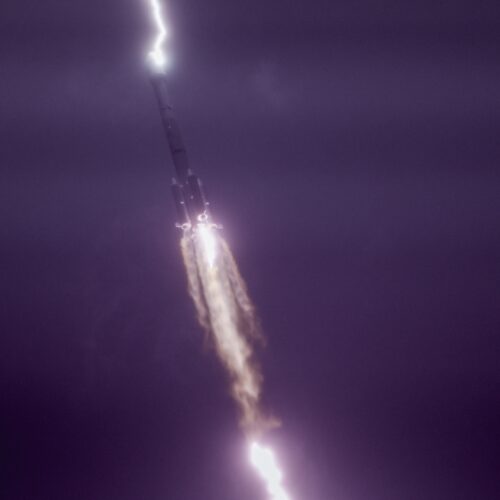
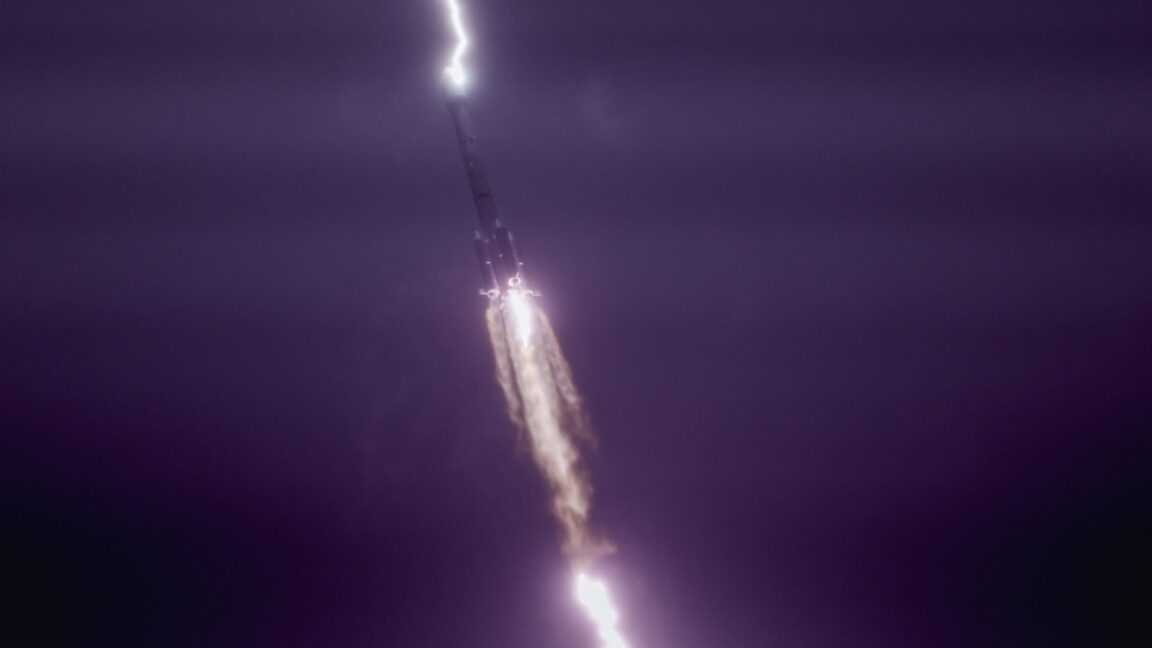
Rocket Report: Lightning strikes in China; Starship launch on deck

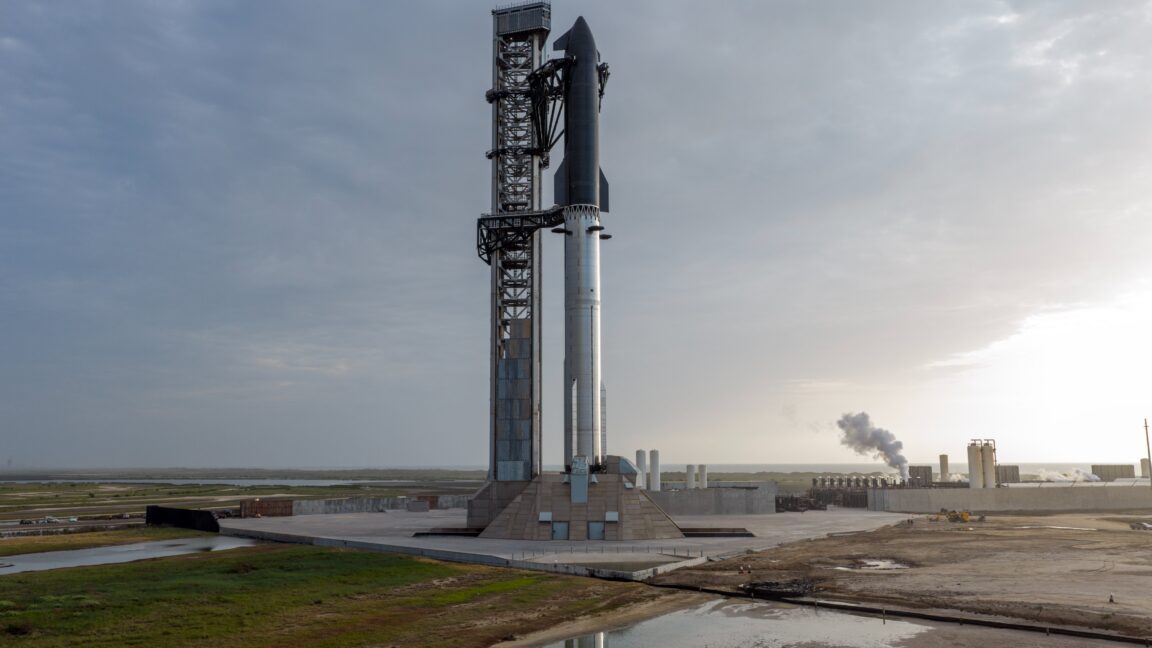
Welcome to Edition 9.04 of the Rocket Report! We've had to wait an extra week for SpaceX to get its 13th Starship test flight off the ground. A last-second abort on July 16 led engineers to roll the booster back to its hangar in South Texas to swap out engines. Starship is now back on the launch pad. Liftoff is set for Friday evening. A flawless launch and reentry will put SpaceX on the cusp of an orbital flight later this year. Ars will have a comprehensive recap story after the completion of the test flight.

As always, we welcome reader submissions. If you don't want to miss an issue, please subscribe using the box below (the form will not appear on AMP-enabled versions of the site). Each report will include information on small-, medium-, and heavy-lift rockets, as well as a quick look ahead at the next three launches on the calendar.

India's first private rocket reaches orbit. Indian space officials celebrated the debut flight of Skyroot Aerospace’s Vikram-1 rocket, India’s first fully commercial satellite launcher, as a “grand success” Saturday after an on-target climb into a 280-mile-high orbit following liftoff from an island spaceport in the Bay of Bengal, Ars reports. The Vikram-1 lifted off from India’s primary spaceport on Sriharikota Island around midday local time. The launch was delayed more than a half-hour to resolve a last-minute technical problem. The countdown resumed, culminating in the command to ignite Vikram-1’s solid-fueled first stage booster to propel the rocket off the launch pad.

Read full article

Comments

© Zhou Quan/VCG via Getty Images

  •  

AARO’s Latest UAP Report Finds No Evidence of Exotic Technology, But Mysteries Remain

UAP DOW

Welcome to this edition of The Intelligence Brief… This week, the Pentagon’s All-domain Anomaly Resolution Office (AARO) finally released its long-delayed Fiscal Year 2025 report on unidentified anomalous phenomena, revealing the latest findings from the Office’s growing number of UAP cases. In our analysis, we’ll be looking at 1) what the latest report reveals about AARO’s growing database of nearly 2,000 UAP reports, 2) why satellite flares continue to account for many recent sightings, 3) the report’s intriguing references to unresolved incidents near sensitive military installations and critical infrastructure, and 4) what AARO’s latest findings suggest about the challenges investigators still face in explaining a small but persistent number of UAP reports.

Quote of the Week  

“AARO seeks to capitalize on a diverse set of sensor technology capabilities and intelligence analytic tradecraft…  to improve the USG’s effort to investigate and respond to UAP in the air, maritime, and space domains at scale and speed.”

– AARO FY 2025 ANNUAL REPORT

If you enjoy the news and perspectives offered by The Debrief, make sure that you aren’t missing our stories by making us one of your “preferred sources” on Google News. You can simply follow this link to add The Debrief to your list of favorites, and you can read more about Google’s preferred sources in our article here.


RECENT NEWS from The Debrief


Pentagon’s AARO Releases Long-Delayed UAP Report

This week, the Pentagon’s All-domain Anomaly Resolution Office (AARO) finally released its 2025 annual report on unidentified anomalous phenomena, or UAP.

You read that correctly: the long-delayed report for fiscal year (FY) 2025 has been MIA since its expected release date last October, and finally appeared at AARO’s website just three months (or so) ahead of the scheduled release date for its next annual report. Hey, better late than never.

According to AARO’s latest findings, there were no cases it resolved that point to advanced foreign technology or extraordinary capabilities exhibited by UAP, but close to 200 reports from its latest batch remain unexplained due to insufficient data.

AARO also reiterated two conclusions that have remained consistent across previous reports: investigators have found no evidence that the U.S. government or any private organization has recovered or exploited materials derived from UAP, and the office has received no verified reports of adverse health effects directly associated with UAP encounters.

Beyond that, here’s a look at some of the report’s primary findings.

Key Findings in AARO’s 2025 Report

Offering an overview of the office’s investigations of cases collected between June 2, 2024, and May 30, 2025, the new report conveys that AARO received 319 new UAP cases during the reporting period, bringing its total case holdings to 1,870 since the office’s creation.

274 incidents occurred in the air domain, while 44 involved objects observed in space, and one occurred in the maritime domain. “The single maritime domain UAP case AARO received involved a report from U.S. Navy assets operating off the coast of Virginia,” AARO’s report states. “The report described approximately 100 airborne UAP and two, likely uncrewed, surface systems. AARO is actively investigating this event in coordination with the reporting unit.”

The brief description of this single maritime incident AARO received is intriguing, although very little context is provided, and it is unclear whether it may be describing UAVs and uncrewed launch platforms observed at sea, which might be attributable to a U.S. foreign adversary.

A Whole Lotta Satellites

As for those “objects observed in space,” AARO’s report makes it clear that none of the space-domain cases originated from space-based sensors, but instead mostly came from civilian pilots reporting through the Federal Aviation Administration (FAA). The other two originated from U.S. Space Command ground-based sensors.

“AARO applied all-source analysis techniques and three-dimensional modeling to render a high confidence assessment for each of these cases as being attributable to satellite flaring,” the report reads.

The fact that satellite flaring has significantly contributed to recent alleged UAP sightings is nothing new. In 2022, following a series of sightings by pilots involving what were characterized as “racetrack UAPs,” it was determined that the sightings resulted from an optical illusion created by SpaceX Starlink satellites.

While 114 of the 319 new cases AARO has received have been resolved, it says that 191 cases have been placed into AARO’s “active archive,” which involves reports that presently lack sufficient data required to make an assessment.

“UAP cases held in active archive inform AARO’s locational and trend analyses and remain open to future resolution should further information or improved analytical techniques enable a more conclusive resolution,” the report states. Additionally, there were nine cases referred to members of the Intelligence Community and AARO’s science and technology partners for further technical analysis.

Trends in the Data

The report also identifies several trends among the incoming reports. In terms of appearance, spherical shapes remain the winning category, comprising close to 40 percent of reported UAP morphologies, with lights representing around 33 percent. Around 25 percent of sightings lacked enough information to give any clear indication of shape at all.

In terms of altitude, most airborne sightings occurred between 10,000 and 35,000 feet, while reports above 45,000 feet declined significantly from the previous reporting period; notably, AARO attributes this to its progress in identifying satellite flares.

Fortunately, no flight safety-related incidents were reported for the period discussed in the FY 2025 report, although there were two cases that “contained descriptions of electronic or avionic interference reported as attributable to UAP in proximity to an operational aircraft.” AARO says it remains unclear whether those effects were directly related to the observed UAP.

UAP Near Critical Infrastructure?

Perhaps one of the most significant elements of the new report is that there were reportedly several new cases logged near sensitive military installations and critical infrastructure. “Some narrative reports were suggestive of phenomena whose performance characteristics exceed the known state-of-the-art within a given domain,” the report states, though adding that “No technical data accompanied these reports.”

“If validated, the attendant phenomena underlying these reports may represent a currently unmitigated threat vector,” the report states. “Part of AARO’s mission is to provide data and analysis that helps mitigate potential UAP-related national security threats or operational hazards.”

The report additionally documents a significant increase in reports involving unmanned aerial systems operating near U.S. nuclear infrastructure, with 50 incidents referred to AARO by the National Nuclear Security Administration and Nuclear Regulatory Commission—a 178 percent increase over the previous year’s total.

It is clearly stated that none of these objects were genuine UAP or exhibited anything unusual. “The reports contained descriptions of UAS morphologies ranging from small hobbyist-sized UAS to larger multi-rotor models. Quadcopters were the most reported morphology,” AARO’s report states.

As with past AARO annual reports, the FY 2025 updates leaves much to the imagination—a fact that is very in keeping with recent UAP imagery and documentation released by the Pentagon through its PURSUE initiative. Still, the report’s findings—vague as they are—do indicate one fundamental issue: objects or phenomena that remain difficult to attribute to any known sources continue to be tracked by U.S. defense personnel.

With nearly 2,000 reports in its current collection, AARO concedes that while it has found no evidence of links to any extraordinary phenomena, there are also still a good number of cases that remain unresolved, and which warrant further attention.

Perhaps that’s the real takeaway—not that AARO has found evidence of anything extraordinary, but that some reports do continue to defy straightforward explanation.

That concludes this week’s installment of The Intelligence Brief. You can read past editions of our newsletter at our website, or if you found this installment online, don’t forget to subscribe and get future email editions from us here. Also, if you have a tip or other information you’d like to send along directly to me, you can email me at micah [@] thedebrief [dot] org, or reach me on X: @MicahHanks.

Here are the top stories we’re covering right now…

  •  

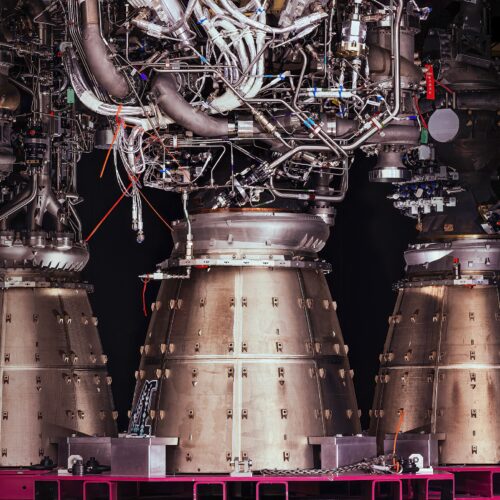
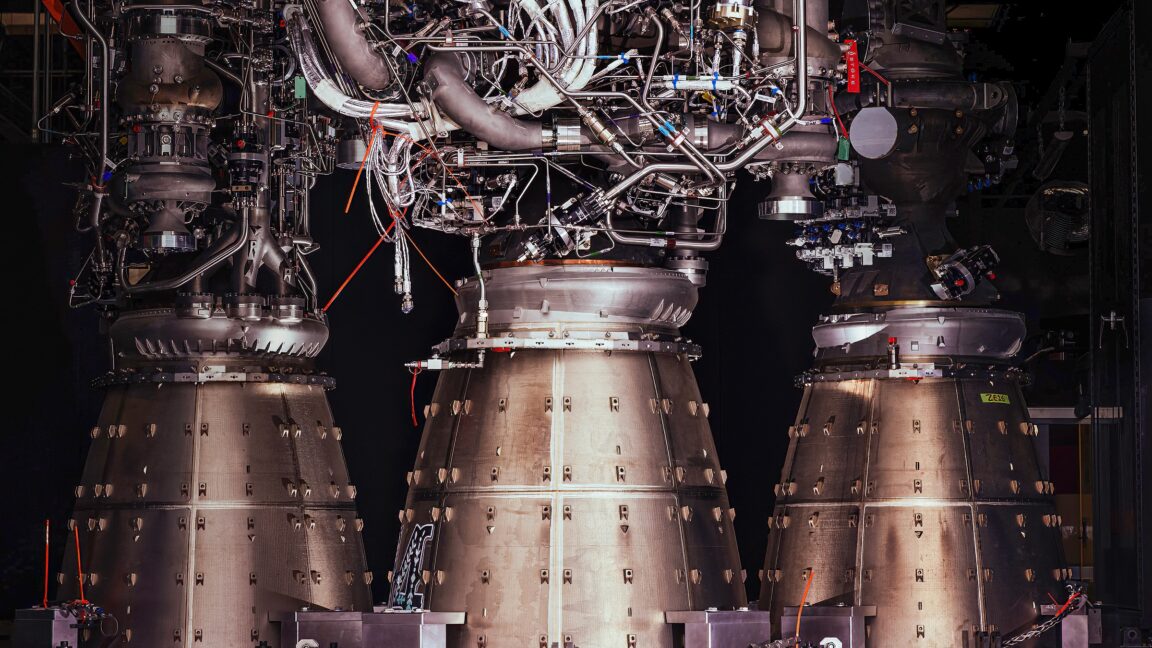
Rocket Report: India's Vikram-1 nears debut flight; AST to become rocket company?

Welcome to Edition 9.03 of the Rocket Report! SpaceX counted down all the way to T-0 on Thursday evening in South Texas before a handful of Raptor engines decided not to light at ignition of the rocket. It is not clear whether the vehicle can be worked on at the pad, or whether Starship will need to be de-stacked before this can occur. In any case, a few days delay beats a significant issue in flight.

As always, we welcome reader submissions, and if you don't want to miss an issue, please subscribe using the box below (the form will not appear on AMP-enabled versions of the site). Each report will include information on small-, medium-, and heavy-lift rockets as well as a quick look ahead at the next three launches on the calendar.

Vikram-1 rocket gets a launch date. The debut launch attempt by Skyroot Aerospace of its Vikram-1 rocket is now set for July 18, at 11:30 am local time in India. This will be the first time a commercial rocket developed in India attempts to reach orbit. Designed to carry small satellites weighing up to 350 kg to low-Earth orbit, Vikram-1 is targeting a 450 km orbit at a 60-degree inclination.

Read full article

Comments

© SpaceX

  •  

The Guardian’s Carter Sherman fondly remembers being terrified by Ocarina of Time

Carter Sherman sitting on a the floor in front of a couch, instead of just on it for some reason.
Carter, there’s a couch RIGHT THERE. | Image:

Carter Sherman has been covering sex, gender, and the complex personal and national politics that accompany them for years. She was a senior reporter for Vice and has written for Elle, Ms. magazine, and Los Angeles magazine as well. Along the way, she's garnered a Scripps Howard Award, a National Press Club Journalism Award, and four Emmy nominations.

She's also the author of The Second Coming: Sex and the Next Generation's Fight Over Its Future. That book looks at how the internet and our polarized political landscape have changed sex and relationships, from school board battles over sex ed to abortion access. These days she finds herself …

Read the full story at The Verge.

  •  

Rocket Report: India's Vikram-1 nears debut flight; AST to become rocket company?

Welcome to Edition 9.03 of the Rocket Report! SpaceX counted down all the way to T-0 on Thursday evening in South Texas before a handful of Raptor engines decided not to light at ignition of the rocket. It is not clear whether the vehicle can be worked on at the pad, or whether Starship will need to be de-stacked before this can occur. In any case, a few days delay beats a significant issue in flight.

As always, we welcome reader submissions, and if you don't want to miss an issue, please subscribe using the box below (the form will not appear on AMP-enabled versions of the site). Each report will include information on small-, medium-, and heavy-lift rockets as well as a quick look ahead at the next three launches on the calendar.

Vikram-1 rocket gets a launch date. The debut launch attempt by Skyroot Aerospace of its Vikram-1 rocket is now set for July 18, at 11:30 am local time in India. This will be the first time a commercial rocket developed in India attempts to reach orbit. Designed to carry small satellites weighing up to 350 kg to low-Earth orbit, Vikram-1 is targeting a 450 km orbit at a 60-degree inclination.

Read full article

Comments

© SpaceX

  •  

App report: Adding a shelf to my Mac

Just ahead of WWDC 2026, Jason Snell noted that he gets a lot of pitches about Mac apps, attributing the sudden boom in macOS offerings to vibe coding aided by artificial intelligence. Regardless of how apps are getting built — be it with AI tools or the more conventional developer kits that Apple offers — it’s certainly true that a lot more macOS apps seem to be popping up, extending the capabilities of your hardware. And some of those apps deserve a little extra attention.

And that’s what I’m hoping to do with these app spotlights for Six Colors. We’ll profile some interesting new apps for the Mac (and maybe the odd iOS offering every now and again), and explain why you might want to give it a download.

Do you have an app you’d like to bring to my attention? Simply drop me a line at apps@sixcolors.com with a brief description of your app, and we’ll take it from there.

With that housekeeping out of the way, here’s what I’ve been downloading lately.

Park Shelf

macOS desktop screenshot

Cleanliness may be next to godliness, but for most of us, our Mac screens are an unholy mess. Open windows clutter up the view, adding another layer of complication to multitasking. An app called ParkShelf from Digital X Design looks to bring some order to the chaos with a handy place for storing open windows instead of placing them in the dock or relying on your Mac’s App Switcher to jump between windows.

Instead, ParkShelf features a floating bar you can position anywhere on your screen (though there is an option to pin it to a specific area if you prefer). That way you need to call up a particular window, it’s just a matter of heading over to where you’ve stashed it in ParkShelf and summoning what you need. The rest of the time, you’ve got a clean, uncluttered workspace so that you can focus on the task at hand.

I’ve been trying out the free version of ParkShelf, where you can store up to three different windows at any one time. For unlimited storage, you’ll need to pay a one-time fee of $6.99 for the Pro version. In addition to the unlimited storage, the Pro version also gives you the ability to customize a hot key that sends an open window into ParkShelf’s waiting arms. (In the free version, option-P serves as the default hot key.)

For my purposes, ParkShelf works best when I’m focusing on a specific project. If I’m on a writing assignment, I can use the app to stash a window of notes, a browser page I’m using to research the topic, and data sheets in PDF form while I type away in my text editor. When I need anyone of those windows, I can turn to ParkShelf to look something up, but otherwise, those windows are out of sight and out of mind.

I’d like it better if I could store multiple web pages or notes, but ParkShelf seems to treat each app as its own window. For instance, even when I have web pages open in Safari for multiple windows instead of tabs, ParkShelf stores the whole kit and caboodle. Still, the free version of Park Shelf is certainly worth trying out if you’re looking for a way to better manage all the open windows on your screen.

Other apps

macOS General settings screenshot: sidebar with General selected, main panel shows Motion Preview (purple dot, 0° controls, 0px/s Speed), Scroll Direction (Horizontal, Look Right Scroll Down), icons top right.
  • ScrollPods lets you control scrolling on a Mac by tilting your head. The free utility works with 3rd-gen AirPods as well as any AirPods Pro, AirPods Max and Beats Fit Pro models. Install the app, turn on a switch, and a tilt of your head lets you scroll through emails, web pages and other windows. Mastering just the right tilt takes a little bit of practice, but this is a pretty clever accessibility tool that takes advantage of an accessory you probably already have on hand.

  • Sleepr is a $5 app that serves as a sleep timer that lives in your Mac’s menu bar and lets you time shutdowns after 15-, 30-, 60- and 120-minute intervals; you can also have your Mac go to sleep at a very specific time. The 3.0 release adds Liquid Glass support, recurring bedtimes that automatically start themselves, a floating alert that can even appear over full-screen apps, and a live menu bar countdown.

  • Senqu Image Converter is a $5 image utility that lets you convert among JPEG, PNG, HEIC, TIFF and PDF files. The recent 1.2 update added the ability to drop images onto a preset in the full window for instant conversions, while dropping a file now immediately starts the conversion process using current settings.

  •  
❌