❌

Reading view

Water Found in Stellar Envelope Near the Milky Way’s Central Black Hole

Astronomers using NASA’s James Webb Space Telescope have discovered water molecules inside the enormous envelope of gas and dust surrounding IRS 3, an aging star located remarkably close to the supermassive black hole at the centre of the Milky Way. The finding challenges the long-held assumption that the intense radiation and gravitational turbulence around Sagittarius A, commonly known as Sgr A, would prevent molecules from surviving in such a hostile environment.

IRS 3 lies about 0.6 light-years from Sgr A*, a distance equivalent to roughly 42,000 times the separation between Earth and the Sun. In everyday terms, that is an immense distance. On the scale of the Galactic Centre, however, it places the star in the immediate neighbourhood of a black hole containing approximately four million times the mass of the Sun. The region is crowded with stars, powerful magnetic fields, energetic particles and rapidly changing radiation, making IRS 3 an exceptional natural laboratory for studying how stars evolve under extreme conditions.

The observations were conducted with the Mid-Infrared Instrument, or MIRI, aboard the James Webb Space Telescope. Mid-infrared light is particularly useful for investigating cool dust and molecules that absorb and re-emit radiation at characteristic wavelengths. By analysing the infrared spectrum of IRS 3, researchers led by PD Dr Florian Peißker of the University of Cologne identified the chemical and physical properties of the material surrounding the star with far greater detail than previous observations allowed.

What makes IRS 3 especially striking is the scale of its circumstellar envelope. The structure extends to a radius of approximately 10,000 astronomical units, where one astronomical unit is the average distance between Earth and the Sun. Such envelopes are common around mature, evolved stars, but IRS 3 appears to be unusually isolated in the immediate vicinity of Sgr A*. Its enormous shell of material therefore stands out against a dense background containing millions of other stars.

The new observations indicate that IRS 3 is undergoing a phase known as a superwind. This is a brief but dramatic stage in the late evolution of certain stars, particularly asymptotic giant branch stars. During this phase, powerful stellar winds carry gas and newly formed dust away from the star at extremely high rates. Over periods of only a few centuries, the star can lose a substantial fraction of its outer layers, transforming its surroundings into a thick, expanding envelope that will eventually disperse into interstellar space.

According to the research team, IRS 3 is losing material at a rate equivalent to the mass of Earth every 18 days. Although the comparison makes the scale easier to imagine, the total outflow is far more significant when considered over astronomical timescales. The steady loss of gas and dust explains why the envelope is both unusually large and dense. It also provides the raw material in which molecules can form, shielded within cooler regions of the expanding stellar outflow.

The detection of water is the most surprising aspect of the study. Near Sgr A*, ultraviolet radiation, X-rays and high-energy particles are expected to break apart fragile molecules. Water molecules can be destroyed when energetic photons dissociate them into their constituent atoms, particularly in exposed regions close to powerful sources of radiation. Yet the MIRI observations show that water exists within the envelope of IRS 3, suggesting that the dense outflow from the star creates protected pockets where molecular chemistry can proceed.

This discovery does not mean that the Galactic Centre is a calm or hospitable environment. Instead, it demonstrates that stellar mass loss can temporarily create its own chemical refuge. The material expelled by IRS 3 increases the density of gas and dust around the star, allowing some regions of the envelope to absorb damaging radiation. Within these shielded zones, atoms can combine on dust grains or in the gas phase, producing molecules that would otherwise be rapidly destroyed. The finding offers a new view of how evolved stars may enrich even the most violent regions of a galaxy.

The researchers say that IRS 3 may be actively supplying the area around Sgr A* with elements and molecules that later become part of the broader interstellar medium. Water itself is not evidence of life, but it is a crucial ingredient in planetary formation and a central component of the chemistry that precedes biology. As the envelope expands, some of its contents will eventually mix with surrounding gas, potentially influencing the composition of future stars, planets and smaller bodies formed in the Galactic Centre.

The study, published in Astronomy & Astrophysics, also highlights the scientific value of observing the Milky Way’s centre at infrared wavelengths. Visible light is heavily obscured by dust along the line of sight, while infrared radiation can pass through much of that material and reveal otherwise hidden structures. Future observations with METIS, a next-generation mid-infrared instrument being developed for the Extremely Large Telescope in Chile, could provide sharper views of IRS 3’s envelope, measure its winds in greater detail and determine how its molecular content changes over time. For now, the star’s unexpected water-rich cocoon is offering astronomers a rare glimpse of stellar chemistry unfolding beside one of the most extreme objects in the universe.

Subject of Research: Not applicable

Article Title: Dust production in the harsh environment of Sgr A* – MIRI/JWST observation of the O-rich asymptotic giant branch star IRS 3

News Publication Date: 11-Aug-2026

Web References: https://doi.org/10.1051/0004-6361/202660243

References: Astronomy & Astrophysics

Image Credits: ESO/F. Peissker

Keywords

James Webb Space Telescope, JWST, MIRI, IRS 3, Sagittarius A, Sgr A, Milky Way, Galactic Centre, water molecules, superwind, asymptotic giant branch star, stellar evolution, circumstellar envelope, dust production, black hole, infrared astronomy, Extremely Large Telescope

  •  

Rare Meteorite From New Jersey Roof Strike Offers New Clues to the Origins of Life

Not all meteorites are created equal, and one that crashed through the roof of a New Jersey home is giving scientists a rare glimpse into the chemistry of an ancient asteroid while offering new clues to the puzzle of how life began on Earth.

On July 16, 2024, a daytime meteor streaked across the sky and produced a sonic boom as it passed south of the Statue of Liberty.

“A forensic study of the fragments revealed that they contained preserved bits from near the surface of a primitive asteroid where it experienced concentrated salty fluids—a process not previously known from this type of proto-planet world,” said lead author and meteor astronomer Peter Jenniskens of the SETI Institute and NASA’s Ames Research Center in California’s Silicon Valley in a statement.

Two years later, after analyzing fragments from the event, researchers found that the meteorite contained evidence of ancient salty fluids, complex organic chemistry, and processes that occurred on a primitive asteroid billions of years ago.

meteorite

Daytime meteor (left), impact site, and a fragment of the Hillsborough meteorite (Image Credit: (A) M. Kirschner and M. Hankey, American Meteor Society; [(B) to (D)] A. Gordon/SETI Institute).The findings, published in the journal Science Advances, come from an international team led by meteor astronomer Peter Jenniskens of the SETI Institute and NASA Ames Research Center.

“Our cameras in Northford, Connecticut, and Douglassville, Pennsylvania, as well as a doorbell camera in Wayne, New Jersey, captured the meteor, and from that we measured its trajectory,” said American Meteor Society operations manager Mike Hankey. 

Traveling at approximately 32,000 miles per hour (14.4 kilometers per second), witnesses from the surrounding areas, including New York, New Jersey, Connecticut, Rhode Island, and Pennsylvania, reported seeing a bright fireball that broke apart while a part of it broke through the roof of a New Jersey residence.

“The path traced back to low in the asteroid belt,” Hankey adds. 

Using footage from meteor cameras, including systems in Connecticut and Pennsylvania, researchers reconstructed the meteor’s path. The trajectory traced back to a region of the asteroid belt between Mars and Jupiter. The space rock disappeared from view about 22 miles above the surface. Shortly afterward, weather radar at Newark Airport detected a cloud of falling debris stretching from Staten Island into New Jersey. 

The homeowner acted quickly, handling the space rock with gloves and aluminum foil before placing it in a glass container to protect the material from contamination.

The meteorite was classified as a CM1/2 carbonaceous chondrite, a rare type of primitive meteorite known for containing organic compounds and evidence of water weathering. 

According to researchers, the Hillsborough meteorite is only the second witnessed fall of a CM1/2 carbonaceous chondrite ever recorded. Most known CM meteorites belong to the less-altered CM2 category, while no CM1-type meteorite fall has ever been observed.

Hillsborough meteorite
A fragment of the Hillsborough meteorite (Image Credit: SETI Institute).

“A high fraction of compounds were the product of organic chemistry with minerals,” said organic mass spectrometry specialist Phil Schmitt-Kopplin of Technical University Munich. “We do not know if these magnesium organic compounds were contributed by brine chemistry or were simply left over from earlier impact shock processes.”

The final analysis showed tiny salt-rich pockets inside the meteorite, pointing to a formation where water once evaporated on its parent asteroid, leaving behind highly saline fluids. Scientists are comparing these minerals with samples from the asteroids Ryugu and Bennu to better understand early solar system chemistry.

These ancient salty waters may have helped protect and change the molecules needed for life before life first began. The meteorite contained carbon, nitrogen, amino acids, and other organic compounds, many of which appear to have formed through interactions between water, minerals, and carbon-rich chemistry.

“We are thrilled that nature delivered such a precious asteroid sample on our doorstep,” said curator Denton Ebel from the Department of Earth and Planetary Sciences at the American Museum of Natural History.

The recent paper, “Meteor over New York City: Brines in a primitive CM asteroid,” appeared in the journal Science.

Chrissy Newton is a PR professional and the founder of VOCAB Communications. She currently appears on The Discovery Channel and Max and hosts the Rebelliously Curious podcast, which can be found on YouTube and on all audio podcast streaming platforms. Follow her on X: @ChrissyNewton, Instagram: @BeingChrissyNewton, and chrissynewton.com. To contact Chrissy with a story, please email chrissy @ thedebrief.org.

  •  

First Sugar Ever Found in Interstellar Space Could Help Explain Life’s Origins

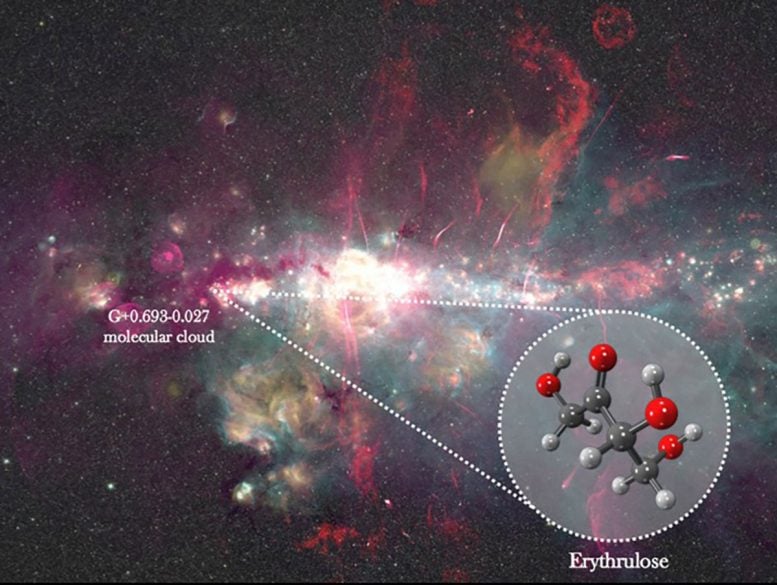
Composite Image From the Galactic CenterResearchers have detected a sugar in the interstellar medium for the first time. Sugars are central to life. They help form the structural backbone of DNA and RNA and participate in essential metabolic reactions. They are also thought to have been necessary for the formation of the earliest nucleic acids. Yet researchers studying life’s origins [...]
  •  

IRB Barcelona Leads MD4SB Project to Advance Dynamic Representation in Structural Biology

In the ever-evolving landscape of biomedical research, the advent of molecular dynamics simulations has heralded a new era of insight into the dynamic behavior of biological macromolecules. Yet, despite the immense volumes of data generated by these simulations, much remains untapped due to the lack of adequate infrastructure for storage, sharing, and reuse. Addressing this critical gap, the MD4SB (Molecular Dynamics for Structure-based Biology) project emerges as a visionary initiative poised to revolutionize how molecular dynamics data is integrated, managed, and exploited across Europe.

Set to launch in September 2026, MD4SB is a collaborative endeavor funded with €10 million under the Horizon Europe program and coordinated by the Institute for Research in Biomedicine (IRB Barcelona). The project unites 25 partners spanning eight countries, encompassing academic institutions, European research infrastructures, supercomputing centers, as well as biotech and pharmaceutical companies. By doing so, it offers a multidisciplinary approach aimed at transforming fragmented computational efforts into a coherent, accessible, and reusable resource for the scientific community.

At the core of MD4SB is the establishment of an innovative infrastructure designed to dynamically describe biological macromolecules through molecular dynamics data. Unlike traditional structural biology methods that primarily capture static snapshots of molecules, molecular dynamics simulations reveal the conformational flexibility and temporal evolution of proteins and nucleic acids. This dynamic information is crucial for fully understanding molecular function, interaction mechanisms, and especially drug binding processes, thus providing a more nuanced picture for drug discovery initiatives.

MD4SB builds on the foundations laid by the Molecular Dynamics Data Bank (MDDB), which pioneered a distributed platform adhering to the FAIR principles—making data Findable, Accessible, Interoperable, and Reusable. The project advances this concept by integrating molecular dynamics data within three major European Research Infrastructures: Instruct-ERIC, which specializes in structural biology; ELIXIR, focused on life sciences data management; and EU-OPENSCREEN ERIC, a chemical biology and compound screening infrastructure. This integration ensures that molecular dynamics data becomes a shared asset rather than an isolated entity confined to individual laboratories.

Leveraging the capabilities of Europe’s largest supercomputing centers—specifically the Barcelona Supercomputing Center (BSC-CNS), CINECA in Italy, and the Jülich Supercomputing Centre (JSC)—MD4SB provides the computational muscle necessary for processing, storing, and analyzing massive datasets. These centers, combined with emerging AI Factories, will enable cutting-edge analysis pipelines that augment traditional molecular dynamics approaches with artificial intelligence, thus enhancing the extraction of biologically meaningful patterns from complex simulations.

One of the landmark objectives of MD4SB is to catalyze early drug discovery by enabling scientists to visualize the dynamic movements of proteins and other biomolecules that are often invisible in static crystal structures. Molecular dynamics simulations can reveal transient binding pockets and allosteric sites, which are pivotal for designing new therapeutic compounds with higher specificity and efficacy. By facilitating access to these insights within existing infrastructures, MD4SB aims to speed up the identification of drug candidates and reduce costly experimental failures.

Industry engagement lies at the heart of MD4SB’s strategy. Leading pharmaceutical companies such as Almirall and Sanofi are involved as associate partners, providing critical feedback to ensure that the developed platform not only serves academic research but also aligns with industrial requirements. The involvement of Nostrum Biodiscovery—a biotech spin-off from IRB Barcelona and BSC-CNS—further exemplifies the project’s commitment to bridging the gap between fundamental research and commercial application by easing the transition of innovations into practical tools.

Dr. Modesto Orozco, coordinator of MD4SB and head of the Molecular Modelling and Bioinformatics laboratory at IRB Barcelona, highlights the transformative potential of this initiative: “For the first time on a European scale, MD4SB will merge structural biology, molecular dynamics, artificial intelligence, and drug discovery into a seamless ecosystem. Our vision is to democratize molecular dynamics, making it a common capability accessible to researchers across disciplines.”

The strategic approach of MD4SB entails the seamless coupling of three complementary research infrastructures, encompassing the full spectrum of biomedical research phases: from structural protein characterization, data stewardship and interoperability, to chemical biology screening for therapeutic potentials. This holistic integration enables unprecedented collaborative workflows, where data generated in one context can be analyzed, reanalyzed, and repurposed across diverse scientific domains.

Central to the success of MD4SB will be its adherence to data standards and protocols that guarantee FAIR compliance, ensuring that the vast repositories of molecular dynamics simulations remain discoverable and usable well beyond the lifespan of individual projects. This commitment is indispensable in preventing the loss of valuable computational endeavors, promoting reproducibility, and fostering innovation driven by shared resources.

By significantly expanding the accessibility and applications of molecular dynamics data, MD4SB promises to address a longstanding bottleneck in the life sciences: the disconnect between data generation and data reuse. The project envisions a future where high-quality, large-scale molecular simulations are no longer restricted to elite research groups but are a universally available asset, fueling discoveries in biology, chemistry, and medicine.

The timeline for MD4SB spans four years, during which it will not only develop and deploy the integration platform but also benchmark its utility through real-world case studies involving both academic and industry partners. Through this collaborative validation process, the project expects to establish best practices, refine analytical tools, and build a sustainable infrastructure that institutionalizes molecular dynamics as a pillar of modern biomedical research.

In conclusion, MD4SB heralds a transformative chapter for the European research ecosystem by converging molecular dynamics with cutting-edge computational resources and artificial intelligence within a unified framework. Its success will empower scientists to decode the dynamic complexity of biological molecules at an unprecedented scale, accelerating drug discovery pipelines and fostering interdisciplinary collaboration in the era of data-driven bioscience.


Subject of Research: Molecular dynamics integration and infrastructure for structure-based biology, drug discovery, and biomedical research.

Article Title: MD4SB: Revolutionizing Molecular Dynamics Data Sharing and Integration Across Europe

News Publication Date: June 17, 2026

Web References:

Image Credits: IRB Barcelona

Keywords: Molecular dynamics, Structural biology, Supercomputing, Artificial intelligence, Drug discovery, Data infrastructure, FAIR data, Biomedical research, European Research Infrastructures, Computational biology

  •  
❌