❌

Reading view

Brechas no Zoom permitiam controle de dispositivos durante videochamadas

Pesquisadores da A Security revelaram vulnerabilidades na plataforma de videoconferência Zoom que poderiam ter sido exploradas para assumir o controle dos dispositivos dos usuários — em um ataque denominado “Zoomsday”.

Qualquer pessoa em uma chamada que envolvesse compartilhamento de tela — fosse participante ou anfitrião — estaria vulnerável a um ataque executável sem qualquer indicação ou interação por parte da vítima.

Os especialistas afirmam que a falha foi descoberta no início de junho, utilizando modelos de IA disponíveis publicamente, e que foram necessários menos de 20 comandos para identificar as vulnerabilidades e criar um ataque funcional.

O que nos interessa — e o que consideramos perigoso — é a democratização dessas capacidades; a barreira de entrada está caindo rapidamente. Antigamente, seria necessária uma equipe de cinco pessoas trabalhando talvez seis meses, com muitos ajustes e iterações, para descobrir isso. Agora, é possível obter os mesmos resultados com menos de 20 comandos. Além disso, o Zoom é um alvo importante porque as pessoas confiam na plataforma ao utilizá-la; elas não a veem como uma ameaça.

—Omer Gull, cofundador da A Security.

Ainda segundo os pesquisadores, as vulnerabilidades estavam localizadas especificamente no protocolo usado para permitir anotações em tempo real durante o compartilhamento de tela.

De acordo com informações do WIRED, o Zoom emitiu um comunicado de segurança nesta semana detalhando as correções das brechas, as quais afetavam dispositivos com todos os sistemas operacionais suportados pela plataforma — Windows, macOS, Linux, iOS e Android.

  •  
  •  

GNOME Disks com GTK4 e libadwaita muda completamente de visual; veja como ficou

CompartilharO GNOME Disks está sendo atualizado para GTK4 e libadwaita e o GNOME Disks com GTK4 e libadwaita muda completamente de visual. Veja as principais …

O post GNOME Disks com GTK4 e libadwaita muda completamente de visual; veja como ficou apareceu primeiro em Blog do Edivaldo - Informações e Notícias sobre Linux.

  •  

Google revela teaser do Pixel 11 Pro antes do lançamento oficial

Conheça o novo Pixel 11 Pro da Google, com teaser que destaca design e promete inovação no lançamento.

O post Google revela teaser do Pixel 11 Pro antes do lançamento oficial apareceu primeiro em Blog do Edivaldo - Informações e Notícias sobre Linux.

💾

Aproveite vídeos e músicas que você ama, envie e compartilhe conteúdo original com amigos, parentes e o mundo no YouTube.
  •  

Xbox PC and Game Pass titles are coming to Linux through 'Xodus' — Heroic Launcher devs embark on new open-source reverse-engineering project

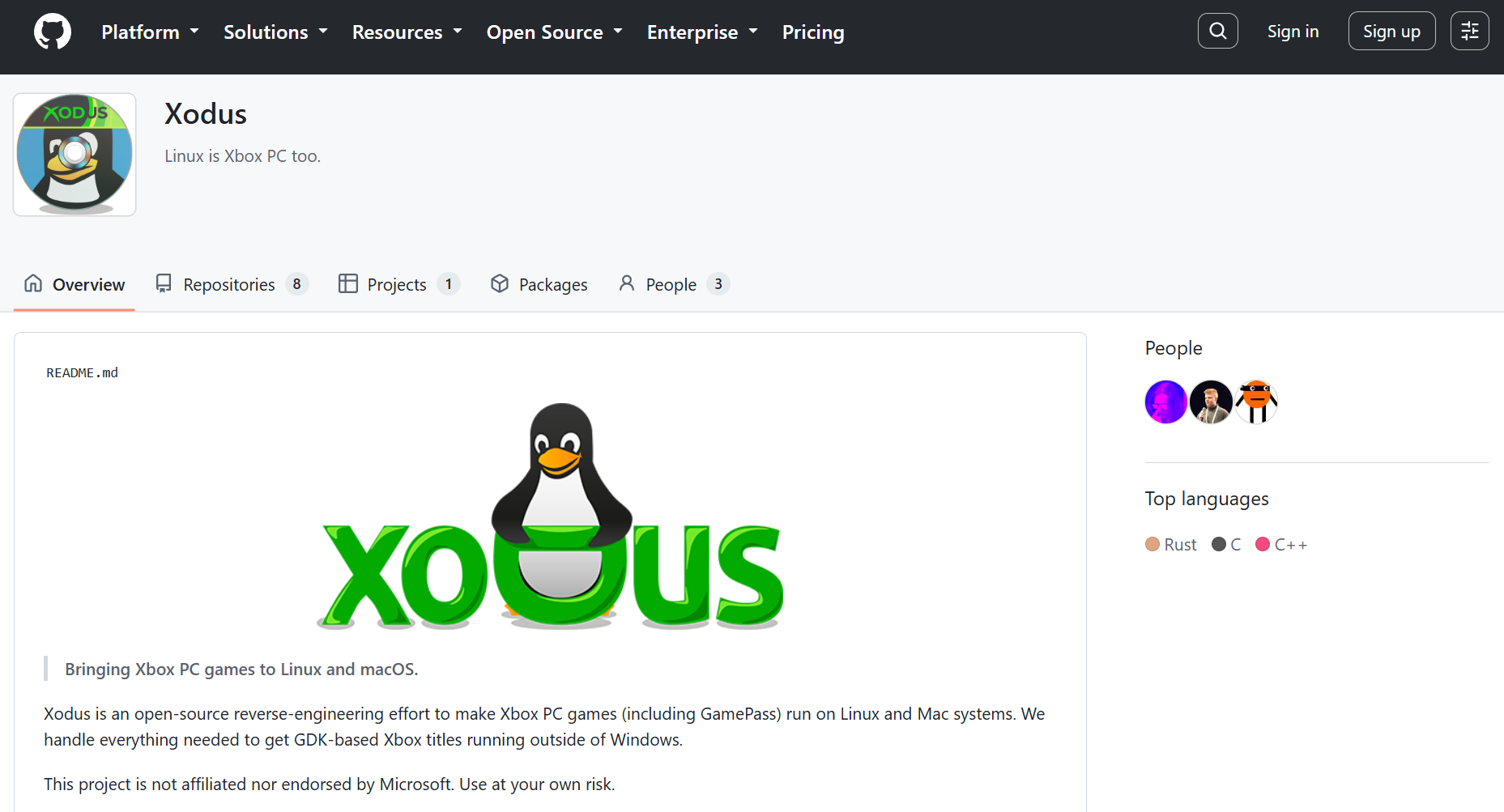
Xbox PC games, distributed through the Xbox app, fail to run on Linux because of Microsoft's proprietary GDK runtime environment. This also breaks Game Pass even though the company supports cloud streaming Game Pass titles. A new open-source project from the developers of Heroic Launcher, called "Xodus," is aiming to fix this by reverse engineering and emulating the necessary components required for Xbox PC games on Linux.

The Xodus GitHub page.

(Image credit: Tom's Hardware)

Xodus primarily targets modern, GDK-based Xbox PC titles and their MSIXVC packages; not older, UWP-based releases like Gears of War 4 and early Forza Horizon games. The problem with those isn't the DirectX API or x86 instructions; Proton and DXVK/VKD3D can already translate those. That's also the reason why you can still run Xbox PC games on Linux if you somehow get your hands on the DRM-free executables.

The real issue is the trifecta of Microsoft's proprietary GDK (Game Development Kit), Xbox identify services, and encrypted MSIXVC packages. This framework is responsible for verifying licenses for the games you own through the Xbox app. Without it running in the background, the games will simply crash right as you try to open them, or not launch at all. This is where Xodus comes into play.

The Xodus team says the project can already log into Xbox services, download game packages and obtain game licenses. It includes its own open-source implementation of the xgameruntime.dll and custom forks of both Wine and Proton, along with xal-rs, which is an Xbox authentication library for Rust. Xodus uses proxy libraries to interface with GDK games and intercepts API calls to transmit valid Xbox Live tokens.

Comment
 from r/linux_gaming

For now, efforts are focused on emulating the Xbox Gaming Runtime from the Xbox GDK through Wine, then the project will move on to actually launching and playing Xbox PC titles locally. Considering they've already solved the Xbox/Microsoft authentication, license check, and package decryption hurdles, it shouldn't be long before we see PC Game Pass running natively on Linux.

BedrockonLinux 2.0, another open-source project that brings Minecraft Bedrock to the platform, already relies on similar reverse-engineering tech to handle these components since Microsoft migrated the game to GDK. This allows the game to talk to Xbox Live in real-time through a secure doorway to authenticate tokens despite the game running in a sandboxed environment like SteamOS (Linux).

Microsoft itself brought four original Xbox titles to PC last month and it says more are coming, along with leaked documents suggesting Xbox 360 titles also releasing on PC next year. These games come with a baked-in Xbox 360 emulator. It's not clear if these games use the same GDK stack as native Xbox PC titles, however.

  •  
❌