Reading view
MacVoices #26144: NAB – Blackmagic Design’s Creator Empowerment Philosophy
More Starlink satellites and two big launches for China
Rocket launches this week On Tuesday, Aug. 18, Chinese aerospace firm LandSpace is targeting 7:35 p.m. EDT for the second flight of its Zhuque-3 rocket from the Jiuquan Satellite Launch Center in China, according to tracking from Next Spaceflight. The launch was scrubbed last week after a Long March 7A rocket exploded hours before Zhuque-3’sContinue reading "More Starlink satellites and two big launches for China"
The post More Starlink satellites and two big launches for China appeared first on Astronomy Magazine.
How do slingshot maneuvers work to propel spacecraft?
If a satellite’s velocity increases as it approaches a planet during a slingshot maneuver, why does it not decrease by the same amount when it leaves the planet? How can it experience a net gain in velocity? Robert WaltyStephens City, Virginia Slingshot maneuvers can seem counterintuitive. We know that a spacecraft speeds up as itContinue reading "How do slingshot maneuvers work to propel spacecraft?"
The post How do slingshot maneuvers work to propel spacecraft? appeared first on Astronomy Magazine.
WhatsApp adiciona campo para nome de usuário à tela de criação de contatos
Depois de permitir que os nomes de usuário sejam compartilhados e conversas sejam iniciadas a partir deles, o WhatsApp agora disponibilizou um campo para que seus usuários criem novos contatos salvando apenas o username, dispensando a necessidade de atrelar qualquer pessoa a um número de telefone.
A alternativa permite, por exemplo, checar os status de um determinado contato, ou habilitar que ele veja determinadas informações do seu perfil (como o seu ícone ou o campo de recado) caso a visibilidade esteja restrita à sua lista de contatos — coisas que só eram possíveis antes ao salvar seu número de telefone.
WhatsApp launches a username field for new contacts, compatible with Status Sharing!
— WABetaInfo (@WABetaInfo) August 10, 2026
On Android and iOS, WhatsApp has introduced a new field for the contact creation screen that lets users save a contact's username alongside their name.https://t.co/5hSI6SUrs0 pic.twitter.com/InGkJzgI7W
No Android e no iOS, o WhatsApp introduziu um novo campo na tela de criação de contato que permite aos usuários salvar o nome de usuário do contato junto do seu nome.
wabetainfo.com/whatsapp-launc…
O novo campo está disponível tanto no iOS quanto no Android na tela já conhecida do público para adicionar novos contatos (ela pode ser acessada tocando no botão “+”, na seção “Conversas”, e depois selecionando a opção “Novo contato”).
Embora ainda não haja uma previsão oficial quanto à disponibilidade geral da novidade, o campo já foi notado por algumas pessoas que instalaram a versão mais recente do WhatsApp na App Store e pelos usuários da versão beta (via TestFlight).
Saudações de boas-vindas em grupos chegando ao iOS
Já presente na versão beta para Android, o mensageiro da Meta está testando no iOS um recurso que permite aos administradores de um grupo enviar uma mensagem automatizada de saudação para cada novo membro que integra a conversa coletiva.
O WhatsApp identifica a mensagem com um balão que inclui o texto “saudação automática”, e ela não poderá ser vista pelo restante do grupo (embora o usuário possa interagir com o recado).
WhatsApp is testing greeting messages for group chats on iOS!
— WABetaInfo (@WABetaInfo) August 11, 2026
WhatsApp is working on a feature that shares a welcome message in group chats.https://t.co/hr6GZoGaMm pic.twitter.com/7BXtCOYXoI
O WhatsApp está trabalhando em um recurso que compartilha uma mensagem de boas-vindas nas conversas em grupo.
wabetainfo.com/whatsapp-is-te…
Mesmo que um grupo tenha vários administradores, haverá apenas uma mensagem de boas-vindas para todo o grupo. Todos os administradores compartilharão o mesmo texto e qualquer um deles poderá editá-lo.
Ainda em desenvolvimento, a ferramenta não foi sequer disponibilizada para testadores do app, embora tenha sido notada na versão 26.31.10.73 beta.


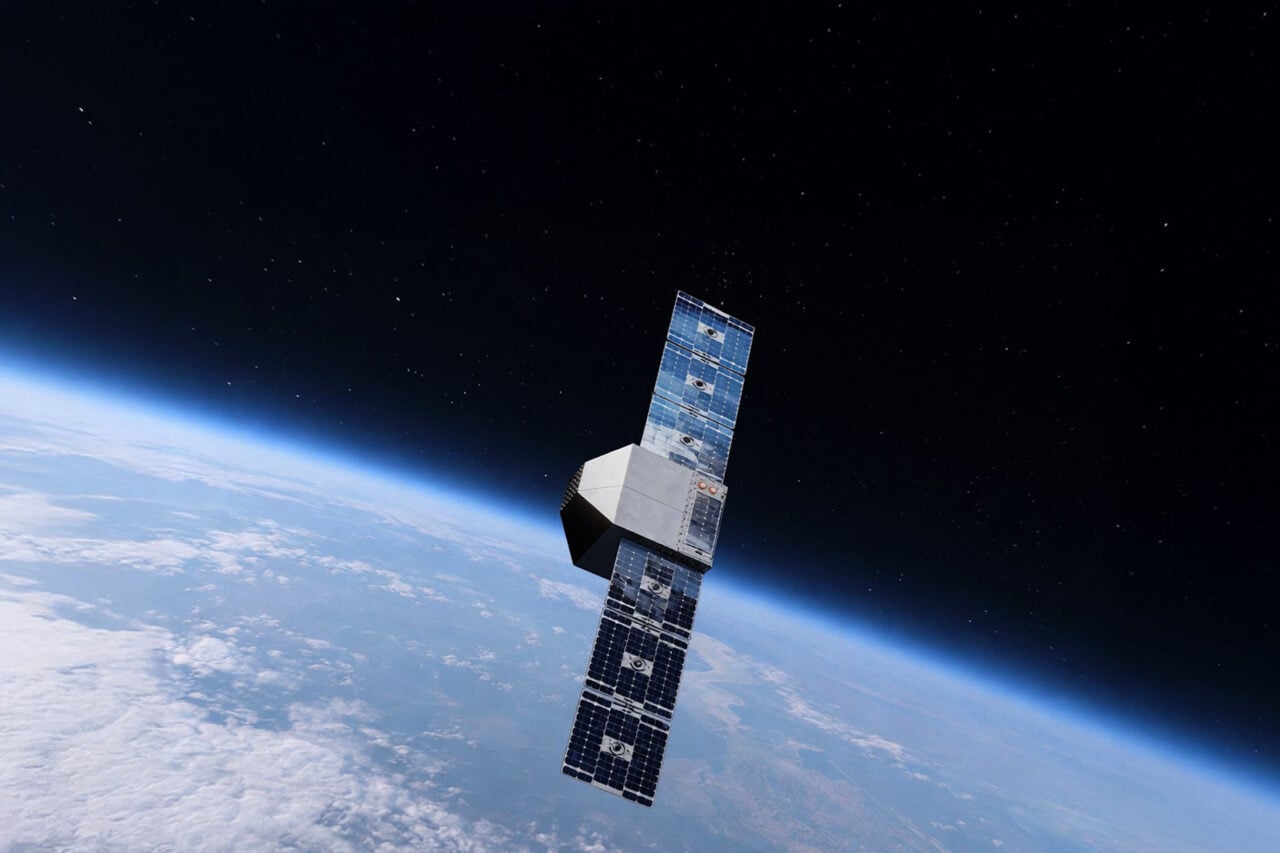
This Satellite Will Literally Breathe Air to Stay in Orbit

A Long March 7A failure opens a week of Starlink launches
Rocket launches this week On Monday, Aug. 10, a Long March 7A rocket carrying an undisclosed payload broke apart roughly one minute and 27 seconds after lifting off from Wenchang Space Launch Site at 8:02 a.m. EST. Footage from online livestreams captured the failure in real time; Chinese state media had not released any informationContinue reading "A Long March 7A failure opens a week of Starlink launches"
The post A Long March 7A failure opens a week of Starlink launches appeared first on Astronomy Magazine.
A Bizarre Dead Star’s Magnetic Field Has Revealed a Strange Surprise, Potentially Confirming a 90-Year-Old Theory
An unusual dead star displaying one of the strongest magnetic fields astronomers have ever seen may offer the clearest evidence yet that regions of space appearing to be void of matter are anything but empty.
An international team of astronomers has revealed that the magnetar 1E 1547-5408 displays behavior consistent with vacuum birefringence, a phenomenon first predicted almost a century ago, but never directly observed—until now.
The findings, detailed in a new study published in the journal Nature, were the product of more than 140 hours of observations in 2025 using NASA’s Imaging X-ray Polarimetry Explorer (IXPE), the Neutron Star Interior Composition Explorer (NICER), and Australia’s Murriyang radio telescope.

Spying on the Universe’s Most Extreme Objects
Ranking among the most extreme objects known to astronomers, magnetars are a variety of neutron stars that display unusually strong magnetic fields.
These extreme celestial objects pack more mass than our Sun into a region of space spanning only a few miles; yet they also manage to generate magnetic fields that are sometimes as much as trillions of times that of our planet.
For the recent study, scientists focused on 1E 1547-5408, a magnetar that spins once every two seconds. This magnetar is atypical since it also emits both intense X-rays and bright radio waves. Measuring the polarization of light it produces, researchers were able to discern that X-ray polarization was almost three times stronger than expected, based on current models that characterize the star’s surface, as well as the geometry of its magnetic field.
An Unusual Signal Emerges
The observed characteristics were unexpected, and to explain this, the researchers looked to the concept of vacuum birefringence, a phenomenon originally predicted in 1936. This predicts that magnetic fields possessing enough power could potentially alter the vacuum of space.
According to quantum theory, the vacuum of space isn’t truly empty—it is filled with fleeting “virtual” particles, and when subjected to the influence of such a strong magnetic field, the quantum vacuum is predicted to behave like an extremely large optical filter, whereby light that passes through it is subtly changed, with its polarization increasing.
Based on computer simulations, the researchers found that the proposed vacuum birefringence phenomenon produced results that appeared to be consistent with both the X-ray and radio observations.
Hoa Dinh Thi, a researcher at Rice University and the recent study’s co-lead author, said the team’s model “suggests that reproducing the observed X-ray polarization signatures, while also satisfying the constraints set by radio observations, requires the presence of vacuum birefringence in the neutron star’s environment.”
“This finding exemplifies how neutron stars enable us to test fundamental physics in environments not replicable in labs on Earth,” Thi added.
Although the team says further observations will be required to confirm their findings, their current results offer the strongest evidence to date for one of the longest-standing predictions in quantum physics.
If confirmed through future observations of magnetars, such findings could reveal the presence of other exotic phenomena that may provide astronomers with a unique opportunity to explore the fundamental nature of space itself—and potentially even more surprises in regions of the cosmos that were long assumed to be “empty.”
The recent study, “Vacuum birefringence and the polarized X-ray emission from a radio magnetar,” appeared in the journal Nature.
Micah Hanks is the Editor-in-Chief and Co-Founder of The Debrief. A longtime reporter on science, defense, and technology with a focus on space and astronomy, he can be reached at micah@thedebrief.org. Follow him on X @MicahHanks, and at micahhanks.com.
Aug. 10, 1990: Magellan enters venusian orbit
On Aug. 10, 1990, the Magellan orbiter arrived at Venus and was inserted into orbit. Its goal was to map the surface of the planet, using radar to peer beneath the cloudy atmosphere. Launched aboard the Space Shuttle Atlantis in May 1989, Magellan was the first deep space probe launched from a shuttle. Budget constraintsContinue reading "Aug. 10, 1990: Magellan enters venusian orbit"
The post Aug. 10, 1990: Magellan enters venusian orbit appeared first on Astronomy Magazine.
Astrolight, ATMOS Space Cargo eye first in-flight laser link between reentry vehicle, satellite

WARSAW, Poland — The Lithuanian space laser communications company Astrolight has signed a memorandum of understanding with ATMOS Space Cargo, to demonstrate in-flight optical communications link between a reentry spacecraft […]
The post Astrolight, ATMOS Space Cargo eye first in-flight laser link between reentry vehicle, satellite appeared first on SpaceNews.
What to Know About Europe’s Total Solar Eclipse: Where to See It and How to Watch Safely
Aug. 9, 1976: Luna 24 blasts off
The Soviet Luna program, designed for lunar research and mission planning, ran from 1959 to 1976. On Aug. 9, 1976, Luna 24, the final mission of the program, launched from the Baikonur Cosmodrome in present-day Kazakhstan. The probe landed on the Moon’s surface nine days later, in the Mare Crisium (Sea of Crises), a previouslyContinue reading "Aug. 9, 1976: Luna 24 blasts off"
The post Aug. 9, 1976: Luna 24 blasts off appeared first on Astronomy Magazine.
Forget Lasers—Researchers Just Created Quantum Entanglement Using Sunlight
Lasers are no longer required to produce quantum entanglement, physicists say, after achieving the state using sunlight. In a laboratory experiment, an international team of researchers demonstrated that natural sunlight can produce quantum-entangled photon pairs.
The researchers recently published their quantum entanglement study in Optica, showing that lasers aren’t the only game in town. The work could herald a new energy-efficient approach to sustainable quantum technologies, both on Earth and in space.
Quantum Entanglement
Quantum technologies such as computing, communications, and sensing rely on the strange principles of quantum mechanics, which often defy explanations rooted in classical physics. Typically, quantum technologies use lasers to convert photons inside a nonlinear crystal into entangled pairs through a process called spontaneous parametric down-conversion (SPDC).
Prior to this work, using sunlight to produce quantum entanglement in photons was largely considered impractical. Researchers had assumed that SPDC depended heavily on phase-stable electromagnetic fields, requiring the high coherence of laser beams. Scientists also believed that the intense power of lasers was crucial to the nonlinear processes that produce entanglement. By contrast, sunlight’s relative weakness and incoherence left it largely overlooked as a viable source for generating entangled photons.
Reconsidering Coherence
Earlier work may have dismissed sunlight too readily because scientists had not fully considered the different dimensions of coherence. Across different parameters, sunlight can exhibit varying degrees of coherence. This means that while a beam of sunlight may be coherent in a particular property, such as polarization, it can still generate quantum entanglement along that parameter.
“As long as the pump beam is perfectly polarized, its spatial or temporal incoherence should not preclude the generation of polarization entanglement,” said lead author Cheng Li in a statement.
“The trick to harnessing sunlight is to keep different degrees of freedom of light from influencing each other during the process,” Li added. “This means that sunlight is perfectly capable of generating entangled photons, as long as one can concentrate enough sunlight into a nonlinear crystal to induce SPDC.”
Directing Sunlight
In a natural environment, sunlight spreads across a broad area rather than remaining tightly focused like a laser beam. Efficiently directing it through a nonlinear optical crystal, only a few millimeters wide, therefore presents a significant challenge.
To overcome this obstacle, the researchers constructed a sunlight concentration system that collects light across a 1.4-square-meter surface and focuses it down to approximately the width of a human hair. The specialized solar concentrator is conical rather than flat and is constructed from glass. As sunlight reflects repeatedly across the interior surface on its way toward the cone’s tip, it becomes progressively concentrated and intensified before traveling through a single optical fiber to drive the SPDC process that generates quantum entanglement.
Quantum Entanglement Results
In laboratory tests, the researchers found that their sunlight-driven SPDC system produced performance comparable to that of a laser, achieving 94% fidelity. The efficiency of the entanglement process was also similar to that achieved with laser-based systems. Together, these findings challenge previous assumptions that SPDC requires highly coherent laser light to operate effectively.
The approach also eliminates the need to first convert electrical energy into optical energy, potentially reducing system complexity, heat generation, and points of failure.
“Sunlight is an abundant and reliable resource in many environments, especially in space. Being able to generate quantum-entangled photons directly from sunlight could enable simpler and more resilient quantum systems for satellites and future deep-space missions,” said Hanieh Fattahi, the study’s co-author, in a statement.
“We believe this work can inspire much new research in nonlinear and quantum optics,” Fattahi said, adding that this research “may in turn make sunlight-driven quantum technology more practical.”
The paper, “Generating Quantum Entanglement from Sunlight,” appeared in Science Advances on August 5, 2026.
Ryan Whalen covers science and technology for The Debrief. He holds an MA in History and a Master of Library and Information Science with a certificate in Data Science. He can be contacted at ryan@thedebrief.org.

The X, a Pro, and Air: 10 Years of iPhone design
The iPhone X is a testament to device longevity, and durability. I gave mine to a family member when upgrading to an Xs Max in Late 2018, who held onto it all these years through a few different protective cases. Today I got it back where it’ll remain in my collection, after they upgraded to […]
The post The X, a Pro, and Air: 10 Years of iPhone design appeared first on Low End Mac.
A Four-Ton SpaceX Rocket Stage Hit the Moon, but No One Saw It
“Surpassing the Evolutionary Boundaries of Biological Photoreception”: Scientists Invent Eyeglasses That Let Wearers See the Infrared in Full Color
Scientists from the Beijing Institute of Technology have revealed a colloidal quantum dot (CQD)-based infrared-to-visible upconverter that transforms the infrared spectrum into full color, allowing people to ‘see’ the infrared in the visible light spectrum.
The research team behind the novel invention said their upconverter can be used in eyeglasses to improve human vision and for augmented reality (AR) applications. They also reported a successful implantation of an upconverter in mice, opening the possibility of an implantable photoreceptor to repair or improve vision in human eyes.
Attempts to Convert Infrared to Full Color Face Limitations
In a published study detailing the novel, full-color IR glasses, the human eye is “inherently blind” to infrared radiation. Although IR radiation interacts with the retina, infrared wavelengths lack the energy to trigger the photoisomerization of the retinal chromophore that lets people distinguish colors. As a result, humans don’t have visual access to over half of the solar spectrum.
Still, the researchers write, “harnessing this imperceptible radiation is critical, as infrared perception unlocks a vast reservoir of inaccessible information.” For example, this added visual information enables critical functions in other animals, such as navigation in darkness or detecting predators and prey from their heat. Still, they observe that our natural visual-light spectrum vision is “utterly inadequate” to access this information that so many animals rely upon.
In their study, the researchers highlight recent advances in accessing the IR spectrum, including “ocular injectable photoreceptor-binding upconversion nanoparticles” that convert infrared light into visible emissions. Other studies have also evaluated wearable lenses with nonlinear upconversion projecting infrared-transformed visible light onto the cornea and photovoltaic nanowire networks.
Although these approaches achieved some IR sensitivity, the study authors said they remain “fundamentally constrained” to narrow near-infrared (NIR) spectral response. These prior efforts also relied on high-intensity laser excitation that the team notes is “incompatible with natural infrared radiation.” The result is a “mostly monochromatic output” lacking infrared spectral discrimination in full color.
Subtle IR Wavelength Variations Facilitate Upconversion
For their new approach, the research team investigated a mercury telluride (HgTe) CQD-based infrared-to-visible upconverter. They note that this material combination leverages the material’s “quantized energy level states” in synergy with a separate, dual-emissive-layer organic light-emitting diode (OLED).
Specifically, the engineered layers captured IR photons in strategically engineered hole-trapping barriers. The team explains that this “allows for subtle differentiation of infrared input by tuning the emitted visible color and luminance” based on infrared wavelength and intensity.

“This upconversion yields a discrimination sensitivity to subtle infrared variations exceeding two orders of magnitude higher than conventional single-color modes, capitalizing on the human eye’s intrinsic superiority in chromatic differentiation over simple luminance contrast,” they explain.
To test their material’s IR upconversion ability, the researchers designed a pair of lightweight (23 grams) semi-transparent wearable eyeglasses. The team said these tests were a success, achieving “high-resolution infrared imaging” derived from the infrared spectral information. However, instead of monochrome, the research team said that data is displayed as full-color visible patterns directly onto the retina, “enabling intuitive infrared vision without obstructing natural sight.”
Surpassing the Evolutionary Boundaries of Biological Photoreception
Although the current version of the full-color, infrared-capable glasses is still in the development stages, the team said the technology could lead to advancements in visual prosthetics, augmented reality (AR), and “navigation under environmental conditions where normal sight is degraded.”
Following the successful validation in mice, the team said their technology could also serve as the technological basis for an implantable new-generation retinal photoreceptor. In that design, the team said an implanted device could transform infrared light into visible light emissions “that stimulate light-sensitive proteins on retinal neurons to bypass damaged photoreceptor cells and potentially restore visual function across both the visible and infrared spectra.”
“By surpassing the evolutionary boundaries of biological photoreception, this technology paves the way for next-generation visual prosthetics, high-fidelity augmented reality, molecularly sensitive substance identification, and robust navigation in degraded visual environments,” they conclude.
The study “Multispectral infrared-to-full-color upconversion expanding human vision” was published in Science Advances.
Christopher Plain is a Science Fiction and Fantasy novelist and has spent the last six years as Associate News Editor and Head Science Writer at The Debrief. Follow and connect with him on X, learn about his books at plainfiction.com, or email him at christopher@thedebrief.org
Aug. 6, 2012: Curiosity lands on Mars
NASA launched its Mars rover Curiosity inside the Mars Science Laboratory (MSL) on Nov. 26, 2011. Complete with 10 science instruments and 17 cameras, the robot can analyze mineral types, search for signs of microbial life, and take color panoramas of the Red Planet’s surface. Curiosity’s landing on Mars was a new process, nicknamed theContinue reading "Aug. 6, 2012: Curiosity lands on Mars"
The post Aug. 6, 2012: Curiosity lands on Mars appeared first on Astronomy Magazine.
A SpaceX Rocket Will Soon Crash Into the Moon
Village Tronic VTBook: a whole GPU on a PCMCIA card
You heard that right, an entire GPU crammed into a compact PCMCIA card. What looks like an unassuming adapter for PowerBooks and PCs to hook up an external monitor, turns out to have an entire Trident Cyberblade XP2 chip crammed in there. Featuring many supported resolutions including up to 2048 x 1280 @60Hz […]
The post Village Tronic VTBook: a whole GPU on a PCMCIA card appeared first on Low End Mac.