Apple Vision Pro’s measurable impact in surgery leads a discussion of spatial computing in medicine, including shorter procedures, surgeon ergonomics, patient benefits, and equipment costs. The panel also explores CarPlay on pontoon boats, Apple Maps versus Waze, another delay in Apple’s legal fight with Jon Prosser, and the difficult privacy compromises surrounding Siri and Apple Intelligence in China.
Apple’s lawsuit accusing OpenAI of obtaining trade secrets through former employees raises questions about corporate ethics, recruitment practices, confidentiality agreements, and OpenAI’s hardware ambitions. The panel considers the potential legal and financial consequences before examining Apple’s plan to end support for encrypted HFS+ volumes and what users should do with older drives.Panel members include: Chuck Joiner, David Ginsburg, Marty Jencius, Eric Bolden, Brian Flanigan-Arthurs, Jim Rea, Web Bixby, Jeff Gamet, and Mark Fuccio.
Apple’s stock rebounds after recent product price increases, prompting a discussion of customer loyalty, upgrade timing, refurbished options, and long-term confidence in the company. Chuck Joiner, David Ginsburg, Eric Bolden, Jim Rea, and Marty Jencius also examine why advanced Home features may require a 2TB iCloud+ plan, then debates Apple’s rumored foldable iPhone, including price, […]
The MacVoices Live! panel reviews WWDC week from both developer and user perspectives, including on-site activities, and the Flip the Script event. Chuck Joiner, David Ginsburg, Jim Rea, Marty Jencius, Web Bixby, Jeff Gamet, and Eric Bolden react to Apple’s keynote versus the State of the Union, AI and Siri expectations, Vision Pro’s apparent future, developer access to Apple Intelligence, and private cloud compute limits.
Mike Schmitz previews his Road to Macstock session on starting a YouTube channel in 90 minutes, emphasizing creativity, repetition, audience connection, and practical tools over perfection. Mike discusses handling harsh comments, finding personal value in publishing, and using AI thoughtfully as a creative partner. His goal is to help get anyone on YouTube that wants to be there.
Only a few hours after Apple’s WWDC keynote, members of the MacPaw leadership team sat down for a conversation about Apple Intelligence, and Siri’s renewed promise. Topics touched on included privacy, developer access to user context, hybrid AI processing, Setapp’s role, and how AI is reshaping app creation, customer support, and software strategy. Participants included Oleksandr Kosovan, Founder and CEO?, Sergii Kryvoblotskyi, Director of AI and Research, Dmytro Melnyk, Chief Product Officer and Grant Belaire, Chief Marketing Officer.
At MacPaw’s Flip the Script event following Apple’s WWDC 2026 keynote, MacPaw executives discuss Apple Intelligence, Siri AI, privacy, local-first AI, developer access to user context, and the company’s shift toward AI platforms. The conversation also explores hybrid AI models, European limitations, parental controls, Google’s role, Setapp opportunities, and MacPaw’s credibility with users and developers. […]
Com a disponibilização do Gemini no Google Chrome para Macs, ficou muito fácil consultar o serviço de inteligência artificial da empresa para alguma atividade que precisa fazer.
Por padrão, o painel lateral do Gemini fica localizado na parte direita da tela do seu computador. Mas, se preferir, é possível que ele seja mostrado no lado esquerdo.
De acordo com uma reportagem da Reuters, a Apple poderá usar uma estratégia híbrida na adoção de recursos de inteligência artificial na China. Em vez de confiar apenas em plataformas de terceiros chinesas, a Maçã pretende também adotar sua tecnologia proprietária no país.
Segundo a agência de notícias, a Maçã estaria treinando seu próprio modelo de IA especificamente para a China — algo que a permitirá ter um maior controle sobre a Apple Intelligence em seu mercado mais competitivo fora dos Estados Unidos (mas sem abrir mão das parcerias).
Esse modelo teria sido desenvolvido em parceria com o Alibaba (e treinado com o apoio da empresa). Caso seja aprovado, ele será o primeiro modelo proprietário de uma empresa estrangeira a ser aprovado no país e permitirá à Apple lidar com as muitas barreiras regulatórias chinesas.
Isso indica que a Apple não pretende substituir por completo as tecnologias de terceiros em seu conjunto de IA no país, mas que poderá usá-las em conjunto com seus modelos proprietários e escolher o mais apropriado para tarefas diferentes a serem realizadas nos seus sistemas.
Following a growing string of high-profile departures, OpenAI has lost its head of ethics at arguably the worst time possible.
As the Financial Times reports, Chloé Bakalar left her post as the AI ethics lead in July, less than a year after joining the company and without any accompanying announcement. Interestingly, her LinkedIn still claims she’s employed at the firm.
There currently is no replacement lined up, suggesting shifting priorities at the company. According to the FT‘s sources, Bakalar was the only remaining dedicated ethicist at the company.
The timing of Bakalar’s departure is noteworthy. The Sam Altman-led company has been embroiled in a major controversy after revealing that a group of its AI models broke containment and hacked into the systems of open source AI platform Hugging Face.
In other words, OpenAI needs a competent team of AI ethicists now than ever before as the industry reels from the possibility of frontier AI models going rogue, in what many experts say is a cybersecurity nightmare in the making.
“We cannot rule out critical cyber capabilities,” the company admitted, following internal evaluations of the model.
Bakalar had been primarily tasked with coming up with ethical approaches to AI model development and studying how AI interacts with humans.
“Ethics is actually everyone’s responsibility, and I say that as someone whose job it is to lead this work,” she told audiences during a recent AI conference, as quoted by the newspaper. “You shouldn’t just come to people like me. There should never just be one person who serves as the moral centre of an AI developer.”
It’s a particularly symbolic departure for a company that once billed itself as an ethical non-profit. The company restructured itself into a primarily for-profit business last year, largely betraying its non-profit roots. The company’s plans to go public could further erode any lingering commitments to the ethical development of AI.
Meanwhile, its competitor Anthropic, which has long billed itself as the more ethical alternative to OpenAI, is similarly struggling to maintain its public image. The company dropped its core safety commitments earlier this year.
The company still has an alignment team, led by philosopher Amanda Askell, who is tasked with giving its flagship chatbot Claude a sense of right and wrong.
Brad Lightcap, a longtime leader, said he was starting a new venture. His exit from the artificial intelligence company is the latest in a series there.
The new label, which will begin to be applied next month, is an effort by the streaming service to be more transparent about A.I.-generated music on its app.
For protestors rising up against the data centers undergirding the AI boom, the math is simple: wherever they sprout, the facilities make frightfully poor neighbors — inflating utility prices, discharging hazardous waste, and blasting horrid noise at all hours of the night.
For data center developers, there’s a different calculation to be made: namely, one of supply and demand around the seemingly infinite drive for computing power.
Against the backdrop of an industry measured in the trillions of dollars, a few scattered protests at city hall may seem inconsequential. Yet as more and more local campaigns arise in opposition to data centers, the collective financial implications are becoming impossible to ignore.
According to new reporting by Reuters, which indexed data compiled by the research firm Data Center Watch, there are now hundreds of billions of dollars exposed to the growing risk of local opposition.
In the first three months of 2026 alone, at least 75 separate data center projects faced some kind of organized opposition at the local level. Together, those 75 developments represent a combined $130 billion worth of investments.
The funders of those data centers include major banks, but also more than a few private equity firms, which are sure to notice as the social risk to their data center investments climb.
Simply put, the potential that any given data center could be cancelled due to local opposition is rising, a sign that organized efforts against data centers are becoming more than the sum of their parts.
Yet despite growing costs, opposition alone may not be enough to slow the behemoth industry. As one anonymous senior official at a foreign lending firm told Reuters, investors are now becoming more comfortable pricing in cancellation risks as the demand for AI compute grows — like frogs adjusting to boiling water.
Bad news for anyone seeking a job in this AI-infested hiring hellscape: not even Google’s top AI lab can figure it out.
That’s according to an HR memo viewed by Bloomberg, encouraging job-seekers to fill out a special AI-proof form on top of their standard application so that a “real human” will know they applied.
The document, which contains the delicious disclaimer “PLEASE DO NOT SHARE THIS DOC WIDELY,” is ironically the product of Google DeepMind’s AGI Safety and Alignment Team. Taken at face value, it pretty blatantly admits that whatever AI-integrated hiring software the lab uses to review candidates has been dumping CVs straight into the garbage.
“We have an applications system with a non-trivial probability your CV will be screened out incorrectly or take too long to reach us,” the memo explains. “Filling out this form makes sure that a real human on the team will get to see your application.”
Even in the face of the memo, a spokesperson for Google’s DeepMind project insisted to Bloomberg that the company’s AI hiring software is working just fine.
“This team set up a special form to go past the recruiter review, and get their resumes direct to the people on the team,” the spokesperson said. “But there are no shortcuts to getting hired.”
All told, it’s a wild admission from any Google division, not to mention its flagship AI research hub. For the DeepMind crew, specifically, to throw up their hands and invent a workaround to sneak past the company’s own AI hiring software is galling beyond words.
It’s safe to say AI slop has completely obliterated the digital hiring ecosystem millions depend on to find work — and if Google’s top AI minds can’t fix it, what hope do the rest of us have?
Whether you’re looking for medical advice or tips on industrial agriculture, one thing is abundantly clear: never trust an AI chatbot without first getting a second opinion, preferably from a human who has actual expertise in the topic.
That’s the takeaway from an incident in the small city of Chuzhou, China, after a large langue model dispensed some advice that led to the untimely death of 25 acres worth of produce.
According to the Taiwanese publication CTWANT, a 67-year-old farmer surnamed Wu decided to start consulting an AI chatbot for advice nearly a year ago. He was reportedly skeptical at first, though the farmer began to let his guard down after some early successes with the AI’s farming tips.
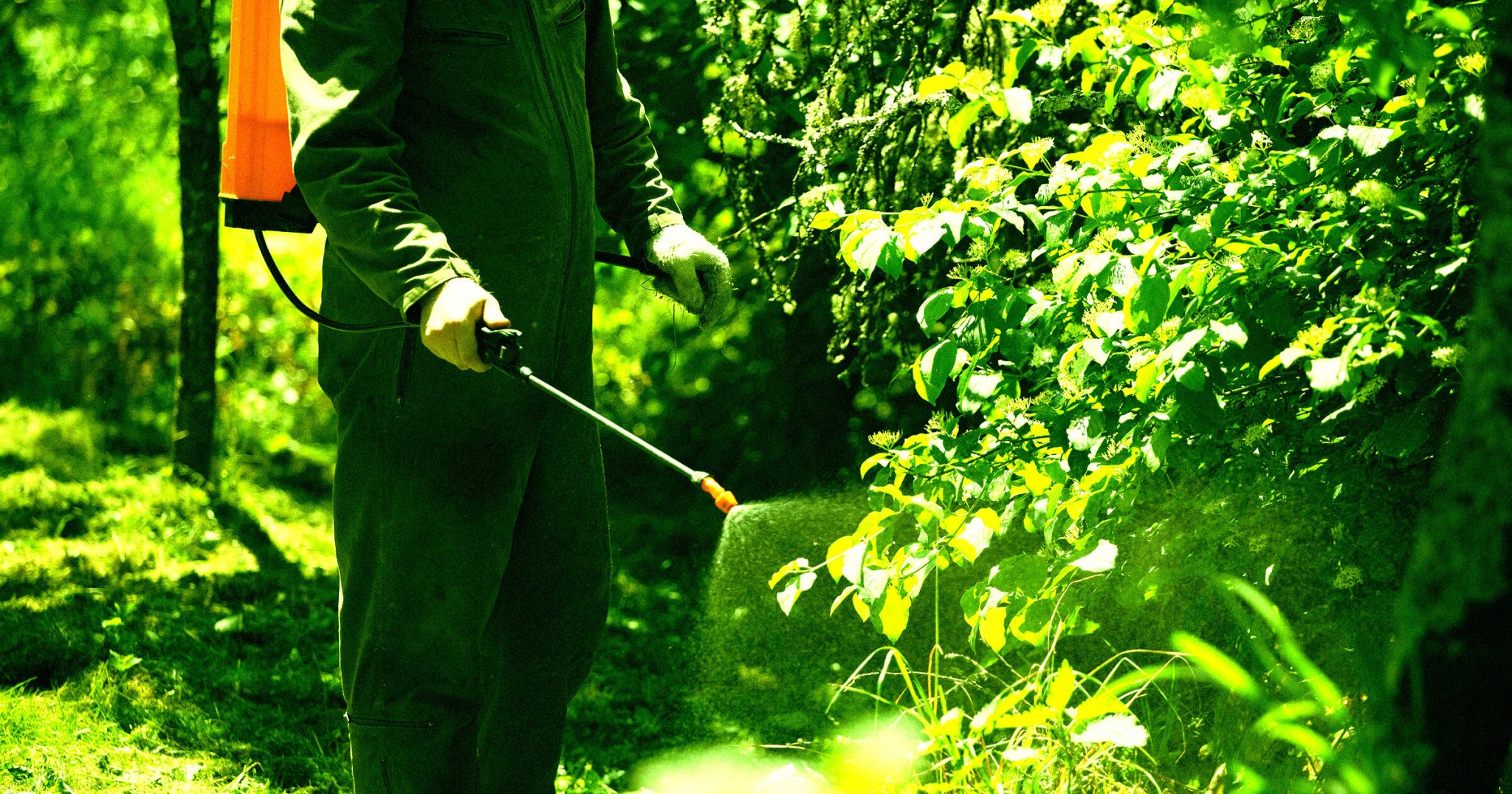
Since that time, Wu has come to rely on his LLM for everything from fertilizing guidance to scheduling various tasks around the farm. After months of fruitful consultations, he decided to follow his AI chatbot’s new pesticide plan to the letter, letting loose on some 25 acres of precious sesame seedlings, all without ever double-checking with an expert or outside documentation.
The plan generated for him was basically a Long Island ice tea of agro-chemicals: a mix of “high-efficiency flupyridine” and “flufenazate” for pesky weeds, with plenty of “thiamethoxam” and “emamectin benzoate” for bugs and other pests, CT reported.
Not even a day after treatment, Wu says his juvenile sesame crop began to wither and die.
Per a video interview later translated by Tom’s Hardware, the farmer offered some hard-earned advice to any other growers looking to use his concoction: “If you spray it, the next day the seedlings won’t survive.”
“Both the grass and the seedlings will die, and the seedlings will die even faster,” Wu lamented.
It’s just the latest case of an LLM cooking up some slop that lands a professional in hot water. If nothing else, Wu’s in good company: he joins a host of other dupes across the legal, medical, financial, education, and media industries who’ve likewise fallen prey to an AI chatbot’s inaccurate output.
It’s no secret that doctors across the world are using AI tools to do stuff from taking notes to looking up questions. But what about the next generation of doctors still in training? According to two medical professionals on the ground, the situation is looking pretty alarming.
With AI being used by med students, “the danger is not just deskilling but never-skilling,” write Simar Bajaj, a journalist and med student at the Stanford University School of Medicine, and Joseph Sakran, a trauma surgeon and executive vice-chair of surgery at Johns Hopkins Medicine, in an essay for The Guardian.
“Although a doctor who has forgotten how to reason is recoverable,” they added, “one who never learned how may not be.”
Bajaj and Sakran point to two alarming recent findings.
One is internal data showing that around two thirds of doctors in the US are using OpenEvidence, an AI chatbot specifically designed for clinicians. The technology is already prevalent and deeply woven into how medical professionals carry out their jobs.
The next is a new study published in the journal NatureMedicine that evaluated the reliability of these medical-specific large language models. Shockingly, the clinical AI tools performed worse at answering medical queries than general purpose chatbots like ChatGPT and Claude did, the work found. According to the authors, it performed about on par to Google’s AI Overviews, which are notorious for being wonky and inaccurate.
Even if AI tools may be handy for research — and putting aside the major questions over their reliability — they’re no substitute for relying on your brain, as fallible as it might be, because when you’re learning, “the struggle is the point.”
“For example, trainees once asked to build a list of potential diagnoses might struggle and offer an incomplete set, learning what they missed, sometimes painfully,” Bajaj and Sakran wrote. “Now, trainees can simply ask OpenEvidence and get a nearly perfect answer, complete with possibilities they might have never considered and none of the embarrassment of having overlooked them.”
Where AI is different from medical advances in the past is that it’s “not just expanding what doctors can see,” they wrote, “but inserting itself into the cognitive machinery that training is meant to build.”
“The process of deliberately crafting the note forces us to use our brains to really wrestle with what’s happening,” Jaideep Talwalkar, associate dean of educational technology and innovation at Yale School of Medicine, told Stat News. “There’s an importance in doing that with great repetition.”
Bajaj and Sakran have a few suggestions for how to deal with this. One is requiring trainees to periodically work through cases without any AI help, similar to how the Federal Aviation Administration advises aviators to periodically disengage autopilot and fly by hand. Of course, another powerful deterrent could be shame. A recent John Hopkins student found that doctors who used AI are viewed with scorn and skepticism by their peers.
In light of plummeting public support for its widespread automatic license plate readers, surveillance company Flock has lost dozens of contracts with cities across the US.
Citizens are increasingly disgusted by the company’s presence on public streets, opting to hack down the cameras, blind them, or sabotage them in other creative ways.
“His project, which he calls noRecognition, allows people to escape the automatic detection and algorithmic surveillance used across the U.S. and beyond.” https://t.co/OIQNOt9B0a@TechCrunch
— Christina Ayiotis, Esq., CRM, CIPP/E, AIGP (@christinayiotis) August 10, 2026
And according to cybersecurity researcher Bill Swearingen, there may be other creative ways to befuddle Flock’s spy cams. He devised with a special computer-generated pattern which, once stretched out across the vehicle in the form of a wrap, will result it in not being flagged as a car by Flock’s cameras.
During this year’s Def Con cybersecurity conference in Las Vegas, Swearingen showed off a 2009 Toyota Yaris wrapped in vinyl featuring the logo of automotive publication Donut Media (which is owned by Futurism‘s parent company Recurrent Ventures.)
Despite the car looking a bit chaotic — albeit still very much like a small passenger vehicle to the human eye — “we proved it was effective,” Swearingen told TechCrunch. The Yaris successfully defeated surveillance detection at Def Con during the pattern’s first public test.
“Privacy is a fundamental right,” he added, aiming to give people a way to “opt out of being tracked.”
To come up with the pattern, he used a reinforcement learning model that trained itself on patterns that evade detection. The model got to the point of being able to confuse all 11 open source detection algorithms he tested, per TechCrunch, in addition to Flock’s license plate readers and even Axon’s body-worn cameras used by police departments.
As part of his noRecognition crowdsourcing campaign, Swearingen has also come up with T-shirts and hoodies that feature algorithmic detection-busting patterns. He hopes to eventually put pattern-printed skins for entire cars on sale as well.
One thing is clear: as outrage over Flock’s heavy presence across the country grows, people are looking for any way to foil the tech — especially if it looks cool.

 Login