 Login

Thirty Years of Intelligent Design Predicting the Unexpected Genome
Jonathan Wells’s review was important, but it only scratches the surface of information in biology outside of the DNA.



Nitrogen is an essential building block of proteins, amino acids, and DNA. Without nitrogen, cells can’t function or reproduce. Nitrogen is abundant in the atmosphere as dinitrogen gas, but plants and animals can’t access atmospheric nitrogen. Instead, we rely on biologically available forms like ammonia and nitrate.
Specialized microbes can transform atmospheric nitrogen into ammonia via a process called biological nitrogen fixation. Nitrogen-fixing soil bacteria have a unique protein complex, the nitrogenase complex, that facilitates this nitrogen transformation. The nitrogenase complex is activated by a group of genes known as nif genes.
Legume plants like peanuts, peas, and beans have nitrogen-fixing bacteria in the soil zone around their roots, called the rhizosphere. The symbiotic relationship between nitrogen-fixing soil bacteria and legume plants supplies most of the biologically available nitrogen to life on Earth.

Bacteria attached to plant roots “feed” nitrogen to plants through the soil, and in turn receive organic acids for energy from plants performing photosynthesis. Source: Wikimedia Commons
However, one piece of the puzzle remains unexplored: the role of soil viruses in these nitrogen transformations, referred to as the nitrogen cycle. Viruses are microscopic particles made up of genetic material and proteins, but they can’t reproduce without a host cell. Scientists consider viruses to be biological entities that are halfway between living and non-living.
To reproduce, viruses contact a host cell and inject their genetic material into it. The virus’s genetic material takes over the host cell’s genome and forces the cell to produce proteins that assemble into new viruses. As new viruses are created, they can incorporate genes from the host cell into their own genetic material. Genes that are transferred from a host cell to a virus are known as auxiliary metabolic genes (AMGs). Viruses can carry AMGs and pass them to other hosts or use them to increase their own ecological fitness.
Scientists from China, Spain, and the Czech Republic set out to investigate whether viruses from legume roots could increase local soil nitrogen fixation by expressing nif AMGs or by transferring nif genes to other bacteria. First, they determined the global distribution of viral nitrogen-fixing genes by analyzing about 8.6 million viral genomes from the Integrated Microbial Genomes/Virus database. They looked for the DNA sequences of known nitrogen-fixing genes and the locations where the viruses were sampled. They found that only 0.003% of the viruses in the database had at least 1 nitrogen-fixing gene, but they clustered in the same locations as nitrogen-fixing bacteria.
The team also found 3 types of viruses that most commonly carried nitrogen-fixing genes: Kyanoviridae, Nudiviridae, and Bronfenbrennervirinae. Kyanoviridae viruses carried a nif gene called nifU. The researchers used a computer program called DRAM-v to confirm that nifU was a fully functional gene and a real tool that viruses could use.
Next, the team collected soil samples from a cowpea field in Nanjing, China, to test whether the cowpea roots influenced the abundance of viruses using nitrogen-fixing genes. They collected soil from the cowpea rhizospheres and soil away from the plants. They analyzed both viral and bacterial RNA in the soil samples to identify active genes, using a sequencing process called metatranscriptomics. They found that the viral nifU gene was actively expressed in the cowpea rhizosphere samples more than in the non-crop soil. Although about 96% of nifU genes were being expressed by bacteria, viruses contributed about 4%.
The researchers then assessed whether rhizospheric viruses changed the amount of nitrogen being fixed in these soils. They set up small, enclosed containers of sterile soil and added either bacteria or a mixture of bacteria and viruses extracted from the cowpea rhizospheres. They found that soil with viruses had higher total nitrogen (36 milligrams per kilogram, or mg/kg) than soil without viruses (17 mg/kg).
Finally, they adjusted the air in each container to have a different form of dinitrogen gas. Atoms of the same element that have different atomic masses are known as isotopes. Nitrogen has 2 stable isotopes: lighter nitrogen-14 and heavier nitrogen-15. Bacteria or viruses that fix nitrogen at natural isotope abundances will take up nitrogen-14. But scientists can track who in the population fixes nitrogen by adding nitrogen-15 to the air, a process called nitrogen-15 stable isotope probing. Nitrogen-fixers will incorporate the heavy nitrogen-15 into their biomass over time and increase their weight, allowing researchers to separate and identify them.
The team grew the bacteria and viruses with nitrogen-15 for 35 days, then used stable isotope probing to separate the nitrogen fixers. They detected viral nifU AMGs among the heavier biomass, confirming that rhizospheric viruses were fixing nitrogen.
The team concluded that rhizospheric viruses and the viral nifU AMG can increase nitrogen fixation in cowpea soils. The team suggested that although viruses with nitrogen-fixing genes are rare, they can influence the soil nitrogen cycle. They recommended that future researchers further test the contribution of viral nifU genes to plant nitrogen fixation with controlled infection experiments.
The post Viruses help plants obtain nitrogen appeared first on Sciworthy.
Chromosome instability and aneuploidy have long posed a conundrum in cancer biology, profoundly shaping tumor genomes yet remaining challenging to decode functionally. In a groundbreaking study published in Nature, Al-Zahrani et al. unveil a novel approach, CRISPR-KOALA, that systematically links large-scale chromosomal alterations to specific cancer-driving genes in basal-like breast cancer (BLBC).
BLBC, a highly aggressive subtype characterized by extensive copy-number alterations (CNAs), often harbors arm-level chromosomal imbalances whose contribution to tumorigenesis remains elusive. The researchers developed CRISPR-KOALA to conduct high-throughput bidirectional genetic screens directly in immunocompetent mouse models, overcoming previous barriers related to the complexity and scale of genes affected by aneuploidy.
By focusing on the ten most frequent human chromosome-arm alterations seen in BLBC, the team screened over 3,700 mouse orthologues of genes located on these arms. The screen identified 90 putative cancer driver genes—a majority of which had not been previously linked to cancer—revealing a diverse functional landscape shaping tumor biology. Among the implicated pathways were key signaling networks such as MAPK, HIPPO, and WNT, highlighting the heterogeneity intrinsic to BLBC progression.
Strikingly, manipulating these driver genes in Trp53-mutant mouse models was sufficient to bypass the need for whole-arm CNAs, suggesting that tumors exploit specific genes within broad chromosomal alterations to fuel oncogenesis. This finding challenges the traditional view that arm-level aneuploidies function merely as genomic chaos, instead presenting them as evolutionary selections for particular drivers.
One gene, PLGRKT, localized on chromosome 9p, emerged as a potent oncogene. The team showed that PLGRKT promotes tumor growth by enhancing mitochondrial robustness and boosting reactive oxygen species detoxification. This mechanistic insight connects chromosomal instability not only to genetic selection but also to metabolic adaptations that support cancer cell survival under stress.
Overall, this study delivers a transformative platform and a compendium of cancer drivers that illuminate how aneuploidy sculpts tumor heterogeneity. By delineating driver genes nested within widespread CNAs, it provides an invaluable resource for targeting breast cancer’s genetic complexity with greater precision.
The implications extend beyond breast cancer, offering a blueprint for dissecting arm-level aneuploidy in diverse malignancies. As cancer therapies increasingly focus on genetic vulnerabilities, CRISPR-KOALA represents a leap toward untangling the intricate link between chromosome-level alterations and oncogenic processes.
This work underscores the power of integrating genomic data with functional genetics in vivo, setting the stage for novel drug targets and therapeutic strategies aimed at the underexplored realm of aneuploidy-driven tumorigenesis.
Subject of Research: Chromosome instability and cancer driver genes in basal-like breast cancer
Article Title: Aneuploidy selects for the acquisition of driver genes in breast cancer
Article References:
Al-Zahrani, K.N., Langille, E.R., Nurtanto, J. et al. Aneuploidy selects for the acquisition of driver genes in breast cancer. Nature (2026). https://doi.org/10.1038/s41586-026-10752-9
Image Credits: AI Generated


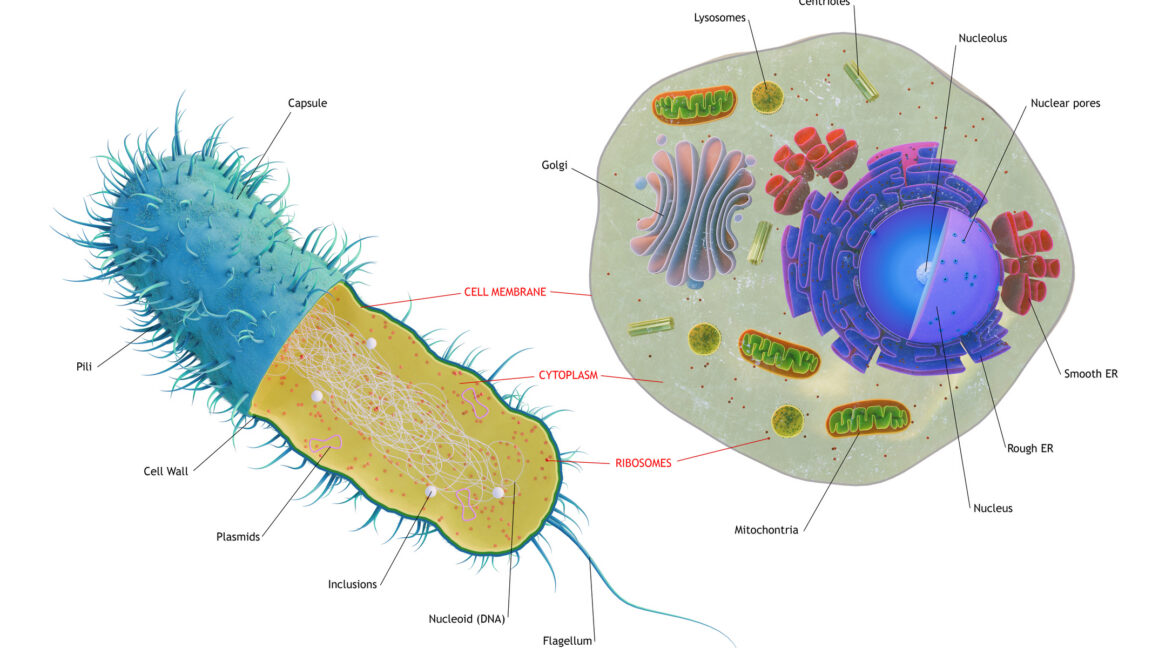
We tend to view ourselves and the complex cells that build us as a distinct branch of the tree of life from the compact, seemingly featureless cells of bacteria and archaea. But we've found that our genome is actually a hybrid, a mish-mash of genes from bacteria and archaea, along with some that have evolved in our own lineage.
Scientists gradually settled on a simple explanation for this: the first complex cells were the product of a fusion between archaeal cells and bacteria, with the bacteria ultimately evolving into the mitochondria, a chemical-power-generating structure that still retains a bit of its own genome. Over time, many of the other bacterial genes were transferred to the nucleus of what was becoming what we now call a eukaryote, intermingling with the archaeal genes there.
But a new study has taken a careful look at some of the genes shared by all eukaryotes and comes to the conclusion that the reality is a little more complicated and that there were several waves of gene transfers from bacteria. The big picture of a merger between bacteria and archaea is still right, but it was only part of a picture where gene transfers among species were commonplace.
© MARK GARLICK/SCIENCE PHOTO LIBRARY

