 Login

North Korean remote IT staffer worked for US government agency, says FBI
The investigation shows that North Koreans are able to infiltrate government agencies, as well as private organizations and crypto exchanges.

The desert north of Arabia has kept a Roman military story out of sight for almost two thousand years. Now three angular traces in the landscape are giving archaeologists a possible route to follow. Researchers working with satellite imagery have identified three Roman marching camps in the Harrat al-Shaam region, close to the ancient frontier […]
The post Three Roman Desert Camps May Reveal a Hidden Campaign Against Nabataea appeared first on Curiosmos.

The Treasury faces a £13 billion hit from Labour’s 'green' North Sea shutdown, BP’s former finance chief has warned.
The post North Sea Shutdown to Cost Treasury Billions appeared first on The Daily Sceptic.

Paleontologists studying the La Brea Tar Pits, one of the world’s richest Ice Age fossil sites, have identified a previously unknown species of spadefoot toad that lived in what is now California during the latest Ice Age.
The post La Brea Tar Pits Yield New Species of Ice Age Toad appeared first on Sci.News: Breaking Science News.

© Fernando Llano/Associated Press
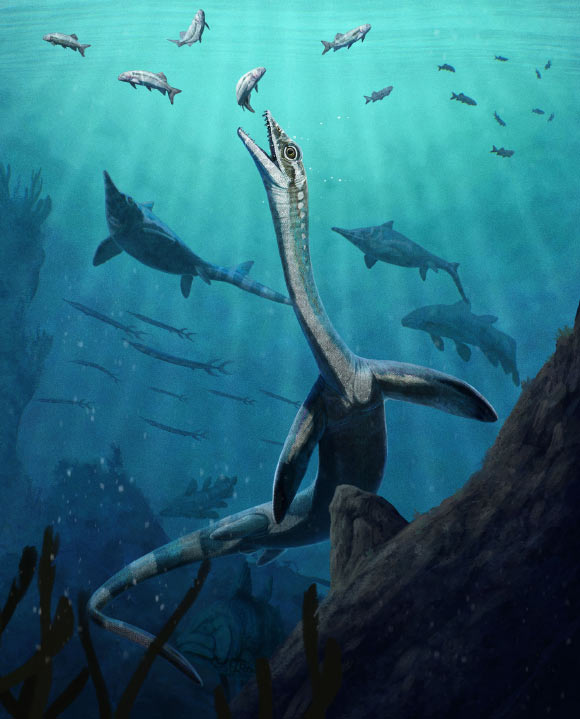
An exquisitely preserved specimen of Austronaga minuta, a small, long-necked marine reptile from the Triassic of China, contains a fossilized stomach, liver and intestines, offering paleontologists their oldest detailed glimpse yet of how early reptiles digested food.
The post 244-Million-Year-Old Fossil Preserves Earliest Reptilian Digestive System appeared first on Sci.News: Breaking Science News.
Live, rolling coverage as London’s biggest companies defy Middle East disruption and UK petrol prices rise to around £1.60 per litre, the highest since Donald Trump ordered renewed strikes
The story piquing the interest of the financial press this morning is that of Leopold Aschenbrenner, the AI Wunderkind (he’s German-born) who has been forced to sell off his fund in a fire sale after the AI boom ran out of steam.
The 24-year-old had persuaded a lot of people to give him a lot of money for a hedge fund, after previously working for OpenAI and the FTX Future Fund, a charitable arm of the fraudulent crypto empire of Sam Bankman-Fried, who is now in prison. Aschenbrenner ploughed that money into debt-fuelled bets on artificial intelligence companies, earning huge returns until he found out that stocks can also fall.
The trader dubbed the “Nostradamus of AI” would have been hard-pressed to foresee how quickly his high-flying hedge fund would run into trouble.
The firm’s rapid downward spiral is a familiar tale, as Silicon Valley and Wall Street once again threw their weight behind a bright-eyed but untested investor who promised this time would be different. “Everybody always wants to find the next golden child,” said one longtime hedge fund executive. “It just keeps happening.”
In less than 24 hours — which included a conversation between Griffin and Aschenbrenner — Griffin’s Citadel hedge fund reached out to Situational Awareness and snapped up the investments at a discount, according to a person familiar with the matter who asked not to be identified citing private information.
It was a startling reversal for Aschenbrenner, a former researcher at OpenAI who – before starting his hedge fund roughly two years ago — had no previous investment experience. His fledging firm has watched its assets plunge from $45bn at the start of July to about $10bn.
Continue reading...
© Photograph: Tolga Akmen/EPA

© Photograph: Tolga Akmen/EPA

© Photograph: Tolga Akmen/EPA
Do roupeiro PAX à cozinha completa, passando pela sala, casa de banho e escritório, os Planificadores do IKEA permitem visualizar, personalizar e testar combinações de móveis e espaços em 3D directamente no browser.
The post Planificadores do IKEA: as ferramentas gratuitas que permitem desenhar cada divisão de casa antes de comprar qualquer coisa appeared first on Tek Notícias.


© Leanne Abraham/The New York Times

Paleontologists at the University of New South Wales have described a new genus and species of dasyurid marsupial from the Early Miocene of Australia, offering the first solid evidence that the family Dasyuridae -- which today includes quolls, Tasmanian devils and tiny antechinuses -- existed long before scientists had proof of it in the fossil record.
The post Early Miocene Fossil Rewrites Family Tree of Little Carnivorous Marsupials appeared first on Sci.News: Breaking Science News.

© The New York Times
Federal officials on Friday announced that shredded iceberg lettuce imported from Mexico and served at Taco Bell restaurants in five states is a source of Cyclospora, the foodborne parasite causing the nationwide surge in cases of explosive, watery diarrhea. The five states are Indiana, Kentucky, Michigan, Ohio, and West Virginia.
A traceback investigation by the Centers for Disease Control and Prevention and the Food and Drug Administration identified a single supplier in Mexico as the source of iceberg lettuce for Taco Bell restaurants where sick people reported eating. While federal authorities did not name the supplier, sources told the Washington Post that it is Taylor Farms.
Taylor Farms was also implicated in a 2024 multi-state E. coli outbreak linked to contaminated onions served at McDonald's and other fast-food restaurants. At the time, FDA inspectors found multiple violations at a Taylor Farms facility in Colorado.


© Getty | Mario Tama
 A deep ocean whale graveyard is revealing new clues about whale evolution and the ecosystems that form around their remains. When a whale dies, its body can become the beginning of an entire deep ocean ecosystem. For a time, the carcass may drift at the surface, drawing sharks and other predators. Eventually, after weathering and [...]
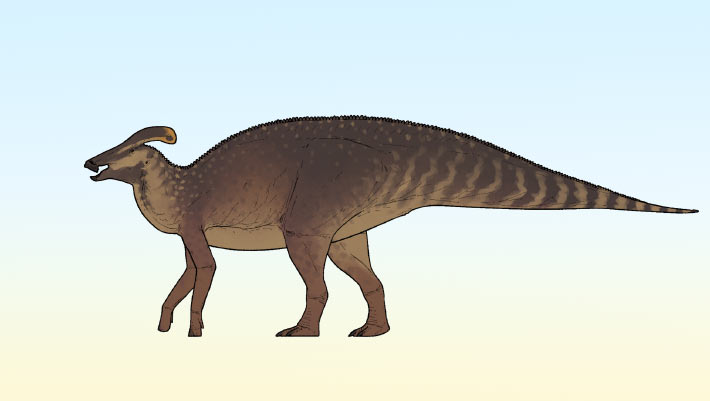
A new genus and species of lambeosaurine hadrosaurid dinosaur has been identified in southern Alberta, Canada, dating back 77 million years to the Campanian age of the Cretaceous period.
The post New Crested Dinosaur Species Identified in Canada appeared first on Sci.News: Breaking Science News.

A new analysis of data from the Western Australian-based Raine Study suggests that two humble vegetable groups -- legumes and cruciferous vegetables -- may play an outsize role in protecting young adults from early cardiometabolic risk, though the benefits appear to diverge sharply between men and women.
The post Beans and Broccoli Linked to Lower Heart Risk in Young Adults appeared first on Sci.News: Breaking Science News.
Engineers have developed a new robot that can swim underwater, then rise to the surface and take flight, in an aerial-aquatic feat that mimics some of nature’s most formidable fliers and swimmers.
Developed by researchers at the Massachusetts Institute of Technology (MIT) and the Swiss Federal Institute of Technology Lausanne (EPFL), the new robot’s capabilities could help launch a new generation of aerial-aquatic exploration vehicles.
Dubbed the “Flapping-Wing Aerial-Aquatic Vehicle” (FAAV), this lightweight robotic platform weighs less than 300 grams and can transition seamlessly between water and air with its very flexible flapping wings. Now, the team’s findings, published in the journal Science, could help scientists better understand how diving birds, which include puffins, petrels, loons, and gulls, are so adept at navigating two vastly different environments.
Such capabilities, the team says, could also pave the way toward advanced drones in the coming years that could transform ocean research.
Departing from conventional modern designs employed for aircraft or underwater vehicles, the team based their design on diving birds, which evolved to fly over water, then plunge beneath the waves to hunt for food, before surfacing and resuming flight.

One problem when it comes to replicating these abilities in robots involves the density of water, which is around 1,000 times denser than air. Because of this, the engineering team had to carefully balance the flexibility of the robotic wings in their design, along with flapping frequency, tail angle, and other factors that allowed the robot to move efficiently through both environments without requiring propellers or separate propulsion systems.
Experiments were undertaken by the team in the lab and in Switzerland’s Lake Geneva, and helped the team determine that the robot achieved best performance with medium-sized wings that flap at approximately five times per second. Under such conditions, the robot was able to swim one meter per second, then by pitching upward at a 70-degree angle, it could break through the surface, and continue this same movement to propel itself through the air.
Although the robot still has some limitations compared to the avian examples that inspired it, interestingly, it does appear to have one advantage: unlike diving birds, which paddle using their feet to achieve aquatic launches into the air, the new robot has no such requirement, and can transition from water to air relying only on its wings and adjustable tail.
In the future, drones equipped with such capabilities could be leveraged to monitor marine ecosystems in a variety of ways. The team also says it could help to observe environmental concerns, such as water near glaciers or offshore infrastructure, or even collect data from hazardous locations that are either too difficult or simply too costly for ships to reach.
“Our dream vision is for oceanographers, marine biologists, and members of coastal communities to launch this robot from a boat, or from shore, and it would fly close to the area of interest, such as an iceberg or a port facility, or over a pod of whales,” according to Raphael Zufferey, assistant professor of mechanical engineering at MIT.
“It would dive into the water to take a measurement or collect a sample, and fly back to deliver the data at a fraction of the cost of traditional methods. Then it could go back out to dive for more,” Zufferey recently told MIT News.
Drawing from movements in nature influenced by evolution, the researchers hope their bird-inspired design may eventually help scientists by introducing cost-effective, but formidable new tools to help obtain information from some of the most challenging environments, all with help from robots that can do what only nature’s diving birds could once achieve.
The achievement is detailed in a new paper, “Leaping out of the water: aerial-aquatic locomotion with flapping wings,” which appeared in the journal Science.
Micah Hanks is the Editor-in-Chief and Co-Founder of The Debrief. A longtime reporter on science, defense, and technology with a focus on space and astronomy, he can be reached at micah@thedebrief.org. Follow him on X @MicahHanks, and at micahhanks.com.
