❌

Reading view

HD Hyundai Oilbank Commercializes Engine Oil for Hydrogen Internal Combustion Engines

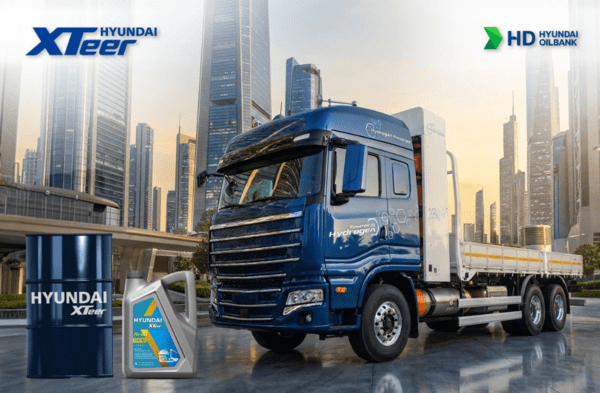
HD Hyundai Oilbank's XTeer H2-ICE engine oil for hydrogen internal combustion engines.

HD Hyundai Oilbank said on Aug. 11 it has commercialized South Korea's first engine oil specifically designed for hydrogen internal combustion engines (H2-ICE).

The company said it has begun supplying its XTeer H2-ICE engine oil to hydrogen commercial vehicle manufacturers, including Tata Daewoo Mobility.

HD Hyundai Oilbank began developing lubricant technology for hydrogen internal combustion engines in 2023 and completed product development and performance validation last year.

Hydrogen internal combustion engines operate at higher combustion temperatures than conventional internal combustion engines and generate moisture during combustion, which can accelerate engine wear and degrade lubricant performance.

According to the company, the new engine oil incorporates technologies designed to protect engine components, control moisture and suppress deposits generated during the combustion process.

An HD Hyundai Oilbank official said the company has secured proprietary lubricant technology for hydrogen internal combustion engines and successfully commercialized the product.

The official added that the company plans to expand its portfolio of high-value-added lubricant products targeting the global market.

  •  

SFA to Supply 150 Billion Won of Equipment for LS Cable & System's US Subsea Cable Plant

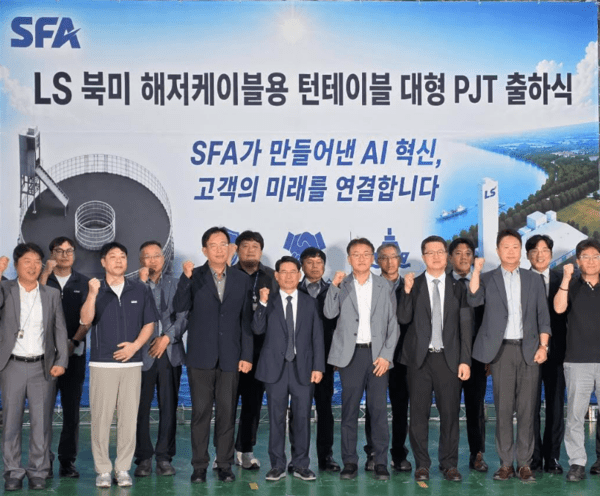
SFA employees commemorate the first shipment of turntables to be supplied to the US subsea cable plant.

SFA has begun shipping manufacturing equipment for LS Cable & System's subsea cable plant in the United States.

The company said on Aug. 11 it held a shipment ceremony for the first 10,000-metric-ton-class turntable destined for LS Cable & System's manufacturing facility in Virginia. Between the fourth quarter of last year and the first quarter of this year, SFA secured turntable supply contracts worth approximately 150 billion won.

SFA will deliver dozens of turntables to the Virginia plant in phases through the end of 2027.

Turntables are used to wind, store and transport completed subsea cables to the next stage of the manufacturing process. Because long-distance subsea cables are highly susceptible to excessive tension and twisting, the equipment must precisely control cable handling. The turntables supplied by SFA measure more than 40 meters in diameter.

Working with LS Cable & System, SFA has developed subsea cable manufacturing equipment, including vertical continuous vulcanization (VCV) systems and turntables. The company has also supplied similar equipment to LS Cable & System's subsea cable plant in Donghae, Gangwon Province.

An SFA official said the company intends to successfully complete the Virginia project by leveraging its experience supplying 3,000-ton-class VCV systems and 10,000-ton-class turntables, while positioning itself to secure additional business opportunities as LS Cable & System expands its US investment.

  •  

Hanwha Solutions Commercializes Power Cable Material Made With 50% Recycled Feedstock

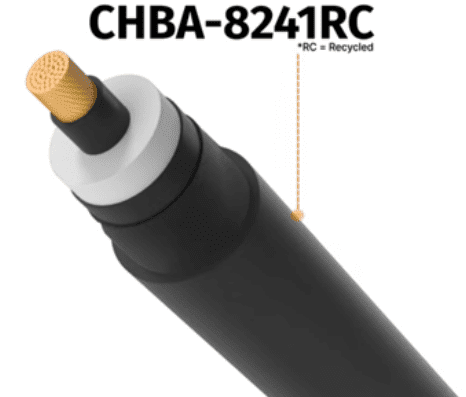
Hanwha Solutions' CHBA-8241RC power cable jacket material.

Hanwha Solutions said on Aug. 11 it has commercialized a power cable material containing 50% post-consumer recycled (PCR) plastic feedstock.

The company said it has completed customer qualification for CHBA-8241RC, a high-density polyethylene (HDPE)-based jacket material for power cables made with recycled plastic feedstock.

CHBA-8241RC is a proprietary composite material developed by Hanwha Solutions. According to the company, it maintains electrical performance comparable to conventional products while reducing carbon emissions by approximately 34% per kilogram of material.

Hanwha Solutions completed product development and pilot production last year. In the first half of this year, it finished production trials and quality validation with cable manufacturers. The company said the commercialization expands its cable materials portfolio from ultra-high-voltage insulation materials to environmentally friendly cable jacket compounds.

Hanwha Solutions is also expanding its recycled polyethylene (rPE) business using waste plastics. Its related products have obtained Global Recycled Standard (GRS) and ISCC PLUS certifications and are used in applications including consumer electronics packaging, cosmetic containers and industrial recycled packaging bags.

  •  

Hanwha Raises Stake in KAI Above 15%, Files for Merger Review

Hanwha Group has increased its stake in Korea Aerospace Industries (KAI) to more than 15%, broadening its base for participation in the key decision-making of the country's sole aircraft manufacturer.

Hanwha Systems disclosed on Aug. 10 that it had acquired an additional 3.45% stake in KAI through open-market purchases over the past month.

Following the purchases, Hanwha Group's combined ownership in KAI has risen to 15.89%, consisting of a 9.90% stake held by Hanwha Aerospace, a 4.98% stake held by Hanwha Systems and a 1.01% stake held by Hanwha Aerospace USA.

Hanwha is now KAI's second-largest shareholder. With its ownership exceeding 15%, the group plans to file for a business combination review with South Korea's Fair Trade Commission. KAI's largest shareholder remains the Export-Import Bank of Korea, which owns 26.41% of the company.

Hanwha and KAI have already been expanding cooperation in the aerospace sector. In February, the two companies agreed to pursue joint development of an aircraft engine for a future version of the KF-21 fighter jet, collaborate on unmanned aircraft development and exports, and jointly enter commercial space markets involving satellites and launch vehicles.

Hanwha Aerospace is active in aircraft engines and space launch vehicles, while Hanwha Systems operates radar and satellite businesses. KAI is South Korea's only fully integrated aircraft manufacturer and possesses system integration capabilities across fighter jets, helicopters and unmanned aerial vehicles. Industry observers say closer cooperation between the companies could create synergies spanning aircraft platforms, engines, radar systems, weapons integration and space-related businesses.

The increased stake also comes as Hanwha pursues a large-scale investment strategy focused on aerospace, space and artificial intelligence. The group recently announced plans to invest a total of 55 trillion won in aerospace and AI businesses between this year and 2040.

Hanwha Aerospace plans to invest 23 trillion won in launch vehicle programs, including assembly facilities and development test infrastructure. The company also plans to invest 2 trillion won in defense AI, developing crewed-uncrewed weapons for air and ground use and crewed-uncrewed integrated combat systems.

Hanwha Systems plans to invest 20 trillion won in satellite-related businesses, including very low Earth orbit synthetic aperture radar (SAR) satellites, space-based AI data centers and low Earth orbit satellite communications networks.

The cities of Sacheon, where KAI is headquartered, and Changwon, home to major Hanwha Aerospace operations, are expected to play increasingly important roles in Hanwha's aerospace strategy. The group is also envisioning a southern aerospace corridor linking Changwon, Sacheon and the Naro Space Center in Goheung.

  •  

LS Electric, GS E&C Partner on DC Power Distribution for AI Data Centers

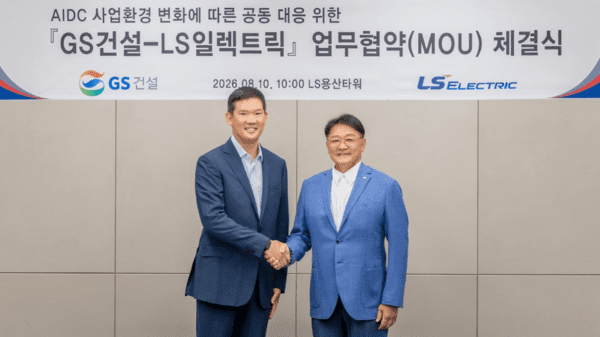
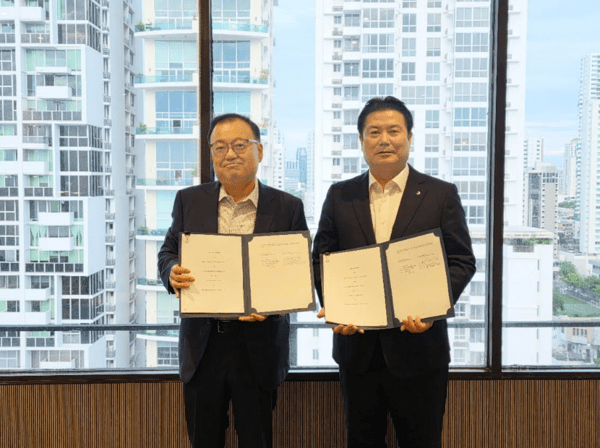
LS Electric Chairman Koo Ja-kyun (right) and GS E&C Chief Executive Officer Huh Yoon-hong (left) pose for a commemorative photograph after signing the agreement. (Photo: LS Electric)

LS Electric and GS Engineering & Construction (GS E&C) have agreed to collaborate on direct current (DC) power distribution technology and power equipment supply for artificial intelligence (AI) data centers.

LS Electric said on Aug. 10 that it signed a memorandum of understanding (MOU) with GS E&C to jointly respond to changes in the AI data center business environment. Under the agreement, the companies will develop next-generation DC power distribution technologies aimed at improving power efficiency in high-power, high-density AI data centers.

As part of the partnership, LS Electric will supply key electrical equipment for AI data center projects being developed by GS E&C, including switchboards, gas-insulated switchgear (GIS) and extra-high-voltage transformers.

LS Electric is currently developing DC power distribution products such as solid-state transformers (SSTs), solid-state circuit breakers (SSCBs) and energy storage systems (ESS). The company has also established a production facility at its Cheonan site in South Chungcheong Province that operates entirely on a DC power distribution system.

An LS Electric official said demand for DC power distribution technologies is increasing as operators seek to improve the power efficiency of AI data centers.

  •  

HD Hyundai Heavy Industries Wins 956 Billion-Won Power Generation Deal for U.S. Data Centers

(From left) Daniel Chung, chief executive officer of Corban Energy Group, and Han Joo-seok, head of the Engine & Machinery Business Unit at HD Hyundai Heavy Industries. (Photo: HD Hyundai Heavy Industries)

HD Hyundai Heavy Industries has secured a 956 billion-won contract to supply power generation equipment for data centers operated by major U.S. technology companies.

The company said on Aug. 10 that it signed an agreement with U.S. energy infrastructure developer Corban Energy Group to supply power generation systems based on its HiMSEN engines. The contract covers a total capacity of 1,000 megawatts (MW), or 1 gigawatt (GW), which will be used as a power source for data centers operated by major technology companies in the United States.

Corban Energy Group is an energy infrastructure and engineering company that supplies gas, liquefied natural gas (LNG) and power products for infrastructure projects, including data centers and projects for the U.S. Department of War (DoW), according to the company.

The HiMSEN engine supplied by HD Hyundai Heavy Industries is a 9.6 MW-class high-capacity medium-speed engine. Its ability to operate continuously around the clock makes it suitable for power generation systems serving data centers that require stable and uninterrupted electricity supplies.

In April, HD Hyundai Heavy Industries signed a 627.1 billion-won contract with U.S. energy infrastructure developer AEG to supply power generation equipment for data centers. With the Corban Energy Group agreement, the company has now secured another major contract in the fast-growing U.S. data center power market.

"We continue to receive inquiries regarding collaboration opportunities in the data center power generation engine market," an HD Hyundai Heavy Industries official said.

  •  

POSCO Air Solution Receives International Certification for Aerospace and Defense Rare Gases

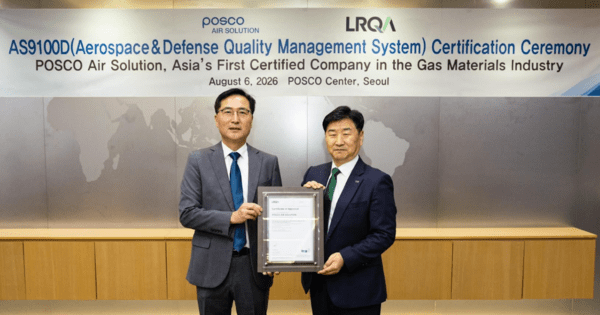
Photo caption: Kim Dae-yeon (left), Chief Executive Officer of POSCO Air Solution, and Lee Il-hyung, Chief Executive Officer of LRQA Korea, pose for a commemorative photo.

POSCO Air Solution, the industrial gas subsidiary of the POSCO Group, has obtained an international quality certification for the production of high-purity rare gases used in aerospace and defense applications.

The company announced on Aug. 6 that it received AS9100D certification, the globally recognized aerospace and defense quality management system standard, from LRQA.

AS9100D is an international standard based on ISO 9001 that incorporates additional quality requirements for the aerospace and defense industries. POSCO Air Solution said it is the first company in Asia to obtain the certification in the field of high-purity rare gas manufacturing.

In June, the company completed construction of a high-purity rare gas production facility at the Donghoan industrial site within POSCO’s Gwangyang Steelworks complex. The plant has an annual production capacity of 130,000 normal cubic meters (N㎥).

POSCO Air Solution recently participated in propulsion technology development testing conducted by the Korea Aerospace Research Institute, where the performance of domestically produced xenon (Xe) and krypton (Kr) gases was successfully verified for electric propulsion applications.

“The certification will serve as an opportunity to expand our supply of rare gases for aerospace and defense applications,” Chief Executive Officer Kim Dae-yeon said.

  •  

Gaon Cable Wins First Contract for Singapore MRT Power Grid Project

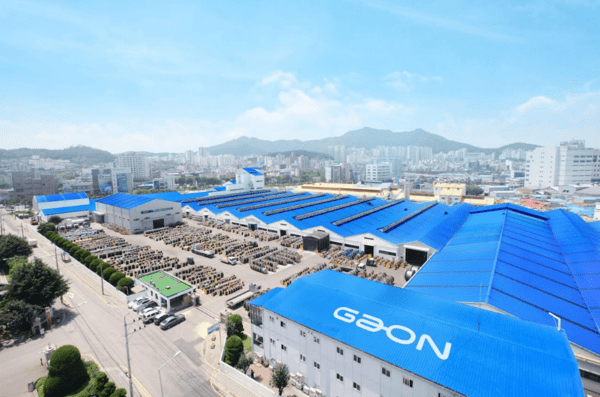
Gaon Cable, a subsidiary of LS Cable & System, will participate in a Singapore Mass Rapid Transit (MRT) power infrastructure project for the first time.

The company said on Aug. 6 that it will supply approximately 60 billion won worth of distribution cables for an MRT power grid construction project commissioned by Singapore’s Land Transport Authority (LTA). The contract marks Gaon Cable’s first order since it was registered as an approved LTA vendor last year.

Singapore plans to expand its MRT network from approximately 240 kilometers today to more than 360 kilometers by the early 2030s. With new rail lines under construction and power infrastructure upgrades planned for existing routes, demand for distribution cables is expected to remain strong.

“We will continue increasing the share of overseas revenue by focusing on strategic markets such as the United States and Singapore, while improving both profitability and growth,” Chief Executive Officer Chung Hyun said.

  •  

LS Electric Begins Mass Production of Next-Generation ESS Power Conversion System

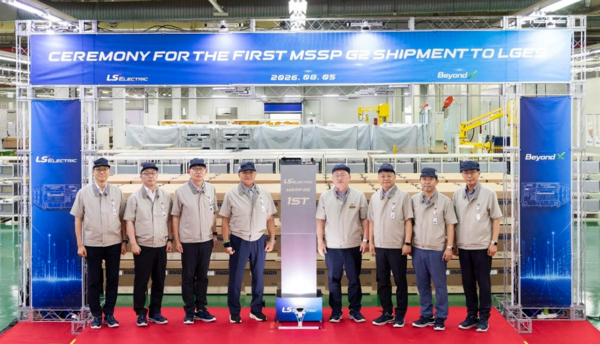
LS Electric Chairman Koo Ja-kyun (fourth from left) and company employees pose during the first-shipment ceremony for the G2, the company’s next-generation PCS for energy storage systems. (Photo: LS Electric)

LS Electric has begun mass production of its next-generation power conversion system (PCS) for energy storage systems (ESS).

The company said on Aug. 6 that it held a first-shipment ceremony for its next-generation ESS PCS, known as G2, at its DC Factory in Cheonan, South Chungcheong Province, on Aug. 5, marking the start of full-scale production.

The event was attended by Chairman Koo Ja-kyun and company employees. Koo toured the dedicated G2 production line and reviewed manufacturing plans and quality management operations.

G2 is a next-generation PCS developed for the global ESS market. The system incorporates liquid-cooling technology, improving thermal management performance and durability compared with conventional air-cooled designs. It also features a space-saving architecture designed to enhance installation efficiency.

The product will be manufactured at LS Electric’s Cheonan DC Factory, a facility operated entirely on direct current (DC) power distribution. The factory employs DC-based equipment, including solid-state transformers (SSTs), solid-state circuit breakers (SSCBs) and ESS infrastructure, improving overall energy efficiency by more than 10%, according to the company.

“Following the launch of mass production for our next-generation ESS PCS, we plan to further expand our presence in overseas markets,” an LS Electric official said. “We will secure global customers based on our competitiveness in DC technologies and product quality.”

  •  

HD Hyundai Deploys Intelligent Welding System at US Ingalls Shipyard

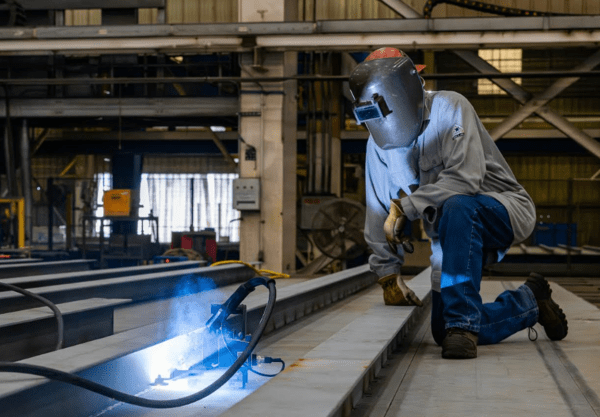
An Ingalls Shipbuilding worker performs welding operations using HD Hyundai's intelligent welding system.

HD Hyundai said on Aug. 5 that it has launched a pilot project aimed at improving productivity at Ingalls Shipbuilding in Mississippi.

The initiative is a follow-up to a memorandum of understanding (MOU) on advanced shipbuilding technologies signed with Huntington Ingalls during the Sea-Air-Space (SAS) 2025 exhibition in the United States last year.

As the first phase of the pilot program, HD Hyundai will introduce its proprietary intelligent welding system at the Ingalls shipyard. The technology has already been deployed at HD Hyundai Heavy Industries and HD Hyundai Samho.

The intelligent welding system automatically recognizes workpieces and welding conditions, enabling real-time adjustment of welding positions. A single operator can manage multiple welding robots simultaneously, while production data is collected and stored in real time for quality control and process optimization.

The two companies plan to expand cooperation across a broader range of shipbuilding activities, including production automation, development of digital shipyards using robotics and artificial intelligence, improvements in naval ship construction productivity, workforce training, and supply chain development for shipbuilding equipment and materials.

Joo Won-ho, president of HD Hyundai Heavy Industries, said the pilot project is expected to serve as a foundation for deeper collaboration between the two companies and help improve the efficiency of naval vessel construction.

  •  

LIG D&A Completes CDR for Jangbogo-III Batch-II Submarine Electronic Warfare System

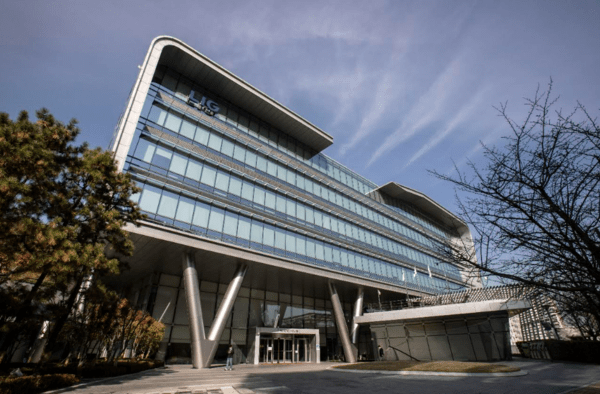
LIG D&A Pangyo House.

LIG Defense & Aerospace (LIG D&A) said on Aug. 4 that it successfully completed the Critical Design Review (CDR) in June for the electronic warfare system to be installed on the third Jangbogo-III Batch-II submarine. CDR is a key milestone that verifies design maturity and development readiness before prototype manufacturing begins.

LIG D&A signed a research and development contract with Hanwha Ocean in April 2025 for the electronic warfare system of the third Jangbogo-III Batch-II submarine. Since then, the program has progressed through the System Requirements Review (SRR), System Functional Review (SFR) and Preliminary Design Review (PDR), culminating in the successful completion of the CDR.

The Jangbogo-III Batch-II program is a national defense project aimed at building 3,000-ton-class submarines using domestic technology. Electronic warfare systems for submarines have historically relied heavily on foreign suppliers because of the high technological barriers involved.

Following the CDR completion, LIG D&A plans to proceed with the remaining development work and system qualification testing to ensure the program stays on schedule for military deployment. The company also intends to leverage the technologies developed through the project to create export-oriented variants.

  •  

HD Hyundai Posts More Than 4 Trillion Won in Quarterly Operating Profit

HD Hyundai reported second-quarter operating profit exceeding 4 trillion won, supported by strong performance across its shipbuilding, construction equipment, refining and power equipment businesses.

The company said on July 31 that it posted consolidated revenue of 22.4094 trillion won and operating profit of 4.1246 trillion won for the second quarter of 2026. Revenue increased 30.2% from a year earlier, while operating profit surged 262.2%.

For the first half of the year, cumulative revenue reached 42.0113 trillion won and operating profit totaled 6.9594 trillion won.

HD Korea Shipbuilding & Offshore Engineering, the group’s shipbuilding and marine holding company, reported revenue of 8.9270 trillion won and operating profit of 1.6451 trillion won. The results were driven by higher productivity and increased sales of high-margin vessels. Revenue rose 20.2% year over year, while operating profit increased 72.5%.

HD Hyundai Marine Solution generated revenue of 580.4 billion won and operating profit of 97.6 billion won, benefiting from growth in its ship aftermarket (AM), eco-friendly retrofit and digital solutions businesses. Revenue and operating profit increased 24.1% and 17.6%, respectively, from a year earlier.

HD Hyundai Site Solutions, the group’s construction equipment unit, posted revenue of 2.5235 trillion won and operating profit of 272.0 billion won. Results were supported by improving global market conditions, stronger sales of next-generation excavators and increased demand for industrial and defense engines. Revenue rose 17.9% and operating profit climbed 79.6% from the same period last year.

HD Hyundai Oilbank recorded revenue of 9.4774 trillion won and operating profit of 1.8241 trillion won. Improved profitability in lubricant base oils and petrochemicals helped offset volatility in international crude oil prices.

HD Hyundai Electric reported revenue of 1.1418 trillion won and operating profit of 287.0 billion won. Growth was driven by higher sales in its power distribution business and improved profitability in overseas markets. Revenue increased 26.0% year over year, while operating profit rose 37.3%.

An HD Hyundai representative said earnings improved across the group’s major businesses, including shipbuilding, construction equipment, refining and power equipment.

The company said it plans to continue enhancing profitability through selective orders focused on high-value-added vessels, expansion into new markets and ongoing improvements in product mix.

  •  

KAI Selected to Lead Domestic AI Chip-Powered Drone Development Program

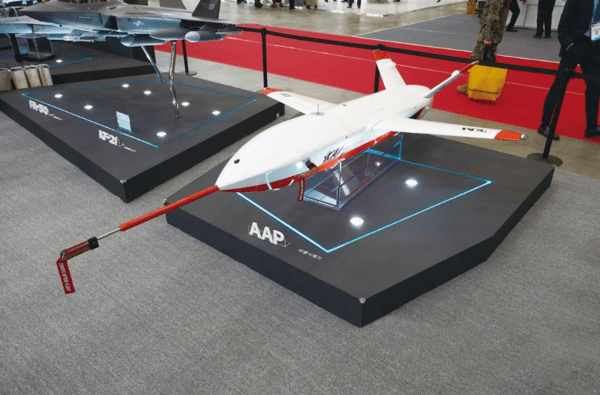
A full-scale prototype of the AAP unmanned aircraft displayed at ADEX 2025.

Korea Aerospace Industries (KAI) has been selected to lead a government-backed defense project aimed at developing on-device artificial intelligence (AI) semiconductors and validating their performance on unmanned aerial vehicles.

KAI announced on July 31 that it had been named the preferred bidder in the defense segment of the Ministry of Trade, Industry and Resources' K-On-Device AI Semiconductor Technology Development Program. The project has a total budget of 95.3 billion won and will run for five years.

The program seeks to develop a defense-grade system-on-chip (SoC) and an autonomous control system (ACS) incorporating the chip, then integrate the technologies into an unmanned aircraft platform for performance verification.

The project consists of three subprograms. KAI will serve as the overall project coordinator and lead the first and third subprojects, which include development of a high-speed expendable unmanned aerial vehicle, autonomous control systems, system integration and flight testing. The second subproject, focused on AI semiconductor development, will be led by a domestic fabless semiconductor company.

The consortium includes South Korean AI semiconductor developers, AI model companies and research institutions. Samsung Electronics will be responsible for semiconductor manufacturing.

KAI plans to incorporate the AI chip developed through the project into its proprietary AI pilot system, known as K-AILOT. The company also intends to expand the technology to satellite applications, enabling onboard AI chips to analyze data in real time before transmitting it to ground stations.

KAI has been strengthening its AI ecosystem through partnerships. The company signed a memorandum of understanding with Samsung Electronics last year and another with Team Naver—comprising Naver and Naver Cloud—earlier this month. KAI said it is pursuing the development of a sovereign AI framework that combines AI semiconductors, large language AI models and cloud technologies.

  •  

Hanwha Aerospace Posts Record Quarterly Operating Profit Above 1 Trillion Won

Hanwha Aerospace reported quarterly operating profit exceeding 1 trillion won for the first time, supported by strong defense exports and improved performance from its subsidiaries.

The company said on July 31 that it posted consolidated revenue of 9.2929 trillion won and operating profit of 1.3655 trillion won for the second quarter of 2026. Revenue increased 47% from a year earlier, while operating profit rose 59%.

The ground defense business generated revenue of 2.1075 trillion won and operating profit of 533.0 billion won. Revenue rose 19% year over year, while operating profit increased 2%. In South Korea, growth was driven by higher production volumes of the Cheonho wheeled anti-aircraft gun and the Cheongeom. Overseas, shipments to Poland, Egypt and Middle Eastern customers contributed to earnings.

Hanwha Aerospace said its order backlog expanded to 38.3 trillion won following an additional K9 self-propelled howitzer export contract with Finland signed in April and a supplementary Chunmoo multiple launch rocket system supply agreement with Estonia signed in May.

The aerospace business recorded revenue of 760.0 billion won and operating profit of 37.0 billion won. Revenue increased 17% from a year earlier on higher military program volumes, while the division returned to profitability.

Consolidated subsidiary Hanwha Ocean also contributed significantly to earnings growth. Benefiting from a higher proportion of high-margin vessels, including liquefied natural gas (LNG) carriers, Hanwha Ocean posted revenue of 5.4432 trillion won and operating profit of 736.1 billion won. Revenue rose 65% year over year and operating profit increased 98%.

Hanwha Systems reported revenue of 1.1176 trillion won and operating profit of 103.7 billion won, supported by growing defense exports, including multifunction radar (MFR) systems.

In the second half, Hanwha Aerospace plans to continue production under the second execution contract for Poland's K9 program and proceed with K9 deliveries to Egypt and Australia. The company also plans to participate in the South Korean government's advanced aircraft engine development program based on a prototype unmanned aerial vehicle engine it recently unveiled.

  •  

Hanwha Ocean Wins 838 Billion-Won KDDX Lead Destroyer Contract

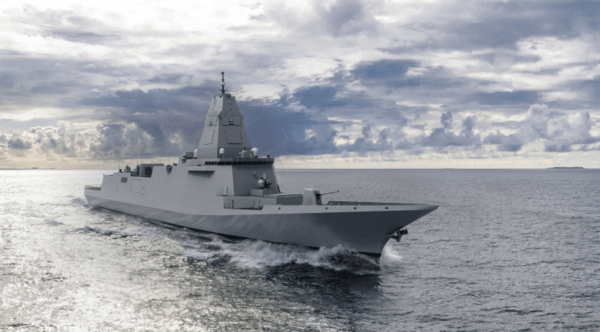
A rendering of Hanwha Ocean's next-generation destroyer (KDDX).

Hanwha Ocean has secured a contract worth 838 billion won to complete the detailed design and construct the lead ship of South Korea's next-generation destroyer program, known as KDDX.

The company disclosed on July 31 that it signed a contract with the Defense Acquisition Program Administration (DAPA) for the KDDX detailed design and lead ship construction project. The contract is valued at 838 billion won and runs through June 30, 2032.

DAPA issued the tender in March and selected Hanwha Ocean as the preferred bidder on July 1 following site inspections and proposal evaluations. Hanwha Ocean subsequently completed negotiations covering technical requirements, contract terms and pricing before signing the final agreement.

KDDX is South Korea's first Aegis-class destroyer program to develop both the hull and combat system using domestic technologies. The government plans to invest approximately 7.8 trillion won to acquire six 6,000-ton destroyers. The Republic of Korea Navy plans to commission the lead ship in 2032 and deploy all six vessels by 2036.

Hanwha Ocean and HD Hyundai Heavy Industries competed for the KDDX contract. HD Hyundai Heavy Industries scored 0.6425 points higher than Hanwha Ocean in the technical evaluation. However, a 1.2-point security penalty related to a military secrets leak case reversed the ranking. Hanwha Ocean ultimately received 93.9542 points, compared with 93.3675 points for HD Hyundai Heavy Industries, a margin of 0.5867 points.

The timing and procurement method for the five follow-on vessels have not yet been determined. An industry official said the remaining ships are expected to be ordered around 2028, although authorities have not decided whether they will be procured through a single package or multiple contracts.

Hanwha Ocean plans to equip the KDDX destroyer with nine domestically developed systems. The design will also incorporate a manned-unmanned integrated combat system, a multi-layered defense architecture and a cyber defense framework. Ship automation technologies aimed at reducing crew requirements will also be included.

Since its launch in 2023, Hanwha Ocean has won contracts for the fifth and sixth Ulsan-class Batch-III frigates and the first and second Batch-IV frigates. The KDDX lead ship award further expands the company's surface combatant shipbuilding portfolio.

  •  

KAI Partners With Embraer on Aircraft Structures

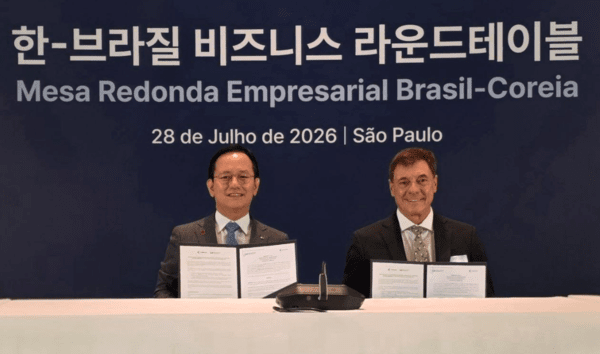
KAI President Kim Jong-chul and Embraer President Francisco Gomes Neto. (Photo: KAI)

Korea Aerospace Industries (KAI) has entered into a strategic partnership with Brazilian aerospace manufacturer Embraer to collaborate on aircraft structures.

KAI announced on July 30 that it signed a memorandum of understanding (MOU) with Embraer on July 28 to pursue strategic cooperation in the aircraft structures business.

Under the agreement, the two companies will expand collaboration in research and development (R&D) of new technologies, with an initial focus on aircraft structures. KAI aims to combine its aerospace engineering expertise with Embraer's aircraft development and manufacturing capabilities to strengthen technological competitiveness and improve manufacturing efficiency.

The companies will also explore cooperation in aircraft design, engineering, manufacturing and quality management. In addition, they plan to identify joint initiatives to optimize manufacturing processes and enhance cost competitiveness.

Kim Jong-chul, president of KAI, said the partnership with Embraer represents an important step in expanding the company's collaboration with leading global aerospace manufacturers.

  •  

Hanwha Ocean Signs Joint Design Agreement for US Strategic Sealift Vessel

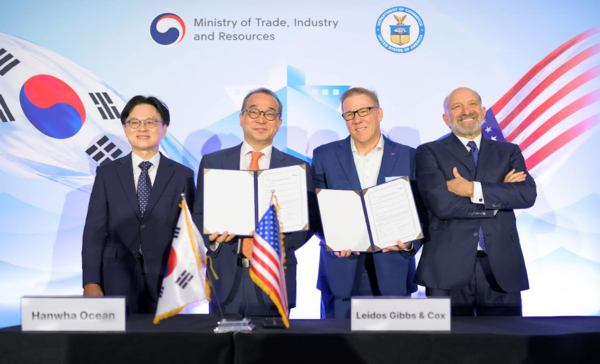
(From left) Kim Jung-kwan, Minister of Trade, Industry and Resources; Jeong In-seob, president and head of Management Support at Hanwha Ocean; Mike Rickels, vice president of Leidos Gibbs & Cox; and Howard Lutnick, US Secretary of Commerce.

Hanwha Ocean has signed a joint design agreement with a US naval architecture firm to develop the Fast Sealift vessel, expanding its collaboration with the US shipbuilding industry beyond ship construction to design, workforce development and supply chain initiatives.

The company announced on July 24 that it signed one professional services agreement for the joint design of a global strategic sealift vessel and two memoranda of understanding (MOUs) covering shipbuilding workforce development and supply chain cooperation during the opening ceremony of the Korea-US Shipbuilding Cooperation Center in Washington, D.C. on July 23.

Hanwha Ocean signed the professional services agreement with Leidos Gibbs & Cox, a US naval architecture company, to jointly design the strategic sealift vessel. The agreement expands the partnership beyond the memorandum of understanding signed in April, which focused on strengthening shipbuilding capabilities for the US Navy and allied naval forces, into the joint design phase.

A Fast Sealift vessel is a dual-use platform that operates as a commercial cargo ship during peacetime and can rapidly transport military equipment and supplies during emergencies.

The companies plan to combine Hanwha Ocean's naval shipbuilding expertise with the design capabilities of Leidos Gibbs & Cox to pursue opportunities in both the US and global naval vessel markets. Gibbs & Cox has designed more than 70% of the US Navy's surface combatants built since World War II.

Hanwha Ocean also signed an MOU with Hanwha Philly Shipyard and Delaware County Community College to cooperate on shipbuilding education and workforce development. Under the agreement, the partners will develop instructor training programs for US shipbuilding workers and help expand the pool of skilled labor.

"We will expand cooperation in the areas the United States needs most by leveraging our local production base and play a central role in the MASGA project," said Jeong In-seob, president and head of Management Support at Hanwha Ocean.

  •  

LIG D&A, Babcock Sign Strategic Cooperation Agreement at Farnborough Airshow 2026

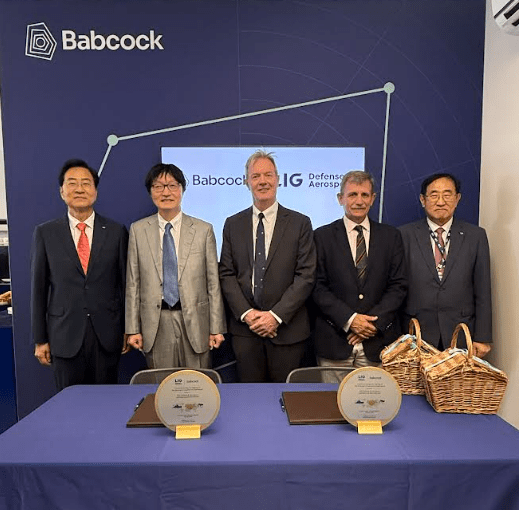
Officials from LIG D&A and Babcock pose for a commemorative photo after signing a strategic cooperation agreement. (Photo = LIG D&A)

LIG Defense & Aerospace (LIG D&A) is expanding cooperation with UK defense contractor Babcock International in next-generation defense sectors, including launch vehicles, precision-guided munitions (PGM), frigates, and unmanned systems.

LIG D&A announced on July 23, 2026, that it signed a Strategic Cooperation Agreement (SCA) with Babcock at the Farnborough International Airshow 2026 held in the United Kingdom.

Under the agreement, the two companies will integrate their global supply chains and pursue the joint development of an AH-140 (Arrowhead 140) frigate platform equipped with LIG D&A systems. The AH-140 is an export-oriented naval platform developed by Babcock based on the Royal Navy’s Type 31 frigate.

The companies will also jointly develop launch vehicles and PGMs while establishing a full life-cycle support system covering maintenance, repair, and overhaul (MRO) and capability upgrades. In addition, collaboration will expand into robotics and autonomous unmanned systems.

“This agreement will serve as an opportunity to secure new competitiveness in the global market,” said Lee Hyun-soo, head of LIG D&A’s Global Business Division. “We will continue to expand our partnership to provide integrated maritime defense solutions.”

  •  

​LS Electric Posts Record Q2 Earnings as Order Backlog Reaches KRW 7 Trillion

LS Electric Co. posted record quarterly revenue and operating profit for the second quarter of 2026.

​The company said in a regulatory filing on July 23 that it reported consolidated revenue of KRW 1.577 trillion and operating profit of KRW 178.5 billion for the second quarter. The figures increased 32.2% and 64.4%, respectively, from a year earlier.

​New orders totaled approximately KRW 2.1 trillion, while the company's order backlog rose by about KRW 1.4 trillion from the previous quarter to KRW 7 trillion.

​Growth was driven by its data center power distribution business and extra-high-voltage (EHV) transformer business. Demand for power distribution solutions increased as investments in artificial intelligence (AI) data centers and electric power grids accelerated. Shipments of EHV transformers also expanded, particularly in North America.

​Second-quarter revenue from EHV transformers climbed 91.2% from a year earlier. Revenue at subsidiary LS Power Solution increased 39%, while North American revenue reached approximately KRW 400 billion, marking a record high on a quarterly basis.

​LS Electric said it plans to expand investment in its manufacturing bases in Utah and Texas to increase local production capacity and further strengthen its presence in the North American market.

  •  

​Hanwha Vision's 4 AI CCTV Models Obtain South Korea's NIS Security Certification

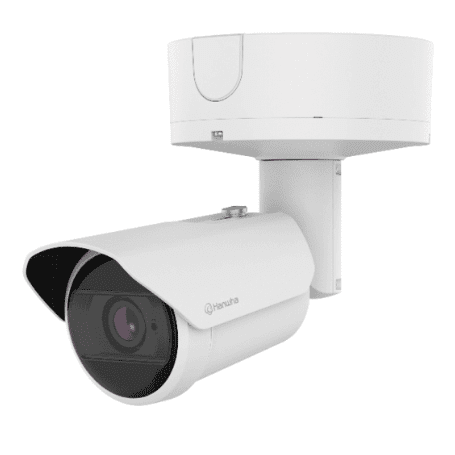
Hanwha Vision's flagship PNO-A9082RK AI CCTV camera model.

Hanwha Vision Co. has obtained South Korea's National Intelligence Service (NIS) security certification for four artificial intelligence (AI) CCTV models, securing a key qualification required to supply products to public-sector organizations and expanding its presence in the government video surveillance market.

​Hanwha Vision said on July 23 that four models in its flagship P Series AI 4K camera lineup received the NIS Security Function Verification Certificate last month. The certified products include Box, Dome, Bullet, and Vandal camera models.

​The Security Function Verification Certificate is a mandatory security qualification for products supplied to public institutions in South Korea. Products must meet NIS security standards covering data protection, software security, and access control.

​Hanwha Vision said it applied government-designated encryption technology throughout the image generation, transmission, and storage processes. The cameras also incorporate security features designed to prevent image tampering and respond to storage device theft.

​The company plans to launch 14 additional products in the second half of this year to expand its supply to the public-sector market.

​"Hanwha Vision will continue investing in AI CCTV product development and strengthening its security technology capabilities," a company representative said.

  •  
❌