Login

TRUMPF Korea: "Strong Demand for HBM and Automation to Drive Double-Digit Revenue Growth"
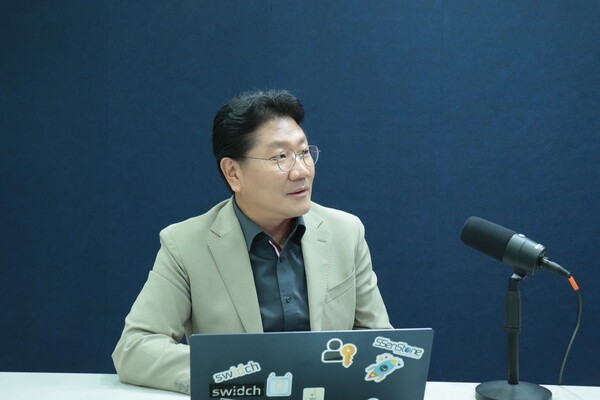
TRUMPF Korea has expressed strong confidence in achieving double-digit revenue growth for its 2026–2027 fiscal year, which began in July. The company expects to benefit from growth in the semiconductor sector, rising demand for machine tool automation, and the resumption of investments across previously stagnant industrial sectors.
Founded in 1923, TRUMPF is a representative German "hidden champion"—a term referring to highly competitive industry leaders that are not widely known to the general public. TRUMPF is widely recognized as the exclusive supplier of the "drive laser"—a carbon dioxide (CO₂) laser source—used in ASML's extreme ultraviolet (EUV) lithography systems. The company operates four primary divisions: Machine Tools, Laser Technology, Power Electronics, and its EUV Lithography division.
"In the previous fiscal year, our Korean branch faced operational challenges due to rising exchange rates and downturns in the battery and display industries," said Geun-min Ryu, managing director of TRUMPF Korea. "However, this year, driven by advances in laser technology and machine tool automation, we expect to achieve double-digit growth and surpass 200 billion won in revenue."
One product line expected to fuel this growth is the Power Electronics division's radio frequency (RF) generator module, which is installed in semiconductor etching and deposition equipment. Driven by the rapid surge in High Bandwidth Memory (HBM) demand, the market for related processing equipment is expanding, which in turn is boosting module sales.
The transition toward laser technology in semiconductor wafer dicing is another major growth opportunity. Wafer dicing involves cutting device wafers after front-end fabrication for back-end packaging. TRUMPF's global R&D team is currently co-developing a "pure laser dicing" process with LeadroTech, which cuts wafers using lasers alone. TRUMPF is also actively communicating and conducting technology validation with domestic memory semiconductor manufacturers.
Compared to traditional mechanical cutting, pure laser dicing lowers the risk of micro-cracks or defects on semiconductor chips. By preventing physical damage to high-cost chips, it helps customers reduce yield loss. Currently, manufacturers rely primarily on mechanical blades, using lasers only in a supplementary role.
However, achieving high yields with laser dicing requires precise power control, ultra-short pulse-width optimization, and thermal management technology. "We expect customer equipment featuring this technology to undergo validation testing in South Korea around early next year," Ryu explained. TRUMPF does not manufacture complete semiconductor processing equipment directly. Instead, it supplies components like laser sources and RF generators to equipment manufacturers, who then deliver the fully assembled systems to semiconductor producers.
In TRUMPF's machine tool division—a stable source of revenue—demand for automation solutions is rising steadily. As manufacturing sectors face severe labor shortages, finding skilled equipment operators has become increasingly difficult. TRUMPF's machine tools are widely used in manufacturing for metal bending, cutting, and punching. "In the past, most customers purchased standalone machine tools. Today, not only large corporations but also small job shops are actively adopting automated systems that operate unmanned during nights or weekends," Ryu noted. This trend has driven steady sales growth for the machine tool division in South Korea.
TRUMPF also anticipates expanded investments across recovering downstream sectors such as batteries and displays. "In the battery sector, investments are shifting toward Energy Storage Systems (ESS)," Ryu said. "We also expect the domestic display industry's investments in new 6th-generation Organic Light-Emitting Diode (OLED) production lines to materialize soon." TRUMPF Korea supplies continuous-wave (CW) 'TruFiber' laser sources and optical sensors tailored for battery manufacturing, as well as the ultra-short pulse laser 'TruMicro' platform for glass processing.
Furthermore, the expansion of Hyundai Motor Group and its Tier-1 domestic suppliers into North American production hubs represents a positive driver. TRUMPF supplies 3D 5-axis laser processing machines to major automotive manufacturers and suppliers, holding a market share near 100%. With 71 subsidiaries and 11 production sites globally, TRUMPF provides rapid technical support and real-time predictive maintenance capabilities that detect equipment anomalies proactively.
Regarding glass substrate through-glass via (TGV) process investments, Ryu maintained a cautious stance. "TGV involves far more than simply drilling holes with a laser; it requires precise alignment across aspect-ratio control, copper plating, and sputtering processes," Ryu remarked. "While several domestic equipment makers are conducting pilot tests, it will take more time before mass-production equipment orders materialize."
Q&A
Q: Could you introduce TRUMPF and explain what kind of company it is?
A: TRUMPF was founded in 1923 and has a history of over 100 years. It is a family-owned business and a representative German "hidden champion." Because it is family-owned, there are no public shareholders, allowing the company to maintain a long-term operational vision without being bound by short-term profit margins. This structure enables us to invest heavily in long-term R&D. Globally, TRUMPF operates 71 subsidiaries and 11 production hubs, employing approximately 18,000 people. Our fiscal year runs from July to June, and global revenue reached approximately 7.5 trillion won in the previous fiscal year.
Q: Is the Laser Technology division your main core business?
A: Not exclusively. Globally, the Machine Tools division is TRUMPF's largest unit. It manufactures laser cutting machines, automatic and manual bending machines, punching machines, pipe processors, and combination machines that handle both punching and cutting. It also encompasses smart factory automation equipment that integrates directly with storage systems. In Germany, TRUMPF is widely known primarily as a machine tool company.
In the Laser division, we have transitioned from disc lasers to fiber lasers, and we provide ultra-short pulse lasers operating in picosecond (ps) and femtosecond (fs) ranges for ultra-precision processing. This division delivers core technologies to the semiconductor, display, automotive, and battery industries.
Thirdly, we have the Power Electronics division. With rising HBM demand, our RF generator modules serve as critical components in etching and deposition equipment.
Q: Are RF generator modules primarily supplied as modular components to equipment builders?
A: Yes, they are installed as modules within larger processing equipment. Lastly, we have the EUV Lithography division. We exclusively supply the CO₂ laser sources (drive lasers) used inside EUV lithography equipment. Based on those laser systems, equipment is supplied to key end-customers such as Samsung Electronics and SK Hynix.
Q: So the company consists of four main divisions?
A: Yes, there are four primary business divisions. Additionally, with the rise of AI, integrated services across all four divisions—covering machines, lasers, and generators—are becoming increasingly vital. Customers no longer focus solely on raw manufacturing capacity; they focus heavily on quality management, driving demand for integrated software solutions.
Q: So software solutions are bundled alongside those four divisions?
A: Yes. Customers in our Machine Tools division often purchase our software alongside equipment. Those using competitor equipment sometimes adopt compatible third-party software. The same applies to our Laser division. We supply not only laser sources, but also optical sensors like Optical Coherence Tomography (OCT) sensors and Programmable Focusing Optics (PFO) as bundled packages. While some customers buy full packages, System Integration (SI) equipment manufacturers may purchase only our laser sources and integrate their own software and sensors. We offer flexible options, ranging from standalone laser sources to comprehensive end-to-end solutions combining optics, sensors, software, and real-time process monitoring.
Q: Is revenue reported by division, or is service tracked as a fifth segment?
A: Service functions are embedded within each division, but because many service operations overlap, we manage and operate services across all divisions as a single unified structure.
Q: You mentioned recent global revenue was around 7.5 trillion won. What was it in prior fiscal years?
A: It typically ranged between 8.5 trillion and 9 trillion won. Between 2024 and 2025, overall macroeconomic downturns caused revenue to decline by about 15%. Beyond semiconductors, downturns in battery and industrial sectors across Germany, the US, and South Korea impacted performance.
Q: What is the revenue breakdown by division?
A: Machine Tools is the largest, accounting for over half of total revenue at around 4 trillion won. Laser Technology generates roughly 1 to 1.5 trillion won, while Power Electronics and the EUV Lithography division generate approximately 1 trillion won each.
Q: Machine Tools is indeed the largest unit.
A: Historically, Machine Tools has been our foundational business. Most customers know TRUMPF as a maker of sheet metal cutting, bending, and punching equipment. In South Korea, our customer base spans from very small job shops with a few employees to major industrial conglomerates.
Q: How long have you served as managing director of TRUMPF Korea?
A: I completed my studies in the United States and managed various R&D and business operations across the US and Europe before assuming the position of Managing Director for South Korea on July 1, 2025. I have just completed my first full fiscal year in this role.
Q: Is the revenue breakdown in South Korea similar to global proportions?
A: South Korea is unique in that the Laser division is significantly larger, accounting for more than half of our local revenue. It is essentially the reverse of our global breakdown. The remainder is divided among Machine Tools, Power Electronics, and the EUV Lithography division.
Q: After your first year in office, what key directives or goals has global headquarters emphasized?
A: Given my academic and professional background in laser R&D in the US, I have extensive experience in laser technologies. Having also worked for three years in our EUV lithography division in the Netherlands, I have hands-on experience across our business units. Headquarters tasked me with taking an active, customer-centric approach. Customers today look beyond raw productivity; they focus heavily on process efficiency, energy consumption, and automation due to severe field labor shortages. In line with headquarters' guidance, I spend most of my time visiting and communicating directly with clients nationwide.
Q: Is that customer-centric approach why TRUMPF Korea operates multiple regional service offices beyond its Seoul headquarters?
A: Yes. While our Dongtan and Pyeongtaek offices primarily support the EUV division, we also operate regional hubs in Cheonan, Daegu, Gwangju, and Busan. Because most of our customers are located along the Gyeongbu Highway axis, maintaining local hubs allows us to deliver technical support and service as quickly as possible.
Q: Have there been notable shifts in your revenue structure over the past year?
A: Our Machine Tools division faced challenges in the previous fiscal year but returned to growth this year. The Laser division maintained revenue levels similar to the previous fiscal year.
Q: Which specific areas are you focusing on personally?
A: While a managing director must oversee all business units, the Laser and Machine Tools divisions naturally take up a significant portion of my attention due to their size and scope. That is not to say Power Electronics or EUV are less important, but Laser Technology drives our largest revenue share, while Machine Tools encompasses the highest number of individual clients. Given my background in laser physics, I naturally have a strong affinity for the Laser division, and as our primary revenue driver, it requires close attention.
Q: Who are the main customers for the Laser division?
A: Unlike the Machine Tools client base, Laser division clients are primarily major corporations in high-tech industries such as semiconductors, displays, and automotive. While we sometimes deal with end-user conglomerates directly, our primary customers are equipment builders who integrate our lasers and optical sensors into their machinery, which is then delivered to manufacturing sites in South Korea, Vietnam, Hungary, the US, and beyond.
Q: Why do equipment manufacturers choose TRUMPF laser sources over competing alternatives?
A: The key factors are productivity and quality. We bring a long heritage of engineering expertise dating back to 1923. After transitioning from disc lasers to continuous-wave (CW) fiber lasers, our 'TruFiber' platform resolved performance drawbacks seen in competing products. For ultra-precision processing, our 'TruMicro' ultra-short pulse laser platform—specifically the 3000, 5000, and 6000 series—holds the leading market share in South Korea.
While TRUMPF lasers carry a premium price tag, they deliver high reliability, low defect rates, and optimal yield in mass production. Furthermore, our platform includes real-time process monitoring software, allowing defects to be identified instantly during processing—such as during battery welding—rather than after completion, preventing costly scrap. Our lasers contain numerous embedded sensors. Even if sensor readings trend upward while remaining within normal operational limits, our system detects the trend and proactively notifies the client to schedule preventive maintenance within three weeks before an actual fault occurs. This predictive maintenance model builds exceptionally high client trust.
Q: How are your lasers currently utilized across different applications?
A: Applications vary by industry. In semiconductors, our CO₂ lasers generate light sources for EUV lithography equipment. Standard CW lasers cut sheet metal and weld battery components. In display manufacturing, ultra-short pulse TruMicro lasers cut glass substrates with minimal thermal damage. In the automotive sector, global OEMs like BMW, Mercedes-Benz, and Hyundai Motor Group use our 3D 5-axis laser processing machines extensively for body frames and door processing.
Q: How are you addressing the trend toward Through-Glass Via (TGV) processing in semiconductor back-end packaging?
A: The surge in TGV interest from late 2025 has moderated into a more cautious evaluation phase. Because traditional printed circuit board (PCB) substrates remain highly reliable, the industry is verifying glass substrate adoption conservatively. TGV requires precise execution not only in laser hole drilling, but also in aspect-ratio control, copper plating, and sputtering. Currently, clients are operating pilot lines. While many customers have purchased our laser solutions for testing, current deployments remain limited to dozens of units rather than full mass-production scales, which would require hundreds of units. Substrate thickness demands are also shifting toward thicker glass (0.3T and 0.5T to over 1T). Follow-on orders for commercial mass-production equipment will take time, though we anticipate initial small-scale production deployments within the current fiscal year ending next June.
Q: Is the shift from mechanical wafer dicing to laser dicing gaining momentum?
A: Yes. Surging HBM demand has significantly heightened industry interest. TRUMPF Korea is actively collaborating with our German R&D team, partner firms, and domestic semiconductor leaders to co-develop applications this year.
Q: Does collaborating mean TRUMPF will build dicing equipment directly?
A: No. Standalone lasers cannot perform wafer dicing directly without risking thermal damage to adjacent chip edges. Because wafer processing occurs at the final stage of fabrication, micro-cracks or heat damage cause severe yield and financial losses. We are conducting R&D to enable "pure laser dicing" that minimizes thermal and physical damage.
Q: What technical approaches are being pursued?
A: We are collaborating with equipment makers and end-customers to optimize laser power control, pulse-width selection (picosecond or femtosecond), and thermal management mechanisms.
Q: Do you engage in direct transactions with end-customers for this?
A: We rarely transact directly with end-customers. We supply laser sources to equipment builders, who integrate them into complete tools, though we often participate jointly in R&D alongside end-customers.
Q: Are pure laser dicing tools currently deployed on active mass-production lines?
A: Current wafer dicing relies primarily on mechanical saw blades, with lasers playing a secondary role (such as stealth dicing). Pure laser dicing tools are still under development. Once commercialized, they will significantly reduce structural damage compared to mechanical blades. A similar transition occurred in smartphone cover glass processing, which shifted entirely from mechanical cutting to laser cutting to eliminate edge cracking. We are actively conducting R&D for both silicon (Si) and silicon carbide (SiC) wafers.
Q: What is the target timeline for commercial R&D milestones?
A: Initial tool testing in South Korea is targeted for late this year or early next year. Because semiconductor mass-production transitions require exhaustive qualification to avoid financial risks, adoption timelines will vary by customer.
Q: How does TRUMPF generate revenue in South Korea for EUV lithography laser sources?
A: Our local EUV division does not engage in direct sales activities. When domestic semiconductor manufacturers purchase EUV systems from ASML, TRUMPF headquarters supplies the drive laser units. Our local team handles installation, ongoing maintenance, and technical field support.
Q: So the laser source is installed separately from the main EUV tool?
A: In cleanroom fabs, you see the ASML lithography system. However, our CO₂ drive laser system is installed in the sub-fab level directly below. Installing a single drive laser system involves a dedicated engineering team working on-site over an extended period.
Q: TRUMPF holds an exclusive supply position for these drive lasers?
A: EUV lithography technology was developed through approximately 15 to 20 years of joint R&D between ASML, Zeiss, and TRUMPF.
Q: That means sales efforts are not required for that specific segment?
A: We do not take our position for granted. We continuously collaborate with ASML and Zeiss to increase laser output power. Equipment throughput—measured in wafers per hour (wph)—directly impacts customer return on investment. For High-NA EUV tools, the industry target is laser power exceeding 1 kilowatt (kW), whereas current operational levels remain below 500 watts.
Q: Is the laser source the main bottleneck in increasing output power?
A: It is not the sole factor. Generating EUV light requires firing laser pulses at falling tin droplets twice—at frequencies of 50 kHz to over 60 kHz. Managing energy generation, pulse timing, and optical collection involves complex interactions between the laser source, Zeiss optics, and overall tool design. ASML, Zeiss, and TRUMPF continuously optimize these integrated components together.
Q: What is TRUMPF Korea's revenue target for the current fiscal year?
A: Prior to my predecessor's retirement, annual revenue was slightly under 200 billion won. For the current fiscal year, we expect revenue to reach approximately 200 billion won. While this represents growth, I believe our technological capabilities position us to achieve even higher targets. As battery investments pivot toward overseas hubs and display investments recover, we anticipate further revenue momentum.
Q: Are there other key growth drivers?
A: Severe labor shortages are driving small job shops as well as large enterprises to adopt fully automated smart factory machine tools capable of running unmanned overnight and on weekends. Beyond machine tools, our RF generator and laser divisions are experiencing solid growth driven by EUV adoption, ESS battery production, and 6th-generation OLED investments. In the automotive sector, as Hyundai Motor Group and its Tier-1 suppliers expand production in North America, demand for our 3D 5-axis laser processing tools—where we hold near 100% market share—remains strong. Because our global service network supports clients seamlessly overseas, our products receive the same level of support abroad.
A significant recent challenge is currency exchange rates. Because our parent company reports in euros, translating TRUMPF Korea's revenue from won to euros results in an approximately 20% decline. This means we must achieve double-digit growth well beyond that baseline, which we believe is fully achievable.