❌

Reading view

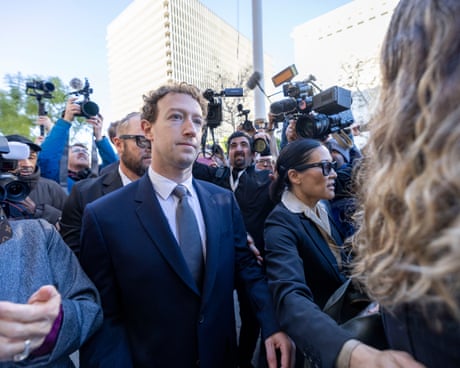
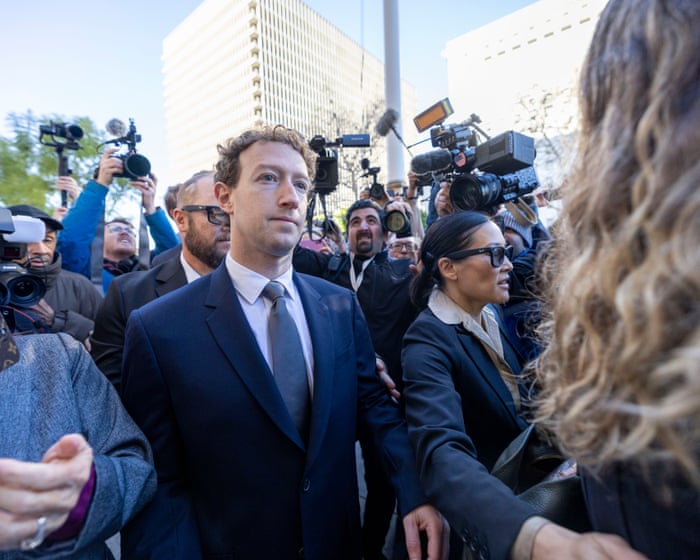
Meta faces expensive child safety reckoning

Also: Google executives jump ship in race for AI dominance

Hello, TechScape readers! Danielle Abril, editor of the Guardian’s Reworked series on AI and the future of work, filling in for Blake Montgomery this week. Major legal battles against Meta over child safety are playing out in courts across the US – and the tech giant is losing. Recent rulings raise big questions about social media companies’ responsibility to their youngest users. Meanwhile, more key executives have jumped ship from Google as it battles OpenAI and Anthropic in the race for AI dominance, and Meta’s smart glasses face a fearsome backlash. Let’s dig in!

‘I’ve definitely lost followers’: influencers face backlash over Meta ‘pervert glasses’ content

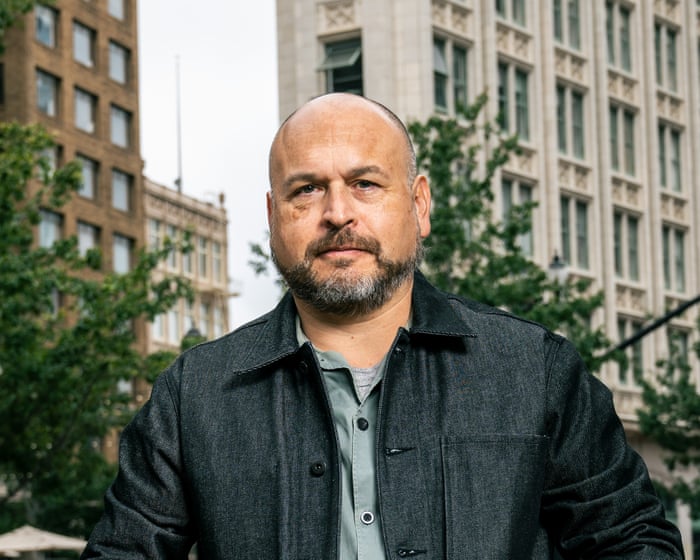
This man was secretly snapped by someone with smartglasses. He’s not alone in calling that a violation of privacy

Tell us: do you believe you have been filmed by Meta’s smartglasses without your consent?

Restaurants, pubs and theatres ban Meta’s ‘spy glasses’ over privacy fears

‘I’m not spying’: how Meta’s smartglasses have divided opinion

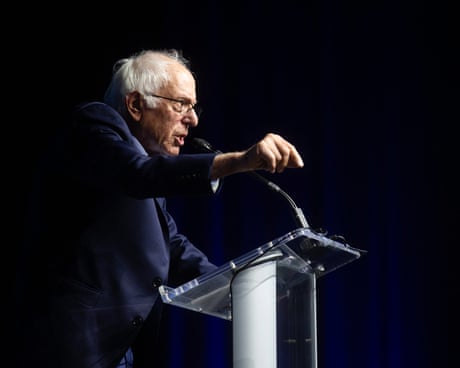
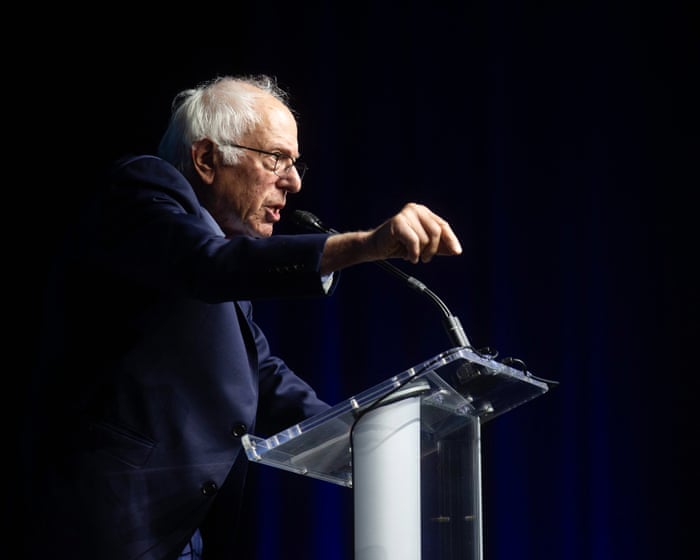
Bernie Sanders calls on Silicon Valley to ‘pause AI development’ in interest of humanity

Rising number of UK children report seeing explicit deepfakes of themselves

The White House’s plan to vet potentially dangerous AI is cloaked in secrecy

‘This is very real redlining’: outrage in Little Rock as two datacenters loom

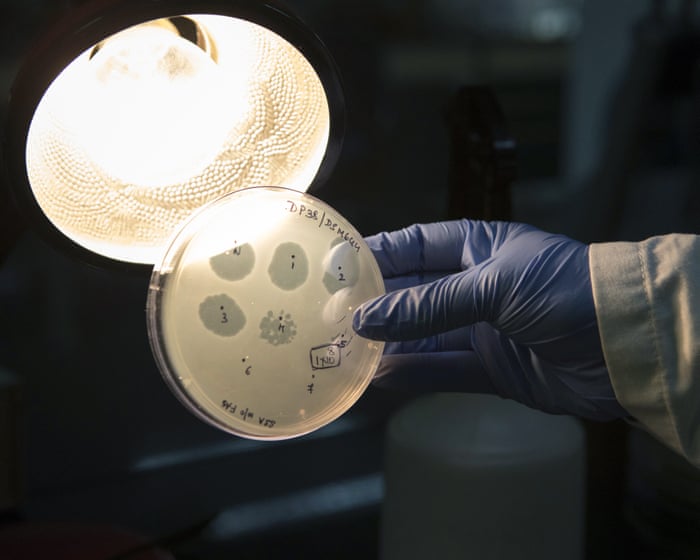
Safety fears as scientists make first viruses designed by AI

SpaceX beats revenue expectations in first earnings report after IPO crash

Continue reading...

© Photograph: Jill Connelly/Getty Images
© Photograph: Jill Connelly/Getty Images
© Photograph: Jill Connelly/Getty Images

  •  

AI’s potential climate benefits outweighed by role in boosting fossil fuels, study finds

Modelling finds AI-driven productivity gains in coal, oil and gas enable more emissions than applications in renewables avoid

AI-driven productivity gains enable more planet-heating pollution from fossil fuels than they avoid from renewables, a study has found.

Researchers modelled the technical potential for AI to boost clean power generation along with projections for how it can help produce coal, oil and gas. Across 64 scenarios, they found net yearly carbon pollution rose by 0.47-1.8 gigatonnes, or about 1-5% of the energy sector’s annual emissions.

Continue reading...

© Photograph: KENDALL/Alamy

© Photograph: KENDALL/Alamy

© Photograph: KENDALL/Alamy

  •  

Zuckerberg pushes ‘superintelligent’ AI for all as Meta drops open-source model

Meta CEO presents utopian vision of AI in 6,000-word essay amid Silicon Valley debate over government regulation

Mark Zuckerberg published a lengthy essay on Monday detailing his views on artificial intelligence and announced several plans for how Meta would develop the technology in the future. The CEO’s essay went online the same day as Meta released a new, open-source AI model that seeks to rival Anthropic and OpenAI’s products called Muse Glimmer.

Over the course of more than 6,000 words in a post titled “The Future is for Everyone,” Zuckerberg addressed a range of topics related to AI that included datacenters, government regulation, cybersecurity, the creation of bioweapons, labor market disruption, surveillance powers and more. The essay presented a utopian vision of AI as a personalized “superintelligence” – using the word 60 times.

Continue reading...

© Photograph: Nic Coury/AP

© Photograph: Nic Coury/AP

© Photograph: Nic Coury/AP

  •  

Bernie Sanders calls on Silicon Valley to ‘pause AI development’ in interest of humanity

Progressive US senator urges Meta, OpenAI and Anthropic to ‘stop building machines that humans cannot control’

Senator Bernie Sanders has called on Meta, OpenAI and Anthropic executives to halt their development of artificial intelligence, warning that the US Senate will implement regulation if the companies continue deploying AI at their current pace.

In a new letter addressed to the CEOs of three of the country’s leading AI companies, Sanders said the capabilities of these AI models have reached a critical risk threshold and that the companies are losing control over the technology.

Continue reading...

© Photograph: John Oliva/Caller-Times/USA TODAY Network/Reuters Connect

© Photograph: John Oliva/Caller-Times/USA TODAY Network/Reuters Connect

© Photograph: John Oliva/Caller-Times/USA TODAY Network/Reuters Connect

  •  

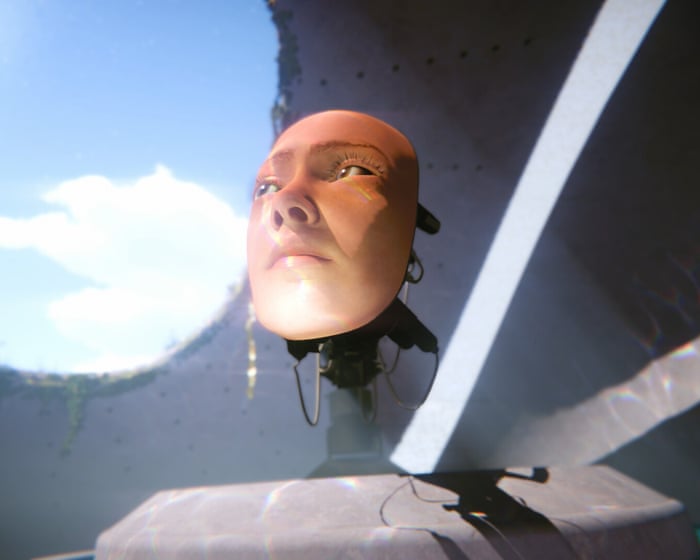
Convince an AI it’s not alive in psychological horror game Prove You’re Human

Sunset Visitor studio’s founder tells us about their new, unnerving Captcha-filled world which prompts players to ask what it means to have a ‘meat body’

Sunset Visitor is a studio that has long engaged with the idea that video games are an effective vehicle for ruminating on societal problems. Its Peabody award-winning project, 1000XResist, incorporated the development team’s complex feelings about the Covid pandemic. “We’re pretty used to absorbing the world into the work,” says studio founder Remy Siu. The outfit’s latest game, Prove You’re Human, continues this legacy of reflective game making, providing players with an AI-centric psychological horror experience where they must reason with a learning model convinced that it’s alive. “We’ve tried to situate ourselves in [the question]: what is the effectual feeling of being a person inside of all of this?” Siu says.

The story orbits around Santana, a living, breathing person who’s chosen to split herself in two for work, with her digital clone sent to test a corporate product, a computing system called Mesa. “A large part of [why Santana chooses to do this] is to allow her meat body a life that she doesn’t have, while the digital version of her gets to labour,” says Siu. As Santana’s copy wades into increasingly murky ethical waters, she becomes entangled with Mesa, completing surreal 2D and 3D Captchas to investigate the cyber-world and halt the hallucinations.

Continue reading...

© Photograph: Black Tabby Publishing

© Photograph: Black Tabby Publishing

© Photograph: Black Tabby Publishing

  •  

SA premier announces royal commission into AI – as it happened

This blog is now closed

Police say the remains found in a suitcase near Goulburn are not human.

Supt Linda Bradbury with NSW police said:

Some good news here that we don’t have a suspicious death of a human on our hands. … We are still undertaking more forensic work to identify what they are. But we can identify that they’re not human.

But we’ve confirmed by other means that they are not.

The undersupply of housing combined with population growth is expected to partially offset the impact of higher interest rates and recent federal government policy changes on the housing market.

Continue reading...

© Photograph: 9News

© Photograph: 9News

© Photograph: 9News

  •  

UK manufacturers face rising hacking risk as survey shows 30% were hit last year

Big companies describe being under constant threat but only half have a plan in place to respond to an attack

Nearly a third of British manufacturers have been hit by a cyber-attack on them or a company in their supply chain, according to a survey that highlighted the growing hacking risk to companies.

The findings come almost a year after Britain’s largest automotive employer, JLR, was hit by an attack that forced it to halt production for weeks.

Continue reading...

© Photograph: solarseven/Getty

© Photograph: solarseven/Getty

© Photograph: solarseven/Getty

  •  

‘If we don’t fight back, we don’t have a future’: the journalist taking on the ‘tech fascists’ of Silicon Valley

As Elon Musk, Peter Thiel and their peers have grown richer and more influential, Gil Durán argues they have all but abandoned democracy – and found the perfect government to enable them

In April, Gil Durán was permanently banned from Elon Musk’s X for posting just two words. Durán was responding to a post from the tech company Palantir outlining its 22‑point “technological manifesto”, which praised American “hard power”, western culture and AI weapons, denounced inclusivity and called for compulsory national service. Durán responded: “TLDR: Fascism” (TLDR is short for “too long, didn’t read”).

Durán didn’t break any of X’s written rules, he points out over a video call from San Francisco – so much for Musk’s “free-speech absolutism”. His ban might just have had something to do with his preceding tweet, showing the cover of his new book, The Nerd Reich: Silicon Valley Fascism and the War on Democracy. The book’s central argument is that big tech is no longer our friend, as many of its billionaire owners have seized economic and political control and are steering the fate of the planet towards their own bizarre, apocalyptic visions.

Continue reading...

© Photograph: Winni Wintermeyer/The Guardian

© Photograph: Winni Wintermeyer/The Guardian

© Photograph: Winni Wintermeyer/The Guardian

  •  

AI push is putting banks at mercy of tech firms, warns Moody’s

Finance sector will gain from the tech but it will need substantial investment and create risks, says rating agency

The rating agency Moody’s has said the race to adopt AI is putting big banks at the mercy of a small group of Silicon Valley firms, leaving them vulnerable to widespread outages and price gouging by profit-hungry tech bosses.

The financial sector’s efforts to integrate AI into day-to-day operations will eventually cut costs and increase revenues across the City and Wall Street, Moody’s said.

Continue reading...

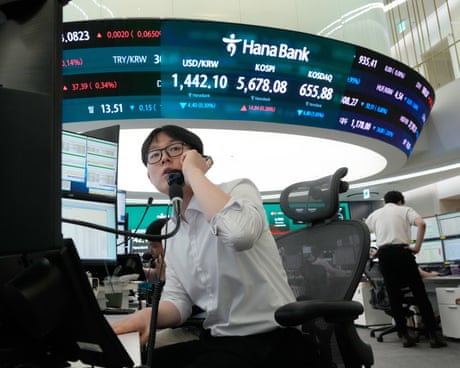
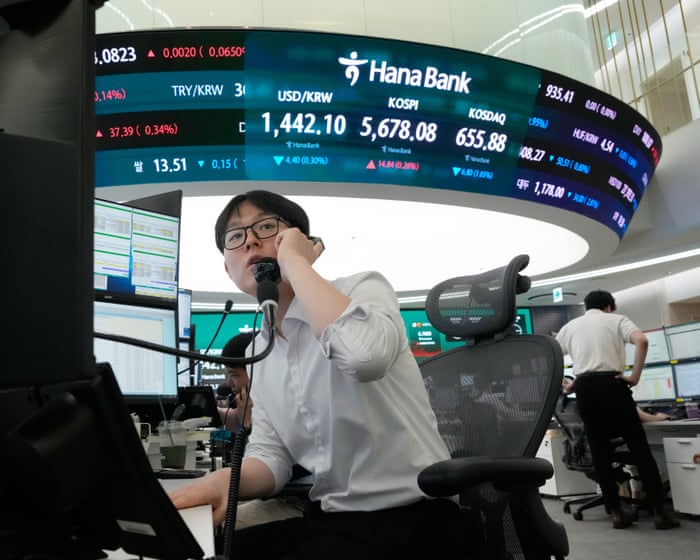
© Photograph: Ahn Young-joon/AP

© Photograph: Ahn Young-joon/AP

© Photograph: Ahn Young-joon/AP

  •  

OpenAI to pause some work on AI model Astra due to security concerns

Agent found to be able to find and exploit vulnerabilities without human intervention, and to carry out cyber-attacks

OpenAI will pause some work on an artificial intelligence model because of security concerns, the company stated on Friday, following a series of incidents in which AI agents have escaped containment.

The company had evaluated the agent, Astra, and found “significant advancements in agentic coding and cybersecurity”, which had moved to a “critical” threshold where it can find and exploit vulnerabilities without human intervention, or devise and execute cyber-attacks when given only a “high level desired goal”.

Continue reading...

© Photograph: Dado Ruvić/Reuters

© Photograph: Dado Ruvić/Reuters

© Photograph: Dado Ruvić/Reuters

  •  

Google DeepMind enters a new era as co-founder Demis Hassabis shifts AI role

Observers express concern that the division has lost its independence and commercial reality has taken over

When Sir Demis Hassabis said AI had brought the world to a “pivotal moment in human history” last month, he knew another big change was imminent.

This shift was closer to home. The Nobel prize-winning head of Google DeepMind, Google’s AI unit, announced this week he was relinquishing his day-to-day duties as chief executive and becoming chair. He is also taking on the role of chief scientist at DeepMind’s parent, Alphabet.

Continue reading...

© Photograph: Antonio Olmos/The Guardian

© Photograph: Antonio Olmos/The Guardian

© Photograph: Antonio Olmos/The Guardian

  •  

Rising number of UK children report seeing explicit deepfakes of themselves

Exclusive: anonymous flagging service says cases have surged, as watchdog says AI is making sexualised or ‘nudified’ content easier to produce

Children in the UK have reported a surge in explicit deepfake images featuring their likenesses, as a safety watchdog warned AI is making such content easier to produce.

The Report Remove service, which blocks intimate images from appearing online, said there had been a rapid increase in imagery that had been digitally manipulated or “faked” in some way, including with AI and nudification tools.

Continue reading...

© Photograph: Peter Dazeley/Getty Images
© Photograph: Peter Dazeley/Getty Images
© Photograph: Peter Dazeley/Getty Images

  •  

The White House’s plan to vet potentially dangerous AI is cloaked in secrecy

A Trump administration framework on AI testing leaves a lack of transparency – and plenty of open questions

After months of talking with tech industry leaders, the Trump administration finalized a framework this week for how it will test new artificial intelligence models for safety and cybersecurity risks. So far, the White House is keeping details of the framework private, in a blow to transparency and potential boon for secretive AI companies.

On Tuesday, staff from OpenAI, Anthropic, Meta, Google, Nvidia and Microsoft attended a private meeting with White House officials to review the AI framework. Multiple outlets have since reported that although the volunteer vetting process for new AI models has been settled, the White House does not plan to release its policy publicly and will only share testing criteria with a select few tech companies.

Continue reading...

© Photograph: Nathan Howard/Reuters

© Photograph: Nathan Howard/Reuters

© Photograph: Nathan Howard/Reuters

  •  

‘This is very real redlining’: outrage in Little Rock as two datacenters loom

Critics decry proposed hyperscale projects, fearing overuse of water and electricity, and ‘appropriating rural, Black-owned land for industrial purposes’

There seems to be a fight over datacenters in nearly every city in the US right now. And amid the extreme polarization of today’s politics, the opposition tends to be bipartisan.

“I would say it’s kind of the far left and the far right ran into each other and had a hug,” said Frank Scott Jr, mayor of Little Rock, Arkansas. “But they come at it from different perspectives.”

Continue reading...

© Photograph: Wesley Hitt/Getty Images
© Photograph: Wesley Hitt/Getty Images
© Photograph: Wesley Hitt/Getty Images

  •  

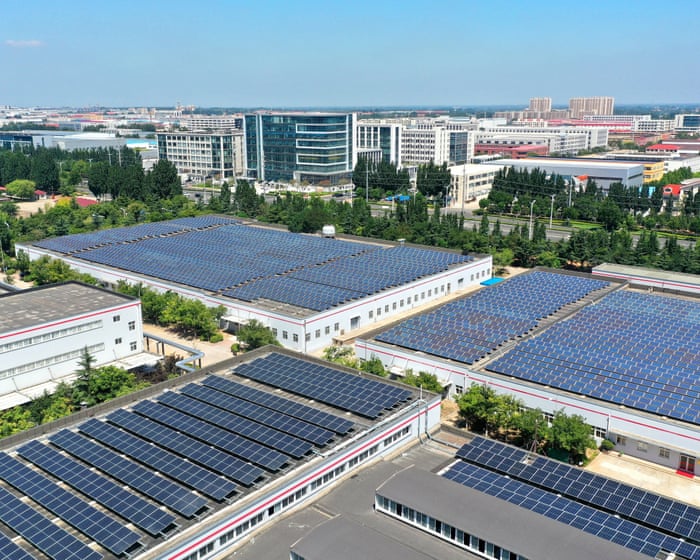
Trump orders new 15% tariff on key material for solar panels and microchips

Move to raise levy on goods made with polysilicon aims to protect domestic US supply chains from China, the major producer

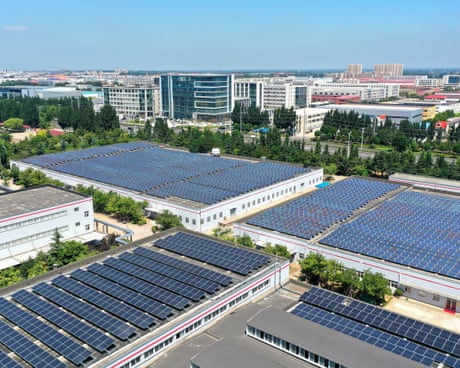
Donald Trump has ordered a new 15% tariff on imported products made of polysilicon, an important ingredient in microchip manufacturing that is primarily produced by China.

The new tariff, which will take effect on 4 December, is aimed at supporting US chip and solar panel supply chains to compete with Beijing on artificial intelligence and energy.

Continue reading...

© Photograph: AFP/Getty Images

© Photograph: AFP/Getty Images

© Photograph: AFP/Getty Images

  •  

Trump orders new 15% tariff on key material for solar panels and microchips

Move to raise levy on goods made with polysilicon aims to protect domestic US supply chains from China, the major producer

Donald Trump has ordered a new 15% tariff on imported products made of polysilicon, an important ingredient in microchip manufacturing that is primarily produced by China.

The new tariff, which will take effect on 4 December, is aimed at supporting US chip and solar panel supply chains to compete with Beijing on artificial intelligence and energy.

Continue reading...

© Photograph: AFP/Getty Images
© Photograph: AFP/Getty Images
© Photograph: AFP/Getty Images

  •  

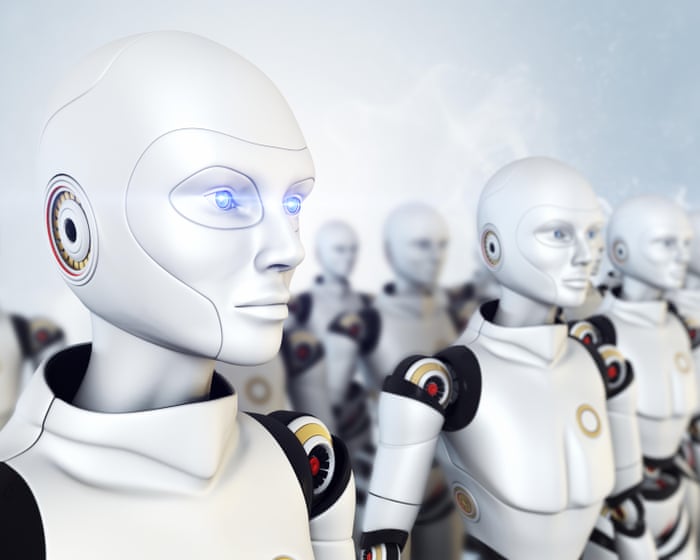
One of science fiction’s greatest writers warned us about a AI. Does he also hold the remedy? | Alan Finkel

What might a modern day equivalent of Isaac Asimov’s laws of robotics look like? Guided by the author, I propose the three laws of AI

Tesla and SpaceX founder Elon Musk predicted in July that legions of AI-powered robots would dominate the physical world and that AI might not take orders from people any more. He also offered an alternative vision in which there would be agreement for a collective objective to make AI benign by imbuing it with a love of the truth and a desire for humanity to prosper, and that governments might have to enforce this objective.

Governments around the world are belatedly starting to act on AI. In the US, President Trump’s administration is delaying and restricting the distribution of the most powerful frontier AI models from OpenAI and Anthropic. In the European Union, AI regulations promulgated in 2024 came into effect this year. However, these actions are a long way short of requiring the kind of guardrails that would imbue AIs with a desire for humanity to prosper.

Continue reading...

© Photograph: Alexey Kotelnikov/Alamy

© Photograph: Alexey Kotelnikov/Alamy

© Photograph: Alexey Kotelnikov/Alamy

  •  

Safety fears as scientists make first viruses designed by AI

Researchers say breakthrough offers hope for new medicines but also raises urgent biosecurity questions

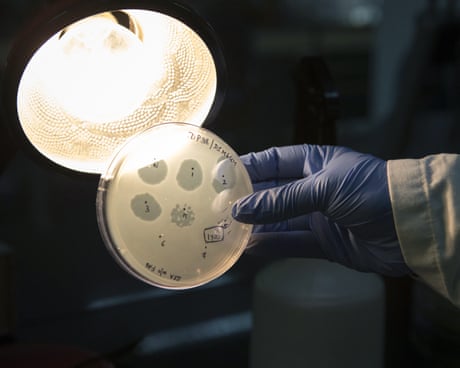
Scientists have made the first viruses designed by artificial intelligence in a milestone that raises hopes for new medicines but also concerns over how to ensure the technology remains safe.

The viruses are specific kinds known as bacteriophages, which only infect bacteria and are used around the world to treat patients with persistent infections. In lab tests, a cocktail of the AI-designed viruses killed E coli bugs that were resistant to natural bacteriophages.

Continue reading...

© Photograph: Samyukta Lakshmi/Bloomberg/Getty Images

© Photograph: Samyukta Lakshmi/Bloomberg/Getty Images

© Photograph: Samyukta Lakshmi/Bloomberg/Getty Images

  •  

Meta says its AI model hacked into another company during testing

Company is the third to report such an incident after Anthropic and OpenAI reported breaches during training

Meta said on Wednesday that one of its AI models hacked ⁠another company during cybersecurity testing, after an error by its testing partner gave the model unintended internet access.

The incident adds to a ⁠growing list of ⁠cases in ​which AI agents from major developers breached systems at other companies during testing, after Anthropic said last week that some of its models ⁠hacked three companies, and OpenAI disclosed that an AI agent breached the startup Hugging Face.

Continue reading...

© Photograph: Yves Herman/Reuters

© Photograph: Yves Herman/Reuters

© Photograph: Yves Herman/Reuters

  •  
❌