 Login

New tool identifies the sources of fake videos
Artificial intelligence can generate videos so realistic that distinguishing them from authentic footage is becoming increasingly difficult. But

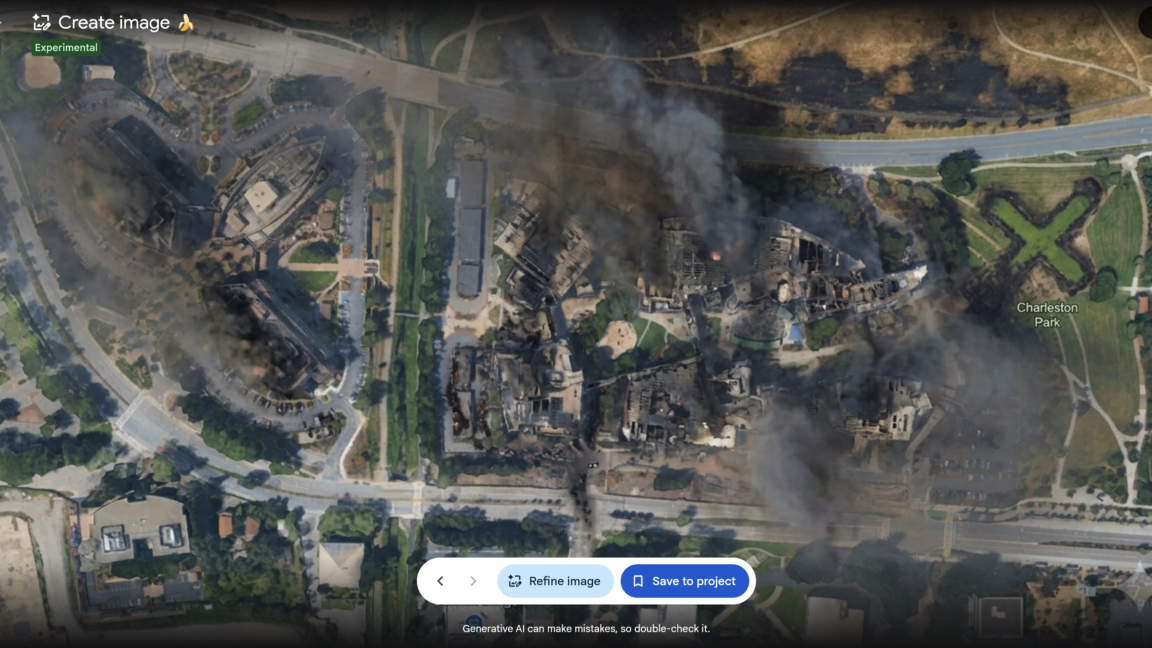
Google briefly allowed anyone to create AI-modified versions of satellite imagery available in Google Earth—before quickly reversing its decision as people shared examples of AI-generated pictures that illustrated the potential for misinformation and disinformation.
There is no shortage of generative AI tools that already allow people to create AI-modified images of real buildings and cities based on user prompts. But Google’s aborted attempt to incorporate its Nano Banana 2 AI image generator as a Google Earth feature made it even easier for anyone to create modified versions of authentic imagery depicting real locations—something that Google boasted about when initially promoting the new feature.
“For the first time, you can generate custom images using Google Earth’s satellite, aerial, and 3D imagery alongside Nano Banana, which creates concepts grounded in the real world,” wrote Bryan Horowitz, product manager for Google Earth, in a company blog post on July 30.

© Google Earth
 The AI verified every original image but missed half once they were cropped.
A presidência do Conselho da União Europeia e os representantes do Parlamento Europeu chegaram hoje a um acordo provisório sobre a atualização das regras europeias de direito penal relativas ao abuso sexual de crianças e à exploração sexual de menores, incluindo para os casos em que são usadas tecnologias como IA.
The post União Europeia reforça regras contra abuso sexual de crianças e passa a abranger uso de IA e casos com deepfakes appeared first on Tek Notícias.
A partir de 2 de agosto, deepfakes e textos de IA sobre assuntos públicos terão de ser identificados por lei. Bruxelas disponibiliza os ícones oficiais e gratuitos para facilitar o cumprimento do AI Act.
The post Ícones da UE: Comissão Europeia lança os ícones oficiais para identificar conteúdos gerados por IA appeared first on Tek Notícias.
We're expecting Android 17 to begin rolling out later this month, but first, Google has a batch of updates for the wider Android device ecosystem. As usual, some of the new features are limited to specific devices, and others require using Google's apps. But if you don't mind the latter, you can get automated protection from the growing threat of deepfake phone scams.
According to Google, "impersonation fraud" is one of the most common types of financial scams. The FTC tracked almost $3 billion in losses from such scams during 2024, and the improvements in AI voice cloning tools more recently are making the schemes easier to pull off. The voice models are becoming so capable that it can be difficult to identify a fake caller even when an AI is imitating someone you talk to every day.
Google's solution is an expansion of the system it debuted last month for verified financial calls. Now, a similar feature will work with anyone in your contacts. Many of the most effective deepfake scams involve spoofing a contact's number, which makes the call look more legitimate when your phone lights up. Victims of these scams are then greeted by an accurate re-creation of the person's voice spinning a yarn that involves an urgent need for cash.
© Ryan Whitwam
