A strengthening tropical storm named Lala is set to hit Hawaii's Big Island with hurricane-force gales on Saturday, bringing dangerous winds, rainfall and heavy surf.
The UK has experienced several heat waves this summer—heat stress among workers is one of the biggest causes of weather-related sick leave. Very high temperatures can cause symptoms like heat rash and cramps, or even exhaustion and heatstroke.
On the banks of the Waal, the Dutch branch of the Rhine, swimmers are sunning themselves on a Nijmegen beach that didn't exist before the river level dropped a few months ago.
A powerful magnitude 7.7 earthquake struck off the coast of Indonesia early Saturday, damaging buildings and homes, and triggering a tsunami warning. Authorities urged people on affected coastlines to move to higher ground.
As summer temperatures soar across the United States and Europe, cities are being forced to confront the difficult reality that they're getting dangerously hot.
Firefighters raced to save a 1,000-year-old monastery in northeastern Spain on Friday as a growing wildfire prompted the hasty removal of the bones of medieval monarchs buried there.
For the first time in my life, I have a proper garden, and I was determined to make the most of it. Back in spring, I went all in: seeds, trays, pots, grow bags, soil, and a shiny new watering can. My vision was modest but hopeful: a small patch of fruit and vegetables, flowers to attract pollinators, and a chance to teach my eldest child how things grow, and how to handle it when they don’t.
We started with tomatoes, a household favorite. The seedlings sprouted with promise, only to shrivel and die in the season’s first heatwave. It felt like a bad sign. The dahlias, ranunculus, and freesias I’d planted refused to bloom at all. Slowly, my gardening enthusiasm began to fade.
What started as a cozy parent-child project in patience and resilience is beginning to feel like something else entirely: a small, personal front line in the climate crisis. As heatwaves become more frequent and intense across Britain, pushing more regions into drought, the simple act of growing your own food is no longer just a hobby. It’s a test of adaptability, and increasingly, a luxury that requires more water, more vigilance, and more heartbreak than it once did.
My family’s failed harvest is a tiny story, but it echoes a much bigger one, as gardeners, allotment holders, and small-scale growers across the country grapple with unpredictable weather patterns that are reshaping how, and whether, we can grow our own food at all.
A stunning drone video capturing dozens of stingrays swimming together off the coast of New York has drawn widespread attention from beachgoers and marine life enthusiasts alike. The footage offers an unusual bird’s-eye perspective on cownose rays, a species known for its seasonal visits to Long Island’s waters.
Captured last Friday off Southampton, the video was filmed by Joanna Steidle, a Hamptons-based drone pilot recognized for her striking aerial ocean photography. The clip shows a large group of cownose rays gliding gracefully just beneath the water’s surface, their distinctive wing-shaped bodies visible in remarkable detail.
Cownose rays, which can grow wing spans of up to three feet, are known for traveling in large schools and typically arrive in the region during the warmer summer months. Despite their somewhat intimidating appearance, marine scientists describe the species as shy and generally harmless to humans, posing little threat to swimmers or beachgoers who might encounter them.
While the sight of so many rays moving together may seem unusual to casual observers, experts note that this behavior is a normal part of their seasonal pattern and that these creatures have likely been visiting Long Island’s coastal waters for decades. The viral footage has offered a rare glimpse into a natural phenomenon that typically goes unnoticed by those on shore, highlighting the rich marine biodiversity present just off New York’s beaches during summer.
At sunrise, the yacht Boaventura II departs Rio de Janeiro carrying a boatload of eager whale watchers. Just past the Cagarras Islands, a rocky archipelago three miles from Ipanema beach, passengers crowd the bow, eyes fixed on the horizon.
Their patience is quickly rewarded. A pod of bottlenose dolphins surfaces first, leaping and diving playfully near the boat. Moments later, two plumes of mist rise into the air—the telltale sign of humpback whales. The massive creatures breathe rhythmically at the surface before diving, their distinctive tail flukes briefly visible above the waves.
This scene, once unimaginable, has become increasingly common off Rio’s coast. Humpback whales, hunted to near extinction during the 20th century whaling era, have made a remarkable comeback in Brazilian waters. Their resurgence has sparked a booming whale-watching tourism industry, drawing visitors eager to witness these ocean giants up close.
Yet the very success story that brings tourists to the water is now raising concerns among marine biologists. As boat traffic increases to meet demand, researchers are questioning whether unchecked tourism growth could threaten the fragile recovery of the species. The challenge now facing Rio: how to celebrate and share this conservation triumph without loving the whales back toward danger.
Astronomers using NASA’s James Webb Space Telescope have discovered water molecules inside the enormous envelope of gas and dust surrounding IRS 3, an aging star located remarkably close to the supermassive black hole at the centre of the Milky Way. The finding challenges the long-held assumption that the intense radiation and gravitational turbulence around Sagittarius A, commonly known as Sgr A, would prevent molecules from surviving in such a hostile environment.
IRS 3 lies about 0.6 light-years from Sgr A*, a distance equivalent to roughly 42,000 times the separation between Earth and the Sun. In everyday terms, that is an immense distance. On the scale of the Galactic Centre, however, it places the star in the immediate neighbourhood of a black hole containing approximately four million times the mass of the Sun. The region is crowded with stars, powerful magnetic fields, energetic particles and rapidly changing radiation, making IRS 3 an exceptional natural laboratory for studying how stars evolve under extreme conditions.
The observations were conducted with the Mid-Infrared Instrument, or MIRI, aboard the James Webb Space Telescope. Mid-infrared light is particularly useful for investigating cool dust and molecules that absorb and re-emit radiation at characteristic wavelengths. By analysing the infrared spectrum of IRS 3, researchers led by PD Dr Florian Peißker of the University of Cologne identified the chemical and physical properties of the material surrounding the star with far greater detail than previous observations allowed.
What makes IRS 3 especially striking is the scale of its circumstellar envelope. The structure extends to a radius of approximately 10,000 astronomical units, where one astronomical unit is the average distance between Earth and the Sun. Such envelopes are common around mature, evolved stars, but IRS 3 appears to be unusually isolated in the immediate vicinity of Sgr A*. Its enormous shell of material therefore stands out against a dense background containing millions of other stars.
The new observations indicate that IRS 3 is undergoing a phase known as a superwind. This is a brief but dramatic stage in the late evolution of certain stars, particularly asymptotic giant branch stars. During this phase, powerful stellar winds carry gas and newly formed dust away from the star at extremely high rates. Over periods of only a few centuries, the star can lose a substantial fraction of its outer layers, transforming its surroundings into a thick, expanding envelope that will eventually disperse into interstellar space.
According to the research team, IRS 3 is losing material at a rate equivalent to the mass of Earth every 18 days. Although the comparison makes the scale easier to imagine, the total outflow is far more significant when considered over astronomical timescales. The steady loss of gas and dust explains why the envelope is both unusually large and dense. It also provides the raw material in which molecules can form, shielded within cooler regions of the expanding stellar outflow.
The detection of water is the most surprising aspect of the study. Near Sgr A*, ultraviolet radiation, X-rays and high-energy particles are expected to break apart fragile molecules. Water molecules can be destroyed when energetic photons dissociate them into their constituent atoms, particularly in exposed regions close to powerful sources of radiation. Yet the MIRI observations show that water exists within the envelope of IRS 3, suggesting that the dense outflow from the star creates protected pockets where molecular chemistry can proceed.
This discovery does not mean that the Galactic Centre is a calm or hospitable environment. Instead, it demonstrates that stellar mass loss can temporarily create its own chemical refuge. The material expelled by IRS 3 increases the density of gas and dust around the star, allowing some regions of the envelope to absorb damaging radiation. Within these shielded zones, atoms can combine on dust grains or in the gas phase, producing molecules that would otherwise be rapidly destroyed. The finding offers a new view of how evolved stars may enrich even the most violent regions of a galaxy.
The researchers say that IRS 3 may be actively supplying the area around Sgr A* with elements and molecules that later become part of the broader interstellar medium. Water itself is not evidence of life, but it is a crucial ingredient in planetary formation and a central component of the chemistry that precedes biology. As the envelope expands, some of its contents will eventually mix with surrounding gas, potentially influencing the composition of future stars, planets and smaller bodies formed in the Galactic Centre.
The study, published in Astronomy & Astrophysics, also highlights the scientific value of observing the Milky Way’s centre at infrared wavelengths. Visible light is heavily obscured by dust along the line of sight, while infrared radiation can pass through much of that material and reveal otherwise hidden structures. Future observations with METIS, a next-generation mid-infrared instrument being developed for the Extremely Large Telescope in Chile, could provide sharper views of IRS 3’s envelope, measure its winds in greater detail and determine how its molecular content changes over time. For now, the star’s unexpected water-rich cocoon is offering astronomers a rare glimpse of stellar chemistry unfolding beside one of the most extreme objects in the universe.
Subject of Research: Not applicable
Article Title: Dust production in the harsh environment of Sgr A* – MIRI/JWST observation of the O-rich asymptotic giant branch star IRS 3
James Webb Space Telescope, JWST, MIRI, IRS 3, Sagittarius A, Sgr A, Milky Way, Galactic Centre, water molecules, superwind, asymptotic giant branch star, stellar evolution, circumstellar envelope, dust production, black hole, infrared astronomy, Extremely Large Telescope
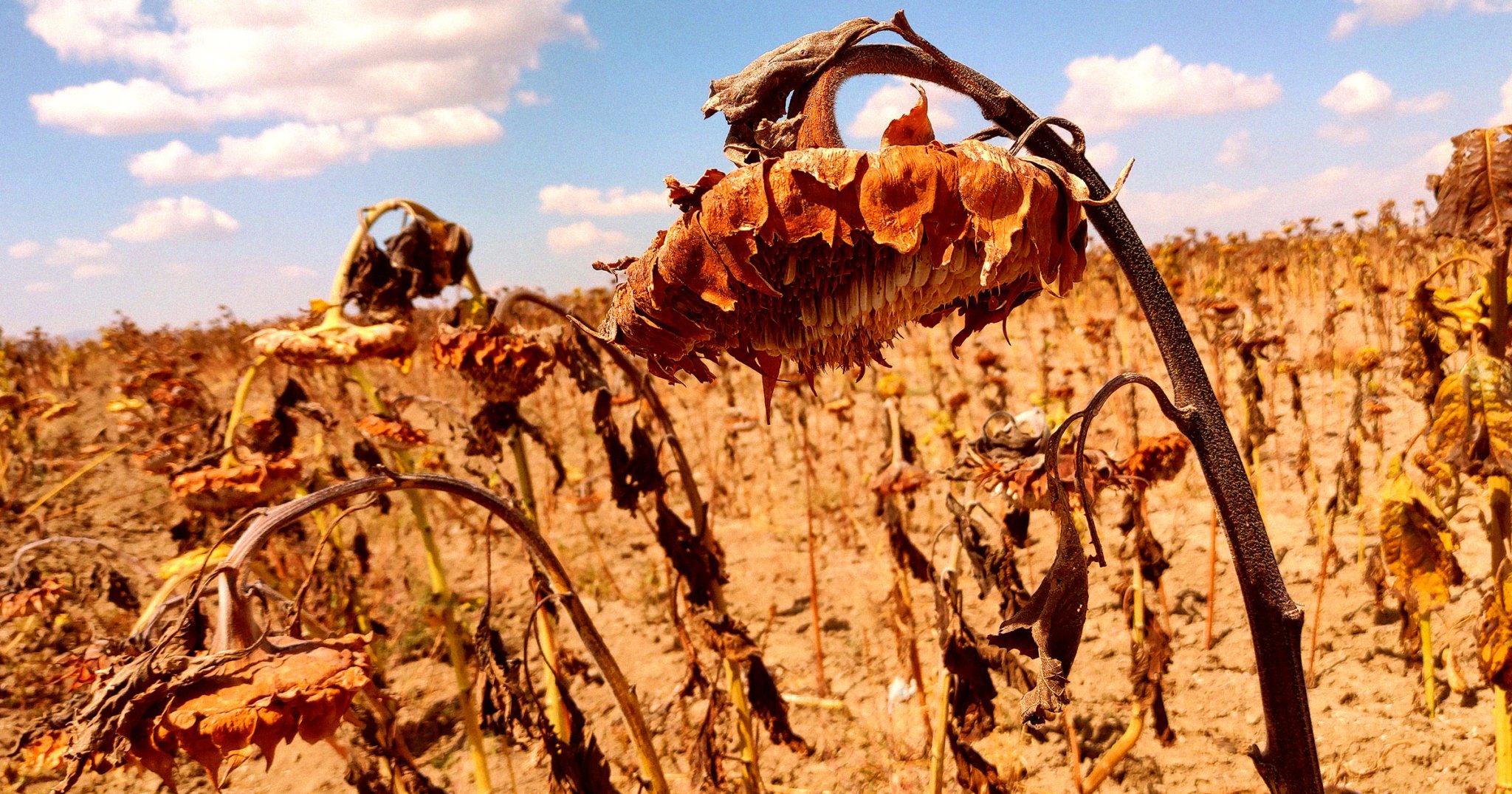
It’s not just you — the United States is going through a record-bustingly hot summer.
According to the National Oceanic and Atmospheric Administration, the contiguous US averaged 76.89 degrees Fahrenheit in July, which is even hotter than the July 1936 Dust Bowl, an environmental and agricultural disaster marked by devastating dust storms.
Much like the Dust Bowl, which was the result of both natural and human-made factors, this year’s record-breaking temperatures are the result of a strong El Niño — a naturally occuring weather pattern — exacerbating the calamitous effects of human-caused climate change.
“It’s not good when you’re breaking records from the Dust Bowl, which we are in this case,” Yale Climate Connections meteorologist Jeff Masters told the Associated Press. “And that was a crazy sort of situation where you put tens of millions of people in motion. You had this great migration because of the drought and the heat that hit the center of the US — just a cataclysmic event in US history.”
“If we’re exceeding records from the Dust Bowl, that says that we’re in deep trouble,” Masters added.
While the heat was more concentrated in the Midwest during the Dust Bowl, all 48 lower states experienced excessive heat this summer — at least one degree Fahrenheit warmer than the 20th century average.
And instead of focusing on ways to fight the effects of climate change, much of the country is moving in the opposite direction. The Trump administration is closely aligned with the fossil fuel industry and is actively seeking to reopen coal-burning plants. AI data centers powered by gas generators are compounding a major uptick in greenhouse gas emissions.
The result is a country literally on fire, while suffering the second-worst July drought conditions on record for the contiguous US, according to Yale Climate Connections. Per the US Drought Monitor, a whopping 71 percent of the contiguous US experienced abnormal dryness or drought during the first week of August, coming on top of billions of dollars in direct damages during the first half of 2026.
Meanwhile, major wildfires continue to burn across both the US and Canada, exposing millions to dangerous levels of air pollution and causing an estimated 4,000 premature deaths across the continent within a single week last month, according to The Economist.
The prognosis is just as grim as one might think.
“This may be one of the coolest years we’re gonna experience for the rest of our lives,” Masters told the AP.
To give humanity a fighting chance we need to “stop burning so many fossil fuels,” he added. “We also need to be spending money to adapt to the new climate that we’ve put in place.”
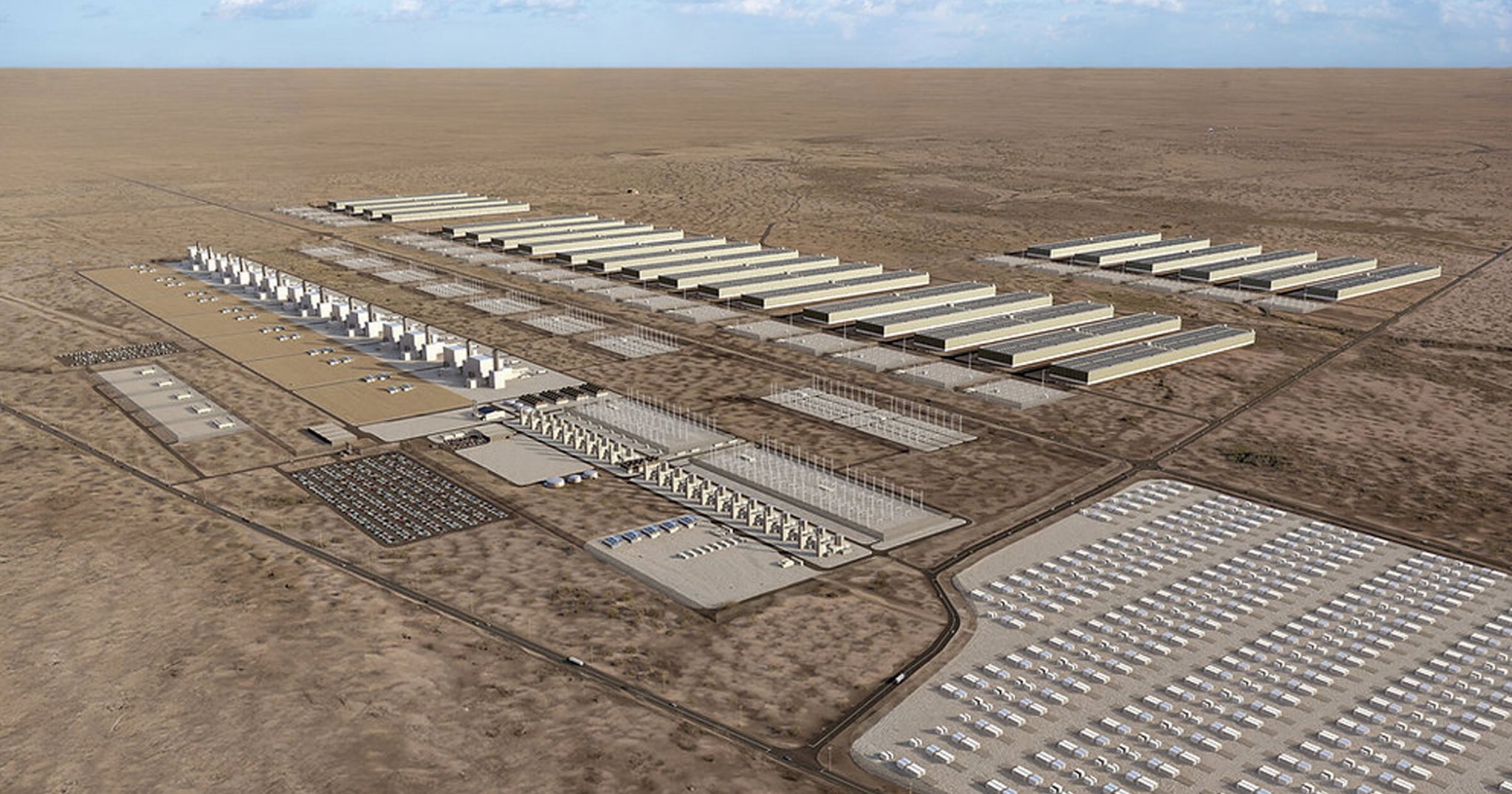
Tech Goliaths are scrambling to build as much AI computing capacity as they possibly can, come hell or low water. One of the dominant players in the space, Amazon Web Services, has its heart set on an AI data center so enormous that it could easily become the largest source of carbon dioxide emissions in the United States.
According to the New York Times, Amazon has confirmed its investment in a massive gas-burning power plant in Texas, meant to supply up to 7.65 gigawatts of energy to a planned data center in Pecos County. Should it come online as planned, the plant’s 35 turbines would be allowed to spew 33 million tons of CO2 a year, the NYT notes, which would easily make it the largest single fount of emissions in the country.
That’s a stunning amount of carbon exhaust, putting that single data center in a league with entire countries including Switzerland, Ireland, and Bulgaria.
It would also be in stark defiance of Amazon’s stated climate goals, which center on reaching net-zero carbon emissions by 2040.
That’s not lost on the tech giant. But as Amazon spokesperson Margaret Callahan told the NYT, the “world looks different now than when we co-founded the climate pledge.”
“We’re being transparent about the challenges, investing in innovation, and delivering measurable results,” Callahan continued. “Growth and sustainability don’t have to be in opposition — in fact, our results show they reinforce each other.”
Even without the new Pecos County plant, Amazon’s emissions are staggering. The company recently disclosed a record increase in its total emissions last year, with company-wide electricity usage rising by 34 percent across 2025.
That the company is blatantly papering over its previous climate commitments isn’t a shocker at this point, in other words, as the company reaches new emission highs with each passing year.
New research finds that by making the fossil fuel industry more productive, AI could help increase carbon emissions by up to nearly 5 percent—vastly outpacing the impact of data centers.
New research finds that by making the fossil fuel industry more productive, AI could help increase carbon emissions by up to nearly 5 percent—vastly outpacing the impact of data centers.
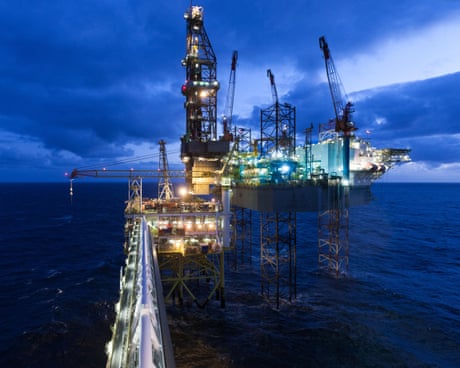
Last week reporters Jillian Ambrose and Damian Carrington published a piece which revealed that biggest oil firms made $93bn in profits in three months amid the war in Iran and the climate crisis. They’re online now to to discuss their story and any other questions you might have
StanEthel asks: Does anyone in the fossil fuel industry accept responsibility for climate change? If they don’t, how is their denial structured: it’s not happening, it’s someone else’s fault, it’s not our fault?
Damian:
The short answer is no, and a rising tide of lawsuits against fossil fuel companies for their role in the climate crisis means that is unlikely to change anytime soon. The science is ever clearer though. An analysis published last September showed for the first time that carbon emissions from the world’s biggest fossil fuel firms were directly linked to fatal spells of hot weather.
The big oil companies were among the first to realise the dangers of global warming half a century ago. But decades of denial then followed. As the reality of climate crisis has become undeniable, the arguments of the fossil fuel industry have shifted. Gas was cleaner than coal, for example, or that carbon credits from new forests could offset emissions. Today, the industry likes to tout carbon capture and storage (CCS) as a solution. But just this week, one of CCS’s loudest cheerleaders, ExxonMobil, has started a process to sue the European Union which wants to make the company actually store a small amount of CO2.
In the first weeks of the conflict, some predicted that the government’s taxes on North Sea oil and gas would yield a £20bn tax windfall for the Treasury if surging oil and gas prices remained high over the whole year. This is because the government’s windfall tax on North Sea oil and gas, known as the Energy Profits Levy, imposes an effective headline tax rate on North Sea profits of 78%, and the Treasury collects VAT from petrol and diesel sales too.
But prices have not climbed by as much as first feared. So what can we reasonably expect? Before the war, the Office for Budget Responsibility forecast that oil and gas revenues would raise £2.7bn in the 2025/26 financial year. It also suggests that for every $10 increase to the benchmark oil price, the Exchequer can expect an extra £900m in revenue. Meanwhile, every 1p increase in the price of gas hands the Treasury an extra £55m.
A new commentary in BMJ Global Health, co-authored by the George Institute, reveals that Australia exported 22,333 metric tons of plastic waste to Indonesia in 2023–24 alone, part of a wider crisis that has seen the country take in more than 200,000 metric tons of imported waste it cannot safely process. Up to 80% of it ends up burned or dumped.
Modelling finds AI-driven productivity gains in coal, oil and gas enable more emissions than applications in renewables avoid
AI-driven productivity gains enable more planet-heating pollution from fossil fuels than they avoid from renewables, a study has found.
Researchers modelled the technical potential for AI to boost clean power generation along with projections for how it can help produce coal, oil and gas. Across 64 scenarios, they found net yearly carbon pollution rose by 0.47-1.8 gigatonnes, or about 1-5% of the energy sector’s annual emissions.
A powerful 7.4 magnitude earthquake struck western Colombia on Monday, killing at least 111 people, damaging hundreds of buildings and leaving many trapped under debris while their loved ones and rescue workers searched through rubble.
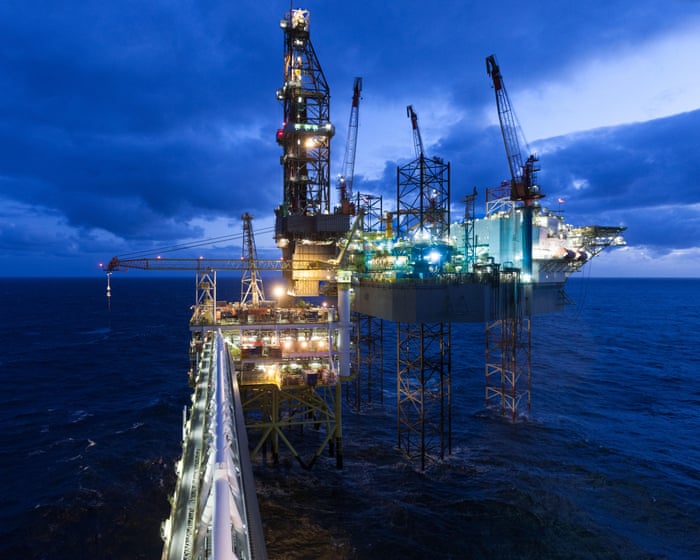
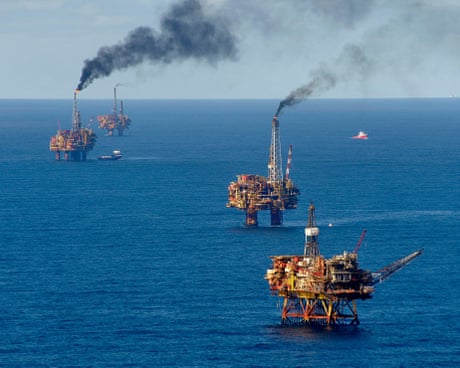
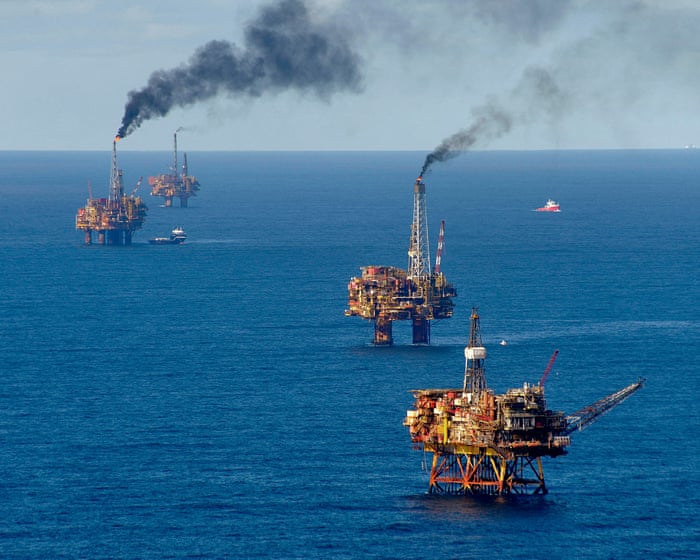
In today’s newsletter: As we enter our fifth summer heatwave, Andy Burnham’s government is looking at what the UK should do with its remaining North Sea oil and gas
Good morning. What a difference a new job can make. “To have a shot at staying within 1.5C global warming, we can’t have any new oil or gasfields … It’s irresponsible and shortsighted to be funding new #fossilfuels when we need to be getting to #NetZero.”
This was the 2022 message from Miatta Fahnbulleh, now the secretary of state for energy security and net zero. It’s a testament to her remarkable rise that Fahnbulleh wasn’t even an MP when she posted it four years ago. Today, she is in the cabinet, facing (or is the face of, at least) one of the most challenging, and potentially controversial questions looming for the new government: to drill or not to drill, baby?
Two sites are the focus of fierce debate. Yesterday, a public consultation on whether to greenlight extraction at one of them – Jackdaw – closed. Next Monday, it’ll be the same for the other, Rosebank. Andy Burnham has been silent about the climate crisis since taking office. As we enter yetanother heatwave, what his government does next will be a defining signal of intent on the issue.
Colombia | More than 100 people have died after a powerful earthquake struck western Colombia, collapsing and severely damaging scores of buildings in major cities including Cali and Pereira.
UK weather | Almost three-quarters of England is now in drought, with four more regions officially declared, and as much of Europe braces for its fifth climate crisis-driven heatwave this summer.
Crime | Police are investigating whether Joshua Kerry, the man charged with the murder of the former Reform UK and Conservative politician Ann Widdecombe, had any role in an attempted burglary last year at the then London home of Nigel Farage.
China | More than a million people were moved to safety across eastern China by Sunday evening as powerful Typhoon Dolphin made landfall amid fears torrential rain would cause flooding and landslides.
Ukraine | Russia has banned voting against the war in September’s elections, after the supreme court upheld a suit brought by a small pro-Kremlin nationalist party, and stripped voters of their last option on the ballot: Yabloko, the country’s only remaining anti-war party.
 Login