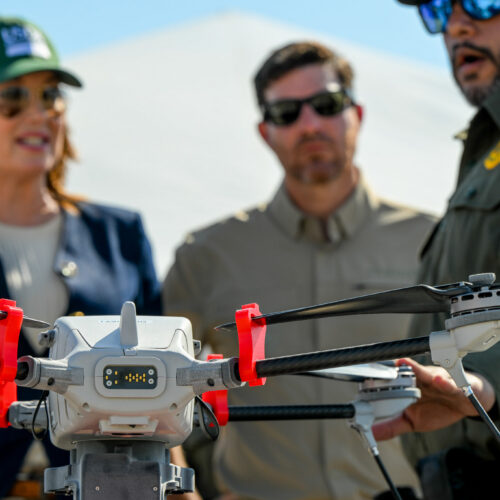
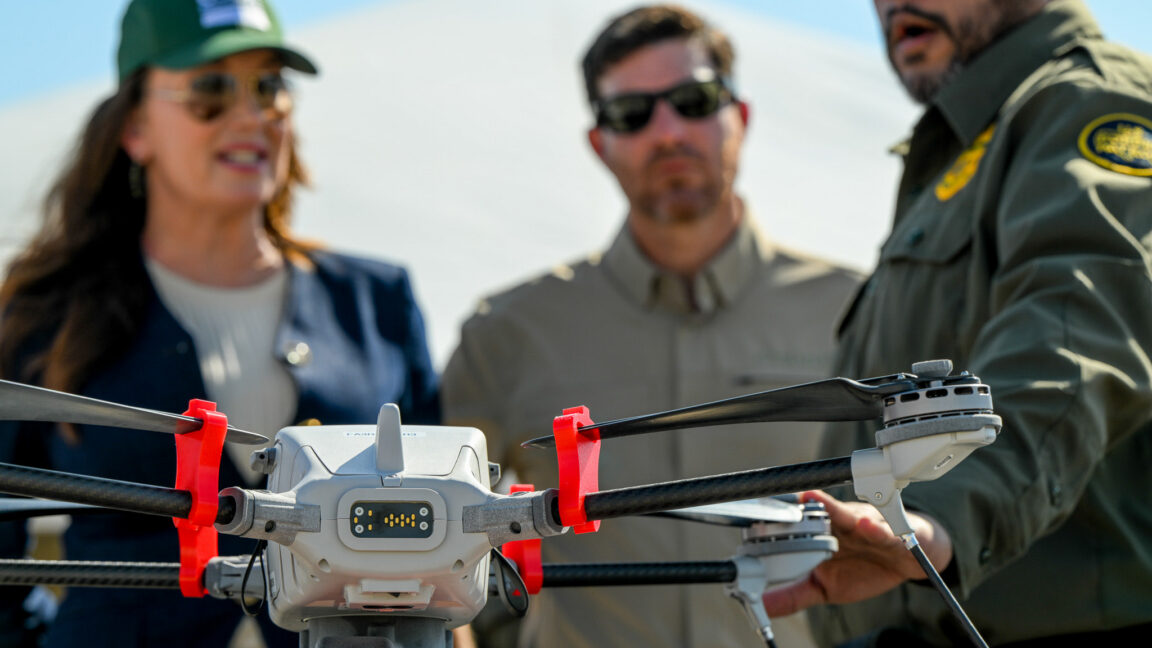
Hundreds of US government drones have switched from border surveillance to a different surveillance mission this summer—looking for signs of screwworm infestations in wild animals and livestock herds.
The flesh-eating New World Screwworm is the parasitic larva that emerges from eggs laid by flies in the open wounds or body openings of warm-blooded animals and humans, with untreated cases potentially leading to severe injury or death. Since the first screwworm cases were detected in South Texas in June, the US Department of Agriculture and US Customs and Border Protection have been conducting “one of the most extensive animal-health surveillance operations in the country,” the USDA said on August 10 in social media posts on platforms like X and Facebook.
The effort involves at least 200 drones owned by the Department of Homeland Security, which includes the Customs and Border Protection (CBP) agency. But the actual number in use "varies depending on availability and need," a USDA spokesperson told Ars.
More than 40 years after the end of commercial whaling, new research reveals a recent increase in sightings of the world's two largest whale species in the southeastern Atlantic. The findings, published in the African Journal of Marine Science, compiled more than 60 years of confirmed sightings and strandings from Namibia and South Africa's west coast. Although overall numbers remain low, sightings of both species have increased markedly in recent years—with 95% of observations recorded since 2012.
A tiny microscope weighing just five grams could give neuroscientists an unprecedented view of how individual brain cells control behavior while animals move naturally. Researchers at the University of Colorado Anschutz Medical Campus and the University of Colorado Boulder have developed a head-mounted device that can both record neural activity and selectively activate individual neurons during movement. The technology could help scientists investigate how brain circuits generate behavior and how those circuits become disrupted in conditions such as Alzheimer’s disease, Parkinson’s disease and epilepsy.
The device, called Opto2P-FCM, combines two powerful techniques that have traditionally been difficult to use together in a freely moving animal. Two-photon microscopy provides detailed images of living brain tissue at cellular resolution, while optogenetics uses light-sensitive proteins to control selected neurons. By integrating both capabilities into a miniature instrument, the researchers can observe specific cells as they become active and then stimulate chosen neurons to test how they influence the surrounding network.
“These miniature microscopes have been increasingly used to study the neural basis of behavior in freely moving animals,” said Emily Gibson, PhD, associate professor of biomedical engineering at CU Anschutz and the study’s senior author. “This new microscope allows deeper penetration and higher resolution images in the brain. Importantly, it can also excite select neurons using optogenetics.”
For decades, conventional two-photon microscopes have been regarded as the gold standard for imaging neurons in living brains. These systems use infrared laser light to produce high-resolution images deep within tissue, allowing researchers to track calcium signals and other indicators of neural activity. However, conventional microscopes are generally large, stationary instruments. Animals must often remain immobilized beneath the objective, making it difficult to study brain activity during walking, exploration, social interaction or other natural behaviors.
Miniature microscopes have helped overcome that limitation by moving the imaging system onto the animal’s head. Yet reducing the size and weight of the equipment has often required compromises. Some compact systems provide lower-resolution images, while others can record neural activity but cannot stimulate precisely selected cells. The Colorado team designed Opto2P-FCM to address both problems through a dual-path optical architecture that separates imaging from stimulation.
In the imaging pathway, infrared light is directed through the brain to generate two-photon signals from fluorescent markers inside neurons. These markers can report changes in calcium concentration, which occur when neurons fire. The resulting signals are collected to create detailed images of neural activity at the level of individual cells. A separate optical pathway delivers patterned light for optogenetic stimulation, allowing researchers to activate specific neurons without disrupting the imaging beam or overwhelming the detectors.
This separation is technically important because imaging and stimulation place different demands on an optical system. High-resolution imaging requires precise focusing, efficient light collection and minimal optical distortion. Optogenetic activation, by contrast, requires intense, accurately positioned light capable of reaching the light-sensitive proteins expressed by selected neurons. Designing both functions into a device small enough to be carried by an animal required careful control of the alignment, geometry and weight of every optical component.
“This microscope is a game changer,” said Juliet Gopinath, PhD, professor of electrical, computer and energy engineering and physics at CU Boulder and a study co-author. “Being able to demonstrate a state-of-the-art instrument for both read-out and photo-stimulation of neurons is amazing.” The research team included engineers, physicists and neuroscientists who worked together to solve problems involving miniature lenses, mechanical tolerances, optical alignment and three-dimensional fabrication.
The device weighs approximately five grams, but its small size made construction unusually demanding. Mo Zohrabi, PhD, a senior research scientist at CU Boulder and co-first author, said the team initially thought such an instrument might be impossible to build because of the tight tolerances required by the optics and available 3D-printing technology. Gregory Futia, PhD, a senior research associate at CU Anschutz and co-first author, said that every component had to be designed and accounted for with extreme precision. Even slight misalignment could reduce image quality or prevent the stimulation beam from reaching the intended cells.
The researchers believe the platform could transform experiments designed to distinguish correlation from causation in the brain. Recording a neuron’s activity can show that it is associated with a behavior, but it does not prove that the cell helps produce that behavior. With optogenetic stimulation, scientists can activate a selected population and observe whether movement, decision-making or other actions change. At the same time, the microscope can record how neighboring neurons respond, providing a view of how local circuits coordinate activity.
The current Opto2P-FCM system is a prototype, and the researchers are working on future versions that could be smaller, lighter and faster. They also hope to expand the field of view so that more neurons can be monitored at once. Such improvements could make it possible to track larger networks over longer periods while animals engage in increasingly complex behaviors. By combining cellular-resolution observation with targeted manipulation in a freely moving subject, the technology may help reveal how healthy neural circuits operate and how neurological disease changes the communication between them.
Subject of Research: Miniature two-photon microscopy, optogenetics, neural circuits and brain activity during natural movement
Article Title: New Miniature Microscope Allows Scientists to Watch and Control Brain Cells During Natural Movement
References: Optica, “New Miniature Microscope Allows Scientists to Watch and Control Brain Cells During Natural Movement,” article publication date: Aug. 7, 2026
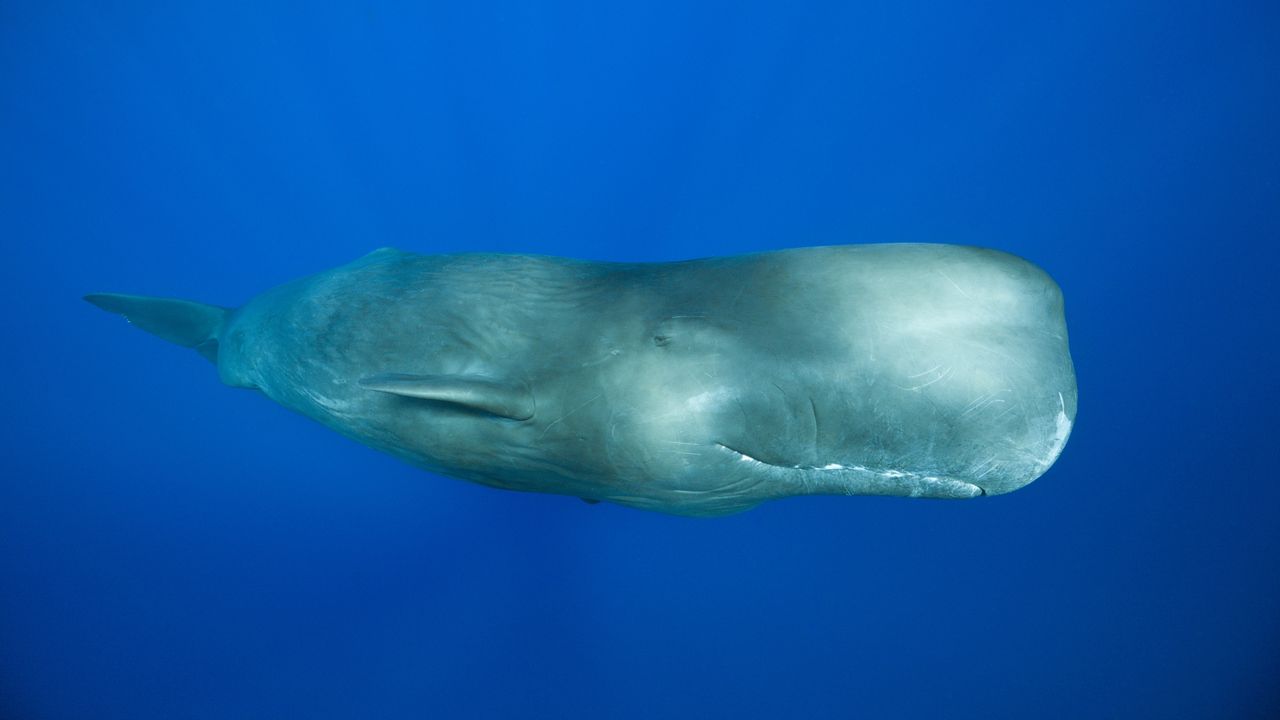
Sperm whales make the loudest communication sound of any animal on Earth, researchers find — but they aren't sure why.
In a new study, researchers investigated the mysterious, low-frequency clangs made by male sperm whales and found that they were louder than any known sperm whale communication signal, with the potential to be heard by other whales around 43 miles (70 kilometers) away.
They are very loud and metallic sounds that almost sound "like a jail door slamming," which is "why they are also called clangs," study first author Simone Videsen and co-author Peter Teglberg Madsen, biologists at the Center for Active Sensing with Sound at Aarhus University in Denmark, told Live Science in an email. "You feel small as a human when you hear them, as they are clearly made by something bigger than you," they said.
Sperm whales (Physeter macrocephalus) are the largest toothed predators, growing up to around 59 feet (18 meters) long. They dive deep into the ocean to hunt giant squid (Architeuthis dux) and other prey that dwell as low as 1.9 miles (3 km) below the ocean surface.
The distinctive clangs, first reported in the 1980s, are the loudest communication signal that sperm whales make, although they can produce even louder echolocation clicks to locate prey during hunts. The clangs are unusual because they are made only by males and represent an extreme form of communication that scientists still can't fully explain.
In the latest study, the researchers used hydrophones (underwater microphones) off the Seychelles to measure the sound level of the clangs. They also studied the rhythm of the signals in recordings collected in other locations, including off Sri Lanka, Norway and Scotland.
The recordings revealed that the whales kept up a slow, low-frequency rhythm, unlike the short, rhythmic clicks that both males and females make for typical social communication or the clicks used in echolocation. In fact, the rhythm was so slow that males left a gap of 5 to 10 seconds between each clang. That might not sound that impressive — but as far as we know, whales can't count to 10, so they are using another means to keep up this rhythm. According to the study, the whales might be relying on the echoes of the clangs bouncing off the seafloor.
Sperm whales can produce these record-breaking acoustics thanks to their ginormous noses — the largest of any animal — that dominate their massive heads, which make up about one-third of their body length. To make the clangs, male whales use their "phonic lips" — structures in their noses that snap together.
"They make [these noises] by forcing pressurized air through so-called phonic lips in their giant sound producing nose," Videsen and Madsen said.
The researchers proposed a few possible explanations for why the whales might be making the long-range clangs. For example, the males might be using the sounds to attract mates or scare off other males.
However, the communication may exist for another, unknown reason. In future studies, the researchers hope to learn more about this mysterious form of communication by playing recordings of the clangs underwater and seeing how nearby sperm whales respond.
In the coastal forests of a tropical Japanese island near Okinawa grows an inconspicuous plant that is easy to mistake for a mushroom. It is a non-green parasite that feeds on the roots of other plants and produces up to 1 million tiny seeds, each covered in a minuscule, dry fruit. The seeds, in particular, present a mystery to scientists: How do they get dispersed?
In the coastal forests of a tropical Japanese island near Okinawa grows an inconspicuous plant that is easy to mistake for a mushroom. It is a non-green parasite that feeds on the roots of other plants and produces up to 1 million tiny seeds, each covered in a minuscule, dry fruit. The seeds, in particular, present a mystery to scientists: How do they get dispersed?
A single leaf may look like a simple patch of green, but to the microscopic life that inhabits it, it is a vast landscape divided into different worlds.
A single leaf may look like a simple patch of green, but to the microscopic life that inhabits it, it is a vast landscape divided into different worlds.
Reproduction is central to the survival of all living organisms. Over millions of years, animal species on Earth have evolved a remarkable variety of mating strategies, ranging from physical fights with competitors to mesmerizing color changes, songs that attract mates and rhythmic movements that resemble dancing.
Fever is one of the best-known mechanisms by which animals combat infectious diseases. Sick animals can increase their body temperature in two ways: through physiological regulation, by altering internal metabolic processes, or through behavioral changes, such as seeking warmer environments. Ectothermic animals, including amphibians, fish and reptiles, generally rely only on the latter strategy. However, fever is not always the most effective response against every pathogen.
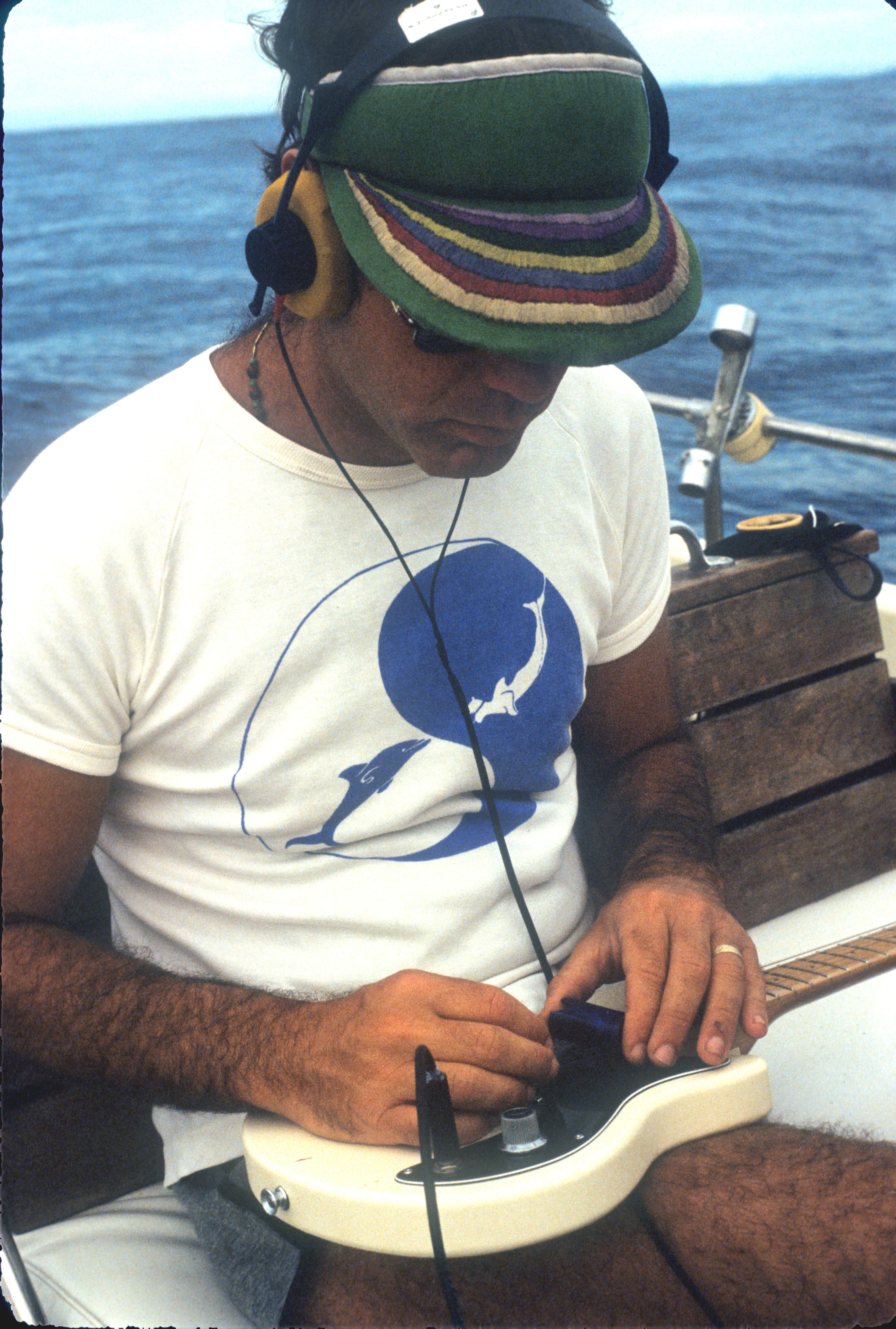
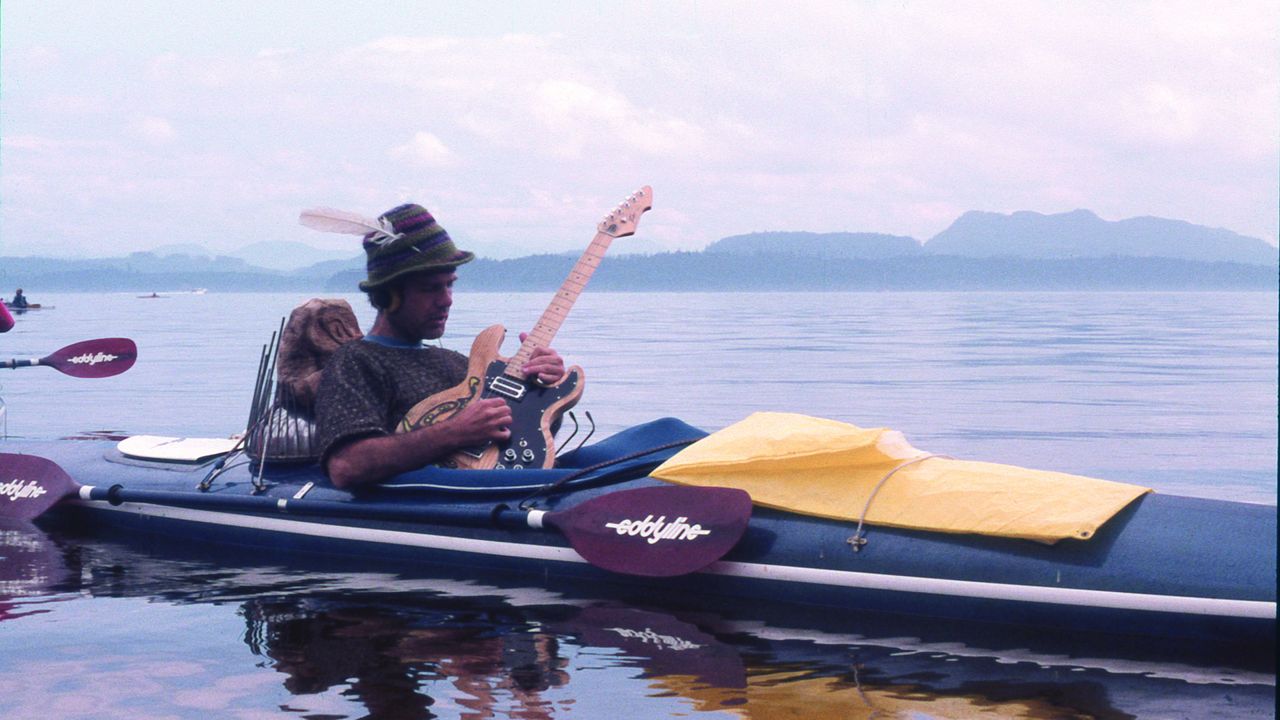
Throughout his career as a composer, Jim Nollman has worked with unorthodox partners to create music. Instead of collaborating solely with human musicians, the artist has expanded his cast to include animal bandmates, and they've been making melodies together for more than 50 years.
Nollman's new album, "Orcas' Greatest Hits," will be released Aug. 14 by the music label Smithsonian Folkways Recordings. As the title suggests, the album is a collection of songs centered around orca (Orcinus orca) vocalizations.
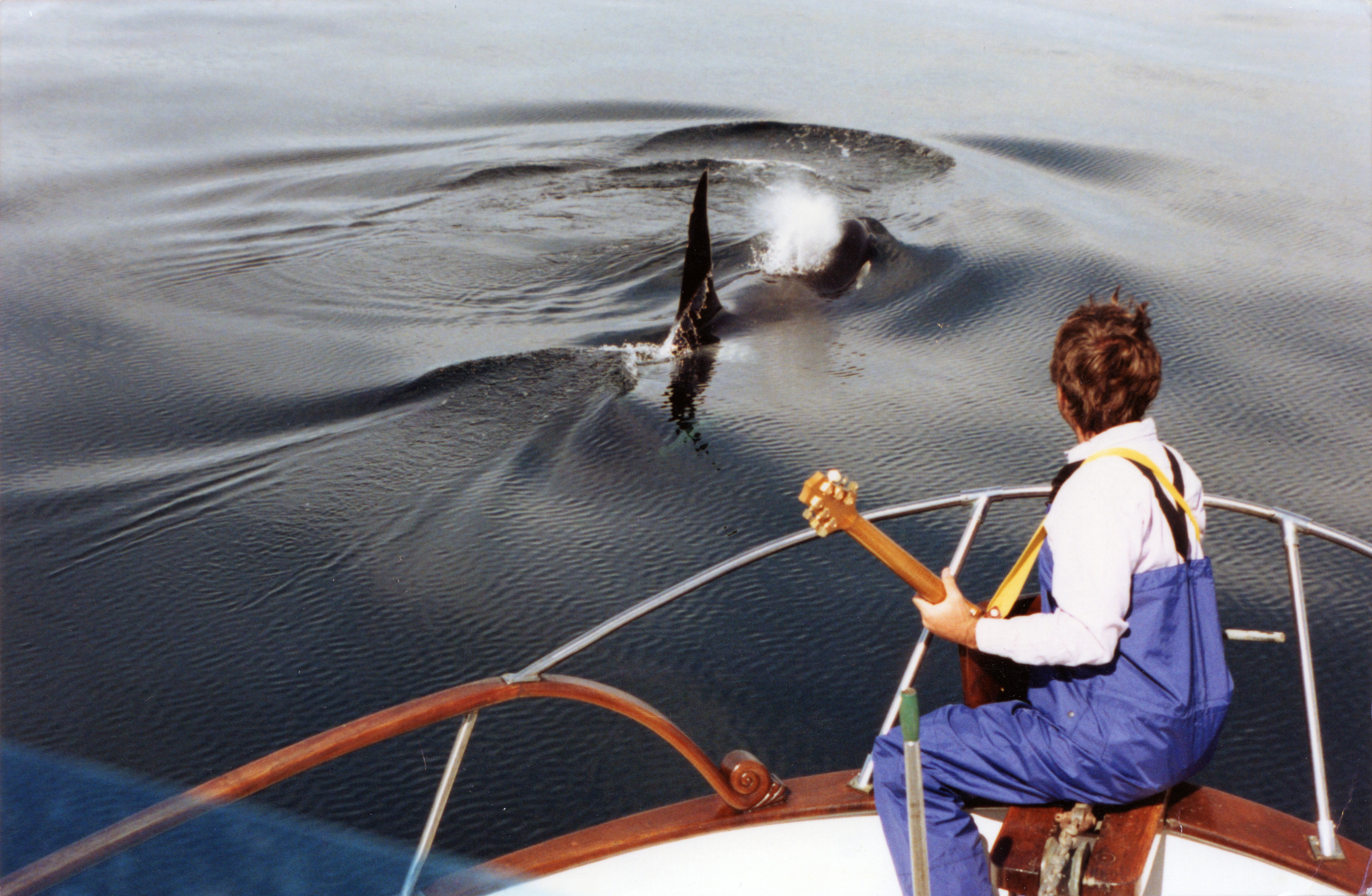
Nollman now lives in Friday Harbor, Washington, but he recorded these sounds off the coast of British Columbia between 1985 and 2002, using underwater microphones called hydrophones. The vocalizations weren't random calls that Nollman overheard; rather, he prompted the orcas to "sing" by broadcasting his and fellow musicians' music into the water via underwater speakers. The artists kept the volume at a reasonable level to protect the orcas and performed after dark to avoid motorboat sounds.
However, orcas weren't Nollman's first animal bandmates. Fresh out of Tufts University in the 1970s, he made music with various animals, including turkeys, wolves and dolphins. To learn more, we spoke with Nollman about his career, including several years he spent consulting with the U.S. Navy, and the extraordinary interactions he's had with whales and other creatures.
Sascha Pare: How did you first start making music with animals?
Jim Nollman: In my latter year at university, I got involved in the theater, doing all the music for all their plays. I soon got into John Cage [an American composer known for his innovative approaches to sound] — first in Boston, and then in the San Francisco Bay Area when I moved there. I got to know some of the avant-garde music people, especially in Berkeley, because there was a big movement there [centered around California's KPFA Radio].
I'd been in Mexico, playing flute, and the turkeys next door would always gobble on a certain high note and at a certain volume. I said [to an editor at KPFA], "Why don't you send me to a turkey farm? I'd like to do a Thanksgiving Day piece." He gave me a sound man and a Nagra tape recorder. I remember vividly, because having a Nagra after just getting out of college was a big deal for me. I was into technology. [Editor's note: Nagra is a Swiss brand of portable audio recorders.]
The turkey farm had 300 turkeys, and I immediately learned from the owner that it's really only the males that gobble. He kept the males and the females separate, so he put me into the fenced-in area where the males were. I started singing, and I could control them. The turkeys closest to me would start, and the gobble would go out to the edge of the 300 birds. And then it would come back, and then they would all stop. I was singing "Froggie Went A-Courtin'," which is an old American folk song [originally from Scotland] about animals. I sang 30 or 40 verses of this song and controlled the turkeys.
Jim Nollman's new album, "Orcas' Greatest Hits," will be released Aug. 14. (Image credit: Jim O'Donnell)
I was around 24 years old, and I had a hit. I knew I wanted to be a musician, but I had some major flaws to be a performer, because I didn't like being the center of attention. I'm kind of an introvert. That's a loser if you're trying to be a singer-songwriter. I loved writing tunes and playing them, but not in front of a big audience. This [recording tunes in nature with animals] was a way to get into music.
After the turkeys, I wondered if I should try making music with animals again. I tried it with kangaroo rats [Dipodomys deserti], which build these burrows like Trinidad steel drums. Kangaroo rats only come out at night, and they thump to each other in their burrow systems, which are tuned — it seemed to me, anyway, that each place in the burrow had a different tone — and they communicate with one another.
Then, I went to a wolf preserve. I realized that the wolves did two or three howl sessions in the morning around dawn and two or three at night. The wolves wouldn't play with me if I was out of their key. If I played a flat note, they would stop and basically tell me, "We don't mind if you're playing in our pack, but you've got to do it right." That was a big lesson for me, and that's how I got into it.
SP: Your new album features orcas. Did you always have a sweet spot for orcas, or is there another animal you preferred working with?
JN: No, I don't have a sweet spot for orcas. I recorded orcas for 15 years, and I had lots of recordings, most of which I never really listened to, because I didn't know what to do with them. At some point, I decided that "I can't do anything more with the orcas, and I don't like going to whale conferences and being this authority," because it wasn't about that for me.
[After years of recording orcas], I started going to the Arctic — because I wanted to go to the Arctic and because beluga whales [Delphinapterus leucas] were there, and they seemed like the opposites of orcas. The orcas were very much in tight families traveling together and making very simple calls that had deep meaning. To have their echolocation against a speaker at midnight could be like being in a war zone. It was so loud; we had speakers blow out sometimes.
The beluga whales were the antithesis of that. It seemed like they all were talking at the same time, and they all seemed to know what everybody else was saying. This is my speculation. They used sound as their family anchor, and I had no idea if they all understood each other talking. But it was very much more animated than what the orcas were doing. I would say 50% of the orca calls were just two notes; they were D to C, and back to D. And they would do that all day long, some of them. Beluga whales sometimes sounded like belly laughs. They made the weirdest sounds, and I loved it.
I went everywhere in the Arctic. I started out in the first year going to Nome [Alaska] in the Bering Strait, and then I went east to the Mackenzie River delta in northern Canada on the Beaufort Sea. Then, I went to Baffin Island in the Canadian High Arctic. In every place I went, limited beluga populations were crashing. At some point, I realized this was a complete loser. I pretty much gave it up until I met some people from Finland who said, "You should try it in Russia." The Soviet Union had recently crashed, and they were opening up all the places where they had their gulags [forced labor camps] and their nuclear fleet. The Solovetsky Islands were loaded with beluga whales that hadn't seen people in 70 years. I went there, and I had a great time with the beluga whales.
The wolves wouldn't play with me if I was out of their key.
Jim Nollman, musical composer and sound artist
SP: What is your favorite memory of working with orcas or beluga whales?
JN: Six or eight years ago, somebody brought me and a bunch of other artists up to Hudson Bay [in Canada], basically to emulate what I'd done for so many years [artistic residencies to experiment with whale sounds]. I was the mentor for everybody. I liked that role. We were confronted with beluga whales, and I said, "I don't really want to play the guitar or the mandolin with the beluga whales, because I've tried that all over the Arctic and I've never had much success. I'm going to put my head in the water and blow bubbles."
The beluga whale came up, and it wrapped its mouth around my face. It did the same thing to the woman who was blowing bubbles on the other side of the kayak we were on. That was maybe the most fun thing I ever did with cetaceans. I wasn't worried at all. I've had the same thing happen with giraffes. I was in Texas at this game farm, and this giraffe came and licked my whole face with its giant tongue. It was really quite wonderful.
SP: The oldest recordings in the new album are 40 years old, and you said you hadn't listened to all of them before making the album. What was it like hearing them after all these years?
JN: I had 65 hours of tapes, and I listened to them over three or four months. Ninety percent of it was rubbish; it was just repetitive, and the whales would get into their D-to-C-to-D call routine. I wanted something where there was a groove, or some kind of magic going on that was inexplicable.
I started choosing some sequences. I thought it was only a certain level of connection that we'd created, but a couple of the things that I listened to when I was in that process blew me away. The one where I was playing James Brown riffs into the water — that was very strong for me. I'd never heard that before. I was discovering new stuff by giving it a close listen.
There's one where I was being filmed by National Geographic, and it was just me and a guy on a big boat cruising the waters. I started playing a country blues bottleneck on the guitar. [Editor's note: A bottleneck in country blues is a guitar-playing technique where a hard object is placed on a finger and glided along the strings.] The whales only did this a couple of times, but they would come in with a chord change. Say I'm playing in a key of D; they would come up and play the G in perfect time. I was impressed by that.
SP: Did you ever play the recordings of you and the orcas back to the orcas?
JN: No, because the recording can't answer the whales. I was trying to make a telephone connection, so it has to be two things talking to each other. To play a recording would be like me saying, "Let's stop this interview now, and I'm going to put on something of me giving an interview to somebody I spoke to yesterday." You wouldn't like that, and I don't think the whales would have liked that either if I did it to them. It had to be direct. I had many people who were very ardent or passionate about singing or reciting poetry — one guy wanted to sing Jewish death prayers to the whales. But the whales didn't come.
Nollman recorded orcas off the coast of British Columbia between 1985 and 2002. (Image credit: Jim Nollman)
SP: Is part of why you've been so successful at making music with animals that they particularly like you?
JN: Some animals like me. I definitely got through to the orcas. I could tell that, because I had an interim of eight years between doing it with the big communities [of artists] and going out alone with the orcas. They were the same orcas, and they definitely knew who I was the first time I put sound in the water again. That's when that country blues episode happened. We were all much more relaxed with each other. The second time was great. It was also a tragedy, because the whales had lost their residence to the loss of salmon [in the northeast Pacific Ocean], and they were way out of their range.
SP: Your work with orcas and other whales landed you a job with the U.S. Navy in 2011. How did that happen, and what was your role?
JN: I was doing underwater concerts in the 1990s. I was invited to Kodiak Island, which is a large island off the coast of southern Alaska. They wanted me to do an underwater concert. At the time of this festival, in which I was performing, the U.S. Navy was sending ballistic missiles from Southern California to the waters off Kodiak Island for testing. This was destroying the halibut [Hippoglossus stenolepis] fishery on Kodiak Island, because the fishermen couldn't go into this area, suddenly.
The Navy sent a guy who was part of this ballistic missile thing but also had a PR background. He said, "Can I speak before your concert?" I said, "You can speak about whatever you want, but you've got to get in the water. That's the payment you have to give me: Get in the water and hear all this music that I've created."
He was blown away. I had a fan. He took me out for dinner and asked me if I had any ideas about solving this great scandal that was enveloping the Navy at the time, which was the killing of mostly beaked whales during mid-frequency sonar exercises, mostly in the Bahamas, in this hole in the ocean that's there. Nobody had a solution, so he wanted me to be on the team. I said, "Sure, I'll be on the team." It was like somebody asking me to play for the New York Yankees or something — completely odd, but I thought, "OK, I'll try that."
He called me back two years later, saying, "We have our money, and we want you to come to the Groton submarine base [in Connecticut], where we'll have our first meeting with submarine captains, Ph.D. sonar engineers and a few whale biologists." That went on for seven years. I took the job seriously. I told them that I thought we could solve it in five minutes. I said, "All you need to do is take care. If you see whales in the vicinity, don't exercise on that day." This sounds so totally obvious, but the fact was that he [the PR man] was contending with a Navy establishment that believed that the Navy could do anything to save the American people from being bombed or wrecked. They didn't see whales as anything but collateral damage.
SP: Do you have a favorite song on the new album?
JN: I like "The Three Jimmies." I never knew that James Brown's guitar player was named Jimmy Nolen — I mean, that's really outrageous. So, it's the three Jimmies, right? I really like the music, and I like the piano player [Jonathan Churcher], who plays one note every three or four bars. The response of the whales is also brilliant, I think. There's one part where the whale starts to echolocate, which is the way they see the world; it's their perceptional tool. The whale starts clicking in time with the beat that I'm playing on the guitar. That only happened once in 65 hours of recordings, and I thought that was pretty unusual.
SP: What's next for you after "Orcas' Greatest Hits"?
JN: I'm composing new music, and I'm hoping I'm at least breaking even [with the new album] so that they [Smithsonian Folkways Recordings] can do the next one, which is called the "Cowbird Variations." The cowbirds are basically the bottom voice, maybe the part that's played by bass in pop music. Everything else is other birds and insects called treehoppers. It has this very primitive sound to it.
I love doing this music with cowbirds, because cowbirds have a horrible reputation. They lay their eggs in other birds' nests, and when the eggs hatch, the baby cowbirds knock all the birds in the nest out and kill them. Then, the parents — juncos, where I live — end up raising the cowbirds. These birds have a terrible reputation, but they make one of the strangest sounds in nature — so that's why I chose them.
This interview has been condensed and edited lightly for clarity.
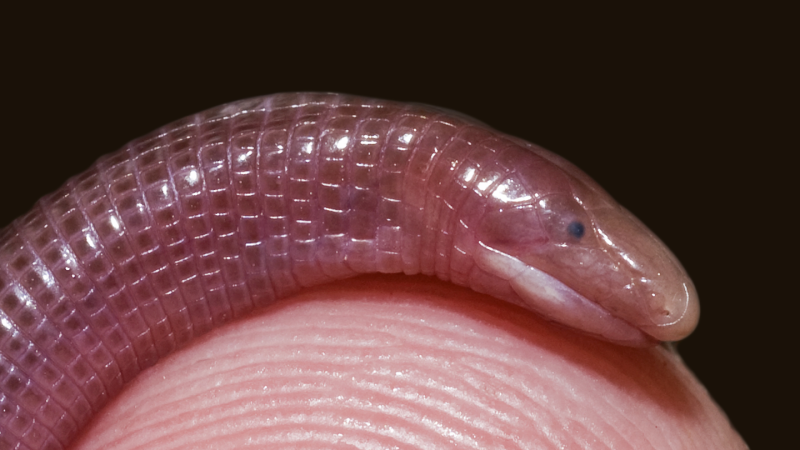
Amphisbaenians are a group of mostly legless reptiles also known as “worm lizards.” More than 200 species of them live around the world. They’re found in North America, Africa, Europe, the Middle East and the Caribbean. But since worm lizards spend most of their time underground, little is known about them.
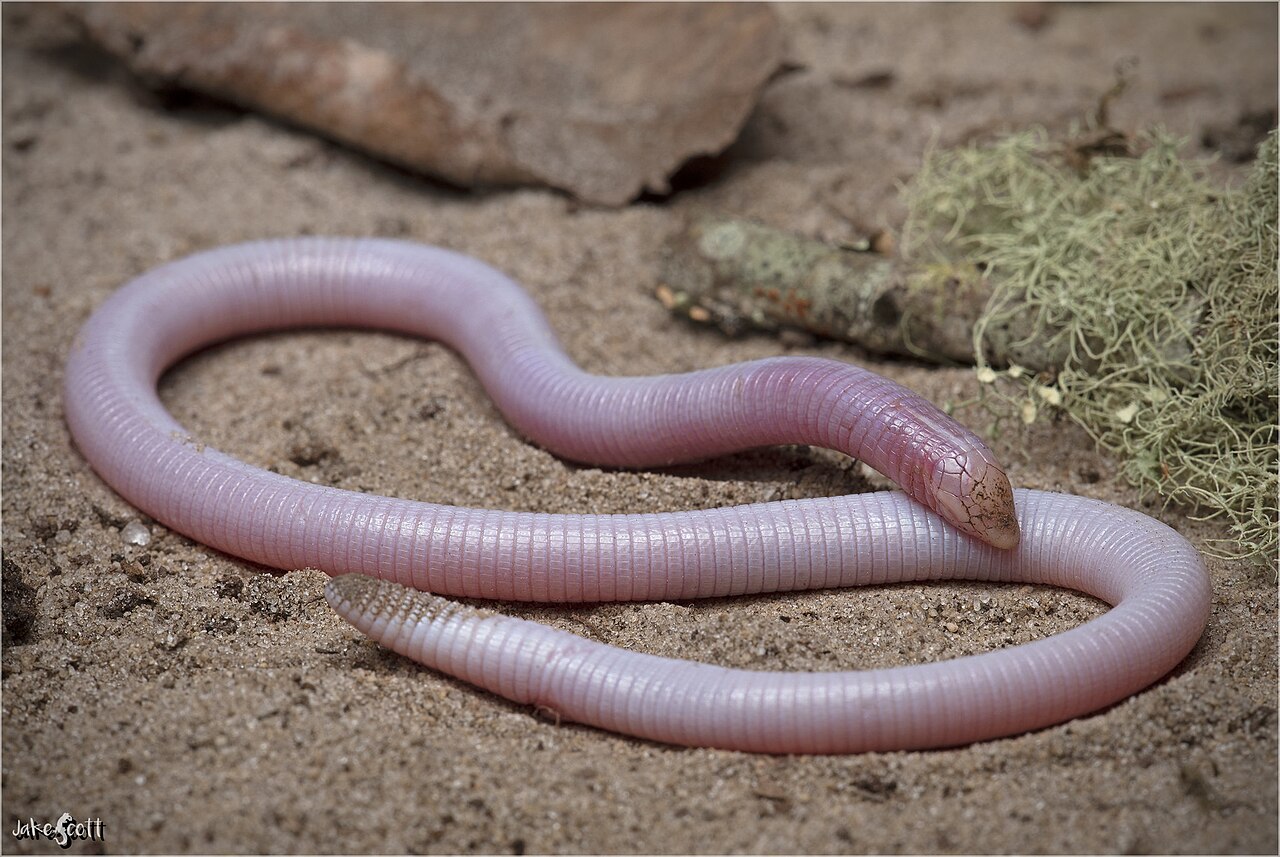
Small and pinkish, amphisbaenians look a bit like earthworms. Most are less than 15 centimeters (6 inches) long, and their ringed scales resemble those of earthworms. But amphisbaenians are actually related to lizards and snakes. In fact, worm lizards descended from reptiles with limbs. And several modern amphisbaenian families contain remnants of limbs. Worm lizards of the Bipesgenus, for instance, have two small limbs near the fronts of their bodies.
The name amphisbaenian comes from Greek and Roman mythology. In ancient stories, an “amphisbaena” was a serpent with a head on each end of its body. Real worm lizards have tails that resemble their heads. What’s more, they can move well both forwards and backwards.
Amphisbaenians are found primarily in Africa and South America, though some live in North America. This Florida worm lizard (Rhineura floridana) is also called a “thunderworm” because it is only seen during heavy rain. It retreats into its burrow tail first.Caudatejake/Wikimedia Commons (BY CC 4.0)
Worm lizards push themselves through the soil in an accordion-like motion and use their strong skulls to burrow. The shapes of different species’ skulls are thought to reflect the soil that they inhabit. There are four main skull shapes, described like different gardening tools. They are: shovellike, round, keellike and spadelike.
Amphisbaenians can’t see much. Their eyes are covered in skin and scales, and they mainly detect light. Burrowing worm lizards rely on their unique ear structures to get around. These structures in the critters’ heads allow them to detect vibrations in their environment. That helps them find the insects and even small rodents to eat.
In a sentence
The red worm lizard species of amphisbaenians is commonly found inside the nests of leafcutter ants, hiding inside their waste chambers.
The archaeological research in the ancient sanctuary of Apollo in Gortyna, the famed Cretan city whose epigraphic legislation marked a milestone in the history of Greek law, has concluded its summer season with a series of findings that consolidate the importance of the site as a first-class religious center during the formation of the polis. […]
A global analysis of range-shift records for 1,758 butterfly species—10% of known butterfly species—found that 80% had expanded their range and that 79% of all recorded range shifts were linked to climate change and extreme weather events. The new study, published in Nature Ecology & Evolution, also reports range contractions for 27% of species, and 22% of species showed a change in elevation. Because many species exhibited multiple types of range shifts, the percentages for expansions, contractions and elevation changes are above 100%.
A global analysis of range-shift records for 1,758 butterfly species—10% of known butterfly species—found that 80% had expanded their range and that 79% of all recorded range shifts were linked to climate change and extreme weather events. The new study, published in Nature Ecology & Evolution, also reports range contractions for 27% of species, and 22% of species showed a change in elevation. Because many species exhibited multiple types of range shifts, the percentages for expansions, contractions and elevation changes are above 100%.
Every year, millions of migratory birds travel between different geographical regions on Earth to find food, escape cold weather or reach safe environments to raise chicks. To determine which direction to fly, these birds rely on various types of sensory cues and information, including the magnetic field surrounding our planet, known as the geomagnetic field.
Every year, millions of migratory birds travel between different geographical regions on Earth to find food, escape cold weather or reach safe environments to raise chicks. To determine which direction to fly, these birds rely on various types of sensory cues and information, including the magnetic field surrounding our planet, known as the geomagnetic field.
The mission of the Flock app is quietly subversive: to encourage users to ditch their screens and explore the wonderful world of birding
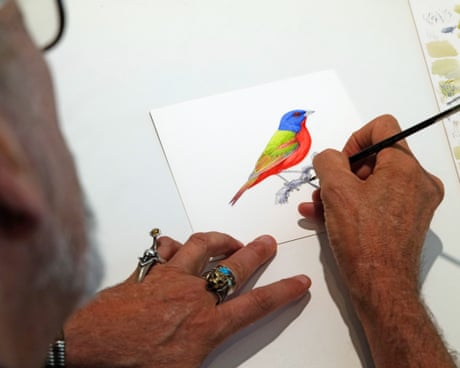
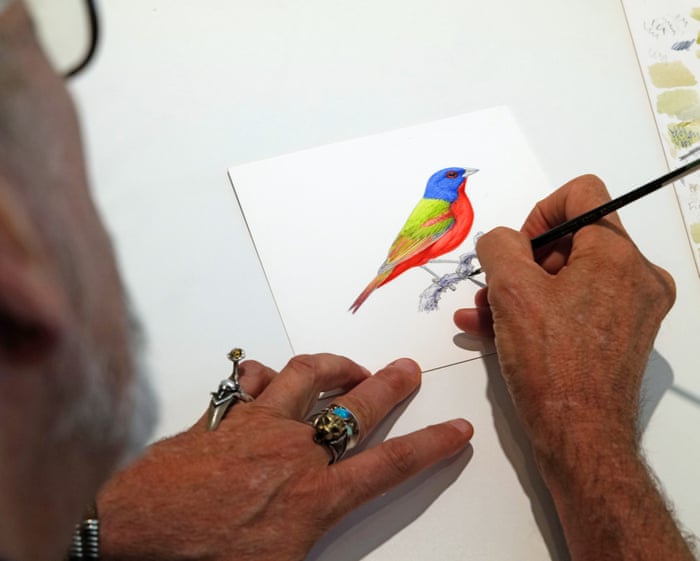
On a brilliantly bright afternoon in his gallery and studio in Bolinas, a small town on the northern California coast, Keith Hansen was putting the finishing touches on a watercolor of an almost improbably flamboyant painted bunting.
With an ultra-fine sable brush, he made a few intricate additions to the cobalt blue plumage on the bunting’s head, and, satisfied with his work, slipped the watercolor into a stout binder that every few days welcomes a new addition.
Scientists have made a surprising finding about how an asexually reproducing stick insect has evolved. Research led by Dr. Darren Parker, lecturer in evolutionary biology at Bangor University, studied the genes of several species of Timema (a type of stick insect), which have not engaged in sexual reproduction for 1 million years—the longest known asexual period for any insect.

 Login