Mathematics shows that every electoral system must compromise among proportionality, local representation, and parliament size. Denmark’s 2022 national election came down to a single seat, even though its proportional voting system was designed to make party representation closely match the vote. That outcome points to a deeper mathematical problem: no electoral system can always preserve [...]
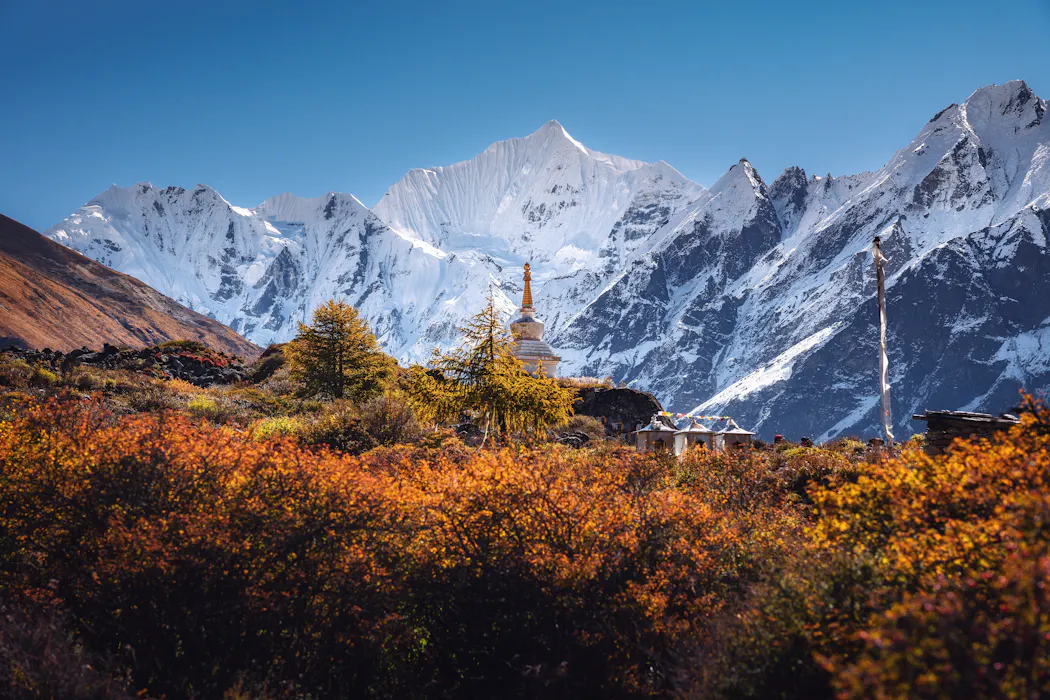
Researchers developed a new way to measure snowfall which will help communities plan on how to use and capture water.Evgeni Fabisuk/Shutterstock
Mountain snow and meltwater from glaciers in the Himalayas determine how much water is available for drinking, farming and hydropower for millions of people in India, Pakistan, Nepal, China and Afghanistan.
This is especially important during the spring and early summer crop-growing season when meltwater helps sustain the flow of rivers and provides the region with a vital buffer against the worst impacts of a dry season or drought. Because many of these rivers cross national borders, changes in water supply can also heighten regional tensions when resources are scarce.
Meltwater from snow is one of the pillars of survival – but it’s proved difficult in the past to get accurate measurements across this challenging terrain.
So measuring where and how much snow falls is essential. My team’s new research gives improved estimates of snowfall across the west-central Himalayas. Results show that in just one winter, the previous best available snowfall analyses underestimated total seasonal snowfall by 37% over Lake Hampta area in Himachal Pradesh. By including new snowfall observations, we reduced that error dramatically.
Why snowfall predictions have been wrong
Because most instruments were originally designed to measure rain over very small areas, rather than snowfall spread across large areas, most calculations of snowfall levels have historically been inaccurate. A rain gauge around the size of a dinner plate was used in the past – too small for the purpose and therefore missing large amounts of snow. These small devices were particularly bad at catching snow during strong winds.
As a result, mountain water resources are often misunderstood and have been underestimated by 50–100% over the years.
To change this, we developed a new way to measure snowfall using commercially available water-pressure sensors deployed on the lakebeds. The team installed these instruments at three lakes – Ghepan and Hampta in the western Himalayas, and Mugu in Nepal. Unlike conventional instruments, these sense the whole lake surface – an area of thousands to billions of square metres – to measure the timing and intensity of snowfall. These use water pressure in lakes to directly measure the mass (water content) of accumulating snow, providing an accurate and unbiased estimate of snowfall. This is based on Archimedes principle of displacement: as snow accumulates on a frozen lake, it changes the water pressure beneath.
Snowfall from these devices was analysed and used to refine physical processes in a weather model. This is the same model which provides weather predictions over the UK but is customised for mountainous regions. The results show the model can generally reproduce both when the snow falls and how much accumulates, and is particularly good at representing extreme snowfall events. We now have new insights into where and when snow falls across the region at much finer detail than previous estimates, making mountain water resources more predictable. In contrast, a snowfall map based on previous analysis shows a much more uniform distribution and considerably less snowfall.
Planning for water shortages
This information could help regional communities adapt and improve water planning, help manage reservoirs and protect vulnerable infrastructure from snow-related hazards. It could also support engineering interventions such as snow harvesting in areas that receive abundant snowfall, for example, by artificially storing meltwater in community-managed reservoirs and into ice stupas (an artificial glacier) designed to gradually release water during the growing season.
An understanding of when snow falls will be crucial for predicting when it will melt and how much water will flow into rivers and help communities and policymakers better prepare for future water shortages.
With this region starting to see more water shortages it’s time to start reassessing reliance on mountain water supplies. But how much water the mountains provide, and how it will change, remain remarkably uncertain.
Good measurements of snowfall are now more important than ever for predicting the future of water resources, which until now have been lacking. For example, a single long-running active weather station above 4,000 metres has provided one of the few continuous snowfall records across the vast 566,000 square kilometres of Himalayan headwaters that feed the Brahmaputra, Indus and Ganges river basins.
This work is also deeply personal for me. I grew up in a city just 50 kilometres from the outer Himalayas. On family holidays, I was captivated by the thriving beauty of pines and junipers against the backdrop of the Himalayas, while learning that mountains and rivers are more than just landscapes. Those experiences fostered a lasting connection to the region, and I continue to return to the mountains whenever I can.
Water is a precious commodity upon which every society depends, and shortages can cause untold misery.
With better snowfall estimates, we are already beginning to understand how to make the future of the mountain eco-system more predictable, and help people cope.
Siddharth Gumber receives funding from the National Environmental Research Council (NERC), The Big Thaw project (NE/X005267/1).
Young people in low- and middle-income countries appear generally more optimistic about how AI can enhance their work prospects and social lives than their western peers, according to our new survey of people in ten countries in Africa and South Asia.
While debates in higher-income countries often focus on job losses, misinformation and mental health risks, many of the 1,864 young adults we surveyed (all aged 18-35) placed more emphasis on the opportunities artificial intelligence tools present for them. In particular, nearly 80% of our participants expect AI to deliver improved education and learning for them.
Until now, there has been little evidence of how young people in middle- and low-income countries use AI, and how they feel about this technology – for good and bad. The 2026 youth AI survey – run by global charity Restless Development and academics from the universities of Makerere in Uganda and Cambridge in the UK – seeks to correct this imbalance.
It comes immediately after the UN Independent International Scientific Panel released its preliminary report on AI. Commenting on the need for more science about AI’s use around the world, the UN’s secretary general, António Guterres, admitted: “The world cannot govern what it cannot understand.”
Our responses were collected in Angola, Kenya, India, Nepal, Nigeria, Sierra Leone, Tanzania, Uganda, Zambia and Zimbabwe – with the UK included for comparison. Two-thirds of respondents said they use AI every day, with Meta AI the most common tool, followed by Claude.
The extent of AI use is striking given the obstacles many young people encounter. In every African country surveyed except Nigeria, more than half said high data costs limit their access. Weak internet connections and a lack of digital skills were also raised, with many relying on basic-feature phones. By contrast, UK participants said ethical concerns played a stronger role in limiting their AI usage.
AI work opportunities
While few respondents (14%) said they earn income directly from AI tools yet, half expected AI to improve their employment and economic opportunities within the next five years.
Currently, AI’s main work-related uses among our respondents are learning new skills and job searches. In almost every lower-income country, young people held broadly positive attitudes about AI’s future role in their working lives – although many (32%-50% per country) expressed concerned about its impact on their future income.
Among those from lower-income countries, more than seven in ten thought AI would bring them better education and learning opportunities in the near future. A 28-year-old self-employed man in Nepal commented: “AI has the potential to empower young people in developing countries like Nepal by improving access to knowledge, digital skills, and economic opportunities.”
Our sentiment analysis found respondents to be most positive in Tanzania and Zambia, with young women there even more upbeat than young men. In the UK, young men diverged from their international peers in feeling more negative towards AI and work.
Biggest AI concerns
Some respondents described AI tools as “Americanised”, built around western norms and unable to grasp local nuance. They worried this could lead to their languages being further marginalised.
“These AI tools are fed major languages that are spoken worldwide, unlike Shona,” said a 25-year-old student in urban Zimbabwe. Shona is spoken by around 14 million people mainly in southern Africa, but is severely underserved by AI and other technology tools.
A Ugandan respondent was similarly critical about provision for her native language, Luganda – the country’s most widely spoken Indigenous language. “AI barely knows the spellings, grammar and how to interpret sentences. It’s not even familiar with our culture at all, which increases mistakes when we get to things concerning our own world.”
What most concerns you about AI?
Dark blue to light green reflects large to small proportions of respondents expressing ‘high levels of concern’ about the issues listed on x-axis.Sonal Gupta/Youth AI Survey 2026, CC BY-SA
Despite the widespread belief that AI would improve education and training, some held strong reservations. A 21-year-old female student in rural Uganda said: “Slowly by slowly, AI is making us dumb. We can no longer think for ourselves.”
The more often these young people use AI, the more worried they appear to be about it. The biggest concerns highlighted by daily users were around who owns their data and the power of AI companies.
Concern about AI’s environmental impact and the welfare of AI workers followed a similar pattern of higher usage co-existing with higher concern. Mental health is the only domain where non-users worry slightly more than daily users.
Gender differences
Significantly more young men (38%) than women (23%) reported having “a lot” of AI knowledge. This probably reflects a combination of diverging gender self-confidence, which tends to emerge from school age, and different levels of AI use. “AI is scary but helpful too,” said one female homemaker in urban Nepal.
Almost twice as many men than women use AI to search for work (33% vs. 17%). This difference is probably rooted in gendered access to data and technology, as well as differing social roles – such as the tendency for women to do more care work.
In most of the ten lower-income countries surveyed, young women expressed greater concern about AI than men – with their biggest concern being over who owns their data. In the UK, 68% of young women were strongly concerned about data ownership, compared with 29% of men.
What young people want from AI
Many of our participants stressed the need for cheaper data and internet connections that work well. But they also want AI tools that fit their lives and culture – and speak their language. Until then, most recognise that talk of AI “leapfrogging” traditional stages of economic and social development is just that – talk.
Some efforts to make AI more inclusive and relevant for lower-income countries are underway. These include initiatives for “frugal AI”, as well as regional collaborations such as Masakhane for African languages and QuechuaBase in Peru.
How can AI be made safer?
Note: the bars do not sum to 100% because survey participants selected multiple responses.Sonal Gupta, CC BY-SA
Most of our participants framed AI safety as much more of a governance problem than a technical one. Many countries are establishing new AI policies, shaped in part by global forums such as the UN-led AI for Good summits. Overwhelmingly, our respondents agreed that governments, not tech companies, should be setting the rules when it comes to AI regulation and privacy protection.
Anna Barford receives funding from UKRI. She has previously been funded by the British Academy, Leverhulme Trust, ESRC, the Asian Development Bank, the Mastercard Foundation, and a philanthropic gift to the University from Unilever. She is a co-director of the Business Fights Poverty Institute and does consultancy work for the International Labour Organization.
Anthony Mugeere works as a Research Fellow for the Advocates Coalition for Development, Uganda's leading thinktank specialising in advocacy and analysis on climate change. He has received funding from the British Academy and the Mastercard Foundation to conduct research on climate change and young people.
Giulia Occhini does not work for, consult, own shares in or receive funding from any company or organisation that would benefit from this article, and has disclosed no relevant affiliations beyond their academic appointment.
A new study suggests evolution stayed stuck for millions of years until sexual reproduction helped unleash a burst of biodiversity. New research suggests that the earliest animals on Earth may have unintentionally slowed the pace of evolution for millions of years. Scientists have found that their reliance on asexual reproduction limited competition and reduced the [...]
A groundbreaking AI-designed vaccine aims to protect against not only today’s coronaviruses, but tomorrow’s as well. A new type of universal coronavirus vaccine has passed its first test in humans, marking an important step toward broader protection against future viral threats. Researchers from the University of Cambridge and biotechnology company DIOSynVax (DVX) Ltd reported that [...]
Composite image of the centre of the Milky Way, created by the Hubble and Spitzer Space Telescopes and the Chandra X-ray Observatory.Nasa/JPL-Caltech/Esa via Wikimedia Commons
Vasily Belokurov is one of three winners of the 2026 Kavli Prize in Astrophysics. The award is for uncovering fossil evidence of past galactic mergers that prove how the Milky Way evolved.
No matter the time or vantage point, from a pre-Neolithic cave to a post-lockdown London high-rise, the predictability of the night sky has always been humanity’s symbol of permanence and reassuring stability.
Yet this apparent calm is deceptive. Our galaxy, the Milky Way, emerged from chaos and turbulence, and its constellations are full of migrants, exiles and survivors. Right now, it has begun to stretch and distort again, pulled by a massive companion and heading for an inevitable collision.
How can I be so sure? As a galactic archaeologist, my job is to reconstruct the past of our galaxy and read the signs of its future.
Instead of digging through soil, I use the laws of dynamics and stellar evolution to sift through hundreds of millions of stars – searching for the most ancient and chemically peculiar among them, interpreting their orbits and piecing together the events that shaped the Milky Way. One ancient encounter left scars so deep that, billions of years later, they still define the galaxy around us.
I want to understand what governs the lives of these massive cosmic systems: which changes are nature – the slow internal evolution of a galaxy disc – and which are nurture, imposed by collisions and mergers.
Questions about the source of dark matter underpin it all. This is the invisible substance whose gravity holds galaxies together, but whose true identity remains one of the greatest unsolved puzzles in astrophysics.
The Milky Way is the one galaxy where stellar motions can be measured in extraordinary detail. This allows cosmologists including myself to construct our most precise map yet of dark matter: how far it reaches, how dense it is around the Sun, what shape it has and how smooth or lumpy it may be. If we can build this map in enough detail, we may begin to understand not just where dark matter is, but what it is.
Francesca Fragkoudi and Mark Lovell, Durham University.
A cataclysmic collision
Our work has been transformed by a revolution in open sky surveys. From 2000, the Sloan Digital Sky Survey showed what becomes possible when vast astronomical datasets are made public, enabling discoveries far beyond the goals for which the survey was first built.
And since 2014, Gaia, the European space telescope, has taken this transformation to another level by mapping the positions and motions of nearly 2 billion stars, turning the galaxy into a vast archaeological record. No ruins, no shards and no bones – only stars that hold the clues.
The clearest giveaway that something cataclysmic took place long ago in our galaxy is the migrants we observe: stars that were not born in the Milky Way.
While native stars mostly travel together, circling the galactic centre in the great rotating flow of the disc, migrants cut across that order. They slide past the locals, plunge into the inner galaxy, then fly back out to its outskirts, again and again.
These unusual orbits go hand-in-hand with unusual chemistry. Most of the migrant stars are less enriched in heavier elements than the locally born population. Their chemical composition is a sign of a slower rate of evolution that is typical of a dwarf galaxy.
This makes the migrants doubly valuable. They are both fossils of the Milky Way’s violent past, and probes of its outer regions, travelling where the local stars rarely go.
How the Milky Way was rewired
One of the central ideas in the theory of cosmic structure formation is that galaxies grow hierarchically. Smaller galaxies fall into larger ones and are torn apart, leaving their stars behind as migrants.
In the Milky Way, the largest ancient structure of this kind is known as Gaia-Sausage-Enceladus. It is the remains of a vanished galaxy that collided with our own between 8 and 11 billion years ago (the “sausage” refers to a pattern in its stars’ motions).
The Milky Way also did not go through that crash unscathed. The collision rewired and reshaped it.
Some of these changes are easily visible in the data. Stars from the old disc were splashed into our galaxy’s halo, becoming exiles in the place where they were born. A new posse of star clusters were also acquired.
At the same time, we think something even more momentous was taking place. The encounter changed the orientation of the Milky Way’s disc, and its alignment with the dark matter halo.
Around the Milky Way, this dark matter forms a vast halo, much larger than the luminous part of our galaxy. We often imagine this halo as a sparse, round cloud, but Gaia has helped show this picture is too simple.
The dark halo can be stretched out of shape by a major encounter. Like a ship beginning to list, the Milky Way started to lean – not suddenly, not visibly, but over billions of years.
View of the Southern sky shows the Milky Way and (far right, close to horizon) two galactic neighbours, the Small and Large Magellanic Clouds.H.H. Heyer/ESO via Wikimedia Commons, CC BY-NC-ND
A new galactic dance
Unusually compared with many galaxies of similar mass, the Milky Way was allowed ample time to recover from the shock of the “sausage merger”. No other cosmic cataclysm appears to have shaken our Galaxy since, letting it settle into a quiet, uneventful life. That is, until now.
The Large Magellanic Cloud (LMC), currently our galaxy’s most massive companion, is already pulling at the Milky Way, disturbing its halo again. In an echo of what happened some 10 billion years ago, the Milky Way is being drawn into an accelerating dance with this neighbouring dwarf galaxy, recoiling in response to the LMC’s approach.
This is a dance that only one galaxy is likely to survive intact. A new chapter of migration, survival and adaptation has begun.
None of this spoils the beauty of the night sky – it deepens it. The calm band of light above us is not a symbol of permanence, but the visible reminder of a long survival.
The Milky Way has been broken, rebuilt and is now being disturbed again. Its stars remember the past; their motions reveal the future. What looks eternal is, in truth, a moment in a much longer story.
Vasily Belokurov has received funding from the European Research Council, the Leverhulme Trust, and the Science and Technology Facilities Council.
Cambridge researchers used lab-grown human brain and spinal cord tissues to uncover a hidden mechanism that blocks nerve repair. By reversing that biological brake, they restored the ability of damaged nerve fibers to regrow. Scientists at the University of Cambridge have created miniature brain and spinal cord circuits in the lab that mimic the neural [...]

 Login

 Mathematics shows that every electoral system must compromise among proportionality, local representation, and parliament size. Denmark’s 2022 national election came down to a single seat, even though its proportional voting system was designed to make party representation closely match the vote. That outcome points to a deeper mathematical problem: no electoral system can always preserve [...]