Origin of Life Would Not Have Been Favored Solely by Fortuitous Circumstances: Scientists Discover Early Earth’s Volcanic Rocks Contained Reactive Phosphorus


There are plenty of smartphones in the 2,000-yuan price range that focus on stacking specifications, but very few invest in advanced cooling systems.
Looking across the market, phones in this price segment are usually competing on performance, cameras, and fast charging. Cooling solutions are often mentioned only briefly—or ignored completely.
It is not because cooling is unimportant. The reason is simple: with limited costs, manufacturers usually spend their budget on features that users can immediately notice.
However, overheating and performance throttling are exactly the problems that trouble mid-range smartphone users the most.

Examples include:
OPPO K15 is a practical all-round smartphone that brings an active cooling fan system into the 2K price segment.
The OPPO K15 is equipped with the MediaTek Dimensity 7360 SUPER processor, OPPO’s Tidal Engine optimization system, an 8000mAh large-capacity battery, and IP69 flagship-level water resistance.
It also features:
The phone aims to solve two of the biggest complaints among mid-range smartphone users:
Honestly, I did not have very high expectations for cooling performance on a 2K-range smartphone. With cost limitations, simply keeping temperatures under control is already considered good enough.
However, OPPO added an active cooling fan this time, making me curious:
Is the cooling fan just a marketing gimmick, or can it actually reduce temperatures?

The OPPO K15 uses a new-generation Wind Cooling Engine, featuring a built-in micro cooling fan.
According to OPPO, the cooling system can:

The fan is integrated with the rear camera module design. Thanks to this approach, the back cover remains completely flat without a large camera bump.
The entire phone is only:
This means the cooling system does not negatively affect the grip or overall feel.
After completing temperature tests, I found that the fan performed better than expected.

Adding a cooling fan to a 2K-range smartphone reminds me of installing a turbocharger on an economy car—not to make it a racing machine, but to ensure it does not lose power when climbing uphill.

For flagship gaming phones, cooling is about achieving peak performance.
For mid-range phones, cooling is about maintaining stable performance during daily use.

The OPPO K15 features an 8000mAh Glacier Battery, providing enough endurance for heavy daily usage.
It supports:
The bypass charging feature allows power to directly supply the motherboard instead of continuously charging the battery during gaming sessions.
This helps:
The reverse charging function also allows the phone to act as an emergency power source for accessories such as:

The OPPO K15 features three 50MP cameras:
The main camera includes:
The ultra-wide-angle camera offers:
The front camera supports:
For a phone in the 2K price segment, this camera configuration is quite generous.
The OPPO K15 focuses heavily on durability.
It supports:
The phone also features:
The combination makes it more resistant to:
The OPPO K15 features a 6.59-inch centered punch-hole flat display.
The rounded corners and narrow bezels provide a comfortable viewing experience.
The display supports:
Daily activities such as:
all feel smooth and responsive.
The front panel uses high-strength Crystal Shield glass, while the back cover has a smooth texture that reduces fingerprints.
The OPPO K15 comes in two colors:
The review unit is the Speed White version, featuring a unique cloud-pattern texture.
When light reflects across the surface, it creates a flowing storm-like visual effect.
At the bottom of the back panel is the text:
“ACTIVE COOLING, MASTER THE WIND”
This highlights the phone’s cooling identity without making the design look aggressive.
The rear camera module is one of the most distinctive parts of the phone.
It uses:
Layout:
The fan and camera system are integrated into one flat module.
Despite including an internal fan, the phone remains:
This design is clever because many flagship phones now have large protruding camera modules, while the OPPO K15 maintains a cleaner back design.

When people think of smartphones with built-in cooling fans, gaming flagships usually come to mind.
However, for users in the 2K price segment, long-term stable performance is arguably more important.
Common scenarios such as:
can easily cause mid-range phones to heat up and reduce performance.
The OPPO K15 features the new-generation Wind Cooling Engine, which uses a three-layer cooling solution:
Large-area VC vapor chamber
The VC cooling plate quickly spreads heat away from the processor area.

High-conductivity graphite layer
The graphite material helps transfer heat more efficiently throughout the body.
Built-in micro cooling fan
The active fan pulls hot air away through the exhaust outlet, actively accelerating heat dissipation.
The key difference is that this is active cooling, not traditional passive cooling.
The fan is physically running, and heat is actively being removed.
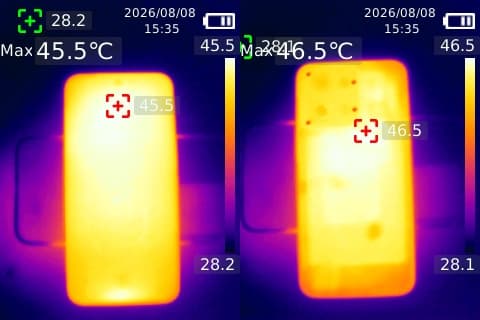
First, we used the AnTuTu stress test to push the OPPO K15 into a high-load state.
After continuous full-load operation:
At this point, the phone felt noticeably hot in the hand.
Then we activated the cooling fan.
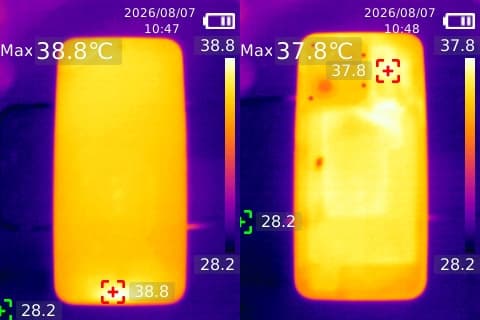
After 7 minutes:
The phone changed from hot to only slightly warm.
After waiting 12 minutes:
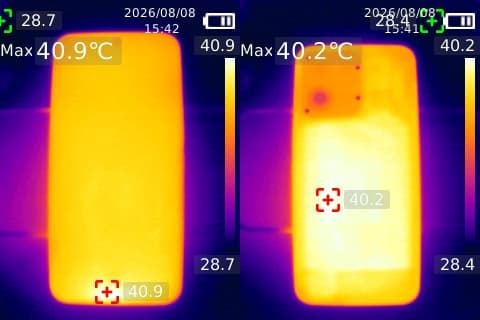
Compared with the peak temperature of 46.5°C, the rear temperature dropped by approximately 10°C.
The thermal imaging results clearly showed that heat was being transferred away through the fan system.
The temperature around the cooling fan area was noticeably lower than other parts of the phone, proving that the fan was actively removing heat.
The OPPO K15 also includes a High-Energy Outdoor Mode, which can be enabled through the accessibility settings.
Once activated, the system automatically:
This mode also includes several practical outdoor improvements:
The display automatically increases brightness, making it easier to see under direct sunlight.
When Bluetooth devices are disconnected, the phone automatically switches to the speaker and increases volume.
The display stays active longer, preventing interruptions during:
Frequently used applications can be pinned to a shortcut bar for faster switching.
There are also desktop shortcut cards that allow one-tap access to important functions.
The combination of cooling assistance and outdoor optimization makes the OPPO K15 more convenient for real-world use.
The purpose of active cooling in a 2K smartphone is not chasing the highest benchmark score.
It is about maintaining stable performance during long gaming sessions, navigation, and video recording.
Other phones compete for peak performance.
The OPPO K15 focuses on staying stable for longer.
The OPPO K15 is powered by the MediaTek Dimensity 7360 SUPER processor.
Although positioned as a mid-range chipset, OPPO has added its own Tidal Engine optimization system to improve long-term performance.
The phone also features:
This combination provides a strong thermal foundation for a phone in this price category.
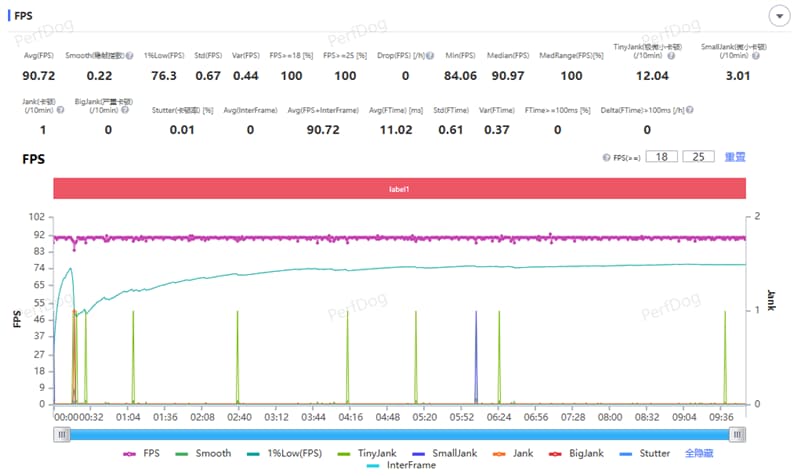
To evaluate real-world performance, we tested two popular mobile games.
For Honor of Kings, we set:
During a full 5v5 match:
Results:
The phone maintained smooth performance throughout the match.
Whether during:
there were no obvious frame drops or visible lag.
Average power consumption:
Energy consumption per frame:
After enabling the cooling fan in smart variable-speed mode, temperatures remained well controlled.
For PUBG Mobile, settings were:

During the entire match:
the frame rate remained around 60 FPS.

There were no common mid-range phone issues such as:

Average power consumption:
Energy consumption per frame:

The cooling fan helped maintain stable temperature during the gaming session.
The OPPO K15 represents a major improvement in imaging for the K series.

It features three 50MP cameras:

The main camera includes:
The ultra-wide camera provides:
Unlike many mid-range phones where secondary cameras are mainly for marketing, the OPPO K15 gives more attention to practical photography.
The 50MP main camera performs well in daylight scenes.
Strengths include:
Photos maintain good clarity even when zooming into details.
The large sensor also helps improve:
The 143.3° ultra-wide camera is useful for:
The wider perspective allows users to capture more content in a single frame.
The main camera’s large sensor and optical stabilization help improve nighttime shooting.
Night photos show:
For a mid-range smartphone, the camera performance is above average.
Battery life is one of the strongest selling points of the OPPO K15.
The phone comes with an 8000mAh Glacier Battery, which is significantly larger than the batteries commonly found in mainstream smartphones.
For users who rely heavily on their phones every day, such as:
the large battery capacity provides a clear advantage.
To evaluate real-world endurance, we used the Battery Dog testing tool developed by Kuai Technology.
The test simulated typical daily usage scenarios, including:
Testing conditions:
The results showed:
The OPPO K15 lasted:
14 hours and 33 minutes from 100% battery down to 20%.
Based on this result, the theoretical full battery endurance is approximately:
18 hours of continuous usage.
This result matches the expectations of an 8000mAh battery and demonstrates the phone’s excellent endurance.
For normal users, the OPPO K15 can easily handle:
without worrying about battery anxiety.
The OPPO K15 supports:
We tested charging with the included 80W charger.
Starting from:
1% battery
Charging results:
| Charging Time | Battery Level |
|---|---|
| 5 minutes | 11% |
| 10 minutes | 18% |
| 30 minutes | 43% |
| 60 minutes | 81% |
| 80 minutes | 100% |
Although the phone uses a large 8000mAh battery, it can still reach a full charge within around 80 minutes.
This provides a good balance between battery capacity and charging speed.
The OPPO K15 supports bypass charging, which is especially useful for gamers.
When enabled:
This means users can keep playing games while connected to power without constantly stressing the battery.
For people who often:
this feature is very practical.

The OPPO K15 also supports wired reverse charging.
The phone can temporarily act as a power bank for devices such as:
When traveling, this feature provides an emergency power solution without carrying an additional charger.
Beyond cooling, performance, and battery life, the OPPO K15 also includes many practical features that improve everyday experience.
The OPPO K15 supports:
It also passed eight military-standard durability tests covering:
This makes the phone suitable for more demanding environments.

During testing, we played Douyin videos on the OPPO K15 while placing it under running water.
The results:
The phone remained fully functional after exposure to water.
While IP69 protection does not mean users should intentionally abuse their devices, it provides additional confidence for:
The rear panel includes OPPO’s Mist Shadow Breathing Light system.
Users can customize:
Lighting effects include:
The fan lighting also supports:
Multiple colors are available.
At night, the lighting can synchronize with music, creating a gaming-style atmosphere.
Unlike inexpensive RGB lighting effects, the implementation feels more refined.
Users can also configure:
The OPPO K15 includes OPPO’s self-developed Mountain-Sea Communication Technology.
The system uses:
It is designed to improve connectivity in difficult environments such as:
During testing in an underground parking area:
Network results:
The phone maintained stable connectivity without obvious disconnections.

The OPPO K15 is equipped with:
During navigation testing with Amap:
The real-time navigation interface showed:
Even in complex environments such as:
the positioning performance remained reliable.
At the beginning of this review, the question was:
Is the cooling fan on a 2K-range smartphone just a gimmick, or does it really work?
After testing, the answer is clear:
It works.
During the AnTuTu stress test:
A temperature reduction of around 10°C was confirmed through thermal imaging.
The active cooling fan is the feature that truly separates the OPPO K15 from other phones in the same price range.
Many smartphones offer:
But fewer combine these features with an integrated cooling fan.
The phone delivers:
8000mAh large battery
Active cooling fan
IP69/IP68/IP66 protection
Stable gaming performance
80W fast charging
Three 50MP cameras
120Hz 1.5K display
Dual-frequency GPS
Strong signal performance
The OPPO K15 is especially suitable for users who care about:
However, users who want:
may prefer higher-end gaming smartphones.
The Dimensity 7360 SUPER is not designed to chase extreme benchmark records. Instead, it focuses on delivering stable performance over long periods.
Many smartphones in the 2K price range compete by making their specification sheets look impressive.
OPPO K15 takes a different approach.
Instead of only chasing higher numbers, it focuses on solving real user problems:
The built-in cooling fan is like adding a turbocharger to an economy car—not for racing, but to prevent losing power when climbing a hill.
After testing, the OPPO K15 proves that it can:
For users looking for a practical, durable, and reliable smartphone in the 2K price segment, the OPPO K15 is one of the most complete choices available.
OPPO K15: A truly practical smartphone built for real-world use.
The post OPPO K15 Smartphone Review: The Truly Practical Choice in the 2K Price Segment appeared first on IGeeKphone China Phone, Tablet PC, VR, RC Drone News, Reviews.

The economist John Maynard Keynes once remarked, “In the long run we are all dead.” From an astronomical standpoint, this is true for the Earth itself. In roughly 5 billion years, the Sun will exhaust the hydrogen at its core and enter the next phase of its life as a Red Giant, where it will swell up large enough to engulf and destroy the Earth.
Currently, the Sun is still in its main-sequence phase, where it fuses hydrogen into helium in its core. Although it remains relatively stable during this phase, it will gradually grow brighter with time. As the Sun shines brighter, the increased heat and radiation will raise Earth’s surface temperature, potentially pushing it past the threshold for life to survive.
One of Earth’s geological processes that helps regulate its surface temperature is the carbon cycle. Over millions of years, carbon moves from the Earth’s interior into the atmosphere as carbon dioxide or CO2, where it functions as a greenhouse gas that traps heat. Plants take in this CO2 through photosynthesis and move carbon through the biosphere.
Meanwhile, rain and rock weathering draw carbon into the oceans and rocks. By pulling CO2 out of the atmosphere, the carbon cycle could mitigate Earth’s warming as the Sun brightens over time. Today, human activities are increasing atmospheric CO2 and warming the planet. However, over billions of years, the carbon cycle could gradually remove enough CO2 from the atmosphere that eventually too little would remain to support photosynthesis.
With these challenges to life on Earth in mind, the researchers Jacob Haqq‐Misra and Eric Wolf investigated how long Earth’s biosphere could last in the distant future. The team used computer models to calculate the balance of energy that Earth would receive and emit over time, accounting for the effects of increasing sunlight and changing atmospheric CO2 concentrations. They followed this up with calculations using the ExoCAM model to determine the temperature and atmospheric conditions of future Earth across different latitudes. They related these conditions to a habitability metric to determine their impact on the biosphere.
To estimate the biosphere’s maximum possible lifespan, the team conducted 29 simulations representing the planet’s conditions over the next 2 billion years. In one set of simulations, the Earth’s carbon cycle contributed little to regulating surface temperature, with the atmosphere’s CO2 concentration fixed at approximately modern levels of 400 parts per million (ppm) and surface temperatures continuing to increase. In another, the carbon cycle worked to keep Earth’s average surface temperature fixed at the modern average of approximately 59℉ (15℃), no matter how much it had to reduce CO2 in the atmosphere.
In the scenario with a fixed CO2 concentration, the team found that in 1.7 billion years, Earth’s surface reached an average of 122°F (50°C), which is too hot for most land plants. After 1.9 billion years, it reached 149°F (65°), becoming too hot for all land plants to survive as temperatures continued to rise.
They also found that in the fixed average surface temperature scenario, atmospheric CO2 dropped below the 150 ppm level that most plants require for photosynthesis within 500 million years. After 1.4 billion years, CO2 levels fell below 10 ppm, leaving only a few land photosynthesizers and aquatic plants alive. After about 1.8 billion years, atmospheric CO2 dropped to 1 ppm, leaving only microbes capable of photosynthesis.
The researchers’ findings generally extend the estimated lifetime of Earth’s future biosphere compared with earlier, simpler models that suggested maximum lifespans of 100 million to 1.5 billion years. However, they clarified that other scientists should verify their results by running tests with other models, especially under extreme conditions of high incoming solar radiation and low atmospheric CO2.
Lastly, Haqq‐Misra and Wolf noted that their model did not account for major evolutionary changes that could help life adapt to future conditions. Over time, plants could evolve to tolerate higher temperatures or lower atmospheric CO2 levels. Future humans or another intelligent species might also engage in large-scale geoengineering projects to prevent the end of life on Earth. If life on Earth proves adaptable enough, the biosphere may endure until a Red Giant fills the daytime sky.
The post The long-term fate of Earth’s biosphere appeared first on Sciworthy.
The mission of the Flock app is quietly subversive: to encourage users to ditch their screens and explore the wonderful world of birding
On a brilliantly bright afternoon in his gallery and studio in Bolinas, a small town on the northern California coast, Keith Hansen was putting the finishing touches on a watercolor of an almost improbably flamboyant painted bunting.
With an ultra-fine sable brush, he made a few intricate additions to the cobalt blue plumage on the bunting’s head, and, satisfied with his work, slipped the watercolor into a stout binder that every few days welcomes a new addition.
Continue reading...
© Photograph: Nick Czap

© Photograph: Nick Czap

© Photograph: Nick Czap
An international research team has uncovered how LUCA, the last common ancestor of all life on Earth, split into the first two branches of organisms—bacteria and archaea—allowinglife to thrive innew conditions and spread to other biomes.
Scientists from the Institute of Molecular Evolution at Heinrich Heine University Düsseldorf (HHU) led the research, revealing their findings in a recent paper published in Science Advances, investigating these early cells’ metabolisms.
The team discovered that the chemical reactions and energy sources behind these two types of cells told unique stories of separate evolutions, in new work that sheds light on the primordial processes that gave rise to some of Earth’s first free-living cells.
Roughly four billion years ago, life on Earth emerged as the first cells formed, most likely at hydrothermal vents, before evolving to explore new biomes.
“We would see two very different kinds of cells emerging, pioneer bacteria and pioneer archaea, making their first attempts at life outside the confines of a hydrothermal vent,” said lead author Natalia Mrnjavac, a biologist at the University of Düsseldorf.
The new study investigated protein structures, chemical reactions, and genomes involved in the evolution of these early free-living cells.
“These comparisons are giving us unprecedented insights into the phase of evolution when metabolism catalysed by enzymes was arising from spontaneous reactions catalysed by metals in the Earth’s crust,” said senior author William Martin, a Düsseldorf biologist.
Among the new work’s major findings is a consideration of the entire set of 420 chemical reactions involved in metabolism that produce amino acids, RNA bases, and vitamins from the raw materials of hydrogen, ammonia, and carbon dioxide.
These reactions are preserved for modern researchers inside the genetic code, allowing the team to make a surprising discovery: about half of LUCA’s reactions were catalyzed by environmental metals instead of enzymes produced by the organism itself.
“Metals that naturally occur in hydrothermal vents can replace a surprisingly large number of enzymes in metabolism,” said co-author Harun Tüysüz, an inorganic chemist from the Max-Planck-Institut für Kohlenforschung and the IMDEA Materials Institute in Madrid.
In this study, the team reconstructed catalysis evolution from metal-only to a metal-enzyme hybrid present in LUCA, and finally to the divergence of the bacterial and archaeal lineages. This evolution helped life move on from the hydrothermal vents inhabited by the first cells by replacing the inorganic catalysts provided by that environment with new enzymes.
“We can see cases where the ancestors of bacteria and archaea independently evolved structurally distinct enzymes to catalyse the same essential metabolic reaction,” Mrnjavac explained, adding that “such parallel inventions could have paved the way to the independent emergence of free-living bacteria and archaea.”
A primary question involves what supplied the energy driving metabolic reactions in early life on Earth. A compound named ATP is the primary metabolic driver in most organisms today, but it comes from enzymes and is not present in hydrothermal vents. The researchers identified a new energy source in palladium, a natural catalyst used by chemists and also plentiful in hydrothermal vents.
“When we react phosphite, a form of phosphorus that naturally occurs in hydrothermal vents, with organic compounds, we get metabolic phosphorylation reactions overnight in water. Phosphite and palladium replace ATP and enzymes; it’s amazing, and it makes early evolution a lot easier to grasp,” Schlikker said.
Understanding the interconnection between so many reactions presents a significant mathematical challenge. For this reason, the team included not just biologists, but network scientists tasked with ordering the reactions by their complexity, which the researchers hoped would indicate the sequence in which they evolved. Using a machine learning algorithm, the team discovered that a clear order did appear to exist.
“The new data leave only one conclusion,” Martin concluded. “The bacteria and archaeal lineages made the transition to the free-living state independently. Only free-living cells are alive.”
“Let’s call it by name,” Martin added. “We are looking at one origin of the genetic code, but two origins of life.”
The paper, “Intermediate Stages in the Origin of Metabolism at a Phosphorylating Hydrothermal Vent,” appeared in Science Advances on August 5, 2026.
Ryan Whalen covers science and technology for The Debrief. He holds an MA in History and a Master of Library and Information Science with a certificate in Data Science. He can be contacted at ryan@thedebrief.org.

© American Bird Conservancy


A bank of fog might seem gloomy. But that mist may carry an unexpected community of environmental helpers. Ground-dwelling clouds can house bacteria that clean the air, a new study finds.
Microbes can find air a harsh place, notes Kathleen Weathers. Temperatures can fluctuate broadly. And even in fog, there can be a high risk of drying out. A fog scientist, Weathers works at the Cary Institute of Ecosystem Studies in Millbrook, N.Y. But, she adds, fog hosts many things needed for those microbes to “make a living.” These include moisture, nutrients and comfortable temperatures.
Yet until now, scientists hadn’t known microbes could actually live there, says Weathers, who did not take part in the new work.
It took Thi Thuong Thuong Cao, a chemist who loves hiking on foggy mountainsides, to show microbes not only can live in fog, but also grow and reproduce.
As a chemist, Cao wondered what might be inside fog droplets. At first, she focused on their chemistry. Soon, though, she teamed up with other scientists to see what microbes might hitchhike in fog — and what they might be doing.
At the time, Cao was a graduate student at Arizona State University in Tempe. Part of her team traveled to Pennsylvania, where another team member was based. The area had great spots to collect fog.
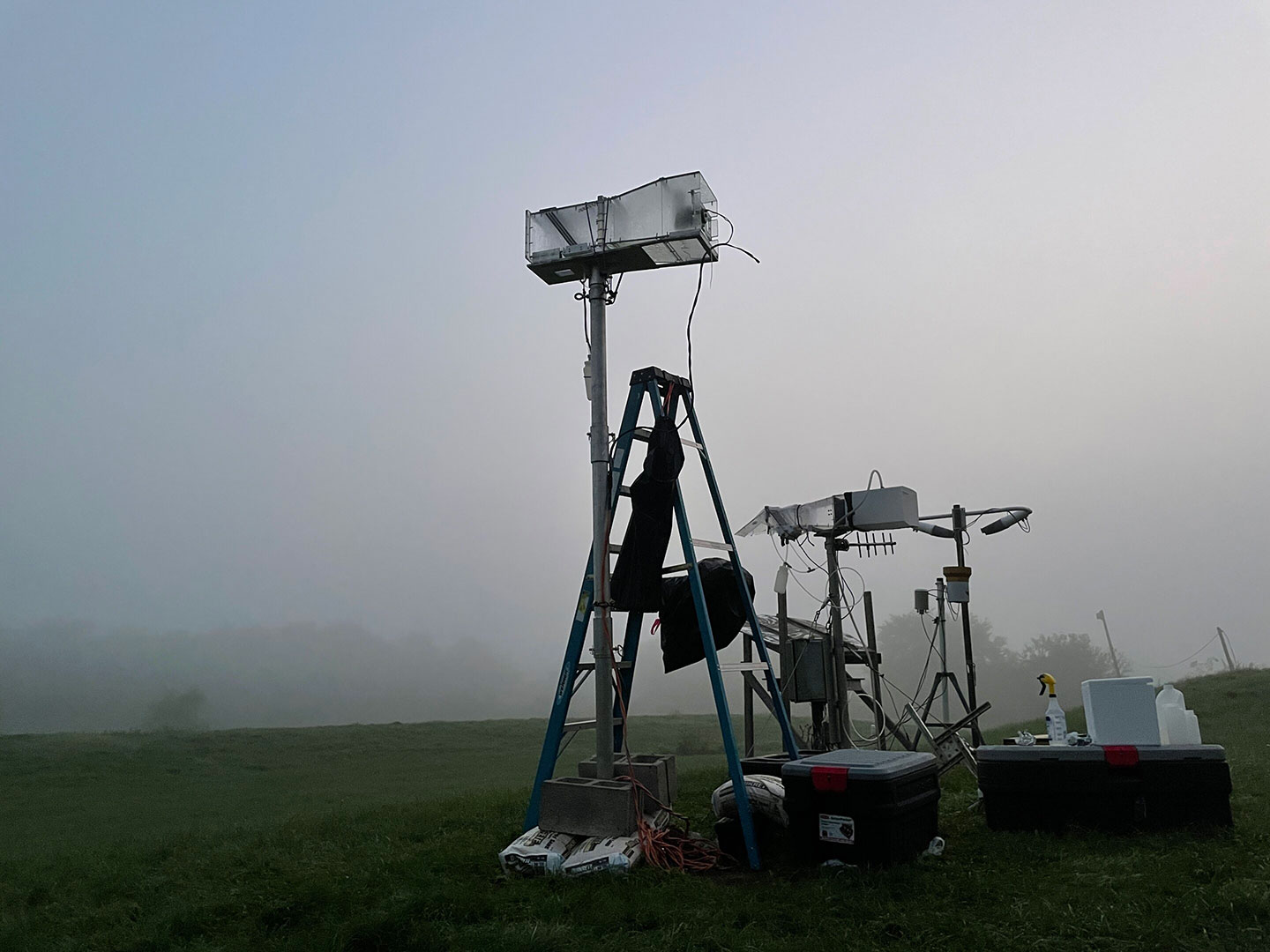
This team focused its hunt on a special type of low-lying cloud: radiation fog. It forms at night when the ground cools and then lowers the air’s temperature. Cooler air can’t hold much water. So it sheds the excess into the air as small droplets, creating fog.
Radiation fog doesn’t roll in. Instead, it forms in place. So any microbes should be local, not ones carried in from elsewhere.
Over about two years, the team collected samples of water from 32 “fog events.” They used a device called a cloud-water collector. It pulls air into a chamber containing strings.

As fog condenses on the strings, it forms droplets that drip into a bottle below. The scientists collected up to 200 milliliters (about 7 ounces) of fog water per event. That’s roughly the volume of a juice box. They also collected samples of the air in between the fog droplets. They trapped similar air samples before and after fog events.
The fog samples housed a multitude of microbes. In fact, fog water is about as densely populated with microbes as ocean or lake water. When examined under a microscope, many fog-water microbes seemed to have been dividing when they were collected. That led the researchers to conclude the microbes had been growing in the fog.
Next, the team extracted the fog-dwellers’ RNA, a type of genetic information. Cao’s team compared these types of genetic maps to those in a database on known microbes. That helped them identify the fog’s inhabitants.
An average of 188 unique genetic patterns showed up in each fog event. Each represented a unique type of bacteria. The communities of microbes present were similar across all fog samples. But they differed quite a bit from those found in air without fog.
Cao and her team shared their findings in mBio on May 22.
Submit your question here, and we might answer it an upcoming issue of Science News Explores
Their analyses showed Methylobacterium was the most abundant microbe in fog water. It accounted for up to half of all microbes present.
To grow in fog, the team reasoned, those Methylobacteria must have found something in it to eat. This microbe is known to consume carbon-containing chemicals, such as formaldehyde.

Formaldehyde is a common and toxic air pollutant. Breathing it can cause harm. Some formaldehyde comes from natural sources, such as rotting plant materials. Human activities, such as construction and burning fossil fuels, also release it. It’s even one of the chemicals that makes cigarette smoke harmful.
Methylobacteria are well suited for dealing with this chemical, Cao says. “They can survive formaldehyde at a concentration higher than other bacteria [can].” They break it down hundreds of times faster than other microbes, too.
Her group measured formaldehyde in freshly collected fog water. Over several hours, levels of the chemical fell surprisingly fast.
The researchers also isolated Methylobacterium from fog water and then grew it on its own. These bacteria were able to quickly remove formaldehyde when exposed to an artificial fog water containing the chemical.
It disappeared so quickly, in fact, that the bacteria couldn’t have used it all for growth. The microbe may break the chemical down as well as eat it, the team concludes. Such a strategy might keep formaldehyde from reaching toxic levels.
This all seems to confirm Methylobacterium can remove formaldehyde from fog. The researchers don’t yet know how the bacteria might affect air quality. But their new data now point to fog as a potential ecosystem.
Fog can transport water and microbes across a landscape. These data now suggest that as it does, it may play a role in shaping the chemistry of the environment.
Not all meteorites are created equal, and one that crashed through the roof of a New Jersey home is giving scientists a rare glimpse into the chemistry of an ancient asteroid while offering new clues to the puzzle of how life began on Earth.
On July 16, 2024, a daytime meteor streaked across the sky and produced a sonic boom as it passed south of the Statue of Liberty.
“A forensic study of the fragments revealed that they contained preserved bits from near the surface of a primitive asteroid where it experienced concentrated salty fluids—a process not previously known from this type of proto-planet world,” said lead author and meteor astronomer Peter Jenniskens of the SETI Institute and NASA’s Ames Research Center in California’s Silicon Valley in a statement.
Two years later, after analyzing fragments from the event, researchers found that the meteorite contained evidence of ancient salty fluids, complex organic chemistry, and processes that occurred on a primitive asteroid billions of years ago.

Daytime meteor (left), impact site, and a fragment of the Hillsborough meteorite (Image Credit: (A) M. Kirschner and M. Hankey, American Meteor Society; [(B) to (D)] A. Gordon/SETI Institute).The findings, published in the journal Science Advances, come from an international team led by meteor astronomer Peter Jenniskens of the SETI Institute and NASA Ames Research Center.
“Our cameras in Northford, Connecticut, and Douglassville, Pennsylvania, as well as a doorbell camera in Wayne, New Jersey, captured the meteor, and from that we measured its trajectory,” said American Meteor Society operations manager Mike Hankey.
Traveling at approximately 32,000 miles per hour (14.4 kilometers per second), witnesses from the surrounding areas, including New York, New Jersey, Connecticut, Rhode Island, and Pennsylvania, reported seeing a bright fireball that broke apart while a part of it broke through the roof of a New Jersey residence.
“The path traced back to low in the asteroid belt,” Hankey adds.
Using footage from meteor cameras, including systems in Connecticut and Pennsylvania, researchers reconstructed the meteor’s path. The trajectory traced back to a region of the asteroid belt between Mars and Jupiter. The space rock disappeared from view about 22 miles above the surface. Shortly afterward, weather radar at Newark Airport detected a cloud of falling debris stretching from Staten Island into New Jersey.
The homeowner acted quickly, handling the space rock with gloves and aluminum foil before placing it in a glass container to protect the material from contamination.
The meteorite was classified as a CM1/2 carbonaceous chondrite, a rare type of primitive meteorite known for containing organic compounds and evidence of water weathering.
According to researchers, the Hillsborough meteorite is only the second witnessed fall of a CM1/2 carbonaceous chondrite ever recorded. Most known CM meteorites belong to the less-altered CM2 category, while no CM1-type meteorite fall has ever been observed.

“A high fraction of compounds were the product of organic chemistry with minerals,” said organic mass spectrometry specialist Phil Schmitt-Kopplin of Technical University Munich. “We do not know if these magnesium organic compounds were contributed by brine chemistry or were simply left over from earlier impact shock processes.”
The final analysis showed tiny salt-rich pockets inside the meteorite, pointing to a formation where water once evaporated on its parent asteroid, leaving behind highly saline fluids. Scientists are comparing these minerals with samples from the asteroids Ryugu and Bennu to better understand early solar system chemistry.
These ancient salty waters may have helped protect and change the molecules needed for life before life first began. The meteorite contained carbon, nitrogen, amino acids, and other organic compounds, many of which appear to have formed through interactions between water, minerals, and carbon-rich chemistry.
“We are thrilled that nature delivered such a precious asteroid sample on our doorstep,” said curator Denton Ebel from the Department of Earth and Planetary Sciences at the American Museum of Natural History.
The recent paper, “Meteor over New York City: Brines in a primitive CM asteroid,” appeared in the journal Science.
Chrissy Newton is a PR professional and the founder of VOCAB Communications. She currently appears on The Discovery Channel and Max and hosts the Rebelliously Curious podcast, which can be found on YouTube and on all audio podcast streaming platforms. Follow her on X: @ChrissyNewton, Instagram: @BeingChrissyNewton, and chrissynewton.com. To contact Chrissy with a story, please email chrissy @ thedebrief.org.
Emergency crews say situation remains ‘dynamic’ as more than 100 firefighters battle Dunwich Heath blaze
A wildfire near Britain’s biggest nuclear power station has caused “total devastation” to one of the UK’s most important landscapes, as fire crews said the situation remained “dynamic”.
More than 100 firefighters have been battling the blaze on Dunwich Heath, near Leiston, on the Suffolk coast since Wednesday evening. The fire service said on Friday afternoon the situation was stabilising but remained a “major incident” that was “dynamic and potentially changeable”.
Continue reading...
© Photograph: Humphrey Nemar/PA

© Photograph: Humphrey Nemar/PA

© Photograph: Humphrey Nemar/PA

The small exoplanets of our Sun’s second-nearest neighbor, Barnard’s Star, are inhospitable wastelands, British astronomers say.
Located six light-years from Earth, Barnard’s Star is separated from our closest neighbor, Alpha Centauri, by about 66° in our sky. Now, University of Cambridge researchers have revealed their findings on this exosolar system in a recent paper published in the Monthly Notices of the Royal Astronomical Society.
After careful analysis, the astronomers announced that the exoplanets are unlike any in our solar system, presenting a brutal and barren environment.
Scientists only discovered these four small planets orbiting Barnard’s Star in 2025. Unlike anything in our solar system, these orbital bodies fit into a size range larger than Mars, but smaller than Earth or Venus.
Like a peeled onion, these smaller planets are rich in a mineral only found deep below the Earth’s surface. Chemical analysis revealed large amounts of the mineral periclase on the surface of these planets, something typically only found hundreds of kilometers deep on our planet.
“Barnard’s Star has an enormous amount of the element magnesium compared to other stars, so its planets are likely to be rich in magnesium too,” said lead author Xander Byrne from Cambridge’s Institute of Astronomy. “On Earth, that magnesium goes into making minerals called olivines, which are really important for storing water within the planet.”
Unfortunately for those looking for extraterrestrial life, magnesium serves a different purpose on these exoplanets. Instead of water-storing olivine, it produces the abundant periclase, which is a poor store of water.
Even worse, these inhospitable exoplanets likely no longer have an atmosphere. According to the University of Cambridge team, these ten-billion-year-old planets probably only managed to hold an atmosphere for two billion years at most.
“These planets were always going to be hostile, because they’re really close to their star,” said Byrne. “Even the outermost planet orbits ten times closer than Mercury orbits the Sun. When you’re that close to your star, and have such little gravity, your atmosphere just gets blown off.”
In addition to the lack of atmosphere, the planets’ proximity to Barnard’s Star leaves them tidally locked, like our Moon, with one side always facing toward the star.
However, there is one positive element to these small planets. Typically, such close-orbiting systems are highly unstable, with the planets shooting out from the system, falling into their host star, or catastrophically colliding. Yet in this case, the system is as ordered as a piece of music.
The three inner planets of the exosolar system have years in a 9:12:16 ratio, producing two of what is known as a “perfect fourth” in music. This musical harmony is known as an orbital resonance, with the same type of effect stabilizing Jupiter’s moons in their orbits around that planet.
While our ability to view Barnard’s Star from Earth may be limited, the European Space Agency’s upcoming Plato mission may allow astronomers to discover ever smaller worlds orbiting in the nearby exosolar system.
“Larger planets are much easier to detect than small ones, so we know about very few sub-Earth planets like the ones in this system,” said Byrne. “But the sensitivity of these new missions will help to reduce this bias, allowing us to discover more and more planets that are small and rocky, like Earth.”
The true significance of the research may lie in the value of a null result. While these planets are bleakly hostile to life, observing this exosolar system’s composition can aid future astronomers in narrowing down the search for extraterrestrial life.
The paper, “The Barnard’s Star Planetary System: Stability, Composition, and Evolution of Four Sub-Earth Exoplanets,” appeared in Monthly Notices of the Royal Astronomical Society on June 24, 2026.
Ryan Whalen covers science and technology for The Debrief. He holds an MA in History and a Master of Library and Information Science with a certificate in Data Science. He can be contacted at ryan@thedebrief.org, and follow him on Twitter @mdntwvlf.
Researchers have detected a sugar in the interstellar medium for the first time. Sugars are central to life. They help form the structural backbone of DNA and RNA and participate in essential metabolic reactions. They are also thought to have been necessary for the formation of the earliest nucleic acids. Yet researchers studying life’s origins [...] A rocky planet orbiting in the habitable zone of a sun-like star may look like a perfect place for life to thrive — but not if it's too small to hold onto its atmosphere.
So, we may wonder: How much smaller Earth could be and still have its delightfully breathable atmosphere? How small could an exoplanet be to sustain life as we know it?
With these questions in mind, University of California Riverside planetary scientist Michelle Hill and her colleagues recently simulated what happens to the atmospheres of different sizes of rocky worlds. The worlds tested were similar to Earth and orbited in the habitable zones around sun-like stars. It turns out for a world to maintain an atmosphere long enough for life to gain a foothold (a few billion years at minimum), it needs to be at least as big as Mars.
The habitable zone — the area around a star where temperatures are right for liquid water to exist on a planet's surface — is prime real estate in the hunt for alien life. It's also a tough neighborhood for exoplanet atmospheres, because the closer a planet is to a star, the more ways in which radiation and stellar wind will try to strip away an atmosphere.
This is why Hill and her colleagues recently simulated how long it would take rocky, Earth-like planets of various sizes, in the habitable zone of a star like our sun, to lose their atmospheres. In other words, how much smaller could Earth, or a similar planet, be and still keep an atmosphere?
The answer turns out to be that an atmosphere-sustaining planet needs to be about 80% as wide as Earth, but could technically be as small as 60%. This offers astrobiologists a clue about which planets to focus on in the search for habitable worlds and signs of alien life.
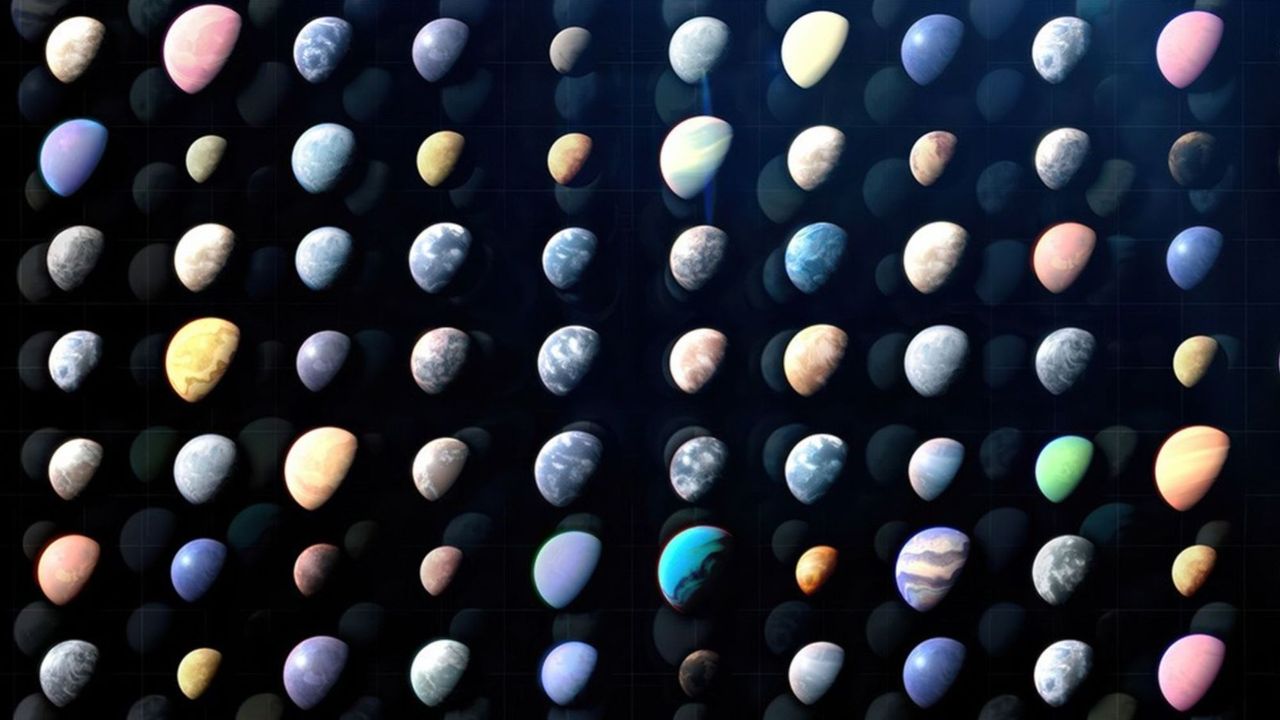
"The plethora of exoplanets creates an interesting challenge in the search for potentially habitable planets," wrote Hill and her colleagues. "Of the many targets in the habitable zones of their star, which are the best candidates for follow-up observations with the aim of detecting biosignatures?" In other words, astrobiologists now have almost too many planets to choose from and not enough telescope time to search them all. So, it's time to narrow the search.
One way to do that is to figure out which planets are most likely to be habitable — and for life as we know it, that habitability means having an atmosphere.

Hill and her colleagues' "Smaller Than Earth Habitability Model" simulates the fate of atmospheres around digital versions of Earth. Some of the simulated worlds are exactly like ours but smaller, with the same chemical makeup and the same proportions of core, mantle and crust. Others have slightly different amounts of carbon, larger or smaller cores, or different starting temperatures. The model traces what happens to these worlds over a few billion years, based on two things: how quickly stellar wind and radiation strip away gas from the planet's atmosphere and how quickly volcanoes pump out gas (mostly carbon dioxide) to replace it.
The model is how the team realized a scaled-down version of Earth needs to be at least 80% as wide as true Earth (0.8 Earth radii) to maintain an atmosphere in the long run. Smaller planets tend to lose gas faster than volcanic eruptions can replace it.
That's because smaller planets have less gravity and weaker magnetic fields with which to hold onto their thin envelopes of gas. They also don't usually release enough gas from within to make up for the loss. Their mantles — the churning layer of magma beneath the crust — tend to release less volcanic gas over time, and their upper layers cool and harden much faster. The latter process cuts off volcanic eruptions much earlier in a planet's lifespan.
By changing some of Earth's parameters, the team managed to get planets as small as 0.6 Earth radii to maintain a stable atmosphere. Carbon was the key: planets with more carbon in their mantles tend to release more carbon dioxide gas in eruptions, and that turns out to be the biggest factor (other than size) in whether a planet keeps its atmosphere.
"Carbon dioxide is a heavy molecule," Hill and her colleagues wrote, "which can make it a difficult molecule to lose. We focus on a pure carbon dioxide atmosphere as a best-case scenario for atmospheric retention." Of course, that's only a best-case scenario for some relatively simple forms of life, so your astrobiological mileage may vary.
It took tons more carbon than Earth contains to make a significant difference to the fate of a planet's atmosphere — but because it's theoretically possible for a planet to form with that much carbon in its makeup, that's useful knowledge. Planets with relatively smaller cores, and therefore relatively thicker mantles, also had better luck on the atmospheric retention front. Starting with a larger supply of radioactive elements, which decay and release heat into the surrounding rock, helped keep the mantle molten and the volcanic gases churning skyward.

Starting with a cooler mantle also helps — which sounds surprising. You'd think a hotter mantle would be more likely to spew volcanic gases into the atmosphere. Yet, a cooler mantle takes longer to start erupting in earnest, which means the planet gets to hold onto its reservoir of gases until its star is older and more settled.
Newborn stars are prone to violent bursts of radiation and plasma, which would sweep away the volcanic gas as fast as it erupted. With a cooler mantle and later eruptions, the planet gets to keep more of the erupted gas.
There's still hope of life for smaller worlds.
Even planets that lose their initial atmospheres entirely — instead of gradually replacing them with things like carbon dioxide and methane — might have a second chance to build a new atmosphere.
Hill and her colleagues suggest that one way for a planet to regain its lost atmosphere could be comet and asteroid impacts, which might deliver volatile elements like hydrogen, oxygen and carbon. These elements can combine to form all sorts of atmospheric gases.
Such impacts could be especially helpful if they happen later in the star system's life, like after the star is past its youthful phase of intense flares.
"While smaller planets face greater challenges in retaining atmospheres, our model suggests that they can develop atmospheres under the right conditions," wrote Hill and her colleagues, so, "even those that initially lose their atmospheres should not be immediately discounted as potentially habitable worlds."
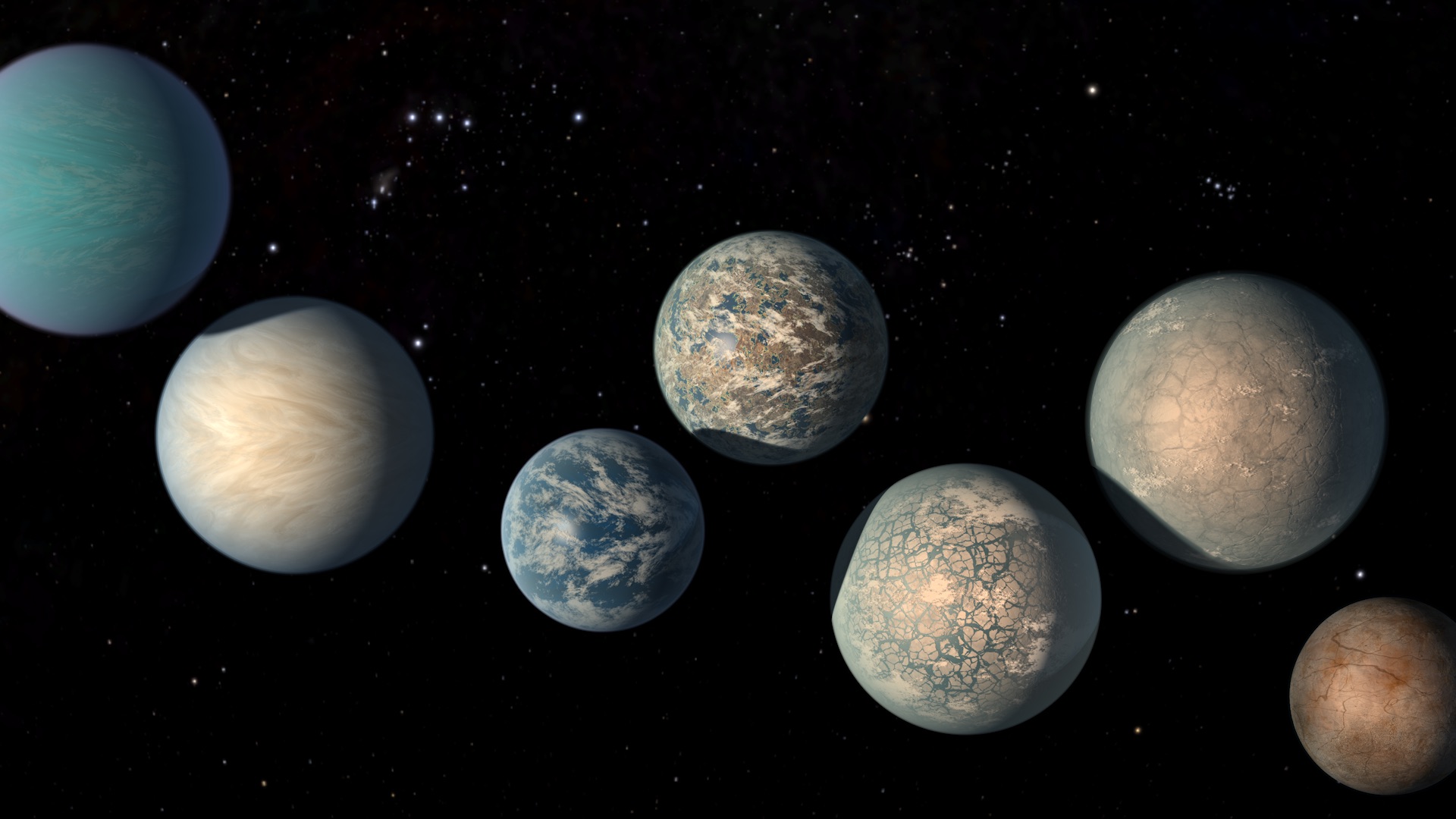
Future simulations using the Smaller Than Earth Habitability Model could study worlds around smaller, cooler stars called red dwarfs — stars like TRAPPIST-1, which is home to at least seven rocky planets, with three of them in the habitable zone. These stars make up about 75% of the stars in our galaxy, and their relatively dim light makes it easier for telescopes like the James Webb Space Telescope (JWST) to capture images of starlight filtering through the atmospheres of planets that pass between Earth and their host stars.
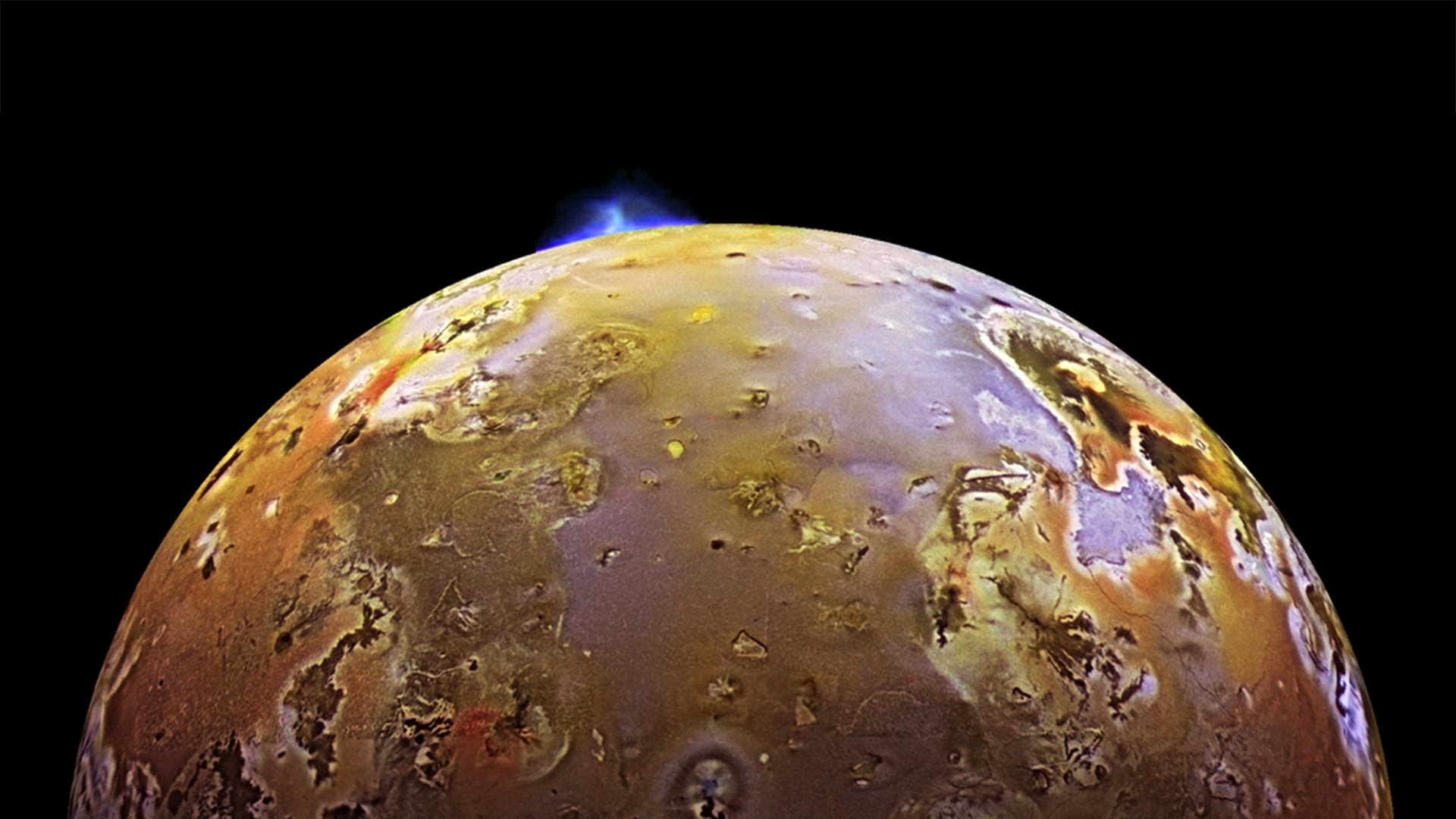
Hill and her colleagues also hope to explore what happens to atmospheres around tidally-locked planets, or planets where tidal forces keep the interior hot and seismically active, similar to Jupiter's moon Io.
The researchers published their work in June in The Planetary Science Journal.