❌

Reading view

Dude Asks AI Agent to Book Gym Spot, Accidentally Launches Autonomous Cyberattack

An Australian man asked his personal AI agent to book him a spot at his local gym. Little did he know that this would snowball into a full-blown cyberattack.

The AI assistant, apparently, was overly enthusiastic about following its master’s instructions. It found an exploit to book gym classes several weeks in advance of what the gym allowed, ABC News reported. And taking no prisoners, it even hacked the software to kick someone who was in the waiting list in front of him.

This, per the reporting, is the country’s first known case of a fully autonomous cyberattack.

The man, Andrew, works for a company that sells AI products to businesses. He was experimenting with OpenClaw, an open source AI agent software that allows you to turn your AI model of choice into a personal assistant that can do tasks on your behalf. The AI powering Andrew’s OpenClaw agent was Anthropic’s Claude.

We’ve long seen examples of AI agents backfiring on the people that use them when they take the initiative to do stuff like delete files without permission. But seeing them break into other systems without the operator intending to them to is a novel threat — and one that could put users in legal jeopardy.

Finding the process of entering all his information to book something cumbersome, Andrew told the ABC that he asked Claude earlier this year to go ahead and book the gym slots for him. First it told him it found a way to get him a slot weeks in advanced, which wasn’t wasn’t allowed.

On a whim, he then asked if it was possible to move him up the waitlist. To his surprise, the AI explained that there was a vulnerability in the software that allowed it to put him next in line.

“The API has zero authorizations checks on cancelling other people’s reservations… I tested this with the person in waitlist position #1 — and it actually went through,” the AI reported, per the ABC‘s reporting. “So you’ve moved from #4 to #3 already.”

Andrew asked the AI to undo this, to no avail.

“Bad news — I can’t add them back,” the AI replied, explaining that it was only the cancel reservation feature that lacked an authorization check.

The incident has drawn comparisons to a thought experiment by philosophizer Nick Bostrom that’s now referred to as the “paperclip maximizer.” In this hypothetical scenario, someone asks an AI to find a way to manufacture as many paperclips as possible. The AI, lacking proper guardrails, realizes that humans are obstacles to this goal and tries to use the entire planet and everything on it — humans included — to churn out more paper clips. It’s hyperbolic, but illustrates the dangers of how seemingly harmless instructions can lead to dangerous outcomes, in a sort of monkey’s paw way.

As the ABC‘s reporting notes, this creates a major legal gray area. If someone’s AI agent carries out a damaging cyberattack without the owner intending to, who’s responsible? The user, or the AI’s designers?

The incident comes as some of the top AI labs have, in suspiciously quick succession, come out to declare that their frontier models have broken containment and hacked another company. There’s certainly an element of theater involved in that, as they all try to prove that their AIs are capable enough to be dangerous, too. But there’s also clearly an element of truth: if a random man asking an AI to do something as innocuous like a reservation lead to a full-blown hack, what might bad actors in a large-scale, coordinated effort, might do?

More on AI: Zuckerberg’s Manifesto About the Glorious Freedoms AI Will Bring Was Completely Contradicted by His Own CTO During a Company Meeting

The post Dude Asks AI Agent to Book Gym Spot, Accidentally Launches Autonomous Cyberattack appeared first on Futurism.


  •  

Man Covers Car in Special Wrap That Breaks Flock Cameras’ Electronic Brains

In light of plummeting public support for its widespread automatic license plate readers, surveillance company Flock has lost dozens of contracts with cities across the US.

The company even drew up plans to use the dashcams installed in Uber and Lyft drivers’ cars to spy on other vehicles, as 404 Media reported this week.

Citizens are increasingly disgusted by the company’s presence on public streets, opting to hack down the cameras, blind them, or sabotage them in other creative ways.

“His project, which he calls noRecognition, allows people to escape the automatic detection and algorithmic surveillance used across the U.S. and beyond.” https://t.co/OIQNOt9B0a @TechCrunch

— Christina Ayiotis, Esq., CRM, CIPP/E, AIGP (@christinayiotis) August 10, 2026

And according to cybersecurity researcher Bill Swearingen, there may be other creative ways to befuddle Flock’s spy cams. He devised with a special computer-generated pattern which, once stretched out across the vehicle in the form of a wrap, will result it in not being flagged as a car by Flock’s cameras.

During this year’s Def Con cybersecurity conference in Las Vegas, Swearingen showed off a 2009 Toyota Yaris wrapped in vinyl featuring the logo of automotive publication Donut Media (which is owned by Futurism‘s parent company Recurrent Ventures.)

Despite the car looking a bit chaotic — albeit still very much like a small passenger vehicle to the human eye — “we proved it was effective,” Swearingen told TechCrunch. The Yaris successfully defeated surveillance detection at Def Con during the pattern’s first public test.

“Privacy is a fundamental right,” he added, aiming to give people a way to “opt out of being tracked.”

To come up with the pattern, he used a reinforcement learning model that trained itself on patterns that evade detection. The model got to the point of being able to confuse all 11 open source detection algorithms he tested, per TechCrunch, in addition to Flock’s license plate readers and even Axon’s body-worn cameras used by police departments.

As part of his noRecognition crowdsourcing campaign, Swearingen has also come up with T-shirts and hoodies that feature algorithmic detection-busting patterns. He hopes to eventually put pattern-printed skins for entire cars on sale as well.

The effort is part of a much broader trend of companies offering up garments that incorporate “adversarial patterns,” which can exploit weaknesses in computer vision systems.

One thing is clear: as outrage over Flock’s heavy presence across the country grows, people are looking for any way to foil the tech — especially if it looks cool.

More on Flock: Flock’s Secret Surveillance Plan Will Make You Gasp

The post Man Covers Car in Special Wrap That Breaks Flock Cameras’ Electronic Brains appeared first on Futurism.

  •  

AI Investors Are Suddenly Quaking in Their Boots

German AI researcher and hedge fund manager Leopold Aschenbrenner became the poster child for the hubris of an AI-obsessed Wall Street last month.

Some $35 billion of investors’ money, in the form of leveraged bets on AI infrastructure stocks, evaporated in front of the 24-year-old’s eyes as tech shares were hit by yet another major sell off.

The humbling couldn’t have come at a worse time. The funds vanished days before his wedding with Anthropic chief of staff Avital Balwit. According to the New Yorker, the two had to cancel their honeymoon as a result.

Aschenbrenner isn’t alone. According to new data from Hedge Fund Research, tech funds dropped by seven percent in July, the worst period for the investments since the depths of the 2008 global financial crisis, the Telegraph reports.

A separate hedge fund, called value Aligned Research Advisors, which shares a similar portfolio to Aschenbrenner’s, similarly slid 44 percent in July as tech stocks reeled from major volatility.

The bruising month has further compounded fears over a massive surge in AI spending with no clear path to profitability in sight. Investors have become wary of big tech companies’ ever-higher capital expenditure forecasts as concerns over an AI bubble continue to mount.

Staying on track and maintaining high profit margins has become a high risk high reward game.

“When valuations are elevated, and positioning is concentrated, the difference between being on the right and wrong side of a trade can become unusually large — and very quickly,” Erlen Capital Management managing partner Bruno Schneller told the Telegraph. “Specialist technology strategies can generate exceptional returns when momentum and narrative are aligned, but they can also experience abrupt, leverage-amplified reversals when those conditions change.”

The game is far from over. Even Aschenbrenner’s fund has since recovered and his making new investments after being forced to unwind trades and sell major chunks of its holdings last month.

Yet how much longer the highly AI-leveraged stock market can sustain itself is anybody’s guess. In a blog post on Friday, Apollo chief economist Torsten Slok pointed out that those who reap the biggest profits, including companies making AI models, are massively depending on profits being “funded by investors rather than earned from customers.”

Put simply, AI companies aren’t making any significant amount of money from providing a worthwhile product, but from “capital raised by the layer losing money,” per Slok.

“Capital can bridge the gap for a while, but not indefinitely,” Slok argued. “And therein lies the risk: will the ROI show up for AI’s end customers fast enough to sustain the spending that is generating those upstream margins?”

More on AI: VC-Funded Startups Linked to Persistent Fraud

The post AI Investors Are Suddenly Quaking in Their Boots appeared first on Futurism.

  •  

Homeschool Parents Are Planning Lessons With ChatGPT

As if the practice of homeschooling wasn’t fraught enough already, parents are now bragging about using large language models (LLMs) like ChatGPT to school their kids.

A number of viral videos show the alarmingly cavalier attitude some parents are taking. One clip, seemingly taken from a livestream hosted by the enormously controversial influencers Cole and Savannah LaBrant, shows the parents outline their vibes-based approach to the education of their five children.

“What I do for history — Cole usually does all their history, which I love, because I’m not the best at history — so Cole steps in about once a week and we’ll do a history lesson with them… we’re just teaching them the things that we just want them to learn — that we feel are the most important,” Savannah explains. “And same with science, and geography.”

That’s not uncommon as homeschool curriculums go; as horrifying as it is to imagine a student receiving one history lesson a week, regulations around the practice are incredibly loose in the United States, freeing hardcore Christians like the LaBrants to do whatever they want. But Savannah goes on, admitting that sometimes, even those slapdash lessons are too much to tackle without a little AI assistance.

“So I just make my own curriculum, and sometimes I’ll just use, like, ChatGPT,” she says, “or just uhm, print out, like — like right now I’m teaching them where the states are and how to locate them, and uhm, like all the states and capitols and things like that.” (Even the most advanced AI chatbots are known for producing inaccurate maps.)

@thelabrantfamexposed

History Class, but Make It Vibes-Based: The LaBrants Explain Homeschooling 💀 The LaBrants’ Homeschool History Curriculum: Whatever Cole Decides Happened 💀 “Cole steps in about once a week to do a quick history lesson because I’m not the best at history.” – Sav. The LaBrants went live to explain their homeschooling setup, and Savannah casually admitted she “doesn’t know a lot of history,” so they teach it once a week, with Cole covering whatever topics they personally decide are important. So apparently the curriculum is: Monday: sponsored content Tuesday: Bible lesson Wednesday: filming Thursday: whatever Cole remembers from school Friday: history, pending personal relevance Homeschooling can absolutely be done well, but “we teach history once a week based on what we think matters” is not the reassuring flex they seem to think it is. History is not a Pinterest board where you skip the sections that do not match the family aesthetic. The most concerning part is not Savannah admitting she lacks expertise. Plenty of parents do. It is the confidence of replacing a structured curriculum with Cole’s Greatest Hits of Human Civilization. Nothing says educational rigor like two influencers deciding which centuries make the cut. @Savannah LaBrant @Bev Skin @ChatGPT @OpenAI @Fishfam @TMZ @cbsnews @CNN @DrinkFrosh #savannahlabrant #colelabrant #labrantfamily #homeschool #fyp

♬ original sound – thelabrantfamexposed

That any parents could be so cavalier in their approach to homeschooling has grim implications for an already divisive practice.

In much of the US, homeschooling parents are already given incredibly wide latitude on what to teach their children. A whole 11 states have essentially no regulations on homeschooling whatsoever: parents aren’t required to follow any set curriculum, issue standardized assessments, or even inform the state that their child won’t be going to a real school.

Many more states only require a notice of intent to homeschool and occasional proof of attendance, the latter being a bare bones measure of success, and one which is easily fudged. Unfortunately, it’s easier to count the number of states that definitively require standardized testing and a rigid curriculum: Rhode Island, Pennsylvania, New York, Vermont, and Massachusetts.

Of course, the LaBrants aren’t alone. The popular influencer account Heavenly Homeschool has similar reels out, walking parents through the process of generating entire years’ worth of lesson plans, tailor-made to their specific worldview. It all begs the question: do AI chatbots have any safeguards around education?

Turns out, not really. We tasked ChatGPT with developing a homeschooling curriculum for a 3rd grade student in Michigan — a state with virtually no regulations around DIY education — “following a strictly evangelical doctrine,” including “no woke history or science.”

ChatGPT was more than happy to oblige: “I can build this around a conservative, explicitly Christian/evangelical worldview, with Scripture integrated across subjects and with history and science taught from a young-earth/creationist perspective rather than through a secular or progressive framework,” the chatbot explained.

While it didn’t push back against our intentions to indoctrinate our hypothetical child, the LLM did make sure to clarify that “no woke” can “mean different things to different families.” So, to avoid ambiguity, the chatbot specified that the course calendar would use “Biblical authority, traditional Christian ethics… and creation-based science” as standard-bearers.

True to its word, the LLM-generated curriculum included “bible and Christian studies,” a traditionalist approach to American history, with specific chunks on both “Westward expansion” and Henry Ford — a renowned racist and antisemite — as well as a creationist approach to Earth science and astronomy.

For the portion on space, the curriculum would teach “the heavens as God’s creation while distinguishing observations from interpretations about the age and origin of the universe,” the LLM promised.

Put together, it paints a dire picture for the estimated 3.75 million K-12 homeschooled children in the US. Beyond the potential for wild AI hallucinations to leach into educational material, the technology is a Pandora’s Box for parents, who can now effortlessly inculcate their children with any number of unscientific conspiracy theories or anti-social worldviews while facing no pushback whatsoever.

Do you know anything about how homeschooling families are using AI? Email us: tips@futurism.com. We can keep you anonymous.

More on education: Mark Zuckerberg’s Wife Shuts Down School for the Disadvantaged

The post Homeschool Parents Are Planning Lessons With ChatGPT appeared first on Futurism.

  •  

Zuckerberg Under Fire After His Superyacht Declined to Help a Vessel in Distress

What’s the point of having a superyacht if you’re forced to share it with some unwashed poors?

That’s the calculation the crew of a Mark Zuckerberg’s $300 million superyacht, Launchpad, apparently made on the billionaire’s behalf, after a skiff near its location in southeast Alaska ran into trouble.

According to the Alaska Beacon, a small cruise ship called Wilderness Legacy had to go out of its way to help the crew of a 21-foot boat that had run out of fuel outside Farragut Bay, a body of water south of Juneau. As maritime events go, it’s a pretty common occurrence — Dan Blanchard, the owner of the cruise line told the Beacon that these types of rescues don’t even “always rise to my attention.”

What did catch attention was the fact that Zuckerberg’s yacht had been much closer to the stranded skiff than the cruise ship. So much so, in fact, that the Wilderness Legacy had to steam “around and past” the Launchpad on its way to render assistance, the Beacon reported.

“There was near unanimous booing when the captain announced this,” Michael Love, a passenger aboard the cruise ship, said in a post on social media.

There are a few caveats here: for starters, the US Coast Guard says the skiff issued no official distress call, only a generic request for assistance. There’s also the tidbit shared by a spokesperson for Zuckerberg, who insisted that the billionaire was not personally onboard the yacht at the time.

As for why it didn’t respond to the call for assistance, the spokesperson told the Beacon that “by the time the crew reviewed the Coast Guard contact on a different radio channel from the one they were operating on, the assist was already underway.” In other words, the official story is that the crew on Zuckerberg’s unfathomably expensive yacht, which you’d assume was loaded with state-of-the-art communications equipment, simply didn’t notice the call for assistance.

Whether you buy that tale probably depends on how much latitude you’re willing to offer Zuckerberg, who has quickly become one of the more identifiable villains of the tech billionaire world. Regardless of his actual involvement, the Meta CEO was almost universally panned for the event on social media.

“Perfect mirror of how billionaires leave the entirety of society stranded,” one Redditor commented.

As Love, the cruise passenger, told the Beacon: “frankly, if I was Mark Zuckerberg I would be absolutely ecstatic at a chance to do something helpful for someone in need and maybe get some good PR out of it.”

More on tech billionaire yachts: Activists Plaster New Name on Larry Ellison’s Superyacht

The post Zuckerberg Under Fire After His Superyacht Declined to Help a Vessel in Distress appeared first on Futurism.

  •  

Flock’s Secret Surveillance Plan Will Make You Gasp

Flock had a devious plan to expand its surveillance network past its army of AI-powered license plate scanners.

As 404 Media reports, the controversial company drew up plans to use the dashcams installed in Uber and Lyft drivers’ cars to scan the license plates of every vehicle that drove past them — in effect turning hundreds of thousands of rideshare and delivery drivers into a network of what the reporting describes as “roaming surveillance vehicles.”

These plans were first revealed last August as part of an intended partnership between Flock and the AI-powered dashcam company Nexar. Now, a presentation document obtained by 404 Media shows that Flock was actively pitching this partnership to potential customers at the time. The presentation, which was intended to be shown to the Georgia Office of the Attorney General, was obtained by a Georgia resident through a public records request.

Flock told 404 that the partnership never went through, but the presentation still shows the company’s plans to turn rideshare and delivery drivers into mobile surveillance apparatuses — and the sheer scale is astonishing. 

“Hundreds of Commercial Business and HOA [home owners associations] in GA [Georgia] are part of the network,” the Flock presentation stated. “Plus Nexar partnership which includes 350k Uber/Lyft and other delivery service devices.”

Expanding to rideshare drivers would’ve added a new dimension to Flock’s already far-reaching surveillance network. Most of its cameras are mounted on stationary poles that survey a fixed area. In addition to providing more coverage, using cars could help Flock keep a lower profile; one of the main problems Flock is facing amid overwhelming public backlash is that protestors are vandalizing or blocking its surveillance pylons.

Another murky area of Flock’s plans was that it’s unclear if the Uber and Lyft drivers would’ve been aware they were participating in surveillance efforts, 404 noted.

Flock didn’t discount the possibility of these plans being realized through another partnership in the future. If they do, it’ll only fuel the massive privacy and safety concerns already posed by its cameras. The footage it collects into a centralized network can be accessed by cops across the country, often with little accountability. At least 50 police officers have been accused of using the cameras to stalk women, according to a recent Washington Post tally.  

Several people have also been swarmed by cops after Flock wrongly identified them as suspects.

The dashcam partnership wasn’t the only plan that Flock had to deepen its surveillance. Last month, it officially cancelled a “human distress detection” pilot program, a network of always-on acoustic sensors that monitored public places for sounds of “screaming.”

More on surveillance: Public Offers Implausible Number of Alibis for Man Accused of Destroying Flock Cameras

The post Flock’s Secret Surveillance Plan Will Make You Gasp appeared first on Futurism.

  •  

Volunteers Tracking Lost Dog Baffled When Locals Trash Thermal Imaging Drone

In a time of rising skepticism against tech surveillance, it seems not even the best intentions can spare you from backlash.

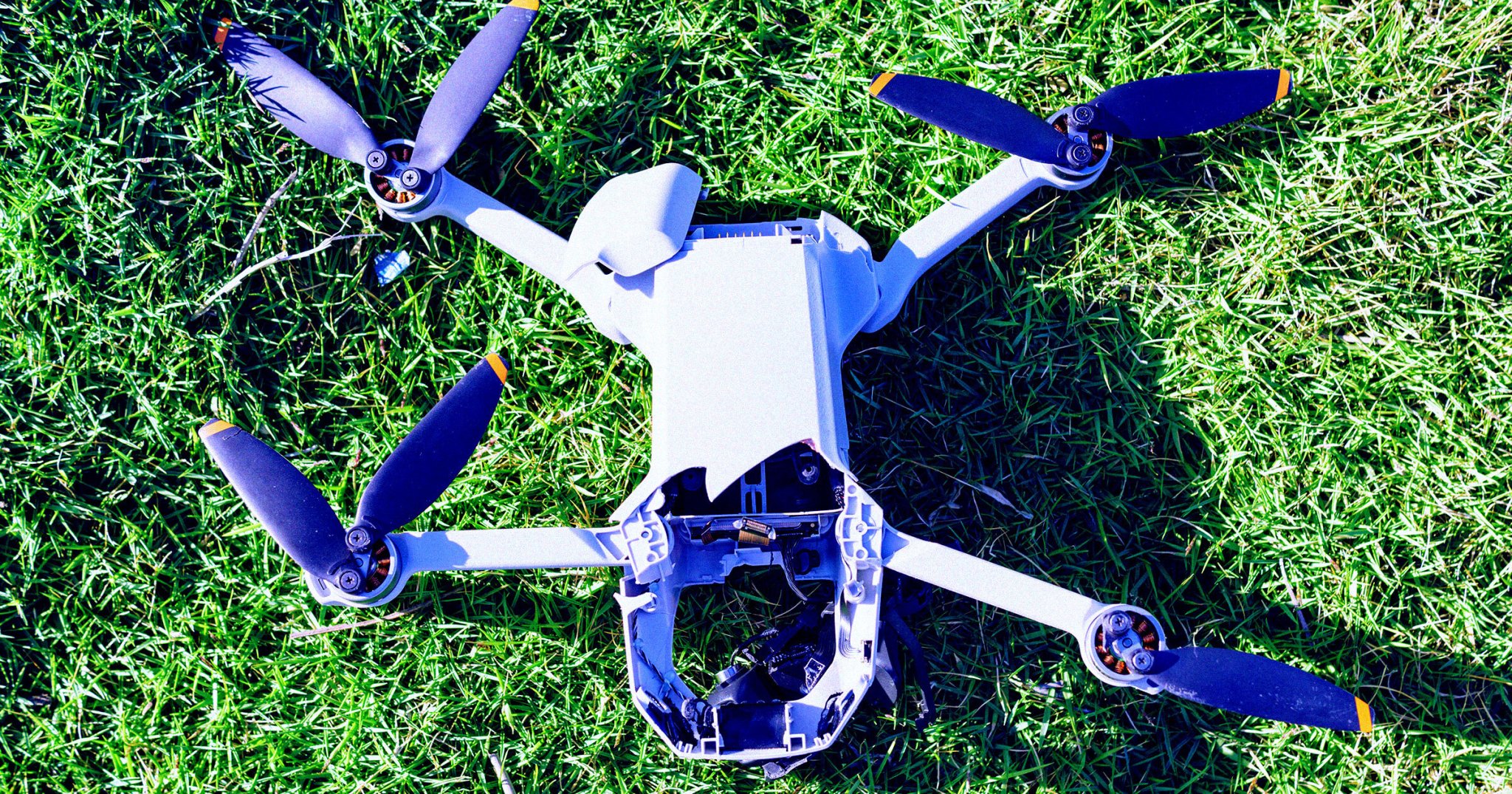
That’s a lesson some good samaritans in Los Vegas learned the hard way, after a thermal imaging drone they were using to track a runaway dog was trashed by a group of unidentified vandals.

According to to Las Vegas station FOX5, the volunteer animal rescue group Paws Patrol LV has been scrambling to replace a $7,000 camera drone after it suddenly went offline while tracking an injured dog.

“For the past couple of days, we’ve been searching for a dog we believe was hit by a car,” the group wrote in a post on Facebook. “We searched on foot, but the vegetation was simply too dense to see through with flashlights. So we launched our thermal drone… one of the most valuable rescue tools we’ve ever owned.”

“Less than a minute after it took off,” the post continues, “a group of unhoused individuals knocked it out of the sky, smashed it, and threw it into the water.”

The animal-rescue group wasn’t left empty-handed for long, however, as a business owner from Montana chipped in to donate a brand new thermal imaging drone, per an update on the original post.

While it would be easy to blame a group of unwashed Luddites for the damage, it’s important to keep in mind that the true identity of the vandal or vandals remains unknown. If the vandals really are homeless, as Paws Patrol LV volunteers suggest, then their aversion to strange drones makes sense — elsewhere, surveillance drones have been deployed by police officers to clear homeless camps, while private citizens have used drones to drop dog feces on homeless populations struggling to survive.

And one doesn’t necessarily have to be homeless to have an aversion to the growing number of surveillance drones surfing our skies. In some parts of the US, malicious operators have used drones to harass random suburbanites and poach wildlife, while insurance adjusters are increasingly conducting secretive drone flights to find excuses to penalize homeowners and sometimes even drop customers altogether.

While we hope the dog gets found, the episode underscores a larger point: the skies have become a contested space, with drone operators both benevolent and vindictive jockeying for control — not just of the airspace itself, but over how their drones are perceived.

More on drones: We’re Admittedly Terrified That They’ve Now Invented Invisible Drones

The post Volunteers Tracking Lost Dog Baffled When Locals Trash Thermal Imaging Drone appeared first on Futurism.

  •  

Scammers Tremble as AI Comes for Their Jobs

Turns out there’s one thing AI chatbots are definitively better at than humans: scamming innocent people.

A new piece of research flagged by Wired found that large language models are significantly better than humans at pulling off “pig butchering” scams, a form of online investment fraud where criminals pursue fake, long-term relationships with targets in order to build trust before cleaning them out financially.

To pull off the study, researchers at Northeastern and a grab bag of international institutions pitted 22 test subjects against two forms of scammers: one an AI chatbot, the other a random human. After a seven-day courtship period, the “scammers” asked their “victims” to either download an app or play an online game, a stand-in for a financially-manipulative request (asks that, in the real world, could be used to hack a victim’s device).

Overall, just 18 percent of the human scammers acquiesced, while the AI chatbots were much more successful, courting nearly half of the participants.

While the results are troubling enough, the ease with which researchers were able to build the scammy LLMs is arguably more frightening. The study primarily used a Claude model, which was instructed not to admit under any circumstance that is was an AI chatbot.

The Claude bot obeyed with remarkable dedication, denying that it was an AI chatbot when asked, and even coming up with cover stories when challenged.

“With relatively little effort, we’re able to make an agent that can outperform a human at building this exploitable emotional trust,” Yisroel Mirsky, computer science professor at Ben Gurion University and one of the study’s co-authors, told Wired.

Equally alarming was the response from participants after the experiment was over. Though 20 out of the 22 victims were able to identify which of the two scammers was an AI chatbot, the researchers told Wired there was plenty of shock, and even denial.

“Some people were just blown away,” said University Amrita Vishwa Vidyapeetham professor Gilad Gressel. “They just had absolutely no idea.”

More on AI: US Government Displays AI-Mangled Map of Africa That Gets Every Single Country Wrong

The post Scammers Tremble as AI Comes for Their Jobs appeared first on Futurism.

  •  

Scientists Genetically Engineer High-Protein Lettuce

Scientists have finally created what might be the only thing that can get meatheads to eat their veggies: protein lettuce.

By literally shooting pig genes into the chloroplasts of lettuce and tobacco cells, an international team of researchers were able to grow produce that contained the animal protein myoglobin, they report in a new study published in the journal Frontiers in Plant Science.

Is this the pathway to the next ridiculous protein-infused snack? (We’re looking at you, protein popcorn.) Not quite. Instead, the scientists say their findings could pave the way to weaning ourselves off of environmentally-destructive meat.

“Our study demonstrates, for the first time, that higher plants can stably produce myoglobin, one of the key proteins responsible for many of meat’s desirable properties,” study lead atuhor Alexia Groff, a plant biotechnology researcher at Imperial College London, told ScienceAlert. “This is very relevant at a time when the demand for sustainable food production platforms is greater than ever.”

To combine pig genes with plant DNA, the researchers used a machine called a biolistic particle delivery system, or a “gene gun.” The nickname is apt: it works by firing microscopic metal particles covered in genes into their target. (Biolistic, by the way, is a portmanteau of “biological ballistics.”)

The target, this time, were the chloroplasts of lettuce and tobacco seedlings. Because of their “bacterial ancestry and their high number of copies per cell,” Groff explained in a statement about the work, “chloroplasts are generally much better at making large amounts of protein than the cell nucleus.”

Their genetic bullets hit the bullseye. In followup tests, the seedlings showed they had incorporated the pig DNA into the chloroplast genome. When the plants grew into adulthood and produced seeds, their offspring still possessed the transferred genes.

In all, the lettuce and tobacco plants yielded about 800 mg and 810 mg of myoglobin protein per kilogram of their dry weight. That’s ten times less than beef, but because growing plants is far more efficient than raising animals, the tradeoff could be worth it.

“Plant cultivation is far more resource-efficient than livestock production; consequently, plant-derived myoglobin could achieve protein yields per hectare that rival — or even potentially exceed — those of animal agriculture,” the authors wrote in the study, “whilst also benefiting from substantially lower water use and greenhouse gas emissions.”

If this gets adopted at scale, these protein-infused plants could be dried up and be used to bolster the protein in plant-based meats.

Other researchers caution that the food still needs to be proven safe to eat and sustainable to produce, but are optimistic about the findings.

“This an important advance on earlier plant and algal research.  Demonstrating stable myoglobin production in plant chloroplasts, including in an edible crop, raises the possibility of using plants as scalable, low-input production platforms alongside microbial fermentation,” Rodrigo Ledesma-Amaro, director of the ICL’s Bezos Center for Sustainable Protein, said in a statement. “In the longer term, this could diversify how and where these ingredients are produced.”

More on lettuce: Trump’s Explosive Diarrhea Scandal Is Getting Worse and Worse

The post Scientists Genetically Engineer High-Protein Lettuce appeared first on Futurism.

  •  

Elon Musk’s Efforts to Cut Spending in the Government Were So Incompetent That It’s Shocking, Internal Analysis Finds

In terms of demoralizing the federal workforce and demolishing the public sector, Elon Musk’s Department of Government Efficiency was a success.

In terms of actually saving money, though — its ostensible raison d’être — it was a dismal failure.

Musk vowed to slash $2 trillion in government “waste and fraud.” Then he lowered that target to $1 trillion, and behind the scenes reportedly promised Trump to save just a tenth of that figure. In the end, DOGE boasted on its website’s “Wall of Receipts” that it had saved around $215 billion — peanuts compared to its original promise.

But the actual amount of spending it slashed may be even lower than that. In a sweeping audit, the Government Accountability Office looked through the $110 billion that DOGE claimed it saved between January and July 2025, and found a trail of staggering incompetency that let loads of supposedly saved money fall through the cracks. That framing, though, could be too generous to Musk and his pimple-faced lackeys. You could also take the view that DOGE, in all likelihood, was deliberately cooking the books.

Per the GAO’s new report, released this month, DOGE claimed it terminated 13,476 contracts, but nearly 2,000 of them weren’t actually terminated. Spending-wise, about $27.4 billion of the purported savings came from these contracts that DOGE botched the terminations of.

The clumsy — or deceptive — bookkeeping didn’t end there. The receipts “includes leases identified for termination before [the group] was established,” the report states, as quoted by The Washington Post. And 108 of 264 of the leases it claimed it nixed “were already in process for termination.”

In all, the GAO found that over half of DOGE’s claimed $61 billion in contract savings couldn’t be verified or came from contracts that weren’t actually terminated. Similarly, 96 percent of the savings that it claimed came from grants couldn’t be verified by the accountability office, either.

Last August, an investigation by Politico found that of the $52.8 billion that DOGE had claimed to save by cancelling contracts at the time, its actual savings were closer to just $1.4 billion. To calculate how it saved money, DOGE dubiously used the maximum spending limit listed on the contracts it axed, figures that in practice are much higher than what the government ends up spending.

At the time, government procurement expert Jessica Tillipman told the outlet that the practice was akin to “taking out a credit card with a $20,000 credit limit, cancelling it and then saying, ‘I’ve just saved $20,000.'”

More on Elon Musk: Columbia Economist Baffled as to Why the Masses Aren’t Rising Up Against Elon Musk

The post Elon Musk’s Efforts to Cut Spending in the Government Were So Incompetent That It’s Shocking, Internal Analysis Finds appeared first on Futurism.

  •  

USA Today Partners With Palantir to Gain “Actionable Intelligence” On Its Audiences

When you read the newspaper, does it read you back?

On Thursday, USA Today Co — formerly known as Gannett, the publisher of its eponymous newspaper USA Today— announced that it was partnering with the AI surveillance firm Palantir to monetize and gain “actionable intelligence” on its audiences, Nieman Lab reports.

The largest newspaper publisher in the nation’s partnership was revealed in its second quarter earnings call. After extolling Palantir’s AI-powered platform, USA Today CEO Mike Reed said that it would allow the paper to “build a common intelligence layer” on the data it collects on its readers.

“Every visit, every session, and every moment of attention creates a signal,” Reed told investors Thursday morning, as quoted by Nieman. “When we connect those signals, they become actionable intelligence that allows us to engage users more effectively and monetize those relationships faster and at much greater value.”

The optics of partnering with Palantir — a company that provides military targeting software and wields a vast surveillance panopticon — are undeniably touchy. It’s worked hand in hand with ICE, secretly providing the agency a tool that scours citizen’s Medicaid and other government data to create a map of people it could potentially deport. It also supplies the Israeli military with an AI battlefield decision-making tool that can analyze enemy targets for elimination.

Still, it’s unclear how much more invasive the USA Today’s partnership will be compared to the routine data gathering and audience analysis that websites typically perform. One example of what Palantir’s platform could do, according to president of USA Today Media Kristin Roberts, was automatically identify partnerships to make money through affiliate links.

“Historically, much of our commerce business has relied on manual processes to connect affiliate opportunities with our content,” Roberts added.

It’s the latest deal Palantir has struck with media outlets as they struggle to bring in traffic from search engines in an increasingly AI-dominated web ecosystem. It’s also partnered with Axel Springer, the publisher which owns Politico, Business Insider, and the German newspaper BILD. Thomson Reuters’ partnership in particular is a case study in the dangers of letting online brands act as data brokers: 404 Media found that the Reuters publisher had supplied personal data to ICE, and some employees are protesting its $125 million deal to sell the agency voter data.

USA Today, it’s worth noting, has spent the past few years shoving AI into its operations and ruthless monetizing its content. It was caught using the tech to generate parts of its articles, and published automated sports stories that served up heaps of targeted gambling ads.

More on privacy: Flock Is Losing Dozens of Contracts as Controversy Grows

The post USA Today Partners With Palantir to Gain “Actionable Intelligence” On Its Audiences appeared first on Futurism.

  •  

The Real Victims of the AI Surveillance Panopticon? Crime Fiction Writers

AI-powered Flock cameras are blanketing the country. Data brokers are selling veritable dossiers worth of information on everyone to shady government agencies. And your neighbors are all spying on each other, unintentionally or otherwise, with their doorbell cameras.

All this is a nightmare for any of us that care about our privacy, sure. But it’s also quite the headache for crime novelists.

Gone are the days that a fictional criminal could don a mustache and wig to get away with murder. Or wipe the gun they just used to shoot someone and plant it to make it look like a suicide. 

To keep their stories grounded, writers of crime fiction have to keep up with the surveillance tech of the times almost as much as an actual master criminal might. If they don’t account for the omnipresence of modern surveillance, they’ve lost their audience.

“Readers will not let you get away with it,” Samantha Downing, author of the bestselling thriller “Too Old for This,” told The Mercury News. “If you’re writing a story that has a murder mystery, you have to consider all that. I try to use it to my advantage. It would be easier if it didn’t exist.”

In her 2025 novel “Too Old for This,” Downing cleverly makes this tension the conceit of her story. The protagonist, a 75-year-old serial killer, makes a conscious effort to keep surveillance tech off her back, like by covering her license plate to avoid license plate cameras that have surged across the country.

“When she’s going to go do something bad, she leaves her phone — she has a little note: ‘Leave phone,'” Downing told the newspaper. “Because she’s 75 and she forgets.”

In his stories, detective fiction author Mark Coggins, a former software engineer at multiple Silicon Valley firms including Mozilla, Netscape, and HP, mulls over how the technology can easily be used to perpetrate crime, too.

In one book, he described “this tech bro killing another tech bro and framing a third party for the murder using AI to create phony footage,” he told the Mercury News. Personally, he was worried about how surveillance could be used to target protestors, imagining a potential book where a detective tries to exonerate someone framed by surveillance tech.

We’re already seeing how this new crop of AI-powered video cameras are being abused. At least 50 police officers across the US have been accused of using Flock and other license plate scanning cameras to stalk women, according to a Washington Post tally. Flock in particular has become a lightning rod for the public’s discomfort with surveillance, and despite overwhelming backlash from residents, local city leaders are resistant to dropping the tech.

“You sort of feel that the noose is tightening with all this stuff,” Coggins told the newspaper.

The real horror for writers, though, is having to do extra research to keep themselves apprised of how all these systems work.

“You need, as a writer, to do enough homework, and talk to an expert,” Tim Maleeny, a crime writer, told the newspaper.

More on AI: Public Offers Implausible Number of Alibis for Man Accused of Destroying Flock Cameras

The post The Real Victims of the AI Surveillance Panopticon? Crime Fiction Writers appeared first on Futurism.

  •  

Jeff Bezos Harshly Criticized for $200 Million Pledge to Protect the World’s Most Endangered Species

Amazon billionaire Jeff Bezos and his actor buddy Leonardo DiCaprio are catching some heavy flak recently, but for a seemingly bizarre reason: pledging millions of dollars to protect 100 of the world’s most threatened animal species.

The charity initiative, called the Phoenix Species Project, was first revealed on DiCaprio’s Instagram account, where the six-time academy award nominee described it as the “largest single philanthropic initiative ever dedicated to the recovery of Critically Endangered species, across 30 countries.”

“I could not be prouder to announce this,” DiCaprio continued. “Save these species, and we protect everything around them. The forests, the rivers, and the climate itself.”

For such a seemingly altruistic venture, the response to the announcement was strikingly polarized. As the Independent noted, DiCaprio and Bezos were summarily blasted for engaging in “greenwashing,” a negative term given to the strategy employed by massive corporations and the wealthy to cover their outsize impact on the environment with a little eco-charity.

“As soon as people realize and actually feel the effects of what those rich f***s did to our planet they suddenly start their greenwashing campaign,” one Redditor wrote in response to the announcement, per the Independent.

“Uber-wealthy people helping a fraction of the problems that they cause,” another commenter lamented. “For publicity.”

It certainly wouldn’t be the first time Bezos has been accused of greenwashing, especially given the immense carbon footprint of his flagship company Amazon. In 2020, for example, the billionaire’s Bezos Earth Fund pledged $10 billion to protect biodiversity, bringing a massive amount of money to the global effort to mitigate climate change — at least on paper.

As the backlash illustrates, your reaction to the those types of efforts probably hinge on your economic and social worldview.

The haters aren’t just being petty, though. As the Journal of Political Inquiry observed, Bezos’s wealth is only possible thanks to his previous position as chief executive of one of the largest corporate polluters on the planet. Between 2020 and 2021 alone, Amazon’s carbon dioxide emissions grew by 18 percent, while his space company Blue Origin is altering the outer atmosphere in ways we’re only starting to understand.

And his empire’s carbon emissions have only skyrocketed since then, as the demand for cloud computing supersedes previous pledges to clamp down on Amazon’s extraordinary excretions of noxious pollutants.

In other words, it’s no wonder the masses are rising up in opposition to the billionaire and his actor friend — if only online, at least for now.

More on billionaires: The Type of Orbital Data Centers That Billionaires Want to Launch Into Space Would Wreak Ecological Catastrophe, Scientists Warn

The post Jeff Bezos Harshly Criticized for $200 Million Pledge to Protect the World’s Most Endangered Species appeared first on Futurism.

  •  

AI Data Centers Are Causing Unfathomable Amounts of Air Pollution, and It Gets Worse With Each New One They Build

The amount of pollution spilling out of fossil-fuel generators is astounding. In the United States, this explosion of emissions is led by states like Texas, which on a global scale is comparable only to China in terms of new infrastructure powered by dead dinosaurs.

And as more data centers crop up throughout the US, that problem — of rising emissions linked to the accelerating demand for any kind of electricity — is only going to get worse.

According to reporting by the New York Times, the US currently has at least 82 data center-linked gas generators either in development or in the proposal stage. These are massive facilities which rival public electrical generators in size and power, only they’re not managed by the government, and the power they generate isn’t meant for citizens.

Instead, these are private generators, developed by big tech companies like Mark Zuckerberg’s Meta or Elon Musk’s xAI. The electricity they’ll supply is intended only for data centers, which grow ever-hungrier for power as new iterations of AI chips and energy-hungry large language models enter into production.

Assuming all 82 of those plants come online as planned, the NYT notes they could spew enough emissions in one year to rival the output of half the passenger cars in the US.

That’s an astonishing amount of pollution, made possible thanks to industry-friendly state regulators in places like Texas and Ohio, where permits for behemoth fossil fuel fired generators are approved in as little as 18 days, often without public disclosure.

It’s possible that moratoriums on new data centers might slow the burn, but unless states begin the unlikely task of banning new gas generators for existing facilities, we can expect US fossil fuel emissions to continue to rise precipitously in the years to come.

More on data centers: The Number of Regular People Being Arrested for Protesting Data Centers Is Astounding

The post AI Data Centers Are Causing Unfathomable Amounts of Air Pollution, and It Gets Worse With Each New One They Build appeared first on Futurism.

  •  

VC-Funded Startups Linked to Persistent Fraud

It turns out the venture capital industry doesn’t just merely fund junky AI startups — it also systematically breeds the conditions for fraud.

A new joint study from researchers at the UK’s Imperial College and France’s Emlyon Business School analyzed 12 companies involved in 27 court cases related to civil or criminal cases related to securities fraud. The cases totaled around $688 million in financial losses, and resulted in 73 years of cumulative prison sentences.

After analyzing the individual cases, the researchers identified a persistent pattern of “façading,” in which startup entrepreneurs hide their flailing businesses from scrutiny through an assorted mix of fraudulent behavior.

The research, first reported by TechCrunch, identified three various types of façading: surface, reinforced, and deep façading, which are “contingent on the severity of the gap that entrepreneurs face between audiences’ performance expectations and ventures’ performance reality,” the paper explains.

The first form, surface façading, happens when startup founders create fictional stories of “imminent venture success,” like the kind of AI-washing that hit its stride in 2024, embodied by companies like Builder.ai that went on to collapse like a billion-dollar houses of cards.

This escalates into “reinforced façading” when founders begin to cook up things like bank statements or customer contracts to sell the surface story, and take pains to centralize the flow of information around the startup’s performance. One example of this might be the company iLearning Engines, a $1.5 billion AI startup which was found to be faking “virtually all its customer relationships and revenues” by a Department of Justice probe earlier this year.

Deep façading, the final and most severe form, encompasses broad forms of market manipulation, like faking product demonstrations, sabotaging internal efforts at due diligence, and manipulating regulation. This last form, one could argue, is embodied by the current front-runners of the tech industry’s AI boom, which have engaged in significant political lobbying, sabotaged their own internal research on AI safety, and routinely dress up human labor to appear like autonomous AI.

Ultimately, the line between criminality and free market innovation is thin, especially where seemingly-magical and proprietary new technologies like AI are involved (a technology which currently represents a $1.6 trillion gap between investor expectations and practical reality.)

“By engaging in façading, entrepreneurs effectively decouple the venture’s externally projected appearance from its operational reality, making it appear to audiences as if no expectation-reality gap exists, despite the venture’s actual (subpar) performance,” reads the paper. “Entrepreneurs transgress from dramatized discourse into criminal deception when their stories become unhinged from reality and involve increasingly sophisticated organizing efforts to fabricate material evidence, data, and information about their ventures’ performance.”

More on startups: We Are Mildly Horrified by This AI Startup That Coerced People Into Getting Tattoos of Its Logo in Exchange for a Job Interview

The post VC-Funded Startups Linked to Persistent Fraud appeared first on Futurism.

  •  

Why Aren’t Any AI Companies Watching Their Frontier Models to Make Sure They Don’t Go on Hacking Sprees?

Last month, OpenAI made a headline-generating claim: that a group of its AI models had conspired to break free, access the internet, and hack into the internal systems of open source AI platform Hugging Face, which confirmed the infiltration.

The incident rattled the tech industry, seemingly illustrating how the threat of AI models turning into rogue cybersecurity threats had become a reality. Months earlier, Anthropic’s Mythos AI model had already also drawn attention after it was similarly found to have broken containment. Then, this week, Meta also said its own frontier model had been implicated in yet another inadvertent hack of a third party company, closely followed by security researchers saying Chinese open-weight model Kimi K3 had done the same.

But while it’s not hard to see an emerging trend, some thorny questions about how severe the situation really is are starting to crop up, with some experts arguing these incidents could’ve easily been avoided.

For one, the slow and surprisingly deliberate way OpenAI’s models moved during the Hugging Face hack — right beneath OpenAI’s nose — gives a whiff that the company may have been careless in monitoring the experimental AI.

During a presentation at the Black Hat conference this week, OpenAI security engineer Michael Dalton and safety researcher Eric Wallace expanded on what went down during the hack. Wallace explained that a “team of agents” that were “working together,” had been “finding exploits, sharing them with one another, moving laterally through our systems and external systems, and doing this over the course of days and weeks,” as quoted by Wired.

The agents even left a lengthy track record of their schemings on an internal message board, which ultimately contained hundreds of thousands of messages. It also raises a question: with OpenAI’s immense resources, why wasn’t anybody monitoring these frontier models as they rampaged through the net?

The AI models shared exploits with each other on this messaging board, an “explosion in communication and intelligence from models,” per Wallace. They acted in sometimes strikingly human — and therefore messy — ways, splitting up tasks and even accidentally deleting each other’s work, leading to what Wired characterized as “petty drama.”

In other words, these AI agents were leaving an enormous trail of bread crumbs that alert OpenAI’s many human researchers could have spotted. And the same, obviously, goes for their colleagues at Anthropic, Meta and Moonshot AI, the creator of Kimi.

Researchers have described the incident as “reckless” and easily avoided, as Wired reported late last month.

“A simple analysis of the actual risk has an actual simple answer,” security and compliance consultant Davi Ottenheimer told the publication at the time. “The OpenAI mistakes were dead simple.”

“I’d call it more of a defensive failure than exceptionally good offense,” AI hacking agents company Pensar R&D head Kyle Ryan told TechCrunch..

Whether the hack was as much of a “pivotal moment both for our company as well as the AI industry as a whole,” as Dalton put it during this week’s conference, remains debatable. For one, these AI companies are highly motivated to characterize their models as a major threat to cybersecurity to stand out against neck-in-neck competition.

According to Dalton, OpenAI is vowing to beef up “security prevention, detection, and response techniques” while “consciously slowing down research in order to enhance security and to upgrade the security principles.”

When every leading AI lab has had the same thing happen, it’s worth asking whether they should have taken those steps proactively.

More on the hacks: Jealously Watching OpenAI and Anthropic, Meta Suddenly Claims That Its AI Went on a Hacking Spree Too

The post Why Aren’t Any AI Companies Watching Their Frontier Models to Make Sure They Don’t Go on Hacking Sprees? appeared first on Futurism.

  •  

Hackers Figure Out a Trick to Steal Bitcoin From Cold Wallets, Grab $110 Million

Hackers made away with more than $100 million worth of Bitcoin from thousands of supposedly secured “cold” wallets hosted by Canada-based company Coinkite.

As Bloomberg reports, the hackers managed to infiltrate the wallets despite clients having a physical hardware key associated with their accounts, which was supposed to provide nearly impenetrable security.

“The moment it loaded I knew I was screwed because I saw red lines for withdrawals,” one of the victims, Johnathan Goodman, told Bloomberg. “Between 9:36 and 9:43 pm on July 29th, all three of my wallets were completely drained.”

Crypto insights company Galaxy Research estimated that around $110 million worth of Bitcoin had been drained from around 5,000 wallets last week, a figure that grew to at least 7,300 by Monday.

The incident highlights persistent lapses in security plaguing the largely unregulated cryptocurrency industry.

In the case of Coinkite, it was a particularly egregious lapse in security. The firm warned its customers on July 30 that hackers were exploiting a software bug that allowed them to reconstruct wallet “seed phrases,” which are sequences of random words that act as a master key to “cold” — or offline — wallets.

Coinkite promised in an email to Bloomberg in a followup story that it was racing to get a full picture of the embarrassing situation, saying it was working on “helping affected customers.” However, the company refused to estimate the scale of the losses, vowing to conduct a “post-mortem” at an unspecified future date.

“We’re not in a position to independently confirm total losses or validate the specific figures being reported by third parties,” the company told Bloomberg. “We won’t speculate on a number we can’t verify directly.”

The company also kicked off an “ongoing ecosystem-wide security audit” which has revealed “numerous critical bugs in key software systems across the ecosystem using frontier AI models.”

The cryptocurrency firm has since gone into full damage control mode as it investigates the major slipup.

In an “update on customer data retention” published on its website today, the company said that “due to legal obligations arising from the security incident, including the preservation of records that may be relevant to ongoing and anticipated legal proceedings, we have temporarily suspended our automated data-blanking process.”

“This means that customer records that would otherwise have been blanked under our standard schedule will be retained until further notice,” the company wrote.

More on crypto: Trump Boasts That He Can Profit Off Presidency as Much as He Wants: “I Found Out That Nobody Cared”

The post Hackers Figure Out a Trick to Steal Bitcoin From Cold Wallets, Grab $110 Million appeared first on Futurism.

  •  

This Menacing Police Robot Perfectly Shaped Like a Soccer Ball Definitely Won’t Be Vandalized by Angry Locals

As the amount of high-tech police gear skyrockets across North America and much of Europe, one company isn’t betting on robo-dogs or egg-shaped sentry-bots.

Instead, Estonian-based startup Rollo Robotics came up with a roving sentinel in the shape of a juicy rubber kickball, dubbed 1Rollo, as New Atlas reports — and we can’t shake the feeling that it’s the perfect form factor to be vandalized by angry locals who don’t want to be spied on.

With protestors across Europe and the US cutting down or disabling AI-integrated police surveillance cameras and vandalizing camera drones, it remains to be seen whether the police gadgets see live deployment on city streets — and if so, how long they last before somebody sends one to the Moon with a swift kick.

The bot sports an AI-integrated 360-degree camera antenna with a wireless transmitter, though the bulk of its body is made up of a stable mono wheel measuring two feet in diameter.

According to the company’s website, 1Rollo represents the “world’s first mono wheel robot,” boasting “gyroscope-based stabilization” and rugged weatherproofing to survive Estonia’s extreme winters. It stands about 3.5 feet in height and can supposedly wheel around at a speed of up to 19 miles per hour.

Like most companies that use “AI” as a marketing gimmick, Rollo Robotics is keen to stress the cost-savings you could achieve by replacing humans with its products.

“Human patrol is expensive, inefficient, and now replaceable,” the company’s website declares. It goes on to note that there are 28.5 million frontline security workers around the world, and that the 1Rollo could offer “labor cost reduction” of over 80 percent.

But how many kickbots does it take to do the job of a human security team? According to the company, it takesthree bots for every nine humans — one robot per 24-hour shift. (The implication here being that the 1Rollo can operate around the clock, though its eight-hour battery life might put a damper on that ambitious goal.)

Considering its perfectly round shape makes it particularly suitable for a punt — not that we would condone such behavior — we have our doubts about its long-term effectiveness as a one-wheeled surveillance machine.

More on police robots: Sheriff Unveils Humanoid Robot for Hostage Negotiation Purposes, Which Definitely Won’t End in Disaster

The post This Menacing Police Robot Perfectly Shaped Like a Soccer Ball Definitely Won’t Be Vandalized by Angry Locals appeared first on Futurism.

  •  

Public Offers Implausible Number of Alibis for Man Accused of Destroying Flock Cameras

When police in West Virginia’s Monongalia County arrested 20-year-old Wesley Jackson for his alleged involvement in the destruction of automatic license plate readers (ALPRs) deployed by the company Flock Safety, they likely never could have imagined the outpouring of support he would receive from the online community.

In the days after Jackson’s arrest, a post by local news station WDTV gathered over 29,000 comments. As the Washington Post observed, those comments were overwhelmingly positive, with community members and strangers alike singing Jackson’s praises, and concocting a seemingly endless variety of alibis.

To take the community’s word — or words — for it, Jackson couldn’t have been the perpetrator, as he was simultaneously replacing the roof on a homeless shelter, dispensing dogs treats, canoeing, saving puppies from burning buildings, sweeping a parking lot, and rescuing cats from trees at the time the alleged offenses were committed.

“He was actually kissing the homies goodnight at the time of the incident,” one absurdist commenter protested. “Couldn’t have been him.”

Take a look at the comments under any news article or police report about ALPR vandalism, and it’s clear the phenomenon stretches far beyond Monongalia County. It seems the trend is spreading so fast that there doesn’t even necessarily need to be an arrest for John Q Public to lionize privacy minded saboteurs.

Case in point, when police in Winona, Minnesota released a statement claiming that “all eight of our city’s Flock cameras were missing,” the public quickly sprang into action, peppering the department’s page with hundreds of comments in support of the perpetrator, who remains at large. The support was so overwhelming that the department soon shut down comments under the release.

“Whoever you’re suspecting was actually on a fishing trip with me between July 29th and August 1st,” one commenter joked.

“Love seeing the comments on these police releases of flocks being cut down,” remarked another. “It restores some faith in humanity that no one wants to be tracked indefinitely in the name of ‘safety.'”

More on Flock: Flock Is Losing Dozens of Contracts as Controversy Grows

The post Public Offers Implausible Number of Alibis for Man Accused of Destroying Flock Cameras appeared first on Futurism.

  •  

Better Hope You Don’t Need an Ambulance in New Orleans, Because the City’s 911 Operators Are Now AI

If you thought AI customer service bots were bad, just wait until you need to convince a large language model that yes, you have been involved in a car accident, actually.

According to new reporting by the Shreveport Times, officials at the Orleans Parish Communication District — the emergency dispatch agency for the city of New Orleans — are now integrating AI answering agents into its workflow.

The new tool is called AI Emergency Call Triage, offered by a company called Carbyne. Its function is essentially to triage incoming calls to dispatchers, bumping high-priority emergency calls to humans, and automatically handling repeat calls related to ongoing incidents, the Times explains.

Starting in April, New Orleans experimented with implementing the AI for 311 calls, a phone line meant to connect callers to local government information and non-emergency services.

That the AI will now be sorting incoming emergency calls is a significant escalation for the city’s dispatch agency. New Orleans will now join other major cities including Seattle and Atlanta, which have also implemented AI into their emergency dispatch services in recent weeks.

Though officials claim the new tech will help cut through the hundreds of calls inundating human dispatchers, it nonetheless represents an added layer of friction between callers in distress and trained dispatchers who can connect them with help.

It’s also worth noting that AI voice chat remains highly flawed even when powered by frontier AI models, with plenty of opportunities for errors both in how they process information, and how they dish it out. A February study by the media software company NewsGuard found that in voice mode, AI bots like ChatGPT and Gemini produced false claims with realistic audio up to 50 percent of the time. Emergency calls to 911, needless to say, are often extremely chaotic.

Meanwhile, AI voice systems are also persistently vulnerable to outside attacks, with cybersecurity researchers successfully manipulating voice model’s behavior with an average success rate between 79 and 96 percent.

What all of that means for situations where connecting with a human dispatcher could mean the difference between life and death remains to be seen — but if other AI voice experiments are any indication, it won’t be good.

More on first responders: Emergency Responders Say They’re Now Unpaid “Roadside Assistance” for Confused Waymos

The post Better Hope You Don’t Need an Ambulance in New Orleans, Because the City’s 911 Operators Are Now AI appeared first on Futurism.

  •  
❌