❌

Reading view

Tesla Explosion Sends Injured Firefighters to the Hospital

Two firefighters were rushed to the hospital on Wednesday, after a Tesla parked in a family garage exploded.

According to local station KING5, the incident happened in the Seattle suburb of Auburn, after a massive fire spread from a family’s garage to the rest of their home.

The Tesla explosion set off what ultimately became a two-alarm fire, requiring emergency crews to battle back flames for hours. Thankfully, the two injured firefighters were discharged with non-life threatening injuries, and nobody else was hurt, though the single-family home was pretty much totaled.

The ultimate cause of the fire is still under investigation — whether the Tesla combusted on its own, setting off the blaze, or was the result of a fire which started elsewhere isn’t known.

Still, it’s fair to assume the explosion contributed to the severity of the fire, the latest example of an all-too-common situation plaguing Teslas and other electric vehicles.

Thanks to their massive lithium batteries, Teslas have an unfortunate habit of bursting into flames, often after being involved in collisions, but occasionally entirely on their own.

Regardless of what sparks the flames, battery fires are notoriously difficult to put out, requiring specialized hazmat units and thousands of gallons of water to end the battery’s combustion.

More on Tesla: Tesla Whistleblower Describes Wildly Dangerous Safety Lapses While Developing Full Self-Driving

The post Tesla Explosion Sends Injured Firefighters to the Hospital appeared first on Futurism.

  •  

Jeff Bezos Harshly Criticized for $200 Million Pledge to Protect the World’s Most Endangered Species

Amazon billionaire Jeff Bezos and his actor buddy Leonardo DiCaprio are catching some heavy flak recently, but for a seemingly bizarre reason: pledging millions of dollars to protect 100 of the world’s most threatened animal species.

The charity initiative, called the Phoenix Species Project, was first revealed on DiCaprio’s Instagram account, where the six-time academy award nominee described it as the “largest single philanthropic initiative ever dedicated to the recovery of Critically Endangered species, across 30 countries.”

“I could not be prouder to announce this,” DiCaprio continued. “Save these species, and we protect everything around them. The forests, the rivers, and the climate itself.”

For such a seemingly altruistic venture, the response to the announcement was strikingly polarized. As the Independent noted, DiCaprio and Bezos were summarily blasted for engaging in “greenwashing,” a negative term given to the strategy employed by massive corporations and the wealthy to cover their outsize impact on the environment with a little eco-charity.

“As soon as people realize and actually feel the effects of what those rich f***s did to our planet they suddenly start their greenwashing campaign,” one Redditor wrote in response to the announcement, per the Independent.

“Uber-wealthy people helping a fraction of the problems that they cause,” another commenter lamented. “For publicity.”

It certainly wouldn’t be the first time Bezos has been accused of greenwashing, especially given the immense carbon footprint of his flagship company Amazon. In 2020, for example, the billionaire’s Bezos Earth Fund pledged $10 billion to protect biodiversity, bringing a massive amount of money to the global effort to mitigate climate change — at least on paper.

As the backlash illustrates, your reaction to the those types of efforts probably hinge on your economic and social worldview.

The haters aren’t just being petty, though. As the Journal of Political Inquiry observed, Bezos’s wealth is only possible thanks to his previous position as chief executive of one of the largest corporate polluters on the planet. Between 2020 and 2021 alone, Amazon’s carbon dioxide emissions grew by 18 percent, while his space company Blue Origin is altering the outer atmosphere in ways we’re only starting to understand.

And his empire’s carbon emissions have only skyrocketed since then, as the demand for cloud computing supersedes previous pledges to clamp down on Amazon’s extraordinary excretions of noxious pollutants.

In other words, it’s no wonder the masses are rising up in opposition to the billionaire and his actor friend — if only online, at least for now.

More on billionaires: The Type of Orbital Data Centers That Billionaires Want to Launch Into Space Would Wreak Ecological Catastrophe, Scientists Warn

The post Jeff Bezos Harshly Criticized for $200 Million Pledge to Protect the World’s Most Endangered Species appeared first on Futurism.

  •  

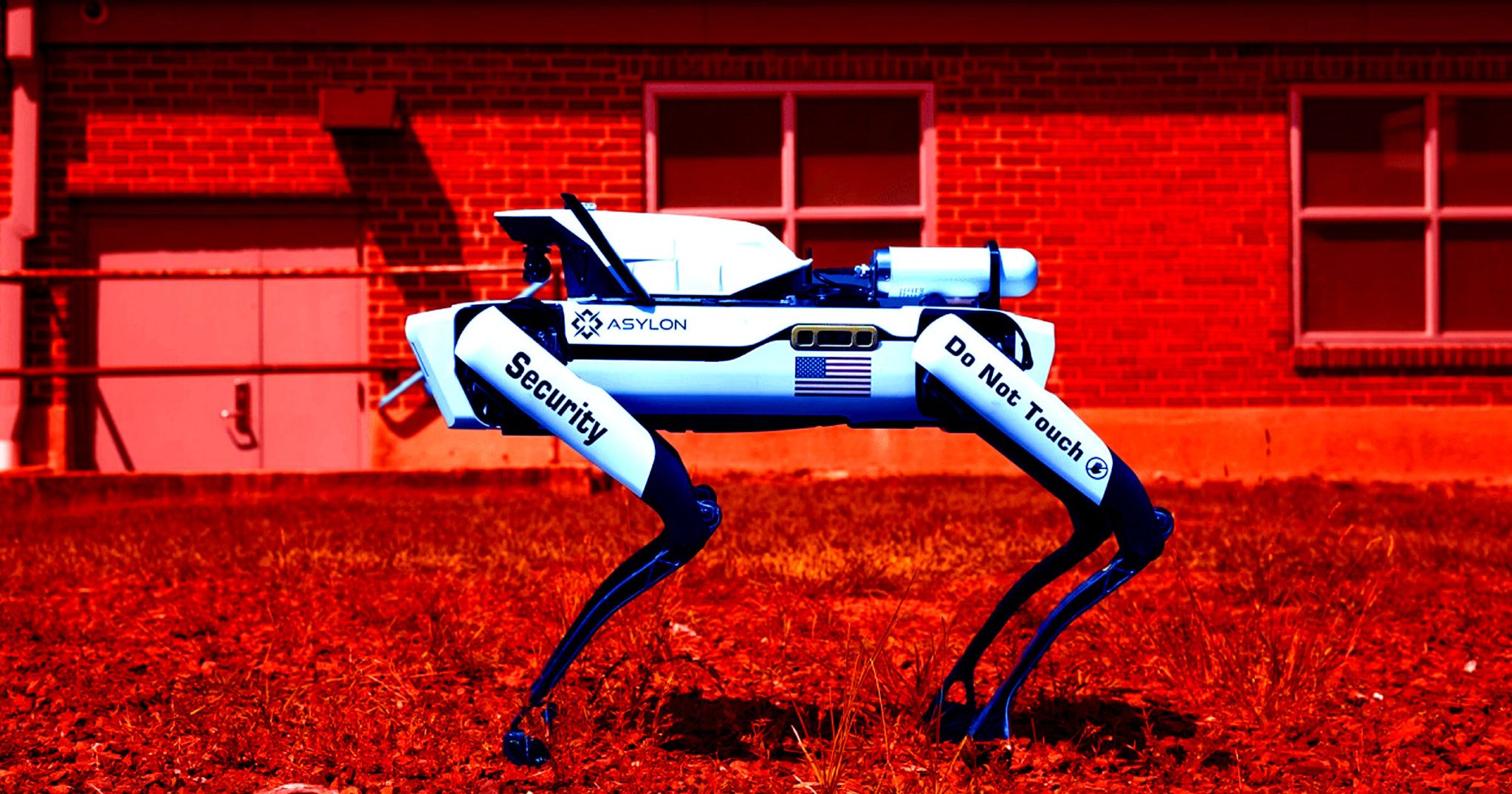
Robot Dogs Suddenly Taking Jobs From Human Security Guards

They’re agile, they’re creepy, and they may be coming for human jobs.

Robot dogs affixed with AI-integrated cameras are becoming the latest dystopian fixation of the security industry, especially in the US, where they’re being deployed to patrol data centers, safeguard cash crops, and police sports stadiums.

Though expensive, they’re gradually becoming a more attractive option over human security guards. At least, that’s according to new reporting by Business Insider, which notes that the cost to cover one 24/7 guard shift is anywhere from $80,000 to $130,000 cheaper per year when contracting robot dogs over human security officers.

That’s bad news for the nation’s security guards, an essential role providing low-barrier employment for uneducated workers. Often deployed to help property owners reduce insurance premiums, the role of security guard is an important source of income for some 1.3 million people. According to a report by the UC Berkeley Labor Center, about 60.8 percent of those roles are filled by people of color, while 27.8 percent of guards are 55 or older.

It is, however, a difficult job to make a living on, with the median annual wage of just $38,390 as of 2024. That being the case, the industry faces a high degree of turnover, which tech companies are all too happy to exploit.

“Training them and staffing them is super inconsistent, and it’s a big burden on the business,” Damon Henry, CEO of robot dog company Asylon, told BI.

So far, Henry says he has about 50 robots deployed across 25 customers nationwide. Compared to a workforce of 1.3 million humans, that might not sound like much. But if robotic production lines get more efficient and the bots themselves become cheaper to roll out, it’s hard to imagine the nation’s businesses keeping low-paid security guards on the payroll out of charity (just look at what happened with Walmart greeters.)

Still, you probably haven’t bumped into your last mall cop quite yet. As director of the UC Berkeley Labor Center’s Low-Wage Work program and co-author of the report referenced above Enrique Lopezlira told BI, the role is likely to experience pressures similar to that of other workers facing automation: security jobs won’t disappear entirely, but they will get much more demanding.

“The realistic near-term effect is not that guards are replaced,” Lopezlira said. “The human role is going to be pushed toward those hardest, higher-stakes parts of the work.”

More on robots: Startup Sued After Delivery Bot Clobbers 73-Year Old Woman

The post Robot Dogs Suddenly Taking Jobs From Human Security Guards appeared first on Futurism.

  •  

AI Data Centers Are Causing Unfathomable Amounts of Air Pollution, and It Gets Worse With Each New One They Build

The amount of pollution spilling out of fossil-fuel generators is astounding. In the United States, this explosion of emissions is led by states like Texas, which on a global scale is comparable only to China in terms of new infrastructure powered by dead dinosaurs.

And as more data centers crop up throughout the US, that problem — of rising emissions linked to the accelerating demand for any kind of electricity — is only going to get worse.

According to reporting by the New York Times, the US currently has at least 82 data center-linked gas generators either in development or in the proposal stage. These are massive facilities which rival public electrical generators in size and power, only they’re not managed by the government, and the power they generate isn’t meant for citizens.

Instead, these are private generators, developed by big tech companies like Mark Zuckerberg’s Meta or Elon Musk’s xAI. The electricity they’ll supply is intended only for data centers, which grow ever-hungrier for power as new iterations of AI chips and energy-hungry large language models enter into production.

Assuming all 82 of those plants come online as planned, the NYT notes they could spew enough emissions in one year to rival the output of half the passenger cars in the US.

That’s an astonishing amount of pollution, made possible thanks to industry-friendly state regulators in places like Texas and Ohio, where permits for behemoth fossil fuel fired generators are approved in as little as 18 days, often without public disclosure.

It’s possible that moratoriums on new data centers might slow the burn, but unless states begin the unlikely task of banning new gas generators for existing facilities, we can expect US fossil fuel emissions to continue to rise precipitously in the years to come.

More on data centers: The Number of Regular People Being Arrested for Protesting Data Centers Is Astounding

The post AI Data Centers Are Causing Unfathomable Amounts of Air Pollution, and It Gets Worse With Each New One They Build appeared first on Futurism.
  •  

Texas Avoids Blackout by the Grace of Solar Power

When Texas’s privately-run electrical grid collapsed amid a battery of winter storms in February of 2021, it plunged over 4.5 million people into darkness, and contributed to hundreds of deaths due to the lack of water, food, and heat.

A similarly tragic story almost unfolded in July of this year — had in not been for the deployment of a jaw dropping amount of solar power infrastructure that kept the grid from collapsing under the strain.

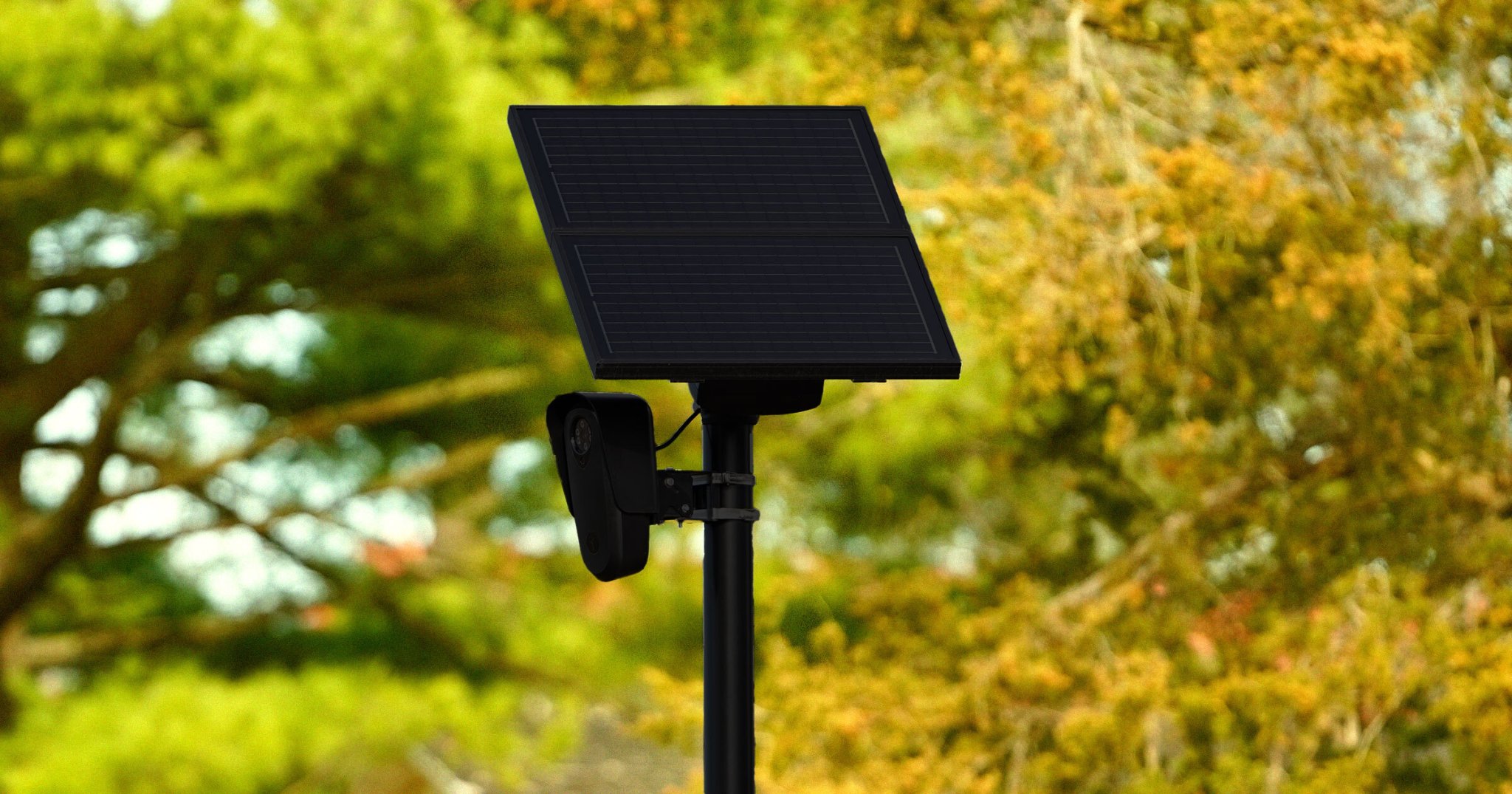
New reporting by the Texas Tribune details the state’s rapid adoption of solar energy, specifically solar panels and storage batteries. The paper notes that when the organization that manages state’s electrical grid — the Electric Reliability Council of Texas (ERCOT) — broke record energy demands on both July 21st and 22nd, it hardly registered as an event, because its solar infrastructure ensured there was a 20,000 megawatt buffer padding the grid’s capacity.

“We hit an all time peak, and we had no issue hitting that peak,” Thomas Gleeson, chair of Texas’s Public Utility Commission, told the Tribune.

Unsurprisingly, those moments of peak demand coincided with oppressive summer temperatures, with the heat index reaching 116 degrees Fahrenheit in Dallas on July 22nd. The Tribune notes that at various points, solar power accounted for over 45 percent of the state’s total electrical generation, breaking state records both for total electricity generated by solar panels and for total electricity discharged from solar batteries.

As the power grid’s capacity grows, so too will the demand. Though ERCOT is standing strong for now, the state estimates that by 2032, statewide electric demand will be nearly double what it was on July 22nd.

To combat that reality, the utility firm says it has some 460 gigawatts of generation cued up for development, around 70 percent of which is made up of solar infrastructure.

Of course, it will also help if Texas governor Greg Abbott sticks to his recently enacted data center moratorium, which put the brakes on over 474 gigawatts worth of impending electrical stress, at least temporarily. Long-term, it’s unlikely that Texas will refuse the nearly 1,800 data center projects looking to call the state home — an unending game of chicken between the tech industry and a utility provider scrambling to keep up with growing demand.

More on Texas: Climate Scientists Shake Their Heads as First US City Running Completely Out of Water

The post Texas Avoids Blackout by the Grace of Solar Power appeared first on Futurism.

  •  

VC-Funded Startups Linked to Persistent Fraud

It turns out the venture capital industry doesn’t just merely fund junky AI startups — it also systematically breeds the conditions for fraud.

A new joint study from researchers at the UK’s Imperial College and France’s Emlyon Business School analyzed 12 companies involved in 27 court cases related to civil or criminal cases related to securities fraud. The cases totaled around $688 million in financial losses, and resulted in 73 years of cumulative prison sentences.

After analyzing the individual cases, the researchers identified a persistent pattern of “façading,” in which startup entrepreneurs hide their flailing businesses from scrutiny through an assorted mix of fraudulent behavior.

The research, first reported by TechCrunch, identified three various types of façading: surface, reinforced, and deep façading, which are “contingent on the severity of the gap that entrepreneurs face between audiences’ performance expectations and ventures’ performance reality,” the paper explains.

The first form, surface façading, happens when startup founders create fictional stories of “imminent venture success,” like the kind of AI-washing that hit its stride in 2024, embodied by companies like Builder.ai that went on to collapse like a billion-dollar houses of cards.

This escalates into “reinforced façading” when founders begin to cook up things like bank statements or customer contracts to sell the surface story, and take pains to centralize the flow of information around the startup’s performance. One example of this might be the company iLearning Engines, a $1.5 billion AI startup which was found to be faking “virtually all its customer relationships and revenues” by a Department of Justice probe earlier this year.

Deep façading, the final and most severe form, encompasses broad forms of market manipulation, like faking product demonstrations, sabotaging internal efforts at due diligence, and manipulating regulation. This last form, one could argue, is embodied by the current front-runners of the tech industry’s AI boom, which have engaged in significant political lobbying, sabotaged their own internal research on AI safety, and routinely dress up human labor to appear like autonomous AI.

Ultimately, the line between criminality and free market innovation is thin, especially where seemingly-magical and proprietary new technologies like AI are involved (a technology which currently represents a $1.6 trillion gap between investor expectations and practical reality.)

“By engaging in façading, entrepreneurs effectively decouple the venture’s externally projected appearance from its operational reality, making it appear to audiences as if no expectation-reality gap exists, despite the venture’s actual (subpar) performance,” reads the paper. “Entrepreneurs transgress from dramatized discourse into criminal deception when their stories become unhinged from reality and involve increasingly sophisticated organizing efforts to fabricate material evidence, data, and information about their ventures’ performance.”

More on startups: We Are Mildly Horrified by This AI Startup That Coerced People Into Getting Tattoos of Its Logo in Exchange for a Job Interview

The post VC-Funded Startups Linked to Persistent Fraud appeared first on Futurism.
  •  

This Menacing Police Robot Perfectly Shaped Like a Soccer Ball Definitely Won’t Be Vandalized by Angry Locals

As the amount of high-tech police gear skyrockets across North America and much of Europe, one company isn’t betting on robo-dogs or egg-shaped sentry-bots.

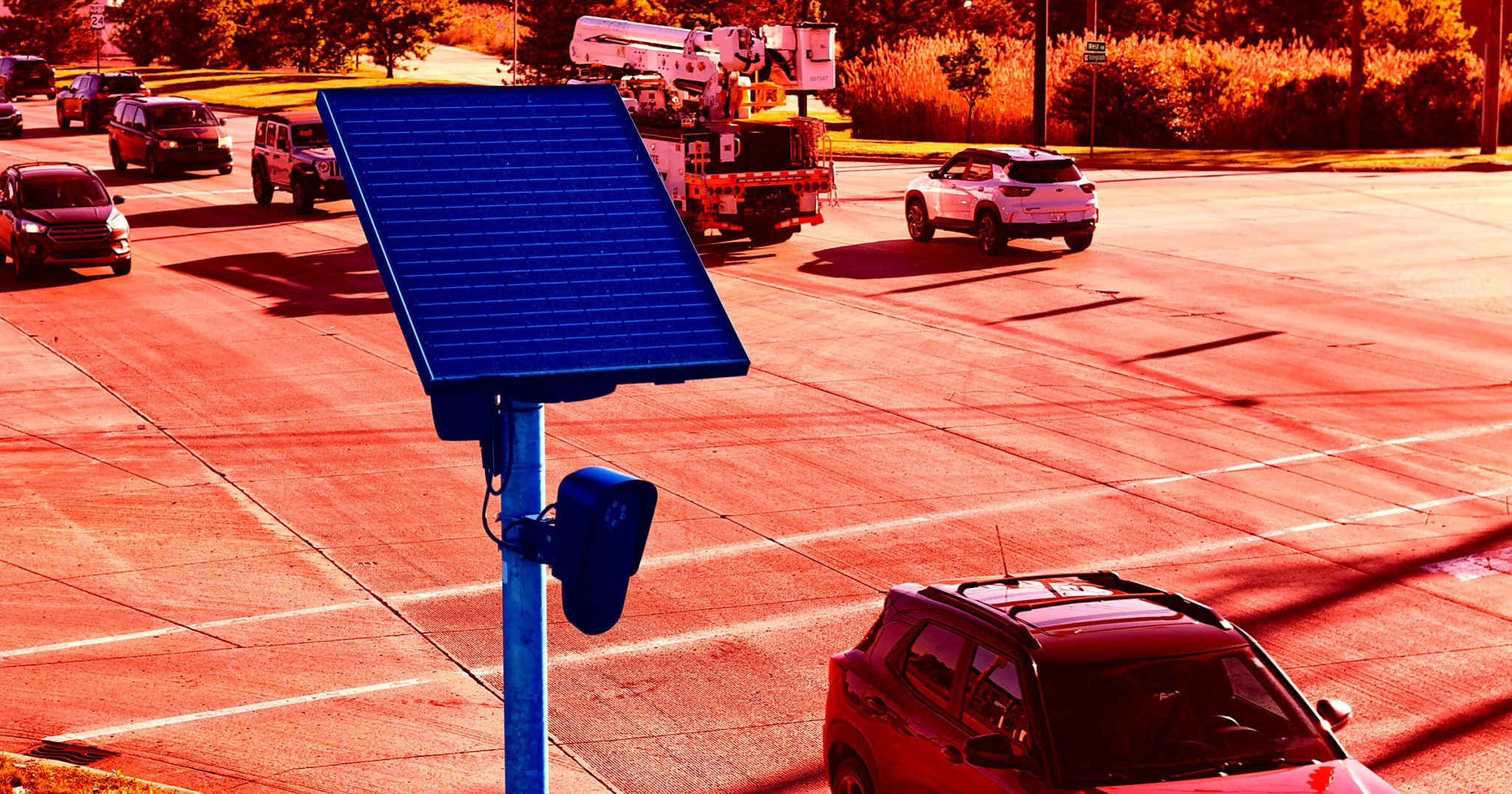
Instead, Estonian-based startup Rollo Robotics came up with a roving sentinel in the shape of a juicy rubber kickball, dubbed 1Rollo, as New Atlas reports — and we can’t shake the feeling that it’s the perfect form factor to be vandalized by angry locals who don’t want to be spied on.

With protestors across Europe and the US cutting down or disabling AI-integrated police surveillance cameras and vandalizing camera drones, it remains to be seen whether the police gadgets see live deployment on city streets — and if so, how long they last before somebody sends one to the Moon with a swift kick.

The bot sports an AI-integrated 360-degree camera antenna with a wireless transmitter, though the bulk of its body is made up of a stable mono wheel measuring two feet in diameter.

According to the company’s website, 1Rollo represents the “world’s first mono wheel robot,” boasting “gyroscope-based stabilization” and rugged weatherproofing to survive Estonia’s extreme winters. It stands about 3.5 feet in height and can supposedly wheel around at a speed of up to 19 miles per hour.

Like most companies that use “AI” as a marketing gimmick, Rollo Robotics is keen to stress the cost-savings you could achieve by replacing humans with its products.

“Human patrol is expensive, inefficient, and now replaceable,” the company’s website declares. It goes on to note that there are 28.5 million frontline security workers around the world, and that the 1Rollo could offer “labor cost reduction” of over 80 percent.

But how many kickbots does it take to do the job of a human security team? According to the company, it takesthree bots for every nine humans — one robot per 24-hour shift. (The implication here being that the 1Rollo can operate around the clock, though its eight-hour battery life might put a damper on that ambitious goal.)

Considering its perfectly round shape makes it particularly suitable for a punt — not that we would condone such behavior — we have our doubts about its long-term effectiveness as a one-wheeled surveillance machine.

More on police robots: Sheriff Unveils Humanoid Robot for Hostage Negotiation Purposes, Which Definitely Won’t End in Disaster

The post This Menacing Police Robot Perfectly Shaped Like a Soccer Ball Definitely Won’t Be Vandalized by Angry Locals appeared first on Futurism.

  •  

33 Students Treated for Deadly Bacteria Exposure When Classroom Experiment Goes Horribly Wrong

Talk about homework: a large class of undergraduates at an unnamed university in Utah became the unfortunate subject of a severe public health response after an extraordinary bungle in a science lab.

In September of last year, the group of lab students were tasked with identifying a bacterium known as P. shigelloides, a relatively harmless pathogen known to cause diarrhea when ingested. But as lab results came in, students were alarmed to find the specimens handed out in class were actually the bacteria Neisseria meningitidis, a potentially deadly pathogen that causes meningitis.

Unlike P. shigelloides, the bacterium N. meningitidis calls for high-security practices, like double gloves, disposable clothes, and fit-tested N95 masks, as the bare minimum. (In one unfortunate case from 2012, a 25-year old microbiologist whose lab was ill equipped to handle N. meningitidis died mere hours after exposure to the aerosolized microbe.)

According to People, Utah public health authorities soon raided the Utah stockroom, finding samples labeled “N. meningitidis.” That discovery prompted a recommendation that all 33 of the exposed students begin a cautionary antibiotic regimen, especially given that the lab participants were only wearing gloves and lab coats at the time of exposure.

On top of the antibiotics dose, at least two people sought medical attention due to possible exposure symptoms, which included a painful and invasive spinal tap.

It was only after the frenzy that further professional lab tests identified the offending pathogen as Neisseria sicca, a bacterium “commonly found in the upper respiratory tract” that is “nonpathogenic in immunocompetent persons,” according to a recently-filed Center for Disease Control study of the Utah lab incident.

Student misidentification notwithstanding, the event underscores the importance of accurately labeling microbial cultures — lest aspiring biologists become victims of their own studies.

More on pathogens: Meta’s AI Data Center Caught Leaking Deadly Bacteria Into Water Town Uses for Irrigation

The post 33 Students Treated for Deadly Bacteria Exposure When Classroom Experiment Goes Horribly Wrong appeared first on Futurism.

  •  

Public Offers Implausible Number of Alibis for Man Accused of Destroying Flock Cameras

When police in West Virginia’s Monongalia County arrested 20-year-old Wesley Jackson for his alleged involvement in the destruction of automatic license plate readers (ALPRs) deployed by the company Flock Safety, they likely never could have imagined the outpouring of support he would receive from the online community.

In the days after Jackson’s arrest, a post by local news station WDTV gathered over 29,000 comments. As the Washington Post observed, those comments were overwhelmingly positive, with community members and strangers alike singing Jackson’s praises, and concocting a seemingly endless variety of alibis.

To take the community’s word — or words — for it, Jackson couldn’t have been the perpetrator, as he was simultaneously replacing the roof on a homeless shelter, dispensing dogs treats, canoeing, saving puppies from burning buildings, sweeping a parking lot, and rescuing cats from trees at the time the alleged offenses were committed.

“He was actually kissing the homies goodnight at the time of the incident,” one absurdist commenter protested. “Couldn’t have been him.”

Take a look at the comments under any news article or police report about ALPR vandalism, and it’s clear the phenomenon stretches far beyond Monongalia County. It seems the trend is spreading so fast that there doesn’t even necessarily need to be an arrest for John Q Public to lionize privacy minded saboteurs.

Case in point, when police in Winona, Minnesota released a statement claiming that “all eight of our city’s Flock cameras were missing,” the public quickly sprang into action, peppering the department’s page with hundreds of comments in support of the perpetrator, who remains at large. The support was so overwhelming that the department soon shut down comments under the release.

“Whoever you’re suspecting was actually on a fishing trip with me between July 29th and August 1st,” one commenter joked.

“Love seeing the comments on these police releases of flocks being cut down,” remarked another. “It restores some faith in humanity that no one wants to be tracked indefinitely in the name of ‘safety.'”

More on Flock: Flock Is Losing Dozens of Contracts as Controversy Grows

The post Public Offers Implausible Number of Alibis for Man Accused of Destroying Flock Cameras appeared first on Futurism.

  •  

Google Data Center Announces Plans to Pave Over Protected Wetlands

Residents of Fort Wayne, Indiana may have to say goodbye to over four acres of federally protected wetland — at least if Google has its way.

New reporting by local publication WANE revealed that a company called Hatchworks LLC, a data center developer for the tech giant, is looking to fill in several acres of federal wetlands as part of the third phase of “Project Zodiac,” a $2 billion hyperscale data center project.

As WANE reports, Hatchworks submitted an application to purchase 4.26 acres of forested wetland outside of Fort Wayne. Of that, about 2.13 acres of the land may soon be paved over to build three new buildings, as well as a labyrinth of waste water pipes and electrical infrastructure.

Granted, four acres isn’t the largest footprint in the world — that’s roughly the size of your average Walmart supercenter — but if the application proceeds, it would nonetheless see a private company hoovering up protected land for the sake of wealth accumulation.

And if state authorities decide to go ahead with the data center campus, it would be permanently carving up a slice of Indiana’s all-important floodplains. These wetlands serve many valuable functions, not just as home for diverse plant and animal life, but also as a natural basin for rainwater, protecting nearby communities from flooding and soil erosion.

Much of the incoming data center campus would occupy a parcel of pre-paved farmland, likely geoengineered from its original wetland long ago. Rather than color within those lines, Google’s Hatchworks would rather stick to its original design plans, explaining in its filing with the Indiana Department of Environmental Management that it’s simply impossible to avoid shellacking the marshland.

“It was determined that meeting the project purpose and completely avoiding water resources was not feasible,” the filing reads. “Priority was placed upon avoiding as much of the large woodlots… as possible. Given these constraints, and the required layout and dimensions of the data center buildings, it is not possible to accommodate the development without impacts to the woodlot containing [the wetlands].”

“Environmental stewardship is central to our data center design. Our engineers have intentionally designed the layout of our Fort Wayne campus to avoid more than 75 percent of regulated wetlands — preserving over 32 acres of the highest-quality forested land on the property,” a Google spokesperson said after this story was first published. “To address minimal impacts across approximately nine acres, we’re providing over 18 acres of mitigation credits for a 2-to-1 net gain in conserved and restored wetlands in Allen County and across Indiana.”

The proposal will soon go to a virtual public hearing before it’s approved, though developers already have an anticipated start date of September 14. Given that previous phases of the Google campus are already completed, it’s hard to imagine Indiana officials will prevent the bulldozers from rolling in — though with enough public backlash, anything is possible.

More on data centers: Meta’s AI Data Center Caught Leaking Deadly Bacteria Into Water Town Uses for Irrigation

The post Google Data Center Announces Plans to Pave Over Protected Wetlands appeared first on Futurism.

  •  

Flock Is Losing Dozens Of Contracts As Citizens Push Back

The public hates surveillance cameras and, in particular, Flock cameras. The FBI says they don’t work to solve or prevent crime. Local police love them as a shiny new toy, but police don’t run the cities and they are taking the heat for it. City councils, pushed by citizens, are fighting back to stop Flock and other companies as well. Courtenay Turner and I wrote the Digital Bill of Rights for you to take to all local elected and appointed officials, to show them the right way to protect your rights! ⁃ Patrick Wood, Editor.

“Flock on the Pole” song


Mass surveillance technology might be popular with police departments, but for the US public, it’s becoming an increasingly difficult sell.

At least 54 cities across the US have voted to cancel, non-renew, or reject Flock’s automatic license plate reader (ALPRs) since the start of the year, according to data collected by the Washington Examiner. That comes after reporting in February that some 30 cities had done the same since 2025, indicative of the rising backlash against the tech.

In all, the Examiner reports cities in 23 states have shredded their Flock contracts so far this year, led by California and Wisconsin, which each have seven rejections, cancellations, or deactivations. Other heavy hitters include New York, Washington, and Massachusetts with four each, and Virginia with three.

Though Flock has its cameras in over 5,000 US cities as of July 2026, the rise in rejections at the municipal level comes amidst a tidal wave of outrage around issues of privacy and civil rights.

In cities where civic leaders have been slow to respond to these anxieties, citizens have moved quickly to take matters into their own hands by damaging, obscuring, or stealing the surveillance cameras in order to stop them from recording footage. A rise in official cancelations or rejections shows municipal leaders are catching on to the reality that the American populace broadly disproves of the technology, and they aren’t afraid to show it.

Arguably the highest-profile contract cancellation for Flock came when the Los Angeles Police Department decided to non-renew its years-long contract with the company, a decision motivated by a searing internal audit of the company’s technology. The internal report found that, in just two months, Flock’s ALPRs contributed to 161 false stolen-vehicle alerts, resulting in a false-positive rate of 32.3 percent.

With no sign of the outrage settling anytime soon, it’s likely these 54 cities could just be the start.

Read full story here…

  •  

Man Sues Bank for Being Stupid Enough to Give Him a Mortgage Even When Experts Were Warning Him It Was About to Fall Into the Ocean

A Massachusetts man is feeling some buyer’s remorse after securing a $5.5 million mortgage on a mansion poised to fall into the Cape Cod Bay.

The man, John Bonomi Jr, first made headlines five years ago when he purchased the sprawling 5,817-square-foot estate against warnings from area conservationists, who advised that the beach was eroding at a rate of six feet per year as rising sea levels take their toll.

Bonomi’s house, meanwhile, sat just 12 to 14 feet away from the rapidly-disappearing escarpment — and that was 2021.

Fast forward half a decade, and the situation — not to mention the mansion’s foundation — has only deteriorated as the continual lashing of ocean waves takes its toll. According to the Boston Globe, Bonomi is now trying to recoup his costs by filing suit against JP Morgan Chase, the bank that originally serviced his ill-fated mortgage.

As for his legal strategy, the property owner is essentially pleading insanity, saying that he was “acting under an uncontrollable manic psychosis at the time” he agreed to the terms of the mortgage. It’s a fascinating argument, especially because Bonomi has been diagnosed with bipolar disorder.

“No rational person… would have considered purchasing the Property, and certainly not at the full asking price,” the suit argues. “It is a recognized diagnostic fact that a symptom of bipolar disorder is irrational risk-taking and impulsive behavior, including reckless spending.”

While Bonomi may have a point — it’s astonishing that JP Morgan Chase gave him the green light, mental health episode or not — it remains to be seen whether the courts agree.

According to the Globe, the bank originally lobbied to get the case dismissed. It answered Bonomi’s filings in May, however, saying that, “to the extent a response is required, Chase denies the allegations contained therein and leaves Plaintiff to his proofs.”

More on housing: Family Horrified When They’re Forced to Sell Their Beloved Home to Make Way for AI Data Centers

The post Man Sues Bank for Being Stupid Enough to Give Him a Mortgage Even When Experts Were Warning Him It Was About to Fall Into the Ocean appeared first on Futurism.

  •  

Better Hope You Don’t Need an Ambulance in New Orleans, Because the City’s 911 Operators Are Now AI

If you thought AI customer service bots were bad, just wait until you need to convince a large language model that yes, you have been involved in a car accident, actually.

According to new reporting by the Shreveport Times, officials at the Orleans Parish Communication District — the emergency dispatch agency for the city of New Orleans — are now integrating AI answering agents into its workflow.

The new tool is called AI Emergency Call Triage, offered by a company called Carbyne. Its function is essentially to triage incoming calls to dispatchers, bumping high-priority emergency calls to humans, and automatically handling repeat calls related to ongoing incidents, the Times explains.

Starting in April, New Orleans experimented with implementing the AI for 311 calls, a phone line meant to connect callers to local government information and non-emergency services.

That the AI will now be sorting incoming emergency calls is a significant escalation for the city’s dispatch agency. New Orleans will now join other major cities including Seattle and Atlanta, which have also implemented AI into their emergency dispatch services in recent weeks.

Though officials claim the new tech will help cut through the hundreds of calls inundating human dispatchers, it nonetheless represents an added layer of friction between callers in distress and trained dispatchers who can connect them with help.

It’s also worth noting that AI voice chat remains highly flawed even when powered by frontier AI models, with plenty of opportunities for errors both in how they process information, and how they dish it out. A February study by the media software company NewsGuard found that in voice mode, AI bots like ChatGPT and Gemini produced false claims with realistic audio up to 50 percent of the time. Emergency calls to 911, needless to say, are often extremely chaotic.

Meanwhile, AI voice systems are also persistently vulnerable to outside attacks, with cybersecurity researchers successfully manipulating voice model’s behavior with an average success rate between 79 and 96 percent.

What all of that means for situations where connecting with a human dispatcher could mean the difference between life and death remains to be seen — but if other AI voice experiments are any indication, it won’t be good.

More on first responders: Emergency Responders Say They’re Now Unpaid “Roadside Assistance” for Confused Waymos

The post Better Hope You Don’t Need an Ambulance in New Orleans, Because the City’s 911 Operators Are Now AI appeared first on Futurism.

  •  

Flock Is Losing Dozens of Contracts as Controversy Grows

Mass surveillance technology might be popular with police departments, but for the US public, it’s becoming an increasingly difficult sell.

At least 54 cities across the US have voted to cancel, non-renew, or reject Flock’s automatic license plate reader (ALPRs) since the start of the year, according to data collected by the Washington Examiner. That comes after reporting in February that some 30 cities had done the same since 2025, indicative of the rising backlash against the tech.

In all, the Examiner reports cities in 23 states have shredded their Flock contracts so far this year, led by California and Wisconsin, which each have seven rejections, cancellations, or deactivations. Other heavy hitters include New York, Washington, and Massachusetts with four each, and Virginia with three.

Though Flock has its cameras in over 5,000 US cities as of July 2026, the rise in rejections at the municipal level comes amidst a tidal wave of outrage around issues of privacy and civil rights.

In cities where civic leaders have been slow to respond to these anxieties, citizens have moved quickly to take matters into their own hands by damaging, obscuring, or stealing the surveillance cameras in order to stop them from recording footage. A rise in official cancelations or rejections shows municipal leaders are catching on to the reality that the American populace broadly disproves of the technology, and they aren’t afraid to show it.

Arguably the highest-profile contract cancellation for Flock came when the Los Angeles Police Department decided to non-renew its years-long contract with the company, a decision motivated by a searing internal audit of the company’s technology. The internal report found that, in just two months, Flock’s ALPRs contributed to 161 false stolen-vehicle alerts, resulting in a false-positive rate of 32.3 percent.

With no sign of the outrage settling anytime soon, it’s likely these 54 cities could just be the start.

More on Flock: Flock Surveillance Cameras Are Actually Horrible for Fighting Crime, FBI Data Shows

The post Flock Is Losing Dozens of Contracts as Controversy Grows appeared first on Futurism.

  •  

Police Department Not Happy When Every Single One of Its Flock Cameras Gets Stolen

Whether magicians, thieves, or just fed up citizens, somebody has made an entire city’s worth of ALPRs vanish in the night.

According to new reporting by MPR News, police in the city of Winona, Minnesota are incensed after their entire fleet of Flock license plate readers went missing.

In a press release shared on Facebook, the Winona Police Department groused that “all eight of our city’s Flock cameras were missing.”

The police department’s first clue came on the night of August 1st, when an eagle-eyed officer “noted that there’d been no recent activity on the cameras.”

“Officers subsequently checked the various locations where the Flock cameras were placed and found that the poles were cut down near the base,” the presser explains. “Officers located the poles nearby in the weeds, but the cameras had been removed. As of [August 4th], the cameras have not been located.”

Overall, the police department noted that the cost to replace each ALPR and pole is about $3,000, meaning the city could be out roughly $24,000 if it chooses to replace the eight cameras and the poles they used to be attached to. That doesn’t include service fees from the company, however, which could add as much as $16,000 to the bill before all is said and done.

Though this case is pretty extreme, it’s just the latest incident of vandalism involving ALPRs in Minnesota — and indeed, the rest of the country.

The company and its surveillance devices have become a lightning rod for anxieties around surveillance in the US, embodying concerns about privacy, tech industry oversight, and police abuse of power all in one public gadget.

Case in point, comments under the Winona Police Department’s press release were overwhelmingly positive, celebrating the act of vandalism and making a local folk hero of whoever’s responsible.

“Whoever you’re suspecting was actually on a fishing trip with me between July 29th and August 1st,” one poster quipped. Another blamed natural forces: “I think the deer might’ve ate them. [They’re] outta hand lately.”

More on Flock: Google’s AI Is Telling Users That Flock Cameras Are Filled With Valuable Gold and Copper

The post Police Department Not Happy When Every Single One of Its Flock Cameras Gets Stolen appeared first on Futurism.

  •  

The Number Of Regular People Being Arrested For Protesting Data Centers Is Astounding

This isn’t just about violations of Free Speech; it is about the complete trashing of the First Amendment and the right of citizens to protest and express their dissent.  Overzealous police plus cowardly city councils point out just how far we have been sucked down the rabbit hole. President Trump campaigned on restoring Free Speech, but his Administration has done just the opposite ever since. ⁃ Patrick Wood, Editor.

It takes a lot to get your typical white-bread American riled up enough that they’re willing to go to jail. Getting arrested is a massive pain, bringing court dates, fines, and a record that can shadow your job and housing prospects for the rest of your life.

For most folks, just the threat of jail time is enough to keep them on their best behavior. Yet in 2026, data centers have become one of the rare issues pushing more and more of Americans to risk it anyway.

So far in the US, Futurism has counted at least 37 arrests stemming from protests related to data centers this year. There were an additional 12 cases where police intervened to prevent protestors or speakers from confronting civic leaders, though in reality that number is likely much higher, as these cases aren’t as likely to make the news.

Unlike in other moments of political unrest in recent memory, it’s hard to pigeonhole these anti-data center activists demographically. They range from landowning farmers to physics teachers, zoomers to boomers, rural townspeople to suburban parents.

Despite their differences, the arrestees all have one thing in common: they each felt the actions of democratically elected officials are failing to reflect the wishes of their constituents, instead deferring to massive tech corporations.

Take the case of 42-year old Pablo Payan, a maintenance manager from Indiana. During a public meeting in May held to discuss plans to erect a massive Amazon data center in the city of Hobart, Payan refused to identify himself for the record before speaking, resulting in an attempted removal by police.

As officers were escorting him out, Payan says he asked why he was being removed, which prompted officers to place him under arrest for criminal trespass and disorderly conduct.

“In my opinion, I was kicked out to prove a point that the law is on their side and if people continue to try and express themselves and speak, they will also be intimidated or arrested by law enforcement,” Payan told Fox32 after the fact. “So I think it was a flex of power.”

Far from the “anti-tech extremism” that law enforcement agencies and the Trump administration have warned about, these demonstrations are overwhelmingly peaceful, escalating into physical confrontations only when police lay hands on a person to remove them. Many of the charges come when anti-data center activists break petty clerical rules, like going slightly over the allotted time for a public comment.

Lux Claridge, a physics teacher from Emporia, Kansas, is an exemplar of the absurd ways civic leaders can weaponize police to stifle dissent. At a public meeting earlier this month, Claridge was arrested after clapping in support of another community member speaking out against a proposed 1,000 acre data center campus — running afoul of a commissioner’s rule against “snapping” and “clapping.”

“I am fully of the notion that clapping is a First Amendment right that I have,” Claridge said in an interview with 404 Media after the fact. “I can exercise that as long as I’m not disrupting, and I still argue that I was not disrupting at all.”

“I have a right to clap,” Claridge continued, “and if you want me out, you’re going to have to drag me out.”

Read full story here…

  •  

Google’s AI Is Telling Users That Flock Cameras Are Filled With Valuable Gold and Copper

Google’s notorious AI Overview just handed would-be Flock vandals a perfect excuse to carve into the company’s controversial AI-integrated license plate readers (ALPRs).

ALRPs are wildly unpopular, especially online, where privacy-minded communities trade memes and videos cheering on destruction of the surveillance equipment. One of the more popular bits in this space centers on the idea that Flock’s ALPR’s are supposedly packed with valuable metals like gold, copper, and zinc — so, the tongue-in-cheek riffing goes, why not crack one open and cash in at the nearest scrapyard?

Clever or not, the meme hinges on a spurious claim. ALPRs do contain trace amounts of gold and other metals, just not enough to be worth the trouble. Unless you’re well versed in breaking down circuit boards, you’d be hard pressed to earn enough to buy a Big Mac, let alone recoup your labor costs.

Google, itself an exemplar of AI-enabled surveillance, apparently missed the joke.

Search “how much gold does a Flock camera have” and Google’s AI Overview doesn’t even push back a little bit. Instead, it flatly asserts that a “Flock safety camera contains about 1 to 5 grams of gold used in its internal circuit boards and wiring.” (At today’s gold prices, that would mean each Flock camera contained up to $650 of gold.)

Google goes on to claim that Flock’s ALPRs hold anywhere from two to 23 pounds of copper, which would be an engineering marvel considering the whole device only weighs three pounds.

A screenshot of a Google search query for "how much gold does a flock camera have." The answer is an AI Overview, responding with hallucinated text.

Google’s AI Overview cites two sources to back up its summary, and neither holds up.

The first is an anonymous Substack post from an account called do.not.obey.do.not.comply, claiming the “rough scrap value of these metals per camera is estimated to be $150 to $500.” Google’s summary skips the fine print, however: that figure comes from “estimates based on scrap-value discussions” — vibes, in other words, as opposed to actual reporting or financial information.

The second is an AI-generated Instagram post riffing on the same meme, egging vandals on to gut the camera to access their supposedly precious innards. The account behind that post seems to belong to a weed grower, with most other posts about plant cloning, hydroponics, and fully grown cannabis flower.

There’s a real irony buried in all this AI slop: one AI-surveillance company’s search engine is quietly manufacturing an excuse to destroy another AI-surveillance company’s product. If that doesn’t sum up the current state of the AI-obsessed tech industry, nothing will.

Google didn’t respond to a request for comment.

More on Flock: Flock Employee Quits In Disgust, Saying the Company Is Silencing Protestors

The post Google’s AI Is Telling Users That Flock Cameras Are Filled With Valuable Gold and Copper appeared first on Futurism.

  •  

Global Warming Is Rapidly Accelerating, New Paper Finds

It’s a well-established fact that the Earth has been warming ever since the advent of industrialization. While climate skeptics have traditionally argued that the timing of this is merely a coincidence — that burning huge amounts of fossil fuels isn’t a significant factor contributing to long-term climate change — a new piece of research means they might have to come up with a new thesis, and fast.

The study, published in the journal Geophysical Research Letters, found that the rate of global warming is not merely chugging along at a steady clip. Instead, it’s accelerating at an astonishing rate. Scientists found that, between 2015 and 2025, the Earth warmed at rate of 0.35 degrees Celsius (0.63 degrees Fahrenheit), compared to an average of around 0.2 degrees Celsius (0.36 degrees Fahrenheit) per decade between 1970 and 2015.

Because of all the factors that impact climate data, it can be tough to say for certain whether our planet is actually warming at a faster or slower rate compared to previous eras. To cut through the clutter, the study authors looked at five global temperature datasets, controlling for non-human factors like El Niño cycles, solar patterns, and volcanic activity.

“We filter out known natural influences in the observational data, so that the ‘noise’ is reduced, making the underlying long-term warming signal more clearly visible,” study co-author and retired statistician Grant Foster explained in a press release.

Unfortunately, the acceleration came with a statistical certainty of over 98 percent — the first statistically significant evidence that the climate isn’t just getting warmer, it’s doing so at an increasingly faster clip.

In the release, the study’s other co-author Stefan Rahmstorf warned that the faster warming puts us at a major risk of blowing past the 1.5 degree Celsius limit before 2030, a threshold that experts have warned would have huge consequences for planet Earth (indeed, other studies show we may have already blown past it.)

“If the warming rate of the past 10 years continues, it would lead to a long-term exceedance of the 1.5 degree C limit of the Paris Agreement before 2030,” Rahmstorf explained. “How quickly the Earth continues to warm ultimately depends on how rapidly we reduce global CO2 emissions from fossil fuels to zero.”

More on climate change: A Staggering Number of People Are Dying Because of Record Heatwaves

The post Global Warming Is Rapidly Accelerating, New Paper Finds appeared first on Futurism.

  •  

Startup Unveils Underwater Living Chamber for Human Dwellers

Ever want to live underwater in a 35-by-8-foot tube? You may soon have your wish, if one UK-based startup has anything to say about it.

New footage from Mashable shows a wild new project developed by DEEP, an ocean engineering company founded in 2021. Its pilot habitat, called the “Vanguard,” recently went online some 56 feet underwater, off the coast of Florida’s Tennessee Reef.

Don’t expect a five-star stay however, because the Vanguard is basically a glorified camper-van. It boasts a few main modules: a living space complete with four bunks, a sofa, and a galley; a combination bathroom-slash-science-lab; a moon pool and dive-chamber; and a semi-autonomous support buoy, responsible for providing oxygen, electricity, and communications with the outside word.

Unlike other underwater habitats that are fully lifted and lowered with every changing of the guard, the Vanguard is anchored to the seabed, indicating the startup plans to keep it operational for some time to come.

As far as technology goes, underwater habitats aren’t exactly cutting-edge. Prior to the Vanguard, there was the “La Casa in fondo al mare” (House at the bottom of the sea), an Italian submersible habitat that went up in the mid-2000s, and the Aquarius Reef Base, an undersea research laboratory established in 1986 which is still operated by Florida International University. Still, as Mashable notes, the DEEP Vanguard marks a notable entry into the deep-sea housing market, representing the first privately-funded undersea habitat installed in US waters in decades.

“It’s been over 40 years since we’ve had an undersea habitat built for humans and launched,” DEEP’s director of scientific research Dawn Kernagis told NPR in an interview. “We’re really building on the shoulders of giants who’ve done this research.”

While privately-funded seafaring companies have a less than stellar track record of late, DEEP is evidently hoping it can win the confidence of researchers working in two major fields: reef restoration and human-machine collaboration.

According to the DEEP website, brave research teams with a maximum size of two can currently submit proposals to the company, the grand-prize being a five-day stay at the bottom of the ocean — after a mandatory two-week training period, of course.

In order to submit a successful application, DEEP’s literature notes that “applicants should explain why continuous residence at depth materially improves data quality, operational efficiency, monitoring cadence, intervention success, or research outcomes compared with surface-based diving.”

Whether there’s enough interest from research teams and funders to justify the enormous venture remains to be seen. But with DEEP offering scientists financial awards of up to $50,000 to carry out their work, it could be the perfect opportunity for a few fearless oceanographers.

More on oceans: Scientists Detect Huge Structure Under Ocean Fueling the Deadly Upcoming El Niño

The post Startup Unveils Underwater Living Chamber for Human Dwellers appeared first on Futurism.

  •  

Poll Finds Overwhelming Majority Disgusted by Trump’s Relationship With AI Industry, Saying He’s Using the Tech to Tear Down Democracy

Even before Donald Trump was sworn in for his second stint in the White House, he was promising to unleash “AI innovation” on an unprecedented scale.

Despite grumblings from the populist Republican sect, the billionaire-in-chief soon made good on those promises, cozying up to AI moguls like Sam Altman and promising to flip the US power grid on its head in order to feed the growing demand for AI data centers.

Now a year and a half into his second term, a growing number of Americans are clearly fed up with the president’s pandering to the tech industry. A new poll conducted by Upswing Research and Strategy in cooperation with the AI accountability group Guardrails Action surveyed Americans in New York’s 12th congressional district, a diverse tract encompassing parts of Manhattan, Brooklyn, Queens, and the Bronx.

Respondents, broadly, are very skeptical of Trump’s AI regime, with an enormous 79 percent saying their “top concern” with AI is that tech companies are “too close to Trump and helping him erode democracy.”

A further 81 percent flagged AI companies stealing data and private information as either their “top concern” or a “major concern,” while 71 percent said AI-integrated surveillance of Americans is a top or major concern.

While New York’s 12th district is one of the bluest voting blocks in the United States, Trump’s AI strategy wasn’t the only thing catching flack. Nearly half of all respondents also dogged Democrats, saying party leadership sold out to big corporations and special interests to fund their campaigns.

Sure enough, Democratic party leadership has accepted millions of dollars from AI super PACs in 2026. The tech industry spigot is evidently so lucrative that incumbent Democratic candidates have been warned by party strategists not to antagonize the tech industry, though an adversarial stance would clearly be massively popular with a huge swath of voters.

“With their absurd lobbying spending, PR budgets, and corporate super PACs, these Big AI goliaths think they can buy off our government, our elections, our leaders, and our future and nobody will notice,” Guardrails Action executive director Shaunna Thomas said in a statement.

Continuing, Thomas argued that voters “want leaders that won’t sell out to Big AI, corporate donors, or Trump’s fascist agenda. MAGA mega donors and corporate super PACs should not be getting special treatment in closed door meetings on the Hill and in the White House; and they should have no place in Democratic primaries.”

More on Trump and AI: The Logo for Donald Trump International Airport Appears to Be AI Slop

The post Poll Finds Overwhelming Majority Disgusted by Trump’s Relationship With AI Industry, Saying He’s Using the Tech to Tear Down Democracy appeared first on Futurism.

  •  
❌