❌

Reading view

US Navy selects autonomous surface ships for deep-ocean mapping under $40M program
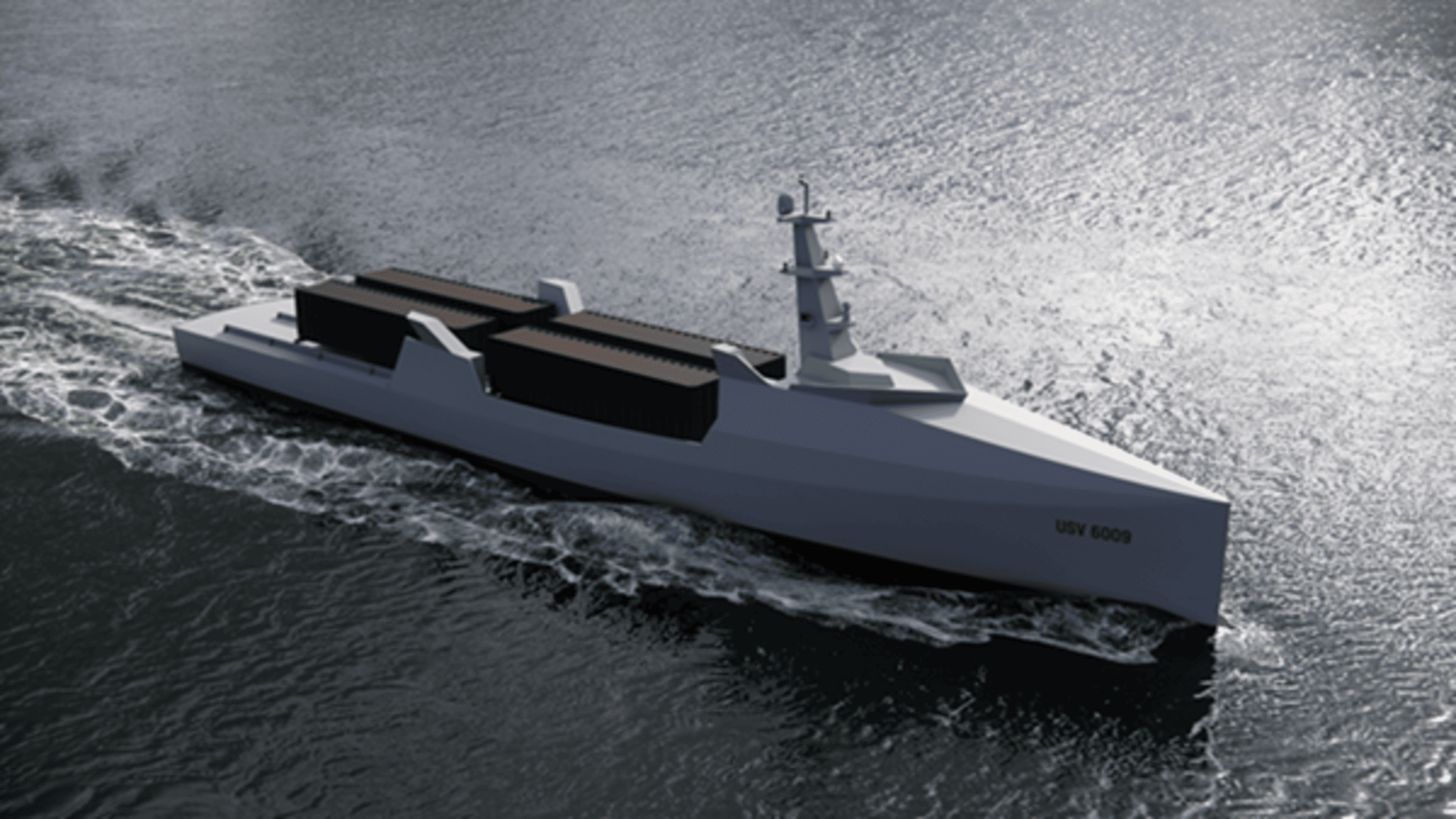
A new era of naval operations is on the horizon, as Blue Water Autonomy’s unmanned ships leverage tightly integrated hardware, software, and AI to map the ocean floor and transform maritime research.

Blue Water Autonomy is rapidly turning unmanned ships from a concept into an operational reality.

After showcasing its Liberty Class autonomous vessel to the U.S. Navy, the company announced a wave of strategic partnerships tied to the Navy’s Medium Unmanned Surface Vessel (MUSV) program, which includes $6 billion in funding to scale up production.

Currently under construction at Conrad Shipyard, these vessels merge traditional shipbuilding expertise with AI-enabled production systems.

“Traditional shipbuilding doesn’t scale, and pure software approaches don’t deliver hardware,” said Rylan Hamilton, CEO of Blue Water Autonomy, on the company’s website.

“We’re doing both. Integrating proven marine systems with AI-driven manufacturing and operations to fundamentally rethink how ships are built. By distributing and parallelizing work across proven partners, we’re creating a production system that can move at the pace required for a modern maritime industrial base.”

The power of many

The company is harnessing the power of many to realize the future of shipbuilding. Its manufacturing model incorporates multiple industrial partners responsible for different parts of the impressive ship: Tulip will provide a manufacturing execution system, Caterpillar Defense will supply marine diesel engines, and Valsted will support the automation systems.

“Shipbuilding has always required extraordinary coordination, and we’re giving that coordination a software backbone,” explained Erik Mirandette, chief business officer at Tulip. “Tulip connects every step on the factory floor with real-time data and AI-native tools, so Blue Water can orchestrate production at scale, catch issues earlier, and build with the speed and reliability that modern maritime demands.”

Building on this initiative, Blue Water Autonomy is quickly expanding its reach. According to a recent news release, its unmanned, AI-powered vessel will now map the ocean floor—a mission the Navy sees as central to the future of military marine research. The Navy’s interest underscores its commitment to using the most advanced systems available for modern maritime operations.

Moving fast

On August 4, 2026, Blue Water Autonomy won a multiple-award contract with the Naval Oceanographic Office (NAVOCEANO) to provide “high-resolution mapping using long-endurance uncrewed surface vessels” across the Indian and Pacific Oceans.

The company added that deep open-ocean surveys are “among the most demanding work at sea,” and the goal extends well beyond mapping, as the Navy must navigate not only the seas, but also underwater acoustics. These conditions “shape how naval forces move and operate far from the shore.”

Traditionally, these missions relied on costly crewed vessels—often running tens of thousands of dollars a day and requiring travel far from shore. With uncrewed, AI-powered ships, NAVOCEANO and the Navy aim to reduce costs, minimize risk, and dramatically expand the scope of ocean research.

Thanks to AI, these vessels “can operate on the open ocean for months at a time.”

The multi-year NAVOCEANO contract comes with a $40 million ceiling, but Blue Water Autonomy will still have to compete for funding alongside other selected companies.

“Mapping the open ocean is exactly the kind of long, high-endurance work that autonomous vessels are built for,” said Rylan Hamilton, CEO of Blue Water Autonomy. “This selection puts our autonomy to work across the Indian and Pacific oceans, well beyond the range of a crewed survey ship, and it shows the technology we are building serves many different missions.”

As artificial intelligence and automation reshape the naval landscape, the need for large crews is diminishing—and machines may well steer the future of the world’s oceans.

💾

Months-long autonomous ocean surveys aim to enhance navigation, mapping, and underwater acoustic modeling far from shore.
  •  

US submarine warfare capabilities advance with $43 million in new contracts

Graham Corporation has secured two US defense contracts worth more than $43 million to supply equipment for the MK48 Mod 7 heavyweight torpedo and the country’s submarine fleet.

The New York-based manufacturer announced the awards on August 7.

The contracts cover alternators and regulators for the torpedo program and new MK19 Mod 2 air turbine pump assemblies for submarine spares, supporting the US Navy’s undersea warfare capabilities and fleet readiness.

Power systems for the MK48 torpedo

The first award exercises the fourth option year of an existing contract supporting the MK48 Mod 7 Heavyweight Torpedo program. It was awarded during Graham’s first quarter of fiscal 2027, which ended June 30, 2026.

Under the option, Graham will continue supplying alternators and regulators used within the torpedo system. Alternators generate electrical power, while regulators manage the resulting voltage and current to help onboard electronics operate reliably.

These components are particularly important in a heavyweight torpedo, where propulsion, guidance, sensing and control systems must function under demanding underwater conditions.

Reliable power management can support target acquisition and navigation while helping the weapon maintain performance throughout its mission.

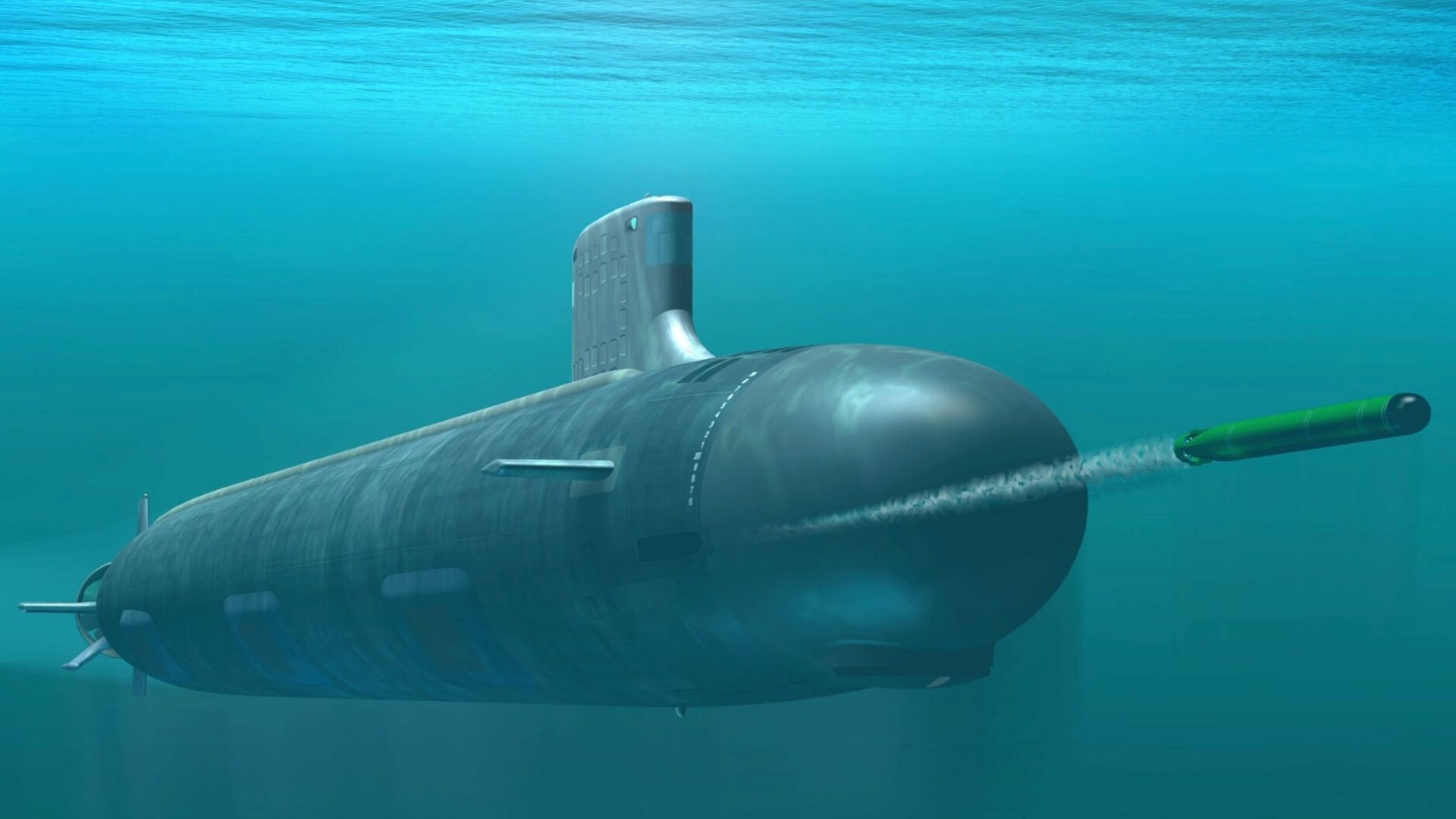
The MK48 is launched from submarines and is designed to engage hostile submarines and surface ships.

Continued component orders also indicate that the US is sustaining and upgrading an established weapon as undersea competition becomes increasingly important.

Submarine pumps to arrive from 2028

Graham received the second contract during its fiscal 2027 second quarter, which ends September 30, 2026. The company will manufacture new-build MK19 Mod 2 air turbine pump assemblies for the submarine fleet’s spare-parts inventory.

Deliveries are scheduled to begin in 2028 and continue through 2030. The extended delivery period could help the Navy maintain a dependable supply of replacement hardware for submarines already in service.

Air turbine pumps convert energy from pressurized air into mechanical pumping power.

On submarines, equipment of this kind can support essential fluid-handling functions in environments where compact construction, dependable operation and tight performance tolerances are critical.

Maintaining spare assemblies also reduces the risk of a component shortage keeping a submarine out of service for longer than necessary.

The contract therefore supports not only equipment production but also maintenance planning and operational availability.

$43 million added to defense backlog

Revenue from the MK48 Mod 7 and MK19 Mod 2 awards will be recorded in Graham’s fiscal 2027 first- and second-quarter backlog. The deals extend the company’s role as a supplier of specialized technologies for US defense platforms.

“These awards reflect the continued demand we’re seeing across our defense platforms, and demonstrate the durability of our customer relationships built over years of consistent execution,” said Matthew Malone, President and CEO of Graham Corporation.

“Our mission-critical applications remain vital in helping our customers meet high-level performance requirements. We’re proud to continue supporting the MK48 and submarine programs and look forward to building on this momentum,” he added.

Beyond defense, Graham develops fluid, power, heat-transfer, vacuum and advanced mixing technologies for the space, energy and process industries.

The latest awards reinforce how those engineering capabilities are being applied to torpedo reliability, submarine maintenance and the long-term readiness of America’s undersea fleet.

  •  

Capella, Iceye and Umbra win NRO radar-data contracts

SAN FRANCISCO – The National Reconnaissance Office has awarded contracts to Capella Space, Iceye U.S. and Umbra to expand the U.S. government’s use of commercial synthetic aperture radar (SAR). The […]

The post Capella, Iceye and Umbra win NRO radar-data contracts appeared first on SpaceNews.

  •  

It Appears That the US Military Accidentally Killed Everybody on Board a Civilian Medevac Flight in New Mexico

When the Federal Aviation Administration shut down air traffic to El Paso Airport earlier this year, nobody could have guessed than an experimental high-energy laser weapon was the cause. After days of chaos and speculation, it was revealed that Customs and Border Patrol officials had fired off a laser volley from a US Army base adjacent the El Paso Airport.

Though the trigger-happy Border Patrol grunts evidently thought they were firing at drug-smuggling drones, their real target turned out to be a kids’ party balloon. Regardless, it was later reported that the cutting-edge weapon was taken for a test-drive a week before FAA and Pentagon officials had a chance to discuss how to safely implement the laser device, making it a small miracle that nobody in the air was killed.

Not every use of an experimental aerospace weapon goes off without a hitch, however.

New bombshell reporting by Wired reveals an incident in which the testing of an experimental GPS jammer resulted in a medical plane crashing into the side of a mountain.

The horrifying incident happened in May, the publication reports, when a small twin-engine medevac aircraft carrying two pilots and two medical workers departed from Roswell, New Mexico. Heading West for the small mountain village of Ruidoso, the crew became the victim of an electronic warfare exercise being conducted at the nearby White Sands Missile Range, a test which rendered their navigational system inoperable.

Due to a combination of low visibility and an air-traffic control that was stretched far beyond capacity — at least three other planes reported navigation disruptions due to the GPS jamming — the pilots failed to register a mountainous formation between their plane and the landing strip.

As airline pilot and aviation crash analyst Juan Browne told Wired, the visual effect of that approach would have been stupefying. “When those lights go out, man, you know you are in big trouble,” Browne explained.

Unfortunately, the disoriented crew ran straight into the side of a mountain they likely never saw, resulting in the loss of every life on board. It’s the first known instance where military GPS jamming played a role in downing a civilian plane in US airspace. Reported incidents of GPS jamming within the continental US have skyrocketed in recent years. According to the Aircraft Owners and Pilots Association, the number of GPS interference events went from four in 2020 to 50 in 2024, and 40 across 2025.

After the initial publication of this piece, a spokesperson for the US Army provided a statement in response.

“The Army is aware of the release of the NTSB’s preliminary report into the crash of a civilian medical evacuation flight on May 14 in the vicinity of Ruidoso, New Mexico,” it read. “As the incident remains under investigation, we cannot comment at this time.”

Though the crew involved in the New Mexico crash was warned that GPS interference may be present, there evidently weren’t enough safeguards or air traffic control personnel in place to prevent a tragedy.

Updated with comment from the US Army.

More on military tech: The US Military Has Been Using Elon Musk’s Grok AI to Bomb Iran

The post It Appears That the US Military Accidentally Killed Everybody on Board a Civilian Medevac Flight in New Mexico appeared first on Futurism.

  •  

China’s 40,000-ton amphibious assault ship showcases battle power in live-fire tests

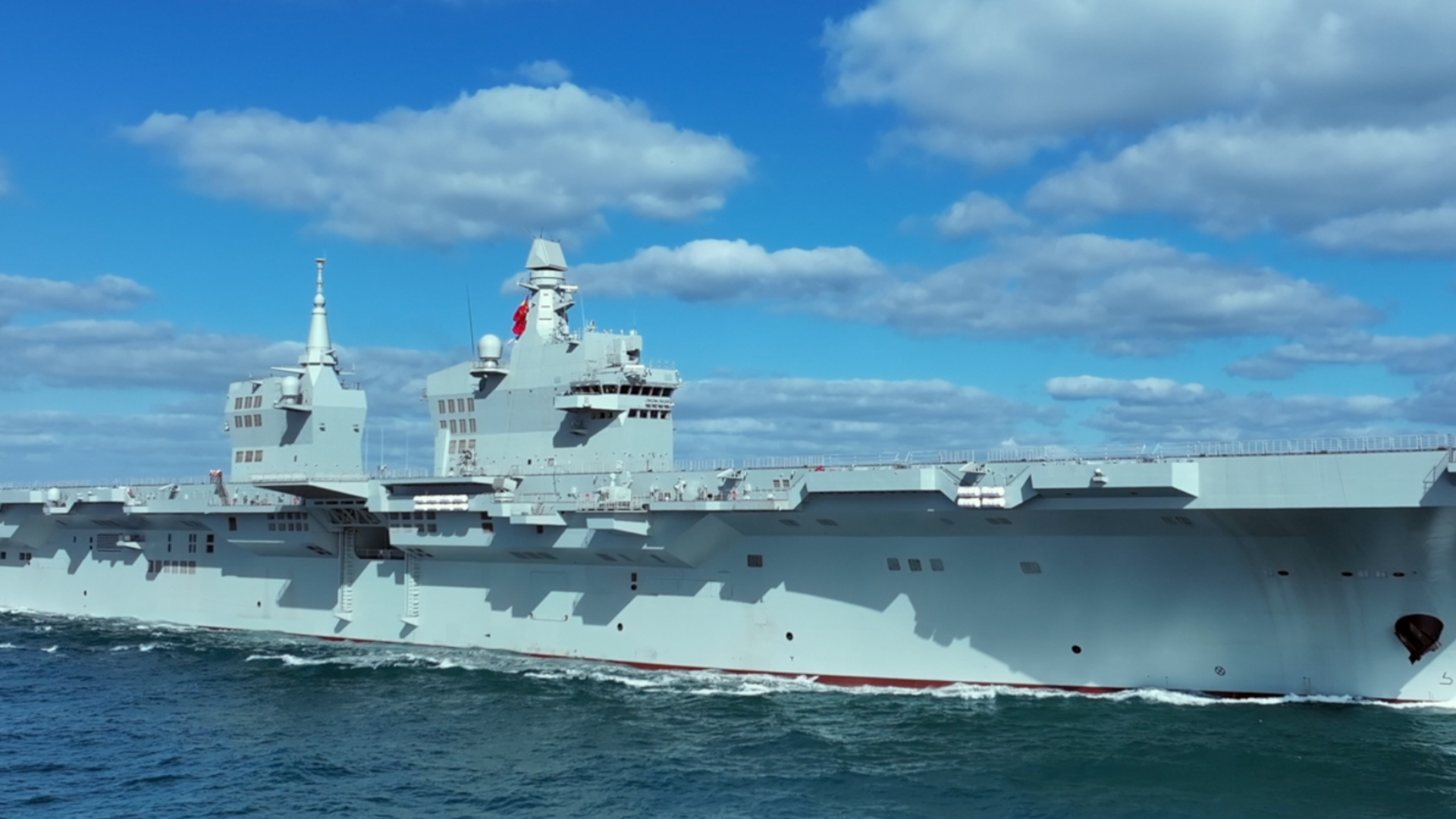
China has released new footage highlighting tests aboard its Type 076 amphibious assault ship Sichuan, including the vessel’s first publicly disclosed live-fire launch of countermeasures and an electromagnetic catapult test using a dead load.

The Sichuan features a new propulsion system and an electromagnetic catapult designed to support future unmanned operations at sea, marking a step toward expanding China’s naval aviation capabilities beyond traditional carrier-based platforms. 

Military observers noted that the dead load test represents an early-stage evaluation carried out before full aircraft launch trials, helping validate the performance and reliability of the electromagnetic launch system.

Operational readiness with electromagnetic catapult trial

The successful completion of the electromagnetic catapult test during the construction phase of the Type 076 amphibious assault ship suggests that the system has reached an operational and reliable stage, according to military observers. 

The vessel has already completed multiple sea trials, fueling expectations that it could soon enter service. Observers also anticipate the future release of footage showing the ship conducting launches of actual carrier-based aircraft, which would provide further insight into its capabilities, Global Times reported.

Chinese military affairs expert Song Zhongping said the Type 076 amphibious assault ship marks a significant technological advance, introducing new possibilities for naval operations. Speaking to the Global Times on Saturday, he noted that the vessel addresses the challenge of deploying carrier-based aircraft from amphibious assault ships while also driving innovation in future maritime operational concepts.

The Type 076 combines technologies developed for China’s Type 075 amphibious assault ship and Type 003 aircraft carrier, bringing together existing systems to create a more advanced naval platform. According to Song, the integration of these technologies improvaes the ship’s overall capabilities and demonstrates China’s progress in electromagnetic catapult systems and related technologies.

Enabling longer-range drone missions with heavier payloads

The electromagnetic catapult system aboard the Type 076 is expected to expand the range of aircraft the ship can deploy, supporting both manned fighter jets and larger unmanned aircraft. According to Song, the technology could allow drones to operate with heavier payloads and greater endurance, enabling them to carry additional equipment or weapons for longer-range missions.

Launched in December 2024, the Sichuan began its first sea trials in November 2025, according to Xinhua News Agency. The vessel has a full-load displacement of more than 40,000 tons and features a twin-island superstructure, a full-length flight deck, and newly integrated electromagnetic catapult and arrestor systems.

These technologies are designed to improve aircraft launch and recovery capabilities while expanding the operational flexibility of the ship. Furthermore, the vessel is designed as a multi-role naval platform capable of supporting a range of operations, including the deployment of fixed-wing aircraft, helicopters, and amphibious equipment. 

Chinese media note that the ship has successfully completed multiple rounds of sea trials, allowing engineers and naval crews to evaluate its systems, performance, and operational readiness ahead of its expected commissioning.

💾

China’s Type 076 amphibious assault ship Sichuan has been shown testing its defensive countermeasures and electromagnetic catapult system.
  •  

$820 million boost expands U.S. drone industrial base, cuts foreign reliance

The United States is moving to expand its domestic drone manufacturing base after Performance Drone Works (PDW) received a conditional loan commitment of up to $820 million from the Department of War’s Office of Strategic Capital (OSC). Rather than focusing solely on producing more drones, the proposed funding aims is address one of the industry’s biggest vulnerabilities: reliance on foreign-controlled supply chains for critical drone components.

If finalized, the financing would help expand U.S. production capacity for propulsion systems, power electronics, flight-control hardware, vision systems, and other key technologies used in drones, robotics, and autonomous platforms.

Building the industrial base behind military drones

Modern military drones are only as resilient as the supply chains that support them. While the United States develops some of the world’s most advanced unmanned systems, many of the electronic components and subsystems that power them continue to come from overseas suppliers.

According to the company, the proposed investment would allow PDW to manufacture many of these critical technologies domestically while also supplying components to other American drone manufacturers. The initiative reflects broader efforts to strengthen the U.S. defense industrial base as demand for unmanned systems continues to grow.

The company currently operates Drone Factory 01, a 90,000-square-foot engineering and manufacturing facility in Huntsville, Alabama, where engineering, systems integration, flight testing, manufacturing, and fulfillment are carried out under one roof.

Lessons from modern warfare

The announcement comes as drones have become one of the defining technologies of modern conflict. From intelligence gathering and precision strikes to logistics and electronic warfare, unmanned systems are now central to military operations across multiple theaters.

Recent conflicts have also exposed the importance of manufacturing capacity. Producing advanced drones at scale requires a reliable supply of motors, batteries, flight controllers, sensors, cameras, communications equipment, and propulsion systems. Many of these have historically depended on international supply chains.

By investing in domestic production of these technologies, the United States aims to reduce potential supply disruptions while improving the ability to rapidly manufacture mission-critical systems when required.

Beyond defense applications

Although the proposed financing is driven by national security priorities, the manufacturing capability could extend beyond military use. PDW said the expanded production capacity is intended to support future public safety, industrial, and commercial applications in addition to meeting defense requirements. A stronger domestic component ecosystem could also benefit the wider U.S. drone industry by providing American-made alternatives for manufacturers that currently rely on imported hardware.

The Office of Strategic Capital was established to help finance technologies considered important to long-term U.S. national security and industrial competitiveness, particularly in areas where private investment alone may not be sufficient to rapidly scale manufacturing.

Funding remains conditional

The proposed $820 million financing has not yet been finalized. According to the announcement, the commitment remains conditional and is subject to additional financial, legal, technical, and due diligence requirements before reaching financial close.

Even so, the size of the proposed investment illustrates how drone manufacturing has become a strategic priority for the United States. As militaries increasingly rely on autonomous systems across air, land, and sea, building secure domestic supply chains for the components behind those platforms is emerging as an important part of maintaining technological and industrial competitiveness.

  •  

China launches secretive TJS-27 pair, orbits next-gen Tianlian relay sat

HELSINKI — China sent a new pair of secretive satellites into a programmatically new orbit Wednesday, while also upgrading its on-orbit communications relay capabilities. A Long March 6A rocket lifted […]

The post China launches secretive TJS-27 pair, orbits next-gen Tianlian relay sat appeared first on SpaceNews.

  •  

Iran Appears to Be Blasting Amazon Data Centers Off the Map

There’s data center activism, fought with Facebook groups and petitions, and then there’s data center annihilation, fought with guided missile and suicide drones.

Recently, the Iranian military announced it had hit and damaged two Amazon data centers in the island country of Bahrain with a volley of cruise missiles.

After the attack, the Iranian state media outlet Tasnim published a partial statement from the Islamic Revolutionary Guard Corps, saying that the “IRGC Aerospace warriors… in response to the aggression and assault… by the child-killing American army on the under-construction and civilian facilities of DarKhoveyn, attacked and destroyed the central data infrastructure of the American company Amazon in Bahrain with several cruise missiles.”

Using images from the European Space Agency’s Sentinel-2 satellites, Bloomberg confirmed an attack on the data center campus had taken place, though noted it’s difficult to say how bad the damage is (Amazon refused to comment on Bloomberg‘s reporting.)

“Analysis of Sentinel-2 images shows evidence of damage to both facilities, but does not provide insight into the extent of the damage,” Adam Farrar, Bloomberg‘s senior geoeconomics analyst said.

Overall, it marks the fourth such attack on a data center since the US began the war in February. Back in March, the IRGC announced a number of US tech companies as “Iran’s new targets,” including Google, Microsoft, Palantir, IBM, Nvidia, and Oracle. Now that the war is heating back up, it seems that they’re becoming targets yet again.

Militarily, it’s a logical move, as US tech companies have been integral to the American war effort. The Pentagon is using a host of AI models to gather intelligence and select military targets for annihilation, most notably the Shajareh Tayyebeh primary school, which was destroyed in a triple-tap strike resulting in the deaths of over 120 school children, as well as parents and teachers.

Perhaps above all, it’s a statement to American president Donald Trump: the longer the hostilities linger, the more economic and technological havoc Iran is willing to unleash on the region.

More on Iran: The US Military Has Been Using Elon Musk’s Grok AI to Bomb Iran

The post Iran Appears to Be Blasting Amazon Data Centers Off the Map appeared first on Futurism.

  •  

Inside the effort to show Congress what war in space looks like

The Space Force Association’s National Spacepower Center is building an unclassified environment for demonstrating threats to satellites and their consequences on Earth

The post Inside the effort to show Congress what war in space looks like appeared first on SpaceNews.

  •  

The new space wars: lessons from Ukraine and the Middle East

In March 2021, while serving as a senior fellow at the Brookings Institution, I hosted a discussion with General Chance Saltzman, now Chief of Space Operations for the United States […]

The post The new space wars: lessons from Ukraine and the Middle East appeared first on SpaceNews.

  •  
❌