Le bois change de dimension : pourquoi l'Europe en fait un matériau stratégique


The chief executives of some of the biggest operator groups in Europe warned massive amounts of child sexual abuse material (CSAM) are still exchanged online each year and pressed authorities to give them the power to block it.
Margherita Della Valle from Vodafone Group, Christel Heydemann at Orange, Benedicte Schilbred Fasmer with Telenor Group and Allison Kirkby at BT Group want authorities to provide their companies with the legal clarity to prevent the sharing of more than 100 million CSAM files each year.
They have written an open letter to European Commission President Ursula von der Leyen, European Parliament President Roberta Metsola and European Council President Antonio Costa warning the trading of CSAM material online is “at industrial scale”.
The CEOs argue differences in legal frameworks makes it difficult for telecom and internet service providers to fully pull their weight in tackling the problem, making the removal of barriers to “blocking access to domains and URLs” linked with CSAM a matter of urgency.
The CEOs believe an organisation with the oversight to identify and tackle CSAM throughout the European Union is necessary. They also want interim measures to the same end while such a group is being set-up.
Equally, the executives believe any such authority must be strictly overseen and its focus kept squarely on CSAM.
They called for governments in the region not within the EU to join the efforts with their own legal frameworks.
“Children need protection now, not in several years’ time.”
“The scale of abuse demands decisive action, so Europe must show global leadership.”
Unacceptable
Della Valle, Heydemann, Fasmer and Kirkby pointed to Internet Watch Foundation statistics indicating 62% of “confirmed CSAM web pages” were hosted in the EU in 2024.
A cyber tipline operated by the National Centre for Missing and Exploited Children “receives tens of millions of reports” involving children mostly aged between seven-and ten-years old.
“Girls are disproportionately targeted”, the executives noted.
They branded it “simply unacceptable” for CSAM to remain accessible due to delays in removing it at the source.
The post EU operator chiefs press for urgent CSAM blocks appeared first on Mobile World Live.
The European Commission (EC) and the European Space Agency (ESA) named Spain-based Hispasat as the lead contractor for its IRIS2 European satellite network, handing it a budget of more than €1.6 billion.
Owned by Spanish defence company Indra Group, Hispasat has been charged with providing antenna infrastructure, control systems and ground network connectivity for IRIS2.
It will also lead the development of the system’s very low Earth orbit layer, operating at altitudes below 750km. This layer is designed to provide direct connectivity services to mobile devices and for IoT, providing access for European startups and SMEs.
The agreement further guarantees Hispasat access to non-geostationary orbits in regions of high strategic interest, complementing its range of capabilities and geographic coverage.
To that end, Hispasat has committed an investment of up to €600 million in exchange for obtaining “exploitation rights” in regions of high strategic interest and commercial value for the business it already operates through its geostationary fleet.
The award comes following talks between the EC, ESA and SpaceRISE, a satellite consortium formed between Eutelsat, SES and Hispasat.
Luis Mayo, CEO of Hispasat, noted the agreement helps it strengthen its position among the leaders of the European space industry and in its main business areas.
The IRIS2 programme will deploy a network of 330 new LEO satellites and 12 medium earth orbit (MEO) birds, with initial services due to begin in 2030. In total, €15.6 billion will be invested in the project, with €11.6 billion coming from public funds and €4 billion from the SpaceRISE consortium.
The post Hispasat lands lead role in EC IRIS2 project appeared first on Mobile World Live.
Telefonica detailed an operation to increase connectivity provision across more than 2,700 sites in Spain for an expected boost in network demand from viewers turning out to see a solar eclipse on 12 August.
The operator has undertaken network optimisation and capacity expansion work in locations across 31 areas of Spain covering the thousands of kilometres where the event is likely to be visible.
Tasks included actions to “parameterise the mobile network”, intelligently reconfiguring base stations and adapting them to traffic demand.
Telefonica noted preparations started five months ago and form part of wider planning to bolster coverage for events expected to be popular during the local holiday season.
In planning for the eclipse, it analysed coverage in more than 400 potential observation points identified by the country’s Autonomous Regions. It expects “extraordinary demand for connectivity from national and international observers” at the sites.
The astronomical event is expected to be visible in areas including Aragon, Asturias, the Balearic Islands, Cantabria, Castilla-La Mancha, Castilla y Leon, Catalonia, Community of Madrid, Valencian Community, Galicia, La Rioja, Navarra and the Basque Country.
The post Telefonica shines light on work to aid eclipse viewers appeared first on Mobile World Live.

Europe risks becoming dependent on foreign orbital computing infrastructure as U.S. companies and China’s government-led push accelerate the development of space-based data centers, according to the European Space Policy Institute.
The post Think tank warns Europe’s orbital compute gap is widening appeared first on SpaceNews.

Neuraspace, the Portuguese space traffic management startup, announced around $18 million in fresh funding Aug. 5 to expand European space domain awareness and defense capabilities.
The post Neuraspace raises $18 million to expand sovereign space awareness appeared first on SpaceNews.


New research led by the University of California, Berkeley reveals that beyond Neanderthals and Denisovans, humans interbred with two mysterious ‘ghost’ lineages: one in Africa more than 50,000 years ago, another in Eurasia over 1.7 million years ago.
The post Scientists Find Traces of Two Unknown Archaic Hominins in Human DNA appeared first on Sci.News: Breaking Science News.

© Meridith Kohut for The New York Times

WARSAW, Poland — The Spanish government announced it will allocate between 1.6 billion and 2 billion euros ($1.8 to $2.3 billion) to develop a national military satellite communications constellation that […]
The post Spain commits up to $2.3 billion for national military communications for IRIS² appeared first on SpaceNews.
Airbus Defence and Space won prime contractor status for the development of the next SpainSat NG bird, a secure communications satellite for mission-critical government and defence uses.
Thales Alenia Space separately detailed its selection as a co-contractor for the SpainSat NG-III project, explaining 10 Spanish companies are also on board to provide various technologies.
The contracts were awarded by Spanish satellite operator Hisdesat and the latest bird rounds out the SpainSat NG geosynchronous Earth orbit constellation, which already provides coverage of two-thirds of the planet.
Each company explained current SpainSat NG satellites play a key role in European security and defence, with the European Union, NATO and numerous allied governments employing them.
Airbus Defence and Space’s prime position means it is responsible for design, integration and testing of the satellite. It suggested the work would be an evolution of previous SpainSat NG birds, a fact Thales Alenia Space elaborated on by explaining the latest item would add “several improvements” to the existing model.
The project is to be handled at Airbus Defence and Space facilities in Spain. It explained the satellite would use X-band receivers and transmitters which “provide the capability of 16 traditional antennas” and can rejig coverage “up to 1,000-times per second while detecting and mitigating electronic interference”.
Thales Alenia Space is to provide UHF and military Ka-band payloads.
Airbus Defence and Space stated the SpainSat NG-III would be resilient to “high-altitude nuclear events and electromagnetic pulses”.
Development is expected to take 48-months and the satellite is scheduled to launch in Q3 2030 before coming online early in 2031.
Thales Alenia Space asserted the development keeps Hisdesat at the forefront of domestic and allied defence capabilities, along with delivering a boost for the Spanish space industry.
The post Hisdesat picks team for next secure satellite build appeared first on Mobile World Live.
Companies must ensure people know when they are interacting with artificially generated images, audio and text designed to look real
From apparently conspiring to steal elections to abusing staff or performing embarrassing dance moves, the last few years have seen plenty of fake content made about politicians intended to malign its targets and mislead the public.
Now EU rules aim to stem the flood of this deceptive content: starting from Sunday, artificially generated images, audio and text designed to look authentic must be labelled.
Continue reading...
© Illustration: web

© Illustration: web

© Illustration: web

A fossilized skull fragment of Homo sp. unearthed in central Spain offers paleoanthropologists a fresh window into the story of ancient humans who lived in Europe hundreds of thousands of years ago.
The post 224,000-Year-Old Homo Skull Fragment Adds New Mystery to Human Origins appeared first on Sci.News: Breaking Science News.

© Barry Fowler/Alamy
Apple’s outgoing CEO Tim Cook expressed solidarity with communities hit by the ongoing wildfires across southern Europe and confirmed the company will donate to on-the-ground relief efforts.
In a post on X late Wednesday, Cook wrote: “Our hearts go out to everyone affected by the devastating wildfires in southern Europe. Thank you to the first responders, and to everyone still in harm’s way, please stay safe. Apple will be donating to relief efforts on the ground.”
Our hearts go out to everyone affected by the devastating wildfires in southern Europe. Thank you to the first responders, and to everyone still in harm's way, please stay safe. Apple will be donating to relief efforts on the ground.
— Tim Cook (@tim_cook) July 30, 2026
The statement comes amid one of Europe’s most severe wildfire seasons in recent years. Intense heatwaves, dry vegetation, and strong winds have fueled major blazes in France, Spain, Greece, and other areas, burning hundreds of thousands of hectares, forcing hundreds of thousands of people to evacuate, and claiming lives including multiple firefighters.
In southwestern France, a large fire near Bordeaux has scorched around 42,000 hectares of pine forest, prompting the evacuation of roughly 220,000 residents and vacationers at its peak (with many later allowed to return as conditions eased somewhat). France has already recorded its highest wildfire-burned area in years, surpassing previous full-year totals with summer still underway.
Spain has faced its largest wildfire on record west of Madrid (in the Ávila region and surroundings), with total burned area across the country exceeding 200,000 hectares according to European data. Evacuations affected tens of thousands, and new outbreaks continued in provinces including Zamora, León, and Castellón.
In Greece, fires on Crete and elsewhere killed three firefighters and forced tourists and residents to flee, some by boat. Broader European Forest Fire Information System figures show far-above-average burned area and number of fires so far in 2026, driven by successive heatwaves that have left vegetation highly flammable.
Cook’s message follows Apple’s established pattern of offering financial support after major disasters without publicly disclosing exact donation amounts. Similar statements and aid have been issued after other recent crises.
MacDailyNews Note: As temperatures remain elevated and fire weather risks persist (particularly shifting eastward toward Italy and Greece in coming weeks) emergency crews continue battling the blazes while residents and responders face ongoing threats. Apple’s planned contribution aims to assist those recovery and relief operations already underway.
Please help support MacDailyNews — and enjoy subscriber-only articles, comments, chat, and more — by subscribing to our Substack: macdailynews.substack.com. Thank you!
Support MacDailyNews at no extra cost to you by using this link to shop at Amazon.
The post Apple pledges support as wildfires ravage southern Europe appeared first on MacDailyNews.

Vodafone Group completed the purchase of CK Hutchison’s 49% stake in UK joint venture VodafoneThree, less than 14 months after the formation of the operator from their respective mobile operations in the country.
In a brief statement on the completion of the £4.3 billion deal, Vodafone asserted having full ownership would allow it to “move at an even faster pace and capture the significant benefits” of its £11 billion network investment plan and “targeted synergies”.
Within the latter it aims to save £700 million across annual costs and capital expenditure by its FY30 (which runs to end-March 2030).
Vodafone CEO Margherita Della Valle added she expects the upgraded infrastructure to “deliver better connectivity for our customers up and down the country, help drive the UK’s digital economy, and deliver long-term value for our shareholders.”
The deal to buyout CK Hutchison was announced in May 2026.
Announcing completion of the sale, CK Hutchison deputy chair Canning Fok said the company was “proud of the role it has played in the history of [the] UK telecommunications industry”, pointing to the pioneering launch of 3G in the market under its 3 brand in 2003 and creation of the JV with Vodafone in 2025.
“This transaction realises our investment in VodafoneThree and returns value to the Group and our shareholders, while further strengthening our balance sheet and creating additional opportunities for the future,” Fok added.
The post Vodafone gets UK JV buyout over the line appeared first on Mobile World Live.
The European Union (EU) outlined plans to provide €10 billion in funding to build seven AI gigafactories in addition to unlocking €20 billion in private investment for the project.
In its latest push to accelerate Europe’s technological sovereignty and close the gap to the US and China, the EU stated the initiative would expand AI compute capacity and give start-ups, SMEs, industry and others access to infrastructure for training, inference and tuning of advanced frontier AI models.
It explained the gigafactories would be used to combine advanced AI processors, software and cloud technology stacks, high-speed connectivity and energy-efficient data centres.
They will add to Europe’s network of 19 AI gigafactories with the aim of ensuring the continent can develop advanced AI on its own infrastructure in line with EU rules, following standards on data protection, security and ethics.
The first step is a call for tenders, with the EU inviting consortiums or special purpose vehicles bringing companies, public entities, investors and other partners to apply.
It explained the facilities can be established in a single member state, either on one site or across several locations.
They may also include cross-border developments in several member states through distributed AI computing facilities.
Applications will undergo a competitive valuation to select successful projects. The application process closes on 12 November, with successful bidders to be announced in 2027.
Facilities will need to become operational within 18-months of contracts being signed.
Henna Virkkunen, EVP for Tech Sovereignty, Security and Democracy at the European Commission, said “access to the raw scale of computing power within AI gigafactories is a strategic necessity for Europe as AI development accelerates”.
The post EU pulls trigger on €30B AI gigafactory initiative appeared first on Mobile World Live.
With his popularity at a record low, Friedrich Merz packs the papal guide Magnifica humanitas
Summer is normally thought of as the time for pacy potboilers and brain-soothing page-turners – airport reads that wind up sandy and sunscreen-stained. Not so for Friedrich Merz’s holiday reading list.
Germany’s embattled chancellor, who has faced one rough patch after another since taking office 14 months ago, seems to be seeking spiritual guidance this year while putting his feet up.
Continue reading...
© Photograph: Ebrahim Noroozi/AP

© Photograph: Ebrahim Noroozi/AP

© Photograph: Ebrahim Noroozi/AP

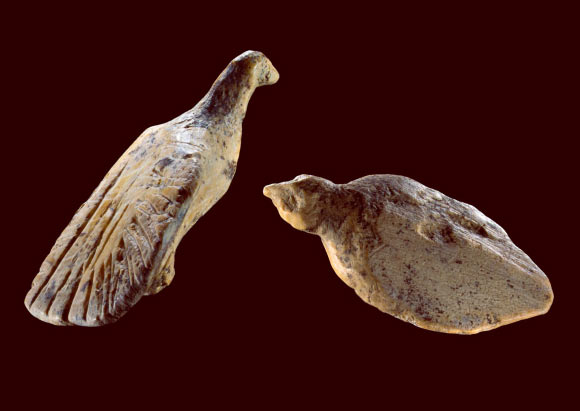
Archaeologists in southwestern Germany have unearthed two miniature bird figurines carved from mammoth ivory, among the smallest and most delicate examples of Ice Age art ever found.
The post 40,000-Year-Old Bird Figurines Found in German Cave appeared first on Sci.News: Breaking Science News.