Recently, I had the chance to attend High End Vienna, where I bore witness to an incredible array of audio gear. Whether it was new flagship loudspeakers from Bowers & Wilkins, futuristic looking headphones, or innovative portable DACs, there was a lot to get excited about. But one product really caught my attention.
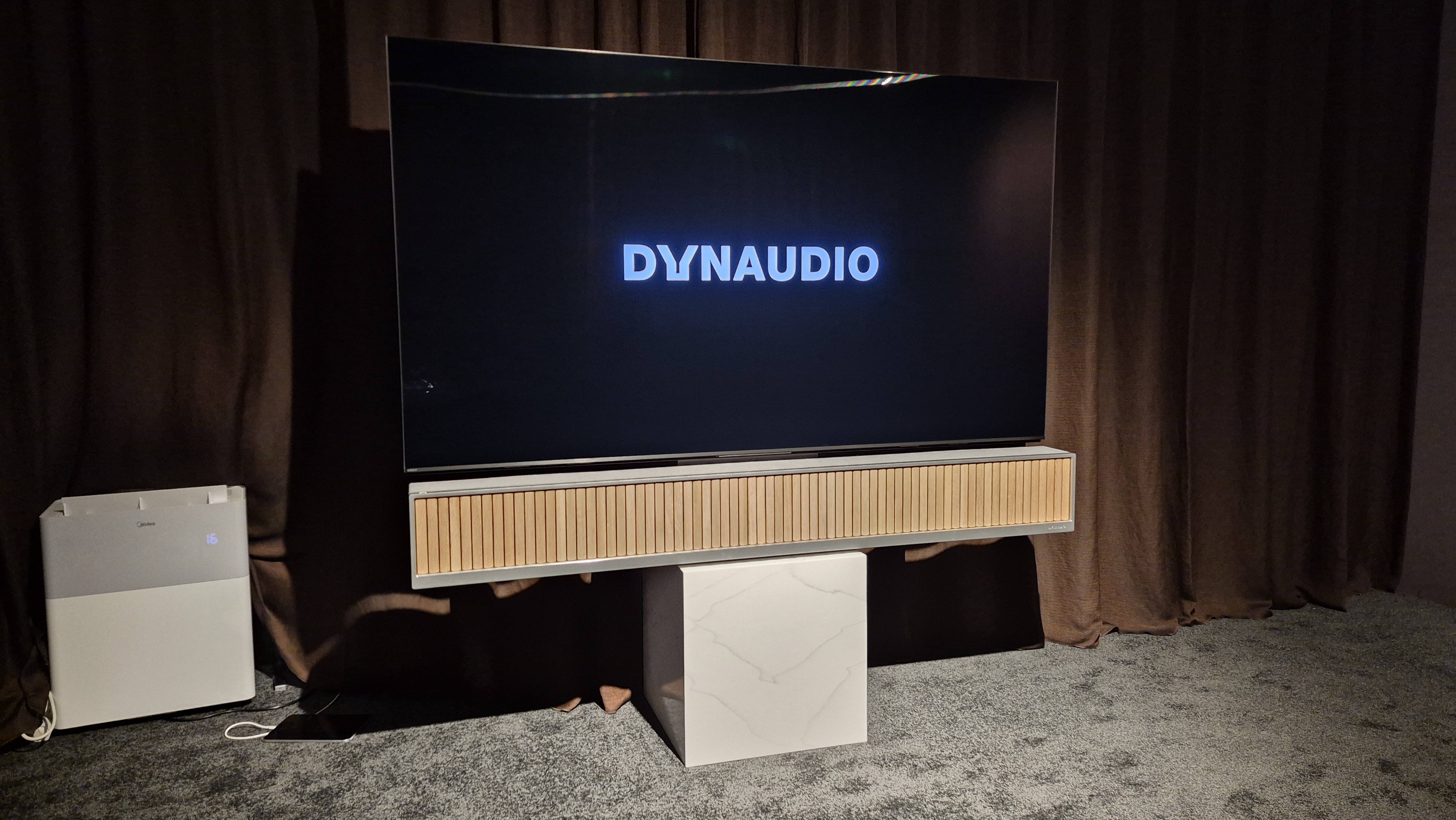
As I walked through the Austria Center Vienna, I could hear the sounds of birds singing and crickets chirping. I followed the sound through and discovered a tropical-rainforest-themed room, and within it, sat the Dynaudio Opus One — a large, premium soundbar with mechanized wooden fins. It really was unlike anything I’d seen before.
I got the chance to check out the soundbar for myself, I attended a listening demo, and I even got to speak with Dynaudio Chief Commercial Officer, Julien Bergere, about the one-of-a-kind product ahead of its launch.
Opus One: an introduction
(Image credit: Future / Harry Padoan)
So what is the Dynaudio Opus One? Bergere describes it as “a new, immersive sound product for the home” for both movies and music. It's the first product in the company’s Symphony line of products that are expected to connect together to create a home ecosystem — in a similar vein to Sonos’ multi-speaker array systems, for example.
Something that’s instantly striking about the Opus One is its grand width — it measures 73.4 inches / 1864mm across. Larger TVs have become a lot more popular in recent years, and I asked Bergere if this had influenced the decision to make the Opus One so large. “Absolutely,” he said. “More premium soundbars are usually the size of a 55-inch TV, but there is no solution if you have a bigger TV or a bigger room, and this one is bringing a new dimension in terms of, you know, bass and immersive rendering”.
Opus One specs at a glance
Price: €13,000 (about $15,000 / £11,000) Drivers: 24 precision speaker drivers (6x soft-dome tweeters, 14x mid/bass drivers, 4x dual-diaphragm force-cancelling subwoofers) Amplification: 1,500W digital amplification Weight: 99.2lbs / 45kg Dimensions: 73.4 x 9.3 x 8.1 inches / 1864 x 236 x 207mm
On the topic of immersion, I was curious as to whether the Opus One would support formats such as Dolby Atmos and DTS:X. Bergere responded: “It will support all the major audio formats including immersive audio, but we're not done yet with the certification.” In addition, the soundbar makes use of spatial sound algorithms designed in Denmark, where Dynaudio is based.
But it’s not all about immersive movie watching. “It can also be used as a stereo device,” said Bergere. “If you have stereo in, you can also play in pure stereo with only the left section and the right section activated to play in a really pure stereo rendering.” You’re able to take the center channel out of the equation entirely, he said, and I’ve personally seen quite a few premium soundbars skip on such a feature, resulting in weaker left and right channel separation. The soundbar can also upmix some stereo content into a more immersive format, but the option for a more purist stereo experience is certainly captivating.
There are a number of ways to experience the Opus One. You can connect to your TV via HDMI ARC, stream music over Wi-Fi or Bluetooth, or make use of an AUX port. There’s also an Ethernet port on the soundbar, enabling you to access more stable connectivity. The Opus one also features a massive array of drivers — 24 to be exact — with six soft-dome tweeters, 14 mid/bass drivers, and four dual-diaphragm force-cancelling subwoofers. They come with 1500W of digital amplification, enabling the Opus One to deliver roaring power.
Wooden fins made in Japan bring serious style
(Image credit: Future / Harry Padoan)
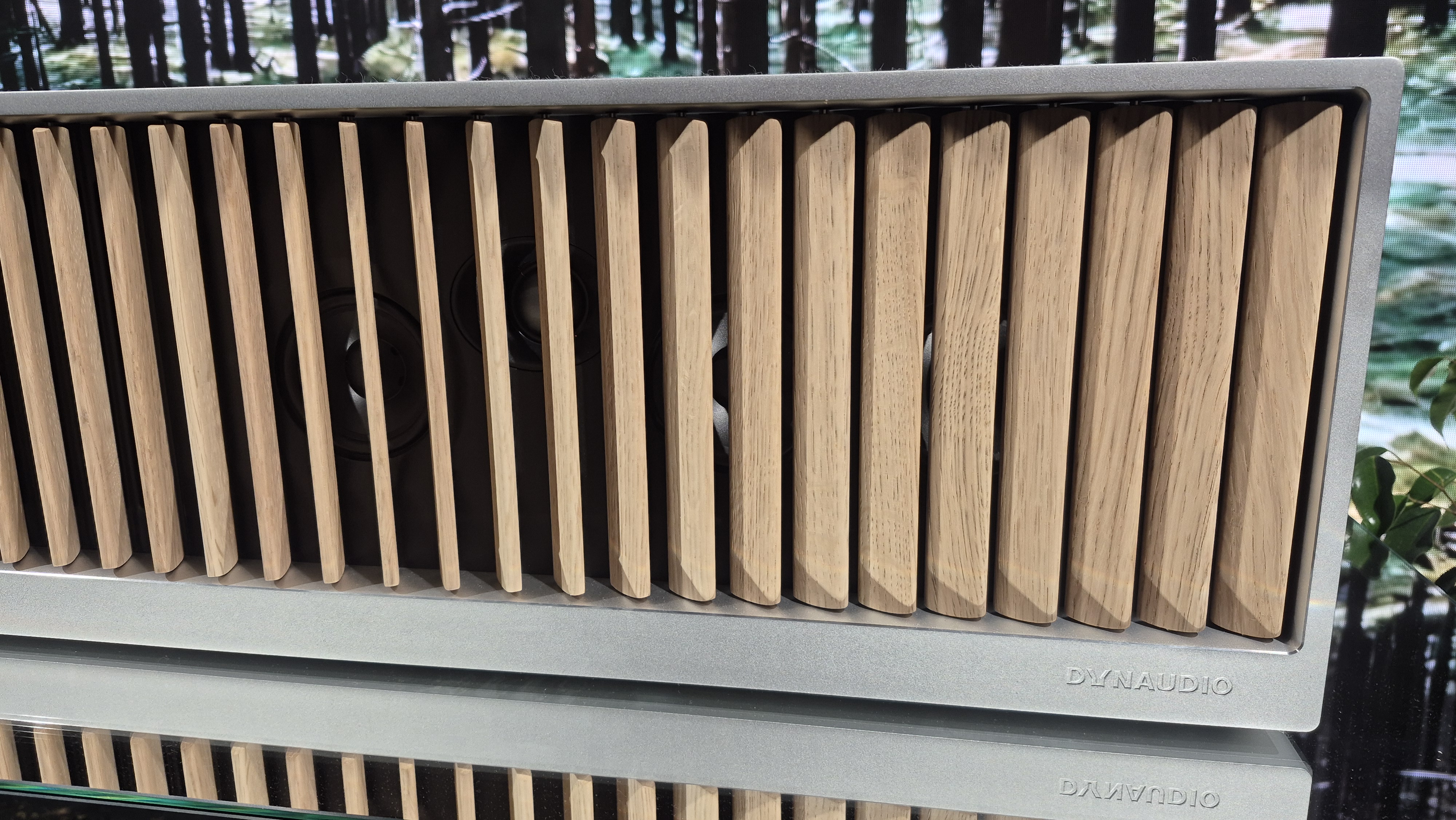
As well as its impressive connectivity, power, and size, the Opus One is a joy to look at. It only seems natural to begin with the mechanized wooden fins, which move as you watch a movie or listen to music. “We call them kinetic fins,” said Bergere.
There are 72 mechanized fins on each unit of the Opus One, all of which are handmade, and personify Dynaudio’s ambition to forge a premium audio and visual product.
“[The fins] are actually made in a white oak from Hokkaido by Karimoku,” he said, noting that Karimoku is one of the largest furniture makers in Japan. “We are trying to mix technology and lifestyle… trying to hide the technology [in] beautiful objects but also bring a touch of magic, in this case, with the fact that the fins are moving and can be used to create surprise.”
Bergere confirmed that the wooden fins have no sonic benefit, but did note one functional benefit. “When the product is off, they’re [the fins] actually sealed, so they’re hiding the speaker drivers and protecting them at the same time," he said. He also pointed to acoustically transparent fabric, used on the top and side of the Opus One, which is just as stylish as it is practical.
It's a very new concept for us, you know. Dynaudio is more known as a maker of more traditional audio systems, mostly passive stereo speakers — studio speakers as well, active ones and some wireless stereo speakers — and this one is really a new direction for us, more into lifestyle, luxury lifestyle
Julien Bergere, CCO, Dynaudio
As you’d expect, the fusion of designer-grade materials with such a premium, 24-driver model, means that the Opus One is pretty pricey. Specifically, the Opus One comes in at €13,000 (about $15,000 / £11,000) — a lot more than premium bars you’d see from the likes of Samsung, JBL, and Sonos. In addition, Bergere told me that accessories, such as stands and mounting gear, will cost between €500 and €5,000. “So together with a good quality screen, it’s around €20,000 for a complete setup with the floor stand,” he said.
Sound check: raw power and impressive imaging combine
(Image credit: Future / Harry Padoan)
With a price like this, you’re going to expect stellar sound from this soundbar to match its undoubtedly gorgeous look. And luckily, I got the chance to hear the Opus One for myself in a demo room. And yeah, it’s fair to say I was pretty impressed.
In 2025’s F1, I was astonished by the thunderous bass output that the Opus One conjured up — the roar of cars whizzing by was palpable, showing off the model’s 1,500W amplification to full effect.
Did you know TechRadar now has membership?
(Image credit: Future)
Become a TechRadar Insider by simply clicking 'Join Now' at the top of this page. Have a question? Please email membership@techradar.com
Something else that struck me was the effectiveness of spatial audio effects. Whether it was vehicles zooming across the screen or fireworks blasting into the sky, the Opus One tracked each movement with precision and care.
We listened to some music too, including a stereo mix of Eric Clapton’s Tears In Heaven, where vocals were beautifully defined, subtle strings came through with great clarity, and warm bass came through cleanly.
With Atmos music, I felt similar — vocal-led tracks were beautifully detailed, instruments were well separated, and percussion in the treble range was articulate and expressive. Individual sounds also dispersed across the listening space to create an expansive, immersive experience.
The Opus One officially launched in June, but availability is still relatively limited. To begin with, Dynaudio has opted to release the soundbar in its home market, Denmark, as well as China — though Bergere said Dynaudio plans to launch the product across “more markets in 2027”. It’s available in two different finishes: one with White Oak fins, and another with Appalachian Walnut.
Sitting at the top of Samsung’s 2026 TV lineup, the Samsung S99H is a flagship OLED TV that delivers excellent performance, particularly when it comes to picture, and a full set of features both for smart TV and for gaming. This could easily be one of 2026’s best TVs.
The S99H has a full list of features. Its NQ4 AI Gen 3 Processor comes with a stack of AI tools for picture, such as AI Motion Enhancer Pro and AI 4K Upscaling Pro, AI tools for sound such as Adaptive Sound Pro, and other AI tools for content recommendation. All of these fall under the Samsung Vision AI banner.
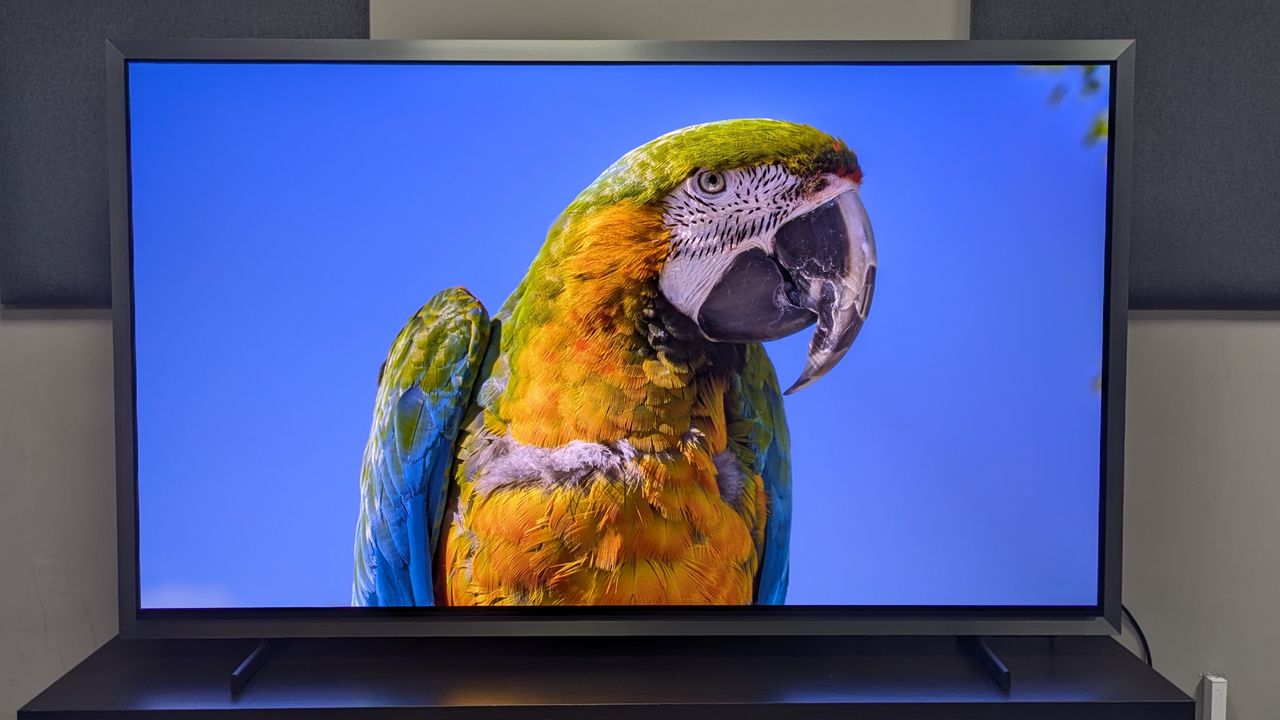
Picture quality on the S99H is superb. It delivers the highest brightness to date from a flagship OLED TV, along with vibrant, accurate colors, crisp textures and powerful contrast. Its anti-reflection screen is effective at eliminating reflections and while its Filmmaker Mode is a little dim in bright conditions, its Movie mode is a great brighter alternative.
Motion handling is mostly smooth and natural for both movies and sport, and while there are some hints of black crush in certain movies I tested, the S99H’s picture is still up there with the best OLED TVs.
The Samsung S99H delivers solid overall built-in sound. Its accuracy and precision are its strengths, with an excellent connection between the action on screen and the sound. The bass is punchy, there’s some nice impact and the soundstage can be wide. Still, this level of picture quality deserves a fuller sound, so I’d recommend one of the best soundbars or speakers.
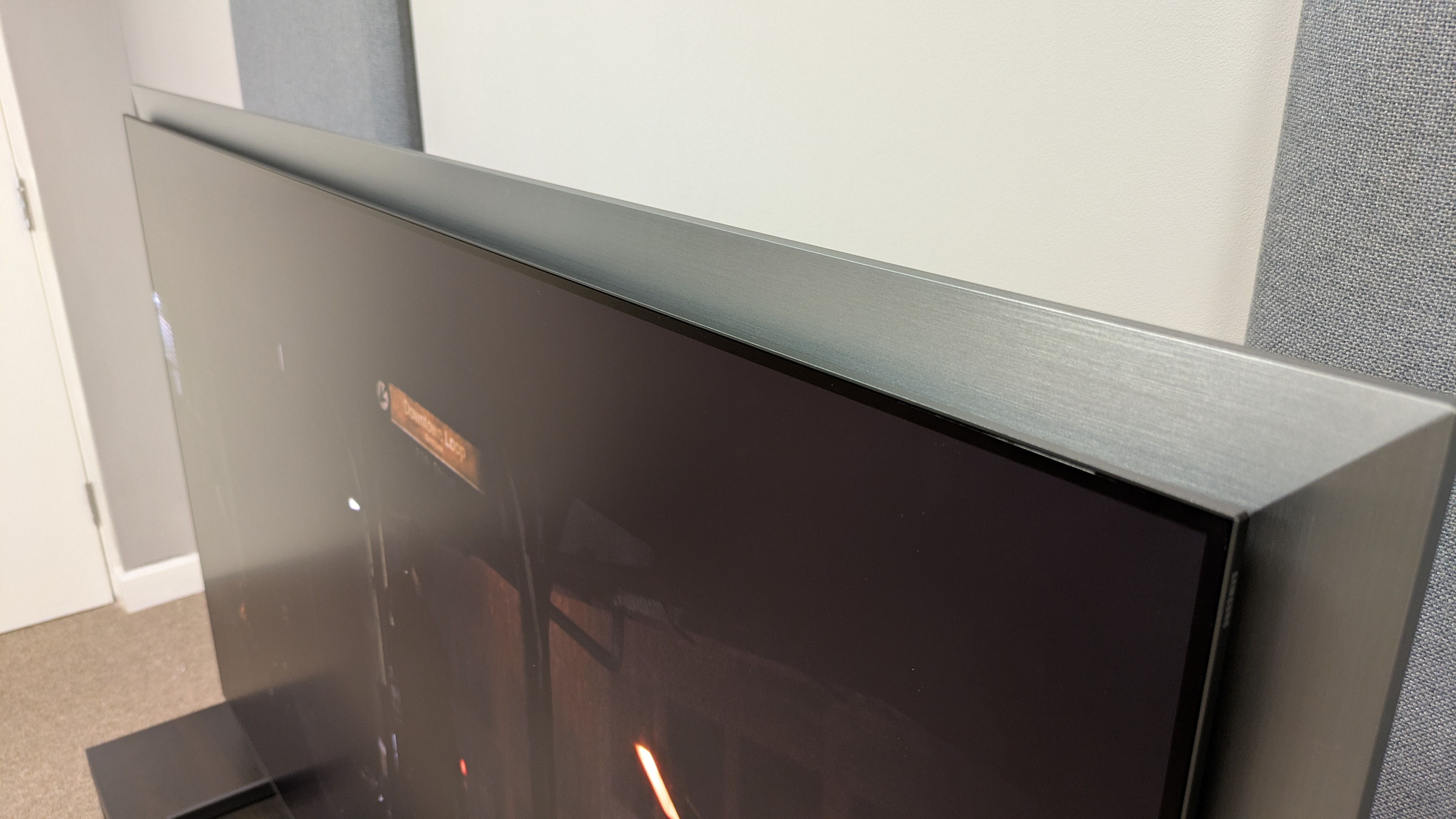
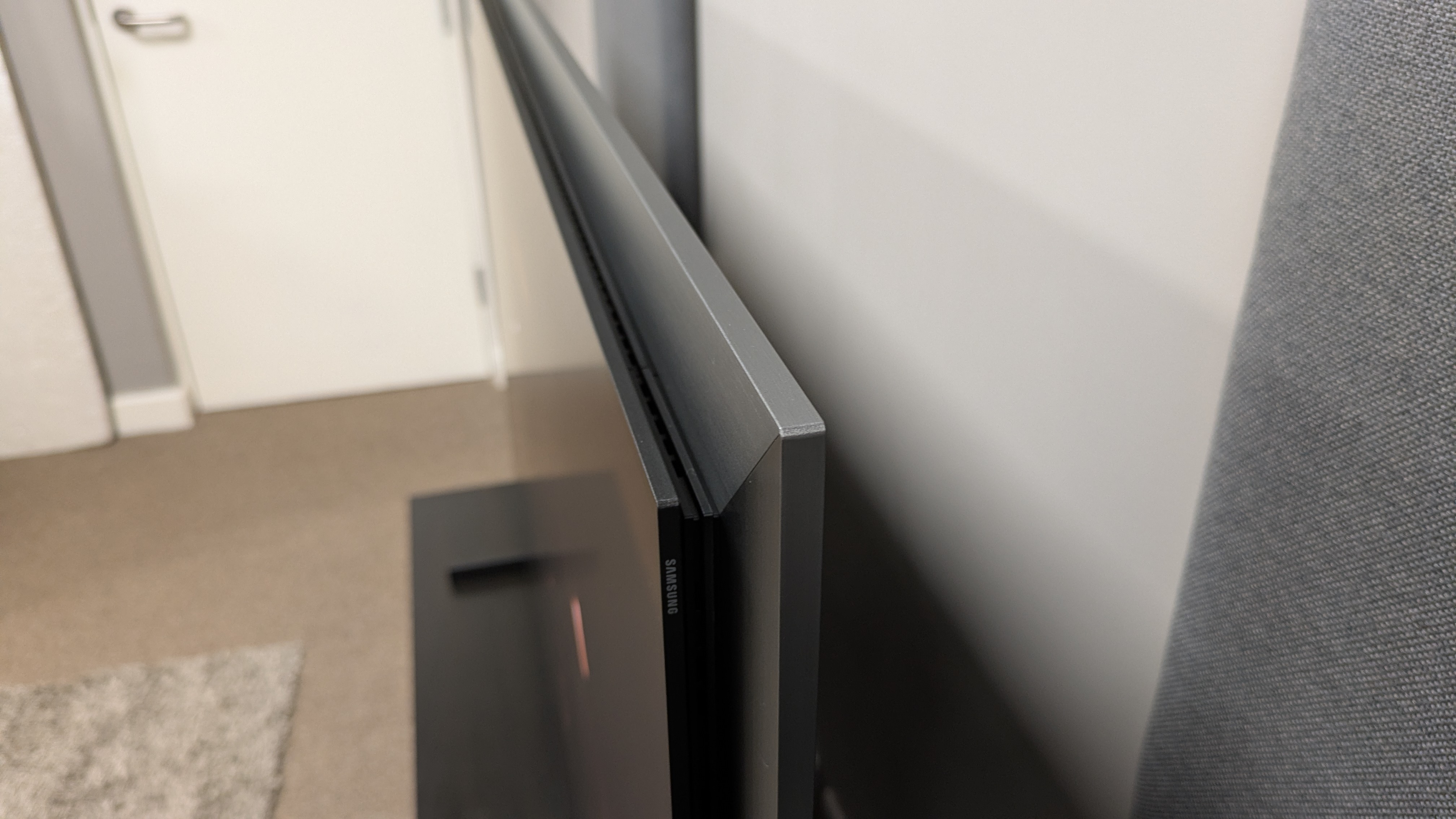
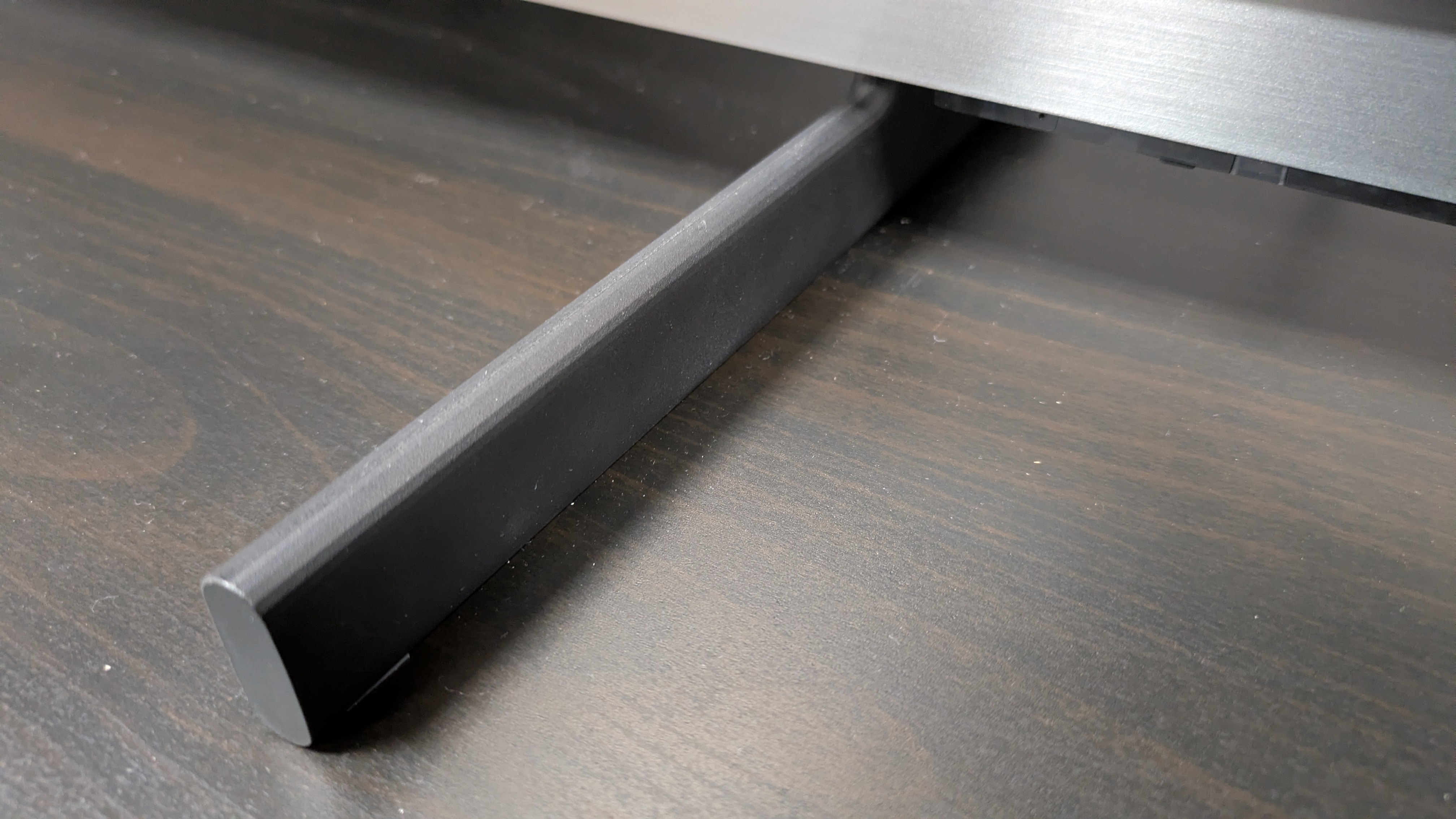
Design is arguably the S99H’s most controversial topic this year. A new silver frame around the TV, called the FloatLayer Design, has been added and I personally found the frame to be distracting. While meant for wall-mounting, the extra width may cause space issues for some people and the handsome central pedestal stand of its predecessor has been replaced by two plastic feet. The One Connect Box has been removed, with ports returning to the TV itself — but you can connect Samsung Wireless One Connect Box to add more HDMI ports.
The S99H is a phenomenal gaming TV. Carrying four HDMI 2.1 ports that support 4K 165Hz, full VRR, HDR10+ gaming and ALLM, and boasting an ultra-low 9.5ms input lag at 60Hz, performance is smooth and the picture always looks great. Easily one of 2026’s best gaming TVs.
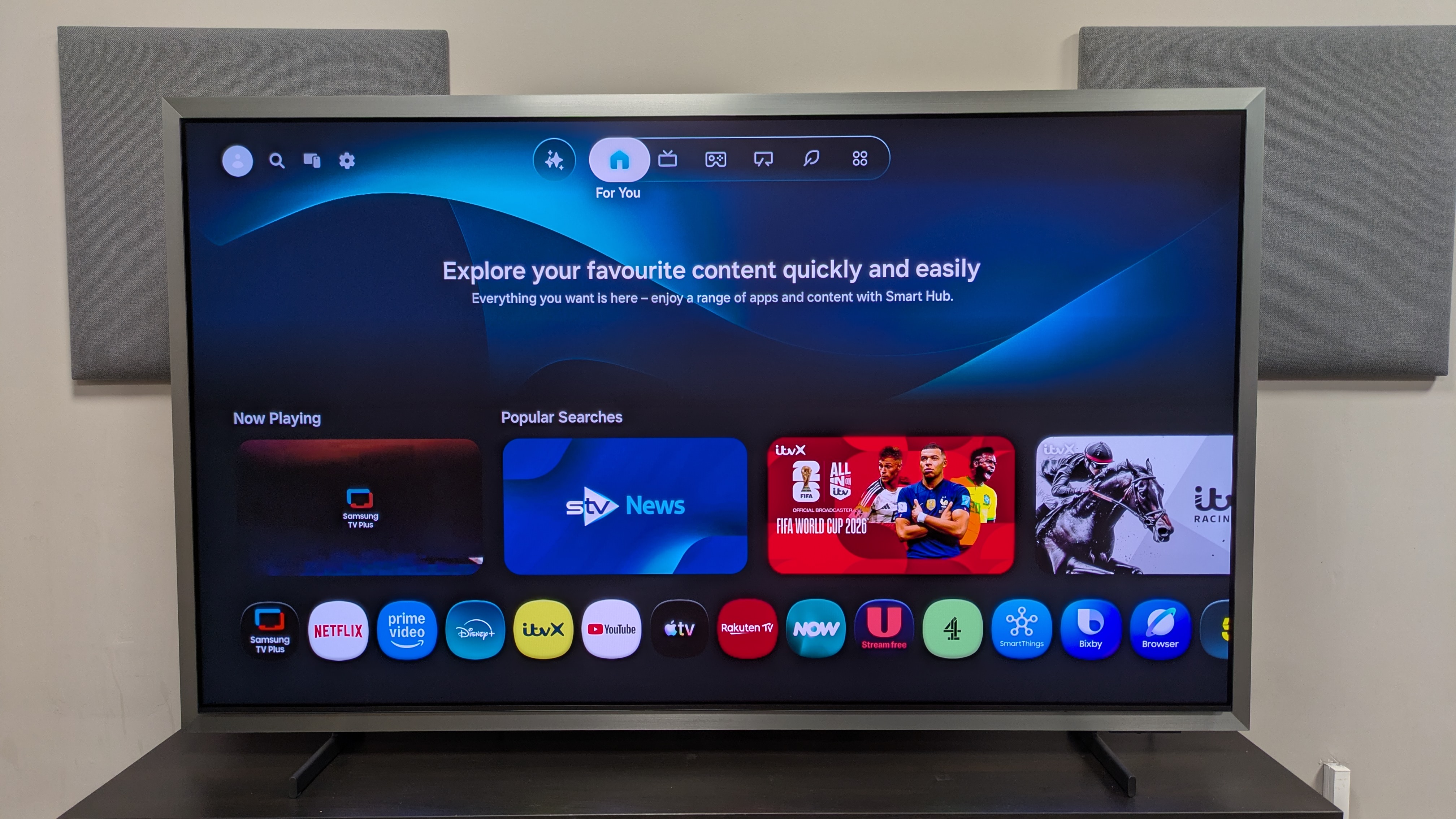
One UI Tizen is the S99H’s smart TV platform. It supports all major streaming apps, delivers pretty smooth performance and is easy to navigate. While there are some quirks that I found frustrating (namely auto-playing Samsung TV Plus), it’s still a good smart TV platform. Its Vision AI companion can be useful for those who enjoy AI, and while it doesn’t quite measure up to LG’s webOS, it’s still solid.
The 65-inch S99H I tested costs £3,199, which is a premium price for most people. It does justify its price with the level of performance and features that it offers and while the rival LG G6 is currently cheaper (up to £500 cheaper depending on sales), I expect the S99H’s prices will start to drop soon enough. In the meantime, last year’s Samsung S95F is available at a fraction of the cost, and is a great-value buy while it lasts.
Samsung S99H review: Prices & release dates
(Image credit: Future)
Release date: June 2026
55-inch price: £2,399
65-inch price: £3,199
77-inch price: £4,299
83-inch price: £5,899
The Samsung S99H is the flagship OLED in Samsung’s 2026 TV lineup. It sits above the mid-range Samsung S90H and budget Samsung S85H. The 65-inch model I tested launched in June 2026 at £3,199
In the few weeks since its release, prices have remained the same. The S99H’s launch prices are cheaper than both its predecessor, the S95F, and the rival G6. However, the G6 has been out for longer, so its prices have dropped.
Samsung S99H review: Specs
Screen type
QD-OLED
Refresh rate
Up to 165Hz
HDR support
HDR10+, HDR10, HLG
Audio support
Dolby Atmos
Smart TV
Tizen
HDMI ports
4 x HDMI 2.1
Samsung S99H review: Benchmark results
1 / 4
Brightness measurements
Taken using a colorimeter and test pattern generator. Click the test name for measurements and select the chosen test from the dropdown menu.
Samsung S99H
HDR Filmmaker Mode (10% window)
2739
HDR Filmmaker Mode (Fullscreen)
449
LG G6
HDR Filmmaker Mode (10% window)
3004
HDR Filmmaker Mode (Fullscreen)
451
Samsung S95F
HDR Filmmaker Mode (10% window)
2132
HDR Filmmaker Mode (Fullscreen)
390
01,0002,0003,0004,000
10% window
HDR Filmmaker Mode Data
Product
HDR Filmmaker Mode (10% window) (10% window)
HDR Filmmaker Mode (Fullscreen) (10% window)
Samsung S99H
2739
449
LG G6
3004
451
Samsung S95F
2132
390
Samsung S99H
HDR Standard Mode (10% window)
2831
HDR Standard Mode (Fullscreen)
463
LG G6
HDR Standard Mode (10% window)
2469
HDR Standard Mode (Fullscreen)
385
Samsung S95F
HDR Standard Mode (10% window)
2135
HDR Standard Mode (Fullscreen)
380
07501,5002,2503,000
10% window
HDR Standard Mode Data
Product
HDR Standard Mode (10% window) (10% window)
HDR Standard Mode (Fullscreen) (10% window)
Samsung S99H
2831
463
LG G6
2469
385
Samsung S95F
2135
380
Samsung S99H
SDR Filmmaker Mode (10% window)
220
SDR Filmmaker Mode (Fullscreen)
219
LG G6
SDR Filmmaker Mode (10% window)
559
SDR Filmmaker Mode (Fullscreen)
390
Samsung S95F
SDR Filmmaker Mode (10% window)
256
SDR Filmmaker Mode (Fullscreen)
137
0150300450600
10% window
SDR Filmmaker Mode Data
Product
SDR Filmmaker Mode (10% window) (10% window)
SDR Filmmaker Mode (Fullscreen) (10% window)
Samsung S99H
220
219
LG G6
559
390
Samsung S95F
256
137
Samsung S99H
SDR Standard Mode (10% window)
229
SDR Standard Mode (Fullscreen)
229
LG G6
SDR Standard Mode (10% window)
648
SDR Standard Mode (Fullscreen)
559
Samsung S95F
SDR Standard Mode (10% window)
372
SDR Standard Mode (Fullscreen)
199
0200400600800
10% window
SDR Standard Mode Data
Product
SDR Standard Mode (10% window) (10% window)
SDR Standard Mode (Fullscreen) (10% window)
Samsung S99H
229
229
LG G6
648
559
Samsung S95F
372
199
HDR color gamut
Closer to 100% is better. Taken using a colorimeter and test pattern generator.
Samsung S99H
UHDA-P3
99.97
BT.2020
89.2
LG G6
UHDA-P3
99.3
BT.2020
83
Samsung S95F
UHDA-P3
100
BT.2020
89.3
0255075100
HDR Filmmaker Mode Data
Product
UHDA-P3 ()
BT.2020 ()
Samsung S99H
99.97
89.2
LG G6
99.3
83
Samsung S95F
100
89.3
Picture accuracy
A lower score is better. Taken using a colorimeter and test pattern generator.
SDR Delta-E
Samsung S99H
1.6
LG G6
1.4
Samsung S95F
2.61
0123
SDR Delta-E Data
Product
Value
Samsung S99H
1.6
LG G6
1.4
Samsung S95F
2.61
Input lag
Lower is better. Taken using a Leo Bodnar 4K HDMI Video Signal Lag Tester.
Samsung S99H
4K 60Hz
9.5
1080p 120Hz
5
LG G6
4K 60Hz
8.9
1080p 120Hz
4.6
Samsung S95F
4K 60Hz
9.5
1080p 120Hz
0
012345678910
ms
HDR Filmmaker Mode Data
Product
4K 60Hz (ms)
1080p 120Hz (ms)
Samsung S99H
9.5
5
LG G6
8.9
4.6
Samsung S95F
9.5
N/A
The Samsung S95F does not have a 1080p 120Hz results as its results were registered before we started taking the 1080p 120Hz measurement
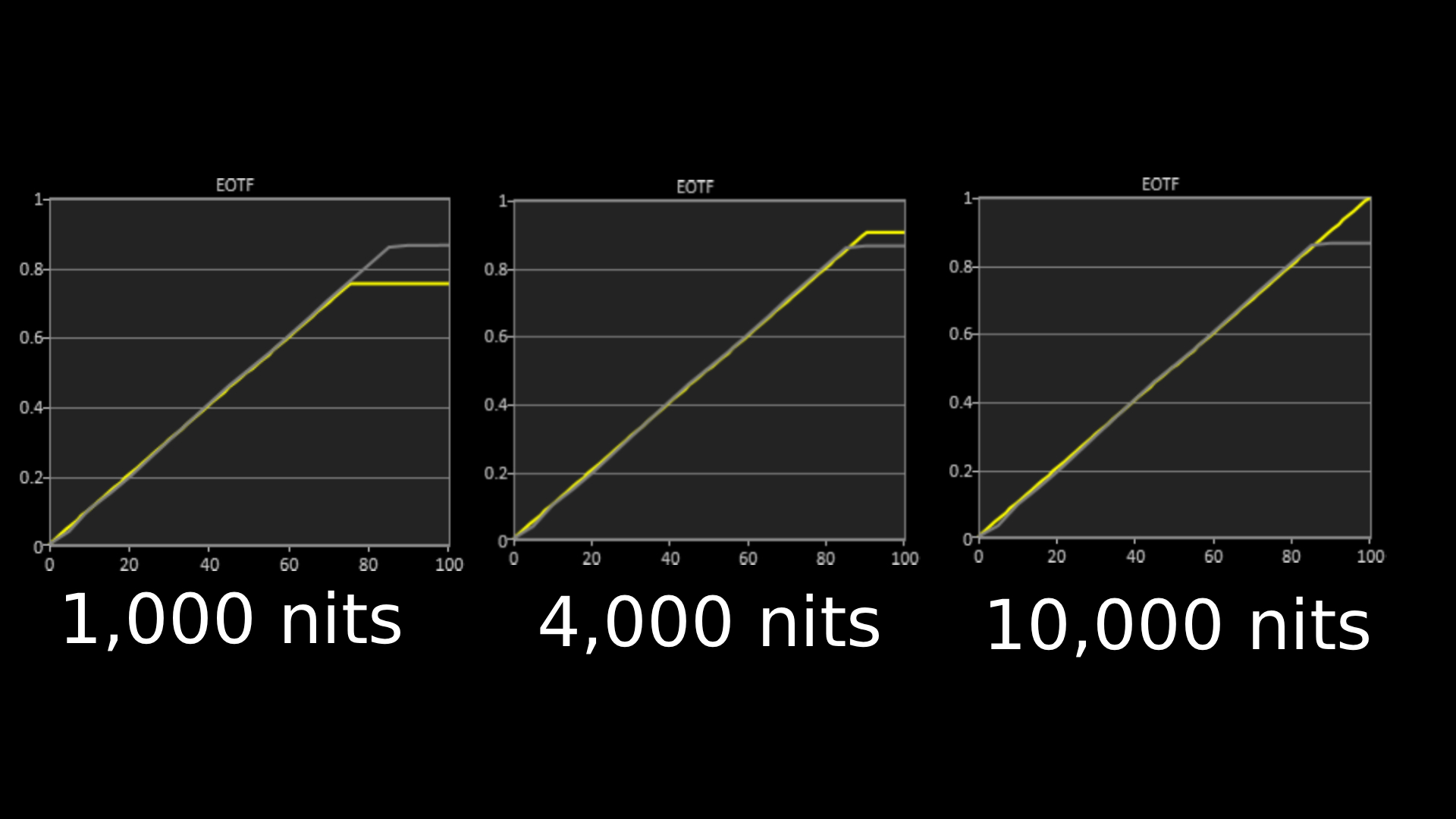
The above EOTF graphs show the accuracy of the Samsung S99H for hitting different HDR brightness levels in grayscale. The closer to the yellow line, the more accurate a TV is. As with all our tests, these results are out of the box, without calibration, to demonstrate the performance most people will see. As you can see, the S99H did very well on all three target tests. (Image credit: Future)
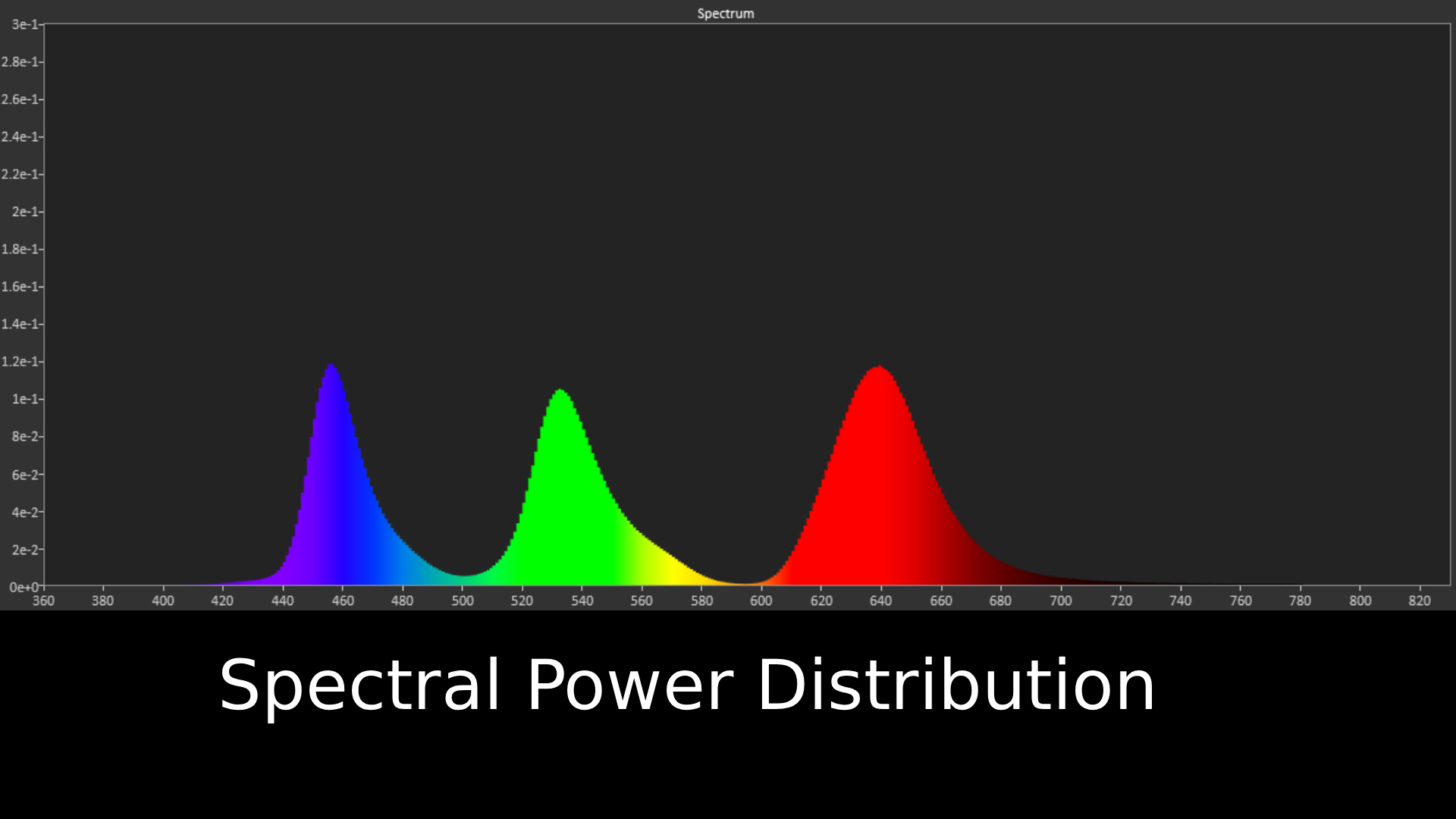
Spectral power distribution refers to the intensity of light that a source will display at various wavelengths of color. It can reveal how accurate a source can show color at different light levels, and can be instructive to understand how a TV is handling color. (Image credit: Future)
Samsung S99H review: Features
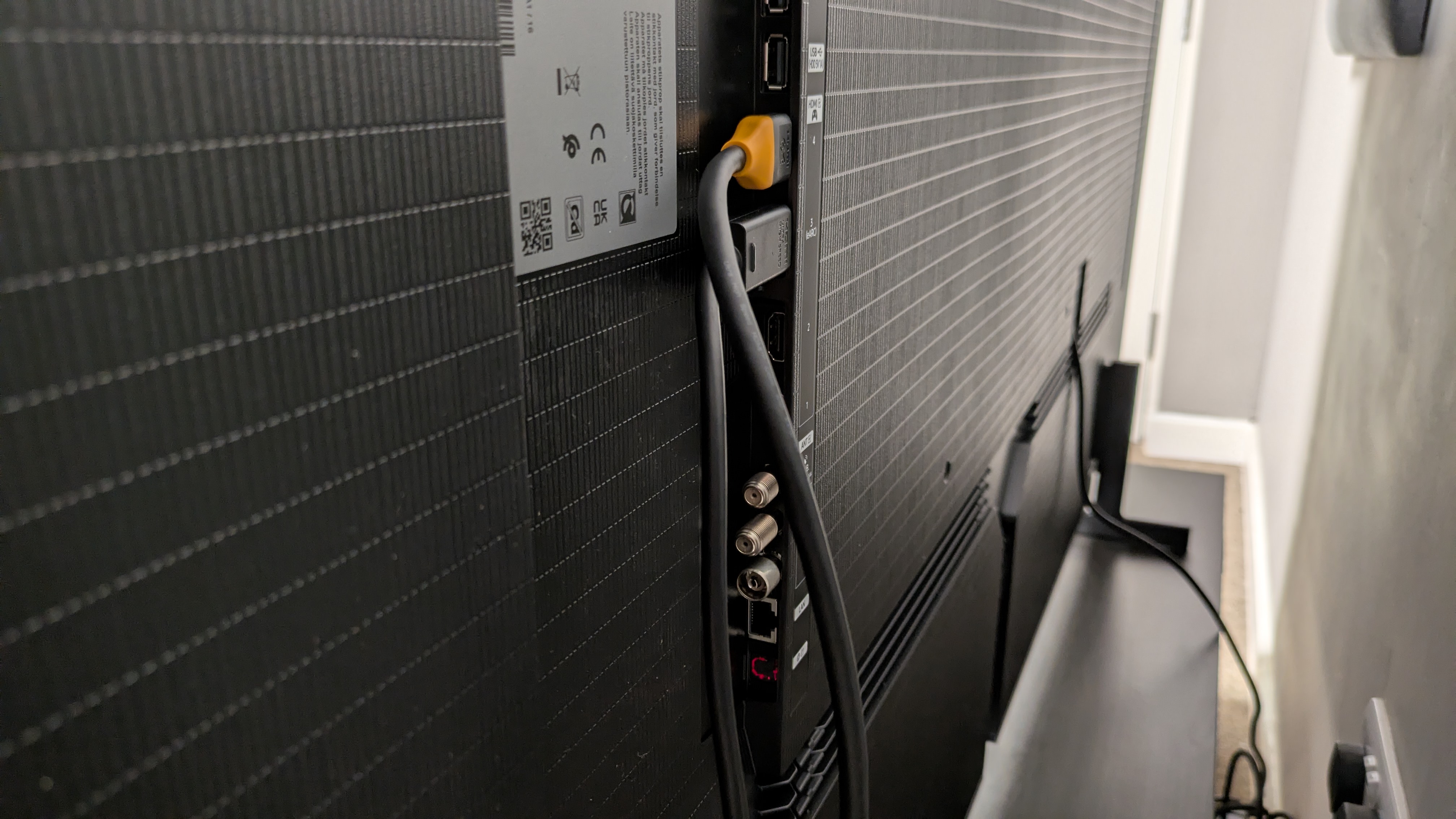
The ports of the S99H have returned to the rear panel of the TV, with the removal of the One Connect Box (Image credit: Future)
NQ4 AI Gen 3 processor
OLED Glare Free screen
AI enhancements including AI Football Pro mode
The flagship Samsung OLED has typically used a QD-OLED panel in its 55-77-inch sizes in the past. Based on my testing measurements, I am certain that the 65-inch model I tested does use a QD-OLED panel, though Samsung doesn't confirm this either way. The 83-inch model will use an LG W-OLED panel, because QD-OLED panels don't come in that size.
The S99H features an anti-reflection, matte screen, called OLED Glare Free by Samsung, that is designed to reduce mirror-like reflections, and keep reflections from a light to minimum.
The S95H uses Samsung’s own NQ4 AI Gen 3 processor, which provides visual AI-based enhancements such as AI Motion Enhancer Pro, 4K AI Upscaling Pro and Auto HDR Remastering Pro, as well as the introduction of AI Soccer Mode Pro, designed to provide the best picture and sound for Soccer. AI audio enhancements include AI Sound and AI Sound Controller Pro.
For HDR support, HDR10+, HDR10 and HLG are once again supported, but there is still no support for Dolby Vision. For enhanced audio formats, Dolby Atmos is supported, but not DTS.
The big design change with the S99H, compared to last year’s S95F, is the addition of a wider, silver frame, which Samsung calls a FloatLayer Design, which adds a couple of extra inches all around the TV. As a result, the One Connect Box is gone and ports have returned to the rear panel of the TV itself.
It’s worth noting that, as well as the four HDMI 2.1 ports on the rear panel, Samsung says that its Wireless One Connect Box can be added in addition to the other ports, giving you a total of eight HDMI 2.1 ports (four built-in, four on the optional box).
For sound, the S95H features a built-in 4.2.2-channel, 70W speaker system that supports Dolby Atmos: the same core specs as last year’s S95F. Sound features include Object Tracking Sound+ (OTS+), Adaptive Sound Pro and Active Voice Amplifier Pro.
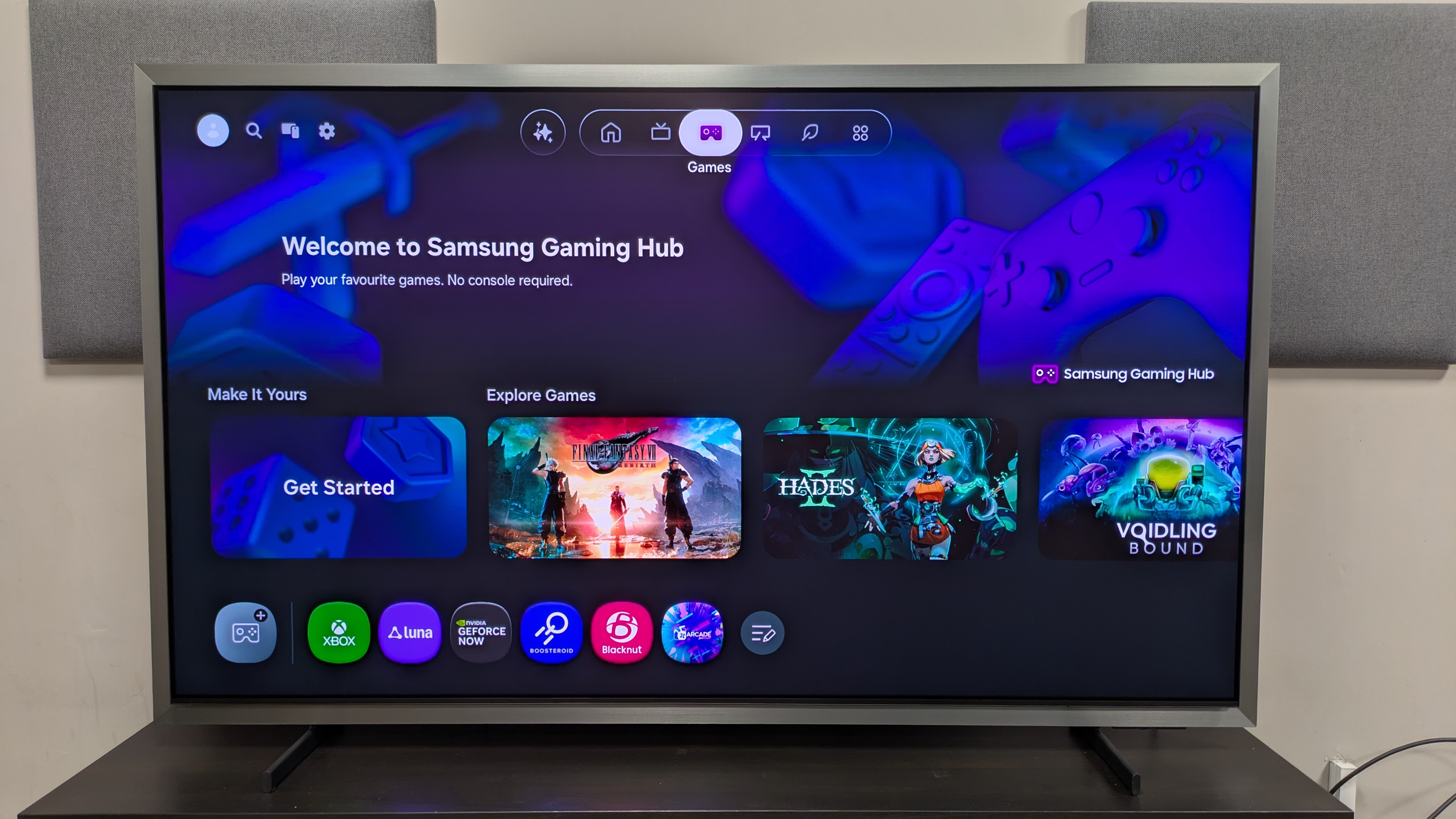
Gaming is well covered, with four HDMI 2.1 ports built-in that support 4K at up to 165Hz, full variable refresh rate options including AMD FreeSync Premium Pro and Nvidia G-Sync, HGiG, HDR10+ gaming and auto low latency mode. There’s also a Game Hub where cloud-based applications such as Xbox and Luna can be accessed.
Samsung uses its own Tizen smart TV platform on the S99H, which features the aforementioned picture and audio AI tools as well as Generative Wallpaper and Art Mode, the latter of which is the same found on the brand’s The Frame art TVs.
Tizen supports a vast array of apps including Netflix and Prime Video, as well as UK based apps including BBC iPlayer and ITVX. For antenna/satellite based programming, Samsung uses its own Samsung TV Plus platform, rather than Freely or Freeview.
Features score: 5 / 5
Samsung S99H review: Picture quality
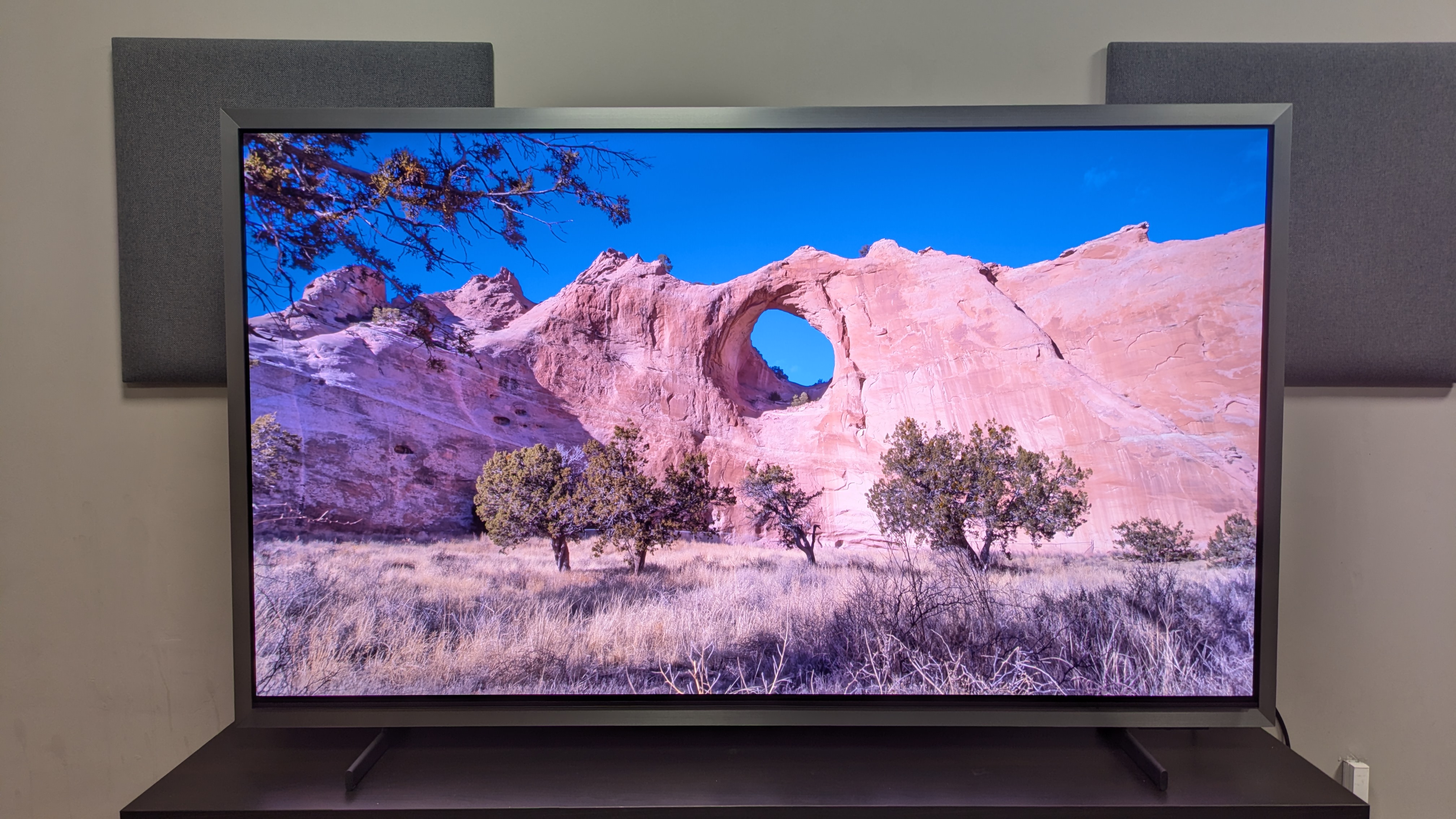
The S99H's increase in brightness means daytime scenes have even more pop (Image credit: Future)
Spectacular colour display
Effective anti-glare matte screen
Strong contrast and inky black tones
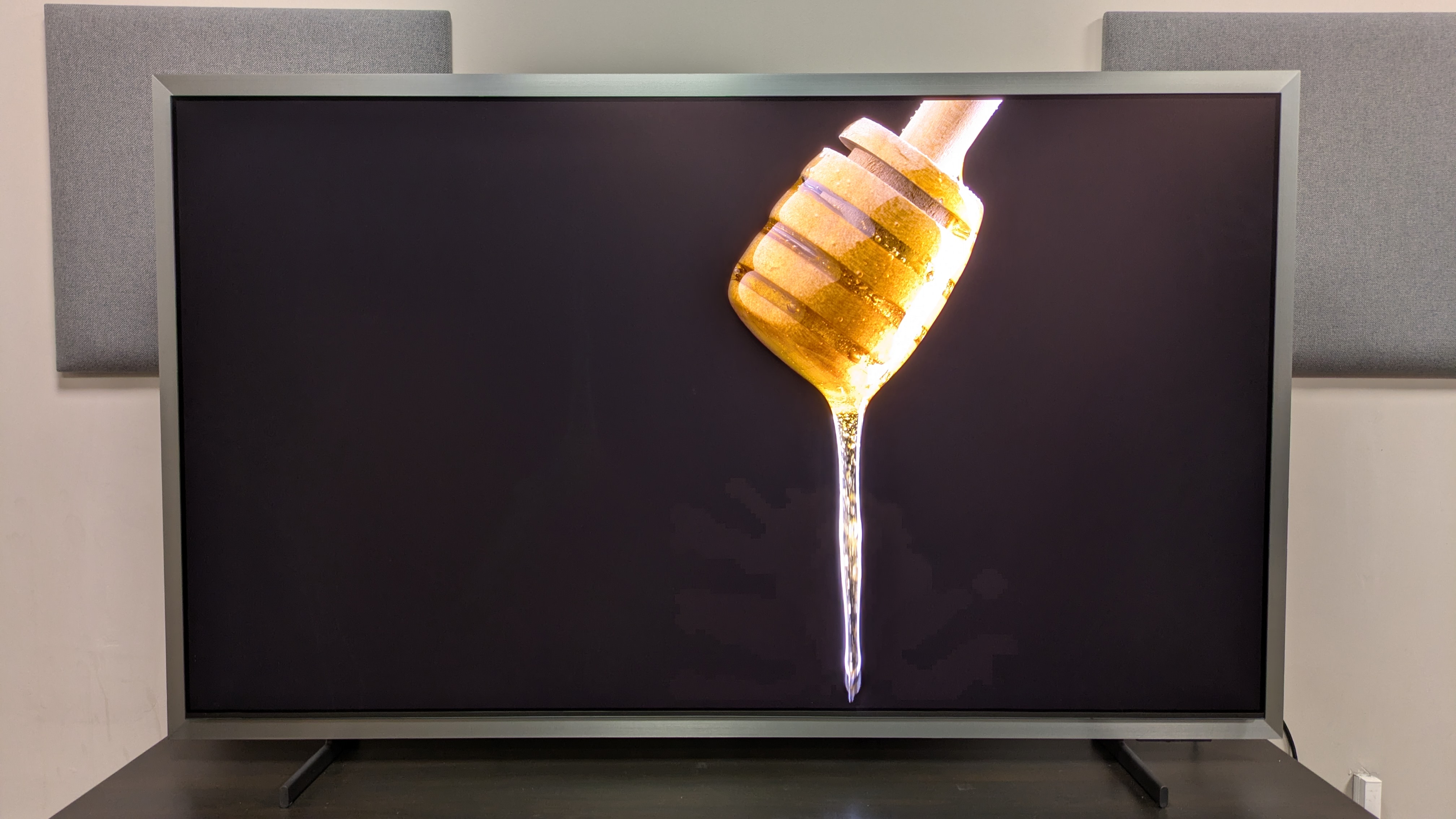
The S99H boasts some strong brightness results, clocking in at 2,739 nits in Filmmaker Mode and 2,831 nits in Standard for peak HDR brightness. I used Movie mode for some of my testing, and this registered at 2,751 nits peak HDR. This is a big jump over 2,132 nits and 2,135 nits the S99H’s predecessor, the S95F, registered in the same HDR Filmmaker and Standard modes respectively.
Even fullscreen HDR brightness has had a nice boost, registering 449 nits in Filmmaker, 460 nits in Standard and 450 nits in Movie. This is a jump over the 380 nits and 390 nits the S95F achieved in Filmmaker and Standard mode.
The S99H’s has an anti-reflection, matte screen. If you’re viewing in a bright room, with unavoidable light, the S99H should be near the top of your shopping list. While I preferred the LG G6 over the S99H for actual content in bright rooms, the S95H is still the better TV for eliminating reflections outright.
The S99H demonstrates effective upscaling of SDR sources. Watching a mix of reality shows and Wimbledon via Samsung TV Plus, the S99H did a good job sharpening textures and giving colours a richer look. With HD sources, detail upscaling looked realistic and definitely had a 4K-like level of detail.
I tried out the Auto HDR Remastering Pro tool, and while it did boost brightness and sharpen textures, it all looked too artificial for my liking.
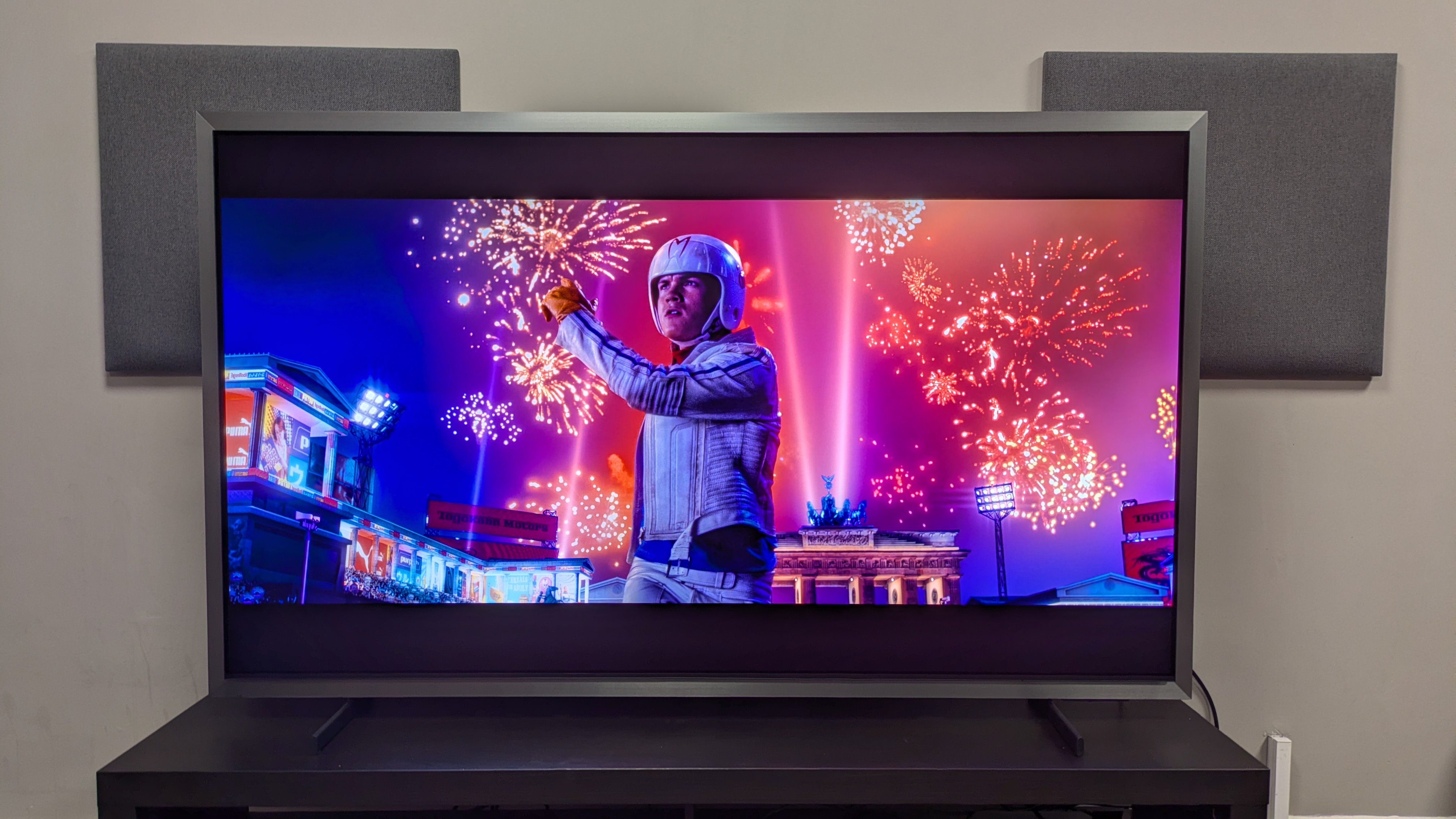
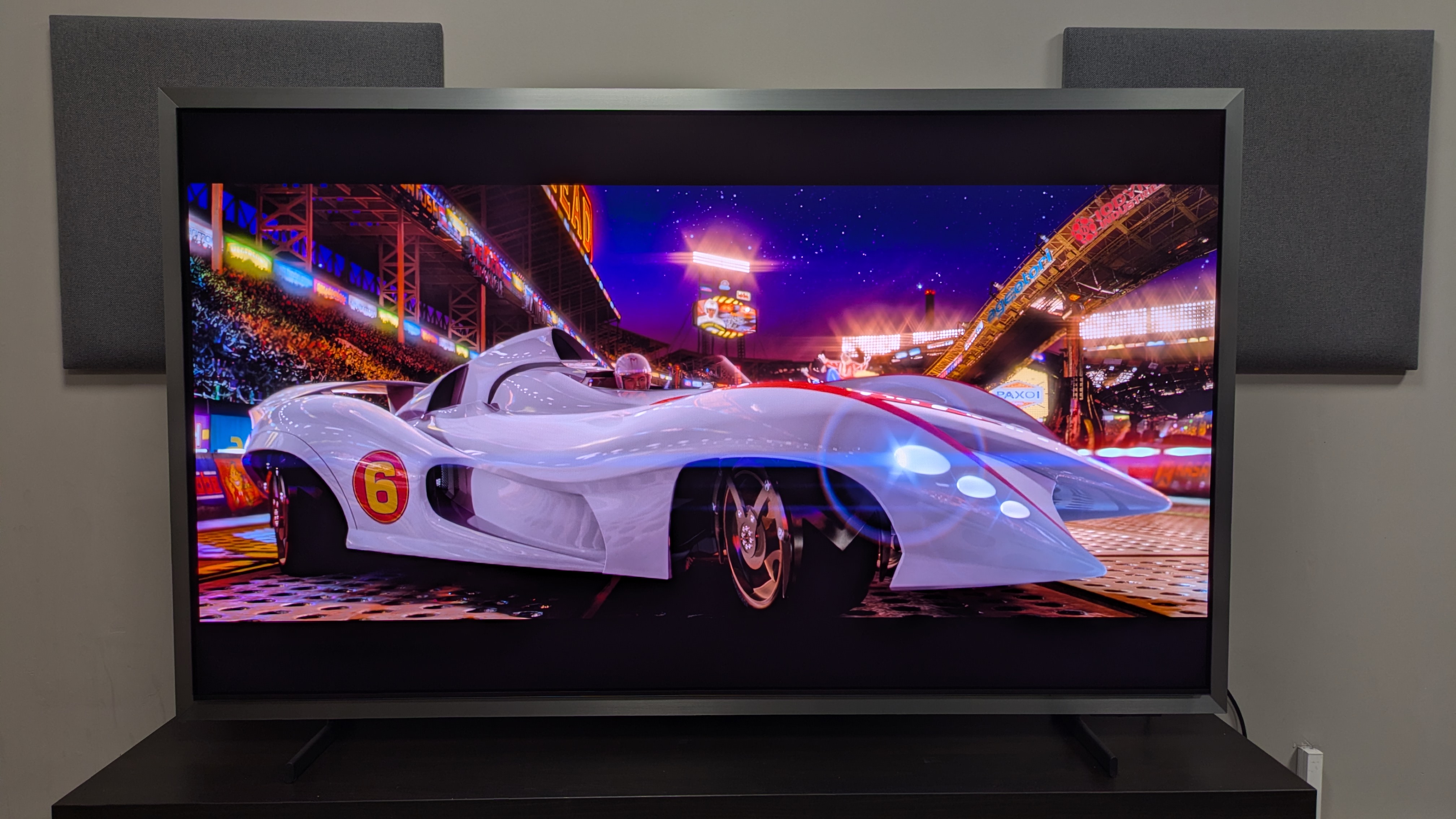
Colour reproduction is the S99H's best feature, meaning shots from colourful movies like Speed Racer really shine on screen (Image credit: Future)
Moving to HDR sources, I first tested the S99H’s colour reproduction. Watching Speed Racer, a recent addition to my 4K Blu-ray testing rotation, the S99H delivered bright, bold colours that accurately captured the cartoon-style colours of the movie. Close-up shots of Speed Racer show vibrant reds in the interior of his cockpit and his ‘M’ logo, while later scenes show gorgeous, bright blues of clear skies and neon-like greens of a field in a schoolyard.
Comparing the S99H to the G6, I did find that the S99H made some reds a little pale and orange in appearance at times, but viewed in isolation, the S99H’s colors still looked superb. Moving to La La Land, Mia’s yellow dress was punchy, but accurate on the S99H and the gradient of pinks and purples in the sunsets looked realistic, but still lively.
It’s no real surprise that colors looked bold on the S99H, as I measured its HDR colour gamut coverage at 89.2% of the BT.2020 colour space and 99.97% of the DCI-P3 colour space: both outstanding results.
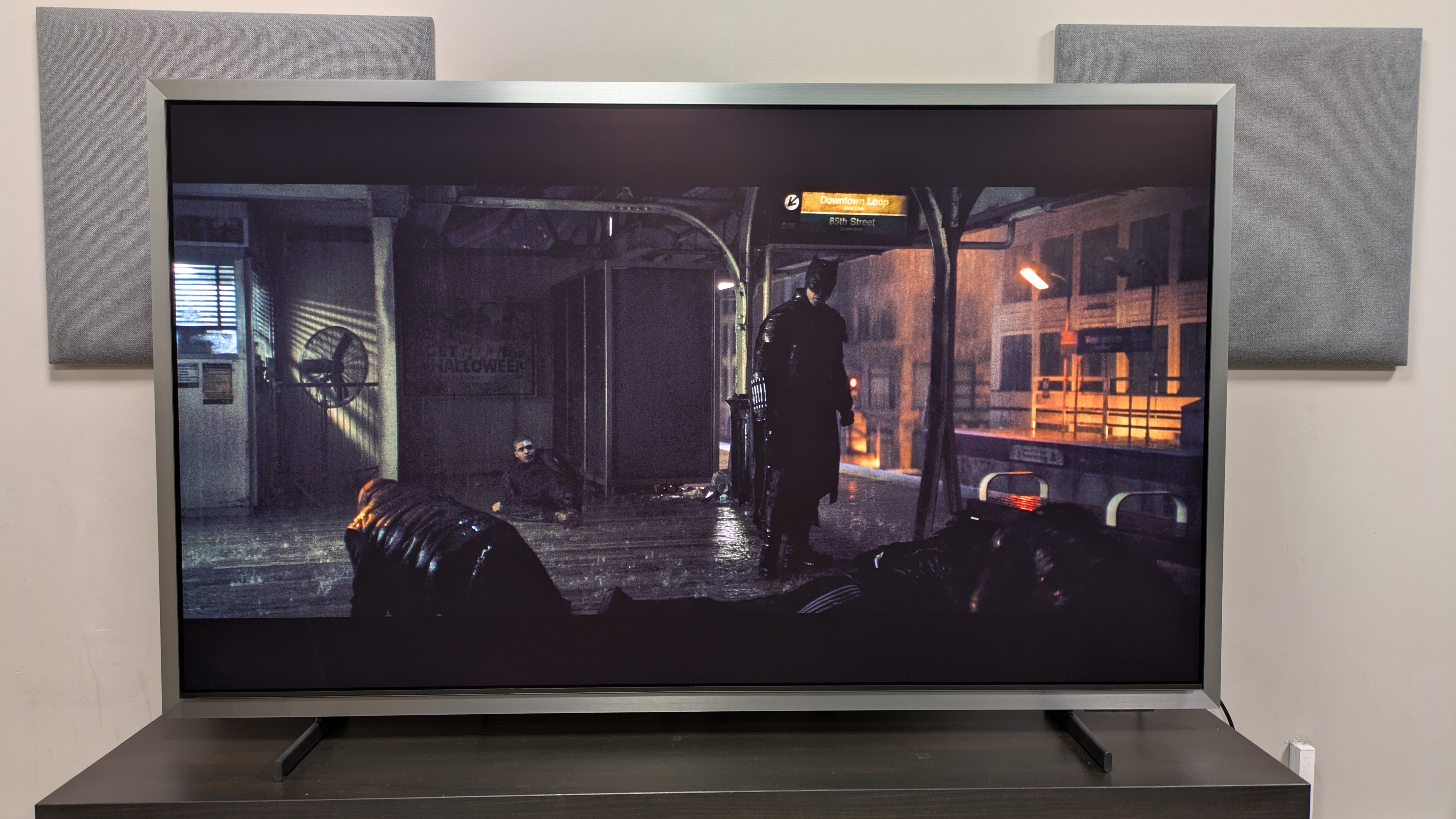
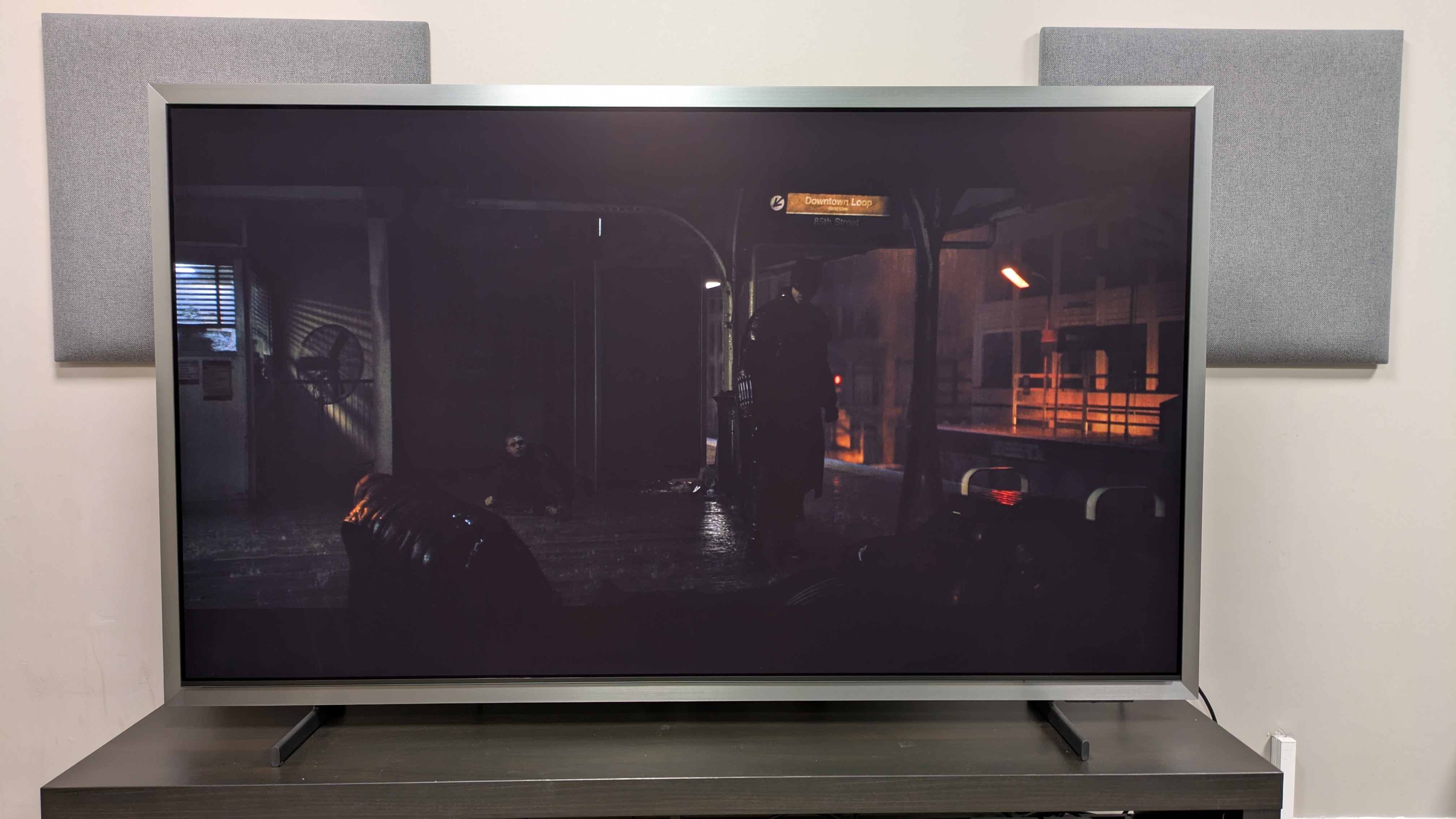
The Batman (pictured) looks best in Movie mode in bright conditions FutureIn Filmmaker Mode, in a bright room, The Batman is difficult to see Warner Bros / Future
For darker movies, it was important to get the right picture mode for the situation. I found The Batman was too dim to watch in the default Filmmaker Mode with the lights on in our testing lab, but Movie mode worked fine. In a darker room however, Filmmaker Mode worked.
Throughout The Batman, the S99H’s strong contrast shone through, aided by its punchy highlights from its newfound brightness and rich black tones. Whether Batman stood in a dark subway or the camera cut to a ceiling-high, wide-angle shot of the Batcave, there was an excellent balance between light and dark tones.
I found during my testing that in Filmmaker Mode, the S99H was prone to black crush during the darker parts of the movie, resulting in detail loss. Batman’s armour in the aforementioned subway scene is obscured, as the S99H prioritises deeper blacks. This wasn’t as true in a ‘brighter’ dark movie, such as Alien: Romulus, where detail is more preserved, but there were still hints of black crush.
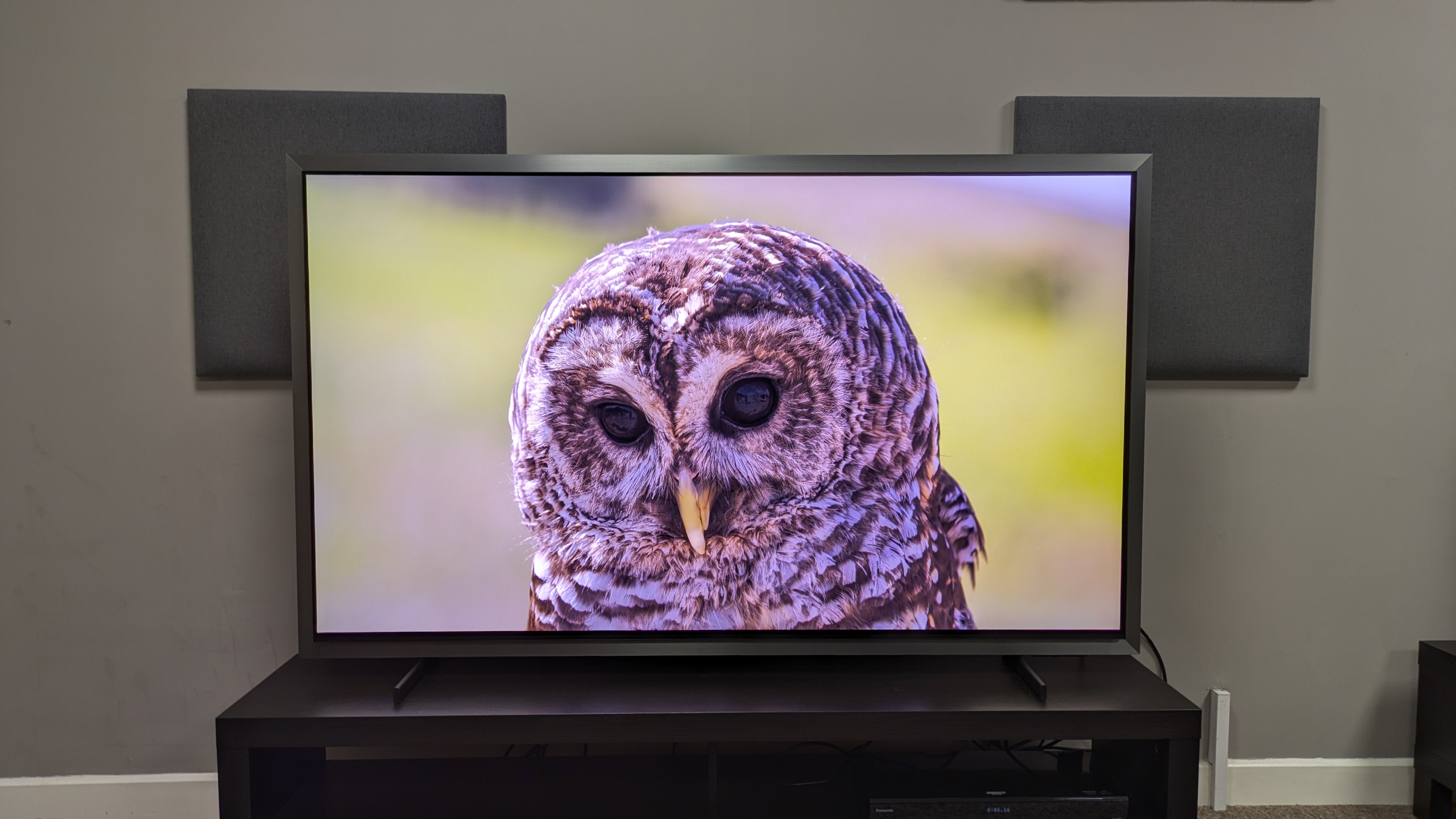
The S99H's textures are crisp and 3D-like, regardless of what's on screen (Image credit: Future)
The S99H’s textures are crisp and 3D-like, no matter the content. Skin, clothing and objects all look lifelike, especially in HDR. I actually found I preferred the look of the S99H’s skin tones better than the G6 in my comparison of the two.
Finally, motion. The S99H demonstrated good motion throughout my testing, but I found it was best to set motion to 3 blur and 3 judder. Any higher, and motion looked artificial and unnatural. Going back to Speed Racer, the S99H did a good job handling the fast racing sequences as cars swerved from side-to-side. I did find there was some judder as commentators panned across the screen, but I found this on every TV I’ve tested with the disc so far.
I tried out the S99H’s AI Football Mode Pro and it was somewhat effective. The commentary was clearer and louder, the picture was more detailed and motion was smoother. If you don’t want to use any AI tools, then Standard picture mode with judder and blur set to 3 worked well.
Picture quality score: 5 / 5
Samsung S99H review: Sound quality
The S99H delivers solid built-in sound that's good for movies like Speed Racer (pictured), but a soundbar would do the picture more justice (Image credit: Warner Bros / Future )
4.2.2 channel, Dolby Atmos
Great accuracy and clarity
No DTS support
The S99H features a 4.2.2 channel, 70W speaker array and supports Dolby Atmos. There is however no DTS support. Along with its two sound modes, Standard and Amplify, there are AI Sound tools such as Adaptive Sound Pro and Active Voice Amplifier that can be used to adjust sound.
Watching Speed Racer with the S99H set to the Amplify sound mode, the S95H demonstrates solid bass and power, accurately delivering the rumble and revving of engines. Collisions as cars battle during races also have good impact, along with clear speech, even during the most hectic of races.
The S99H’s Object Tracking Sound+ (OTS+) is superb for delivering precise sound placement. When Speed Racer grinds a rail in the opening race, the sound was clean and audible, despite other loud effects.
Trying out the S99H’s AI Sound mode, it adds some width to the soundstage, giving more volume to more subtle effects. However, I personally found that the AI Sound was a little more compressed and some power was compromised, so I preferred the default Amplify setting.
While overall the S99H’s built-in speakers did a good job, I still felt the sound was contained to the screen's width, and while there was some good delivery of Atmos effects, they again were lost in the mix. For a TV with this picture quality, I’d still recommend a soundbar at least for the full cinematic experience.
Sound quality score: 4 / 5
Samsung S99H review: Design
The new silver frame surrounding the S99H will be divisive FutureThe screen 'floats' in front of the frameFutureThe pedestal stand has been replaced by two feetFuture
Extended silver frame will be divisive
Stand replaced with feet
No One Connect Box included
Arguably the biggest talking point for the S99H this year is the physical design changes compared to last year’s S95F. The most notable is the FloatLayer Design, a silver frame that surrounds the TV, giving it a floating, 3D look. This is going to be a controversial addition and for some, it will mean a re-think on where to put the TV, since it adds width and height.
Personally, I’m not a fan, as I find the silver to be a bit distracting and when viewed off-centre, the frame looks odd.
The black, metal, pedestal stand from the S95F has been replaced by two plastic grey feet. While these feet are sturdy and easy to install, I still feel it’s a downgrade for a premium TV. The TV’s bezel is still sleek and ultra-thin, however, and gives it a high-quality feel (but is slightly spoiled by the frame behind it).
The other big change is the removal of the One Connect Box, an external box that housed the TV’s connections and processing. Now, the ports have returned to the rear panel on the TV itself.
For some, this will be welcome news. The S99H is compatible with the Wireless One Connect Box too, so if you liked the external connections, this is still an option you can add on — and not only that, the box can work in tandem with the TV’s built-in connections, meaning a potential eight HDMI 2.1 ports. Who needs an AVR?
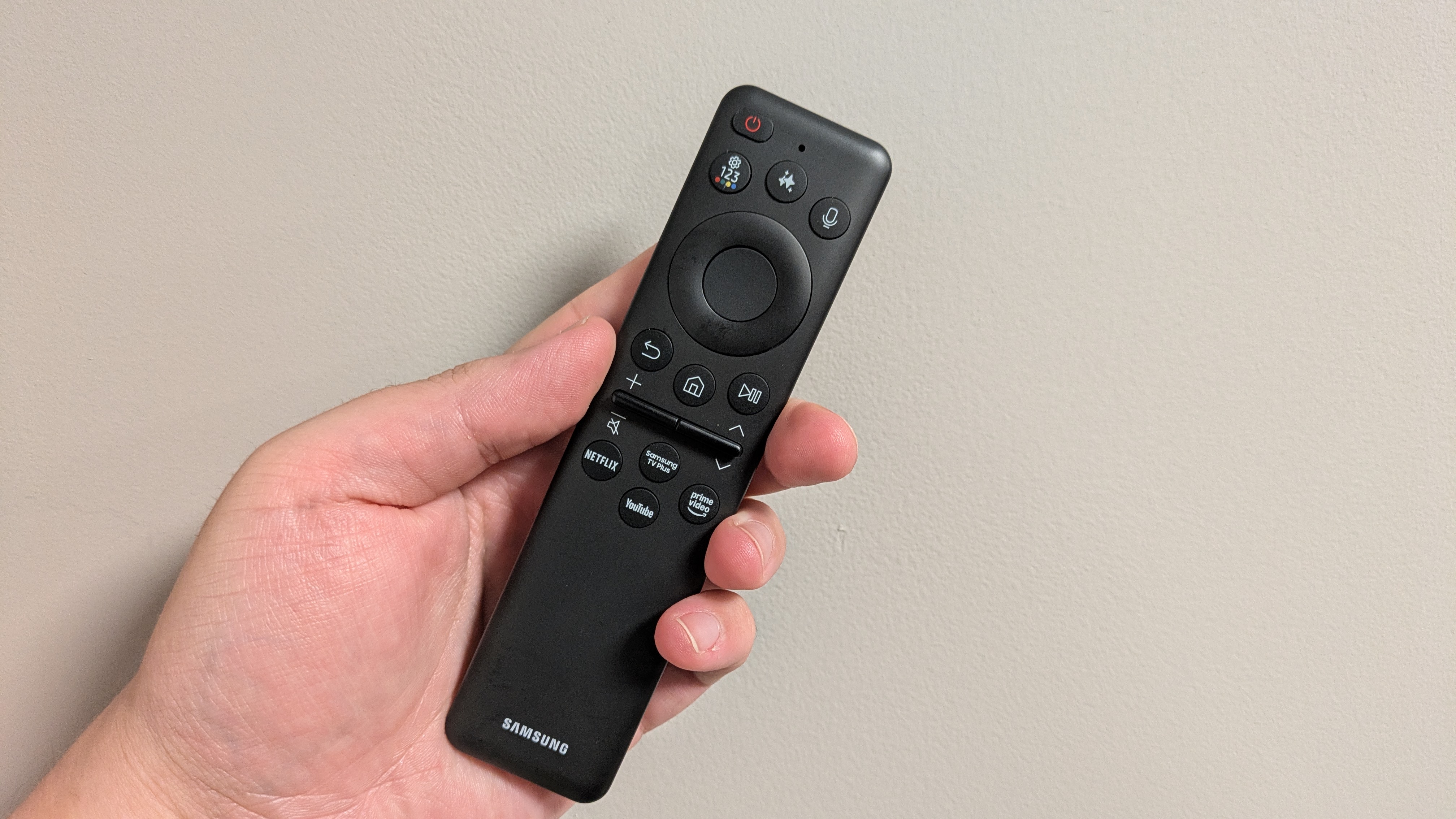
The SolarCell remote returns once again, and while there’s been no real changes or additions to it, it’s still a light, sleek, USB-C and solar rechargeable remote that’s probably one of the better remotes on the market.
Design score: 4 / 5
Samsung S99H review: Smart TV & menus
(Image credit: Future)
One UI Tizen smart TV platform
Vision AI features
Home, Gaming, Art Hubs
The S99H uses Samsung’s own One UI Tizen smart TV platform, with the headline this year being the Samsung Vision AI Companion, which can be used to find related content to what you're watching, and answer general questions you may ask AI. Microsoft Copilot is supported.
Along with supporting major streaming apps such as Netflix and Prime Video, it also supports major UK streaming apps such as BBC iPlayer and ITVX. Samsung does not include Freely or Freeview, instead opting to use its own Samsung TV+ system for live streaming channels.
Tizen uses a number of different hubs as a way to organise relevant apps and content. Home houses streaming apps and content recommendations based on your viewing. Game houses all things gaming, including cloud based apps from the likes of Xbox. Daily hosts apps for office and health use, while Art hosts the Art Store, where artworks can be downloaded to be used as screensavers.
Art mode is a new addition, and basically means you can turn this into an artwork display, just like Samsung's The Frame TV. This may explain the new frame-like design. The Art mode costs a monthly subscription for access to all artworks.
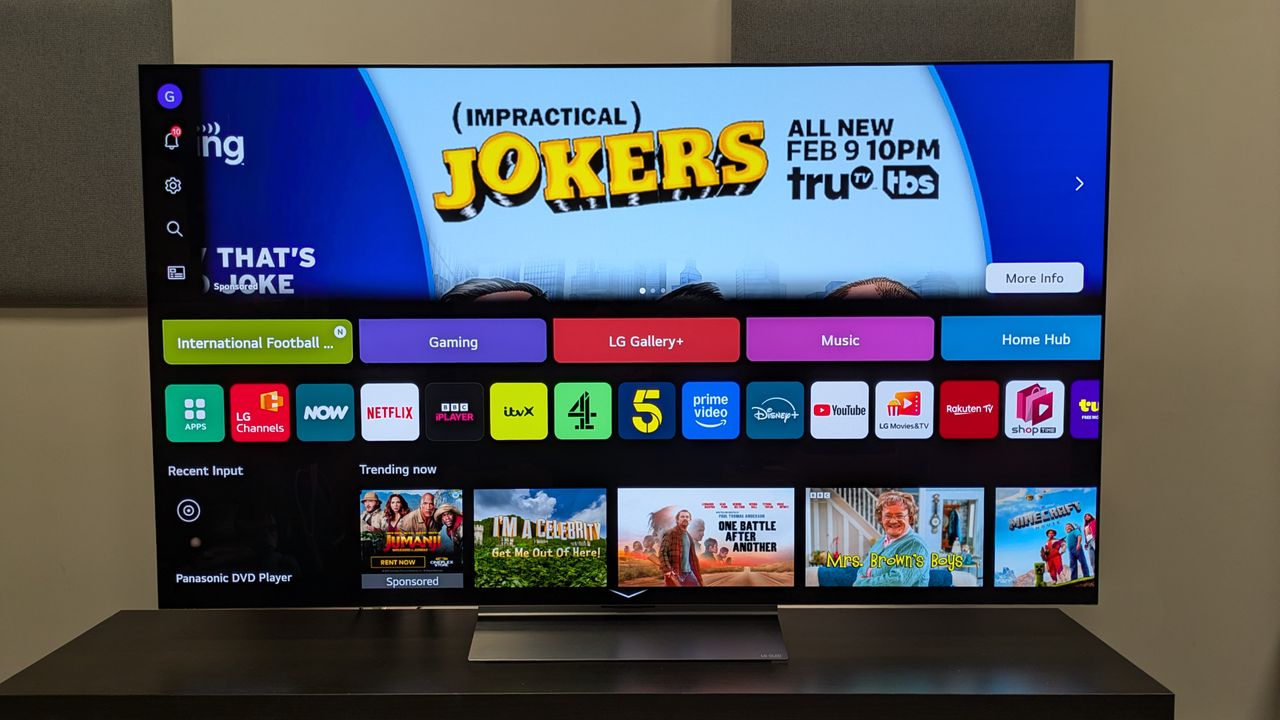
Tizen is intuitive enough and easy to use. There is a space at the top of the home screen for banner ads, but this is common on most smart TV platforms nowadays. One thing I did find frustrating was that whenever I lingered on the home screen, Samsung TV+ would autoplay and overwrite whatever I was doing. There seemed to be no way to turn this off, short of deleting the app.
There are a good number of picture settings present, as well as AI-based tools for picture and sound settings.
Smart TV & menus score: 4.5 / 5
Samsung S99H review: Gaming
The S99H is a fantastic gaming TV with a full suite of features (Image credit: Future)
Four HDMI 2.1 ports
FreeSync and G-Sync supported
9.5ms input lag time
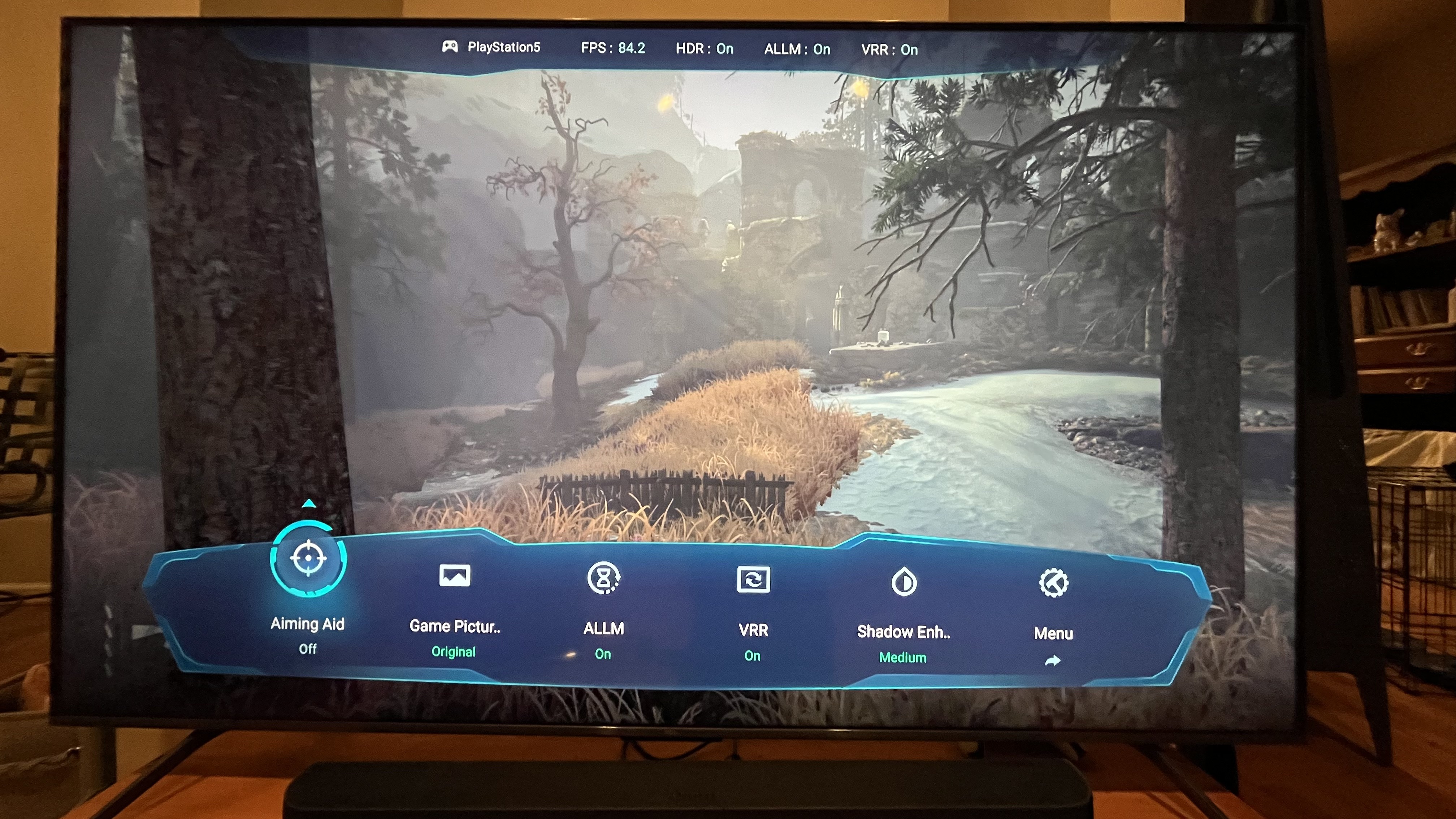
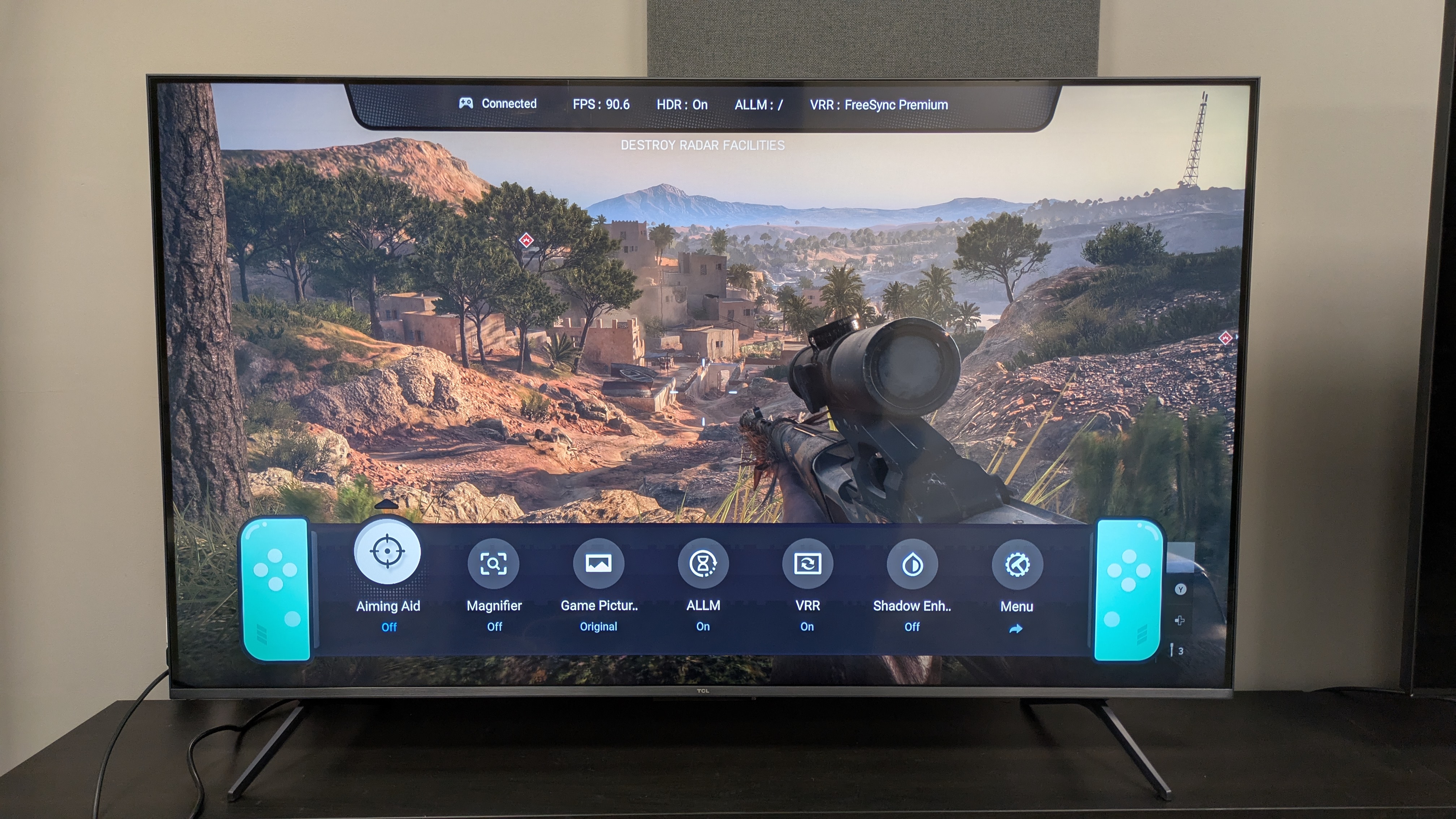
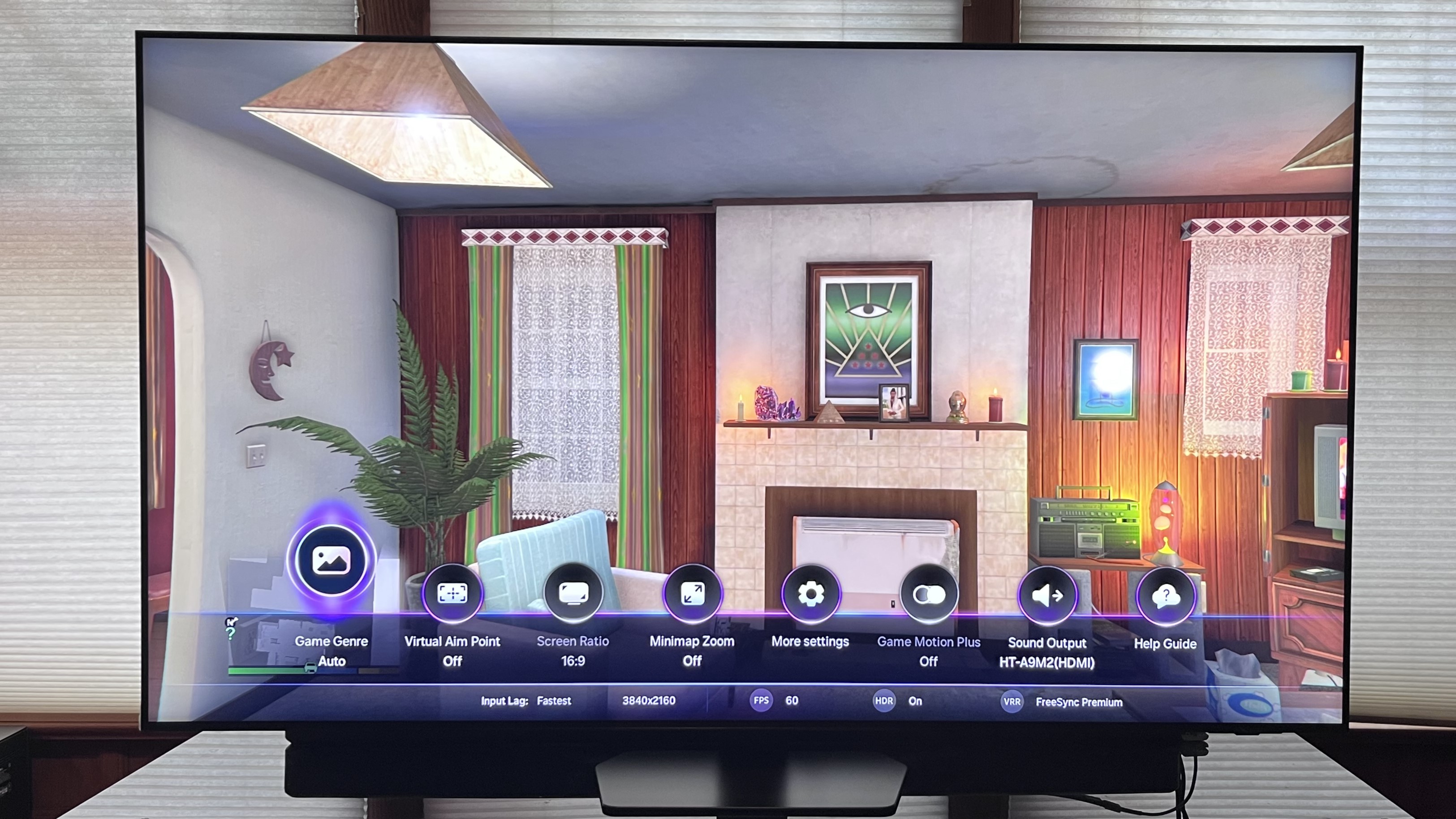
The S99H is an excellent TV for gaming. Across its four HDMI 2.1 ports, it supports 4K 165Hz, full VRR including AMD FreeSync and Nvidia G-Sync, HDR10+ gaming and ALLM. It also features a Game Hub, where gaming related content and cloud based gaming apps such as Xbox and Luna are supported.
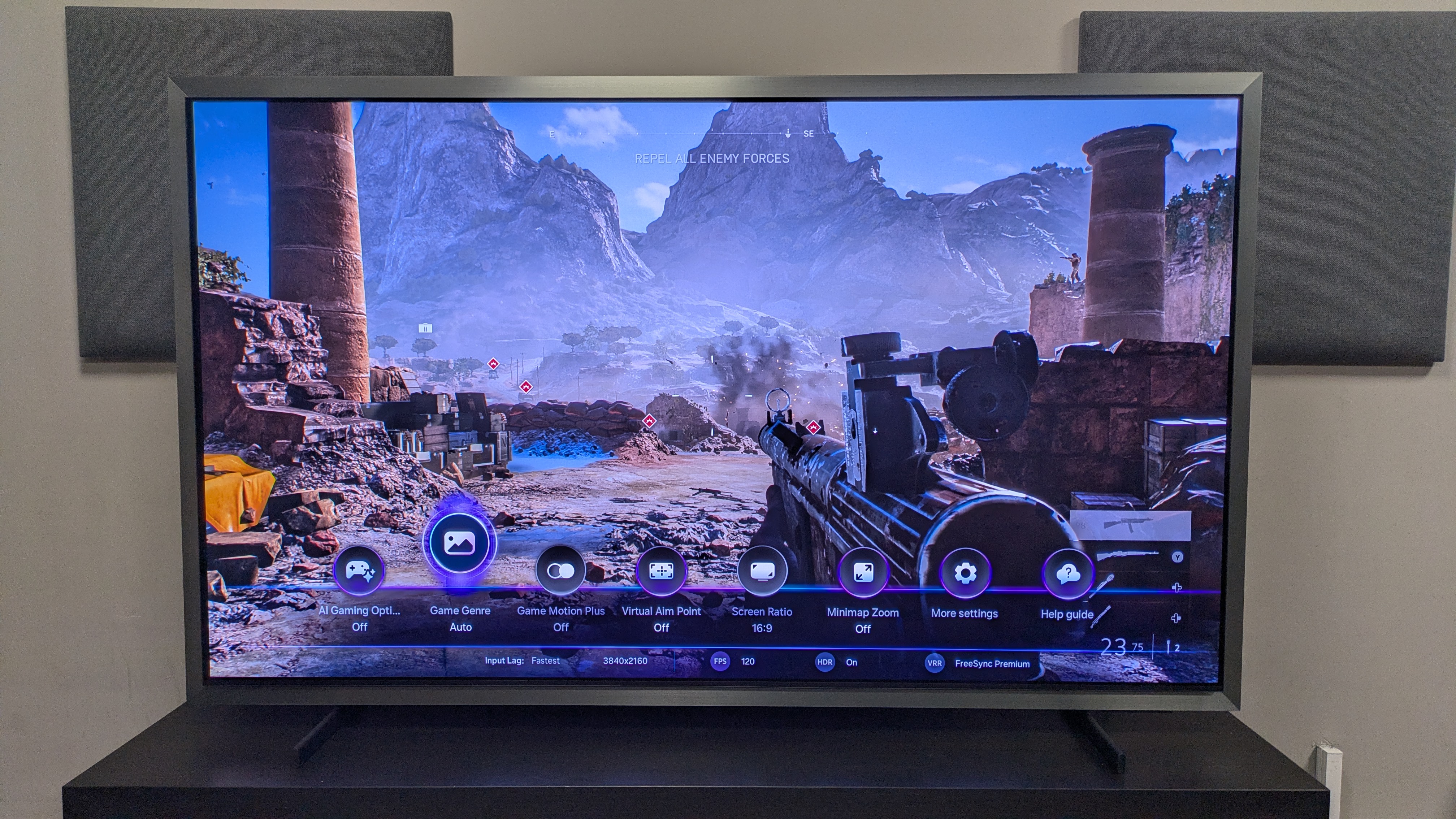
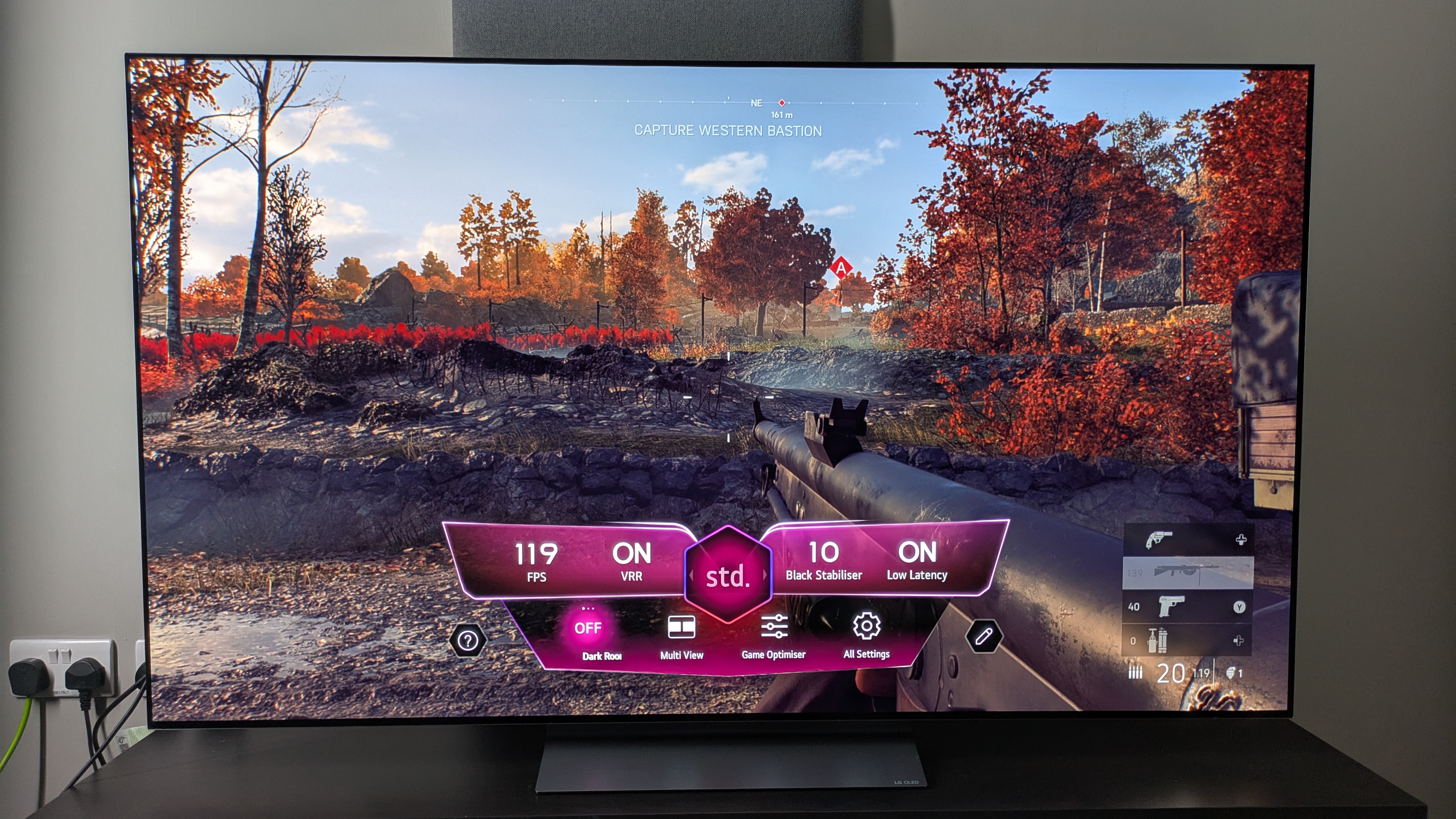
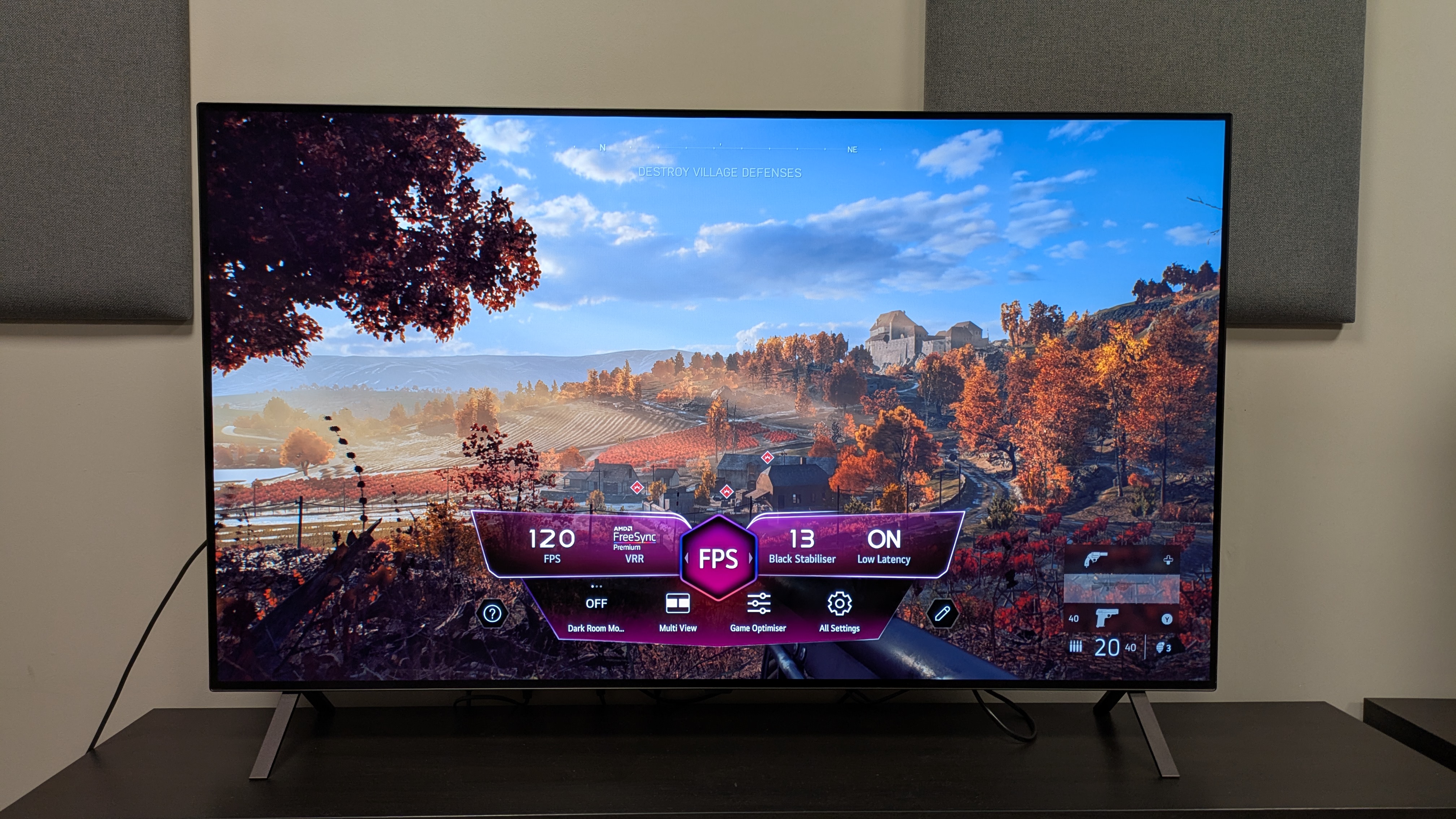
The S95H’s gaming performance is smooth and responsive, thanks to its ultra-low, measured 9.5ms input lag time. As I dashed around a desert battlefield in Battlefield V playing at 4K 120Hz, snapping between targets and diving for cover, there was never any sign of judder from the S99H, which expertly handled the chaos.
With its strong colours, high brightness and powerful contrast, the S99H looks great while gaming too. During the same desert mission in BattlefieldV, it did a superb job capturing the relentless heat of the African sun. Detail in weapons and textures of environments were crisp and refined throughout gaming as well.
Gaming score: 5 / 5
Samsung S99H review: Value
(Image credit: Future)
Premium OLED price
Rivals are currently notably cheaper
Great features and performance for the money
As a flagship OLED TV, the S99H carries a premium price tag. The 65-inch model I tested costs £3,199. This is £200 less than the launch price of last year’s S95F, which is some welcome news. However, the S99H’s main rival, the LG G6, costs £2,999 at the time of writing and has dropped to £2,699 at times. For £500 cheaper, the G6 is better value, but it does have the advantage of an earlier release date (April 2026). I am sure the S99H’s prices will drop in a similar fashion over time.
While the S99H is a premium price, it delivers the features and performance to justify it. It’s worth noting there is a slightly cheaper Samsung S95H model available (£3,299 for 65 inches) which looks similar to last year’s S95F. Do not confuse this model with the Samsung S95H model available in the US and Australia — that's actually the same TV as this S99H model.
Samsung told me the major differences between the UK S95H and the S99H models are no frame, lower brightness from the panel, and Wi-Fi 5 on the S95F vs the S99H’s Wi-Fi 6. However, those definitely aren't the only differences, because the S95H uses the One Connect Box too. We have asked Samsung if there are differences in the type of OLED panel used, and it refused to say. In any case, while the frame will be controversial, the higher brightness and better Wi-Fi are the extra £100, in my opinion.
At the time of writing, if you want a flagship Samsung OLED, a 65-inch S95F is still available for roughly £1,899, and while the S99H is an upgrade, the S95F is easily the best value option right now. Once the S95F goes out of stock, the S99H’s prices should lower and it’ll be a more-than-worthy successor.
Value score: 4 / 5
Should you buy the Samsung S99H?
(Image credit: Future)
Samsung S99H 65-inch
Attributes
Notes
Rating
Features
The Samsung S99H has a full suite of features for movies, gaming and smart TV. Dolby Vision HDR is still not supported however.
5/5
Picture quality
The S99H's picture is bright, bold, rich and detailed and it's excellent for bright rooms. Some signs of black crush, but an excellent picture overall
5/5
Sound quality
Clear, accurate sound quality with solid bass and impact, but can feel contained to screen. Soundbar recommended to match the picture
4/5
Design
A new extended silver frame that will prove divisive, plus the central stand is replaced by cheaper plastic feet. Aside from this, the TV does look modern and feels very sturdy.
4/5
Smart TV and menus
A good smart TV platform wit plenty of settings and AI tools. There are some annoying quirks here and there though.
4.5/5
Gaming
A full list of gaming features with top-tier performance to match. An excellent elite OLED for gaming
5/5
Value
The S99H comes at a premium price, but has the features and performance to justify it.
4/5
Buy it if...
You want a bold, colourful picture The S99H's picture is brighter than ever, with gorgeous colours and 3D-like textures that look great regardless of what's on screen.
You want an elite OLED for gaming With four HDMI 2.1 ports that support 4K 165Hz and all VRR options, and razor-sharp performance, the S99H is a superb TV for gaming.
You want to watch in a bright room The S99H's anti-reflection screen is effective at eliminating reflections, even in the brightest rooms.
Don't buy it if...
You want a straight-forward design The S99H's new silver frame will prove divisive, as it does mean some will have to re-think on their TV's placement.
You want Dolby Vision HDR Like all Samsung TVs, the S99H doesn't support Dolby Vision HDR, instead featuring support for HDR10+.
You're on a budget A flagship OLED TV comes at a price and while it does mostly justify its price, other, cheaper mid-range OLEDs with similar features are available.
Also Consider
Samsung S99H
LG G6
Samsung S95F
Sony Bravia 8 II
Price (65-inch)
£3,199
£2,999
£1,899
£2,299
Screen type
QD-OLED
OLED
QD-OLED
QD-OLED
Refresh rate
165Hz
165Hz
165Hz
120Hz
HDR support
HDR10+/HDR10/HLG
HDR10, HLG, Dolby Vision
HDR10+/HDR10/HLG
HDR10, HLG, Dolby Vision
Smart TV
One UI Tizen
webOS 26
Tizen 9.0
Google TV
HDMI ports
4x HDMI 2.1
4x HDMI 2.1
4x HDMI 2.1
4 (2x HDMI 2.1)
LG G6 The S99H's main rival, the LG G6 is brighter and has better black levels in bright room viewing. It also supports Dolby Vision HDR. The S99H does have crisper textures and the anti-reflection screen for extreme bright rooms, however. This choice may come down to price.
Samsung S95F The S99H's predecessor, the Samsung S95F is available for nearly half the price and has the same features and delivers similar performance in a more standard design. The S99H however does have higher brightness and improved black levels.
Sony Bravia 8 II Sony's flagship OLED TV, the Sony Bravia 8 II also uses a QD-OLED panel for outstanding colours and it also delivers a fuller built-in sound. The S99H is brighter and has more gaming features though.
Reviewed in our TV testing room in varying lighting conditions
Tested using both SDR and HDR sources
Measurements taken using Portrait Displays' Calman color calibration software
The first step in testing the S99H was to determine its best picture modes. I settled on three: Filmmaker Mode for dark-room movie viewing; Movie for bright-room movie viewing and Standard for sports and daytime TV.
After this, I began by testing the S99H's picture quality using both SDR (broadcast TV) and HDR (4K Blu-ray and streaming), focusing on colour, contrast, detail, upscaling and motion.
I also tested the S99H's sound quality using reference scenes from Speed Racer among other movies, and I tested its gaming performance using Battlefield V on Xbox Series X.
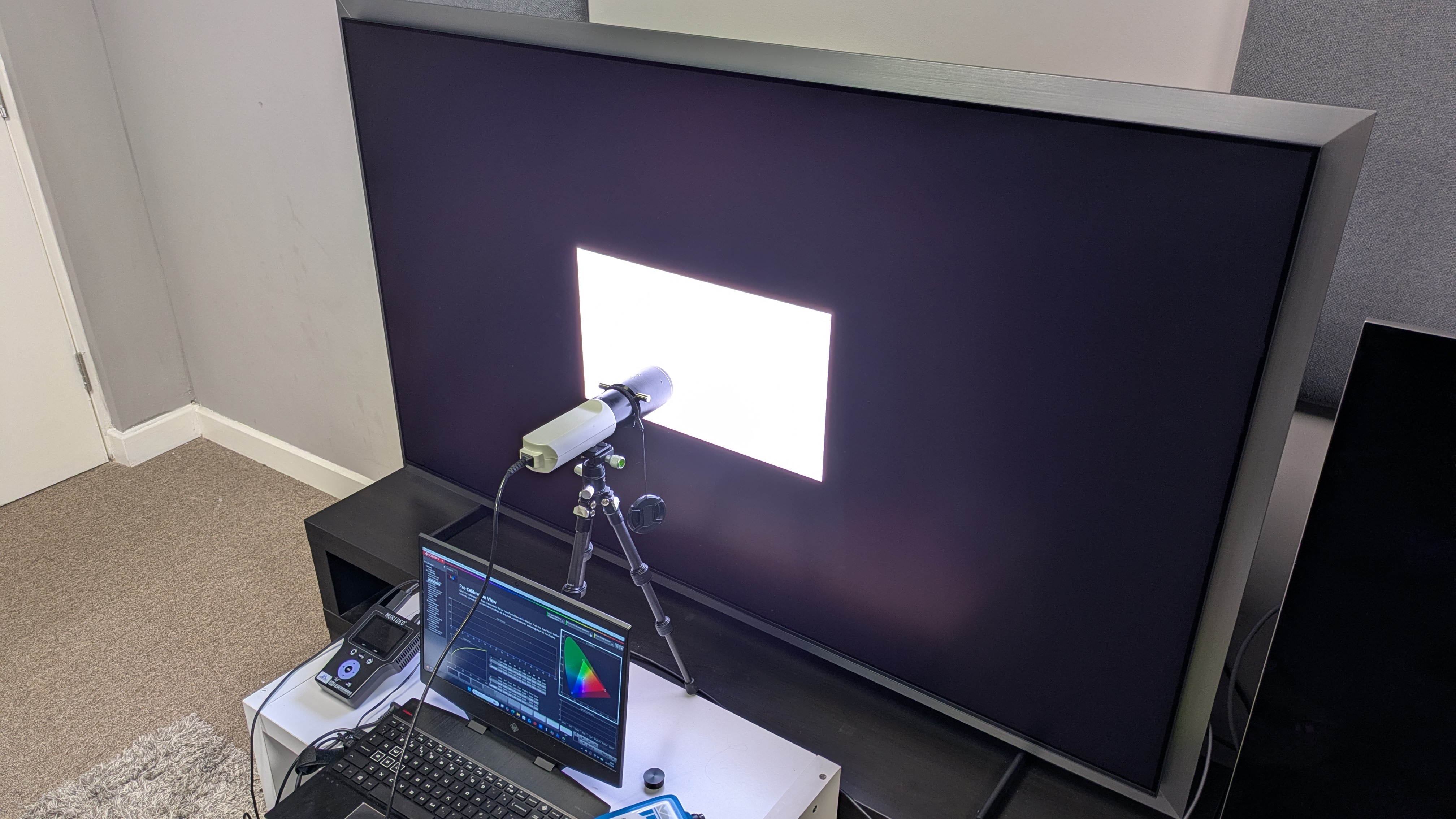
Once subjective testing was completed, I moved onto taking objective measurements. I did this using a Klein K-10A colorimeter (profile with a Jeti Spectral 15VA Spectroradiometer), a Murideo Six G 8K Metal test pattern generator and recorded measurements using Portrait Displays' Calman colour calibration software.
I started with brightness measurements, using white window patterns in sizes 1-100% in both SDR and HDR. The two primary results I focus on are peak (10%) and fullscreen (100%) brightness.
Next, I measured the S99H's colour and greyscale accuracy in SDR, and then measured its HDR colour gamut coverage, using the DCI-P3 and BT.2020 colour spaces, hoping for a result of over 95% in the DCI-P3 space.
We recently introduced two new tests into our measurements. The first is the HDR EOTF, which shows the accuracy a TV in both light and dark areas, suing 1,000, 4,000 and 10,000 nits targets. Then, there is the Spectral Power Distribution test, which measures how a TV handles colour recreation.
My final test was to measure the S99H's input lag using a Leo Bodnar 4K HDMI Input Lag Tester. I measured both 4K 60Hz and 1080p 120Hz results in milliseconds (ms).
Sitting at the top of Samsung’s 2026 TV lineup, the Samsung S95H is a flagship OLED TV that delivers excellent performance, particularly when it comes to picture, and a full set of features both for smart TV and for gaming. This could easily be one of 2026’s best TVs.
The S95H has a full list of features. Its NQ4 AI Gen 3 Processor comes with a stack of AI tools for picture, such as AI Motion Enhancer Pro and AI 4K Upscaling Pro, AI tools for sound such as Adaptive Sound Pro, and other AI tools for content recommendation. All of these fall under the Samsung Vision AI banner.
Picture quality on the S95H is superb. It delivers the highest brightness to date from a flagship OLED TV, along with vibrant, accurate colors, crisp textures and powerful contrast. Its anti-reflection screen is effective at eliminating reflections and while its Filmmaker Mode is a little dim in bright conditions, its Movie mode is a great brighter alternative.
Motion handling is mostly smooth and natural for both movies and sport, and while there are some hints of black crush in certain movies I tested, the S95H’s picture is still up there with the best OLED TVs.
The Samsung S95H delivers solid overall built-in sound. Its accuracy and precision are its strengths, with an excellent connection between the action on screen and the sound. The bass is punchy, there’s some nice impact and the soundstage can be wide. Still, this level of picture quality deserves a fuller sound, so I’d recommend one of the best soundbars or speakers.
Design is arguably the S95H’s most controversial topic this year. A new silver frame around the TV, called the FloatLayer Design, has been added and I personally found the frame to be distracting. While meant for wall-mounting, the extra width may cause space issues for some people and the handsome central pedestal stand of its predecessor has been replaced by two plastic feet. The One Connect Box has been removed, with ports returning to the TV itself — but you can connect Samsung Wireless One Connect Box to add more HDMI ports.
The S95H is a phenomenal gaming TV. Carrying four HDMI 2.1 ports that support 4K 165Hz, full VRR, HDR10+ gaming and ALLM, and boasting an ultra-low 9.5ms input lag at 60Hz, performance is smooth and the picture always looks great. Easily one of 2026’s best gaming TVs.
One UI Tizen is the S95H’s smart TV platform. It supports all major streaming apps, delivers pretty smooth performance and is easy to navigate. While there are some quirks that I found frustrating (namely auto-playing Samsung TV Plus), it’s still a good smart TV platform. Its Vision AI companion can be useful for those who enjoy AI, and while it doesn’t quite measure up to LG’s webOS, it’s still solid.
The 65-inch S95H I tested costs $3,399 / AU$5,299, putting it at the premium end of the TV market. While this is a high price, the S95H delivers features and performance to justify the price and it’s competitively priced with rivals, with the LG G6 65-inch costing $3,299 / AU$4,999. I expect prices for the S95H will drop shortly, with some deals already active in Australia at the time of writing.
Samsung S95H review: Prices & release dates
(Image credit: Future)
Release date: June 2026
55-inch price: $2,299 / AU$3,999
65-inch price: $3,299 / AU$5,299
77-inch price: $4,299 / AU$7,999
83-inch price: $6,299 / AU$9,999
The Samsung S95H is the flagship OLED in Samsung’s 2026 TV lineup. It sits above the mid-range Samsung S90H and budget Samsung S85H. The 65-inch model I tested launched in June 2026 at $3,299 / AU$5,299.
In the few weeks since its release, prices have remained the same, though we have seen some price reductions in Australia, particularly in larger-sized models, with up to AU$1,500 off the 83-inch model. The S95H’s launch prices are cheaper than both its predecessor, the S95F, and the rival G6. However, the G6 has been out for longer, so its prices have dropped over time.
Samsung S95H review: Specs
Screen type
QD-OLED
Refresh rate
Up to 165Hz
HDR support
HDR10+, HDR10, HLG
Audio support
Dolby Atmos
Smart TV
Tizen
HDMI ports
4 x HDMI 2.1
Built-in tuner
ATSC 1.0 (US)
Samsung S95H review: Benchmark results
1 / 4
Brightness measurements
Taken using a colorimeter and test pattern generator. Click the test name to see more measurements and choose a test from the dropdown menu
Samsung S95H
HDR Filmmaker Mode (10% window)
2739
HDR Filmmaker Mode (Fullscreen)
449
LG G6
HDR Filmmaker Mode (10% window)
3004
HDR Filmmaker Mode (Fullscreen)
451
Samsung S95F
HDR Filmmaker Mode (10% window)
2132
HDR Filmmaker Mode (Fullscreen)
390
01,0002,0003,0004,000
nits
HDR Filmmaker Mode Data
Product
HDR Filmmaker Mode (10% window) (nits)
HDR Filmmaker Mode (Fullscreen) (nits)
Samsung S95H
2739
449
LG G6
3004
451
Samsung S95F
2132
390
Samsung S95H
HDR Standard Mode (10% window)
2831
HDR Standard Mode (Fullscreen)
463
LG G6
HDR Standard Mode (10% window)
2469
HDR Standard Mode (Fullscreen)
385
Samsung S95F
HDR Standard Mode (10% window)
2135
HDR Standard Mode (Fullscreen)
380
07501,5002,2503,000
nits
HDR Standard Mode Data
Product
HDR Standard Mode (10% window) (nits)
HDR Standard Mode (Fullscreen) (nits)
Samsung S95H
2831
463
LG G6
2469
385
Samsung S95F
2135
380
Samsung S95H
SDR Filmmaker Mode (10% window)
220
SDR Filmmaker Mode (Fullscreen)
219
LG G6
SDR Filmmaker Mode (10% window)
559
SDR Filmmaker Mode (Fullscreen)
390
Samsung S95F
SDR Filmmaker Mode (10% window)
256
SDR Filmmaker Mode (Fullscreen)
137
0150300450600
nits
SDR Filmmaker Mode Data
Product
SDR Filmmaker Mode (10% window) (nits)
SDR Filmmaker Mode (Fullscreen) (nits)
Samsung S95H
220
219
LG G6
559
390
Samsung S95F
256
137
Samsung S95H
SDR Standard Mode (10% window)
229
SDR Standard Mode (Fullscreen)
229
LG G6
SDR Standard Mode (10% window)
648
SDR Standard Mode (Fullscreen)
559
Samsung S95F
SDR Standard Mode (10% window)
372
SDR Standard Mode (Fullscreen)
199
0200400600800
nits
SDR Standard Mode Data
Product
SDR Standard Mode (10% window) (nits)
SDR Standard Mode (Fullscreen) (nits)
Samsung S95H
229
229
LG G6
648
559
Samsung S95F
372
199
HDR color gamut
Closer to 100% is better. Taken using a colorimeter and test pattern generator.
Samsung S95H
UHDA-P3
99.97
BT.2020
89.2
LG G6
UHDA-P3
99.3
BT.2020
83
Samsung S95F
UHDA-P3
100
BT.2020
89.3
0255075100
HDR Filmmaker Mode Data
Product
UHDA-P3 ()
BT.2020 ()
Samsung S95H
99.97
89.2
LG G6
99.3
83
Samsung S95F
100
89.3
Picture accuracy
A lower score is better. Taken using a colorimeter and test pattern generator.
SDR Delta-E
Samsung S95H
1.6
LG G6
1.4
Samsung S95F
2.61
0123
SDR Delta-E Data
Product
Value
Samsung S95H
1.6
LG G6
1.4
Samsung S95F
2.61
Input lag
Lower is better. Taken using a Leo Bodnar 4K HDMI Video Signal Lag Tester.
Samsung S95H
4K 60Hz
9.5
1080p 120Hz
5
LG G6
4K 60Hz
8.9
1080p 120Hz
4.6
Samsung S95F
4K 60Hz
9.5
1080p 120Hz
0
012345678910
ms
HDR Filmmaker Mode Data
Product
4K 60Hz (ms)
1080p 120Hz (ms)
Samsung S95H
9.5
5
LG G6
8.9
4.6
Samsung S95F
9.5
N/A
The Samsung S95F does not have a recorded 1080p 120Hz results as its measurements was taken before we started doing this test
The above EOTF graphs show the accuracy of the Samsung S95H for hitting different HDR brightness levels in grayscale. The closer to the yellow line, the more accurate a TV is. As with all our tests, these results are out of the box, without calibration, to demonstrate the performance most people will see. As you can see, the S95H did very well on all three target tests. (Image credit: Future)
Spectral power distribution refers to the intensity of light that a source will display at various wavelengths of color. It can reveal how accurate a source can show color at different light levels, and can be instructive to understand how a TV is handling color. (Image credit: Future)
Samsung S95H review: Features
The ports of the S95H have returned to the rear panel of the TV, with the removal of the One Connect Box (Image credit: Future)
NQ4 AI Gen 3 processor
OLED Glare Free screen
AI enhancements including AI Football Pro mode
The flagship Samsung OLED has typically used a QD-OLED panel in its 55-77-inch sizes in the past. Based on my testing measurements, I am certain that the 65-inch model I tested does use a QD-OLED panel, though Samsung doesn't confirm this either way. The 83-inch model will use an LG W-OLED panel, because QD-OLED panels don't come in that size.
The S95H features an anti-reflection, matte screen, called OLED Glare Free by Samsung, that is designed to reduce mirror-like reflections, and keep reflections from a light to minimum.
The S95H uses Samsung’s own NQ4 AI Gen 3 processor, which provides visual AI-based enhancements such as AI Motion Enhancer Pro, 4K AI Upscaling Pro and Auto HDR Remastering Pro, as well as the introduction of AI Soccer Mode Pro, designed to provide the best picture and sound for Soccer. AI audio enhancements include AI Sound and AI Sound Controller Pro.
For HDR support, HDR10+, HDR10 and HLG are once again supported, but there is still no support for Dolby Vision. For enhanced audio formats, Dolby Atmos is supported, but not DTS.
The big design change with the S95H, compared to last year’s S95F, is the addition of a wider, silver frame, which Samsung calls a FloatLayer Design, which adds a couple of extra inches all around the TV. As a result, the One Connect Box is gone and ports have returned to the rear panel of the TV itself.
It’s worth noting that, as well as the four HDMI 2.1 ports on the rear panel, Samsung says that its Wireless One Connect Box can be added in addition to the other ports, giving you a total of eight HDMI 2.1 ports (four built-in, four on the optional box).
For sound, the S95H features a built-in 4.2.2-channel, 70W speaker system that supports Dolby Atmos: the same core specs as last year’s S95F. Sound features include Object Tracking Sound+ (OTS+), Adaptive Sound Pro and Active Voice Amplifier Pro.
Gaming is well covered, with four HDMI 2.1 ports built-in that support 4K at up to 165Hz, full variable refresh rate options including AMD FreeSync Premium Pro and Nvidia G-Sync, HGiG, HDR10+ gaming and auto low latency mode. There’s also a Game Hub where cloud-based applications such as Xbox and Luna can be accessed.
Samsung uses its own Tizen smart TV platform on the S95H, which features the aforementioned picture and audio AI tools as well as Generative Wallpaper and Art Mode, the latter of which is the same found on the brand’s The Frame art TVs.
Tizen supports a vast array of apps including Netflix and Prime Video and uses Samsung TV Plus for broadcast TV. It does however only have a built-in ATSC 1.0 tuner, rather than the latest ATSC 3.0.
Features score: 5 / 5
Samsung S95H review: Picture quality
The S95H's increase in brightness means daytime scenes have even more pop (Image credit: Future)
Spectacular color display
Effective anti-glare matte screen
Strong contrast and inky black tones
The S95H boasts some strong brightness results, clocking in at 2,739 nits in Filmmaker Mode and 2,831 nits in Standard for peak HDR brightness. I used Movie mode for some of my testing, and this registered at 2,751 nits peak HDR. This is a big jump over 2,132 nits and 2,135 nits the S95H’s predecessor, the S95F, registered in the same HDR Filmmaker and Standard modes respectively.
Even fullscreen HDR brightness has had a nice boost, registering 449 nits in Filmmaker, 460 nits in Standard and 450 nits in Movie. This is a jump over the 380 nits and 390 nits the S95F achieved in Filmmaker and Standard mode.
The S95H’s has an anti-reflection, matte screen. If you’re viewing in a bright room, with unavoidable light, the S95H should be near the top of your shopping list. While I preferred the LG G6 over the S95H for actual content in bright rooms, the S95H is still the better TV for eliminating reflections outright.
The S95H demonstrates effective upscaling of SDR sources. Watching a mix of reality shows and Wimbledon via Samsung TV Plus, the S95H did a good job sharpening textures and giving colors a richer look. With HD sources, detail upscaling looked realistic and definitely had a 4K-like level of detail.
I tried out the Auto HDR Remastering Pro tool, and while it did boost brightness and sharpen textures, it all looked too artificial for my liking.
Color reproduction is the S95H's best feature, meaning shots from colourful movies such as Speed Racer really shine on screen (Image credit: Future)
Moving to HDR sources, I first tested the S95H’s colour reproduction. Watching Speed Racer, a recent addition to my 4K Blu-ray testing rotation, the S95H delivered bright, bold colors that accurately captured the cartoon-style colours of the movie. Close-up shots of Speed Racer show vibrant reds in the interior of his cockpit and his ‘M’ logo, while later scenes show gorgeous, bright blues of clear skies and neon-like greens of a field in a schoolyard.
Comparing the S95H to the G6, I did find that the S95H made some reds a little pale and orange in appearance at times, but viewed in isolation, the S95H’s colors still looked superb. Moving to La La Land, Mia’s yellow dress was punchy, but accurate on the S95H and the gradient of pinks and purples in the sunsets looked realistic, but still lively.
It’s no real surprise that colors looked bold on the S95H, as I measured its HDR color gamut coverage at 89.2% of the BT.2020 colour space and 99.97% of the DCI-P3 color space: both outstanding results.
The Batman (pictured) looks best in Movie mode in bright conditions FutureIn Filmmaker Mode, in a bright room, The Batman is difficult to see Warner Bros / Future
For darker movies, it was important to get the right picture mode for the situation. I found The Batman was too dim to watch in the default Filmmaker Mode with the lights on in our testing lab, but Movie mode worked fine. In a darker room however, Filmmaker Mode worked.
Throughout The Batman, the S95H’s strong contrast shone through, aided by its punchy highlights from its newfound brightness and rich black tones. Whether Batman stood in a dark subway or the camera cut to a ceiling-high, wide-angle shot of the Batcave, there was an excellent balance between light and dark tones.
I found during my testing that in Filmmaker Mode, the S95H was prone to black crush during the darker parts of the movie, resulting in detail loss. Batman’s armor in the aforementioned subway scene is obscured, as the S95H prioritizes deeper blacks. This wasn’t as true in a ‘brighter’ dark movie, such as Alien: Romulus, where detail is more preserved, but there were still hints of black crush.
The S95H's textures are crisp and 3D-like, regardless of what's on screen (Image credit: Future)
The S95H’s textures are crisp and 3D-like, no matter the content. Skin, clothing and objects all look lifelike, especially in HDR. I actually found I preferred the look of the S95H’s skin tones better than the G6 in my comparison of the two.
Finally, motion. The S95H demonstrated good motion throughout my testing, but I found it was best to set motion to 3 blur and 3 judder. Any higher, and motion looked artificial and unnatural. Going back to Speed Racer, the S95H did a good job handling the fast racing sequences as cars swerved from side-to-side. I did find there was some judder as commentators panned across the screen, but I found this on every TV I’ve tested with the disc so far.
I tried out the S95H’s AI Soccer Mode Pro and it was somewhat effective. The commentary was clearer and louder, the picture was more detailed and motion was smoother. If you don’t want to use any AI tools, then Standard picture mode with judder and blur set to 3 worked well for sports.
Picture quality score: 5 / 5
Samsung S95H review: Sound quality
The S95H delivers solid built-in sound that's good for movies like Speed Racer (pictured), but a soundbar would do the picture more justice (Image credit: Warner Bros / Future )
4.2.2-channel speaker system with Dolby Atmos
Great accuracy and clarity
No DTS support
The S95H features a 4.2.2 channel, 70W speaker array and supports Dolby Atmos. There is however no DTS support. Along with its two sound modes, Standard and Amplify, there are AI Sound tools such as Adaptive Sound Pro and Active Voice Amplifier that can be used to adjust sound.
Watching Speed Racer with the S95H set to the Amplify sound mode, the S95H demonstrates solid bass and power, accurately delivering the rumble and revving of engines. Collisions as cars battle during races also have good impact, along with clear speech, even during the most hectic of races.
The S95H’s Object Tracking Sound+ (OTS+) is superb for delivering precise sound placement. When Speed Racer grinds a rail in the opening race, the sound was clean and audible, despite other loud effects.
Trying out the S95H’s AI Sound mode, it adds some width to the soundstage, giving more volume to more subtle effects. However, I personally found that the AI Sound was a little more compressed and some power was compromised, so I preferred the default Amplify setting.
While overall the S95H’s built-in speakers did a good job, I still felt the sound was contained to the screen's width, and while there was some good delivery of Atmos effects, they again were lost in the mix. For a TV with this picture quality, I’d still recommend a soundbar at least for the full cinematic experience.
Sound quality score: 4 / 5
Samsung S95H review: Design
The new silver frame surrounding the S95H will be divisive FutureThe screen 'floats' in front of the frameFutureThe pedestal stand has been replaced by two feetFuture
Extended silver frame will be divisive
Stand replaced with feet
No One Connect Box included
Arguably the biggest talking point for the S95H this year is the physical design changes compared to last year’s S95F. The most notable is the FloatLayer Design, a silver frame that surrounds the TV, giving it a floating, 3D look. This is going to be a controversial addition and for some, it will mean a re-think on where to put the TV, since it adds width and height.
Personally, I’m not a fan, as I find the silver to be a bit distracting and when viewed off-centre, the frame looks odd.
The black, metal, pedestal stand from the S95F has been replaced by two plastic gray feet. While these feet are sturdy and easy to install, I still feel it’s a downgrade for a premium TV. The TV’s bezel is still sleek and ultra-thin, however, and gives it a high-quality feel (but is slightly spoiled by the frame behind it).
The other big change is the removal of the One Connect Box, an external box that housed the TV’s connections and processing. Now, the ports have returned to the rear panel on the TV itself.
For some, this will be welcome news. The S95H is compatible with the Wireless One Connect Box too, so if you liked the external connections, this is still an option you can add on — and not only that, the box can work in tandem with the TV’s built-in connections, meaning a potential eight HDMI 2.1 ports. Who needs an AVR?
The SolarCell remote returns once again, and while there’s been no real changes or additions to it, it’s still a light, sleek, USB-C and solar rechargeable remote that’s probably one of the better remotes on the market.
Design score: 4 / 5
Samsung S95H review: Smart TV & menus
(Image credit: Future)
One UI Tizen smart TV platform
Vision AI features
Home, Gaming, Art Hubs
The S95H uses Samsung’s own One UI Tizen smart TV platform, with the headline addition this year being the Samsung Vision AI Companion, which can be used to find related content to what you're watching, and can answer general questions you may ask AI. Microsoft Copilot is supported.
Tizen supports major streaming apps such as Netflix, Prime Video, Apple TV+ and more.
Tizen uses a number of different hubs as a way to organize relevant apps and content. Home houses streaming apps and content recommendations based on your viewing. Game houses all things gaming, including cloud based apps from the likes of Xbox. Daily hosts apps for office and health use, while Art hosts the Art Store, where artworks can be downloaded to be used as screensavers.
Art mode is a new addition, and basically means you can turn this into an artwork display, just like Samsung's The Frame TV. This may explain the new frame-like design. The Art mode costs a monthly subscription for access to all artworks.
Tizen is intuitive enough and easy to use. There is a space at the top of the home screen for banner ads, but this is common on most smart TV platforms nowadays. One thing I did find frustrating was that whenever I lingered on the home screen, Samsung TV+ would autoplay and overwrite whatever I was doing. There seemed to be no way to turn this off, short of deleting the app.
There are a good number of picture settings present, as well as AI-based tools for picture and sound settings.
Smart TV & menus score: 4.5 / 5
Samsung S95H review: Gaming
The S95H is a fantastic gaming TV with a full suite of features (Image credit: Future)
Four HDMI 2.1 ports
FreeSync and G-Sync supported
9.5ms input lag time
The S95H is an excellent TV for gaming. Across its four HDMI 2.1 ports, it supports 4K 165Hz, full VRR including AMD FreeSync and Nvidia G-Sync, HDR10+ gaming and ALLM. It also features a Game Hub, where gaming related content and cloud based gaming apps such as Xbox and Luna are supported.
The S95H’s gaming performance is smooth and responsive, thanks to its ultra-low, measured 9.5ms input lag time. As I dashed around a desert battlefield in Battlefield V playing at 4K 120Hz, snapping between targets and diving for cover, there was never any sign of judder from the S95H, which expertly handled the chaos.
With its strong colors, high brightness and powerful contrast, the S95H looks great while gaming too. During the same desert mission in BattlefieldV, it did a superb job capturing the relentless heat of the African sun. Detail in weapons and textures of environments were crisp and refined throughout gaming as well.
Gaming score: 5 / 5
Samsung S95H review: Value
(Image credit: Future)
Premium OLED price
Competitive with other elite OLEDs
Great features and performance for the money
As a flagship OLED TV, the S95H carries a premium price tag. The 65-inch model I tested costs $3,299 / AU$5,299, although I’ve seen offers in Australia dropping the same model to $AU4,799.
This puts its pricing right in line with its rival, the LG G6, which costs $3,299 / AU$4,999 for the 65-inch size. Really, it comes down to preference between the two and how important the differences such as total reflection reduction versus maintain black tones are.
Right now, if you want a flagship Samsung OLED, a 65-inch S95F is still available for roughly $2,499 (stock looks depleted in Australia) and while the S95H is an upgrade, the S95F is easily the best value option right now. Once the S95F goes out of stock, which looks to be sooner rather than later, the S95H’s prices will continue to fall, and it’ll be a more-than-worthy successor.
Value score: 4 / 5
Should you buy the Samsung S95H?
(Image credit: Future)
Samsung S95H 65-inch
Attributes
Notes
Rating
Features
The Samsung S95H has a full suite of features for movies, gaming and smart TV. Dolby Vision HDR is still not supported however.
5 / 5
Picture quality
The S95H's picture is bright, bold, rich and detailed and it's excellent for bright rooms. Some signs of black crush, but an excellent picture overall.
5 / 5
Sound quality
Clear, accurate sound quality with solid bass and impact, but can feel contained to screen. Separate sound is recommended to match the picture.
4 / 5
Design
A new extended silver frame that will prove divisive, plus the central stand is replaced by cheaper plastic feet. Aside from this, the TV does look modern and feels very sturdy.
4/5
Smart TV and menus
A good smart TV platform wit plenty of settings and AI tools. There are some annoying quirks here and there though.
4.5 / 5
Gaming
A full list of gaming features with top-tier performance to match. An excellent elite OLED for gaming.
5 / 5
Value
The S95H comes at a premium price, but has the features and performance to justify it.
4 / 5
Buy it if...
You want a bold, colorful picture The S95H's picture is brighter than ever, with gorgeous colors and 3D-like textures that look great regardless of what's on screen.
You want an elite OLED for gaming With four HDMI 2.1 ports that support 4K 165Hz and all VRR options, and razor-sharp performance, the S95H is a superb TV for gaming.
You want to watch in a bright room The S95H's anti-reflection screen is effective at eliminating mirror-like reflections, even in the brightest rooms.
Don't buy it if...
You want a straightforward design The S95H's new silver frame will prove divisive, both aesthetically and because it might mean some will have to re-think their TV's placement.
You want Dolby Vision HDR Like all Samsung TVs, the S95H doesn't support Dolby Vision HDR, instead featuring support for HDR10+.
You're on a budget A flagship OLED TV comes at a price and while it does mostly justify its price, other, cheaper mid-range OLEDs with similar features are available.
Also Consider
Samsung S95H
LG G6
Samsung S95F
Sony Bravia 8 II
Price (65-inch)
$3,299 / AU$5,299
$3,299 / AU$4,999
$2,499 / N/A
$2,999 / AU$4,999
Screen type
QD-OLED
OLED
QD-OLED
QD-OLED
Refresh rate
165Hz
165Hz
165Hz
120Hz
HDR support
HDR10+/HDR10/HLG
HDR10, HLG, Dolby Vision
HDR10+/HDR10/HLG
HDR10, HLG, Dolby Vision
Smart TV
One UI Tizen
webOS 26
Tizen 9.0
Google TV
HDMI ports
4x HDMI 2.1
4x HDMI 2.1
4x HDMI 2.1
4 (2x HDMI 2.1)
Built-in tuner (US)
ATSC 1.0
ATSC 1.0
ATSC 1.0
ATSC 3.0
LG G6 The S95H's main rival, the LG G6 is brighter and has better black levels in bright-room viewing. It also supports Dolby Vision HDR. The S95H does have crisper-looking textures and the anti-reflection screen for extreme bright rooms, however. This choice may come down to price.
Samsung S95F The S95H's predecessor, the Samsung S95F is available for nearly half the price and has the same features and delivers similar performance in a more standard design. The S95H, however does have higher brightness and improved black-level handling.
Sony Bravia 8 II Sony's flagship OLED TV, the Sony Bravia 8 II also uses a QD-OLED panel for outstanding colors and it also delivers a fuller built-in sound. The S95H is brighter and has more gaming features though.
Reviewed in our TV testing room in varying lighting conditions
Tested using both SDR and HDR sources
Measurements taken using Portrait Displays' Calman color calibration software
The first step in testing the S95H was to determine its best picture modes. I settled on three: Filmmaker Mode for dark-room movie viewing; Movie for bright-room movie viewing and Standard for sports and daytime TV.
After this, I began by testing the S95H's picture quality using both SDR (broadcast TV) and HDR (4K Blu-ray and streaming), focusing on color, contrast, detail, upscaling and motion.
I also tested the S95H's sound quality using reference scenes from Speed Racer among other movies, and I tested its gaming performance using Battlefield V on Xbox Series X.
Once subjective testing was completed, I moved onto taking objective measurements. I did this using a Klein K-10A colorimeter (profile with a Jeti Spectral 15VA Spectroradiometer), a Murideo Six G 8K Metal test pattern generator and recorded measurements using Portrait Displays' Calman color calibration software.
I started with brightness measurements, using white window patterns in sizes 1-100% in both SDR and HDR. The two primary results I focus on are peak (10%) and fullscreen (100%) brightness.
Next, I measured the S95H's color and grayscale accuracy in SDR, and then measured its HDR color gamut coverage, using the DCI-P3 and BT.2020 color spaces, hoping for a result of over 95% in the DCI-P3 space.
We recently introduced two new tests into our measurements. The first is the HDR EOTF, which shows the accuracy of a TV's brightness across its range, using 1,000, 4,000 and 10,000 nits targets. Then, there is the Spectral Power Distribution test, which measures how a TV recreates colors.
My final test was to measure the S95H's input lag using a Leo Bodnar 4K HDMI Input Lag Tester. I measured both 4K 60Hz and 1080p 120Hz results in milliseconds (ms).
Users says they've observed LG gaming monitors automatically installing unwanted software on PCs
LG's terms of service warn that conversations may be "captured and processed" on TV with the latest version of webOS
The terms say you must now warn guests they may be recorded "in compliance with applicable wiretapping… laws"
How smart should a smart TV be? According to LG's latest TV terms and conditions, the answer is "not quite smart enough to comply with wiretapping laws", because that's now your responsibility if LG captures the voice of a guest in your house through its AI voice services. Though the situation with LG monitors appears to be even more dramatic.
As Gamers Nexus reports, some LG monitors appear to be installing adware on Windows PCs without asking for permission: in addition to the LG Monitor App Installer, they also install McAfee Scam Detector.
LG's own app requires full access to all system resources, which potentially includes all your online activity, logins, hardware, location and more — while McAfee has a long history of being installed on devices as 'bloatware', and people are not reacting positively to suddenly finding it on their PC.
There may be a perfectly innocent explanation for all of this, but when big tech firms keep getting caught doing bad things because they thought they could get away with it, it's no wonder people are assuming the worst.
The bit that's causing consternation regarding smart TVs is part 6(d) of the new LG Electronics terms of service, headed Voice Recognition and Privacy Compliance.
As Notebookcheck's Hannes Brecher notes, the section states that it's your responsibility "to obtain all necessary consents from any third parties whose voices may be captured by the Product and to notify household members and guests that their voices may be captured and processed, in compliance with applicable wiretapping, eavesdropping, and privacy laws."
There are three ways around that. One, you can turn off all microphone-based features. Some people won't mind that, but they can be useful — especially asking it for settings you don't know how to find.
Two, you can avoid installing the latest software — but that means you won't get any security updates, which are important (to protect your privacy, ironically, among other things).
Or you can disable your TV's connection to the internet so it can't send information back, but that obviously makes it less useful, and will also disable the voice controls anyway.
I think the terms and conditions are an attempt at corporate ass-covering rather than something sinister: the preceding paragraph talks specifically about when "a product with voice recognition functionality is used" and it's possible that "family members, guests, children, and bystanders" might be overheard; if you're choosing to activate AI-based voice features then of course voices are going to be captured and processed in order for those features to work.
At the same time, it does seem broad enough to let LG use people's voices as AI inputs, rather than just accidental capture. And in the context of what LG's doing with PC monitors (not to mention AI training's very, ahem, casual relationship with consent and copyright), that's a worry — and people online increasingly have no tolerance for anything like this, as the responses on Reddit and Gamers Nexus' original YouTube video have shown.
We've approached LG for comment on these claims, and will update the story when we hear back.
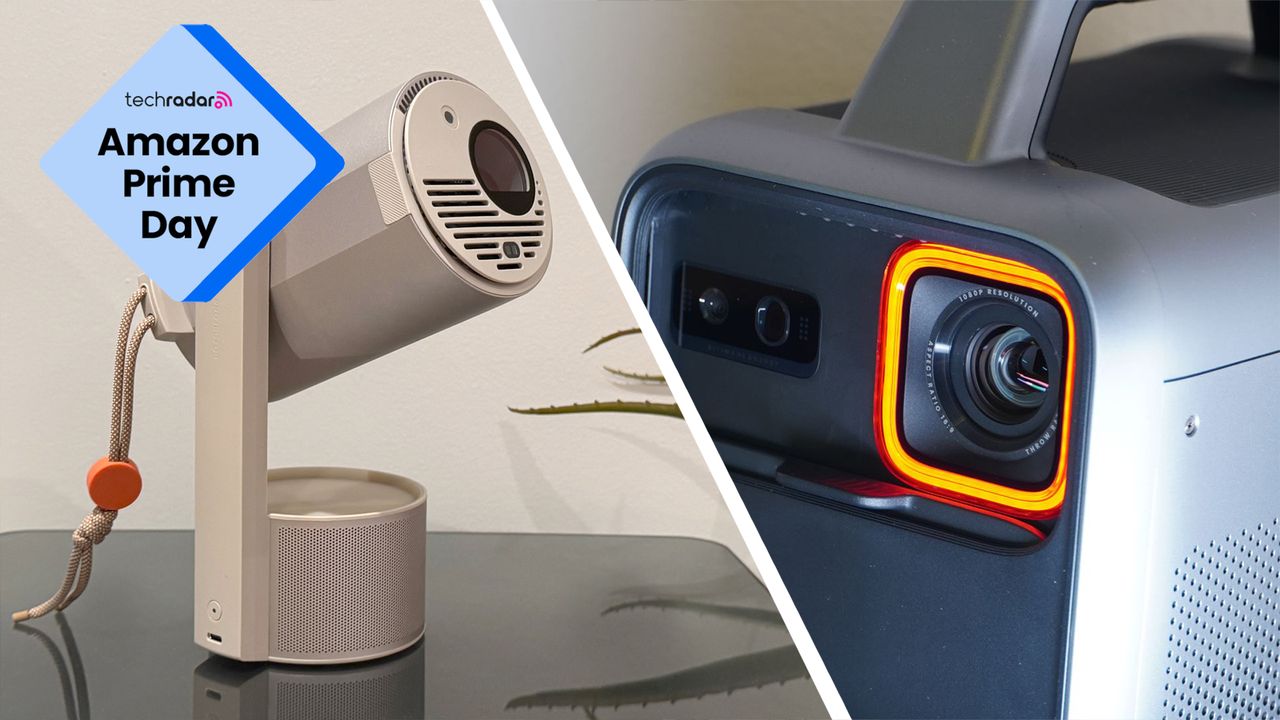
Projectors are adopting RGB backlighting, the hottest tech from the world of TVs. This large but vivid projector is a great option for summer movie nights.
Projectors are adopting RGB backlighting, the hottest tech from the world of TVs. This large but vivid projector is a great option for summer movie nights.
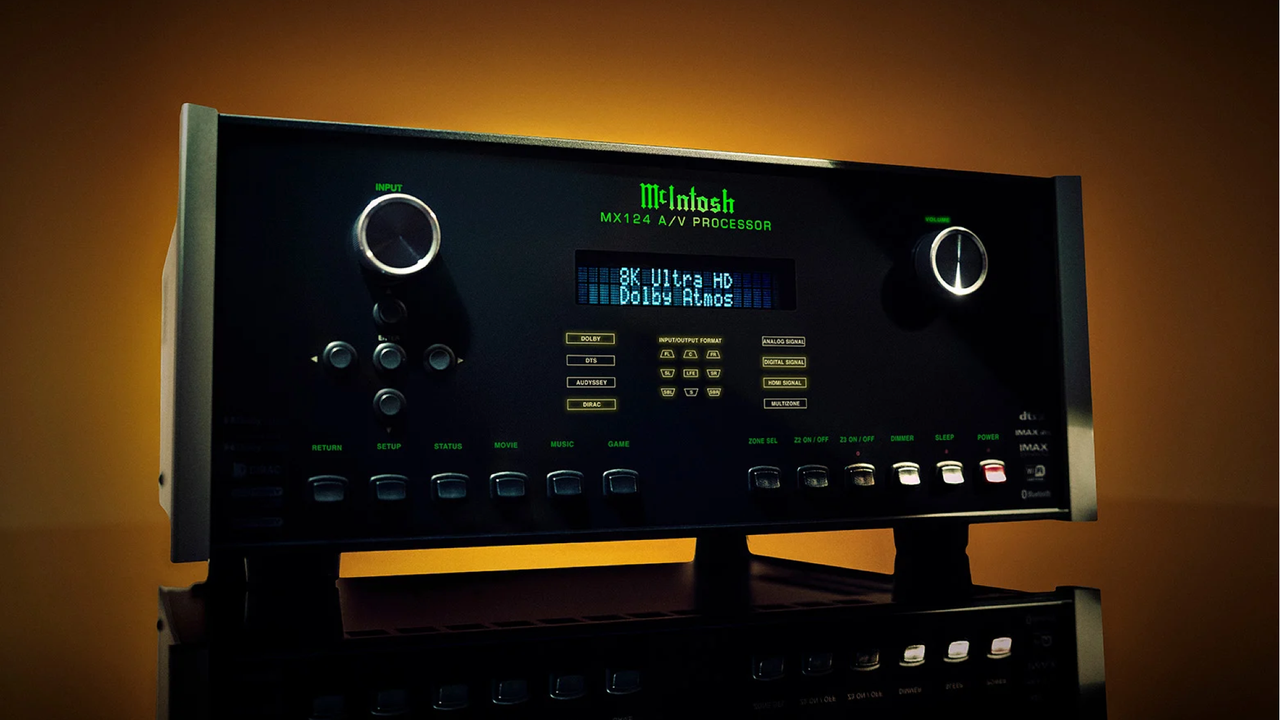
McIntosh MX124 AV processor launches for a cool $15,000 (about £11,079 / AU$21,423)
13.4 audio channels to 7.4.6 or 9.4.4 speaker configurations in Dolby Atmos and DTS:X Pro
7x 8K HDMI inputs and extensive additional connectivity, plus Dirac Live
If you're looking for an AV processor so future-proof that your grandkids will want to inherit it, McIntosh Labs may have just the thing. The new MX124 A/V Processor is designed for "today's "most advanced home cinema systems" according to the company, and comes with extensive connectivity options, as you'd expect.
As you'd expect from McIntosh, it's a tough-looking thing, and to my eyes it resembles something from a 1960s recording studio or NASA control center. But while it may look a little retro on the outside, what's inside is bang up to date.
Its 13 surround channels with four inividual subwoofer outputs support speaker configurations of up to 7.4.6 or 9.4.4, and it has superb wired and wireless connectivity for your AV components.
(Image credit: McIntosh Labs)
McIntosh MX124 AV processor: key features and pricing
The McIntosh MX124 A/V Processor is designed to sit at the center of a reference-spec home theater system, handling the audio and video sources and routing the audio to the appropriate amplifiers via its balanced or unbalanced outputs.
It has seven HDMI inputs and three outputs, including one with eARC for your TV, and all the HDMI inputs support 8K at 60Hz and 4K at 120Hz. They're compatible with Dolby Vision, HDR10+, HLG and IMAX Enhanced, and they also support HDCP 2.3, Rec.2020, 4:4:4 Color Spacing, Dynamic Lip-sync, 3D Video Passthrough, ALLM, VRR and Quick Frame Transport.
There are four dedicated digital audio inputs, one balanced and eight unbalanced analog stereo inputs, component and composite video inputs, and dual analog stereo outputs to accommodate two additional listening zones.
For streaming, the MX124 supports AirPlay, Bluetooth, Qobuz Connect, Spotify Connect, Tidal Connect and Roon Ready, supporting hi-res audio streaming at up to 32-bit/192kHz.
The MX124 also features Dirac Live Room Correction and Bass Control, with licenses included for both. It can also deliver Audyssey MultEQ XT32 room calibration if that's your preferred option.
As this is a premium AV product, it's been designed with professional installation in mind, and it's certified Connects With Control4 for simple and efficient setup and pre-configuration. It features RS232 for automation control and is suitable for rack mounting.
McIntosh didn't include pricing details in its official announcement but retailers are listing the new MX124 with a price tag of $15,000 (about £11,079 / AU$21,423). And as I mentioned above, that's excluding amplification.
Try our TV size and model finder! You tell it how far you sit from your TV, we'll tell you what size to buy based on viewing angle advice from image quality experts, and we'll recommend our three top TVs at that size for different prices.
Loewe's Antares is a 4K OLED TV with triple tuner, HDMI 2.1 and 144Hz VRR
Selection of wall mounts, floor stands, rotatable table stands and speakers
From £2,500 (about $3,350 / AU$4,799)
German luxury brand Loewe has unveiled what it calls its "most individual Smart OLED TV to date," the Loewe Antares. It's a 4K TV with a modular design that enables you to personalize it to suit your particular preferences.
The Antares TV features interchangeable aluminum onlays with a range of fabric colors, and flexible setup options including a universal table stand, multiple floor stands including a motorized stand, and several wall mount options. The table stand can rotate and offers three height positions.
The TV has Loewe's Invisible Sound integrated speaker system, but you can specify it with lots of beefier options. You can add the Loewe Soundbar Antares, which is a front-firing 80W soundbar designed specifically for these TVs, and/or an optional subwoofer.
You can also specify your Antares with other Loewe audio products including the multi.room amp, Klang subwoofer, We.BOOST wireless surround sound system and the we.BOOST center speaker, though the TV itself can be the center speaker in the wireless surround system if you prefer.
(Image credit: Loewe)
Loewe Antaras: key features and pricing
Each Antares TV has a 4K OLED panel that's been "individually calibrated before leaving the factory" according to Loewe. Loewe is one of the few companies that gets raw OLED panels from LG Display and finishes the manufacturing itself, but the company confirmed that this is an OLED EX panel with Double Rate Driving technology, which suggests it's the same panel tech used in the five-star (albeit cheaper) LG C6 OLED TV, plus whatever finishing touches and calibration Loewe has added.
There's support for both Dolby Vision IQ and HDR10+ Adaptive when it comes to HDR. There's a dual-channel, triple-tuner setup with USB recording, parallel TV viewing and timeshift functionality, and the OS is a customized version of Vidaa OS, with key streaming apps, Apple AirPlay, Miracast and Matter on board.
For gamers there's HDMI 2.1 support, with 144Hz VRR at 4K, and a dedicated low-latency gaming mode. There are multiple sizes here, from the compact 42-inch to the range-topping 77-inch.
As you'd expect from Loewe these are premium priced TVs. Prices start at £2,500 (about $3,350 / AU$4,799) and rise to £4,000 (about $5,370 / AU$7,675). The Loewe Antares soundbar is £300 (about $400 / AU$575).
At the moment this is a UK-only release, though Loewe told TechRadar that a US launch is being considered, but isn't confirmed yet.
Thinking of buying a new TV?
Try our TV size and model finder! You tell it how far you sit from your TV, we'll tell you what size to buy based on viewing angle advice from image quality experts, and we'll recommend our three top TVs at that size for different prices.
In case you hadn’t heard, GTA6 pre-orders are live tonight (June 25) at midnight. Due for general release on November 19, it’s been 13 years (!) since GTA 5 first launched two console generations ago. While you’re pre-ordering your copy, now might be the time to upgrade your TV to experience Vice City looking its best.
I test TVs for a living, and that includes the best gaming TVs. For GTA 6, you’re going to want excellent picture quality with vibrant colors, excellent motion handling for the fast-paced action, and a suite of gaming features to cover the bases. Below, I’ve picked five of the top gaming TVs to suit all budgets that will be perfect for tearing through Vice City.
You may notice that all of these TVs are from last year. While we’ve been testing the best TVs this year and a lot of them are great, last year’s TVs will be a much better value and still more than capable of doing justice to GTA 6. That’s why, for me, they’re the better option right now.
LG C5
(Image credit: Future)
The best place to start is with the top recommendation. Sitting at the top of our best gaming TV guide, as well as our best OLED TV guide, is the LG C5, a five-star OLED that can literally do it all. It has a full suite of features and superb picture quality that will be perfect for GTA 6.
The C5 delivers rich, bold colors with whatever it’s given, and this is going to be important for the neon-soaked streets of Vice City in GTA 6. Watching colorful movies like Elemental on the C5, colors really pop on screen, with oranges, reds, and blues all shimmering. It also delivers rich contrast with deep black tones, important again for that nightlife vibe in Vice City. With excellent motion handling, car chases will be a breeze for the C5.
Packed with a full suite of gaming features, the C5 is a top-notch gaming TV. Four HDMI 2.1 ports support 4K 144Hz, full VRR, HGiG, ALLM, and Dolby Vision gaming, and with a 9.2ms input lag time, expect super-responsive gameplay as you’re fleeing from the cops in GTA 6. It handled Battlefield V at 120fps with ease when I played it.
Price-wise, you’ll want to pay about $1,199 / £1,399 (stock is looking thin in Australia) for a 65-inch model. This will be a great size for seeing GTA 6 in all its glory, but the C5 is available in sizes 42 to 83 inches to cover every situation.
TCL QM6K/C6K
FutureFuture
If you’re looking for a TV upgrade but don’t want to break the bank, the TCL QM6K (known as the TCL C6K/Q6C depending on region and retailer) is a fantastic choice. It still has great picture quality and an impressive stock of gaming features for a very affordable price.
I tested the C6K as I’m based in the UK, and it has great overall picture quality. Its main highlight is its color reproduction. It produces vivid, natural colors that made movies like Wicked look great during my testing, accurately capturing the vibrant pink of flowers in trees. Expect the same for GTA 6. The C6K also demonstrated impressive backlight control and black tones for a mini-LED at this price range, working well for movies like The Batman. Again, Vice City nightlife should look great.
The C6K supports a lot for gaming, which is rare at this level. It supports 4K 144Hz, FreeSync Premium Pro, ALLM, and Dolby Vision gaming. It has a measured 13.6ms input lag, which is still above the 15ms threshold we look for. Gaming on it, I had a great time while playing Battlefield V, as it did a great job handling chaotic battle sequences, so it should be prepared for GTA 6.
Its real highlight is its price. A 65-inch QM6K has dropped as low as $529 and the C6K 65-inch will cost around £679/ AU$1,099. These are excellent prices for a TV this size and a great option for an affordable upgrade for GTA 6.
Samsung QN90F
(Image credit: Future)
Now, if you’re someone who’s planning to take some time off to play GTA 6, you’ll need a TV that works well in a bright room for daytime gaming sessions. Enter the Samsung QN90F, a brilliant gaming TV that also doubles as our best TV for sports.
The QN90F is the perfect TV for bright rooms for several reasons. It has solid brightness (exceeding 2,500 nits HDR peak and over 600 nits full screen) and an effective, anti-glare screen that does a great job reducing mirror-like reflections to a minimum. So, even if you have big windows, the QN90F can handle them. It also has great picture quality to go with it, producing punchy, accurate colors and strong contrast with surprisingly rich black tones. Expect GTA 6 to look great on this one.
The QN90F is equipped with a full list of gaming features, too. It supports 4K 165Hz, FreeSync Premium Pro, ALLM and HDR10+ gaming across four HDMI 2.1 ports. Its 9.5ms input lag time is up there with the very best, so you can expect it to handle the chaos of GTA 6 with no problems.
While the QN90F is a flagship model, its prices have dropped significantly. A 65-inch will cost you roughly $1,399 / £1,299 (stock in Australia is low again), which is again phenomenal pricing for a TV at this level.
LG B5
(Image credit: Future)
If you want an OLED but can’t quite stretch to the LG C5, the LG B5 is your next best option. It’s one of the best budget OLED TVs I’ve tested and delivers a lot of the same great performance and features as its step-up sibling.
With accurate, rich colors that suited the vibrant aesthetic of Wicked and Elemental, the B5 is sure to make GTA 6’s sun-soaked, colorful streets look fantastic. It also produces the powerful contrast with inky blacks you’d want from an OLED TV, despite its cheaper price range. While the B5 doesn’t have the brightness of other step-up OLEDs, it still has punchy highlights that will make the neon of Vice City pop.
The B5 is kitted out with a full list of gaming features, including 4K 120Hz, full VRR including FreeSync and G-Sync, HGiG, Dolby Vision gaming, and ALLM, all built into the four HDMI 2.1 ports. A measured 9.1ms input lag time is at the top of the gaming TV list, so expect all the action of GTA 6 to look superb.
The B5’s prices can fall to a deceptively affordable place for an OLED. You can get the 48-inch model, a perfect size for bedroom gaming, for as low as $549 / £569 / AU$1,169, meaning you don’t have to spend a fortune for OLED.
LG G5
(Image credit: Future)
The flagship OLED for LG in 2025, the LG G5, is like the C5 taken up a notch. It has a similar feature set but turns up the picture quality by another level with higher brightness, bolder colors, and more impactful contrast.
Testing the G5, its colors were its most impressive aspect. Vibrant, rich, and bright all at once, any colorful scene dazzled on screen, and I think it’s going to do the Miami-inspired Vice City serious justice in GTA 6. It also produces powerful contrast, expertly balancing deep black levels and bright highlights. Vice City nightlife will look stunning on this TV. It also produces extremely impressive textures that are 3D-like, along with refined detail.
This is another TV with an impressive list of gaming features. 4K 165Hz, full VRR including FreeSync and G-Sync, Dolby Vision gaming, HGiG, and ALLM are on all four HDMI 2.1 ports. Its measured 9.2ms input lag time again did wonders for Battlefield V’s fast-paced gunfights at 120fps when I played it, so it should do the same for GTA 6.
The G5 is at the more premium end of the TV market, with a 65-inch model costing $2,299 / £1,999 / AU$2,699, but if you are looking for the premium way to play GTA 6, this will be the TV to do it on.
We're nearing the end of the World Cup 2026 group stages, and things are hotting up — both metaphorically and literally. A temperatures in my living room soar, I've decided it's time to take my game viewing outside, where I can enjoy the action with the cool evening breeze on my face.
For that, I need a projector — and now's a really good time to buy one. We're in the middle of the Amazon Prime Day sale (with retailers like Currys, AO and Very running rival deals events), so there are plenty of discounts to be had if you know where to look.
Below, I've rounded up the best projector deals I've spotted, including the ones I'm deciding between for my own al fresco watch parties. I've stuck to sub-£450 buys here, which means they're more basic options, and most are compact and portable, too. If you're looking for something higher-end that will be more of a permanent fixture, head to our best projector guide for our top picks.
Xgimi's range is worth checking out in particular, as are Anker's Nebula projectors. We haven't reviewed these specific models, but we have tested similar products from those brands, and been impressed. Our Anker Nebula Mars 3 is the larger and higher-specced sibling of the Mars 3 Air Mini featured below, for instance, and scored four stars in our review. We called the Xgimi Mogo 3 "a strong contender for the portable projector crown", too — and its successor is included in my deals roundup.
Scroll down for more excellent deals, and happy watching...
Prime Day is here, and one of the most popular products is, as always, TVs. I lead TechRadar's TV and home theater team, and I've worked with our dedicated deals editors and TV hardware writers to pick the best Prime Day TV deals this year.
We've got cheaper models than that, smaller models, and larger models — much larger in some cases. Here are the deals, presented in size order and price order. If you're in the UK, you can skip to those deals here.
Today's best TV deals in the US
Amazon's cheapest Prime Day TV deal is Insignia's 32-inch F20 Series Fire TV for just $69.99. The Fire TV features Full HD resolution, DTS Virtual :X Sound for impressive audio, smart capabilities with the Fire OS, and a voice remote with hands-free Alexa – all for under $100.View Deal
If you're looking for a cheap set for an extra bedroom, Amazon's Prime Day sale has the best-selling 32-inch 2-Series HD smart TV for a record-low price of $134.99. While the Amazon 2-Series TV lacks 4K resolution, it offers smart capabilities through the Fire TV experience and Amazon Alexa, providing hands-free control.View Deal
You can get the best-selling Insignia 43-inch F50 Series 4K TV for an incredible price of $119.99 — a record-low. The Insignia F50 Series TV features 4K resolution, DTS Studio Sound, smart capabilities with Fire OS, and a voice remote with hands-free Alexa, so you can use your voice to control your TV.View Deal
Easily one of the best value OLED TVs available, the LG B5 55-inch has dropped to $799.99. It's not a record-low low, but still a very good price. This is the perfect TV if you're looking for some excellent for both movies and gaming.View Deal
This brand-new version of the Amazon 55-inch Fire TV 4-Series is on sale for its lowest price yet. The mid-sized 4K display supports HDR10, delivering a sharp, clear, and vibrant image for TV shows, movies, and sports. All major streaming apps are ready to go, too, and there's voice control via Alexa. It's an all-around solid TV for the price if you need an affordable and capable display.View Deal
The latest Amazon Omni QLED is a brilliant budget TV that delivers solid picture quality and a good set of gaming features, including 4K 60Hz, Dolby Vision, and HDR10+, for an affordable price. This Prime Day discount brings the 55-inch model to its lowest-ever price of $279.99.View Deal
This Hisense U7 Series delivers top TV tech for the money in a reasonably sized display, including a bright, vibrant QLED panel with excellent contrast and a high 165Hz refresh rate for smooth images. It will excel as a TV for watching sports, streaming all your favorite shows and movies, and playing the latest games.View Deal
Samsung's super-stylish The Frame TV is always a big Prime Day hit, and this is an excellent price for the set, with its smart separate connections box, lovely frame and rich colors. And you get access to Samsung's impressive art selection, of course.View Deal
The LG C5 OLED is TechRadar's best-rated TV, while it lasts — it's getting hard to find in some sizes! Awarded five out of five stars in our review, the OLED display delivers an outstanding picture thanks to LG's Alpha 9 AI processor Gen8, impressive gaming features, and a comprehensive smart platform featuring all-new AI capabilities.View Deal
If you've been holding out for a premium World Cup TV upgrade, this deal on the Samsung S95F 55-inch might be perfect. Dropping to a record-low $1,597 at Best Buy, the S95F's bold colors, high brightness and brilliant anti-reflection screen make it a prime companion for the World Cup. View Deal
The TCL QM7K is a feature-packed mini-LED TV that over-delivers for its price range. It has great picture quality and a ton of solid gaming features. While this discount may be small, it does take the 65-inch model down to a new record-low price of $749.99. View Deal
This Prime Day deal takes the 65-inch Amazon Ember Omni Mini-LED TV down to a record-low price of $879.97. This TV delivers solid brightness and contrast, along with bold colors, and a ready-to-use, out-of-the-box sports mode that lets you watch sports with minimal setup. It also offers a robust selection of gaming features, including 4K, 144Hz, VRR, ALLM, and Dolby Vision support.View Deal
Samsung's S90F OLED TV is one of our best-rated OLED TVs, and it's down to $1,397.99, thanks to a $1,000 discount. The S90F OLED TV delivers an outstanding picture, thanks to the quantum dot OLED technology and Samsung's NQ4 AI Gen3 processor. You're also getting extensive gaming features and Samsung's impressive Tizen operating system.View Deal
The LG C5 is the ultimate all-around TV, delivering excellent performance for movies, gaming and sports with a full suite of features and superb picture quality. The 65-inch model has dropped to $1,199.99 at Amazon and while this isn't a record-low, it's the cheapest it's been since February. View Deal
The 65-inch TCL QM8K has dropped to an excellent price for Prime Day, though it's not quite a record-low. If you're looking for a TV for the World Cup, the QM8K delivers the bright, punchy picture quality you need, plus a solid built-in sound system. View Deal
When you get a bigger-screen TV, you want strong image quality to make the most of it, and the Hisense U7 Series provides that. It's ideal for watching sports thanks to its bright images and solid motion handling, and has great current-gen gaming features. 75 inches of good-quality TV viewing for under $1,000? This is a Prime Day bargain.View Deal
The Samsung QN90F is our ultimate TV for sport thanks to its brightness, glare-free screen and excellent motion handling, making it a perfect World Cup TV. Stock is either running low or gone across various retailers, but you can still get the 75-inch model for this great price, considering what a premium TV it is.View Deal
Here is an Amazon exclusive deal on a massive display. You can get TCL's 98-inch QM64L Series for $1,799.99, which is an incredible price for a TV of this size. A truly great budget mini-LED TV, the TCL QM64L delivers vibrant picture quality and solid gaming features for a price that won't break the bank.View Deal
Today's best TV deals in the UK
The perfect gaming screen upgrade ahead of GTA 6 — fantastic OLED image quality, with full HDMI 2.1 support on all four HDMI ports, plus a great smart TV system. This is an unbeatable price for a TV this good at this size.View Deal
A detailed TV from a reliable brand, with good smart TV software that provides all the major streaming services. This is probably the best mid-size budget TV you can get during this year's UK Prime Day sale.View Deal
LG's best value OLED hits its lowest ever price with this Prime Day deal, with the 48-inch LG B5 hitting £567, beating the previous cheapest price by £60. Perfect for bedroom gaming, the B5 has a full suite of gaming features and delivers smooth gameplay. View Deal
This is an incredible price for a 55-inch OLED TV that's as good as this. The S84F is basically the same as the Samsung S85F, which we gave 4.5 stars to — this cheaper version doesn't have Filmmaker Mode and lacks some minor lifestyle features, but has all the essentials. It's a bargain.View Deal
Still looking for that TV upgrade for the World Cup? The Samsung QN90F is our pick for the best TV for sports and the 55-inch model has dropped to £809.10, which is the cheapest it's ever been. With a glare-free screen and solid brightness, it's ideal for bright rooms, too. View Deal
The LG C5 covers all the bases, with OLED picture quality and razor-sharp performance for movies, sports and gaming. There's a reason it tops most of our best-of lists. The 55-inch model has dropped to £977.10 at Amazon, a new record-low price. View Deal
The Samsung S95F delivers superb picture quality, with high brightness, vibrant colors, and effective reflection handling thanks to its anti-glare screen — it really is a fantastic World Cup TV upgrade. This deal takes the 55-inch model down to £1,237.50, a record-low for this phenomenal five-star OLED. View Deal
This is essentially the same TV as the TCL C6K, which we rate as the best cheap TV available right now — and it's better value than most TVs that actually aimed to be budget sets in the first place. The picture quality feels far more premium than the price — it's a great low-price big-screen upgrade.View Deal
This TV is a great price, given the premium mini-LED tech inside, and the support for 4K 120Hz gaming on new-gen consoles. It's a big, bright, dazzling premium TV.View Deal
The art TV market is more crowded than ever before, and even though Samsung started it with the Frame TV and later expanded with the Frame Pro, there’s been Hisense’s Canvas TV for a while, and the most recent addition is from Amazon.
Amazon’s Ember Artline Fire TV might only come in two sizes, but it packs a punch in two key areas compared to Samsung’s Frame TV: it comes with a frame that completes the effect of looking like a true piece of art out of the box, and you don’t need to pay for a subscription for art to show off.
Best of all, though, it’s down to its lowest price for Prime Day 2026, with Amazon dropping the 55-inch to just $699.99 (originally $899.99) and the 65-inch to $899.99 (originally $1,099.99) — that’s a 22% and 18% discount, respectively. You also get to pick between 10 frame options.
Today's best Amazon Ember Artline Fire TV deal
Amazon's 55-inch Ember Artline Fire TV is at a new all-time low price for Prime Day 2026, and comes with a bezel frame in the box. Plus, you get more than 2,000 pieces of artwork for free and the Fire TV interface for easy access to major streaming services.View Deal
Just like the 55-inch, the largest Amazon Ember Artline Fire TV is at the lowest price ever for Prime Day 2026. Right now, the 65-inch is $899.99 and comes with access to over 2,000 pieces of artwork and a frame in the box.View Deal
It’s a pretty stellar Prime Day deal for an art or lifestyle TV. The Ember Artline, in either the 55-inch or 65-inch size, is a 4K QLED TV finished with a matte coating. And yes, the latter is pretty similar to how the Frame TV is finished, helping make whatever art you’re displaying look more like actual artwork.
Amazon also supports the HDR10+ standard here, along with Dolby Vision, and it runs Fire TV out of the box.
The latter means you’ll have access to all the major streaming services such as Disney+, Netflix, and Apple TV, assuming you have the logins, and you can control it all with Alexa+.
It’s also a thin TV that won’t protrude from the wall all that much if you decide to hang it, as the Ember Artline is just 1.5 inches thick. Out of the box, you get access to over 2,000 pieces of artwork to display for free, and you can upload your own photos.
At $200 off for both the 55-inch and 65-inch models, there hasn’t been a better time to score the Ember Artline than Prime Day 2026. Of course, Samsung’s The Frame models are seeing discounts of their own this Prime Day.
The Frame Pro also boasts a QLED Mini LED display, and has a wireless One Connect Box for a cleaner look when fully set up.
Samsung's super-stylish The Frame TV is always a big Prime Day hit, and this is an excellent price for the set, with its smart separate connections box, lovely frame and rich colors. And you can get access to Samsung's impressive art selection, of course.View Deal
Samsung's 2026 Frame Pro levels up its classic art TV formula with a Neo QLED display finished with a matte coating, a wireless One Connect box, and a slim-fit wall mount included in the box. Right now, you can save $230 on the 55-inch size at Amazon.View Deal
1500W of speaker power in a three-way speaker system that reaches down to 25Hz without subwoofer — and some robust bracing to make sure actually stays where you mount it
It's Blu-ray's 20th anniversary, which gave me an excuse to lock myself in a room for a work day with 4 discs released in 2026 that I missed testing previously.

 Login