❌

Reading view

The total solar eclipse on Aug. 12 will reveal something nobody has ever seen before

Every total solar eclipse is different. While the silhouette of the moon passing across the sun barely changes, the moment our natural satellite covers the entire solar disk, something spectacular happens — the emergence of the corona. The Latin word for "crown", the solar corona is one of the wonders of nature. To gaze upon its delicate, spiky white tendrils during brief moments of totality is to glimpse the infinite, but it's only a glimpse because the corona is always changing. Shaped by the sun's constantly changing magnetic field, the corona evolves from year to year, month to month and even day to day. No two total eclipses ever reveal exactly the same structure.

It's one reason why eclipse chasers keep traveling. The corona visible during the total solar eclipse of Aug. 12, 2026 — if skies are clear — will be a unique snapshot of the sun at a specific moment in Solar Cycle 25. It will reflect years of changing magnetic activity, thousands of sunspots and countless eruptions of solar material.

Once totality ends, that exact configuration of the corona will never be seen again. Can we know in advance what it might look like?

The sun's hidden atmosphere

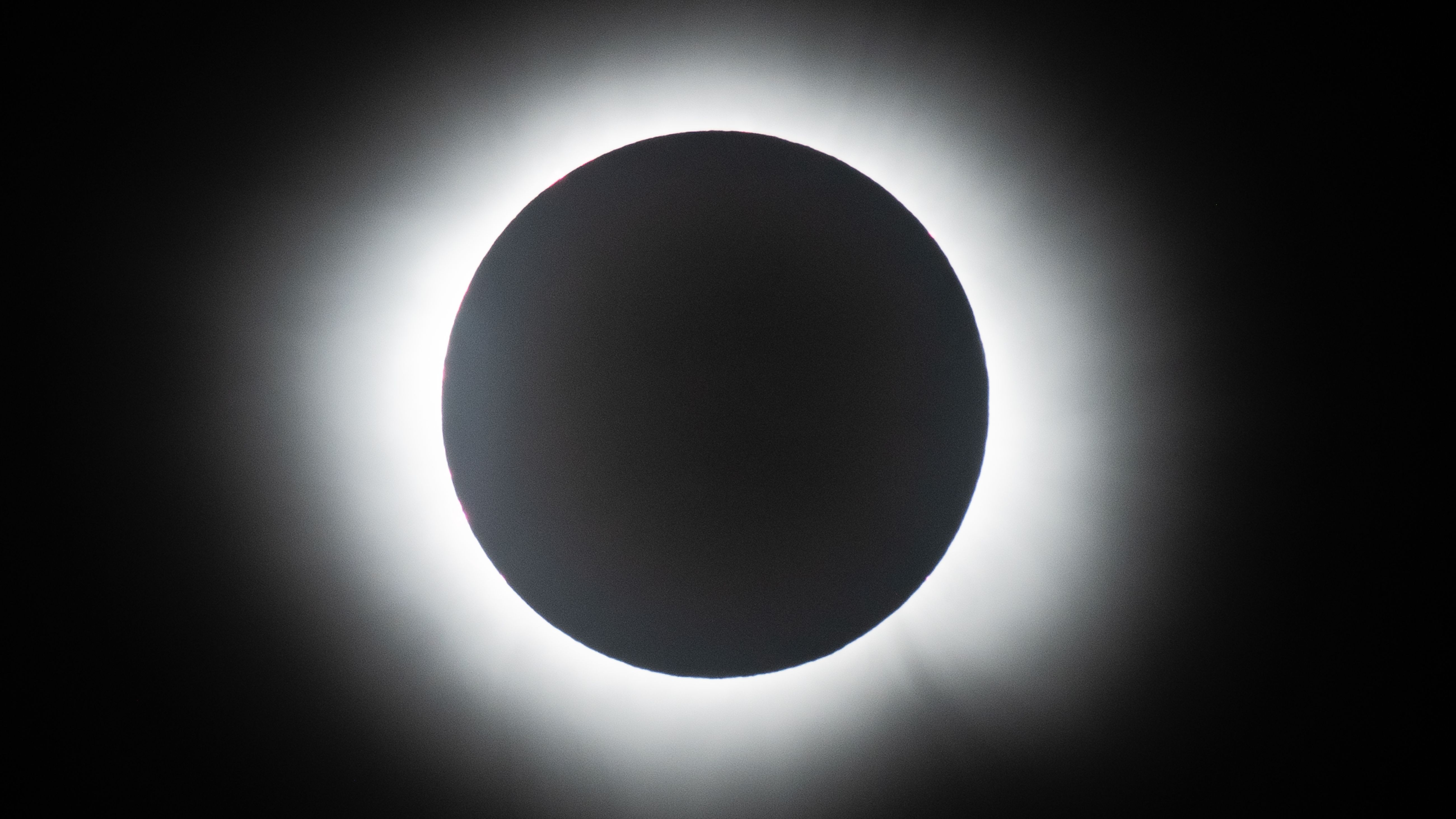
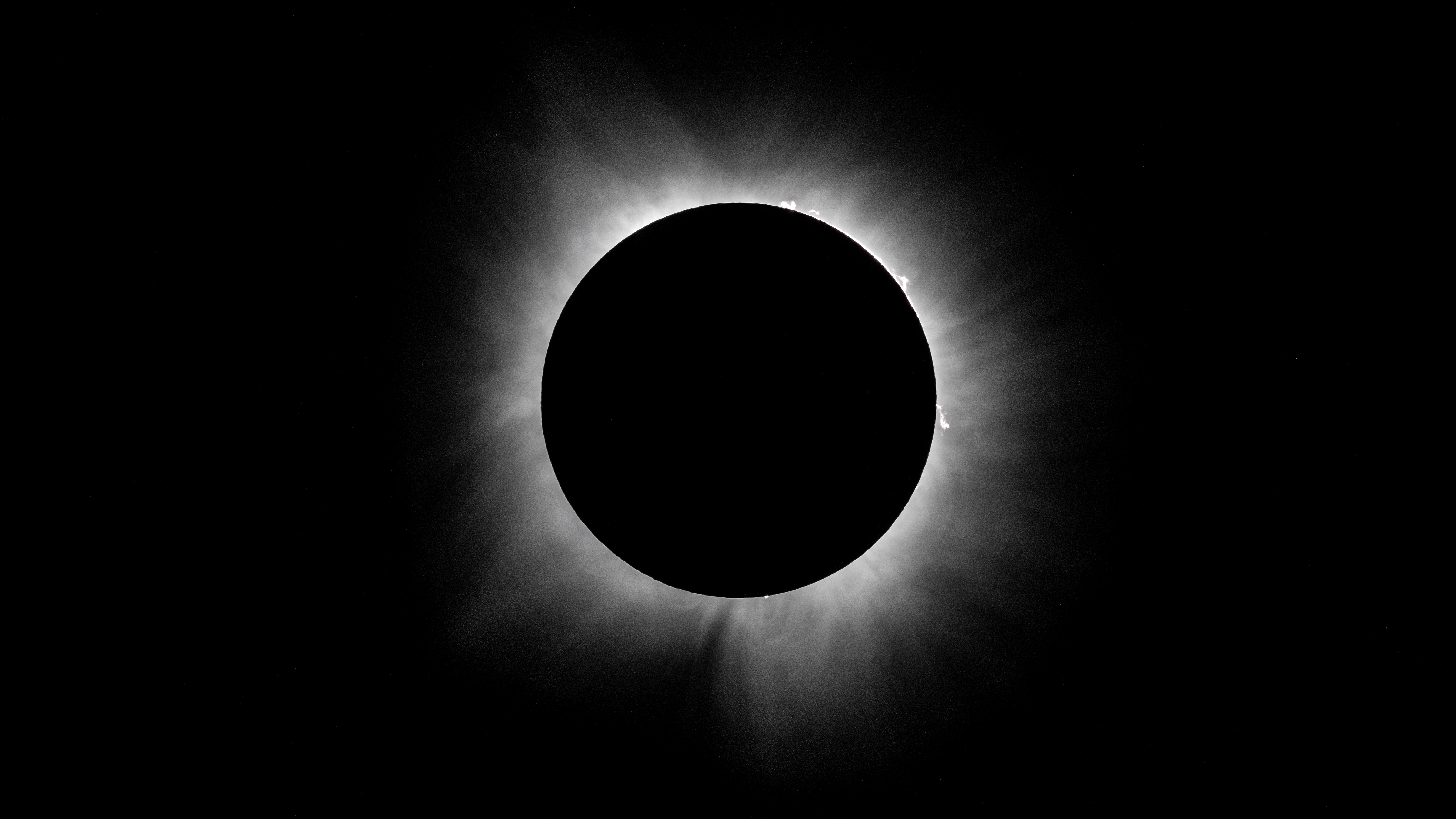
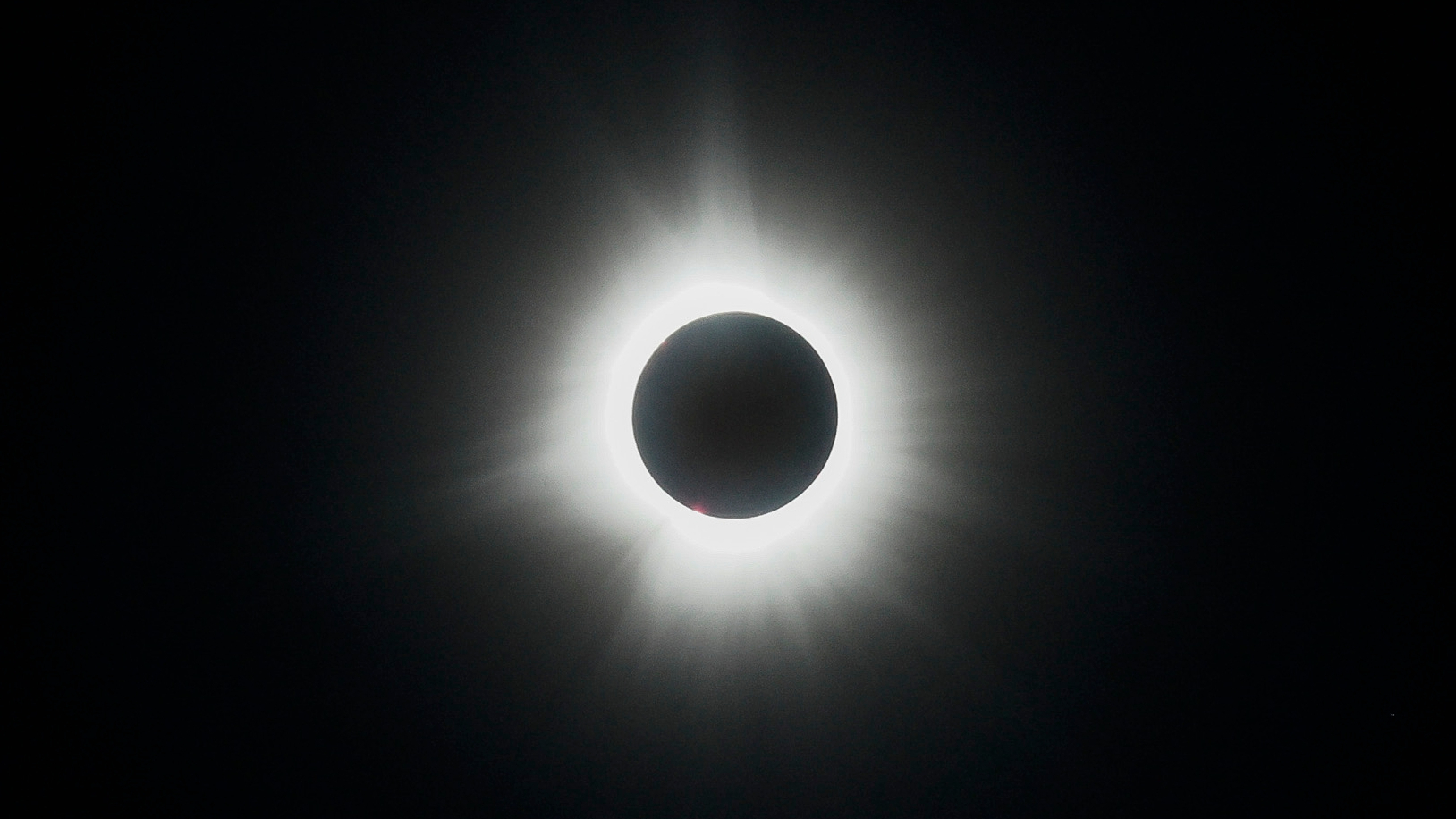
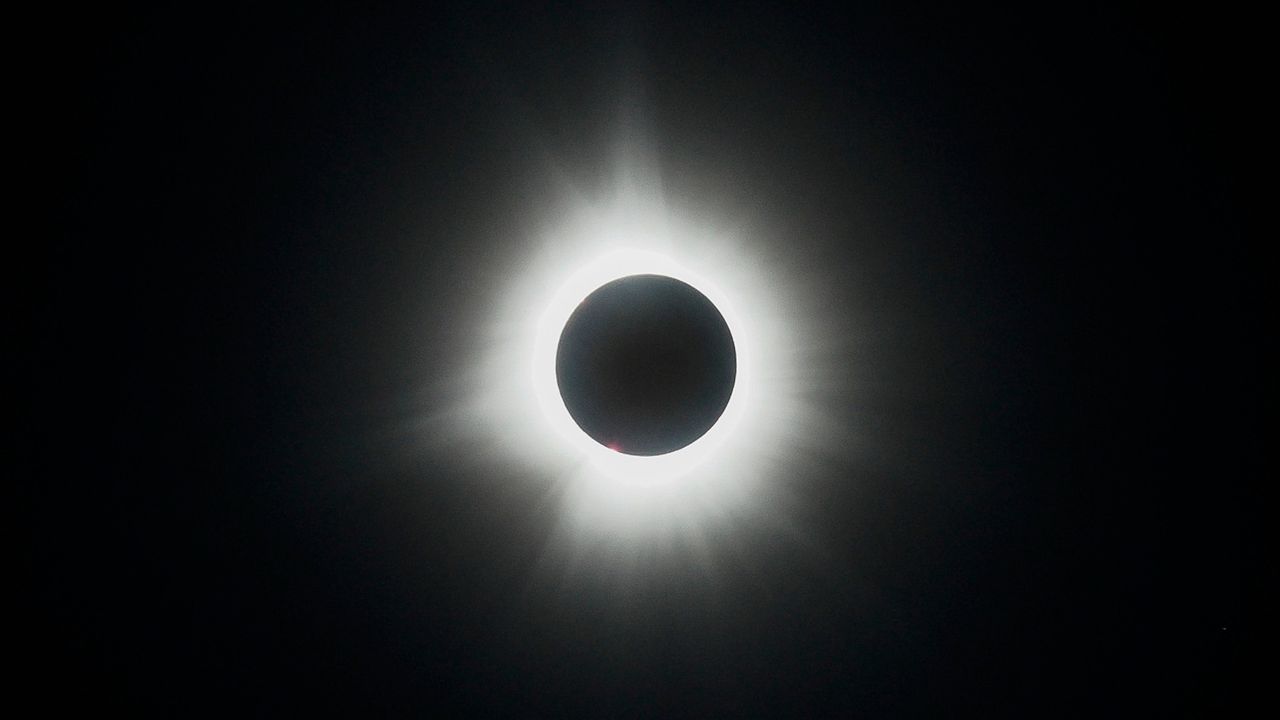
Under normal circumstances, the sun's corona — our star's outer atmosphere — is invisible. It extends millions of miles into the solar system, but it's overwhelmed by the brilliant light of the sun's photosphere, its visible surface. Totality changes that. When the moon completely covers the photosphere, the corona suddenly emerges. White streamers extend away from the black silhouette of the moon. Pink loops and prominences can appear around the edge of the moon.

For many first-time observers, the greatest surprise during totality is not only the detail but the scale. The corona often appears much larger than expected, extending several solar diameters away from the eclipsed sun. Photographs can capture some of that complexity, but they rarely reproduce the impression of depth and structure visible to the human eye, whose dynamic range is vastly superior to any camera.
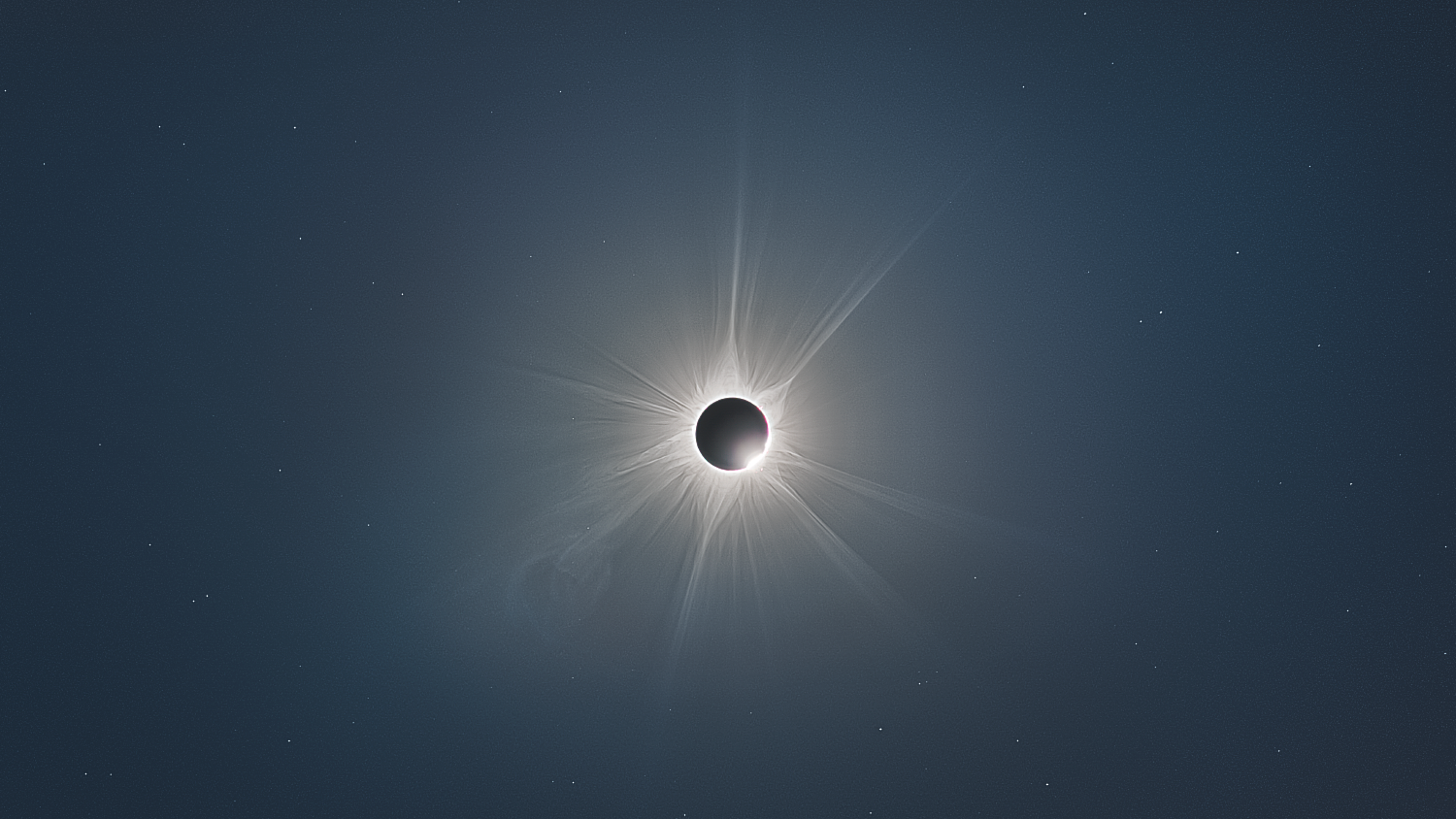
view of sun during totality with distinct white streamers streaking out from the sun - this is the corona.

The corona on Aug. 12, 2026, may resemble the total solar eclipse on April 20, 2023. (Image credit: NASA/ESA (SOHO), P. Horálek/Institute of Physics in Opava; Josef Kujal (of the Astronomy Society of Hradec Kŕlové) and Milan Hlaváč.)

Why every corona looks different

The corona is not a fixed object. It is created by extremely hot plasma — highly energized, ionized gas — that's trapped and sculpted by the sun's magnetic field. Since the sun's magnetic field is constantly changing, the corona changes with it.

"The sun follows a natural 11-year cycle of increasing and decreasing activity," Ryan French, solar physicist, author and science communicator at the Laboratory for Atmospheric and Space Physics (LASP) in Boulder, Colorado, and author of Little Book of Eclipses: An Essential Companion to Solar and Lunar Events told Space.com in an email. "At the peak of this cycle, called solar maximum, there are loads of sunspots on the sun, which are giant magnets nestled in the base of the sun's atmosphere. These sunspots produce a lot of solar flares and coronal mass ejections, which are kind of bursts and eruptions of energy from the sun's atmosphere, and at solar minimum, the sun has none of these things."

That magnetic activity determines the overall shape of the corona. During solar minimum, when the sun has few or no sunspots, the corona tends to look more uniform and more symmetrical. Long streamers often stretch from either side of the sun, giving the corona a wing-like appearance. During solar maximum, it can look much more complex. Sunspot regions act like magnetic anchors, creating structures that can appear as spikes or streamers extending in different directions.

"If you were to see a total eclipse during solar maximum, the solar corona looks almost like a five-pointed cartoon star," said French. "That's because every one of these sunspot regions creates a spire or spike that you can see with the eye."

Not solar maximum — but not quiet

The 2026 eclipse will not occur at solar maximum. Solar Cycle 25 peaked in October 2024, according to NASA and NOAA, with the Aug. 12, 2026 eclipse occurring almost two years later, during the cycle's declining phase. However, solar activity does not collapse immediately after solar maximum. It declines gradually, and the sun is expected to remain more active than it was in the lead-up to solar maximum.

"We're no longer in solar maximum — we're a third of the way past the peak in terms of amplitude and years passed," said French. "The corona will still be far more active than during the 2017, 2019 and 2020 total solar eclipses, but much less so than 2024's."

That makes the 2026 eclipse especially interesting. It likely won't show the full, highly structured corona seen close to the peak of activity in 2024, when the April 8 total solar eclipse occurred with a monthly sunspot number of about 144. Current predictions for August 2026 are closer to 102; far fewer, but still considered active by recent-cycle standards.

That means eclipse-watchers should expect something between extremes: not the clean, flattened corona of solar minimum, but not quite the wildest solar-maximum display either.
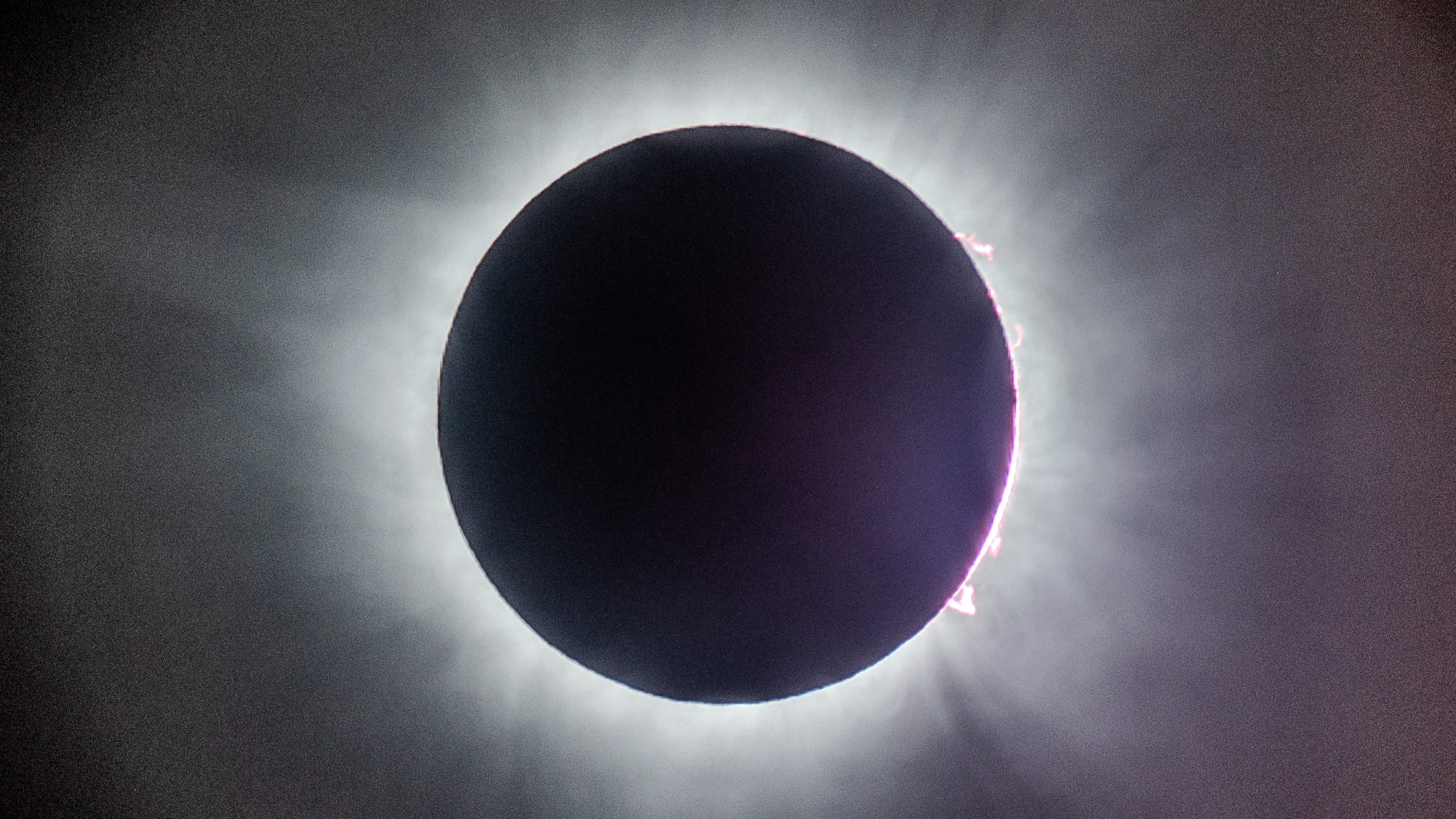
close up view of the sun during totality shows a white halo streaming out from the sun and towards the edge are vibrant pink tendrils.

The sun's corona is only visible during the totality phase of a total solar eclipse. (Image credit: Getty Images)

A comparison with past eclipses

A useful comparison may be the total solar eclipses near the previous solar maximum. Solar Cycle 24, which peaked in April 2014, was relatively weak. The closest total solar eclipses to that peak were the rare hybrid eclipse of Nov. 3, 2013, when the monthly sunspot number was around 113. By contrast, Solar Cycle 23, which had a double peak — in March 2000 and November 2001 — was relatively strong. The closest total solar eclipse occurred on June 21, 2001, with a monthly sunspot number of around 203. Its corona was likely more complex than expected in 2026.

The 2026 eclipse therefore sits in a middle category. It's not a repeat of 2024, but it's not a quiet-sun eclipse either. An active declining-phase corona, it will likely feature strong streamers extending far into space, but with greater asymmetry, with one side of the corona more active. "It's sunspots specifically near the edge of the sun that dictate what the corona will look like," said French. The sun rotates every 27 days, so any large active region of sunspots rotating onto the sun's edge shortly before Aug. 12 could alter the corona's appearance dramatically. It's why any forecasts of what the corona looks like — which often come from Predictive Science a week before the eclipse — are generally refined on the day of the eclipse.

Red prominences may steal the show

One of the most memorable sights during totality is the appearance of vivid pink or crimson features around the moon's edge. These are usually prominences — immense structures of hydrogen plasma suspended above the sun's surface by magnetic fields. They're often mistaken for solar flares by beginners, such as after the 2024 total solar eclipse.

"Prominences are large magnetic structures that suspend plasma in the atmosphere of the sun, and they glow very bright in a very specific wavelength of light called hydrogen alpha," said French. Prominences are more likely when the sun is active, and because they can last for days or weeks, they are easier to anticipate than a flare. In hydrogen-alpha images taken before eclipse day, observers may be able to see which prominences are present around the solar edge.

The 2026 eclipse may have favorable geometry for sighting prominences. Because the moon will appear only slightly larger than the sun — which contributed to the relatively short duration of totality, at a maximum of just 2 minutes 18 seconds — smaller prominences on different sides of the sun could be visible at the same time. That is different from longer eclipses, where the larger apparent moon can cover prominences on one side before revealing others on the opposite side.

Could a CME be visible?

A coronal mass ejection (CME) is an eruption of plasma and magnetic field from the sun's atmosphere. Seeing one during totality is possible — it happened during the total solar eclipse on Dec. 14, 2020 — but requires luck. "CMEs travel very slowly, so they take several hours to traverse and escape from the sun's atmosphere, so you wouldn't see any motion during an eclipse," said French. "But what you could see, if you're lucky, is a snapshot of an eruption — though maybe a long exposure camera will be more likely to see this than your eye would." Such a view would be rare, but the chances are higher in an active solar environment than near solar minimum.
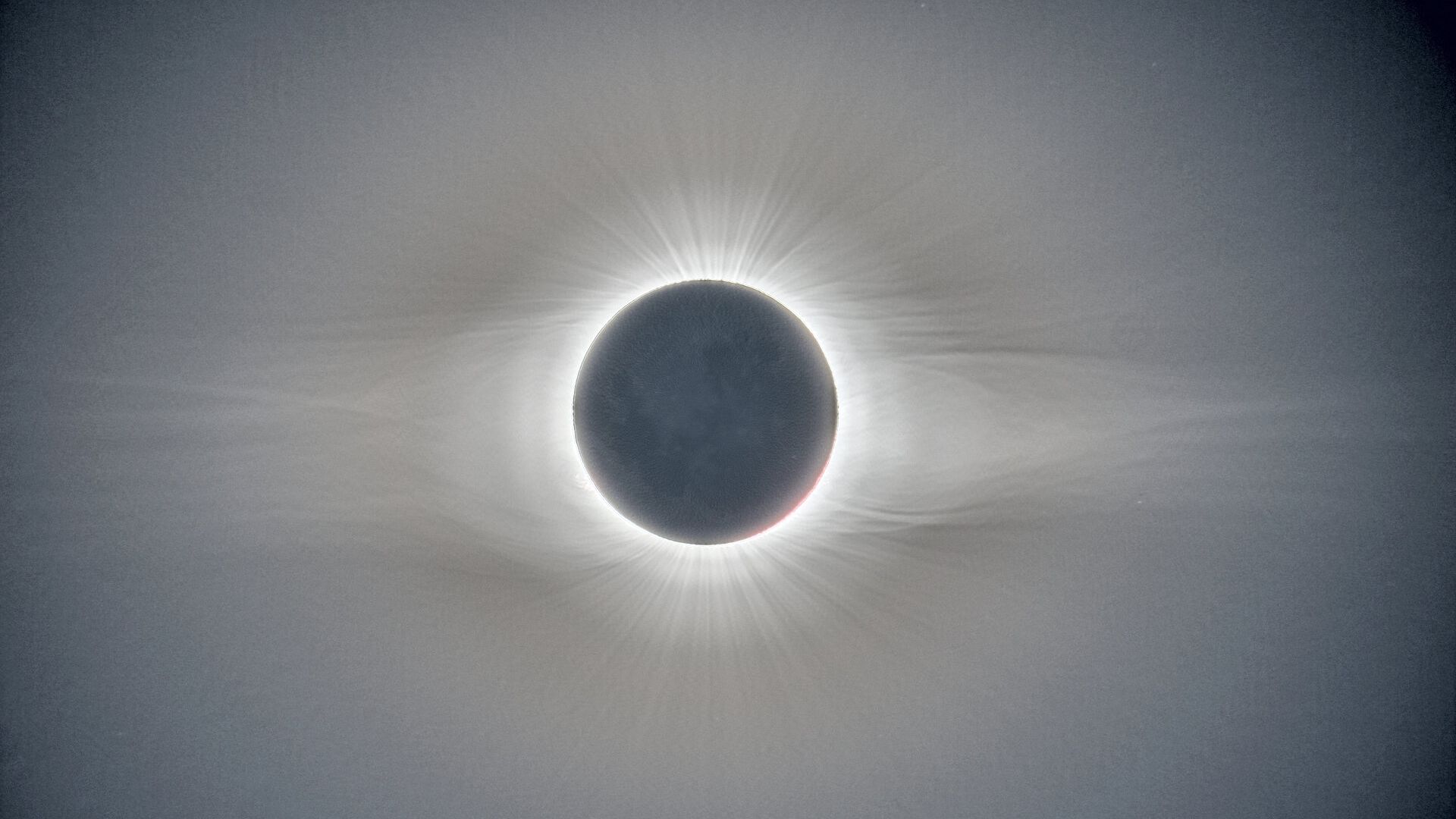
white halo surrounds the sun, it looks like it is streaming out into the depths of space.

The 2019 total solar eclipse on July 2, 2019, just before the last solar minimum in December 2019. (Image credit: ESA/CESAR/Observatorio Astrofisico di Torino)

Predicting the corona yourself

There will be a forecast from Predictive Science, which can be so accurate that some eclipse chasers avoid it, so as not to ruin the surprise of totality. One way to get a general idea is to look at real-time images from telescopes that use coronagraphs to block the sun, such as the COSMO K-Coronagraph, NASA SOHO's LASCO C3 and the GOES CCOR-1. For sunspots, check the latest H-Alpha image from the Global Oscillation Network Group (GONG).

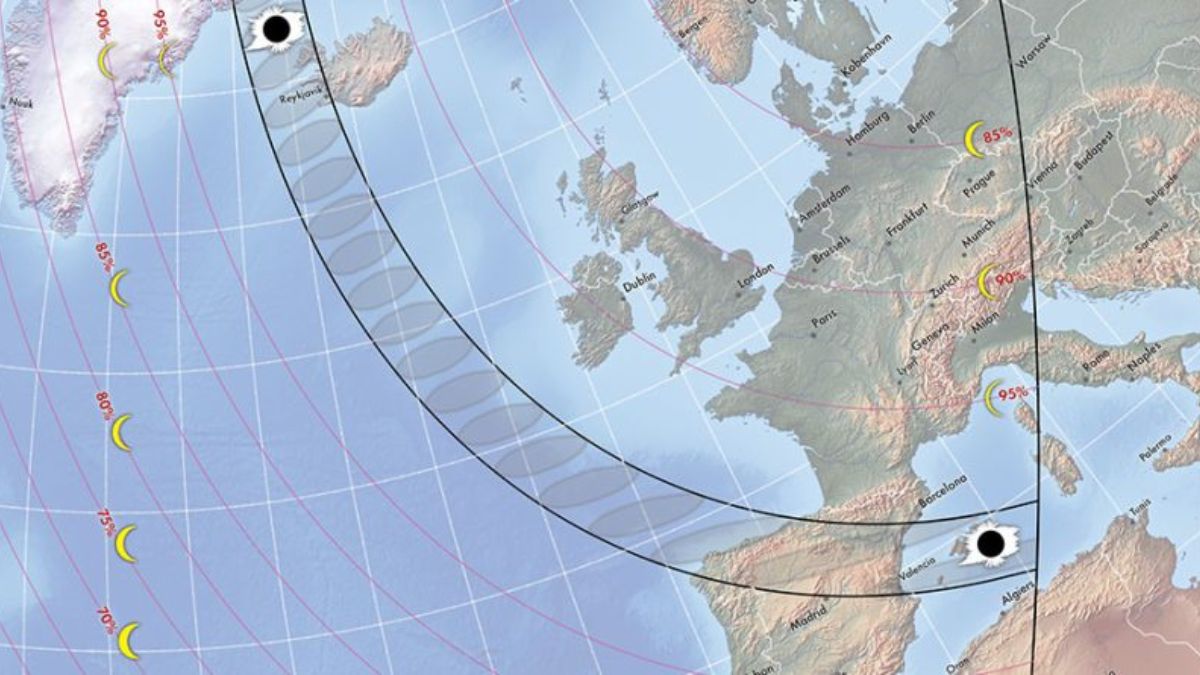
No scientist can say exactly what the corona will look like on Aug. 12, 2026. That will depend on the sun's magnetic activity in the days immediately before totality, the location of sunspot groups, the presence of prominences and the possibility of eruptions. "What exactly we see during the August eclipse will depend on what the activity is that week," said French. "And even if you saw an eclipse a month before or a month after, it could be very different." For a few fleeting minutes over Greenland, Iceland, Spain and the Balearic Islands, the sun's hidden atmosphere will become momentarily visible before vanishing back into the glare, never being seen again in quite the same way.
  •  

Here's what to expect from 5 stages of the total solar eclipse 2026

We're just a few short days away from the Aug. 12 total solar eclipse, when millions will watch as the moon glides across the face of the sun, hiding its light in a wondrous display of orbital mechanics.

The eclipse will unfold during August's new moon phase, as the lunar disk slips silently between the sun and Earth in the daytime sky. Ordinarily, the subtle tilt in the moon's orbit causes its shadow to pass just below, or above our planet, missing it entirely.

However, on Aug. 12, the moon's orbit will carry it into a near-perfect alignment with the sun and Earth, casting its colossal shadow across a 182-mile-wide corridor known as the path of totality, where viewers will get to see the lunar disk fully hide the sun's disk.

The path of totality for the Aug. 12 eclipse cuts through Spain, Iceland and Greenland. Hundreds of millions more watching from outside of this narrow corridor will also bear witness to a spectacular partial solar eclipse, as the moon passes in front of our parent star, without fully obscuring its surface. Those unable to watch the eclipse in person by dint of geography can also follow along online, with details of the livestream to be released closer to the event.

Read on to discover what will happen during each stage of the Aug. 12 total solar eclipse.

Stage 1: The partial eclipse begins

The partial phase of the eclipse officially begins at the moment of "first contact", when the lunar disk takes its first nibble out of the sun — a subtle transformation that will first become visible in the skies over the U.S. state of Alaska at 11:34 a.m. EDT (1534 GMT) on Aug. 12.

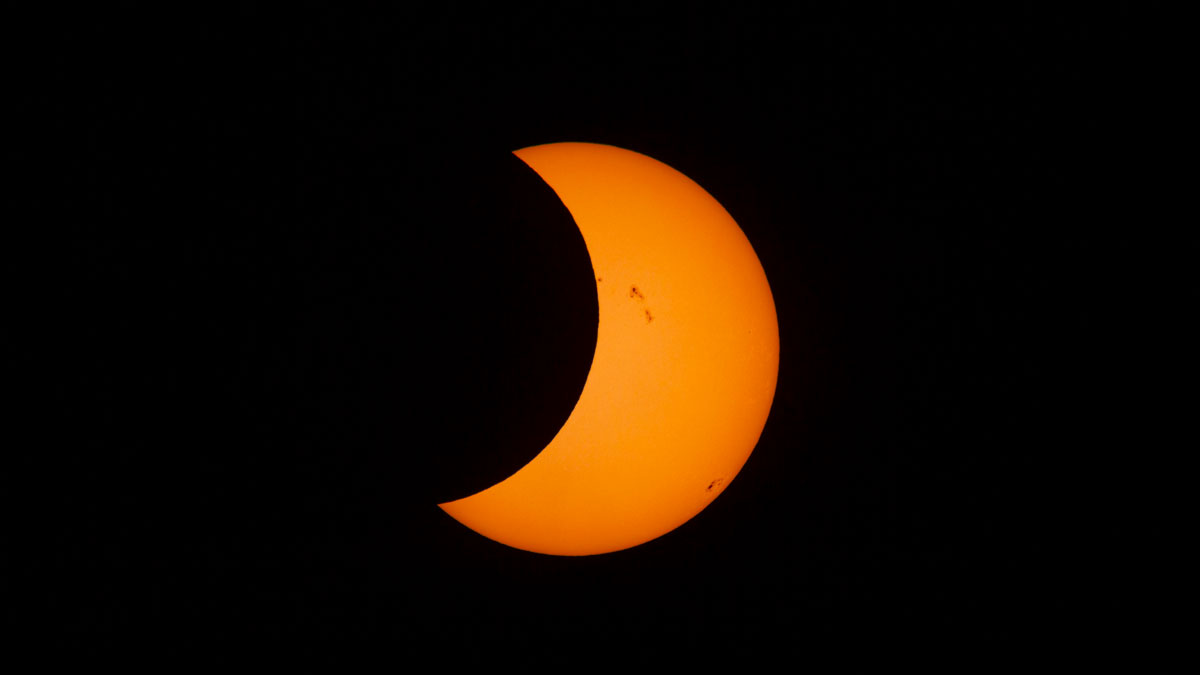
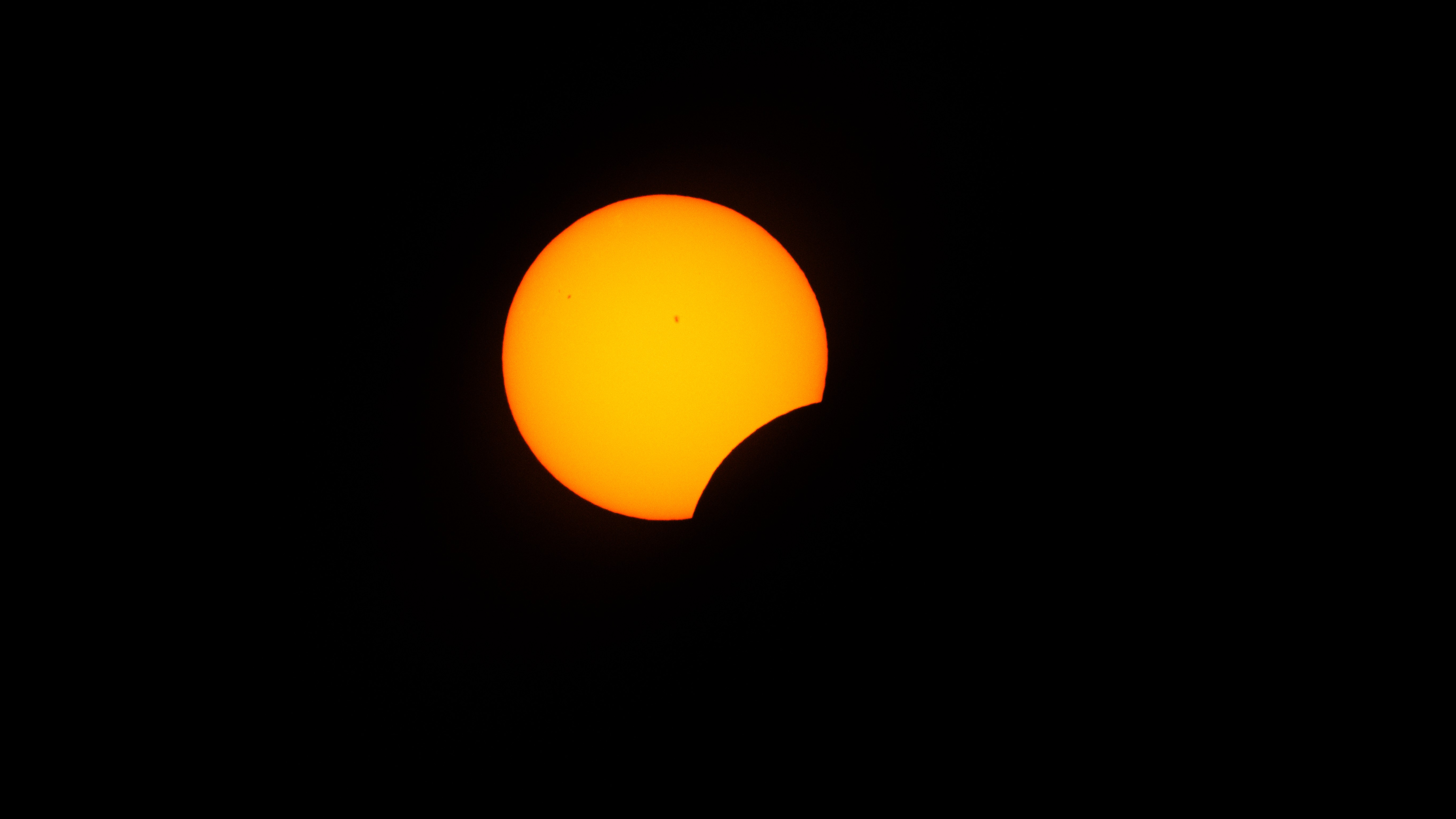
The sun is photographed in a black sky with a part of its lower right disk hidden by the moon's curved silhouette during a solar eclipse.

The moon takes its first "bite" out of the sun during the partial phase of a solar eclipse. (Image credit: Photo by Noam Galai/Getty Images)

You can check out exactly when the partial eclipse will begin from your location and find out exactly how much of the sun will be hidden by the moon using Time and Date's interactive eclipse tracker.

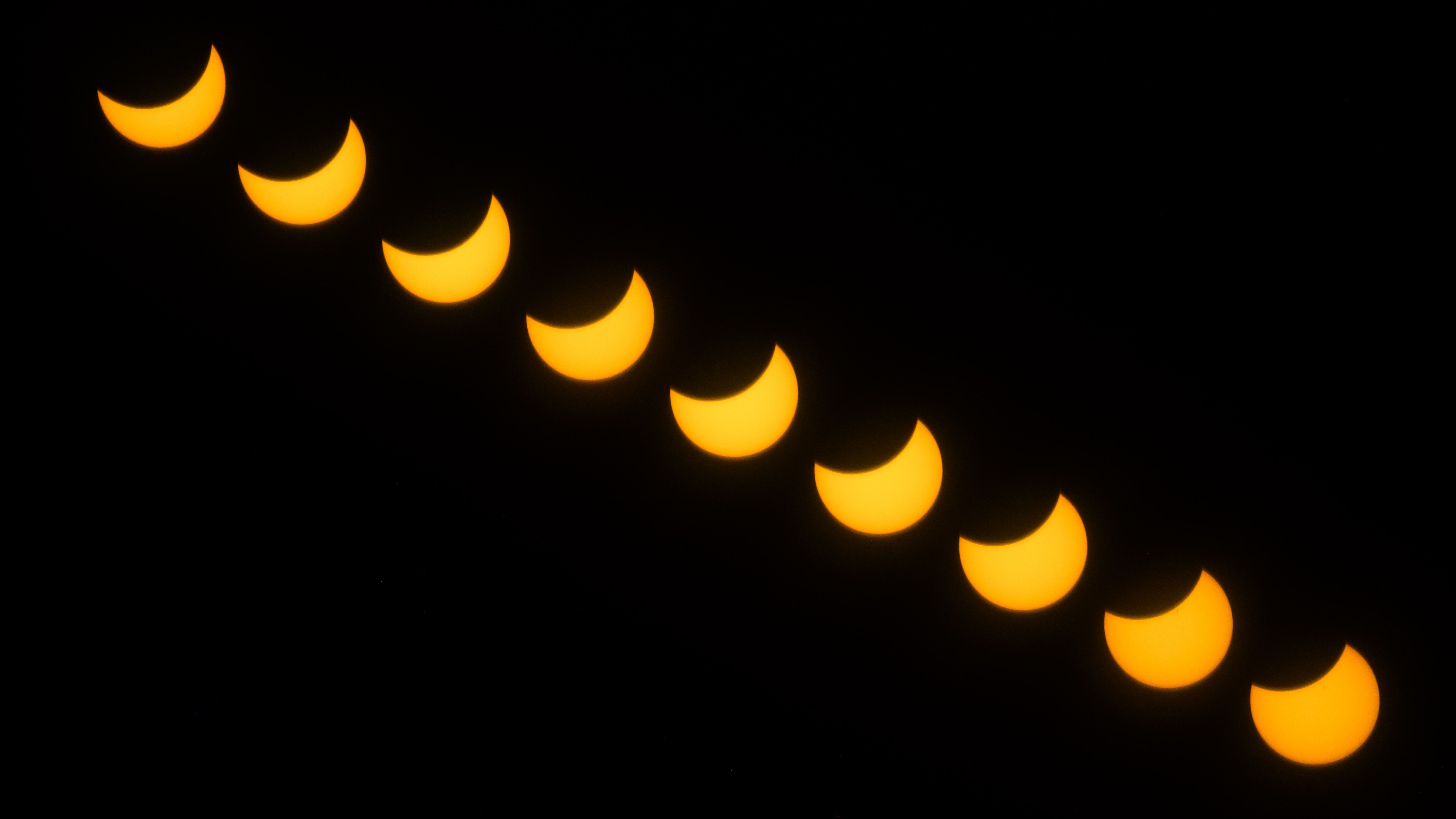
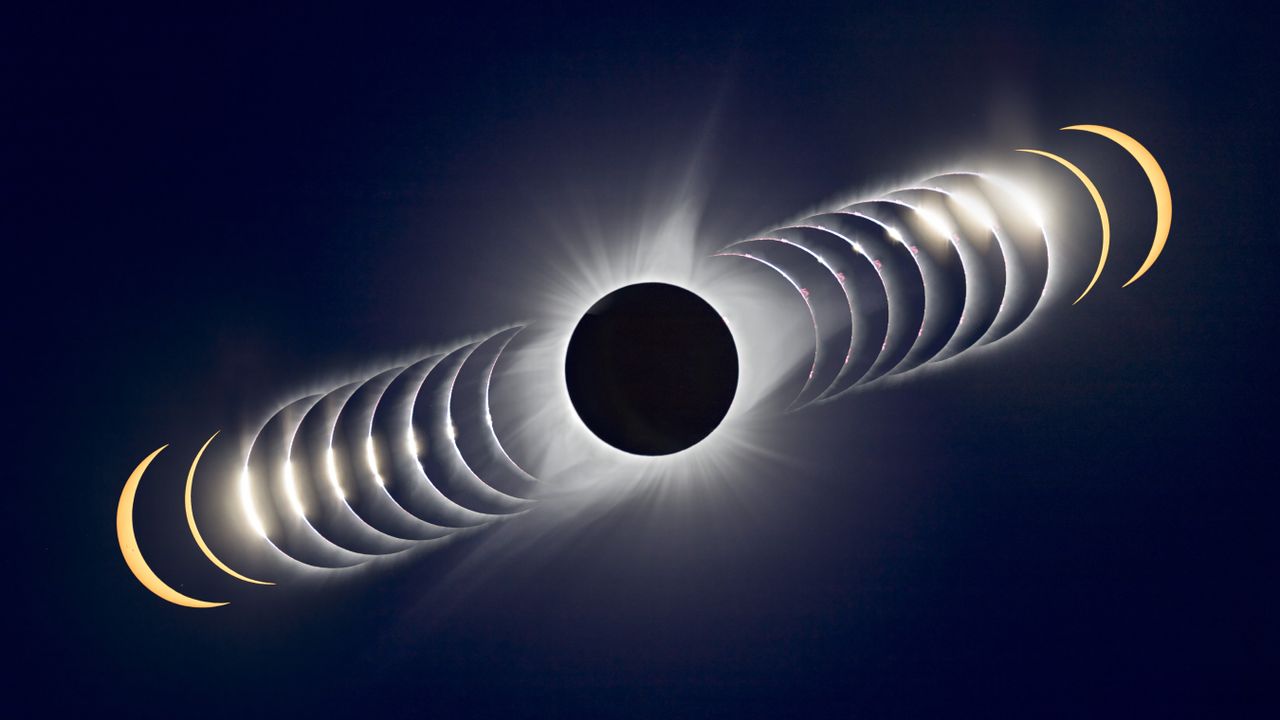
The hour and a half following first contact will see the moon sink ever farther into the sun's disk for those in the path of totality, transforming it from a burning orb into a magnificent shining crescent.

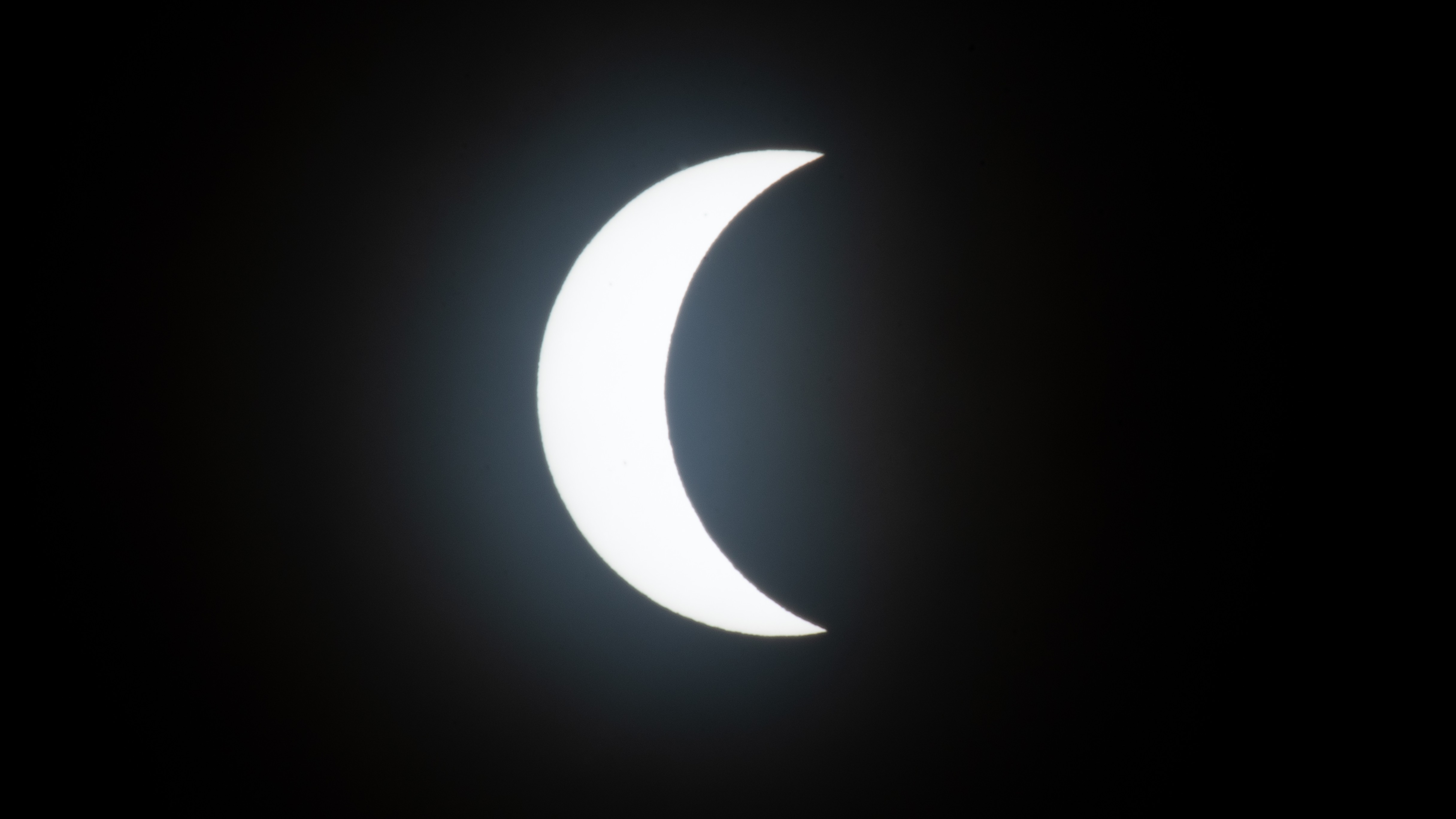
The sun's disk is photographed as a white crescent in a black sky during the partial phase of a total solar eclipse.

The and moon meet in the skies over Mexico during the 2024 total solar eclipse. (Image credit: Photo by: Edwin Remsberg/VWPics/Universal Images Group via Getty Images)

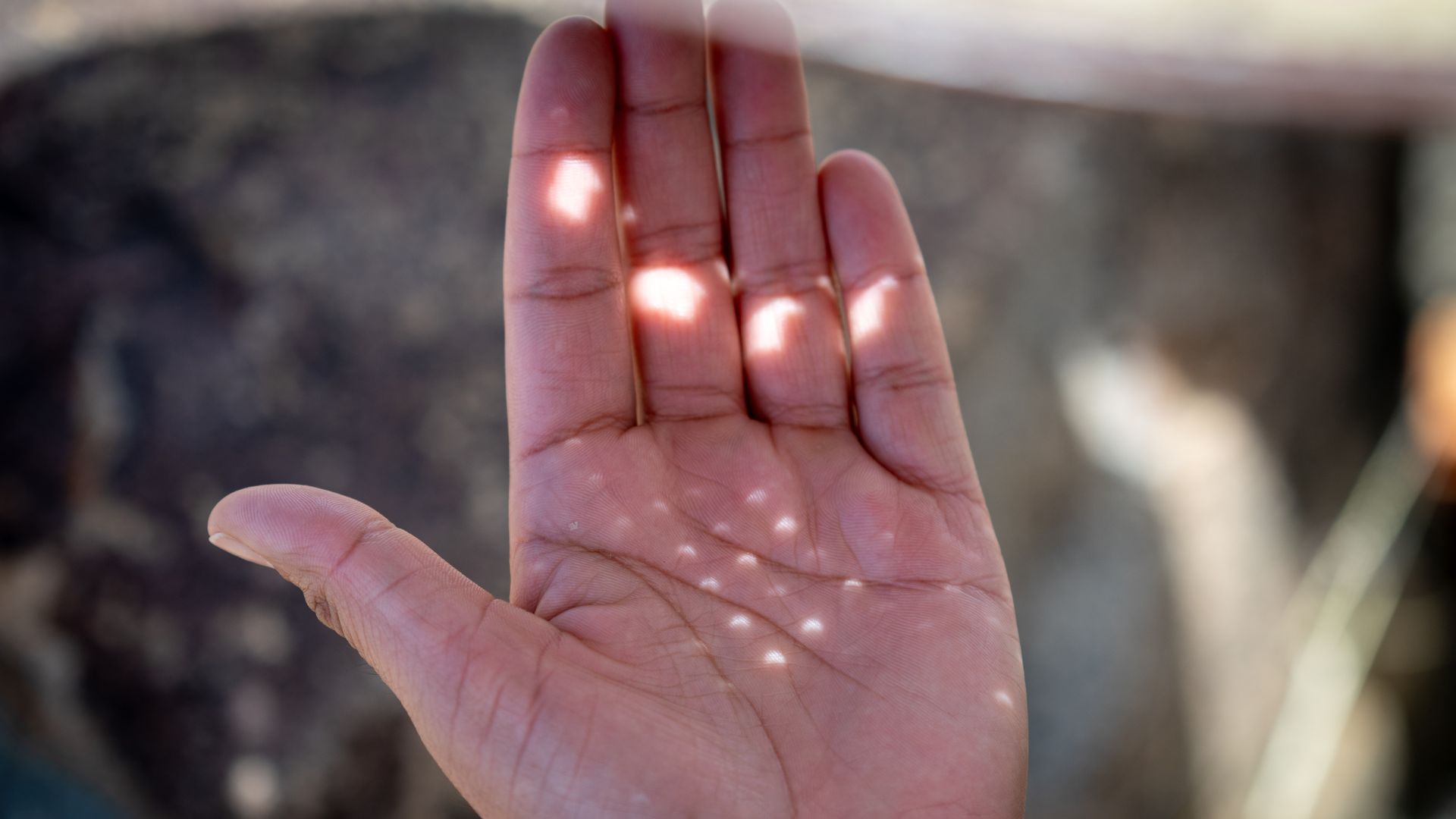
You may notice the temperature drop noticeably, accompanied by a subtle darkening of the sky in the half hour preceding the climactic phase of totality, as the moon reduces the sun to a thin sickle in the evening sky. Pinpricks of light — such as those that shine through a colander, or the gaps in a leaf — will also appear to mirror the scene above, creating a kaleidoscope of tiny bright crescents.

pinpoints of light fall on a hand show the eclipsed shape of the crescent solar disk during an eclipse.

Pinpricks of light create tiny crescents during a solar eclipse. (Image credit: Photo by: Edwin Remsberg/VWPics/Universal Images Group via Getty Images)

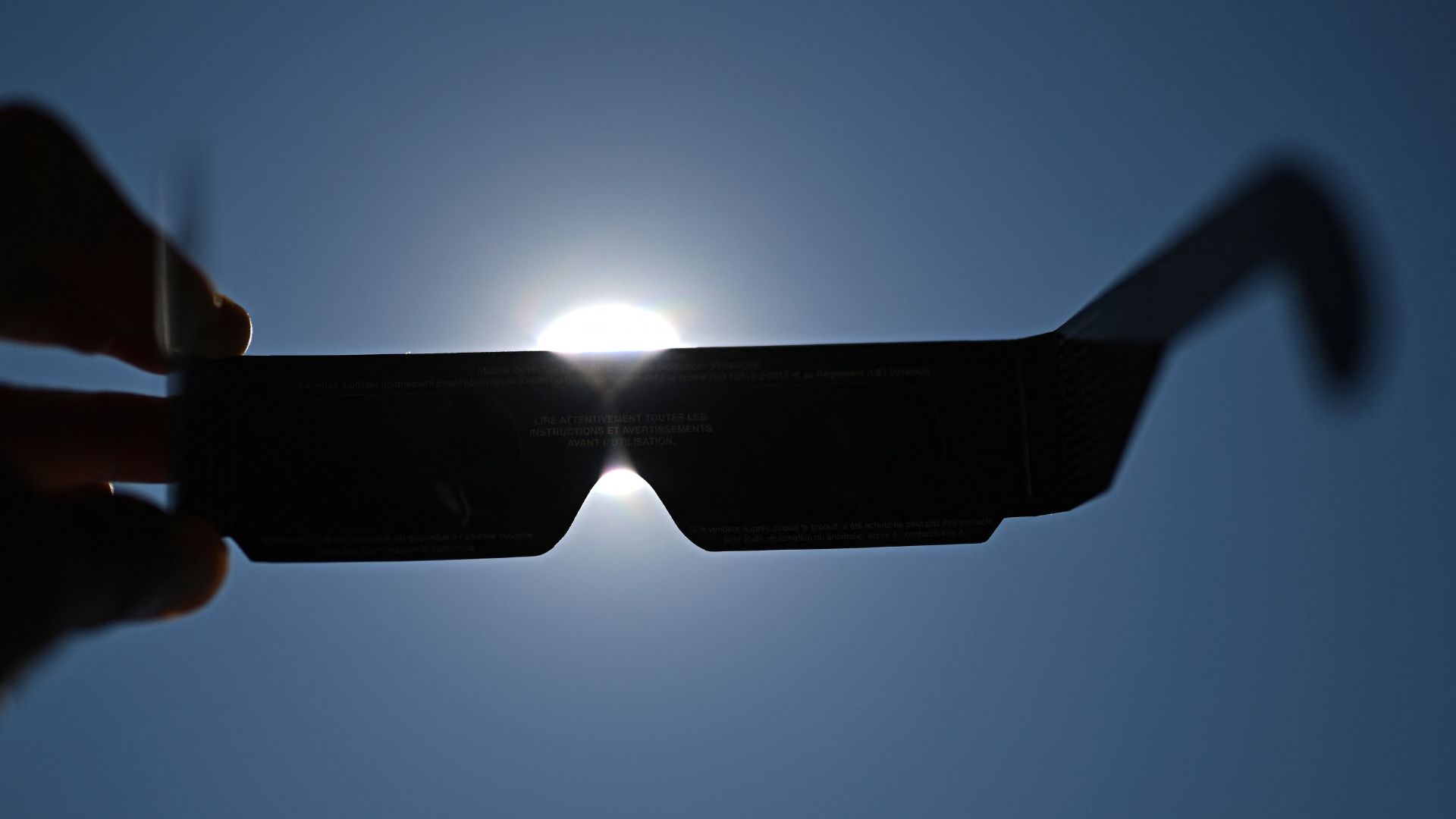
Remember, staring at the sun for even the briefest of moments can lead to permanent loss of vision, so be sure to read our guide on how to view the sun safely and to wear your eclipse glasses or sunoculars during the entirety of the partial phases of the eclipse. You can read our roundup of the best solar viewing equipment to find out more, along with our tips on how to check the quality and condition of your eclipse glasses.

Stage 2: Second contact

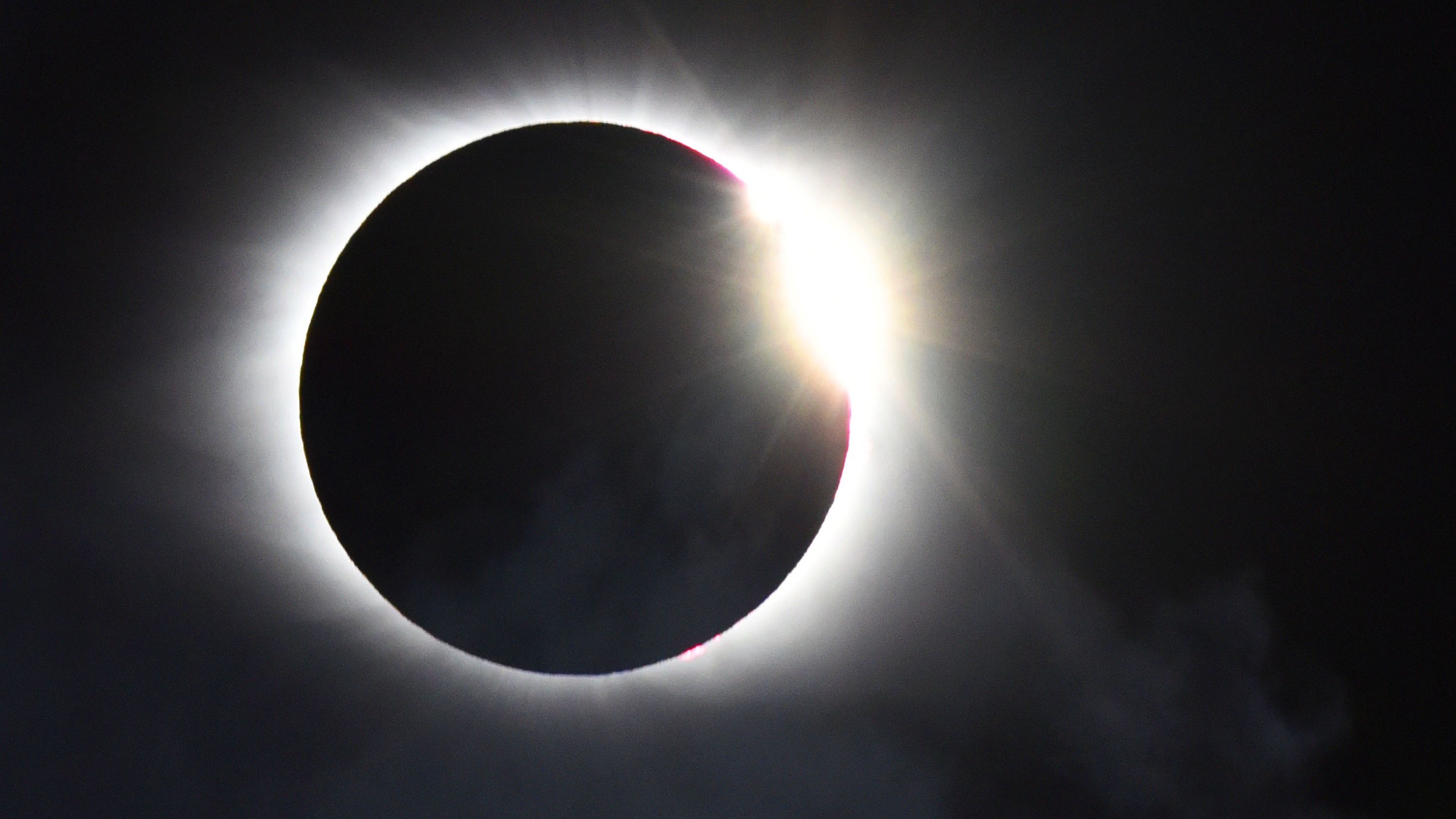
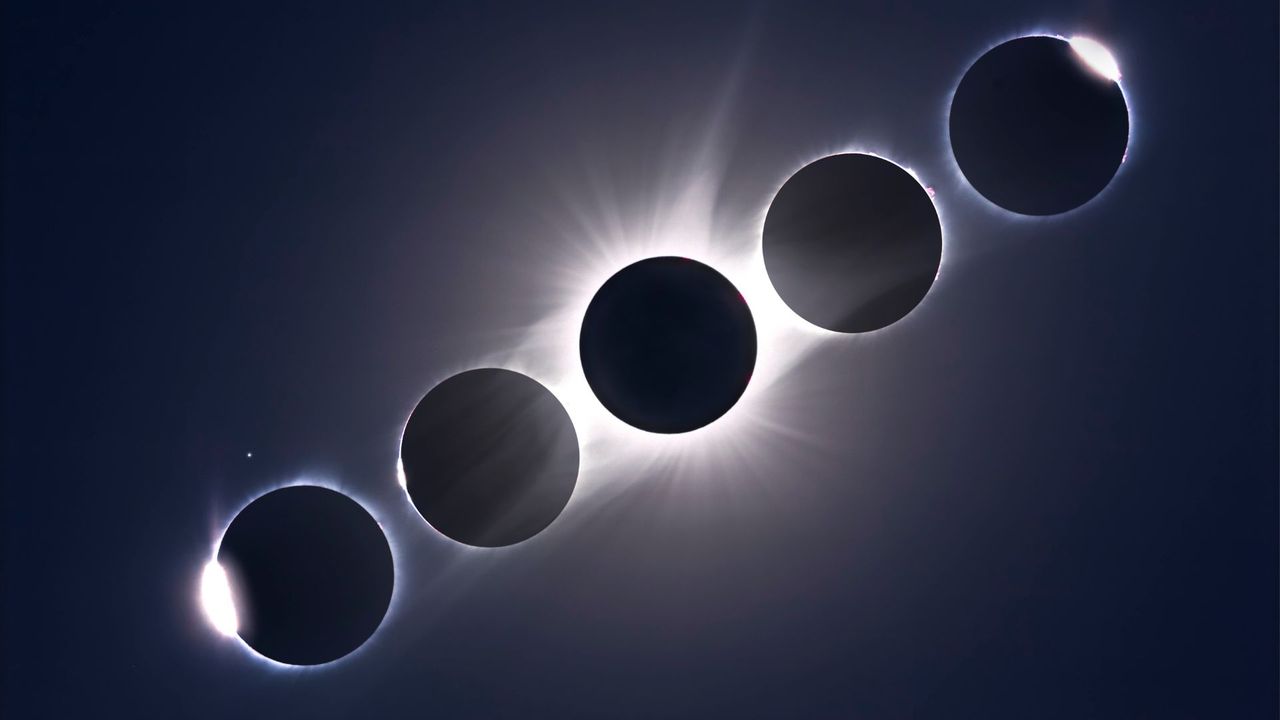
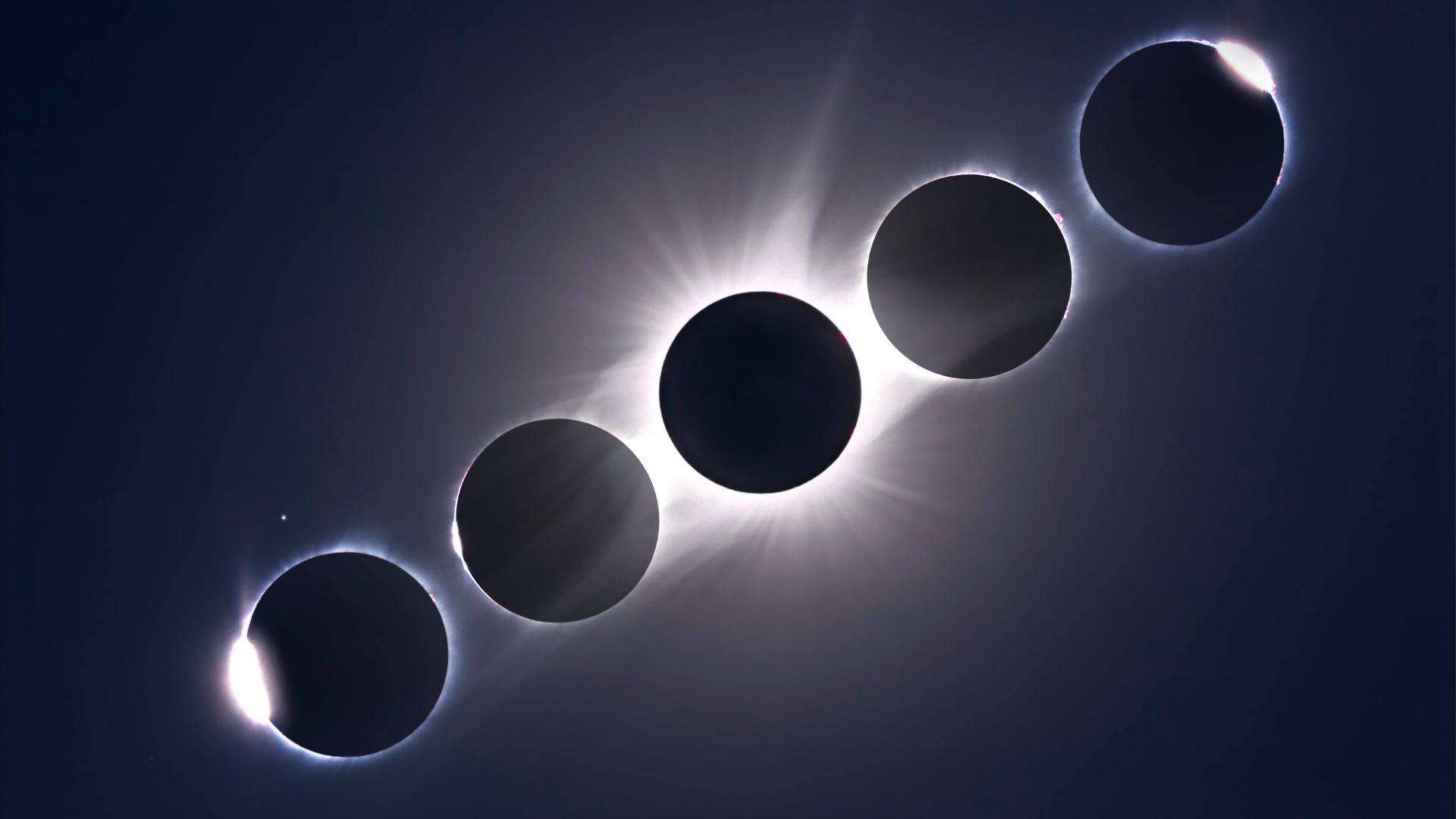
Some of the most spectacular moments of an eclipse occur just before and after totality. First, look out for the "diamond ring" effect, as the last sliver of the sun peeks out from behind the lunar disk to appear as a gorgeous celestial jewel, while the outermost layer of our star's atmosphere, the corona, creates a glowing halo around the moon.

A photo of the

The diamond ring effect shines from behind (Image credit: Photo by Chris McKay/WireImage)

Tear your eyes away from the sun for just a second and you may just catch sight of the moon's shadow advancing on you from the west, before it engulfs your surroundings in a false night.

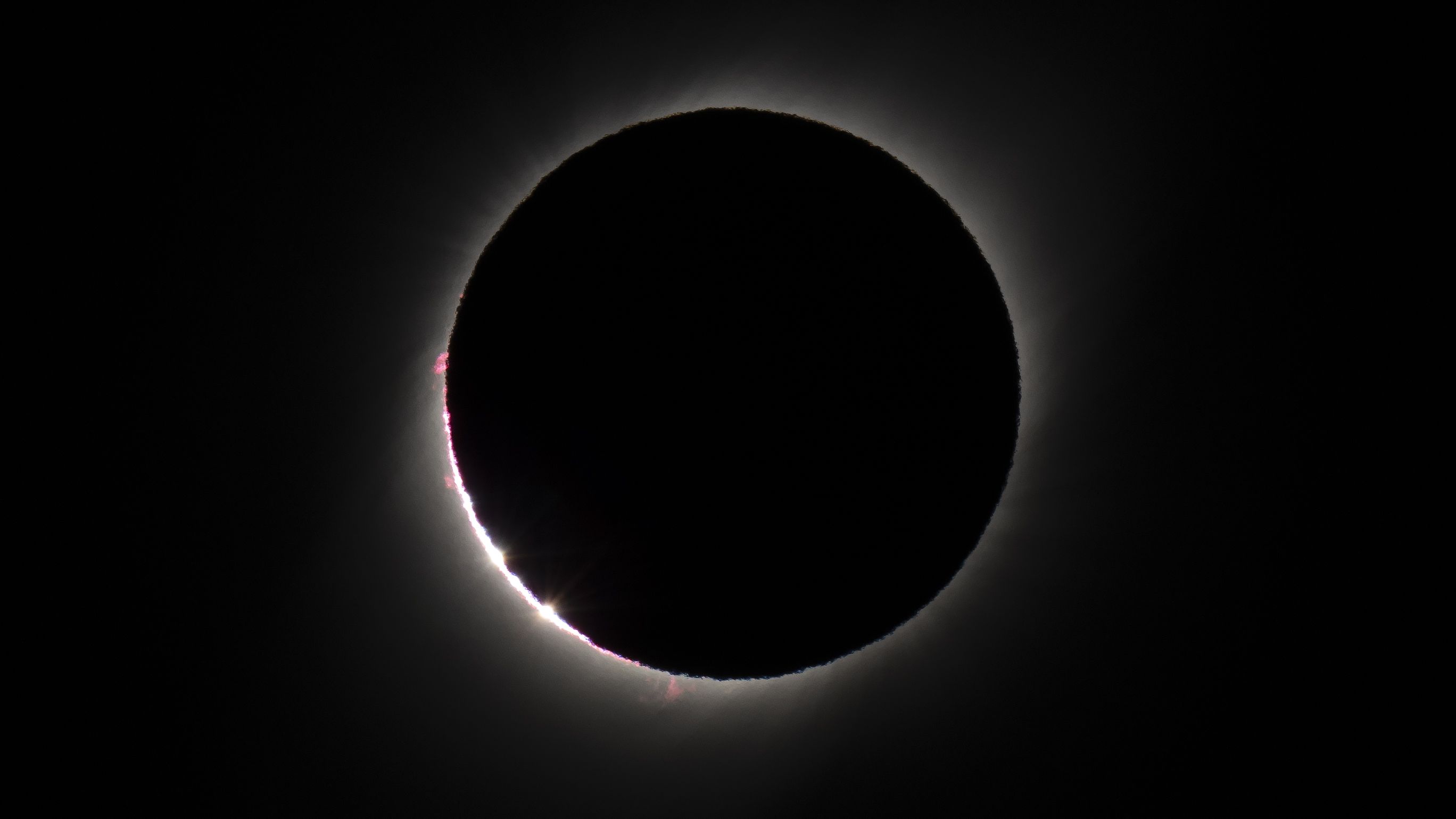
The sun's atmosphere shines from behind the moon in a black sky during a total solar eclipse.

Baily's beads appear in the moments before totality. (Image credit: STAN HONDA/AFP via Getty Images)

The final seconds before totality will see bright "Baily's Beads" form dazzling points of light on the moon's edge, where the last shreds of the sun's disk shine through the ravines and valleys that scar the ancient lunar surface.

Stage 3: Totality & maximum eclipse

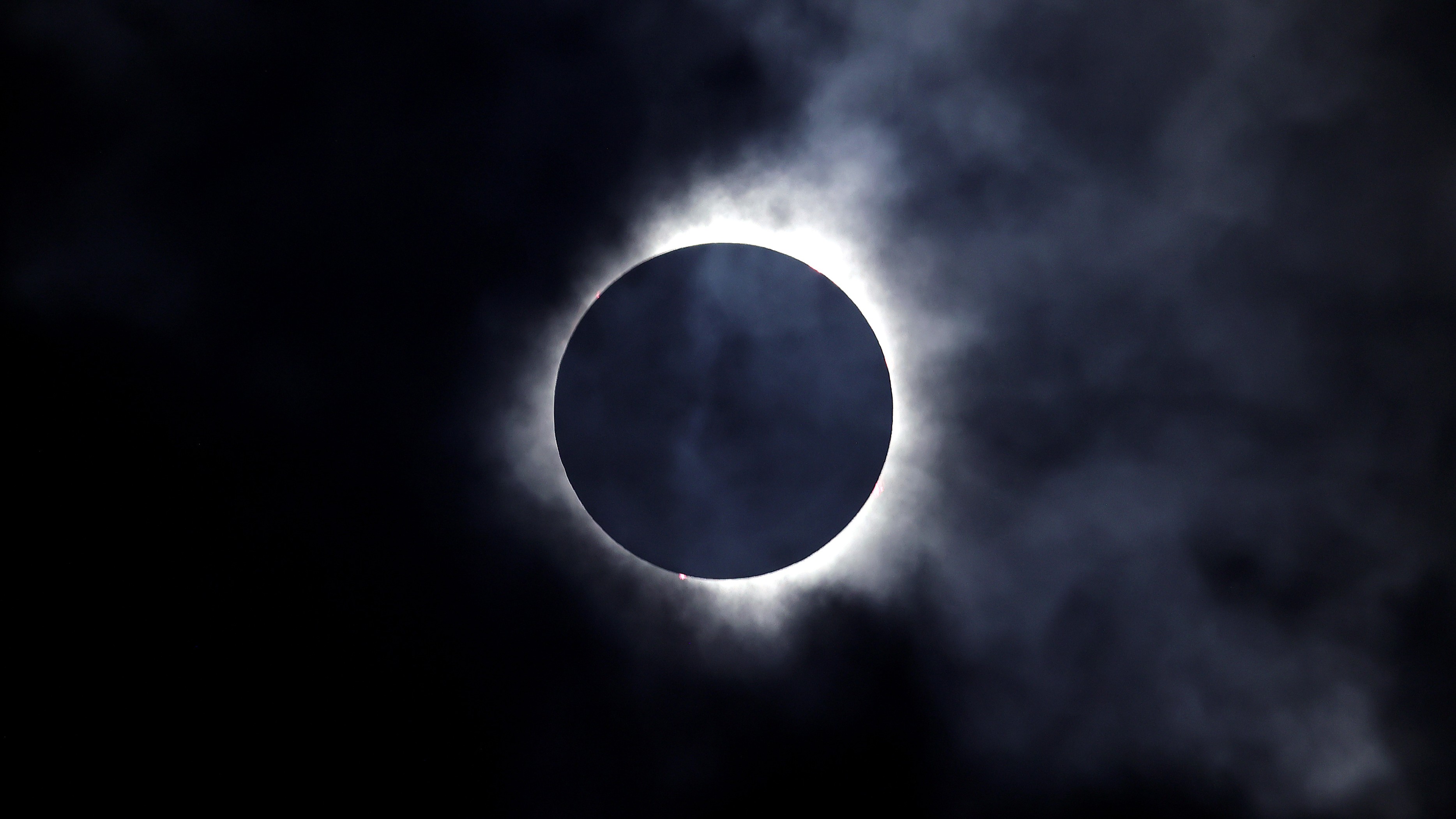
As the last of the sun's surface slips behind the moon, totality begins. This is the climactic phase of the eclipse, when the moon acts like a natural coronagraph to block the brilliance of the sun's disk, ushering in a false night in which our star's outer atmosphere can be seen leaping out from the lunar silhouette.

Totality will last a maximum of 2 minutes, 18 seconds, during which time it's safe to remove your glasses and look at the sun. Just be sure to put them on again before its fiery disk reemerges from the other side of the lunar disk.

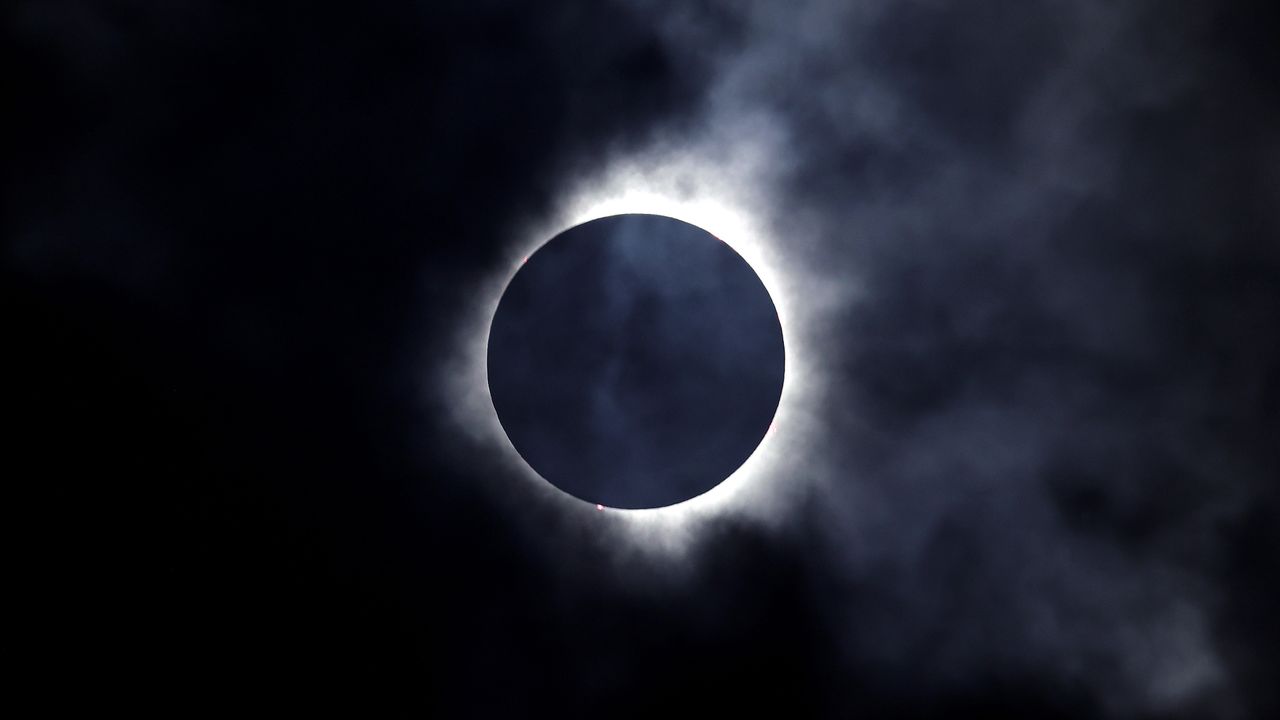
The moon hides the face of the sun in a black sky during a total solar eclipse, allowing its atmosphere to shine around Earth's natural satellite.

The sun's corona haloes the moon at the climax of a total solar eclipse. (Image credit: Photo by: Edwin Remsberg/VWPics/Universal Images Group via Getty Images)

That white halo surrounding Earth's natural satellite is the sun's corona — a jacket of superheated gas that surrounds our parent star. Look out for glowing solar prominences leaping outward through the sun's atmosphere, along with the red line of the chromosphere — the layer of the sun's atmosphere beneath the corona — which appears fleetingly at the beginning and end of totality, according to NASA.

The point of maximum eclipse occurs roughly halfway through totality, when the sun's disk is most hidden by the moon.

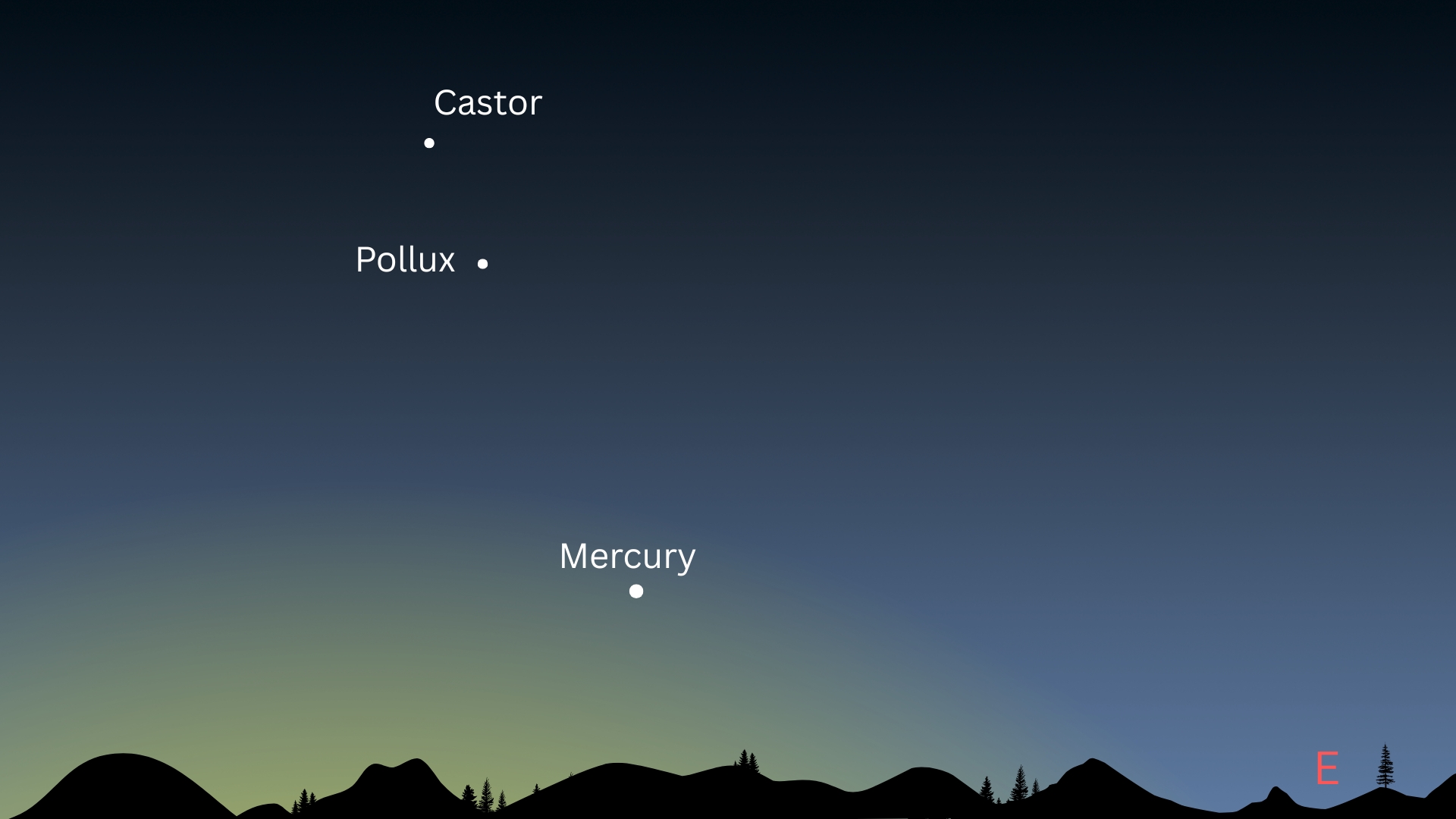
Eagle-eyed skywatchers may catch Jupiter and Mercury shining to the lower right of the eclipsed sun in the faux twilight experienced during totality, while Venus will appear as a bright star-like object to its upper left. If you're incredibly lucky, you could even spot one of the brightest shooting stars or fireballs of the Perseid meteor shower, which comes to a peak around the same time as the Aug. 12 total eclipse.

Stage 4:Totality ends

The fourth stage of the eclipse comes as the very edge of the sun's disk emerges from behind the moon, marking the end of totality as Bail's Beads and the diamond ring effect play out in reverse, before giving way to an ever-thickening solar crescent.

Stage 5: The partial eclipse ends.

The waning partial eclipse will come to a global end at 3:57 p.m. EDT (1957 GMT), as the moon's silhouette exits the sun's disk in the skies off the west coast of Africa — a moment known to astronomers as fourth contact.

A composite view of a solar eclipse showing the moon passing off of the solar disk in a black sky.

The moon exits the solar disk at the end of a total solar eclipse. (Image credit: Getty Images)

Space.com is on hand to provide expert coverage and on the ground reporting as the eclipse unfolds. Skywatching Editor Daisy Dobrijevic is undertaking an expedition with HX to observe the total solar eclipse from the waters around Greenland, while Skywatching Writer Anthony Wood heads to Spain in a cowboy hat, to catch the orbital showdown with citizen scientists from NASA's Dynamic Eclipse Broadcast Initiative.

Be sure to check out our total eclipse live blog to stay up to date with all the latest news, along with our handy explainer article detailing everything you need to know about the Aug. 12 total solar eclipse.

If photography is your thing then why not read our guide to imaging the total solar eclipse, along with our roundup of the best cameras and lenses for astrophotography? You'll also want to peruse our picks for the best eclipse glasses and viewing gear available in 2026.

Editor's Note: If you capture footage of the Aug. 12 total solar eclipse and want to share it with Space.com's readers, then please send your photo(s), comments, name and location to spacephotos@space.com.

  •  

Don't miss the crescent moon shine close to the red light of Mars before dawn on Aug. 9

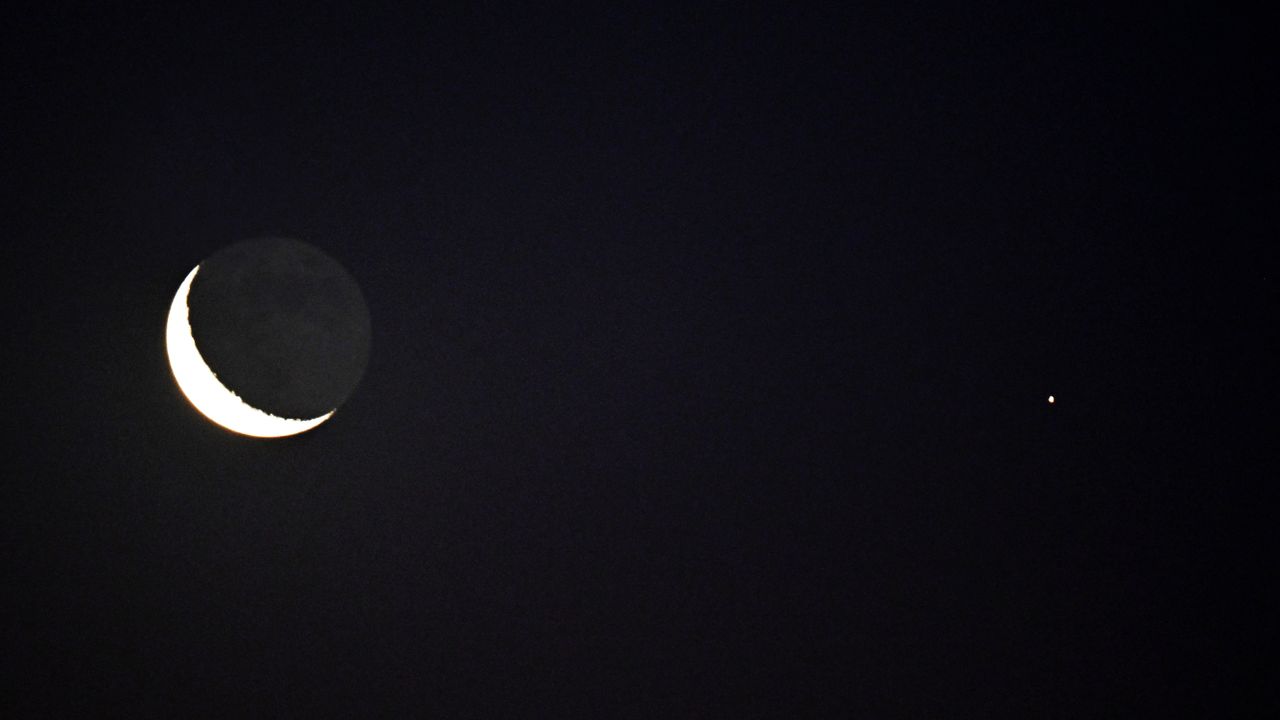
Early risers will catch a spectacular sight in the predawn hours of Aug. 9, as the slender crescent moon shines close to the red light of Mars among the stars of the constellation Taurus.

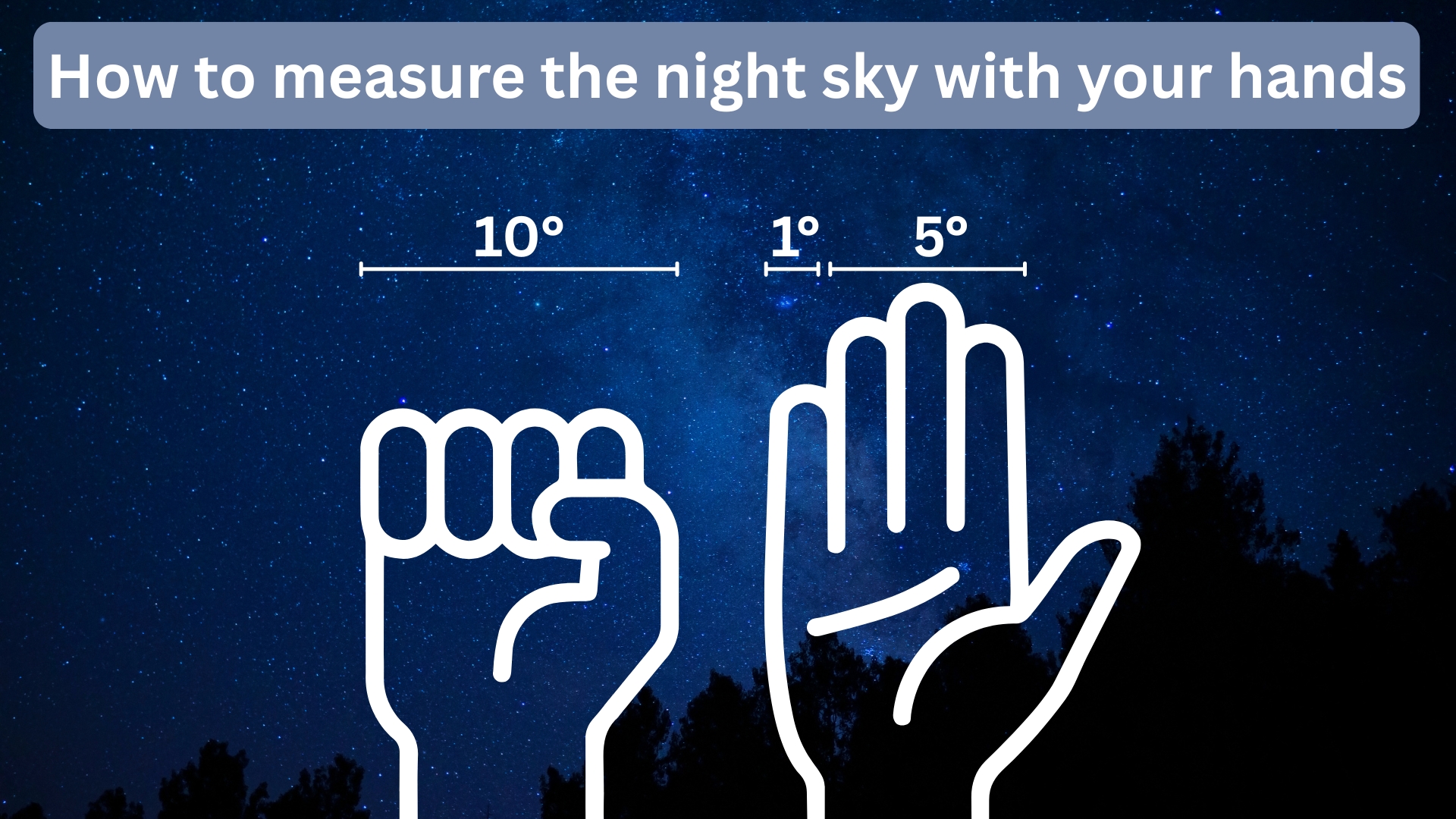
The 17%-lit crescent moon will rise around four hours before sunrise, or shortly after 2 a.m. for viewers in New York. The Red Planet will be visible as a steady crimson light less than 5 degrees to the lower right of the moon — close enough to share the field of view of a pair of 10x50 binoculars.

Both Mars and the moon will appear to race one another over the eastern horizon in the hours that follow, with the Red Planet gaining a slight lead over its competitor as dawn breaks.

The stars of the constellation Orion will glitter to the right of the pair throughout the race, while the Bull of Taurus watches on from above and Gemini watches from below, giving us a sneak peak at the starscape that will shine high overhead in the long winter nights a few months from now.

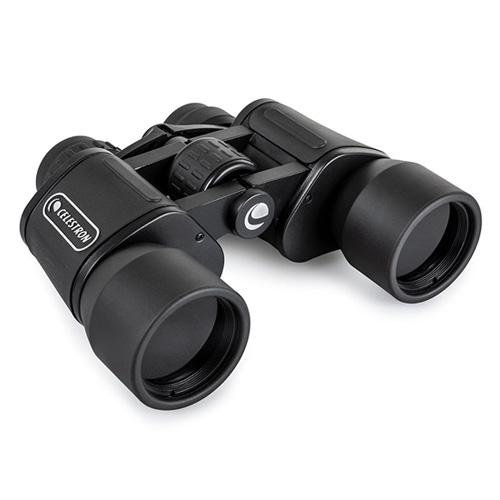
Celestron UpClose G2 10x50

Celestron UpClose G2 10x50 Binocular on a white background

(Image credit: Celestron)

Want to get a closer look at the moon? For around $50 you can grab these beginner binoculars for better views of craters and seas on the lunar surface. 10x is enough for a closer look without worrying about excessive shakes during handheld observation.

_

Celestron UpClose G2 10x50 review

Look out for the subtle glow of earthshine illuminating the night side of the moon on Aug. 9, as sunlight scattered off our planet's surface and atmosphere reflects onto the nearby lunar disk, revealing the ghostly outlines of its dark lunar seas.

It's one of the last chances we'll get to gaze at Earth's satellite ahead of its new moon phase on Aug. 12, when it will cross the face of the sun in the daytime sky to trigger a spectacular total solar eclipse, which will be visible across parts of Greenland, Iceland and Spain.

Be sure to read our explainer article to discover everything you need to know about the Aug. 12 total solar eclipse. We'll also be bringing you live reports of totality as the moon's shadow sweeps over Greenland, where skywatching editor Daisy Dobrijevic will be watching from the deck of a HX Expeditions cruise ship. Skywatching writer Anthony Wood will also be observing from central Spain, where he's embedded with a group of citizen scientists from the Dynamic Eclipse Broadcast initiative.

Editor's Note: If you would like to share your astrophotography with Space.com's readers, then please send your photo(s), comments, and your name and location to spacephotos@space.com.

  •  

Yes, North America gets a solar eclipse on Aug. 12. Here's where and when to see it

It's hardly a "Great American Eclipse," but on Aug. 12, 2026, some parts of the North American continent will see a partial solar eclipse.

Will it be as impressive as on April 8, 2024, when totality visited Mexico, 15 U.S. states and six provinces in Canada? No, yet in some parts of the U.S. and Canada, astronomers will be out in force to capture a significant chunk of the sun as it is obscured by the new moon.

The spotlight may be on the total solar eclipse in Greenland, Iceland, and Spain, but millions across North America can still see the moon take a bite out of the sun on Aug. 12. The farther northeast you are, the deeper the eclipse. Here's everything you need to know about the partial solar eclipse in North America.

During a partial solar eclipse, it is NEVER safe to look directly at the sun without solar eclipse glasses designed for solar viewing. Read our guide on how to observe the sun safely.

Where to see the partial solar eclipse in the U.S.

Between 7:34 a.m. AKDT and 2:52 p.m. EDT, 20 U.S. states will see something of the partial solar eclipse, though only northeastern states will get a good view. Here's a sample of locations and the time of maximum eclipse. Note that the partial eclipse begins (first contact) and ends (last contact) around 55 minutes before and after the time of maximum eclipse given here.

Location

Maximum eclipse

Time (local)

Fairbanks, Alaska

37%

8:27 a.m. AKDT

Presque Isle, Maine

28%

1:50 p.m. EDT

Bangor, Maine

23%

1:53 p.m. EDT

Portland, Maine

19%

1:53 p.m. EDT

Montpelier, Vermont

17%

1:49 p.m. EDT

Manchester, New Hampshire

16%

1:53 p.m. EDT

Boston, Massachusetts

16%

1:55 p.m. EDT

Providence, Rhode Island

15%

1:55 p.m. EDT

Springfield, Massachusetts

14%

1:53 p.m. EDT

New Haven, Connecticut

12%

1:54 p.m. EDT

Bridgeport, Connecticut

11%

1:54 p.m. EDT

New York City, New York

10%

1:54 p.m. EDT

Newark, New Jersey

9%

1:53 p.m. EDT

Rochester, New York

9%

1:43 p.m. EDT

Allentown, Pennsylvania

8%

1:52 p.m. EDT

Buffalo, New York

7%

1:42 p.m. EDT

Philadelphia, Pennsylvania

7%

1:53 p.m. EDT

partial solar eclipse shows the upper portion of the sun covered by the moon, surrounded by partly cloudy skies.

From most of the northeast U.S., only a small eclipse will be visible on Aug. 12, 2026. (Image credit: imageBROKER/Lucas Seebacher via Getty Images)

Where to see the partial solar eclipse in Canada

Between 8:38 a.m. MST and 4:38 p.m. NDT on Aug. 12, every province in Canada will be able to see some kind of partial solar eclipse, but those in the east of the country will see something much more significant. Here's a sample of locations and the time of maximum eclipse. Note that the partial eclipse begins (first contact) and ends (last contact) around 55 minutes before and after the time of maximum eclipse given here.

Location

Maximum eclipse

Time (local)

Iqaluit, Nunavut

61%

1:24 p.m. EDT

St. John's, Newfoundland and Labrador

53%

3:34 p.m. NDT

Moncton, New Brunswick

32%

2:55 p.m. ADT

Halifax, Nova Scotia

31%

3:00 p.m. ADT

Churchill, Manitoba

27%

12:02 p.m. CDT

Quebec City, Quebec

24%

1:46 p.m. EDT

Whitehorse, Yukon

23%

9:26 a.m. MST

Trois-Rivières, Quebec

21%

1:45 p.m. EDT

Sherbrooke, Quebec

20%

1:48 p.m. EDT

Montreal, Quebec

18%

1:45 p.m. EDT

Ottawa, Ontario

15%

1:42 p.m. EDT

Kingston, Ontario

12%

1:43 p.m. EDT

Toronto, Ontario

8%

1:40 p.m. EDT

St. Catharines—Niagara, Ontario

8%

1:41 p.m. EDT

Kitchener, Ontario

7%

1:38 p.m. EDT

Hamilton, Ontario

7%

1:40 p.m. EDT

London, Ontario

5%

1:38 p.m. EDT

Windsor, Ontario

3%

1:36 p.m. EDT

What to expect

This is a small partial solar eclipse in North America, which occurs at lunchtime. In the east of the continent, it will occur high in the sky — about two-thirds of the way between the horizon and the zenith — in the south-southwest. At maximum eclipse, the partially eclipsed sun with resemble a thick crescent or a smile. It won't get dark — that only happens within the path of totality — nor will daylight be affected.

Those using a telescope to observe or image the partial eclipse (using a solar filter) should also consider that Venus — which will be visible just after sunset — reaches dichotomy on Aug. 12. This is the point in its current apparition as the "Evening Star" that it starts becoming interesting in a telescope. Dichotomy sees it reduce to 50%-lit and gradually become an ever-shrinking crescent.

Perhaps more importantly, the early hours of Aug. 13 see the peak of the annual Perseid meteor shower.

When is the next solar eclipse visible from the US after August 2026?

The next solar eclipse on Aug. 2, 2027, will be seen in Newfoundland, Canada, where a 23% partial eclipse will occur at the province's southwestern tip.

On Jan. 26, 2028, during an annular solar eclipse across northern South America, eastern U.S. states and eastern Canada will see a very small partial solar eclipse shortly after sunrise. Florida will have the best view, with around 15% of the sun blocked.

On Jan. 14, 2029, a large partial solar eclipse will be seen in the morning sky across all of North America — up to 81% in northern Canada and 74% in northwestern U.S. states. On June 12, 2029, a smaller partial solar eclipse will peak at 34% just after sunrise from Nunavut, the Northwest Territories and the northern tips of Alberta and British Columbia.

  •  

Sky-Watcher SolarQuest mount head review

Specifications

Resolution: 2,073,600 counts/rev; 0.625 arc-second

Slewing speeds: 16x and 1200x

Payload capacity: 8.8 lbs/4kg

Dovetail saddle: 45mm Vixen-style

Controls: Power button and 8-way sliding switch

Power: 8x AA batteries (not supplied)/external 12V DC via adaptor panel

Mount head weight: 2.9 lbs/1.3kg

Total weight with optional tripod: 8.8 lbs/4.05kg

Tripod: 31.7-59.8 inches/80.5-152cm adjustable aluminum tripod with accessory tray, bubble level and 3/8-inch screw fitting

Finding the sun sounds easy, right? Many people think of the sun as big and bright, but it’s actually rather small in the sky — it’s got an angular diameter of just half a degree, in fact, the same as the moon. Put an all-important solar filter on a telescope, and you’re left with the challenge of finding a tiny orange or white circle in a sea of black. Even if you manage to find the sun, nudging a solar telescope back into position every few minutes to keep it in the field of view quickly gets irritating.

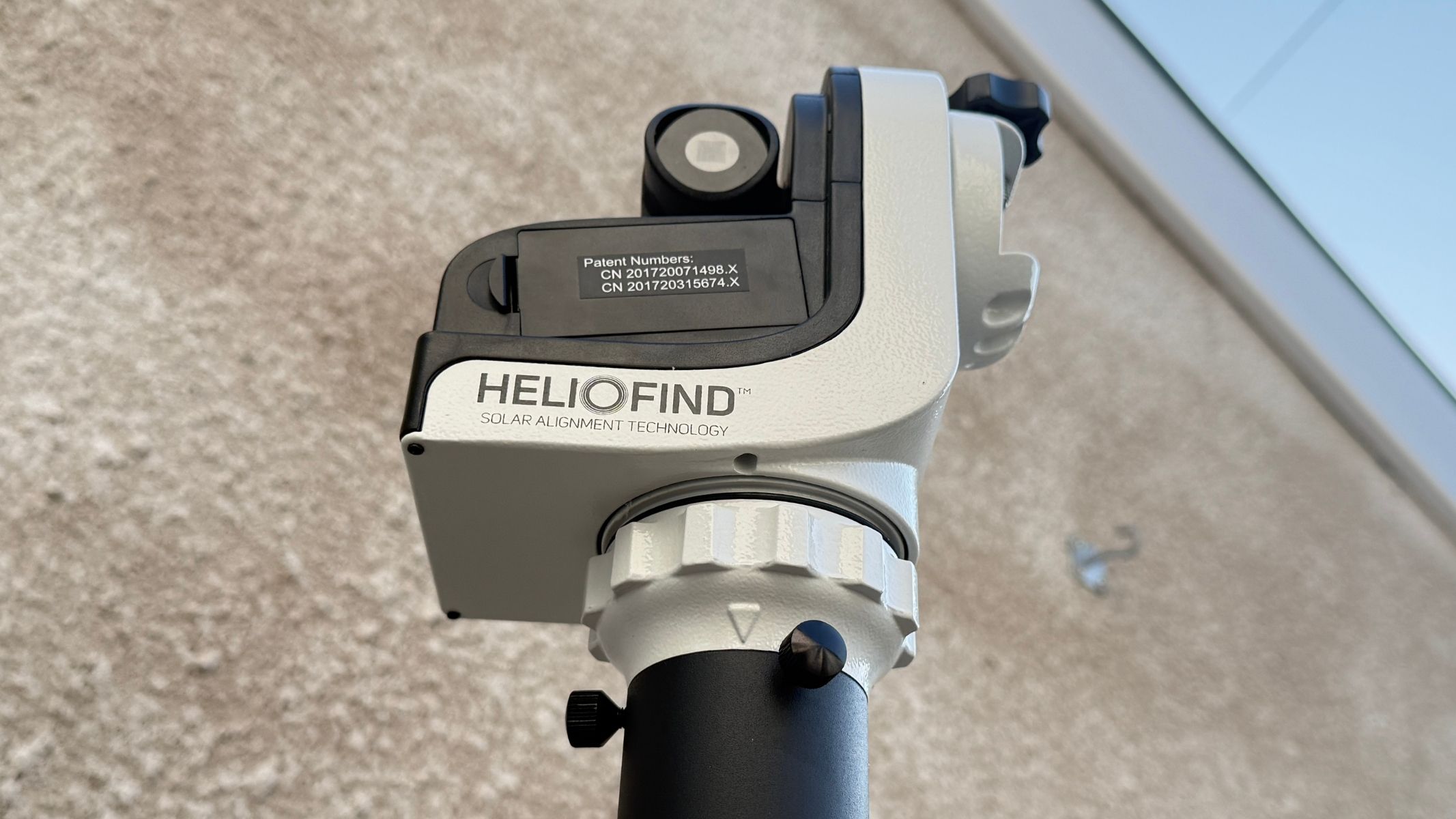
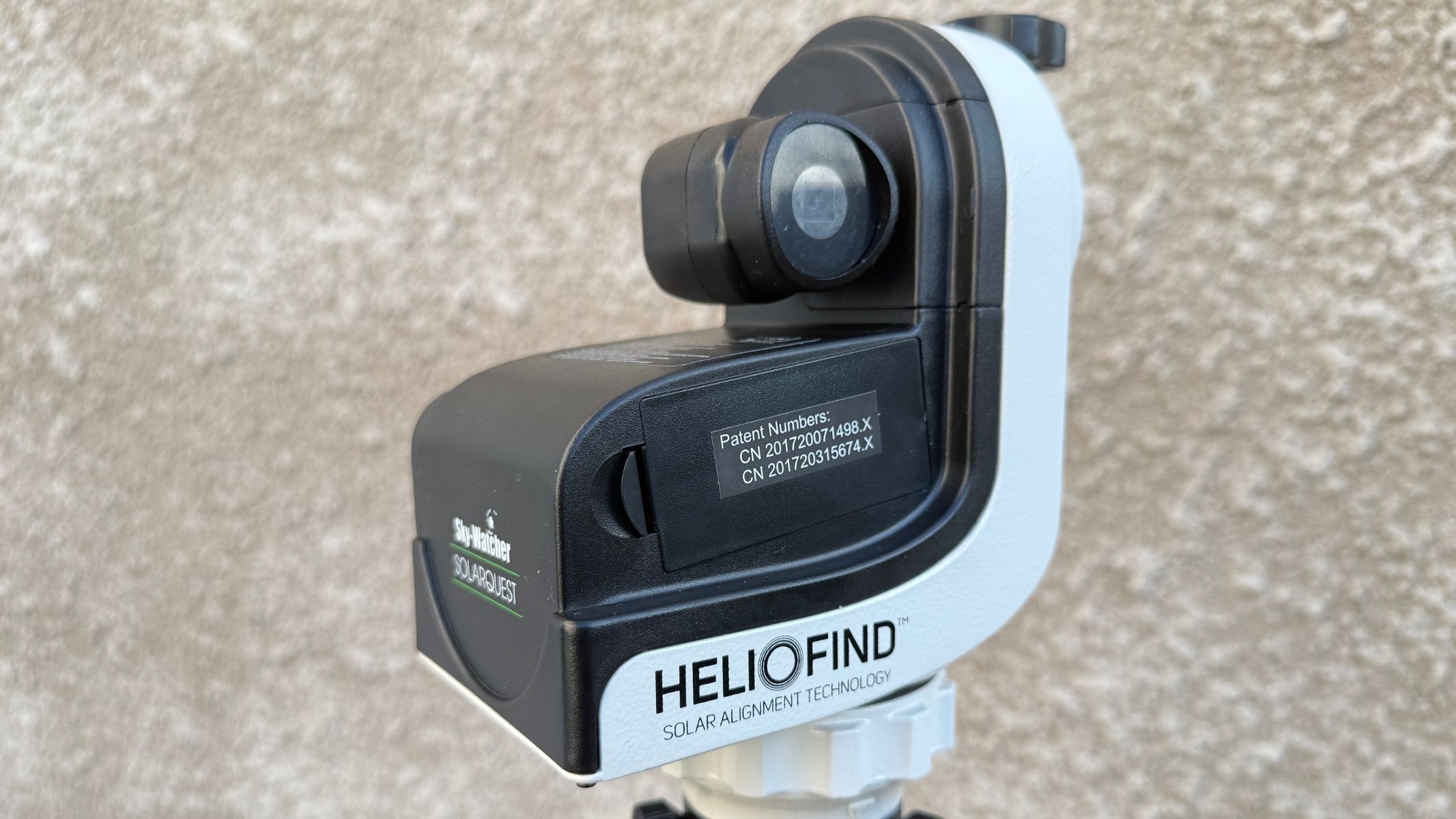
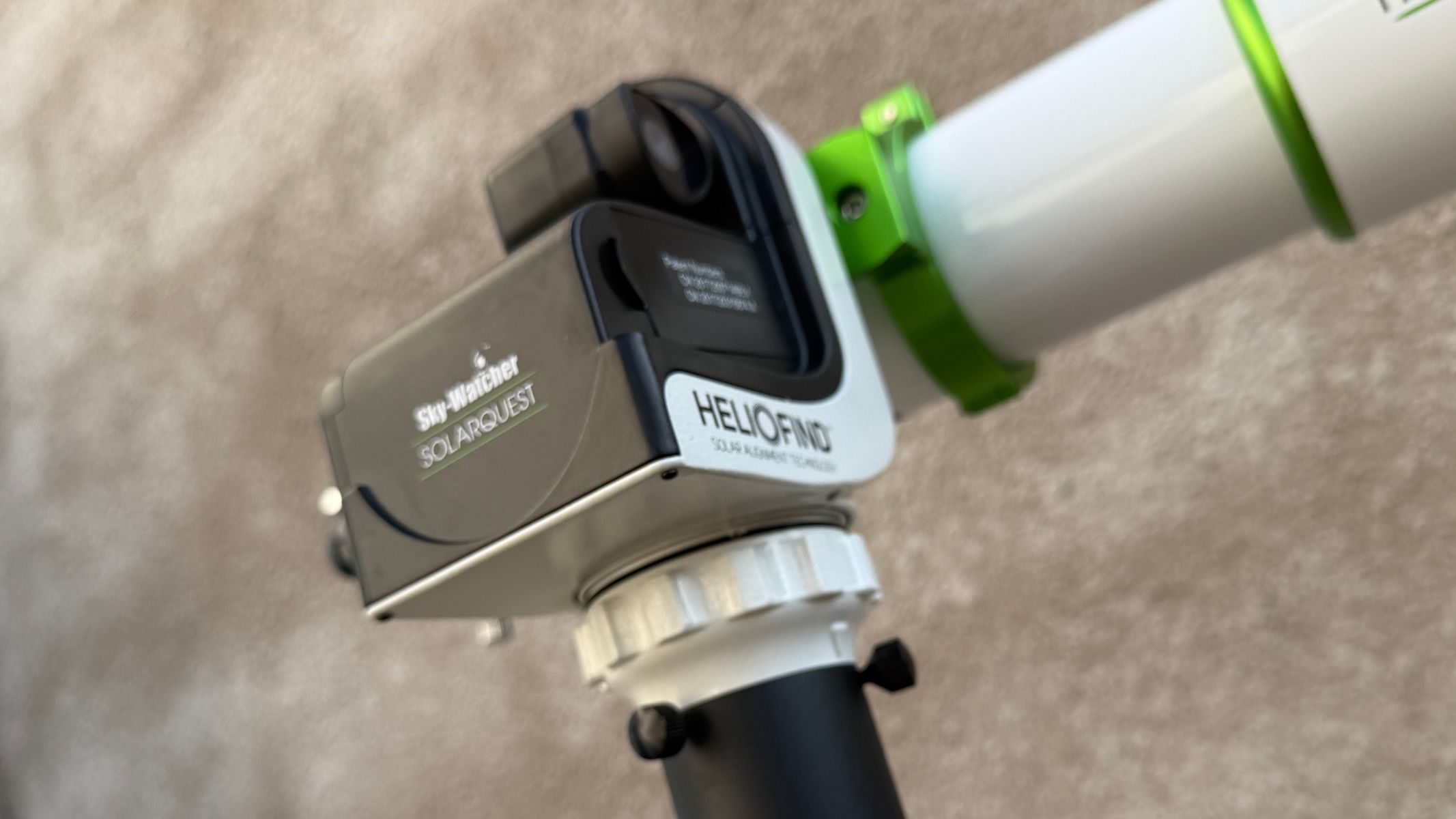
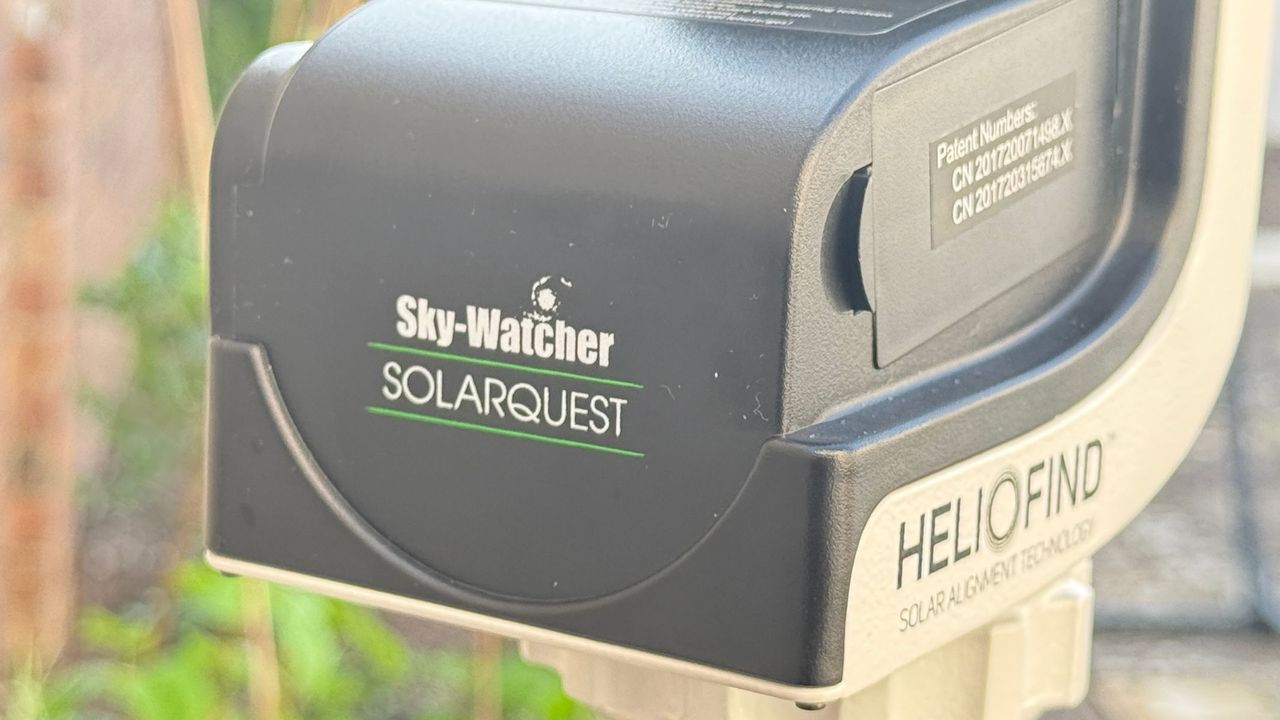
A close-up of the Sky-Watcher SolarQuest solar telescope mount, showing text reading 'HelioFind' along the side of it.

Dual-axis alt-az tracking keeps the sun in view during observing sessions. (Image credit: Jamie Carter)

Cue the Sky-Watcher SolarQuest mount, a simple grab-and-go product that exists to solve exactly that problem. Costing around $585/£259-£359 (the latter with a tripod), it is not a general Go-To astronomy mount and it is not trying to be one. It is best understood as a dedicated solar tracking platform for small solar telescopes. That could range from regular telescopes wearing solar filters, most likely during a solar eclipse, to dedicated solar telescopes such as white-light-filtered refractors and H-alpha (Hydrogen-alpha) telescopes designed specifically for viewing the sun.

Sky-Watcher SolarQuest mount head: Design

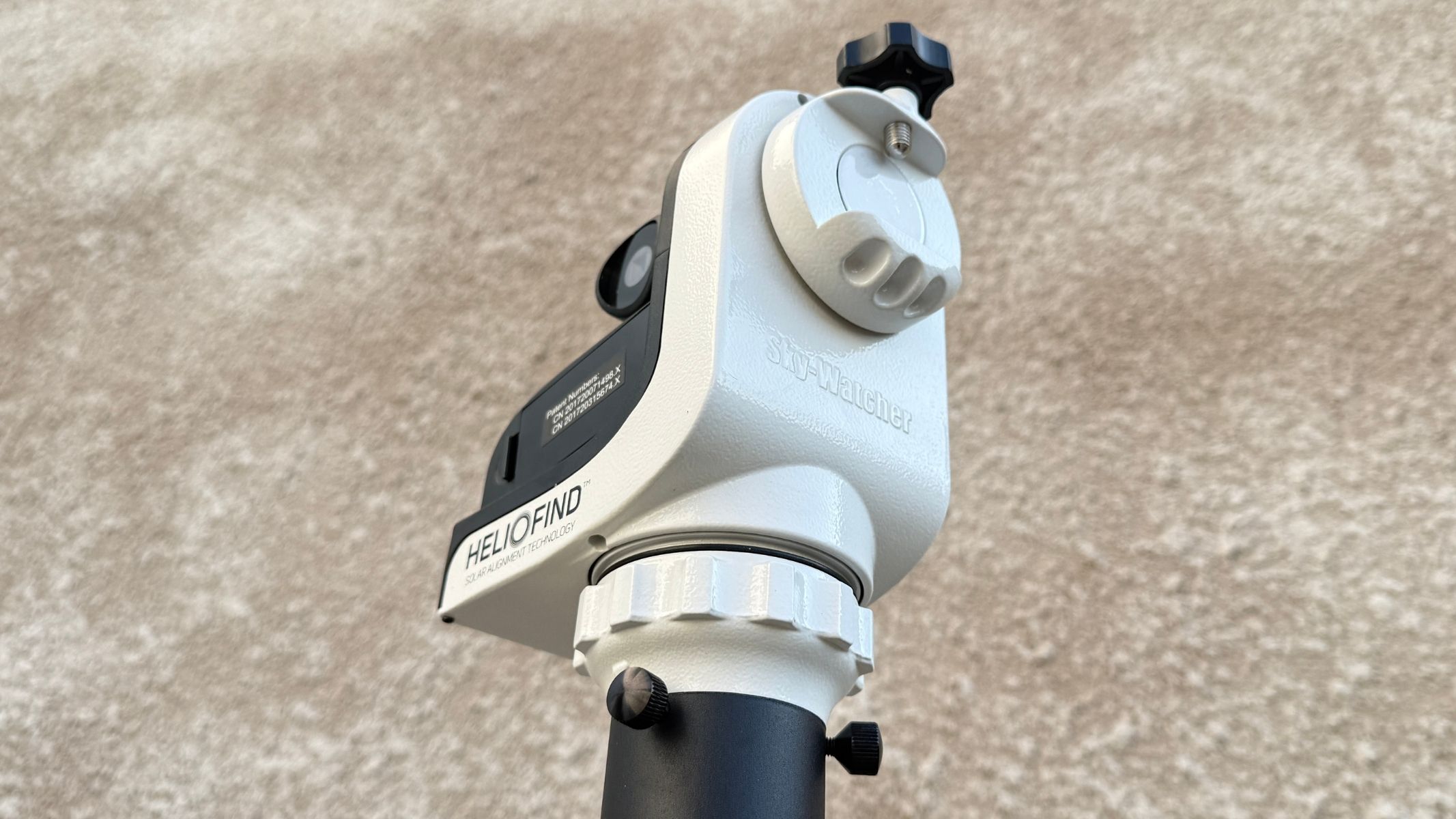
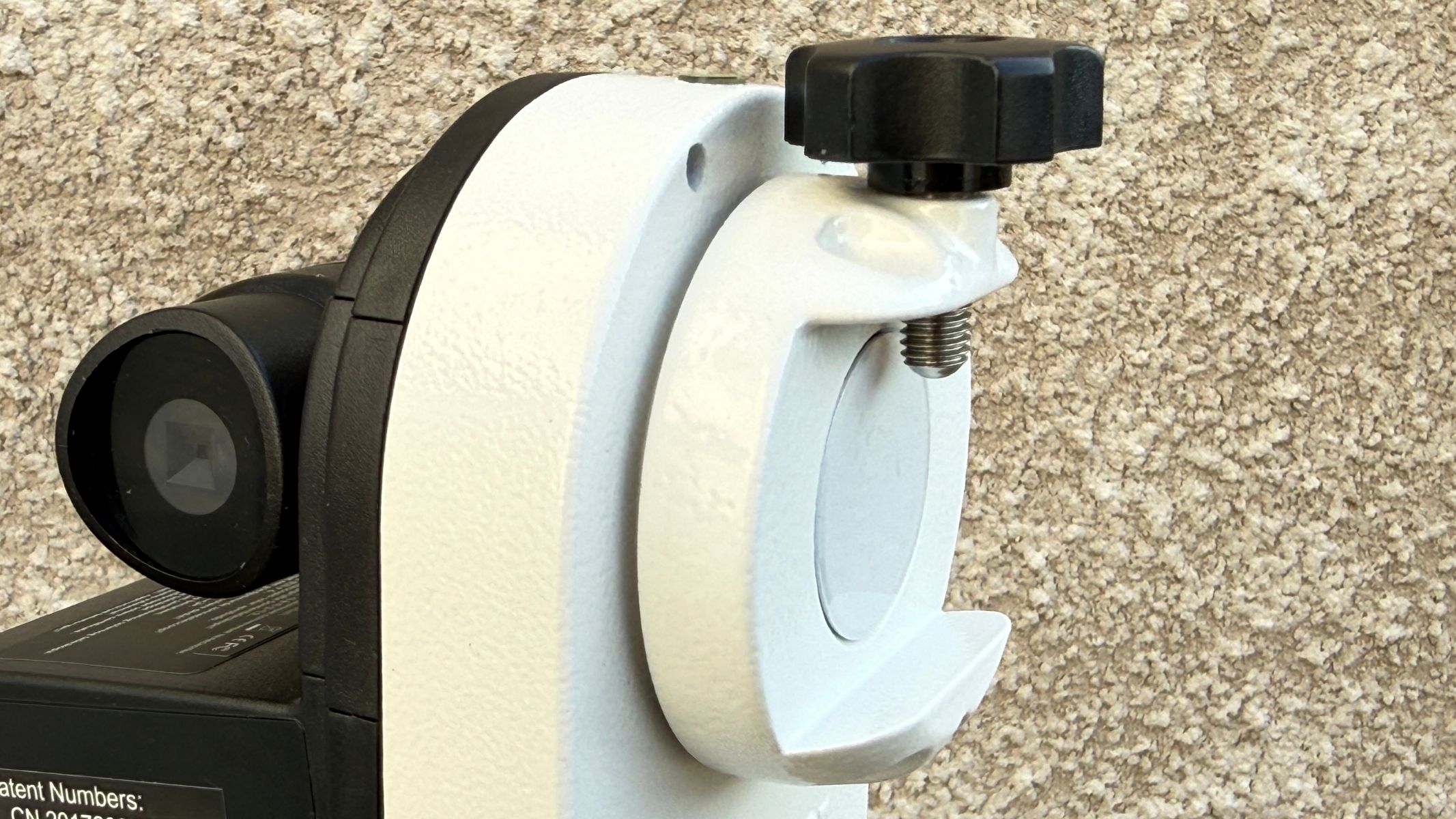
A close-up of the Sky-Watcher SolarQuest solar telescope mount, showing the telescope attachment, against a white textured wall.

Its 8.8-lb payload suits compact white-light and H-alpha solar scopes. (Image credit: Jamie Carter)
  • Lightweight and compact mount head
  • Simple controls make it beginner-friendly
  • Vixen-style saddle suits small solar scopes

The SolarQuest mount head weighs just 2.9 lbs/1.3 kg, accepts standard 45mm Sky-Watcher/Vixen-style dovetails and can be fitted to a tripod using a 3/8-inch screw. Meanwhile, the optional tripod is lightweight and easily adjustable, with a bubble level and accessory tray. Whatever tripod you use, it’s imperative to get it stable before using the SolarQuest because its ability to track the sun successfully depends on it.

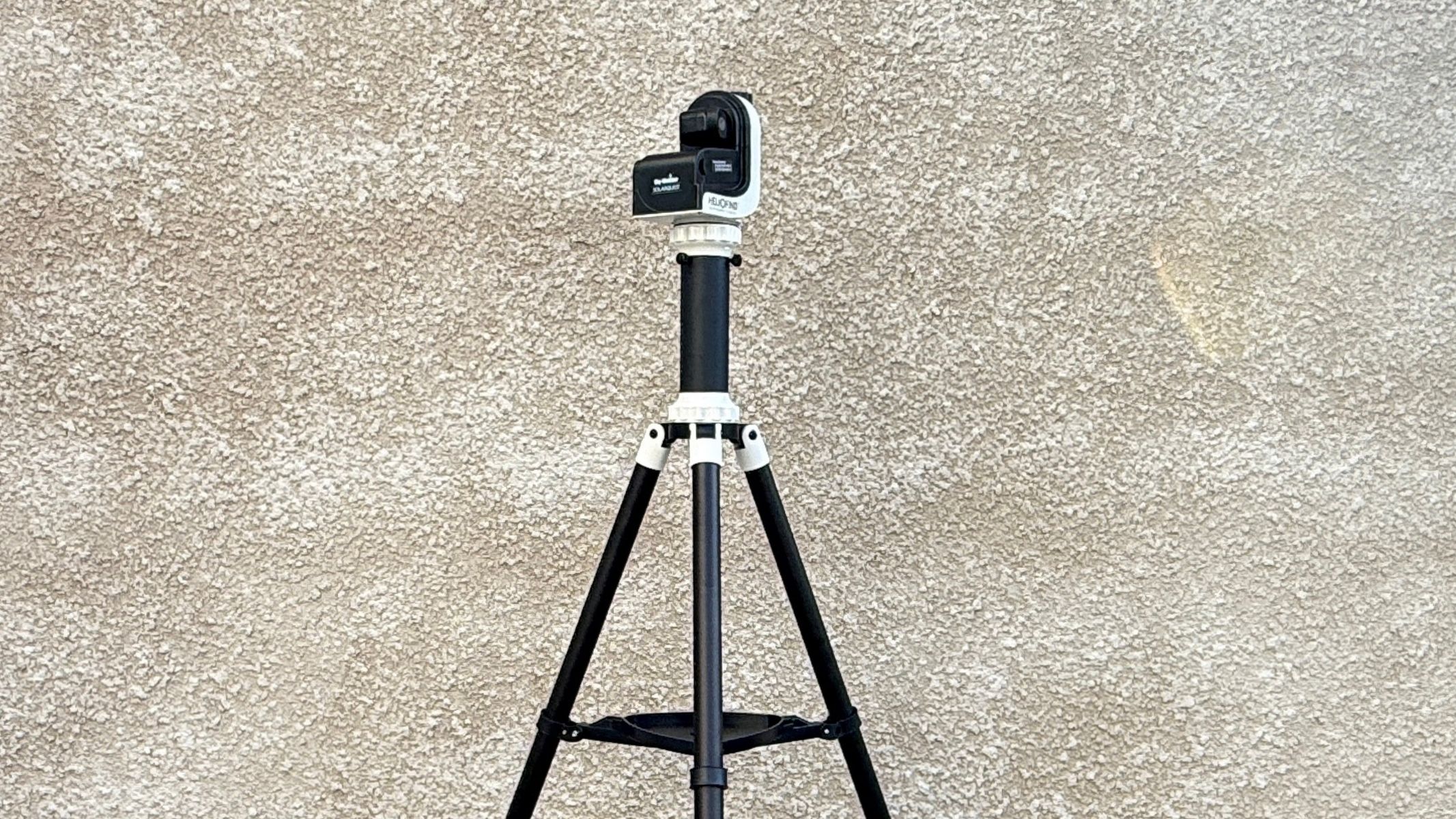
The Sky-Watcher SolarQuest solar telescope mount and tripod against a textured white wall.
The Sky-Watcher SolarQuest comes with an optional sturdy tripod.Jamie Carter
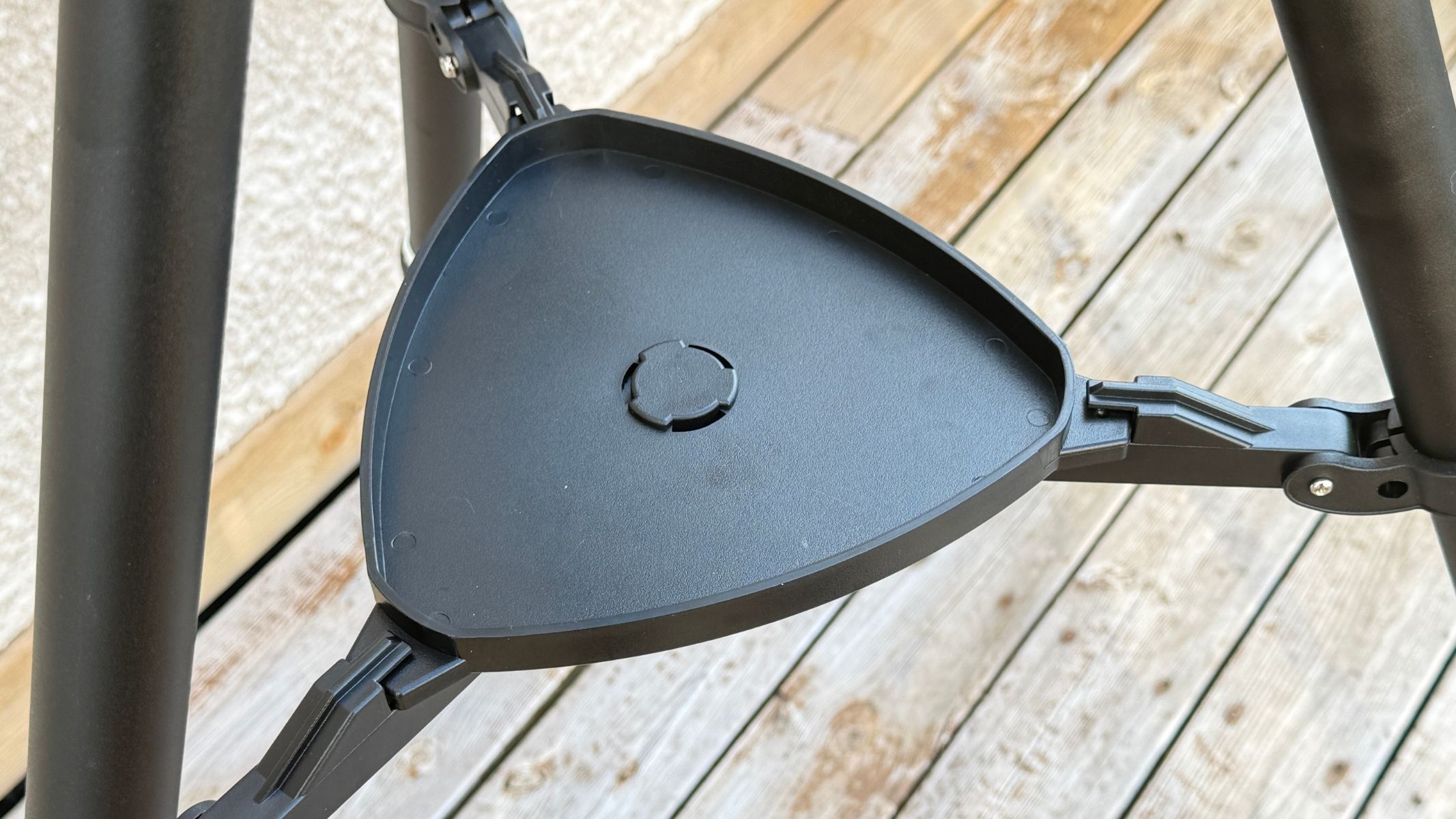
The accessory tray on the tripod on the Sky-Watcher SolarQuest solar telescope mount
The tripod comes with a handy accessory tray.Jamie Carter
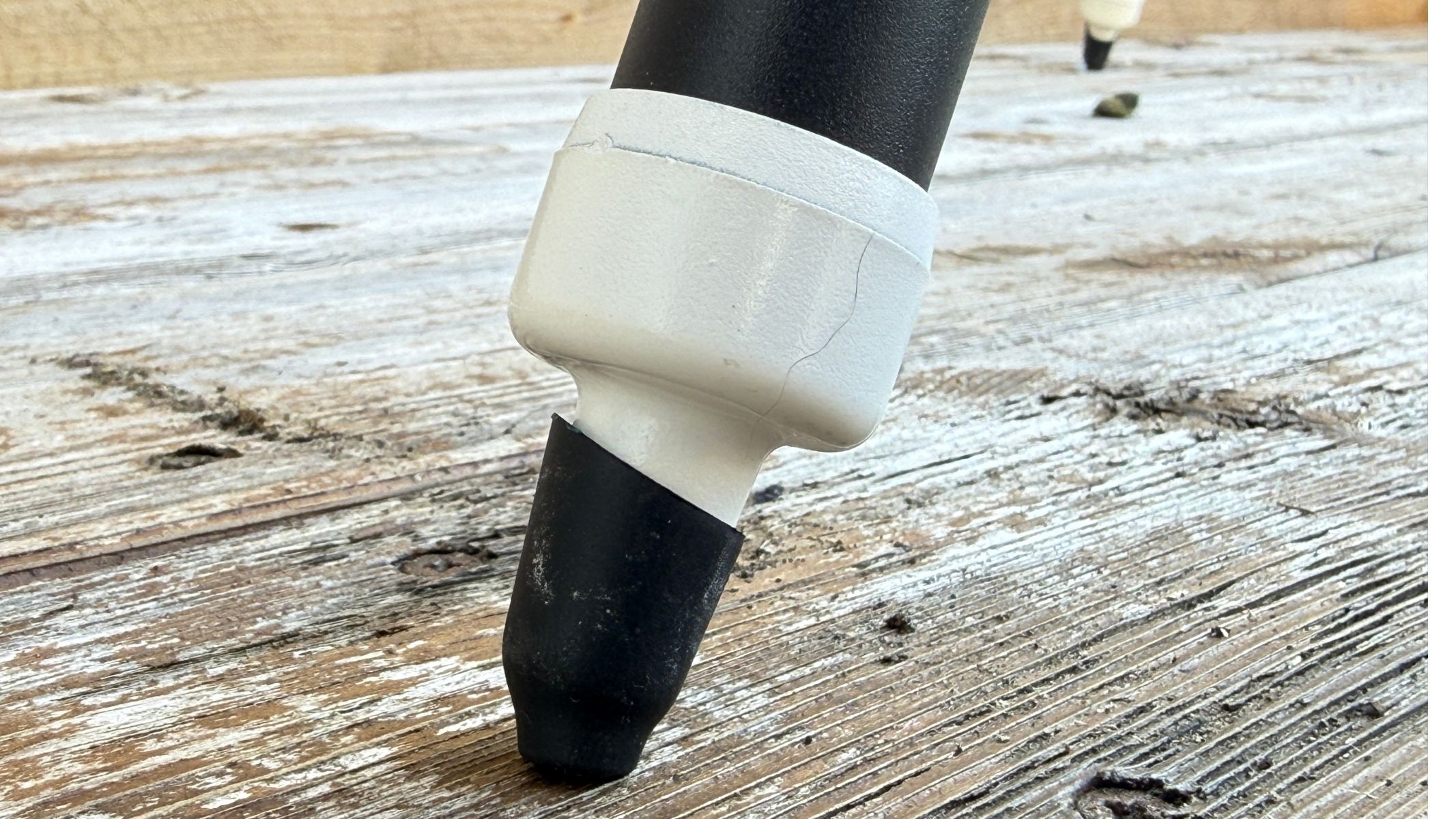
The feet of the tripod on the Sky-Watcher SolarQuest solar telescope mount, standing on a wooden surface.
The optional tripod includes grippers to keep the rig steady.Jamie Carter

With the optional aluminum tripod — which we used in our review — the total setup is still only around 9.9 lbs/4.05 kg, making it easy to set up inside and carry into the garden. Eclipse chasers travelling abroad will easily be able to store it in a carry-on camera bag.

A close-up of the Sky-Watcher SolarQuest solar telescope mount against a white textured wall.
HelioFind technology makes solar alignment fast and beginner-friendly. Jamie Carter
A close-up of the Vixen-style saddle on with Sky-Watcher SolarQuest solar telescope mount.
A Vixen-style saddle accepts many small solar telescopes and spotting scopes. Jamie Carter

The mount itself has very few controls: A power button and an 8-way sliding switch. A long press of the power button finds the sun, with the second used to make manual adjustments. There are no menus and no alignment tasks.

Sky-Watcher SolarQuest mount head: Performance

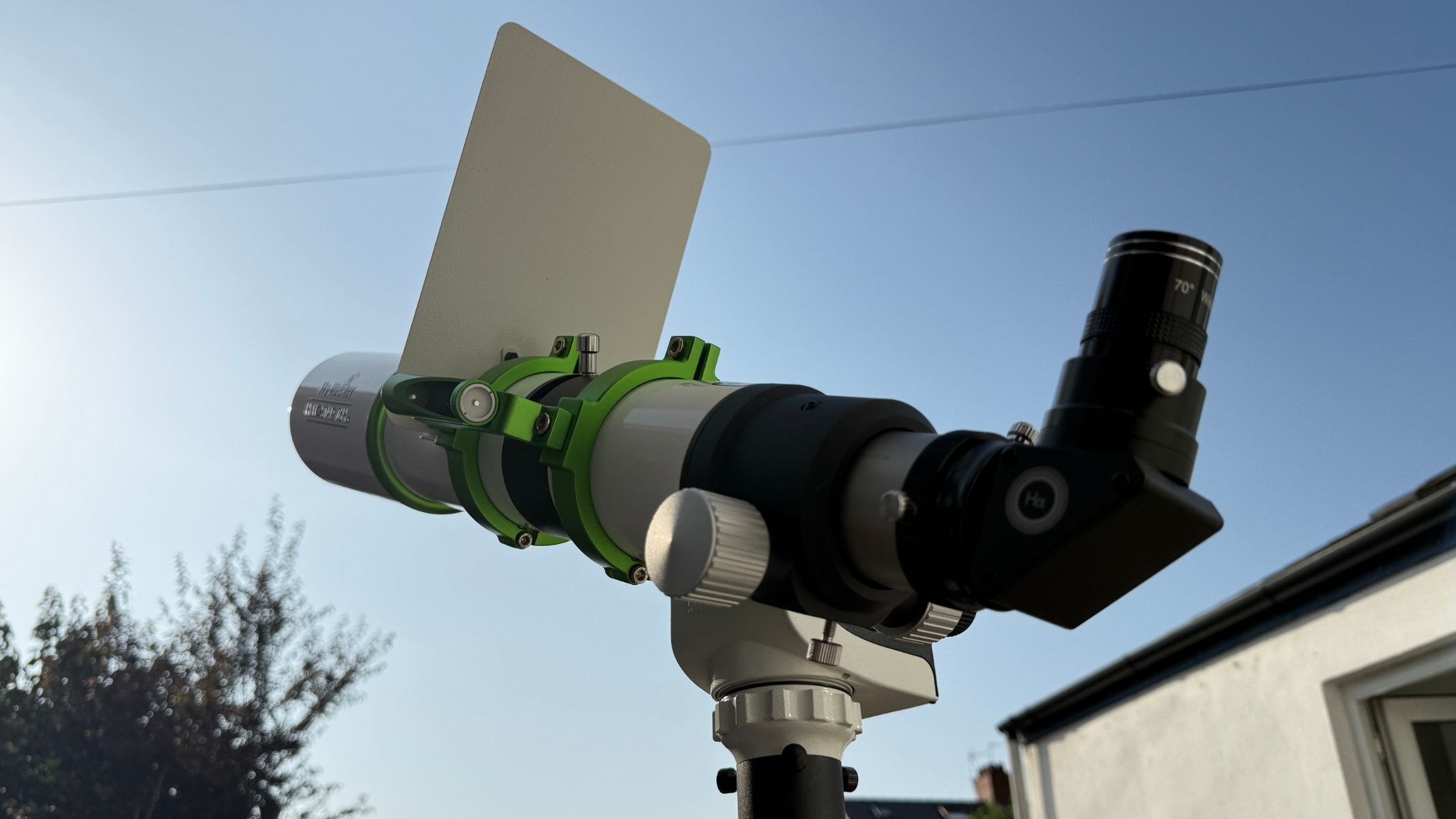
The Sky-Watcher SolarQuest solar telescope mount with the Sky-Watcher Heliostar 76mm solar telescope attached and pointing at the sun.

Its job is simple: Find the sun and keep it centered. (Image credit: Jamie Carter)
  • Finds the sun automatically in clear conditions
  • Fine-tuning controls keep the sun centered
  • Works well with solar telescopes

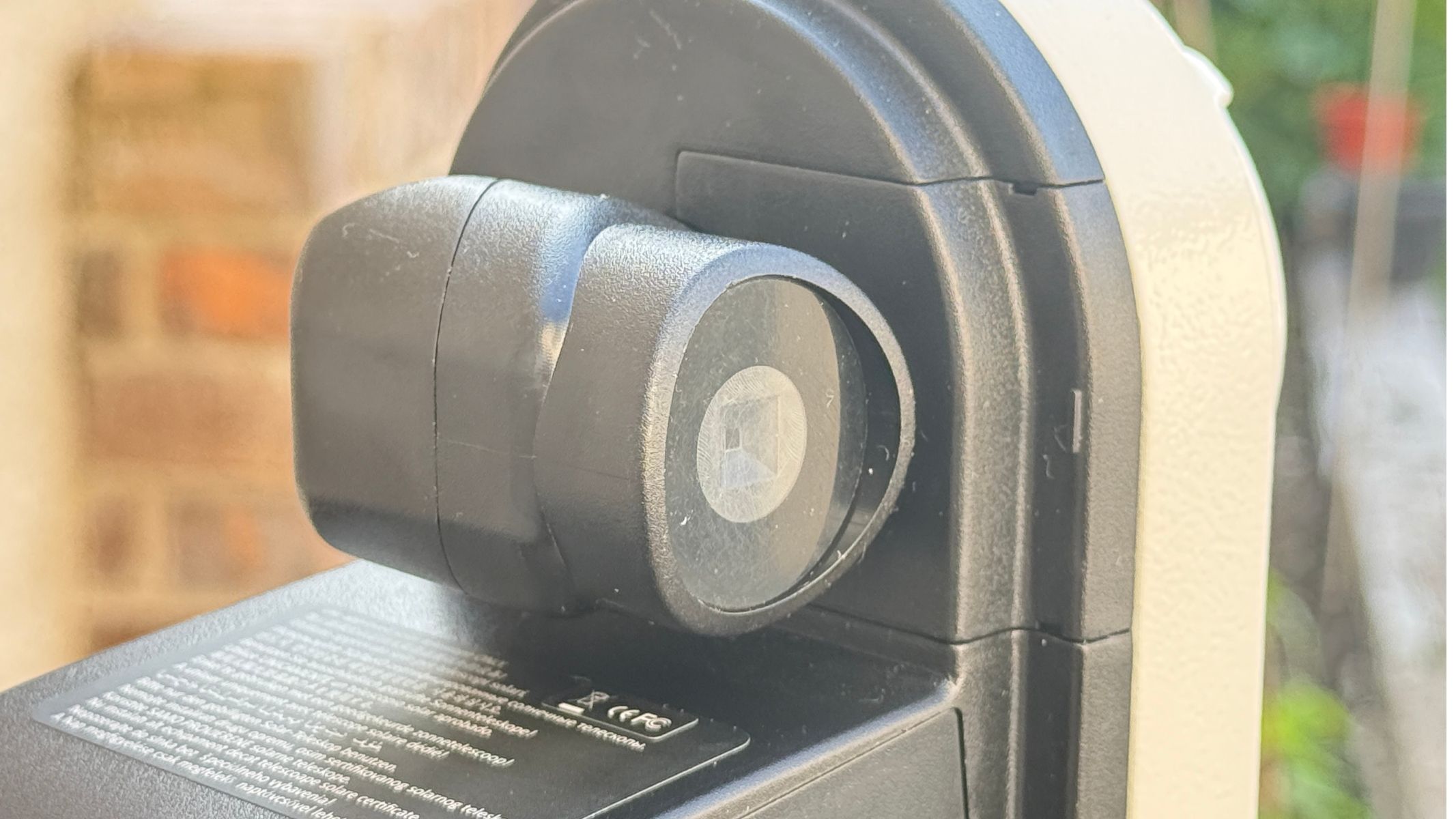
At first glance, the promise of the Sky-Watcher SolarQuest mount head is so simple: you level the tripod using its built-in bubble or spirit level and point the attached telescope somewhere to the left of the sun. You then long-press the power button and step back. The built-in GPS calculates the date, time, and location, as well as the sun’s altitude and azimuth. The mount levels the telescope, pauses, then slews to the right altitude. Then its photodiode solar sensor (a small camera) hunts for the solar disc and locks on. In practice, the system gets impressively close to that ideal — but with some small caveats.

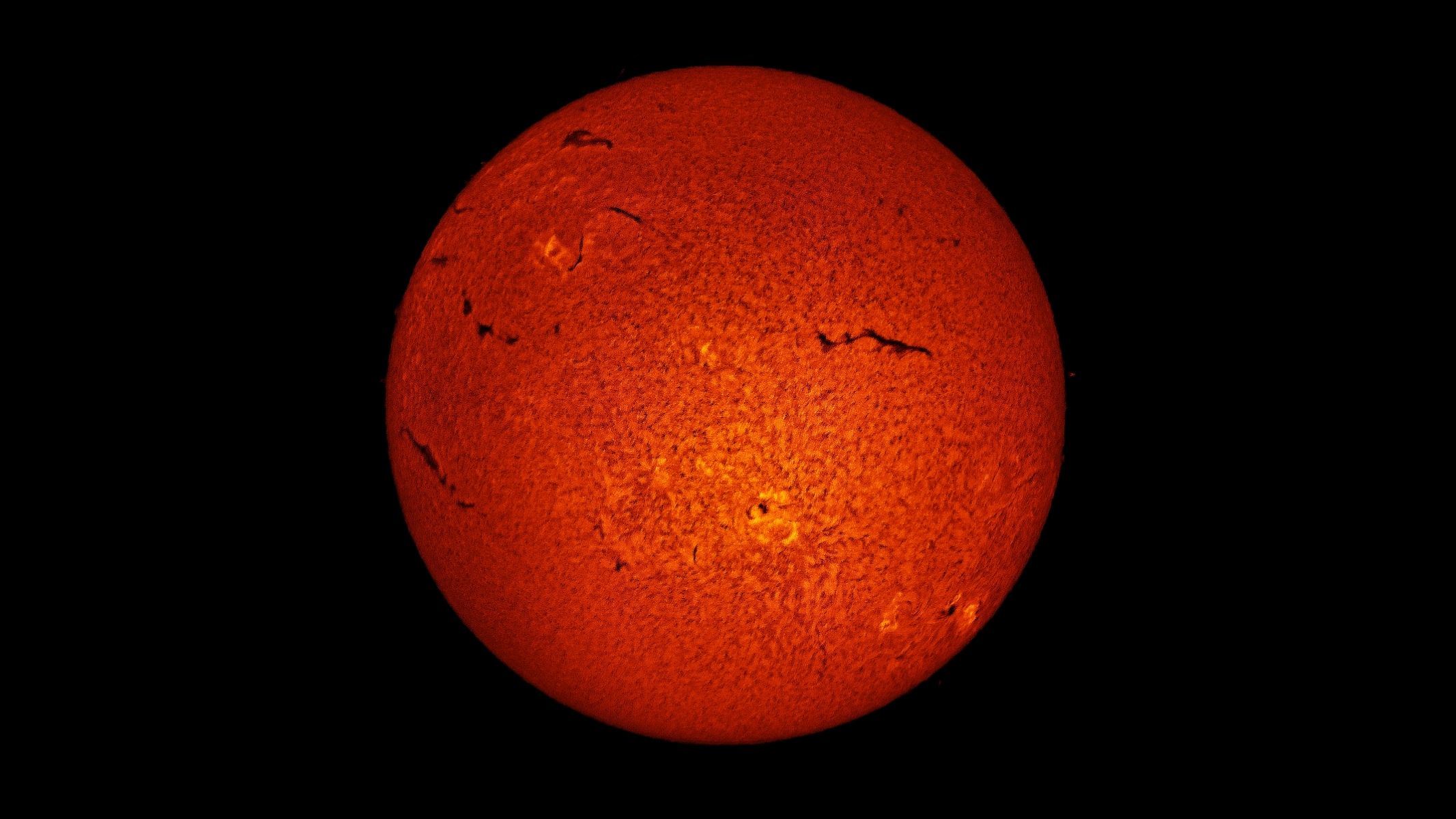
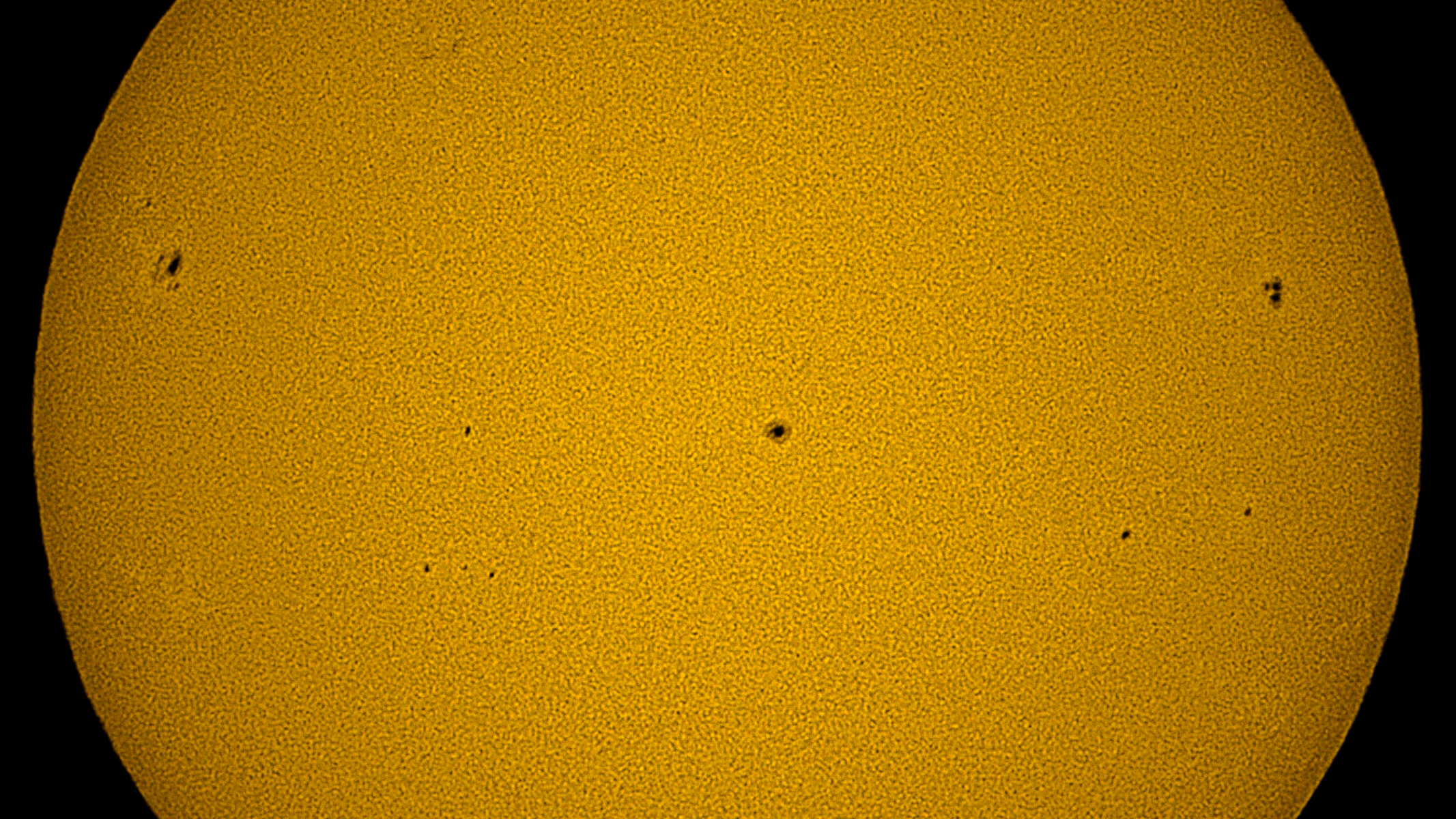
A deep orange image of the sun taken with the Sky-Watcher Heliostar 76mm, Sky-Watcher SolarQuest solar telescope mount and a ZWO ASI174mm mono astronomy camera.

A colorized image of the sun taken with a ZWO planetary camera on an H-Alpha telescope mounted on the SolarQuest. (Image credit: Jamie Carter)

The sun needs to be in a clear sky, but it doesn’t have to be high. We reviewed the SolarQuest during a summer heatwave, when getting up very early was the only sensible way to observe the sun. Having got up early to take advantage of the cool morning air before the sun rose too high, we feared the SolarQuest would fail to find such a low sun. Luckily, there were no such issues, with SolarQuest taking just under 60 seconds to be perfectly aligned with the sun.

A close-up of part of the Sky-Watcher SolarQuest solar telescope mount.

The solar sensor uses four photodiodes to lock onto the sun. (Image credit: Jamie Carter)

For visual observing, that’s transformative. Instead of spending the first part of a session aligning, shadow-aiming and nudging a scope into position, you can be looking at the sun within minutes. However, we did have to use the joypad on the SolarQuest to center the sun. Happily, the controls are very sensitive and move slowly, so we were able to have a perfect view of the sun in under two minutes from pressing the power-on button. That’s impressive.

Sky-Watcher SolarQuest mount head: Functionality

A close-up of the Sky-Watcher SolarQuest solar telescope mount with the Sky-Watcher Heliostar 76mm solar telescope attached.

Built-in GPS calculates the sun’s position automatically. (Image credit: Jamie Carter)
  • Accurately tracks the sun
  • 8x AA batteries are old-fashioned
  • Payload is a limiting factor

Tracking accuracy is very good, with a tiny adjustment on the joypad required perhaps every few hours. Since it largely follows the sun’s path through the sky, it should be suitable for a total or deep partial solar eclipse, when a crescent sun could confuse the sensor (to be sure, you could cover the sensor during totality so it doesn’t hunt for the sun and try to realign during an eclipsed crescent sun).

However accurate it is, this is an alt-az mount. It can track the sun well but it cannot remove field rotation during much longer imaging sessions. For visual use and almost all solar use — including casual video capture — that is not a major issue. However, for long-duration solar imaging and creating time-lapses, it’s a limitation to keep in mind.

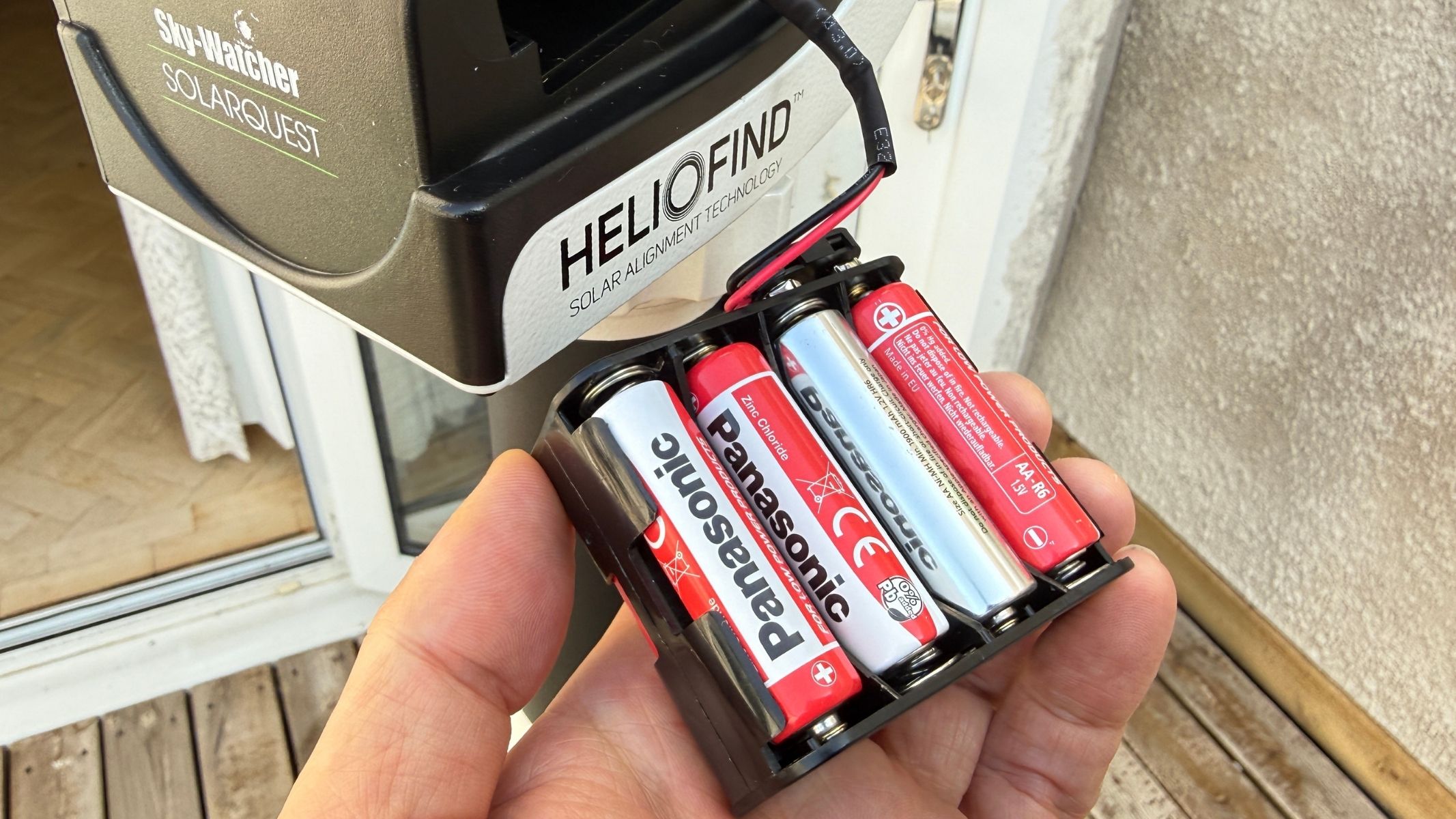
A hand holding the a battery compartment with batteries inside, next to the Sky-Watcher SolarQuest solar telescope mount.

The battery compartment takes eight AA batteries, though external power is available. (Image credit: Jamie Carter)

One practical complaint is the battery compartment. Pop open the door (which detaches and becomes easily lost) and inside is a small plastic cradle that takes eight AA batteries. As if needing to take a trip to a store before being able to use the SolarQuest wasn’t annoying enough, it occurred to me that if I was going to an eclipse, I would need to travel with at least eight more AA batteries as spares — and possibly another 16x for true peace of mind. Not a pleasant prospect. Should any gadget like this be AA battery-powered in the age of Lithium-ion and USB-C? A resounding no. The box includes a 12V DC connection but there’s no cable. It all seems poorly thought through and old-fashioned.

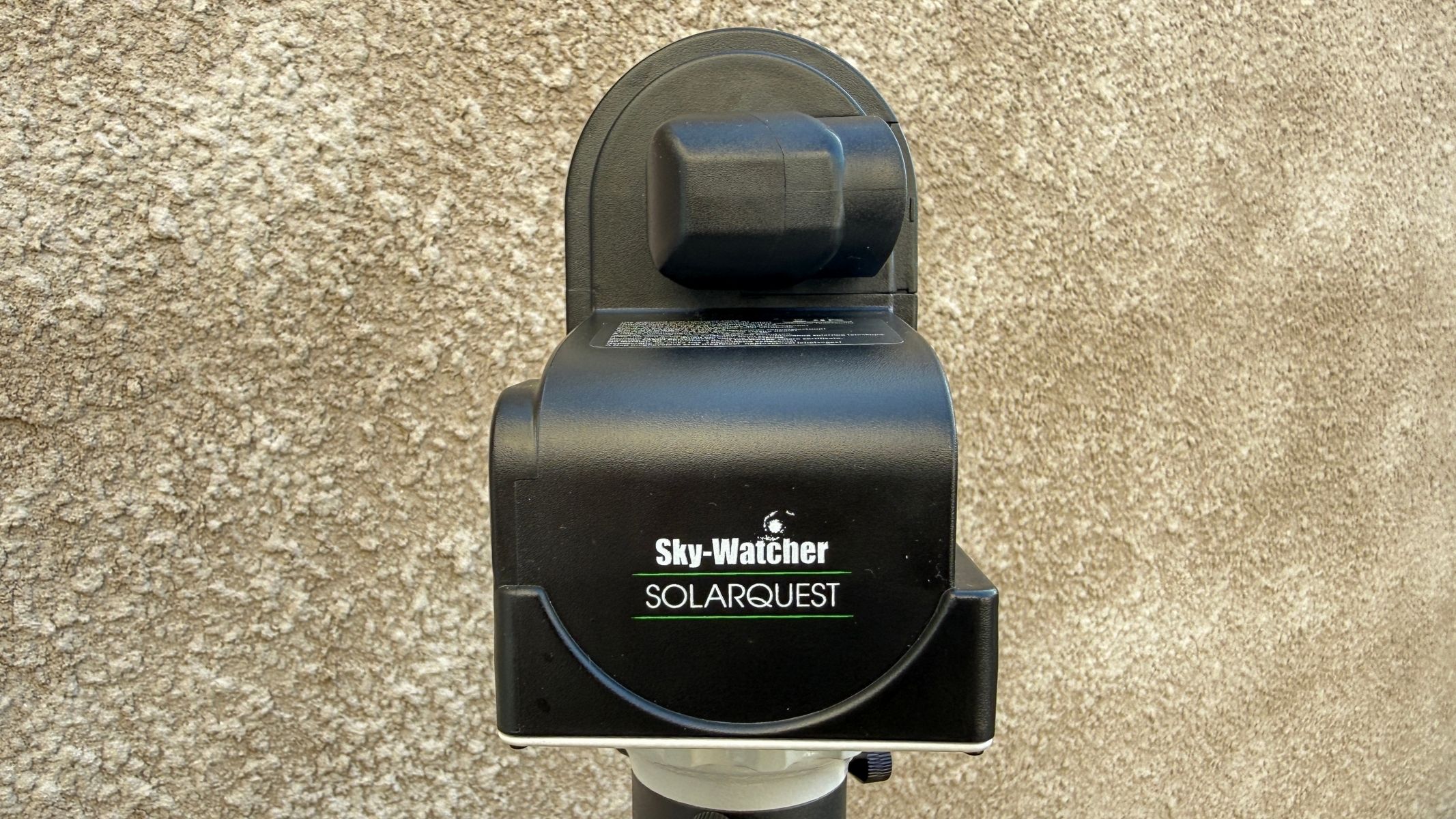
The Sky-Watcher SolarQuest solar telescope mount, showing the Sky-Watcher SolarQuest logo.

The mount head weighs just 2.9 lbs, making it easy to carry outside. (Image credit: Jamie Carter)

However, the main practical limitation of the SolarQuest is its 8.8 lbs (4 kg) payload, which sets it apart as an accessory for small solar telescopes. At its best when speed and simplicity matter, SolarQuest is a travel-friendly mount ideal for beginners and eclipse chasers seeking to remove a common frustration from solar observing — finding and tracking the sun — without adding complexity. It almost totally succeeds.

How we tested the Sky-Watcher SolarQuest mount head

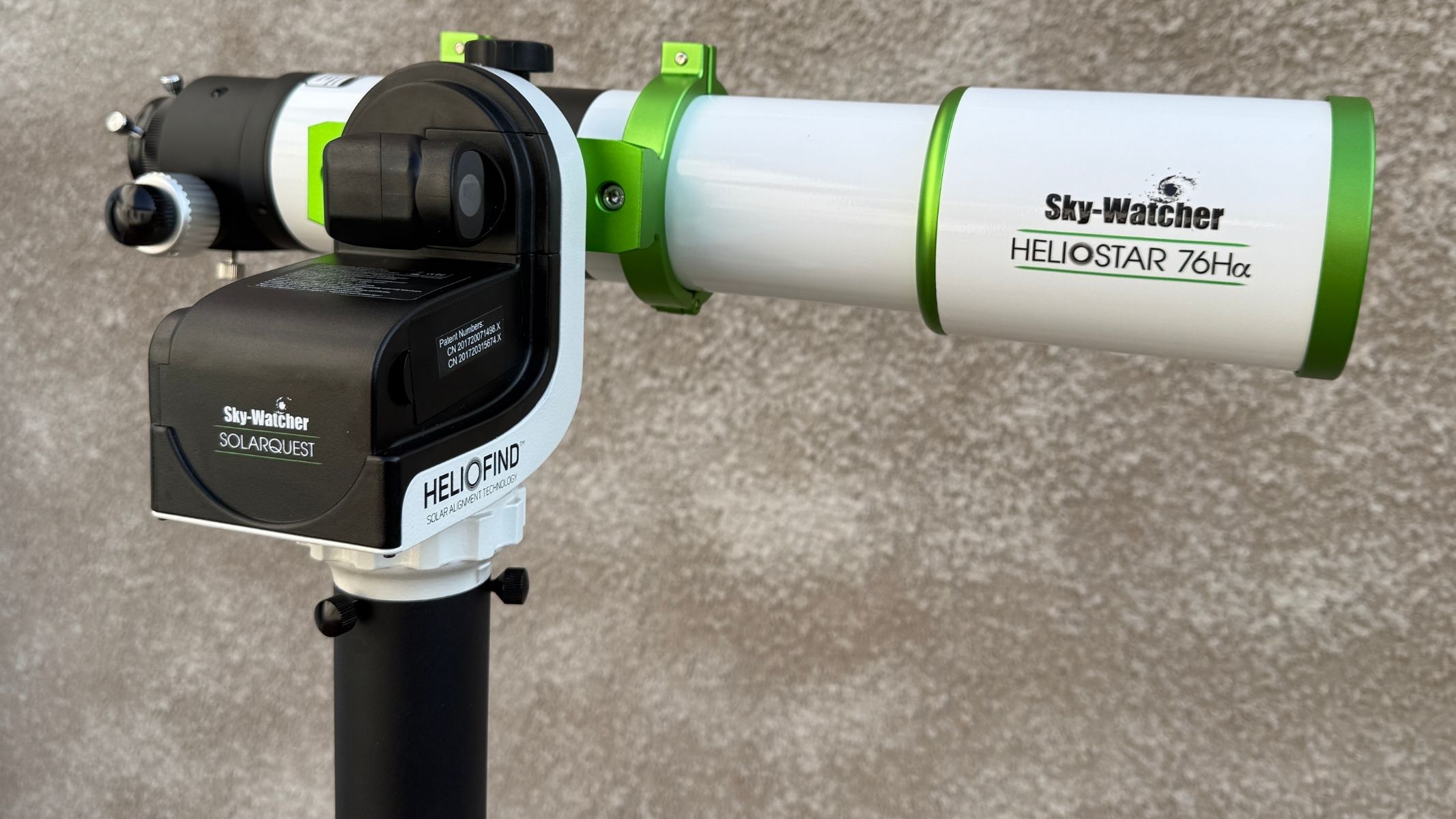
Sideview of the Sky-Watcher Heliostar 76mm H-alpha solar telescope attached to the Sky-Watcher SolarQuest mount.

We tested the Sky-Watcher SolarQuest mount with the Sky-Watcher Heliostar 76mm H-alpha solar telescope. (Image credit: Jamier Carter)

We tried the SolarQuest for about two weeks with both a Celestron Regal M2 spotting scope (with a solar filter attached) for white-light observations of the solar disk and a Skywatcher HelioStar 76mm solar telescope. The latter was used to get some images of the sun in H-Alpha (Hα), in conjunction with a ZWO ASI174MM planetary camera.

Should I buy the Sky-Watcher SolarQuest mount head?

Buy it if:

✅ You want to get into casual backyard solar observing: The SolarQuest mount is great for those who have a small solar telescope or a regular telescope with a solar filter and want to start observing the sun more.

✅ You want fast, automatic solar finding and tracking: The SolarQuest mount makes solar observation super easy and super quick so finding the sun isn't a chore and allows you to focus on observation.

Don't buy it if:

❌You want a mount for nighttime astronomy as well: It has one job, to find the sun, and doesn't work for finding any targets in the dark night sky.

❌You don’t want to travel with lots of spare AA batteries: The mount is powered by eight AA batteries and if you are carrying spares, this means a lot of extra weight to carry around when travelling to observation locations.

If you need something to support a solar or solar-filtered telescope under 8.8 lbs/4kg, the SolarQuest should be on your radar. It quickly finds the sun and tracks accurately, removing the need for manual alignment. It’s also really compact, operates quietly and has very simple controls.

The included instructions are poor, the way it’s battery-powered is far from ideal, and it’s limited by its payload capacity, but it’s so easy to use and quick to work that it’s hard to criticize the SolarQuest too harshly — it’s a slick and simple accessory.

If the Sky-Watcher SolarQuest mount head isn’t for you

There are very few dedicated solar trackers like the Sky-Watcher SolarQuest. However, some star trackers do have a mode where you can choose the sun as the star to track, including the Benro Polaris. Once you’ve entered the sun in the frame using the virtual joystick, the Polaris can automatically track it. Another alternative is an equatorial mount, which, when well aligned, can handle solar observing for longer periods and/or for making time-lapse sequences.

  •  

How to safely observe eclipses and the solar surface with a smart telescope

Solar observation can be tricky or underwhelming when trying to observe with handheld methods such as using solar eclipse glasses and solar binoculars. Hunting for the sun with binoculars can be tricky due to the essential ISO 12312-2 rated solar filters on the glass blocking all vision except for the solar disk itself. This is where a smart telescope like the entire Unistellar range can help; it automatically finds and tracks the solar disk from a few presses on your smartphone.

Need a smart telescope? Skip ahead to pick from our list of recommendations to suit all budgets.

A closeup of the yellow solar surface, showing three dark sunspots, as imaged by the Unistellar eQuinox 2 smart telescope.
With some light adjustments in Adobe Lightroom, the details on the solar surface really pop out on the photograph from the eQuinox 2. Harry Bennett / Future
A Unistellar eVscope 2 pointing at the sun in the blue sky.
All it takes is a few seconds to stack frames on a smart telescope and get more detail on the solar surface.Harry Bennett / Future

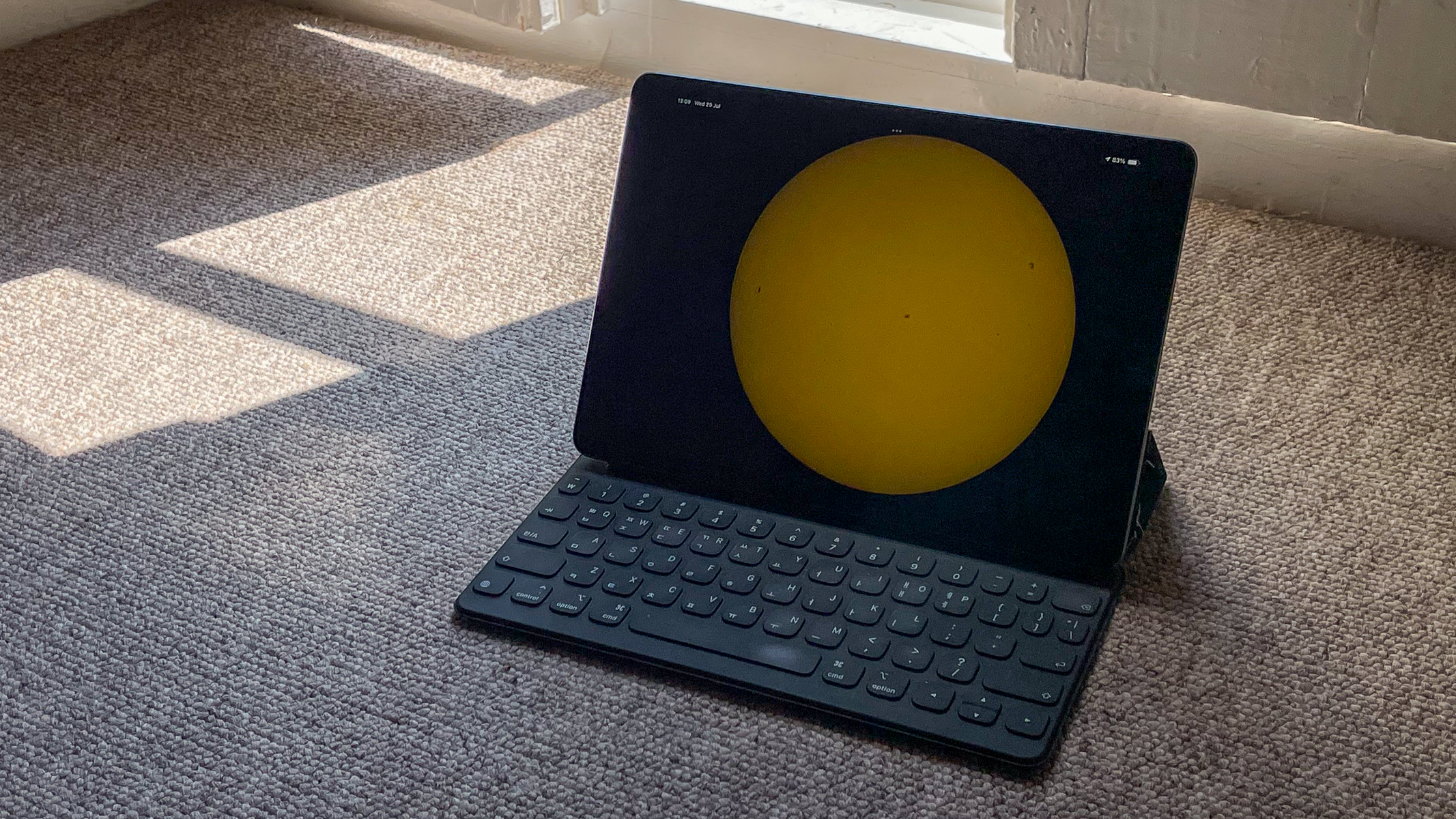
All you need is to attach the correct Unistellar solar filter for your model, click Go-to on the Sun and the telescope will slew to the solar disk. If connected to a tablet or larger screen, you can get a much bigger image of the sun to share with groups and family. This also allows you to watch the observation from a shaded spot and get comfortable without needing to stay out under the beating sun.

An iPad screen showing the solar disk from the Unistellar app against some shadowed carpet.

(Image credit: Harry Bennett / Future)

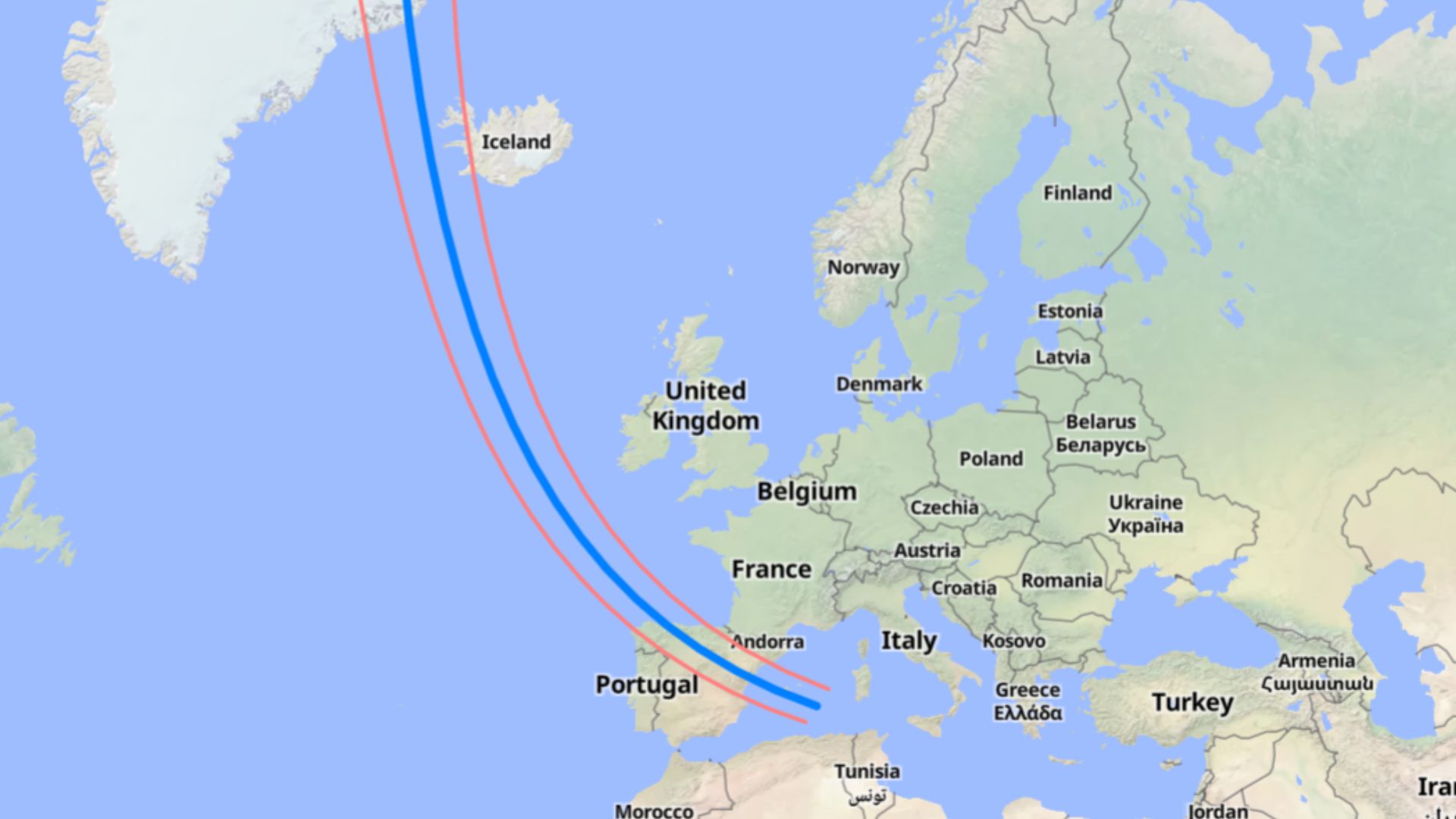
Smart telescopes not only find and track the solar disk but they can image it too. Using built-in image focusing, stacking and processing, the telescope delivers a sharper image within seconds and reveals solar details like sunpots on the surface. If you don't want to miss getting a shot of the next solar eclipse, you can use the solar observation mode to capture the sun at all stages of the eclipse from your smart telescope. At the time of writing, the next total solar eclipse is coming on Aug. 12, 2026 and will be mainly visible in Greenland, western Iceland and northern Spain. Partial eclipses will be visible in some other European countries, parts of Canada and New York City.

eclipse 2026

The entire path of totality for the 2026 total solar eclipse. (Image credit: Created using MapHub.net. Source: Esri, Maxar, GeoEye, Earthstar Geographics, CNES/Airbus DS, USDA, USGS, AeroGRID, IGN, and the GIS User Community)

What to do: A generalist step-by-step for most smart telescopes

  • 1. Turn your smart telescope on
  • 2. Link the smart telescope to a smartphone or tablet
  • 3. Install the solar filter if the model requires a separate attachment
  • 4. Select the sun on the app and wait for the location
  • 5. Focus the image if needed and then use enhanced vision for more detail

What do you need?

A Unistellar eVscope 2 against a cloudy blue sky.

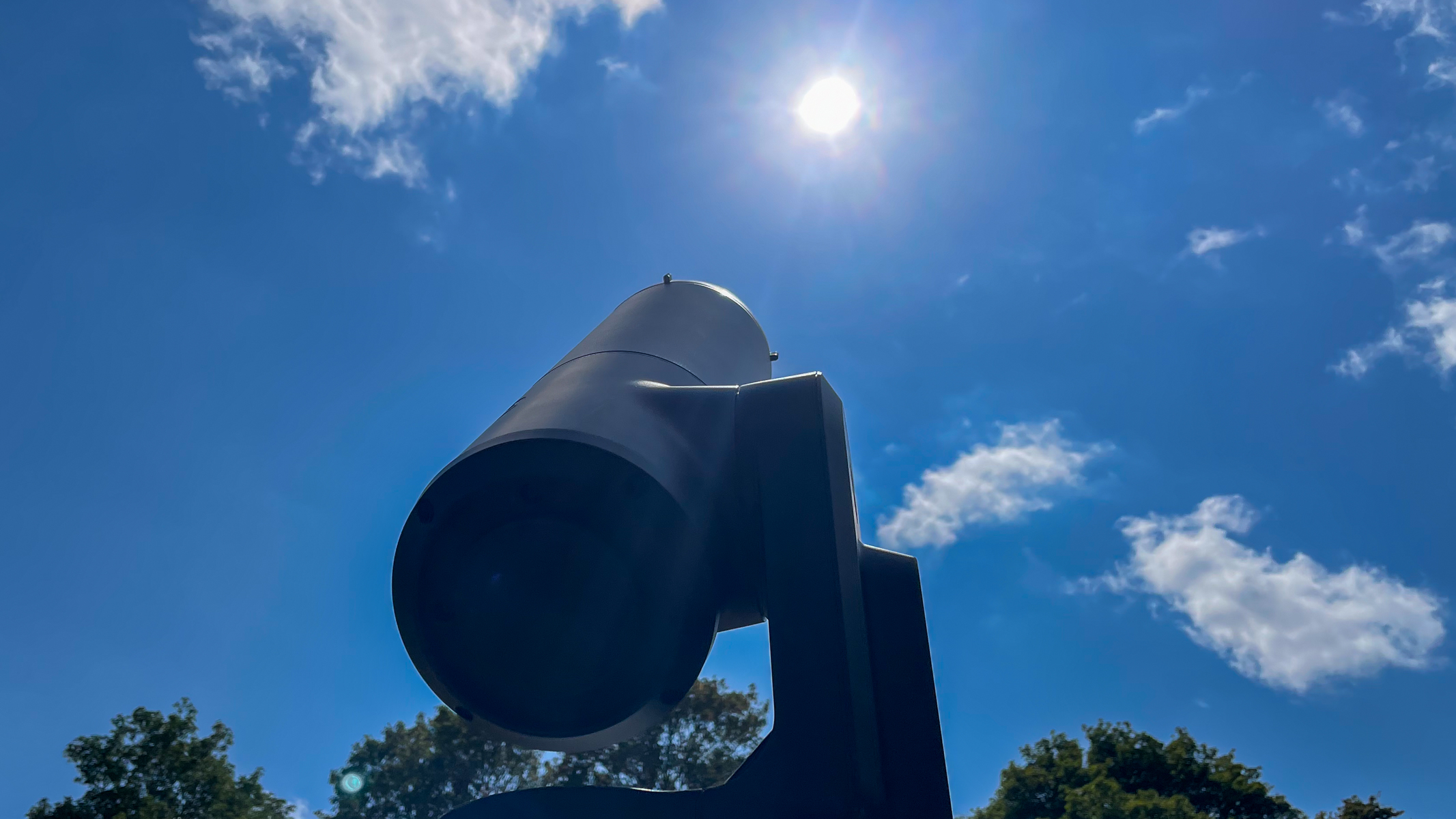
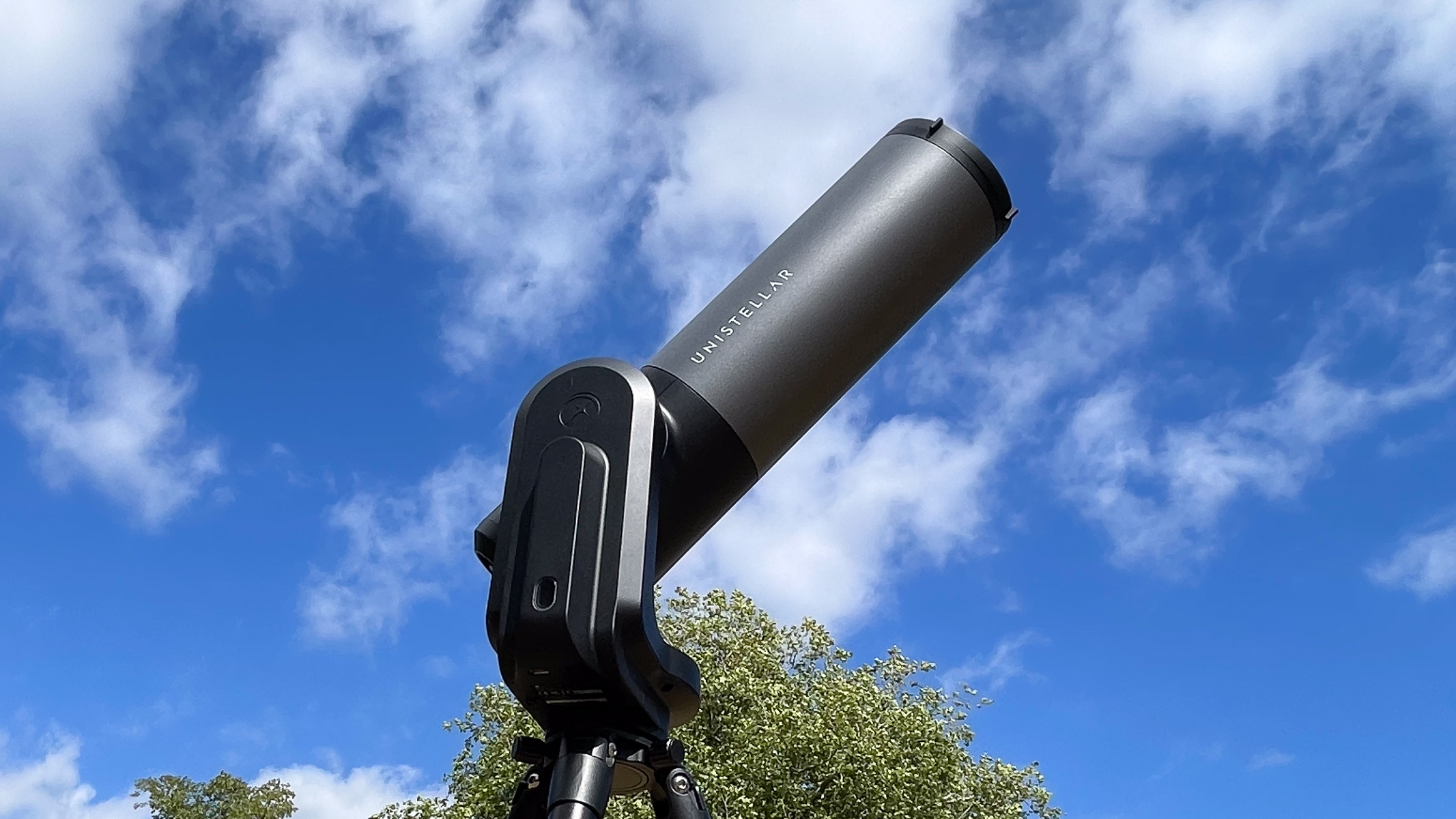
The eVscope 2 can easily find the solar disk once selected. (Image credit: Harry Bennett / Future)

For solar observation with a smart telescope, the first thing you will need is a smart telescope. While I'm going over how to use a Unistellar eVscope 2 for solar imaging and observation, most of the other smart telescope brands have models that are capable of this too, like the Dwarflab Dwarf Mini 3 and Vaonis Vespera II. If you are used to using a traditional telescope, bear in mind that you will need a smart device to operate the smart telescope and observe your targets. Most smart telescopes come with a tripod, so you shouldn't have to worry about getting one extra but it is an essential piece of equipment.

The Unistellar tripod against some grass.

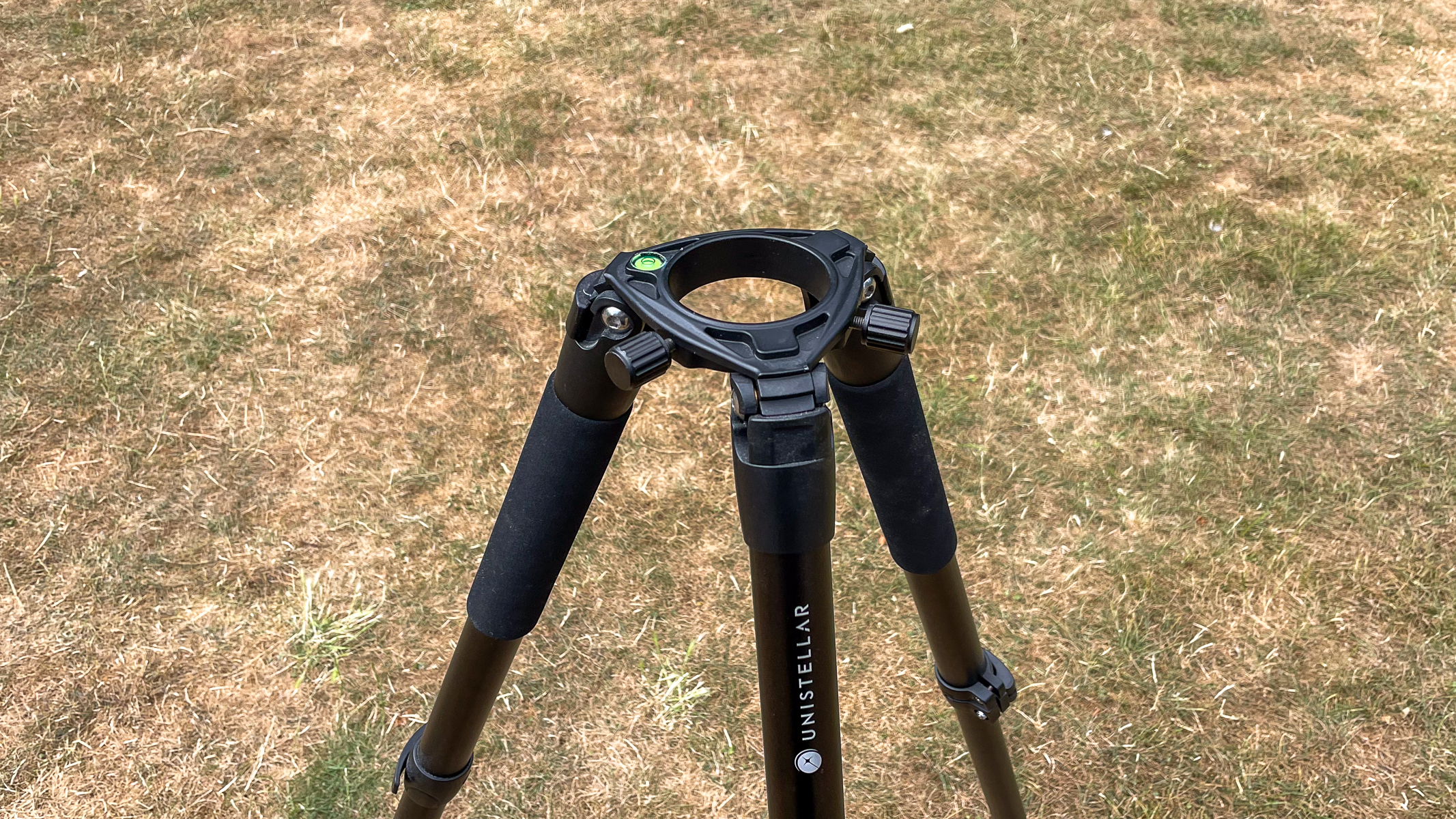
Make sure the bubble level on the tripod is centered so your setup is flat. (Image credit: Harry Bennett / Future)

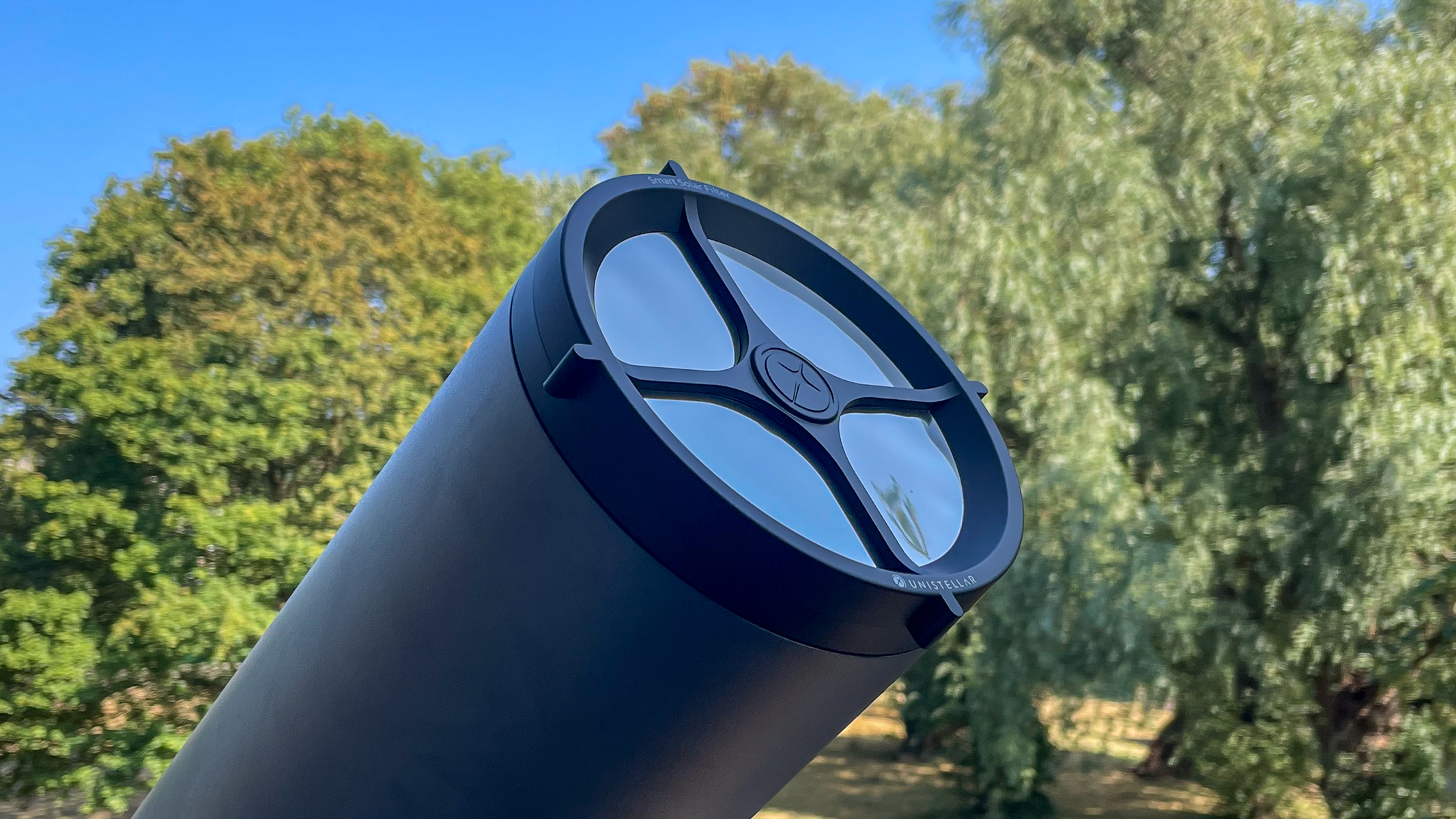
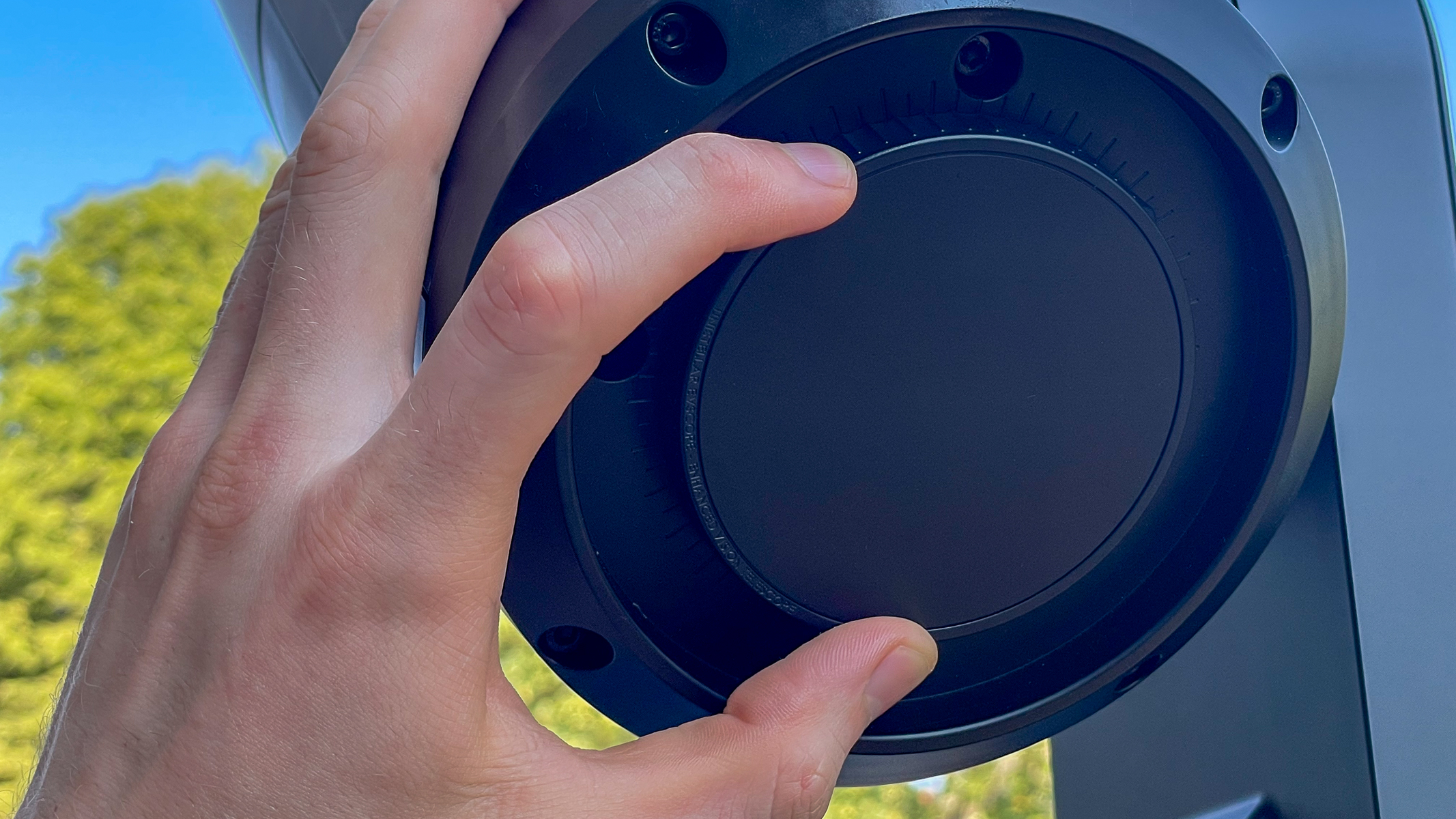
Next, you need a solar filter for your telescope. This is to protect the image sensors in the body of the telescope and drastically reduce the amount of light entering the aperture, so that you don't get a highly overexposed image. Many brands sell these solar filters separately and in the case of Unistellar, you have to make sure you get the right one for your model. There is a solar filter for their Odyssey range and then another filter for their pro range, which features the eQuinox 2 and eVscope 2 models.

A hand holding the Unistellar eVscope 2 solar filter shining in the sunlight.

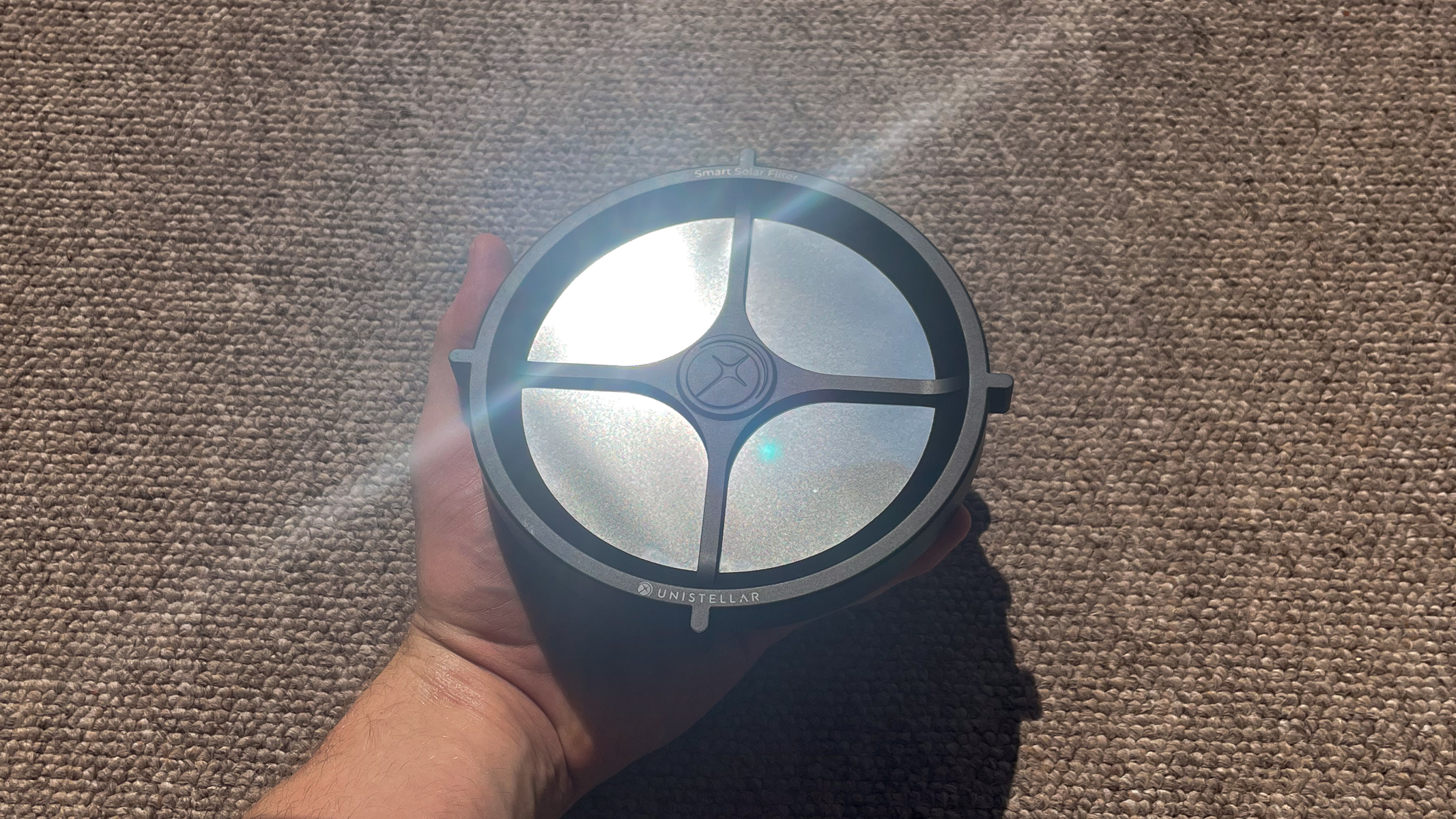
Some smart telescope companies sell their solar filters separately, like Unistellar, Vaonis and Celestron. (Image credit: Harry Bennett / Future)

Finally, you will also need access to somewhere with a good view of the sun, so a park, garden or open space is ideal. Solar imaging is best done in mid-to-late morning before the sun has heated up our atmosphere, which causes disturbance in the image. This is especially important if you are looking to get crisp shots of sunspots.

Observing and imaging the sun

The Unistellar eVscope 2 with solar filter, pointing straight up with grass in the background.

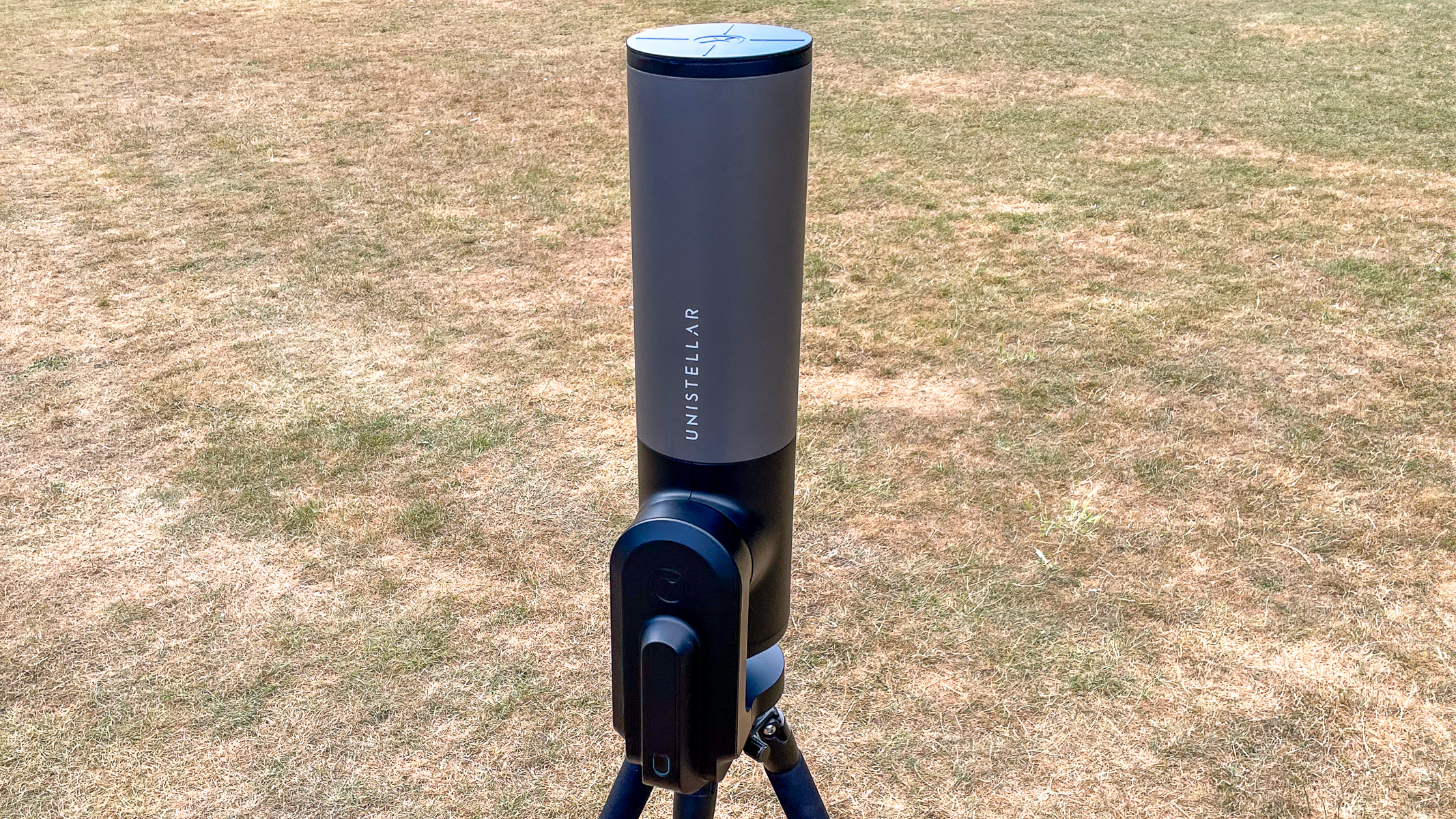
The solar filter prevents the sun from damaging the image sensor in the smart telescope. (Image credit: Harry Bennett / Future)

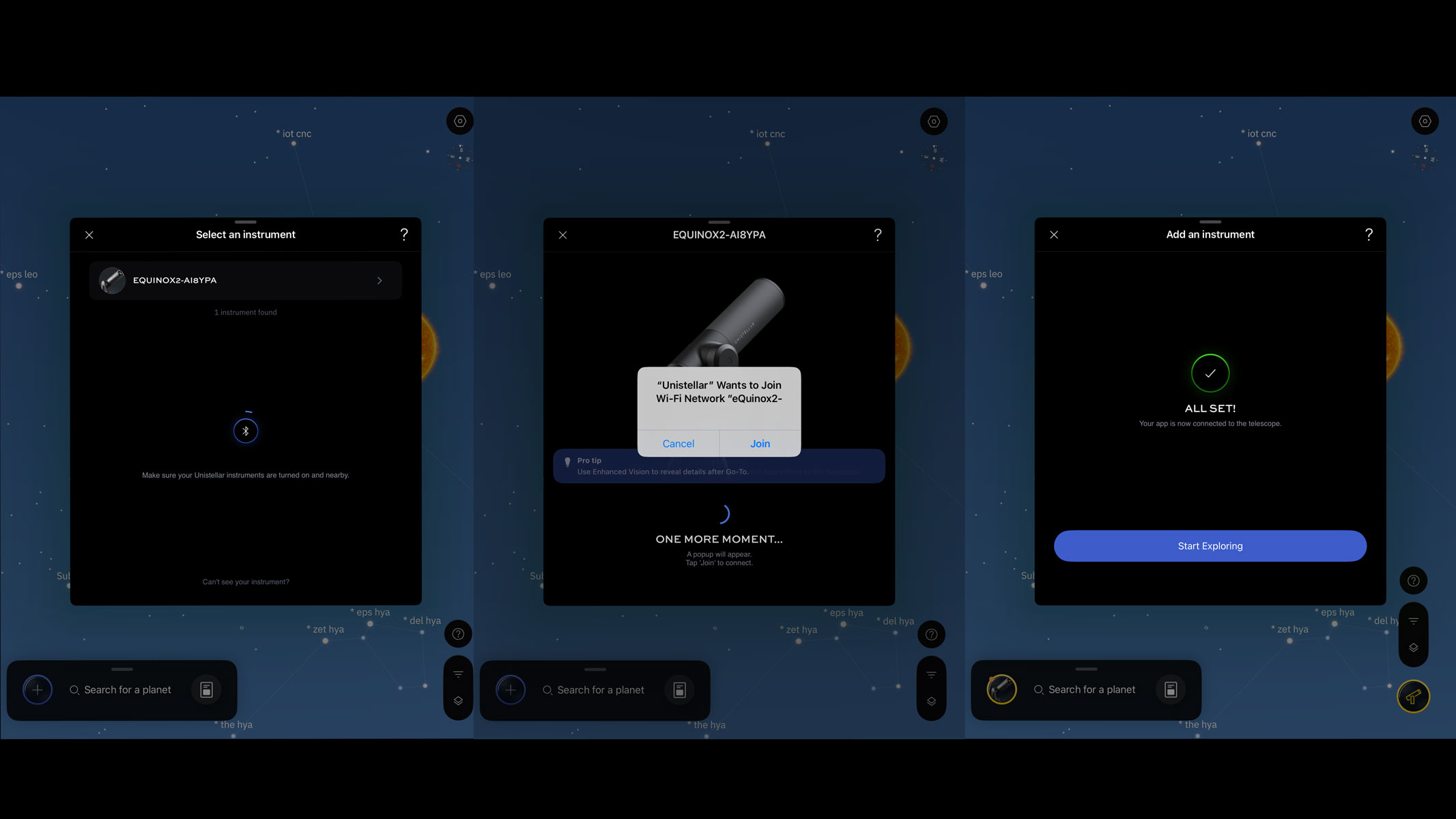
Make sure your tripod is level, with your smart telescope properly attached, then turn it on and remove the dust cap. Open your preferred app and add your device by following the on-screen instructions.

The Unistellar eVscope 2 pointing straight up with grass in the background.
The Unistellar eQuinox 2 is easy to set up in a yard or open space.Harry Bennett / Future
The Unistellar eVscope 2 without solar filter attached with trees in the background.
Used with a solar filter, smart telescopes allow you to track night sky objects and grab sharp images. Harry Bennett / Future
A hand attaching the solar filter to a Unistellar eVscope 2 with trees in the background.
The solar filters are easy to attach to the aperture on the eQuinox 2. Harry Bennett / Future
A Unistellar eVscope 2 with solar filter attached with trees in the background.
With the solar filter attached, the eQuinox 2 is ready for solar observation and photography. Harry Bennett / Future

Next, you should inspect your solar filter for any tears or holes, as any exposure to the sun without the filter can permanently damage the sensor. Installation is easy as you just clip the filter onto the end of your smart telescope.

Screenshots of the Unistellar app showing how to connect your smart telescope.

On the Unistellar app, on-screen instructions guide you through connecting to the device. (Image credit: Unistellar)

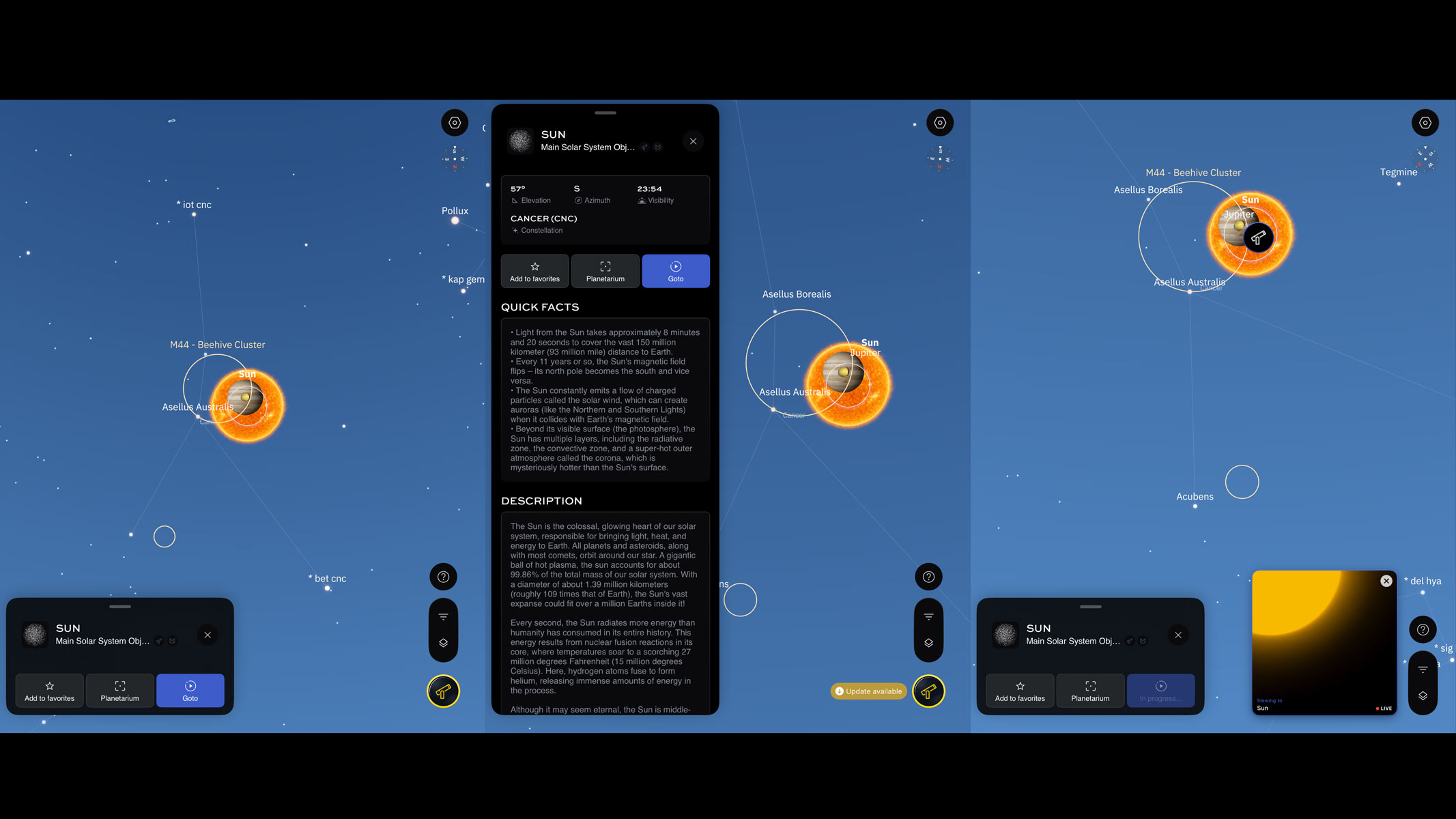
After the device is connected, go to the list of sky targets in your app and it will allow you to browse or search for the sun. Click on it to bring up the go-to functions and if you are interested, more astronomical information about your chosen target.

Screenshots of the Unistellar app showing the planetarium with the sun and app functions.

In the Unistellar planetarium, you simply just select the sun and click GoTo to start target location. (Image credit: Unistellar)

Clicking on go-to for the sun brings up a series of slides to guide you through how to safely observe the sun with your device. The app also recommends positioning your telescope mount in the direction of the sun with the motor on your right to avoid any issues or delays in slewing.

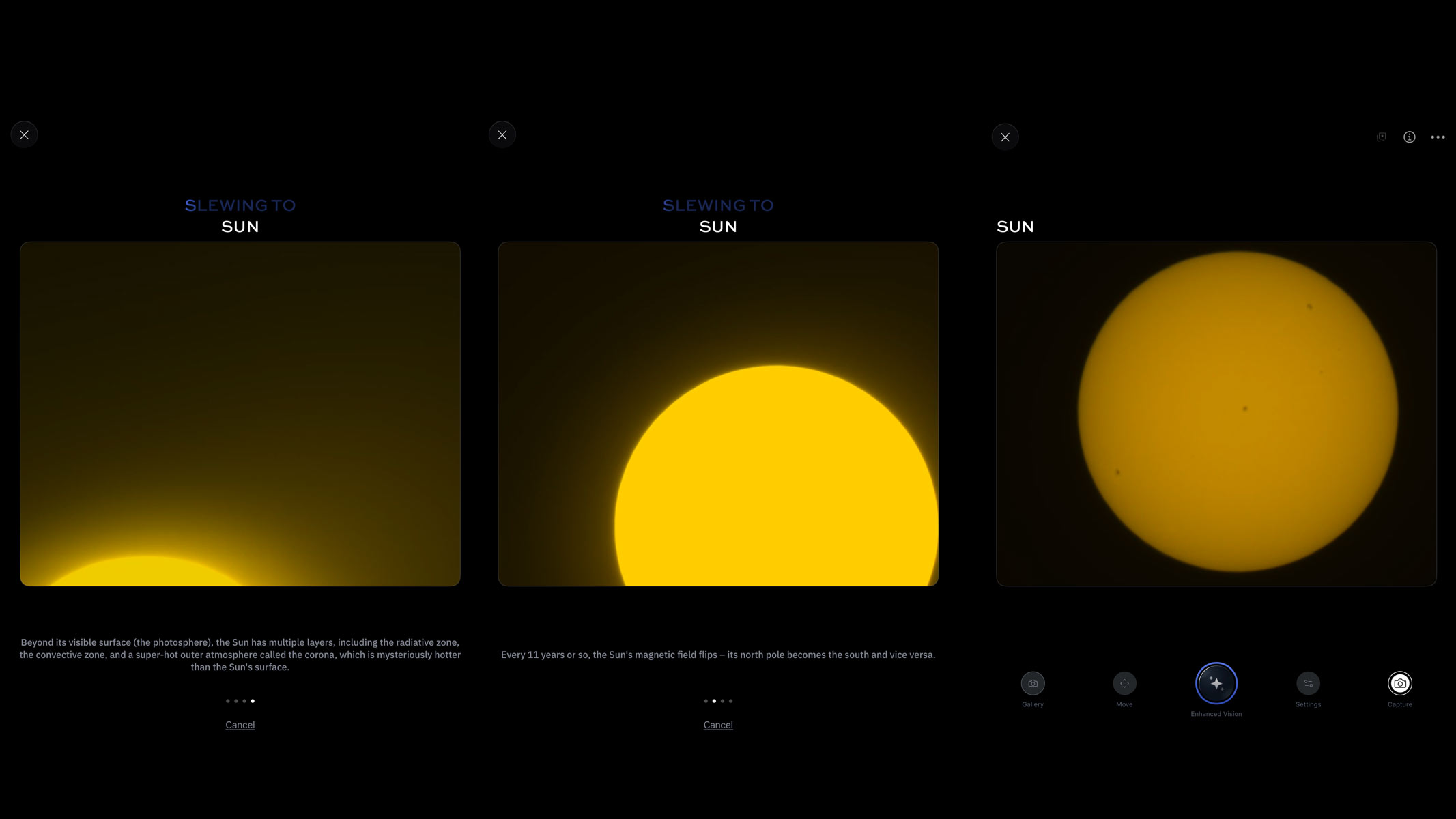
Screenshots of the Unistellar app showing the solar disk.

While not rapid, the eQuinox 2 finds the sun within a minute or two, with extra time spent centering the solar disk. (Image credit: Unistellar)

After pressing go, the smart telescope should move and slew towards the sun. It can take a little while but it is rather exciting as you see the edges of the solar disk flash on the screen as the telescope gets closer and centers the image.

Part of the solar disk with unfocused sunspots.
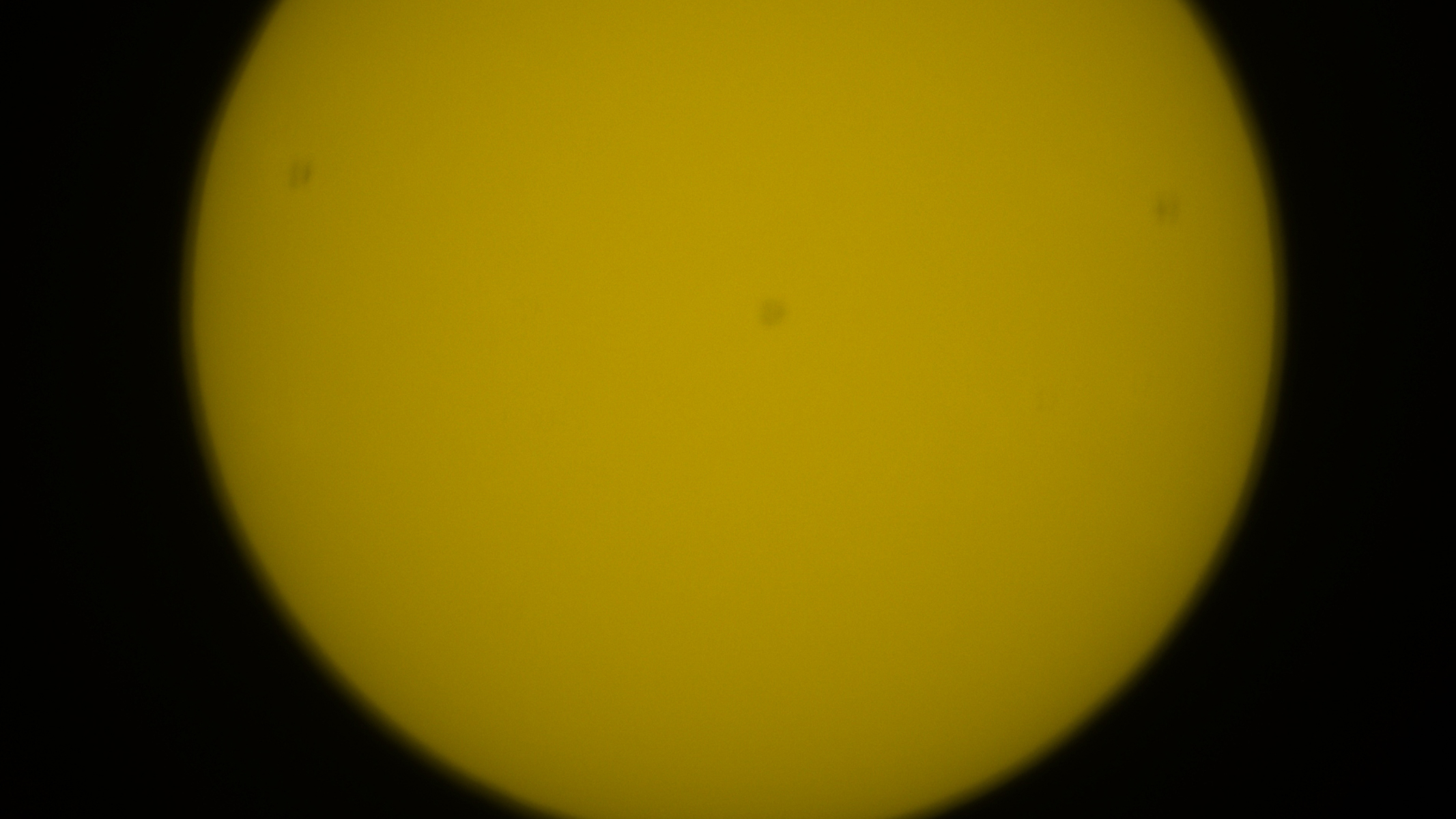
Once I found the solar disk, I saw that the sunspots were out of focus.Harry Bennett / Future
A hand adjusting the focus wheel on the bottom of a Unistellar eVscope 2.
Using the focus wheel on the bottom of the Unistellar eQuinox 2, I incrementally adjusted the focus.Harry Bennett / Future
Part of the solar disk with sunspots in focus
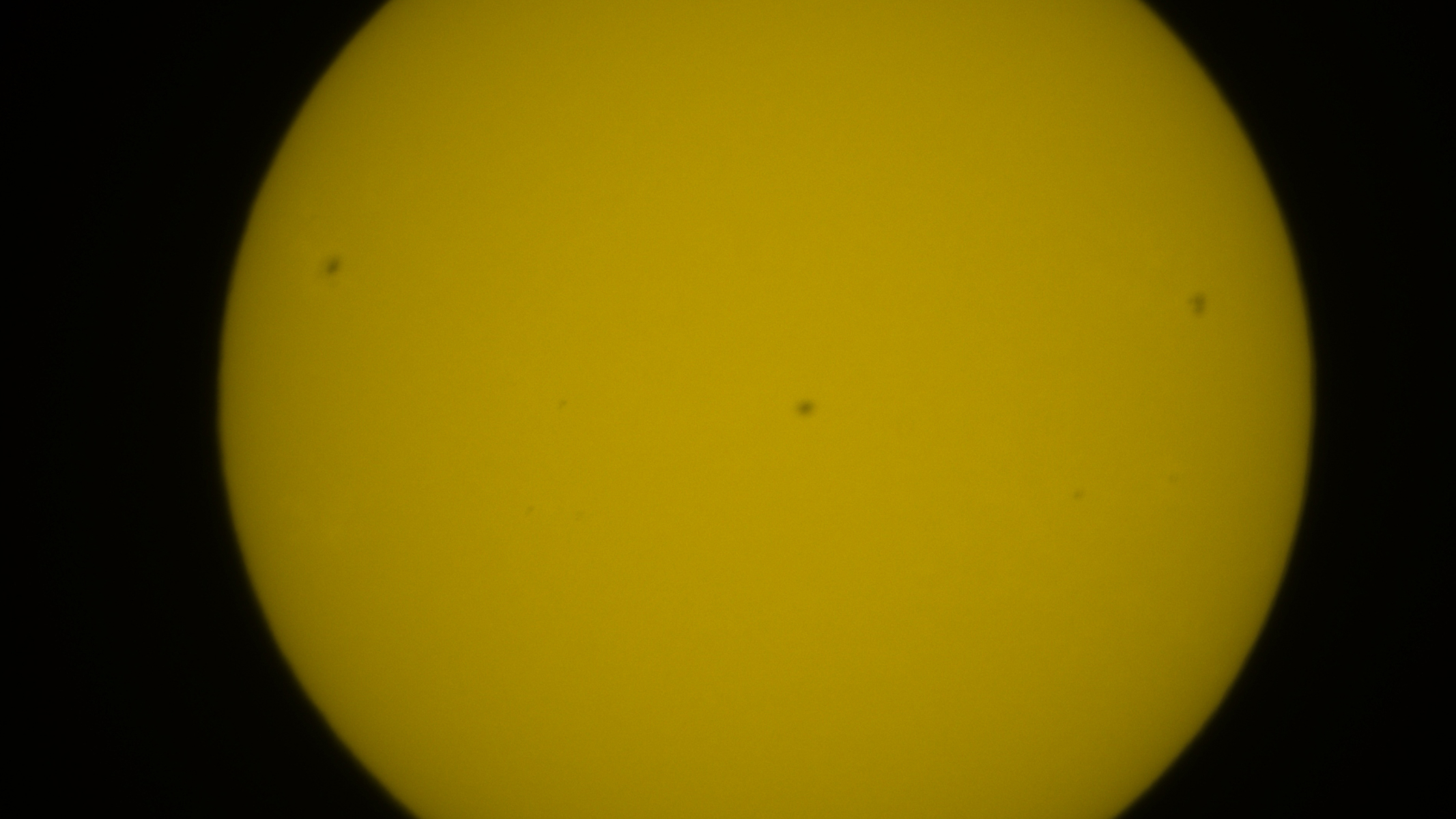
When focusing the sunspots on the eQuinox 2, they only get darker and slightly sharper, but sharp focus is not achieved until stacking. Harry Bennett / Future

For smart telescopes with manual focusing, you will need to make sure that your image is in focus. Now on a bright sunny day, this can be tricky to see on a smart device screen but it is essential to getting a sharp image of sunspots. Using the wheel at the bottom of the eQuinox 2, I gradually adjusted the focus in small increments to allow for live image delay on my tablet. I used the sunspots as a guide for my focus, but it was still difficult because they don't become crystal clear during focusing, they just get slightly more defined and darker.

Screenshot of the Unistellar app showing the solar disk.
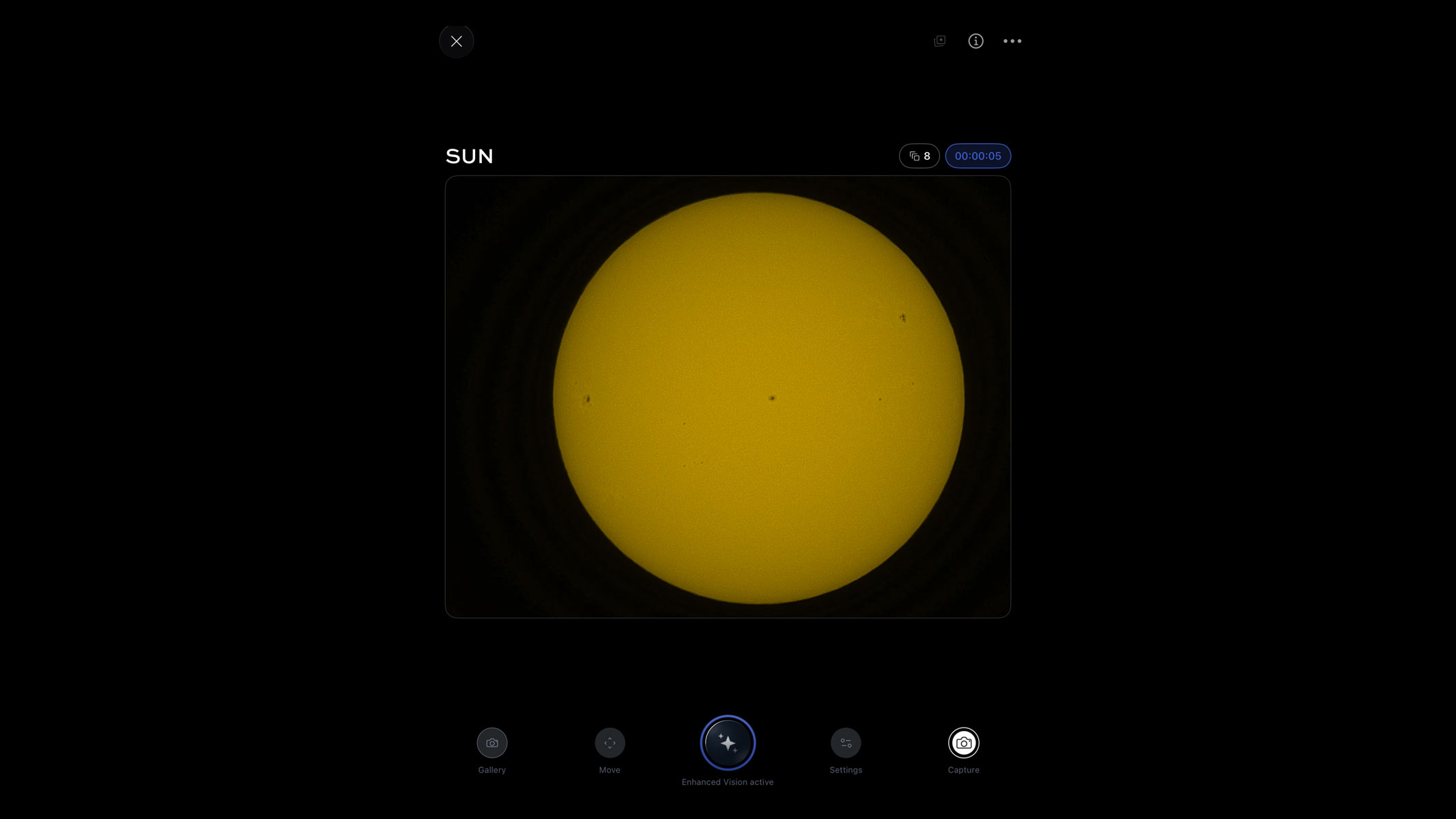
Selecting enhanced vision on the Unistellar app starts stacking exposures and develops enhanced sharpness on the sunspots. Unistellar
The solar disk in orange, showing dark sunspots.
By stacking frames sunspots and surface details become sharper.Harry Bennett / Future

The real detail on the surface comes after you click enhanced vision mode or equivalent on the app, which starts live stacking of exposures of a few milliseconds and reveals a much more textured view of the solar surface. The sunspots get much sharper edges and you are able to see both the umbra and penumbra on some of them. In my imaging session, I got an image displaying the larger active regions of 4498, 4496 and 4492 as well as some smaller regions.

Observing an eclipse with your smart telescope

An image of the orange solar disk being partially eclipsed by the black lunar disk, with some clouds.

Using a smart telescope can make capturing a great shot of the solar eclipse easy and painless. (Image credit: Hector Knudsen / Getty Images)

You should prepare well in advance if you are planning to observe a solar eclipse and test out the kit there before the big day. You don't want to be learning how to use your device on the day of the eclipse. Practice setting it up for solar observation a good few times before the day of the eclipse.

Using one of the best stargazing apps or the official Unistellar eclipse page, you can find out where the eclipse will be visible from and the time of maximum coverage in that location, so you can plan accordingly. The Aug. 12, 2026 total solar eclipse is just before sunset will be very low on the horizon, so you would need to find somewhere with a good view of the sunset and, ideally, do a practice run a week before. Setting up a few hours before the actual eclipse is necessary to avoid any last-minute disruptions and to get your telescope trained on the sun before the lunar disk starts to eclipse it. This is assuming that the skies are completely clear and free of clouds, but this is definitely something you should check before hauling your kit to a remote location. I use the Met Office Cloud cover map for the UK but other sites offer US and international coverage such as and Ventusky, SAT24 and Astrospheric.

Our top smart telescope recommendations to suit all budgets

  •  

The UK is about to witness its most spectacular solar eclipse in 11 years. Here's what you need to know

It will be a magnificent day for England's south coast. From Portsmouth's Historic Dockyard and Brighton's Royal Pavilion to Dorset's Jurassic Coast and Cornwall's Land's End, beaches and cliff tops will be plunged into darkness in the day during the U.K.'s first total solar eclipse for almost 91 years. There is, however, a problem — this scenario won't occur until Sept. 23, 2090.

A total solar eclipse visits a location on Earth on average once every 366 years, and the British are currently in no-man's land. Aug. 12, 2026, is particularly cruel, with a path of totality cruising past the British Isles as it surges across the Atlantic Ocean from Iceland to northern Spain. Eclipse chasers in the U.K. are used to traveling, and travel they will, but those left behind will nevertheless experience a very deep partial solar eclipse peaking at 98% in extreme locations. It will be the U.K.'s most significant partial solar eclipse since March 20, 2015, when another path of totality just missed the U.K. to the north.

Related: Total solar eclipse 2026 — Everything you need to know

During a partial solar eclipse, it is NEVER safe to look directly at the sun without solar eclipse glasses designed for solar viewing. Read our guide on how to observe the sun safely.

Where to see the partial solar eclipse in the U.K.

A deep partial eclipse is a compelling sight, and the widespread nature of this one means millions of Brits can experience it without leaving home.

London, Manchester and Glasgow all experience 91.4% coverage, staggered by only a few minutes. Belfast does slightly better at 93.1%, while Cardiff edges ahead among the U.K's capitals at 93.2%. In practice, these differences are subtle — this is a nationwide event that requires no travel. That said, expect crowds at U.K. national parks, such as Snowdonia, the Brecon Beacons and the Pembrokeshire Coast in Wales; the South Downs and the Lake District in England; and the Cairngorms and the Isle of Skye in Scotland.

However, it's in County Kerry, Ireland, that sees the biggest eclipse in the British Isles archipelago, with Great Skellig — Luke Skywalker's island sanctuary in "Star Wars Episode VII: The Force Awakens" and "Star Wars Episode VIII: The Last Jedi" — seeing a whopping 98% partial eclipse.

When to see the partial solar eclipse in the U.K.

This is a late, low eclipse, and timing matters. The action takes place between 5:59 p.m. and 8:10 p.m. BST, but the main event comes around 7:05-7:13 p.m. BST, when the eclipse reaches its maximum across the U.K. The deeply eclipsed sun will appear above the west-northwest horizon as a thin crescent, hanging like a curved blade, with its tips pointing toward the ground.

It won't get dark — that only happens within the path of totality. However, daylight will feel very subdued with a noticeable dimming.

Location will be crucial. Because the sun will be so low, you'll need a clear, unobstructed horizon — ideally from a coastal viewpoint, hilltop, or open landscape. Get into position early, use proper eclipse glasses and solar filters, and follow the sun as the moon slowly takes its bite.

If you're somewhere rural, it's worth spending the night, which also happens to be the peak of the annual Perseid meteor shower.

sequence of a partial solar eclipse shows the moon taking a bigger and bigger

Partial solar eclipse sequence captured on Oct. 14, 2023 from central California. (Image credit: Mimi Ditchie Photography via Getty Images)

Best weather for the partial solar eclipse in the U.K.

Whether the sky is clear on the day is another matter; August may be warm in the U.K., but it's not known for clear skies (as anyone who traveled into the last British path of totality, in Cornwall in 1999, will recall). This is why many British eclipse chasers are perfectly happy that there is no total solar eclipse in the U.K. until 2090, but statistics are not destiny. A single high-pressure system on the day could transform the outlook entirely.

Meanwhile, the path of totality crosses regions with more reliable weather patterns, particularly north-central Spain and the Balearic Islands.

Partial solar eclipse beyond the U.K.

While observers in the U.K. will see a deep partial eclipse, those inside the narrow path of totality — across eastern Greenland, western Iceland and northern Spain — will experience something fundamentally different, if only for a few minutes. In eastern Spain, totality arrives just before sunset, with the fully eclipsed sun hovering only a few degrees above the western horizon. The sun will disappear almost immediately after totality ends.

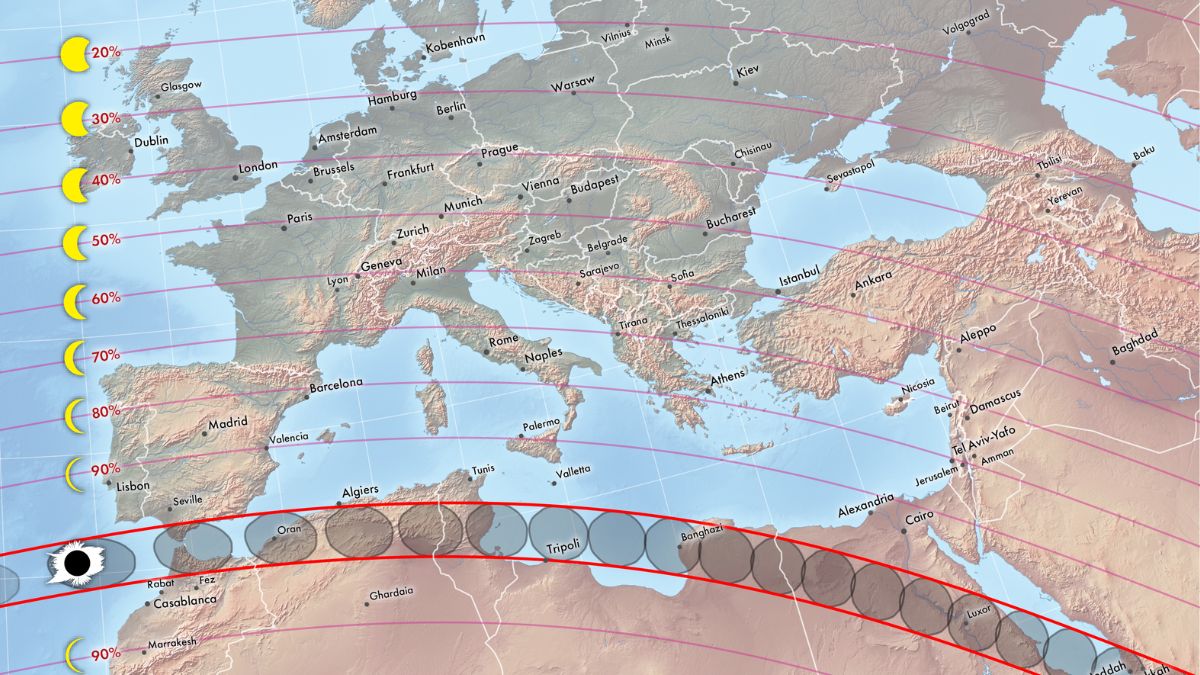
However, what's been largely overlooked is the scale of the partially eclipsed sunset across Europe and northwest Africa. Across Algeria, France, Germany, Italy, Austria, Poland and beyond, millions will see the sun set while deeply eclipsed. In some locations, maximum eclipse occurs just minutes before sunset; in others, the sun slips below the horizon still significantly covered by the moon. Expect slim crescent suns to be photographed slipping beneath the horizon from across Central Europe.

Consequently, U.K. observers will see the edge of a much larger event — the moon's expansive penumbral shadow stretching across continents. It will be one of the most widely visible and visually striking eclipse phenomena of the decade. According to Time and Date, 283 million people will see at least a 90% partial eclipse.

When is the next partial solar eclipse in the U.K.?

If Aug. 12, 2026, feels like a one-off, it isn't. The U.K. is in the midst of an unusually active spell for partial eclipses, with at least one visible almost every year through the end of the decade. After this deep event comes a more modest partial on the morning of Aug. 2, 2027 — linked to the century's longest total eclipse over North Africa — with a maximum obscuration of 48% in southern England.

On Jan. 26, 2028, attention shifts once again to a partially eclipsed sunset during which up to 56% of the sun will be obscured by the moon. That one will be best seen from western locations such as Cornwall and Wales, while the central path delivers an annular "ring of fire" across Portugal and Spain. The June 12, 2029, eclipse is much more marginal, visible only from northeast England and eastern Scotland as a shallow partial eclipse at sunrise. Finally, on June 1, 2030, another annular eclipse brings a partially eclipsed sunrise to the entire U.K., with up to about 49% of the sun blocked by the moon in the southeast.

Individually, these events are varied — morning, sunset and sunrise eclipses, deep and shallow — but taken together they form a rare sequence for armchair eclipse chasers in the U.K. who likely won't be around for totality 64 years from now.

Want to know how to make the most of your eclipse viewing experience? Our best solar viewing gear for 2026 is here to help. We also have a guide on how to photograph a solar eclipse for those looking to take an even closer look at our star.

Be sure to stay up to date with all the latest news with our total solar eclipse live blog, where skywatching editor Daisy Dobrijevic will be sharing her experience of totality from aboard a HX Expeditions cruise ship in the waters off eastern Greenland. Skywatching writer Anthony Wood will also be bringing reports of each eclipse phase from central Spain, as he watches the eclipse accompanied by citizen scientists from the Dynamic Eclipse Broadcast initiative.

  •  

Why you don't need a perfectly clear sky to enjoy the total solar eclipse on Aug. 12

Are you ready for the eclipse? Whether you're bound for the path of totality or set to see a partial eclipse from Europe, Canada or the northeast U.S. on Wednesday, Aug. 12, there's a dirty word eclipse chasers hate to utter during an eclipse season, and yet become completely obsessed with — clouds.

Related: Total solar eclipse 2026 — Everything you need to know

We all start behaving as though Earth's atmosphere owes us something. After spending years studying the climate and where it is most likely along a path of totality to have a clear sky, we're in position and can now do almost nothing about it save for drive or sail a few miles. We refresh cloud forecasts. We compare satellite imagery. We point at scraps of blue sky as if we can persuade them to remain so at a specific time. By the time the moon is almost on the sun, we've spent the best part of a week staring at our phones and fretting.

The received wisdom is that you must have a perfect view of a total solar eclipse, and that if you don't, you've failed because you didn't do your research or take evasive action. Never mind that many who end up under a blue sky then spend the entire time behind a camera. The desire for a clear sky and a clean horizon is obvious — particularly if you're in the path of totality — and yet it's entirely possible that clouds will be present, very possibly in the places expected to be clear. That's exactly what happened on April 8, 2024, when the favored state of Texas was cloudy while wintry Maine and New Brunswick had a bluebird day.

Having seen many total, annular and partial solar eclipses, I have come to believe something slightly heretical: you do not need a perfectly clear-sky view of a total or partial solar eclipse to matter. Sometimes one clear second is enough. Whisper it, but clouds add a lot of drama not just to an eclipse, but to photos of it, too.

Beginners often assume an eclipse is only "successful" if they see the sun's corona throughout totality. Some even rank eclipses in advance according to how long totality lasts. It's all an illusion. If a gap opens in the cloud for a short time and the corona appears, that is not a consolation prize. That is the thing itself. The same goes for a glimpse of a partially eclipsed sun if that's what's heading your way.

So don't fret the eclipse — check weather forecasts and do your best to find a clear sky, but when nature takes over, don't fight it or get upset by it. Cherish whatever you get. You only need a one-second window — and even that is not in your control.

What's happening

eclipse 2026
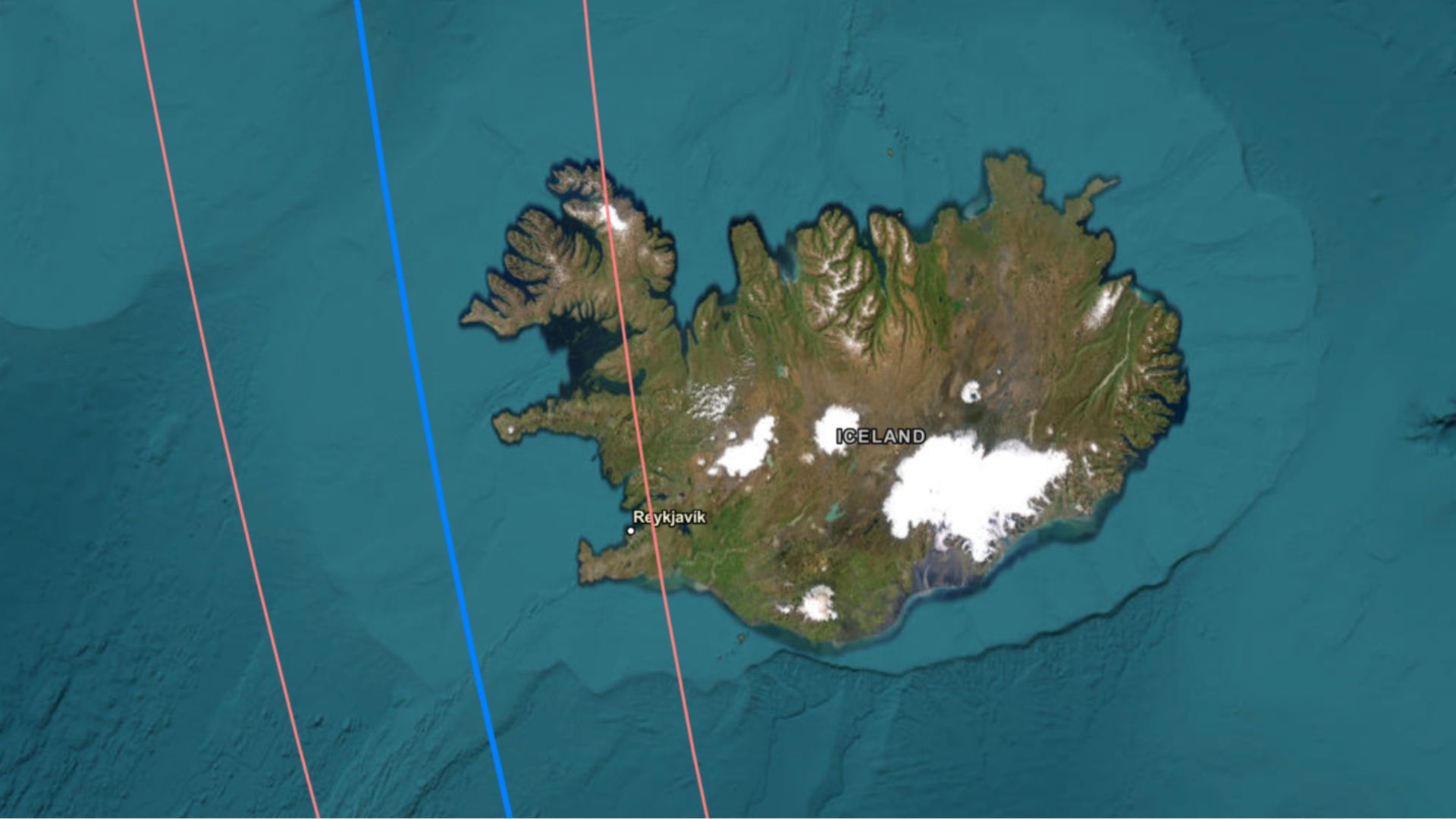
Path of the total solar eclipse over IcelandCreated using MapHub.net. Source: Esri, Maxar, GeoEye, Earthstar Geographics, CNES/Airbus DS, USDA, USGS, AeroGRID, IGN, and the GIS User Community
eclipse 2026
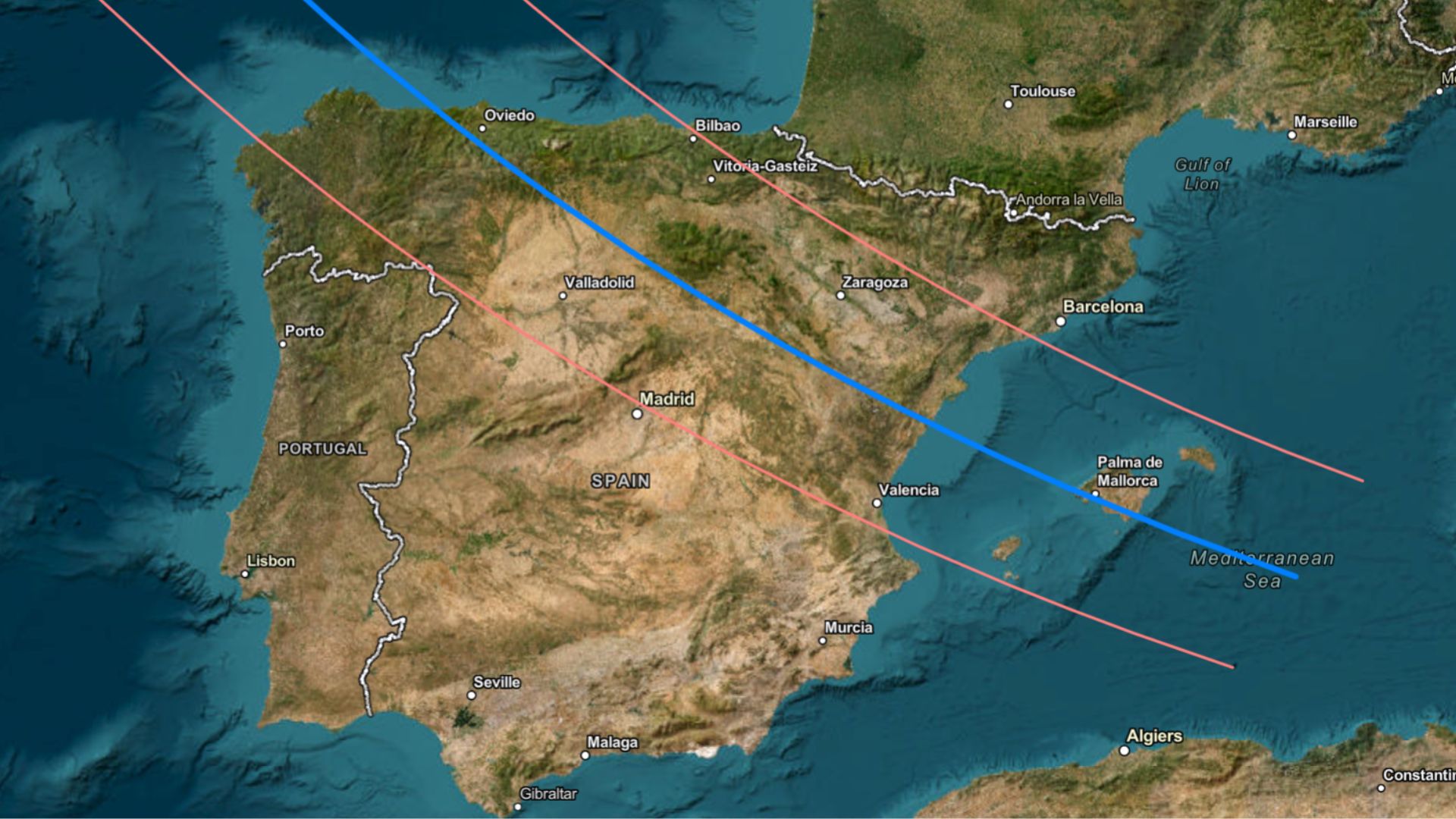
Path of total solar eclipse over SpainCreated using MapHub.net. Source: Esri, Maxar, GeoEye, Earthstar Geographics, CNES/Airbus DS, USDA, USGS, AeroGRID, IGN, and the GIS User Community
eclipse 2026
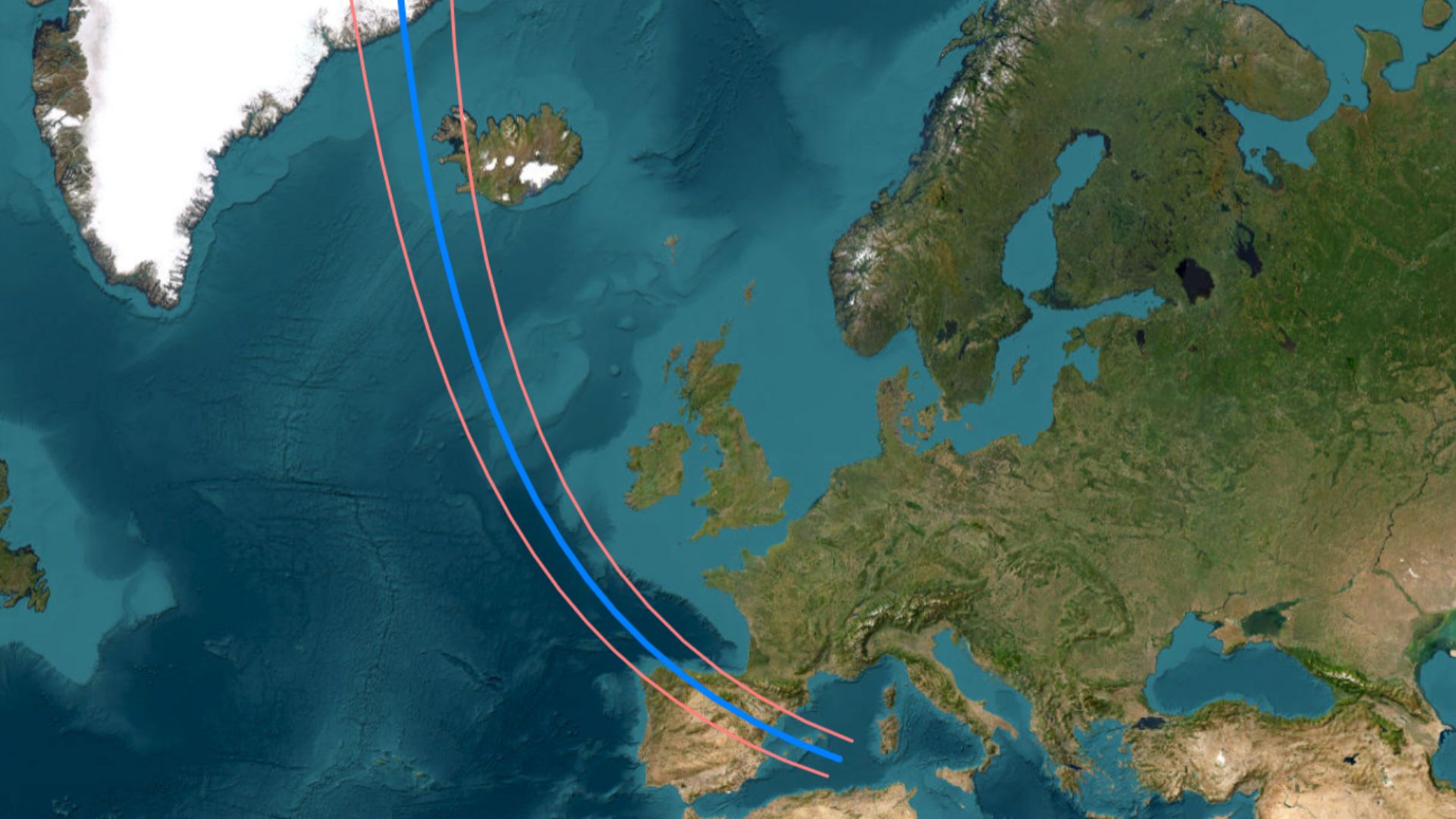
Entire path of the total solar eclipse on Aug. 12, 2026.Created using MapHub.net. Source: Esri, Maxar, GeoEye, Earthstar Geographics, CNES/Airbus DS, USDA, USGS, AeroGRID, IGN, and the GIS User Community
eclipse 2026
Entire path of the total solar eclipse on Aug. 12, 2026.Created using MapHub.net. Source: Esri, Maxar, GeoEye, Earthstar Geographics, CNES/Airbus DS, USDA, USGS, AeroGRID, IGN, and the GIS User Community

On Aug. 12, the moon's shadow crosses eastern Greenland, western Iceland and northern Spain, with a small part of Portugal also near the action. From inside the narrow path of totality, the sun will be completely covered for up to 2 minutes 18 seconds. If that's your destination, get excited — and be prepared. During totality, stay present. An eclipse is short enough that distraction becomes a genuine hazard to observing. A one-second look can be enough, but only if you are really paying attention.

Outside of the path of totality, a much wider partial solar eclipse will be visible across the U.K., Europe, parts of North America and northwest Africa.

A partial solar eclipse with an orange sun with sun spots.

A partial solar eclipse can make for a striking photograph. Here you can also see some large sunspots on the surface of the sun. (Image credit: Josh Dury Photo Media)

The U.K. gets one of the more striking consolation prizes: a very deep partial eclipse late in the day. Across much of Britain, around nine-tenths of the sun will be covered, with the deepest views toward the west and southwest. London, Manchester and Glasgow are all in the roughly 91% range, while Cardiff and Belfast do slightly better. Maximum eclipse takes place around 7:05 to 7:13 p.m. BST, when the sun will be low in the west-northwest. That low sun is the detail many people will miss. This is not an eclipse to watch from behind a row of houses, trees or office blocks. A beach, cliff top, hill or open field may make the difference between seeing a thin solar crescent and seeing nothing at all. But having a clear western horizon means clear weather is needed not just where you are, but where you're looking — possibly a 100 miles away to the northwest. That will be even more of an issue in eastern Spain and the Balearic Islands, from where the total solar eclipse will occur when the sun and moon are just a couple of degrees above the horizon.

North America gets a smaller event, but not a meaningless one. The farther northeast you are, the better — though a partial eclipse probably isn't something to travel far to see more of. It's best to take what's coming your way. In the U.S., northern Maine sees the deepest partial eclipse, while Boston, New York, Philadelphia and parts of New England see a smaller bite taken from the sun after lunch. Canada does better, especially in the east and north. Newfoundland sees more than half the sun covered, while the rest of Atlantic Canada has a much better show than most of the U.S.

Wherever you are, remember that it is never safe to look directly at the sun without proper eclipse glasses or certified solar filters. Thin cloud does not make it safe to look at the sun. Nor do sunglasses. Even a quick glance requires eclipse glasses.

How and when I'm watching it

I'll be in Greenland for this one, but the way I recommended you watch it is low-tech. I would bring eclipse glasses, a printed or saved set of local timings (visit Time and Date for a location-specific schedule), and binoculars with a proper solar filter fitted securely over the front of the lenses. Personally, I wouldn't build the day around photography. The great trap of a total solar eclipse is believing it is mainly something to photograph. It is not. It is something that happens to the whole environment.

If you're in the path of a deep partial eclipse — say, over about 80% — you may begin to notice the light taking on an unusual quality, with a more noticeable dimming around 90% coverage. If you're in the path of totality, you'll feel a coolness as totality begins, birds and humans going quiet, and light levels suddenly crashing as the moon's shadow sweeps across you. Clouds can even sharpen the strangeness. In the path of totality, a low, milky sky may hide the corona, but that also makes the darkness feel heavier and more sudden. All of this is why people cherish their experience of an eclipse — not because of a photograph.

Stargazer's corner: August 7-13, 2026

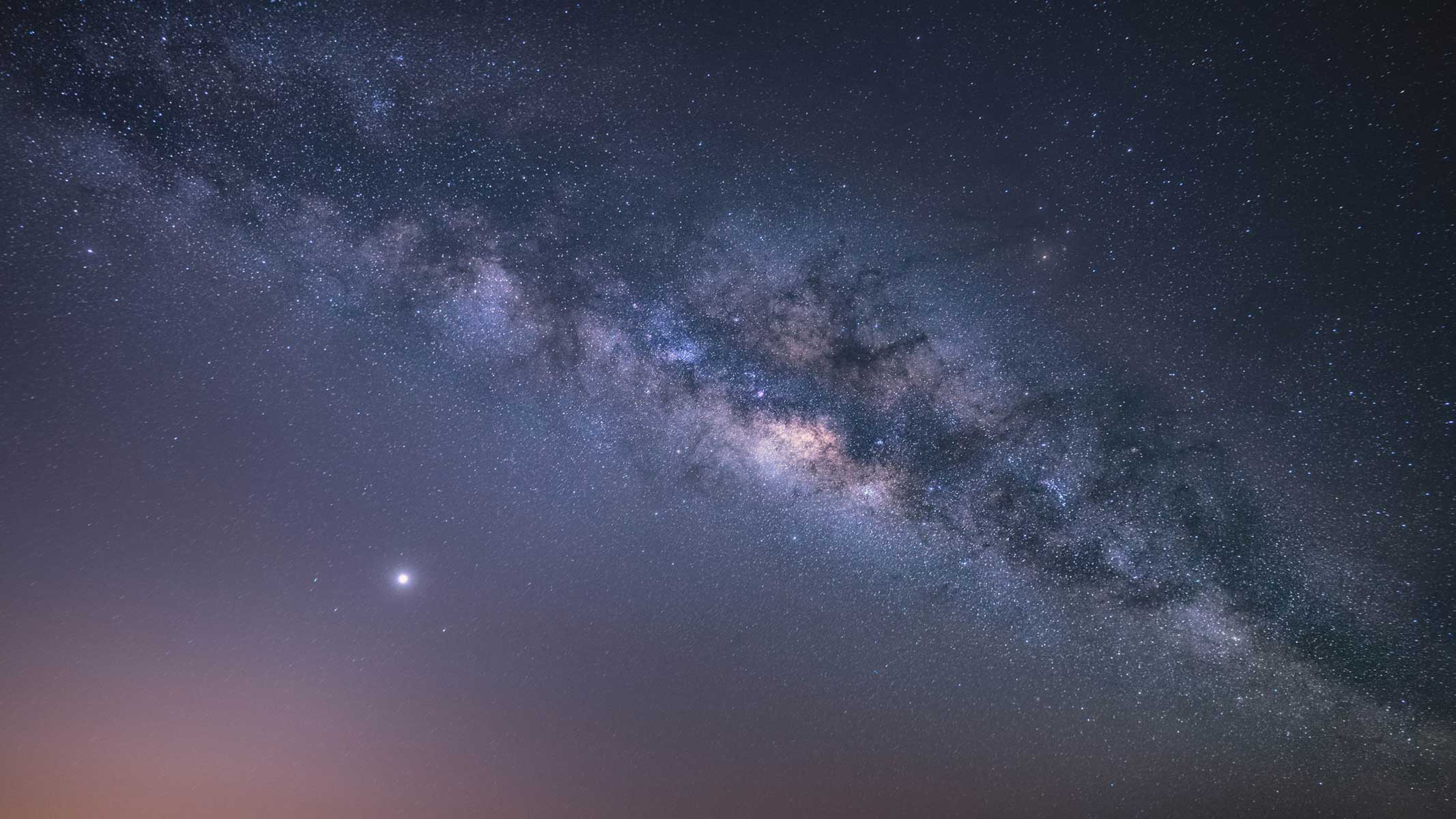
Milky way galaxy in the night sky stretching across the image in a thick band of stars.

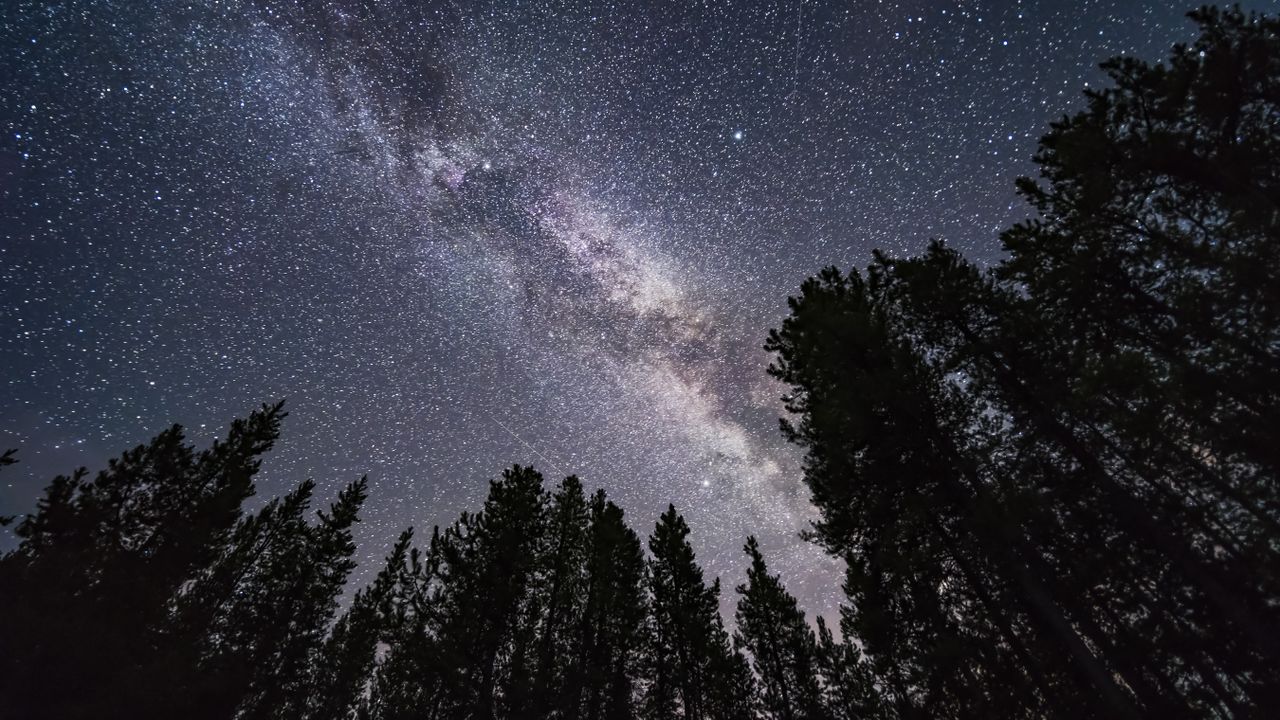
The Milky Way. (Image credit: Getty)

Here comes an incredible week of stargazing, with the solar eclipse and the peak of the Perseid meteor shower — both occurring on the same day — hard to underplay. Those chasing the eclipse in Greenland and Iceland may have a chance to see the aurora after midnight, though the darkness is short. Farther south, it's peak Milky Way season. The galaxy arches high across the sky, with its brightest and most detailed regions now well placed after dusk. All this week, the moon will be a thin crescent, if present at all, creating excellent conditions for simply stepping outside and exploring the sky at night. If you can glimpse the Milky Way, an eclipsed sun and a "shooting star," you've bagged one of the greatest combinations in skywatching.

Related: The biggest skywatching day of 2026 is coming. Here's what you'll see in North America and Europe

Constellation of the week: Perseus

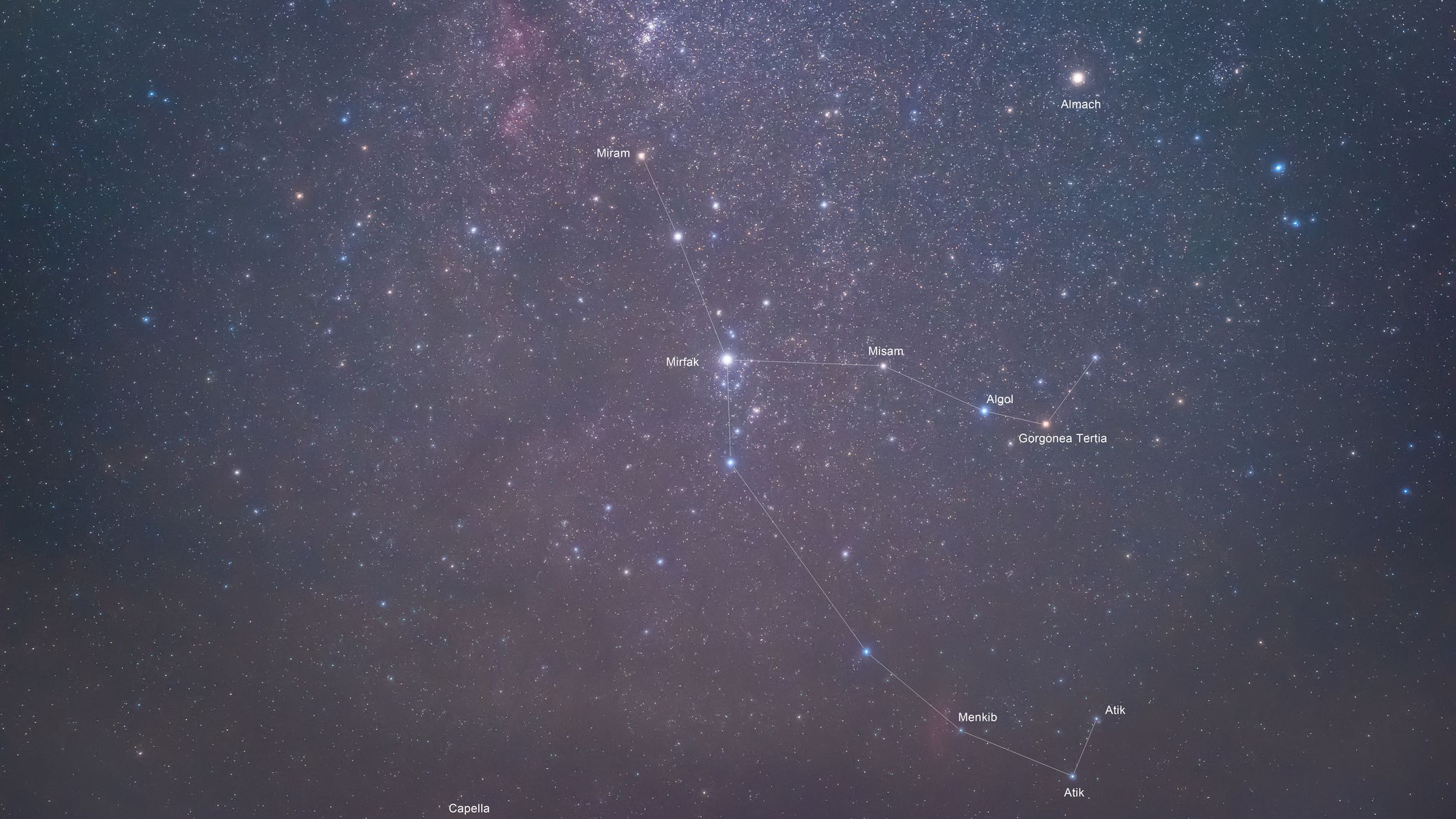
the stars of the night sky with a roughly Y-shaped outline tracing the stars of the Perseus constellation

The constellation Perseus. (Image credit: iStock / Getty Images Plus)

Perseus is the name attached to the week's meteor shower, but the meteors do not actually come from the stars of Perseus. They only appear to radiate from that direction because Earth is moving through a stream of comet debris. To find Perseus, look northeast late in the evening and higher before dawn, below the W-shaped constellation Cassiopeia. The beginner's mistake is to stare at the radiant. Use Perseus only as an anchor point, then watch the widest patch of dark sky you can manage. This meteor shower — one of the best of the year, taking place under perfect moonless conditions — rewards patience more than precision.

  •  

Plan your perfect 2026 total solar eclipse experience with these smartphone apps

The Aug. 12 total solar eclipse is less than a week away! We know that eclipse planning can be daunting, so we've put together a list of great eclipse apps to help make things that little bit easier.

Over 15 million people across Spain, Greenland and Iceland will witness totality on Aug. 12, while almost a billion will bear witness to a partial eclipse, as the moon blocks a portion of the sun's light without hiding its surface entirely, according to Time and Date.com. However, each person's experience will be subtly different, whether it be the exact timing of totality, the terrain, cloud cover, or a myriad of other reasons.

From location-specific totality alerts to weather forecasts, there are plenty of ways that these apps can help enhance your eclipse viewing experience.

Eclipse smartphone apps 2026

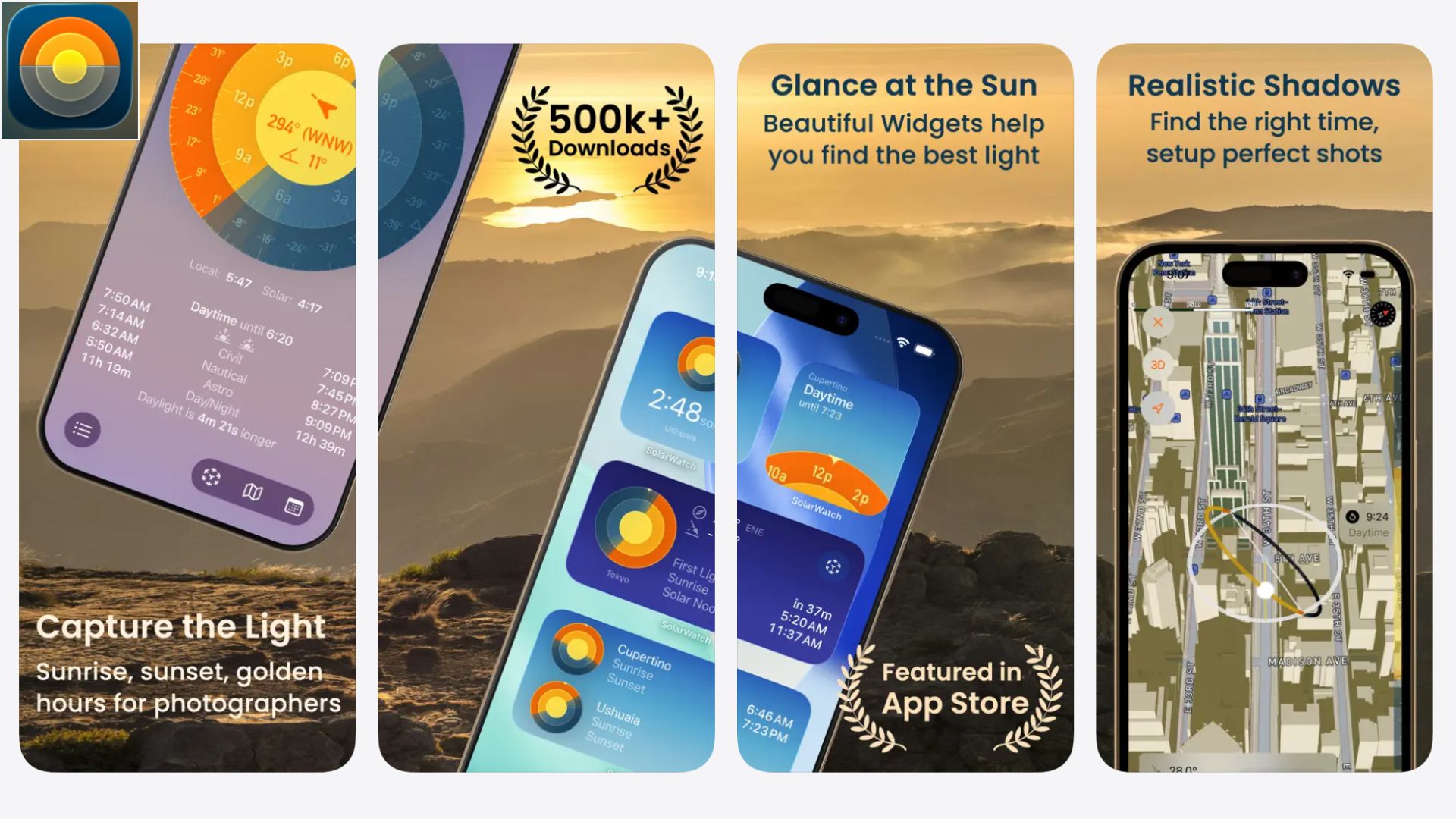
SolarWatch

Four smartphone screenshots for eclipse apps are shown side by side against a white background.

Screenshots of SolarWatch from the Apple Store. (Image credit: © Fifteen Jugglers Software UG 2017-2026 via the Apple Store)

The popular iOS stargazing app SolarWatch has had a major update to introduce a slew of helpful eclipse-planning features. According to solo developer Engin Kurutepe, the app offers interactive eclipse path maps that allow you to simulate precise timings for each phase of an upcoming eclipse, while also providing data on local cloud obscuration.

SolarWatch also gives real-time and time-lapse simulations of the moon's shadow racing across a 3D representation of Earth, along with educational content on eclipse phenomena such as Baily's Beads. It also tracks each eclipse phase with countdowns and even gives details on the speed of the moon's shadow at your specific location!

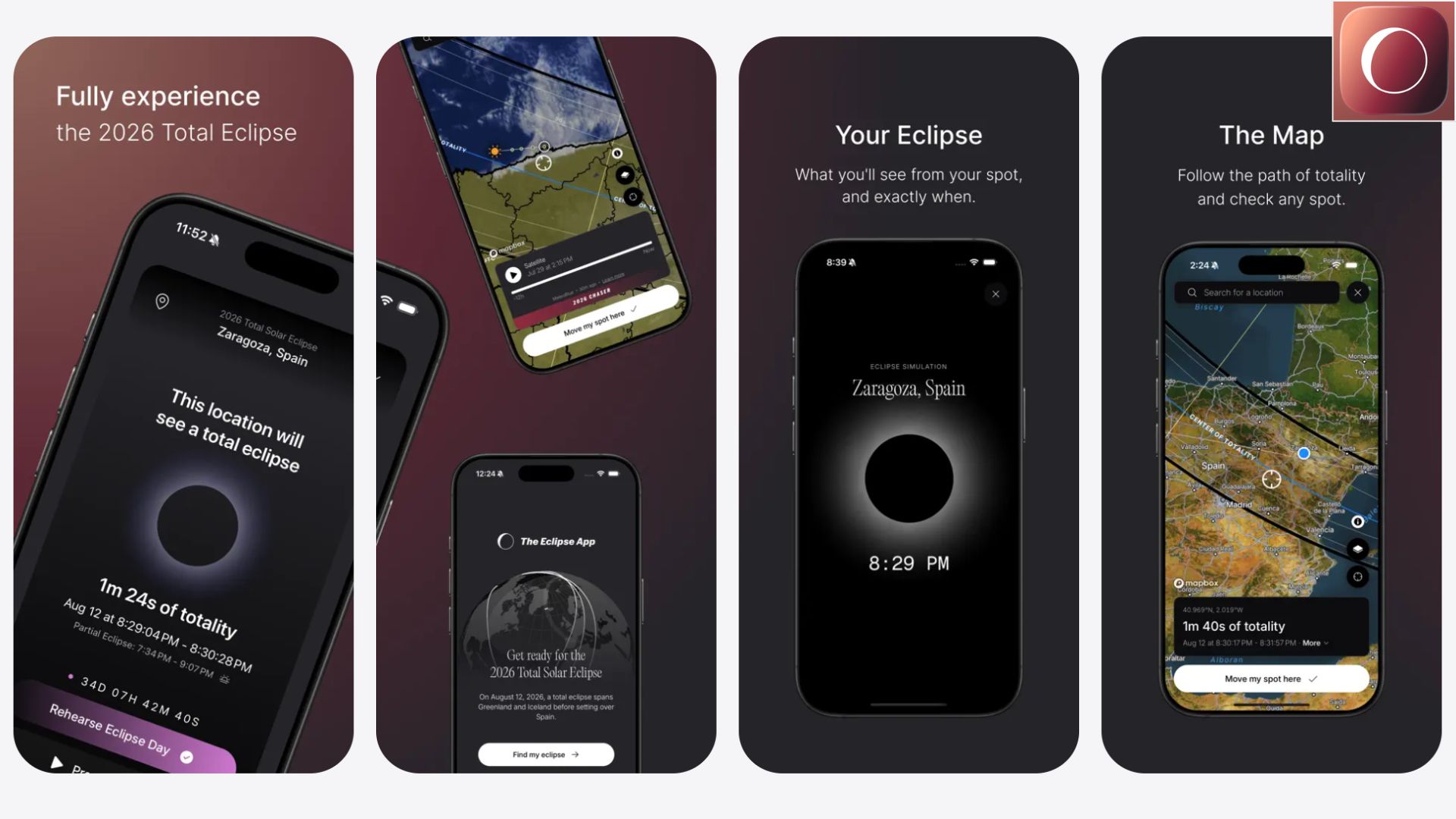
The Eclipse App

Four smartphone screenshots for eclipse apps are shown side by side against a white background.

Screenshots of The Eclipse App from the Apple Store. (Image credit: © The Eclipse Company of Earth via the Apple Store)

As its name suggests, The Eclipse App is available on iOS to cater to all your eclipse needs. The app has been rebuilt for the Aug. 12 eclipse, featuring exact timings for each stage of the event running from first contact through totality and beyond.

See simulations of the eclipse from your specific vantage point, receive alerts and discover exactly how much of the sun is covered during any given moment of the eclipse, the length of totality and more. Inbuilt features also allow you to record your experience in real time and return to relive it after the event.

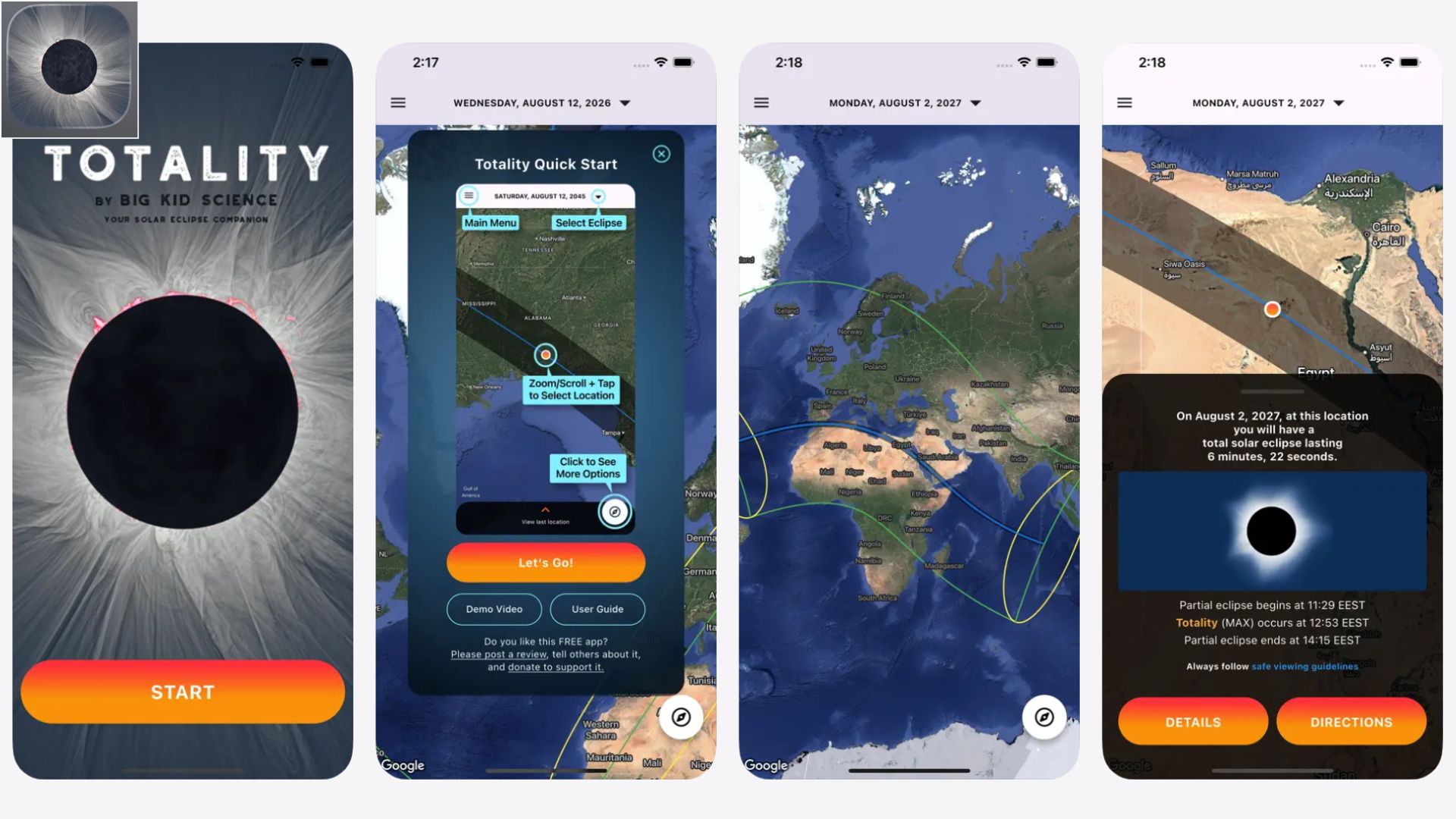
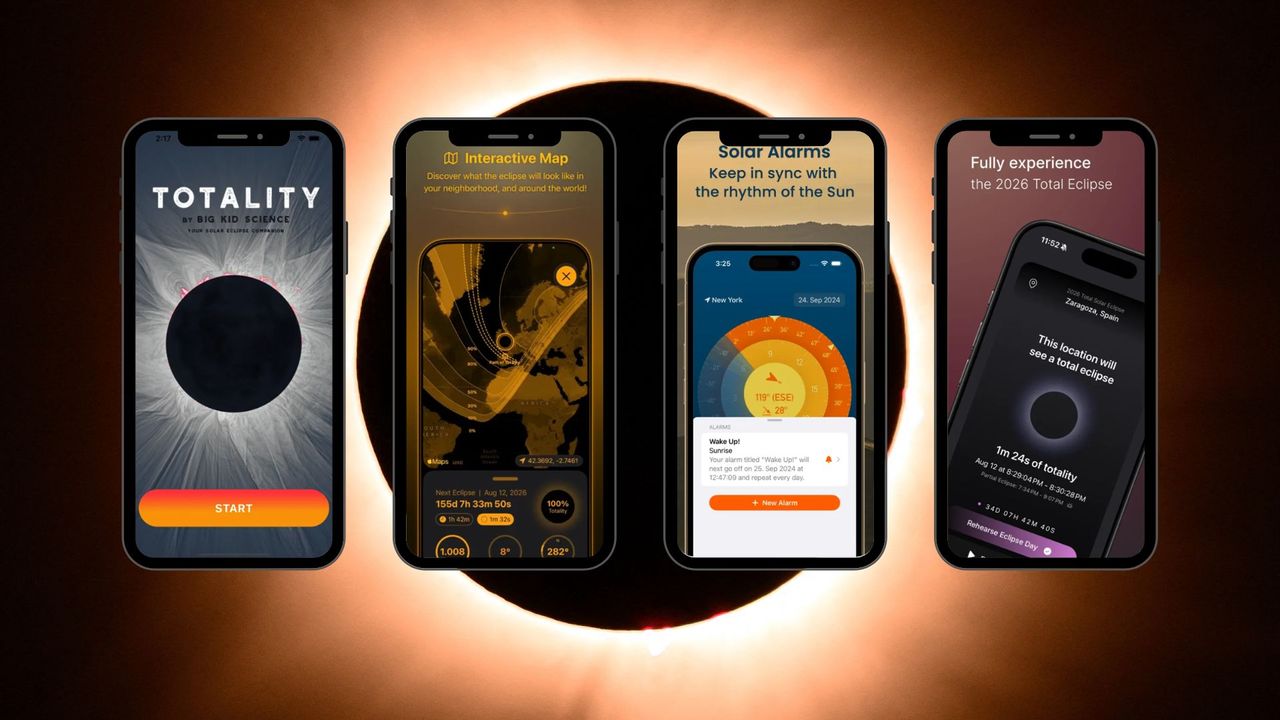
Totality by Big Kid Science

Four smartphone screenshots for eclipse apps are shown side by side against a white background.

Screenshots of Totality by Big Kid Science from the Apple Store. (Image credit: © 2026 Big Kid Science via the Apple Store)

Like other apps on this list, Totality by Big Kid Science on IOS and the Play Store offers users a wealth of eclipse information, including detailed timings based on your phone's GPS data, safety tips, eclipse science and more. It also provides handy navigation tools to help eclipse chasers find a way into the path of totality.

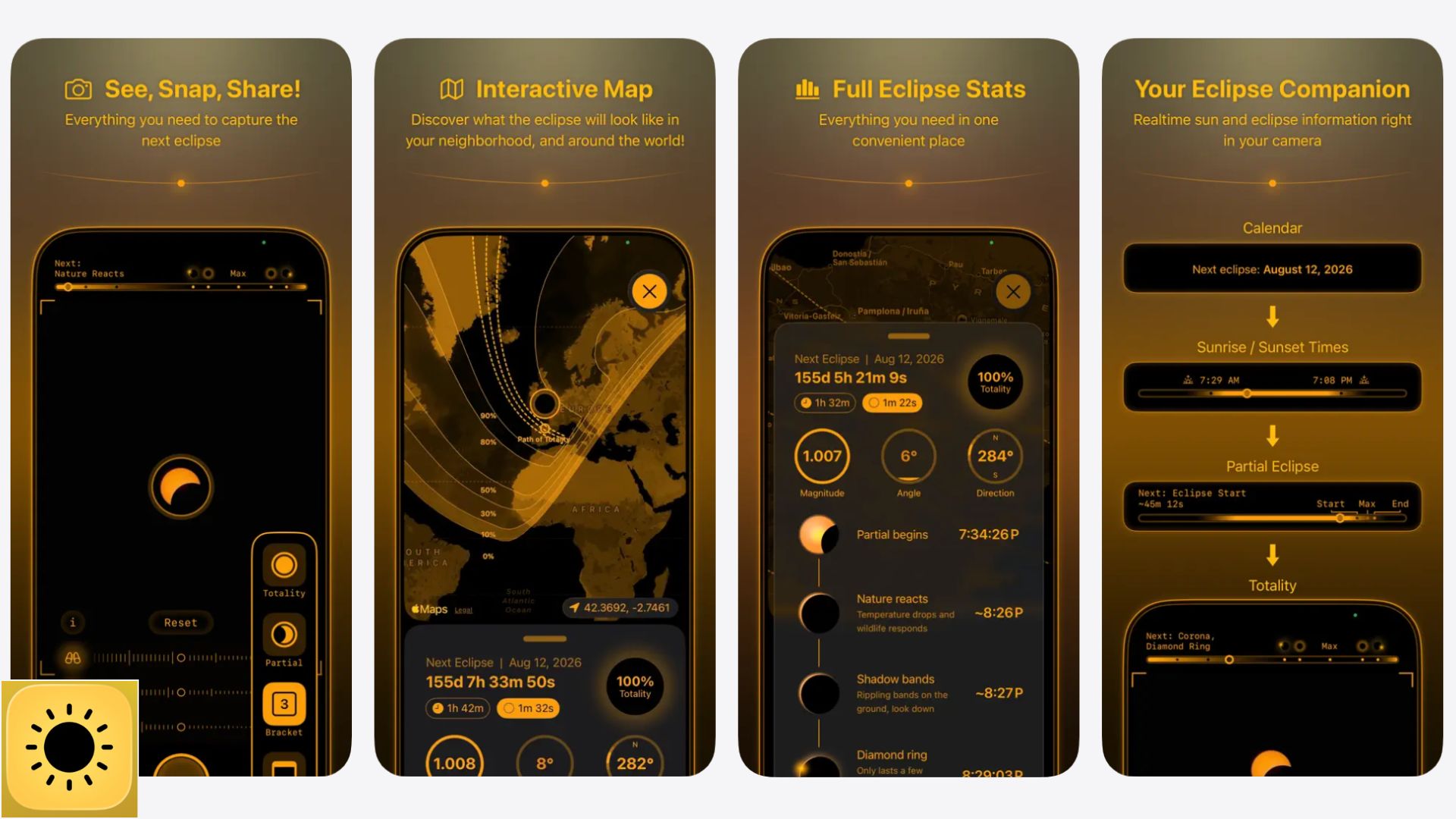
Solar Snap

Four smartphone screenshots for eclipse apps are shown side by side against a white background.

Screenshots of the Solar Snap app from the Apple Store (Image credit: © Rise Up Games via the Apple Store)

Want to capture the eclipse but don't have access to an expensive camera? Then Solar Snap on iOS or the Google Play Store might be for you.

The app provides a range of useful controls and features to help you capture the Aug. 12 eclipse with your smartphone, along with an interactive global eclipse map and information on the timings of phases, position of the sun and more.

It's designed to work in conjunction with a solar smartphone filter, which can be purchased as part of the Solar Snap filter kit. Alternatively, there are in-app tutorials that show how to make your own smartphone filter using a pair of eclipse glasses!

Be sure to check out our live blog for all of the latest news on the Aug. 12 total solar eclipse, along with on-the-ground reporting of the eclipse from skywatching editor Daisy Dobrijevic, who is currently aboard HX Expeditions' MS Spitsbergen off the coast of Greenland and skywatching writer Anthony Wood who will be heading to Spain. We'll also be publishing information on how to watch the eclipse live online for free closer to the time.

While you're at it why not download the Space.com app, available on IOS and Android, to stay up to date on all the latest launches, space science, skywatching news and eclipses?

Editor's Note: If you would like to share your eclipse astrophotography with Space.com's readers, then please send your photo(s), comments, and your name and location to spacephotos@space.com.

  •  

Where will the total solar eclipse 2026 be visible from?

The total solar eclipse on Aug. 12, 2026 will sweep across parts of the Northern Hemisphere, offering millions of people a chance to witness one of nature's most spectacular sights.

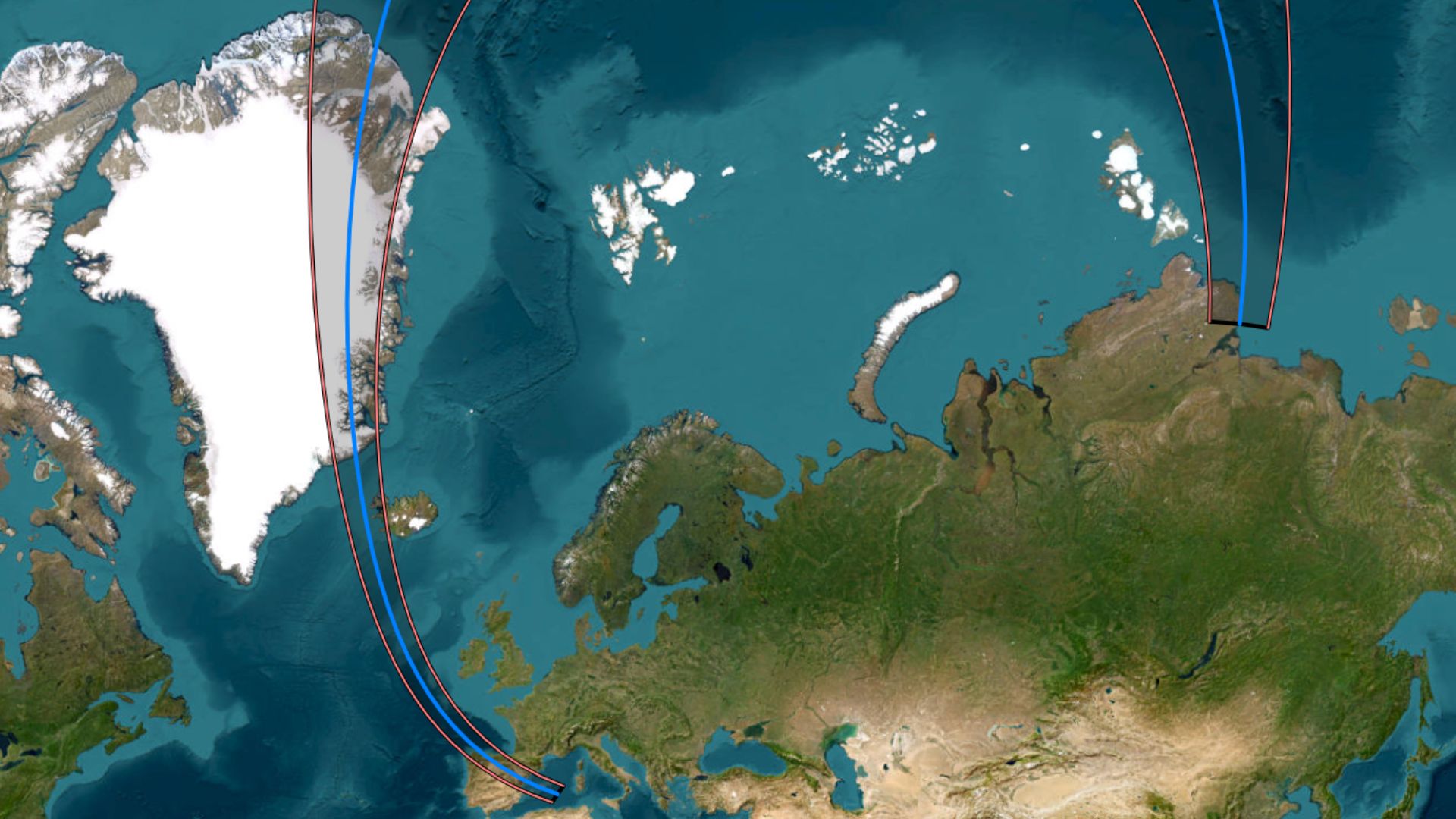
The path of totality — in which the moon completely covers the sun — begins over the Arctic Ocean, before crossing eastern Greenland, western Iceland and northern Spain. It then passes over the Balearic Islands before ending over the Mediterranean Sea.

Only skywatchers inside this relatively narrow path, just 182 miles (293 kilometers) wide, will experience totality, where day briefly turns to twilight. Here, you'll be able to safely see the sun's outer atmosphere, known as the corona, with the naked eye during the fleeting moment when the moon completely obscures the sun.

A much larger region surrounding the path of totality will instead see an impressive partial solar eclipse. Much of Europe, including the U.K., Ireland, France, Germany, Italy and Scandinavia, will witness the moon take a "bite" out of the sun.

Northern Spain is expected to be one of the most popular destinations for eclipse chasers thanks to its relatively accessible location and the low evening sun on the big day, which could create dramatic views as totality unfolds close to sunset. Greenland and Iceland offer very different experiences, with totality taking place higher in the sky against the nations' spectacular Arctic landscapes.

We'll have reporters on the ground to keep you updated each step of the way. Be sure to follow along on our total solar eclipse live blog to stay up to date with all the latest news and action as Skywatching Editor Daisy Dobrijevic embarks on an eclipse expedition to Greenland with HX Expeditions and Skywatching Writer Anthony Wood heads to Spain to experience the eclipse with NASA's DEB initiative and citizen scientists.
A map showing the path of totality for the total solar eclipse in 2026.

The global path of the total solar eclipse on Aug. 12, 2026. (Image credit: Created and annotated by Jamie Carter using MapHub.net. Sources: Esri, Maxar, GeoEye, Earthstar Geographics, CNES/Airbus DS, USDA, USGS, AeroGRID, IGN and the GIS user community. Eclipse path by Xavier Jubier)

How to watch

Wherever you plan to watch from, remember that it is never safe to look directly at the sun without proper eye protection. Certified solar eclipse glasses or a solar filter fitted to telescopes, binoculars and cameras must be used throughout the partial phases. Only during the brief period of totality, when the moon completely blocks the sun, can you safely remove your eclipse glasses and look directly at the eclipse.

We will also be livestreaming the eclipse here on Space.com; details will be released closer to the time.

Want to know exactly where the eclipse will be visible and how long totality will last at different locations? Check out our complete guide to where to see the Aug. 12, 2026 total solar eclipse, including detailed maps, timings and viewing advice.

  •  

Heading to Europe or the U.K. for the Aug. 12 solar eclipse? Best eclipse glasses to buy before you leave — or after you arrive

The Aug. 12 total solar eclipse is nearly here, and if you’re hoping to observe totality, you will likely be heading to Greenland, Iceland, or Spain. The UK gets a solid 90% show, while the US only catches a small partial solar eclipse.

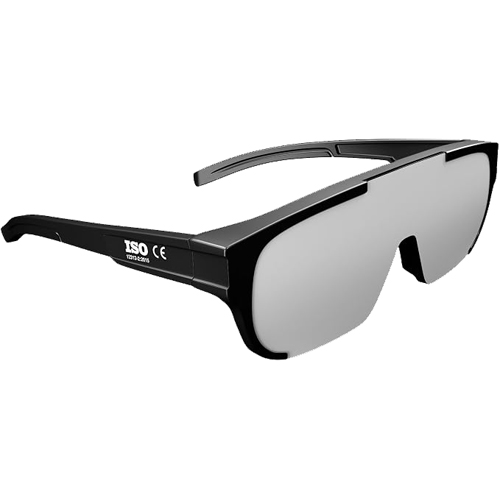
Wherever you're watching it from, do not look directly at the sun without ISO 12312-2 certified solar eclipse glasses — standard sunglasses aren't safe and won't save your retina.

Not sure which to buy? We’ve rounded up legitimate, safe options that you can order right now from the US, UK, and European retailers, so you can stay safe and enjoy the eclipse whether you're staying put, about to travel, or already abroad.

Best solar eclipse glasses in Europe

Below are our recommended options to buy safe solar eclipse glasses if you're already traveling abroad to see totality.

Best US solar eclipse glasses

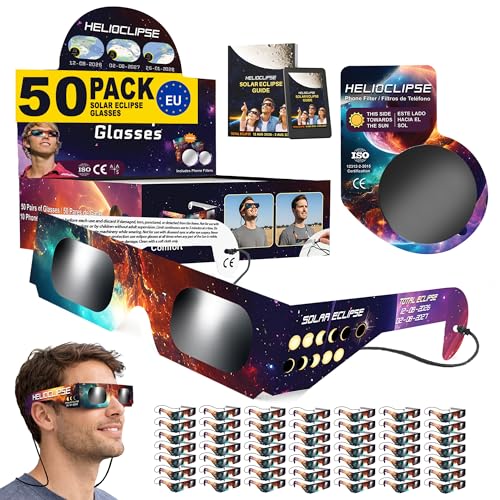
If you're planning on having an eclipse party, these solar eclipse glasses from Helioclipse will have you covered with packs of 6 / 12 / 25 / 50 and 100 available. They are fully ISO 12312-2 compliant and come with smartphone filters for taking photos of the eclipse.View Deal

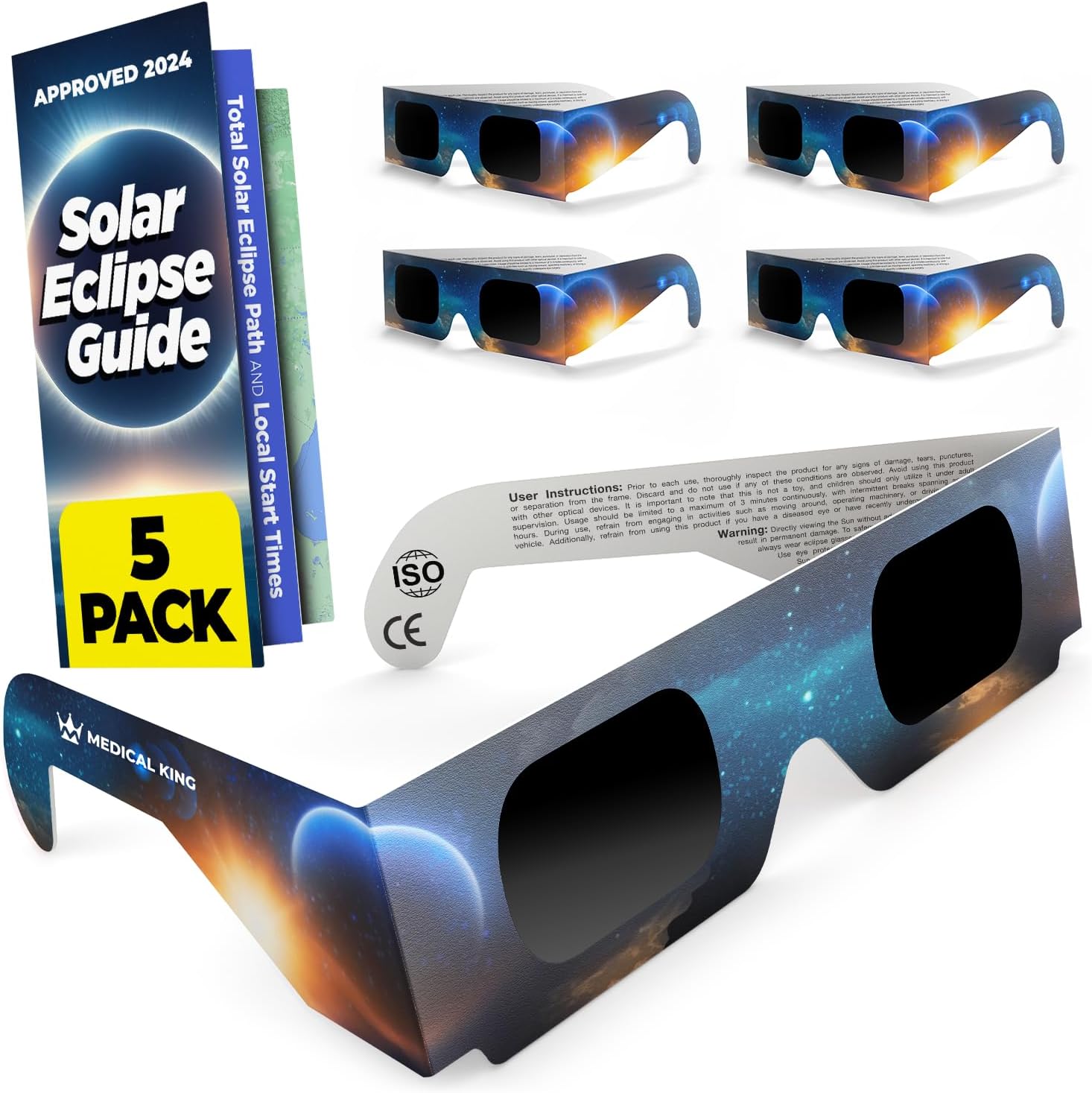
Save 31% on this five pack of solar eclipse glasses from Medical King. They are ISO 12312-2 certified and the glasses can be cut into filters for your smartphone camera to grab a photo of the eclipse. View Deal

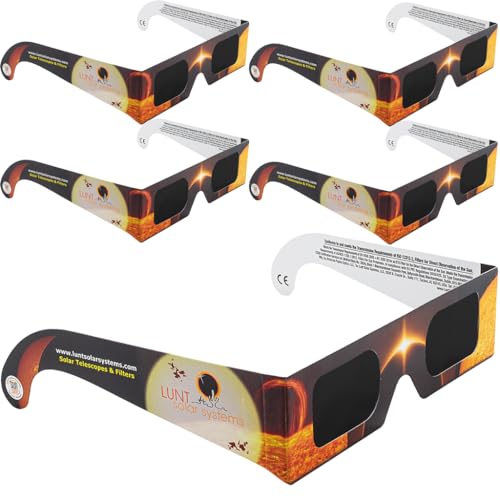
Lunt Solar Systems are a well trusted brand in the area of solar observation, we gave their Lunt 8x32 sunoculars five stars.

Grab a five pack of their American Astronomical Society (AAS) certified and ISO 12312-2 compliant solar eclipse glasses.View Deal

Best UK solar eclipse glasses

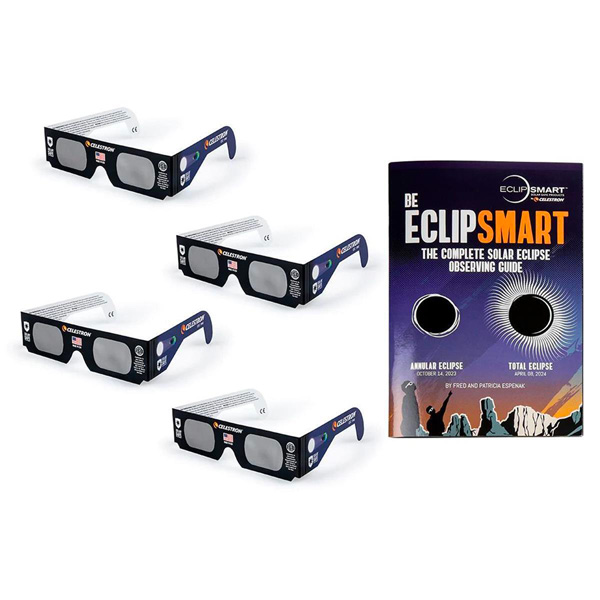
Celestron is a huge name in optics, and while its solar glasses may not be the absolute cheapest, you're assured of quality and eye safety. £12.99 gets you a four-pack of cardboard-framed ISO-certified eclipse glasses, alongside a mini-book of eclipse information. View Deal

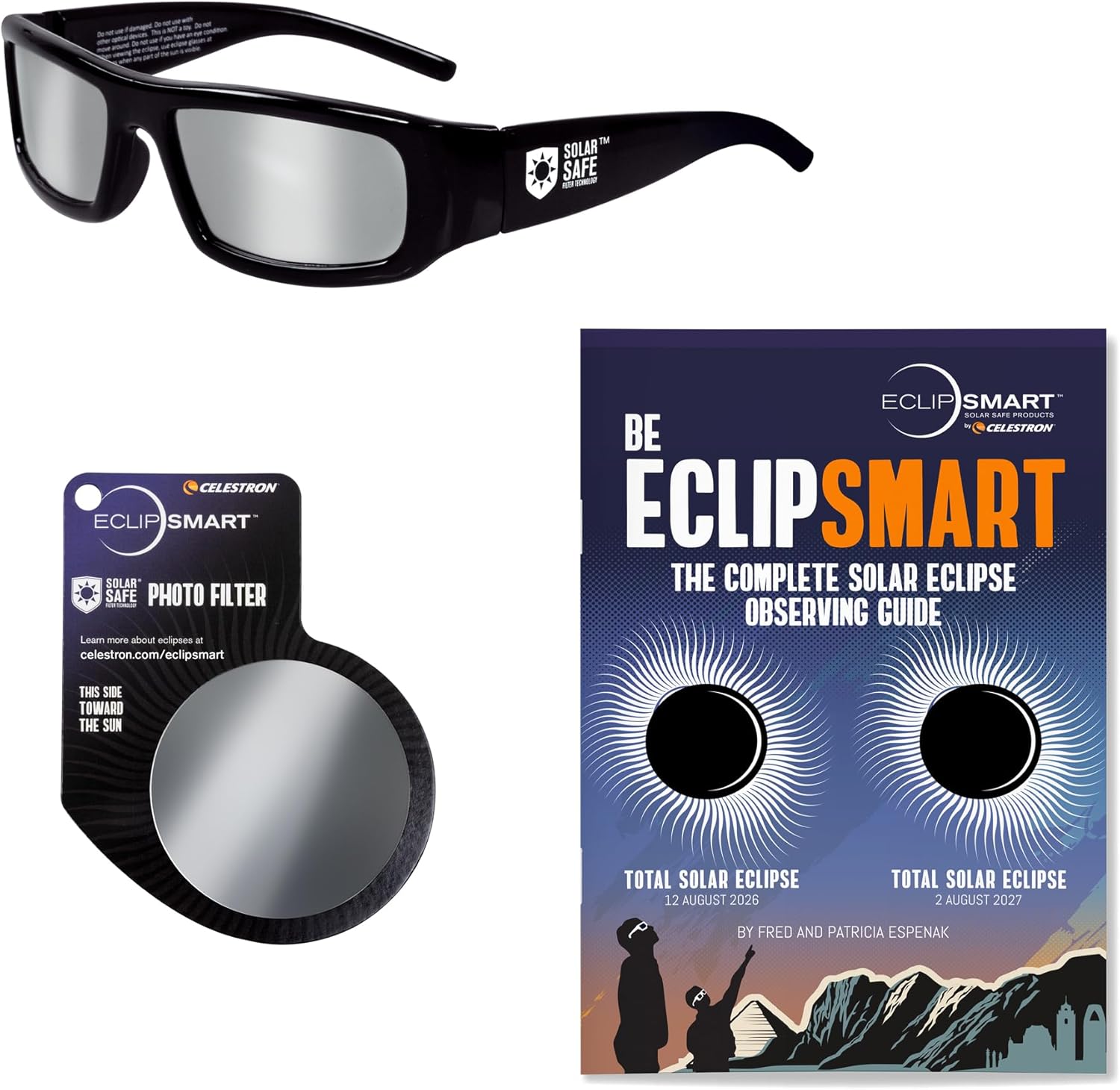
Another Celestron offering, this includes a mobile phone filter, the aforementioned Celestron mini-book and a pair of solar eclipse glasses. The difference, apart from the price, is that these have plastic frames and so should prove hardier, particularly if you're going to keep them around for the 2027 partial solar eclipse. View Deal

Get a pair of Soluna solar eclipse glasses for just £2.99, a saving of £2.00. Purchasers report that the cardboard's not the strongest but they provide proper eye protection (as always, ISO 12312-2:2015 is the standard to watch out for). View Deal

The sun's corona shines from behind the lunar disk in a black sky at totality during the 2024 eclipse.

For those traveling to some parts of Europe, Greenland or western Iceland, observing the total solar eclipse in safety is important, so use a pair of solar eclipse glasses. (Image credit: Photo by Brandon Bell/Getty Images)

The 2026 total solar eclipse is coming on Aug. 12 but if you are in the USA, you won't be able to experience totality. A minor partial eclipse is visible from some states, with the best coverage in parts of Alaska and New England. You might be getting ready to travel to one of the spots that will reach totality, like Greenland, western Iceland and northern Spain. Even places in the UK will be getting their best solar eclipse since the 1999 total solar eclipse over Europe, with the moon obscuring around 90% of the sun.

If you are planning on watching it at all, you will need at the very least, a pair of solar eclipse glasses. They need to be rated ISO 12312-2 so that they block 99.999% of the sunlight and keep observation safe. Looking at the sun without proper protection can result in permanent blindness and vision problems. If you are after some sharp images of the sun, you will even need filters and solar viewing gear for your smart telescope, camera or solar binoculars.

So whether you are staying in the USA for a small but partial eclipse or travelling to Europe for a more dramatic show, we have found the best solar eclipse glasses to grab before the event. We have included retailers from America and Europe, including the best eclipse glasses in the UK. You should always check your eclipse glasses before use to make sure there are no holes or tears in them. Make sure you buy from a reputable brand and if you are unsure in any way about their eye protection ability, don't use them.

  •  

Total solar eclipse Aug. 12, 2026 live updates — 3 days to totality

On Aug. 12, 2026, Europe will experience its first total solar eclipse since 1999, as the moon's shadow sweeps across Greenland, Iceland, northern Spain and the Balearic Islands.

Along the narrow path of totality, day will briefly turn to twilight as the moon completely covers the sun, revealing its elusive outer atmosphere — the corona. Meanwhile, millions more skywatchers across much of Europe, as well as parts of northeastern United States and eastern Canada, will witness a partial solar eclipse as the moon appears to take a bite out of the sun.

Live reporting from the path of totality

We'll be following the eclipse from two locations along the path of totality.

Our skywatching editor Daisy Dobrijevic is currently aboard HX Expeditions' MS Spitsbergen exploring Greenland's dramatic coast. She'll be aiming to witness totality from Scoresby Sund, the world's largest and longest fjord system. Dobrijevic is hoping for more eclipse luck than last time, when unfortunately, totality was a total bust, but not for the reason you may think.

Meanwhile, our skywatching writer Anthony Wood is joining the DEB initiative in Valoria la Buena, Spain, where the eclipsed sun will hang low above the western horizon shortly before sunset. It will be Wood's first-ever total solar eclipse.

Complete guide | Solar viewing tips | What is a solar eclipse?

One week until the total solar eclipse 2026: The countdown has begun... are you ready?

The moon's silhouette is visible in front of a fully eclipsed sun in a black sky, with the sun's white atmosphere creating a halo around the lunar disk.

The countdown has begun! The total solar eclipse 2026 will occur on Aug. 12. (Image credit: Photo by Erin Clark/The Boston Globe via Getty Images)

In just one week, millions of people across Greenland, Iceland and Spain will witness one of nature's greatest spectacles as the moon completely covers the sun.

Our team will be following the eclipse from two incredible locations, aboard an expedition ship in East Greenland with HX Expeditions and from northern Spain with the DEB initiative, bringing you live updates throughout the lead-up to the eclipse and on the day itself

Read more: 1 week to go until a dramatic total solar eclipse darkens the skies over Spain, Iceland and Greenland

Last call for eclipse glasses!

Get your solar eclipse glasses early; they always sell out before an eclipse.

Eclipse glasses must be worn whenever the sun's disk is visible. (Image credit: LeoPatrizi / Getty Images)

If you're planning on viewing the Aug. 12 total solar eclipse then you'll need to get hold of a pair of quality eclipse glasses. Be sure to get a pair from a reputable dealer that conforms to the all important ISO 123-12 - 2 certification and never use an old pair if they appear scratched or damaged in any way!

Read More: Heading to Europe or the U.K. for the Aug. 12 solar eclipse? Best eclipse glasses to buy before you leave — or after you arrive.

Where will the eclipse be visible?

composite graphic image showing a location marker with a total solar eclipse image inside it, situated on top of a background showing earth viewed from space.

Find out where you can experience totality on Aug. 12, 2026. (Image credit: Created in Canva Pro)

Not everyone will experience totality on Aug. 12.

Some places will see the moon completely cover the sun, while others will experience a partial solar eclipse and for some… no eclipse at all. Womp womp.

Wondering what you'll see from your location? Find out where the eclipse will be visible

Also worth downloading before the big day: The best apps for following the eclipse

Do clouds ruin a total solar eclipse?

A solar eclipse is seen through the clouds on April 8, 2024 in Niagara Falls, Ontario, Canada.

Clouds won't necessarily sour your eclipse expedition. (Image credit: Vaughn Ridley/Getty Images)

One of the biggest worries before any eclipse is weather.

While a perfectly blue sky is ideal, you don't necessarily need one to enjoy the experience. Even under thin clouds, many of the most dramatic effects of totality can still be visible.

Read more: Here's why cloud cover doesn't always mean an eclipse is ruined.

Have you sorted your eclipse glasses yet?

A pair of eclipse glasses are held up close to the sun, which shines in a blue sky.

Sunglasses are vital to safely view the partial stages of a solar eclipse. (Image credit: Photo by Gabriel BOUYS / AFP via Getty Images)

If you'll be looking at any part of the partial eclipse, you'll need proper eye protection. Never look directly at the sun without certified eye protection.

Don't have eclipse glasses? You can still safely enjoy the eclipse using simple projection methods with everyday household objects.

Check out our how to view the sun safely and what to look for guide for more solar viewing inspiration.

What actually happens during a total solar eclipse?

A composite image of 5 sun/moon conjunctions showing the stages of a total solar eclipse arrayed in a diagonal line in a dark sky, with the point of maximum eclipse in the middle.

A composite image revealing the beauty of each stage surrounding totality. (Image credit: Photo by: Alan Dyer/VW Pics/UIG via Getty Images)

Totality lasts only a few minutes, but a lot is happening before, during and after.

From first contact and the dramatic diamond ring effect to the appearance of the sun's corona, each stage offers something unique.

Read more: What to expect at each stage of the total solar eclipse 2026.

The citizen scientists keeping an eye on the Aug. 12 total solar eclipse

A composite image showing totality as the lunar disk hides the face of the sun. Images are stacked diagonally either side showing the moon and sun just before and after totality.

Two teams of Dynamic Eclipse Broadcast volunteers with observe totality on Aug. 12. (Image credit: Photo by: Alan Dyer/VW Pics/UIG via Getty Images)

Countless eyes will be watching the moon's silhouette swallow the light of our parent star during the climactic phase of totality on Aug. 12.

Among them will be volunteers from the Dynamic Eclipse Broadcast Initiative — a passion-driven volunteer network of solar observers led by professional astronomers from the Southern Illinois University Carbondale and part funded by NASA.

Discover more on their efforts to capture valuable data on the sun's atmosphere while bringing the public closer to the Aug. 12 total solar eclipse below.

Read more: When a total solar eclipse darkens the sky on Aug. 12, these citizen scientists will be watching.

  •  

1 week to go until a dramatic total solar eclipse darkens the skies over Spain, Iceland and Greenland

Get ready stargazers! We're just one week away from the total solar eclipse on Aug. 12, when millions of stargazers will be treated to a spectacular display as the lunar disk passes in front of the sun, blocking its light.

Roughly 15.2 million people spread across Greenland, Iceland, Portugal, Russia and Spain will be in the path of totality during the total solar eclipse 2026, where the moon will completely hide the sun's disk starting at 12:58 p.m. EDT (1658 GMT), according to Time and Date.

A further 980 million people — approximately 12% of Earth's human population — will bear witness to a partial eclipse, as the lunar disk appears to takes a bite out of the sun.

Solar eclipses occur during the monthly new moon phase, when the lunar disk passes directly between the sun and Earth in its slightly lopsided orbit, casting its colossal shadow over a swathe of our planet's surface.

Celestron EclipSmart Power Viewers

Celestron EclipSmart Power Viewers on a white background

(Image credit: Celestron)

These Celestron EclipSmart Power Viewers are a must-have for a solar eclipse. They offer a simple 2x magnification and contain lenses that are ISO 12312-2 certified. Read our full Celestron EclipSmart Power Viewers review.

Viewers in the U.K. and several European countries will see an impressive partial solar eclipse, with around 90% of the sun's surface occulted by the moon as it sinks low on the western horizon. Several northeastern U.S. states, including New York, Maine and Pennsylvania, that sit farther from the path of totality will witness the lunar disk take a small "bite" out of the sun.

You can find out exactly what percentage of the sun will be occulted by the moon using Time and Date's interactive eclipse tracker. Remember, staring directly at the sun during the partial phases of an eclipse can cause permanent vision loss. Be sure to read our guide to safely viewing a solar eclipse, along with our picks of the best solar viewing gear for the 2026 eclipse to ensure that you're ready to enjoy the event.

We will also be bringing you the latest eclipse news and updates from our reporters in the field with our dedicated eclipse live blog. Skywatching Editor Daisy Dobrijevic is on an eclipse expedition to Greenland with HX Expeditions and Skywatching Writer Anthony Wood is heading to Spain shortly to experience the eclipse with NASA's DEB initiative and citizen scientists.

If the eclipse isn't visible from your location, there's no need to worry. You can watch each stage of the total solar eclipse unfold in real time from the comfort of your home. Details of livestreams will be released closer to the time.

The sun appears as a glowing crescent in a black sky with the moon partially eclipsing its surface

Those outside of the path of totality will witness a spectacular partial solar eclipse. (Image credit: Photo by: Edwin Remsberg/VWPics/Universal Images Group via Getty Images)

August's umbral show is just the opening act of a "Golden Age" of solar eclipses, which will see three total eclipses and three annular "ring of fire" eclipses sweep across Earth between 2026 to 2028.

Want to upgrade your gear and sharpen your skills? Then be sure to check out our roundups of the best cameras and lenses for astrophotography, along with our expert's guide to photographing a solar eclipse, to ensure that you're ready to capture the next great solar event.

Editor's Note: If you would like to share your solar eclipse photos with Space.com's readers, then please send your photo(s), comments, and your name and location to spacephotos@space.com.

  •  

When a total solar eclipse darkens the sky on Aug. 12, these citizen scientists will be watching

Meet the Dynamic Eclipse Broadcast Initiative — a passion-driven citizen science endeavour that shares breathtaking views of total solar eclipses while capturing valuable data on the sun's incandescent atmosphere.

At the heart of our solar system is a burning ball of superheated gas 100 times the width of Earth, with a thermonuclear reaction raging at its core. Its radiation and gravity hold the planets in their orbit and allow for the existence of life on our Blue Marble.

Yet despite centuries of scientific scrutiny, many mysteries remain as to the inner workings of our sun and the influence it extends out into the solar system.

What is the DEB Initiative?

One effort to unravel the mysteries and share the beauty of our parent star is being undertaken by the DEB. A network of volunteer solar observers coordinated and guided by professional astronomers from Southern Illinois University Carbondale that's partly funded by NASA and the National Science Foundation.

"We came up with a setup that's portable, that's relatively cheap," Associate Scientist Bob Baer of the Southern Illinois University Carbondale and co-principle investigator of the DEB Initiative explained to Space.com in an interview. "They're about $1,800 once you factor in everything, like the computer, the mount, the telescope, the camera."

During the great American Eclipse of 2024, the DEB had over 80 teams equipped with identical telescopes arrayed across a path of totality that cut through the contiguous United States. Having trained for months, their duty was to keep vigil on the climactic phase of totality, as the moon's silhouette covered the face of our parent star to reveal the sun's golden corona reaching out into the false twilight.

The sun's corona shines from behind the lunar disk in a black sky at totality during the 2024 eclipse.

The sun's corona shines from behind the lunar disk at totality during the 2024 eclipse. (Image credit: Photo by Brandon Bell/Getty Images)

Telescope footage was uploaded in near-real time and included in livestreams that brought the beauty of the eclipse directly to the public no matter where they were — an impressive effort that saw numerous members of the team receive Emmy Awards for their coverage.

Some of the volunteers are also the authors of a scientific paper set to be published in the Astrophysical Journal Letters that tracked the structure and dynamics of the sun's inner atmosphere, or corona, from 11 DEB locations over 49 minutes of evolution.

Outside of eclipses, volunteers also use their telescopes to track asteroids, solar vibrations and powerful flares that blast from the surface of the sun. They even collect data on exoplanet transits, as distant worlds pass between our planet and their parent stars, creating periodic dips in their light.

Having so many volunteers in different places enables a much wider range of data to be collected. "It's the network of telescopes that is the strength of the project," explained Baer. "It's not just one scope."

Is the DEB watching over the 2026 eclipse?

A spectacular total solar eclipse will take place on Aug. 12, as the moon's vast silhouette passes across the solar disk, completely blocking its light across a 182-mile-wide (293-kilometer) swathe of Greenland, Iceland and Spain during the climactic phase of totality.

The DEB will have two teams on hand in the path of totality to observe the eclipse. One will set up in the northwestern Spanish city of Leon, while a second team — led by citizen scientist Charles Greenwald and shadowed by myself — will find the high ground in the Castilian village of Valoria la Buena, 93 miles (150 kilometers) to the southeast.

My conversations with Greenwald have underscored how important passion is to maintaining an initiative like the DEB. The past eight months have seen him travel to Guadalajara, Mexico, multiple times to prepare his team for their expedition to Spain, while helping to test software updates that govern how telescopes will capture the sun over the course of the eclipse.

As in 2024, the data DEB volunteers collect will be uploaded to a server in real time and used in multiple live streams — including NASA coverage — to bring the public closer to the eclipse. But it's also being used as whetstone, a testing ground to hone processes that will be used to document what some are dubbing as "the eclipse of the century", which will sweep across a swathe of Northern Africa on Aug. 2, 2027.

a map showing the path of the total solar eclipse from Greenland down to Spain.

A map of the 2026 total solar eclipse. (Image credit: Michael Zeiler/EclipseAtlas.com)

It'll be the longest totality of any eclipse in the 21st century to date, lasting a maximum of 6 minutes and 23 seconds as opposed to the 2 minutes 18 seconds of the 2026 eclipse.

DEB leadership is working on tentative plans for an ambitious 2027 campaign, which could see 27 teams composed of American groups and local observers set up across the path of totality. Baer is hoping to achieve double redundancy throughout the shadow's path, ensuring an uninterrupted view in the event that a group is clouded out, or loses connection.

For plans to unfold on that scale, many moving parts would need to fall into place, both in terms of logistics and funding and, more importantly, in acquiring volunteers from both the U.S. and North Africa.

map showing the path of the total solar eclipse in 2027 - across southern spain and into the middle east.

A map of the 2027 total solar eclipse. (Image credit: Michael Zeiler/EclipseAtlas.com)

It's a labor of science, and love. The DEB is planning to start recruiting volunteers for 2027 in the fall of this year, so be sure to keep an eye on the Initiative's website if you're interested in joining their mission to watch over our parent star.

In the meantime, don't forget to check out our explainer article on the Aug. 12 total solar eclipse, along with our roundup of the best solar viewing gear and tips on how to safely observe the sun!

During the eclipse, we'll have live reporting of the event from Skywatching Editor Daisy Dobrijevic as she watches from the the deck of a HX Expeditions cruise ship in the waters off eastern Greenland.

I, meanwhile, will be sharing my experience of totality from the Spanish village of Valoria la Buena, where the eclipse will unfold low in the western evening sky.

Editor's Note: If you would like to share your eclipse photography with Space.com's readers, then please send your photo(s), comments, and your name and location to spacephotos@space.com.

  •  

August full moon 2026: When, where and how to see the Sturgeon Moon

The full moon of August 2026 will occur at 12:18 a.m. (0416 GMT) on Aug. 28, as the lunar disk shines directly opposite the sun in Earth's sky.

Its arrival will trigger a breathtaking lunar eclipse late in the month, which will be visible across the Americas and parts of Africa and Europe as Earth passes between the sun and moon to bathe the lunar disk in shadow.

August's full moon is often referred to as the Sturgeon moon — a Native American name that reflects the time of year that the giant fish are most easily pulled from the waters of the North American Great Lakes and Lake Champlain, according to the Old Farmer's Almanac.

When to see the August full moon

Stargazers in the U.S. will see the Sturgeon Moon rise over the eastern horizon at sunset on Aug. 27. You may notice the moon adopt a yellow-orange hue in the hour following moonrise, as the blue wavelengths of its light are scattered by Earth's atmosphere by an effect called Rayleigh scattering.

The lunar disk may also appear subtly larger while close to the horizon thanks to a phenomenon known as the "Moon Illusion". This optical illusion tricks our brains into thinking that the moon is bigger than it really is when it shines close to foreground objects, as opposed to when it's higher in the sky.

Earth's shadow will already be visible darkening the lunar surface by the time the moon rises for viewers on the west coast of the U.S. in cities like Los Angeles, while those viewing from east coast cities like New York will have to wait a few hours after sunset until our planet's umbral silhouette begins to darken the lunar disk.

A full moon is shown during a lunar eclipse as Earth's shadow covers its right side, turning it a subtle red, as a silver arc shines to the lower right.

Earth's shadow covers the moon during the partial phase of a lunar eclipse. (Image credit: Photo by KIRILL KUDRYAVTSEV/AFP via Getty Images)

Those in Europe and Africa will see the orbital ballet unfold in the early hours of Aug. 28. Up to 96% of the lunar disk will be immersed in Earth's inner shadow at the point of maximum eclipse. This will turn it a gorgeous blood red as light filtered through our atmosphere falls on its surface, while leaving a thin silvery crescent visible on its outer edge.

The table below details local full moon timings for when the moon is 100% illuminated for a selection of cities spread across the globe (local moonset and moonrise times will vary based on your location):

Local full moon timings for August 2026.

Local full moon timings for August 2026

City

Local time

New York

00:18 a.m. EST on Aug. 28

London

5:18 a.m. BST on Aug. 28

Beijing

12:18 p.m. CST on Aug. 28

Tokyo

1:18 p.m. JST on Aug. 28

Sydney

2:18 p.m. AEDT on Aug. 28

Why it's called the Sturgeon Moon

The August full moon is often called the Sturgeon Moon, in reference to the freshwater fish that are easily caught around the time that it rises. It's also known as the Flying Up Moon by North America's indigenous Cree people, to evoke the time when young birds take flight for the first time.

Other indigenous peoples know it as the Corn Moon, Harvest Moon and Ricing Moon, to reflect the time when various crops are ready to be reaped and collected. The English also sometimes call it the Lightening moon, in reference to the intense storms that can manifest during the late summer months, according to Time and Date.

The Aug. 28 full moon also coincides with the Hindu celebration of Raksha Bandhan, which celebrates the bonds between brothers and sisters with exchanges of gifts, promises and the tying of a symbolic silk string by sisters around their brother's wrists, per the City of Parramatta Research and Collections website.

What else to see in the sky around the full moon

The Sturgeon Moon won't be the only wonder on display that night. Sweep your eyes up from the lunar disk to find the trio of magnificent stars that form the Summer Triangle, whose light easily cuts through the glare of the full moon.

The lowest two stars are Altair and Deneb, which mark the tails of the great eagle and swan in the constellations Aquila and Cygnus, respectively. Vega shines at the apex of the cosmic triangle in the constellation Lyra. Together they are an invaluable anchor in the summer night sky, which helps veterans and newcomers alike find their way across the sea of stars.

An eclipsed full moon is photographed in a dark sky next to a statue.

A partially eclipsed moon shines red next to the Statue of Freedom on Capitol Hill in Washington DC. (Image credit: Photo by ANDREW CABALLERO-REYNOLDS/AFP via Getty Images)

Next, turn to the west to spot the steady light of Venus glowing less than 10 degrees above the horizon — roughly the equivalent of your clenched fist held at arm's length against the sky. The twinkling point of light to the moon's upper left is the binary star system Alpha Virginis, also known as Spica, which shines as the brightest point in the constellation Virgo. The pair will set less than two hours after sunset, so try and find a clear view to the west to ensure that you spot the fleeting pair before they disappear!

Saturn will rise as a bright "evening star" to the lower left of the Sturgeon Moon a few hours after sundown, with the four stars of the Square of Pegasus asterism shining above. The gas giant's majestic rings are finally opening back up to Earthbound observers following its ring plane crossing in March last year, when it appeared as little more than a thin line bisecting its banded cloud disk.

Early risers will also be treated to a mesmerizing sight in the predawn hours of Aug. 28, as Jupiter shines low in the eastern sky with the red light of Mars above, glistening amongst the stars of the constellation Gemini. The familiar stars of the constellation Orion will glow nearby, offering a sneak peak at the constellations that reign during the long winter nights.

Observing tips

The August full moon presents a rare opportunity to see the orbital mechanics of the solar system laid bare, as Earth's shadow rolls across the lunar disk, highlighting the motion of the solar system at a truly magnificent scale.

Why not also try to capture the moon using a DSLR camera and a telephoto lens in the weeks that follow and track how the shifting shadows alter its appearance? Be sure to make use of our expert guide to photographing the moon, along with our picks of the best cameras and lenses for astrophotography, if you want to upgrade your equipment.

Top tips to photograph the moon

  • Use a tripod to keep your camera as steady as possible.
  • Use a remote shutter/timer to prevent camera wobble.
  • A smartphone stargazing app can help you find the exact point of moonrise on your local horizon.
  • A lens with a focal length of 12-50 mm is useful for landscape photography, while a focal length of at least 400 mm is advised for capturing more detailed views of the lunar surface.
  • The moon can be made to appear particularly large while close to the horizon next to foreground objects, where it may take on an orange-yellow appearance thanks to Rayleigh scattering. A cleaner, more "classic" view can be captured as it soars high overhead.
Upcoming full moons

Month

Full moon name

Date and time

September

Corn Moon

12:49 p.m. EDT (1649 GMT Sept. 26)


October

Hunter's Moon

11.12 p.m. EDT on Oct. 25 (0312 GMT) on Oct. 26

November

Beaver Moon

9:53 a.m. EDT (1453 BST) on Nov. 24

These times mark the exact instant of full illumination. Your specific moonrise or moonset may be hours earlier or later, depending on your location. For the best viewing plan, use an app such as Stellarium or Sky Safari 7 Pro to find your local moonrise time.

Editor's Note: Did you capture a beautiful picture of the moon and want to share it with Space.com's readers? Then please send your photo(s), comments, and your name and location to spacephotos@space.com.

  •  

Celestron Moon Mission 100mm tabletop Dobsonian review

The excitement of the new moon mission has potentially helped create a new generation of stargazers, just like the Apollo program did 60 years ago. These new observers will be looking for a beginner’s telescope that is easy to use and which can show them the craters on the moon in particular. The Celestron Moon Mission 100mm Tabletop Dobsonian could be the perfect entry point for them. It has a superb price-point for its aperture, and is capable of bringing not only the moon, but double stars, the brighter galaxies and nebulas and the moons of Jupiter to your backyard.

The Celestron Moon Mission 100mm Tabletop Dobsonian comes equipped with 8mm and 20mm eyepieces, one of which is intended specifically for the moon, as well as a red-dot finderscope, a moon filter, a moon-map poster and free access to download the Starry Night planetarium software and Celestron’s SkyPortal app, which is powered by SkySafari.

All in all, it will make an excellent package for someone to get started enjoying the night sky. Though the optics and accessories are not perfect, for the price their drawbacks can be overlooked, and as an entry-level telescope it paves the way for the user to graduate to increasingly more sophisticated telescopes at a later date.

Celestron Moon Mission 100mm Tabletop Dobsonian review

Celestron Moon Mission 100mm Tabletop Dobsonian: Design

The aperture and eyepiece on the Celestron Moon Mission 100mm Tabletop Dobsonian with grass in the background.

The lack of a tripod means this telescope does have its limitations but any stable, flat surface will suffice. (Image credit: Gemma Lavender)
  • Quick and simple set-up
  • Portable

The Celestron Moon Mission 100mm Tabletop Dobsonian comes out of its box complete, other than its eyepieces and red-dot finderscope in plastic bags. Set-up takes literally minutes — remove the plastic cap over the aperture and the cap on the focuser, insert your eyepiece of choice, screw on the finderscope and you are ready to go. No tools such as screwdrivers or Allen keys are needed— it is just a matter of unscrewing thumbscrews.

We found the finderscope went on easily — more about that later. However, the tiny thumbscrews that lock in the eyepiece were incredibly tight. Pliers didn’t help much and risked damaging the screw. In the end, we found elbow grease was just about enough to unscrew them, but if our review model is typical, then children will definitely need the help of an adult to unscrew these. Once they are unscrewed, they can be tightened to more forgiving tolerances.

A woman looking through the eyepiece of the Celestron Moon Mission 100mm Tabletop Dobsonian with grass in the background.

Adults may be needed to help smaller children install the thumbscrews that hold the eyepiece in place. (Image credit: Gemma Lavender)
Specifications

Optical design: Newtonian reflector

Aperture: 3.9 in (100 mm)

Focal length: 15.75 in (400 mm)

Focal ratio: f/4

Eyepiece focal lengths & magnification: 20mm (20x) and 8mm (50x)

Weight: 2.4 lbs (1.08 kg)

Mount type: Dobsonian

Overall we can recommend the build quality of the Celestron Moon Mission 100mm Tabletop Dobsonian. Everything is sturdily made, from the Dobsonian base, the optical tube, the easily adjustable tilt and focuser knobs. The mount has a single arm and rotates on a ‘lazy Susan’ turntable.

Celestron Moon Mission 100mm Tabletop Dobsonian: Performance

A woman looking through the Celestron Moon Mission 100mm Tabletop Dobsonian with grass in the background.

The Moon Mission's focuser can be a little finicky, as we discovered. (Image credit: Gemma Lavender)
  • Three
  • Bullet
  • Points

This is where we thought that the Celestron Moon Mission 100mm Tabletop Dobsonian excelled. For such a small telescope, it was decently versatile.

For example, on the night of April 5, our first target was Jupiter, which was bright in Gemini, and unmistakable as it lay not far from the constellation’s twin stars Castor and Pollux. Jupiter appeared as a bright disk, with perhaps the merest hint of its banding — or was that our imagination? What certainly were real were the four Galilean moons: Io and Europa on one side, Ganymede and Callisto on the other. It was a sight sure to impress beginners and casual observers.

We moved the Celestron Moon Mission’s view towards the multiple star Castor, and the telescope capably split the main binary pair as two close, white stars using the 20mm eyepiece. Another popular multiple star is Mizar and Alcor in Ursa Major. Of course, Mizar and Alcor can be split with the naked eye, but the third visible star in the system is for telescopes only, and again the Celestron Moon Mission showed the three stars clearly.

Slewing east, Arcturus — the second brightest star visible from the U.K., and fourth brightest in the entire sky — appeared a glorious red, evoking its nature as a red giant.

While waiting for the moon to rise (and before taking some time out to watch the Artemis II coverage), we decided to track down some faint fuzzies. The box that the Celestron Moon Mission comes in highlights the Orion Nebula and the Andromeda Galaxy as two deep sky objects that the telescope can see. At the time of testing, the Orion Nebula was too low in the west, while the Andromeda Galaxy was not visible. Instead, we hunted down two other nearby galaxies, M81 and M82, in Ursa Major.

Searching for these two galaxies, which are located next to each other in the same field of view, is where the real challenge of using the finderscope, as we described in the Functionality section, really reared its head. In the end, we decided to star hop to the galaxies and struck out in roughly the right direction. Soon the telescope alighted on the two galaxies, visible as two fuzzy patches of light. Looking at them straight on, we found it difficult to discern their shape, but by using averted vision as we looked through the 20mm eyepiece of the Celestron Moon Mission, we could make out the broad disk-shape of the spiral M81, and the elongated cigar shape of M82, and even caught hints of mottling with brighter spots in the edge-on M82 that are better seen in images.

A woman looking through the eyepiece of the Celestron Moon Mission 100mm Tabletop Dobsonian.

You'll likely use the eyepiece more frequently than the finderscope. (Image credit: Gemma Lavender)

After we watched the live NASA feed of Artemis II going around the far side of the moon, the moon finally rose from our location after midnight. Its phase was a waning gibbous three days after full. As such, the moon appeared bright and reddish, being low to the horizon. Through the 20mm we could see the whole disk, though the phase meant that for most of the lunar surface there was no contrast, making it harder to distinguish craters except for at the terminator.

Adding the 1.25-inch moon filter — more properly known as a neutral density filter that dims the incoming light — helped to limit the contrast and make the details stand out more. Switching to the 8mm eyepiece, with a magnification of 50x, the view jumped closer to the moon and the lunar surface filled the field of view, with bright crater rays visible on dark lunar mares.

Celestron Moon Mission 100mm Tabletop Dobsonian: Functionality

Fingers adjusting the eyepiece on the Celestron Moon Mission 100mm Tabletop Dobsonian with grass in the background.

As a Newtonian reflector, the Celestron Moon Mission 100mm Tabletop Dobsonian provides an inverted image. (Image credit: Gemma Lavender)
  • Finderscope is awkward to use when pointed at the zenith
  • Focusing is adequate
  • Simple to use

The tabletop nature of the telescope poses some challenges for adults using it. As its name suggests, the telescope is designed to go on the top of a table. Usually when we think of Dobsonian telescopes, we think of very large instruments with very large apertures, and eyepieces close to standing height. This Dobsonian, on the other hand, is very small, and without a very tall table we found that we spent a lot of our time bent double looking through the eyepiece. Of course, this also means it is the perfect height for a child.

We found it did pose a problem when using the finderscope. For objects at low elevations, such as Jupiter in Gemini during spring 2026, we found it wasn’t too bad. However, when we wanted to direct the telescope towards Ursa Major at the zenith, the only way we could look through the finderscope was by literally getting on the floor to look through it. This is a problem with all tabletop telescopes, not just the Celestron Moon Mission, and it would be unfair to suggest otherwise — but it is a problem nonetheless.

Once we addressed the tightness of the focuser thumbscrews, we could switch the eyepieces in and out with ease. We found the focuser to be perfunctory. It provides only coarse focusing, with no careful fine-tuning, and sometimes it was tricky to find the sweet spot. Additionally, Newtonian reflectors like this one require collimating for perfect pin-sharp images. Collimating refers to adjusting the secondary mirror (the primary mirror is fixed at the base of the optical tube) so that it aligns and focuses light reflected from the primary just so. It’s also a fact that astronomers hate collimating, as it is a finicky procedure.

Different eyepieces for the Celestron Moon Mission 100mm Tabletop Dobsonian on a grey table.

The scope comes with 8mm and 20mm eyepieces, and can handle most 1.25-inch eyepieces. (Image credit: Gemma Lavender)

Out of the box, the collimation wasn’t bad, and we felt it was also unreasonable to expect beginners and children, whom this telescope is undoubtedly aimed at, to collimate the instrument with no guidance or tools included. Therefore, we reviewed the telescope as it came out of the box, to replicate the experience that beginners and children would receive. Had we collimated the telescope, then it probably would have improved the image a tad.

We found that actually using the telescope, in terms of positioning and pointing, was very simple. It’s worth remembering that Newtonian reflectors reverse their image (up becomes down), and after using smart telescopes, GoTo telescopes and Celestron’s StarSense telescopes with directions provided by a smartphone for so long, that took a little getting used to again! It may confuse beginners and children, but before the days of smart telescopes and GoTo, everybody had to get used to navigating across the sky using a reversed image, so it’s no bad thing.

Should you buy the Celestron Moon Mission 100mm Tabletop Dobsonian

Buy it if:

✅ You are a beginner

✅ You are a parent wanting to introduce your child to the night sky

✅ You are looking for ease of use

✅ You are working on a budget

✅ You need portability

Don't buy it if:

❌ You are a serious observer and need larger apertures

❌ You are an astrophotographer and need a driven mount

❌ You want a high-tech instrument with smart capabilities

❌ You don’t want to have to star-hop and would prefer a GoTo

If you want to introduce your children to astronomy, then the Celestron Moon Mission 100mm Tabletop Dobsonian is the perfect instrument. It is safe to use, with no risk of knocking something heavy over, as it weighs about the same as a bag of sugar, which is amazing really. It is simple to use, in the sense that it is just a matter of pushing and turning, although children might need assistance in pinpointing the location of targets. It’s also a fair all-rounder, as all Dobsonians are – it excels at showing the moon, displays the planets very well, and shows deep-sky objects as best it can for a 100mm-aperture telescope

If you want to see fainter galaxies and nebulae, then you will need a telescope with a larger aperture. If you want to do imaging, then you will need a telescope with a motorized equatorial drive to enable you to track the objects while imaging.

And if you want assistance in finding celestial objects without having to star-hop, then a GoTo or smart telescope might be best for you.

If the Celestron Moon Mission 100mm Tabletop Dobsonian isn't for you

If you're looking to spend less, Celestron offers a smaller Dobsonian, the Celestron Firstscope 76. For a more flexible telescope, take a look at the Celestron Inspire 100Z. Or if neither fits the bill, we've rounded up the best telescopes and best beginner's telescopes.

How we tested the Celestron Moon Mission 100mm Tabletop Dobsonian

A woman looking through the Celestron Moon Mission 100mm Tabletop Dobsonian with grass in the background.

We put the Celestron Moon Mission 100mm through its paces, gazing both at deep space and objects in our own solar system. (Image credit: Gemma Lavender)

We used the Celestron Moon Mission 100mm Tabletop Dobsonian during the occasional clear nights in the first two weeks of April 2026 from our south-facing garden in the United Kingdom. The temperature was clement, about 50 degrees Fahrenheit (10 degrees Celsius), with some modest light pollution to the north and dark skies to the south looking towards a more rural area.

We began observing after 10 pm, with the skies completely dark. The moon was near full at the time of testing — in fact, quite fittingly, one of the nights was the same night that the Artemis II mission went around the moon. However, the moon remained low the entire night, meaning it could only be viewed near moonrise after midnight, close to the horizon, before it became hidden behind a nearby bank of trees for the rest of the night.

Related articles

  •  

The Milky Way has a hidden feature you've probably never noticed. Here's how to find it

If you've not seen the Milky Way this year from the Northern Hemisphere, it's time to make a plan. August's dark sky window opens around Aug. 6, when the moon begins to rise late at night as a waning crescent, meaning dark moonless skies for about 10 nights. That's when to see the Milky Way (and if you can time it for Aug. 12/13's Perseid meteor shower peak, all the better).

Five things are required to successfully see the Milky Way:

  • the correct time of year (The brightest part is visible March-October)
  • the correct moon phase (last-quarter moon through slim crescent moon)
  • a dark sky away from light pollution
  • dark-adapted eyes (stand in total darkness for 25 minutes)
  • an idea of what you're going to see

The best way to dark-adapt your eyes is to start stargazing. Look south and begin picking out stars you know, paying special attention to the Summer Triangle. These three stars — Vega, Deneb and Altair — are your major signpost for finding the dense arc of starlight that will gradually emerge. Specifically, focus on the sky from Deneb through Altair — the left-hand side of the Summer Triangle — and you'll slowly see not only the Milky Way, but something else in front of it that few stargazers properly appreciate.

Sure, you can see the bright halo of gas and stars that indicate the center of the Milky Way galaxy, which is particularly bright below the Summer Triangle in the Sagittarius constellation. The closer you are to the equator, the higher in the sky, and the brighter, this region — known as the Galactic Center — will be.

Now look again. See those dark patches within the arc winding from Deneb to Altair? That's the Great Rift, so named because it appears to tear the Milky Way in half. It's an interstellar cloud of gas and dust (dark nebulas) between the solar system and the bright center of the Milky Way, which blocks and scatters visible light, essentially covering up bright stars and nebulas from our point of view. It looks like someone has spilled black ink across the Milky Way.

There are two ways of seeing the Great Rift. The most modern way is to observe it in infrared and radio light, which passes through the dust without being absorbed. This is exactly what some observatories are built to do, from radio dishes to the James Webb Space Telescope, which can probe the inner Milky Way — including the billions of stars in the center of our galaxy — which are on the other side of the Great Rift. Meanwhile, the new Vera C. Rubin Observatory has begun observing the entire visible southern sky every few nights over the course of a decade, mapping the Milky Way (including the Great Rift) to answer questions about its structure and formation.

The second way to see the Great Rift is to see it for what it is. Astronomers call the section we're looking at the Cygnus Rift, also called the Northern Coalsack, 1,000-3,000 light-years away in the constellation Cygnus. It's just below Deneb (which is 1,500 light-years distant), slightly outside of the Summer Triangle over an otherwise bright, dense region of stars called the Cygnus Star Cloud (around 2,600 light-years away). About six degrees in diameter, the Northern Coalsack blocks the light of background stars. However, it's just the northern tip of the Great Rift, which stargazers also call The Dark River or Dark Cloud.

Beyond the Northern Coalsack, however, the Great Rift is something to travel to see more of. It stretches across about 120 degrees of the night sky from Cygnus and Sagittarius in the Northern Hemisphere to Centaurus in the Southern Hemisphere. The latter is home to the famous Southern Cross and, besides its star Acrux, the original Coalsack Nebula. Another reason to travel to see more of the Milky Way is to appreciate how Southern Hemisphere cultures view the Great Rift. While modern astronomers see it as a dark cloud that needs to be peered through, indigenous cultures see its shapes. The Wiradjuri in Australia see the silhouette of an emu (its head is the Coalsack Nebula) and use its position in the night sky as a seasonal calendar. Meanwhile, the Inca in South America saw a llama (and, beside it, a baby llama).

The Great Rift is one of my favorite things to see, because it reveals what we're doing when we see that arc of light stretch across a summer night sky — we're looking at a galaxy from the inside, with all of its depth and complexity.

How and when I'm watching it

thick band of stars across the top of the image this is the milky way, below in the foreground to the right is a large dome structure this is the vera c rubin observatory.

The Great Rift in the Southern Hemisphere above the Vera C. Rubin Observatory.  (Image credit: RubinObs/NOIRLab/SLAC/NSF/DOE/AURA/B. Quint)

You do need perfect darkness and excellent timing. With that in mind, I'm trying out a new app called Milky Way Tonight, which is built around a useful question: is tonight actually worth the effort? It checks when the Milky Way core is above the horizon, then weighs that against moon phase, moonrise and moonset times, the local cloud forecast and the Bortle rating for your location. That last part matters. A technically clear night in a bright suburb is still a bad Milky Way night. The app also has a dark-sky finder, which is the feature I suspect I will use most.

Although the Milky Way has to be enjoyed as a naked-eye sight, it's also worth bringing along some binoculars to let you sweep across the dense star fields right up to the edges of the Great Rift.

Stargazer's corner: July 31-August 7, 2026

This is a good week to plan a trip to see the Milky Way and the Great Rift, but not to actually take that trip. Since the moon was recently full, our galaxy will be badly washed out for much of the night. That will make it difficult to see much of the Southern Delta Aquariids peak around July 30-31, as well as the now-active Perseids building toward their August peak. Saturn is worth a pre-dawn look, and Venus remains bright low in the evening sky if the horizon is clear, but if you're an astrophotographer or you have a smart telescope, you can use light-pollution filters to take advantage of nebula season — with key deep-sky sights being the Lagoon and Trifid Nebula (M8 and M20), the Little Sagittarius Star Cloud (M24) and the Wild Duck star cluster (M11).

Asterism of the week: The Coathanger/Brocchi's Cluster

deep space image showing vast amount of colourful stars and rich nebula structures.

The Coathanger/Brocchi's Cluster is within the Summer Triangle. (Image credit: Alan Dyer/VW Pics/Universal Images Group via Getty Images)

The Coathanger looks exactly like its name. Also known as Brocchi's Cluster, it's a pattern of 10 stars in the small constellation Vulpecula, with six forming a straight bar and four making a curved hook. First find the Summer Triangle — Vega, Altair and Deneb — then scan roughly halfway between Vega and Altair. The small constellation Sagitta, the Arrow, points nearby, with the Coathanger just to its north. Dark skies may reveal it to keen naked eyes, but binoculars are the best way because they show the whole shape at once. One last thing: it's not a real coathanger! Once thought to be a cluster of stars born together, the shape is now known to be a chance alignment of unrelated stars at different distances — yet another cosmic illusion.

  •  

Watching August's 2026 solar eclipse from the UK? Stay safe with the best solar eclipse glasses

Looking forward to the 2026 solar eclipse, happening on Aug. 12? I know I am and even though it's not a total solar eclipse here in the UK (the path of totality crosses Greenland, Iceland and northern Spain), we'll still get to watch the moon obscure around 90% of the Sun, a sight that terrified our ancient ancestors.

However, you'll need proper eye protection, such as solar eclipse glasses, to watch the eclipse safely. Sunglasses are not sufficient for a solar eclipse; instead, you need eclipse glasses that follow ISO 12312-2:2015, the standard for solar viewers. If that number's not somewhere on the glasses, you're at risk of damaging your eyesight, maybe even permanently.

So, read on as we round up the best solar eclipse glasses to buy in the UK. Want a slightly better view? Here are the best places in the UK to see the partial solar eclipse.

Four people wear solar eclipse glasses and look into the sky while smiling

(Image credit: Getty Images)

Celestron is a huge name in optics, and while its solar glasses may not be the absolute cheapest, you're assured of quality and eye safety. £12.99 gets you a four-pack of cardboard-framed ISO-certified eclipse glasses, alongside a mini-book of eclipse information. View Deal

Another Celestron offering, this includes a mobile phone filter, the aforementioned Celestron mini-book and a pair of solar eclipse glasses. The difference, apart from the price, is that these have plastic frames and so should prove hardier, particularly if you're going to keep them around for the 2027 partial solar eclipse. View Deal

Get a pair of Soluna solar eclipse glasses for just £2.99, a saving of £2.00. Purchasers report that the cardboard's not the strongest but they provide proper eye protection (as always, ISO 12312-2:2015 is the standard to watch out for). View Deal

Do you wear glasses daily and don't want to meddle with them for the sake of the eclipse? These Absolute Eclipse Solar Eclipse glasses are designed to fit over your current pair and should be hardy enough to reuse next year. View Deal

If you're prepared to pay a little more, these Celestron EclipSmart 10x42 should be on your solar eclipse shopping list. Not only do their non-removable filters mean you're always protected when you use them, but their 10x zoom level also means that, post-eclipse, you can watch for sunspots. View Deal

  •  

The night sky is changing this August — here's which planets to watch

Venus dominates the evening sky throughout August, but early risers have a special treat too, as Mercury and Jupiter draw together in a beautiful dawn conjunction around mid-month.

From our vantage point on Earth, Venus reaches the end of its tether to the sun on the evening of Aug. 15, when it is at greatest elongation 46 degrees to the east of the sun. And yet, paradoxically, instead of appearing high up in the west, Venus is getting noticeably lower to the west-southwest horizon as the month progresses. This is because its declination in the sky is taking it well to the south of the sun. In fact, Venus's greatest elongation coincides with the time that it sets right at the end of evening twilight.

During the second half of August, into September, Venus will no longer be setting in a dark sky, but rather in a progressively brighter twilight sky. This is all due to its increasing southerly declination and the fact that the ecliptic — the apparent path of the sun, moon and planets through the zodiacal constellations — appears to slope closer to the western horizon at sunset during late summer and early fall.

The planet best positioned for telescopic observation this month is the "Lord of the Rings," Saturn, which comes up during late evening and is in a commanding position, well up in the south-southeast at the break of dawn.

graphic showing how to measure the night sky with your hands showing a clenched fist showing about 10 degrees of sky, a finger is 1 degree and middle three fingers are 5 degrees.

Your hand held at arm's length can be a handy tool for measuring the night sky. (Image credit: Created in Canva Pro)

Mars becomes evident a few hours before sunrise. During August, Earth approaches it at an average daily rate of 425,800 miles (685,100 kilometers). Still, even at month's end, Mars will be 172.2 million miles (277.1 million km) away, so while it continues to brighten, that process will still be quite slow.

Mercury and Jupiter are morning objects. Mercury will be evident during the first half of August, low in the east-northeast within about an hour of sunrise. It will be joined at midmonth by Jupiter as that big world emerges into view out of the glare of the rising sun.

In our schedule, remember that when measuring the angular separation between two celestial objects, your clenched fist held at arm's length measures roughly 10 degrees. Here, we present a schedule below which provides some of the best planet viewing times while directing you as to where to look to see them

Mercury

Mercury reaches greatest elongation from the Sun (19 degrees) on the morning of Aug. 2; it should be an obvious, +0.2-magnitude point low in the east-northeast if you look 50 minutes before sunrise. About a week later, look for Mercury very low in the east-northeast about an hour before sunrise. This small fleet world gets lower each dawn in early August, but it also rapidly brightens, from magnitude -0.7 on Aug. 9 to -1.3 (a trifle fainter than the brightest star, Sirius) by Aug. 16.

night sky graphic showing predawn sky with castor top left, then to the lower right is pollux and then farther down to the right is Mercury shining low above the eastern horizon.

Castor and Pollux point the way to Mercury predawn on Aug. 9. (Image credit: Created in Canva Pro)

Also on Aug. 9, Castor and Pollux, the "Twin Stars" of Gemini, point directly toward Mercury. Just extend an imaginary line twice the distance between these two stars, down toward the east-northeast horizon and you'll come to Mercury. Early on the morning of Aug. 11, an exceedingly thin crescent moon — just 2% illuminated and about 32 hours from new (and a solar eclipse) — will lie about 2 degrees to the upper left of Mercury. From Aug. 13 through Aug. 17, Mercury will engage in a close interaction with Jupiter. Mercury arrives at superior conjunction with the sun on Aug. 27 and transitions into the evening sky.

Venus

Venus continues to outshine August's other evening stars and planets by a huge margin, brightening from magnitude -4.2 to -4.5 over the course of the month. It reaches its greatest elongation from the sun (46 degrees) on the evening of Aug. 15 and now resembles a roughly half-moon phase (48% illuminated) through a telescope. On the same evening, a three and a quarter day old crescent moon is poised to the lower right of Venus.

Mars

Mars rises around 2 a.m. local daylight time. When dawn breaks just over two hours later, it will stand 20 degrees above the east-northeast horizon. On the morning of Aug. 9, it can be found about 4.5 degrees to the right of a waning crescent moon.

Jupiter

Jupiter was in conjunction with the sun on July 29 and on Aug. 5, it is still too close to the sun to be visible without optical aid. But Jupiter appears two-thirds of a degree higher each morning and by Aug. 12, it should be visible about 5 degrees to Mercury's lower left shortly before sunrise, appearing dim in the bright twilight even though it shines at magnitude -1.8. Jupiter and Mercury shine less than 4 degrees from each other from Aug. 13 through Aug. 17.

night sky graphic showing jupiter shining close to Mercury above the eastern horizon at the break of dawn.

Mercury and Jupiter will shine close together predawn on Aug. 15. (Image credit: Created in Canva Pro)

Early on the morning of Aug. 15, the smallest and largest planets will meet in a close conjunction, with Jupiter shining about twice as bright as Mercury and separated by less than 0.6 degrees. However, seeing this tight pairing will be a challenge, as the duo lies just 12 degrees west of the sun and are up just 65 minutes before sunrise as seen from mid-northern latitudes. This majestic pair is about 10 degrees above the east-northeastern horizon at sunrise. You probably are going to need binoculars to fish them out against the brightening twilight sky. Still, it's worth the effort. After that, Jupiter moves rapidly off to Mercury's upper right, climbing into better morning view as its year-long apparition gets underway.
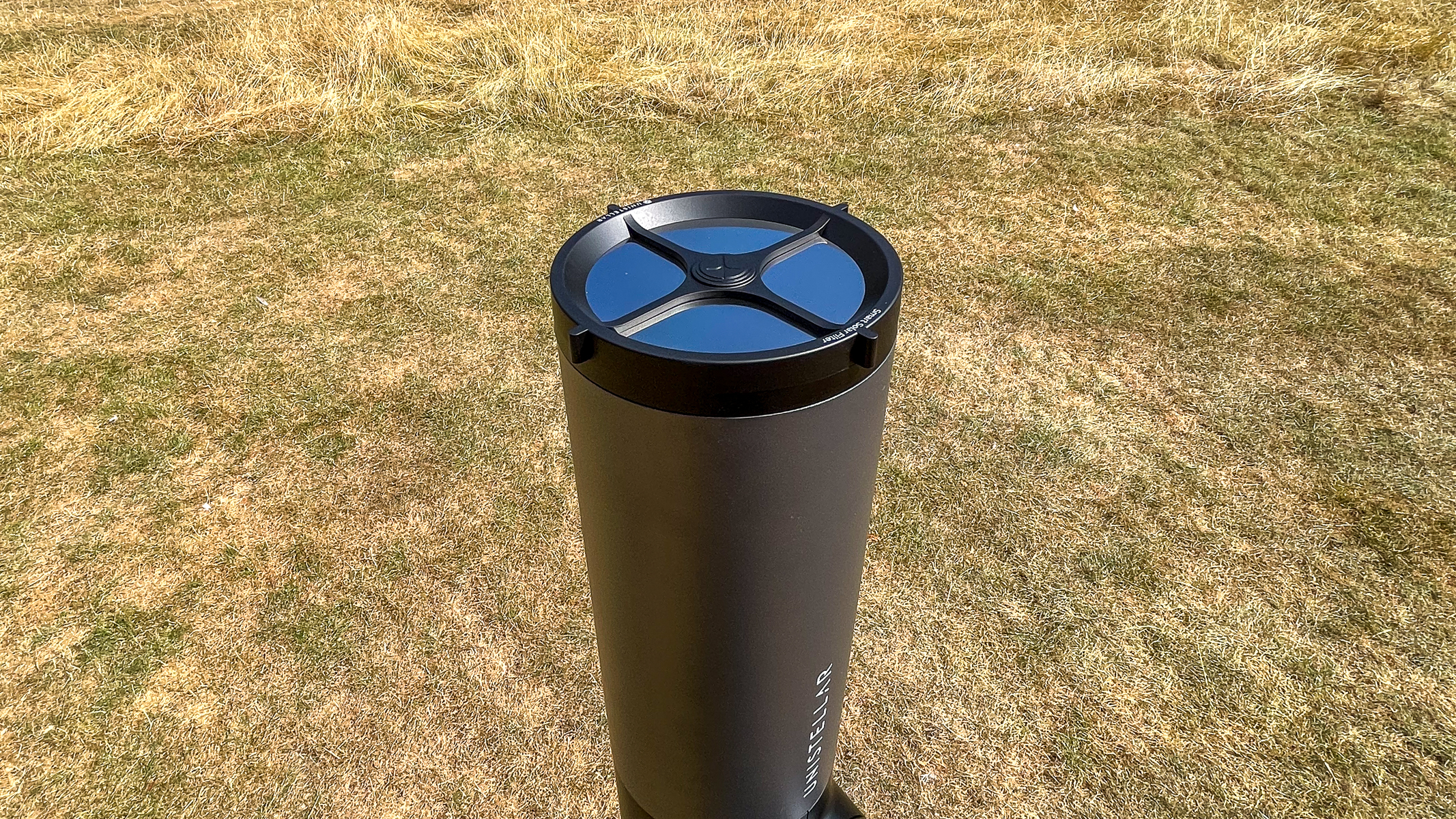
Saturn

Saturn rises a few hours after sunset, brightening in a lonely spot near the Cetus-Pisces border. In a telescope, its rings are tilted enough for good viewing; they narrow somewhat in the months ahead. Late on the evening of August 3rd, you'll find Saturn shining to the lower right of a gibbous moon.

If you're looking for a telescope or binoculars to observe the night sky, our guides for the best binocular deals and the best telescope deals are here to help. Interested in capturing the night sky? Check out our best cameras for astrophotography and best lenses for astrophotography.
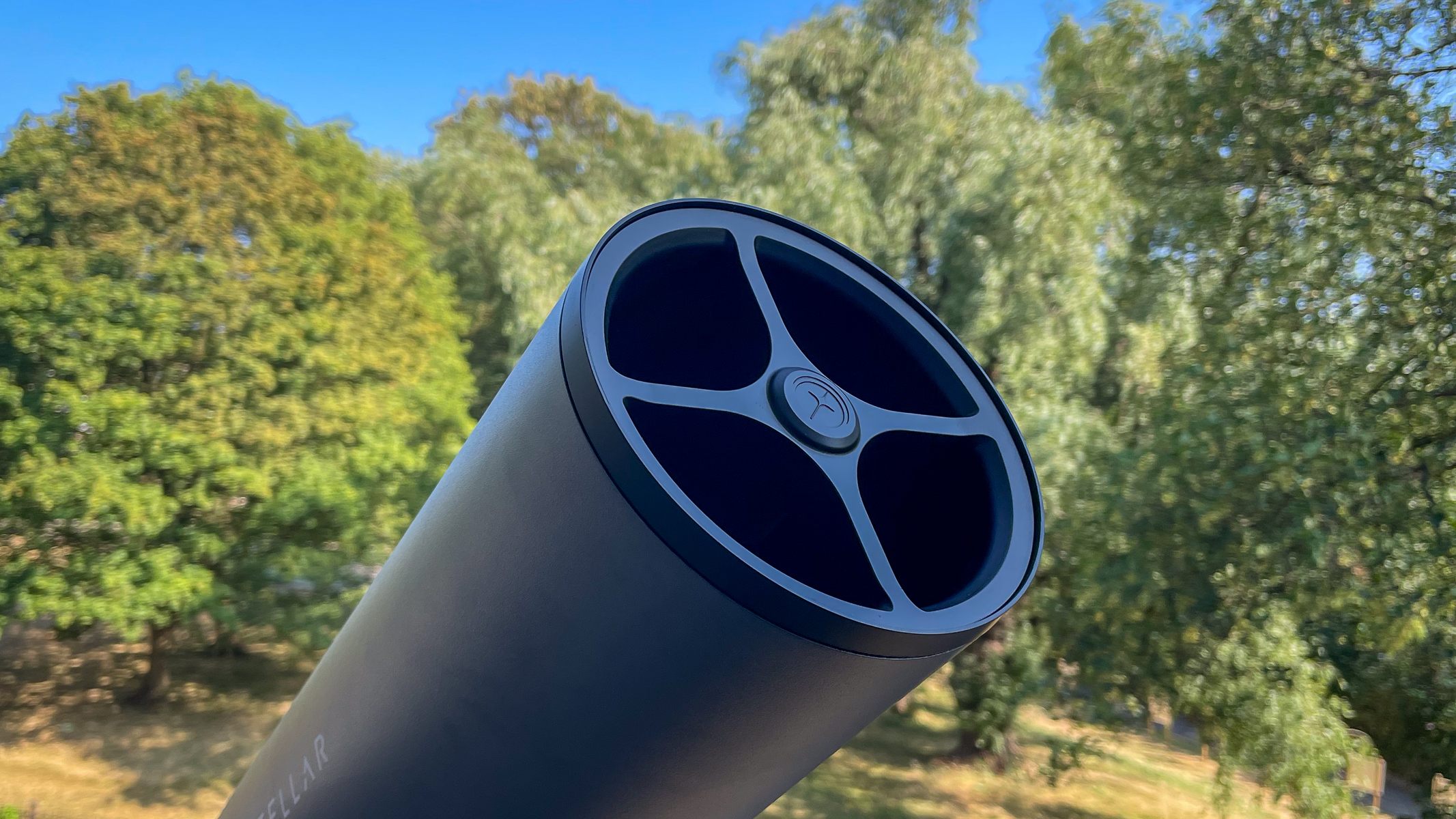
Joe Rao serves as an instructor and guest lecturer at New York's Hayden Planetarium. He writes about astronomy for Natural History magazine, Sky and Telescope, The Old Farmer's Almanac and other publications.
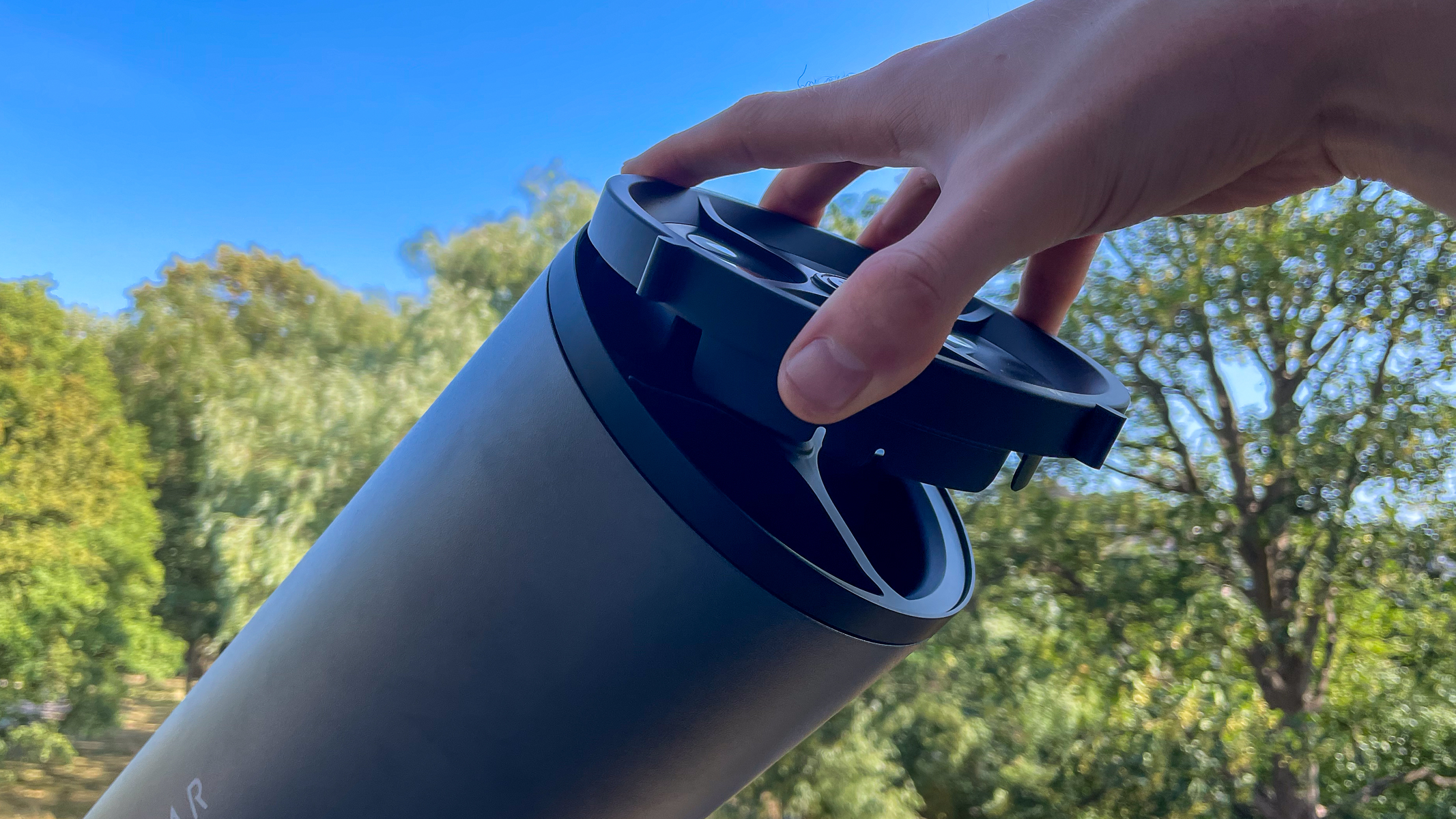
  •  

July full moon delights skywatchers worldwide. Here are our favorite photos of the majestic Buck Moon

The full Buck Moon rose to delight and dazzle stargazers with a spectacular display of moonlight on July 29 and we've got the photos to prove it!

July's moon is also known as the full "Buck Moon" — a traditional name used by Native American tribes to reflect the time of year when young deer grow out their antlers. Sadly, the name didn't herald any dramatic transformation in the appearance of the moon, but it still made for a spectacular sight — and photo opportunities — as it climbed above the eastern horizon at sunset on July 29.

Here's a selection of spectacular photos of the July Buck Moon 2026 captured alongside gorgeous natural landscapes, terrifying wildfires and stunning cityscapes from around the world.

Best photos of the July 2026 full Buck Moon

Our first photo of the full Buck Moon comes courtesy of Mesut Karaduman, who captured a gorgeously framed view of a ballerina performing in front of the yellow-orange lunar disk on a hillside close to the city of Tekirdağ in northwestern Türkiye on July 29.

The silhouette of a ballerina is shown dancing in front of the disk of a full moon as it rises over a hillside in a dark evening sky.
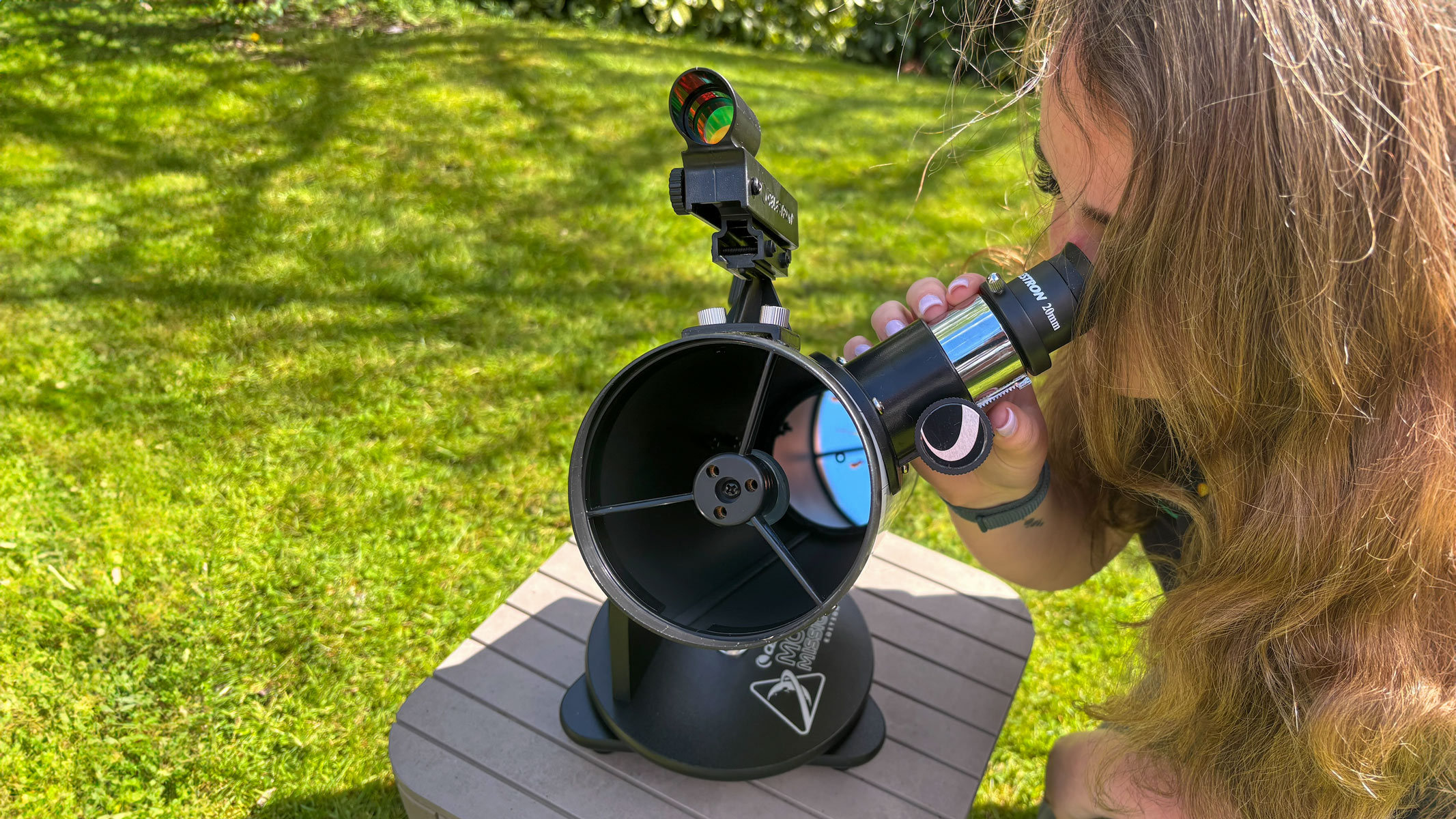
A ballerina dances in front of the July full moon. (Image credit: Photo by Mesut Karaduman/Anadolu via Getty Images)
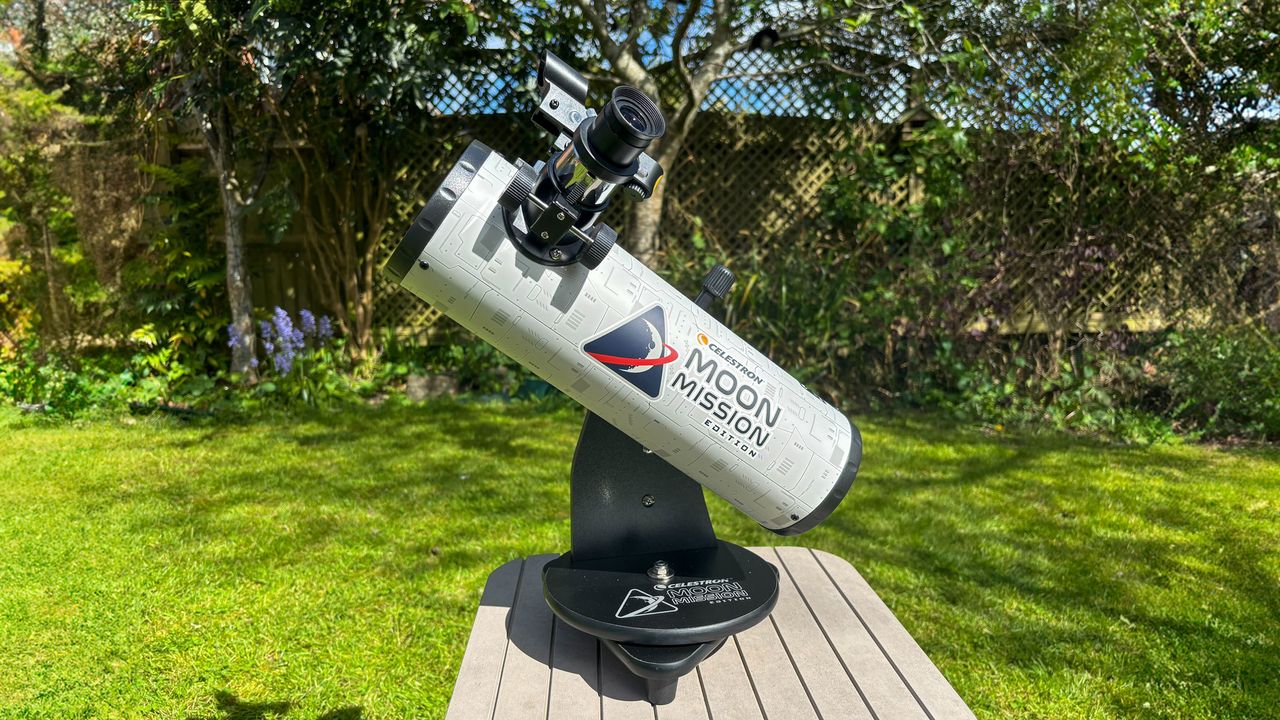
Sadly, the rising of the full Buck Moon was not a tranquil occasion for some in Europe, where its color was stained a deep crimson by the smoke from wildfires, which continue to ravage vulnerable areas in the wake of a prolonged heatwave.

Photographer Sergen Sezgin captured one such scene firsthand, as the moon rose over a smouldering hillside close to the Turkish city of Balıkesir, a few hundred miles south of Tekirdağ.

A red full moon rises above a hillside smouldering with flames at night, in a sky choked with smoke.

The Buck Moon rises over wildfires in Türkiye (Image credit: Photo by Sergen Sezgin/Anadolu via Getty Images)

Kevin McCarthy captured this photo of the full Buck Moon as it glowed in the skies over North Carolina, with the dark profiles of lunar seas and bright pockmarks of craters scarring the lunar surface.

"I stepped out onto my driveway in Charlotte, North Carolina, at 11:15 p.m. to capture tonight's full Buck Moon," McCarthy told Space.com in an email. "The moon has a definite warm tint likely caused by its low position in the sky, causing the light to pass through thicker layers of the atmosphere. "

A photo of the full moon in a black sky showing dark lunar seas and bright impact craters.

The Buck Moon captured in the skies over North Carolina on July 29, 2026. (Image credit: Kevin McCarthy)

That same moon appeared warped by atmospheric disturbances when it rose above the city of San Francisco's Golden Gate Bridge on that same night, as a flock of birds flitted across its ancient surface in this photo from Tayfun Coskun.

An orange moon glows over the Golden Gate Bridge in San Francisco at night.

The Buck Moon glows over San Francisco on July 29 (Image credit: Photo by Tayfun Coskun/Anadolu via Getty Images)

Coskun captured another gorgeous scene of the moon rising over San Francisco on July 28, as the last of the day's sunlight kissed the tops of the surrounding hills, along with the tallest of the city's skyscrapers.

A full moon rises in a peach colored sky over the hills near a city, whose skyscrapers can be seen rising to the right of the photo.

Moonrise over San Francisco. (Image credit: Photo by Tayfun Coskun/Anadolu via Getty Images)

Mert Alper captured another image of moonrise being watched by a couple from Woodbine Beach in Toronto, Canada, as the lunar disk emerged from behind a dense cloud bank to brighten the evening sky.

An orange full moon rises above a bank of clouds in a dark evening sky between the silhouettes of two onlookers.

The full moon breaks through the clouds in the skies over Canada. (Image credit: Photo by Mert Alper Dervis/Anadolu via Getty Images)

Gary Hershorn, meanwhile, captured this magnificently timed view of the full Buck Moon as it shone at the pinnacle of Manhattan's One World Trade Center in New York on July 29 while looking over the Hudson River from New Jersey.

A full moon glows over the New York City skyline at night.

July's full moon glows over the New York City skyline (Image credit: Photo by Gary Hershorn/Getty Images)

Our next atmospheric shot was taken with the aid of a telephoto lens by Ismail Kaplan during moonrise, as the lunar disk shimmered alongside Ankara Castle in the capital city of Türkiye.

An orange full moon is photographed glowing to the left of a castle on a rocks hillside in a dark blue sky.

The Buck Moon sidles up to Ankara Castle during moonrise on July 29. (Image credit: Photo by Ismail Kaplan/Anadolu via Getty Images)

This beautiful photo of the moon shining in the wheel of a young boy's bicycle was taken as the moon rose over the Zemplen Hills close to the Hunfarian town of Telkibánya that same night.

An orange full moon is photographed shining behind the wheel of a child's bicycle at night.

The moonshines in the wheel of a child's bike. (Image credit: Photo by Robert Nemeti/Anadolu via Getty Images)

Finally, Izhar Khan was able to capture this impressive view of a bat's silhouette darkening the Sea of Tranquility and the Sea of Serenity as it flew through the night sky over Sydney, Australia.

The silhouette of a bat is photographed flying across the disk of a full moon in a black night sky.

A bat navigates the lunar disk in the skies over Sydney, Australia. (Image credit: Photo by Izhar Khan/Getty Images)

The July 29 full moon is just the opening act for a spectacular month of skywatching events, kicking off with a jaw-dropping total solar eclipse on Aug. 12 that will be seen from Spain, Iceland and Greenland, which coincides with the peak of the Perseid meteor shower.

That's followed just two weeks later with a spectacular lunar eclipse that sees the moon fall deep into our planet's shadow, painting it a rusty-orange hue, weather permitting.

Be sure to check out our roundup of the best cameras and lenses for astrophotography to ensure that you're ready to capture next month's action-packed calendar of skywatching events, along with our guide to the best solar viewing gear available in 2026.

Editor's Note: If you would like to share your astrophotography with Space.com's readers, then please send your photo(s), comments, and your name and location to spacephotos@space.com.

  •  
❌