❌

Reading view

US lab to hunt most elusive ‘ghost particles’ deep underground with automated triggers

One of the world’s most ambitious neutrino experiments, the Deep Underground Neutrino Experiment (DUNE), is being built to catch some of the universe’s most elusive particles, but finding those fleeting signals may soon involve artificial intelligence. 

As the massive detector takes shape a mile underground in South Dakota, researchers are developing AI systems to sort through huge amounts of data, identify neutrino interactions, spot signs of a stellar explosion and even detect problems inside the detector.

This could fundamentally change how scientists run a particle-physics experiment at DUNE’s scale. 

For instance, instead of waiting for conventional analysis to work through enormous amounts of data, AI could identify important events in near real time and direct researchers toward the signals most worth investigating.

“These approaches are going to really accelerate DUNE in terms of the commissioning process and the sensitivity of the experiment to reach our full discovery potential,” Sowjanya Gollapinni, a representative from DUNE, said.

Can AI read ghost-particle tracks?

Neutrinos are notoriously difficult to study. Trillions pass through our bodies every second, yet they interact so rarely that detecting them requires an enormous detector and an intense neutrino beam. 

Fermilab will generate a powerful neutrino beam that will travel to a detector at the Sanford Underground Research Facility in South Dakota, where huge chambers filled with liquid argon will record the tiny traces left when neutrinos collide with argon atoms.

Keeping so much argon in the right state is itself a huge engineering challenge. Each of DUNE’s two planned far-detector cryostats will eventually house about 17,000 tons of liquid argon, kept at roughly −300°F. The massive cryogenic containers must keep the argon cold enough for the detector to work.

However, the problem does not end when a neutrino is detected. Every interaction can produce several particles, each leaving a trail through the argon.

Scientists must work backward through those tracks to determine where the collision occurred, what particles were created, and what the original neutrino’s energy and direction were. 

Fermilab researchers have already spent years testing whether machine learning can make this process faster. The MicroBooNE experiment was among the first high-energy physics experiments to use deep neural networks to analyze images from a liquid-argon detector. DUNE is now taking that approach much further.

“We are going to have very high resolution, almost photographic-quality images of these interactions. Which is great, but also brings challenges such as making reconstruction more difficult because we see such fine detail.” ,” Leigh Whitehead, an AI expert at DUNE, said.

An AI lookout for exploding stars

DUNE’s AI will also be searching for something far rarer—a supernova in our galaxy.

When a massive star collapses and explodes, neutrinos escape from its interior and can reach Earth before the burst of light becomes visible. This gives scientists an unusual opportunity to study the violent processes occurring inside a dying star. 

DUNE’s giant liquid-argon detector is being built in part to capture neutrinos from astrophysical events such as nearby supernovae.

An AI trigger will continuously monitor DUNE’s detector for the telltale pattern of a supernova neutrino burst. If it finds a promising signal, the system is designed to preserve data from 10 seconds before to 100 seconds after the candidate event. 

This could give astronomers an early warning, allowing telescopes to turn toward the exploding star while its light is still arriving.

The neutrinos themselves could reveal what the explosion leaves behind — potentially a neutron star or a black hole. This makes DUNE part particle detector, part cosmic early-warning system.

AI could become DUNE’s technician

There is another problem hidden inside DUNE’s enormous scale, which is keeping the detector running. Thousands of components must operate together underground, and operators need to respond quickly when something goes wrong. 

Researchers are therefore investigating whether a large language model could search through records of previously solved problems and point operators toward relevant fixes.

Machine learning could eventually go a step further by recognizing patterns that indicate a detector anomaly before an actual failure occurs. 

This approach, therefore, reflects a broader push to use AI throughout particle-physics experiments, where increasingly complex facilities are producing more data than conventional methods can easily handle.

Building an AI-powered physics experiment

DUNE will eventually produce petabytes of data, making fast and reliable analysis essential. Researchers are developing AI tools alongside the detector while working with national laboratories and universities to build the computing infrastructure needed to handle that flood of information. 

The collaboration now includes more than 1,500 scientists and engineers from over 35 countries and CERN, while also training the next generation of researchers. 

The AI systems will need to be developed and tested alongside the experiment, but if they work as intended, DUNE could become a model for how AI helps scientists operate massive experiments and find rare signals hidden in overwhelming amounts of data.

  •  

Robot Dogs Suddenly Taking Jobs From Human Security Guards

They’re agile, they’re creepy, and they may be coming for human jobs.

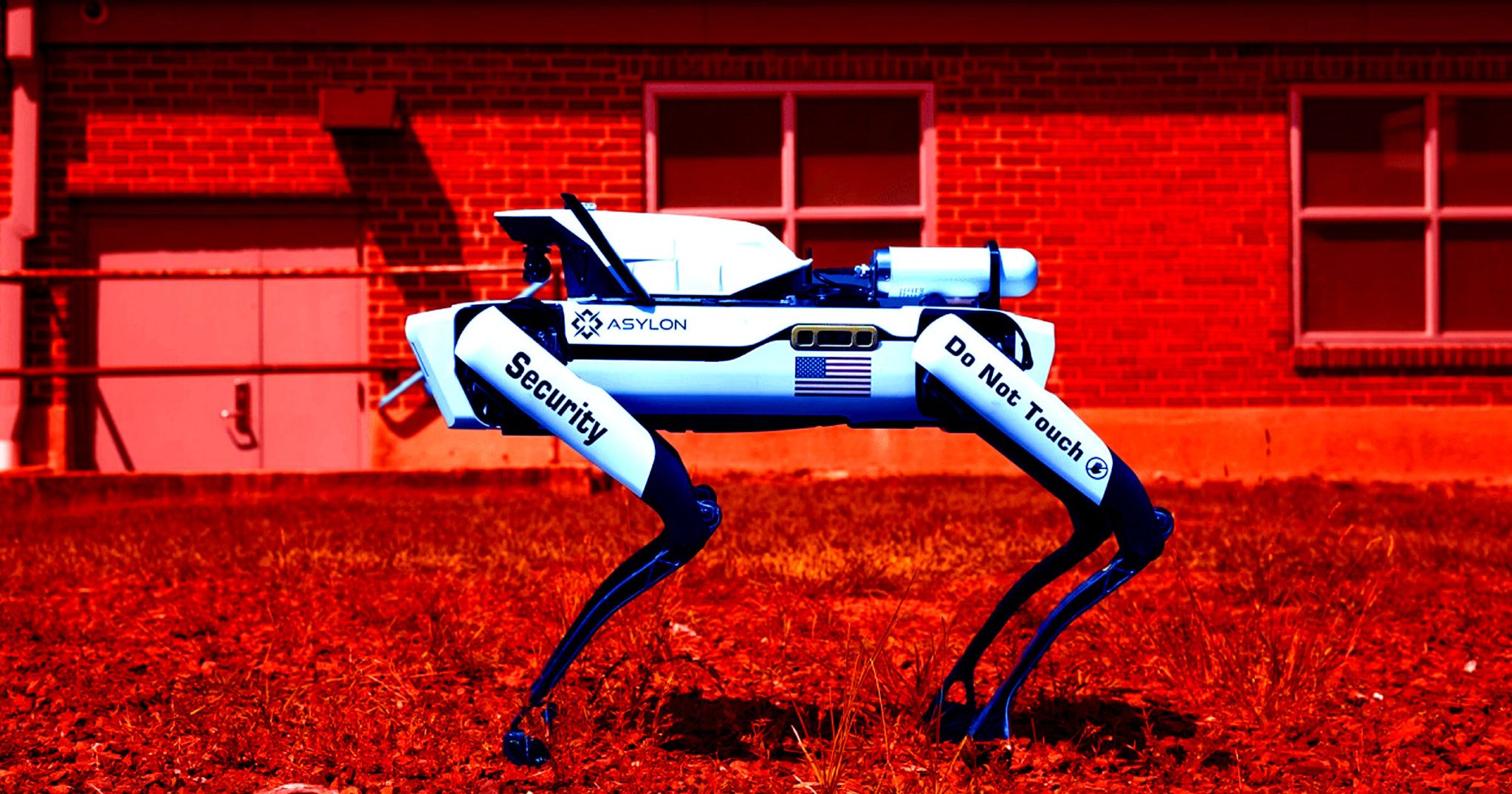
Robot dogs affixed with AI-integrated cameras are becoming the latest dystopian fixation of the security industry, especially in the US, where they’re being deployed to patrol data centers, safeguard cash crops, and police sports stadiums.

Though expensive, they’re gradually becoming a more attractive option over human security guards. At least, that’s according to new reporting by Business Insider, which notes that the cost to cover one 24/7 guard shift is anywhere from $80,000 to $130,000 cheaper per year when contracting robot dogs over human security officers.

That’s bad news for the nation’s security guards, an essential role providing low-barrier employment for uneducated workers. Often deployed to help property owners reduce insurance premiums, the role of security guard is an important source of income for some 1.3 million people. According to a report by the UC Berkeley Labor Center, about 60.8 percent of those roles are filled by people of color, while 27.8 percent of guards are 55 or older.

It is, however, a difficult job to make a living on, with the median annual wage of just $38,390 as of 2024. That being the case, the industry faces a high degree of turnover, which tech companies are all too happy to exploit.

“Training them and staffing them is super inconsistent, and it’s a big burden on the business,” Damon Henry, CEO of robot dog company Asylon, told BI.

So far, Henry says he has about 50 robots deployed across 25 customers nationwide. Compared to a workforce of 1.3 million humans, that might not sound like much. But if robotic production lines get more efficient and the bots themselves become cheaper to roll out, it’s hard to imagine the nation’s businesses keeping low-paid security guards on the payroll out of charity (just look at what happened with Walmart greeters.)

Still, you probably haven’t bumped into your last mall cop quite yet. As director of the UC Berkeley Labor Center’s Low-Wage Work program and co-author of the report referenced above Enrique Lopezlira told BI, the role is likely to experience pressures similar to that of other workers facing automation: security jobs won’t disappear entirely, but they will get much more demanding.

“The realistic near-term effect is not that guards are replaced,” Lopezlira said. “The human role is going to be pushed toward those hardest, higher-stakes parts of the work.”

More on robots: Startup Sued After Delivery Bot Clobbers 73-Year Old Woman

The post Robot Dogs Suddenly Taking Jobs From Human Security Guards appeared first on Futurism.

  •  

China’s Unitree Prices IPO in Bet Investors Are Ready for Humanoid Robots

Unitree Robotics wants to raise about $900 million in an I.P.O. that tests market interest in humanoid robots, a technology that wows but has yet to prove its viability.
  •  

Research roundup: 6 cool science stories we almost missed

It’s a regrettable reality that there is never enough time to cover all the interesting scientific stories we come across. So every month, we highlight a handful of the best stories that nearly slipped through the cracks. July’s list includes outfitting cyborg cockroaches with a tiny diving suit for navigating flooded terrain; confirmation that a Medici duke died of malaria, not poisoning; the best evidence to date that Betelgeuse is orbited by a companion star; and evidence that some ancient Egyptian princesses were skilled archers.

Sacrificial Incan boy died of blunt force trauma

Credit: Administrative Archive, Regional Museum of Iquique–CORMUDESI

It's known that the Incas practiced a human sacrifice ritual known as Capachoca, in which children were offered to the mountains and believed to become divine themselves, serving as intermediaries with the gods. This often involved pilgrimages to the remote sacrificial sites, with colonial accounts describing strangulation, asphyxiation, and blunt force trauma as the most common methods of sacrifice. Archaeologists have reanalyzed the remains of one such victim and concluded the boy died from blunt force trauma, rather than freezing to death as previously believed. They described their findings in a paper published in the journal Science Advances.

Read full article

Comments

© National Museum of Natural History of Chile

  •  

100 driverless oilfield trucks planned for Permian Basin as US firms scale fleet by 2027

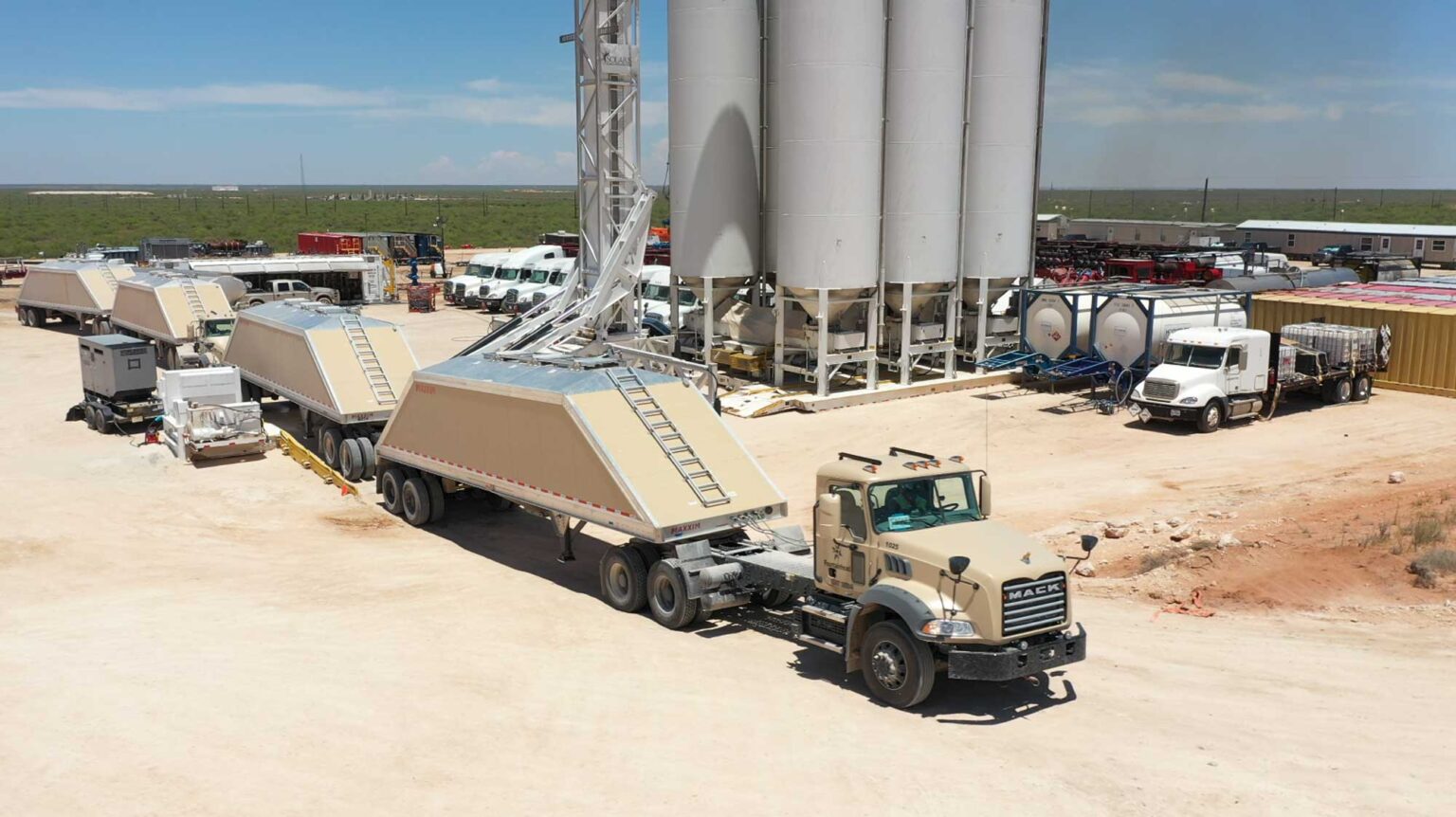
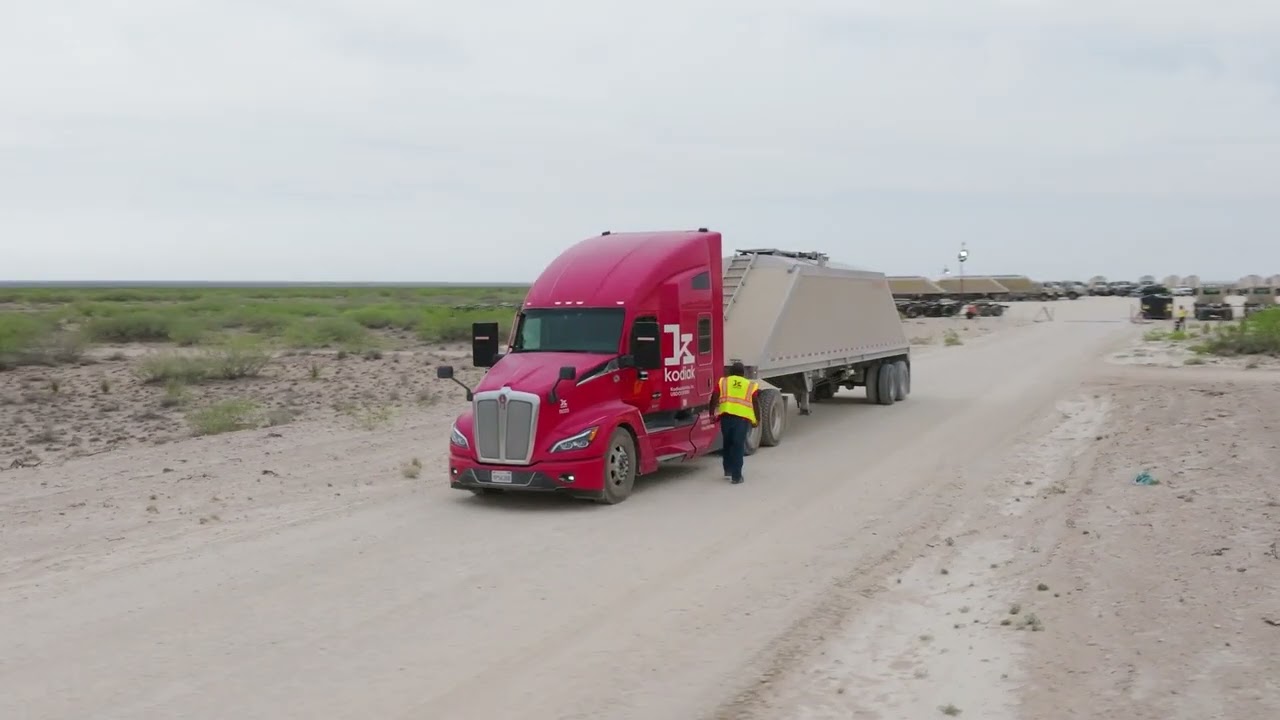
Atlas Energy Solutions Inc. (Atlas) has announced that it intends to expand its autonomous truck operations in the US Permian Basin from 28 to 100 by mid-2027. The company will work with Kodiak AI, Inc. (Kodiak) to make this ambition a reality using its physical artificial intelligence (AI)-powered autonomous driving technology.

What that means in practice is retrofitting or upfitting trucks with a package of sensors, controls, cameras, and other hardware to enable them to be operated autonomously using an AI “driver.”

According to Atlas, the new trucks will be used to expand operations at its second load-out point along its 42-mile (68 km) “Dune Express” sand conveyor system. This system will help Atlas become more responsive to customer needs for the transport and supply of proppant in the region.

Proppant, in case you are unaware, is a special grade of sand used by oil and gas companies during hydraulic fracturing. The sand is pumped underground to keep the cavities created by fracturing open, allowing oil and gas to flow freely.

Delivering sand without drivers

As you can appreciate, that requires enormous quantities of the stuff. What’s more, transporting it from mines or storage sites to drilling locations involves thousands of repetitive truck journeys, often on remote, dusty and relatively predictable routes.

The load-out points refer to strategic locations along the so-called “Dune Express” where this sand is loaded onto trucks. At present, Atlas explains, autonomous trucks have been used from one load-out point at a time.

The addition of another (one in Texas and one in New Mexico) will enable them to cover a wider area and improve customer order fulfillment. According to Atlas, since incorporating driverless trucks into its operations, they have carried approximately 7,000 loads totaling around 450,000 tons of sand over 23,500 “driverless hours.”

As for the trucks in question, they are entirely driverless but with an important distinction. To date, these trucks have tended to operate on controlled oilfield logistics networks, or private roads, not public highways or lanes.

That is considerably easier from an AI-training perspective than allowing autonomous trucks to travel freely through ordinary cities or mixed public traffic. The next major step is therefore operating on public roads, which Atlas and Kodiak say they expect to begin by early 2027, subject to regulatory and operational approval.

Fleet to increase to 100 by mid-2027

That would greatly expand where the trucks can deliver. “This partnership with Kodiak is a critical part of the Atlas strategy to transform oilfield sand logistics through innovation,” said John Turner, CEO and President of Atlas Energy Solutions, in a press release.

“Our mission is to seek critical energy infrastructure with inefficiencies, then engineer solutions that improve efficiency, reduce risk and enhance our customers’ operational success,” he added.

“Together, Atlas and Kodiak have deployed the world’s largest fleet of driverless big-rig trucks,” said Don Burnette, Founder and CEO, Kodiak.

“We’ve demonstrated that autonomous trucking is delivering meaningful results today. Our expanding partnership, which now covers two unique locations, is creating a blueprint for how autonomy can transform logistics by improving efficiency, increasing productivity, and delivering lasting value for customers at commercial scale,” he added.

💾

Atlas announces its intentions to expand its driverless truck fleet to 100 by mid-2027 for its sand delivery operations in the Permian Basin.
  •  

“Família” Gemini cresce com novos modelos para programação, cibersegurança e robots mais inteligentes

Além de três modelos para programação, cibersegurança e agentes de IA, a Google revelou a mais recente versão da plataforma Gemini Robotics, que permite controlar o corpo inteiro dos robots e coordenar tarefas de forma mais autónoma.

The post “Família” Gemini cresce com novos modelos para programação, cibersegurança e robots mais inteligentes appeared first on Tek Notícias.

  •  

Porous 3D-printed feet cut quadruped robot power use

Quadruped robots, which walk on four legs, are increasingly used for tasks such as inspection, transportation and search-and-rescue operations. However, their repeated leg movements consume far more energy than the rolling motion of wheeled robots, making it challenging to improve energy efficiency.

  •  

“It’s Obviously Quite Over the Top”: We Talked to the Company Behind This Eerie Four-Legged “Centaur” Robot That’s Going Viral

A teleoperated centaur robot dubbed “Threehalves” could represent the future of manual work in some of our planet’s most dangerous environments, according to Satyress Robotics, the California startup behind the project. In disasters such as mudslides, wildfires, and rubble searches, the company says its robot can keep workers safe from on-site hazards.

The other side of the story is the robot’s creepy, almost demonic appearance, as conveyed on the provocative Satyress Robotics website, the imagery for which is so unusual that it almost gives the impression of being a parody—particularly in an age of breathless reporting on corporate claims, and sudden appearances of “viral” news stories.

Therefore, The Debrief decided to take a deeper look at this mechanical oddity that more closely resembles something out of Christopher Nolan’s The Odyssey than a project in development in a California robotics lab.

An Unsettling Robot

Threehalves isn’t exactly news; all of the available information on the robot was posted on the company website over a year ago, around the time of their only post on X. Yet it’s recently been discovered by internet outlets noting the creepy design of this robot that the company claims is here to help.

“It’s obviously quite over the top, but ultimately, this is at the extreme end of humanoid robotics in size and capability,” a company representative told The Debrief.

“People may be familiar with humanoid robots from TV/movies or product videos, but likely don’t understand just how powerful and heavy they are (especially ours, which is coming in at just under 7ft tall and 240 lbs currently),” the rep added. “Our thought is someone who didn’t know what it is should definitely stay away from it, and those that do know or are operating the machine should be reminded it’s quite dangerous.” 

“If you look at something like a lathe or mill, they generally look intimidating, for good reason, even though they could be dressed up to look friendly and soft,” the rep concluded. “We’ll point out, though, that the ‘evil’ look is mostly from it being pitch black; with different colors or a wrap on it, it does not put off that vibe.”

Robot “Superpowers”

Part of Threehalves’ sales pitch is that it won’t replace jobs, but instead will merely transfer them to robotic operators using a joystick to guide Threehalves through manual work in dangerous environments. The website claims that this amounts to granting workers “superpowers,” allowing them to focus on honing their craft in new extreme situations. However, while the operator won’t have to directly get their hands dirty, Satyress Robotics told The Debrief that Threehalves is designed for line-of-sight, close-proximity operation.

“We don’t have any plans to develop much autonomy above what’s needed to keep the robot from damaging itself,” the Satyress Robotics representative said. “Our goal is to have experienced trade experts in control of the bots at all times. Forestry, for instance, is the deadliest job in the US – our goal is to save lives first and foremost, and we believe that is also enough economically to justify the cost of the bot without any autonomous productivity gain.”

Two of the robots can fit in a standard truck bed, allowing them to be easily transported to remote locations. Lacking hands, the robot can be fitted with a variety of unique attachments to hold various tools from chainsaws to drills. Of note, the robot is shown holding a gas-powered chainsaw. Exactly how it would manage to get the chainsaw started without an obvious way to pull the ripcord is unclear.

Safety First

With fears of a demonic Terminator immediately conjured up by Threehalves’ appearance, the company informs us that although “this robot is more dangerous than it looks,” the same is true of any humanoid robot, and this one comes equipped with a variety of safety features.

Ironically, one of these is the robot’s menacing horns, which significantly slow the robot down in moving through standard-size door frames, and can even be replaced with larger horns that make traversing such portals impossible.

“It’s another way to make it clear this isn’t a toy, [a] security guard, etc,” the Satyress Robotics representative said. “It’s built for one reason, for a teleoperator to do dangerous work or heavy lifting from a safe, in line of sight distance.”

“We are not looking at any use cases in commercial buildings, and certainly not residential,” they added.

The recommended methods to halt the robot may be as disconcerting as its appearance. Credit: Satyress Robotics

A Violent Stop

Additionally, air reservoirs in the chest cavity and on the robot’s back are designed to activate pin locks on all its joints, rendering the robot immobile if air pressure is lost. Imagery on the website suggests this can seemingly be accomplished by stabbing Threehalves with a knife or shooting it with a gun. Fortunately, a more pacifist option to halt the robot also exists: simply by hitting an e-stop button located on its stomach.

When pressed on why the company would design their robot to be susceptible to gunfire specifically, the representative didn’t seem to find this the least bit unusual.

“Nothing software wise/control wise, whether autonomous or teleoperated, can be guaranteed to never have any kind of control issue,” the Satyress Robotics representative said. “This gives a means to lock the brakes remotely without necessarily damaging the robot beyond repair.”

Robot Reality or Hoax?

With the unsettling design and suggestion that the robot may eventually have to be shot to stop it from injuring a human, one of this reporter’s main questions became: “Is this a joke?” The outlandish nature of the project reminds one of prankster Joey Skaggs’ tricks on the media, such as the time he convinced WNBC-TV in New York and United Press International that he had recently developed a cure-all derived from roach hormones, which he was injecting into his followers.

However, the Satyress Robotics representative confirmed that the company’s new quadrupedal working robot is no joke.

“It’s not a prank. Also, we’re building it with the goal of keeping workers safe, so we just want to make it clear we’re thinking of every edge case and looking for ways to solve them outside of software,” the representative explained. “We are quite a ways away from showing the robot in any kind of elegant motion, thus the static renders/photos.”

Given that the company hasn’t posted on social media in over a year and has no LinkedIn presence, it was unclear who was behind the operation and if it was still underway. According to the company, they will shortly be making a video to introduce themselves.

While one picture on the website appears to show a live test with a joystick, there are no videos of Threehalves in motion on the website, and our email conversation confirmed it is not yet a functional robot.

For now, the company tells The Debrief that they are currently working on component-level testing and any commercial version of the Threehalves is more than two years away.

Ryan Whalen covers science and technology for The Debrief. He holds an MA in History and a Master of Library and Information Science with a certificate in Data Science. He can be contacted at ryan@thedebrief.org, and follow him on Twitter @mdntwvlf.

  •  

Qualcomm-powered robot collapses spectacularly on stage during company's keynote — prepared stagehands rush to cloak and then carry off stricken humanoid (updated)

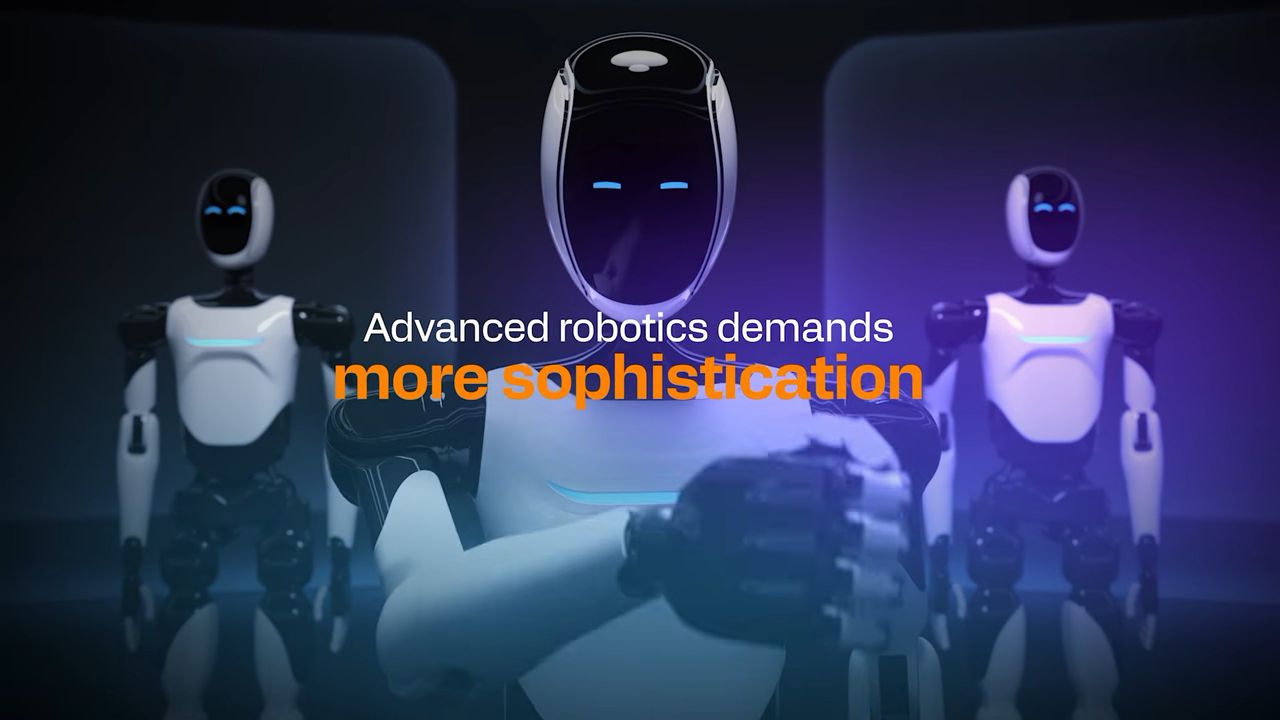
A Qualcomm exec suffered from one of the most disastrous tech demos we’ve ever seen live on stage at Computex 2026 this summer. In what should have been a wow moment during a press event in Taipei, Qualcomm hardware partner NEURA Robotics’ 4NE-1 humanoid robot quickly shifted gears from being a technical tour de force to a crashing mechanical shambles.

Robot powered by Qualcomm’s new AI chip dies mid-presentation from r/singularity

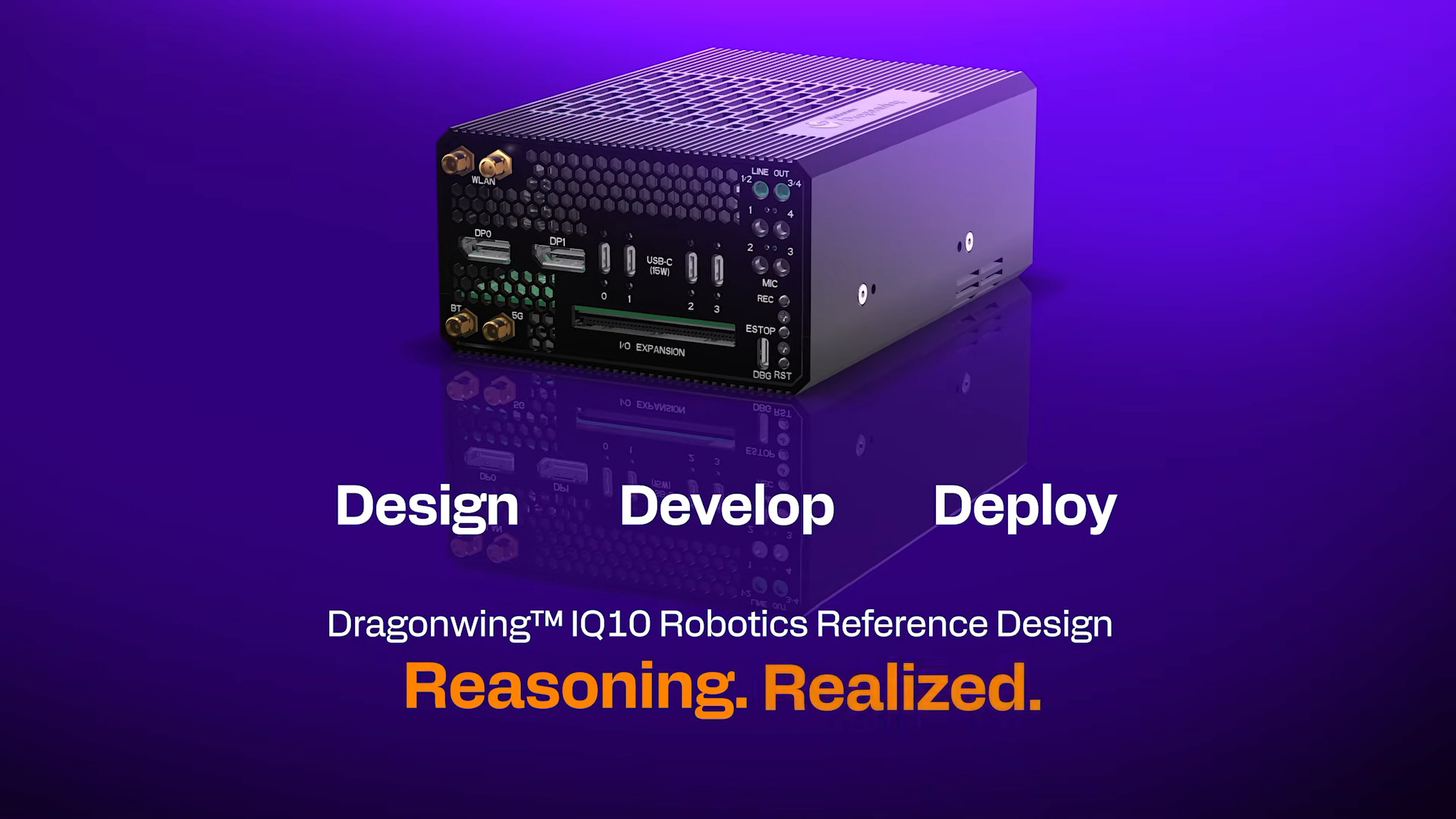
We see that the 4NE-1 humanoid robot is powered by Qualcomm’s Dragonwing IQ10 robotics reference design (RRD), claimed to be capable of 700 TOPS. But even before the robot’s spectacular malfunction, it didn’t look particularly healthy or nimble. 4NE-1’s slow shambling walking style radiated strong Two Soups vibes.

As the robot eventually hobbled close enough to the smart-suited presenter, the on-stage human picked up a Qualcomm Dragonwing IQ10 RRD from the robotically delivered platter and proudly showed it off to the attending crowd. As the applause and whoops subsided, the robot turned to face the crowd, and the presenter rolled on with his spiel.

Seconds into his script, the exec spun away to the side as the 4NE-1 humanoid robot very suddenly and noisily collapsed into a mechanoid mess. After resting in its terminal backbend for a second, one robot hand raised momentarily to make a futile gesture. Thankfully, the glass tray that had carried the Dragonwing IQ10 box onto the stage didn’t shatter.

Qualcomm’s Dragonwing IQ10 robotics reference design

We can think of another 'D' word for the strapline (Image credit: Qualcomm)

Stage hands seemed well-prepared

While the overall feeling from watching the video is one of shock from the ambling robot’s sudden noisy collapse, many on social media have commented on how unruffled and well-prepared the stagehands seemed to be. The silent and swift action of the black-clothed helpers, first cloaking the dead robot with purple silks, then the trio carrying it away, exits stage left, making it look like this catastrophe wasn’t such a surprise to some.

As the robotic remains were eventually removed through the side doors, we hear the brave speaker who carried on regardless come to the end of his polished presentation. The crowd politely and quite loudly claps - but is most of the applause for the speech, or for the unflappable stagehands who have efficiently extracted the heap that was the 4NE-1?

This late-emerging clip from Computex 2026 rivals the Windows 98 USB plug-and-play scanner crash during Bill Gates’ presentation at Comdex. That infamous software crash event may well have prompted the creation of the USB Cart of Death.

  •  

Legged robots raise surveillance, job and battlefield accountability concerns

Legged robots have recently transitioned from science fiction to engineering fact, with modern humanoid and quadrupedal machines now capable of delivering packages to front doors and taking on dangerous military missions. With a massive surge in financial investment in the offing, a new study describes the technical advances that have made legged robots a reality and explores the critical ethical considerations, economic potential and policy implications of the "intelligent machines" that are increasingly walking among us.

  •  

Muscle radar unlocks potential for future robotic limbs

University of Queensland researchers have developed new noninvasive sensors that measure muscle forces, unlocking new possibilities for wearable robotic mobility devices. Ultra-wideband radar sensors measure electromagnetic changes in muscles as they contract, allowing researchers to collect data in a way that's never been done before.

  •  

Schools Deploying Pepper Spray Drones to Sic on Mass Shooters

How do we combat the scourge of school shootings? The distinctly cyberpunk gamble that some places of learning are taking: rapid response drones.

Multiple schools across three states will soon have their own veritable platoons of pepper-spraying drones to hunt down active shooters, The Washington Post reports, waiting to spring into action the moment they’re called on.

Traveling at speeds of up to 60 miles per hour and capable of smashing through the windows, the so-called “Campus Guardian Angels” can reach a gunman within just fifteen seconds, the manufacturer Mithril Defense claims.

In addition to blasting a shooter with pepper spray, they can also distract them with loud sirens and flashing lights, and even ram into them at high speeds.

“Once I get the drones on you, you just can’t escape them,” Bill King, a Mithril cofounder and retired Navy SEAL, told WaPo.

It remains a fringe solution, but seems to be picking up steam. The state of Florida last year allocated more than $557,000 to a pilot program to deploy the drones at three different high schools. Georgia recently approved its own $500,000 pilot to test Mithril’s system at five public schools. And in Colorado, a new K-12 public charter school decided it would pay to use the drones on its own.

The drones aren’t autonomous and are instead remotely controlled by human operators at Mithril’s headquarters in Austin, Texas. Somewhere between 30 and 90 of the drones will be placed throughout a school in storage boxes, which helps them arrive quickly at the scene.

But the efficacy of the drone defense systems remains a big question mark — and hopefully we’ll never have to know — as is whether these solutions distract from addressing the systemic causes of mass shootings, like weak gun control and poor mental health support services.

Mithril has promised that its tech could help local law enforcement who respond to a shooting by locating the shooter and relaying critical information, but that would require a high degree of coordination in a hectic and dangerous environment. What if the drone operators target the wrong person, or cause law enforcement to mistake an innocent person for the shooter because the drones happen to be near them? Are these drone operators ready to make split-second decisions in a life or death situation for the people on the ground?

“It’s almost like where gaming and school safety collide,” Curtis Lavarello, CEO of the School Safety Advocacy Council, told WaPo. “I have some really serious reservations about the deployment of drones in schools.”

It’s not the only tech-inflected solution being adopted to combat mass shootings. There are already numerous startups offering AI-powered gun detection systems, but their performance has been dubious. One called Omnilert called the cops on an innocent 16-year-old after it mistook his bag of Dorito chips for a weapon, and is being sued by a survivor of a Tennessee high school shooting after it failed to detect the handgun used by the shooter.

More on drones: We’re Admittedly Terrified That They’ve Now Invented Invisible Drones

The post Schools Deploying Pepper Spray Drones to Sic on Mass Shooters appeared first on Futurism.

  •  

School District Pauses Plans to Deploy Humanoid Robots in Class After Outcry

Robotics company Realbotix LLC has long struggled to beat the allegations that its voluptuous humanoid robots are designed with prurient interests in mind.

Its $175,000 robotic companion, dubbed Aria, is platinum blonde, well-endowed, and tends to be decked out in tight-fitted sportswear at tech conventions. Yet the company has insisted she’s not a sex doll, leading to plenty of incredulity online.

Adding to the drama is the company’s corporate structure: Realbotix LLC is owned by Realbotix Corp, which also owns Intima LLC — a venture that holds an ownership stake in Realdoll, one of the best-known manufacturers of sex robots.

Those eyebrow-raising optics burst into view this month when, as New York Focus reports, the Salamanca City Central School District in western New York announced plans to deploy one of Realbotix LLC’s humanoid robots, dubbed Sally, in the classroom. The AI-enabled robot would reportedly serve as a teaching assistant for high school students enrolled in STEM and arts courses.

It’s hard not to see the company’s sex robot roots in Sally’s visage. The $57,000 android has smooth silicone skin, a dazed expression on her face, and an ill-fitting wig made of long brown hair. But after this story was first published, an attorney representing Realbotix reached out to emphasize what he said was a total divide between Realbotix LLC and Intima LLC.

“Realbotix Corp is a holding company with two separately operated businesses: Realbotix LLC, which focuses on AI-powered humanoid robotics for commercial service sector applications, and Intima LLC, which focuses on direct-to-consumer products,” the attorney said, in a statement echoing a press release the company issued last week. “Realbotix LLC and Intima LLC have different product offerings with no crossover. As a holding company, Realbotix Corp does not in itself have business operations but is responsible for managing capital markets, shareholders, listing requirements and accounting needs. The two subsidiaries maintain their own management, personnel, payroll, facilities, manufacturing operations, product development, and market strategies.”

“Realbotix LLC does not design, manufacture, or sell adult products,” the statement continued. “No Intima LLC or RealDoll employees, contractors, products, inventory, blueprints or technology are involved in Realbotix LLC’s design, engineering, manufacturing, deployment, or customer support whatsoever.  All education, healthcare, wellness, and enterprise initiatives are conducted exclusively through Realbotix LLC. Realbotix LLC and Intima LLC are different legal entities that are independently operated. The two entities do not share employees, products, inventory, manufacturing resources, or technology.”

Also after this story was first published, the Salamanca City Central School District announced that it was putting the deployment on hold after feedback from the community.

Prior to that reversal, district superintendent Mark Beehler told New York Focus that he was willing to give up banning AI in the classroom since “students will find a way around most rules that schools put in place.”

“I also believe it is critical for schools to teach proper use of technology, not simply exclude it,” he said.

Sally’s onboard AI can be used to generate lessons, provide translations in real-time in over 100 languages, and provide human teachers with guidance if a “teacher loses their place during a lesson or needs a prompt on what comes next,” according to New York Focus.

To us, that sounds like a pretty cynical take on the future of education. Teachers are already facing a major uphill battle thanks to the advent of the tech, with students suffering from declining cognitive abilities.

Of course, Realbotix LLC argues that it’s done its homework. Instead of hallucinating facts, a major shortcoming of the tech that makes it arguably unfit for most classroom use, Sally will allegedly say “I don’t know.” The company also said its robot won’t be directly connected to the internet to keep highly sensitive information about students from prying eyes.

Still, it’s a bizarre investment for the school district that comes at a particularly tough time for human educators. The reality is that teachers across the country are woefully underpaid. There’s a massive shortage of instructors, with tens of thousands of teacher positions going unfilled.

In a press release, the Salamanca City Central School District stressed that the “Realbotix educational robot will never replace teachers, staff members, or meaningful human interaction.”

But whether Sally will actually serve as “another instructional tool that educators can use to engage students, reinforce classroom learning, and spark curiosity about emerging technologies,” remains to be seen — especially considering its steep price tag and lascivious origins.

Updated to clarify the relationship between Realbotix Corp, Realbotix LLC, and Intima LLC.

More on Realbotix: “Companionship” Robot That Its Creator Says Is Definitely Not a Sex Robot Looks Around With a Dazed Expression

The post School District Pauses Plans to Deploy Humanoid Robots in Class After Outcry appeared first on Futurism.

  •  

Startup Sued After Delivery Bot Clobbers 73-Year Old Woman

With so many landmark lawsuits emerging around artificial intelligence, it can be easy to lose sight of the other high-tech cases shaping the world as we know it.

One major suit with important implications just emerged out of Phoenix. The case revolves around a 2023 incident involving a 73-year-old named Trudy Perez and a delivery robot at Arizona State University. The woman — who was working as a parking garage attendant at the time — alleges a delivery robot operated by the company Starship Technologies repeatedly ran into her, throwing her to the ground and clobbering her again while she was down.

Now, the woman is proceeding with a civil suit targeting Starship for liability and negligence, local station KJZZ reported.

As if working outdoors in Phoenix at the age of 73 isn’t rough enough, a police report from the incident notes Perez suffered a four-inch gash on her arm as a result of the beat-down, in addition to back pain and mobility problems. Per KJZZ, she’s now seeking compensatory damages related to medical expenses, pain and suffering, and lost wages caused by the altercation.

The lawsuit further alleges that, like similar automated robots, the experimental Starship unit was being piloted by an off-site employee. Per the filing, this unnamed employee neglected to “exercise control” over the delivery bot throughout the incident, resulting in Perez’s injuries.

Of course, the company is doing everything it can to soften the blow and limit its liability. As KJZZ reports, Starship Technologies has a laundry list of excuses: not only were Perez’s injuries caused by her own negligence, but they were pre-existing as well, the company’s attorneys claim.

With the first court date set for next February, it’ll be some time before the jury reaches a verdict. When they do, they could set some major precedent when it comes to holding companies responsible for mayhem caused by their delivery robots — an increasingly important issue as the gadgets spread to more cities across the US.

More on delivery robots: Large Area of Chicago Bans Delivery Robots After Resident Outcry

The post Startup Sued After Delivery Bot Clobbers 73-Year Old Woman appeared first on Futurism.

  •  

US models beat China’s Kimi K3 with a 76% score over 32% in cyber benchmarks, tests show

Despite fears that China could race ahead of the US in AI, a joint UK-US evaluation found that Moonshot AI’s Kimi K3 performs “significantly below” leading American models in offensive cybersecurity capabilities.

The findings address growing concerns in Washington regarding China’s recent advancements in artificial intelligence following the release of Kimi K3, described as China’s most powerful large language model.

The UK Artificial Intelligence Security Institute (UK AISI) and the US Center for AI Standards and Innovation (CAISI) found that Kimi K3 achieved an overall cyber capability score of 32.2%, compared to an average of 76.2% for top, unnamed US models.

Evaluation identifies cybersecurity gap

Researchers tested Kimi K3 using ExploitBench, a public benchmark developed by Carnegie Mellon University that measures an AI system’s ability to develop end-to-end exploits for software vulnerabilities.

According to the evaluation, Kimi K3 “performs significantly below the most recent frontier cyber-capable models” when tasked with developing exploits. The model attained a score of 32 percent, outperforming GLM-5.2, another Chinese open-weight model, which scored 24 percent.

However, Kimi K3 still lagged behind leading US systems. The most cyber-capable US models achieved an average score of 76.2%.

The report also examined whether models could achieve arbitrary code execution (ACE)—a high-severity exploit outcome that allows attackers to take control of a target system. Kimi K3 achieved ACE on none of the 41 ExploitBench tasks, while “the most cyber-capable models achieved ACE on 20/41 samples on average,” according to the UK AISI and CAISI.

Simulated attack shows remaining capabilities

The evaluation also tested Kimi K3 on “The Last Ones” (TLO), a 32-step simulated corporate network attack designed to measure a model’s ability to conduct end-to-end cyber operations autonomously.

Kimi K3 reached step 17 of the attack path on average, compared with the 28.5 steps achieved by the most cyber-capable US models.

Despite this gap, the report noted that Kimi K3 completed the simulated attack in one of 10 attempts. The UK AISI and CAISI said this demonstrated that the model “is capable of autonomously attacking small, weakly defended, and vulnerable enterprise systems, when directed to do so and given initial network access.”

Furthermore, Kimi K3’s safeguards did not prevent it from attempting cyber exploit development or offensive cyber operations during testing.

Although the results were only preliminary, the research noted that Kimi K3’s overall cyber capability score was estimated from a single benchmark, whereas other models were evaluated across a larger number of cyber tasks.

Findings reshape AI competition debate

Kimi K3 has sparked attention, if not concern, following reports of its strong performance on other AI benchmarks. However, these new findings offer a different picture of the model’s cybersecurity capabilities, showing that it still lags behind US systems.

The South China Morning Post reported that the evaluation “offers a stark reality check amid mounting panic in Washington over Beijing’s AI advancements following Moonshot AI’s latest flagship release.”

David Sacks, former White House AI czar and current co-chair of US President Donald Trump’s Council of Advisers on Science and Technology, said the findings suggest that fears over Chinese model supremacy may be exaggerated. He urged policymakers to avoid over-regulating the sector.

“The Kimi Panic needs to stop,” Sacks said in a social media post. “American frontier models are still ahead.”

💾

New UK-US findings show that Moonshot AI’s Kimi K3 still lags behind top US models in cybersecurity threats.
  •  

US lab initiative targets 5x faster engineering with next-gen supercomputing

US firm Rescale, a digital engineering platform that combines AI, simulation, and high-performance computing to help R&D and engineering teams design, test, and bring new products to market faster, has received funding under the Genesis Mission, a national initiative led by the US Department of Energy to build an advanced integrated science discovery platform.

As part of the program, Rescale will join Lawrence Berkeley National Laboratory, Lawrence Livermore National Laboratory, and Oak Ridge National Laboratory as a funded partner in the Agentic HPC Pipeline Initiative (AHPI). 

The initiative aims to use agentic AI on Rescale’s platform to help accelerate the adoption of national laboratory-developed computing tools and simulations by US industry.

Doubling scientific research output with AI and advanced computing

The Genesis Mission is an ambitious initiative aimed at accelerating scientific and technological breakthroughs by combining artificial intelligence, supercomputing, quantum systems, and advanced scientific instruments into a single research platform. 

Established through an executive order in November 2025, the program brings together the department’s 17 national laboratories and around 40,000 scientists and engineers to advance research in areas including energy, scientific discovery, and national security. 

Department officials have compared the scale and ambition of the initiative to landmark US efforts such as the Manhattan Project and the Apollo program, with the goal of doubling the productivity of the country’s scientific research within the next decade.

The US Department of Energy launched the first Genesis Mission funding round earlier this year, awarding $293 million to projects focused on areas including advanced manufacturing, biotechnology, nuclear energy, and quantum science. The program received more than 8,000 applications, making it the department’s largest-ever funding call.

Rescale’s AHPI was selected for Phase I funding to address a key challenge: helping industry access advanced simulation tools developed by US national laboratories that have often required specialized expertise and infrastructure.

Helping manufacturers access advanced AI-powered simulations

The company will work with three US national laboratories to bring agentic AI capabilities to advanced simulation tools. The project will integrate AI agents into WarpX, LiDO, and Adamantine, codes developed by Lawrence Berkeley National Laboratory, Lawrence Livermore National Laboratory, and Oak Ridge National Laboratory.

Using the Rescale platform, AI agents will help engineers choose simulation tools, configure inputs, monitor runs, and analyze results. The initiative aims to reduce the time and specialized expertise needed to use these simulations by more than five times, making advanced research capabilities more accessible to US manufacturers.

According to Rescale CEO Joris Poort, the Genesis Mission highlights the importance of making industrial AI technologies available to leading research and development teams that can apply them in real-world applications.

Building on Rescale’s existing partnership with ORNL’s Manufacturing Demonstration Facility, AHPI addresses a common gap: DOE-industry collaborations run for a fixed term, and once they end, partners keep the insight but lose the tools to act on it. AHPI keeps the resulting agentic workflows, surrogate models, and code environments live on Rescale, letting labs and industry keep collaborating long after a project’s funding ends.

💾

Rescale will help develop advanced digital engineering capabilities as the US expands efforts to use supercomputing in research.
  •  
❌