 Login

Aircraft measurements reveal surprisingly strong Southern Ocean biological productivity
The biological productivity of the Southern Ocean in the summertime is substantially greater than many previous estimates have

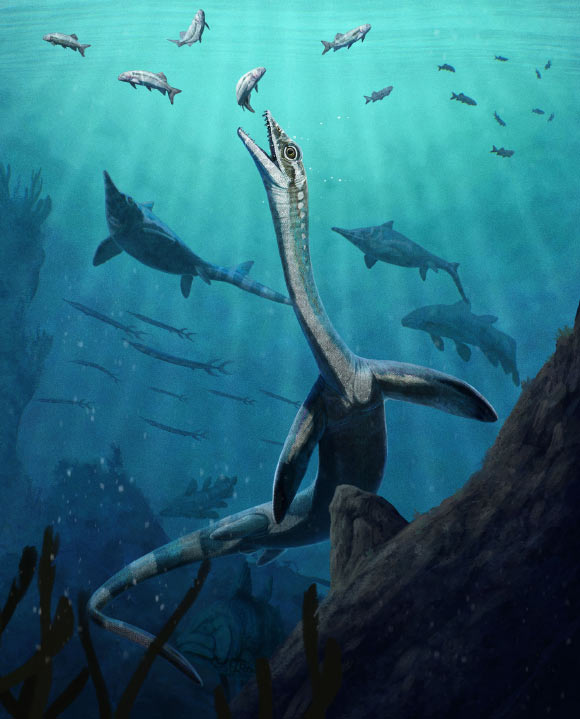
An exquisitely preserved specimen of Austronaga minuta, a small, long-necked marine reptile from the Triassic of China, contains a fossilized stomach, liver and intestines, offering paleontologists their oldest detailed glimpse yet of how early reptiles digested food.
The post 244-Million-Year-Old Fossil Preserves Earliest Reptilian Digestive System appeared first on Sci.News: Breaking Science News.
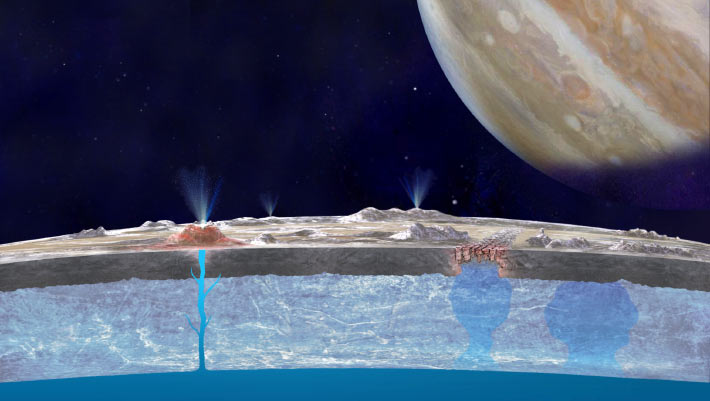
Europa’s subsurface ocean has long topped astrobiologists’ wish lists as a place to search for life beyond Earth.
The post Europa’s Ice Shell May Be Tougher Barrier than Planetary Scientists Hoped appeared first on Sci.News: Breaking Science News.

Scientists are sounding the alarm over a worsening situation in Earth’s oceans and freshwater systems, according to a new study that warns of “irreversible” changes our planet could be facing.
New research led by the Scripps Institution of Oceanography at UC San Diego has revealed the rapid disappearance of oxygen from bodies of sea and fresh water, leading to environmental changes that could endure for centuries if left unmitigated.
The new study, which appeared in the journal Limnology and Oceanography, argues that widespread aquatic deoxygenation—reduced levels of dissolved oxygen in oceans and coastal waters, lakes, rivers, and streams—is increasingly becoming a problem, and one that influences nine other crucial environmental processes.
These processes are all included in what is known as the Planetary Boundaries framework, a science-based tool that outlines the requirements of a safe operating space for humanity. Introduced in 2009 by Earth system scientists led by Johan Rockström, this framework identifies nine critical environmental processes that regulate Earth’s stability.
Specifically, the nine planetary boundaries outlined in this framework are climate change, biosphere integrity, land use changes, biogeochemical flow of nutrients, ocean acidification, freshwater changes, atmospheric aerosol loading, stratospheric ozone depletion, and pollution.
Now, the Scripps researchers behind the recent study say they believe dissolved oxygen levels should also be formally included in this framework.
Erica Ferrer, a Scripps Oceanography alumna and current postdoctoral scholar at UC Santa Barbara’s National Center for Ecological Analysis and Synthesis and lead author of the new study, says that her team’s work “is designed to elevate the profile of aquatic deoxygenation as a global threat and show that it does not operate in isolation.”
“The health and stability of our planet depends on the health and stability of aquatic ecosystems, which need oxygen to function normally,” Ferrer said.
Driving this growing problem, the new research says, is the excessive influx of nutrient pollution into water bodies, as well as anthropogenic warming, and changes occurring in natural ventilation systems within deep ocean waters.
With depleting oxygen levels scientists are seeing, longer-term changes to chemical and biological processes that regulate our planet’s climate are expected to occur. The decline, Ferrer and her colleagues argue, is also likely to impact a diverse range of aquatic organisms and ecosystems.
Even ocean mammals that acquire air at the surface are likely to be impacted, since deoxygenation can either cause the relocation or outright depletion of the organisms that make up their diets. This, in addition to causing severe damage to habitats and alterations to the food webs they depend on.
Ferrer and her colleague, study co-author and Scripps biological oceanographer Lisa Levin, are hopeful that their findings will encourage a deeper level of engagement on the potential ramifications of aquatic oxygen loss, and how other environmental challenges outlined in the planetary boundaries framework can act as multipliers, rather than separate existential concerns.
“Adding aquatic deoxygenation to the Planetary Boundaries framework will help us understand its impacts on Earth system stability,” Ferrer said in a statement, adding that mitigation of ocean deoxygenation impacts “represents a critical component of maintaining biodiversity and climate.”
Levin, Ferrer, and their colleagues’ study, “Abundant interactions and feedbacks between aquatic deoxygenation and the other planetary boundaries suggest ‘unsafe’ levels of oxygen loss with far‐reaching impacts,” appeared in the journal Limnology and Oceanography on June 30, 2026.
Micah Hanks is the Editor-in-Chief and Co-Founder of The Debrief. A longtime reporter on science, defense, and technology with a focus on space and astronomy, he can be reached at micah@thedebrief.org. Follow him on X @MicahHanks, and at micahhanks.com.
 Four scientists could soon live and work beneath the Florida Keys for days.
 Thousands of metres below the ocean’s surface, there are tiny waves moving through the water. Much like breaking waves at the beach, these small waves within the ocean must eventually break. When they do, they create turbulence and mixing, similar to what you feel from a big wave breaking on the beach. This might seem […]
An oceanic mystery has unfolded with the discovery of a large crab inside a plastic bottle, with an opening far too small for the crustacean to have fit through.
The seemingly impossible discovery, made by researchers with Hiroshima University, has now revealed a new dimension to the effects of pollution in our environment, and how plastic objects can have unexpected impacts on ocean creatures.
The researchers made the curious discovery off the coast of Okinawa, Japan. Upon discovering a polyethylene Shaoxing wine bottle drifting along on the ocean surface, they soon realized that the discarded plastic container was thriving with signs of life.
Most peculiar of all was the presence of a large swimming crab within the bottle, which was obviously too have made its way inside the container through its narrow opening.
“During juvenile fish surveys in offshore waters, we happened to encounter a floating plastic bottle approximately 500 meters (about 550 yards) off Sesoko Island, Okinawa, Japan, with many juvenile fish associated with it,” said Hajime Sato and Yoichi Sakai, the authors of a new study describing the discovery.
According to Sato, “a large live swimming crab, Portunus sanguinolentus, was trapped inside the bottle.”
“The crab was clearly larger than the opening of the bottle!” Sato said.

It is no secret that plastic has been a longtime contributor to pollution in Earth’s oceans, with wide-ranging impacts on oceanic environments that include ocean creatures becoming ensnared in discarded plastic bags, dishing nets, or other plastic refuse.
Sato and Sakai say the plastic bottle they collected in July 2022 had been manufactured the previous November, and had been left uncapped, allowing seawater to enter and leave. However, it was clear that the crab they discovered within it could not have made its way in as easily as the ocean water it contained.
Unraveling this oceanic mystery required an array of biological analyses, which ultimately led them to a striking conclusion: the crab had entered the bottle when it was far smaller, and remained there, subsisting on organisms and other food sources making their way into the small plastic vessel, allowing it to grow as the bottle drifted along.
Based on DNA analysis of the crab’s stomach contents, the crustacean had recently consumed juvenile fish that entered the bottle, including specimens of the rough triggerfish Canthidermis maculate. Additional analysis also revealed the presence of the sergeant major Abudefduf vaigiensis.
Evidence of algae within the bottle indicated another likely food source for the crab, while on the bottle’s exterior, goose barnacle growth revealed the likely time the bottle must have spent drifting for these oceanic hitchhikers to become attached and grow.
The most likely scenario, according to Sato and Sakai, is that the young crab entered the bottle, where it fed on juvenile fish and algae over the course of two months, eventually growing large enough that it could no longer escape.
“Plastic bottles discarded by humans can trap crabs and prevent their escape,” the authors conclude, adding that “Similar cases have already been reported from waters around Japan, suggesting that this was not an isolated accident.”
“Through this striking example, we would like readers to recognize that objects that make our lives more convenient can sometimes have unexpected effects on small marine animals,” Sato and Sakai add, “while also appreciating the remarkable vitality of the swimming crab,” the authors conclude.
The unusual discovery was detailed in a recent study, “Swimming crab in a bottle: A two‐month drift on the ocean surface while entrapped,” which appeared in the journal Ecosphere.
Micah Hanks is the Editor-in-Chief and Co-Founder of The Debrief. A longtime reporter on science, defense, and technology with a focus on space and astronomy, he can be reached at micah@thedebrief.org. Follow him on X @MicahHanks, and at micahhanks.com.

In a groundbreaking study poised to reshape our understanding of Earth’s deep interior dynamics, researchers have unveiled a comprehensive model elucidating the genesis of the extensive large igneous provinces (LIPs) in the Pacific Ocean during the Early Cretaceous period. These massive volcanic events, which left a profound imprint on the planet’s geological record, had long been attributed to various causes including isolated mantle plumes, tectonic slab return flows, or complex plume–ridge interactions. This latest research integrates geophysical modeling with paleogeographic data to reveal a multifaceted interplay between mantle convection processes, subducting tectonic plates, and migrating mid-ocean ridges that collectively controlled the timing, location, and intensity of LIP formation.
The Pacific Ocean’s Early Cretaceous LIPs, encompassing some of the largest volcanic eruptions in Earth’s recent history, had puzzled researchers due to their sporadic yet intense episodes of basaltic outpourings. Historically, hypotheses have swung between attributing these vast eruptions to the arrival of deep superplumes—a concept suggesting stable, buoyant columns of hot mantle material rising from the core-mantle boundary—to mechanisms involving return flows of cold slabs being subducted beneath the Pacific basin. Adding complexity, the interaction between these mantle upwellings with tectonic spreading ridges has also been proposed as a trigger for massive melt generation. Yet, until now, a unified mechanistic explanation that could integrate these disparate phenomena remained elusive.
The pivotal insight of the new study comes from advanced mantle flow simulations constrained by precise paleogeographic reconstructions of Early Cretaceous plate configurations. By projecting plate motions and subduction geometries back in time, the researchers were able to create dynamic models of mantle convection patterns beneath the Pacific basin. These simulations revealed a stable pattern of thermally buoyant mantle upwellings, or plumes, persisting between approximately 165 million and 80 million years ago. Intriguingly, these upwellings were not isolated features but were rooted above enduring lower mantle thermal anomalies, suggesting the importance of inherited mantle structure in shaping convective behavior.
A particularly striking finding emerged around 130 to 125 million years ago, when the intensity of mantle upwelling reached its zenith. This peak activity appears fundamentally linked to an increase in slab flux beneath the Pacific realm, where enhanced subduction rates delivered cold tectonic plates deeply into the mantle, inducing a return flow that effectively strengthened the buoyant upwellings. This coupling indicates that rather than being independent processes, subduction dynamics and preexisting mantle heterogeneities synergistically elevate mantle temperatures and buoyancy, fostering conditions ripe for extensive melting and volcanic activity.
The study highlights the critical role of mantle-ridge interaction in modulating LIP genesis. Around 145 to 120 million years ago, migrating spreading ridges—regions where tectonic plates diverge, allowing mantle material to rise and solidify as new crust—passed over these vigorous upwellings. The models suggest that when spreading ridges intersected with zones of intense heat advection from the underlying mantle plumes, the accompanying thermal anomaly slowed ridge propagation. This transient deceleration enhanced the efficiency of mantle melting, channeling voluminous magma to Earth’s surface and triggering the prolific LIP eruptions witnessed in the geological record.
However, subsequent to this period of intense volcanic activity, the simulations indicate a pronounced decline in LIP eruption frequency and magnitude. This downturn corresponds to a combination of factors: a weakening of mantle upwelling intensity as slab flux diminishes, and the accelerated migration of spreading ridges away from the central Pacific mantle plumes. Such dynamic decoupling reduces the capacity for significant mantle melting beneath the ridges, thereby suppressing the generation of large-scale igneous provinces.
The revelations of this study carry profound implications for our grasp of Earth’s mantle convection and its surface expressions. The joint control of radial heat advection by slab flux and inherited lower-mantle structures innovatively bridges the gap between mantle plume theory and plate tectonic processes. It underscores the necessity of considering the deep Earth’s thermal architecture not as static but as an evolving, inherited template that interacts intricately with episodic tectonic phenomena to produce massive surface volcanism.
Moreover, the research offers a nuanced perspective on the temporal and spatial variability of LIP occurrences. The inferred stability of the central Pacific mantle upwellings over tens of millions of years challenges the traditional view that mantle plumes are transient or short-lived. Instead, the presence of deep-rooted thermal anomalies suggests longevity that serves as a backdrop for dynamic tectonic events, providing fertile mantle heat reservoirs that can be tapped repeatedly under favorable conditions.
The evidence for spreading ridges acting as crucial melting amplifiers rather than mere passive features reshapes existing paradigms around mid-ocean ridge evolution. The transient slowing of ridge migration due to underlying thermal anomalies offers a novel mechanism explaining how mantle melting can be efficiently modulated over geological timescales. This insight emphasizes the interconnectedness of deep mantle processes and plate boundary dynamics, illuminating a feedback system where surface plate motions influence, and are influenced by, mantle convection.
Such a feedback mechanism further accounts for the spatial clustering and episodic nature of LIP eruptions in the Pacific basin. As spreading ridges move relative to mantle plumes, the precise location and intensity of melting episodes shift, giving rise to spatially focused volcanic provinces at certain intervals. This dynamic explains observed geological distributions that earlier models struggled to fully capture, providing a cohesive narrative linking mantle physics, tectonic processes, and surface volcanism.
In addition to unraveling long-standing geological puzzles, this study also enhances predictive frameworks that may be vital for understanding the Earth’s future geodynamic behavior. The coupling between slab dynamics, mantle structure, and ridge migration suggests that monitoring contemporary subduction zones and spreading ridges could illuminate potential sites of enhanced mantle melting, which could, in extreme cases, relate to future volcanic hazards or crustal growth episodes.
The sophisticated modeling approaches employed further demonstrate the power of integrating multi-disciplinary datasets in geosciences. The confluence of plate reconstructions, mantle convection simulations, and thermal structure analyses exemplifies a holistic methodology transcending traditional disciplinary boundaries. This approach not only advances fundamental scientific knowledge but also opens avenues for exploration into Earth’s deep processes that underpin surface phenomena critical to the planet’s evolution.
While the findings present a compelling mechanism for Early Cretaceous LIP activity in the Pacific, the study also raises exciting questions about the potential for analogous mantle-plume and ridge interactions in other oceanic basins and geological epochs. Could similar dynamics explain volcanic provinces elsewhere, or are these processes unique to the Pacific’s mantle and tectonic configuration during that period? Future research targeted at extending these models globally and temporally promises to deepen our understanding of Earth’s geodynamic engine.
In conclusion, the fusion of mantle convection modeling with tectonic and paleogeographic data in this research provides a transformative lens on one of Earth’s most dramatic volcanic phenomena. The identification of vigorous mantle convection driven by tiered slab flux and legacy mantle structures, alongside nuanced ridge-upwelling interactions, charts a paradigm shift in interpreting large igneous province formation. These revelations not only solve longstanding enigmas of the Cretaceous Pacific LIPs but also refine the broader framework within which mantle dynamics and surface tectonics coalesce to sculpt our planet’s geological evolution.
As our planet continues to evolve, studies like this reaffirm the deep interconnectivity of processes spanning from Earth’s core to its crust, reminding us of the subtly intertwined forces shaping the planet on scales across both space and time. Through sophisticated simulations and integrative science, the tantalizing mysteries of Earth’s volcanic past inch closer to clarity, offering unprecedented glimpses into the fiery heart of our dynamic planet.
Subject of Research: Mantle convection dynamics and formation of large igneous provinces during the Early Cretaceous period in the Pacific Ocean.
Article Title: Vigorous mantle convection triggered the Cretaceous Pacific large igneous provinces.
Article References:
Deng, D., Li, S., Cao, X. et al. Vigorous mantle convection triggered the Cretaceous Pacific large igneous provinces. Nat. Geosci. (2026). https://doi.org/10.1038/s41561-026-02016-y
Image Credits: AI Generated


© Brandon Thibodeaux for The New York Times


