Modern humans and Neanderthals may have shared more than land and genes. They may have also shared culture. Modern humans and Neanderthals may have shared more than territory, tools, and genes. New evidence from a cave in southern Türkiye suggests the two groups may also have exchanged ideas and developed similar symbolic traditions over thousands [...]
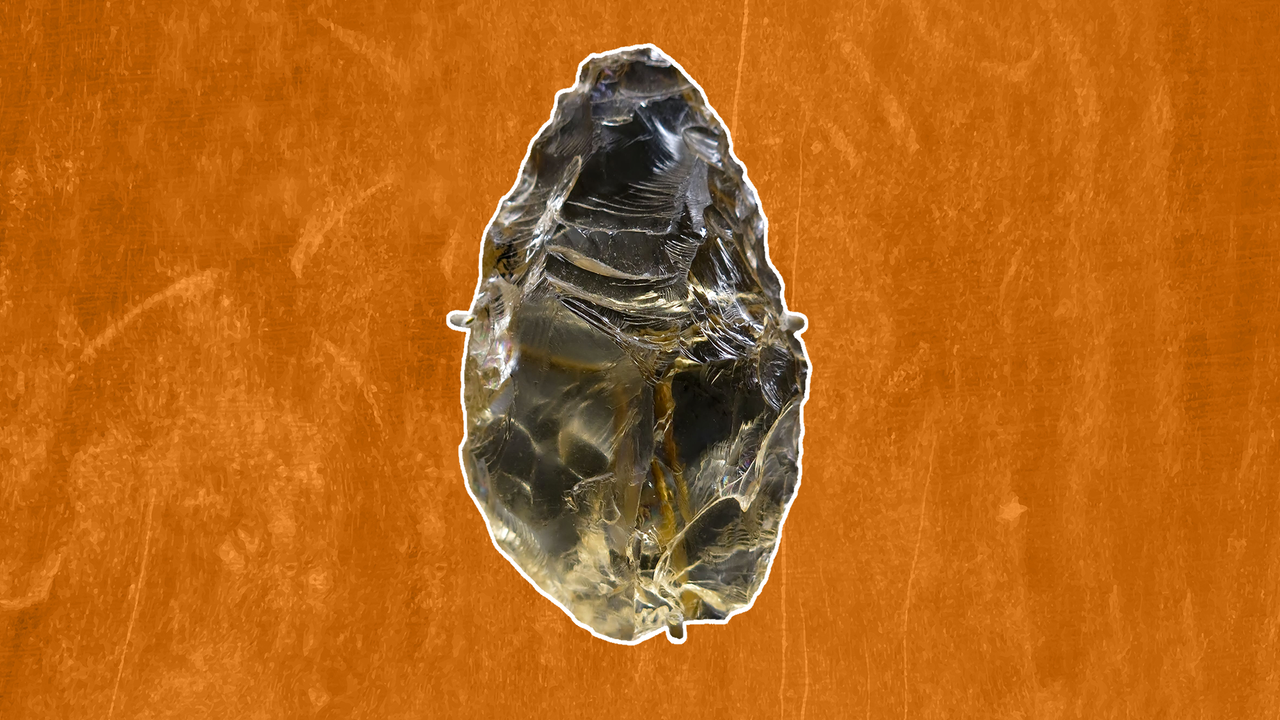
What it is: A stone tool made from microcrystalline quartz
Where it is from: Dordogne, southwestern France
When it was made: Between 45,000 and 80,000 years ago
A century ago, American archaeologists excavating at a cave site in France unearthed a cache of seven rock crystal tools made by Neanderthals. The discovery was one of the first to prove that Neanderthals were not the unintelligent brutes that many scientists of the time believed they were.
This rare quartz scraper was found at the archaeological site of Abri Des Merveilles in the Dordogne region of France in 1924 by a team from the American School of Prehistoric Research (now a department at Harvard University) led by George MacCurdy. The unique tool is now in the collection of France's National Archaeological Museum.
Neanderthals typically crafted their stone tools from flint or chert because these rocks would predictably fracture into sharp edges. But a small handful of Neanderthal sites in Europe have yielded tools made from microcrystalline quartz, also known as rock crystal, resulting in stunningly clear scrapers and points.
According to MacCurdy's April 1931 excavation report, this was the first rock crystal tool the team discovered. It is transparent but yellow-tinged, and it may have been used as a combination scraper and point. In addition to six other rock crystal tools, MacCurdy found tiny rock crystal chips that meant the tools were likely fashioned on-site in the cave. The rocks may have tumbled downstream from the headwaters of the Vézère, a tributary of the Dordogne River that runs near the site. Abri des Merveilles has never been precisely dated. However, based on stratigraphy, tool types and the presence of a Neanderthal molar, the rock crystal tools were likely made between 45,000 and 80,000 years ago.
MacCurdy's discovery proved that Neanderthals, not modern humans (Homo sapiens), were the first to create innovative tools from rock crystal — a conclusion that surprised many scientists of the time.
A century ago, most experts believed that Neanderthals were ape-like and unintelligent, thanks in large part to paleoanthropologist Marcellin Boule's 1909 analysis of a Neanderthal skeleton from the site of La Chapelle-aux-Saints in France. The skeleton of an older male Neanderthal with osteoarthritis influenced Boule's incorrect characterization of Neanderthals as knuckle-dragging cavemen. This perception of Neanderthals lasted well into the 21st century, when paleogeneticists finally proved that Neanderthals and modern humans mated.
MacCurdy, however, saw the rock crystal tools as an indication that Neanderthals had a sense of aesthetics. "We are accustomed to think of Neandertal man as devoid of the artistic sense," he wrote, because, a century ago, archaeologists had not yet found evidence of Neanderthal rock art, carved artifacts, engravings or use of pigments.
The Neanderthal "was not an artist in the strict sense; that he had an eye for beauty of form and color is evident from even the limited use he made of rock crystal," MacCurdy wrote in the journal PNAS in November 1931. "Neandertal man must also be given credit for discernment of beauty and quality of the material employed in his industry."
According to France's National Archaeological Museum, which profiled this tool as their Object of the Month in September 2025, MacCurdy drew highly innovative conclusions about Neanderthals from the rock crystal tools, which helped pave the way for our modern understanding of our enigmatic extinct cousins.
For more stunning archaeological discoveries, check out our Astonishing Artifacts archives.
When the history of our ancestry is written, the fact that we've interbred with some of our closest relatives, the Neanderthals and Denisovans, will have a central role. And it will be tempting to write it as a very tidy story: Once we got genomes from these other groups, it was possible to identify the sequences in our genomes that we shared with them.
But in reality, as scientists started poking large enough collections of data, there were regular hints of some strange ancestry in our genomes. It was hard to pin down, though, at least in part because the 2 percent on average of Neanderthal DNA found in many populations does not guarantee that any two individuals will have the same 2 percent. So having the genomes of those two groups made sense of some things researchers had already been seeing.
But knowing what we do about Neanderthal and Denisovan DNA is now allowing researchers to answer a somewhat different question: Is there anything else? Using recently developed analytical techniques, they find evidence of a third lineage that we apparently interbred with before any modern humans left Africa. Again, there were hints of this earlier, but so far, there's been no genome from a modern human relative to help us understand the details—the source of this DNA remains a "ghost lineage."
When the history of our ancestry is written, the fact that we've interbred with some of our closest relatives, the Neanderthals and Denisovans, will have a central role. And it will be tempting to write it as a very tidy story: Once we got genomes from these other groups, it was possible to identify the sequences in our genomes that we shared with them.
But in reality, as scientists started poking large enough collections of data, there were regular hints of some strange ancestry in our genomes. It was hard to pin down, though, at least in part because the 2 percent on average of Neanderthal DNA found in many populations does not guarantee that any two individuals will have the same 2 percent. So having the genomes of those two groups made sense of some things researchers had already been seeing.
But knowing what we do about Neanderthal and Denisovan DNA is now allowing researchers to answer a somewhat different question: Is there anything else? Using recently developed analytical techniques, they find evidence of a third lineage that we apparently interbred with before any modern humans left Africa. Again, there were hints of this earlier, but so far, there has been no genome from a modern human relative to help us understand the details—the source of this DNA remains a "ghost lineage."
Deep in a limestone cave on Turkey's Mediterranean coast, archaeologists have uncovered evidence that Neanderthals and the modern humans who moved in later left behind surprisingly similar traces of their daily lives — evidence that they hunted the same animals, crafted the same stone tools and collected the same type of seashells.
The findings, published Monday (July 6) in the journal PNAS, feed into some of the biggest questions in human evolution: How similar were the cultures of Neanderthals and Homo sapiens, given that we're so closely related? And did we share information with one another?
A series of archaeological finds over the past few decades, including the new paper's finding that the two had similar cultural practices, suggests that Neanderthals and H. sapiens behaved far more similarly in the Middle East than once assumed.
The new evidence comes from Üçağızlı II Cave (pronounced Ooch-ah-UHZ'-luh), on a stretch of coastline just north of Syria that served as a prehistoric corridor between the Levant (an area of land east of the Mediterranean) and Eurasia. Although the team found only teeth and a partial jawbone within the cave, they were able to distinguish between the remains of Neanderthals and H. sapiens by analyzing the internal structure of the fossilized teeth. Meanwhile, they dated the sediment at the site using optically stimulated luminescence, a technique that reveals how long ago buried mineral grains last saw sunlight.
The team found that the Neanderthals had lived within the cave between approximately 77,000 and 59,000 years ago, while H. sapiens stayed there between about 59,000 and 47,000 years ago. Despite the different time periods, the layers from both of these periods show "substantially uniform hunting-gathering strategies and lithic technology," showing how similar the Neanderthals and H. sapiens were in their hunting-gathering strategies and stone-tool use, the team wrote in the study.
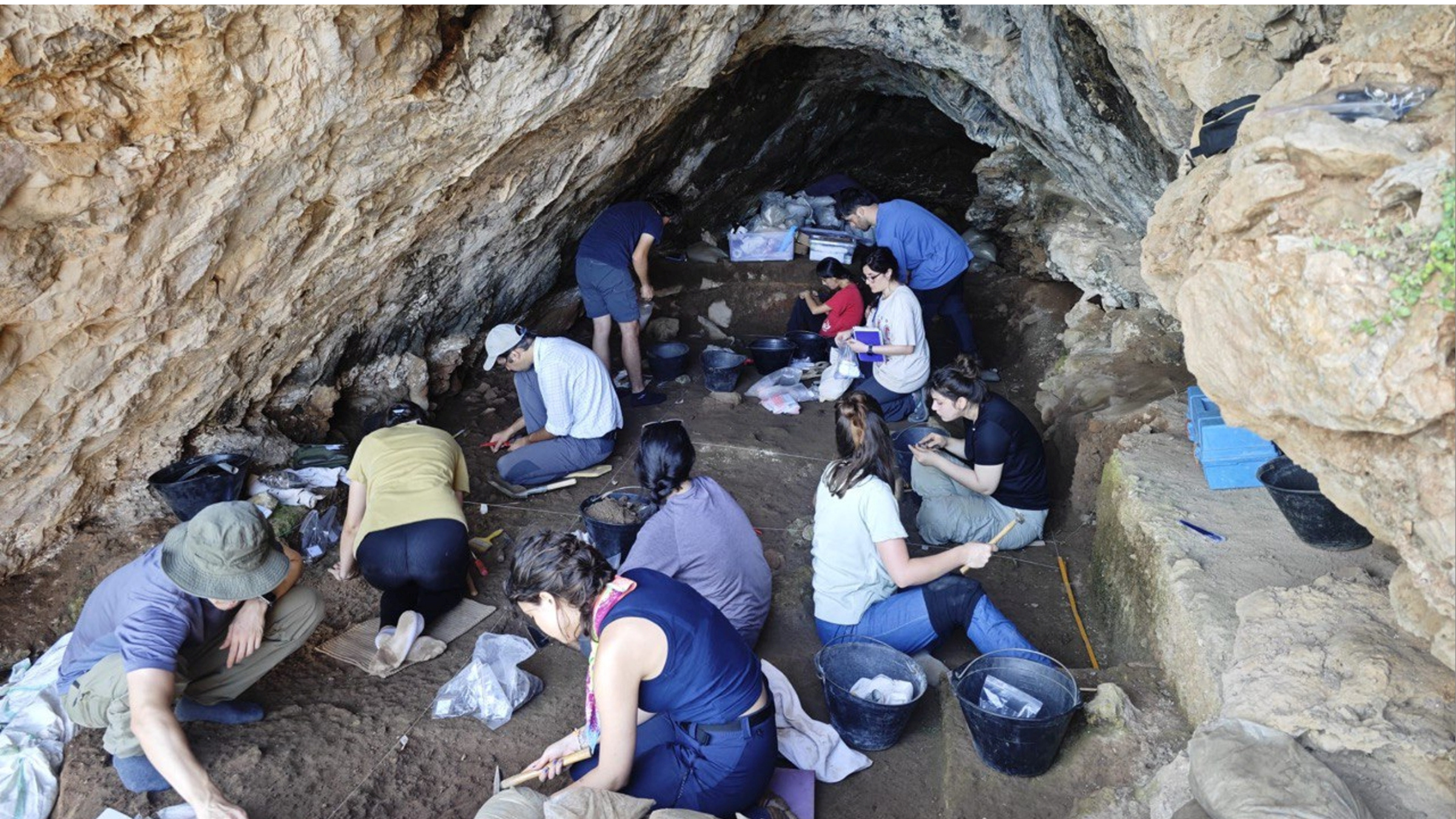
The research team performs excavations at the Üçağızlı II cave site in 2024. (Image credit: KyotoU/Naoki Morimoto)
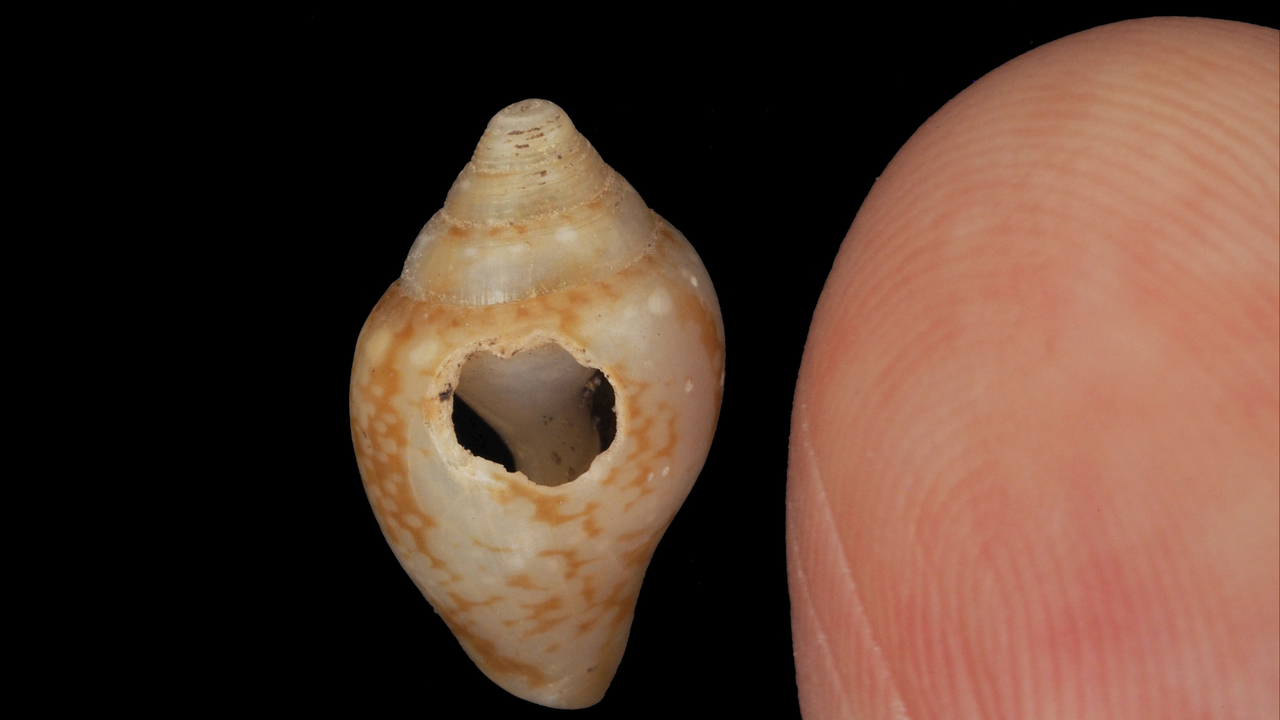
What's more, Neanderthals and H. sapiens got raw materials, such as flint, from the same local sources and hunted the same prey: wild goats (Capra aegagrus), fallow deer (Dama mesopotamica), roe deer (Capreolus capreolus) and wild boar (Sus scrofa). Layer after layer also turned up 29 shells of a small marine snail, Columbella rustica, carried into the cave not for food but seemingly as ornaments. Some were pierced as if meant to be strung, and one shell dating to the Neanderthal occupation showed signs of deliberate heating that altered its color.
"Our findings indicate a deep level of cultural interaction," study co-author Naoki Morimoto, paleoanthropologist at Kyoto University, said in a statement. "These two distinct but closely related human groups were not just adapting to the same environment: they were probably sharing symbolic preferences."
That pattern breaks from findings at Mandrin Cave in France, where Neanderthals and modern humans are thought to have alternated occupation in distinct pulses from about 56,800 and 41,500 years ago, but did not leave evidence of a continuous culture. Instead, it echoes evidence from Tinshemet Cave in Israel, where researchers recently reported similar signs of shared behavior between the two groups tens of thousands of years earlier, from about 130,000 to 80,000 years ago.
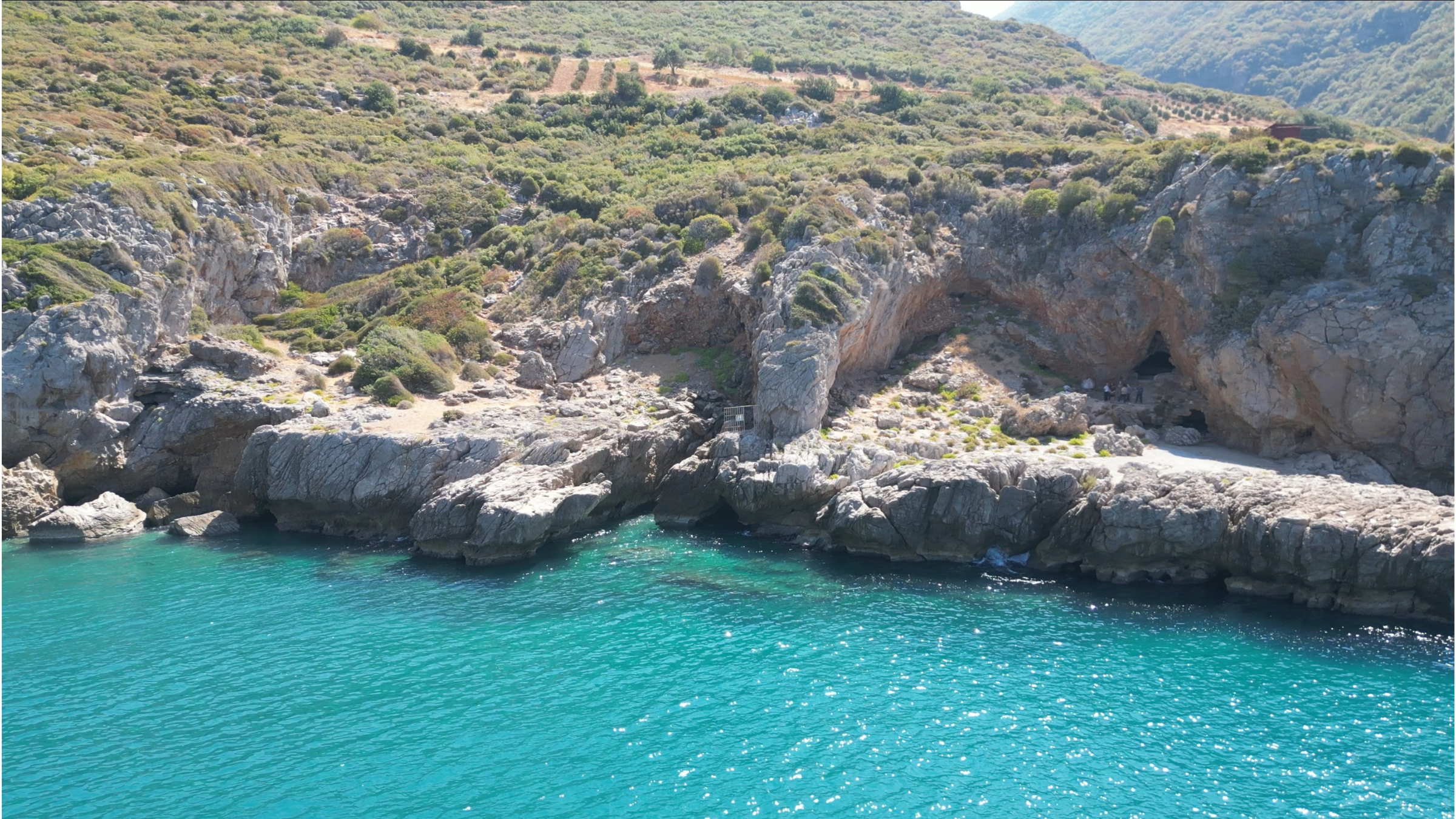
A view of Turkey's Üçağızlı II Cave, which housed Neanderthals and Homo sapiens at different times. (Image credit: KyotoU/Naoki Morimoto)
Üçağızlı II Cave in Turkey and Tinshemet Cave in Israel suggest that even though there was a "biological" turnover as the caves went from being occupied by Neanderthal groups to modern humans, there weren't major cultural turnovers, too.
"Rather, we hypothesize that the two human species that coexisted in the region were in contact and shared cultural aspects," the researchers wrote in the study.
"A fascinating region"
Sites like these are forcing a rethink of how these two types of human were culturally related to each other, April Nowell, a Paleolithic archaeologist at the University of Victoria in Canada who was not involved in the new study, told Live Science in an email. "By demonstrating cultural continuity and elevated levels of interaction, sites such as Tinshemet and Üçağızlı II are changing what we thought we knew about Neandertals, Homo sapiens and other contemporary Homo groups … a fascinating region just got even more so!" she said.
But that cultural continuity only heightens the mystery of how modern humans and Neanderthals interacted, with Neanderthals eventually going extinct around 40,000 years ago. Two types of human can't occupy the same ecological niche indefinitely, Nowell noted, and some research into Neanderthal cognition suggests Neanderthals were less-flexible thinkers than modern humans, with more limited capacity for language and less of the kind of self-awareness and creativity that may have given H. sapiens an edge. (However, there is pushback against the idea that Neanderthals weren't as cognitively complex as H. sapiens.)
If the archaeological record at sites like Üçağızlı II shows this much overlap in behavior, Nowell said, the real differences between the two may be ones the fossil record simply hasn't revealed yet.
The authors noted that many big questions remain, including when and where these shared cultural practices took place and whether these cultural similarities happened because modern humans mated with Neanderthals.
Ongoing and future excavations at sites like Üçağızlı II Cave may help to answer these questions and build a "more comprehensive picture of human evolution and cultural development during the Late Pleistocene," the team wrote in the study.
How much do you know about our closest relatives? Find out with our Neanderthal quiz!
Archaeologists working with the Israeli Antiquities Authority have announced the discovery and excavation of a cave located just outside the town of Fureidis, which has revealed signs of early human presence dating back to between 250,000 and 400,000 years ago.
The team of researchers behind the ongoing excavation said the fortuitous discovery could represent a “time capsule” that has remained sealed for hundreds of thousands of years, offering researchers an unprecedented glimpse into a critical period in human evolution.
Ancient Cave Contains Evidence of Critical Period in Human Evolution
According to a statement emailed to The Debrief, the ancient cave, which lies south of Haifa, near the Zikhron Ya’akov interchange, likely dates back to sometime between 400,000 and 250,000 years before present. The team notes that the range would mean it was sealed since the time of the Acheulo-Yabrudian culture, a period when ancient human ancestors began to display several complex tool-making skills, including various stone blade designs which were in use by hominins until around 300,000 years ago, marking the end of the Lower Paleolithic period.
Prehistoric handaxes were discovered in the ancient cave. Photo credit: Emil Aladjem, Israel Antiquities Authority.
“The culture we are investigating here was characterized by a variety of advanced methods for producing flint tools, including small sharp handaxes, scrapers, and blades,” explained Dr. Kobi Vardi, head of the Prehistory Branch at the Israel Antiquities Authority and the study’s co-director.
Most archaeologists put the African departure date of the last common ancestor of humans and Neanderthals between 700,000 and 500,000 years ago, and the first genetic interbreeding between the two species around 130,000-1,000,000 years ago. Therefore, finding a sealed cave containing relics from the period between these two critical evolutionary junctures offers the research team an unprecedented opportunity.
More prehistoric handaxes were discovered in the ancient cave, which are consistent in style with the Acheulo-Yabrudian culture. Photo credit: Emil Aladjem, Israel Antiquities Authority.
“We have been fortunate to excavate a unique site of global importance that has been protected from the ravages of time thanks to the exceptional conditions that existed here,” said team member Professor Ron Shimelmitz of the Zinman Institute of Archaeology and the School of Archaeology and Maritime Cultures at the University of Haifa.
Dr. Vardi agreed, noting that “It is very rare to find a site in such a state of preservation.”
“Every prehistorian who visits the site is absolutely thrilled,” he added.
Excavations conducted by the Israel Antiquities Authority and the University of Haifa in the ancient cave. Photo credit: Emil Aladjem, Israel Antiquities Authority.
“The Seeds That Led to the Development of Our Complex Culture”
In that same statement, Prof. Shimelmitz noted that the end of the Lower Paleolithic was a “unique time period” before Neanderthals and modern humans became the dominant hominids of the era and spread across “many regions.”
“Only a handful of sites from this important phase have been uncovered in Israel, and the wider Levant, and most of them are inaccessible for research,” the professor explained, adding that marked changes in human physiology, technology, and social organization “foreshadowed the traits and complex behavioral patterns that developed later and characterize both Neanderthals and modern humans.”
One component that helped facilitate the development of complex culture, highlighted by Prof. Shimelmitz, is the transition from ancient humans living in larger groups. He also emphasized the advent of human ancestors “spending longer periods at the same sites.”
Early excavations have already uncovered evidence of what the researcher termed “intensive use of fire.” These early forays have also found signs of prolonged human activity. Prof Shimelmitz said these signs suggest a “complex and rich camp life.”
Dr Vardi said that the ongoing excavation is uncovering animal bones, including ancient specimens of fallow deer, gazelle, and an ancient variety of horse.
Ancient fallow deer tooth. Photo Credit: Emil Aladjem, Israel Antiquities Authority
Dr. Vardi also noted that these finds were discovered “alongside evidence of the presence of water,” which he suggests may have made the ancient cave an attractive location for hunter-gatherer groups inhabiting the region at the time.
High Resolution Studies of How Ancient Humans Lived
When discussing the implications of their findings, Prof. Shimelmitz first expressed the team’s appreciation for the financial support and enthusiasm shown by the project’s sponsor, the Ayalon Highways Company, “in enabling us to undertake the excavation.”
As for the scientific value of their initial discoveries and the potential for further insights into this period in human history, the professor noted that findings to date are typically associated with “the development of social cooperation and the transmission of knowledge, as part of the processes of human evolution.”
Excavations conducted by the Israel Antiquities Authority and the University of Haifa in the ancient cave could fill in some of the blanks in the story of human evolution. Photo credit: Emil Aladjem, Israel Antiquities Authority.
Dr. Vardi echoed those sentiments, while also noting that the ancient cave’s archaeological value “is no less important” than that of the well-known Nahal Me’arot site from the same evolutionarily critical period.
“(This site) will allow us to study in high resolution how humans lived at that time,” the researcher added.
Given the importance the research team put on the site, which included co-leader Amit Gabbay, the Israel Antiquities Authority and the University of Haifa are already putting forth what they describe as a “large-scale research program that seeks to reconstruct how humans lived, adapted to their environment, and developed new lifestyles and technologies over the course of human evolution.”
From right to left: researchers Prof. Ron Shimelmitz of the University of Haifa, Dr. Kobi Vardi, and Amit Gabay of the Israel Antiquities Authority. Photo credit: Emil Aladjem, Israel Antiquities Authority.
Along with heralding the site’s scientific value, the researchers highlighted its cultural importance by declaring their goal to make the site “open and accessible to all: to the residents of Fureidis, students at the nearby school, and anyone interested in the prehistory of the region,” once the formal excavations are completed.
Christopher Plain is a Science Fiction and Fantasy novelist and Head Science Writer at The Debrief. Follow and connect with him on X, learn about his books at plainfiction.com, or email him directly at christopher@thedebrief.org.
An analysis of dental tartar containing traces of human diets dating back over 33,000 years has revealed that ancient Europeans and many early Asian populations likely only ate insects by accident, perhaps as larvae in the carcasses of dead animals.
Conversely, the new study found that intentional insect consumption, called entomophagy, was more common in tropical regions and among Neanderthal populations.
Although the difference has some cultural and religious roots, the team found evidence that the abundance of insects in the tropics and the decreasing ability of humans migrating away from the tropics to digest insects likely led to the modern-day separation over thousands of years.
The Institute of Evolutionary Biology (IBE), a joint center of the Spanish National Research Council (CSIC) and Pompeu Fabra University (UPF), research team behind the new findings suggests their research could help explain why some modern populations still consume insects as food while other parts of the world consider it gross or taboo, especially given the increasing food demands of a rising world population.
Insect Consumption in Ancient Northern Europeans Likely Accidental
According to a statement announcing the new research, hundreds of millions of people currently include insects in their diet. However, they also note that most of the Western world continues to “show an aversion” to including any of the more than 1,611 insect species designated as edible by the Food and Agriculture Organization of the United Nations (FAO) in theirs. Although some theories suggest the difference is almost purely cultural, the team concedes that “its origin remains unknown.”
To explore the origins of human entomophagy, the IBE analyzed 745 samples of ancient human dental tartar dating back to 33,000 before present. According to the team’s results published in the journal Science Advances, dental tartar (sometimes called dental ‘calculus’) is a critical archaeological tool because it preserves the DNA of the species these human ancestors consumed during their lifetimes.
Although the analysis found evidence for entomophagy amongst virtually all ancient populations sampled in the study, the levels varied dramatically. Notably, the evidence suggested that ancient humans in northern Eurasia did not routinely eat insects in measurable quantities. Instead, any consumption was likely incidental, including consumption of insect larvae in rotting food.
Curious whether the lack of entomophagy in ancient European and Central and Northern Asian populations was purely cultural or whether genetic and geographic factors were involved, the team studied human genes involved in chitin digestion. Chitin, which can be found in some marine animal shells, is also part of an insect’s hard exoskeleton.
According to the study authors, the analysis revealed that the ‘chitinase’ genes in North Eurasian human populations “carry mutations that confer a reduced capacity to digest insect exoskeletons.” Their analysis revealed that this reduced capacity to digest insect exoskeletons has persisted in the genomes of modern Eurasian populations “for the last 9,000 years,” which would coincide with the widely accepted date for the origin of agriculture.
Pablo Librado, study leader and a principal investigator at the IBE, said the “scarce presence of insects in the diet of northern Eurasians” suggests that the cause may not lie solely in more recent cultural factors but also in ecological and evolutionary components dating back several millennia.
Neanderthals and Denisovans Probably Ate Insect Larvae in Rotting Meat
When the team compared data from ancient human tartar with that of ancient Neanderthals, they found that Neanderthals engaged in much higher levels of entomophagy than humans living in the same regions. According to the study authors, Neanderthal insect consumption levels were similar to those found in western chimpanzee populations, which the researchers note “rely on entomophagy to supplement their diet on the savanna, especially during periods of drought.”
Further analysis of the extracted insect DNA showed that the group most commonly consumed by the Neanderthal specimens included flies and mosquitoes. Although the team only analyzed the DNA, they noted that a recent hypothesis suggests Neanderthals ate carcasses laden with mosquito larvae.
“The abundance of mosquito remains reinforces the possibility that the carcasses of their prey were kept in ponds and marshy areas, where mosquitoes lay their eggs,” the team’s statement explained.
An analysis of the Neanderthal DNA and the DNA from the lone Denisovan study subject revealed that both ancient hominid populations could digest chitin. This result reinforced the genetic basis for increased or reduced entomophagy beyond cultural factors.
Humans Ate Fewer Bugs When They Moved Away from Tropical Regions
One geographic component identified by the chitinase DNA analysis showed higher levels of digestive enzyme expression among humans living in or near the tropics. However, the expression of these enzymes gradually decreased as populations moved away from tropical regions. The team said this variation, which has been maintained for at least the last 9,000 years, “reflects the abandonment of entomophagy in European populations.”
Manuel Piñero, a predoctoral researcher at the IBE and first author of the study, noted that large numbers of insects must be consumed to offset the “high caloric cost” of collecting them, which might explain the higher levels of entomophagy in this region.
“In the tropics, there is a greater availability of social insects, such as termites and locusts,” Piñero explained, adding that the biomass and diversity of tropical edible insects enable “sustainable exploitation throughout the year.” The researcher also noted that insect consumption “adds to pest control.”
When discussing the implications of their findings, Librado highlighted the DNA and geographic factors the IBE team uncovered.
“Beyond cultural or religious factors, our results suggest that the reduced availability of insects in non-tropical areas may have been a key factor in the abandonment of entomophagy, leading to a reduced capacity to digest insect exoskeletons,” the researcher explained.
Christopher Plain is a Science Fiction and Fantasy novelist and Head Science Writer at The Debrief. Follow and connect with him on X, learn about his books at plainfiction.com, or email him directly at christopher@thedebrief.org.
One way archaeologists learn how ancient people, including Neanderthals, did things is to attempt to do those things themselves, a process called experimental archaeology. Normally, that involves making stone tools, butchering deer, or distilling birch tar. But in a new study, it meant doing very destructive things to teeth from one of the world’s most carefully protected animals.
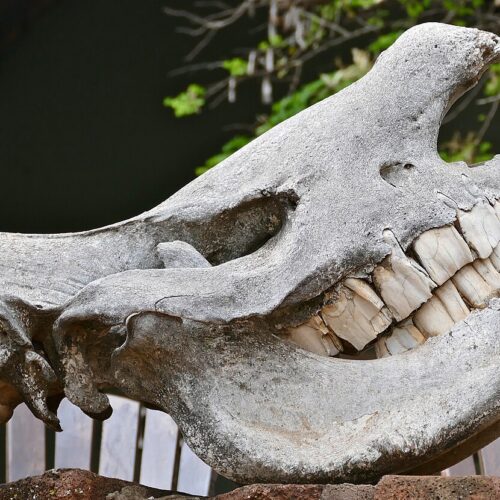
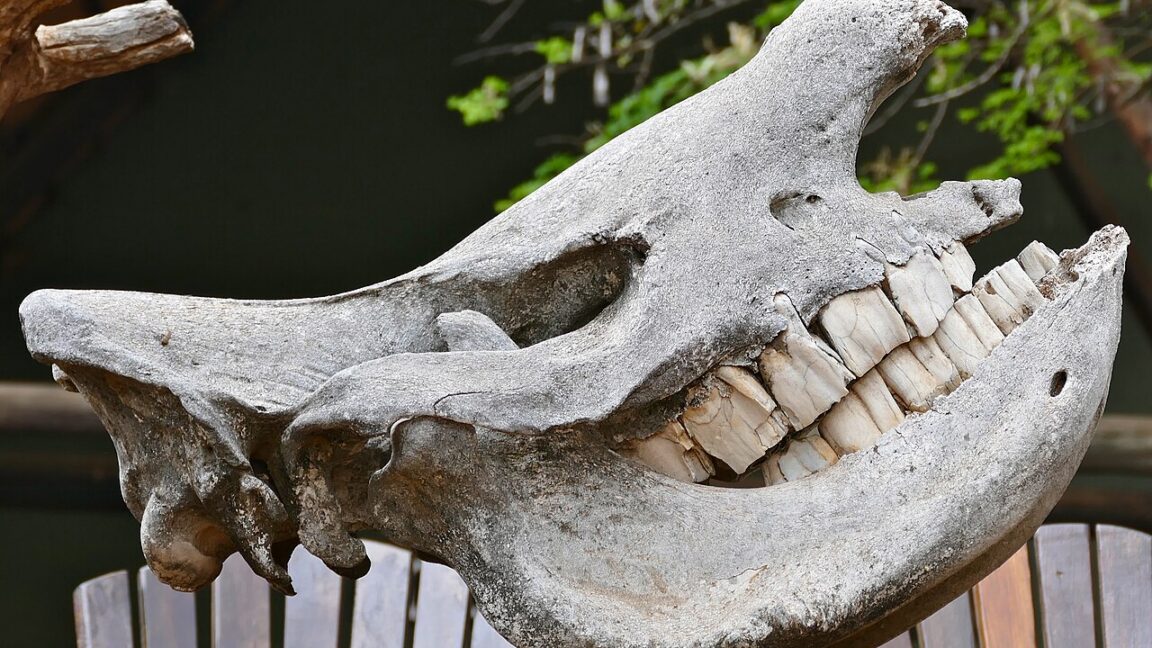
That's because the archeologists suspected that Neanderthals once used rhino teeth as tools. By using the teeth to make stone tools, the researchers demonstrated that Neanderthals probably did the same thing, adding to what we know about the wide range of items in their toolkits.
We need to hit some rhino teeth with rocks for science
Some Neanderthal archaeological sites in Europe and Asia seem to have many more rhinoceros teeth lying around than you’d expect. We know Neanderthals hunted a now-extinct species of rhinoceros in Europe and eastern Asia, but the people who had inhabited these sites looked like they had been collecting rhino teeth for some reason.

 Login

 Modern humans and Neanderthals may have shared more than land and genes. They may have also shared culture. Modern humans and Neanderthals may have shared more than territory, tools, and genes. New evidence from a cave in southern Türkiye suggests the two groups may also have exchanged ideas and developed similar symbolic traditions over thousands [...]