ASU researchers found that genetics alone cannot explain the origins of eusociality. Inside an ant colony, queens reproduce while workers care for young and maintain a society built around shared labor. For more than six decades, evolutionary biologists have debated whether this extraordinary arrangement, known as eusociality, arose partly because ants, bees, and wasps share [...]
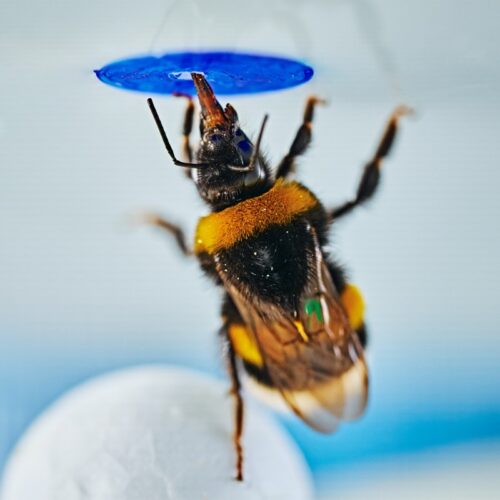
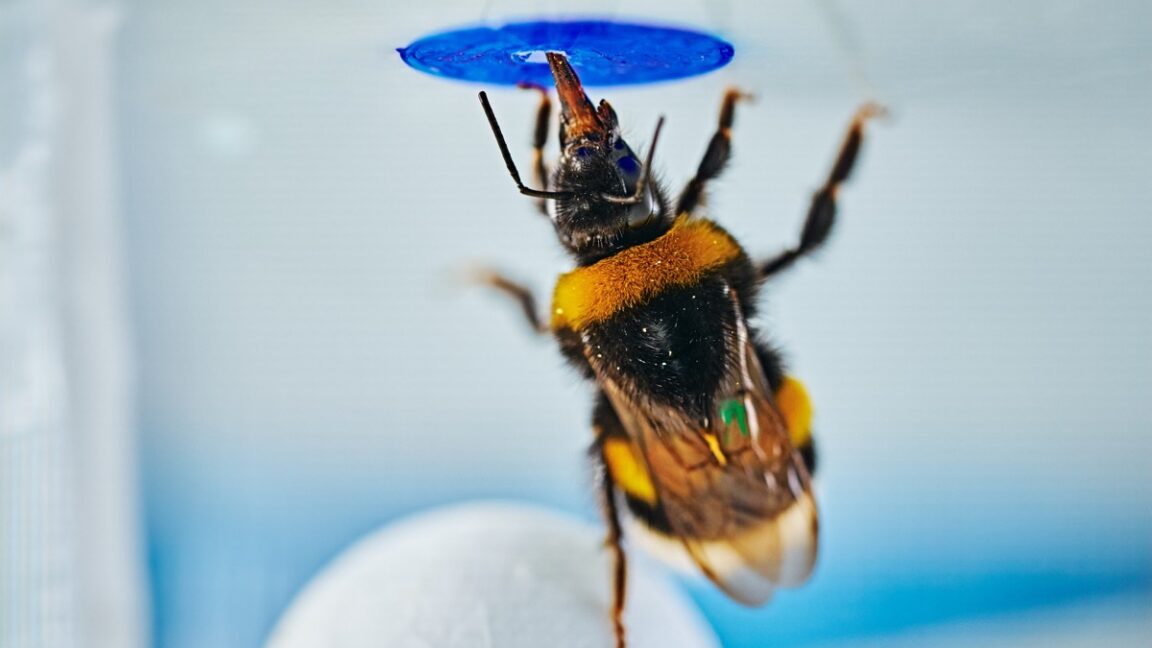
Despite having tiny brains, bumblebees have demonstrated a remarkable ability to socially learn how to use tools, solve simple puzzles, and cooperate to achieve a goal. It seems they can also solve object-manipulation tasks without any previous training, according to a new paper published in the journal Science. According to the authors, it's the first time this kind of spontaneous problem-solving has been demonstrated in an insect.
In 2024, Olli Loukola of the University of Finland co-authored a study demonstrating that bumblebees could cooperate to solve complex challenges. It's the kind of cognitive task scientists had previously only observed in large-brained mammals like humans and chimpanzees. Loukola et al. trained pairs of bees to push a Lego block to the middle of a mini-arena or push against a door at the end of a tunnel to get a reward.
The team noticed that the bees were more likely to engage in the tasks if their partners also participated, compared to untrained control groups. They concluded that bees can learn to solve novel cooperative tasks outside the hive and may even be intentionally working together, although the researchers cautioned that more detailed monitoring of the behavior was needed to fully understand the partners' roles.
A newly identified pest is raising concerns for North Carolina’s blueberry industry. What began as a mystery beneath North Carolina’s blueberry fields has now been traced to a surprising culprit: a giant root-feeding beetle never before confirmed attacking blueberries anywhere else in the United States. Researchers at North Carolina State University have identified the insect [...]

 Login

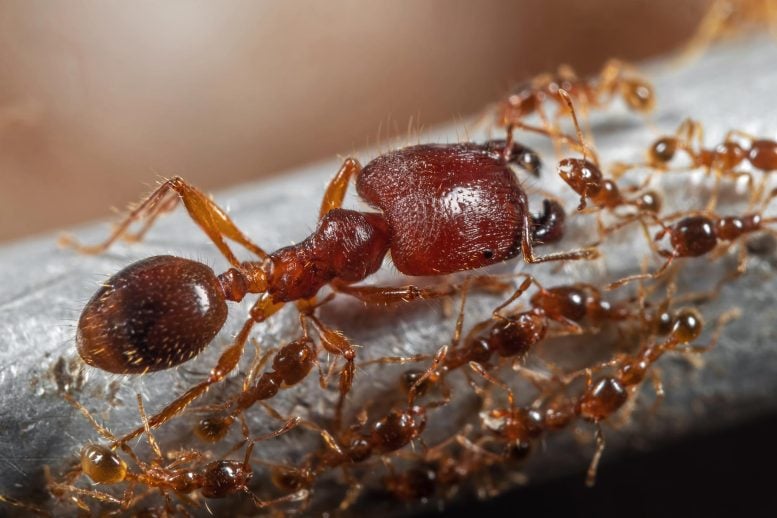 ASU researchers found that genetics alone cannot explain the origins of eusociality. Inside an ant colony, queens reproduce while workers care for young and maintain a society built around shared labor. For more than six decades, evolutionary biologists have debated whether this extraordinary arrangement, known as eusociality, arose partly because ants, bees, and wasps share [...]