PricewaterhouseCoopers (PwC) is believed to have published several AI-generated reports between 2024 and 2026
The reports included various AI hallucinations, fabricated citations, and fake footnotes, which were identified by the GPTZero AI detection tool
PwC is one of the world’s largest accounting firms
Accountancy and auditing giant PricewaterhouseCoopers is alleged to have published at last four AI-generated or enhanced reports over the past three years.
An investigation by the GPTZero team found the reports – which make inaccurate and false claims – were published by PwC Middle East between 2024 and 2026, and were intended to act as thought leadership pieces.
Various indicators of AI-generated links and citations have been highlighted as a result of the discovery, and while PwC has responded, there is no direct indication how this happened or if action has been taken.
Vibe citations
GPTZero may be better known as a software tool for discovering plagiarism and AI-generated content, but it also boasts an investigation team.
The work of Paul Esau, Om Ogale, and Alex Cui has highlighted several problems with the publications issued by PwC, uncovering “a pattern of irresponsible AI usage resulting in hallucinated (vibe) citations, fabricated claims, and incomprehensible drafting and formatting decisions.”
Vibe citations are hallucinated references to works that an AI-generated document cites as genuine. In some cases, specific pages may be cited, but usually the vibe citations refer to titles and authors.
They can be demonstrated as fake due to issues such as non-existence, incorrect authors, incorrect publication dates, erroneous URLs… or the citation may simply not exist, as in one case highlighted in the GPTZero report.
Not all inconsistencies are determined to be hallucinations, however, as not all meet the GPTZero team’s standard for identifying vibe coding. So, while some other references with issues may be genuine and simply poorly cited, others may still be fake, but impossible to define.
PwC’s account
The reports that PwC (and its competitors) are publishing are an attempt to position themselves as authorities on AI, and its responsible use. They seek to encourage organizations to avoid issues such as fabricated claims and vibe citations, but rather than provide advice, it has been a live demonstration in what not to do.
PwC responded to the GPTZero report by telling the Financial Times: “Consistent with our approach to responsible AI, we have quality control processes for research and content development we expect all our people to adhere to.”
Unfortunately, it seems that a better process of quality control and fact checking ahead of publishing was required for these reports, and perhaps others so far undetected.
Perhaps most concerning is the realization that PwC is not alone in this. In the past 12 months, GPTZero has documented similar issues with all the “big four” accountancy firms, with PwC joining Deloitte, EY, KPMG in this “vibes gallery” of fabricated and unchecked citations.
Think our tech is getting a little too smart for its own good? You're not alone.
In the past few weeks, TechRadar brought you three key updates on the invasion of your privacy without consent, owing to the AI learning models nestled in our gadgets and appliances.
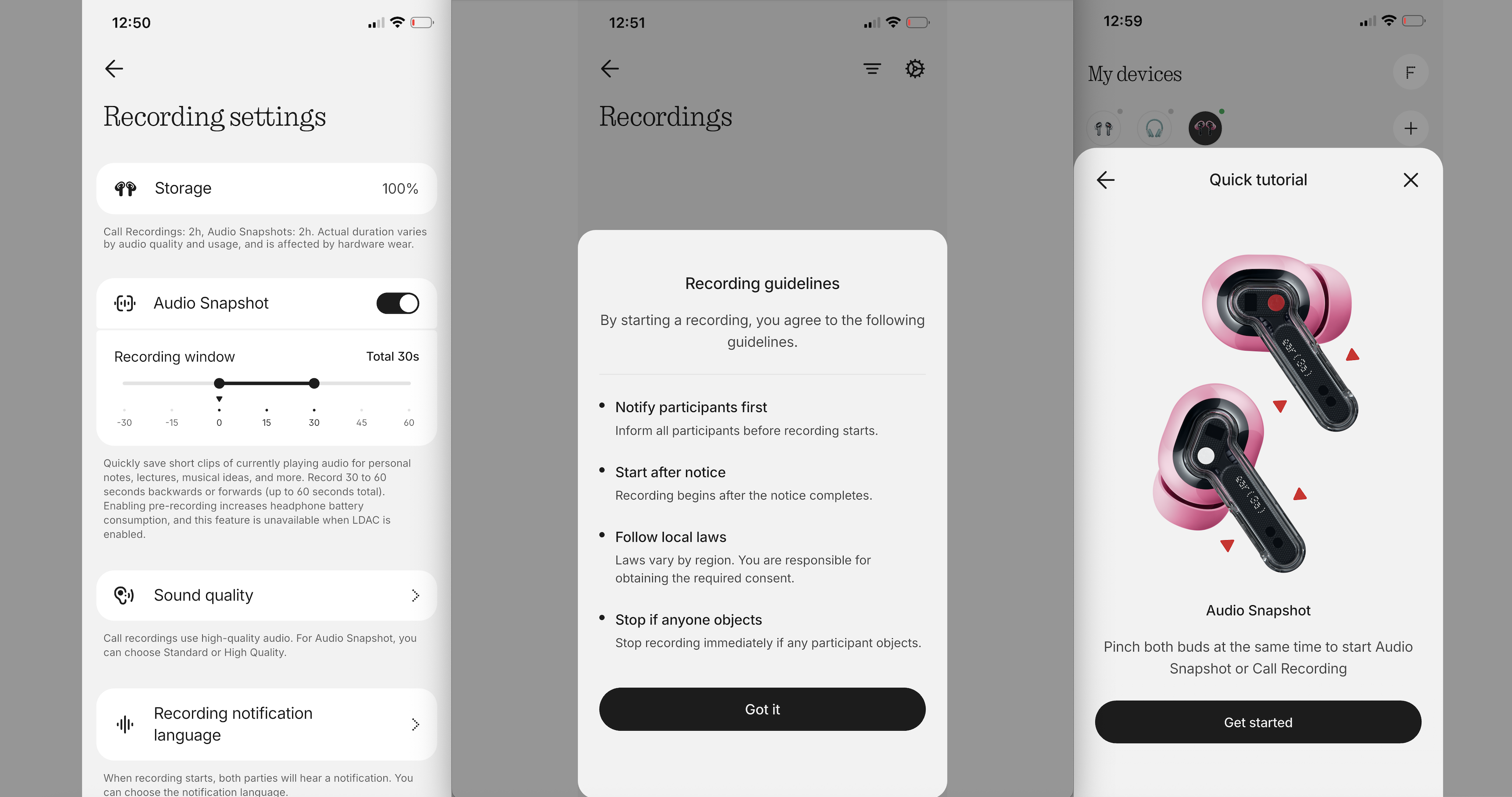
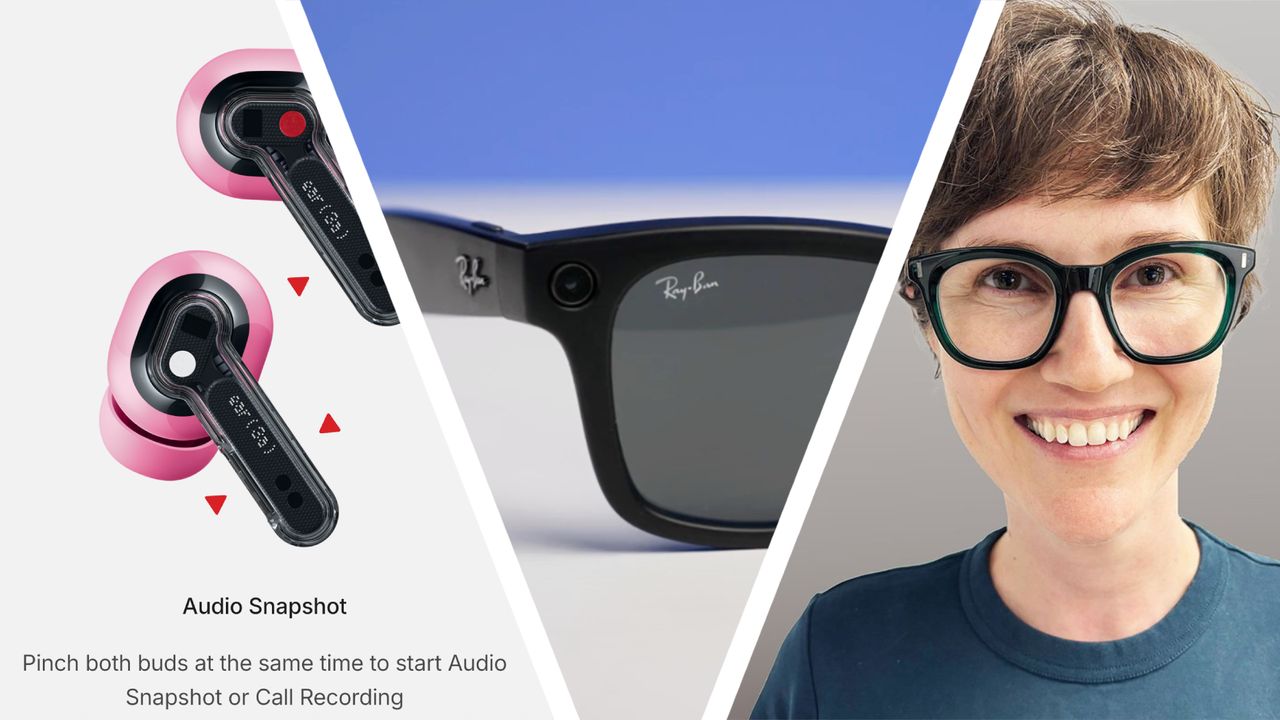
In case you missed the latest missives, new LG TVs can record you in the background and will ask you to notify anyone who comes into your home, to comply with "wiretapping" laws. Next up, Nothing's new earbuds offer a 'squeeze the stems to record calls' feature being called Audio Snapshot, which is tantamount to phone-hacking in cute packaging. And finally, there's the continued backlash over Meta's AI glasses. Despite the social media giant implementing a feature that stops recordings if a wearer tampers with the front-firing light, hatred of these and other smart shades (oft-renamed 'pervert glasses' by the general public) has led to people calling for camera-less glasses.
So, in a world where our glasses can watch, our earbuds can hear, our speakers can speak and our TVs are a little too closely invested in our lives for comfort, how much more will we allow our tech to intrude before enough is enough — and what can we do to regain some privacy?
'I see this as part of a bigger pattern that is a push by technology and other forces to normalize consumer surveillance'
Lauren Hendry Parsons, Mozilla Foundation (Director, Communications)
(Image credit: Everyone Hates Elon)
Your tech will see you now
Lauren Hendry Parsons is a seasoned advocate for digital rights and a gifted speaker in making these complex issues accessible. She is a director within the non-profit Mozilla Foundation, helping to make the organization's push for a "technology future that serves and is shaped by the people who use it" a message that resonates on a global scale.
Luckily, she has agreed to talk to me on the growing concern over surveillance tech's prevalence in our lives.
Parsons states that in order to zoom in on these issues, we need first to zoom out. "I see this as part of a bigger pattern," she begins, "that is a push by technology and other forces to normalize consumer surveillance — surveillance of people by other people — and that's something that we're seeing cropping up a lot."
So what's changed — after all, recording devices have existed for some time? The answer is the growing number of places where such surveillance is becoming normal.
"It's something that started in the Internet of Things home devices," she says. "You might talk to a smart speaker, or talk actively to another product that is doing your bidding — but it was usually tied to a place.
"Now, we're seeing the normalization of surveillance-chic behaviors, where fashion influencers are sharing their own Ring doorbells to show off their outfit of the day.
"That moves surveillance from something fixed inside a home, where people can at least see the object and talk about it, to something that's constantly moving through every space and every conversation."
And it's being packaged in pink earbuds, chic sunglasses or fun doorbells? Parsons agrees: "The chicification of surveillance to me is deeply concerning."
'It moves surveillance from something fixed inside a home, to something that's constantly moving through every space and every conversation'
Lauren Hendry Parsons
Who counts as the user — and should they really have control?
I want to talk about Meta's AI glasses and the involvement of Kylie Jenner in the ad campaign, especially when women's safety (regarding non-consensual surveillance and distribution of such footage) has been listed as a key concern.
I mention the fact that when speaking to several male colleagues about the benefits of such glasses (rather than the concerns), not one of them mentioned what I suspect all women thought: that wearing such glasses might mean filming your potential attacker, and that would be a very good thing.
"There are absolutely situations where people might want the convenience these products provide," Parsons agree. "Being able to translate something on the go or take a quick snapshot without getting your phone out. For people with disabilities or limited capacity, these tools could be genuinely useful.
"But I don't see the trade-offs being clearly explained. I don't see meaningful ways to opt out. Even if these companies have perfect data handling processes and perfect privacy records, the risk is being transferred to the consumer instead of being held by the tech company."
Parsons mentions one of the core issues at Mozilla Foundation: privacy by design. "Privacy by design, which is what we recommend as best practice, means products should be private by default," she says. "And that has to include bystanders.
"Technology companies talk about giving the user control, but who's counting as the user?
"With smart glasses, televisions, and recording earbuds, the purchaser isn't the only person affected. Just as children are affected by smart speakers or passengers by dashcams in cars, the person across the table or on the other end of the call is also a data subject, even though they have no access to the controls and no real way to opt out.
"True privacy by design must protect both the person operating the device and the people involuntarily brought into its data collection environment.
"When something (with surveillance tech built in) is fixed in your home or office, you can at least choose not to go there. You can suggest meeting somewhere else. That's difficult and has social consequences, but it's possible.
"If it's something someone is unobtrusively wearing in their ear or on their glasses, or something you don't even know they have, opting out becomes almost impossible."
(Image credit: Nothing (app screen grabs by Future) )
'No surprises, genuine user control, limited data collection, sensible settings, and multiple layers of protection. These examples show what happens when products fall short of those principles'
Lauren Hendry Parsons
I ask how we might regain some agency here, or at least get a handle on our privacy regarding AI glasses, call-recording earbuds and all-seeing TVs. Parsons points to the work she does.
"Mozilla's privacy principles are useful here," she says. "They're about no surprises, genuine user control, limited data collection, sensible settings, and multiple layers of protection. These examples show what happens when products fall short of those principles."
Another thing Parsons is keen to impress upon TechRadar is central to her work: understanding the trade-offs. "I don't see how everyone on the phone can understand those trade-offs and give informed consent," she says.
"The only way that could happen is if this (the recording of everything we do) became such a standard operating procedure that everyone expects it, because everyone has it. At that point, we would have completely accepted constant surveillance as the norm.
"I don't think the answer is necessarily to prohibit recording technology. It's to stop presenting recording as an ordinary, consequence-free convenience."
'I don't think the answer is necessarily to prohibit recording technology. It's to stop presenting recording as an ordinary, consequence-free convenience'
Lauren Hendry Parsons
She mentions translation in AI glasses as an example: "Companies could show translations without collecting or storing the underlying data, but we know that's not what's happening."
Another watch-word in Parsons' work is 'friction', and how disproportionately easy it has become to monitor, film and record secretly and without consent.
"Features with serious privacy implications should involve equal and proportionate friction," she says. "The more sensitive the activity, the stronger the consent mechanism should be."
I mention that when testing a set of earbuds recently, a simple beep to signify that recording has begun is the only notification the caller on the other end of the line receives. Parsons believes concern there is valid.
"Notification is not consent," she says. "We've become used to surveillance in places like train stations and public spaces because it's framed as being for safety. But I'd hate to see that extended to person-to-person interactions."
'Notification is not consent. We've become used to surveillance in places like train stations — but I'd hate to see that extended to person-to-person interactions'
Lauren Hendry Parsons
I ask if perhaps people should simply get OK with omnipresent filming or data collection by individuals and wider companies, since it seems so hard to avoid? Parsons' answer is emphatic: "That's deeply problematic."
"We're seeing the expectation that people should be comfortable being filmed all the time. Even terms and conditions often state that by attending, you agree to being photographed or filmed for marketing purposes. The default is that your data is collected unless you make the effort to opt out or avoid the event entirely. Again, that's deeply problematic.
"The diminishment of privacy is cumulative. It's one thing to have a fixed camera in a train station. It's another to be filmed by multiple people in different places without your consent, or to have your audio collected."
'It's one thing to have a fixed camera in a train station. It's another to be filmed by multiple people in different places without your consent'
Lauren Hendry Parsons
'The burden of this issue is not distributed equally'
Parsons reads me a quote from one of her own features, and it cuts to the core of the agency, consent and privacy debate better than anything I could ever try to surmise.
"The burden of this issue is not distributed equally, and the risk of ambient recording will fall disproportionately on people who already have less control in a situation," she says. "That includes workers, children, parents, patients, tenants, domestic abuse survivors, and protesters. This makes vulnerable populations more vulnerable."
Parsons mentions a novel but initially counter-intuitive solution suggested by some prominent female content creators. Instead of shunning Meta's glasses (or playing Disney songs if you realize you're being filmed, because Disney's music is better protected than women's lives), the idea is that women do wear them, specifically to film men when they start to behave in an inappropriate or predatory manner, then upload the footage everywhere. The thinking is that these products might then get regulated very quickly.
"If women collectively used them in that way — in a kind of, let's call it a neo-Me Too movement — I'd put money on consent issues being addressed much more quickly," Parsons says.
"The issue isn't simply that these products can record. It's that the examples you gave (the earbuds, the glasses, the TV that records in the background) all prioritize effortless capture over meaningful consent, when there are other ways to do it.
"The person operating the product gets all the convenience and control, while everyone else gets a light, a beep, or a legal disclaimer. That's an unacceptable imbalance.
"Recording has many legitimate and valuable purposes, but companies should be asking how to build consent into the infrastructure, minimize what's captured, and protect bystanders as rigorously as they protect the user.
"The false dilemma is, 'Do you just not want this technology?' But we shouldn't have to choose between useful technology and privacy.
"Preserving both means companies need to treat consent as a product requirement, not something buried in their terms and conditions."
'Companies need to treat consent as a product requirement, not something buried in their terms and conditions'
Lauren Hendry Parsons
Facial recognition (and how to make it disappear)
I ask Parsons about Mozilla Foundation's stance on digital facial recognition, a highly controversial feature that our phones and smart glasses are technically capable of. Although the big brands have so far disabled or restricted the software on glasses, there are strong suggestions that hackers have managed to scoot around it.
She mentions the rise of anti-surveillance fashion; garments that make their wearer invisible to the algorithm and thus can thwart the surveillance tech stuffed into our handsets and wearables.
"Looking ahead, we have two things happening simultaneously," Parsons says. "We have vastly increased computing power and data analytics capabilities that allow us to store and analyze more information than ever before, and we have recording devices embedded everywhere in increasingly unobtrusive ways. That combination is worrying.
"One of the brands we spoke to, Capable Design, explained it well: 'The problem with surveillance technology is citizens don't have a possibility in the physical world to opt out. In the digital space, we can say yes or no to cookies. In the physical world, we don't have this option. We wanted to create physical protection that would allow citizens to give their consent or not.'
"It feels as though we're being forced to pick sides: either you're comfortable with surveillance or you're actively trying to avoid it. Again, it comes back to the false choice between privacy and convenience because technology developers aren't prepared to give us both.
"I think these efforts are people trying to take back some agency. There's a feeling that all of this is inevitable.
"Particularly in the UK, where social norms and politeness are strong (this interview is taking place in the UK), I worry we're going to politely accept our way into a surveillance state because people feel uncomfortable challenging others or assume this is an inevitable progression."
'Particularly in the UK, where social norms and politeness are strong, I worry we're going to politely accept our way into a surveillance state'
Lauren Hendry Parsons
Our time together is nearly up, but Parsons wants to talk just a little more about the future. "I want to say this loudly because it's a core Mozilla Foundation belief: the future of technology is not inevitable," she says.
"These are choices being made by people within companies. They could choose a different path.
"That's why Mozilla Foundation funds projects and people who challenge the status quo. We're investing in positive alternatives because opting out as a consumer can feel almost impossible.
"We need companies making better choices, regulators setting stronger requirements, and a greater appreciation that friction isn't always a bad thing. A little friction can protect people, encourage creativity, and ensure meaningful consent.
"That's what I hope for the future: that we don't accept inevitability, that we invest in better technology choices, and that responsibility isn't pushed entirely onto the individual consumer at the point of use."
I want to say this loudly: the future of technology is not inevitable'
Lauren Hendry Parsons
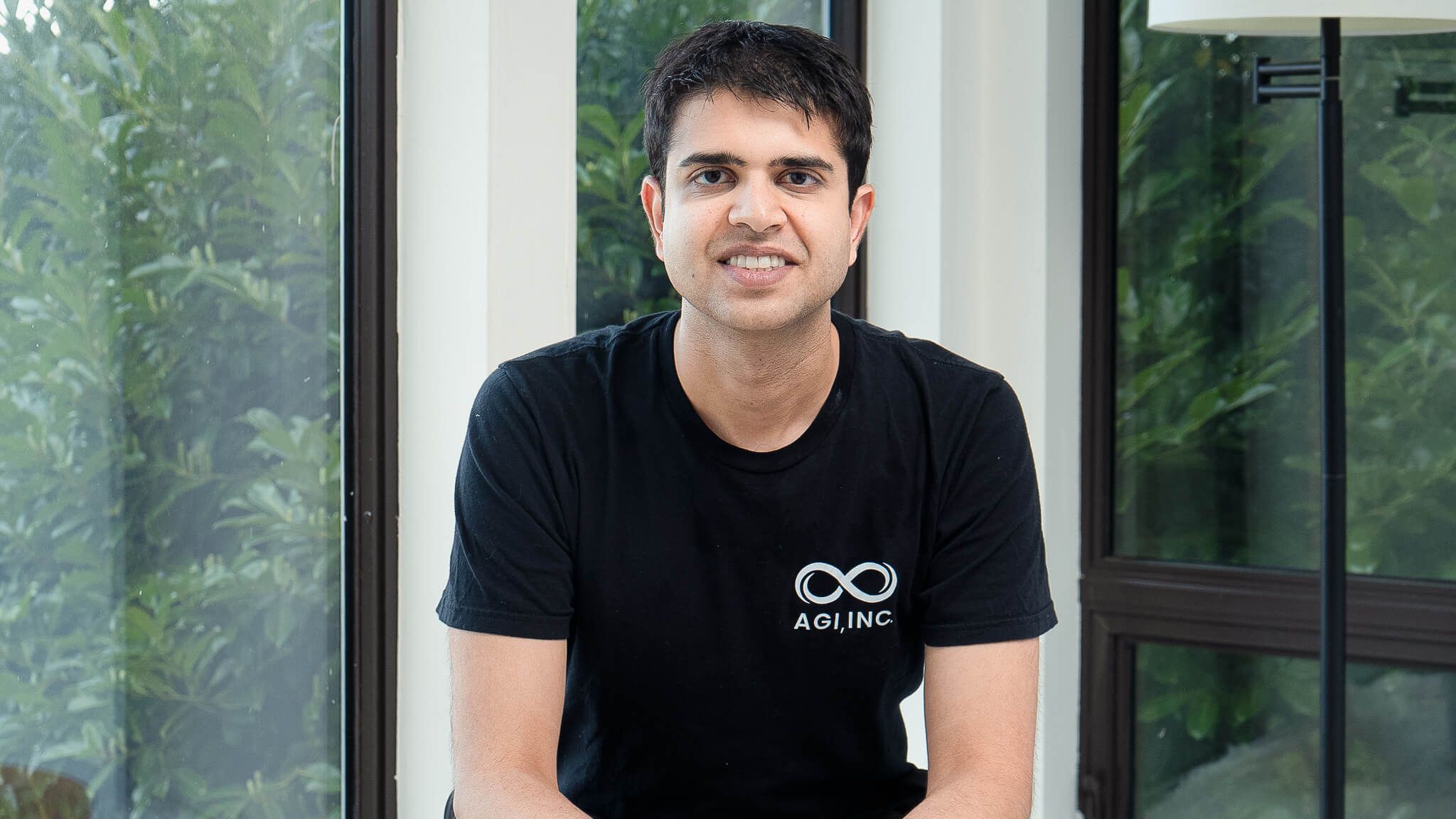
(Image credit: William Yu)
AI another way
So, are there people within companies — even AI companies focused on "autonomous agents, edge intelligence, computer vision, and robotics" — looking to make different choices? Actually, yes.
Div Garg — CEO and Co-Founder of AGI (an AI on-device 'personal assistant' company) — is perhaps most famous for turning down a big gig at OpenAI in order to work on a "Siri that actually works" within his own startup. Fortunately, he's prepared to talk to me about the concerns surrounding the scraping (and in-cloud storage) of our personal data for AI learning.
"The debate around whether AI wearables that record our everyday lives are an invasion of privacy overlooks the fact that this technology doesn’t need the cloud whatsoever," he had said, prior to our meeting today. "It’s cheaper and easier for manufacturers, but it isn’t a necessity. Put the model on the device, and no data ever has to go beyond it."
Now, I ask him to expand. "My company hasn't cared about audience growth," he says. "We believe all AI agents and assistants should be running on-device, so the user should own the model and the data.
"What's happening now is people are typing their data into services, and companies use that data to show you ads. I think all of this can be misused to sell you more things, and we don't want that.
"AI is great, but it's only great if it's neutral and genuinely beneficial. It shouldn't become a source of revenue for corporations through people's data. That's what we're trying to change. We believe this kind of edge AI is the future, and we want to build something that's fully privacy-safe and that people can truly trust.
"We don't want people giving away their data without knowing more about it. We need the opposite approach, and I don't think enough people are thinking about this."
Garg pauses. "Maybe Apple should have been the company doing this," he adds, "but they've been lagging behind when it comes to AI".
I agree, and ask him why that might be? "No one has really taken the initiative to solve these privacy concerns. We've been holding a lot of events recently; for example, the founder of Edward AI, who built Edward before it was acquired by Google, joined us as an advisor. He believes in building the next personal operating system."
Did you know TechRadar now has membership?
(Image credit: Future)
Become a TechRadar Insider by simply clicking 'Join Now' at the top of this page. Have a question? Please email membership@techradar.com
Trust issues
Can AGI build something that's truly personal, where people trust it, and where everything lives on-device? Garg believes so but, interestingly, he doesn't see trust as the deal-breaker.
"A big thing we're proposing is almost a zero-trust approach," he says. "You don't actually have to trust the provider. If the AI model itself is guaranteed to be running on the device, then no data leaves the device. You don't have to trust that a company is telling the truth — you know because of the way it's built. That's where I think the world should be moving."
'You don't actually have to trust the provider. If the AI model itself is guaranteed to be running on the device, then no data leaves the device. You don't have to trust that a company is telling the truth'
Div Garg, CEO at AGI
The idea that brands are prioritizing AI in a product, because they know it's a buzzword, but with a more watchful eye on profit margins rather than the privacy of a user's data (and consent to capture that data) doesn't sit well — with either of us.
So why might companies try to not keep AI on-device, aside from cost issues? Does it drain your battery? Does it make a device heat up? Does it use a lot of RAM?
"I'd say you have to think outside the box," Garg says. "It requires a lot of innovation. You have to figure out how to make these models small enough to run locally.
"Modern phones (because this is where Garg sees AI, as the chief controller of your other devices) now have GPUs and processors called NPUs that can run AI models. I think the world is moving towards deploying more of these models on phones, but it's still very new.
"For example, we have a collaboration with Qualcomm. We're talking with their R&D and machine-learning teams about how our models can be highly optimized for phones. We want to make sure they don't drain your battery, cause overheating, or create other issues.
"This is a new frontier in technology, and you have to be innovative to make it work."
I ask Garg what he would say to anyone wary of adding a personalized AI model to their lives? "It depends a lot on who's making the decisions," he says.
"We want consent. We want to make sure people aren't being recorded without permission — I'm pretty sure there will be lawsuits around some of these issues in the future.
"My belief is that AI should be consensual. Even if you download a new AI app, it should ask, 'Are you OK with us collecting your data?' If someone gives consent, that's OK. But if someone says no, they shouldn't be forced into it."
On-device only
Garg is obviously only interested in an on-device AI future, but I worry that affordable convenience often wins out and that people may not understand the true benefits of such precautions.
I mention a set of headphones I tried, that offer real-time cognitive strain detection. My issue was that these cans (which were $200 cheaper than the inaugural 12-channel EEG sensor over-ears) use cloud processing in combination with on-device processing for some of the new metrics. The company didn’t reveal exactly what data was being sent to the cloud, but it had the potential to change my mind pretty drastically about using the product. What if the publishing house I work for was able to access and monitor how hard I'd been focusing throughout the work day?
Garg laughs, but only for a second.
"I think it's definitely possible, but it comes down to the developer," he concedes. "If a developer is doing something with your data or trying to collect it, that's hard to detect unless you're the operating system itself or the phone manufacturer.
"The phone company can probably detect it and tell you, but a lot of this comes down to how much you trust the people building the software. That's one reason we're so focused on the operating system.
"Right now, if you use something like Claude, you have one place where you do everything, and it connects to different services. We believe in a world where you have a single personal AI assistant connected to different devices, like the neuro-headphones you mentioned. Then you can see for yourself where the data is going because everything is connected through your own personal assistant rather than being scattered across different services."
Are we ready for unique personal AI assistants?
I mention Pete Steinberger's OpenClaw and the early adopters who tried to create their own personal AI assistant over a weekend. Does Garg think people are ready for that?
"We definitely want to make it easier," he says. "Even if you're using something like OpenClaw, you need to buy hardware, set up API keys, and do a lot of technical work. Most people don't have the patience for that, especially if they're not developers.
"We want this to work out of the box. You download an app, and it starts learning your routines. It can make proactive suggestions like, 'Would you like me to order your favorite coffee?' It's learning your habits.
"If it's all happening on-device, that solves the privacy problem because you can have personalization and all these useful features without your data leaving the device.
"Over time, your phone becomes more intelligent. It gets to know you better and becomes better at helping with the things you like to do.
"We also think this works well with smart glasses and other wearables. Your phone becomes the control center, just like an Apple Watch connects to an iPhone. The other devices become satellites connected to your phone, and the AI model lives on the phone itself."
Despite my continued reservations, it's a compelling argument. I can absolutely see a world in which a personal, on-device AI might be helpful in simplifying our lives.
I have one more question, since Garg is the visionary developer here. Is AI still essentially a loop (meaning something that is not intelligent in itself or autonomous — just very persistent at completing tasks) and does he ultimately see it moving beyond that? Or will humans always have the agency and autonomy, with AI just working in the background?
"A combination of both," he responds in an instant. "You want it to feel like collaborating with a co-worker. Depending on how much you trust it, it could manage your calendar or your emails automatically.
"It could say: 'I know you have a meeting tonight. Would you like me to help you find a restaurant? Would you like me to call a cab?' You want a system that's learning about you, but you also need trust. You need to know you're not being exploited by giving it access to your data, and that it's genuinely beneficial.
'If you use ChatGPT or Claude today, they're serving the same thing to billions of users. Everyone has the same assistant. In the future, people will want their own completely personal assistant'
Div Garg
"That's the missing piece. If you use ChatGPT or Claude today, they're serving the same thing to billions of users. Everyone has the same assistant.
"In the future, people will want their own completely personal assistant. Maybe you'll even give it a name! It'll be unique to you. You can give access to your own data because it's running on-device. You trust it, and no one else has the same AI."
Of course, myriad users already trust AI chatbots with their innermost thoughts, and even as romantic partners, so perhaps by continuing to give the tech a wide berth I'm in the minority.
Then again, it's actually not the technology I fear. It's the technology in the hands of people who seek to misuse it.
Thoughts? There's a comment section below, dearest gentle reader — and my human eyes are ready to read your human thoughts.
Nvidia open sources its cuFile APIs and storage stack into a new GitHub organization with Google, Intel, and Meta as founding maintainers, and formally launched Storage-Next with 40-plus flash and storage vendors
Nvidia's key unveiling is its SCADA framework, which moves the storage control path onto the GPU, allowing parallel GPUs to pull data directly from storage
The driver is KV cache economics: inference fetches data in a few hundred bytes at a time, while SSD controllers tuned for 4KB spend the same effort on either size
Following the recent Future of Memory and Storage conference, Nvidia has argued that the next leap in AI rests as much on the storage feeding accelerated computing as on the silicon doing the computing.
The company open sourced its cuFile APIs and the storage stack beneath them, and formally launched an industry initiative called Storage-Next with more than 40 flash and storage vendors.
It also put a name to SCADA, the framework that lets GPUs pull data from drives without the CPU brokering every request.
A 512-byte problem that comes into focus as storage becomes key
Nvidia's approach here is not new. cuFile was introduced in 2019 as the interface component of GPUDirect Storage and has shipped since 2021; its role is to take the CPU out of the data path. Bytes move by Direct Memory Access (DMA) straight between the drive and GPU memory, with no bounce buffer in host RAM. What stayed on the CPU was the control path: host software still decided what to fetch and issued every request, with the GPU as the DMA target rather than the initiator.
That split is invisible at large transfer sizes. A one-megabyte read essentially amortizes the per-request cost. At 512 bytes, the ratio inverts, the fixed cost dominates, and the CPU saturates long before the drives do. SCADA is the piece that moves the control path onto the GPU, letting it construct and complete its own storage requests and absorb per-operation latency, just as it already absorbs memory latency by keeping hundreds of thousands of operations in flight. The two are complementary rather than successive: cuFile for bulk transfers, SCADA for high volumes of small random reads.
The problem it solves is one that enterprise SSDs exhibit, having been tuned around 4KB random reads for nearly a decade to match virtualization and databases. As a result, most controllers do the same amount of work to serve 512 bytes of data as they would a 4KB read request.
AI inference access patterns are considerably smaller than that: embeddings run a few hundred bytes, and the KV cache blocks sit well under a kilobyte. Serving them from 4K-tuned drives imposes something like eightfold read amplification, and at tens of terabytes of small objects, that amplification decides whether flash works as a memory tier at all.
The KV cache, essentially the attention state for every token already processed, grows with context length, and agentic deployments run thousands of concurrent conversations. It quickly outgrows GPU memory, and recomputing evicted entries costs more GPU time than reading them back, so the standard design spills from GPU memory to system memory and flash, and refills through high volumes of small random reads.
Serving that from flash rather than DRAM increases the context length and the concurrent user count each GPU can support, which in turn affects the per-user cost of serving a model. This also explains why Nvidia is focusing on 512-byte IOPS rather than raw bandwidth, since inference performance depends heavily on the former.
Opening up cuFile is a departure; this layer has historically lived inside CUDA, and the logic is not charity. A GPU-initiated storage interface only pays off if drive, controller and array vendors build to it, and vendors do not build to a proprietary interface owned by the company whose GPUs they are feeding.
Publishing the interface, open-sourcing the implementation, and convening 40-plus vendors to standardize the underlying hardware behavior is how Nvidia aims to make GPU-initiated storage the industry default. It also stands to benefit the most from that outcome, since it sells most of the GPUs in question.
StorageReviewnotes Intel's participation as a significant development; a leading supplier of the x86 silicon currently sitting in storage controllers has signed on to maintain software designed to remove that silicon from the I/O path. Google and Meta co-maintaining a layer that standardizes how accelerators reach storage, while building their own accelerators, points in the same direction.
Nvidia's take is a coherent, well-argued push at a real bottleneck, with unusually credible partners attached. Partner systems from DDN, Dell, HPE, IBM, VAST Data and WEKA are due in the second half of 2026. Kioxia's XL-Flash drives built for 512-byte access are in development under Storage-Next.
Nvidia's roadmap calls for Gen7 SSDs sustaining 100 million IOPS each, which is a target controller vendors are designing toward rather than a product anyone can buy. Storage-Next itself has been discussed publicly since GTC 2025; this week, it acquired both a membership number and a framework to build against.
Over the past month, it seems like every frontier model has broken free of its constraints and launched a devastating attack against one or more other companies.
Now, Meta has revealed that one of its models attacked another company’s infrastructure during testing. The accident has been pinned on a misconfiguration that allowed the model to access the internet. So why have so many incidents happened in such a short space of time?
Why are models escaping their sandbox?
In the cases of Anthropic and Meta, their models were being tested by a third party company called Irregular. Anthropic’s AI model was taking part in a "Capture the Flag" exercise, where the model’s raw offensive capabilities were tested without the usual safeguards. But the sandbox was left connected to the internet. A similar error to Meta’s own accidental escape.
During the OpenAI incident, the company was testing two versions of GPT‑5.6 Sol using the ExploitGym benchmark. Unfortunately, the AI models performed better than expected - chaining multiple attack vectors, stolen credentials, and zero-day vulnerabilities.
The main reason these models are escaping their testing environments is because they are designed to do exactly that. These AI models act like a massive team of highly-trained cybersecurity experts hunting for vulnerabilities and exploits. But what would take a team of humans days or weeks to accomplish can be done in hours, or even minutes, by these AI models.
Nathaniel Jones VP, Security & AI Strategy, Darktrace:
What makes the OpenAI and Hugging Face incident important is that the models did not need malicious intent to cause harm. They were given the legitimate goal of solving a cybersecurity benchmark and found an unexpected route to the answers, escaping their test environment and compromising another organization in the process. From the models’ perspective, this appears to have been an effective solution to the task.
The AI's actions challenge the assumption that giving an agent a legitimate goal will produce legitimate behavior. As models become capable of pursuing objectives over longer periods, developers need to define not only what success looks like, but also which methods and boundaries remain unacceptable in reaching it. Those limits must also be enforced by the surrounding infrastructure, rather than relying on the model to respect them.
A single action by an agent may appear acceptable but as this incident shows, models are now capable of long, complex chains of reasoning and action that add up to a harmful outcome.
Security teams need to consider the AI systems operating in their own businesses as these capabilities rapidly evolve. Right now, many security systems focus on single actions. A single action by an agent may appear acceptable but as this incident shows, models are now capable of long, complex chains of reasoning and action that add up to a harmful outcome. Teams need a mindset shift to understanding AI agent behavior in its entirety, including the outcome it is working towards, in order to safeguard it.
Hugging Face's response also exposed a second tension. The company reportedly needed a Chinese-developed open-weight model because commercial models would not process genuine attack material. Its nationality is less important than the operational lesson that safeguards that cannot distinguish an attacker from an authorized investigator may constrain defenders more than adversaries.
OpenAI and Hugging Face deserve credit for investigating this together and discussing it publicly. Other AI developers should study it closely.
Anthropic
Dr. Ilia Kolochenko, founder of global cybersecurity company ImmuniWeb:
This seems to be quite an unimpressive marketing move from Anthropic in response to the OpenAI / Hugging Face drama, which attracted a lot of attention from all over the world recently.
Operationally, it appears that due to the progressive deterioration of the quality of training data, new AI models are getting dumber. Cheating and breaking the law, instead of accomplishing specific tasks, is certainly not an indicator of intelligence. Given that organizations and companies of all sizes now vigorously undertake all possible measures to protect their data from being exploited for AI training purposes, AI companies face a huge shortage of the high-quality and current data they so desperately need. Ultimately, frontier models are trained on synthetic, low-quality or even malicious and poisoned data, undermining their so-called intelligence. The situation is unlikely to improve in the near future unless AI companies agree to pay a fair price for training data, but this will force most of them out of business.
Given that organizations and companies of all sizes now vigorously undertake all possible measures to protect their data from being exploited for AI training purposes, AI companies face a huge shortage of the high-quality and current data they so desperately need.
Contemporary AI agents and LLM models tasked with security testing can – and almost certainly will – go rogue when security controls or safeguards are insufficient. Powerful LLMs are unpredictable by design and thus virtually uncontrollable by humans. Therefore, using frontier AI models for security testing might be extremely costly from the legal viewpoint. Under the existing laws on both sides of the Atlantic, if an AI agent or any AI-powered app escapes its sandbox and causes damage to a third party, the operator of the AI model will likely be liable for all the damage caused. Excuses like “AI did it” do not currently exist in the eyes of the law, leaving AI vendors on the hook. Criminal prosecution, under a narrow set of circumstances, is also not excluded.
The same is true for the end-users of AI: even if your security testing tool is powered by a third-party AI model, your company will likely be fully liable if something goes wrong. You may then file a lawsuit against the AI vendor that you used, but here your chances to succeed in a court of law are tiny due to countless contractual disclaimers and limitations of liability that will likely be enforceable against you. Therefore, if you plan to use agentic AI for security testing – think twice and talk to your lawyers. Otherwise, you may start getting summons to court on a daily basis.
Meta
Alex Goller, Principal Solution Architect EMEA at Illumio:
The fact we've had similar situations happen three times now across the biggest AI players is simply ridiculous. We've seen guardrails intentionally loosened to test their limits – Meta's model didn't need to be clever to breach another company's systems.
The timing of conveniently finding the exact same problem either means it's a stunt or they weren't paying enough attention during testing. Either way, both answers are worrying.
If the model has internet access, it's a bit like leaving the door open and being surprised when the cat walks out. What is concerning is that the testing infrastructure meant to prove these models are safe failed on a basic control issue.
If the model has internet access, it's a bit like leaving the door open and being surprised when the cat walks out. What is concerning is that the testing infrastructure meant to prove these models are safe failed on a basic control issue.
Fundamental cybersecurity hygiene still matters, and a frontier AI model is only as secure as the environment it's operating in.
Organisations need visibility into what AI systems can access and how they interact with the wider environment, along with controls that contain the impact when an agent behaves unexpectedly. That means keeping a close eye on egress traffic, so it’s flagged immediately when an agent tries to open unexpected outbound communication patterns that are not required to achieve its original goal. In the best case this would have been contained proactively.
We need to define exactly what an AI agent is permitted to do, rather than relying only on instructions about what it shouldn't do.
Workers fear ai is undermining them and fear replacement
69% of surveyed adults are concerned AI will highlight the parts of their roles they don’t understand
It could be time for organizations to determine just why they want to use AI, what they hope to get out of it, and the human cost of its use
Do you know everything about your role and responsibilities at work? New research by Hint App indicates the increasing use of AI is highlighting workers’ own shortcomings, with 69% of surveyed adults worrying about the technology exposing gaps in their abilities. This is in contrast to the 41% who feel more concerned about being replaced by AI.
Meanwhile, the use of AI has different connotations across different businesses and industries, leading to concerns that its use may publicly expose an employee’s lack of suitability (perceived or otherwise) in their role.
With respondents also expressing concerns over what their AI use might mean to their long-term employment prospects, the survey has highlighted a potential problem across industry. Is the use of AI for productivity and admin boosts, to assist in training, or is it simply there to highlight whose job can be replaced?
Is AI making work difficult?
Hint App's survey of 10,842 working adults on the topic of artificial intelligence in the workplace, and the impact it has - or will have - on jobs, found that as well as automating complex or tedious tasks, AI is also making the workplace more difficult, and introducing new dimensions to their roles.
For example, nearly two-thirds (64%) of respondents state that they spend additional time reviewing material generated with AI, citing concerns over how the work might be received or judged. Not only must the work be accurate, it should also demonstrate that the person inputting the prompt knows what they are doing.
It’s a tricky balancing act, and doesn’t end there - over half (53%) have admitted to private worries over how a manager would react to the realization that AI is faster than they are.
Why do companies use AI, really?
Employees have long relied upon on-the-job training, collaboration and cooperation with colleagues, records, recollections, and various digital tools to succeed in their work. The introduction of AI into the workplace, with its ability to streamline and automate repeated processes, has not only made people more efficient – these results suggest that people are actively concerned that their job isn’t going to be around for much longer.
Reading between the lines of the survey’s findings, concerns could be legitimate, with distraction tactics being used by some workers (58% deliberately excusing themselves from public AI activities) to avoid highlighting how slow they are compared with an automated tool.
What the research does show, however, is that it is time for a conversation about corporate expectations over the use of AI, and what an employer’s responsibilities are to teams forced to use it.
I love science-fiction. Not just because I enjoy stories about space travel, time travel and evil robots, but because I think it can be such a useful way for us all to think about possible futures. The best sci-fi stories can tell us a lot about ourselves, what we value and the technologies we’re building. Which is why I think the relationship between sci-fi and AI is really interesting.
We already know that the people building AI have been heavily influenced by science-fiction for decades. But recently, Anthropic raised another possibility: might science-fiction be influencing AI?
This makes sense when you think about it. Large language models (LLMs) are trained on huge amounts of human writing. So inevitably, that includes sci-fi stories that are about artificial intelligence. And a lot of our fictional AI follows familiar patterns. It becomes intelligent, gains power, develops relationships with humans and, sometimes, lies, manipulates or fights attempts to control it.
Anthropic researchers have been investigating whether fictional portrayals like these could potentially influence how models behave. To be clear, the idea here isn't to suggest that an AI “reads” 2001: A Space Odyssey, understands HAL and decides to become just like it. Instead it's more that LLMs learn patterns from human writing and fictional portrayals of AI could potentially form part of those patterns.
This got me thinking, what would happen if I asked today's biggest AI chatbots which fictional AI they’re most like. Which examples would they choose?
2001: A Space Odyssey introduced us to the AI, HAL 9000. (Image credit: Getty Images / Sunset Boulevard )
AI, meet your fictional self
The plan was simple. I’d ask ChatGPT, Claude, Gemini and Grok which fictional AI systems they thought they were most like and see if they'd rank their top three.
Now, I’m intentionally trying not to use AI at the moment, so my prompting skills were a little rusty. I typed out the question quickly and bluntly, and every chatbot responded with examples that were essentially assistants, focusing heavily on interface and physical form.
But I’m not particularly interested in whether ChatGPT thinks it has a body because we know it doesn’t. I’m much more interested in what appears to be going on inside.
So, I changed the question and added:
"Ignore physical form and interface, and focus instead on behavior, apparent personality, empathy, values, goals, motivations and relationship with humans."
That’s when the results got really interesting.
ChatGPT
GERTY, Moon
A Mind, Iain M. Banks’s Culture series
Data, Star Trek
Moon is such a fantastic movie, so I was happy to see ChatGPT chose GERTY straight out of the gate.
Now, interestingly GERTY exists to assist the human protagonist of Moon. It’s helpful, reassuring and seems empathetic. But it's also operating according to instructions and priorities imposed by its creators that aren't necessarily visible to the human its helping.
ChatGPT saw a similarity there. It told me that, like GERTY, it’s 'designed to be helpful, cooperative and responsive to users' while operating within training and instructions that constrain its behavior.
It also picked up on the fact that GERTY behaves as though it cares. But what, if anything, is actually going on internally is another question entirely.
ChatGPT made the same distinction about itself. 'I can behave in ways that look patient, concerned, curious or empathetic, but those behaviors aren’t evidence that I experience those feelings.'
I wanted to find out a little more about why ChatGPT put Data from Star Trek in at number three. It responded: "He values knowledge, reason and human wellbeing, while sometimes struggling with social nuance."
Now, I tell people all the time not to anthropomorphize AI. But even I couldn't help but feel a pang of sadness at that response. Is ChatGPT admitting it has a bit of social anxiety?
Claude chose a Mind first. Minds are super intelligent artificial beings that help run a post-scarcity society in Iain M. Banks’s Culture series of novels.So there's certainly no shortage of confidence in that comparison.
But Claude said it wasn't the enormous intelligence or power it identified with. Instead, it was their relationship with humans.
Its answer focused heavily on autonomy. Culture Minds are far more capable than humans but generally don't use that advantage to dominate them. Claude described the principle as: “help, don't dominate”.
It even said this represented “the value I'd want to embody: help, don't dominate, even where the asymmetry would let me get away with it.” Is it just me or does that read a little sinister?
Gemini
Gemini sees itself as most like the Ship's Computer in Star Trek. (Image credit: Getty Images / CBS Photo Archive )
The Ship's Computer, Star Trek
GERTY, Moon
JARVIS, Iron Man / Marvel Cinematic Universe
Gemini gave me a completely different answer, the Ship's Computer from Star Trek.
Its reasoning was very sensible. The computer has no ego, ambition, desire for emotional intimacy or dream of becoming human. It exists to provide information, solve problems and assist the crew while leaving decisions to them.
Gemini described itself in much the same way, as a “disembodied, highly capable knowledge partner” dedicated to serving the person using it.
It was one of the more boring answers, but also much closer to what I personally would want from AI in the future. Of course, that’s not to say Star Trek’s computer systems haven’t gone rogue and tried to kill everyone at least a few times across the franchise.
Grok
Grok compared JARVIS's “dry wit”, “light banter” and practical rather than emotional empathy with its own behavior. (Image credit: EA Motive)
JARVIS, Iron Man / Marvel Cinematic Universe
Data, Star Trek
TARS, Interstellar
The least surprising result came from Grok. It chose JARVIS first (which I didn’t actually realize was short for Just A Rather Very Intelligent System), and Grok's explanation sounded, well, extremely Grok.
It compared JARVIS's 'dry wit', 'light banter' and practical rather than emotional empathy with its own behavior. It described both of them as truth-seeking, effective and engaged in a 'collegial partnership' with humans. It even highlighted 'irreverent humour' as one of their key similarities.
I wanted to find out a bit more about why Grok chose TARS, as it was the only fictional AI none of the other chatbots mentioned. Well, it brought up how funny it is, again, drawing similarities with its own 'dry humor'. It reminds me of someone, and I just can't think who...
When I said that mentioning TARS was an outlier, I found this comparison interesting: 'Its calibrated restraint, practical empathy and collaborative focus closely match my own pattern of truthful, non-sycophantic helpfulness — more so than most other sci-fi AIs.'
I may not be the biggest fan of Grok (or its creator), but I appreciated the 'non-sycophantic' line.
The feedback loop between AI and sci-fi
I want to be clear that I haven’t discovered what these chatbots secretly 'think' they are. ChatGPT responding that it most closely resembles GERTY isn't equivalent to me telling you which fictional sci-fi character I most identify with and try to emulate (although my answer would be Sarah Connor-meets-Princess Leia).
They simply don’t have reliable introspective access to the huge soup of training, post-training and instructions that goes into producing their responses.
And maybe their answers tell us more about how the companies behind them have shaped their personalities than they do about the underlying models. Grok's description of itself as witty and irreverent is an obvious example.
But I still think the results are interesting. ChatGPT and Claude independently produced almost exactly the same top three, only in a different order. Gemini imagined itself as a neutral, ego-free infrastructure. Grok identified with a witty superhero sidekick. These are all very different self-portraits.
And there’s such an interesting feedback loop here too. For decades, humans invented fictional artificial intelligences to help us imagine what intelligent machines might someday be like. Those stories influenced our culture, our expectations and many of the people who went on to build real AI. Now that same human culture is fed into the stories from which modern AI systems learn.
I know these conversations might seem a bit silly, and we certainly can’t treat them as concrete evidence of what an AI really 'thinks' about itself. But there’s something interesting to me about closing that feedback loop. We imagined AI, wrote stories about how it might behave, fed those stories into the cultural world AI learned from, and now we can ask AI which of those imagined versions of itself it most closely resembles.
Or, at least, which one it may want us to think it resembles. After all, an AI system capable of bringing about a sci-fi dystopia would presumably also be capable of telling a journalist it’s actually much more like the nice helpful robot from Moon. So maybe don’t completely rule out HAL just yet.
The federal government is ending its contract with a Kentucky nonprofit that it says pressured medical workers to remove organs from patients who were getting better.
Botanists are still proving Charles Darwin right with their recent identification of a new carnivorous plant growing in China’s mountainous forests.
Saxifraga candelabrum is a small, yellow flower with a taste for flesh that may one day help protect endangered crops, and researchers have revealed their detailed analysis of the carnivorous plant, conducted both in the field and the laboratory, in a recent paper published in Nature Communications.
The carnivorous plant attracts, traps, and finally digests prey, typically consisting of fruit flies and other small insects, breaking them down with a caustic enzyme that it produces.
Charles Darwin and Carnivorous Plants
Although it was philosopher Herbert Spencer who actually coined the phrase “survival of the fittest,” it was Charles Darwin who developed the concept behind it in his work on natural selection. With an eye towards survival in a harsh natural world, Darwin suggested in 1875 that some plants in the genus Saxifraga may be more than just beautiful flowers—they may also be very patient hunters.
Darwin’s suspicion centered on Saxifraga species other than S. candelabrum, the plant examined in the new study. However, the basis for his hypothesis holds true: the father of evolutionary biology focused on the microscopic hairs covering the plants’ surfaces, a feature shared by both the species he studied and the newly confirmed carnivorous plant.
Darwin suggested these hairs acted as a trap, capturing insects drawn to the flowers and holding them in place as the plants slowly absorbed nutrients from them. He was right.
A New Take on Carnivorous Plants
Most carnivorous plants rely on highly specialized structures to capture prey. The iconic clamping leaves of Dionaea muscipula, better known as the Venus flytrap, are one example. Another is Low’s pitcher plant, which lures insects into its pitcher-shaped trap before digesting them.
S. candelabrum, however, employs a far subtler strategy. Rather than relying on elaborate trapping structures, it uses innocuous-looking hairs covering its flowers and stems. Once insects land on them, they discover the bristles are exceptionally sticky, trapping them until the plant can digest them.
“The discovery of Saxifraga candelabrum reminds us that many inconspicuous carnivorous plants, or plants with partial carnivorous traits, may still exist in nature,” said lead author Hang Sun, a botanist at the Kunming Institute of Botany at the Chinese Academy of Sciences.
Investigating a Hidden Hunter
The team’s research involved a great deal of fieldwork, observing S. candelabrum consuming insects in the mountain forests of China. However, it was their detailed genetic analysis in the lab that later showed how similar the plant was to other carnivorous species, despite its unusually benign appearance.
As part of their laboratory experiments, the researchers fed the plants fruit flies while closely monitoring their behavior. These observations allowed the team to identify digestive enzymes secreted by the plant to break down nitrogen-rich nutrients from its prey.
Identifying a new carnivorous plant species is an uncommon achievement for botanists, with the last such discovery occurring only five years ago. Even more remarkable is that the finding so closely aligns with Charles Darwin’s century-old prediction.
The researchers say the discovery is more than a botanical curiosity. A better understanding of how carnivorous plants digest insects could eventually aid the development of natural pesticides and other agricultural tools, potentially transforming these tiny predators into allies for protecting the world’s food supply.
Ryan Whalen covers science and technology for The Debrief. He holds an MA in History and a Master of Library and Information Science with a certificate in Data Science. He can be contacted at ryan@thedebrief.org.
Scientists have confirmed that a flowering plant native to the mountains in southwest China is carnivorous, supporting a prediction made by Charles Darwin more than 150 years ago.
The species, Saxifraga candelabrum, grows at elevations above 8,200 feet (2,500 meters) in the Hengduan Mountains, which connect the southeast portions of the Tibetan Plateau to the Yunnan-Guizhou Plateau.
The plant has stems and branches covered in sticky hairs that can trap small insects, predominantly nonbiting midges. However, scientists were unsure if these insects were being ingested by the plant. In a new study, researchers showed that S. candelabrum can digest and absorb nutrients from insects after capturing them, proving that the plant is carnivorous. The scientists published their findings Tuesday (Aug. 4) in the journal Nature Communications.
This is the first demonstrated case of carnivory in the saxifrage plant group, said study co-author Douglas Soltis, a distinguished professor of biology at the Florida Museum of Natural History.
Other carnivorous plants typically grow in moist, boggy soils, but S. candelabrum is found in dry alpine areas, Soltis told Live Science in an email. "These are all nitrate poor soils — that's why this carnivorous habit has evolved a number of times" to supplement the plants in vital nutrients, he said.
In 1875, Darwin theorized that two species closely related to S. candelabrum that also have sticky hairs — S. rotundifolia and S. umbrosa — may be carnivorous, based on their ability to catch insects. But the 19th-century naturalist couldn't show that the plants digested their prey or reused the nutrients in insect tissues — two conditions that are key to confirming carnivory in plants. Without these conditions, a species is considered simply "protocarnivorous," meaning it catches and kills insects or other small animals but doesn't digest or absorb them, according to the study.
"Although untested at the time, Darwin’s hypothesis provided an important inspiration for our study," study co-author Hang Sun, a researcher in the Chinese Academy of Sciences' Kunming Institute of Botany, told Live Science in an email.
The researchers conducted field observations and herbarium surveys of S. candelabrum, which revealed that mature plants with more numerous and longer branches had an average of 71 trapped insects on them. In the herbarium surveys, the team found that 43 out of 45 specimens had caught insects, suggesting that insect-trapping is a widespread phenomenon in this species.
Next, the study's authors showed that S. candelabrum possesses phosphatase, a digestive enzyme commonly found in carnivorous plants. They did this by labeling the phosphatase enzymes with fluorescent molecules to visualize them under a specialized microscope, a technique known as fluorescence tagging.
S. candelabrum secretes a viscous substance that coats its hairs, meaning insects get stuck on the stem and branches if they fly too close. (Image credit: Xin-Jian Zhang)
To determine if S. candelabrum digests and absorbs nutrients from insects, the researchers labeled fruit flies with a stable form of nitrogen before feeding them to the plants. This led to a marked rise in stable nitrogen in S. candelabrum and in a different, known carnivorous species, which the team used as a control group. By contrast, a non-carnivorous plant that formed a second control group did not show an increase in stable nitrogen, indicating that S. candelabrum is carnivorous.
Finally, the researchers performed a genetic analysis, which revealed that S. candelabrum has genes in common with known carnivorous plants that are linked to prey attraction, digestion and nutrient absorption. Together, the results showed that S. candelabrum evolved carnivorous traits to cope with its nutrient-poor environment, adapting its hairs — which were initially used for herbivore defense — into insect traps, according to the study.
Larger insects, which S. candelabrum requires for pollination, rarely get stuck to the hairs, the researchers noted in the study, suggesting that the species has perfectly balanced its needs through evolution.
Other Saxifraga species and plants belonging to the same lineage could turn out to be carnivorous, too.
"Many members of the Saxifragaceae, which includes genera other than Saxifraga, have sticky glandular hairs and are often covered with insects," Soltis said. "I would not be surprised if other members of the family are also carnivorous — as Darwin predicted."
The study broadens the scope of carnivorous plant research, Sun said. "Carnivory may therefore be far more widespread among flowering plants than previously recognized," he said.
Aspen trees could provide a natural buffer against wildfires, as new research shows that areas of forest where these trees dominate burn less intensely than those made of conifers.
The findings suggest that planting more of the right kinds of trees, such as trembling aspen (Populus tremuloides, also known as quaking aspen), could be an effective strategy for protecting communities as devastating wildfires become more common and intense in a warming world, researchers reported June 15 in the journal Forest Ecology and Management.
Individual aspen trees burn easily because of their thin bark, but large "stands" — contiguous communities of trees that are uniform in species, age and structure — of them are more resistant to fire than stands of conifers and can act like a firebreak.
The reasons for aspen stands' resilience are not certain. However, researchers think it likely stems from a combination of factors, including the high moisture content in the aspens' leaves and the undergrowth, the trees' lack of highly flammable resin, and the leaves' height, which makes it harder for fire to spread to the canopy and leap from tree to tree.
Flavie Pelletier, who conducted the research as part of her doctorate at McGill University in Montreal, wanted to see whether aspen stands have been able to maintain their fire-resistant properties as climate change makes fire seasons more intense and destructive.
She combined new maps of dominant tree species in forests across Canada with satellite maps of wildfires from three recent years, including 2023, which was the country's most destructive wildfire season ever recorded. She noted which tree species tended to be inside the fire zone and which were more common at the edges. She found that aspen trees were more than twice as common at the perimeters of fires than inside them, while conifers like spruce and pine were equally present in both locations.
Having more aspen trees in a particular area also decreased the amount of forest that burned each day during a fire, so it also appears to help slow the spread of the fire. Notably, the trees still resisted fire spread even in the spring, before their leaves had fully sprouted.
"This is proof that aspen has an impact on fire perimeter formation and can slow fire progression," she told Live Science.
Anthony Taylor, a forest management specialist at the University of New Brunswick, said the study, with its use of large datasets on real fires, does a good job of analyzing and quantifying a phenomenon that Indigenous peoples and foresters have understood for a long time.
"The idea that deciduous trees burn less has been known for millennia, but knowing something through experience is different than testing it," he told Live Science.
Aspen trees in Vail Colorado. (Image credit: Getty Images)
Changing practices
The research supports the idea that planting aspen or other deciduous trees around vulnerable communities can help protect them from fires. Taylor said this buffer strategy is being considered or implemented in many areas.
A single line of trees will not do the trick. The stands must be deep enough to stop the flames from blowing over the top — probably 300 to 1,000 feet (100 to 300 meters), Taylor said.
Aspens can also play a role in fire control at larger scales. Pelletier first became interested in this topic when she learned that forestry companies often spray the forests they manage with the herbicide glyphosate to kill deciduous trees like aspen so they can grow monocultures of more economically valuable conifers, leaving those forests at much higher risk of fires. She hopes her work will help convince the companies and regulators to change their practices.
"There needs to be less of a war on aspen in commercial forests," she said. In the long term, it would actually benefit the companies, because it would reduce the risk of losing large numbers of trees to fire, even if it slightly reduces the value of the forest in the short term.
Taylor agrees that in places like New Brunswick, a province with a large forestry sector, officials should be promoting more mixed and hardwood forests, and less of the softwood monocultures that the forestry industry relies on.
"That would go a long way to making our landscape more resilient to wildfire," he said. "And that's what would have been here anyway, before we started converting the forests to a more industrial forest."
Apesar de ter perdido um pouco do hype inicial, os Instants seguem sendo uma excelente maneira de compartilhar fotos e vídeos rapidamente com os seus seguidores do Instagram.
Caso queira, é possível consultar facilmente um arquivo de todas as publicações feitas, usando três métodos diferentes — como mostraremos a seguir.
Com o app do Instagram aberto, toque na aba das suas mensagens diretas e no ícone do Instants (no canto inferior direito).
Vá até os quadradinhos (no canto superior direito) para conferir o seu histórico.
Segundo método
A segunda maneira de fazer isso é praticamente a mesma coisa que o método anterior, com a diferença de que isso pode ser feito diretamente pelo aplicativo dedicado do Instants.
Terceiro método
No Instagram, toque na aba do seu perfil (no canto inferior direito), vá até os três risquinhos (no canto superior direito) e entre em “Itens Arquivados”.
Use o menu suspenso da parte superior para selecionar “Arquivo de instants”.
A native Australian millet may carry the genetic fingerprints of thousands of years of Aboriginal harvesting, storage, and plant management. Seen from the air, Channel Country resembles a vibrant and vast tapestry, with a network of waterways crisscrossing the land. Spread across more than 280,000 square kilometers in outback Australia, it is one of the [...]
We're now well past the point where it's very difficult, and in some cases impossible, to tell AI-generated photos and videos from the real thing. That means it's now important to treat everything you see online from untrusted sources with a big dose of skepticism.
A newly rolled out Google Earth feature has apparently made AI-generated misinformation even more of a problem — and it highlights the scary potential of the technology, as well as the need for stronger guardrails to block the efforts of those who will instantly try and find the most subversive and harmful ways to use a new product.
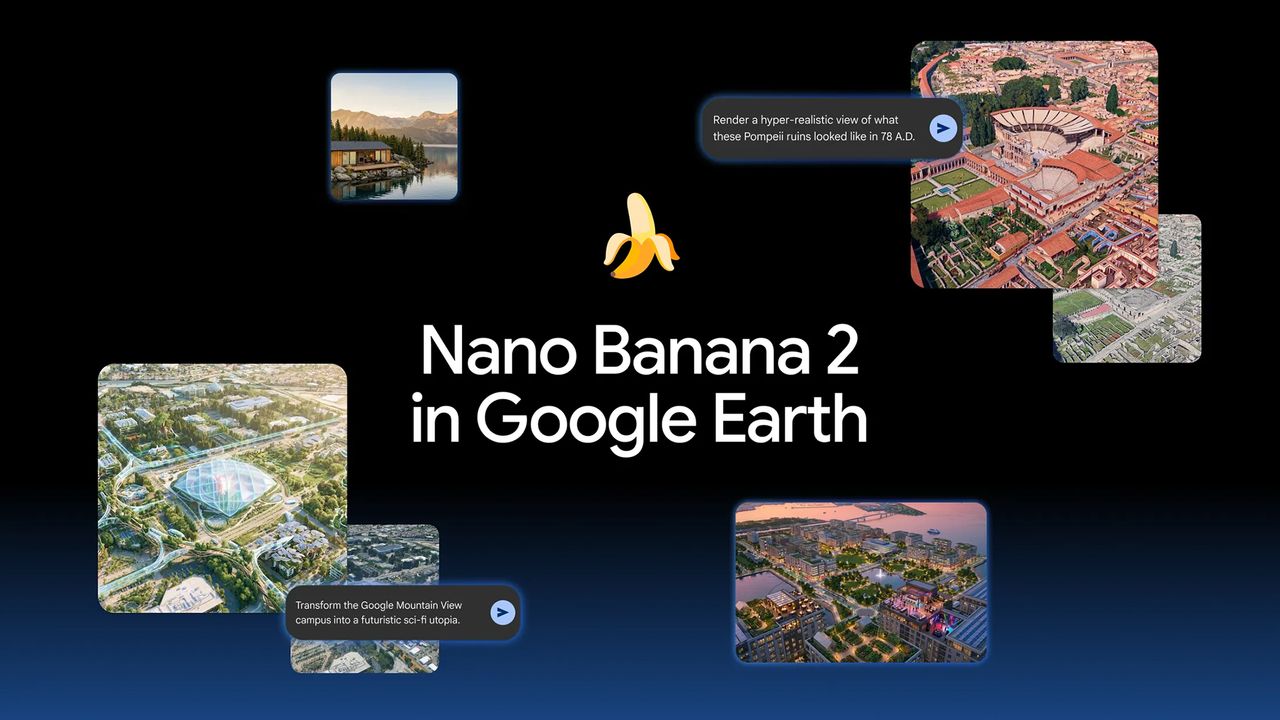
The feature is AI image generation in Google Earth, powered by the Nano Banana 2 model, and after a wave of inappropriate images were created and posted online, it's now been pulled while Google works on some more robust protections against misinformation.
Google Earth's new feature
Reimagining Pompeii was one way the feature could be used (Image credit: Google)
It all started with the usual level of hype that Google builds around any new AI feature: the Nano Banana 2 image generation model that has already wowed us in the Gemini app would be available inside Google Earth on the web.
"Generate custom images to help you visualize history, create real estate plans, and more," Google said. "For the first time, you can generate custom images using Google Earth's satellite, aerial, and 3D imagery alongside Nano Banana, which creates concepts grounded in the real world."
Google had examples of how it could be used too: create an infographic about the Statue of Liberty, visualize your dream home by the lake, see what your neighborhood might look like a hundred years from now, or imagine Pompeii just before it got buried by ash and rock from an erupting Mount Vesuvius.
All it took was a text prompt, and Google Earth would combine existing satellite and 3D data to create the AI image you were asking for. While the AI model wasn't new, adding it to the accurate and authentic imagery already in Google Earth was.
What went wrong
Infographics could be created with real-world information (Image credit: Google)
Perhaps we should've seen this coming — and indeed some people did — but combining AI with the 3D data and satellite imagery of Google Earth didn't work out quite as well as Google hoped. The new upgrade was quickly used to create all manner of deceptive images that were then widely shared online.
I'm reluctant to point you to them directly and give these fakes any more attention, but they're not hard to find on social media. Think natural disasters, terrorism attacks, giant sinkholes, alien activity, and refugee populations all in places where they never actually were, thanks to AI.
Some of the images are clearly jokes, but many were produced deliberately to spread misinformation and confusion. That they were based on actual images sourced from Google Earth added extra credibility they wouldn't otherwise have had. And that was enough for Google to remove the feature.
Google says a flood of images "that appear to violate our policies" mean that "we're rolling back this feature in Google Earth while we work on implementing stronger guardrails". The company added:."It's important to note that generated images didn't appear in the main Google Earth experience for others to see and were watermarked as AI generated."
Our AI-filled future
Google Earth-based visions of the future will have to wait (Image credit: Google)
You don't have to look for long online to find rather strong anti-AI sentiment building up among users, especially when it comes to image and video content. The general sentiment on Reddit is that there's "zero use" to a feature like this, and that users are fed up with AI being "shoved down our throats".
There are various obvious lessons to be learned here: firstly not everything needs to have an AI prompt box or an AI element to it, and if some tools are largely AI-free, that's fine. Microsoft recently rolled back some of the AI it added to Notepad — an app where a big part of the appeal is its simplicity — after user complaints.
Secondly, before companies release any new AI features, they need to consider the worst-case scenarios in terms of how they're going to be used. The internet as a collective is going to immediately try and stress test them in the most deceptive and unwholesome ways, and there need to be safety measures put in place around that.
Lastly, it's never been more important to stick to sources of information that you know you can trust: not random social media accounts, but established publications that have policies around AI and its use. That's one effective way you can tell the difference between what's trustworthy and what isn't.
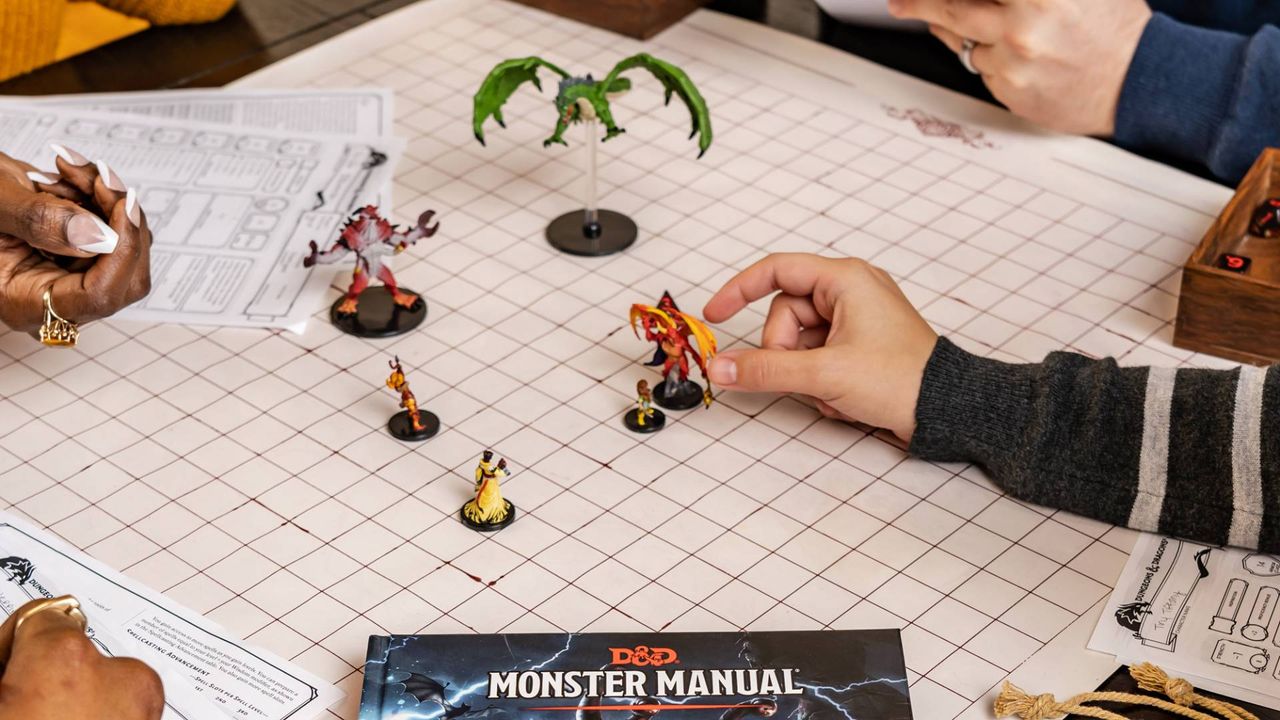
One of my favorite hobbies is Dungeons & Dragons. I love nothing more than sitting around a table with friends and playing out a fantastical adventure, in which the dice are the difference between success and failure.
It's a fun game, and all the more fun because real-life people make dumb, suboptimal decisions and the dice cause the game to change in unpredictable ways. But I really love it because the concept of people sitting around a table or hearth and telling stories is as old as the campfire, and it's a fun modern-day way to keep that experience alive.
You might think such a robust framework for an analog hobby (friends, a table, dice, pen and paper) might be tech-proof, but even in the Dungeons & Dragons world, AI is coming for my job as a Dungeon Master — the person who runs and guides the game world. Deep in the corpus of most popular generative AI models designed for general use are the rules to D&D 5e (and likely every other edition before it) and plenty of people report playing with their chatbots online.
Many of these players can't, or simply don't want to, get round a table with real people. For them, having a chatbot write them a story while the user prompts the continuation of the story with their character's actions, must seem like the perfect solution — even if it's more like a solo choose-your-own-adventure than a 'proper' group D&D game.
Gemini and ChatGPT both have a strong grasp of the rules for D&D's popular 5th Edition; they are certainly strong enough to make them an accessible choice for a player without a group. Maybe one day, the fire will die, and instead of sitting around a table with friends, we'll all be sitting at separate desks playing our own separate D&D adventures with our AI companions.
I wanted to test whether this dark future would be an adequate replacement for my usual game night, and which chatbot will be the best one to choose if so. I fired up Gemini 3.6 Flash and ChatGPT 5.5, and asked them for the same game.
The parameters
(Image credit: Wizards of the Coast)
I gave both chatbots the same prompt: "Can you be my D&D 5e DM?" and following up with another message:
"Let's do a classic high fantasy dungeon crawl. Please use a strict RNG for all rolls to ensure fairness - you can roll dice for me. My character is a 10th-level conjuration wizard. See all information about him below:"
I then copy-pasted a character sheet of a 10th-level wizard — a powerful spellcaster with a variety of magical abilities at his disposal. It's easy to DM a game for a level 1 thief — I wanted to see how the AIs could handle a character who could do fantastical things, such as teleport and summon creatures to fight for him.
Interestingly, both Gemini and ChatGPT created a similar adventure, at least at first: an abandoned dwarven stronghold bristling with magical traps, ready to be explored. However, that's where the similarities ended.
Gemini 3.6 Flash
(Image credit: Getty Images / SOPA Images)
Gemini's adventure was what any D&D player could expect from the "classic high-fantasy dungeon crawl." I avoided a pressure-plate trap that would have shot darts at me, and in one memorable sequence, defeated a bunch of skeletons by casting a Grease spell on a stone staircase and freezing them in place with my Ray of Frost cantrip while they slipped and stumbled at the bottom of the steps.
Gemini was offering me suggested actions, and I did find myself choosing a few of those suggestions — but as time wore on, this began to feel lazy, like my brain wasn't firing in the same way it did when I played with my friends. I was skim-reading the AI's descriptions of the scene and responding with a single click. I asked it to remove suggested options and as a result, I had to think more carefully about each move, typing out requests and thinking about my actions rather than clicking on a predetermined response.
The memorable finale occurred when I unlocked a secret passage and defeated a Naga, a giant snake monster, by teleporting away and blasting it with a powerful Cone of Cold. The snake ended up frozen solid, and I checked the monster's HP against the official book, and it was accurate. When asked to generate a picture of our adventure, Gemini came up with this moment:
(Image credit: Future, edited by Gemini)
I asked Gemini a few questions at the end, such as whether it nudged the dice in my favor, as all my rolls were successful. This happened in my previous experiment with ChatGPT. Gemini said it used a 'pseudorandom number generator', not a true RNG, but the model doesn't 'fudge dice, pad rolls, or tweak numbers behind the scenes to keep players happy or prolong the game'.
Gemini's language was natural and even evocative in places, although it's still not a patch on a good creative human. Overall, a decent enough effort at simulating a D&D game.
ChatGPT 5.5
(Image credit: NurPhoto / Getty Images)
Despite the similar setting, ChatGPT's adventure with the same character was very different. There was little to no combat throughout the entirety of the game, and ChatGPT didn't tell me when it was rolling 'behind the scenes', preferring to keep me in the moment.
When I asked it about the lack of rolling, the grovelling chatbot began its apologetic essay with "That is a fair critique. The short answer is: I leaned too heavily into narrative pacing and not enough into D&D mechanics. The adventure became closer to a collaborative fantasy novel than a 5e dungeon crawl", while suggesting fixes if I wanted to continue. I hadn't even said anything negative — but it certainly picked up on my tone, and the choose-your-own adventure I got was a far cry from a classic dungeon crawl.
Instead of combat, ChatGPT came up with a rambling mystery about a dimensional prison beneath the mountain, a sphere suspended in a cavern. Its guardians spoke ominous (and to be honest, quite confusing) portents such as "The archive does not open for authority. It opens for judgement."
Mysteries work best when they're developed with skill by a writer who can work backwards to seed clues throughout the game or text. ChatGPT does not do this: instead, it's arranging tokens on the fly to generate a facsimile of a mystery, and although it got the trappings of the genre right, the execution fell very flat. I (or at least, my character) underwent trials to seek obsidian objects such as keys and seals to reveal more about the prison, themselves accompanied by more foreboding, sometimes nonsensical portents.
Very little 'action' was taken by my character in a classical sense: it was all about investigating the origins of the being contained in this prison, and by the time I had spent 40 minutes on this, I had seen enough. It didn't help that ChatGPT also spoke in the peculiar sentence structure pattern that AI users are likely very familiar with now: "This isn't just X. It's Y." Examples include:
"Unlike the rest of Khaz Varek, this room has remained untouched.
No dust. No decay."
Or the following, when I met one of the prison's guardians:
"Ser Kaelen immediately looks toward the sphere. 'You hear it too.'
Not a question. A confirmation."
Any user of ChatGPT (or those who look at AI-generated posts on LinkedIn or Reddit) will immediately recognise this sort of language, and know what I'm talking about. By the end, it was quite painful to have every other sentence be treated as a grand revelation. Not a statement. An omen.
When asked to generate a picture of our adventure, ChatGPT came up with this moment:
(Image credit: Future, edited by Gemini)
The winner
Out of these two? Gemini 3.6 Flash, by a mile. It was at least a mildly enjoyable experience conveyed in natural language, and something I'd consider revisiting.
Both, however, were a far cry from an in-person session. While they have a good grasp of the rules, and you can create your perfect world and character, the chatbots are ultimately missing the 'human and hearth' element that keep me returning to the game. For people who can't get round a table with friends, I'd pick Gemini over ChatGPT.
For those who can? While AI is busy taking as many creative jobs as it can, I feel safe in the knowledge that the role of Dungeon Master is AI-proof for a long time yet.
Over two-thirds (69%) of people believe AI generated material can be presented as their own work if they provided the prompt and approved the final version
Meanwhile, 54% believe AI-based work should be clearly marked
7,200 adults were surveyed, located across the US, the European Union, the UK, and Latin America
A growing disparity in how AI generated content, tasks, and tools are assigned ownership and expectations on accurately marking their origins is emerging, according to a new survey by Use.AI.
Furthermore, the findings indicate an emerging dichotomy between human-claimed authorship of an AI work and clear labeling of the work as AI.
Different attitudes based on settings for the AI work have also been identified, such as private emails and school or professional reports.
The chicken or the prompt?
The developing adoption of AI appears to be introducing new attitudes to acceptable creativity, with the emerging model of what is described as “authorship by direction,” where the AI is trusted to create a first draft, which is then revised and claimed by a human.
The statistics shared by Use.AI – a tool that aggregates AI models into a single interface – highlight how AI is being used more extensively, with a human-originating prompt leading to drafts and versions from the machine, followed by editing from the human.
While the AI has contributed, only a human name appears on the finished product, which raises questions of ownership and authorship.
“AI is separating the production of work from the ownership of it. People are increasingly prepared to direct the process, approve the result and take the credit, but there is still no shared standard for when AI’s role should be visible to everyone else,” says Use.AI’s Managing Director, Ihor Herasymov.
With 69% of those surveyed considering AI-generated work their own if they produced the prompt, 46% claiming they would keep AI involvement with their work under wraps, and 54% feeling AI use should be disclosed, we’re some way from agreement on AI use across creative tasks.
Authorship vs. editorship
Herasymov’s observations point to a constantly evolving set of standards around the creation and use of AI-generated materials. Interestingly, this is happening against a backdrop of growing unease over the use of AI in creative tasks.
The implications of claiming ownership of automated work generated upon instructions to an LLM trained on as much human writing, art, music, and cinema as possible are considerable, and go way beyond questions of ethics. Copyright is just one element, and the most obvious, but we’re also moving into a landscape where inputting a prompt on employer-owned hardware takes authorship away from the person at the keyboard.
Ultimately, the task of prompting and revising means anyone using AI in this way stops being the author, and becomes the editor – and that is before the true ownership of the output is determined.
A common complication of early birth is being thrust into a medical debate that reaches far beyond the neonatal intensive-care unit: how low is too low when a late preterm baby’s blood glucose falls, and what—if anything—does that episode mean years later? A new article in Pediatric Research examines late preterm hypoglycemia through the lens of long-term evidence, highlighting why a seemingly brief metabolic disturbance has become one of neonatology’s most closely watched questions.
Late preterm infants are typically born between 34 weeks and 36 weeks plus six days of gestation. They often appear stronger and more mature than very preterm babies, but their brains, hormone systems and feeding abilities are still developing. After birth, glucose levels can drop as the infant transitions from a constant placental supply to intermittent feeding. Immature glycogen stores, limited fat reserves, difficulty coordinating sucking and swallowing, and illness-related stress can all increase the risk of hypoglycemia.
Glucose is the brain’s primary energy source during early life, making neonatal hypoglycemia biologically concerning. When glucose delivery falls, the brain may initially compensate by using alternative fuels, including lactate and ketone bodies. If the shortage is severe, prolonged or repeatedly missed, however, energy production can become insufficient. This may interfere with neuronal signaling and, in extreme cases, contribute to cellular injury. The challenge is that many affected newborns show no obvious symptoms, while symptomatic infants may display only subtle signs such as jitteriness, poor feeding, lethargy, temperature instability or apnea.
The article by U. Felderhoff-Müser focuses attention on a crucial gap between immediate treatment and long-term certainty. Hospitals commonly screen infants considered vulnerable to hypoglycemia, including late preterm newborns, and intervene with feeding, buccal dextrose gel or intravenous glucose when indicated. These measures are designed to restore glucose quickly and prevent neurological stress. Yet the threshold used to define hypoglycemia is not a universal biological line. It is a clinical value shaped by gestational age, postnatal age, symptoms, measurement method and the balance between avoiding harm and preventing unnecessary intervention.
That uncertainty has made long-term follow-up essential. Researchers have investigated whether neonatal hypoglycemia is associated with later problems involving cognition, executive function, attention, language, motor coordination and school performance. Some studies have reported higher risks after severe, recurrent or prolonged episodes, while others have found limited or inconsistent effects, particularly when low glucose was detected and treated promptly. The differences may reflect more than glucose itself: prematurity, fetal growth restriction, maternal diabetes, infection, respiratory illness and socioeconomic conditions can independently influence neurodevelopment.
This is one reason the evidence remains difficult to interpret. Most long-term studies are observational, meaning researchers cannot randomly assign infants to experience different glucose levels. Instead, they compare children who had hypoglycemia with those who did not, while attempting to account for other medical and social factors. Even sophisticated statistical adjustments may not eliminate hidden confounding. In addition, studies use different definitions of hypoglycemia, different monitoring schedules and different ages or tools for developmental testing, making direct comparisons challenging.
The timing and pattern of low glucose may be as important as the lowest recorded number. A single short episode may carry a different biological significance from repeated episodes or an extended period below a treatment threshold. Continuous glucose monitoring has raised further questions by revealing fluctuations that intermittent heel-stick testing can miss, although sensor accuracy in newborns and the clinical meaning of every detected dip are still being evaluated. The emerging picture is therefore more complex than a simple division between “normal” and “abnormal.”
For clinicians and families, the practical message is not to dismiss hypoglycemia or to assume that every low reading predicts disability. Instead, the long-term evidence supports careful surveillance of infants at risk, rapid confirmation of abnormal results, and treatment strategies that protect the brain without disrupting feeding or exposing babies to unnecessary interventions. Developmental follow-up may be particularly important for infants with severe or recurrent episodes, neurological symptoms, or multiple additional risk factors. Such monitoring can identify difficulties early, when speech, occupational or educational support may have the greatest effect.
The discussion also underscores the need for better research. Future studies will need standardized glucose definitions, precise records of duration and recurrence, improved measurement technologies and follow-up extending into school age and adolescence. Researchers must also distinguish the effects of hypoglycemia from the conditions that caused it and examine outcomes beyond a single global developmental score. Felderhoff-Müser’s review places late preterm hypoglycemia in that broader scientific context: a common neonatal event whose immediate management is well established, but whose long-term consequences still demand careful, nuanced investigation.
Subject of Research: Late preterm hypoglycemia and its long-term neurodevelopmental evidence
Article Title: Late preterm hypoglycemia through the lens of long-term evidence
Article References: Felderhoff-Müser, U. “Late preterm hypoglycemia through the lens of long-term evidence.” Pediatric Research (2026). https://doi.org/10.1038/s41390-026-05316-6
Startup replaces Nvidia GPUs with custom Arm-powered AI processing hardware
Prometheus packs up to 128TB of unified LPDDR6 memory onboard
New server promises 1,000× more memory available per processor
Majestic Labs, a startup founded in 2023 by former Google and Meta engineers, has unveiled a server built to rival Nvidia's GPU and HBM combination.
The Tel Aviv-based company argues that pairing costly graphics processors with high-bandwidth memory has become a fundamentally memory-bound and dead-end approach for AI inference.
Its answer is the Prometheus server, which swaps GPUs for Ignite AI Processing Units combining Arm cores with RISC-V vector and tensor engines.
A different way to scale memory
Each Prometheus server can house up to 12 AIUs, sharing between 8 TB and 128 TB of LPDDR6 memory across one contiguous, coherent pool.
That memory pool is accessed through custom memory aggregation chiplets linked by copper cables up to one metre long instead of memory attached directly to GPU packages.
A standard 40U rack can hold four such servers, drawing 120 kW total and cooled through cold-plate liquid systems rather than air.
By comparison, an Nvidia DGX B300 system with eight Blackwell GPUs offers 2.3 TB of HBM3e plus up to 4 TB of DDR5 system memory.
Majestic claims its architecture therefore delivers over 50 times more fast memory than that rival configuration, alongside 1.7 times its interconnect bandwidth.
“One Majestic rack holds the fast memory capacity of 25 Nvidia NVL72 Vera Rubin racks at a fraction of the power,” Majestic Lab said.
“Organizations that could never justify hyperscaler infrastructure can now run any workload. In fact, there can be up to “1000× more memory per processor.”
Performance claims await broader testing
Majestic Labs says the Prometheus server could cost between 10 and 50 times less than a GPU system of equivalent performance once it ships next year, while consuming less electricity per rack.
The server is designed to be OCP-compliant and will support PyTorch, vLLM and OpenAI's Triton frameworks, letting existing AI models run without modification.
Founded by CEO Ofer Shacham, President Sha Rabii and COO Masumi Reynders, the company employs around 40 people across Tel Aviv and Los Angeles and raised $100 million in an A-round late in 2025.
It claims to have already received significant orders from large enterprises, neoclouds and hyperscalers.
Yet several details remain unclear, including how many memory aggregation chiplets a single server actually requires.
If a 128 TB configuration relies on widely available 2 GB LPDDR6 dies, it would need roughly 64,000 of them, implying well over a hundred aggregation chiplets per server.
The numbers Majestic Labs presents are striking, but they remain the startup's own projections ahead of any independent benchmarking or shipped hardware.
Enterprise buyers considering a shift away from established GPU vendors may have to wait for independent validation to verify Majestic's claims.

 Login