❌

Reading view

This man was secretly snapped by someone with smartglasses. He’s not alone in calling that a violation of privacy

The backlash to what some dub ‘pervert glasses’ is growing – but people living with disabilities point out the new tech can also be life-changing

One summer day earlier this year, Rhys left a cafe in Melbourne where he had been working remotely, when his phone pinged with a message on the dating app Grindr.

The message was a photo of him sitting at a table outside the cafe on his laptop, with his dog seated on the ground next to him. In the foreground, in a man’s hand was an iPhone unlocked.

Continue reading...

© Photograph: Supplied

© Photograph: Supplied

© Photograph: Supplied
  •  

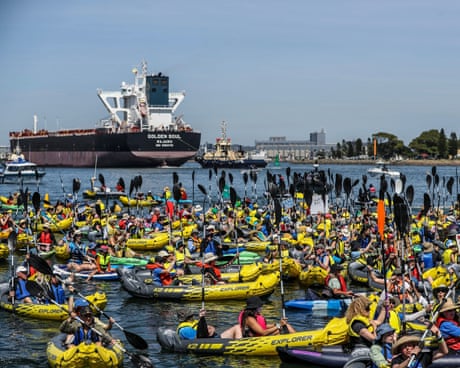
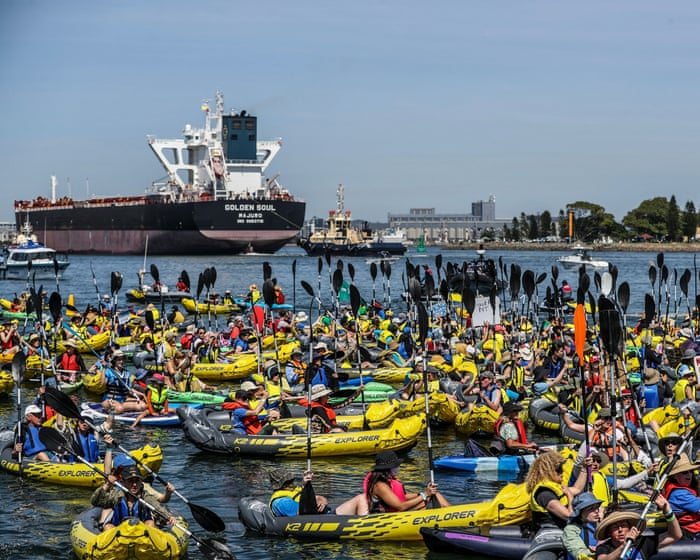
Police drop charges against 125 Rising Tide protesters two years after Newcastle port blockade

Climate change activists faced up to two years in prison if convicted over blockade of world’s largest coal port
Police have dropped charges against more than 100 protesters two years after they blockaded the port of Newcastle as part of one of Australia’s largest climate protests.

In the Newcastle local court on Friday, the police prosecutor withdrew charges against 125 protesters. Legal group Climate Defenders Australia, which is representing the bulk of the protesters, said it had petitioned police to do so.

Continue reading...

© Photograph: Roni Bintang/Getty Images

© Photograph: Roni Bintang/Getty Images

© Photograph: Roni Bintang/Getty Images

  •  

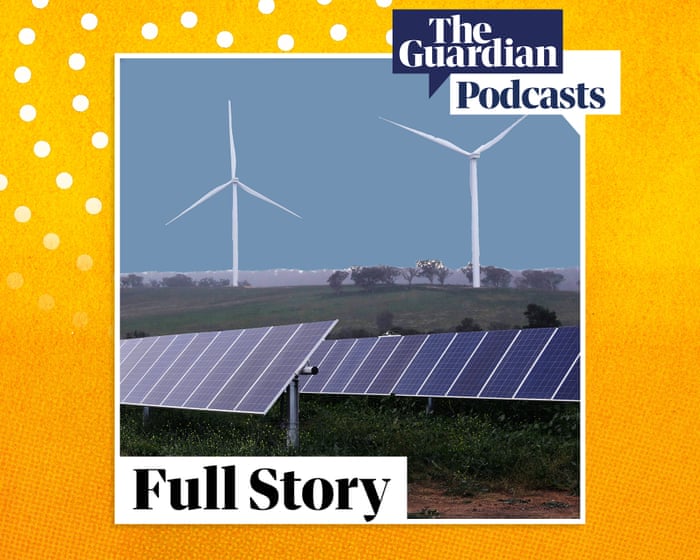
The ‘extremely effective’ campaigns undermining support for renewables – podcast

Despite most Australians supporting clean technology, the campaign against wind and solar infrastructure has proven to be effective, striking a chord with many of those living in remote and rural areas. So how do we bring everyone along on the transition to a renewable energy-focused future? And who’s putting up roadblocks?

The Guardian’s environment and climate correspondent Graham Readfearn joins Reged Ahmad to unpack Australia’s relationship with renewables

Read more:

‘Extremely effective’ organised campaigns against wind and solar undermining support for renewable energy

Karl’s ‘great net zero debate’ was anything but – so beware Coalition claims of renewables taking over ‘two Tasmanias’

Continue reading...

© Composite: Carly Earl

© Composite: Carly Earl

© Composite: Carly Earl

  •  

‘More than just objects’: Australian booksellers raise alarm over ‘horrific’ destruction of rare titles to feed AI

Secondhand booksellers believe they may have been caught up in the AI supply chain that sees old books scanned then destroyed

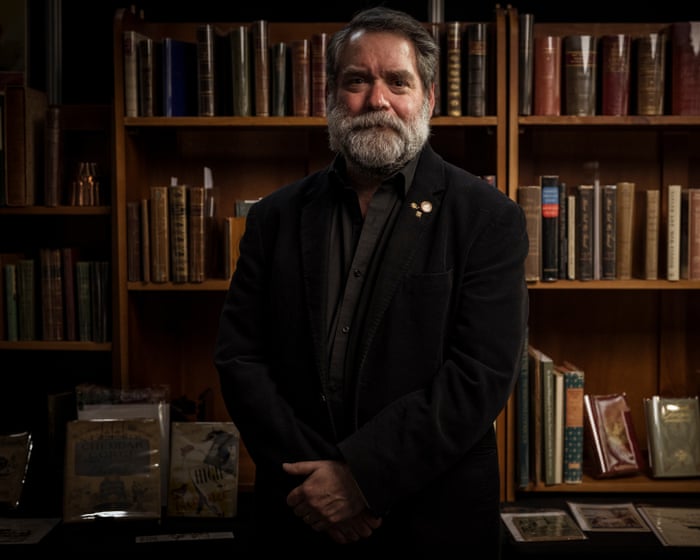
“Sometimes books tell you more than the content,” says Tim White, as he lines up carefully dust-jacketed books and pamphlets in plastic sleeves on temporary shelves in Melbourne University’s Wilson Hall.

He’s preparing his stall for this weekend’s Melbourne Rare Book Fair. For people like White, who runs independent bookshop Books for Cooks, the book as a physical object is just as important as what’s inside it.

Continue reading...

© Photograph: Christopher Hopkins/The Guardian

© Photograph: Christopher Hopkins/The Guardian

© Photograph: Christopher Hopkins/The Guardian

  •  

‘Extremely effective’ organised campaigns against wind and solar undermining support for renewable energy

Clean Energy Council calls for a national, legislated scheme to funnel benefits of hosting renewables projects back to local councils

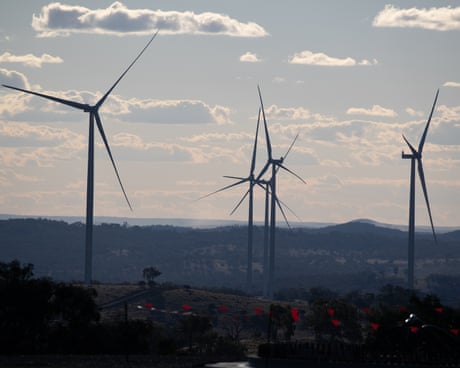
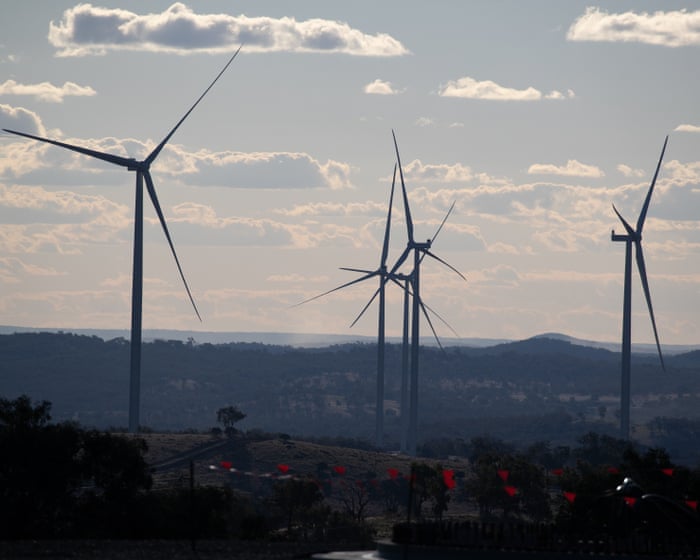
Organised campaigns against wind and solar energy have proved “extremely effective” in undermining community support for renewable energy but enthusiasm for electric vehicles has jumped after Donald Trump’s attack on Iran, according to a detailed snapshot of Australian attitudes to the clean energy transition.

The survey found levels of “deep support” for clean technologies were highest for home batteries and rooftop solar and also improving for major infrastructure projects such as transmission lines, which have been a target for critics of renewables.

Sign up to get climate and environment editor Adam Morton’s Clear Air column as a free newsletter

Continue reading...

© Photograph: David Kelly/The Guardian

© Photograph: David Kelly/The Guardian

© Photograph: David Kelly/The Guardian

  •  

Mooted WA oil refinery ‘dinosaur technology’ amid clean energy transition, experts say

A feasibility study for the Western Australian project will show the project is uneconomic and requires government subsidies, experts say

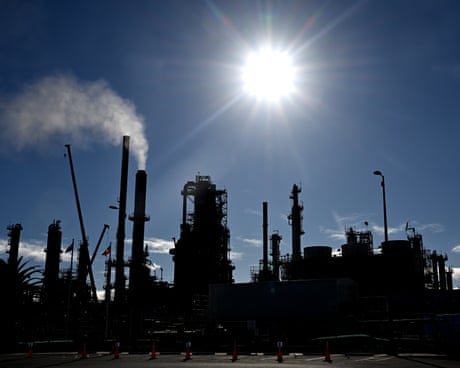
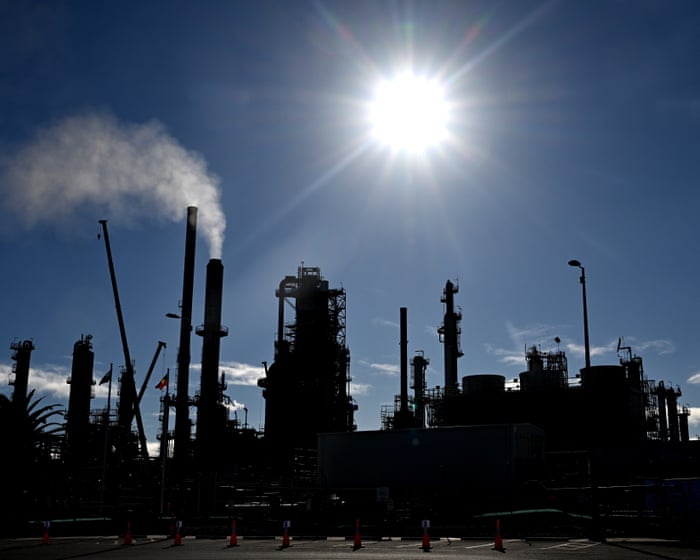
Leading Australian climate policy experts say a new oil refinery in Western Australia would be an investment in “dinosaur technology” that would require public subsidy and do little to solve the country’s fuel security.

The Albanese government announced a $4m early-stage feasibility study with the WA government for a new oil refinery in the Pilbara region on Tuesday, but experts said the money would be better spent on green technology to reduce Australia’s reliance on fossil fuels.

Experts told Guardian Australia doing the feasibility study was not a bad idea, but would ultimately show the project would be uneconomic and would require government subsidies.

Sign up to get climate and environment editor Adam Morton’s Clear Air column as a free newsletter

Continue reading...

© Photograph: Darren England/AAP

© Photograph: Darren England/AAP

© Photograph: Darren England/AAP

  •  

Queensland and NT reject Labor’s push to ensure that power-hungry AI datacentres use renewable energy

Federal-state stoush comes as rating agency warns that electricity bills could skyrocket

Queensland and the Northern Territory have rejected the federal government’s plans to mandate that AI datacentres use renewable power, rubbishing Anthony Albanese’s proposals to regulate the booming technology as “underdeveloped ideas that hand increased power to Canberra”.

The latest federal-state stoush on energy comes as S&P Global, the economic rating agency, warns that power use from datacentres could rise five-fold by 2035 to 10% of Australia’s total consumption, and that a mismatch between delivery timelines for datacentres and renewable projects could lead to energy bills skyrocketing.

Continue reading...

© Photograph: Bloomberg/Getty Images

© Photograph: Bloomberg/Getty Images

© Photograph: Bloomberg/Getty Images

  •  

When the AI bubble bursts, what will Australia do with the tools it built? One man thinks he has the answer

Journalist and author Cory Doctorow is coming to Australia to spread his message – humans will take their jobs back

When the AI bubble bursts, executives who enthusiastically replaced their staff with AI tools will learn that it takes a “really long time” to replace those lost skills, says Cory Doctorow, a science fiction author and journalist.

But those in creative fields should also be warned not to put all their faith in copyright as the best way to safeguard their work, Doctorow warns, just one week after the Australian prime minister, Anthony Albanese, promised to ramp up protection against AI companies who refuse to pay.

Continue reading...

© Photograph: Jessica Pons/The Guardian

© Photograph: Jessica Pons/The Guardian

© Photograph: Jessica Pons/The Guardian

  •  

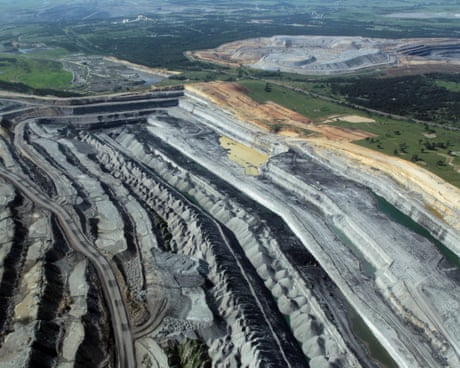
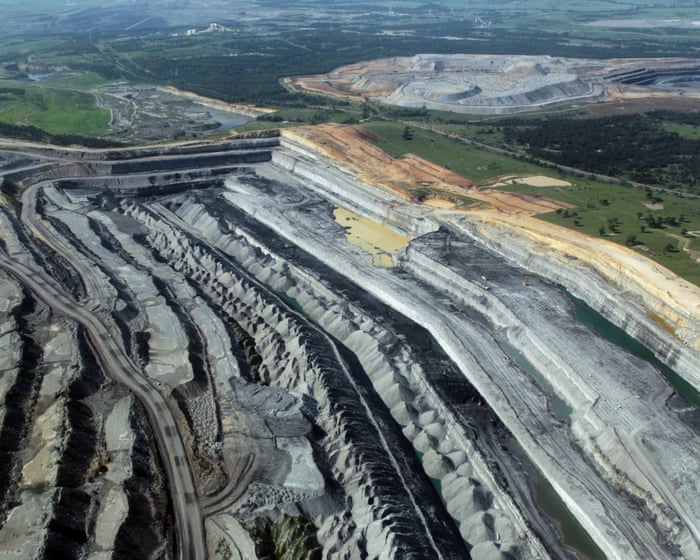
Locals fear for their children’s quality of life if the biggest coalmine extension in NSW is approved

Minns government promised no new coalmines but permits expanding existing sites, despite being behind on climate targets

At Branxton community hall in the New South Wales Hunter Valley last week, local resident Janet Murray was given five minutes to speak about plans for the state’s biggest coalmine extension.

Before her were dozens of people, also there to share their views about whether the 19-year extension proposed by Hunter Valley Operations (HVO) should be allowed to proceed.

Continue reading...

© Photograph: Lock the Gate

© Photograph: Lock the Gate

© Photograph: Lock the Gate

  •  

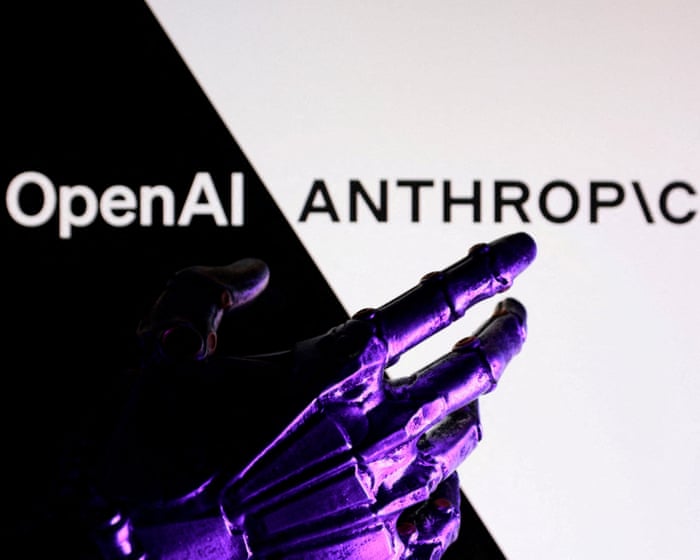
Why are OpenAI and Anthropic cheering on regulation in Australia? The answer has global reach

The companies hope to follow in the footsteps of SpaceX, which raised $86bn and soared to a $2.1tn valuation after it listed on public markets in June

Top US AI developers Anthropic and OpenAI cheered when Australia announced it would set new AI rules.

Big tech celebrating limits on their Silicon Valley VC-funded free-for-all might seem counterintuitive but there’s a much broader play than just what happens in one relatively small market.

Continue reading...

© Photograph: Dado Ruvić/Reuters

© Photograph: Dado Ruvić/Reuters

© Photograph: Dado Ruvić/Reuters

  •  

Climate and rock art advocates take on Woodside’s ‘carbon bomb’ WA gas project in federal court

Albanese government’s approval of North West Shelf gas extension being challenged by the Australian Conservation Foundation and Friends of Australian Rock Art

The Albanese government’s decision to approve one of the world’s largest gas projects in Western Australia is being challenged in the federal court, setting up a significant test of how Australia’s environment law deals with the climate crisis.

The Australian Conservation Foundation (ACF) and Friends of Australian Rock Art (Fara) are this week running concurrent court challenges against the approval of the extension of Woodside’s major North West Shelf gas export project.

Continue reading...

© Photograph: Ari Balle-Bowness/Australian Conservation Foundation

© Photograph: Ari Balle-Bowness/Australian Conservation Foundation

© Photograph: Ari Balle-Bowness/Australian Conservation Foundation

  •  

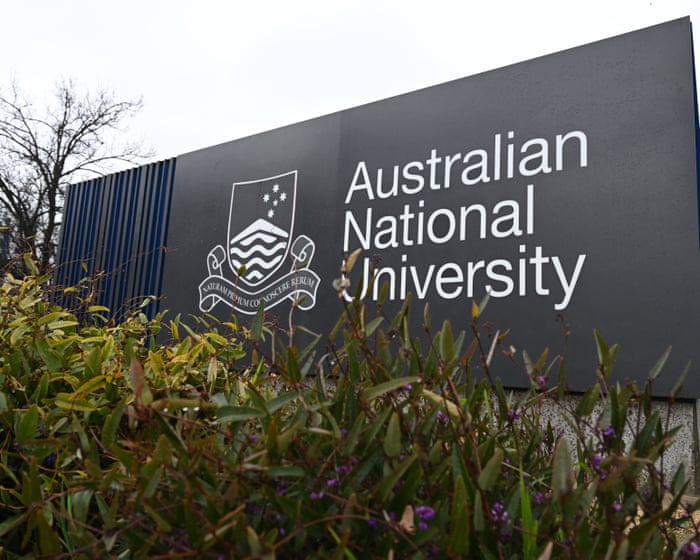
ANU accused of ‘hysterical’ response to students using AI to cheat as unis scramble to ‘secure’ assessments

Australia risks ‘shipping’ intellectual capability overseas if educational rigour not restored, experts warn

An academic at the Australian National University has accused it of a “hysterical” response to students using AI to cheat, as tertiary institutions rush to shore up the credibility of assessments.

But a colleague warned Australia is in danger of “shipping our national intellectual capability” to companies in California and China if educational rigour is not restored.

Continue reading...

© Photograph: Lukas Coch/AAP

© Photograph: Lukas Coch/AAP

© Photograph: Lukas Coch/AAP

  •  

Anthony Albanese says he wants to do AI 'the Australian way' – video

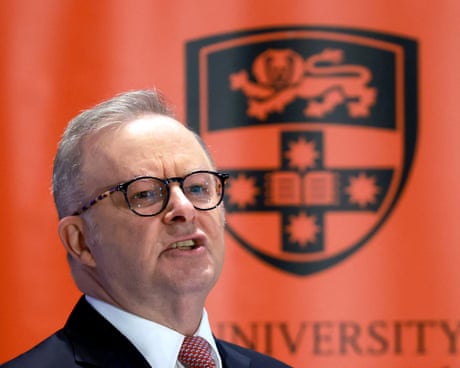
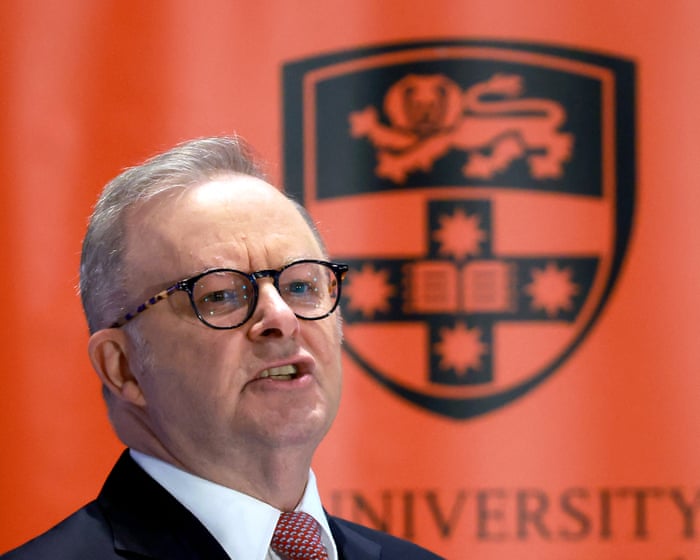
For months, artists and activists have been calling on the prime minister, Anthony Albanese, to act on the AI boom as datacentres pop up around the country. Today he made a major speech at the University of Sydney addressing copyright, the regulation of datacentres and the future of AI in Australia

Continue reading...

© Photograph: The Guardian

© Photograph: The Guardian

© Photograph: The Guardian

  •  

‘Not up for grabs’: Albanese establishes AI office and vows to protect Australian creatives from copyright ‘theft’

PM lays out plan for datacentre development and rejects prospect tech companies will be given free use of Australian data

Anthony Albanese has promised “the strongest possible protection” for Australian creatives against misuse of their work by artificial intelligence models, warning it would be “theft” if writers, artists and musicians didn’t have control of their work or receive payment for its use.

Amid growing community concern about large energy-intensive datacentres, the federal government will also set strict new rules for the facilities, including where they can be built, that they shouldn’t compete for land with housing, their power and water use, and that they don’t increase electricity prices for consumers.

Continue reading...

© Photograph: David Gray/AFP/Getty Images

© Photograph: David Gray/AFP/Getty Images

© Photograph: David Gray/AFP/Getty Images

  •  

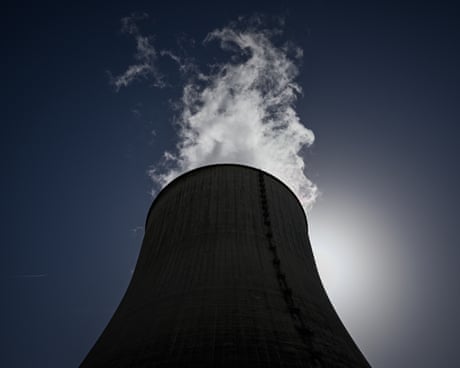
Coalition and One Nation’s plan to ditch net zero would not lower power prices, CSIRO report finds

GenCost report contradicts parties’ claims about abandoning emissions target, and finds nuclear would be most expensive way to generate power

Claims by the Coalition and One Nation that abandoning a net zero climate target would bring down power prices are contradicted in a new CSIRO report on the costs of generating electricity.

Generation costs will probably rise after 2030 regardless of Australia’s policy on net zero, according to the CSIRO’s annual GenCost report, but prices should then stabilise at levels below recent price spikes.

Continue reading...

© Photograph: Philippe Lopez/AFP/Getty Images

© Photograph: Philippe Lopez/AFP/Getty Images

© Photograph: Philippe Lopez/AFP/Getty Images

  •  

AI companies want to water down Australia’s copyright laws. Artists are outraged, Labor is split

Anthony Albanese will deliver a landmark speech on AI this week as MPs are torn between attracting datacentre investment and protecting the rights of creatives

When Anna Funder stood before a pack of journalists at Parliament House this month, she presented herself not just as a writer but also a “victim of crime”.

The Stasiland author was using the analogy to illustrate how technology companies have flagrantly “hoovered up” her literary works for their own profit.

Continue reading...

© Composite: Victoria Hart/AAP/Getty Images

© Composite: Victoria Hart/AAP/Getty Images

© Composite: Victoria Hart/AAP/Getty Images

  •  

Datacentres are a ticking timebomb. We must make sure AI’s benefits outweigh the costs | Nicki Hutley

They suck up energy and water, and blast out heat. Just who is better off from all this investment – aside from tech bros?

The two great existential threats of our time – the climate crisis and AI – come hurtling together in the explosion of datacentres across Australia and around the world.

You can hardly avoid hearing about them these days, either with awed reverence of the promised benefits to humankind or with fear and anger given the implications for the climate, inflation, jobs and even housing affordability.

Continue reading...

© Photograph: Jono Searle/AAP

© Photograph: Jono Searle/AAP

© Photograph: Jono Searle/AAP

  •  

Why are Australian energy prices going up – and when will electricity bills come down?

Power prices are expected to fall from 1 July – but the savings, touted by Chris Bowen, won’t be passed on to many households and businesses

As energy companies prepare to update their electricity offers from July, some are choosing to hit households with higher fixed costs in the form of supply charges, according to reports in the ABC and Australian Financial Review.

For some, the shift could mean higher prices overall, especially for those who don’t consume much energy.

Continue reading...

© Photograph: Dave Hunt/AAP

© Photograph: Dave Hunt/AAP

© Photograph: Dave Hunt/AAP

  •  

Australia can switch from fossil fuel exports to renewables, says next Cop president

Climate minister Chris Bowen says country must prepare for changing world and can play bigger role in reducing emissions

Australia will find exporting fossil fuels increasingly difficult but can switch to exporting clean energy products, the president of the next UN climate negotiations has declared.

Speaking at a climate conference in Bonn, Germany, Chris Bowen, Australia’s minister for climate change and energy, argued his country had led the global push to “transition away from fossil fuels” – based on the rapid growth of renewable energy and batteries in its domestic power grids – and that its economy could manage the switch.

Continue reading...

© Photograph: Bec Lorrimer/The Guardian

© Photograph: Bec Lorrimer/The Guardian

© Photograph: Bec Lorrimer/The Guardian

  •  

Labor to set terms for datacentre and AI growth as it vows not to repeat mistakes of resources boom

Assistant minister agrees concerns over resource usage are legitimate but argues Australia cannot ignore ‘consequential’ economic wave

Australia should learn from the mistakes of the resources boom and set the terms for the AI and datacentres boom, the assistant minister for the digital economy, Andrew Charlton says.

Growth in datacentres has exploded in the past two years, Charlton told the Sydney Institute on Wednesday night, with 44 projects in the pipeline in New South Wales alone seeking 11GW of capacity on the electricity grid.

Continue reading...

© Photograph: Bloomberg/Getty Images

© Photograph: Bloomberg/Getty Images

© Photograph: Bloomberg/Getty Images

  •  
❌