 Login

Archaeologists Find Hundreds of Ancient Glyphs in the Amazon
The geometric earthwork structures, carved into the ground with embankments and ditches, are in some cases more than 2,500 years old, researchers said.


A set of 1.43-million-year-old fossil footprints preserved along the margin of an ancient lake in northern Kenya is offering paleoanthropologists new evidence about the size, gait and social lives of the beings who made them and reopening questions about which species they belonged to.
The post Ancient Footprints in Kenya Hint at Bigger Bodies and Group Behavior among Early Human Relatives appeared first on Sci.News: Breaking Science News.
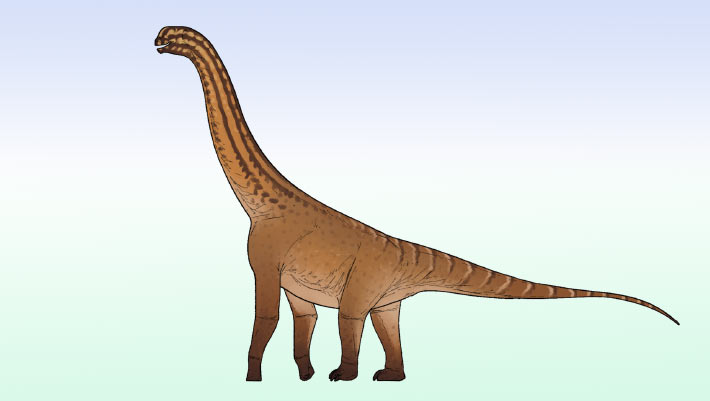
Paleontologists in India have unearthed a partial skeleton of a diminutive, previously unknown neosauropod dinosaur from the Middle Jurassic rocks of Gujarat’s Kachchh Basin.
The post Small Sauropod Dinosaur from Jurassic Period Discovered in India appeared first on Sci.News: Breaking Science News.
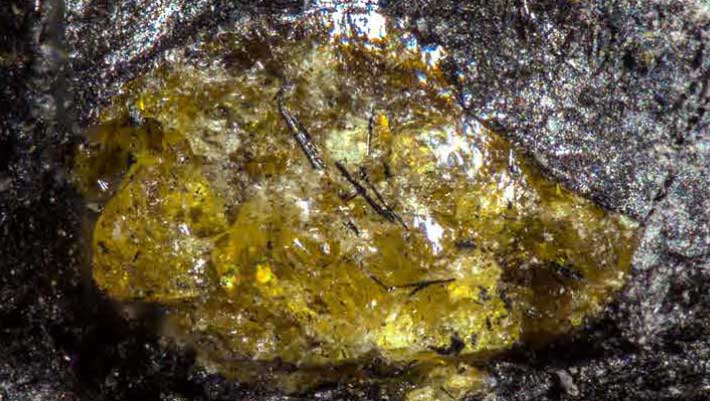
Paleontologists in China have discovered what they say is the earliest confirmed pieces of amber ever found, a fossilized resin roughly 385 million years old (Middle Devonian epoch) that predates the previous record-holder by about 65 million years.
The post 385-Million-Year-Old Amber Found in China appeared first on Sci.News: Breaking Science News.
Scientists from the Southwest Research Institute’s Center for Lunar Origin and Evolution (CLOE) have revealed new models of the Moon’s oldest and largest impact crater, the South Pole-Aitken (SPA) basin, providing fresh insights into the event and resulting material deposition on the lunar surface.
The SwRI team behind the new models, which is part of NASA’s Solar System Exploration Research Virtual Institute, said such details will help prepare future Artemis astronauts for what they could encounter during their upcoming missions.
In a statement announcing the new models, Dr. William Bottke, director of CLOE and executive director of SwRI’s Science Directorate in Boulder, Colorado, said that the basin is an attractive potential target for future Artemis missions since it offers a “rare opportunity” to study an earlier era in the Moon’s history.
“The collision struck the lunar surface with such force that it may have excavated material from deep inside the Moon, including portions of the lunar mantle,” explained the co-author of the impact study detailing the new research.
Although previous studies have modeled impacts that may have caused the Moon’s oldest and largest crater, the team’s new effort has revealed new evidence about the composition of the impacting object and its likely direction and angle.
“Our simulation produces the right shape and nature of the impact basin,” explained the impact study’s lead author, Dr. Shigeru Wakita of Purdue University. “It also tells us about the projectile that created it and the direction of the impact.”

For example, the new model suggests that the object was not a single, uniform object. Instead, the team found that the impactor was likely a “differentiated” object, such as a protoplanet or asteroid, composed of rock and surrounded by an iron core. The models also found that the object approached from the north “at a low angle” before impacting the Moon’s surface on a southward trajectory.
According to the impact study authors, the impact excavated a deep, “asymmetric” cavity and generated enough energy to melt the rock within the crater’s central basin, resulting in the SPA basin’s elongated, tapered shape. Their models also indicated that the object’s lunar collision “lofted” large amounts of material into the air. Critically, their models also revealed that material from both the lunar crust and mantle was likely ejected before ultimately settling back onto the basin floor.
To help potential future lunar astronauts, including members of NASA’s Artemis mission, target the most scientifically valuable lunar samples, a second companion study explored the effects of gravity on ejecta distribution beneath and around the impact basin. According to the team behind that effort, their effort involved direct comparisons of high-resolution gravity data with models. Specifically, they wanted to determine if pieces of the Moon’s crust and mantle were included in the ejection.
After comparing the two, the authors of the second study determined that the SPA basin “likely contains substantial amounts of mantle-derived rocks” both within its interior and mixed into the wider ejecta blanket surrounding the basin. Also critical for future missions, the analysis revealed that this material was not all scattered during the initial impact.
Instead, the new models showed that subsequent, smaller impacts appear to have “excavated” these underlying mantle deposits. As a result, the team suggests that there is likely enough material on the surface of the Moon’s oldest and largest crater “where it could be readily sampled by robotic rovers or astronauts during future missions.”
When discussing the significance of the gravity study’s findings, lead author Dr. Gabriel Gowman of the University of Arizona said that before now, the “precise distribution” of lunar mantle material on the Moon’s surface “has been a big unknown.” For example, some previous theories suggested that the deepest ejecta might be found only in parts of the basin that are not currently included in planned Artemis missions.
Now, the team’s new models suggest that the impact that formed the SPA basin “ejected enough deep material to form a significant deposit that should still be accessible today.” More importantly, Dr. Gowman added, some of that scientifically valuable mantle material “at a trace level” may exist in regions currently under consideration for upcoming Artemis landings. Taken together, Bottke said, the two studies can provide a “powerful roadmap” for future lunar scientific missions to the Moon’s oldest and largest crater.
“It tells us not just how SPA formed, but where to look for the rocks that can answer some of our biggest questions about the Moon’s origin and evolution,” the researcher explained.
The Impact study “A southward differentiated impactor forms the tapered shape of the South Pole-Aitken impact basin on the Moon” was published in Science Advances.
The gravity study “Gravity Mapping of Lunar Mantle Material in South Pole-Aitken Basin Ejecta” was published in the Journal of Geophysical Research: Planets.
Christopher Plain is a Science Fiction and Fantasy novelist and Head Science Writer at The Debrief. Follow and connect with him on X, learn about his books at plainfiction.com, or email him directly at christopher@thedebrief.org.
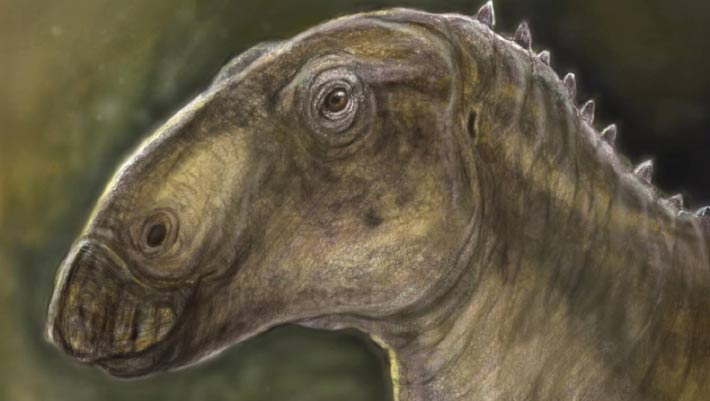
An international team of paleontologists from Romania, Hungary and Italy has identified a new genus and species of herbivorous, duck-billed dinosaur from an incomplete skeleton unearthed in the Hațeg Basin, a bowl-shaped depression in the Carpathians of present-day Romania.
The post New Duck-Billed Dinosaur Unearthed in Romania appeared first on Sci.News: Breaking Science News.


Jian changmaensis is the first non-avian dinosaur found at a paleontological site that has yielded more than 100 specimens of Early Cretaceous birds.
The post New Microraptorine Dinosaur Discovered in China appeared first on Sci.News: Breaking Science News.



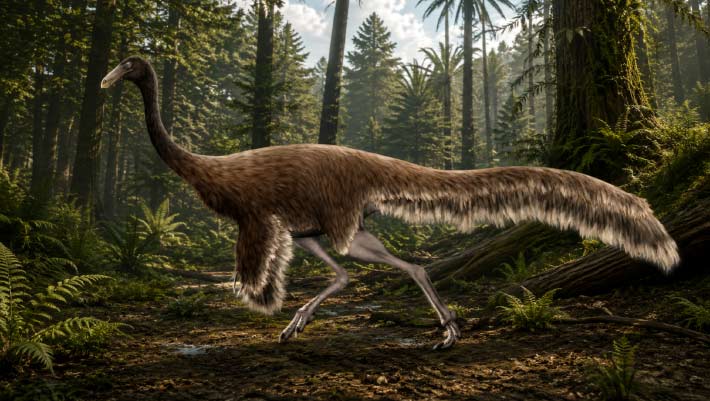
Paleontologists in Canada say they have recovered a dinosaur tail vertebra from 75- to 80-million-year-old marine rocks on a small island off the coast of British Columbia, providing the clearest evidence yet that bird-like ornithomimosaurs once roamed the ancient Pacific coastline of North America.
The post Rare Ostrich-Like Dinosaur Fossil Found on Canadian Island appeared first on Sci.News: Breaking Science News.

