 Login

Intelligent Design’s Summer Reading Sale — 40 Percent Discount While It Lasts!
You’re heading to that beach vacation. Or maybe like us in Washington State, you’re sneezing and coughing from the sunbaked wildfire smoke.

Bentham Science Launches Two New Journals to Accelerate Research in Wireless Communications and Engineering
Bentham Science Publishers has announced the launch of two new peer-reviewed journals designed to capture the rapid transformation of modern technology: Wireless and Communication Letters and Current Engineering Letters and Reviews. Both publications are now open for manuscript submissions, offering researchers an international platform to share emerging discoveries in communication systems, engineering technologies, and interdisciplinary innovation. The launches arrive as advances in artificial intelligence, sixth-generation wireless networks, satellite systems, advanced materials, and sustainable engineering continue to reshape scientific research and industrial development.
Wireless and Communication Letters is focused on the technologies that enable today’s increasingly connected world. The journal will publish original letters, full-length research articles, comprehensive reviews, mini-reviews, and guest-edited thematic issues addressing both theoretical developments and practical applications. Its scope covers the complete communication chain, from antennas and radio-frequency hardware to signal processing, network architecture, cybersecurity, and intelligent software. By emphasizing the efficient dissemination of research, the journal aims to provide a rapid channel for findings that could influence the next generation of wireless infrastructure.
The technical challenges addressed by the journal are central to the future of digital connectivity. Fifth-generation networks have already introduced high-speed mobile broadband, ultra-reliable low-latency communication, and massive machine-type connectivity, but researchers are now investigating 6G systems capable of supporting even greater data rates, extremely precise sensing, and seamless integration with artificial intelligence. These systems may combine terahertz frequencies, reconfigurable intelligent surfaces, distributed antennas, edge computing, and advanced machine-learning algorithms. Such technologies require new approaches to spectrum allocation, energy efficiency, network coordination, and data security.
The journal also welcomes research on the Internet of Things and machine-to-machine communication, areas in which billions of sensors and devices are expected to exchange data with minimal human intervention. In these environments, communication protocols must operate reliably despite limited power, unpredictable radio conditions, and enormous numbers of connected nodes. Research into low-power wide-area networks, intelligent scheduling, network virtualization, and secure device authentication could help support applications ranging from industrial automation and smart cities to remote healthcare and environmental monitoring.
A further component of the journal’s scope involves the physical science of communication. Antenna design, electromagnetic propagation, microwave engineering, optical links, and satellite communication determine how information travels through real environments. Engineers must account for obstacles, atmospheric conditions, interference, polarization, bandwidth limitations, and the movement of users or spacecraft. Developments in compact antennas, beamforming, optical wireless communication, and satellite-terrestrial integration could improve connectivity in rural regions, disaster zones, transportation systems, and future space missions.
Wireless and Communication Letters is led by Editor-in-Chief Dr. Nasimuddin of the Antenna and Optical Department at the Institute for Infocomm Research in Singapore. Supported by an international editorial board, the journal states that it will apply a rigorous and objective peer-review process. This is particularly important in a field where theoretical claims must often be tested through simulations, prototypes, channel measurements, or performance comparisons. Research involving modulation, coding, information theory, cognitive radio, software-defined networking, artificial intelligence, privacy, and communication protocols will be considered within the journal’s broad technological remit.
Alongside the communications title, Bentham Science has introduced Current Engineering Letters and Reviews, an interdisciplinary journal intended to connect research across the full spectrum of engineering sciences. Announced on 3 August 2026, the journal will publish research articles, short communications, comprehensive reviews, mini-reviews, and thematic issues. Its mission is to bring together discoveries that are often separated into specialist fields, reflecting the reality that many modern technologies emerge from collaboration among mechanical, electrical, materials, chemical, biomedical, environmental, and computer engineers.
The new engineering journal will cover aerospace, civil, structural, transportation, manufacturing, energy, robotics, automation, nanotechnology, artificial intelligence, and digital engineering. It will also address sustainable engineering, renewable energy systems, smart materials, advanced manufacturing, and biomedical technologies. These subjects are increasingly connected: an electric vehicle, for example, depends simultaneously on materials science, power electronics, software, communications, manufacturing, and transportation engineering. An interdisciplinary publication can provide a forum for examining such systems as integrated technological platforms rather than isolated components.
The scientific importance of this approach is becoming more visible as engineers confront challenges involving climate change, resource efficiency, resilient infrastructure, and automation. Renewable energy systems require improved storage, power conversion, and grid management; smart materials can respond to changes in temperature, pressure, or electromagnetic fields; and artificial intelligence can optimize industrial processes by identifying patterns in large streams of sensor data. At the same time, engineering research must demonstrate reliability, scalability, safety, and economic feasibility if laboratory innovations are to produce measurable benefits in society and industry.
Both journals invite contributions from researchers, engineers, scientists, academics, and industry professionals worldwide. Bentham Science says that information about open-access policies, article processing charges, waiver eligibility, editorial policies, and complaints and appeals procedures is available through the respective journal websites. With their emphasis on rapid communication, technical rigor, and interdisciplinary exchange, the two publications seek to become new hubs for research at the intersection of connectivity, intelligent systems, sustainable technology, and engineering innovation.
Subject of Research: Wireless communications, communication engineering, interdisciplinary engineering research, emerging technologies, artificial intelligence, sustainable engineering, and advanced technological systems.
Article Title: Bentham Science Launches Two New Journals to Accelerate Research in Wireless Communications and Engineering
News Publication Date: 3 August 2026 (for the announcement of Current Engineering Letters and Reviews; no publication date is provided for Wireless and Communication Letters).
Wireless communications, 5G, 6G, Internet of Things, satellite communications, antenna design, signal processing, artificial intelligence, engineering research, sustainable engineering, robotics, renewable energy, smart materials, advanced manufacturing.
A common complication of early birth is being thrust into a medical debate that reaches far beyond the neonatal intensive-care unit: how low is too low when a late preterm baby’s blood glucose falls, and what—if anything—does that episode mean years later? A new article in Pediatric Research examines late preterm hypoglycemia through the lens of long-term evidence, highlighting why a seemingly brief metabolic disturbance has become one of neonatology’s most closely watched questions.
Late preterm infants are typically born between 34 weeks and 36 weeks plus six days of gestation. They often appear stronger and more mature than very preterm babies, but their brains, hormone systems and feeding abilities are still developing. After birth, glucose levels can drop as the infant transitions from a constant placental supply to intermittent feeding. Immature glycogen stores, limited fat reserves, difficulty coordinating sucking and swallowing, and illness-related stress can all increase the risk of hypoglycemia.
Glucose is the brain’s primary energy source during early life, making neonatal hypoglycemia biologically concerning. When glucose delivery falls, the brain may initially compensate by using alternative fuels, including lactate and ketone bodies. If the shortage is severe, prolonged or repeatedly missed, however, energy production can become insufficient. This may interfere with neuronal signaling and, in extreme cases, contribute to cellular injury. The challenge is that many affected newborns show no obvious symptoms, while symptomatic infants may display only subtle signs such as jitteriness, poor feeding, lethargy, temperature instability or apnea.
The article by U. Felderhoff-Müser focuses attention on a crucial gap between immediate treatment and long-term certainty. Hospitals commonly screen infants considered vulnerable to hypoglycemia, including late preterm newborns, and intervene with feeding, buccal dextrose gel or intravenous glucose when indicated. These measures are designed to restore glucose quickly and prevent neurological stress. Yet the threshold used to define hypoglycemia is not a universal biological line. It is a clinical value shaped by gestational age, postnatal age, symptoms, measurement method and the balance between avoiding harm and preventing unnecessary intervention.
That uncertainty has made long-term follow-up essential. Researchers have investigated whether neonatal hypoglycemia is associated with later problems involving cognition, executive function, attention, language, motor coordination and school performance. Some studies have reported higher risks after severe, recurrent or prolonged episodes, while others have found limited or inconsistent effects, particularly when low glucose was detected and treated promptly. The differences may reflect more than glucose itself: prematurity, fetal growth restriction, maternal diabetes, infection, respiratory illness and socioeconomic conditions can independently influence neurodevelopment.
This is one reason the evidence remains difficult to interpret. Most long-term studies are observational, meaning researchers cannot randomly assign infants to experience different glucose levels. Instead, they compare children who had hypoglycemia with those who did not, while attempting to account for other medical and social factors. Even sophisticated statistical adjustments may not eliminate hidden confounding. In addition, studies use different definitions of hypoglycemia, different monitoring schedules and different ages or tools for developmental testing, making direct comparisons challenging.
The timing and pattern of low glucose may be as important as the lowest recorded number. A single short episode may carry a different biological significance from repeated episodes or an extended period below a treatment threshold. Continuous glucose monitoring has raised further questions by revealing fluctuations that intermittent heel-stick testing can miss, although sensor accuracy in newborns and the clinical meaning of every detected dip are still being evaluated. The emerging picture is therefore more complex than a simple division between “normal” and “abnormal.”
For clinicians and families, the practical message is not to dismiss hypoglycemia or to assume that every low reading predicts disability. Instead, the long-term evidence supports careful surveillance of infants at risk, rapid confirmation of abnormal results, and treatment strategies that protect the brain without disrupting feeding or exposing babies to unnecessary interventions. Developmental follow-up may be particularly important for infants with severe or recurrent episodes, neurological symptoms, or multiple additional risk factors. Such monitoring can identify difficulties early, when speech, occupational or educational support may have the greatest effect.
The discussion also underscores the need for better research. Future studies will need standardized glucose definitions, precise records of duration and recurrence, improved measurement technologies and follow-up extending into school age and adolescence. Researchers must also distinguish the effects of hypoglycemia from the conditions that caused it and examine outcomes beyond a single global developmental score. Felderhoff-Müser’s review places late preterm hypoglycemia in that broader scientific context: a common neonatal event whose immediate management is well established, but whose long-term consequences still demand careful, nuanced investigation.
Subject of Research: Late preterm hypoglycemia and its long-term neurodevelopmental evidence
Article Title: Late preterm hypoglycemia through the lens of long-term evidence
Article References: Felderhoff-Müser, U. “Late preterm hypoglycemia through the lens of long-term evidence.” Pediatric Research (2026). https://doi.org/10.1038/s41390-026-05316-6
Image Credits: AI Generated
DOI: https://doi.org/10.1038/s41390-026-05316-6
Keywords: late preterm infants, neonatal hypoglycemia, blood glucose, neurodevelopment, brain health, newborn care, long-term outcomes
When a team of physicists in Paris fabricated the world’s first temporal photonic crystal, they added a new dimension to humanity’s quest to control light: time. From lighting our homes to advanced fiber optics and lasers, humans have long worked to control light, and now researchers say that can be achieved in a fourth dimension.
Yannis Laplace led the team at the Laboratory of Irradiated Solids (LSI) in demonstrating the temporal photonic crystal, with the help of other European institutions, which was revealed in a recent paper published in Nature.
As light hits the crystal, a terahertz electromagnetic wave rapidly modulates its optical properties, producing a device that controls light over time without expending energy.
Controlling the properties of light for applications in telecommunications, sensors, and light sources is an active research field and is often reliant on crystals. In technical terms, a crystal is simply a regularly and periodically organized system. While we primarily think of translucent, shining crystals, they can be constructed of other forms of matter, such as gas or liquids, so long as their atoms arrange into regular, well-defined intervals.
How atoms arrange to form crystals grants their electrons and the photons they emit unique properties, including color and energy. Targeting photons specifically became an interest of scientists in the 1980s, with the development of photonic crystals, whose alternating materials each had unique effects on photons. These photonics gave rise to modern lasers, optical fibers, and photodetectors, technologies that have advanced considerably in recent decades.
In the last decade, researchers have experimented with a new kind of crystal: the time crystal. They are comprised of a unique form of matter in which particles repeat a continuous sequence—not just in the three physical dimensions, but also in time, without expending any energy.
The LSI team sought to combine photonic crystals with time crystals to develop a temporal photonic crystal that would control a light-matter interaction by alternating over time. Their work represents the first time such an idea has moved from the theoretical realm into the physical.
The device the researchers constructed operates in the high terahertz range, pushing light to oscillate 1000 billion times a second. It consists of micrometer-scale gold structures, shaped like battlements, leaving open cavities separated from an indium-antimony semiconductor by an insulating layer. The cavities between the gold structures trap light photons.
To demonstrate their device in the real world, the LSI team bombarded it with terahertz laser pulses and recorded the material’s optical properties, modulating light over time. The effect was incredibly powerful, creating a strong modulation that alternated one billionth of a billionth of a second.
At the semiconductor layer, the researchers observed electrons forming from the light waves in what are called “surface plasmons,” oscillating with their effective mass. The greater their speed, the heavier these electrons become, producing the device’s optical modulations.
Beyond this observed phenomenon, the researchers suspect other interesting conditions may be occurring within the crystal. Some indirect evidence suggests that photons trapped inside the structure are amplified, although presently no direct observations have confirmed this. The team is continuing with experiments in hopes of eventually capturing this photon trapping phenomenon.
Laplace and his colleagues see these unique time crystals as eventually being a pathway toward the creation of terahertz-scale light sources and detectors, which would fit between those of electronics and visible light frequencies.
The paper, “Plasmonic Metamaterial Time Crystal,” appeared in Nature on July 29, 2026.
Ryan Whalen covers science and technology for The Debrief. He holds an MA in History and a Master of Library and Information Science with a certificate in Data Science. He can be contacted at ryan@thedebrief.org.


Chinese researchers are using laser technology to vastly extend the flight time of drones, marking a significant shift in UAV capabilities.
The achievement was reported by researchers from China’s Civil Aviation University, who reported their findings in laser-based drone charging technology in a recent article published in Matter & Light.
The new drone concept utilizes a lightweight receiver, repurposing solar cell technology to absorb laser light and convert it into electricity to power a device.
“Imagine a future where drones inspecting forests, monitoring disasters, or delivering packages no longer need to land frequently to replace batteries,” said senior author Jianhua Han of Civil Aviation University of China. “As drones take on longer missions, battery life has become one of the biggest barriers.”
At the core of the breakthrough is perovskite, a class of synthetic compounds with a crystalline structure highly conducive to solar power applications. The team developed a perovskite laser cell-thermoelectric (PLC-TE) tandem device that optimizes a solar cell to accept laser energy.

The cell’s perovskite converts laser energy into electricity, which can be a messy process, as some of the power is lost as heat. The thermoelectric layer addresses this problem by capturing heat and converting it into electricity via the temperature differential between its warmer, laser-facing side and its cooler side. However, that contrast requirement can be an issue when the laser uniformly heats the entire drone, reducing the efficiency of that heat-to-energy conversion.
“When we tested the device under a high-power laser, the thermal camera showed temperatures of 80 to 90 degrees Celsius,” Han said. “That was much higher than we expected and made us realize that heat buildup was a far more serious problem than we had imagined.”
To mitigate overheating concerns, the receiver was mounted on the drone’s wings, kept separate from other components, and paired with heat-blocking technology to enable laser-to-electric energy conversion without overheating sensitive electronics.
This heat-blocking technology included nanocrystals embedded in the PLC-TE tandem device, which acted as a thermal barrier due to their poor thermal conductivity. With the nanocrystals in place, the researchers tested the conversion device on its own and observed a significant slowdown in heat flow during prolonged laser exposure, which would cool the drone overall.
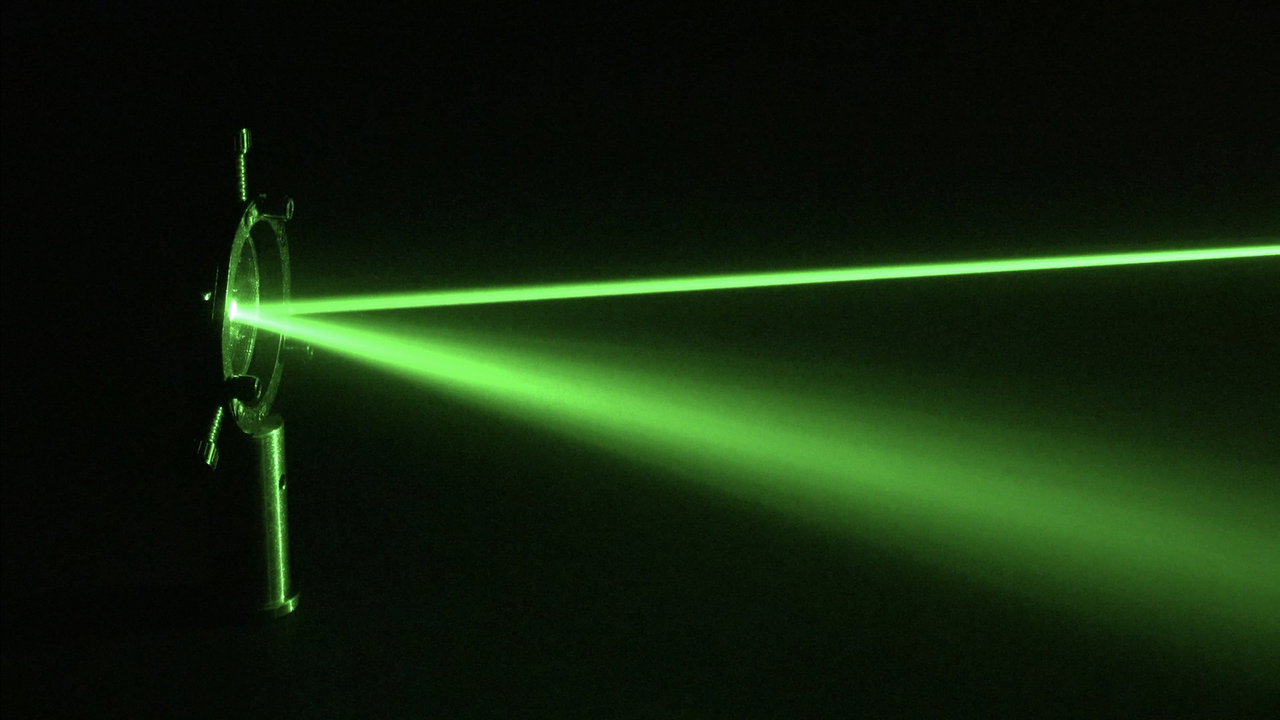
This PLC-TE device was bombarded with a green laser in a laboratory experiment and converted 38.49% of the beam’s energy into electricity, a high percentage compared to other wireless charging systems in similar scenarios.
Next, the team integrated the energy conversion system onto a stationary lab drone and also added airflow channels to the wings. In subsequent laboratory tests, laser bombardment supplied sufficient energy to power the drone’s propeller, while the airflow channels effectively cooled the thermoelectric layer’s cold side, maximizing heat-to-electricity conversion.
“Previous studies largely focused on the materials or the device itself,” Han explained. “We wanted to think beyond the laboratory, to how the system could actually be integrated into an aircraft, cooled during operation, and made compatible with flight. It isn’t just a materials science problem; it’s an engineering one.”
Work continues on this wireless drone charging system, with outdoor flight tests on a lightweight frame scheduled. These will be paying particular attention to the system’s reliability under real-world outdoor conditions. However, the team notes that energy conversion efficiency will not be their sole research area, as the accuracy of laser tracking will be essential to the system’s safe operation.
“Our work demonstrates the possibility of ‘refueling aircraft with light,’” Han concluded. “Going from 1 to 100 will require solving many engineering challenges, but we hope this provides a starting point for future development.”
The paper, “Sb2Se3 Nanocrystals Enable Efficient Perovskite-Thermoelectric Tandem Devices for Laser-Powered Unmanned Aerial Vehicles,” appeared in Matter & Light on July 29, 2026.
Ryan Whalen covers science and technology for The Debrief. He holds an MA in History and a Master of Library and Information Science with a certificate in Data Science. He can be contacted at ryan@thedebrief.org.
Chinese researchers have revealed a new technology that could soon enable drones to charge mid-flight using high-powered lasers.
The scientists built a prototype of the system using a model of a drone and attached a receiver that works similarly to a solar cell. Fixed to the underside of the wing, the receiver successfully converted the energy from the laser beam into electricity to power the aircraft’s propellers.
The breakthrough was made by researchers at the Civil Aviation University of China and Tsinghua University, with details outlined in a new study published on 29 July in the journal Matter & Light.
"Previous studies largely focused on the materials or the device itself," study senior author Jianhua Han, a researcher at the Civil Aviation University of China, said in a statement. "We wanted to think beyond the laboratory, to how the system could actually be integrated into an aircraft, cooled during operation, and made compatible with flight. It isn’t just a materials science problem; it’s an engineering one."
The receiver is what's known as a perovskite laser cell-thermoelectric (PLC-TE) tandem device optimized to turn laser light into electricity.
Perovskite is a highly efficient material used in cutting-edge solar cells, noteworthy for its crystal structure that allows it to capture more wavelengths of the light spectrum than silicon. For this reason, it’s prized as a future solar material, with some research indicating it could even be used to convert ambient indoor light into usable electricity.
When hit with a green laser, the receiver converted 38.49% of the light into electricity — well above the 34% peak results for perovskite-silicon tandem cells as recorded by the U.S. Department of Energy (DOE).
In initial testing, the researchers discovered an unwelcome side effect of using the laser: the drone was being heated to extreme temperatures, reducing its overall efficiency.
"When we tested the device under a high-power laser, the thermal camera showed temperatures of 80 to 90 degrees Celsius [176 to 194 degrees Fahrenheit]," said Han. "That was much higher than we expected and made us realise that heat buildup was a far more serious problem than we had imagined."
To combat this, the researchers introduced nanocrystals made from antimony triselenide — an abundant semiconductor material — into the PLC-TE design. This plays the role of a thermal barrier, preventing the device from releasing too much heat.
In addition to their cooling innovation, the constant airflow generated by the drone’s propeller helped further regulate the temperature of the receiver’s cool side.
"Imagine a future where drones inspecting forests, monitoring disasters, or delivering packages no longer need to land frequently to replace batteries,” said Han. "As drones take on longer missions, battery life has become one of the biggest barriers."
The researchers specifically identified reconnaissance, logistics, and disaster relief as key areas where drones powered by lasers could one day be used. But they also said more needs to be done to develop real-time tracking systems that precisely target the PLC-TE on in-flight drones before the system could be used in the wild.
Going forward, the researchers will test how the device functions on a real lightweight drone in outdoor conditions.
The promise of indefinite flight has made wireless power tests a focus for militaries around the world. If achieved, reconnaissance and weapons-carrying unmanned aerial vehicles (UAVs) could operate in radically different environments than those they are currently restricted to, with regular refuelling requirements.
For example, the most commonly used hand-launched unmanned aerial vehicle (UAV), the AeroVironment RQ-11 Raven, can fly for a maximum flight time of 60 to 90 minutes before needing to charge.
In June 2025, the U.S. Defense Advanced Research Projects Agency (DARPA) successfully beamed 800 watts of power over a distance of 5.3 miles (8.6 kilometers), as part of its Persistent Optical Wireless Energy Relay (POWER) program.
Private companies such as PowerLight Technologies, in collaboration with the U.S. Department of Defense, have said they could deliver kilowatts of energy to in-flight drones operating at altitudes of up to 5,000 feet (1,500 meters).
Neonatal necrotizing enterocolitis (NEC) remains one of pediatrics’ most devastating intestinal disorders, and safer, mechanism-driven therapies are urgently needed. New findings suggest that tiny vesicles naturally present in human breast milk—exosomes—may offer protection by delivering a specific regulatory microRNA.
Researchers report that exosomes enriched with miR-144-5p can help restore the intestinal tight junction barrier, a key defense line that collapses during NEC. By focusing on miR-144-5p, the team moves beyond earlier observations that breast milk exosomes can reduce NEC severity and instead pinpoints a molecular cargo likely responsible for part of that benefit.
The study centers on how NEC damages epithelial integrity and promotes inflammatory signaling. Tight junction disruption is associated with increased permeability, bacterial translocation, and worsening inflammation—conditions that accelerate disease progression in vulnerable newborns. The investigators therefore examined whether miR-144-5p could counter these barrier failures in NEC contexts.
Mechanistically, the work links miR-144-5p action to the TLR4/NF-κB pathway, a well-known inflammatory axis. Toll-like receptor 4 (TLR4) senses danger-associated cues and can trigger NF-κB activation, driving transcription of pro-inflammatory mediators. In NEC, exaggerated signaling through this route contributes to tissue injury and impaired repair.
By modulating this cascade, miR-144-5p appears to dampen downstream inflammatory responses while promoting recovery of junctional structure. The paper’s data indicate that exosomal delivery is central: miRNAs packaged within vesicles can be taken up by recipient cells more efficiently than naked RNA, enabling functional gene regulation in target intestinal compartments.
Together, the results support a model in which breast milk exosomal miR-144-5p alleviates NEC by suppressing TLR4-driven NF-κB activation, thereby reducing inflammatory injury and enabling tighter regulation of epithelial junctions. If translated, such a cargo-guided approach could complement existing supportive NEC treatments.
While additional work will be required to confirm efficacy across models and to evaluate safety, the study provides a clear mechanistic roadmap: therapeutic exosomes or miRNA mimics that bias TLR4/NF-κB activity may be a promising strategy for protecting the neonatal gut.
Subject of Research: Neonatal necrotizing enterocolitis (NEC), breast milk-derived exosomes, miR-144-5p, tight junction barrier repair, TLR4/NF-κB signaling.
Article Title: Human milk exosomal-miR-144-5p alleviates neonatal necrotizing enterocolitis by regulating the TLR4/NF-κB pathway.
Article References: Chen, Z., Chen, C., Hu, X. et al. Human milk exosomal-miR-144-5p alleviates neonatal necrotizing enterocolitis by regulating the TLR4/NF-κB pathway. Pediatr Res (2026). https://doi.org/10.1038/s41390-026-05305-9
Image Credits: AI Generated
DOI: 10.1038/s41390-026-05305-9
Keywords:


Most products made for pets are designed entirely by humans. But what if animals could help design the things they use? A new project suggests they can. Researchers worked with a pet parakeet named Shiso to create a wearable perch based on the bird’s own preferences, turning the design process into a true collaboration between […]
The post This clever parakeet helped design its own perch appeared first on Knowridge Science Report.

Imagine wearing a small patch that can instantly warn you if you are exposed to dangerous gases or contaminated water. Instead of sending an alert to your phone that you might not notice right away, the patch vibrates against your skin, giving you an immediate warning to move away from danger. Researchers at North Carolina […]
The post This smart wearable patch vibrates to warn you of dangerous gases and toxic water appeared first on Knowridge Science Report.


Traditional phishing techniques are in decline as a result of the disruption of the Tycoon2FA phishing-as-a-service (PHaaS) platform, Microsoft said in a new report, “Email threat landscape: Q2 2026 trends and insights”.
“Phishing volume linked to the platform fell 92% from pre-disruption averages, including QR code phishing and CAPTCHA-gated phishing both declining from their March highs,” the company wrote in the report.
The takedown reduced activity across multiple phishing categories, forcing attackers to shift to newer delivery methods.
Riding this shift in were a few notable phishing campaigns, including an automated business email compromise (BEC) campaign that reached 42,000 organizations in under three hours, and a multi-stage phishing campaign that used nested email (EML) files, calendar invitations, and a Microsoft authentication redirect to deliver malware.
To counter phishing attacks, Microsoft recommends blocking emails containing known bad URLs/ subject fields, enabling password-less authentication methods, or moving to MFA for accounts that still require passwords.
The take-down of Tycoon2FA forced its operators to abandon portions of their infrastructure and rework hosting, domain registrations, and delivery mechanisms.
“After falling 15% in March and another 22% in April, Tycoon2FA-linked phishing volume dropped 74% in May to just 1.5 million messages, then fell another 20% in June to 1.2 million, by far the lowest monthly volumes observed in at least a year,” Microsoft said.
The decline extended to QR Code lures and fake CAPTCHA pages, two phishing techniques in which Tycoon2FA accounted for 12% and 14% of industry activity in June, respectively. This indicated that the platform’s customer base had not been able to migrate to a replacement infrastructure.
But cutting off one head of the hacker hydra only gave rise to new tactics elsewhere.
The adaptation came in the form of using Microsoft Teams as a social engineering channel. Attackers established conversations to build trust before attempting credential theft or delivering malicious payloads. “Teams-based phishing volume climbed steadily throughout Q2, with the average number of detected attacks rising 19% from March to April, holding roughly flat into May (+1%), then increasing another 10% into June,” Microsoft said.
Microsoft also observed a highly automated BEC campaign that reached over 67,000 users using scripted emails, Amazon Simple Email Service (SES), and engagement tracking, alongside a separate phishing campaign targeting 107,000 users that abused Microsoft’s authentication flow and trusted cloud services, including Teams archive recording and ICS calendar invite, to disguise malware delivery behind legitimate infrastructure.
While QR Code and Captcha-based phishing attacks dropped significantly in the second quarter, business email compromise (BEC) charted jumped 121% between March and April, before dropping down again in May.
QR Code phishing represented 8.3 million attacks in June 2026, down from a peak of 18.7 million in March. Similarly, Captcha-gated phishing fell from 12 million attacks in March to 2.2 million in June.
BEC attacks hit 9 million in March, falling to 3.9 million in June.
But even as these phishing classics lost momentum and newer techniques emerged, Microsoft’s defensive advice remained rooted in the basics. It noted organizations should complement email filtering with phishing-resistant authentication such as passkeys and phishing-resistant MFA to reduce the effectiveness of credential theft campaigns.
The company also recommended strengthening Exchange Online Protection and Microsoft Defender for Office 365 with capabilities such as Safe links and Zero-hour Auto Purge (ZAP), in which malicious emails already delivered to mailboxes are removed before they are read, alongside enforcing password-less authentication methods like Windows Hello, FIDO keys, and Microsoft Authenticator.
Microsoft concluded its report with a list of indicators of compromise (IoCs) from the threats observed in the quarter to support detection efforts.
This article first appeared on CSO.


