❌

Reading view

Trump blames Tim Walz for water hacks even though it’s probably Iran

Donald Trump speaks during the House Republican Party member retreat. | Image: Mandel NGAN / AFP via Getty Images

The FBI, the EPA, and the Cybersecurity and Infrastructure Security Agency (CISA) have stopped short of officially blaming Iran for a spate of cyberattacks on Minnesota's water systems, but consensus is that Iran is likely behind them. That, of course, hasn't stopped Donald Trump from sharing his own theory - that Governor Tim Walz is to blame and telling reporters that "I don't think there was an Iranian cyberattack."

Trump's comments come shortly after the FBI issued a warning that the cyberattacks on American infrastructure were spreading to other states. In Minnesota alone, at least 30 community water systems had been targeted in what a …

Read the full story at The Verge.

  •  

China’s tech advances are causing chaos from Silicon Valley to the White House

New AI models, advanced robots and specialty computer chips are unsettling markets and the US tech industry

Over the past month, a series of advancements in China’s artificial intelligence, chip manufacturing and robotics technologies have rattled financial markets, caused divisions among US tech moguls and left the Trump administration scrambling to respond.

Silicon Valley has long pointed to China’s tech industry as a competitive threat and used its growth as rationale for why US firms should not face regulatory oversight that could slow them down. In recent weeks, however, China’s progress has pushed US tech CEOs past vague warnings and into open disagreement over how to address Chinese-made products upending their industry.

Continue reading...

© Photograph: Héctor Retamal/AFP/Getty Images

© Photograph: Héctor Retamal/AFP/Getty Images

© Photograph: Héctor Retamal/AFP/Getty Images

  •  

Burnham risks first revolt as PM over apparent support for North Sea drilling

Labour MPs fear No 10 team lack up-to-date energy insight and don’t fully recognise voters’ climate concerns

Andy Burnham was told he could face the first revolt of his premiership as Labour MPs and climate experts condemned his apparent support for renewed drilling for oil and gas.

As the UK suffers through drought, fires and heatwaves, the prime minister gave the strongest indication yet on Friday he was minded to allow new drilling. His comments came just hours before the UN secretary-general warned “every new fossil fuel project” made heatwaves more dangerous.

Continue reading...

© Photograph: Annabel Lee-Ellis/PA

© Photograph: Annabel Lee-Ellis/PA

© Photograph: Annabel Lee-Ellis/PA

  •  

Rules of the road needed for orbital data center constellations

Starcloud

As companies develop large constellations of orbital data center satellites, experts say now is the time to start thinking about some critical space safety topics and rules of the road.

The post Rules of the road needed for orbital data center constellations appeared first on SpaceNews.

  •  

Burnham promises ‘pragmatic’ approach to North Sea oil and gas

PM tells reporters the government cannot ignore the energy resource ‘when people are struggling’

Andy Burnham has said he will take a “pragmatic” approach to oil and gas drilling in the North Sea, saying the government could not ignore the potential energy resources it holds.

The prime minister’s comments came in response to a question about his conversation with Donald Trump on his first day in No 10. Trump had said Burnham told him he would “open up” North Sea oil, something the UK summary of the call made no mention of.

Continue reading...

© Photograph: Kirsty Wigglesworth/Reuters

© Photograph: Kirsty Wigglesworth/Reuters

© Photograph: Kirsty Wigglesworth/Reuters

  •  

Proposed rule would exempt commercial launch licensing from environmental regulations

Starship sunset

The Department of Transportation is proposing to exempt commercial space launch licensing from many environmental regulations, a move praised by industry but criticized by environmental groups.

The post Proposed rule would exempt commercial launch licensing from environmental regulations appeared first on SpaceNews.

  •  

Mooted WA oil refinery ‘dinosaur technology’ amid clean energy transition, experts say

A feasibility study for the Western Australian project will show the project is uneconomic and requires government subsidies, experts say

Leading Australian climate policy experts say a new oil refinery in Western Australia would be an investment in “dinosaur technology” that would require public subsidy and do little to solve the country’s fuel security.

The Albanese government announced a $4m early-stage feasibility study with the WA government for a new oil refinery in the Pilbara region on Tuesday, but experts said the money would be better spent on green technology to reduce Australia’s reliance on fossil fuels.

Experts told Guardian Australia doing the feasibility study was not a bad idea, but would ultimately show the project would be uneconomic and would require government subsidies.

Sign up to get climate and environment editor Adam Morton’s Clear Air column as a free newsletter

Continue reading...

© Photograph: Darren England/AAP

© Photograph: Darren England/AAP

© Photograph: Darren England/AAP

  •  

Queensland and NT reject Labor’s push to ensure that power-hungry AI datacentres use renewable energy

Federal-state stoush comes as rating agency warns that electricity bills could skyrocket

Queensland and the Northern Territory have rejected the federal government’s plans to mandate that AI datacentres use renewable power, rubbishing Anthony Albanese’s proposals to regulate the booming technology as “underdeveloped ideas that hand increased power to Canberra”.

The latest federal-state stoush on energy comes as S&P Global, the economic rating agency, warns that power use from datacentres could rise five-fold by 2035 to 10% of Australia’s total consumption, and that a mismatch between delivery timelines for datacentres and renewable projects could lead to energy bills skyrocketing.

Continue reading...

© Photograph: Bloomberg/Getty Images

© Photograph: Bloomberg/Getty Images

© Photograph: Bloomberg/Getty Images

  •  

Chinese startup raises funds for space situational awareness constellation, joining commercial SSA rush

SINGAPORE — A Beijing-based startup has secured around $14 million to build a satellite constellation for tracking orbital objects, adding to China’s growing SSA sector.  Xingchen Daohe, also known as […]

The post Chinese startup raises funds for space situational awareness constellation, joining commercial SSA rush appeared first on SpaceNews.

  •  

New Report Reveals Why the U.S. Can’t End Its Allies’ Wars, Even When It Supplies Billions in Military Support

For decades, Washington has assumed that military aid translates into political influence. If the United States provides the weapons, intelligence, training, and diplomatic backing that keep an ally fighting, conventional wisdom suggests it should also have considerable leverage over when, and how, that war ends.

Yet, a sweeping new analysis published by the Brookings Institution and authored by Dr. Dafna Rand, a senior fellow at Brookings, the Federation for American Scientists, and the Council on Foreign Relations, argues that the opposite has increasingly become true.

Whether in Ukraine, Gaza, Yemen, or Afghanistan, the U.S. has repeatedly discovered that sustaining an ally’s war effort is often far easier than steering its ultimate direction. Instead of conclusive victories followed by lasting peace, modern conflicts are increasingly settling into drawn-out stalemates, frozen conflicts, or recurring cycles of violence that resist outside pressure—even from Washington.

Dr. Rand’s report examines one of the defining strategic dilemmas confronting American foreign policy in the 21st century: why the world’s most powerful military and diplomatic actor has struggled to shape the decisions of partners whose war efforts depend heavily on U.S. support.

Drawing on more than 30 interviews with senior American officials involved in decision-making throughout four major conflicts, alongside hundreds of government documents, the analysis shows recurring patterns that appear independent of geography or the adversary involved.

“Wars, whether between or within states, are not ending in the 21st century,” Dr. Rand writes. “Frozen conflicts, on-again-off-again fighting, and stalemates have become the norm.”

Dr. Rand argues that this changing nature of warfare has profoundly changed the assumptions underpinning American security strategy.

Following the costly wars in Iraq and Afghanistan, Washington increasingly shifted toward supporting partners rather than committing large numbers of U.S. troops directly to combat. The expectation was that supplying allies with military assistance would provide the United States with considerable influence over battlefield strategy and political consequences.

Instead, Dr. Rand says that American leverage consistently diminishes as conflicts drag on.

One of the study’s central conclusions is that Washington and its partners frequently begin wars without agreeing on what victory actually means. At the outset of each conflict examined—including Ukraine’s defense against Russia, Israel’s campaign against Hamas, the Saudi-led intervention in Yemen, and America’s withdrawal from Afghanistan—American and partner governments shared broad objectives, though often failed to establish detailed political end states.

That omission, Dr. Rand argues, becomes increasingly costly as wars continue.

Early battlefield success frequently encourages partners to pursue more ambitious goals than originally envisioned. At the same time, Washington gradually becomes more interested in negotiated settlements as financial costs mount, domestic political support declines, and wider strategic priorities begin competing for attention.

According to Dr. Rand, many officials interviewed expressed regret that these conversations about political objectives, postwar governance, and acceptable settlement terms did not occur before military campaigns gained momentum.

The report also highlights an uncomfortable reality of modern alliances. Although the United States provides enormous military assistance, it does not exercise command over allied governments or their armed forces. As a result, disagreements naturally emerge over strategy, operational design, and acceptable risks.

Ukraine provides one of the clearest examples. Initially, Washington and Kyiv shared an overriding objective of preventing Russia from conquering the country. However, over time, American officials became increasingly divided over whether continued fighting or eventual negotiations better served long-term U.S. interests.

Some officials viewed prolonging the conflict as strategically beneficial because it weakened Russia’s military while strengthening Ukraine’s defense capabilities. Others believed diplomatic attempts should have begun earlier, particularly after Ukraine’s battlefield gains in 2022 created what they viewed as an opportunity to negotiate from a stronger position.

Dr. Rand notes that internal disagreements within the U.S. government complicated communication with Ukrainian leaders, in particular regarding expectations for territorial objectives and the role military offensives were intended to play in eventually creating conditions for diplomacy.

The Gaza conflict exposed a different, but related, collection of challenges.

Following Hamas’ October 7, 2023, attacks, President Joe Biden’s administration moved rapidly to reassure Israel of unshakable American support while simultaneously urging restraint based on lessons learned from America’s own post-9/11 military campaigns.

Dr. Rand concludes that Israeli leaders largely heard the reassurances while failing to fully internalize Washington’s accompanying warnings about civilian casualties, operational design, and the long-term strategic consequences of an extended campaign.

As the war progressed, American officials increasingly concluded that humanitarian concerns and mounting civilian casualties were not exclusively moral issues but strategic ones as well, arguing that prolonged destruction could ultimately strengthen Hamas’ long-term recruitment and undermine Israel’s own security objectives.

Despite this growing divergence, the report suggests Washington hesitated to use its available leverage aggressively, partly because of domestic political sensitivities surrounding support for Israel.

Another recurring finding centers on American public opinion.

Support for allies often begins overwhelmingly strong immediately after major attacks or invasions. But that support steadily erodes as wars lengthen, casualties mount, humanitarian problems increase, or questions come up regarding the conduct of partner governments.

Dr. Rand says this pattern appears across Yemen, Afghanistan, Gaza, and, increasingly, Ukraine.

Importantly, she argues this erosion can occur even when Americans continue believing the underlying cause remains just. Instead, fatigue over prolonged commitments, concerns about costs, or doubts regarding the likelihood of decisive success gradually reshape political calculations in Washington.

Those changing domestic dynamics, in turn, reduce America’s leverage abroad.

Once congressional debates begin questioning military assistance or public enthusiasm declines, allied governments recognize that Washington’s ability to maintain long-term support has become less certain.

Dr. Rand argues this weakens American bargaining power precisely when policymakers most need it.

Among the study’s most significant recommendations is that future administrations should treat leverage as a rapidly diminishing resource.

Rather than assuming influence will expand alongside continued military assistance, Dr. Rand contends the opposite usually occurs. The strongest opportunity to shape an ally’s political objectives exists during the opening weeks of conflict, before battlefield realities, domestic politics, and diverging national interests begin pulling partners in different directions.

To address this, the report proposes forming formal “security contracts,” or a memorandum of understanding, early in future conflicts that clearly define shared political objectives, expected end states, standards for humanitarian conduct, and mechanisms for periodically reassessing strategy.

Dr. Rand also recommends keeping consistent communication across the entire U.S. national security apparatus, warning that mixed signals from different agencies make it easier for partners to ignore American advice or exploit disagreements inside Washington.

Perhaps most notably, the report argues that future administrations should not focus solely on influencing allies. Even in conflicts involving close partners, Washington should simultaneously pursue diplomatic means with adversaries whenever possible, recognizing that negotiated settlements often require engaging both sides rather than relying exclusively on pressure directed at friendly governments.

Ultimately, the analysis shows that the challenge confronting U.S. policymakers goes beyond any single conflict. As interstate wars, civil wars, and proxy wars become increasingly protracted, America’s ability to translate military assistance into political influence may continue shrinking unless it fundamentally rethinks how partnerships are managed from the very beginning of a war.

“The United States must be brutally honest with its partners,” Dr. Rand writes. “The United States must recognize that pressuring its partners to end wars will get harder, not easier, as time passes and the partner grows better able to resist U.S. pressure.”

Study: Dr. Dafna H. Rand, Why can’t the United States end allies’ wars?, Brookings Institution Foreign Policy at Brookings (2026).

Tim McMillan is a retired law enforcement executive, investigative reporter and co-founder of The Debrief. His writing typically focuses on defense, national security, the Intelligence Community and topics related to psychology. You can follow Tim on Twitter: @LtTimMcMillan.  Tim can be reached by email: tim@thedebrief.org or through encrypted email: LtTimMcMillan@protonmail.com 

  •  

When the AI bubble bursts, what will Australia do with the tools it built? One man thinks he has the answer

Journalist and author Cory Doctorow is coming to Australia to spread his message – humans will take their jobs back

When the AI bubble bursts, executives who enthusiastically replaced their staff with AI tools will learn that it takes a “really long time” to replace those lost skills, says Cory Doctorow, a science fiction author and journalist.

But those in creative fields should also be warned not to put all their faith in copyright as the best way to safeguard their work, Doctorow warns, just one week after the Australian prime minister, Anthony Albanese, promised to ramp up protection against AI companies who refuse to pay.
Continue reading...

© Photograph: Jessica Pons/The Guardian

© Photograph: Jessica Pons/The Guardian

© Photograph: Jessica Pons/The Guardian

  •  

New North Sea oil drilling faces delay after gear accidentally dropped in sea

Exclusive: Blunder at Rosebank, UK’s biggest undeveloped oilfield, comes as government considers granting licence

Production at Britain’s biggest undeveloped oil and gasfield could be delayed for months after equipment from a rig was accidentally dropped in the North Sea, the Guardian can reveal.

Andy Burnham’s new government is under pressure from the fossil fuel industry to allow oil to be retrieved from the Rosebank site despite opposition from climate campaigners and some Labour MPs.

Continue reading...

© Photograph: Martin Langer/Alamy

© Photograph: Martin Langer/Alamy

© Photograph: Martin Langer/Alamy

  •  

Office of Space Commerce to move ahead on mission authorization

Jordan

The Commerce Department is moving ahead with plans to implement a voluntary mission authorization system for novel space activities that are not regulated by other agencies.

The post Office of Space Commerce to move ahead on mission authorization appeared first on SpaceNews.

  •  

EU delays release of Copernicus imagery over Gulf of Oman 

The Gulf of Oman, imaged in September 2018 by the Copernicus Sentinel-3A satellite. Credit: ESA; CC BY-SA 3.0 IGO

JOHANNESBURG — The European Union has ordered a 24-hour delay in the release of some Sentinel-1 and Sentinel-2 imagery following a request from the United States based on concerns that […]

The post EU delays release of Copernicus imagery over Gulf of Oman  appeared first on SpaceNews.

  •  

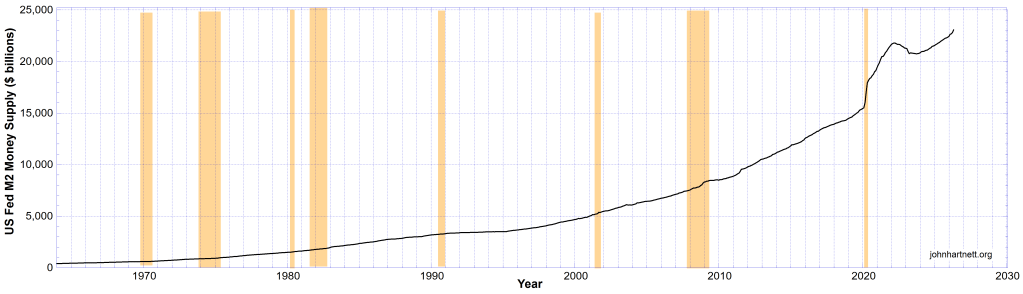
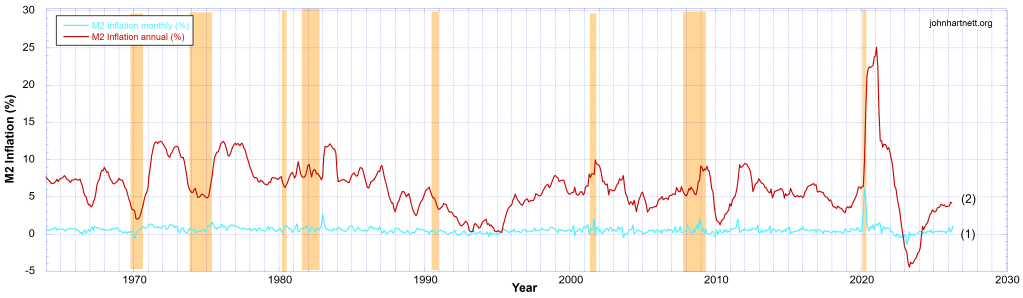
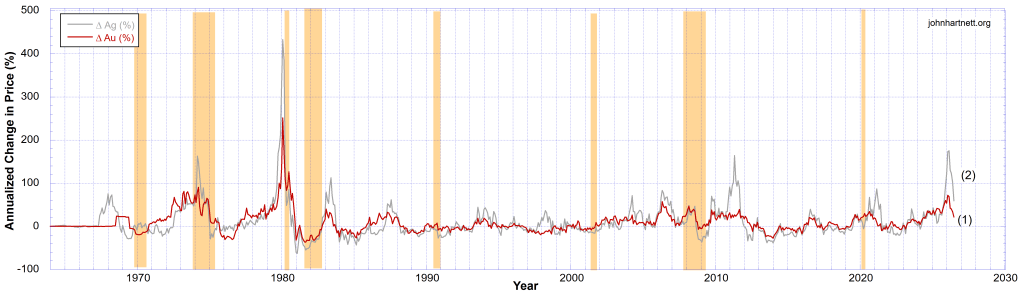
Real Inflation is a Result of Expansion of the M2 Money Supply

The underlying cause of real price inflation is linked to the expansion of the US Federal Reserve's M2 money supply, rather than conventional measures like the CPI. Gold and silver remain more reliable investments compared to fiat currencies, which inevitably devalue to zero over time.

  •  
❌