❌

Reading view

Scientists Forced to Go on OnlyFans After Their Funding Was Cut

When you’re a scientist relying on government funding to conduct your research, and that government suddenly yoinks all your money in the name of “efficiency,” you have to get creative to keep the lights on.

Such has been the experience of Daniel Blumstein, a biologist at the University of California, Los Angeles, renowned for his work on studying the ground-dwelling rodents known as marmots. After the Trump administration cancelled billions of dollars in federal research grants last year, he and his colleagues decided to start creating content dedicated to the charming mammals — on OnlyFans.

As SFGate reports, their account, called “OnlyMarms,” promises near-daily “unfiltered yellow-bellied marmot content from the Rockies.” Subscribing is free, but users can leave tips on the cute photos and videos they post, which goes towards funding the research. 

It’s a win for everyone: shy gooners have a convenient explanation for all the OnlyFans transactions in their bank accounts, and the scientists get to keep doing the work they’re doing. Thank you, marmots, for being so adorable.

“Sometimes I’m just posting the videos I think will get the most ‘aws,'” Emily Renkey, a student in Blumstein’s lab who started the account, told SFGate. “But my favorite is when I find footage of a particular behavior and I can use that to educate people.”

The Trump administration’s cost-cutting regime has crippled scientific research in the US. In efforts led by Elon Musk’s now defunct Department of Government Efficiency, it cancelled more than 1,700 grants worth some $1.4 billion at the National Science Foundation in 2025. In 2026, the NSF has so far awarded just a fraction of the $9 billion grant money it has typically distributed in recent years, and the White House has proposed slashing its budget by nearly half for the 2027 fiscal year. 

Many of the grant cancellations were clearly politically motivated, targeting research into climate change — and even research that simply contains the word “climate” — something Trump has called a “hoax.” Even more flagrantly, the administration recently admitted in court documents that it canceled research grants in certain states “based solely” on whether they supported Trump in the 2024 election.

Why marmot research ended up in the administration’s crosshairs is anyone’s guess, but it’s invaluable work. Blumstein and his colleagues have spent years closely tracking the charming rodents, forming what is one of the longest-running studies of free-living mammals in the world, according to SFGate.

These long-term projects ask “some of the most important questions in our time,” Blumstein said, providing our best window into studying evolution in real-time. But their value may not be immediately obvious to the people in charge of crunching the numbers. Historically, this hasn’t been a problem for Blumstein, as his program had received funding from the NSF for over a decade. But now, under the new regime, he’s applied to renew the grant three times, before the agency told him to stop applying at all.

“After the third time, our program officer told my colleague… that they will never fund us because they think we have too much data,” Blumstein told SFGate. “I don’t even know how to parse that sentence. It’s nuts.”

Blumstein’s marmot program, as it stands, is running on fumes. OnlyMarms has only brought in a few hundred dollars, and the lab is looking for more traditional sources of funding, too.

More on science funding: Trump Orders Construction of Powerful Quantum Computer

The post Scientists Forced to Go on OnlyFans After Their Funding Was Cut appeared first on Futurism.

  •  

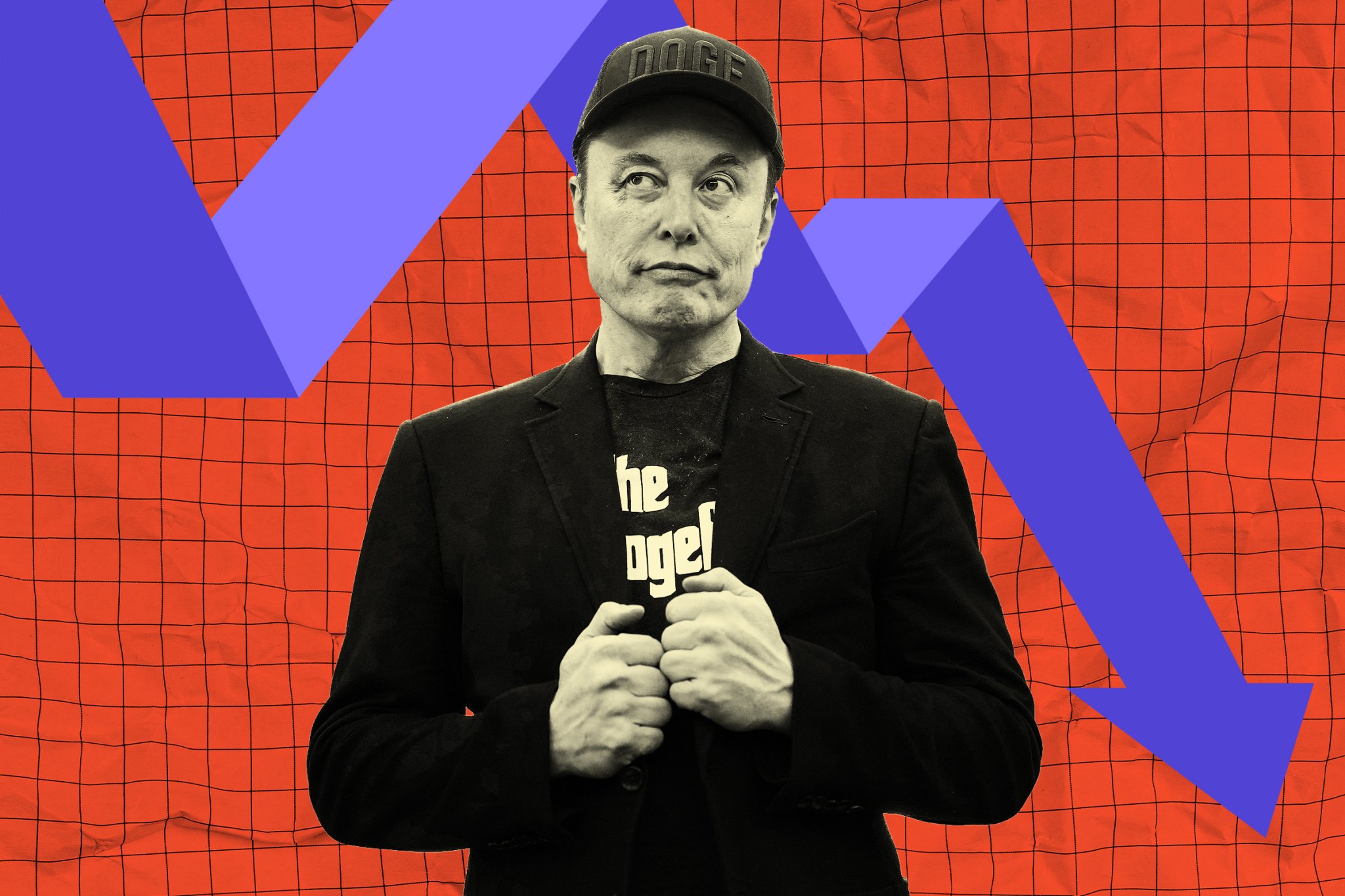
Columbia Economist Baffled as to Why the Masses Aren’t Rising Up Against Elon Musk

As unpopular as SpaceX and Tesla CEO Elon Musk has become in the popular eye, some say the vitriol doesn’t go nearly far enough.

In an episode of his podcast Ones and Tooze, Columbia University economic historian Adam Tooze picked apart the increasingly expensive AI arms race and its consequences for humanity. Among Tooze’s observations: the AI boom is completely upending the long-standing social contract under capitalism, a shift embodied most dramatically by Musk.

During the podcast, co-host Cameron Abadi asked what a “best case scenario” for AI might look like — where a human-level superintelligence emerges that can automate the world’s jobs. In response, Tooze pointed to a report from the Bank of International Settlements: under that scenario, labor’s share of income could collapse from an already paltry 54 percent to just 20 percent, meaning workers would be forced to fight over the remaining crumbs that drop from billionaires’ tables.

“The share in the total pie collapses, and that’s obviously a huge transformation in political power,” Tooze explained. And though that’s a future projection, the economic historian notes we’re already seeing symptoms of this extreme reversal of fortunes today, chiefly in the extreme wealth accumulation of Musk.

“I don’t understand frankly why the event of Musk’s enrichment isn’t more of a scandal, isn’t more a historic moment,” Tooze said. “Like this — to have a trillionaire in our midst ruptures the social bargain in such a — just such a dramatic way, like how can we even be any longer talking about being in the same society as this group of individuals who’ve unleashed this technology on the world.”

“It goes beyond Luddism,” Tooze continued, referring to the 19th-century labor movement that saw workers smash textile looms to fight back against economic exploitation. “It’s not about resisting the technology per se, it’s about asking ‘which social contract this belongs to?'”

Though it remains to be seen how severe an impact AI actually has on the labor market, one scenario keeps surfacing: superintelligent AI fuels a drastic rise in economic inequality, with tech billionaires on one end, and the working class on the other.

Comparing the current “AI arms race” to the actual nuclear arms race, Tooze asks the listener to imagine a “private Manhattan Project, developing a thermonuclear weapon,” calling superintelligent AI “kind of like a labor-market neutron bomb.”

And where the Manhattan Project was funded, organized, and staffed by the US government, the current AI boom takes almost the exact opposite approach, following the whims of the ultra-rich.

“Clearly, government money has gone into Silicon Valley in various ways,” Tooze caveats. “But nevertheless, the contrast between the Manhattan Project… and the realities of the current moment, spearheaded by a figure like Elon Musk, who literally has eviscerated the state apparatus of that first [nuclear] race… it strikes me that it’s really a regression away from the mid-century arms race model to something that’s much more like the ‘Merchants of Death’ vision.” (The Merchants of Death was a moniker for 1930s-era war profiteers.)

“We’re back in that space” Tooze continues, “of private, unfettered, oligarchic — but global — arms race… to my mind, the [AI arms race] analogy is interesting not because of the similarities, but because of the differences it reveals.”

More on Musk: Suddenly, as His Empire Crumbles, Elon Musk Admits He Made a Huge Mistake With DOGE

The post Columbia Economist Baffled as to Why the Masses Aren’t Rising Up Against Elon Musk appeared first on Futurism.

  •  

A Prominent AI Investor Is Now Crumbling, in What Could Be a Sign of Things to Come

Suddenly, things ain’t looking great for the AI industry. Or at least for the people pouring loads of money into it.

Situational Awareness, a much-hyped AI hedge-fund whose 24-year-old founder Leopold Aschenbrenner preached endless AI gains, basically imploded over this month amid a mass tech sell-off. 

The Wall Street Journal reported that it’s now down 67 percent in July, forcing Aschenbrenner to desperately seek clients to buy its shares on the cheap to cover its losses.

“We let you down this month,” the fund wrote in a letter to clients, per the WSJ.

Aschenbrenner, a former OpenAI researcher who had zero investment experience before launching the fund, has been hailed as the “Nostradamus of AI.” He apparently didn’t predict his rapid reversal of fortunes, though.

The Financial Times reported that his fund returned 439 percent for the year through June, and was up 1,551 percent since its founding. 

Then came July. According to CNBC, the fund assets reached a peak of $45 billion, before beginning a precipitous decline this month. Pretty much everything went against its way. Its commitments to AI infrastructure tanked when the likes of the semiconductor manufacturer SK Hynix dropped off a cliff. And it shorted software companies — which investors once feared would be outmoded by AI labs — like Adobe, which instead continued to steadily climb. 

Other companies it invested in, including Sandisk, Micron, and CoreWave, are all down more than 35 percent this month, CNBC noted.

As the dominoes fell, Aschenbrenner sent a letter to investors to quell their fears, highlighting how well it had performed until this point. Boldly, he also said that the mass tech sell off was a “particularly good time to add funds,” the FT reported.

But when the assets kept tanking — and more money didn’t come in —  Aschenbrenner started frantically calling investors trying to get them to sell assets or pour in fresh capital, according to the reporting. When it got even worse, his clients couldn’t reach him.

“Leopold just stopped taking calls,” one investor told the FT.

With nowhere to turn to, Situational Awareness sold the majority of its public assets to the investment firm Citadel, though it hung onto its stake in Anthropic. The FT reported that Citadel’s vulturous purchase of Situational Awareness’s shares “marks one of the largest and most sudden stock transactions in Wall Street history.”

Situational Awareness, despite commanding billions in assets, operated with a skeleton staff of only four investment professionals and eight employees overall, the FT found in a regulatory filing. The fund used borrowed money to buy shares, which helped boost its returns, but made its losses far worse when those assets declined.

AI stocks will likely weather this storm. The real warning sign is that investors are so blinded by AI that they’re entrusting their billions to someone who had no idea what they were doing.

More on AI: Microsoft CEO Warns That Companies Embracing AI Could Drive Themselves Out of Business

The post A Prominent AI Investor Is Now Crumbling, in What Could Be a Sign of Things to Come appeared first on Futurism.

  •  

Kalshi Sued for Running Illegal Gambling Operation

After years of facilitating a surge in gambling addiction by allowing users to make dubious bets on anything from the outcome of the World Cup to deadly conflict, trading platform Kalshi is finally facing a serious regulatory challenge.

New York Governor Kathy Hochul and Attorney General Letitia James announced that the state is suing the company for running an illegal gambling operation. An investigation by state authorities concluded that Kalshi was running an “illegal, unlicensed gambling operation” in the state.

Officials also pointed out that Kalshi was offering its services to “those under the legal gambling age of 21,” putting them at “serious personal and financial risk.” In New York, a person has to be at least 21 to participate in mobile sports betting.

The lawsuit is seeking to shut down Kalshi in New York and is requiring it to pay a $100,000 penalty for each attempt to offer sports betting and fees three times its gains in the state, which could saddles the company with paying an estimated $36 billion.

“Kalshi has chosen to ignore New York’s gaming laws, which exist to protect consumers, prevent problematic gambling, deliver funding for critical public services, and ensure that every company plays by the same rules,” said Hochul in a statement.

The news comes as state regulators continue to ponder what rules to set for prediction markets, which have seen a massive surge in popularity over the past year or so. On the federal level, the Trump administration appears unlikely to jump into action, especially considering the president’s close personal ties to the prediction markets industry. His son, Donald Trump Jr, serves as an advisor to both Polymarket and Kalshi.

Kalshi and Polymarket continue to bristle at being associated with the gambling industry and argue they’re effectively a predictions-based stock exchange. Unlike Polymarket, Kalshi is regulated by the US Commodity Futures Trading Commission.

However, some officials vehemently disagree with that assessment.

“No matter what they call themselves, prediction markets like Kalshi are gambling platforms, plain and simple,” said James. “By ignoring our laws, Kalshi is running an illegal operation and harming New Yorkers in the process.”

Researchers continue to warn that gambling addicts are betting their entire incomes away on prediction markets, a growing crisis perfectly dovetailing a massive surge in sports betting in the United States following a 2018 Supreme Court decision.

Worse yet, rampant insider trading and other differentials in information means that the vast majority of users on Kalshi and Polymarket are being left holding the bag while a select few are getting away with big winnings.

The brashness of certain crimes linked to the markets is hard to fathom. Earlier this month, president Donald Trump’s longtime teleprompter operator was accused of making tens of thousands of dollars by placing bets on Kalshi about what the president would say, leading to his removal.

In short, the latest lawsuit shouldn’t come as a surprise to anybody who’s been following along.

Predictably, Kalshi has since shot back, accusing the government of making it all up.

“It’s sad to see this type of political theater from the leadership in our own state,” a spokesperson told CNBC in a statement. “States can’t just shut down a federally licensed exchange… We love New York, we love New Yorkers, and New Yorkers love our product.”

More on prediction markets: OpenAI Strikes Bold Deal With Kalshi to Mix Together the Most Hated Technologies in Existence: AI and Prediction Markets

The post Kalshi Sued for Running Illegal Gambling Operation appeared first on Futurism.

  •  

BC Card Partners With MongoDB to Upgrade AI Data Platform

Oh Sung-soo (left), head of the AI Data Division at BC Card, and Jang Jung-wook, country manager of MongoDB Korea, pose after signing a memorandum of understanding to advance an AI data platform. (Photo: MongoDB Korea)

BC Card is partnering with database platform provider MongoDB to strengthen the competitiveness of its artificial intelligence (AI) services by upgrading its data platform.

The two companies have signed a memorandum of understanding (MOU) to jointly develop an AI-ready data platform. Under the agreement, they will collaborate on building AI-dedicated infrastructure, implementing natural language search and AI-powered recommendation services, enhancing existing AI capabilities, and establishing a common data foundation for future AI services.

BC Card plans to leverage MongoDB's document-based data platform to create a data storage and management environment optimized for AI applications while improving its ability to process and utilize unstructured data. The company expects the platform to enable faster processing and integration of diverse data types, including text, images and product information.

The upgraded platform will be applied progressively to BC Card's existing AI services. The company's commercial district analytics platform, eat.pl, will enhance its natural language search capabilities, allowing users to search sales and merchant data using conversational queries and receive more detailed information.

BC Card will also enhance its AI-powered shopping curation service, AI Hot Deal, by introducing automatic summaries of promotional offers, personalized product recommendations based on user interests and keyword alert functions, further strengthening its recommendation engine.

The two companies will also establish a shared data foundation that can centrally manage information used across multiple AI services, enabling faster development of new AI applications and tighter integration between services. BC Card said the initiative will accelerate its transformation into an AI-native enterprise.

MongoDB said its platform provides the core technologies required to deploy AI agents in production environments, including a real-time database, full-text and vector search, memory capabilities, embeddings and reranker models, all within a single integrated platform.

  •  

Raids across UK in crackdown on nuisance car finance texts

Laptops, phones and documents seized as information commissioner acts on messages about mis-selling scandal

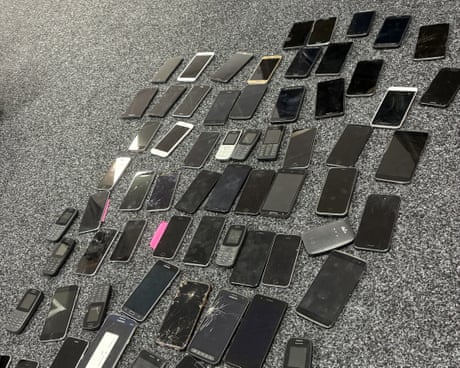
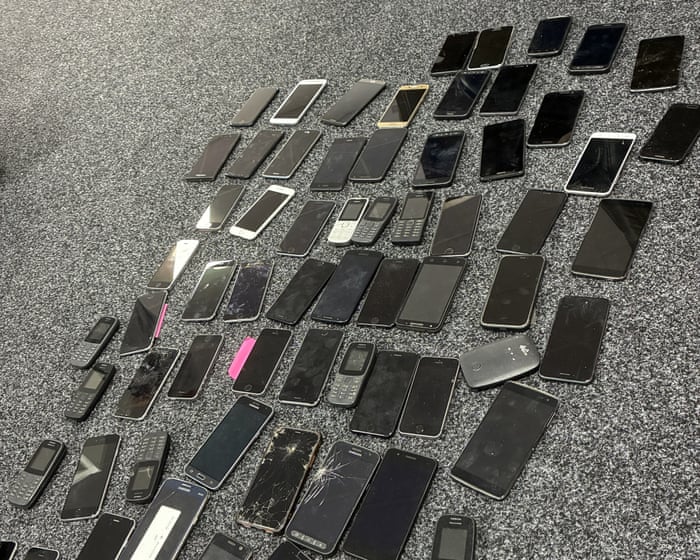
Laptops, mobile phones and documents have been seized after officials carried out search warrants in a crackdown on claims companies plaguing people with spam text messages about the car finance mis-selling scandal.

The UK’s Information Commissioner’s Office (ICO) executed warrants at homes and businesses linked to five companies in London, Liverpool, Bolton, Burnley and Swansea on Wednesday.

Continue reading...

© Photograph: Information Commissioner's Office

© Photograph: Information Commissioner's Office

© Photograph: Information Commissioner's Office

  •  

South Korean Authorities Scrambling to Save Stock Market From AI Bubble

The US and European stock markets might be numb to the enormity of the AI bubble at this point, but in East Asia it’s a different story.

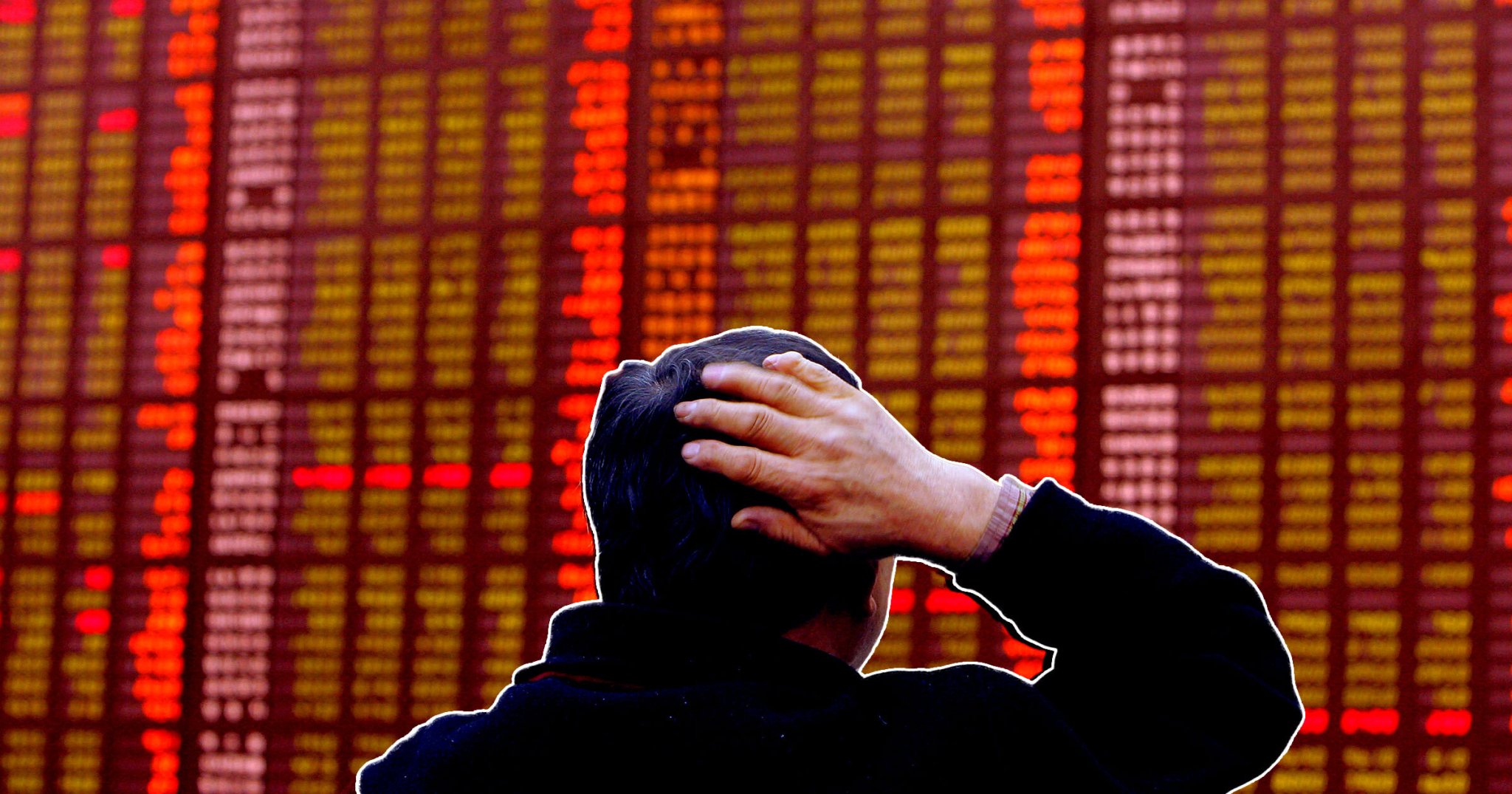
In South Korea, the AI bubble appears to be bursting — at least partially — with the Korea Composite Stock Price Index (Kopsi) plummeting by over 40 percent from its June highs after the Korean chipmaker SK Hynix failed to impress investors despite reporting a sixfold increase in quarterly earnings.

Across July 28 and 29, Seoul Economic Daily reports widespread panic triggered not just one but two “circuit breakers” on the Korea Exchange, a sort of automated kill switch that halts regular trading for 30 minutes so panic-stricken traders can gather their thoughts.

The recent panic marks the first time the Kopsi has ever triggered two consecutive circuit breakers, and only the 14th and 15th Kopsi activations in the Korean Exchange’s history. The tech-heavy Korea Securities Dealers Automated Quotations, or Kosdaq, also reached circuit-breaker-tripping levels two days in a row for the third time ever — the previous incidents coming in 2020 and 2008, if that’s any indication of the amount of turbulence roiling Korean financial markets.

In response, the South Korean government has scrambled to implement cooling measures and prevent an all-out financial crisis. The government already moved to ban new listings of single-stock leveraged ETFs — a high-risk, high-reward kind of financial product bearing some of the blame for the panic — though it clearly wasn’t enough to prevent billions of dollars from fleeing the Korean stock market.

According to Bloomberg, government officials are now convening an emergency meeting to discuss additional measures.

“We’ve already put in place a package of measures, but if it’s needed we’ll introduce additional steps to help normalize the market,” Finance Minister Koo Yun Cheol told lawmakers, per Bloomberg.

Korea’s conservative People Power Party seized on the chance to blast their opponents’ handling of the financial panic, with lawmaker Lee Jongwook declaring that the “country has turned into a casino.”

More on AI: The AI Bubble Has Become So Surreal That It’s Now Propping Up the Toilet Industry

The post South Korean Authorities Scrambling to Save Stock Market From AI Bubble appeared first on Futurism.

  •  

Microsoft CEO Warns That Companies Embracing AI Could Drive Themselves Out of Business

The business world has quickly learned that there’s such a thing as using too much AI, as they get slammed with outrageous token bills.

Now, Microsoft CEO Satya Nadella is warning of another way that embracing AI could doom a business.

In an interview Sunday, Nadella cautioned against sharing too much information, ranging from proprietary data to the prompts entered, with a third-party AI model. 

Instead, he recommended that businesses should make sure they retain all the data on how employees use AI tools so they can eventually train or fine-tune their own open-weight model. This can be accomplished by using AI gateways, which serve as a protective intermediary.

“Any firm that doesn’t have this control, I will claim will not remain a firm because you’ve essentially outsourced your thinking,” Nadella said on an episode of CNN‘s Fareed Zakaria GPS, as spotted by TechCrunch.

That’s a striking claim — and an ironic one, since outsourcing your thinking is arguably exactly the point of using AI, of which Microsoft is a leading vendor. Nadella, in a nutshell, is saying that heavily relying on proprietary AI software could also be a company’s undoing.

He may have an angle in pushing these claims, though. Microsoft hosts the cloud infrastructure that businesses can run their open weight models on. The more people run to hosting their own models, the better for its bottom line.

There’s been a lot of hype lately around open-weight models as a cheaper alternative to those offered by the top AI labs. In AI, “weights” are the numerical values that determine how a model processes information. The models are “open” because these weights are publicly accessible and free to download.

Agentic AI tools like Anthropic’s Claude Code, by contrast, are closed-source. They also come in a “harness,” which is essentially the software the underlying model is couched in. Nadella thinks companies should ditch AI harnesses and instead use a custom AI platform that allows you to recruit multiple AI models — like a cheaper, open-weight one.

“By keeping the harness separate from the model and the context and memory separate from the model, you absolutely can use multiple models for what they’re great at,” Nadella said in the interview, per TechCrunch. “At the same time, any one model can go away, and you can still continue to be in control of your own destiny.”

Getting mixed signals from Nadella here? TechCrunch also notes how he suggests, in pretty hypocritical fashion, that while businesses should be stingy about the data they share with AI models, regular users shouldn’t.

“To some degree there’s got to be some value exchange in the consumer space where you’re getting something for free, maybe for your data,” he mused. “That’s sort of how the advertising business model has worked.”

More on AI: Sam Altman Says Even the Power of AI Will Never Lead to a Shorter Work Week

The post Microsoft CEO Warns That Companies Embracing AI Could Drive Themselves Out of Business appeared first on Futurism.

  •  

Apple shares hit new all-time closing and intraday highs

Apple logo

In Nasdaq trading today, shares of Apple Inc. (AAPL) rose $3.17 to $340.08 to hit a new all-time closing high. Apple’s all-time intraday high was also set today at $342.89.

Apple’s 52-week low stands at $201.50.

Today’s trading volume for AAPL shares was 50,765,695 versus Apple’s average trading volume of 55,539,493 shares.

Apple’s PE Ratio currently stands at 41.22.

Apple currently has a market value of $4.995 trillion, making it the world’s most valuable company.

The top five U.S. publicly-traded companies, based on market value:

  1. Apple (AAPL) – $4.995T
  2. NVIDIA (NVDA) – $4.772TT
  3. Alphabet (GOOGL) – $4.081T
  4. Microsoft (MSFT) – $2.922T
  5. Amazon (AMZN) – $2.483T

Selected companies’ current market values:

• SpaceX (SPCX): $1.534T
• Meta Platforms (META): $1.506T
• Tesla (TSLA): $1.214T
• Berkshire Hathaway (BRK-A): $1.100T
• Walmart (WMT): $900.059B
• Advanced Micro Devices (AMD): $741.304B
• Intel (INTC): $435.297B
• Cisco (CSCO): $455.551B
• Netflix (NFLX): $301.428B
• Dell (DELL): $253.594B
• IBM (IBM): $214.326B
• SoftBank (SFTBF): $176.724B
• Disney (DIS): $171.741B
• Sony (SONY): $130.897B
• Spotify (SPOT): $104.260B
• Adobe (ADBE): $99.025B
• Nokia (NOK): $49.992B
• Hewlett-Packard (HPQ): $25.858B
• SiriusXM (SIRI): $10.562B
• BlackBerry (BB): $4.721B
• Sonos (SONO): $2.001B
• Liquidmetal (LQMT): $0.249B
• RealNetworks (RNWK) was delisted from U.S. exchanges on December 21, 2022 and is no longer publicly traded.🍩

Apple all-time high (AAPL) via NASDAQ here.

MacDailyNews Take: To the moon, Alice. To the moon!

On April 20, when Apple announced Tim Cook would be kicked upstairs to be replaced by product guy John Ternus as CEO, AAPL closed at $273.05 after being range-bound all year. Since that announcement, AAPL has surged as high as today’s $342.89. That 25.58% leap in under 90 days highlights just how favorably Apple investors view John Ternus.


Please help support MacDailyNews — and enjoy subscriber-only articles, comments, chat, and more — by subscribing to our Substack: macdailynews.substack.com. Thank you!

Support MacDailyNews at no extra cost to you by using this link to shop at Amazon.

Like 🙂 or dislike 🙁 this post below!

The post Apple shares hit new all-time closing and intraday highs appeared first on MacDailyNews.

  •  

Elon Musk Launches New Service Where You Can Send Him All Your Money and Hope for the Best

If you were looking for even more ways to give Elon Musk your hard-earned cash, you’re in luck!

His social media platform X has officially rolled out a new banking service, uninspiredly called X Money, to its Premium and Premium Plus users — who are already shelling out up to $40 a month for a blue checkmark and more prominent tweet replies.

The service allows users to store their money in a deposit account and withdraw cash via ATMs using a physical Visa debit card. The microblogging platform is also enticing users with three percent cash-back and six percent annual percentage yield (APY).

But you’re not alone if you’re having second thoughts about handing over a company primarily known for the dissemination of misinformation, child sexual abuse material, and hate speech — while providing a depressing echo chamber to its broadly loathed CEO — your life savings.

As senator Elizabeth Warren (D-MA) pointed out in a letter directly addressed to Musk earlier this year, X Money could pose a risk to “consumers, our national security, and the stability of the financial system,” while citing Musk’s “track record operating X.”

“Your failure to operate X in a safe and responsible manner does not breed confidence in your ability to safely expand into consumer finance,” she wrote.

Musk’s desire to launch a banking app goes way back. In 1999, he cofounded e-commerce payment system X.com, which merged with another company in 2000 to eventually form PayPal. However, the company’s board ousted Musk and replaced him with Peter Thiel at the time over major disagreements, a clear source of frustration and anger for the SpaceX CEO.

X Money is part of Musk’s broader goal of transforming X into what he calls “the everything app,” which, in the timeless words of former CEO and Musk’s mouthpiece Linda Yaccarino, “can deliver, well… everything.”

It’s an ambitious dream that evokes the Chinese app WeChat. But considering Musk’s standing in today’s society — his behavior has quickly turned him into one of the most hated people on the planet — convincing the public of going all-in on X might be more difficult than he anticipated, especially when it comes to personal finance.

Besides, even just getting the feature off the ground has seemingly been far more difficult than Musk anticipated. He originally promised it would launch by the end of 2024.

“It would blow my mind if we don’t have that rolled out by the end of next year,” Musk told then-Twitter employees in October 2023.

Considering he missed his deadline by over two and a half years, chances are his mind has been blown several times over by now.

More on X: Elon Musk Is Having One of His All-Time Meltdowns

The post Elon Musk Launches New Service Where You Can Send Him All Your Money and Hope for the Best appeared first on Futurism.

  •  

El Niño Set to Upend the World Economy

The West Pacific has swung back into an El Niño phase, bringing nearly unprecedented heat to vast swaths of the globe.

Some of El Niño’s impacts are immediately apparent, or will be in the months to come: blistering high temps, of course, but also major amounts of rainfall for some, and extreme drought for others. Unfortunately, those weather patterns don’t just come and go. They also have a major impact on agricultural production, from the plains of the American Midwest to the rice paddies of Southeast Asia — and, as a result, a huge influence on the global economy.

As Reuters observes, El Niño conditions will likely have an inflationary effect on the economies of developing countries, as the ensuing weather flips typical rainfall totals on their head.

In Asia, for example, rainfall totals are likely to be much lower than usual, a situation expected to wreak havoc on countries like India and Vietnam. With India’s weather bureau projecting the driest conditions in over a decade, this year’s rice harvest is at risk. Lower rice yields would tighten supply, raising food prices for millions.

Central banks, in turn, could be forced to keep borrowing rates high, in order to keep rising prices in check.

“People are forecasting rate hikes for the second half of the year, especially for the South Asian countries, ​which are kind of the most impacted by El Niño such as India, Indonesia, Vietnam, Thailand,” equity portfolio manager at Allspring Global Investments Gary Tan told Reuters. “El Niño is ​just going to make inflation more sticky.”

A similar situation is possible across Africa, Reuters warns, as agricultural sectors in countries like Kenya are particularly susceptible to weather disruptions.

In today’s incredibly connected economy, in other words, it doesn’t take a butterfly flapping its wings to make waves half a world a way — just some warm ocean water in the middle of the Pacific.

More on El Niño: Scientists Propose Dimming Sun to Combat El Niño

The post El Niño Set to Upend the World Economy appeared first on Futurism.

  •  

Apple again the World’s Most Valuable Company as shares hit new all-time closing and intraday highs

Apple logo

In Nasdaq trading today, shares of Apple Inc. (AAPL) rose $3.89 to $336.91 to hit a new all-time closing high. Apple’s all-time intraday high was also set today at $339.57.

Apple’s 52-week low stands at $201.50.

Today’s trading volume for AAPL shares was 45,246,885 versus Apple’s average trading volume of 55,382,396 shares.

Apple’s PE Ratio currently stands at 40.79.

Apple currently has a market value of $4.948 trillion, making it the world’s most valuable company.

The top five U.S. publicly-traded companies, based on market value:

  1. Apple (AAPL) – $4.948T
  2. NVIDIA (NVDA) – $4.760T
  3. Alphabet (GOOGL) – $3.994T
  4. Microsoft (MSFT) – $2.890T
  5. Amazon (AMZN) – $2.489T

Selected companies’ current market values:

• Taiwan Semi (TSM): $2.070T
• Tesla (TSLA): $1.221T
• SpaceX (SPCX): $1.495T
• Meta Platforms (META): $1.507T
• Walmart (WMT): $889.236B
• Berkshire Hathaway (BRK-A): $1.069T
• Advanced Micro Devices (AMD): $807.066B
• Intel (INTC): $462.383B
• Cisco (CSCO): $451.570B
• Netflix (NFLX): $293.141B
• SoftBank (SFTBF): $181.397B
• IBM (IBM): $203.765B
• Disney (DIS): $167.816B
• Dell (DELL): $275.606B
• Sony (SONY): $130.897B
• Adobe (ADBE): $94.506B
• Spotify (SPOT): $101.724B
• Nokia (NOK): $51.750B
• Hewlett-Packard (HPQ): $24.281B
• SiriusXM (SIRI): $10.031B
• BlackBerry (BB): $5.005B
• Sonos (SONO): $1.866B
• Liquidmetal (LQMT): $0.248B
• RealNetworks (RNWK) was delisted from U.S. exchanges on December 21, 2022 and is no longer publicly traded.🍩

Apple all-time high (AAPL) via NASDAQ here.

MacDailyNews Take: The natural order has been restored, thanks to growing optimism over incoming CEO John Ternus*. Onward and upward, Cupertino soldiers!

*On April 20, when Apple announced Tim Cook would be kicked upstairs to be replaced by product guy John Ternus as CEO, AAPL closed at $273.05 after being range-bound all year. Since that announcement, AAPL has surged as high as today’s $339.57. That ~24% leap in under 90 days highlights just how favorably Apple investors view John Ternus.


Please help support MacDailyNews — and enjoy subscriber-only articles, comments, chat, and more — by subscribing to our Substack: macdailynews.substack.com. Thank you!

Support MacDailyNews at no extra cost to you by using this link to shop at Amazon.

Like 🙂 or dislike 🙁 this post below!

The post Apple again the World’s Most Valuable Company as shares hit new all-time closing and intraday highs appeared first on MacDailyNews.

  •  

SpaceX Stock Hammered After Starship Booster Fails in First Launch Since IPO

Was SpaceX’s recent Starship flight test a success or a failure? Many are hailing it as a victory, but several of the megarocket’s booster’s engines failed after re-entry, causing it to explode.

SpaceX has had many similarly ambiguous tests before. But this was the first one since its much-hyped IPO earlier this summer — and it’s already clear that it wasn’t a convincing enough display to reverse the company’s fortunes on the stock market.

After hitting an all time low before the weekend and closing at $115, SpaceX shares endeavored to plummet even further on Monday, briefly dipping to $108.66 — a new nadir since going public — before stabilizing around $110. The new low is over 20 percent below its opening IPO price of $135, and less than half of its all time high of more than $225 per share.

It’s a sign of the scrutiny the company will be put through now that it’s a public entity, and comes despite certain predictions that a successful flight would help buoy the company’s shares. When Starship ran into trouble in the past, SpaceX mainly had to weather a storm of media coverage. Now, nervous investors represent yet another liability.

“One of the benefits of being private is that there wasn’t a market to weigh in on and evaluate business decisions,” David Meier, senior investment analyst at the Motley Fool, told The Washington Post.

“Being publicly traded means everything will be evaluated and information transmitted through market prices,” he added. “So every SpaceX launch, every Starlink decision and every xAI decision will be scrutinized by the market.”

Spaceflight, at least currently, isn’t an ideal match for the make-a-quick-buck capitalism that Musk extolls. SpaceX has never been profitable, losing $5 billion last year alone. As Starship’s woes illustrate, rocket development is messy and complicated; there’s no guarantee that progress will be linear, if there’s any made at all. Investors are essentially being asked to keep pouring money into an incredibly lengthy and expensive science experiment. 

Meanwhile, Musk has made outrageously lofty promises that SpaceX will eventually use Starship to deploy so many data centers in space that it’d create a “sentient sun,” and establish colonies on the Moon and eventually Mars. Every failure will be compared against those outsized benchmarks, which is almost certainly part of Musk’s enduring schtick.

The thirteenth test flight on Friday was a mixed-bag. The spacecraft’s upper stage successfully made its way to suborbital space and deployed a payload of Starlink internet satellites, which briefly went online before burning up as planned. This was a first for Starship, as previous tests only used dummies. Then the ship re-entered the atmosphere and landed in the Indian Ocean in one piece without exploding.

But the booster was a different story. Though it performed flawlessly on the journey up, only ten of out the thirteen engines fired up on its return to Earth, failing to slow the massive object down in time. Instead of making a planned “soft” splashdown, it slammed into the Gulf of Mexico and appeared to explode on impact.

On the one hand, the flight test validated that SpaceX is making progress with its latest V3 iteration of its spacecraft. In the first V3 flight test in May, the upper stage lost several of its engines on its way to space, and this time it didn’t. The upper stage also survived the splash down instead of exploding, with SpaceX engineers calling it Starship’s best reentry yet. 

But the failed booster landing is hard to overlook. Unless the booster is reliably recoverable, then Starship won’t be reusable, an indispensable part of making the behemoth vehicle an economically viable means to ferrying large payloads into orbit and beyond.

Most coverage around the recent test has been positive. Arguably, that makes it all the more concerning that the stock continues to perform so poorly.

“The future of the company is riding on the ability to make Starship work,”  Clayton Swope, deputy director of the Aerospace Security Project, told WaPo. “What they’re trying to do is switch to a freight train and get the economies of scale [of] something of that magnitude.”

More on SpaceX: SpaceX Investors in Meltdown Over All the Money They’ve Lost

The post SpaceX Stock Hammered After Starship Booster Fails in First Launch Since IPO appeared first on Futurism.

  •  

The AI Industry Has Acted So Badly That It’s Now Dealing With a Huge Wave of Hatred

The tech overlords pushing the AI boom are quickly wearing out what little welcome they had.

You may have noticed big-name AI labs pushing new commercials lately. Meta’s new 60-second ad spot insists that the “future is for everyone,” even as CEO Mark Zuckerberg’s personal net worth eclipses the GDP of Hungary. Anthropic’s new commercial for Claude assures viewers that there’s “hope in hard questions,” seemingly embracing the discomfort that comes when your software is used to bomb elementary schools in Iran.

For as magnanimous as these new PR stunts appear on the surface, a vast swathe of the public they’re meant to sway are rejecting the industry’s faux-populism messaging out of hand, as the cost of AI — born out in inflation, data center pollution, fears of job loss and mental health concerns — becomes too much to bear.

According to data compiled by Pew Research, 40 percent of US adults predict AI will have a negative impact on society writ large, compared to just 16 percent who say it’ll have a positive effect. A whole 31 percent of those surveyed think AI will have negative consequences for themselves, personally, over the next 20 years.

As disgust with AI itself grows, so too does resistance to the hardware embodying its rise.

Per a separate poll by Gallup, flagged by Business Insider, an astonishing three-quarters of US adults are now resolutely opposed to hyperscale data centers popping up near their home. City councils are increasingly forced to reconcile with landowners hostile to any AI data center appearing in their district, putting significant strain on developers hoping to gorge themselves on the fruits of the AI boom. Protests against AI companies are flaring up across the country, with Time reporting 142 protests across 42 states in one day alone.

Beyond data centers, a decentralized but highly-motivated movement is growing around the chopping, hacking, and outright sabotage of AI-integrated surveillance cameras. A parallel struggle is being waged around AI-integrated surveillance drones, with organizers in cities like Minneapolis beating back ambitious police dragnets.

So if you’re a tech executive trying to win back the masses to the AI revolution, take note: it’s gonna take a lot more than a few smarmy commercials to solve your PR problem.

More on AI: Google’s Profits Look a Little Terrifying Under the Hood

The post The AI Industry Has Acted So Badly That It’s Now Dealing With a Huge Wave of Hatred appeared first on Futurism.

  •  

The Type of Orbital Data Centers That Billionaires Want to Launch Into Space Would Wreak Ecological Catastrophe, Scientists Warn

Over the past year or so, a puzzling idea has taken hold among billionaires ranging from Elon Musk to Jeff Bezos: that instead of trying to force data centers on communities that don’t want them down on Earth, it would be much easier just to launch them into space.

The economics and logistics of the scheme, many experts have pointed out, are absolutely absurd. And even beyond those practical concerns, if corporations actually did somehow manage to fill the planet’s orbit with the facilities, scientists are now warning that the environmental cost would be devastating.

A new petition organized by the group EarthJustice, first reported by the Guardian, is warning of “catastrophic” consequences for the planet if the billionaire-backed dream ever came to pass. The 29-page petition calls on the US Federal Communications Commission to investigate current orbital data center licensing requests as potentially in violation of “federal law,” joining the chorus of experts warning that it’s a horrible idea for just about everybody.

“The FCC is currently considering multiple requests for licensing extraordinary numbers of satellite-based data centers to be placed into low-earth orbit over the next decade,” the petition begins. “The proponents of these proposals describe their plans in grandiose, civilization-changing terms. But these same proponents have refused to embrace any inquiry into the impacts of their self claimed epochal technology on the environment, science, economy, or other values. This is not just poor planning and a missed opportunity: it violates federal law.”

The filing does double duty. On top of formally petitioning the FCC to prepare an environmental assessment, it’s also a “petition to deny,” which is a legal mechanism that requires the petitioner to back up their claims with verified facts. That requirement turns the document into a de facto review article — with 113 footnote citations, it’s easily one of the most detailed public accounts yet of what orbital data centers could actually cost the planet.

“The operation of more than a million data center satellites threatens potentially catastrophic forms and quantities of atmospheric pollution, risking damage to the climate, to the ozone layer, to human health, and to the chemistry of the stratosphere itself,” the petition reads.

In particular, the petition warns that giving free rein to tech billionaires to clutter our skies with experimental data centers would accelerate our contamination of the stratosphere, which is currently facing an unprecedented rise in heavy metals, noxious gasses, and carbon particles thanks to record satellite launches.

Satellite companies run by tech and aerospace tycoons are already facing scrutiny for their lack of transparency around this type of pollution, a situation the petition warns would make significantly worse. As the petition authors write, they are “concerned that no [company] has yet provided more than a token acknowledgment of environmental risks.”

“Moreover,” the authors continue, “no [company] has provided satisfactory detail to explain how it will mitigate the cumulative environmental harms flowing from the foreseeable operation of more than a million satellites [emphasis in original], orbiting our planet, colliding and disintegrating and plummeting back to Earth.”

More on data centers: Climate Activists Pelt Microsoft Data Center With Balloons Full of Acid

The post The Type of Orbital Data Centers That Billionaires Want to Launch Into Space Would Wreak Ecological Catastrophe, Scientists Warn appeared first on Futurism.

  •  

SpaceX Investors in Meltdown Over All the Money They’ve Lost

Elon Musk’s SpaceX is many different things to many different people — but one thing that it definitely isn’t is a get-rich-quick scheme.

Since its debut on the public tickers back in early June, SpaceX shares have sunk from a high of over $225 to a dismal $110 today, as compounding failures and overvaluation fears take their toll. Overall, SpaceX is down nearly 30 percent compared to its opening stock price of $150 — and all those day-one rubes are now seeing red.

“Elon has ruined me,” one Redditor posted on r/WallStreetBets, along with a screenshot showing a loss of nearly $455,000 CAD on thousands of SpaceX shares. “He was supposed to take us to Mars and burn short sellers. Still holding 7300 shares. Please Elon fly again.”

On Musk’s X-formerly-Twitter, investor’s spirits, like his rockets, weren’t any higher.

Under a post showing off SpaceX’s Starship at sunset, dejected Musk acolytes moped about their fortunes, begging the company to get its act together.

“It sure would be cool if this stops crashing… 30 percent short interest and down 40 percent on the month,” one fanboy groused. “I believed in you and lost over 20k in a month. I really hope that it comes back.”

On Thursday, when SpaceX announced it was delaying the launch of Starship’s thirteenth test flight by a day, commenters were quick to point out that the update came just minutes after US stock markets closed. (The stock continued sinking the next day, falling more than another 3 percent by press time.)

“Notice they wait until market close now,” one poster quipped.

“Sure,” said another user, “wait till market close to announce…lol…as if we didn’t know what the weather was going to do hrs in advance.”

With that major test now scheduled for Friday evening, it remains to be seen whether a successful test will be enough to win back investors. On the flipside, a high-profile failure now could severely compound the company’s woes, putting SpaceX even further from the $2 trillion valuation Musk has promised. Time will tell.

More on SpaceX: China Is Catching Up With SpaceX Fast, Landing First Reusable Rocket Booster on Offshore Platform

The post SpaceX Investors in Meltdown Over All the Money They’ve Lost appeared first on Futurism.

  •  

Investors Laying Groundwork to Profit Massively When Economy Collapses

Another glowing red indicator just lit up on the control panel steering the US economy: short sellers have placed a nearly unprecedented magnitude of bets against the domestic stock market.

A new analysis by the firm S3 Partners has found that short interest in the S&P 500 is now the highest it’s been since the company began compiling that data in 2010, Business Insider reports. In all, S3 found that roughly 3.7 percent of the S&P’s free float — meaning the total market value of shares available to the public for trading — is now tied up in short interest.

That’s a significant number, almost double the short interest in the S&P at the same time last year. For context, BI notes that roughly 3.8 percent of the S&P was hedged against itself right before the 2008 financial crisis, adding to a growing number of data points suggesting the economy is due for a major reckoning.

Stripping it down to plain English, this is a glaring indication that institutional investors are trying to get ahead of the AI financial bubble, which accounts for roughly 60 percent of the index’s growth since April. And the fact that a growing number of investors aren’t just exiting positions, but are actively betting against the US stock market is a massive tell.

For years, a few brave economists and financial analysts have pointed to the fact that the amount of money being spent on AI continues to rise as evidence that the AI bubble is unsustainable.

The thing is, investors are fine with rising costs if there’s enough revenue coming in to justify the spending, which for AI development has already eclipsed $1.6 trillion as of 2026. But whether we’re looking at data centers, digital ad revenue, or the cost of inference, the kind of revenue growth needed simply isn’t there, as the leading tech companies play an increasingly expensive game of kick-the-can-down-the-road.

This is the situation that has investors — and plenty of regular people — nervous about the AI financial bubble. A perfect example can be found in Google’s parent company Alphabet, which reported its first quarter of negative free cash flow this week. The company likewise raised its capital expenditure expectations by a cool $5 to $25 billion, CNBC reported, sending investors running for the hills as the long-promised AI revolution remains a world away.

More on the AI bubble: SoftBank CEO Says You’re Too Stupid to Understand What’s Going on If You Believe the AI Bubble Is Real

The post Investors Laying Groundwork to Profit Massively When Economy Collapses appeared first on Futurism.

  •  

Suspicious Bets on Polymarket Suggest Something Fishy Was Happening During the World Cup

While the rest of us were busy rooting against Argentina, suspicious things were afoot on gambling markets related to the World Cup.

The Group of Copenhagen, an international sports integrity body, has flagged seven suspicious bets on platforms including Polymarket, which it says could be related to match manipulation.

The full report hasn’t been released yet. But sources told The Athletic that some of the bets that raised “irregularities” include the nearly $4.8 million placed on Polymarket for Spain not to defeat Cape Verde in their group stage match-up. The game ended in a goalless draw, in one of the first major shocks of the tournament.

Another Polymarket bet that raised suspicion was “Will Folarin Balogun play against Belgium?” which was opened on the same day, July 2, that the US striker received a red card against Bosnia and Herzegovina.

A red card means a player is suspended for at least one game, and the Belgium matchup was the US’s next. In a now-scandalous twist, FIFA’s Disciplinary Committee made the unprecedented move of suspending Balogun’s suspension, allowing him to play the next game. 

This wasn’t announced until July 5 — and it soon came to light that the decision was made after US president Trump personally called FIFA president Gianni Infantino to complain about the red card; later, Trump praised the deferral of Balogun’s ban as a “great decision.”

Heightening the suspicions, sources told The Athletic that the Group of Copenhagen report found no other markets like the one opened for Balogun were opened for any of the other 14 players who were shown a red card during the World Cup.

FIFA’s own Integrity Task Force, however, doesn’t see any signs of nefarious activity. In a report published Tuesday, it concluded there was “no suspicious betting activity or indications of match manipulation in connection with any fixture,” per The Athletic.

The Group of Copenhagen, by contrast, said it’s found seven “yellow notices” in bets related to the World Cup, which it explains are flagged for reasons including “unexplained fluctuations in odds, rumours on social media or source information.” (Yellow notice ranks below orange and red, the highest level of notice.)

Right now, no specific allegations are being made. But the Balogun bet could be seen as a sign of insider trading. The Trump administration has already been hit with several similar scandals related to prediction markets, including a White House teleprompter who’s being investigated for allegedly making over $100,000 by placing bets on Kalshi related to Trump’s speeches.

It’s possible that the Group of Copenhagen is flagging the bets for reasons other than manipulation, according to Christian Kalb, a gambling industry expert who formerly worked with the organization. Instead, it could be because platforms like Polymarket are being used by hedging markets, as what might be the case with the bets placed over the Spain versus Cape Verde match.

“If you are a traditional bookmaker, there will be matches when everyone bets on a very strong favourite to win. So maybe, from a bookmaker’s perspective, there are too many people betting on this outcome,” Kalb told The Athletic. “If they are a small company, this may be a risk: so they could use a prediction market like Polymarket to hedge that risk.”

More on gambling: A New Type of Gambling Scandal Is Sweeping Through Sports

The post Suspicious Bets on Polymarket Suggest Something Fishy Was Happening During the World Cup appeared first on Futurism.

  •  

Shinhan Bank Says Validating AI Is More Important Than Deploying It

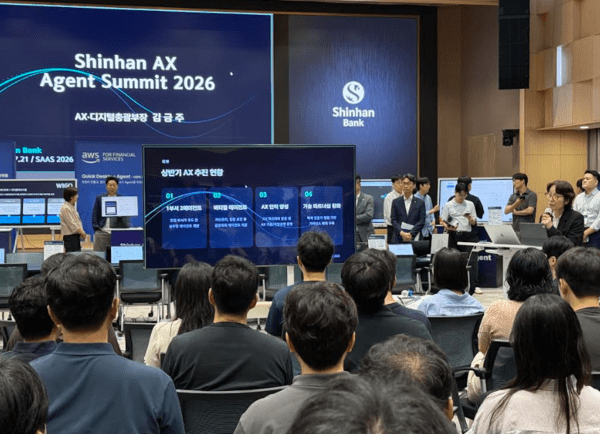
Kim Geum-ju, head of AX and Digital at Shinhan Bank, speaks during the Shinhan AX Agent Summit 2026 held at the bank's headquarters in central Seoul on July 21. (Photo: Shinhan Bank)

Shinhan Bank held its Shinhan AX Agent Summit 2026 on July 21 at its headquarters in Seoul, bringing together employees from across the Shinhan Financial Group, domestic and international technology companies, and academic experts to discuss the future of AI in financial services.

The event was designed to objectively assess the bank's current AI agent capabilities, compare them with global technologies and financial industry use cases, and identify future priorities for advancing AI transformation (AX) in banking.

The exhibition was organized into five zones, allowing participants to explore the latest AI technologies from domestic and international companies alongside Shinhan Financial Group's own AI agent developments.

The bank showcased the latest AI agent technologies and deployment cases from global financial institutions, while also exhibiting 18 AI agents developed by Shinhan Bank's AX Innovation Leaders and business units using the bank's proprietary AI platform. An additional three AI agents developed by affiliated companies within the Shinhan Financial Group were also on display.

"Financial AI transformation is not simply about adopting new technologies," a Shinhan Bank official said. "What matters more is objectively evaluating the current state of AI and continuously validating that it can be used safely and effectively in real business operations."

The official added that the bank plans to identify areas for improvement through feedback from external experts and frontline employees while continuing to enhance its financial AI agents.

  •  

South Korea Launches Blockchain-Based Deposit Token Payment Infrastructure Project

The South Korean government said on July 22 that it will accelerate the rollout of blockchain-based digital payment infrastructure. (Image: Korea Internet & Security Agency)

South Korea's government has launched a project to expand blockchain-based digital payment infrastructure centered on deposit tokens, aiming to reduce payment processing costs for small businesses while accelerating the adoption of digital financial services.

The Korea Internet & Security Agency (KISA) and the Ministry of Science and ICT announced on July 22 that they held a joint launch ceremony at KISA's Seoul headquarters for the Deposit Token-Based Payment Infrastructure Expansion Project, one of this year's selected Blockchain Innovation Leading Projects. The initiative is intended to accelerate the deployment of blockchain-based digital payment infrastructure.

The project is part of the government's demonstration program to identify and promote blockchain-based services with significant economic and social impact, including support for local businesses and the creation of new markets. This year's open competition selected the deposit token payment infrastructure project, which seeks to ease payment fee burdens for small merchants, following evaluation by an external panel of experts. To expand the use of deposit tokens and maximize the project's impact, the government will collaborate with related organizations, including the Ministry of Finance and Economy and the Bank of Korea.

The Korea Financial Telecommunications & Clearings Institute (KFTC) will serve as the lead organization, working with a private-sector consortium comprising nine commercial banks, eight payment service providers and two major merchant partners. KFTC will connect the existing payment infrastructure with the Bank of Korea's Project Hangang platform to enable deposit token payments while overseeing service development and pilot operations. The total project budget is 9.6 billion won.

The project's primary objective is to extend the institutional experience gained through the Bank of Korea's Project Hangang, which demonstrated central bank digital currency (CBDC)-based deposit tokens, into consumer-facing payment services. The government expects the initiative to deliver tangible benefits, including lower payment costs for small businesses. In addition, KFTC plans to work with the Ministry of Finance and Economy to expand the use of deposit tokens into public-sector financial activities, such as government operating expenses.

A key feature of the initiative is that it leverages existing payment infrastructure rather than requiring an entirely new payment network. By integrating with current payment terminals and online payment systems, consumers will be able to make payments using bank-issued deposit tokens through dedicated digital wallet applications. Authorities are also considering the introduction of physical payment cards. Merchants, including small businesses, will be able to accept deposit token payments without replacing their existing payment terminals.

The government expects that establishing a deposit token-based payment and settlement system will improve settlement speed and operational efficiency, enabling lower merchant transaction fees and reducing financial burdens on small business owners.

The Ministry of Finance and Economy also plans to incorporate deposit tokens into a pilot program for government business expenses. Looking ahead, the ministry intends to work with the Ministry of Planning and Budget's fiscal management organizations, including the Korea Public Finance Information Service, to develop a treasury management model linked to the government's dBrain digital fiscal management system for broader public fund administration.

The Ministry of Science and ICT said the project will create practical blockchain applications that the public can directly experience while expanding opportunities for blockchain companies—including small and medium-sized enterprises, startups and information technology firms—to participate in system development, operation and commercialization, thereby strengthening South Korea's blockchain ecosystem. Of the project's 9.6 billion won budget, approximately 3 billion won will be allocated to development, operations and promotional activities involving SMEs, startups and IT companies. Participating commercial banks and other consortium members also plan to undertake related projects worth approximately 4.5 billion won alongside the main initiative.

  •  
❌