Login

Xiaomi Launches SkyNomad SUV Series With Range-Extender Powertrains
Xiaomi’s Family SUV Play Xiaomi launched a new SUV series called SkyNomad on Thursday, moving into the large-family

Just over a week ago, Health and Human Services secretary Robert F. Kennedy Jr declared that the ongoing outbreak of the explosive diarrhea-causing parasite was “under control.”
But the reality is that cases are climbing into the thousands across 45 states, as USA Today reports, meaning his reassurances appear to have been a gross overstatement. According to the Centers for Disease Control and Prevention, the number of cases increased by an additional 2,500 cases between July 21 and July 28 alone.
As of this week, the CDC has confirmed over 6,700 cases since May 1 and is “aware of more than 11,500 additional cases that are not laboratory confirmed or require further investigation and analysis.”
There is a bright side: while the symptoms are gross, there have been no known fatalities. There have been 423 hospitalizations so far, but no deaths have been recorded, according to the agency.
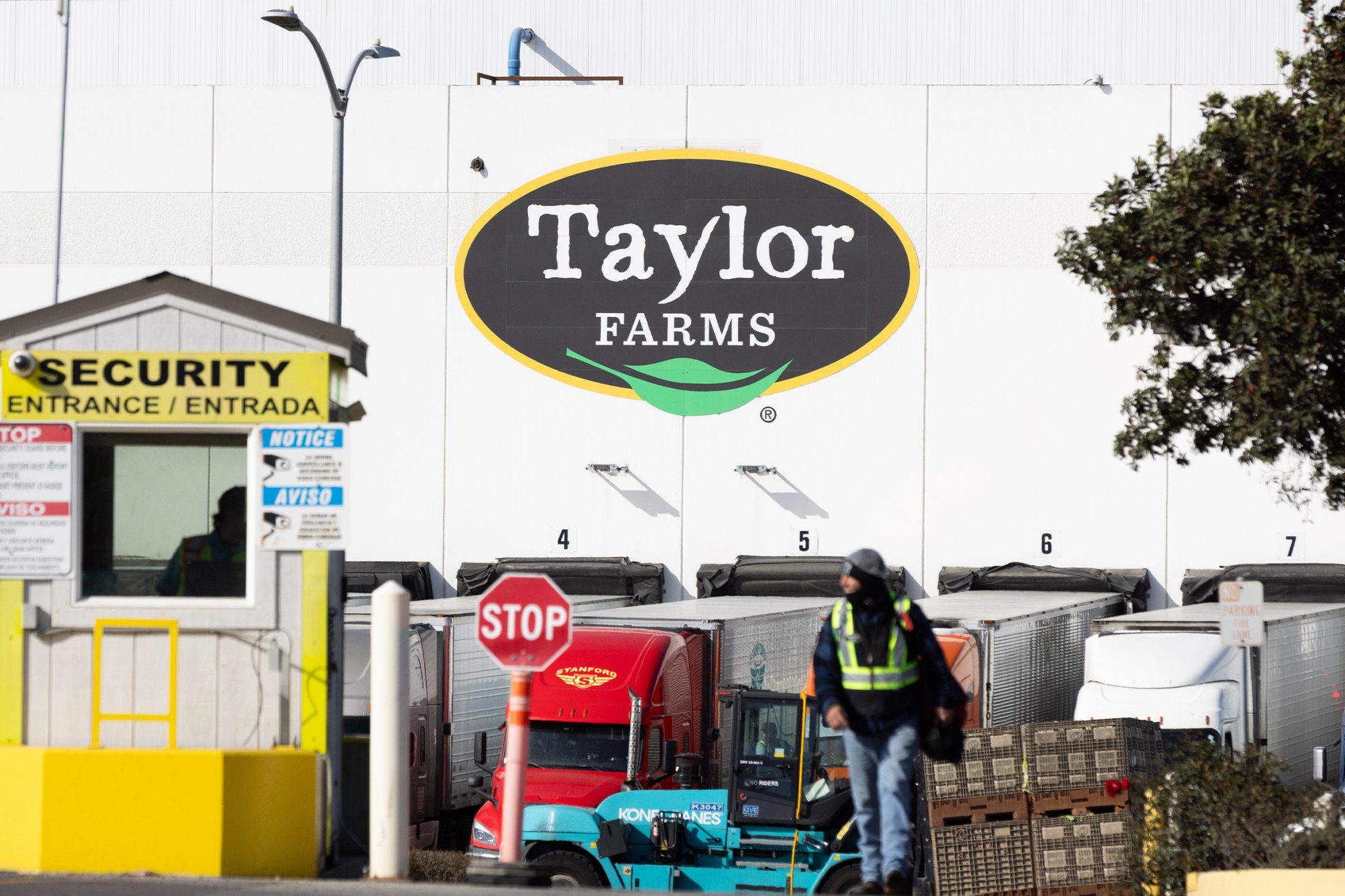
Health officials are still racing to nail down the source of the outbreak of the microscopic parasite Cyclospora cayetanensis, which is known to cause frequent — and often explosive — watery diarrhea. The top suspect so far has been Taylor Farms, one of Taco Bell’s lead suppliers, whose bagged shredded lettuce was initially found by the Food and Drug Administration to contain the parasite.
While the FDA has since gone back on that claim, saying the results were a “false positive,” Taylor Farms has nonetheless agreed to lead a “voluntary” recall of the allegedly tainted lettuce.
The true count of cyclosporiasis cases in the US remains extremely difficult to tally. As the CDC notes, “surveillance updates do not include probable cases.” Many people who fall ill “recover without medical care and are not tested for Cyclospora.”
According to a map issued by the agency, the two hotspots are Michigan and Ohio. Michigan alone passed the 10,000 cases mark today, according to the state’s Department of Health and Human Services.
The only states that have yet to report or confirm a single case, per the CDC’s map, are Montana, New Mexico, Maine, South Carolina, and Hawaii.
Fortunately, it’s easy to protect oneself from the parasite. Public health experts recommend thoroughly washing fruits and vegetables or simply cooking them, which kills the tiny critters.
More on the outbreak: Trump Is Having a Major Problem With Diarrhea
The post Almost the Entire Country Is Drowning in Cases of Explosive Diarrhea appeared first on Futurism.

For only the second time in its history, the American Red Cross has declared a “national blood supply crisis,” after donations fell to a four-year summer low.
The hotter summer months conventionally trigger blood shortages because people are more likely to injure themselves while spending time outdoors.
And this summer has been particularly extreme. According to the Red Cross, extreme heat, poor air quality, and widespread foodborne illnesses have compounded into blood donations dropping precipitously, causing supply levels to plummet to a historic low.
The news comes amidst record-breaking temperatures this summer, devastating heatwaves that have killed at least 25 people in the US. Public health officials are also battling an outbreak of an explosive diarrhea-causing parasite that’s has spread to 45 states.
As a result of plummeting donations, the Red Cross, which is the largest single provider of blood products, has “less than a one-day national supply of type O positive blood.” Type O positive is the most commonly transfused blood type, and highly valued because can safely be used to treat over 80 percent of the population.
The Red Cross declared its first-ever national blood crisis in January 2022, triggered by a previous low in donor turnout due to ongoing COVID-19 surge disruptions.
“Every donation has the potential to help save lives, and we urgently need everyone who is eligible to make an appointment to give blood as soon as possible,” said Red Cross Biomedical Services president Chris Hrouda in a statement.
The risks of an extremely limited blood supply are considerable.
“There’s always the possibility, when the blood supply dips like it has, that patients won’t be able to get the blood products they need, when they need,” Red Cross spokesperson Matt Trotter told NPR affiliate KOSU.
By mid-July, the Red Cross was already ringing the alarm bells, warning that donations had fallen by about 25 percent in June.
To get back on track doesn’t require drastic action, either. The organization says that just “three more donors at each blood drive this summer can end this crisis and stabilize the blood supply.”
“One donation can help save multiple lives, so if you’ve got an hour you can spare, you can do a lot of good with it,” Trotter told KOSU. “Many people who think they are ineligible actually can donate blood.”
If you or a loved one wants to donate blood, this site run by the Red Cross can help find a blood drive nearby.
Updated to correctly identify blood types.
More on blood: Immortality-Obsessed Tech Guy Trying New Technique That Involves Removing “All Blood From Body”
The post The United States Is Rapidly Running Out of Blood appeared first on Futurism.

President Donald Trump has a major problem with explosive diarrhea on his hands.
On Tuesday, HHS secretary Robert Kennedy Jr declared that the ongoing outbreak of cyclosporiasis — a non-lethal but extremely unpleasant gut infection caused by the Cyclospora cayetanensis parasite — was “under control.”
“We’ve identified the source of the outbreak, and the companies that are involved have implemented a recall,” he said, without elaborating any further or naming the companies.
But considering that cases are still rising, the situation is very much not looking under control. According to a Tuesday update by the Centers for Disease Control and Prevention, there have been 4,173 laboratory-confirmed domestic cases of cyclosporiasis since May 1. There are an additional 7,400 cases that have yet to be confirmed, many of which were reported in Michigan and Ohio.
Those tallies appear to be underestimating the scale of the problem considerably. In Michigan alone, state officials warned on Wednesday that there were 7,171 cyclosporiasis cases since June 22, up from 6,571 on July 21, suggesting the outbreak is only getting started.
Cases reported by the Ohio Department of Health tripled to 1,192 cases in its July 16 update, compared to June 20 — another sign that the situation is getting worse, not better.
And that’s just the data we know about. Identifying the parasite is notoriously difficult in a lab, making it particularly difficult to trace, and requiring extensive detective work by health officials.
Yet the public messaging regarding news about the outbreak has been severely lacking and downright confusing. Over the same weekend, the Food and Drug Administration said it had determined the culprit, bagged shredded lettuce supplied by Taylor Farms, one of Taco Bell’s lead suppliers — only to claim that the results were a “false positive” less than a day later.
Taylor Farms, which continues to “voluntarily” recall its tainted lettuce, celebrated the update, claiming the FDA had “apologized to us” in a since-deleted Monday statement.
Just hours later, the situation flipped on its head once again, with the FDA saying that “FDA’s traceback investigation and outbreak data continue to converge on shredded iceberg lettuce from Taylor Farms locations in central Mexico.”
There are plenty of reasons to be highly skeptical of the government narrative. The Trump administration maintains a cozy relationship with Taylor Farms, a company that has made a major donation to Trump’s political action committee, MAGA Inc.
The White House has since vehemently denied accusations from the media that it may be colluding with Taylor Farms behind the scenes, with the Health and Human Services Department calling them “FAKE NEWS” in a Monday statement — the kind of knee-jerk reaction that’s bound to invite even more scrutiny.
Then there’s the Trump administration’s gutting of key public health programs that could make truly getting the cyclosporiasis outbreak under control. Budget cuts have led to massive layoffs at the USDA, CDC, and FDA. Key food inspection and surveillance programs ahve been terminated. A team specifically dedicated to tracking cyclospora was slashed by Elon Musk’s so-called Department of Government Efficiency last year from 11 to just three people.
In short, while Kennedy claims the situation is under control, there’s plenty of evidence to the contrary. Cases are on the rise and even the evidence behind FDA’s leading suspect appears to be shaky, by the agency’s own admission.
It’s the perfect storm of short-sighted austerity measures, chummy business relationships, and poor public messaging by officials who are unable to speak from a place of authority and conviction.
Put simply, Trump’s diarrhea troubles are likely only getting started.
More on the outbreak: Trump’s Explosive Diarrhea Scandal Is Getting Worse and Worse
The post Trump Is Having a Major Problem With Diarrhea appeared first on Futurism.

In a stunning reversal on Sunday, the Food and Drug Administration said that lettuce samples from Taylor Farms did not, after all, test positive for the microscopic parasite Cyclospora cayetanensis, which is behind the rising outbreak of explosive diarrhea sweeping the nation.
Health officials have been racing to control the intestinal infection, which fortunately is not deadly, but can cause weeks of violently watery diarrhea.
By Saturday, the FDA said it had found traces of the parasite in shredded iceberg lettuce supplied by Taylor Farms — one of Taco Bell’s lead suppliers — only to change its mind just one day later.
“To be clear, at this moment, FDA has not identified a single positive product test result for cyclospora,” a Taylor Fresh Foods spokesperson told Reuters in a statement.
The bizarre 180 leaves far more questions than answers. And further muddying the waters was lawyer and public health policy leader Matthew Cortland’s stunning discovery about the food supplier’s relationship with the Trump administration.
In a post on Patreon, Cortland found that Taylor Farms had made a $1 million donation to the Trump-aligned super PAC MAGA Inc on March 26, 2025. That’s just six days after the FDA announced it was pushing back the implementation of its “Food Traceability Rule” by 30 months.
The rule, which was originally meant to go into effect on January 20 of this year, would’ve established “traceability recordkeeping requirements beyond those in existing regulations, for persons who manufacture, process, pack, or hold foods,” according to the regulator’s website.
Considering the effort would’ve allowed, in the words of the FDA, for the “faster identification and removal of potentially contaminated food from the market, resulting in fewer foodborne illnesses and deaths,” the agency’s decision to move back the compliance date raised eyebrows. (Congress even doubled down earlier this year, forbidding any funds to be appropriated to enforce the Food Traceability Rule before July 20, 2028.)
Where all of this leaves the ongoing outbreak of explosive diarrhea is tough to say. As Cortland points out, the Centers for Disease Control and Prevention has only acknowledged a small fraction of the cases of the illness so far. As of Friday, that’s 1,644 cases across five states. However, compared to reported tallies from individual states — Michigan alone has reported over 6,000 cases as of Monday — that’s likely vastly underestimating a more widespread phenomenon.
One reason for the discrepancy could be the difficulty of confirming the presence of the parasite with a lab test, a process that requires painstakingly dying eggs and then examining samples under a microscope. The parasite can’t be grown in a lab, greatly hampering scientists’ efforts to trace the outbreak.
“You’re looking for a needle in a haystack,” food-safety professional Jennifer McEntire, who consults for Taylor Fresh Foods, told the Wall Street Journal. “With E. coli and salmonella if you find it you can make the needle bigger. That doesn’t happen for cyclospora.”
Nonetheless, in terms of public health messaging, the ongoing outbreak is clearly causing far more confusion than it should, highlighting massive budget cuts that allow outbreaks like the current one to flourish.
And chances are that the situation could get even messier as the parasite spreads. The Trump administration’s FDA and USDA have lost tens of thousands of workers last year amidst budget cuts. A food surveillance program called FoodNet that monitored eight common foodborne pathogens is now no longer required to keep tabs on the cyclospora parasite. A team responsible for identifying parasitic outbreaks across the US was cut from 11 people to just three in September, as CNN reports.
For now, Taylor Fresh Foods will still have to recall its iceberg lettuce — despite the FDA now claiming the samples it viewed did not test positive after all.
More on the outbreak: Let’s Be Real, The Explosive Diarrhea Outbreak Is Trump’s Fault, Not Taco Bell’s
The post Taylor Farms Made Huge Donation to Trump Group After Loosening of Rules That Could Have Prevented Explosive Diarrhea Outbreak appeared first on Futurism.
The world has been obsessed with what Gen Z is or isn’t doing.
They’re not having sex, apparently. They don’t go out. And let’s not forget drinking: for the young twenty-somethings to forgo damaging their livers and brains by imbibing poison as prolifically as their predecessors clearly shows a lack of respect — and that they don’t know anything about having a good time.
But it appears that in the end, the apple doesn’t fall too far from the tree. New research from beverage retail research group IWSR shows that Gen Z are now catching up on boozing like a friend knocking back a whole row of shots after showing up later than they said they would.
“They’re late to the party, they’re not skipping the party,” IWSR president Marten Lodewijks told Business Insider.
According to the survey, 74 percent of Gen-Zers say they’ve had at least one drink over the past six months, a huge leap from 66 percent just three three years ago. The heaviest drinkers were Millennials at 81 percent, and the lightest were Baby Boomers at 71 percent. Gen X, fittingly, were in the middle at 77 percent.
The legal drinking age youths are catching up, but their drinking habits look a little different from their elders’. They’re drinking more cocktails than any other generation, with 84 saying that they had a mixed drink in the past six months. Gen-Zers were also the most likely to follow government health guidance on alcohol (49 percent), and the most likely to say they drank alcohol with five or more people on their last occasion (18 percent).
In a statement, Lodewijks declared that Gen-Z’s reputation as the generation of moderation “is now conclusively debunked.”
“The evidence demonstrates that Gen Z consumers enjoy drinking at roughly the same levels as the rest of society,” he added.
In retrospect, it always should’ve been clear why Gen-Zers didn’t drink as much. Shifting attitudes towards drinking culture may be part of it, sure, but what almost certainly had the biggest part to say was the COVID-19 pandemic that stopped them from going out around when many of them just hit their legal drinking age.
“They were literally coming of age at a point in which everything got shut down,” Lodewijks told BI.
Wonderful. With their boozing now in line, what other Gen-Z habits can we worry about? Their addiction to romantic AI companions? We cast a mournful glance towards the bottle.
More on health habits: To Get Swole, Teens Are Pumping Themselves Full of Drugs Meant for Fattening Cows for the Slaughterhouse
The post Gen Z Appears to Be Reversing No-Drinking Trend, Now Lurching Toward Alcoholism appeared first on Futurism.

The next time you’re checking into a hospital, it’s possible that your nurse may actually be 8,000 miles away.
That’s the reality at a growing number of hospitals throughout the US and the world, which are turning to low-paid telehealth workers in the Philippines to help fill in the duty roster. As it is for remote driving and AI data labeling, the Philippines has become a wellspring of cheap labor for transnational healthcare companies, which are more than happy to exploit a country where millions of people live in poverty.
Stunning reporting by Rest of World detailed the lives of some of the 210,000 full-time Filipino workers employed in remote healthcare. This new class of workers makes up for a massive shortage of almost 80,000 registered nurses in the US.
One of the workers, Alice, is a licensed nurse working in Quezon City, a city of three million people in the Philippines. In 2019, she signed on with a telehealth company providing mental health and substance abuse treatment to US-based patients in California and New Mexico. Alice told RoW she earns $5 an hour, five times as much as the hospital job she left behind.
“We have this virtual clinic that functions like a lobby where patients check in,” Alice explained, “and then we traffic or triage them and send them to each of the providers’ personal Zoom room.”
To get a job communing with US patients through a screen, a Filipino worker simply needs to have a medical degree — it doesn’t matter what kind. While it’s likely that many telehealth recruits come from healthcare administration backgrounds, RoW notes that about 30 percent of the people employed in these jobs are trained nurses or other medical professionals.
The result is a scenario where tens of thousands of healthcare workers are physically present in their communities, but spend their days caring for patients half a world away in a desperate bid to pay the bills. Already facing a mounting shortage of trained healthcare professionals, the Filipino people have watched as telehealth corporations court the remaining hospital workers to oversee care for patients in the US.
“If they can’t go abroad, remote nursing is the next best thing because local wages are so low,” Nico Uba, secretary general of the group Filipino Nurses United told RoW. “Then local hospitals are left understaffed and overworked.”
The companies running this insidious scheme prey on two sets of healthcare workers on opposite ends of the world: the underpaid Filipino, for whom a wage of $5 an hour is much higher than the national average, and the overworked American, for whom a 50-hour work week is practically a vacation.
The remote healthcare industry is well aware of this tension, and is happy to take advantage. As JL Botor, president of the Healthcare Information Management Association of the Philippines told RoW, US hospitals can save up to 70 percent of their overhead costs by hiring Filipino workers instead.
In all, Botor notes that the country is a “clinical process outsourcing powerhouse,” as well as “a premier global hub for supporting overstressed international healthcare systems.”
More on healthcare: Lawsuit Claims the Mayo Clinic’s Use of AI Is Butchering Patient Care
The post US Hospitals Are Outsourcing In-Person Nursing to Remote Health Workers in the Philippines appeared first on Futurism.