❌

Reading view

Sunbird, app que leva o iMessage ao Android, retorna com novos recursos e segurança aprimorada

Lançado originalmente em 2022, o aplicativo Sunbird possui como premissa integrar a experiência do iMessage em dispositivos Android. No entanto, algum tempo depois, o serviço foi encerrado e o app, removido do Google Play devido a preocupações envolvendo privacidade e segurança.

Depois de já ter lançado, em 2024, uma versão beta do seu (então) novo aplicativo, a equipe por trás do serviço anunciou o seu retorno definitivo, afirmando que a nova configuração soluciona essas questões e que “qualquer mensagem é protegida em trânsito e descartada assim que é entregue”, enquanto as mídias enviadas ou recebidas são excluídas “normalmente em até 48 horas, e nunca além de 72 horas”.

Muitos devem estar se perguntando, porém, o motivo que leva alguém a optar pelo Sunbird considerando que a Apple já adotou o suporte ao padrão RCS 1Rich communications service, ou serviço de comunicação rico. no iOS, facilitando a comunicação com dispositivos Android pelo app Mensagens (Message). Essa é a explicação do serviço:

Em 2024, a Apple passou a oferecer suporte ao RCS nos iPhones, o que melhorou alguns aspectos básicos, como a qualidade das fotos e os indicadores de digitação. No entanto, os resultados são inconsistentes, e a mudança não permitiu que usuários de Android se tornassem membros plenos de grupos do iMessage. Reações, respostas e recursos de grupo do iMessage frequentemente falham quando há um celular Android no chat, e as mensagens enviadas por Androids continuam aparecendo em balões verdes.

Segundo Danny Mizrahi, CEO 2Chief executive officer, ou diretor executivo. da Sunbird Messaging, o aplicativo vai além de simplesmente oferecer balões azuis aos usuários de Android. O executivo afirma que recursos do iMessage (como reações, respostas, vídeos de alta qualidade e gerenciamento de grupos) funcionam perfeitamente no Sunbird para Android.

O Sunbird também introduz novos recursos, como uma nova caixa de entrada prioritária, com abas “Principal” e “Secundária”, de modo que as conversas individuais e os grupos com quem o usuário mais interage permanecem em destaque na aba “Principal”, enquanto mensagens rotineiras — como códigos de verificação e contatos de números desconhecidos — são direcionadas à aba “Secundária”.

Caixa de entrada do Sunbird
Divulgação/Sunbird

Futuramente, o app ganhará ainda a Sunbird Intelligence, um conjunto de recursos de inteligência artificial que operam localmente. Entre as funções está o “Catch Me Up”, que oferecerá aos usuários um resumo consolidado de tudo o que perderam em suas conversas. Ele também terá um assistente integrado que poderá realizar ações como redigir uma resposta ou mover uma conversa entre categorias.

Assistente de IA do app Sunbird
Divulgação/Sunbird

Ainda não se trata, porém, da versão final do Sunbird, e sim da versão “beta aberto”; no entanto, não há mais um processo de inscrição nem lista de espera. Ademais, agora o aplicativo conta com opções de assinatura interna (US$3 mensais ou US$25 anuais).

O Sunbird já está disponível no Google Play.

via AppleInsider

Notas de rodapé

  • 1
    Rich communications service, ou serviço de comunicação rico.
  • 2
    Chief executive officer, ou diretor executivo.

  •  

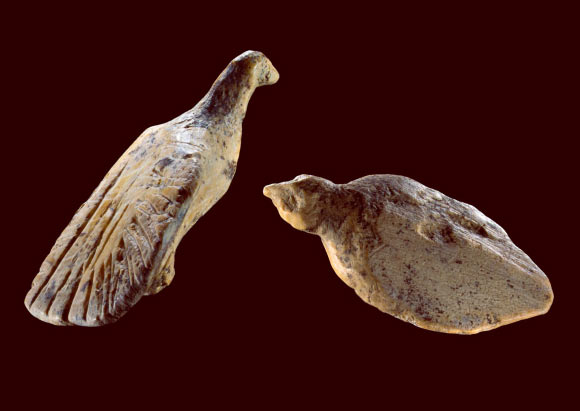
40,000-Year-Old Bird Figurines Found in German Cave

Two bird figurines found at Hohle Fels Cave in Germany. Image credit: Ralf Ehmann / University of Tübingen / Museum of Prehistory and Ice Age Art.

Archaeologists in southwestern Germany have unearthed two miniature bird figurines carved from mammoth ivory, among the smallest and most delicate examples of Ice Age art ever found.

The post 40,000-Year-Old Bird Figurines Found in German Cave appeared first on Sci.News: Breaking Science News.

  •  

Apple TV divulga trailer de “A Dinastia — UConn Huskies”; docussérie estreará em 21 de agosto

O Apple TV divulgou o trailer de “A Dinastia — UConn Huskies” (“The Dynasty: UConn Huskies”), sua nova série documental que narra a trajetória de 40 anos do renomado programa de basquete feminino da Universidade de Connecticut (UConn) sob o comando do técnico Geno Auriemma, membro do Hall da Fama.

A produção, dividida em três partes, estreará mundialmente no dia 21 de agosto (uma sexta-feira).

Twelve championships don't happen by accident. Go inside one of college basketball's most prestigious programs.

The Dynasty: #UConnHuskies — August 21 on Apple TV pic.twitter.com/noP5RuttEl

— Apple TV (@AppleTV) July 17, 2026
Doze títulos não acontecem por acaso. Conheça por dentro um dos programas mais prestigiados do basquete universitário.
A Dinastia: #UConnHuskies — 21 de agosto na Apple TV.

“The Dynasty: UConn Huskies” narra a ascensão do programa mais dominante na história do basquete universitário nos Estados Unidos. Com entrevistas exclusivas com a equipe campeã nacional de 2025 e participações de figuras do basquete da UConn, a série explora a busca pela excelência, as expectativas que acompanham o sucesso duradouro e as pessoas que mantiveram esse padrão ao longo das gerações.

A série reflete sobre o legado que construiu o programa e oferece um olhar raro de bastidores sobre as jogadoras que dão continuidade a essa história, por meio de conversas aprofundadas com técnicos, atletas, ex-jogadoras, rivais e jornalistas de várias gerações do basquete da UConn, incluindo KK Arnold, Auriemma, Sue Bird, Paige Bueckers, Jim Calhoun, Swin Cash, Chris Dailey, Mickie DeMoss, Jana El Alfy, Jamelle Elliott, Azzi Fudd, Jeff Goldberg, Sally Jenkins, Steve Kerr, Rebecca Lobo, Jackie MacMullan, Maya Moore, Alexa Philippou, Shea Ralph, Semeka Randall, Jennifer Rizzotti, Breanna Stewart, Sarah Strong, Diana Taurasi e Tamika Williams-Jeter.

Com direção e produção executiva de Matthew Hamachek (vencedor do Emmy) e Erica Sashin (indicada ao Emmy), “The Dynasty: UConn Huskies” também conta com Jesse Sisgold, Jason T. Reed, Jon Weinbach, Lauren Gaffney, Lindsay Kagawa Colas, Grant Jones, Jon Liebman e Zoe Rogovin como produtores executivos.

O Apple TV está disponível no aplicativo Apple TV em mais de 100 países e regiões, seja em iPhones, iPads, Apple TVs, Macs, dispositivos Android, smart TVs ou online — além de também estar em aparelhos como Roku, Amazon Fire TV, Chromecast com Google TV, consoles PlayStation e Xbox. O serviço custa R$29,90 por mês, com um período de teste gratuito de 7 dias. Por tempo limitado, quem comprar e ativar um novo iPhone, iPad, Apple TV ou Mac ganha 3 meses do Apple TV. Ele também faz parte do pacote de assinaturas da empresa, o Apple One.

NOTA DE TRANSPARÊNCIA: O MacMagazine recebe uma pequena comissão sobre vendas concluídas por meio de links deste post, mas você, como consumidor, não paga nada mais pelos produtos/serviços usando os nossos links de afiliado.

  •  

Scientists Create Bio-Inspired Robots to Hack the Hovering Powers of This Exceptional Species to Build Better UAVs

An innovative new approach to building safer, more efficient small unmanned aerial vehicles is taking a cue from nature.

Anticipating worsening turbulence due to environmental concerns in the coming years, engineers studying the unmatched hovering ability of kestrels hope to reverse engineer the secrets of their exceptional flight capabilities to help assemble better future drones.

Smaller drones, known as sUAVs, have a range of different applications that include delivery services, photography, and more. However, wind conditions can often cause turbulence that either grounds them temporarily or, when caught off guard, can lead to their destruction.

Now, a team of researchers has published their findings in the Journal of the Royal Society Interface, which details an ongoing collaboration between RMIT University and the University of Bristol that seeks to overcome such issues by building drones that operate more like some of nature’s best flyers.

Specifically, the nankeen kestrel is an avian species whose amazing prowess while flying during adverse conditions still confounds researchers. To unravel the secrets of their flight, the researchers used motion capture technologies made possible in RMIT’s special Industrial Wind Tunnel facility, one of the largest such facilities anywhere on the Australian continent.

“Birds don’t rely on a single response to wind gusts,” according to RMIT researcher Matt Penn. “They constantly adjust their wings and tails to stay balanced, while the natural flexibility of their feathers and joints helps absorb sudden changes in airflow.”

“They can also sense disruptions very quickly, which allows them to respond almost instantly and maintain control,” added Penn, one of the team members who co-led the studies into how birds can cope with turbulence.

According to Penn and his colleagues, these birds possess a range of unique strategies that help them overcome the dangers of turbulence, which help them navigate under conditions that would cause most sUAVs to come tumbling from the sky.

To attempt to understand what makes kestrels such adept fliers, the team created a robotic replica to mimic some of their key flight movements and characteristics, which allowed the team to unravel some of the secrets to how these incredible birds perform.

“By creating a robot replica, we were able to measure how specific movements were contributing to steadiness in flight,” said Dr Mario Martinez Groves-Raines, a researcher now with the Royal Veterinary College in London, adding that precision measurements of kestrel flight that normally could not be achieved in nature were possible using the team’s robotic version.

“We uncovered several unique techniques behind the kestrel’s impressive stability,” Groves-Raines said. “Many of these techniques have the potential to improve [the] manoeuvrability of small aircraft, which encounter similar challenges to kestrels.”

“This research shows what’s possible when engineers look to nature for solutions,” added RMIT senior researcher Associate Professor Abdulghani Mohamed.

“Our findings open new pathways for designing aircraft that can better handle turbulence.”

Going forward, the researchers say they hope to apply their findings toward the construction of novel sUAVs, which can help future drones operate safely and more efficiently, much like their agile avian forebears.

Ultimately, similar engineering in the coming years may have applications that extend well beyond just drone flight, and could also help to ensure safe operations for much larger aircraft.

The team reported their findings in a pair of new studies, ‘Bridging the Gap: A Review of Gust Mitigation in Birds and Small UAVs’, and ‘Stability and control benefits of coupled wing and tail morphing in kestrel wind-hovering flight explored using a robot replica’, both of which were published in the Journal of The Royal Society Interface.

Micah Hanks is the Editor-in-Chief and Co-Founder of The Debrief. A longtime reporter on science, defense, and technology with a focus on space and astronomy, he can be reached at micah@thedebrief.org. Follow him on X @MicahHanks, and at micahhanks.com.

  •  

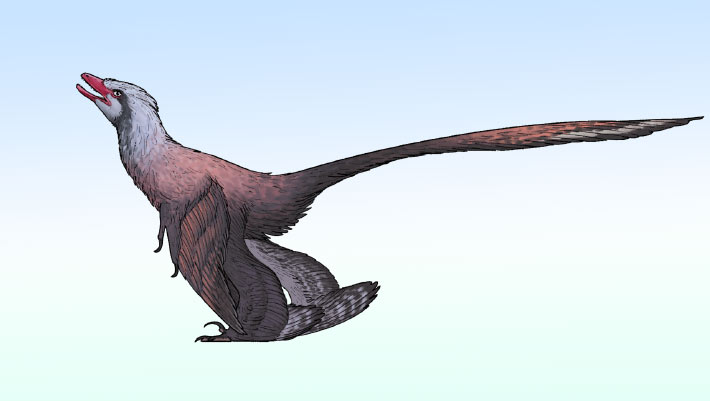
New Feathered Dinosaur from China Had Peacock-Like Tail

Changzhousaurus sinensis. Image credit: Connor Ashbridge / CC BY 4.0.

A new genus and species of four-winged pennaraptoran dinosaur from the Early Cretaceous of northern China is adding another twist to the story of how birds evolved from their dinosaur ancestors.

The post New Feathered Dinosaur from China Had Peacock-Like Tail appeared first on Sci.News: Breaking Science News.

  •  

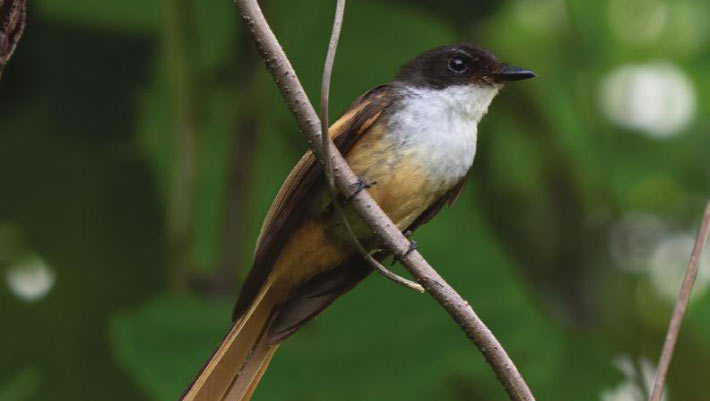
Ornithologists Describe New Bird Species from Remote Indonesian Islands

The cheerful fantail (Rhipidura laguceria) in November 2022. Image credit: James A. Eaton.

A small songbird inhabiting the Babar Islands, in the Banda Sea, Indonesia, has been identified as a new species after a duo of researchers discovered that its distinctive song sets it apart from its closest relative.

The post Ornithologists Describe New Bird Species from Remote Indonesian Islands appeared first on Sci.News: Breaking Science News.

  •  

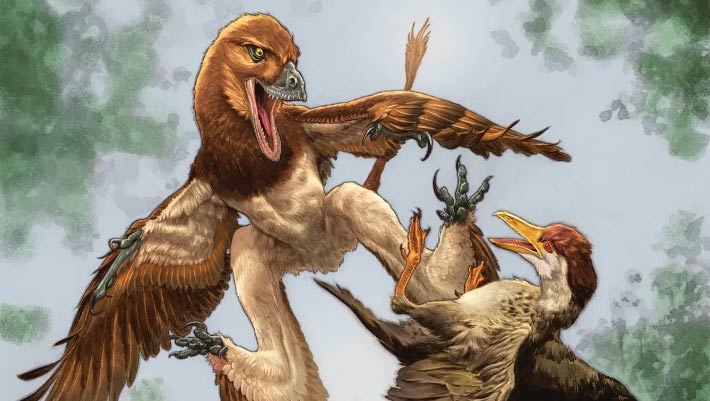
New Microraptorine Dinosaur Discovered in China

Jian changmaensis (left) attacks the early bird Gansus yumenensis (right) in what is now the Changma Basin of northwestern China approximately 120 million years ago. Image credit: Lewis LaRosa / Jão Canola.

Jian changmaensis is the first non-avian dinosaur found at a paleontological site that has yielded more than 100 specimens of Early Cretaceous birds.

The post New Microraptorine Dinosaur Discovered in China appeared first on Sci.News: Breaking Science News.

  •  

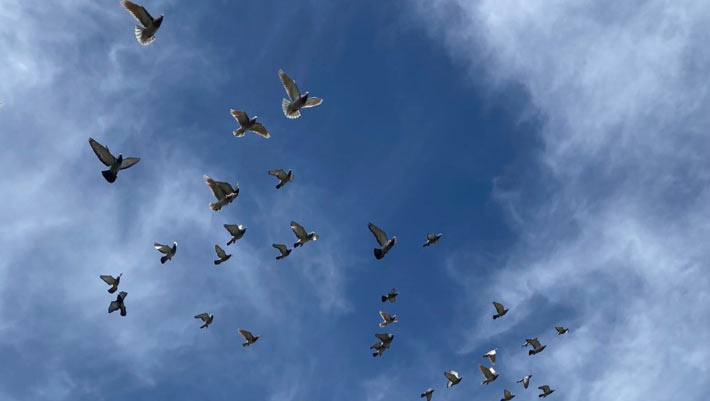
Pigeons May Sense Earth’s Magnetic Field Using Superparamagnetic Immune Cells in Their Livers

Lisowski et al. used physical, morphological, functional, and genomic assays to identify the presence of superparamagnetic macrophages in the liver of homing pigeons (Columba livia domestica). Image credit: Spanishguitar101 / CC BY-SA 4.0.

Scientists have identified supermagnetic macrophages in the livers of homing pigeons (Columba livia domestica) that appear essential for navigation when the Sun is not visible, pointing to an entirely new mechanism for animal magnetoreception.

The post Pigeons May Sense Earth’s Magnetic Field Using Superparamagnetic Immune Cells in Their Livers appeared first on Sci.News: Breaking Science News.

  •  

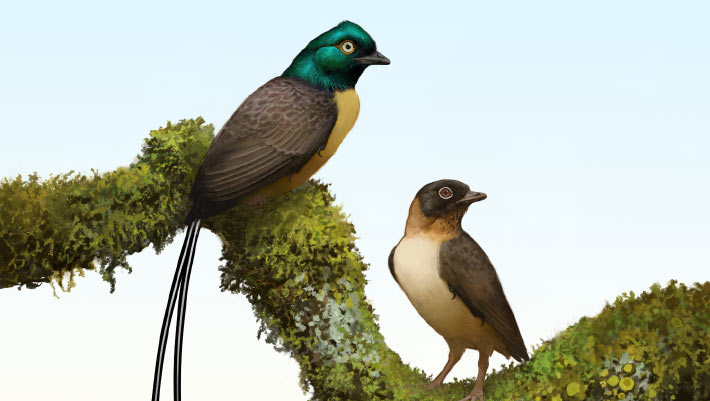
Cretaceous Bird from China Had Pair of Tail Feathers Twice as Long as Its Body

Plumadraco bankoorum is a new bohaiornithid enantiornithine bird with a pair of exceptionally long rectrices. Image credit: Ville Sinkkonen.

Named Plumadraco bankoorum, the newly-described species of enantiornithine bird lived in what is now northeastern China during the Cretaceous period, roughly 121 million years ago.

The post Cretaceous Bird from China Had Pair of Tail Feathers Twice as Long as Its Body appeared first on Sci.News: Breaking Science News.

  •  
❌