❌

Reading view

Deep brain stimulation restores social behavior after early-life pain by rebalancing circuits

A new study suggests that deep brain stimulation may do more than control movement disorders: it could also help repair social behavior disrupted by pain experienced early in life. In research published in Translational Psychiatry, Wan, Du, Yang and colleagues report that stimulating the brain’s anterior cingulate cortex alleviated social deficits associated with early-life pain. The proposed mechanism is a restoration of the balance between excitatory and inhibitory neural signals, a fundamental process that determines how brain circuits respond, adapt and communicate.

Early-life pain has effects that can extend far beyond the moment of injury or medical treatment. During development, the nervous system is rapidly building connections, refining sensory pathways and establishing the networks that support emotion and social behavior. Excessive or poorly regulated pain signals during this period may alter that process. Instead of remaining confined to pain-processing circuits, these changes can influence stress responses, emotional regulation and the ability to interact with other individuals later in life.

The anterior cingulate cortex, or ACC, is particularly important in this story. Located in the frontal region of the brain, it helps integrate emotional information with attention, motivation and decision-making. It is also involved in processing the unpleasantness of pain and in evaluating social experiences. Because the ACC sits at the intersection of pain, emotion and social behavior, disturbances in its activity could provide a neural explanation for why early-life pain is linked to later difficulties with social interaction.

At the cellular level, the brain depends on a delicate equilibrium between excitation and inhibition. Excitatory neurons generally increase the likelihood that neighboring cells will fire, while inhibitory neurons suppress or constrain that activity. This excitatory/inhibitory, or E/I, balance allows neural circuits to remain flexible without becoming either silent or excessively active. If excitation dominates, networks may become unstable and hypersensitive; if inhibition dominates, communication and behavioral responses may be weakened. The study connects social deficits after early-life pain with disruption of this balance in the ACC.

Deep brain stimulation offers a way to influence such malfunctioning circuits directly. The technique uses electrical pulses delivered through precisely positioned electrodes to modify activity in targeted brain regions. Although DBS is best known clinically for treating Parkinson’s disease, essential tremor and several other neurological conditions, researchers are increasingly investigating whether it can reshape circuits involved in mood, motivation and social behavior. The new findings place the ACC among the brain regions that may be responsive to this approach.

According to the study, stimulation of the ACC improved social abnormalities linked to early-life pain while also normalizing indicators of excitatory and inhibitory signaling. This is important because it suggests that the behavioral improvement was not simply a generalized effect of activating the brain. Instead, the intervention may have acted on a specific circuit-level disturbance. By bringing opposing neural forces back toward equilibrium, DBS could make the ACC more capable of processing social information and generating appropriate responses.

The result also highlights a shift in how scientists understand the consequences of pain during development. Pain is often treated as a temporary sensory event, but developing neural systems can interpret repeated or intense pain as an organizing signal. That signal may alter synaptic strength, neuronal excitability and communication between brain regions. Over time, these changes could become embedded in circuits that regulate social engagement. The study’s emphasis on E/I balance suggests that developmental pain may produce lasting behavioral effects through measurable changes in network physiology rather than through an unexplained psychological process.

The findings are likely to attract attention because social deficits are difficult to treat and can appear across many neurological and psychiatric conditions. However, DBS is an invasive therapy involving neurosurgical implantation, and the study does not mean that the treatment is ready for routine use in people affected by early-life pain. Translating a circuit-level discovery into a safe human therapy requires extensive work, including confirmation in independent models, determination of the most effective stimulation parameters and careful assessment of possible side effects. The ACC is involved in many functions, so altering its activity could influence emotion, attention or pain perception in unwanted ways.

Even with those limitations, the research offers a potentially powerful framework for future therapies. If social difficulties can be linked to a specific imbalance between excitation and inhibition, treatments might eventually be designed to correct that imbalance with greater precision. DBS is only one possibility. Noninvasive stimulation, pharmacological treatments that selectively influence inhibitory or excitatory signaling, and therapies combining behavioral training with neuromodulation could also emerge from the same biological insight.

The study’s central message is that the developing brain may retain a capacity for repair, even after early adverse experiences have changed its circuitry. By targeting the ACC and restoring the neural balance that supports its function, deep brain stimulation improved social behavior in the reported research. The work does not erase the complexity of developmental pain, but it identifies a concrete biological pathway connecting early injury, altered brain networks and later social difficulties. That connection could help move the field closer to treatments that address not only pain itself, but also the long-term social consequences it can leave behind.

Subject of Research: Deep brain stimulation, early-life pain, social deficits, and excitatory/inhibitory balance in the anterior cingulate cortex

Article Title: Deep brain stimulation ameliorates social deficits from early-life pain by restoring excitatory/inhibitory balance in the anterior cingulate cortex

Article References: Wan, X., Du, T., Yang, D. et al. Deep brain stimulation ameliorates social deficits from early-life pain by restoring excitatory/inhibitory balance in the anterior cingulate cortex. Transl Psychiatry (2026). https://doi.org/10.1038/s41398-026-04311-z

Image Credits: AI Generated

DOI: https://doi.org/10.1038/s41398-026-04311-z

Keywords: deep brain stimulation, early-life pain, social deficits, anterior cingulate cortex, excitatory/inhibitory balance, neuroscience, brain stimulation, developmental pain, social behavior
  •  

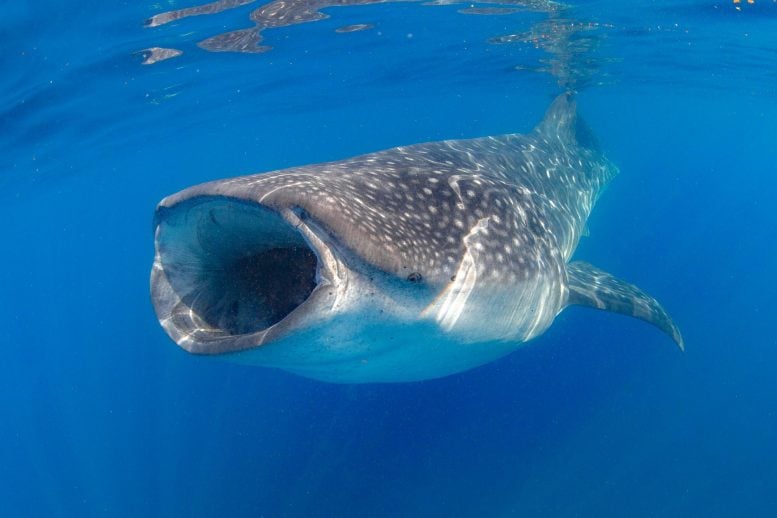
Underwater Cameras Expose the Secret Lives of Whale Sharks

Whale Shark Swimming UnderwaterWhale sharks use a wider range of feeding strategies and depths than surface observations previously revealed. A whale shark can vanish beneath the surface in seconds, leaving researchers with little idea of what the world’s largest fish does once it disappears from view. Whale sharks (Rhincodon typus) are among the ocean’s most recognizable animals, inspiring [...]
  •  

Ancient Footprints in Kenya Hint at Bigger Bodies and Group Behavior among Early Human Relatives

One of 1.43-million-year-old footprints found at the GaJi10 site in the Koobi Fora Formation in northern Kenya; a 15-cm (6-inch) ruler is shown for scale. Image credit: Kay Behrensmeyer.

A set of 1.43-million-year-old fossil footprints preserved along the margin of an ancient lake in northern Kenya is offering paleoanthropologists new evidence about the size, gait and social lives of the beings who made them and reopening questions about which species they belonged to.

The post Ancient Footprints in Kenya Hint at Bigger Bodies and Group Behavior among Early Human Relatives appeared first on Sci.News: Breaking Science News.

  •  

“The Sizes of the Footprints Indicate Human-Like Body Sizes”: Origin of 1.4-Million-Year-Old Fossilized Footprints Stuns Scientists

A new analysis of a set of 1.4-million-year-old fossilized footprints found along the shore of an ancient Kenyan lake revealed that the hominins responsible for leaving them were much larger than previously believed, with some specimens approaching the height and body size of modern humans.

The new analysis also determined that discovering a group of footprints belonging to eight different adult males from distant human ‘cousin’ species Paranthropus boisei walking together suggests a complex societal dynamic where males likely competed for females but also worked together for the group’s benefit.

1.4-Million-Year-Old Fossilized Footprints Reveal Unexpectedly Large Body Size

According to a statement announcing the new fossilized footprint analysis, the team behind the research had previously “pioneered” methods allowing science to accurately identify the footprints as belonging to Paranthropus boisei in 2024.

However, lead author Kevin Hatala, of Chatham University and an associated researcher of the Department of Human Origins at the Max Planck Institute for Evolutionary Anthropology in Leipzig, said the new approach, which analyzes foot anatomy and movement patterns based on the fossilized footprints, revealed much larger individuals than expected.

1.4-million-year-old fossilized footprints
One of the large, 1.4-million-year-old footprints that the team excavated. A 6-inch (~15 cm) ruler is shown for scale. Image Credit: Kay Behrensmeyer.

“The sizes of the footprints indicate human-like body sizes – up to 1.8 meters tall and around 75 kilograms”, Hatala said, noting that scientists studying the rare fossils available for Paranthropus boisei had previously assumed the species was much smaller than the modern human ancestor and contemporary hominin, Homo erectus.

For example, the researchers explain, the “overwhelming majority” of previously identified Paranthropus boisei fossils were skulls with massive jaws and teeth. However, they add, little is known about this ancient hominin’s anatomy from the neck down.

“A Window into Hominin Behavior and Group Dynamics”

Although indirect evidence compared to actual bones, the team notes that fossilized footprints form “very quickly.” This rapid formation helps preserve critical movement and anatomy data that the team notes “can be a useful window into hominin behavior and group dynamics.”

“The fact that eight, mostly adult male, Paranthropus boisei individuals seemingly traveled together as a group, without females or children, hints at a complex social structure in this species”, explained study co-author Neil Roach of Harvard University.

1.4-million-year-old fossilized footprints
Approximately 1.43-million-year-old hominin footprint from Koobi Fora, Kenya. Image Credit: Kevin G. Hatala.

For example, Roach said the ancient footprint makers may have lived in large groups, “where males competed for mates.” However, he notes, the same footprints suggest these competing males “also tolerated each other at times for safety in a dangerous environment.”

“This discovery adds an important behavioral dimension to the fossil record of Paranthropus boisei, a species that lived alongside early members of the genus Homo, yet took a different evolutionary path,” they explain.

Proximity and Environmental Conditions Could Offer More Behavioral Clues

Although the study focused on the 1.4-million-year-old footprints found on the shore of an ancient Kenyan lake, the work joins a growing catalog of ancient hominin footprints left on equally ancient lake shores. To date, the team has documented hundreds of hominin footprints across more than a half-dozen sites in the local region.

When discussing the significance of their findings, the team noted that these 1.4-million-year-old footprints join this larger group in supporting ancient lakes as an “important habitat with critical resources” that our now-extinct relatives relied on for survival. Study co-author Kay Behrensmeyer of the Smithsonian Institution also highlighted the unexpected nature of the discovery of ancient footprint fossils so close to others from a similarly ancient time.

“To me, it is amazing that we have the same kind of lake margin deposits in two areas of East Turkana that are 40 kilometers apart, at about the same age”, the researcher explained.

1.4 million year old footprints fossilized
Kevin Hatala and colleagues discuss the ancient footprints excavated in northern Kenya in 2023. Image Credit: Kay Behrensmeyer.

Study co-author Anna K. Behrensmeyer from the Department of Paleobiology and Human Origins Program, National Museum of Natural History, Smithsonian Institution, said understanding the environment and local conditions when the footprints were left could fill in even more missing pieces about this enigmatic ancient hominin.

“If we can understand what geological conditions allowed these tracks to be preserved, we should know more about why hominins continued to return to the lake shore environment over more than 100,000 years,” Behrensmeyer said.

Building a Photo Album of Our Past

When detailing the significance of the new analysis, study co-author Purity Kiura of the National Museums of Kenya said finding these fossilized prints along the margins of Lake Turkana “reinforces the region’s global importance in understanding human evolution, preserving remarkable evidence of how our ancient relatives lived 1.4 million years ago.”

“It further strengthens Kenya’s position as one of the world’s leading paleoanthropological landscapes and highlights our responsibility to protect this irreplaceable heritage,” Kiura added.

fossilized footprints
Most Paranthropus boisei fossils are skulls. By Matt Celeskey from Albuquerque – Australopithecus boisei, CC BY-SA 2.0, https://commons.wikimedia.org/w/index.php?curid=32845963

From a methodology standpoint, the team noted the benefit of combining new analytical approaches with “exceptional” fossil footprints. They also point out that ancient tracks like the 1.4 million-year-old footprints found in Kenya “can reveal the anatomy and movement of extinct human relatives, while also providing rare insights into their social lives and environments.”

To follow up on their findings, the research team said they plan to return to Kenya later this year and conduct more analysis of the footprints. According to Hatala, this work will help archaeologists and anthropologists fill in missing pieces of hominin history, especially those extinct branches of the evolutionary tree.

“Each site represents a snapshot of our past, and we are quickly building a photo album with several different windows to hominin anatomy, locomotion, behavior, and environments during the Early Pleistocene,” the researcher explained.

The study “Insights into hominin body size, locomotion, and behavior from Early Pleistocene trackways in northern Kenya” was published in the Proceedings of the National Academy of Sciences.

Christopher Plain is a Science Fiction and Fantasy novelist and has spent the last six years as Associate News Editor and Head Science Writer at The Debrief. Follow and connect with him on X, learn about his books at plainfiction.com, or email him at christopher@thedebrief.org

  •  

Fractured and Fed Up, Teams Fully Competitive After Major Breakthrough

A new UC Irvine–led poll released four months before Election Day suggests Orange County remains a rare political battleground, with the governor’s race hovering near statistical dead heat. In a June 9–12 field survey of 809 Orange County adults, likely-voter preferences put Republican Steve Hilton ahead of Democrat Xavier Becerra, 47% to 44%, well within a reported ±4.2 percentage-point margin of error.

The deeper story is turnout mechanics. Becerra performs best among groups that report lower voting certainty—Latino and Asian-American respondents, women, and Independents—while Republicans show higher levels of commitment. Only about half of Independents say they are absolutely certain to vote in November, compared with roughly three-quarters of Republicans and Democrats, raising the possibility that the election hinges more on who shows up than on who is preferred.

Orange County’s issue landscape narrows to a single dominant demand: housing costs. Sixty-one percent of residents name housing among the top problems facing California, and 37% identify it as the single most important issue—nearly double the next closest category. That cross-cutting salience persists despite demographic and partisan differences, making housing the campaign’s defining scalar variable.

The electorate also shows a structural shift. Independents now match Democrats as the county’s largest bloc, leaving Republicans virtually tied. The resulting near-perfect three-way split—34% Democrat, 34% Independent or other, 32% Republican—mirrors the March 2026 results and reinforces Orange County’s classification as a highly competitive electorate.

Generation appears to be the strongest cleavage dimension. Approval for President Donald Trump ranges from 14% among Gen Z to 53% among Baby Boomers, while voting certainty spans from 45% (Gen Z) to 87% (Boomers). Explanations for skipping the June primary cluster around forgetfulness, registration barriers, and skepticism about vote efficacy, especially among younger and Independent residents.

Racial and ethnic patterns complicate conventional realignment narratives. Although Latino and Asian-American groups are becoming more independent rather than simply shifting left or right, their head-to-head lean remains Democratic in candidate matchups. However, the turnout gap—about half of Latino residents and 59% of Asian-Americans reporting absolute voting certainty versus 82% for White respondents—may determine which coalition converts into votes.

Gender divides are consistent across the ballot. Men back Hilton by 14 points, while women support Becerra by 8 points, and approval of Trump and opposition to Governor Gavin Newsom track similarly by gender. Unlike generations, however, the gender gap does not translate into different turnout intentions, with roughly two-thirds of both men and women expressing absolute certainty to vote.

Finally, perceptions of institutional direction show persistent anxiety. Around two-thirds of respondents say the United States is headed in the wrong direction, while California fares only slightly better. Locally, optimism is more stable and surprisingly bipartisan, suggesting that residents may differentiate between county-level functioning and national or state governance.

Subject of Research:
Political science / Public opinion (elections; social surveys)

Article Title:
Orange County’s governor race remains a statistical toss-up as housing dominates public priorities

News Publication Date:
Today (June 9–12 field dates; exact publication date not specified)

Web References:
https://sites.uci.edu/ocpoll/

References:
UC Irvine School of Social Ecology “UCI-OC Poll” (fielded June 9–12 among 809 Orange County adults)

Image Credits:
Not provided

Keywords:
public opinion, elections, housing affordability, voter turnout certainty, political polarization, Independents, generational gap, gender gap, Orange County

  •  

Watch orcas ram a sunfish so hard it explodes

Credit: Kathryn Ayres

There have been numerous accounts in recent years of orcas ramming boats—and sometimes sinking them. Scientists believe this may be a form of culturally learned behavior passed down through generations. Now we have fresh examples: orcas in the Gulf of California were filmed teaming up to ram sunfish with so much force that the carcasses exploded into small fragments. While orcas have been known to use force to remove flesh from prey, this is something different, according to a new paper published in the journal Frontiers in Ethology.

“We think this may help younger orcas feed more easily, or it could also just be for fun," said co-author Kathryn Ayres of Beneath The Waves, a nonprofit organization promoting ocean health. "Orcas are known for playing with their food.”

Orcas engage in cooperative hunting strategies that can involve striking or killing animals—sometimes eating their prey, sometimes not—so the behavior could be described as social interaction, play, or practice as a mode of social learning. Orcas have been observed ramming whale sharks as another orca held the prey steady. Other cooperative strategies include herding mobile rays, blocking an escape path while hunting white sharks, and deliberately producing waves to bump penguins off ice floes.

Read full article

Comments

© Robert Pittman, NOAA/Public domain

  •  

Key Factors Driving Sustainable Stormwater Management Success

A new study in npj Urban Sustainability points to the practical levers that determine whether stormwater systems actually deliver long-term sustainability. As cities expand and rainfall extremes intensify, green and nature-based infrastructure has been promoted to capture runoff, reduce flooding, and protect water quality. But the research warns that success is not automatic: design decisions and operational realities can make or break performance.

The authors, Sun, Randrup, Blecken and colleagues, analyze what they call “decisive factors” governing sustainable stormwater management. Their central message is that the most visible features—such as bioswales, permeable surfaces, or detention basins—only work when supported by the right planning assumptions and measurable hydrological outcomes.

A key technical theme is how stormwater must be matched to system capacity under changing conditions. The study emphasizes that system sizing, soil or media properties, and infiltration or storage behavior strongly influence whether the infrastructure can handle typical storms and rare, high-intensity events. When these factors are misestimated, treatment efficiency can collapse during peak flows.

Equally important are maintenance and lifecycle considerations. Sustainable stormwater is sensitive to clogging, sediment accumulation, vegetation health, and changes in catchment behavior. The research highlights the need for maintenance regimes that reflect likely failure modes, rather than generic schedules that ignore local hydrology and traffic or land-use impacts.

The paper also stresses the value of monitoring and model-informed decision-making. Reliable data on rainfall patterns, runoff routing, and pollutant loads allow managers to validate performance and adjust operations. This feedback loop helps prevent long-term degradation that otherwise remains invisible until issues become costly.

For cities seeking viral, widely transferable “what works” guidance, the authors’ findings offer a shortlist of priorities: realistic capacity planning, robust material characterization, design for multi-storm performance, and maintenance strategies tied to specific mechanisms. Together, these elements translate sustainability goals into systems that function under real weather and real urban change.

The study’s DOI is 10.1038/s42949-026-00448-4.

Subject of Research: Sustainable stormwater management / urban sustainability
Article Title: Decisive factors in sustainable stormwater management
Article References: Sun, Z., Randrup, T.B., Blecken, GT. et al. Decisive factors in sustainable stormwater management. npj Urban Sustain 6, 104 (2026). https://doi.org/10.1038/s42949-026-00448-4
Image Credits: AI Generated
DOI: https://doi.org/10.1038/s42949-026-00448-4

  •  

6 Simple Scent Games That Can Make Your Dog Happier

Adorable Puppy Dog Green LawnA dog’s nose is a gateway to a richer world, and scent-filled walks, games, and food hunts can transform boredom and stress into excitement, focus, and discovery. While we are captivated by a vivid sunset and breathtaking views, dogs have their noses to the ground, reading the odor stories left behind by other dogs and [...]
  •  

Wet Harzburgite and Dry Basalt Slabs Maintain Ongoing Seismic Stagnation

A new study in Nature Communications reports that subducting slabs can become effectively “stalled” for long periods—not simply due to mantle temperature or plate motion, but because distinct rock assemblages within the downgoing plate alter how the slab interacts with the surrounding mantle. Using geophysical constraints combined with thermodynamic modeling, the researchers argue that slab dynamics depend on whether the slab interior is dominated by hydrated ultramafic lithologies or by comparatively dry basaltic components.

The central finding is that wet harzburgite—an olivine-rich, ultramafic rock—can sustain slab stagnation by promoting hydration-related weakening processes and controlling the timing and location of mineral transformation. In parallel, the team shows that dry basaltic slab assemblages can also contribute to stagnation, but through a different pathway: by limiting certain water-driven reactions while still maintaining a mechanically coherent, slow-moving interface at depth.

According to the authors, the fate of volatiles is the key variable. As the slab descends, pressure and temperature drive phase changes and dehydration reactions. These reactions can either increase or decrease the effective viscosity and friction along plate boundaries, shifting the balance between slab pull and mantle resistance. Where hydration is sustained, water remains available to weaken lithospheric portions that would otherwise become too rigid to decouple.

In the wet harzburgite scenario, dehydration and metamorphic reactions are predicted to sustain zones of reduced strength within the slab, preventing it from sinking efficiently into the lower mantle. This creates a feedback loop: slower descent limits thermal loss, which in turn preserves conditions that keep the weakening processes active.

In the dry basaltic scenario, the model emphasizes that even without abundant water, basaltic mineralogy can maintain mechanical coupling over a broader depth range. The study suggests that dry assemblages may delay the development of decoupling horizons, thereby prolonging stagnation until the slab eventually transitions to a different rheological regime.

The researchers also connect their results to the observed diversity of subduction-zone behavior, where some slabs advance smoothly while others appear to linger at mantle depths. By treating rock composition explicitly rather than assuming uniform slab properties, the work offers a framework for interpreting why similar plate boundary geometries can yield markedly different slab lifetimes.

Crucially, the analysis links mineral stability, dehydration partitioning, and viscosity contrasts into a single physical narrative. This moves slab “stalling” away from a purely geometric explanation and toward a lithology-driven process that can be tested against seismic signatures.

The findings will likely influence how future models incorporate water budgets and rock types in subduction simulations. If validated by geophysical observations, the wet-versus-dry assemblage distinction could become a practical lever for predicting which slabs will stagnate and for how long.

In short, the study portrays slab stagnation as a sustained state maintained by the contrasting rheological effects of hydrated harzburgite and comparatively dry basaltic materials, reshaping our understanding of how deep Earth water and rock chemistry govern plate evolution.

Subject of Research: Subduction zone dynamics and slab stagnation mechanisms

Article Title: Slab stagnation sustained by wet harzburgite and dry basaltic slab assemblages.

Article References: Shi, D., Shen, Y., Zhao, R. et al. Nature Communications (2026). https://doi.org/10.1038/s41467-026-75639-9

Image Credits: AI Generated

DOI: 10.1038/s41467-026-75639-9

Keywords: slab stagnation; subduction; wet harzburgite; dry basaltic assemblage; dehydration; mantle rheology; volatiles; mineral transformations

  •  

New Winged Robot Can Fly and Swim Like a Puffin

Scientists hoped for years to make a machine that could emulate the movements of diving birds, such as puffins, and offer an affordable, unobtrusive way to monitor fragile marine ecosystems. A team of researchers at M.I.T. has been able to create such a waterproof winged robot, according to a study published July 9 in the journal Science.
  •  

Dragonflies maneuver like fighter pilots

Credit: Samuel T. Fabian et al., 2026

Male dragonflies are known to engage in mid-air "dogfights" to defend their breeding territory, using different maneuvers than those they employ when hunting prey. A new paper published in the Journal of the Royal Society Interface concluded that relatively simple rules drive that behavior, namely that male dragonflies are trying to maintain a tactical position. This mirrors the tactics of human fighter pilots. The research could lead to the development of smarter drones capable of navigating with simple, vision-based guidance rather than complex computation.

Classic pursuits involving prey or mating rituals are asymmetric: there is a chaser and an evader, with each role requiring different maneuvers. In the case of male-on-male interactions, however, it is more of a mutual pursuit, per the authors, who thought that studying flight trajectories of insects or raptors could yield useful insights into the guidance laws that underlie the behavior. They chose the Trithemis Aurora species of dragonfly for study because the males are "fiercely territorial," and there are usually multiple males around a given pond, intent on defending their chosen perches. The dragonflies are also crimson-colored, making them easier to track.

Much of the prior research on dragonfly interactions relied on visual observations or single-camera recordings. For this study, the authors set up a portable stereovideographic rig with two shutter-synchronized cameras to record dragonfly interactions in both color and monochrome, and then reconstructed 102 paired male-on-male flight trajectories to capture the 3D kinematics. They also reconstructed nine trajectories for dragonflies intercepting prey for comparative purposes. This enabled the authors to develop a model for the rules governing the flight behavior.

Read full article

Comments

© Samuel Fabian et al., 2026

  •  

São Paulo’s Bike Lane Expansion Boosts Cycling Among Residents

In a groundbreaking decade-long study analyzing São Paulo’s urban landscape, researchers have revealed how the expansion of bike lanes and public parks profoundly influences physical activity and public health. Between 2014 and 2024, the city’s bike lane network surged from 242 to 743 kilometers, complemented by the addition of 15 municipal parks. This urban transformation was linked to increased transport-related cycling, emphasizing the critical role of accessible infrastructure within a 500-meter radius of residents’ homes.

The study’s multidisciplinary approach combined longitudinal surveys of 1,500 residents with geospatial datasets from the Geosampa platform, enabling precise correlation between environmental changes and behavior. Findings indicate that proximity to bike lanes significantly counteracts declining bicycle use trends, suggesting these facilities serve as protective factors promoting sustained physical activity. Such activity reduction directly translates to lower risks of cardiovascular disease, cancer, and improved mental health outcomes like reduced anxiety and depression.

Importantly, the research underscores active transportation infrastructure not only as a logistical planning tool but as a vital public health strategy. By reducing reliance on automobiles, these interventions diminish air pollution and traffic-related accidents, thereby contributing to climate change mitigation efforts. However, the study highlights uneven developments: wealthier neighborhoods received disproportionate infrastructure investments, calling for policy shifts to equip underserved zones with similar amenities.

Beyond infrastructural improvements, the researchers emphasize that sociocultural elements and affordability constraints also limit cycling uptake. Despite increased bike lanes, economic barriers such as the high cost of bicycles and gender disparities in cycling participation suggest that integrated approaches—encompassing recreational street design, bike-sharing expansions, and commuter support facilities—are necessary for meaningful behavioral shifts.

An illustrative testimony comes from a local photographer who transitioned from motorbike to bicycle commuting due to new bike bridges providing direct, safer routes. While embracing cycling’s growth, he voices concerns about road space allocation favoring cars and the emerging challenges of cyclists’ vulnerability amid the rise of faster electric bikes. Additionally, issues of public safety and bike theft remain barriers to broader adoption.

Overall, the findings reveal that São Paulo’s urban planning efforts over the past decade represent a promising model of how thoughtfully designed public open spaces can foster healthier, more sustainable cities. Still, ensuring equitable access and addressing multifaceted cultural and socioeconomic factors remain essential for realizing the full potential of active transport systems.


Subject of Research: Public open spaces and transport-related cycling in urban environments
Article Title: A decade-long study on public open spaces and transport-related cycling in the largest Brazilian city
News Publication Date: 13-Apr-2026
Web References: https://dx.doi.org/10.1016/j.jth.2026.102323
Image Credits: Phelipe Janning/Agência FAPESP

Keywords

Urban planning, Transportation, Public health, Cycling, Active transportation, São Paulo, Infrastructure, Mental health

  •  

Our brains aren't wired to handle this much bad news. But 'looking away is not the fix,' expert says.

During several recent conversations, people have told me that they've stopped checking their phones in the morning. Not because nothing was happening, but because everything was. They described the feeling as standing under a waterfall of perpetual bad news.

This experience is far from an isolated one. According to Reuters Institute's 2025 Digital News Report, 69% of Canadians at least occasionally avoid the news now.

Globally, 40% report they at least sometimes or often do the same, the highest figure ever recorded. People shared consistent reasons for this: the news put them in a bad mood, they felt overwhelmed and powerless to act.

As a researcher in developmental psychology, focusing on social development and psychological well-being, I argue that news fatigue is not laziness, weakness or a generational decline in civic interest. It's the predictable response of a human brain meeting an environment it was never designed to navigate.

Wired for bad news

Long before smartphones or even the printing press, our cognitive architecture was shaped by a single problem: stay alive long enough to reproduce. Our ancestors whose attention drifted past the rustle in the grass left fewer descendants than those who froze, looked and listened.

The brain that paid attention to threats was the brain that survived.

This is the foundation of what psychologists call the negativity bias, one of the most replicated findings in cognitive science. Across decades of research, the human mind has been shown to weigh negative information more heavily than positive, attend to it faster and remember it longer.

A predator nearby mattered more than a beautiful sunset. The cost of missing a real threat was death, while the cost of overreacting was a few minutes of wasted vigilance. The asymmetry made this bias adaptive.

Here is the problem: the human brain has not changed since then. We are the same species as we were thousands of years ago. What's changed is the size of the world it's asked to scan for threats.

A man wearing pajamas puts his head in his hands looking down at a large newspaper with glasses on top

News fatigue is not laziness, weakness or a generational decline in civic interest. It is the predictable response of a human brain meeting an environment it was never designed to navigate. (Image credit: pzAxe via Getty Images)

Scanning the whole world

For most of human history, the threats our nervous system processed were local. A neighbouring tribe. A drought. The illness of a child we personally knew. Information about distant places would barely arrive, and if it did, it was mainly irrelevant.

In 2026, the same neurological system is being asked to absorb a war in one region, a financial shock in another, a climate disaster in a third and a violent crime in a fourth, all before lunchtime.

A study published in the scientific journal Nature Human Behaviour examined more than 105,000 real news headlines viewed nearly six million times. Each additional negative word increased click-through rates, while positive words had the opposite effect.

A newspaper has a headline reading

It's crucial to recognize the tactics meant to exploit our negative biases and create cognitive distance (Image credit: cbies/Shutterstock.com)

Recent studies suggest people around the world demonstrate measurably stronger physiological responses to negative news than to positive news. The body is reacting before the mind has decided whether the threat is relevant.

Some researchers have introduced a clinical framework for what happens in this instance called Problematic News Consumption (PNC) — a pattern of news engagement that results in preoccupation, dysregulation and disruption to daily functioning. In their 2022 study, the researchers found that 17% of American adults qualified as having severe levels of PNC. Among that group, 61% reported feeling unwell quite a bit or very much, compared with 6% of those who didn't.

For minority populations, news fatigue may be even more consequential.

Repeatedly witnessing harm directed at our own groups, even when we're not the immediate target, can have a significant psychological impact on people from the same group affiliation. For racialized communities, such as immigrants, the cognitive load could be even heavier, and the option to simply stop watching is much harder to exercise when the news is about their country of origin.

Looking away is not the fix

What's the solution to news fatigue? Well, it's not avoidance. A democracy depends on informed citizens.

Many adults already cite the spread of misleading information as a major source of stress. Withdrawing from accurate, trustworthy information only deepens the problem. We're wired to pay more attention to bad news, and that kind of content will find its way to us one way or another.

The fix is to manage the consumption and the sources.

Several approaches can help manage news fatigue and protect mental health. Containing news consumption to defined windows of time reduces the sense of being overwhelmed. Choosing depth over volume also matters: one carefully reported long-form article will inform you better than bursts of random, unreliable and emotionally loaded posts on Instagram.

There is also value in distinguishing between information and action — research on perceived control and stress consistently shows that the gap between awareness and agency is one of the strongest predictors of psychological distress. Identifying what you can actually do about what you read in the news, however small, regulates that response.

Finally, be wary of "rage bait" — intentionally provocative messages or content designed to boost engagement on social media platforms by eliciting negative reactions. Recognizing that certain content creators want to provoke rather than reflect reality creates useful cognitive distance.

The news will not become less "heavy." But our relationship with it can become more deliberate. Our brains were not built for this scale of input. They were, however, built to learn to adapt.

This edited article is republished from The Conversation under a Creative Commons license. Read the original article.

  •  
❌