❌

Reading view

BT boss positive on fixed, mobile progress

Fibre proved fruitful for BT Group in the opening quarter of its fiscal 2027 (the period to end-June), becoming the key generator of broadband revenue as the operator booked record levels of connections and uptake.

BT added 514,000 FTTP connections in the three-month period alone, leaving it with a total of 23.4 million. The operator declared it is experiencing record demand for fibre services at its Openreach and consumer businesses.

In wireless, BT asserted EE “maintained its mobile leadership”, pointing to the receipt of a consumer award with category-topping figures in reliability, coverage and performance.

Its 5G network coverage hit 77% of the population.

CEO Allison Kirkby (pictured) declared it a “solid start” to the fiscal year, with gains in consumer customers increasingly backed by BT’s selection for “mission-critical” connections.

She said the consumer business is benefiting from ongoing investment in BT’s brands and services. It is also “stabilising” service revenue in its Business division on “sales order growth from major customers”.

Kirkby was of course positive about a recently-forged JV with Verizon and said BT is unparalleled in the “scale and pace” of work to upgrade the “digital backbone” of the UK.

BT’s numbers leave it “on track to deliver our targets, including cashflow of circa £2 billion”, the CEO explained.

The rising cost of finance impacted pre-tax profit, with the figure for continuing operations dropping from £526 million in fiscal Q1 2026 to £505 million. Revenue was flat at £4.3 billion.

The post BT boss positive on fixed, mobile progress appeared first on Mobile World Live.

  •  

Energy Dept. Promises $17.5 Billion in Loans for Nuclear Power

The federal government wants to help utilities buy large components for up to 10 large nuclear reactors. It’s unclear which, if any, companies might participate.

© Kendrick Brinson for The New York Times

The Vogtle nuclear power plant in Georgia is the only one with AP1000 reactors in the U.S. They generate enough electricity to power 1 million homes, but they took 15 years to build and cost $35 billion, double the initial estimates.
  •  

Political Correctness Blamed for Failure to Stop Gay Couple Murdering Baby

Political correctness has been blamed for the failure of social workers to stop a gay couple murdering their adopted baby, with the child's grandmother and a social worker suggesting officials' judgement was clouded.

The post Political Correctness Blamed for Failure to Stop Gay Couple Murdering Baby appeared first on The Daily Sceptic.

  •  

BT offers critical services priority access

BT Group embarked on a mission to improve critical communications, launching a portfolio of services to boost resilience by providing prioritised access to 4G and 5G networks through its EE unit.

Mission Boost spearheads a namesake range combining BT’s mobile and cloud infrastructure, and security capabilities with services from a host of partners. The system puts essential communications first during periods of network congestion or high demand.

Partnerships position the set-up for use by organisations involved in key national infrastructure, emergency response and transport.

BT plans to evolve its range to include contact management capabilities and PTT. It positioned the move as part of a $40 billion investment in digital infrastructure spanning the decade to 2030.

Faisal Mahomed, MD of Critical Communications, said the Mission portfolio is BT’s response to the “increasingly complex environments” organisations find themselves operating in.

Electricity provider UK Power Networks is among the first companies adopting BT’s system: its director of Asset Management Kieran Coughlan said reliable connectivity is now essential to the running of its network, highlighting capabilities including the capacity to remain connected to staff in the field and tools to help turn the lights back on during power outages.

Operators are increasingly looking to reposition themselves as trusted central players in digital sectors by combining their infrastructure with third-party services.

Orange Business and Telefonica are among those to recently make comparable moves.

The post BT offers critical services priority access appeared first on Mobile World Live.

  •  

BT taps into Project Glasswing in UK first

BT claimed to be the first UK company to join Anthropic’s Project Glasswing, a move it said strengthens cybersecurity for its networks and enables better protection against the latest AI threats for customers.

The operator made the announcement at the UK Government’s AI Adoption Summit at London Tech Week, with the country committing to accelerate AI usage across the economy.

BT stated its membership to Project Glasswing will give it access to Anthropic’s frontier AI model Claude Mythos Preview, strengthening protection against cybersecurity threats for its network and customers.

Anthropic announced last week it had expanded access to Mythos to 150 new companies across 15 countries, after initially restricting it to a group of private technology players.

BT explained Project Glasswing brings together “critical infrastructure providers” to secure data and systems, allowing organisations to use Anthropic’s safe AI systems to identify vulnerabilities and help to fix them before criminals can take advantage.

In a speech during the summit, BT CEO Allison Kirkby outlined the critical role of connectivity in ensuring the UK can seize the growth potential of AI, emphasising the operator’s commitment to working with the government to support “sovereign British AI capability so that the UK can be an AI maker and not just a taker”.

In line with its participation in Project Glasswing, BT said it prevents more than 4 million cyberattacks across its network every day.

CEO of BT Business Jon James added AI is changing cybersecurity fast and “businesses need trusted partners who can help them stay one step ahead”.

The post BT taps into Project Glasswing in UK first appeared first on Mobile World Live.

  •  

Next Global Financial Crisis in 2025?

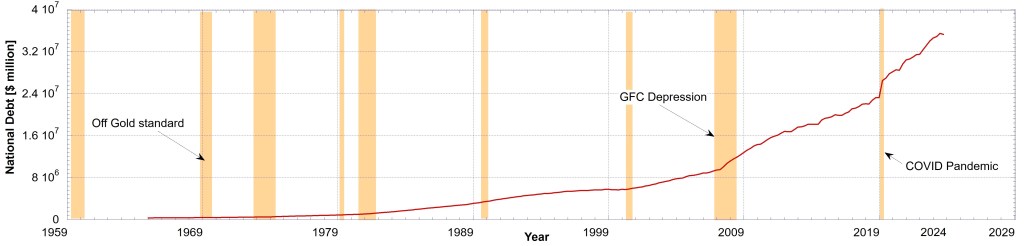
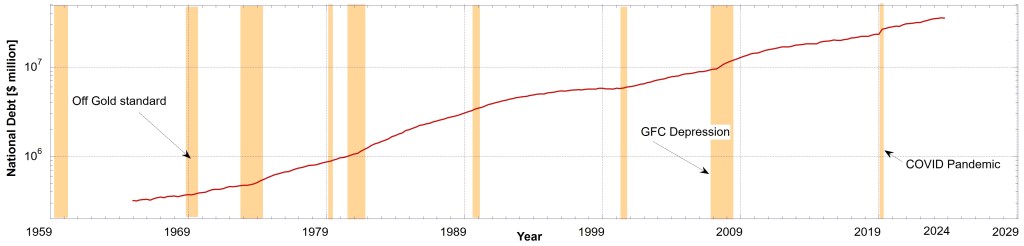
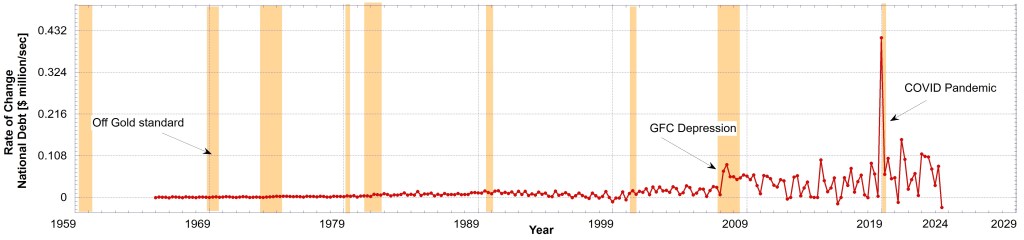
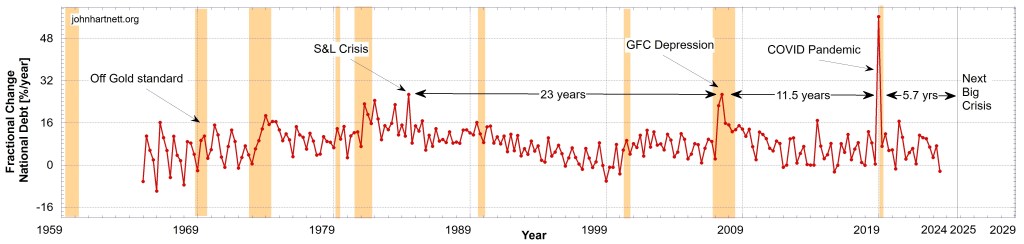
The US National Debt suggests a potential financial crisis in July 2025, based on historical debt trends linked to past crises. Analysis of the Monetary Base and gold prices indicates similar patterns to previous downturns. However, a third crisis is necessary for a reliable prediction of 2025.

  •  

US National Debt Predicts the Next Big Financial Crisis

Recently the US National Debt peaked at approximately $35.46 trillion, with a few notable rapid increases during financial crises. The debt's growth rate predicts another financial crisis by mid-2025 that could surpass previous crises. Preparations for significant economic challenges are advised.

  •  
❌