
❌

Reading view

3.5-Million-Year-Old Fossil from Japan Reveals Lost Lineage of Giant Salamanders
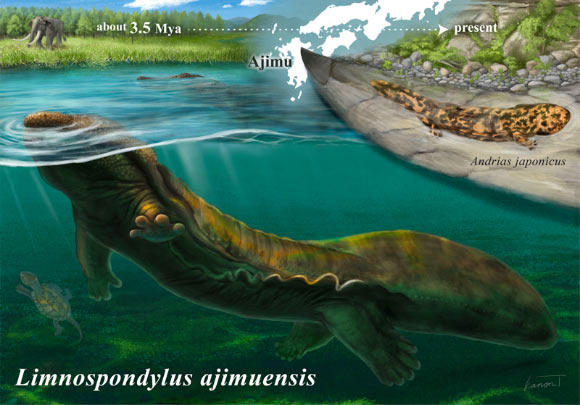
Life reconstruction of Limnospondylus ajimuensis. Image credit: Kanon Tanaka.

A new genus and species of cryptobranchid salamander that lived in lakes in Japan about 3.5 million years ago has been identified from three fossil vertebrae, filling a major gap in the fossil record of one of the world’s oldest amphibian lineages.

The post 3.5-Million-Year-Old Fossil from Japan Reveals Lost Lineage of Giant Salamanders appeared first on Sci.News: Breaking Science News.
  •  

Earth’s First Land Animals May Never Have Been Amphibian-Like After All

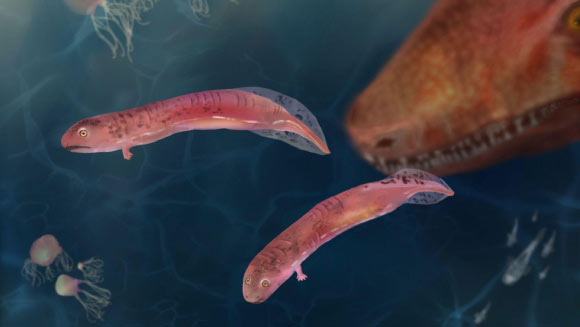
New fossil evidence suggests that embolomeres did not undergo a metamorphosis the way that modern amphibians do when growing up, which challenges a long-standing scientific belief that amphibians, reptiles, and mammals evolved from animals that had a tadpole stage. Image credit: Berit Godring.

Paleontologists from the Field Museum of Natural History have described the fossilized remains of baby embolomeres, crocodile-like predators that prowled ancient rivers and swamps between 350 and 280 million years ago.

The post Earth’s First Land Animals May Never Have Been Amphibian-Like After All appeared first on Sci.News: Breaking Science News.

  •  
❌