Login

New Book by Chaberek, Greene Probes Evolution as a “Catholic Dilemma”
I recently returned from a safari through Zimbabwe and South Africa. The high point, I’ll confess, was one wildlife encounter in particular.



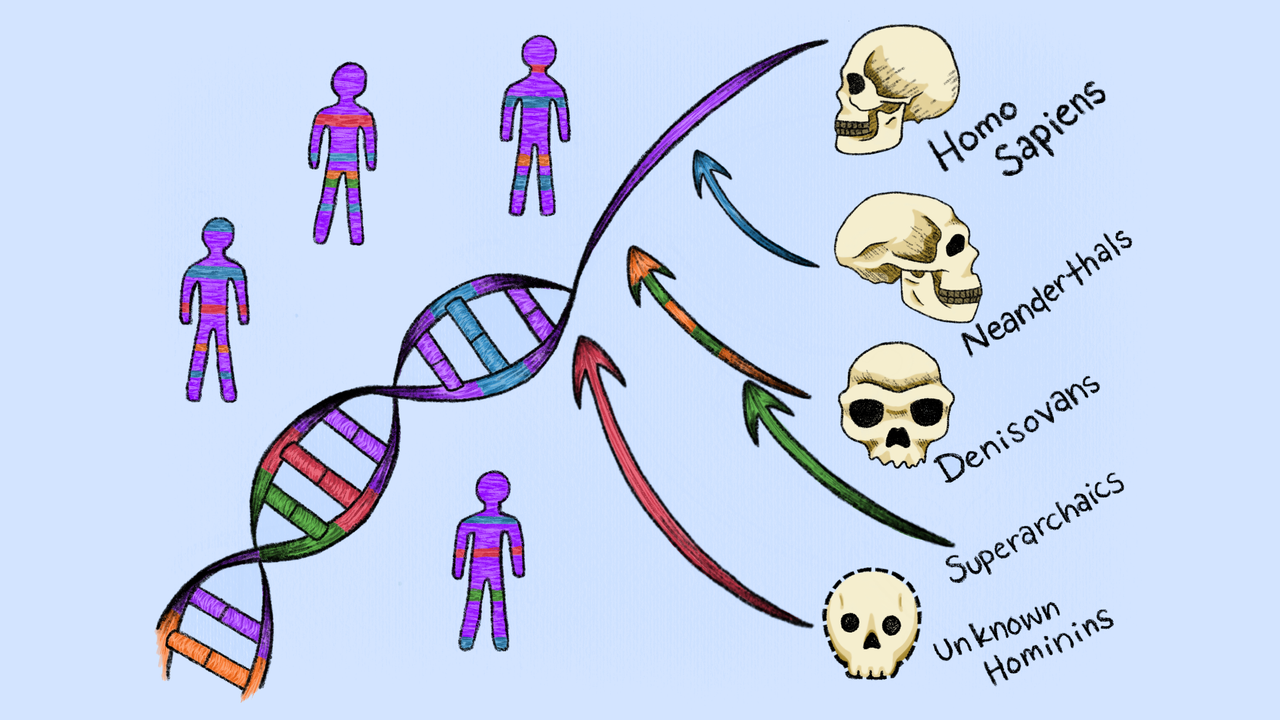
New research led by the University of California, Berkeley reveals that beyond Neanderthals and Denisovans, humans interbred with two mysterious ‘ghost’ lineages: one in Africa more than 50,000 years ago, another in Eurasia over 1.7 million years ago.
The post Scientists Find Traces of Two Unknown Archaic Hominins in Human DNA appeared first on Sci.News: Breaking Science News.
When the history of our ancestry is written, the fact that we've interbred with some of our closest relatives, the Neanderthals and Denisovans, will have a central role. And it will be tempting to write it as a very tidy story: Once we got genomes from these other groups, it was possible to identify the sequences in our genomes that we shared with them.
But in reality, as scientists started poking large enough collections of data, there were regular hints of some strange ancestry in our genomes. It was hard to pin down, though, at least in part because the 2 percent on average of Neanderthal DNA found in many populations does not guarantee that any two individuals will have the same 2 percent. So having the genomes of those two groups made sense of some things researchers had already been seeing.
But knowing what we do about Neanderthal and Denisovan DNA is now allowing researchers to answer a somewhat different question: Is there anything else? Using recently developed analytical techniques, they find evidence of a third lineage that we apparently interbred with before any modern humans left Africa. Again, there were hints of this earlier, but so far, there's been no genome from a modern human relative to help us understand the details—the source of this DNA remains a "ghost lineage."
© BSIP
When the history of our ancestry is written, the fact that we've interbred with some of our closest relatives, the Neanderthals and Denisovans, will have a central role. And it will be tempting to write it as a very tidy story: Once we got genomes from these other groups, it was possible to identify the sequences in our genomes that we shared with them.
But in reality, as scientists started poking large enough collections of data, there were regular hints of some strange ancestry in our genomes. It was hard to pin down, though, at least in part because the 2 percent on average of Neanderthal DNA found in many populations does not guarantee that any two individuals will have the same 2 percent. So having the genomes of those two groups made sense of some things researchers had already been seeing.
But knowing what we do about Neanderthal and Denisovan DNA is now allowing researchers to answer a somewhat different question: Is there anything else? Using recently developed analytical techniques, they find evidence of a third lineage that we apparently interbred with before any modern humans left Africa. Again, there were hints of this earlier, but so far, there has been no genome from a modern human relative to help us understand the details—the source of this DNA remains a "ghost lineage."
© BSIP
In recent years, advances in ancient DNA sequencing have redefined our understanding of human evolution, revealing that our species did not emerge in isolation but repeatedly interbred with close evolutionary relatives like Neanderthals and Denisovans.
Yet one of the field’s greatest mysteries has remained unanswered: What if some of our ancestors also encountered extinct human groups whose DNA has never been recovered from fossils? Now, a recent study published in Science suggests researchers may finally have found a way to detect those long-lost relatives.
Instead of relying on ancient bones or preserved genomes, researchers developed a powerful computational approach capable of identifying genetic traces of previously unknown archaic humans using only the genomes of living people.
Applying the technique to modern populations around the world, the researchers uncovered evidence that an unidentified “ghost” hominin contributed DNA to the ancestors of all living humans before the great migration out of Africa.
Researchers also found new evidence providing evidence for the existence of an even older “super-archaic” human lineage whose genetic legacy may survive today through Denisovan ancestry in Oceania.
“Admixture between modern humans and extinct hominins has shaped the genomes of present-day individuals, but reconstructing this history has been constrained by the scarcity of archaic samples and unadmixed outgroup populations,” researchers write. “We introduce TRACE, a reference- and outgroup-free approach that uses features of ancestral recombination graphs to identify archaic ancestry.”
Past research has sequenced only a handful of high-quality archaic human genomes, all from Eurasia. While those genomes have revealed that most people outside Africa carry roughly 1 to 2 percent Neanderthal DNA and that many Asian and Oceanian populations also inherited Denisovan ancestry, scientists have long suspected those known groups represented only part of humanity’s evolutionary history.
Previous genetic studies had hinted that modern humans, especially African populations, contained fragments of DNA from unidentified archaic relatives. However, because no fossil genomes exist for those populations, proving their existence has been extraordinarily difficult.
The new method, called TRACE, short for “TRacking Archaic Contributions via ARG Estimation,” takes a fundamentally different approach. Rather than comparing modern DNA against known Neanderthal or Denisovan genomes, it reconstructs ancestral recombination graphs. These enormous evolutionary family trees trace how pieces of DNA have been inherited over hundreds of thousands of years.
These ancestral graphs preserve signatures left behind when deeply divergent human lineages interbred. Such events create unusually long branches and distinctive genetic patterns that can persist in descendants for hundreds of thousands of years. By searching for those signatures, TRACE can identify archaic ancestry even when no reference genome exists.
To test the system, the researchers first ran extensive computer simulations modeling ancient human populations and known episodes of Neanderthal interbreeding. The method consistently revealed high accuracy while producing very low false-positive rates.
The team then applied TRACE to genomes from the 1000 Genomes Project, encompassing hundreds of individuals representing populations across Africa, Europe, Asia, and elsewhere.
The program successfully recovered well-established Neanderthal ancestry in Europeans and Asians, along with Denisovan ancestry concentrated primarily in Asian populations. More intriguing, however, was the discovery of an additional category of DNA that matched neither Neanderthals nor Denisovans.
TRACE identified between roughly 0.5 and 1.1 percent “ghost” ancestry across all modern populations examined. The genetic evidence suggests these segments originated from an unknown archaic human lineage that diverged from our ancestors roughly 830,000 years ago, before later contributing DNA to the ancestors of modern humans.
Perhaps most surprising was where that ancestry appeared.
Rather than being confined to African populations, as several earlier hypotheses proposed, the researchers found remarkably similar ghost ancestry in both Africans and non-Africans.
Most of the segments detected outside Africa were shared with African populations, suggesting the interbreeding event occurred before modern humans started dispersing across the globe roughly 50,000 to 70,000 years ago.
The findings point toward a previously unrecognized chapter of human evolution in which an unidentified human population mixed with the common ancestors of everyone alive today.
The researchers also explored where these ancient genetic fragments survive in the modern genome.
They found ghost ancestry spread across more than 70 percent of the accessible human genome, although it was far from evenly distributed. Some regions contained unusually high concentrations of ghost DNA, including genes involved in immune function and metabolism.
Even more unexpectedly, ghost ancestry persisted inside genomic regions previously believed to be largely devoid of archaic DNA.
These regions, known as “Neanderthal and Denisovan ancestry deserts,” have often been interpreted as places where natural selection eliminated archaic genetic variants because uniquely modern human versions proved advantageous.
The presence of ghost ancestry inside many of those same regions suggests the story may be more complicated. Rather than rejecting all archaic DNA equally, natural selection may have acted differently depending on which ancient human lineage contributed the genes.
The study also ventured even farther back in evolutionary time.
Focusing on genomes from Papua New Guinea, Vanuatu, and the Santa Cruz Islands, the researchers searched for evidence of “super-archaic” ancestry—genetic contributions from a lineage that diverged long before Neanderthals, Denisovans, and modern humans separated.
Previous studies had suggested Denisovans themselves may have inherited DNA from such an ancient population. TRACE now provides additional support for that hypothesis.
The team identified deeply divergent genetic segments embedded explicitly within Denisovan-derived DNA in Oceanian populations. Based on their analyses, those ancient lineages may have split from the ancestors of modern humans approximately 1.77 million years ago.
While the researchers stress this represents a conservative estimate of surviving super-archaic ancestry, the findings strengthen the idea that modern humans indirectly inherited DNA from a much older human lineage through Denisovan interbreeding.
The identity of both the ghost lineage and the super-archaic population remains unknown.
The ghost population may represent Middle Pleistocene human groups or African populations of Homo heidelbergensis that encountered the ancestors of modern humans before the Out-of-Africa migration. For the older super-archaic lineage, the researchers note that Homo erectus remains one plausible candidate given its estimated divergence time and broad geographic distribution.
Although the new method cannot yet identify specific fossil species, it provides researchers with an entirely new tool for investigating chapters of human evolution that may never yield recoverable ancient DNA.
Because DNA older than roughly one million years is extraordinarily unlikely to survive outside permanently frozen environments, computational approaches like TRACE are becoming increasingly important for reconstructing humanity’s deepest evolutionary history.
“We find evidence for at least one ghost introgression predating the OOA expansion that contributed ancestry to all present-day populations,” researchers write. “These results point to multiple layers of introgression—both direct and mediated through other archaic groups—shaping modern human genomes.”
The study, “Recovering signatures of archaic hominin introgression using ancestral recombination graphs,” was published in the journal Science.
Tim McMillan is a retired law enforcement executive, investigative reporter and co-founder of The Debrief. His writing typically focuses on defense, national security, the Intelligence Community and topics related to psychology. You can follow Tim on Twitter: @LtTimMcMillan. Tim can be reached by email: tim@thedebrief.org or through encrypted email: LtTimMcMillan@protonmail.com

A fossilized skull fragment of Homo sp. unearthed in central Spain offers paleoanthropologists a fresh window into the story of ancient humans who lived in Europe hundreds of thousands of years ago.
The post 224,000-Year-Old Homo Skull Fragment Adds New Mystery to Human Origins appeared first on Sci.News: Breaking Science News.
Traces of two "ghost lineages" of extinct human populations lie hidden within our genome, a new study reveals.
One of these ghost lineages left its DNA scattered in all present-day people. The other, a "super-archaic" lineage, dates back nearly 2 million years, researchers reported Thursday (July 30) in the journal Science.
"These extinct populations may have lived hundreds of thousands — or even more than a million — years ago, yet traces of their genetic legacy remain preserved in our genomes today," study co-author Priya Moorjani, a human evolutionary geneticist at the University of California, Berkeley, told Live Science.
For decades, experts have found DNA evidence that our species, Homo sapiens, once mated with now-extinct relatives such as Neanderthals and Denisovans. Most people not of sub-Saharan ancestry living today possess about 1% to 2.4% Neanderthal ancestry, and Asians and Oceanians (people from the island nations of the Pacific Ocean) harbor about 0.1% to 6% Denisovan ancestry.
But scientists have suspected that modern humans may have interbred with other now-extinct human groups that have not been identified yet. However, the scarcity of ancient DNA samples makes it challenging to identify what these unidentified groups, often called ghost lineages, might have contributed to our species.
"Ancient DNA has transformed our understanding of human evolution, but it can only tell us about populations for which DNA has been preserved," Moorjani said. "DNA survives only under very specific conditions — typically in cold, dry environments — which means that much of our evolutionary history, particularly in Africa, other tropical regions, and at very deep timescales, remains inaccessible."
In the new study, Moorjani and her colleagues reasoned that everyone's genome contains a record of their ancestry. They investigated whether it was possible to uncover signs of "long-extinct ancestors preserved within the genomes of present-day people," Moorjani said.
The researchers developed a new technique to scan and compare more than 500 complete genomes of present-day humans from around the world. Using this data, they reconstructed the complete genealogies of each spot in each person's genome, developing family trees of the people's ancestors that mapped out every time genetic lineages diverged and merged. They focused on ancestors who had profound genetic differences from modern humans — a sign they evolutionarily split from the modern human lineage a long time ago.
"Most regions of our genome share a common ancestor relatively recently in our evolutionary history," Moorjani said. "Occasionally, however, we find stretches of DNA whose common ancestor lies much farther back in time, indicating they originated from a long-separated human lineage."
Unlike previous approaches, this new method does not require DNA samples from fossils in order to spot ancient genetic sequences in the modern-human genome. "We no longer have to wait for extraordinary fossil preservation to learn about extinct human populations," Moorjani said. "Instead, the genomes of living people contain traces of these ancient ancestors, and genealogical methods allow us to recover some of that hidden history."
The researchers experimentally tested the new method, which correctly identified Neanderthal and Denisovan ancestors in modern-human genomes. However, it also uncovered previously unknown instances of interbreeding with now-extinct groups.
The researchers said one ghost lineage's DNA was found in all modern humans. This finding suggested that the lineage interbred with modern humans in Africa more than 50,000 years ago, before the most recent migration of H. sapiens out of Africa and into the rest of the world.
"Previous publications suggested that there might be ghost ancestry — ancestry from unknown archaic lineages in modern humans — but they hadn't concluded whether this unknown ancestry is present only in Africans or not, and when this introgression event happened," study co-author Yulin Zhang, a computational biologist at UC Berkeley, said in a statement. "We were actually able to find and map genomic locations in modern humans that are from this ghost lineage and show that this ghost ancestry is in all modern humans, not only in Africans."
This newfound lineage's DNA constitutes about 0.5% to 1% of the genomes of modern humans, comparable to the amount of Neanderthal DNA in many people living today. The scientists estimated that this ghost lineage diverged from the ancestors of modern humans about the same time Neanderthals and Denisovans did, about 800,000 years ago.
One possible candidate for the ghost lineage is Homo heidelbergensis, the researchers wrote in the study. This human species lived from about 700,000 to 200,000 years ago in Africa and Europe.
"I agree with their speculation that this ghost could have been the species Homo heidelbergensis, which was present in Africa as recently as 300,000 years ago," Chris Stringer, a paleoanthropologist at the Natural History Museum in London who was not involved in the study, told Live Science.
The scientists also found evidence that people from Oceania inherited traces of a "super-archaic" human lineage that diverged from the ancestors of modern humans about 1.8 million years ago, before the emergence of the common ancestor of modern humans, Neanderthals and Denisovans. This super-archaic DNA, on average, made up about 0.002% of the Oceanian genomes investigated and appeared within regions of Denisovan DNA, suggesting that the super-archaic DNA got into modern humans through interbreeding with Denisovans.
The age of this super-archaic DNA suggests it may have come into Denisovans, and then modern humans, from Homo erectus, the longest surviving human species to date, Fernando Villanea, a population geneticist at the University of Colorado Boulder who was not involved in the study, told Live Science. That could make sense, because H. erectus skulls found in Yunxian, China, share some features with Denisovan fossils, Villanea added. But to date, only a limited amount of H. erectus genetic material has been analyzed.
The study's findings highlight that modern humans are the product of multiple species and that "hybridization is the norm and not the exception," Villanea said. "We see hybridization being a common trait in the evolution of many other species, and these findings help us reframe our scientific thinking away from a mentality of human exceptionalism."
The DNA segments from these newfound lineages are spread throughout the human genome, but they are most numerous in parts of the genome associated with the immune system and metabolic function. Moorjani said this makes sense, as the need to adapt to new germs and sources of food has been one of the strongest drives in human evolution. Interbreeding with other now-extinct human groups allowed modern humans to acquire potentially beneficial DNA.
"This work reinforces a fundamental shift in how we think about human evolution," Moorjani said. "Rather than a simple branching tree, human history is increasingly emerging as a complex web of populations connected by repeated episodes of divergence, migration and mixing."
Stringer agreed, adding that this new technique provides "indirect ways of reconstructing parts of the genomes of more primitive species like H. erectus and H. heidelbergensis."
In the future, the scientists hope to use their new method to detect signs of more ghost lineages, "particularly those from regions such as Africa and South Asia that remain underrepresented in ancient-DNA studies," Moorjani said. The new technique can also help researchers "study evolutionary history in other species where fossil DNA is scarce or absent," she added.
See how much you know about early humans with our human evolution quiz!
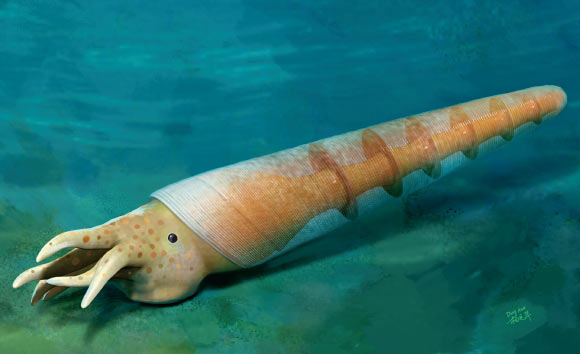
Paleontologists have identified the earliest-known cephalopod equipped with a siphuncle -- a tubular extension of the mantle found in shelled cephalopods -- pushing back the fossil record of this key evolutionary feature to the Early Cambrian, roughly 520 million years ago.
The post 520-Million-Year-Old Fossil from China Fills Gap in Evolutionary History of Cephalopods appeared first on Sci.News: Breaking Science News.


 The tracks suggest Paranthropus boisei grew surprisingly large and traveled in male groups.
Recent research from North Carolina State University, published in Parasites & Vectors and Royal Society Open Science, suggests that localized mosquito-control practices may create conditions that favor the evolution of insecticide resistance in mosquito populations.
Aedes albopictus, commonly known as the tiger mosquito, is an invasive species that has become widespread across much of the eastern United States. It breeds in a variety of artificial and natural containers that collect standing water, such as gutters and buckets.
In North Carolina, control of this mosquito is often managed at the household level, either through private mosquito-control services or by individuals applying pyrethroid insecticides. These chemicals are widely used because they are effective against adult mosquitoes and considered among the safer insecticides for use around people, pets, and homes, but they are typically applied without coordination among neighboring properties.
In one study, a team led by Jennifer Baltzegar tracked the emergence and spread of a resistance mutation known as F1534S in tiger mosquitoes in Wake County between 2016 and 2024. They looked at the F1534S mutation, which researchers have associated with knockdown resistance.
The mutation was absent from the Wake County samples collected in 2016 and 2017. In 2023, the researchers detected the resistance-associated mutation in 84% of the sampled residential areas, and they found it in 39% of the mosquitoes they sampled. The researchers’ models indicated that the resistance allele was under strong selection pressure, meaning mosquitoes carrying it had a significant evolutionary advantage in the local environment.
“Homeowners with money will pay to spray for mosquitoes, which selects for localized resistance,” said Martha Burford Reiskind, associate professor of biological sciences at NC State and corresponding author on both papers. “Over time, as more and more resistance builds up in the population, it will become harder to control populations. The insecticides will no longer be as effective.”
A second study, led by Cole Butler, looked at how resistance is distributed across neighborhoods with different property values. The team sampled mosquito populations across 31 residential blocks throughout Raleigh, covering a range of property values. They found that neighborhoods with higher total property values, which the researchers used as an indicator of likely spending on pest control, showed higher frequencies of resistance. While the study did not track individual spraying habits, the pattern suggests that greater private investment in mosquito control may be contributing to the spread of resistance.
That pattern breaks from how insecticide resistance usually spreads globally. “We see the rapid rise of pesticide resistance in places like South America and Asia where there is continuous spraying in some countries,” Burford Reiskind said. “But resistance driven by private mosquito control is novel in the contiguous U.S., to our knowledge.”
The F1534S mutation occurs in the mosquito’s gene for the voltage-gated sodium channel, which is the same site where pyrethroid insecticides act. This genetic alteration decreases the mosquito’s sensitivity to pyrethroids and thus enables some individuals to survive exposure to insecticides. The resistance allele is only partially recessive, so not all mosquitoes display the full effect. As a result, the mutation can spread through a population before resistance is noticeable.
“This mutation is often the first to show up when there’s insecticide resistance,” Burford Reiskind said.
Beyond being a nuisance, tiger mosquitoes can transmit diseases such as dengue, Zika, chikungunya, and dog heartworm. While the current studies did not assess disease transmission directly, Michael Reiskind, a professor at NC State and co-author of both papers, notes that future research will expand to include a broader range of neighborhoods. “We want to make a better effort to get a diversity of neighborhoods, age, and wealth to extend our findings and see whether they work at different housing densities and wealth levels,” Reiskind said.
The researchers recommend using integrated pest management techniques since these methods decrease the need for chemical insecticides. They stressed that eliminating standing water where larvae develop is a key preventive measure. Effective pest control means addressing the entire life cycle and not depending just on chemical insecticides.
Putting these integrated approaches into practice may be challenging since many suburban homeowners already rely on seasonal mosquito-spraying services. The rapid development of resistance in Wake County suggests that managing this trend will likely require cooperation among homeowners, pest control companies, and public health agencies. Achieving that cooperation may require these groups to rethink how they manage private mosquito control.
Austin Burgess is a writer and researcher with a background in sales, marketing, and data analytics. He holds an MBA, a Bachelor of Science in Business Administration, and a data analytics certification. His work focuses on breaking scientific developments, with an emphasis on emerging biology, cognitive neuroscience, and archaeological discoveries.
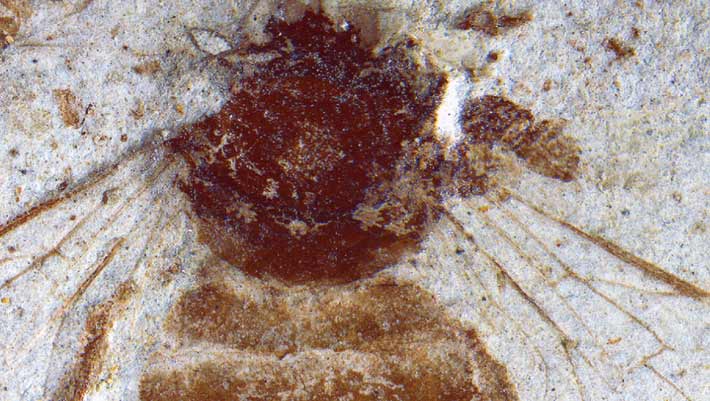
Paleontologists have announced the discovery of a new fossil honeybee species that fills a long-standing gap in the evolutionary record of the genus Apis.
The post Japanese Fossil Bee Fills Two-Million-Year Gap in Honeybee History appeared first on Sci.News: Breaking Science News.
Cut marks suggestive of cannibalism have been discovered on the fossils of an ancient human relative in a cave in Spain, new research finds. But many of the bones from the species, known as Homo antecessor, were from adults — not just children, as previous discoveries had found — adding a new dimension to the cannibalism that was practiced in this area 850,000 years ago.
The two dozen bones and teeth were recently found in Gran Dolina cave, part of the Sierra de Atapuerca archaeological complex in northern Spain, according to a July 24 translated statement from the Catalan Institute of Human Paleoecology and Social Evolution (IPHES). Among the remains were fragments of a skull, spine, arm and leg bones, as well as three teeth from several members of the now-extinct H. antecessor, a relative of modern humans that lived in Europe between about 1.2 million and 770,000 years ago. Several of the bone fragments had cut marks from stone tools.
Over the past few decades, researchers have identified numerous cases of cannibalism at Gran Dolina, meaning H. antecessor is the oldest known human relative to eat its own group members for nutritional reasons. In a 2010 study, researchers noted that most of the evidence of cannibalism at Gran Dolina came from the bones of infants and juveniles, who would have been easier to capture and kill as the young, defenseless members of a rival group. But the newly excavated fossils have upended that assumption.
"The discovery of more adult individuals, some of whom also bear cut marks, demonstrates that cannibalism was not restricted to younger individuals," Palmira Saladié, a biological anthropologist at the IPHES who coordinated the work, said in the statement.
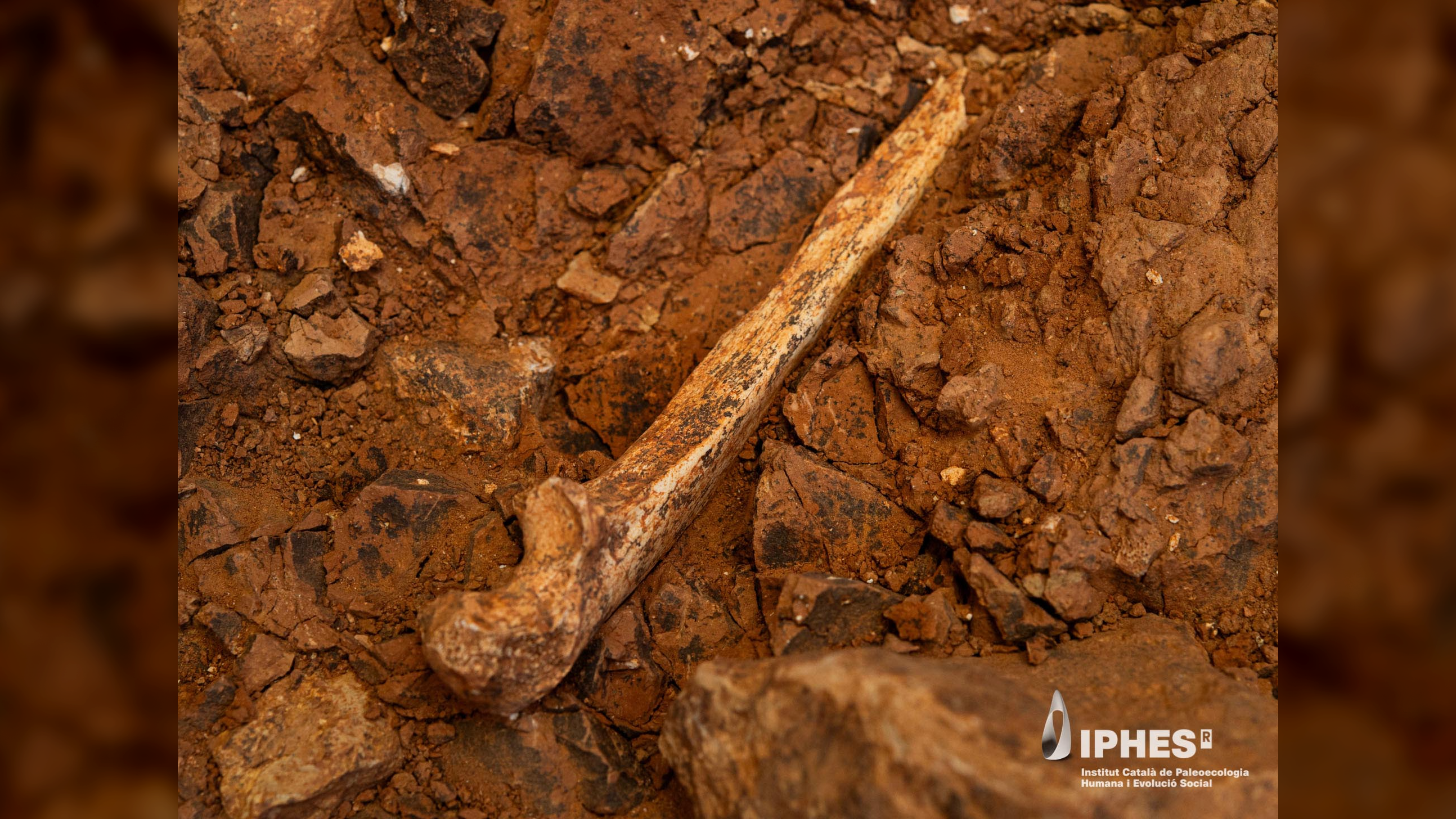
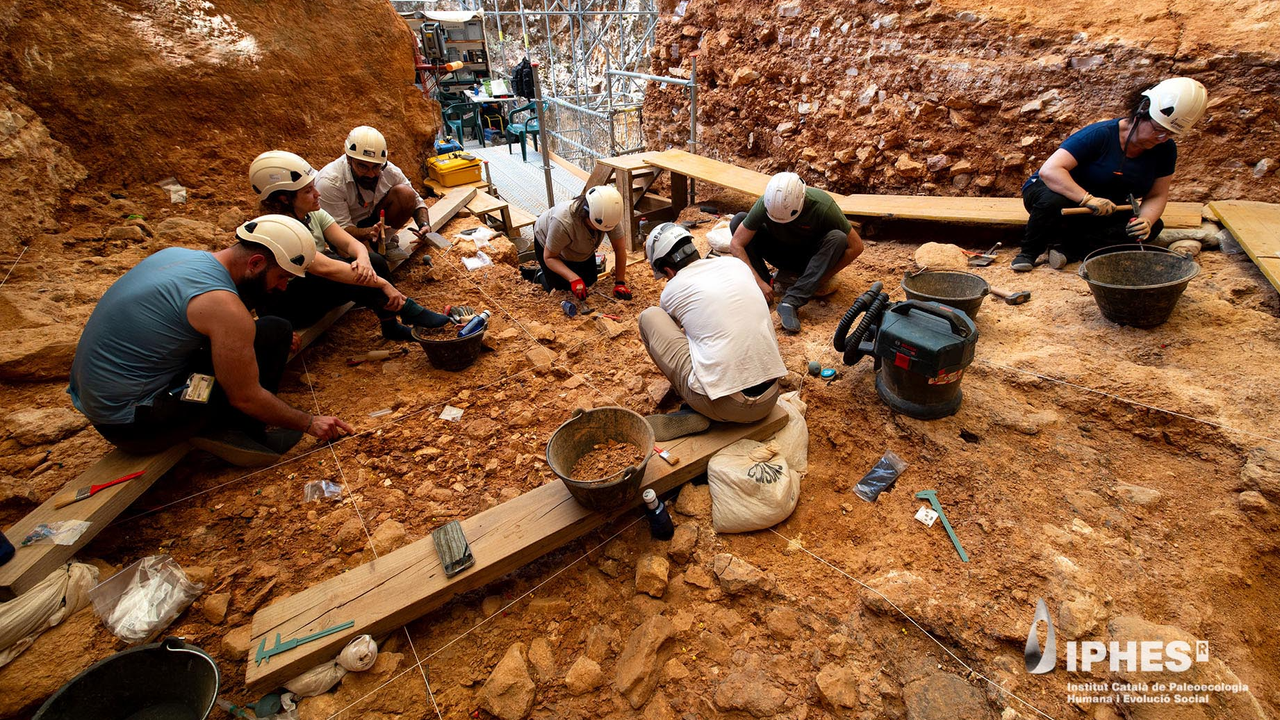
The number of individuals found at Gran Dolina has now risen to at least 13, and about half of them are adults. "The increase in the number of individuals, and especially the addition of more adults, allows us to begin understanding this population from a much more complete perspective than ever before," Andreu Ollé, an archaeologist at the IPHES, said in the statement.
Excavation at Gran Dolina has also brought to light an assemblage of stone tools made from flint, quartzite and sandstone, along with animal bones from hyenas, beavers, deer, horses and rhinoceroses, according to the statement.
Evidence of cannibalism at the site is extensive. Stone tools found in the cave are consistent with the cut marks on the human bones, and the animal bones have revealed butchering techniques that were also used on humans. Some of the human bones also had human bite marks, Saladié told Live Science in 2025, which is the "most reliable evidence that the bodies found at the site were indeed consumed."
But while the practice of cannibalism at Gran Dolina has been confirmed, the reason for it is still unclear. Researchers hope the newly discovered adult bones may help them better understand the practice among H. antecessor groups.
"We have only just begun excavating this new area" at Gran Dolina, Marina Mosquera, an archaeologist at the IPHES, said in the statement, "and the first results already demonstrate its enormous scientific potential."
Further analyses on the bones are now underway to explore questions about age-related differences in cannibalism, the number and length of cannibalistic episodes, and the social organization of H. antecessor, according to the statement.
What do you know about early humans? Test your knowledge with our human origins quiz!
Science word of the day: Cenozoic
Pronunciation: See-noh-ZOH'-ihk
What it means: The ascendency of mammals, the birth of the Himalayas, the diversification of birds — Earth's in its Cenozoic era, baby!
The Cenozoic is the geological era happening right now. It started 66 million years ago with the abrupt mass extinction known as the Cretaceous-Paleogene extinction event, when a massive asteroid hit Earth and wiped out the nonavian dinosaurs. It's been a busy few tens of millions of years, ushering in such hits as Earth's first cacti, whales and most (if not all) of the Grand Canyon.
How to use it in a sentence: The Cenozoic is called the Age of Mammals, but the University of California Museum of Paleontology in Berkeley would like you to know it could have been called the Age of Teleost Fish, if mammals weren't so dang self-centered.
Can you crack our science word of the day puzzle, Chain Word?